Protein Bar Manufacturing Machine in Ahmedabad: Gujarat’s Most Trusted Suppliers for High-ROI Production

India’s protein bar market is no longer niche, it’s mainstream. For Gujarat-based nutrition brands, startups, and contract manufacturers, one decision outweighs branding or packaging: choosing the right protein bar manufacturing machine in Ahmedabad with reliable local support. Many new manufacturers discover too late that profits depend on correct machine capacity, automation level, and responsive suppliers. With ₹7–60+ lakh investments at stake, your equipment choice is a business-critical decision, not just a purchase. Why Gujarat Manufacturers Prefer Protein Bar Manufacturing Machines in Ahmedabad When investing in a commercial protein bar making machine, supplier location directly affects downtime, service cost, and production reliability. For this reason, many nutrition brands choose Ahmedabad-based protein bar machine suppliers. Decision Factor Local Ahmedabad Supplier Advantage Risk with Distant Supplier Advanced Production Impact Service Response Time Same-day or next-day engineer visits 3–7 day delay for technician travel Faster issue resolution prevents batch loss and missed dispatches Spare Parts Availability Critical components stocked locally Parts shipped from other states/countries Reduced line stoppage during auger, cutter, or motor failures Downtime Cost Control Immediate troubleshooting support Long idle production hours Continuous lines maintain temperature and texture stability Installation Accuracy On-site alignment and calibration Remote guidance or delayed supervision Proper die pressure and cutter alignment ensure uniform bar weight Logistics Risk Short-distance transport, lower vibration exposure Long transit increases impact damage risk Precision components like rollers and forming dies stay calibrated Commissioning Speed Faster trial runs and adjustments Extended waiting between setup steps Shorter time-to-production after machine purchase Recipe Compatibility Familiarity with Indian protein blends Trial-and-error adjustments Proper compression for whey, plant protein, and jaggery binders Climate Adaptation Experience handling Gujarat humidity and heat Generic setup not climate-tuned Better control of stickiness, binding, and extrusion consistency Scalability Support Easier upgrades and add-on modules Complex coordination with remote supplier Smooth transition from 50 kg/hr to 200+ kg/hr lines Factory Visit Access Physical machine inspection and live demos Only videos or catalogs available Buyers can verify hygiene, vibration levels, and output quality Training & Skill Transfer On-site operator training in Gujarati/Hindi Online or limited training Operators learn pressure control, cutting sync, and cleaning SOPs After-Sales Relationship Long-term regional support network Transactional supplier relationship Preventive maintenance reduces unexpected breakdowns Choosing The Right Protein Bar Manufacturing Machine In Ahmedabad Not all machines are made for every type of manufacturer. You need to pick what matches your production scale and goals. In Ahmedabad, you will mainly find two options for commercial protein bar making machine: Semi-Automatic Protein Bar Machine Semi-automatic protein bar machine are ideal for small startups and pilot batches. This machine is affordable with a low budget, and it is simple to set up. These machines are a combination of manual and machine, where mixing, shaping, or portioning is done by labor. What this really means is you can easily try recipes and manage all small orders without any stress. Fully Automatic Protein Bar Machine Fully automatic protein bar machine are designed for industrial-scale production. It combines mixing, shaping, cutting, and sometimes packaging into a single continuous line. This machine’s price is higher, but it saves labor and produces at a much faster rate. What this really means is you can scale your production, maintain consistent quality, and keep up with growing demand. Read More: Automatic vs Semi-Automatic Machines for Protein Bar Production (2026 Guide) How Much Profit Can a Protein Bar Manufacturing Machine Generate? Assumptions: Machine Capacity: 50 kg/hour (semi-automatic) Operating Hours: 6 hours/day Bar Weight: 50 g/bar Selling Price per Bar: ₹20 Raw Material + Packaging Cost per Bar: ₹14 Labor & Utilities Cost: ₹10,000/day Time Period Bars Produced Revenue (₹) Material Cost (₹) Labor & Utilities (₹) Net Profit (₹) Daily 6,000 1,20,000 84,000 10,000 26,000 Weekly (6 days) 36,000 7,20,000 5,04,000 60,000 1,56,000 Monthly (30 days) 1,80,000 36,00,000 25,20,000 3,00,000 7,80,000 Yearly 21,60,000 4,32,00,000 3,02,40,000 36,00,000 93,60,000 Notes for Gujarat Manufacturers: Daily Profit: ₹26,000 covers small operational costs and validates machine efficiency. Monthly Profit: ₹7.8 lakh sufficient to cover initial semi-automatic machine investment (₹7–10 lakh) within ~1 month of stable operation. Yearly Profit: ~₹94 lakh demonstrates strong ROI, even before scaling capacity or hours. Key Insight: Selecting the right Ahmedabad-based supplier minimizes downtime, protects consistent output, and safeguards this profit potential. Top Protein Bar Machine Suppliers In Ahmedabad: Trusted Options For Gujarat Manufacturers Picking the right supplier is as important as picking the right protein bar manufacturers in Gujarat. You want someone who understands your production and can support you on-site to increase your production goals. In Ahmedabad and Gujarat, a few supplier names stand out: Foodsure Machines (Ahmedabad) Our industrial protein bar production equipment is known for being food-grade and hygienic machines that are easy to clean. Our machines handle mixing, shaping, and give your product consistently. Machine parts are made from stainless steel to meet safety standards. We provide strong on-site support in Gujarat, which means if something goes wrong, we help arrive fast. What this really means is that startups and mid-scale manufacturers can get stable output without worrying about downtime. Lerel Health Foods (Surat) They offer custom nutrition bar manufacturing machine, ideal if you want your own formulations. They also handle private labeling and contract manufacturing. Their machines work with quality ingredients sourced locally, and they keep costs manageable. What this really means is you can launch your brand easily with guidance from experienced producers. Labh Group (Ahmedabad) They provide you with a turnkey solution for snacks and your food production. They customize the machines to your scale and your production needs. They offer you full support from installation to maintenance. What this really means is that larger manufacturers can scale efficiently and avoid growing pains. Read More: Best Protein Bar Machine Manufacturers Protein Bar Manufacturing Machine In Ahmedabad: Pricing And ROI Insights For Gujarat Manufacturers Machine Type Capacity Approx. Price (₹) Weekly Operating Cost Monthly Operating Cost Yearly Operating Cost Service Parts & Maintenance (Yearly) Semi-Automatic 50–100 kg/hr ₹7–10 lakhs ₹10,000–₹15,000 ₹40,000–₹60,000 ₹5–7 lakhs ₹1–1.5 lakhs Fully Automatic 200–500 kg/hr ₹25–60+ lakhs ₹40,000–₹60,000 ₹1.5–2.5
Protein Powder Blending Machine for Food Factories Delivering 95% Batch Consistency
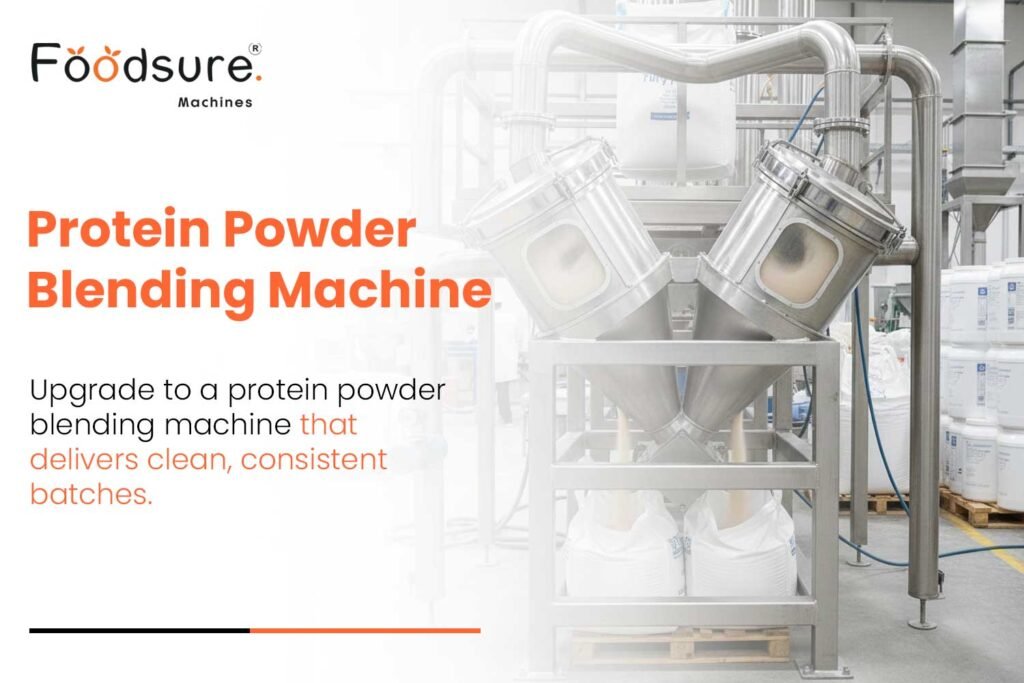
Over 70% of food factories lose consistency because their powders don’t blend evenly. Let’s see what’s really happening. Your formula stays the same, yet the batch shifts. Take a look at what that means. The mixer is holding you back. An food industry protein powder mixer machine closes that gap and stops the slowdowns, texture swings, and customer complaints eating into your output. Keep reading, and you’ll see how much consistency you’ve been leaving on the table and how to fix it for good. What a Modern Protein Powder Blending Machine Actually Does Protein powder manufacturing isn’t just about mixing, it’s about controlled, repeatable, validated blending. Industrial protein powder blending machines are designed to: Deliver uniform nutrient distribution. Eliminate dead zones and segregation. Reduce batch rejection and rework. Maintain protein integrity (heat & shear sensitive). Scale production without compromising quality. In real-world factories, batch capacities typically range from 200 kg to 1500 kg, with large operations exceeding 2000 kg per batch. The right mixer doesn’t just blend, it standardizes your output. The Real Difference Between Protein Powder Machine Mixers Every powder behaves differently. Flowability, density, fat content, and hygroscopic nature determine which blender succeeds. Mixer Type Mixing Principle Best For Typical Blend Time Uniformity Level Key Advantage Caution / Limitation Ribbon Blender Convective, low shear Whey protein, plant protein isolates, free-flowing powders 10–15 minutes CV ≤5–8% Dual counter-directional ribbons eliminate dead zones while keeping heat low Not ideal for very sticky or oil-heavy powders Plough Share Mixer High shear, turbulent mixing Agglomerated whey, maltodextrin blends, oil-coated powders 5–10 minutes CV ≤5–10% (depending on shear control) Creates fluidized mixing zones that handle dense and sticky powders Excess shear can damage heat- or shear-sensitive proteins Double Cone Blender Diffusion and tumbling (gentle mixing) Fragile crystals, vitamin premixes, nutraceutical blends 15–20 minutes CV ≤8–12% Ultra-gentle blending protects delicate ingredients Longer mixing time, not suitable for heavy or high-density powders Why Modern Protein Powder Machines Are Non-Negotiable Today Key Capability What It Means in Production Why It Matters for Your Factory Batch-to-Batch Consistency Speed, torque, mixing time, and fill levels are digitally controlled and repeatable Same recipe → same output every batch, reducing variability and customer complaints Fully Automatic Mixing Torque-based automation stops the blend at the exact uniformity point Eliminates guesswork, prevents over-mixing, and reduces operator dependency Food-Grade, Contamination-Free Design Mirror-polished stainless steel contact parts with hygienic construction Prevents flavor carryover, microbial growth, and cross-contamination between batches Vacuum & Hygroscopic Protection Vacuum-enabled or sealed systems limit moisture and air exposure Protects moisture-sensitive powders, improves shelf life, and maintains ingredient stability Read More: Protein Bar Production Process: A Beginner’s Guide to Step-by-Step Manufacturing Why Modern Protein Powder Blending Machines Are Key to High-Quality Protein Powders Consistency: Using the Same Ingredients for Every Batch Ensures You Know Exactly What You’re Getting. All Mixing Speeds, Times, and Amounts of Torque are Applied at the Same Rate. If You Follow the Same Recipe to Produce Protein Powder, You Can Expect to Get a Consistent Product Every Time. Automatic: By measuring Torque while whey protein powder mixing equipment, you eliminate the guesswork associated with mixing, and there are no “over-mixing” errors since the mixing will automatically shut off once the Mixing has been completed to a perfect blend of powdered product. Food-Grade Materials: To ensure that your product is manufactured using only stainless steel Protein Powder Mixing Machine Advanced Automation System, all Packaging and Product Components must be free from any form of contamination, including but not limited to residuals, microbiological Contamination, and flavor carryover. Vacuum Technologies: Vacuum Packaging is one of the best ways to store hygroscopic powders for an extended shelf life without compromising product quality, since it both minimizes Exposure to Air and Moisture during the packaging process. Read More: Investing in a Protein Bar Production Line – ROI, Costs & Profit Margins Why Compliance Matters for Protein Powder Manufacturing Machine These large-scale protein powder manufacturing equipment aren’t just about mixing powders; they are about doing it safely and consistently. They meet global food safety standards, so you can trust every batch. The use of cGMP-Compliant Design maintains a clean and managed environment for manufacturing, where the processed products comply with all cGMP guidelines. FSSC 22000 certification confirms that all process steps are consistently documented and easily searched for throughout your process chain. The BRCGS and HACCP controls are intended to assist in minimizing contamination, thereby maintaining product integrity. Why Foodsure Machines Stands Out in Protein Powder Making Machine Not all mixers deliver the same results, even if specs look similar. Feature Benefit to Your Factory 95% CV uniformity Consistent taste and nutrition in every batch SS316L mirror finish Faster cleaning, lower contamination risk Integrated CIP/WIP systems Reduced downtime between batches Custom mixing tools Handles sticky, fragile, and dense powders 100 kg – 2000+ kg batch range Scales with business growth Local service support Faster issue resolution, less production loss Read More: One Brand, Two Powers: How Foodsure Recipe & Foodsure Machines Support Food Startups From Idea to Production Conclusion At Foodsure Machines, we provide automated, sanitary, and local support for high-quality, safe, and efficient mixing, regardless of batch size. Therefore, our customers can utilize our machinery to mass-produce while maintaining the same level of quality standards in their end product. Contact Foodsure Machines today to get a quote or discuss the right solution for your factory. Have a Question? Let’s Connect! We’re here to assist you anytime. Contact us via call or email. 📞 Call Us ✉️ Email Now FAQs What causes inconsistent protein powder batches?Uneven mixing due to outdated or under-specified blending machines. Which blender is best for large-scale protein powder production?An automated ribbon blender with torque and speed control. What batch size should founders plan for initially?Most startups begin efficiently with 200–500 kg batch capacity. How do I measure blend quality objectively?By checking the coefficient of variation (CV), ideally ≤10%. Can one blender handle multiple protein formulations?Yes, modern computerized blenders manage varying densities and
Protein Bar Manufacturing Machine in Lucknow – Latest Price, Capacity & Top Manufacturers (2026)
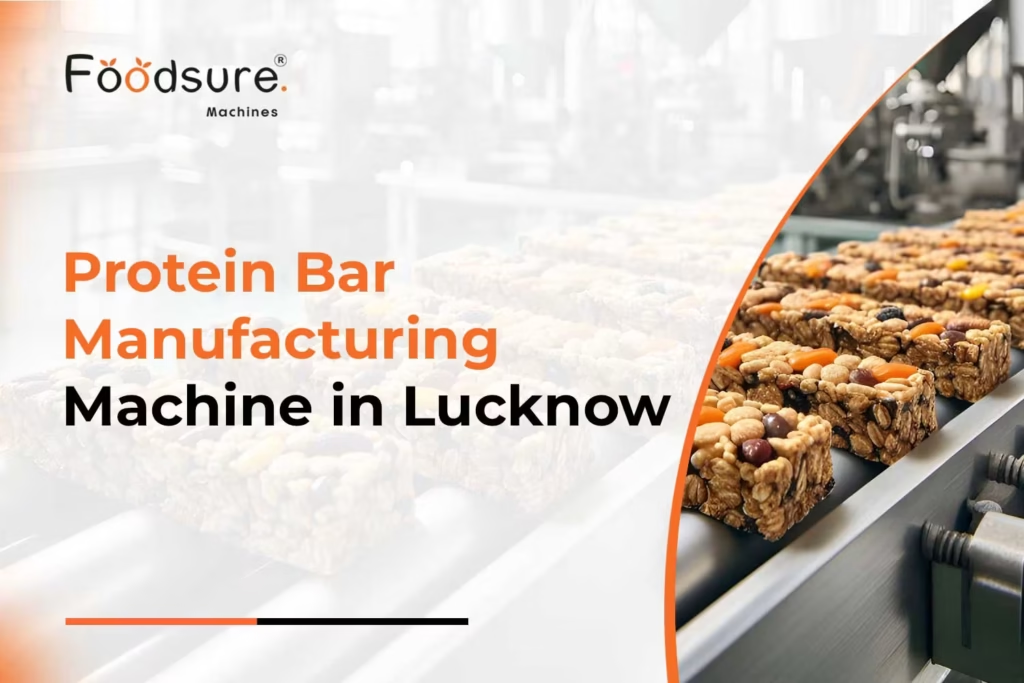
Protein bars are no longer a niche fitness snack. In Lucknow, demand for healthy packaged snacks is rising across gyms, cafés, retail stores, and online brands. That means one big opportunity for food startups and one critical investment decision. Protein bar manufacturing machines in Lucknow typically cost between ₹4.5 lakh and ₹25 lakh, depending on automation level, output capacity, and features. So the real question is: Which protein bar manufacturing machine in Lucknow fits your budget, production target, and growth plan? This blogs gives you real numbers, real capacities, and real buying advice so you can invest with clarity. ✔ Latest protein bar machine prices in Lucknow (2026).✔ Semi-automatic vs fully automatic comparison.✔ Production capacity & maintenance costs.✔ How to choose a reliable machine supplier. Quick Comparison: Semi vs Fully Automatic Protein Bar Machines Feature Semi-Automatic Fully Automatic Price in Lucknow ₹4.5–7.5 lakh ₹12–25 lakh Output Capacity 500–2,000 bars/day 5,000–20,000 bars/day Labor Required 2–3 people 1–2 people Automation Level Mixing + forming + cutting (partial manual) Continuous line with minimal handling Best For Startups, testing market Scaling brands, contract manufacturing Future Expansion Limited High scalability Real ROI: How Fast Can a Protein Bar Machine Pay for Itself? Example Startup Scenario (Semi-Automatic Machine) Daily production: 1,000 bars. Average selling price: ₹35/bar. Monthly revenue (25 days): ₹8,75,000. Raw material & operations (55%): ₹4,80,000. Approx. gross margin: ₹3,95,000. A ₹6 lakh machine can potentially recover cost in 2–4 months with stable demand. Example Growth Scenario (Fully Automatic Machine) Daily production: 8,000 bars Selling price: ₹30/bar wholesale Monthly revenue: ₹60,00,000 Operational cost (65%): ₹39,00,000 Approx. gross margin: ₹21,00,000 High-capacity machines scale profit dramatically when distribution is ready. Protein Bar Manufacturing Machine in Lucknow: Types and Features Picking the right protein bar production machine affects how fast you grow, how consistent your bars are, and how much effort you’ll need to put in every day. Semi-Automatic Protein Bar Machine – Best for Small Manufacturers Start smart: Semi-automatic machines handle mixing, forming, and cutting, but still need some manual input. It gives you control over recipes and batch sizes. Production capacity: It gives you a production capacity of over 500–2,000 bars per day, enough to test the market. Investment in Lucknow: A semi-automatic protein bar machine usually starts from ₹4.5 – 7.5 lakh, making it affordable for first-time buyers. Who it fits: Ideal for small startups and R&D testing. Here’s the thing: you can start small, learn what sells, and scale without wasting money on machinery you do not yet need. Fully Automatic Protein Bar Equipment – High Output Units Scale without stress: Fully automatic machines integrate mixing, forming, cutting, cooling, and sometimes wrapping into one continuous workflow. With minimal labor, consistent output. Capacity: Fully automatic machines give you a capacity of around 5,000–20,000 bars per day, which is ideal for supplying supermarkets and online channels. Investment in Lucknow: A fully automatic protein bar machine costs around ₹12 – 25 lakh, and it also depends on machine capacity and features. Who it fits: This protein bar processing machine is ideal for growing manufacturers and contract packers. Read More: Automatic vs Semi-Automatic Machines for Protein Bar Production (2025 Guide) Protein Bar Manufacturing Machine Price in Lucknow: 2026 When planning your production setup, one of the first questions founders ask is about protein bar making machine price. Understanding the protein bar machine price in Lucknow helps you budget accurately for your startup or expansion and compare semi-automatic vs fully automatic options. Here’s a detailed cost breakdown for 2026: Machine Type Initial Cost (₹) Monthly Spare Parts Cost (₹) 1 Week Maintenance Cost (₹) 1 Month Maintenance Cost (₹) 1 Year Maintenance Cost (₹) 2–3 Year Maintenance Cost (₹) Semi-Automatic ₹4.5–7.5 lakh ₹10,000–₹20,000 ₹5,000–₹10,000 ₹20,000–₹30,000 ₹2.4–₹3.6 lakh ₹4.8–₹7.2 lakh Fully Automatic ₹12–25 lakh ₹20,000–₹40,000 ₹10,000–₹20,000 ₹40,000–₹60,000 ₹4.8–₹7.2 lakh ₹9.6–₹14.4 lakh Want the exact price for your requirement? Request a Machine Quote Now — Get customized pricing within 24 hours. Top Tips to Find Reliable Protein Bar Manufacturers and Dealers in Lucknow Choosing a protein bar machine supplier is not just a purchase; it’s about finding a partner who keeps your business running smoothly. Buy protein bar machine locally you service parts fast and provide you with on-site support if something goes wrong. Visit the supplier workshop and request a demo to check the protein bar machine performance and quality. So, you cannot get a problem during production. Always get clear pricing, ask about warranty terms, and service policies to prevent surprises that affect your protein bar extruder machine. Ask for references and learn how responsive the supplier is to protein bar manufacturing equipment, how they address your issues, and how much it takes to recover them. What this really means is picking someone who can support your growth, help you keep your production smooth, and save you headaches. Read More: Top Protein Bar Machine Consultants in India (2025 Guide) Start Your Protein Bar Business in Lucknow: Choose the Right Machine Today Foodsure Machines provides protein bar manufacturing equipment India for every growth stage from startups to large-scale producers. Our machines are known for: Consistent bar quality. Scalable production design. Reliable post-sales support. Whether you’re launching your first batch or expanding capacity, we help you move forward with clarity. Request Your Free Quote Fast Please reach out to us anytime via phone or email. 📞 Call Us ✉️ Email Now FAQ Q1. What is the starting cost of a protein bar machine in Lucknow?₹4.5–6 lakh for semi-automatic; fully automatic can reach ₹25 lakh. Q2. Which machine type is best for first-time founders?Semi-automatic machines offer lower risk and recipe flexibility. Q3. How many bars per day are needed to break even?Around 300–500 bars/day depending on margins. Q4. Can one machine make multiple protein bar variants?Yes, most machines support whey, vegan, and nut-based bars. Q5. How much manpower is required to operate the machine?2–3 people for semi-automatic, 1–2 for fully automatic. Q6. Is FSSAI compliance easier with machine production?Yes, machines improve hygiene and batch consistency. Q7. How long does installation and
Investing in a Protein Bar Production Line: Costs, ROI & Profit Margins Explained for Startups
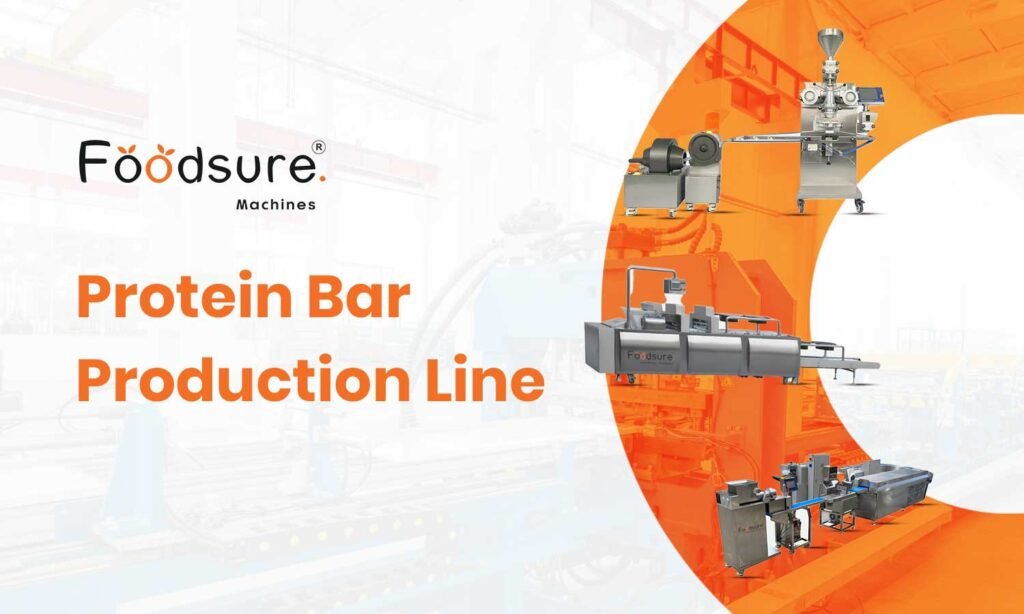
Starting a protein bar business is one of the smartest moves in today’s health-driven food market, but only if you build it on the right foundation. The backbone of success is a reliable protein bar manufacturing machine or protein bar production line that can mix ingredients uniformly, form consistent bars, and package them efficiently. For startups, early decisions around protein bar equipment directly affect product quality, operating costs, scalability, and ROI. Choosing the right production line from the beginning reduces trial-and-error, minimizes wastage, and allows you to scale smoothly as demand grows. This guide covers protein bar production essentials, packaging options, automation benefits, ROI, and efficiency tips, so you can start smart, stay lean, and grow with confidence. How a Protein Bar Production Line Works (Step-by-Step Process) This step-by-step flow is part of a complete bar processing line, and you can explore the detailed protein bar production process to understand how each stage impacts bar texture and shelf life. Ingredient Mixing: Proteins, syrups, fibers, and functional ingredients are blended in an industrial mixer to achieve uniform texture. Slab Forming or Extrusion: The mixture is shaped into continuous sheets or ropes using a forming or extrusion unit. Cooling Tunnel: The formed mass passes through a cooling tunnel to stabilize texture for precise cutting. Cutting & Shaping: Bars are cut into consistent sizes and weights, ensuring uniformity across batches. Chocolate Coating or Enrobing (Optional): For coated bars, an enrobing system applies chocolate or yogurt layers. Flow Wrapping & Packaging: The final stage of the protein bar production line seals bars for shelf life, hygiene, and branding. This integrated process defines a complete bar production machines, not just a single machine. How to Choose the Right Protein Bar Manufacturing Machine for Your Startup When you’re starting out, picking the right protein bar manufacturing machine or protein bar equipment can make or break your business. Key points to consider: Types of bars: Energy bars, chocolate protein bars, breakfast bars, or plant-based protein bars all need slightly different handling. Production capacity: Machines producing 500–1,500 bars/hour are ideal for startups. Key components: Mixer, forming machine, and packaging station. Coating or flavoring equipment is optional. Simplicity & versatility: Easy operation and recipe flexibility save time and reduce errors. By starting small, you can evaluate recipes, comprehend market demand, and grow at a measured pace without going over budget. Protein Bar Packaging Machines That Work With Your Equipment Choosing the right sealing and wrapping system is critical, and different protein bar packaging machine options suit different production speeds. Key considerations: Proper sealing to extend shelf life. Flow wrap machines for high-speed packing. Semi-automatic vs fully automatic systems depending on production scale. Branding compatibility for printed films and labels. Even a small automated packaging unit improves consistency and presentation while keeping the protein bar production line efficient. Protein Bar Production Automation Benefits Automation in protein bar production lines delivers: Consistency: Uniform bar size, shape, and flavor. Higher output: More bars per hour than manual processes. Reduced waste: Fewer defective products. Scalability: Meet growing demand without hiring extra staff. Look for a protein bar manufacturing machine with modular automation options to expand later. Protein Bar Manufacturing Machine Cost, ROI & Profit Margin Understanding cost and ROI is key if you plan to buy protein bar machine locally or work with a protein bar machine dealer near me. Metric Micro Setup (Home/Trial) Small Setup (Startup Brand) Medium Setup (Growing Brand) Large Setup (Commercial Plant) Protein Bar Manufacturing Machine ₹4–8 lakh ₹8–15 lakh ₹20–35 lakh ₹45–90 lakh Packaging Machines ₹2–4 lakh ₹3–7 lakh ₹5–10 lakh ₹12–25 lakh Total Initial Investment ₹6–12 lakh ₹12–22 lakh ₹30–55 lakh ₹60 lakh–₹1.2 Cr Operating Costs / Month ₹80k–₹1.5 lakh ₹1–3 lakh ₹3–5 lakh ₹6–12 lakh Daily Production 300–500 bars 1,000 bars 3,000–5,000 bars 8,000–15,000 bars Avg Selling Price / Bar ₹40–50 ₹50 ₹45–55 ₹40–60 (bulk) Revenue Potential / Month ₹4–7 lakh ₹15 lakh ₹1.5–2.5 Cr ₹4–9 Cr Break-even Timeline 10–14 months 12–18 months 12–24 months 18–30 months Profit Margin 20–30% 25–40% 30–45% 35–50% Micro Setup (Testing the Market) 400 bars/day × ₹45 ₹5.4 lakh monthly revenue Expenses – ₹3.8 lakh Profit – ₹1.6 lakh/month Ideal before scaling or approaching a protein bar machine dealer near me for a larger unit. Small Startup Setup 1,000 bars/day × ₹50 ₹15 lakh monthly revenue Monthly expenses – ₹10 lakh ₹5 lakh profit (33% margin) Perfect entry point when you buy protein bar machine locally for your own brand. Large Commercial Production (B2B + Retail) 10,000 bars/day × ₹48 average ₹1.44 Cr monthly revenue Monthly expenses ≈ ₹85–95 lakh ₹45–55 lakh profit/month (35–40%) Common for contract manufacturers supplying gyms, retailers, and export buyers using industrial protein bar equipment. Read more: Top Protein Bar Machine Manufacturers In India 2025 Profit Margin in Protein Bar Business Explained Profit margin in a protein bar production process is not just about selling price of automated production line. It depends on how efficiently your protein bar machine, labor, packaging, and distribution systems operate together. A well-planned setup using modern protein bar equipment can achieve significantly higher margins than manual or semi-organized production. Cost Component % of Selling Price (Small Brand) % of Selling Price (Scaled Brand) Notes Raw Ingredients 35–45% 30–38% Protein blends, nuts, syrups, fibers, flavors Packaging Material 8–12% 6–9% Flow wrap film, cartons, labels Labor Cost 10–15% 6–10% Reduced with automated protein bar production line Power & Utilities 3–5% 2–4% Efficient motors lower this over time Maintenance 2–4% 2–3% Depends on machine quality Distribution & Logistics 8–12% 10–15% Higher for national brands Marketing & Branding 5–10% 8–15% Online + retail promotions Total Operating Cost 70–85% 65–80% — Net Profit Margin 15–30% 20–35% Can go higher with volume Protein Bar Production Line Efficiency Tips Perform regular cleaning and preventive maintenance. Train operators for smooth machine handling. Plan batches to minimize raw material waste. Monitor ingredient usage carefully. Use energy-efficient operating schedules. Maintain quality checks at every stage of the protein bar production line. These practices increase output while reducing long-term costs. Invest
How to Make Tomato Ketchup in India: Buy Ketchup Machines Locally & Set Up a Tomato Ketchup Processing Plant
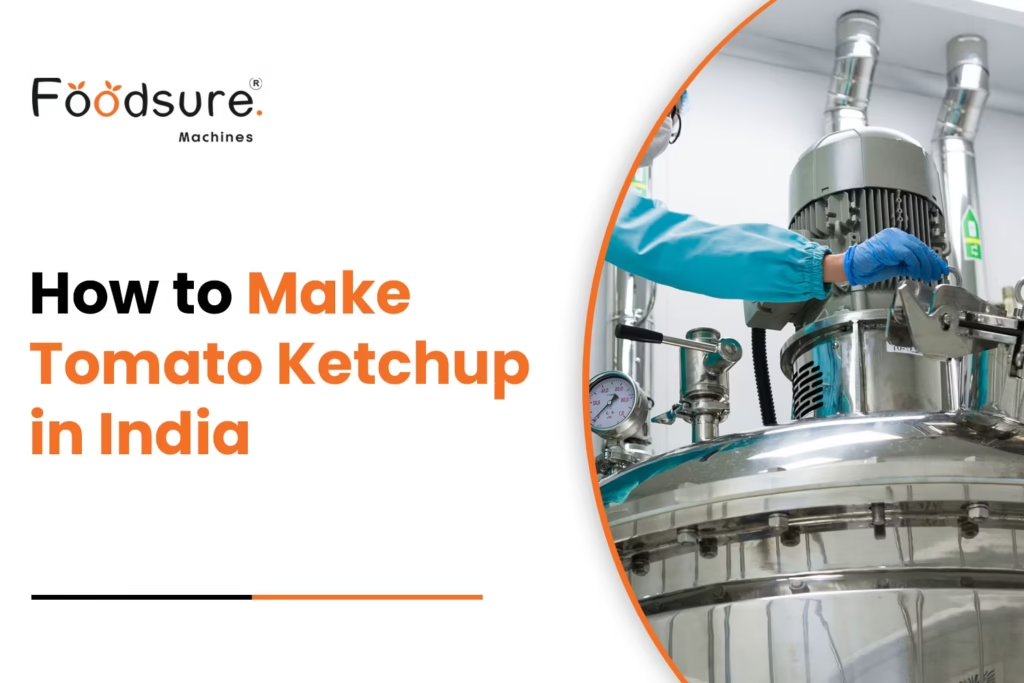
How to Make Tomato Ketchup in India is a staple condiment, consumed widely across households, schools, restaurants, and food chains. If you’re looking to start a ketchup manufacturing business, this guide will walk you through how to make ketchup with tomato, the tomato ketchup production process, the types of tomato ketchup machines, and how to buy ketchup machine locally. Whether you’re interested in a small-scale operation or setting up a large tomato ketchup processing plant, we have you covered. Top Reasons to Start a Tomato Ketchup Business in India India offers possibilities for growth, revenue, and access to production of tomato ketchup opportunity for food entrepreneurs, start-ups, and SHGs. The top reason for starting a tomato ketchup manufacturing. Significant Market Opportunity The tomato processing industry is a ₹4,000 crore industry in India tomato ketchup market. Ketchup and sauces are packaged in a method that they designed for consumers – there is always demand in cities, towns, and community primary schools. Considerable Consumer Base Ketchup is a popular item in both urban and rural settings. Schools just serve ketchup-based school lunches for many kids, street-food vendors use it, families use it after school, and fast food and restaurants use ketchup. Even export markets are emerging, with an increasing number of Indian ketchup manufacturers exporting ketchup with a focus on the Middle East and Southeast Asia. Shelf Stable Product When processed and packaged effectively, ketchup (to minimize waste from seasonal tomato availability) will last from 6-12 months, and also reduce spoilage losses by processing year-round sources of supply for the market. Low Capital Costs A small ketchup factory can be established in startup mode for a capital investment of ₹2-3 lakh, affordable for small businesses/startups/SHGs. Food processing machinery, easily followed recipes, and local conditions can allow a small, easy-to-follow entry point for start-up production that could start very small and increase production as demand grows. Profitable and Scalable Tomato ketchup making process yields large margins for transformation from fresh farm tomatoes to higher-value food products. It is a flexible model that can be a manual, semi-automatic line for entry-level production and move to full automation as the business grows. What You Need to Make Tomato Ketchup in India Tomatoes It is recommended to purchase green and ripe tomatoes that are bright red and have a Brix level of around 4.5-5+. Roma or hybrid varieties will provide the best product in terms of pulp content. You can generally find the best tomatoes from farmers in states such as Maharashtra, MP, Bihar, or Andhra Pradesh. Other Ingredients You will require sugar to provide sweetness and function as a natural preservative, vinegar or acetic acid to lower the sauce’s acidity, and spices such as onion, garlic, star anise, and cinnamon. If you have your desired, finished product presentation described in your mind. Step-by-Step Process: How to Make Tomato Ketchup in India Ingredient Qty (per 10kg batch) Purpose Tomato pulp 7 kg Base Sugar 2 kg Sweetness, body Vinegar 600 ml Preservation, pH control Spices (ground) 400 g Flavor Salt 200 g Taste, balance Processing Procedures of Tomato Ketchup Wash and blanch tomatoes (skin and seeds removed). Crush tomatoes and cook down pulp into a thickened consistency. Strain to get a smoother consistency. Mix in sugar, vinegar, salt, and spices → Simmer to achieve desired thickness. Pasteurize at 85–90°C (185–195°F) for 15-20 minutes. Hot fill into sterilized bottles or pouches. Seal, cool, label, and store. Tomato Ketchup Machines for Small and Large-Scale Production Machines for Small-Batch / Pilot Scale Typically, buy tomato ketchup machine locally, are less expensive and smaller than their industrial counterparts. A steam jacketed kettle (20-50L) is used to make the pulp. A steam jacket mixing kettle (20-50L) can either stir automatically or by hand, and helps reduce/prevent burning. A filling machine (manual/semi-auto) is used to fill various types of containers, including bottles and pouches. A basic pasteurizer also assists with shelf life. Industrial Tomato Ketchup Line For medium to larger ketchup plant manufacturer, there is an tomato ketchup making plant available with several different automation controls and throughput. A pulper/crusher is used to get the pulp at a batch volume. Cooking mixing kettles (500-1000L) are used for steam heating with auto stirring kettles. A homogenizer helps provide a smooth overall product. A pasteurizer (tubular/plate) is also passed for microbial safety. Filling line and Capping – 1,000+ bottles per hour. CIP system – Clean in place – Preference. How to Buy Tomato Ketchup Machine Locally & Find Ketchup Machine Supplier Near Me To buy a tomato ketchup machine locally and choose the right supplier near you, follow these key points: Search “tomato ketchup plant/machine supplier + your city” and check local industrial directories and manufacturer websites. Prefer vendors who specialize in tomato or sauce processing plants (kettle, pulper, homogenizer, filling and packing units). Confirm food-grade contact parts (SS304/SS316), CIP‑friendly design, and compliance with FSSAI, GMP, and ISO guidelines. Match ketchup manufacturing process capacity (kg/hr) and automation level (semi/automatic) with your planned daily production and future scale. Ask for customization options: hot‑fill vs cold‑fill, bottle/sachet/pouch filling, viscosity handling, and spice-mix flexibility. Evaluate after‑sales: installation, on‑site training, preventive maintenance, spares availability, and response time SLAs. Compare 2–3 quotations on total cost of ownership (price, power load, material, warranty, AMC, utilities needed, and space). How to Package and Brand Your Tomato Ketchup You can package in various formats: glass bottles, PET bottles, sachets, and doy packs. Sachets are typically used in fast-food outlets, while bottles are usually seen when purchased in the retail space, and pouches are usually only found when purchased from bulk buyers. (e.g., Studying end use would be valuable for maximizing sales). Labeling must be in accordance with FSSAI and packaging standards. How Much Does Ketchup Manufacturing Plant Cost? Expense / Revenue Item Cost (₹ per 10 kg batch) Notes Raw Materials (Tomatoes, spices, sugar, vinegar, etc.) ₹400 – ₹500 Quality tomatoes and food-grade ingredients Packaging (bottles, caps, labels) ₹200 – ₹300 Varies with glass / PET bottles and branding Overheads +
Industrial Emulsification vs High Shear Mayonnaise Machines: What Your Engineer Needs to Know
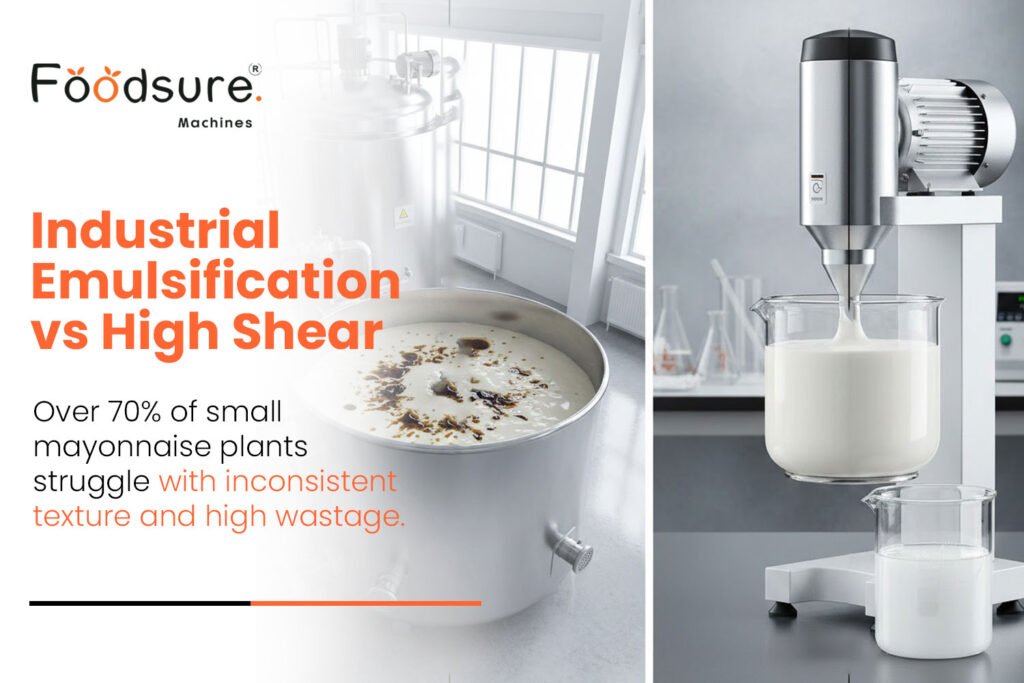
Over 70% of small mayonnaise plants struggle with inconsistent texture and high wastage. Between industrial emulsification vs high shear machines, which truly scales your factory? If your output stalls or costs soar, this blog reveals the hidden performance gaps your engineer must know to fix them. Why Choosing the Wrong Emulsification System Hurts Your Mayonnaise Production When the emulsion system is improperly matched with mayonnaise mixing technology, surface quality, stability, and expandability can be compromised. This is especially true for small FPOs (Farmer-Producer Organisation) and start-up companies. An incorrect match between the emulsifying system and mayonnaise production can create discontinuities in oil-in-water emulsions, resulting in waste, rejection, and higher costs. The following are risks associated with improper emulsion systems for mayonnaise: Inconsistent Texture: Poor shear mixing results in uneven droplet sizes, leading to grainy or separated batches that result in 20–30% batch rejection for failing sensory standards. Oil Separation: Poor levels of homogenization will result in the formation of cream and a shelf life of less than 3 months, resulting in spoilage and recall due to oxidation. Scalability: Fixed-capacity batch mixers will add 15-20% to the cost per kilogram as production grows, or during scale-up, and will not allow for inline upgrading. Investment Traps: Startups will tend to over-purchase, oversized unitary systems or under-capacity, resulting in capital being locked up with no return on investment and non-compliance with FSSC 22000 standards. What Is Industrial Emulsification? Industrial emulsifiers are capable of producing stable emulsions using very high shear forces. The production of a uniform mayonnaise requires a uniform emulsification. How Industrial Emulsifiers Work: A rotor-stator model is made up of a fast-rotating rotor that fits inside a fixed stator. The rotor rotates at speeds up to 30 m/s, drawing the material into it, creating large shear forces that break the oil into 1-5μm droplets through viscous turbulence, and expelling the fine emulsifying mixture of droplets through the discharge valve. High-pressure versions of industrial emulsifiers employ a positive displacement pump to pump a liquid mixture through a valve at pressures between 100-2000 bar. Production Capacity and Industries: The production capacity of industrial emulsifiers ranges from 500kg/hr to 2,000kg/hr for batch mode production, while the same industrial emulsifiers in continuous-mode run can produce upwards of 5,000kg/hr. Commercial and industrial mayonnaise companies use industrial emulsifying systems to produce mayonnaise types that contain high oil levels (60%-80%) and also produce sauces and dressings. Best Applications for Industrial Emulsifiers: Industrial emulsifying systems are designed to accommodate very high continuous volumes and to be used in plants that operate on a continuous basis (24/7). Also read: Mayonnaise Machine Price India: 2026 Cost Guide & ROI What Is a High-Shear Mayonnaise Machine? Through intense mechanical force using rotor-stator technology, high shear mayonnaise machines create stable emulsions (oil droplets evenly dispersed in water phases). The rotor-stator principle is as follows: A high-speed rotating rotor creates a narrow gap between itself and the stationary stator. The force of the rotating rotor draws materials into this narrow gap, where experienced tip speeds of up to 30 m/s. This shear rate creates turbulence and cavitation, which results in the breaking apart of the oil droplets into 1-5μm size droplets. For mayonnaise producers to maintain a consistent product texture throughout the life of their products, it is essential to utilise the higher shearing rates of the high shear mayonnaise machines. The use of low shear (below 10,000s-1) results in inconsistently sized oil droplets, which produces grainy or split mayonnaise and contributes to a significantly shorter shelf life. The average output range of units is 50-500kg/h. This is the ideal output range for pilot plants, start-ups, and mid-scale FPOs that are looking to transition from lab to commercial without making excessive investments in equipment. Advanced Insights into Emulsification Systems Food Processing Emulsification Solutions: Ensures stable emulsions with uniform texture. High-shear emulsification breaks oil into 1-5μm droplets for smoothness. Optimizes process control with automation for consistency and reduced waste. Industrial Mixing and Emulsifying System: Uses rotor-stator technology to create uniform emulsions. Designed for both batch and continuous production. Customizable for varying viscosities and production volumes. Industrial Food Emulsification Technology: High-pressure homogenization creates finer oil droplets for stable emulsions. Nanoemulsions and microfluidics offer enhanced texture and stability. Focus on energy efficiency and sustainability, including ultrasonic emulsification. Each of these systems ensures optimal quality, scalability, and cost-effectiveness in large-scale food production. Industrial Emulsification vs High Shear: A Clear Side-by-Side Comparison for Mayonnaise Plants Factor Industrial Emulsification High-Shear Mayonnaise Machine Texture control Superior, ensures ultra-smooth, stable emulsions even in large batches Good for small batches, but may show slight graininess in high-volume production Batch consistency Very high, replicable results across multiple shifts Moderate; variations can occur when scaling up Oil incorporation Optimal, handles higher oil ratios efficiently Adequate; may require adjustments for richer recipes Scalability Excellent, ideal for large industrial plants Limited to small-to-medium production Maintenance Medium-high, specialised parts require skilled technicians Low-to-medium; simpler design, easier to clean Cost efficiency Best for large-scale plants, ROI improves with volume Best for small setups; lower upfront cost, but less scalable Industrial Emulsification vs High Shear: Which System Fits Your Factory Size? The production of mayonnaise is broken down into three groups of producers depending on their needs, small (usually high-shear emulsifiers)manufacturers and growing brands (budgeting for 1 to 2 tons/day), and multi-shift industrial plants. The first group typically uses high-shear machines with low start-up costs (usually well below $20,000), allowing flexibility with recipe development (200 to 1000 kg/day). For India, these are the preferred emulsification systems for scaling from lab tests to commercial production. The second product type is industrial emulsifiers with a cost associated with producing products at 1-2 tons per day, plus a 30% lower rejection rate than high-shear production due to inline processing, which further enables these emulsifiers to provide a cost-effective means to transition pilot products to commercial products by allowing incremental modularity, providing a more efficient processing for 8-hour shifts. The third group of producers are fully equipped industrial
How to Start a Tomato Sauce Business in India: Machines, Cost & Setup
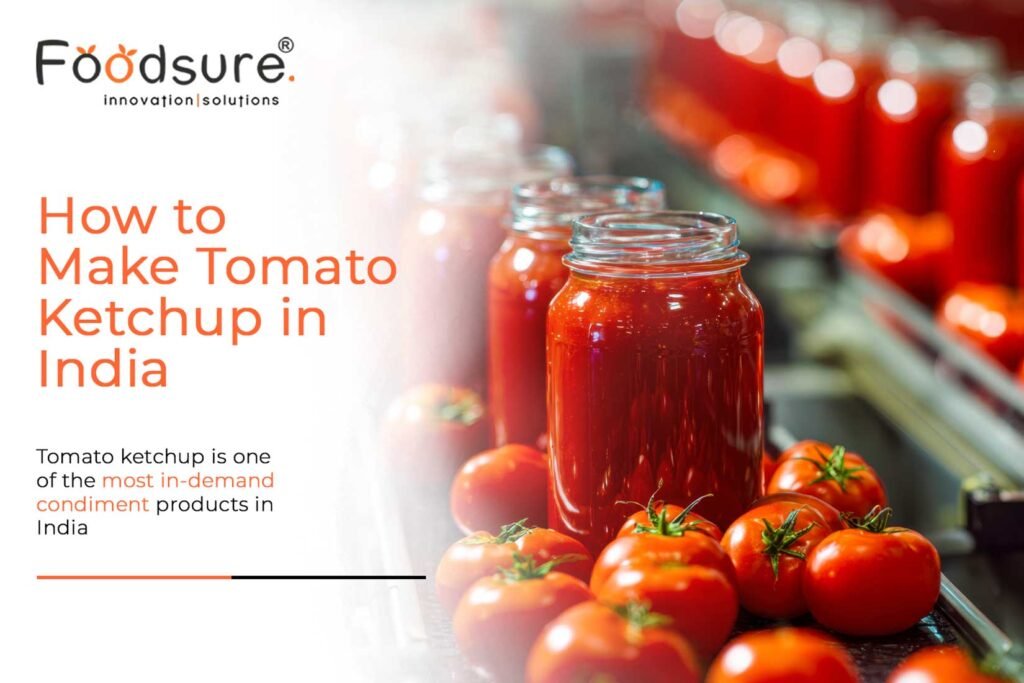
India produces more tomatoes than most countries in the world, yet the majority are sold at wafer-thin margins. For processors, this gap between production and profitability is where tomato sauce and ketchup manufacturing begins to make sense. What looks like a simple product on the shelf actually depends on the right processing machine, correct batch control, and food safety compliance. Many first-time manufacturers invest in tomato sauce machines without fully understanding how to make tomato ketchup at scale, the ketchup manufacturing process, or the realities of a tomato ketchup recipe commercial scale, and realise the mistake only after production starts. This guide breaks down how tomato sauce businesses actually work in India from choosing the right tomato sauce making machine and understanding plant costs, to compliance, suppliers, and profitability. So you can plan your unit with clarity before investing. Why Tomato Sauce Demand in India Is Growing Every Year The processed sauce making machine market in India is on an upswing: In 2023, the Indian tomato ketchup and sauces market was a touch above ₹1,200 crore, growing approximately 5-6% CAGR. The increase in consumption of fast food, snacks, and semi-prepared food is driving demand for tomato-based condiments, including sauces and ketchup. While Indian tomato paste and sauces have already gained traction in the Middle East and Europe, opportunities are also available in Africa. Tomatoes are grown throughout India, and the over 21 million tonnes of tomatoes produced each year guarantee growth in the supply chain for processors. As demand rises, understanding the ketchup manufacturing process and using the right machinery becomes essential to maintain consistency, shelf life, and margins, especially when scaling beyond small batches. Read More: Tomato Ketchup Market Size, Demand & Growth Trends in India [2026] Choosing the Right Tomato Sauce Machine for Your Business The biggest mistake first-time manufacturers make is buying a machine based on price, not production reality. A low-cost machine may not support the actual tomato ketchup recipe commercial scale required for market demand, leading to bottlenecks, hygiene failures, or uneven consistency. Here’s how to choose the right tomato sauce machine based on where your business actually stands. Semi-Automatic Tomato Sauce Machines Semi-automatic machines work best for regional brands and first-time manufacturers who are testing demand or supplying local markets. These systems automate cooking, heating, and mixing, but still rely on manual handling for ingredient loading and packing. They are suitable if: Your daily output is limited. You want lower upfront investment. You are comfortable with some manual labour The trade-off is scalability. As demand increases, labour dependency and batch inconsistency begin to affect margins. Fully Automatic Tomato Sauce Production Lines Fully automatic lines are designed for commercial-scale units, exporters, and co-packers. These systems automate tomato processing from washing and pulping to cooking, homogenising, filling, and sealing with minimal human intervention. They make sense when: Output consistency matters. Hygiene compliance is critical. Labour costs are rising. You plan to scale without frequent upgrades. Although the initial investment is higher, fully automatic plants usually deliver lower cost per unit, better shelf stability, and predictable production over time. The Practical Rule If your goal is to stay small, semi-automatic machines control risk. If your goal is to grow, fully automatic lines control cost. Top Features to Look for in a Tomato Sauce Machine Food-Grade Stainless Steel Every contact surface and every component in contact with food must be made out of SS304 and SS316, which offer hygiene, chemical, and rust protection and are easy to clean. Stainless steel meets not only construction standards and safety standards, but also reduces the risk of contamination. Uniform Heating and Homogenising Machines should have controllable heating options (electric or vapour) that have mixing/homogenising capabilities to provide automated blending of the product and provide a universally blended, lump-free consistency. The importance of uniform consistency is especially important for raw ingredients like tomato sauce and ketchup. Energy Efficiency Tomato ketchup machines should utilise insulated tank heating vessels and motors and processes that are energy efficient. Any reduction in energy consumption will lead to a reduction in operating cost and thus improve the operating profit for the producer. Automatic Filling and Sealing Automatic filling and sealing units are necessary to lower the labour costs of the plant workforce and also increase the speed of output. Increased speed is an absolute must with semi-automatic and fully automatic plants. A tomato sauce manufacturing unit offering the option to fill needs the capacity to dose accurately and also be adjustable, seal cleanly, and seal to a standard to eliminate, to the highest degree possible, pack integrity concerns. Read More: Affordable Tomato Sauce Making Machine Price That Boosts Your Production and Profits Licenses and Food Safety Rules for Starting a Tomato Sauce Business If you are looking to sell tomato sauce in the Indian market commercially, you will require an FSSAI licence (either Registration, State, or Central), depending on the capacity of your plant, to ensure compliance for food safety purposes. You will also require a food safety label on the packaging for your product, which will require adding to the label the ingredients, nutrition information, batch number, expiry date, and food safety and standards information. Wholesaler or retailer sales will also require GST registration. The processes will ensure you are compliant to trade your product legally and safely, and produce products where you can be confident your consumers & other buyers will trust. Choosing the Right Supplier for Tomato Sauce Machines Quality Assurance: It is important to prevent impurities, ensure long machine life, ensure food safety, and ensure product quality. After-Sales Support: A Trustworthy supplier gives after-sales support, which will reduce break time of the machine, servicing, available service parts, and trained operators. Scalability: Scalability allows for the supplier to have upgrades and modular solutions for growth and minimise the costs of new equipment. Working with a supplier tomato sauce manufacturers in India, who has these advantages, a company can conserve operating costs, extend long-term capital investment, and assure consistent product quality. Read More: Tomato
Top 4 Energy Bar Machine Manufacturers in Gujarat – 2026 Price Comparison
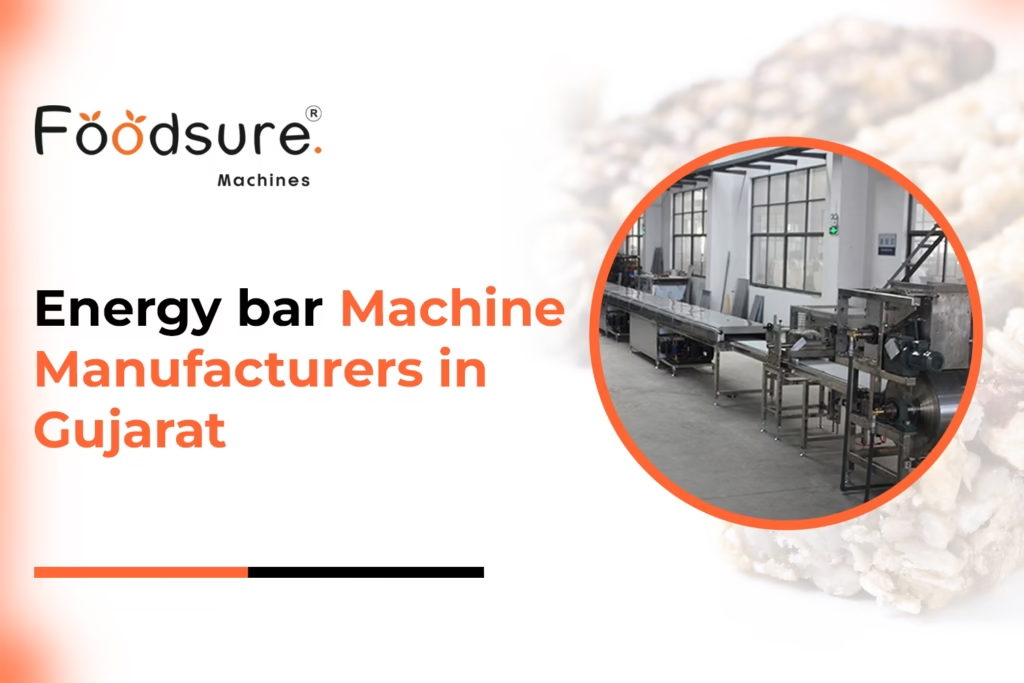
Choosing an energy bar machine manufacturers in Gujarat is no longer just about starting production. It is about choosing a setup that controls costs, maintains hygiene, and scales smoothly as demand grows. Many manufacturers begin with a low-cost machine, only to face uneven bar sizes, frequent downtime, and capacity limits within months. In Gujarat, where demand for protein and nutrition bars is rising fast, the right energy bar manufacturing machine can directly impact your margins. Prices range from small ₹1.5–5 lakh startup machines to fully automatic lines producing up to 500 kg per hour. The challenge is knowing which manufacturer and machine actually fit your business stage. This guide compares the top energy bar machine manufacturers in Gujarat, their machine types, capacity ranges, and ideal use cases so you can make a confident, profit-focused decision before investing. Quick Buyer Snapshot: Energy Bar Manufacturing Machine in Gujarat Startup / Pilot Setup ₹1.5 – 5 lakh (Approx) Best for test batches & new brands Output: 25–80 kg/hour Semi-Automatic Units ₹6 – 15 lakh (Approx) Ideal for growing manufacturers Output: 50–150 kg/hour Fully Automatic Lines ₹18 – 40+ lakh (Approx) Low labour, high consistency Output: Up to 500 kg/hour Who should go fully automatic? Brands planning scale-up, exports, or multi-flavour production. Top Energy Bar Machine Supplier in Gujarat (Side-by-Side Comparison) Manufacturer Machine Type Capacity Range Best For Why Choose Foodsure Machines Semi & Fully Automatic Lines Up to 500 kg/hour Scaling brands & large units High automation, hygiene, strong after-sales Snackfoodmachines (Kanchan Metals) Tabletop & Semi-Automatic 25–120 kg/hour Startups & pilot plants Compact, low power, quick setup ABC Agro & Food Machine Semi & Automatic Nutrition Bar Lines 50–200 kg/hour Product experimentation & variety Recipe flexibility & customization Shriram Associate Nutrition Bar Machines 50–250 kg/hour SMEs upgrading production Low maintenance, steady output Foodsure Machines Experience & Certifications: We have been in this business for over 13+ years and hold an ISO 9001:2015 certification. Machines Key Features: High automation with PLC controls and a touch-screen interface. Recipe memory for consistency. Our energy bar manufacturing machine are made of stainless steel (SS304/316), designed for hygiene and long-lasting use. Automatic energy bar machines have adjustable settings for different bar sizes, along with electric heating mixers for even blending. These machines have also automated servo blades for uniform cutting and included flow-wrap packaging. We also provide training and installation support, plus a 1-year warranty. What this really means is you get a scalable, hygienic setup trusted by businesses searching for an energy bar machine manufacturer near me who can support growth without compromise. Advantages: Excellent hygiene and food safety compliance. Fast changeovers between different bar types. Trustworthy in post-sales service. Snackfoodmachines (Kanchan Metals Pvt Ltd) Experience & Certifications: They have been working in the snack machinery space for over 15 years. Key Features: Their machines are designed for space-saving, easy operation, and cleanliness. Automatic energy bar machines handle accurate bar molding, cooling, energy bar cutting machine, and wrapping. You can easily perform quick changeovers, and setup assistance is included. Advantages: Their machines need minimal space and energy requirements. It is affordable for startups and pilot plants. abcfoodmachine (ABC Agro & Food Machine India Pvt Ltd) Experience & Certifications: They have been around for 20+ years and are a registered manufacturer-exporter with the IndiaMART Trust Seal. Key Features: Their machines support diverse recipes, protein bars, chikki, and granola. Machine service parts are made with stainless steel and equipped with efficient extruders, rollers, and cutters. They also offer recipe guidance and remote technical support. Pros: Works well for Indian flavors and both export and local markets. Flexible options for startups adding new products. Shriram Associate Experience & Certifications: With over 15 years of experience, they specialize in nutritional bar and snack equipment. Key Features: Their machines are low-maintenance, efficient designs. Meets GMP(Good Manufacturing Practices) hygiene standards and is easy to operate. Their machines do quick cleaning, real-time monitoring, and technical support. Pros: Durable, cost-effective machines with support for recipe development. Scalable setups for SMEs and larger units. Easy to integrate with packing lines. How to Pick the Right Manufacturer to Help Your Energy Bar Business Succeed Match Machine Capacity to Your Business Needs Always buy a machines that match scalability as your demand grows. There are two types of machines: the first is semi-automatic, which has a 50kg/hr capacity, ideal for small-scale production. The other is fully automatic machines in Gujarat, which range from 50 kg/hr up to 500 kg/hr, ideal for large-scale production. It helps you align investment with actual production goals. Prioritize Quality, Hygiene, and Certifications Machine service parts should be made of food-grade stainless steel (SS304/316) construction. Because it is important for hygiene, efficiency, and safety certifications like FSSAI and ISO 9001:2015. Check Training and After-Sales Service Local installation, operator training, and spare parts availability matter, especially if you are searching for an energy bar machine manufacturer near me. Balance Cost with Long-Term Value Do not just go for the cheapest energy bar production line. Focus on warranties, maintenance ease, and proven efficiency. Slightly higher upfront investment often pays off in fewer breakdowns and smoother production. Read More: Everything You Should Know Before Buying an Energy Bar Machine Conclusions Choosing an energy bar machine manufacturer in Gujarat is about more than price comparison. The right machine must align with your production scale, hygiene standards, and long-term growth plans. Businesses that buy energy bar machine locally from reliable suppliers benefit from faster service, smoother scaling, and reduced downtime. Comparing manufacturers on automation level, output capacity, and after-sales support ensures a confident investment decision. At Foodsure Machines, we help brands select energy bar machines that balance cost, automation, and scalability, making us a trusted choice for businesses searching for an energy bar machine manufacturer near me. Expert guidance today can prevent costly reinvestment tomorrow. Have a Question? Let’s Connect! Please reach out to us anytime via phone or email. 📞 Call Us ✉️ Email Now FAQs Which energy bar machine manufacturers in Gujarat offer export
Energy Bar Production Line Cost & Automation in India (2026 ROI Guide)
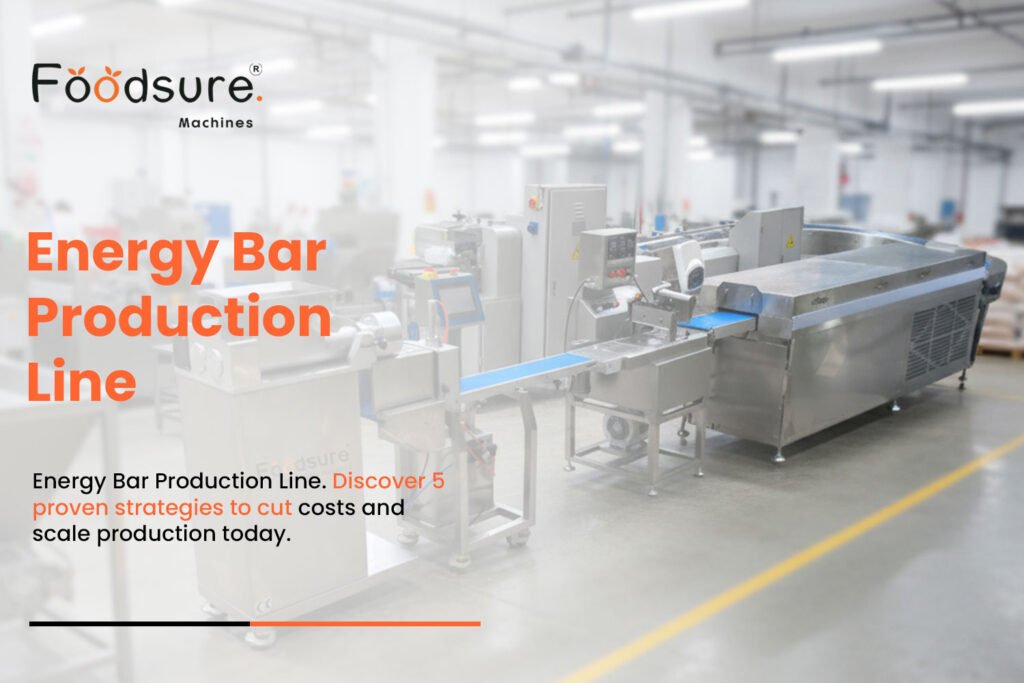
Nearly 40% of energy bar profits are lost due to inefficient production line design. Rising raw material prices, labour shortages, and outdated workflows silently eat into margins for growing energy bar manufacturers. What starts as a low-cost setup often turns into high wastage, inconsistent output, and rising operational stress as volumes increase. This guide explains how manufacturers cut production costs by 30–40% by redesigning their energy bar production line. You’ll see actual cost ranges, automation choices, and capacity trade-offs so you can decide what makes financial sense before investing further. Quick Cost Snapshot Small-Scale Line ₹35 – 80 Lakh Industrial Line ₹3.5 – 8 Crore Cost Reduction Potential 30 – 40% Small-Scale vs Industrial Energy Bar Production Line: Cost Comparison Cost & Feature Category Small-Scale Energy Bar Production Line Industrial Energy Bar Production Line Production Capacity 50 – 200 kg/hr (Startup / Pilot) 500 – 2,000+ kg/hr (Industrial) Automation Level Semi-automatic, operator-assisted Fully automated PLC & HMI controlled Mixing System Planetary / ribbon mixer High-torque continuous industrial mixer Mixer Cost ₹3 – 8 Lakh ₹25 – 60 Lakh Ingredient Dosing Basic load-cell or semi-manual Automated multi-ingredient dosing Forming & Cutting Semi-auto slab former & cutter High-speed automatic former with guillotine Forming & Cutting Cost ₹6 – 12 Lakh ₹40 – 90 Lakh Cooling System Short conveyor or static cooling Multi-zone industrial cooling tunnel Cooling Equipment Cost ₹4 – 8 Lakh ₹35 – 70 Lakh Optional Enrobing Tabletop unit (optional) Full-width continuous enrober Enrobing Cost ₹6 – 10 Lakh ₹50 Lakh – ₹1.2 Cr Packaging Type Semi-automatic flow wrapper High-speed servo flow wrap line Packaging Machine Cost ₹10 – 18 Lakh ₹60 Lakh – ₹1.5 Cr Quality Control Manual inspection & basic testing Inline metal detector & check-weigher QC Equipment Cost ₹2 – 4 Lakh ₹20 – 50 Lakh Labour per Shift 6 – 10 operators 2 – 4 operators Total Line Investment ₹35 – 80 Lakh ₹3.5 – 8 Crore Best For Startups, D2C brands, pilot batches FMCG brands, export & contract manufacturing What’s Driving High Energy Bar Manufacturing Plant Cost in Growing Factories Founded on a small scale of operation, many small businesses produce their own energy bars line using less expensive manual or semi-automated equipment. This keeps initial costs low for the owner (the entrepreneur), but it can also create additional unknown control costs in future years as your volume grows. The most important issues facing small energy bar producers include: Inconsistent mixing can lead to loss of some batches. A high reliance on human labour for the forming, cutting, and handling of energy bars. The manual movement of raw materials can lead to more waste in each batch of production. Bottlenecks can develop between the mixing, cooling, and packing processes. The 5 Biggest Cost Drivers in an Energy Bar Production Line Understanding where costs originate is the first step toward reducing them. Loss of Material When Mixed: User error with mixers, whether it is with improper technique when using a machine or mixing by hand without adequate experience, will cause uneven or too much contamination in the product. When you look at getting a 2-3% loss per batch is what you have at the end of the month, that number will begin to build. Manual Cutting and Forming Waste: Manual forming of the bars alone can yield different weights for each bar, resulting in: Overweight bars (loss of material). Underweight bars (loss of quality). Worker Intensive: The majority of smaller operations have a minimum of 8-12 workers per shift solely to form, handle, and align the materials. The cost of each of these people will increase yearly; however, the amount of output remains static. Poor Setting/Cooling of Bars: If bars are improperly set or cooled, they will become warped, bent, or stuck at the time of packing. This will lead to downtime during the packing process. Energy and Maintenance Waste: Motor sizes that are larger than what is needed, poor insulation, and unplanned and frequent maintenance will cause higher energy costs and unscheduled interruptions of production. Automation Strategies That Cut Energy Bar Manufacturing Costs by 40% The smartest way to energy bar machine your work process is to make sure that you identify and automate the right stages of your process so that you do not have to spend a lot of money on bar processing line to achieve good results. Continuous Mixer vs Batch Mixer: Using a continuous mixer allows you to produce a product that has a consistent appearance and texture, taste, and has the added benefit of lower raw material loss and fewer operators needed to run the machine. $5 to $7 per 100 lbs of labor and raw material costs saved. Automatic Bar Forming and Cutting: With a servo-controlled bar forming and cutting machine, you will automate the processes of bar forming and cutting, with the benefits of: A consistent weight for each bar was produced. Less waste of materials in cutting. An increase in production rate (more bars produced / hour) $10 to $15 per 100 lbs on raw material and reject costs saved. Inline Cooling System: A patented inline cooling system stabilizes the product before packaging, resulting in lower product breakage and lower production downtime costs. Less time lost due to product breakage and less time spent repacking products due to the inline cooling system. One Operator Model Production Line: With a well-designed automatic energy bar production line, you will have only 2-3 operators to operate the line, vs 8-10 on a traditional energy bar production machines. Therefore, you will save 12-18% on your labor expense each year. Real-World Example: 500 kg/day Unit That Reduced Costs by 38% An average-sized nutritional product company that manufactures protein and energy bars had been impacted by increased labour costs resulting in inconsistently weighted bars. With the installation of an automated bar forming, cutting, and heating/cooling system: Labor Reduced: The number of labourers decreased from nine personnel working per shift to three personnel. Raw material loss changed from a
Find the Best Protein Bar Machine in Kanpur with Affordable Prices & Trusted Manufacturers
A few years ago, protein bars were rare in Kanpur. Today, local shops in Kanpur and startups are joining the health snack trend. What is helping them? The right protein bar machine in Kanpur and trusted suppliers of machines that help them grow their business. With an advanced protein bar manufacturing machine, the same high-quality product is consistently produced, reducing mistakes and making scaling simple. Let’s turn your simple ingredients into ready-to-sell protein bars. Kanpur’s trusted protein bar equipment is made for growth. Protein Bar Machine Supplier In Kanpur That Support You from Setup to Success Foodsure Machines Best for: Startups → Large-scale manufacturers. Capacity: 200–1000 kg/hr (automatic extruder lines). Certifications: ISO 9001:2015, ISO 22000. Experience: 13+ years across India & exports.. Social Proof: 120+ verified IndiaMART reviews Kanpur Support: On-site installation, operator training, spare parts. Notable Features: PLC touchscreen control, SS304 food-grade build, custom dies, nitrogen-flush packaging. Hovert Machines & Furnaces Pvt. Ltd. Best for: Custom industrial setups Capacity: Built-to-order food bar extrusion systems. Certifications: ISO 9001:2008, GST verified. Experience: Established in 1995. Ratings: 4.8★ on Justdial, 3.6★ on IndiaMART. Kanpur Support: Local service team + rapid installation. Strength: Engineering reliability & long-term maintenance. Vecchocotech Best for: Precision & premium bar manufacturing. Capacity: Up to 400 kg/hr. Certifications: In-house QA lab, export-ready standards. Experience: Serving since 2009. Core Strength: Chocolate enrobing + protein bar lines. Features: Modular machines, exact dosing, energy efficiency. Snackfoodmachines Best for: End-to-end turnkey food lines. Capacity: 100–900 kg/hr full production lines. Compliance: CE-compliant parts, FSSAI-ready, EU imports. Support: Remote troubleshooting + on-site installation. Automation: Semi & fully automatic stainless-steel systems. Local Support & Delivery in Kanpur All brands provide protein bar extruder machine demos, warranties, spares, and support in Kanpur. Installations are typically completed within 30–90 days of order. Warranty options available for 1–2 years, with AMC plans offered for ongoing service. How to Choose the Right Protein Bar Machine with the Features That Matter Most These machine service parts are made from SS304 stainless steel, which makes machines easy to clean, also keeping hygiene and maintenance simple. High-speed cutting with zero-waste technology that cuts each bar carefully while minimizing product loss, so you save on raw materials. Touchscreen PLC for programmable settings that help you switch recipes quickly, automate mixing, extrusion, and cutting, and adapt to changing production needs. Precision cooling conveyor that maintains the shape and texture of each bar, ensuring consistent quality batch after batch. Low power consumption with optimized throughput. Designed to run efficiently, reducing energy costs while maximizing output for continuous production. Adjustable and cost-effective production, which offers control, trustworthiness, and efficiency without unnecessary detail, is perfect for scaling your protein bar business. The Real Costs of Protein Bar Manufacturing Machines in Kanpur Before you buy protein bar machine locally, you need to understand what it really costs to set up a Protein Bar Plant Setup in Kanpur. What that means is you get to know the price of the equipment and, factoring in installation, operator training, raw materials, and ongoing maintenance, before investing in a business. Category Semi-Automatic Fully Automatic Capacity (kg/hr) 50–200 200–500 Base Machine Cost (₹) 4,70,000 – 6,50,000 12,00,000 – 36,00,000 Installation & Training (₹) 50,000 – 1,00,000 1,00,000 – 2,00,000 Ingredients & Raw Material Cost (₹/month) 50,000 – 1,50,000 1,50,000 – 3,50,000 Maintenance / AMC (₹/year) 40,000 – 80,000 80,000 – 1,50,000 Total Minimum Investment (₹) 5,60,000 14,50,000 Total Maximum Investment (₹) 9,80,000 43,00,000 Conclusion Choosing the right protein bar machine in Kanpur sets the stage for a profitable production setup. At Foodsure Machines, we provide automatic machines with features like touchscreen controls, high-speed cutting, and energy-efficient designs. What this really means is you can scale your production smoothly while keeping every bar consistent in quality. You also get certified, trusted equipment, transparent pricing, and post-sales support you can trust. So your margins stay healthy and your business can grow without unnecessary risk. Request Your Free Quote Fast Please reach out to us anytime via phone or email. 📞 Call Us ✉️ Email Now FAQ Q1. Is a protein bar machine profitable in Kanpur?Yes, automation lowers labor costs and waste, increasing profit margins. Q2. Who should invest in protein bar machines?Startups, gyms, FMCG units, and nutrition-focused brands benefit most. Q3. Is India’s protein bar market growing fast?Yes, rising health awareness is driving strong nationwide demand. Q4. Are protein bars profitable to manufacture in bulk?Yes, bulk production with machines delivers high ROI and consistency. Q5. What is the cheapest protein base for bars in Kanpur?Peanuts and oats are the most cost-effective protein ingredients. Q6. How much space is needed for a protein bar machine setup?Around 300–600 sq. ft. is sufficient for small to mid-scale setups. Q7. Can one machine handle multiple protein bar recipes?Yes, PLC-controlled machines allow quick recipe and size changes. Q8. What is the minimum investment to start protein bar production?You can start from around ₹5–6 lakh with a semi-automatic machine. Q9. Are protein bar machines easy to operate for beginners?Yes, most suppliers provide training and user-friendly controls. Q10. How long does it take to install a protein bar machine in Kanpur?Installation typically takes 30–90 days after order confirmation.
Protein Bar Manufacturing Machine in Kolkata – Cost, Capacity & Best Dealers (2026 Guide)
Kolkata is witnessing rapid growth in health-food startups and mid-scale food manufacturers, and protein bars are one of the fastest-moving categories.If you are planning to set up a protein bar unit, two questions matter the most: What is the real cost of a protein bar manufacturing machine in Kolkata? Which commercial protein bar machine can you actually trust for long-term production? The answers are simpler than they appear. It comes down to choosing the right automation level and working with a reliable dealer. Best Protein Bar Manufacturing Machine in Kolkata: Semi vs Fully Automatic machine Choosing the right protein bar production line depends on your production goals, budget, and how you want to be. Semi-Automatic Protein Bar Machine A semi-automatic protein bar machine makes sense if you are just entering the protein bar business through smaller batches. Because it easily handles the heavy work like mixing, pressing, and shaping, but you will still need people on the floor to manage feeding and packaging. Capacity: 500–800 bars/hour. Cost: ₹6–10 lakh (varies by size & features). Why choose it: Low investment, recipe flexibility, perfect for trials. Trade-offs: More labor, slower output, batch-to-batch downtime. Fully Automatic Protein Bar Machine If your production goals are bigger, a fully automatic machine is the smart choice. Because it takes care of every step like mixing, forming, cutting, cooling, and packaging without any labor help. Capacity: 2,000–5,000+ bars/hour. Cost: ₹15–30 lakh (depends on automation level). Why choose it: Uniform bar size, reduced labor, higher efficiency. Trade-offs: Higher upfront cost, requires stable demand. Read More: Automatic vs Semi-Automatic Machines for Protein Bar Production (2025 Guide) Cost Comparison for Protein Bar Manufacturing Machines in Kolkata The costs are clearly stated, so you can see what it takes to set up each type of industrial protein bar manufacturing machine in Kolkata. This table includes both the initial investment and expected service costs over time. Machine Type Production Capacity Approx. Setup Cost (INR) Best For Service & Maintenance Costs (INR) Semi-Automatic 500–800 bars/hour ₹8–12 lakhs Startups & Small-scale production 1 week: ₹5,000 Fully Automatic 1,000–5,000+ bars/hour ₹15–40 lakhs Growing & established businesses 1 week: ₹10,000 Choosing Protein Bar Machine Dealers in Kolkata & Key Features Picking a protein bar machine supplier is not just about the protein bar making machine price list. It’s about the right Protein Bar Manufacturers near me that can save you from headaches, break time, and extra costs down the line. Make sure the dealer offers both semi-automatic and fully automatic protein bar equipment to match your production goals. Always check if they provide you with on-site service, service parts, and operator training. Buy protein bar machine locally with experience handling multiple protein bar processing machine setups in Kolkata or pan-India. Ask about dealer warranty terms, replacement parts, and routine maintenance plans. If possible, see the protein bar-making machine in action. It helps you avoid any surprises once the bar cutting machine is on your floor. Which Protein Bar Manufacturing Machine Setup Is Right for You The right protein bar making machine depends on your production goals, budget, and how much hands-on work you want to do. Semi-Automatic: This protein bar production line is ideal if you are testing the market and starting small. It gives you the capacity to change with new recipes and batches. You will handle some manual work, but it keeps costs low. Fully Automatic: Best if your demand is stable or you plan to scale. It easily handles everything from mixing to wrapping, make sure your consistent quality, and cuts down on labor. In short:Semi-automatic = flexibility + low risk.Fully automatic = efficiency + scale. Read More: Protein Bar Manufacturing Equipment: Solve Output & Consistency Issues Wrap-Up: Choosing Your Protein Bar Manufacturing Machine in Kolkata Selecting the right protein bar manufacturing machine in Kolkata sets the foundation for smooth production and growth. At Foodsure Machines, we offer both semi-automatic and fully automatic options, making it easier for startups and established manufacturers to scale confidently. Request a Quote – Get in touch with us today to explore our semi-automatic and fully automatic protein bar machines in Kolkata. Request Your Free Quote Fast Please reach out to us anytime via phone or email. 📞 Call Us ✉️ Email Now FAQ Q1. What is the cost of a protein bar manufacturing machine in Kolkata?₹8–12 lakh for semi-automatic; ₹15–40 lakh for fully automatic setups. Q2. Which machine is better for Kolkata manufacturers?Semi-automatic for startups; fully automatic for high-volume production. Q3. What is the capacity of a small protein bar unit?Around 500–800 bars per hour. Q4. What is the price range overall?₹2.5 lakh to ₹25+ lakh depending on scale and automation. Q5. Is the protein bar market growing in Kolkata?Yes, demand is rising with fitness and health-food trends. Q6. How are protein bars made using machines?Mixing → forming → compressing → cutting → optional wrapping. Q7. Small-scale protein bar machine price in Kolkata?₹2.5–5 lakh for basic starter models. Q8. Fully automatic machine price?₹10–25 lakh depending on output. Q9. High-capacity production line cost?₹20 lakh+ for commercial-scale operations. Q10. Is the protein bar business profitable?Yes, margins of 20–40% are common with steady demand.
How to Make Protein Bars Recipe for Small-Scale Production with Machines
Protein bars are one of the fastest-growing healthy snacks in India today. In this guide, you’ll learn exactly how to make protein bars step-by-step, from choosing the right ingredients to perfecting your recipe. Plus, discover modern Protein Bar Machines that help small food businesses produce consistent, hygienic, and market-ready bars with ease. Start turning your protein bar idea into a profitable snack business today What Are Protein Bars Made Of? Ingredients and Purpose Explained Protein bars are small snacks that are concentrated sources of nutrition that making them a quick and easy food and protein source that gives energy and nutrients. How protein bars are made and common ingredients in protein bars: Protein powder (whey, soy, or pea) Oats or puffed grains A natural sweetener (honey or dates) Nut butter or a binding agent It is also very common to see different flavorings, seeds or grains, and some form of dried fruit in many of the recipes of protein bars. The primary purpose or function of protein bar making process for muscle recovery, as a quick meal while on the go, or for daily intake of protein. Knowing the basic ingredients is the first step to creating a well-balanced protein bar as a small food entrepreneur. Why Protein Bars Are the Next Big Snack Trend Rapid Market Growth: Due to an increase in demand for healthy, on-the-go snacking options, the protein bar market is growing rapidly in India. The protein bar market is already a billion-dollar market worldwide, and India represents a large, growing, untapped market. Behavioral Shift in Eating: Protein bars are consumed outside of the home, especially with many going to the gym, taking them out of the home to the office, or even at home instead of biscuits and chips. Lowering Risk for Small Producer: The low cost of ingredients, as well as the low-cost protein bar machines, lowers the risk of an initial investment for small producers to access this growing market. Lower Cost of Entry + Expanding Market = Opportunity: There are lower costs of entry (of production) and more of a market and sales growth in healthful snack food. This presents a win-win for new food producers to introduce a protein bar into this market. Healthy Trends: There are more people engaged in and aware of fitness and urban lifestyles, which leads to more demand for easier access to protein-rich and healthy on-the-go snack options. Step-by-Step: How to Make Protein Bars Step 1 – Prepare the Dry Ingredients Weigh out the protein powders, oats, seeds, and any flavoring powders if you will use them. Sift together; this is to eliminate lumps and mix evenly. It is also important to provide a structure, next to nutrition, in dry ingredients. Step 2 – Incorporating the Liquid Ingredients Mix in any nut butter, honey, syrup, or other binding agents. Move this all together thoroughly until it is sticky but still moldable. In general, you do not want to mix for too long, or your bars might become hard. Step 3 – Shape or Extrude If you have them, use molds, trays, or a Protein Bar Machine to shape your bars so they are uniform and provide the desired shape and size. Press down in molds, trays, and the protein bar making machine as this helps with even thickness and will provide assistance cooling or cooking process. Step 4 – Cool, Coat, Wrap Cool your bars so they hold their shape. You might coat with chocolate or yogurt. If going to coat, you should do this after completely cooling, while still molding them if using tray(s), molds, or Protein Bar Machine. It is best to wrap Protein bars in an airtight wrap immediately after making for freshness and protein bars fridge shelf life 7 days, and hygiene reasons. Protein Bar Production Process: Machines and Equipment Overview The benefits of the Experience protein bar manufacturing process are: Automated protein bar manufacturing process: The bars can be mixed, formed, cut, and wrapped with minimal human touch. Speed is consistent. Consistent product quality: Each bar will be as consistent as possible in height, weight, and density. This is best from a food safety perspective and in terms of presentation. Technical specifications: Capacity: 50-500 kg/hr (this is the load for what you need), Bar size: 25-80 g, Power: 5-7 kW, Base: capacity for any base – nut based, cereal based, enrobing, etc. Options: cooling tunnel, chocolate enrobing line, flow wrap line etc, There is flexibility for small batch or large batch. Small scale: Upon demand (10-50kg/hr), suitable for new business or R&D trials. Large scale (100-500kg/hr) suitable for commercial scale. How to Fix Common Problems When Make Protein Bars Even when using a good recipe, you may face some potential problems when preparing a protein bar: Bars are too dry or crumbly: This could often be a result of too little binder (i.e., nut butter, syrup, or honey). I would try to increase the binder slowly, and the mixes should come together in a nice cohesive state, but not sticky. Bars are sticking to the roller or mold: If your mixture is too soft/warm, it will stick to the roller or mold. You will want to put it in the refrigerator for approximately 10-15 minutes and dust the surface of the mixture with protein powder or flour. Bars have an inconsistent texture: Consider your mixing process. All ingredients should be mixed evenly. If you are extruding the ingredients, ensure the pressure is applied evenly each time, or the extrusion will have areas of density or airiness. How to Turn Your Protein Bar Recipe into a Profitable Business Transitioning the experience from creating a recipe at home your own to the other side of having an actual small-scale protein bar production process requires preparation. Start building a full budget, including predicted expenses for: Ingredients, Packaging, Equipment, which could include a protein bar manufacturing equipment that allows you to create the actual protein bars consistently. Small-scale may mean some different things, but from a
Best Energy Bar Manufacturing Machines in Delhi NCR – 2026 Price & ROI Guide
Starting an energy bar business sounds exciting, but choosing the wrong manufacturing machine can quietly limit your growth. Many snack brands struggle with uneven bar sizes, slow production, hygiene issues, or machines that cannot scale once demand increases. That is where working with the right energy bar machine manufacturer near me and investing in reliable energy bar manufacturing machines in Delhi NCR makes all the difference. Whether you are a startup testing the market or a growing brand planning bulk production, the real questions are simple: How much does an energy bar machine cost? Which capacity is right for your business today? And which machine will still support you tomorrow when orders increase? This guide breaks down the 3 best energy bar manufacturing machines in Delhi NCR, comparing their cost, capacity, features, and ideal use cases so you can make a confident, profit-focused decision. For many entrepreneurs searching online for an energy bar machine manufacturer near me, Delhi NCR stands out as one of India’s strongest hubs for reliable snack and health bar equipment. Choose Trusted Health Bar & Snack Bar Equipment Manufacturer in Delhi NCR Foodsure Machines Experience: Foodsure Machines have been helping startups and growing brands for over 13 years. We know the challenges small businesses face. Types of Machines: There are two types of machines: a semi-automatic energy bar machine and a fully automatic energy bar machine. So, you can pick a machine that is perfect for your needs. Construction: Our machine parts are made from stainless steel (SS304 or SS316), which is easy to clean and made to last long. Output: It gives you an output between 50 and 500 kg per hour, depending on what you need and what type of machine you use. Post-Sales Support: We offer a one-year warranty, ISO certifications, and on-site installation, end-to-end support. This makes your business grow more smoothly. Customer Rating: People give our service a 4.8 out of 5, mostly for trustworthiness and support. Many first-time buyers looking for an energy bar machine manufacturer near me prefer Foodsure Machines because of our hands-on support and scalable equipment options. Kalyan Machines Experience: They have been in the food equipment space for more than 15 years. Their clients range from local brands to large-scale production. Types of Machines: Semi-automatic and fully automatic lines that you can adjust depending on your scale. Construction: Food-grade stainless steel that is hygienic and easy to maintain. Output: They provide a flexible setups that handle both trial batches and large production runs. Post-Sales Support: They also provide post-sales support with ISO-certified products, warranty-backed servicing, and operator training. Customer Rating: 4.7 out of 5 from users who value how dependable and user-friendly their machines are. PapaMachines Experience: They have spent 8 years working with health food startups and larger manufacturers, so they understand what scaling looks like. Types of Machines: They have two types of energy bar machines, semi-automatic and fully automatic options, that are made to handle different recipes and product textures. Construction: These machines have strong stainless steel frames designed for long-term use without cutting corners on safety. Output: Lines that adapt easily to multiple flavors and packaging formats, giving you flexibility. Post-Sales Support:They back their machines with warranties and on-site service to fix issues before they become problems. Customer Rating: 4.6 out of 5, with customers highlighting how easy it is to use and how efficient it is to run. Energy Bar Manufacturing Machine in Delhi NCR: Total Cost, Makhana Machine Price & ROI Insights Understanding these price ranges helps avoid unexpected issues during machine selection later. Machine / Model Approx. Cost (₹) Capacity Automation Best For Automatic Energy Bar Making Machine ₹25,00,000 75 bars/min Fully Automatic Mid-scale commercial units Energy Bar Sheeting & Cutting Machine ₹21,00,000 Model-based Automatic Custom bar shapes & sizes Energy Bar Extruder & Cutting Machine ₹65,00,000 Industrial output Fully Automatic Large manufacturing plants Nutrition Bar Machine (50 kg/hr) ₹3,50,000 50 kg/hr Semi / Automatic Startups & small brands Bar Processing Machines ₹4,54,000 Config-based Auto / Semi Pilot & flexible setups Notes on Pricing & Options: 1. Mini & Startup Machines (₹3-5 L): Entry-level nutrition bar making machines (capacity 50 kg/hr) are ideal for startups or test runs. Lower cost but limited throughput. 2. Mid-Tier Automatic Lines (₹20-25 L): Automatic bar making machines with sheeting and cutting improve consistency and reduce manual labor. Good for commercial units scaling up to several hundred kg/day. 3. Industrial / High-Capacity Machines (₹60 L+): Full extruder + shaping + cutting lines support high volumes with PLC/automation and robust stainless steel builds. Best for large production plants or multi-product output. 4. Custom Production Plant Options: Suppliers in Delhi NCR / Pan India also provide modular lines (50–200 kg/hr and above) with conveyors, cooling tunnels, and packaging options (prices often from ₹18,50,000 and up depending on scope). Top Features to Look for in an Energy Bar Manufacturing Machine in Delhi NCR That Supports Growth To make your nutrition bars delhi ncr bigger business, your energy bar production line needs to be flexible and able to make a lot of bars at once. Here are the most important parts of a energy bar line: Scalable Output: Look for a snack bar machine that can handle between 50 and 500kg per hour. This lets you go from making a few energy bars to making a lot of them without having to redo everything. PLC- Touchscreen Control: PLC systems allow advanced equipment that makes protein bars to be accurate to within ±1% of their weight. It is very important to do this for expensive products when making nutrition bars. High-Torque Extrusion: To work with sticky date pastes or thick protein mixes like those found in protein bar machines in Delhi, a strong energy bar machine needs high-torque motors. SS304/316 Build: This is necessary for FSSAI compliant protein bar in Delhi NCR to be clean and last long time. Modular Design: A modular design bar making machine lets you add cooling tubes, chocolate enrobers or snack
Protein Bar Manufacturing Machine in Delhi – Leading Manufacturers & Dealers
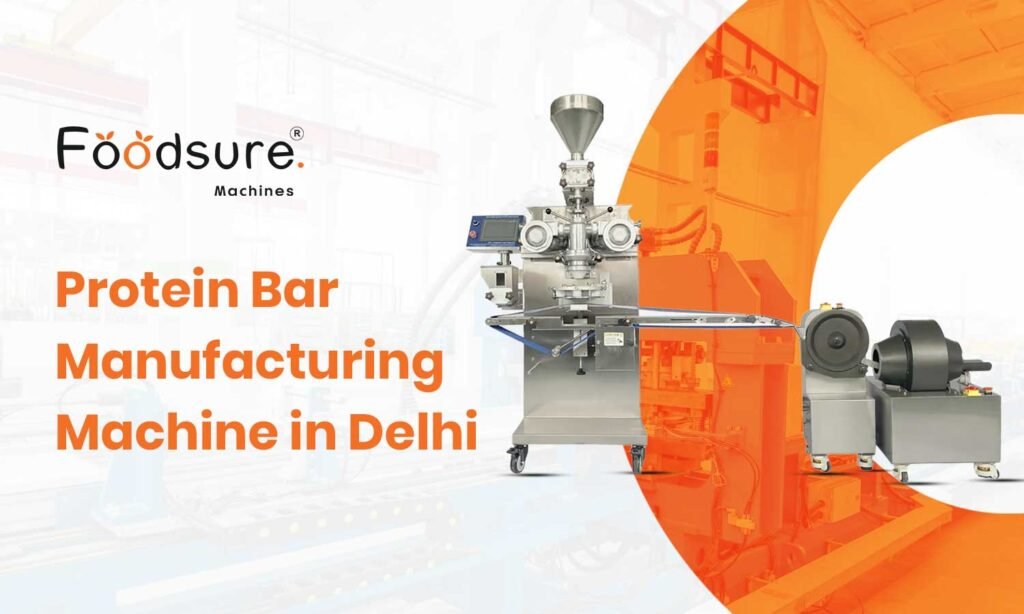
Protein bars have become one of the fastest-growing product categories, making Delhi a center for the health food industry. The first significant step toward increasing production for both startups and established companies is frequently locating the ideal Protein Bar Manufacturing Machine in Delhi. The city has a variety of reputable dealers and producers that can cater to diverse business demands, including small-scale machinery for beginners and sophisticated automated lines for bigger facilities. Best Protein Bar Manufacturing Machine in Delhi for Startups The greatest challenge for new brands entering the health food market is striking a balance between price and quality. This is why Delhi’s small protein bar making machine is frequently the wisest option. These machines have a restricted output, but they have all the necessary features to assist a new business in getting started. Things startups should look out for before making a purchase: Capacity: A machine that makes between 100 and 300 bars every hour is ideal for trials and local sales. Price: Since smaller devices are less expensive, you don’t need to invest a lot of money upfront. Easy to use: The simple controls make it easy for your team to pick up the skills, eliminating the need for extra training. Service: Dealers in Delhi typically provide spare parts and local assistance as necessary. These protein bar manufacturing machine in Delhi enable you to experiment with recipes, enter the market, and expand gradually by beginning with smaller equipment. Upgrading becomes simpler and more affordable as sales increase. Top 5 Protein Bar Machine Manufacturers in Delhi NCR Delhi NCR has several reputable protein bar machine supplier in delhi retailers who can accommodate a wide range of budgets and production demands if you’re considering launching a protein bar business. Five of them are listed below: 1. Foodsure Machines Foodsure Machines is well-known for its completely automated protein bar equipment, which are made for large-scale manufacturing. Our models are made of stainless steel for hygiene and longevity and can handle up to 500 kg per hour. The cost is approximately ₹47,20,000. We also run out of Delhi’s Samaypur Badli Industrial Area and offer complimentary samples and a one-year guarantee. 2. Kalyan Machines Energy and nutrition bar making machine are Kalyan’s forte because they are quick and efficient. Their machines, which are built with SS304 and a 415V power source, produce about 100 bars per minute, or 250 kg per hour, and cost about 7,50,000 rupees to start. The firm provides services throughout Delhi and the rest of India and is renowned for its consistent performance. 3. Shriram Partners Nutritional bar machines that are straightforward, robust, and adaptable are the focus of Shriram Associates. With prices beginning at about ₹1,80,000, they are a decent choice for smaller companies. They send equipment across the country and offer a one-year guarantee. 4. Hembros Foods LLP The protein bars and the machinery that makes them are both made by Hembros. They are a go-to option for dependable, mid-range bar production solutions because they are situated close to Delhi NCR. 5. Armbolic Diet Armbolic Nutrition provides machinery as well as manufacturing services and has more than 16 years of expertise in the field. From their Delhi base, they assist firms in their search for reliable machinery supported by practical experience. Delhi NCR offers providers for every level of growth, ranging from affordable alternatives like Shriram Associates to massive solutions from Kalyan and Foodsure. Read more: Top Protein Bar Machine Consultants in India (2025 Guide) Guide for Protein Bar Making Machine Price in Delhi Machine Type Production Capacity Ballpark Price (INR) Best For Basic / Entry-Level 50–300 bars per hour ₹1,50,000 – ₹2,00,000 Startups testing recipes or small-scale production Mid-Range / Semi-Automatic 300–500 bars per hour ₹5,00,000 – ₹10,00,000 Growing businesses needing steady output High-End / Fully Automatic 500+ bars per hour ₹25,00,000 – ₹50,00,000+ Large factories with high-volume production The cost of a protein bar extruder machine in Delhi varies from ₹5 to 50 lakh, depending on the model’s speed, performance, and level of adjustment. Buying the correct gear from the start ensures consistent quality and promotes future expansion. How to Select the Right Dealer in Delhi Selecting the appropriate buy protein bar machine locally may save you time, money, and a great deal of annoyance. There are numerous suppliers in Delhi, but not all of them assist what a new business or small manufacturer needs. Here is a short checklist to assist you in choosing the best option: Warranty and Support: Make sure the dealer offers a decent guarantee. Your protein bar machine is protected from malfunctions by a warranty that lasts at least a year. Availability of Spare Parts: Machines need regular maintenance You will save time and money by using a local dealer who carries replacement parts. Instruction and Training: Make sure the dealership provides training for your employees. Without adequate training, even a little machine might operate inefficiently. Experience and Reputation: Seek out retailers who have been in the protein bar industry in Delhi for a long time or have earned excellent reviews. Choosing a dealer for a protein bar machine dealer near me in Delhi wisely ensures a trustworthy relationship, a smooth production process, and fewer surprises as your business grows. Read More: Top Protein & Energy Bar Machine Manufacturer in India (2025) – Trusted by Leading Food Brands Take the Next Step Towards Your Protein Bar Business There are several dependable protein bar manufacturing equipment India retailers that are suitable for both startups and expanding enterprises. Select a energy bar manufacturing machine according to the size, budget, and output requirements of your business. When choosing a dealer, always inquire about warranty, spare parts, and employee training. Begin small, experiment with your recipes, and grow steadily. Foodsure Machines support a complete factory setup with installation, training, and guidance. 🚀 Let’s Work Together! Have questions or need support? Connect with us instantly. 📞 Call Now✉️ Email Now FAQ What is the cost of a protein bar
Energy Bar vs Protein Bar Machines: A Complete Breakdown for Manufacturers
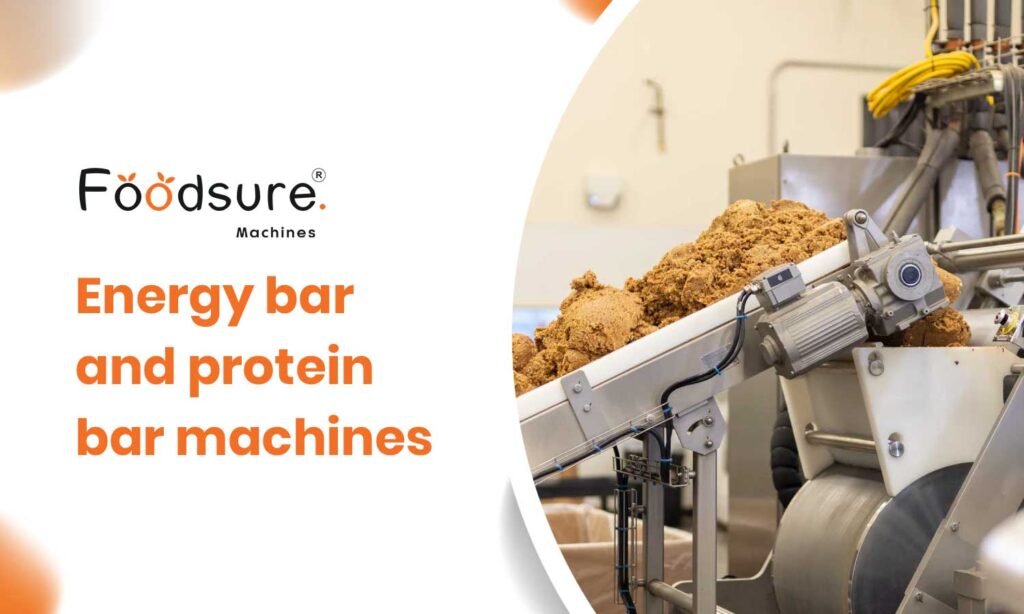
Choosing between an energy bar machine and a protein bar machine is a crucial decision for manufacturers stepping into the healthy snack industry. While they may look similar, these machines serve different purposes, cater to different recipes, and come with varying costs and functionalities. Making the right choice can significantly impact your production efficiency, cost-effectiveness, and long-term business growth. This guide helps simplify the decision-making process by breaking down the key differences between energy bar and protein bar machines. Why Energy Bar and Protein Bar Machines Matter for Manufacturers Manufacturers often get caught up in specifications and prices when selecting industrial equipment for snack and health bar production. However, the real difference comes down to how frequently your machines operate, how quickly they produce bars, and whether the final product meets your nutritional and quality goals. Equipment Selection Impact: The choice of machine affects cost, performance, product consistency, and reliability. Protein Bar Machines: These machines are more expensive due to their stronger mixers and sophisticated cooling systems. Energy Bar Machines: These are more flexible, cost-friendly, and often more adaptable for smaller setups. So, the better question is not “Which machine is better?” but rather, “Which one fits your production goals and product needs?” Energy Bar Machines: The Smart Investment for Small to Medium Setups process flow (mixing, extrusion, cutting, coating) Energy bar machines operate straightforwardly: Combine the oats, nuts, and syrups to create a consistent mixture. Extrude the mixture into rolls or slabs. Slice the slabs into uniform bar sizes. If desired, add chocolate or yogurt. passing via packaging and cooling tunnels. This healthy energy bar manufacturing machine process is straightforward, affordable, and productive. Fruit-based goods, cereal bars, granola bars, and other foods that don’t require a lot of protein binding work well with it. Best suited for small/medium setups Energy bar machines are a wise initial move if you’re a mid-sized or small factory. They are straightforward to install, operate, and don’t need costly customization. You achieve consistent results while maintaining a reasonable budget. Protein Bar Machines Explained Protein bars are more challenging. The powders they contain, such whey or soy, are thick and sticky, which makes mixing more difficult. Because of this, the machinery used to make protein bars is manufactured differently. Mixers that stop clumping. Extruders with high pressure to force out thick mixtures. Cooling tunnels that prevent bars from drooping. accurate weight precision cutters. Given the uniqueness of each recipe, many plants choose tailored protein bar machine solutions to manage particular textures and components. scalability for large manufacturers protein bar equipment are the way to go if you’re looking for large-scale manufacturing. Although they are more expensive up front, their consistency, accuracy, and speed make them a worthwhile investment for large manufacturers and exporters. Read More: Start a Protein Bar Business Customization and Recipe Flexibility in Energy and Protein Bar Machines When buying a protein bar manufacturing machine, one of the most important things you will want to consider is how well your machine can adapt to your recipes. Every bar is different, so your energy bar and protein bar machines should be able to adapt to what your customers desire. Mixing Different Recipes: Both energy bar machines easily process oats, nuts, fruits, and light syrups while protein bar machines are designed for thicker, denser, sticky mixes with protein powders or isolates. Changing Batch Sizes: You want to test new flavors or run low batch sizes? energy bar making machine are quick and easy to adjust. Protein bar machines can also adjust for different recipes and run a different recipe without losing consistency and quality. Coat Options: A coating of chocolate, yogurt, or protein glaze could also be coated on both machines. Protein bars usually require more precision to avoid cracks or uneven layers. Extruding Extra Features: Some factories add special attachments such as hexa-type coating units, cooling tunnels, and automated cutters to provide premium shapes and finishes. The takeaway? food processing equipment for snack and health bar production that can change recipes and batch sizes will enable faster testing new flavors, meet customer demand, and grow your business without needing to buy a new line every time. Energy Bar vs Protein Bar Machines – Key Differences Let’s put Energy Bar and Protein bar production machines side by side. Feature Energy Bar Machine Protein Bar Machine Mixing Handles light mixes like oats & fruits Built for dense, protein-heavy mixes Extrusion Standard forming/extrusion High-pressure extrusion Cooling Basic cooling tunnels Advanced cooling for heavy bars Coating Handles chocolate/yogurt coatings easily Needs precise control to avoid cracks Cost Lower investment Higher investment Best For Small/medium setups Large-scale, export-focused factories Customization Usually standard models Often customized for recipes How to Choose the Right Machine for Your Business Buying equipment is more about fit than price. Here is a straightforward checklist before you purchase an energy bar machine for start-ups and factories: Your decision checklist: Are you producing energy bars, protein bars, or both. Do you need flexible runs or high volume specialization? Current batch size, and how quickly will you scale? Does your recipe require a high-pressure extrusion? Can you accommodate additional cooling set-ups in your Factory? Will you need some component to customize your recipe? Local market or export? Read More: Automatic Vs Semi-Automatic Protein Bar Machines Protein bar vs energy bar machine: Which Fits You? Choosing between energy bar and protein bar machines really depends on what you want for your company. If you’re going for quick product launches, lighter recipes, or lower entry costs, an energy bar machine will be the best option. However, if you’re looking for large batches, high protein bars, or to meet export requirements, then a protein bar machine is designed to produce that reliably and easily. For factories that want easily operated, reliable, and supported equipment, Foodsure Machines can provide equipment to produce energy bars or protein bars. Book a Free Machine Consultation Reach out to us anytime via call or email. 📞 Call us✉️ Email
Master the Protein Bar Production Process: A Quick Guide
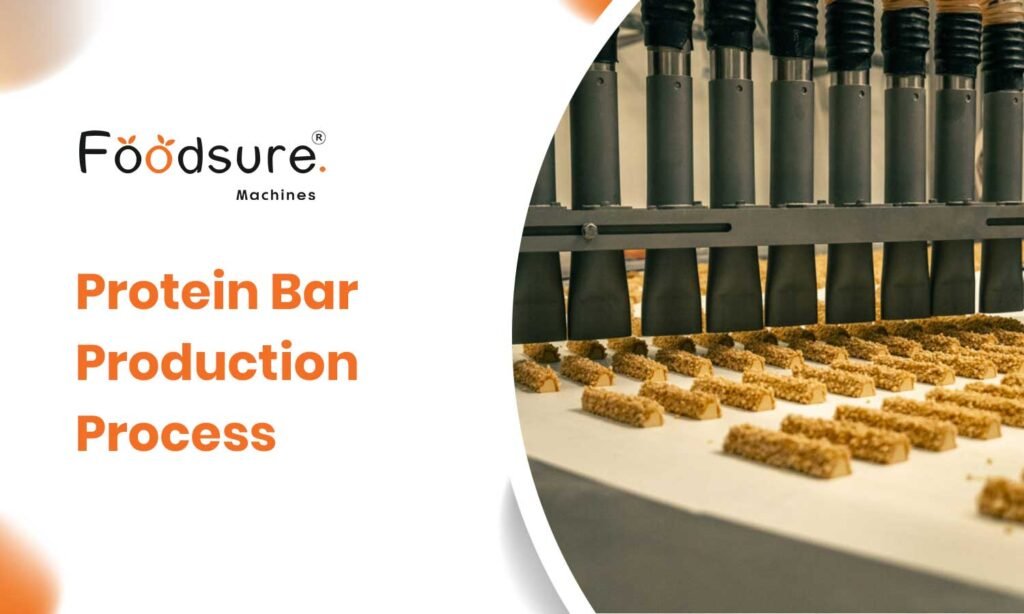
Protein bars have quickly transitioned from being a gym bag staple to a must-have snack found on grocery store shelves. But have you ever wondered what goes into creating these perfectly wrapped, protein-packed treats? Whether you’re someone curious about the behind-the-scenes process or you’re thinking of starting your own protein bar business, this guide reveals everything you need to know about protein bar production. Unlock the secrets of how these bars are made and discover how you can join the booming health food industry. Understanding the Protein Bar Production Process The protein bar production process is a series of steps that takes raw materials and creates a finished product. Begin by selecting high-quality proteins, binders, and flavorings so that the texture is the same and incorporated when everything is mixed. For additional flavor, the mixture is formed into slabs, chopped into bars, and occasionally coated with chocolate or yogurt. The bars are packaged to maintain freshness after they have cooled enough to maintain their form. Each stage maintains the bar’s safety, flavor, and consistency. Protein Bar Manufacturing Process Step by Step The protein bar manufacturing process may be broken down into these easy steps: Ingredient Selection and Preparation Proteins, sweeteners, binders, and flavorings are purchased. The safety and compliance of the components are examined. Hexa-Type Coating Some protein bar recipes begin with a hexa-type coating step, which adds a protective layer for texture, stability, and improved shelf life. Mixing and Blending Dry and wet ingredients are blended in industrial mixers. The goal is a consistent texture without lumps. Extrusion or Shaping Extrusion equipment is used to mold the blended mixture into continuous slabs or bars. Cutting The slabs are divided into consistent bar lengths using automated cutters. Optional Coating Some bars are coated in chocolate or yogurt layers for taste and variety. Cooling The bars are stabilized by cooling tunnels, which also prevent melting or sticking during packing. Packing To preserve freshness, bars are sealed in airtight packaging by wrapping machines. Distribution and Storage Prior to reaching merchants, packaged bars are kept in regulated environments. Read More: How to Make Protein Bars Recipe for Small-Scale Production with Machines Protein Bar Factory Setup Guide If you’re planning to start a protein bar factory, the first thing to figure out is the layout of your production line. A good snack bar manufacturing process makes work faster, cuts down on waste, and keeps everything running smoothly. This Protein Bar Factory Setup Guide gives you an easy layout plan that covers where to place bar processing line, how the workflow should move, and how to separate hygiene zones and storage areas. Space Arrangement: Combine, shape, pack, and store to create an interesting environment. Certification and Licensing: Get food safety approvals such as FSSAI in India or FDA in the United States. Equipment: Get the machines you need: a mixer, an extruder, a cooling tunnel, and a packing machine. Utilities: Make sure you have backup power, water, waste, and air metering. Training for Employees: Employees should be knowledgeable about machine operation and sanitation procedures. Read More: Everything Indian Manufacturers Need to Know About Protein Bar Extruders Cost of Protein Bar Production Cost Component Description Estimated Cost Range (INR) Raw Ingredients Protein powders, oats, nuts, and sweeteners ₹120 – ₹200 per kg Mixing Equipment Mixers, blenders, feeders ₹2,00,000 – ₹5,00,000 Extrusion & Shaping Machine Shapes bars uniformly ₹4,00,000 – ₹12,00,000 Coating & Cooling System For chocolate or flavor coating ₹3,00,000 – ₹8,00,000 Packaging Material Wrappers, pouches, boxes ₹1 – ₹3 per bar Labor & Utilities Workers, electricity, water ₹50,000 – ₹1,50,000 per month Quality & Compliance Testing, certifications, audits ₹20,000 – ₹80,000 annually Industrial Protein Bar Equipment Though at first all Industrial protein bar equipment might seem too much, each one is performing a basic duty. Like a relay, they collaborate step by step until you get a finished protein bar. Here’s how it goes: Mixing and Blending Machine Here starts the procedure. A smooth, even foundation is created by combining proteins, sweeteners, and binders. Since lumpy, uneven bars result from a poorly combined base, this stage is crucial. Extrusion Machine Once mixed, the dough-like blend is pushed through an extruder that shapes it into a steady slab or rope shape. The extruder molds the shape that provides a consistent size and almost identical texture for each bar. Cutting Machine Now, the slab is cut into bars. The cutting machine is designed so that each cut piece will weigh the same and look the same. This is how you will know the label on the wrapper will be the same as what’s inside. Coating Machine (Optional) If your protein bar contains chocolate or yogurt or has a flavored layer, the coating machine applies the extra taste and makes the end product more eye-catching for consumers. Packaging Machine This step protects your bars. The packaging machine wraps your bars in film or foil, sealing them airtight to keep them fresh for longer and extend their shelf life. Good packaging also brings your bars to the store shelf. Quality Control Equipment At every step, there are sensors and monitors registering accuracy—be it weight, size, or seal quality. This is what keeps your bars safe, compliant, and consistent. Often, when beginners see the protein bar manufacturing equipment process, it feels like a large industrial setup. But breaking it down machine by machine is just one logical chain: mix → shape → cut → coat → pack → check. Each step is important in producing a bar that is uniform, tasty, and safe to eat. Case Study: Small Factory to Retail Success with Foodsure Machines In Pune, a small entrepreneur partnered with Foodsure Machines to set up their protein bar unit. With an investment of around ₹25 lakhs in protein bar production line, installation, and licenses, they started production. At first, their protein bar cost per kg was about ₹650. Foodsure Machines team helped them optimize raw material sourcing and shift to
Unlock the Secrets to Starting a Profitable Protein Bar Business: Beginner’s Guide
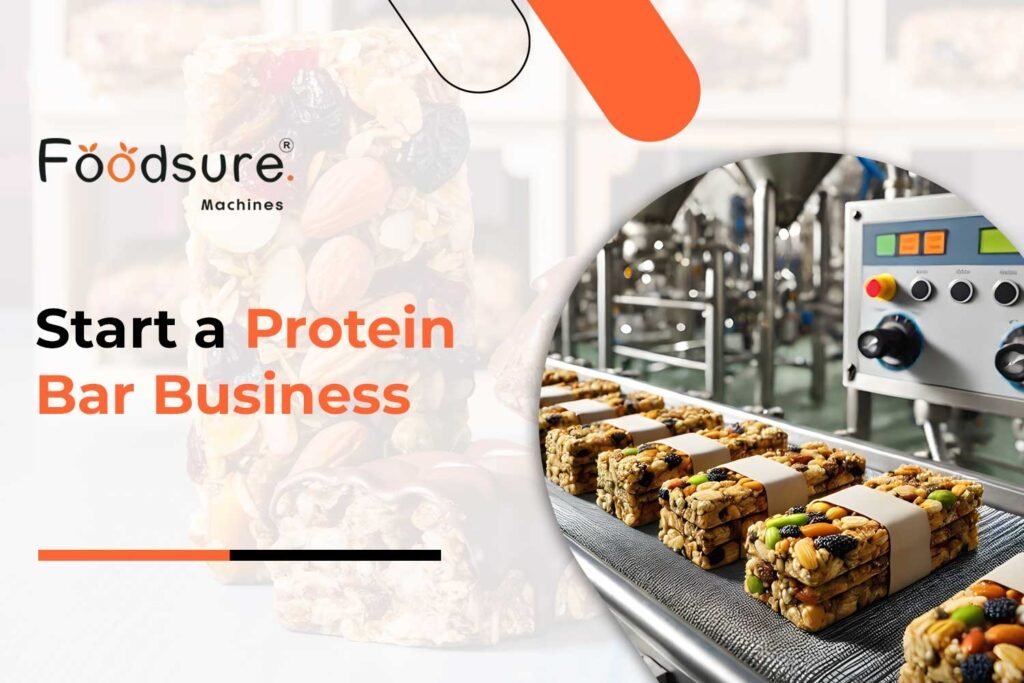
In India, the functional foods industry is booming, with protein bars leading the charge. The global protein bar market is set to hit USD 14.26 billion by 2024, and India’s market alone is worth over USD 860 million. If you’re ready to seize this opportunity, this guide will show you everything you need to know—from recipe creation to choosing the right equipment and ensuring compliance. Why Start a Protein Bar Business India Now? The functional foods industry is expanding in India, and protein bar industry are at the forefront. The global protein bar market is anticipated to reach over USD 14.26 billion by 2024. The protein bar market size in India was USD 863.9 million in 2024 (Statista) and is growing, with health-conscious urban consumers leading the growth. This is your cue, as this is the time to enter this market. If you have considered protein bars, go for it. Whether as a sole proprietor or a food start-up, you could reasonably enter this space for much less than you ever thought you could if you put in the effort. Craft the Right Recipe to Start a Protein Bar Company Before you get into designing your label or consider any marketing, get a product to sell. Protein Options: Whey: A high biological value protein has a branding history with strength training. Plant: Pea protein, soy protein, rice protein, or plant proteins would play into the vegan markets. Novel: Chickpea protein, lentil protein, or protein from your region could add value to your offering. Nutrition Goals: Protein – Each bar to contain between 12 and 20 g (industry tastings). Calories – 180-250 kcal that fit with a fitness/snacking lifestyle. Sugar – < 7-10 g (preferably organic sweetener). Shelf life & stability: 3-4 months on bars, or having stabilisers, could mean 9-12 months shelf life. Package matters too. Pairing between shelf life and brand aesthetic. How to Make Protein Bars How to Choose the Right Protein Bar Machine for Your Business Protein bar machines may be semi-automatic or fully automatic, depending on the needs of a specific protein bar startup. Semi-Automatic Protein Bar Machines Semi-automatic machines can work for small or medium businesses, as they require a person to perform one or more steps, such as feeding the product ingredients into the machine, forming the bars, or cutting the bars. Semi-automatic machines are also typically less expensive and more flexible, and you would also have a more hands-on approach throughout the protein bar-making process. This can be advantageous for start-up businesses or businesses experimenting with new formulations. However, the output is typically less (around 50-200 kg/hour) and will need more labour to achieve consistency throughout batching and packaging. Fully Automatic Protein Bar Machines On the other hand, completely automatic systems combine all the steps (mixing, forming, cutting, packaging, etc.) on a PLC or by digital controls on all steps to minimise labour, assure homogenous quality, and produce products. At a volume range of approximately 250 kg per hour to 500 kg per hour, to meet high-level production standards. The costs are higher than all previous systems; however, this system provides benefits in that it will use significantly less labour, increase production throughput, promote quality consistency, and offer worker hygiene protection. Overall, provide a more efficient process for mass production or scaled-up production if the company is mass-distributing the product. Automatic vs Semi-Automatic Machines for Protein Bar Production How to Handle Compliance and Labelling for Protein Bars Here are some of the main compliance requirements for protein bar labelling and manufacturing within India: First of all, if you will be selling your product, you will need to apply for an FSSAI licence first. All batches would need to have positive lab tests, if you are using lab tests, for nutritional facts, microbes (if testing for), and shelf life. The labelling would need to have a nutrition facts panel detailing for every serving the total amount of protein, fats, carbohydrates, sugars, and calories. Allergens need to be indicated; some common allergens you may want to note are milk/whey protein powders, soy protein powders, and nuts. Provide traceability records of ingredient inputs from the supplier and raw materials, in addition to taking precautions such as Quality Control (QC) practices to be compliant with FSSAI. All in all, if you are compliant with each area of FSSAI labelling and display laws, you would avoid fines and keep consumer trust high. How a Protein Bar Machine Boosts Profits and Efficiency Cost Factor Without Machine (Manual/Semi-Manual) With Protein Bar Machine (Automated) Savings / ROI Impact Initial Investment Low (hand mixers ₹10k–₹20k) Moderate (₹3–6 lakhs avg.) Higher upfront, but scalable Labor Cost / Month ₹60,000–₹80,000 (3 skilled staff) ₹20,000–₹25,000 (1 operator) Saves ₹40k–₹55k/month Production Capacity / Day 10–15 bars 50–100 bars 4–6x more output Ingredient Wastage 8–10% (splits, over-mixing) 1–2% (controlled mixing) Cuts wastage cost Electricity / Month ₹3,000–₹5,000 ₹6,000–₹8,000 Slightly higher, offset by savings Consistency & Quality Unreliable Uniform & stable Boosts customer loyalty Payback Period — 6–12 months The machine pays for itself fast How to Manage Costs and Scale Your Snack Bar Business Depending on the capacity of the system and level of automation, the capital expenditure (Capex) for own manufacturing could run between ₹5 lakh and ₹20 lakh. Operating expenditures (Opex) could be roughly ₹1 lakh to ₹3 lakh on a monthly basis, which would cover raw materials, packaging, labour, and utilities. Breakeven performance could be protein bar profit margin at approximately 8,000 to 12,000 bars sold a month. If all costs and marketing activities are handled well, the protein bar business India could be profitable between 12 and 18 months. Once breakeven is reached, there may be opportunities for scaling. Opportunities may include the following: Developing multiple alternatives of flavours, bar sizes, and SKUs that may appeal to an even larger consumer audience. B2B with schools, gyms, cafes, corporations, or health clubs could all be explored for bulk orders. Expanding, with a relative rise in market demand for
Discover Kerala’s Leading Tomato Ketchup Machine Suppliers for Your Business
The ketchup market in India is a massive ₹3,500+ crore industry, growing at a 15% annual rate. However, many ketchup producers in Kerala are still facing the challenges of slow machines, inconsistent product quality, and costly production downtime. So, what’s the solution? The answer lies in selecting the right tomato ketchup machine. By choosing the right Tomato Ketchup Machine Companies in Kerala, you can enhance output, minimize errors, and turn your production challenges into opportunities for growth. Whether you’re a small startup or a large-scale enterprise, having the right equipment will ensure that your ketchup production is consistent, cost-effective, and scalable. Why Choosing the Best Tomato Ketchup Machine in Kerala Matters for Your Business When you are looking at tomato ketchup processing equipment, you really have two choices. Each one serves you a different kind of food business, and the right fit depends on your scale and goals. Semi-automatic tomato ketchup machine: This machine is ideal for small and mid-sized processors. It’s a mixture of manual and machine, where it gives you control over pulping, cooking, and filling. It’s cost-friendly and ideal if you are starting or do not need very high volumes. Fully automatic tomato ketchup machine: This machine is best suited for an ketchup plant manufacturer. It takes control over everything from washing to final packaging and runs on automation. That means it gives you consistent taste, smooth texture, better hygiene, and large-scale output with minimal hands-on labor. What this really means is simple: if you value flexibility and lower investment, then go with semi-automatic. If your business demands speed and high-volume commercial production, then go with fully automatic. Tomato Ketchup Full Process: From Raw Tomatoes to Final Packaging Making a tomato ketchup at scale is not just about taste, but it’s about the process. The right tomato ketchup processing equipment keeps every stage consistent, efficient, and clean. Washing, Sorting & Conveying First, tomatoes are cleaned in a bubble washer, sorted by size and quality, and moved automatically by conveyors. This step helps to keep the process clean and consistent. Blanching & Crushing With the help of blanching, Tomatoes start loosening the skin, while the crusher breaks the tomatoes into pulp. The goal here is a uniform mix that is easy to refine. Pulper Refining Then a low pump transfers the mix to a pulper, which helps to remove seeds and skin, giving you a smooth and consistent base of tomato ketchup. Cooking & Homogenization The pulp is cooked in kettles with sugar, salt, and spices. And homogenizers make sure the texture is smooth and stable. Holding & Packaging Once ready, ketchup is stored in tanks before being filled, sealed, and labeled using commercial tomato ketchup machines. This makes sure your product is hygienic and efficient at scale. Selecting between semi-automatic and fully automatic tomato ketchup processing equipment is not just about budget; it’s about how much consistency, speed, and volume your business needs. Top Tomato Ketchup Machine Companies in Kerala – Compare & Choose Buy tomato ketchup machine locally can save you time, money, and stress. These ketchup machine supplier near me cover different production scales and machine types: 1. Foodsure Machines We offer semi-automatic and fully automatic units. Our machines have a capacity of up to 200 kg/hour. Food processing machinery service parts are made from high-quality stainless steel construction, with customizable options. What this really means is you can easily start your small business and scale without losing consistency 2. Sam Packaging Innovations Pvt. Ltd. They offer you pouch and sachet packing machines. Its capacity varies by model. It gives you high-speed, multi-lane filling for faster packaging. Let’s help you keep up with demand without sacrificing hygiene and quality. 3. Spicetech Solutions It offers you industrial tomato ketchup production lines. It has a capacity of 100–600 kg/hour. It gives you precision mixing and a hygienic stainless steel. Their machines are ideal if your business needs high-volume, stable output. Select a tomato ketchup machine company in Kerala that fits your scale and keeps your production smooth from start to finish. Tomato Ketchup Machine Cost & Technical Specifications in Kerala Machine Type Production Capacity Material Price Range (INR) Key Features Semi-Automatic Tomato Ketchup Machine Up to 200 kg/hour Stainless Steel 6–15 Lakh Customizable, easy maintenance, suitable for small to mid-scale production Fully Automatic Tomato Ketchup Machine 100–600 kg/hour Stainless Steel 12–30 Lakh Precision mixing, high-volume output, hygienic construction Choose the Best Tomato Ketchup Machine in Kerala: Expert Tips If you are thinking about how much you have planned to produce, how much hands-on control you want, and what kind of support you will need when things don’t go perfectly. A clear understanding here makes the rest of your setup easier and keeps your production consistent from day one. Production Capacity For a small startup, you only need 30–100 kg/day. And for larger commercial units, they require an industrial tomato ketchup production line that can handle 500 kg/day or more without slowing down. What this really means is you should match the machine to your expected output. Automation Type A semi-automatic machines give you hands-on control, which is useful when control matters. And fully automatic tomato ketchup machine, you do not take control because everything is done by the machine, from washing to packaging. So you get consistent output at high volumes. Maintenance & Post-Sales Support An industrial tomato ketchup production line is only as good as the support behind it. Check if local suppliers offer installation, training, and service parts in Kerala. This keeps downtime low and production smooth. Wrap-Up: How to Choose the Best Tomato Ketchup Machine in Kerala Whether you’re starting small or scaling to large commercial production, choosing the right machine is key to ensuring consistency, speed, and growth. Foodsure Machines offers both semi-automatic and fully automatic machines that are customizable, durable, and easy to maintain, helping you stay competitive in the booming tomato ketchup market. Get in touch with us today to learn how we can help you streamline your ketchup production process.
Stop Overpaying: How to Choose the Best Tomato Sauce Machine for Your Business in 2026

Buying a tomato sauce machine should be easy, but many manufacturers in India face challenges. Every supplier claims “best quality”, but price quotes widely, and half of the machines do not even match your requirements for output. You want clarity – which model is right for your production capacity? What is the actual setup cost? How much automation do you really need? And most importantly, what should you pay in 2026 to avoid being overcharged? If these types of questions are already in your mind, then you are in the right place. In this blog, we will get to know about tomato sauce machine buyers guide, honest price ranges, setup costs for small to large-scale units, and clear all your doubts you get. Why Tomato Sauce Manufacturing is Growing in India India tomato ketchup market size reached USD 659.6 Million in 2024. To elaborate, fast food outlets, quick service restaurants (QSRs), and prepared meals all utilize tomato-based condiments as components for the consumer. This has resulted in condiments such as sauce making machine market and sauces being moved off the shelf year-round. Due to individuals working longer hours, cooking from scratch is becoming more and more impractical. Packaged, ready-to-use sauces and dressings support this behavioral and functional food market. Supermarkets and e-commerce sites are making it much easier for consumers to buy domestic and international brands. This clearly adds opportunity and more competition. Read More: Tomato Ketchup Market 2026: ₹3,500 Cr Growth Trends Tomato Sauce Manufacturing Plant Cost Range & Key Price Drivers Machine Type / Capacity Approx Price (INR) Key Cost Factors Semi-Scale (50–200 kg/hour) ₹3.5 lakh – ₹10 lakh SS 304 construction, basic mixing, semi-automatic operation Medium-Scale (200–800 kg/hour) ₹12 lakh – ₹25 lakh SS 304 or SS 316L, improved mixing systems, semi-automatic with partial automation Large-Scale Fully Automatic (800–2000+ kg/hour) ₹40 lakh – ₹85 lakh SS 316L, high-efficiency homogenizers, full automation, CNC-grade fabrication for precision Read More: Tomato Ketchup Machine Price In India: Complete Cost Guide What is a Tomato Sauce Machine and How Does it Work? Best ketchup machine India is much more than just a machine that crushes tomatoes; in fact, it’s nice to know every step matters to how the sauce will taste and “feel” when eating it, as well as how safe it will be to eat. If you miss or mishandle one step, then all bets are off- that sauce won’t be right. Washing The first step is the washing step. Water jets clean off the dirt, debri, and any thing you wouldn’t like. The cleanness of the tomatoes is not determined by you. If they are not clean, you will not make a good sauce. Pulping The second step is sending the tomatoes to a pulper. Properly separating the juice and pulp from the skins and seeds is what generates a liquid base to cook. Heating Then you are heating the pulp. Again, not just to cook the pulp, but to generate thickness in the sauce, generate flavor, and to pasteurize for stability and food safety. Mixing Now I get to the step of the process that truly takes intentionality in how you handle it, where you can add and properly mix in any salt, sugar, vinegar, or spices. Types of Tomato Sauce Machines in India Choosing tomato sauce manufacturing machine is crucial to ensure efficiency, quality, and cost-effectiveness for your production needs. Semi-Scale Tomato Sauce Machine (50–200 kg/h) For small businesses or startups, a semi-automatic machine is your best bet. With prices ranging from ₹3.5 lakh – ₹10 lakh, these machines are compact, budget-friendly, and perfect for low to medium production. They can easily fit into small spaces, saving you overhead costs while delivering great quality. The workflow includes a few key units: A washer A pulper or crusher. A steam-jacketed kettle for cooking. A semi-automatic filling machine Fully Automatic Tomato Sauce Processing Line (800–2000+ kg/hour) For large-scale operations, you need a fully automated line capable of handling 800 kg/hour to 2,000+ kg/hour. These machines, priced between ₹40 lakh – ₹85 lakh, offer high efficiency and reduced manual labor, making them perfect for enterprises looking to maintain consistent, large-scale production with minimal downtime. Key components are: Preheaters or hot break systems Vacuum-based evaporators for concentration Standardization tanks This means less manual work, steady quality, and the chance to grow without delays. Important Features to Compare Before Investing in a Tomato Sauce Machine Choosing the tomato ketchup machine selection is governed by cost, and is simply in terms of features. Features impact efficiency, quality of product, and future costs. 1. Capacity The tomato sauce processing machine should match your batch size. You need enough headspace for the tomatoes and ingredients. This helps them circulate well without spilling or overloading the system. Get this wrong, and production slows down or becomes messy. 2. Heating System Different sauces need different heating. Jacketed kettles are great for most batches. However, for thick or sticky sauces, a scraped-surface system is better. It prevents burning and cooks evenly. The right heating system directly affects taste, texture, and efficiency. 3. Agitator and Mixing Platform Anchors, propellers, and scrapers handle different viscosities. Scrapers are key for jacketed vessels. They keep the sauce moving and prevent sticking. Proper agitation ensures a smooth, uniform product. 4. Homogenization What texture do you want in your sauce? High-shear homogenizers are capable of processing 1–5 μm particles while providing stability at sub-micron levels using high-pressure systems. Use the process for the texture and emulsifying quality your brand promises. 5. CIP Cleaning Cleaning isn’t optional. A self-draining design and full spray coverage make cleaning faster. Cleanable seals also help keep things safe and easy to sanitize. It keeps the machine hygienic and reduces downtime. 6. Consumption Check water and power usage. Two machines may perform the same task, but efficiency varies. Minimizing kW and liters per hour helps control long-term operating costs. 7. Process Customization Flexibility matters. Variable Speed Drives and recipe controls let you change mixing, heating, and timing for various products. This makes the machine
Tomato Ketchup Market Size, Demand & Growth Trends in India [2026]
Did you know the global tomato ketchup market is on track to exceed $27 billion by 2026, driven by growing demand for health-conscious products and innovative packaging? In India, the market is set to grow at an impressive 15.4% CAGR, making it one of the most promising regions for ketchup manufacturers and suppliers. Here’s how businesses can capitalize on these trends. For manufacturers, this growth is not just a statistic, it represents rising margins, expanding export demand, and a strong case for investing in scalable ketchup production capacity right now. How the Tomato Ketchup Market is Booming: Insights & Growth Opportunities The tomato ketchup market growth India is forecasted to reach $659.6 million by 2024, with a projected CAGR of 15.4% from 2026 to 2033, growing to $2.39 billion in 2033. Globally, the sauce market India is expected to exceed $27 billion by 2026, driven by innovations in product offerings and packaging. However, the supply chain of ketchup in India makes it vulnerable to seasonal tomato supply risk. It is exposed to sudden weather events that can cause significant crop loss and price fluctuations, including heat waves, the arrival of unseasonal rains, and delayed arrivals of monsoons. When there is a supply disruption, it results in a limited supply of raw materials that can raise the cost of production and, in the longer term. Worldwide Outlook: Tomato Ketchup Market Size and Growth Plant-Based Ketchup: Growing demand for healthier, plant-based ketchup made from organic, non-GMO tomatoes with natural sweeteners (e.g., agave, date syrup). Example: Heinz’s no sugar added and organic ketchup lines. Insight: Health-conscious consumers are seeking alternatives to traditional ketchup. Sustainability: Increasing demand for eco-friendly packaging such as biodegradable sachets, squeezable bottles, and recyclable materials. Insight: Consumers are more concerned about environmental impact, driving ketchup brands to adopt sustainable packaging solutions. E-commerce Growth: The rise of direct-to-consumer (DTC) sales models through platforms like Amazon and Flipkart. Insight: Allows manufacturers to bypass traditional retail channels and engage directly with consumers for better pricing and personalized offers. As ketchup demand trend grows for healthier formulations, sustainable packaging, and faster online fulfillment, manufacturers face a new challenge scaling production without compromising consistency or compliance. This is where modern tomato ketchup processing machines become a strategic necessity, not just a capital expense. Tomato Ketchup Machines: Key to Market Size and Growth Trends Modern automatic ketchup plants can increase output by 2–3x while reducing labor dependency by up to 40%. The tomato ketchup market is growing, and a manufacturer cannot grow in capacity without investing in new or improved processing equipment. Below are five reasons to invest in a tomato ketchup processing machine to help you grow your manufacturing business: Efficiency and Reduced Processing: The pump, cook, blend, and fill into the same machine for faster production time. Consistent Quality: The machine will be the same temperature or viscosity throughout the process, so your next batch will taste just like the last batch. Increased Profitability: dedicated processing equipment will improve your yield on materials, provide longer shelf-life, and labor savings. Meeting the New Demand: dedicated equipment will help your manufacturing business for future local retail, online sales, and/or institutional capabilities. Food Safety and Compliance: Dedicated equipment will be stainless-steel food-service equipment and will be compliant with FSSAI and other global standards. Level of Competition: Small and medium-sized manufacturers can remain relevant and compete with the large manufacturers by (re)creating the same product and ensuring a consumer will have a similar product that tastes the same. Why Tomato Ketchup Demand Is Growing Worldwide Expansion of Quick Service Restaurants (QSRs) Growth of Quick Service Restaurants (QSRs), in the United States and internationally, has increased demand for tomato ketchup, as QSRs make ample use of ketchup as a condiment and encourage an overall increase in consumption as their menus extend to add further products, such as sandwiches, burgers, and French fries. Convenience & Packaged Foods Consumption The continued demand for ready-to-eat foods is coming from the fast-paced lifestyles of city life, and also contributes to an increase in dual-income families. Packaged ketchup, such as condiment ketchup, is particularly suited to the needs of convenience as it is an easy flavor enhancer for snacks and meals, regardless of where they are eaten. Innovation in Pouch and Sachet Packaging The innovation in packaging options (e.g., squeezable pouches, single-serve/portion-controlled sachets, and eco-friendly packs and sachets) has provided additional convenience, less waste, and ketchup products are evolving with an increasingly younger-aged consumer, and more health-conscious consumers. Export Opportunities of Indian Ketchup Manufacturers Indian ketchup manufacturers are seeing a growing export opportunity to the Middle East, Africa, and Southeast Asia due to price-point advantages, improved quality, and overall standards. Government stimulation of food processing (PLI Scheme, Subsidies) The Production Linked Incentive (PLI) scheme and subsidies for food processing created by India are designed to drive growth for the sector through infrastructure development, preventing post-harvest loss, and increasing domestic production of tomatoes. Key Challenges Affecting Tomato Ketchup Market Growth Micro and Small Enterprises (MSEs) that are engaged in the manufacture of ketchup encounter a variety of conditions that can be disruptive to growth and continuing profits. Fluctuations in tomato supply and the cost: The tomato ketchup market faces challenges related to supply chain risks, particularly fluctuations in the cost of raw materials like tomatoes. Seasonal disruptions, such as heat waves or unseasonal rains, can cause price volatility and supply shortages. These disruptions can also impact smaller manufacturers, who are often competing with large multinational corporations that dominate the market. In such a competitive environment, maintaining consistent product quality at affordable prices is crucial for survival. Compliance with FSSAI and Hygienic Protocols: Indian regulation requires standards to ensure food standards are met, such as labeling or hygienic issues of compliance with specifications. A fine may apply depending on the non-conformance, as well as a product recall, ban, or removal. Step-by-Step Action Plan to Enter the Tomato Ketchup Market It is crucial to identify the right tools and techniques for sauce industry outlook marketing success
Tomato Puree Making Machine Price in India: ₹60k–₹25L+ Guide
Choosing the right tomato puree making machine isn’t just about “capacity.” It decides your daily output, consistency, wastage, manpower, and unit economics. From washing and pulping to cooking and standardization, the correct setup keeps puree smooth, hygienic, and repeatable batch after batch. In this guide, you’ll learn how puree machines work, capacity options, what drives pricing in India, the must-check features before buying, and how food businesses scale faster with lower rejection and higher profitability. Quick price snapshot (India, indicative): ₹60,000 for a 100 kg/hr tomato pulp/pulper-type machine. ₹1.10 lakh for automatic 250–300 kg/hr tomato paste/puree-style unit listings. ₹15–₹25 lakh for ~500 kg/hr processing plant/line listings. What is Tomato Puree Making Machine? A tomato puree making machine is a food processing machine used to convert fresh tomatoes into smooth, thick tomato puree by washing, crushing, pulping, cooking, and filtering them. It helps remove skins and seeds while maintaining consistent texture, taste, and hygiene. These tomato puree processing machine are widely used by food manufacturers, ketchup producers, and sauce brands to produce tomato puree efficiently at small, medium, or industrial scale. How Does a Tomato Puree Making Machine Work? The industrial tomato puree machine washes tomatoes, crushes them into pulp, removes skins and seeds, cooks the pulp evenly, and delivers uniform tomato puree ready for packing or further processing. Types of Tomato Puree Making Machines Tomato puree machines are available in manual, semi-automatic, and fully automatic models, depending on production capacity and automation requirements. Tomato Puree Making Machine Capacity Options Small scale: 50–100 kg/hr. Medium scale: 200–500 kg/hr. Industrial scale: 1000+ kg/hr. Tomato Puree Making Machine Price by Capacity in India Module Mandatory for Puree? Why It Matters Upgrade Options (What Increases Price) Washer + Inspection Conveyor Strongly recommended Improves hygiene and reduces spoilage Bubble washer, brush washer, longer conveyors Elevator / Feed System Yes (for processing lines) Ensures smooth feeding and fewer jams VFD speed control Crusher / Hot-Break System Recommended Improves texture retention and enzyme control Hot-break vs cold-break configuration Pulper / Finisher Yes Removes skins and seeds for smooth puree Dual-stage refining for higher yield Cooking / Steam Jacketed Kettle Yes Controls thickness, taste, and food safety Steam boiler, automation, scraping mixers Standardization / Blending Tank Recommended Ensures consistent taste and solids Load cells, automatic dosing Pasteurizer Depends on packaging Improves shelf life and food safety High-capacity continuous pasteurizer Vacuum Evaporator (Paste Line) Not required for puree Used only for paste (high solids) Multi-effect vacuum evaporator Filling & Packaging Depends on format Defines pouch, bottle, can, or drum output Aseptic drums, automatic bottle lines CIP Cleaning System Optional but powerful Faster cleaning and better hygiene Full CIP system reduces labor and downtime Tomato Puree Making Machine Price in India (Latest Cost & Capacity) The price of a tomato puree making machine in India typically ranges from ₹2 lakh for small units to ₹1 crore+ for fully automatic industrial lines. Capacity / Setup What It Usually Includes Indicative Price Examples (India) Best For 100 kg/hr (Entry pulper / pulp unit) Basic pulping and finishing; seed/skin separation depends on model ₹60,000 for 100 kg/hr pulp machine (TradeIndia listing) Small startups, trials, seasonal batches 100 kg/hr (Sauce / puree type machine) Processing-oriented unit, often more than just a pulper ₹1,35,000 for 100 kg/hr sauce making machine Low-volume commercial production 200 kg/hr (Automatic paste / puree unit) Automatic unit, usually pulper combined with kettle-style processing ₹1,50,000 for 200 kg/hr paste machine Growing SMBs needing higher throughput 250–300 kg/hr (Automatic) Automatic tomato paste / puree processing units ₹1.10 lakh for 250–300 kg/hr unit SMBs wanting automation at lower cost 500 kg/hr (Plant / line) Integrated multi-stage tomato processing plant ₹15,00,000 processing unit; up to ₹25,00,000 for full 500 kg/hr plant Serious production and regional distribution 500–20,000 kg/hr (Industrial plant) Complete line: preparation, hot break, pulper, processing, packing Price varies by capacity and configuration (industrial plant setups) Industrial brands and contract manufacturers Difference Between Tomato Puree and Tomato Paste Machines Tomato puree manufacturing machine produce semi-thick pulp, while tomato paste machines further concentrate the puree using evaporators to increase total solids. Maintenance and Hygiene Requirements FSSAI standard (thermally processed tomato puree/paste) sets minimum total soluble solids: Tomato puree ≥ 9%, tomato paste ≥ 25%. Who Should Use a Tomato Puree Making Machine? These tomato puree plant machinery are ideal for startups, SHGs, food processors, ketchup manufacturers, and large-scale tomato product brands. Where to Buy a Tomato Puree Making Machine in India? Tomato puree making machines should be purchased from trusted food processing machine manufacturers offering installation, training, and after-sales support. Benefits and Features of Tomato Puree Machines High Production EfficiencyTomato puree production line automate washing, pulping, cooking, and blending, allowing you to process large volumes of tomatoes faster with less manual effort and fewer errors. Consistent Quality & TextureAutomatic temperature and mixing controls ensure every batch delivers the same smooth texture, rich colour, and balanced taste, which is critical for ketchup and sauce brands. Improved Hygiene & Food SafetyManufactured using food-grade stainless steel (SS304/SS316), these machines reduce contamination risks and help meet FSSAI and export hygiene standards. Lower Labor & Operating CostsBy automating key processing steps, tomato puree machines significantly reduce manpower requirements and minimize production losses due to human handling. Reduced WastageEfficient pulping and filtration systems remove skins and seeds cleanly, reducing raw material wastage and improving yield from every batch. Conclusion A tomato puree making machine is a smart investment for businesses looking to improve efficiency, maintain consistent quality, and scale production without increasing operational complexity. With the right machine, you can reduce labor costs, minimize wastage, and meet food safety standards with confidence. At Foodsure Machines, we provide reliable tomato puree making solutions designed for small to industrial-scale production. With expert guidance, quality machinery, and dependable after-sales support, we help you build a production setup that grows with your business. Have a Question? Let’s Connect! Reach out to us anytime via call or email. 📞 Call Us ✉️ Email Now FAQs What are the best tomato puree making
Tomato Ketchup Machine Price in India 2026 – ₹1.5 Lakh to ₹1 Crore+
Tomato ketchup machine prices in India typically range from ₹1.5 lakh for small units to over ₹1 crore for fully automatic industrial lines. The exact cost depends on production capacity, automation level, and hygiene standards. This guide breaks down tomato ketchup machine prices in India for 2026, helping you compare small, semi-automatic, and industrial machines so you can invest confidently. Tomato Ketchup Machine Price in India – Quick Overview Small-scale machines (50–100 kg/hr): ₹1.5 – 3 lakh Semi-automatic machines (200–500 kg/hr): ₹4 – 10 lakh Fully automatic industrial lines (1000+ kg/hr): ₹15 lakh – ₹1 crore+ 💡 Prices vary based on capacity, automation level, and hygiene standards. 2026 Tomato Ketchup Machine Price Range In India (Small to Industrial Units) Tomato sauce manufacturing plant cost in India mostly come in two types: semi-automatic and fully automatic. Semi-Automatic Machines (200–500 kg/hr): Ideal for small to medium businesses. Partial manual control for feeding and packaging. Requires moderate labor support. Easy to operate and maintain. Price range: ₹4–10 lakh. Fully Automatic Machines (1000+ kg/hr): Best for large-scale commercial production. End-to-end automation with minimal manual work. Requires only 2–3 skilled operators. Delivers high output with consistent quality. Price range: ₹15 lakh–₹1 crore+. Schedule a Consultation – Learn which semi-automatic or fully automatic machine fits your scale and budget. Tomato Ketchup Machine Price In India: Cost Comparison – Semi vs Fully Automatic Before making a purchase, it’s useful to see how semi-automatic and fully automatic tomato ketchup manufacturing plant cost compare. This comparison covers price, capacity, best use, and service costs, so you know what you are really investing in. Machine Type Capacity Price Range Best For Service & Spare Parts Weekly Cost (INR) Monthly Cost (INR) Yearly Cost (INR) Semi-Automatic 200–500 kg/hr ₹4–10 lakh Small to medium manufacturers Available, moderate cost ₹500–₹1,500 ₹2,000–₹6,000 ₹24,000–₹72,000 Fully Automatic 1000+ kg/hr ₹15 lakh–₹1 crore+ Industrial ketchup production Available, higher cost ₹2,000–₹5,000 ₹8,000–₹20,000 ₹96,000–₹240,000 Factors That Affect Tomato Ketchup Machine Price In India The tomato sauce making machine price is not just a number. It changes depending on what you need and how you plan to use it. Production Capacity If we talk about the production capacity, if you want to make more ketchup, then it costs you higher. As a startup, you use a semi-automatic tomato ketchup machine, and its capacity is about 50–100 kg per hour. And for large-scale production, fully automatic tomato ketchup machines and their capacity are the more ketchup you want to make, the higher the cost. Small units handle 50–100 kg per hour, while mid-sized units produce 100–200 kg per hour. Automation Level Semi-automatic machines require manual feeding and packaging. Fully automatic lines handle processing end-to-end. Higher automation increases upfront cost but reduces labor expenses. Build Quality and Hygiene Industrial ketchup plant manufacturer machine are made from stainless steel, like SS304 or SS316, which helps keep your product safe and meets FSSAI and export standards. Better material costs more but saves you headaches and repairs down the line. Boost Your Ketchup Production – Request a detailed quotation and installation support for your tomato ketchup unit. How to Choose the Right Tomato Ketchup Machine In India Buy tomato ketchup machine locally that matches your production goals and business growth. First, know about your production needs, then decide how much ketchup you want to produce daily. Make sure the best food processing machinary complies with FSSAI and export regulations. So, there will be non-compliance can limit your market access. Confirm ketchup machine supplier near me service part availability and timely maintenance support. This prevents downtime and unexpected costs. Take Action: Pick The Right Tomato Ketchup Machine For Your Business With Foodsure Machines, you are not just buying a machine. You get guidance on the best tomato ketchup processing machine option for your needs, installation help, and dependable after-sales support. If you are ready to scale your production the smart way, reach out to Foodsure Machines today and pick the machine that fits your production goals and budget perfectly. START YOUR KETCHUP MANUFACTURING TODAY Get Exact Tomato Ketchup Machine Price & Setup Cost for Your Business Whether you’re a startup or scaling to industrial production, Foodsure Machines helps you select the right tomato ketchup machine based on your capacity, budget, and formulation. Get expert guidance, price details, and complete setup support. Get Quote → WhatsApp Expert → FAQs: Tomato Ketchup Machine Price & Setup in India Q1. What is the average price of a tomato ketchup filling machine in India? The average tomato ketchup filling machine price in India ranges from ₹1.5 lakh to ₹8 lakh depending on automation. Q2. What is the cost of a commercial tomato ketchup production line? A commercial tomato ketchup production line typically costs between ₹15 lakh and ₹1 crore+. Q3. Which companies sell tomato ketchup packaging machines in India? Reputed food processing machine manufacturers and turnkey plant suppliers sell ketchup packaging machines in India. Q4. What is the price of a semi-automatic ketchup filling machine? Semi-automatic ketchup filling machines usually cost ₹2 lakh to ₹5 lakh. Q5. Are automatic ketchup filling machines available in India? Yes, fully automatic ketchup filling machines are widely available in India for industrial use. Q6. Where can I compare tomato ketchup machine prices online? You can compare tomato ketchup machine prices on manufacturer websites and food processing portals. Q7. How much does it cost to set up a small ketchup manufacturing plant? A small-scale ketchup manufacturing plant can be set up with ₹3–10 lakh investment. Q8. Can I buy a tomato ketchup filling machine under ₹5 lakh? Yes, basic semi-automatic ketchup filling machines are available under ₹5 lakh. Q9. Who are the best tomato ketchup machine manufacturers in India? The best manufacturers are those offering food-grade machines with installation and after-sales support. Q10. Where can I get quotes for a mini ketchup processing unit? You can request quotes directly from ketchup machine manufacturers or turnkey food plant suppliers.
Top 3 Tomato Ketchup Machine Companies in Uttarakhand (2026 Price & Capacity Guide)
Buying the wrong tomato ketchup machine can quietly drain your profits. Unexpected breakdowns, slow output, poor hygiene standards, and delayed service are common problems many manufacturers face after choosing the wrong supplier. In a growing market like Uttarakhand, where demand for tomato ketchup is rising every year, one wrong decision can limit your production and stall your business growth. This guide compares the most trusted tomato ketchup machine company in Uttarakhand, breaking down machine prices, production capacity, automation levels, and after-sales support, so you can invest with clarity, confidence, and long-term profitability. Top Tomato Ketchup Machine Companies in Uttarakhand – Commercial & Industrial Options However, many manufacturers in Uttarakhand struggle due to poor machine reliability and slow service support. As you know that not all suppliers are equal. Some tomato ketchup processing machines in Uttarakhand remain unproductive because of their poor service and hidden limitations. Let’s break down the main players in Uttarakhand. Foodsure Machines We offer semi-automatic tomato ketchup machines for startups and fully automatic tomato ketchup machines for larger brands. All machine service parts are made from hygienic stainless-steel construction (SS304 & SS316). It is designed for easy cleaning and minimal breakage. Woxn Packaging Solution PVT. LTD. They provide you a semi-automatic tomato ketchup machines for small businesses. They also offer a service and installation support in major towns, which can slow you down if problems arise. A & A Marketing India Their focus is on fully automatic tomato ketchup machines for large-scale production. Their service parts are made with stainless steel, which is very important for hygiene and product safety. How Much Does a Tomato Ketchup Machine Cost in Uttarakhand? Full Price & Service Breakdown Buying a tomato ketchup production line in Uttarakhand is not just about the initial cost. You also need to account for what it takes to keep your production running smoothly. That means you need to know your regular maintenance, replacing worn-out parts, and everyday costs like electricity, labor, and raw materials. Machine Type Machine Price (₹) Service & Spare Parts (₹) Monthly Operational Costs (₹) Annual Operational Costs (₹) Semi-Automatic Ketchup Machine 3,50,000 – 6,00,000 Gear motor, mixing blades, pump, sealing unit, heating element (10,000 – 15,000) 5,000 – 7,000 (electricity, labor, consumables) 60,000 – 84,000 Fully Automatic Ketchup Machine 8,00,000 – 15,00,000 Gear motor, mixing blades, pump, sealing unit, heating element, conveyor belt, automatic filler (20,000 – 30,000) 10,000 – 15,000 (electricity, labor, consumables) 1,20,000 – 1,80,000 Read More: Affordable Tomato Sauce Making Machine Price That Boosts Your Production and Profits Why Choosing the Right Tomato Ketchup Machine Company in Uttarakhand Matters Picking the right tomato ketchup machine company in Uttarakhand can make the difference between smooth production and consistent headaches. Quick Service and Spare Parts Every machine needs maintenance. It’s a commercial tomato ketchup machine in Uttarakhand or an industrial tomato ketchup machine in Uttarakhand. buy tomato ketchup machine locally suppliers help you get parts quickly and send technicians when needed. So, it takes less break time and more consistent output. Compliance Made Simple When you get a ketchup machine supplier near me( local supplier), it helps you to manage food safety, GST, and state regulations. Installing a certified tomato ketchup production line in Uttarakhand ensures your production meets standards without unnecessary stress. Flexible Options for Any Scale For a small-scale production, a semi-automatic tomato ketchup machine in Uttarakhand is ideal. Because it is easy to run with some labor help and also easy to maintain, which is a benefit for a startup. A fully automatic tomato ketchup machine in Uttarakhand is ideal for medium to large manufacturers. You get everything in this machine, and all key functions are automated. You just need 1-2 skilled laborers for it. What to Look for in a Supplier Your focus should be clear, like pricing, local support, and the machines that are suited to your volume. Always look for proven installations of ketchup plant manufacturer in Uttarakhand or industrial tomato sauce machine in Uttarakhand. Compare Tomato Ketchup Machines in Uttarakhand: Semi-Automatic vs Fully Automatic Not all food processing machinery in Uttarakhand are made the same, and the differences can impact your production, costs. This table gives a side-by-side look at semi-automatic tomato ketchup machines and fully automatic tomato ketchup machines in Uttarakhand, so you can see which machine fits your business needs. Feature Semi-Automatic Fully Automatic Capacity Range 50–100 kg/hr 100–300 kg/hr Automation Level Manual + basic mixing Automatic filling, heating, mixing Material SS304 SS304/SS316 Price (Approx.) ₹3.5–6 Lakhs ₹8–15 Lakhs Best For Startups, FPOs Small–Medium Units Read More: Tomato Sauce Manufacturing Machine in India: Your Partner for Scalable Production Tomato Ketchup Machine Success Stories in Uttarakhand – Startup to Scale-Up Business Type: Small-scale food manufacturing unit. Location: Uttarakhand. Initial Setup Started production with a semi-automatic tomato ketchup machine. Capacity: Under 50 kg/hr. Goal: Test market demand with low investment and manageable operations. Challenges Faced Rising demand from local retailers. Manual processes slowing down production. Need for better consistency and faster output. Upgrade Decision Shifted to a fully automatic tomato ketchup machine. New capacity: Up to 250 kg/hr. Reduced dependence on manual labor. Faster batch processing and uniform quality. Key Results Consistent taste and hygiene with SS304 stainless steel construction. Quick issue resolution due to local supplier support. Smooth, predictable production with minimal downtime. Outcome Scalable production without operational stress. Ability to meet growing demand confidently. Long-term growth enabled by the right equipment choice. Read More: Tomato Sauce Business In India: Machine, Cost & Setup Guide Dominate Ketchup Production in Uttarakhand with the Right Machine When you choose a tomato ketchup processing equipment in Uttarakhand, we at Foodsure Machines make sure it works for you. From startup batches to growing production lines, our machines deliver consistent quality and simple maintenance. With our local support, output is predictable, and we help you scale efficiently. Connect with Foodsure Machines today and turn your ketchup plant into a high-output operation! Request Your Free Quote Fast Please reach out to us anytime via phone
Tomato Ketchup Machine Company in Punjab | Price ₹2–12 Lakh (2026)
Most tomato ketchup production units fail not because of poor demand, but because of the wrong machine choice. If you are planning to start a tomato ketchup unit in Punjab, selecting the right ketchup machine supplier near me is the most important decision you will make. Punjab offers easy access to tomatoes, skilled machine manufacturers, and faster after-sales support. In this guide, we explain the best tomato ketchup machine company in Punjab, machine prices, capacity options, and how to choose the right setup for profitable production. Tomato Ketchup Machine Price in Punjab – Quick Overview Semi-automatic machines (100–300 kg/hr): ₹2–4 lakh. Fully automatic machines (500–1000 kg/hr): ₹8–12 lakh. Industrial ketchup production lines: ₹15 lakh+. What Makes a Tomato Ketchup Machine Company in Punjab Stand Out The global tomato ketchup market size was valued at USD 20.18 Billion in 2024. Punjab gives ketchup manufacturers more than just a commercial tomato ketchup machine. It gives them an ecosystem. Tomato Supply at Scale: Punjab grows tomatoes in bulk, which means you can easily get a stable raw material at fair prices. There will be no shortage, and no long-distance sourcing. Strong Processing Areas: There are cities like Ludhiana, Amritsar, and Jalandhar that already host active food industries. That makes it easier to find suppliers, service parts, and technicians when you need them. Skilled Machine Makers: There are many local manufacturers who make semi-automatic tomato ketchup machines and fully automatic tomato ketchup machines designed for small units as well as industrial tomato ketchup production lines. Cost Advantage: Staying local cuts down on transport and makes after-sales support faster and easier. What this really means is: working with the best tomato ketchup machine company in Punjab is not just helpful, it directly saves your money and time while keeping your production line stable. Read More: Tomato Ketchup Market Size, Demand & Growth Trends in India [2025] Best Tomato Ketchup Machine Company in Punjab (Trusted by Manufacturers) Choosing the right tomato ketchup machine company in Punjab directly affects your production quality, operating cost, and long-term scalability. Among multiple suppliers, manufacturers prefer companies that offer reliable machines, customization, and strong after-sales support. Foodsure Machines – 1 Choice for Tomato Ketchup Manufacturers in Punjab Foodsure Machines is a preferred tomato ketchup machine supplier for startups, MSMEs, and large food manufacturers across Punjab and India. Why manufacturers choose Foodsure Machines: Machines built with food-grade SS304 stainless steel for hygiene and durability. Available in semi-automatic and fully automatic ketchup production lines. Customised machine configuration based on capacity, recipe, and viscosity. Integrated solutions for mixing, cooking, homogenizing, and packaging. On-site installation, operator training, and reliable after-sales support. Suitable for both small-scale units and industrial tomato ketchup plants. With Foodsure Machines, you get consistent production, reduced downtime, and equipment that complies with food safety standards. Other Tomato Ketchup Machine Suppliers in Punjab Apart from Foodsure Machines, Punjab also has local manufacturers serving small and medium-scale requirements. Local Punjab-based suppliers: Focus mainly on basic or semi-automatic machines. Suitable for entry-level or budget-focused setups. Limited customization and automation options. After-sales support depends on local availability. These suppliers can be useful for very small units, but manufacturers planning long-term growth often prefer a scalable and well-supported for buy tomato ketchup machine locally. Which Tomato Ketchup Machine Company in Punjab Should You Choose? Choose Foodsure Machines if you want scalability, automation, hygiene compliance, and dependable support. Choose local suppliers only for short-term or very small production needs. For businesses aiming for consistent quality and expansion, partnering with an experienced manufacturer makes a measurable difference. Tomato Ketchup Machine Company in Punjab – Cost & Technical Specifications Machine Type Capacity (kg/hr) Key Technical Parts Material Part-wise Price (₹) Machine Price (₹) Notes Semi-Automatic 100 – 300 Mixing Tank, Cooker, Homogenizer, Piping, Control Panel SS304 Mixing Tank: 60,000 Cooker: 80,000 Homogenizer: 90,000 Piping: 25,000 Control Panel: 50,000 2,50,000 – 4,00,000 Small batch production; customizable recipes Fully Automatic 500 – 1000 Mixing Tank, Cooker, Homogenizer, Piping, Bottling Unit, Control Panel SS304 Mixing Tank: 1,20,000 Cooker: 1,50,000 Homogenizer: 1,40,000 Piping: 50,000 Bottling Unit: 1,80,000 Control Panel: 80,000 8,00,000 – 12,00,000 Industrial-scale production; end-to-end support Read More: Affordable Tomato Sauce Making Machine Price That Boosts Your Production and Profits Selecting the Best Tomato Ketchup Machine Company in Punjab for Your Production Unit Picking the right tomato ketchup processing plant equipment is not just about price; it is also about your efficiency, quality, and growth. Production Capacity: Match the tomato ketchup making machine setup to your current production needs. For small units, you can start at 100–200 kg/hour, and for an industrial tomato ketchup production line, you may need 500+ kg/hour. Automation Level: If you select the semi-automatic machines for your production, then it lowers your upfront costs, but if you select a fully automatic line, it saves your labor and reduces human error over time. Material & Hygiene: All Machine service parts should be made of stainless steel (SS304) to ensure food safety and easy cleaning. After-Sales Support: If you select a local supplier in Punjab, that means you can easily get faster service and less downtime. What this really means is making a choice that keeps your unit profitable, safe, and ready to grow. Read More: Tomato Sauce Manufacturing Machine in India: Your Partner for Scalable Production Get the Right Tomato Ketchup Machine for Your Punjab Unit If you are planning to set up or upgrade a tomato ketchup production unit in Punjab, choosing the right ketchup plant manufacturer can save you months of trial, rework, and unnecessary cost. With the right configuration, you can achieve consistent quality, lower wastage, and faster scale-up. Foodsure Machines helps manufacturers across Punjab with: Customised tomato ketchup machines based on capacity and recipe. Semi-automatic to fully automatic production lines. Food-grade SS304 construction for hygiene and compliance. On-site installation, training, and after-sales support. Support across Ludhiana, Amritsar, Jalandhar, Mohali, and nearby regions. 500+ food processing machinery installations across India | Serving Punjab manufacturers for multi-year operations. Whether you are starting with 100–200 kg/hr or planning an industrial-scale
Unlock Scalable Sauce Production: Discover the Best Tomato Sauce Manufacturing Machines in India
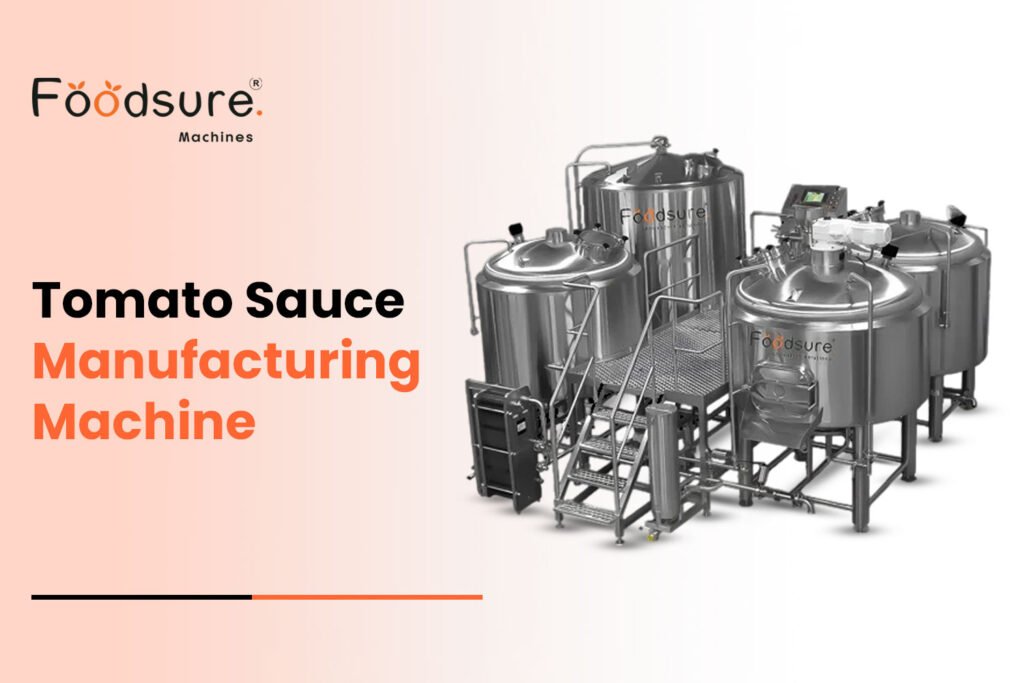
In India, over 1,500 bottles of tomato sauce are opened every minute — a staggering number that shows the ever-growing demand for this essential condiment. From street food vendors to large restaurants, the need for high-quality tomato sauce has never been higher. Yet, many small and medium-sized food manufacturers still rely on manual or semi-automatic production methods, which can be inconsistent and time-consuming. This is where automated tomato sauce manufacturing machines come in. These machines take your production to the next level, ensuring consistent quality, increased efficiency, and reduced labor costs. In this blog, we’ll explore why more businesses are switching to automatic systems, and how choosing the right equipment can transform your production line — no matter the size of your operation. Why More Food Brands Are Switching to Automatic Tomato Sauce Machines Uniformity: When making sauce by hand, you can’t always get the same uniform consistency as automation provides. Heating and mixing with set tolerances guarantee that each and every batch of sauce is smooth and balanced and ready for market. Shelf life: When controlling temperature and air, your sauce will naturally have a longer shelf life. It will appear fresh, maintain the same color, and your sauce does not require heavy preservatives to endure a grocery store environment. Timeliness: Automatic tomato ketchup machines do not tire and maintain a steady pace, allowing you to fill more jars in less time. Whether you are a small production operation or a large commercial line, the speed of production and savings in production will be appreciated. Fewer people: You will no longer require a large crew of people to handle production; automation can handle most of the work process and detail, and you can take on the role of quality control or supervisors rather than laborers doing detailed repetitive work. Which Tomato Sauce Machine Is Right for Your Business? Let us clarify what we mean. The selection of your tomato sauce equipment depends on three main considerations: your required production volume, the degree of automation to be used, and your available capital, investment resources, and operational budget. Most food companies typically deal with semi-automatic or fully automatic lines. Semi-Automatic Tomato Sauce Processing Equipment If you are getting started or increasing production slowly, this is the correct choice for start-ups. The semi-automatic tomato sauce manufacturing machine option will automate the main three components: pulping, heating, and mixing, while the filling and capping, and cleaning operations will remain semi-manual. You will still require a small number of people, but when trained, you will produce the same high-quality batch every time. The Semi-Automatic Tomato Sauce Machine option provides for a much lower initial investment and maintains operational control. Fully Automatic Tomato Sauce Processing Equipment If high production volume and minimal operations supervision are what you want, the Fully Automatic Tomato Sauce Machine is the equipment choice for you. This type of tomato sauce manufacturing machine can do everything all at once; it can feed, pulp, heat, mix, fill bottles, and pasteurize. A fully automatic tomato processing line will increase the output speed, consistency in texture, including savings in production time and labour. This is the actual equipment most national brands are using to run the full tomato ketchup production line. How Much Does a Tomato Sauce Processing Machine Cost in India? Most food units choose between semi-automatic and industrial ketchup manufacturing machine. Each serves a different kind of business goal. Machine Type Output Capacity (kg/hour) Automation Level Approx. Price Range (₹) Manpower Needed ROI Period (Months) Semi-Automatic Tomato Sauce Machine 50–200 Partial 2 – 6 Lakh 3–4 10–12 Fully Automatic Tomato Sauce Machine 300–1000+ Complete 8 – 15 Lakh+ 1–2 6–8 How to Choose the Right Tomato Sauce Production Equipment Setting up a complete tomato ketchup plant India isn’t just about buying a few machines. You need the right space, steady utilities, trained people, and a few licenses before you can start producing at a consistent pace. 1. Production Capacity First, think about the number of sauces you will be producing in a day. Smaller units may be in the neighbourhood of around 50-200 kg/hour, and higher volume commercial production plants are generally in the 500-1000kg/hour range at a minimum. The right capacity will save you from over-killing, or overpaying for features that you may not ever use again, or worse, under capacity. 2. Level of Automation Decide on semi-automatic versus fully automatic lines. For smaller (or start-up) operations, semi-automated machines are a great option. They will allow for handling, though they will be operation-intensive. The ketchup processing plant will do most steps of filling the pulper to filling, with no operation needed, reducing labour time, consistency, and quality. 3. Output/hour Verify the true hourly machine output per hour. Does that output fit your current demand and your anticipated growth? Increasing output not only helps meet orders but also decreases downtimes and increases efficiency in recipes. 4. Build Quality and Support Good, solid, efficient machine design will lead to fewer frustrations and decreased downtimes. Do your due diligence with your tomato ketchup plant manufacturer on customer support with spare parts, training, and after-sales support, especially in case of mechanical problems that may need your supplier to take back the machine. Conclusion Making the switch to automated tomato sauce production isn’t just about increasing efficiency; it’s about ensuring consistency, improving shelf life, and cutting down on labor costs. Whether you’re a small startup or a large-scale operation, choosing the right tomato sauce manufacturing machine can elevate your business to new heights. At Foodsure Machines, we provide state-of-the-art machines that can streamline your production process while maintaining the highest quality standards. Ready to take the next step?Click below to get your free consultation or request a quote today — and start scaling your sauce production efficiently. Have a Question? Let’s Connect! Reach out to us anytime via call or email. 📞 Call Us ✉️ Email Now FAQs What is a tomato sauce manufacturing machine? It is a machine
Why Successful Brands Invest in Makhana Machines Before Marketing
Marketing campaigns for makhana items are frequently launched by FPOs and small businesses without first ensuring their production lines are prepared. What was the outcome? Lost customers, erratic quality, and delays. Investing in makhana machines before marketing is a key component of successful businesses. This assures that your marketing promise can be fulfilled, in addition to improving quality and cutting down on waste. These 7 boosters help maximise ROI and get your production line ready for your first campaign. Booster 1 – Automate Roasting for Consistent Quality The automatic roasting machine of makhana eliminates the guesswork in production and guarantees perfect consistency for all the batches. The roasters, which are working automatically, have controlled temperature and even distribution of heat all along, thus inhibiting under- or over-roasting. Reasons: Provides the same flavour, crunchy texture and colour every time. Minimises the number of rejected batches and buyers’ complaints. Increases the life of the product by removing the moisture. Makes it possible to increase production without sacrificing quality. Reduces reliance on skilled workers. Larger brands that are planning to scale up will benefit from the automated roasting as it guarantees that all the products that are marketed will have the same quality standard. Booster 2 – Upgrade Grading for Premium Presentation Grading distinguishes a local product from a brand ready for the market. The automatic makhana grading machine separates kernels according to their dimensions and quality, so every pack looks the same visually. The manual grading method is slow, inconsistent, and mixing sizes occurs frequently, which bulk buyers can tell right away. Reasons for grading improvements: Creates packs that are not only uniform but premium in appearance. Helps obtain better prices and margins. Eliminates complaints and returns from buyers. Accelerates the process of packing and dispatching. Increases modern retail brand perception. Through consistent grading, your product appearance is aligned with the promise made in your marketing. Booster 3 – Streamline Packaging to Avoid Delays In most cases, Packaging turns out to be the largest invisible bottleneck in makhana units. Using semi-automatic and automatic makhana packing machines, the process of filling, sealing, and labelling is made uniform, and the delays due to manual handling are completely removed. When demand in marketing rises, packaging that is fast and reliable becomes important in meeting the dispatch deadlines. Automated packaging has the following benefits: Fastens the order fulfilment and dispatch process. Maintains hygiene and food safety standards. Provides proper weights and clean seals every time. Reduces the number of workers required during peak demand times. Enables consistent branding across various markets. Packaging that is efficient guarantees that your market reach is as fast as the delivery. Booster 4 – Reduce Wastage & Optimise Costs Makhana processing carried out manually mostly causes breakage, over-roasting, spillage, and uneven output; all of these factors contribute to the increase of hidden costs. Automatic makhana making machine provides exactness at all the phases, which considerably reduces material loss and the reworking process. The first expenditure could appear to be a lot, but the decrease in wastage and the increase in usable output are the factors that soon equal the cost. The impact of machines on cost efficiency enhancement: Minimise breakage and over-processing losses. Increase yield per batch. Reduction of repetitive work and rejection rates Maximise raw material utilisation. Bring about faster ROI through consistent output. The production that is controlled results in margins that can be predicted and in sustainable growth. ROI Breakdown: Investing in Makhana Machines Before Marketing Machine Approx. Cost (₹) Production Capacity Time Saved / Day Expected ROI Key Benefit Automatic Makhana Roaster 3,00,000 – 5,00,000 50–100 kg/hr 6–8 hrs 12–18 months Uniform roasting, reduced manual errors Makhana Grading Machine 1,50,000 – 3,00,000 50–100 kg/hr 4–6 hrs 10–14 months Consistent product size, premium packaging Packing Machine (Semi / Automatic) 2,50,000 – 4,00,000 50–120 packets/hr 5–7 hrs 12–16 months Faster packing, hygiene compliance Makhana Cooling Conveyor 80,000 – 1,50,000 50–100 kg/hr 3–4 hrs 8–12 months Preserves quality, reduces spoilage Pre-Cleaning & Sorting Unit 1,00,000 – 2,00,000 50–100 kg/hr 3–5 hrs 9–13 months Reduces wastage, ensures uniform quality Total Investment 8,80,000 – 15,50,000 — — — Full production line efficiency & scalability Booster 5 – Scale Production for Pan-India Distribution The distribution across the entire country is expected to be a certain volume with no interruptions in between. Automatic makhana processing machines have made it possible to manufacture continuously, and thereby producers have the confidence to supply the wholesalers, online sellers, and institutional customers. Once the demand is expanded beyond the local market, manual setups can no longer keep up with the pace. The benefits of machines on a national scale are: Facilitate production of several cycles in a day. Keep quality constant even with increased volumes. Free up order dispatching time in the entire country. Make promises to distributors and bulk buyers. Synchronise production capacity with the market penetration of ads Machinery with the capacity to scale will not let the opportunity for growth turn into a failure in delivery. Booster 6 – Train Staff Efficiently for Smooth Operations Manual processing relies a lot on the operator’s skill level and, consequently, is slow and prone to errors during training. With standardised makhana machines, fixed settings, and repeatable workflows, operations get simplified. This means that the output quality will be consistent while the new staff are getting up to speed. The use of machines leads to the improvement of workforce efficiency in the following ways: Less training time and shorter learning curves. A reduction of human errors in the production process. The guarantee of uniform output during shifts. A decrease in the reliance on highly-skilled workers. The avoidance of production slowdowns during the change of staff. Stable production is ensured by well-trained operators and the use of automation even during rapid scale-up. Booster 7 – Align Marketing Spend with Production Capacity Marketing campaigns have no chance of success if their production cannot keep up with the demand. Overpromising causes delays, unhappy
Pan-India Distribution Readiness Using Industrial Makhana Processing Line
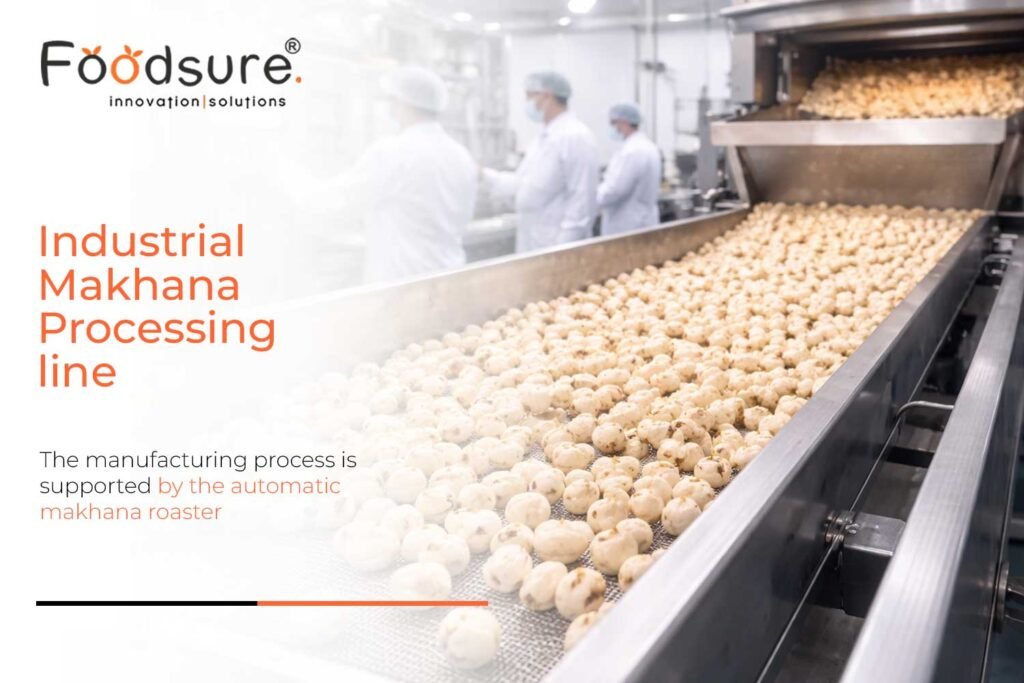
Achieving pan-India distribution without sacrificing speed or quality requires upgrading your makhana production line. A well-designed industrial makhana processing line addresses many typical limitations, preparing your unit for large-scale operations. Here are the five most powerful upgrades that will help you streamline production, ensure market-ready batches, and scale your business efficiently nationwide. 5 Powerful Upgrades for an Industrial Makhana Processing Line A contemporary Industrial Makhana Processing Line signifies more than just larger machines. Additionally, the combination of automation, precision, and modular design eliminates production bottlenecks. The manufacturing process is supported by the automatic makhana roaster, which guarantees uniform quality for each batch, as well as the modular line expansion that permits gradual development. Every improvement is crucial in the areas of improving efficiency, reducing wastage, and seamless distribution throughout India. 1. Automated Roasting for Uniform Quality An automatic makhana roaster will likely revolutionize your production since it guarantees that every lot is roasted uniformly, and the ideal colour, texture and taste are maintained. Key benefits: Consistent quality across batches: The makhana roasting process is the same for all the kernels, resulting in the product having the same colour, texture, and crunch that the customers appreciate. With less manual monitoring required, the workers are available for other duties. The workers can concentrate on grading, packing, or quality checking while the roaster works independently. Quick production cycles enable us to meet demand nationwide. The roasting process is continuous and precise, resulting in higher output, and scaling up production becomes possible without sacrificing quality. 2. Precision Grading for Market-Ready Sizes A precision makhana grading machine ensures that your makhana is sorted correctly by size and quality, and this way, each batch has the same quality and uniformity. This is important for producing market-ready makhana that meets the expectations of the retailers and consumers. These machines sort out small, broken, or low-grade kernels. Main advantages: Uniform packing: Each pack appears very professional and uniform, thereby enhancing its visibility on the shelf. Improved brand image: Customers are always receiving high-quality and dependable goods. Increased profitability: Reduced waste leads directly to higher usable output and better margins because of the smaller number of defective kernels. Quicker processing: The automated makhana grading machine takes several hours less than manual sorting. Choosing precision grading technology is a decision that instantly opens up your product for nationwide distribution. 3. Ensure Hygienic, Fast Production with High-Speed Cleaning & Sorting A high-speed makhana sorter, working in conjunction with an industrial cleaning machine, can remove dust, stones, husks, and defective kernels in just a few seconds. The cleaned product is then suitable for roasting. These machines keep the hygiene standards, so that only the finest kernels are allowed to proceed in the production line. Key benefits: Enhanced hygiene: The elimination of makhana with impurities leads to a product that is safer and cleaner. Reduced manual labour: Employees can do other jobs, which means that the company will have to pay less for labour. Faster production line: It quickly processes the big batches to satisfy the increasing demand. Consistent quality: Selection of only first-grade kernels ensures that every pack is of the same quality. Investing in high-speed cleaning and sorting machines would be necessary if one wants to distribute the product all over India without compromising its quality. 4. Eliminate Dispatch Delays with an Integrated Packaging System Makhana, a processed product, is packed in large quantities for the Indian market. Packaging performed by machines is efficient because it eliminates the possibility of spills and ensures a consistent weight. These automatic systems, designed for pan-India distribution, effectively address the previous delay issue since they include sealing, weighing, and labelling done in a single flow. Major advantages are: Non-spill, clean packaging: Ensuring safe delivery through long-distance transport. Freshness for longer: Cool and crunch kept by airtight sealing. Quick dispatch cycles: Automation is fast enough for high-volume orders. Dispatched across the country: Packaging is done as per the requirements of both retail and logistics in India. An integrated makhana packaging machine guarantees that your makhana is delivered to every market in top condition. 5. Scale Without Disruption Through Modular Line Expansion Modular line expansion is a great approach for makhana processors as it allows them to increase the plant’s capacity without waiting for a full-scale setup. With the increase in demand, additional modules for roasting, grading, or packaging can be installed without disrupting the running operations. This method enables the smooth scaling up of the industrial makhana processing line, ensuring continuity of production even while capacity is being expanded. In contrast to rigid setups, modular systems can flexibly respond to market demands, seasonal fluctuations, and the growth of distribution. Main advantages: Higher capacity without downtime: Install new makhana machines while production is ongoing. Lower investment risk: Sell more and then expand where necessary, step by step. Future-proof setup: Adapt the technology as your company grows. Operational flexibility: As per the specification, increase the capacity of various sections of the line. Modular expansion will provide a greater degree of process control, reduce the time required for market acceptance, and give you confidence that expansion aligns with market demand. How Smart Automation Makes Makhana Ready for Pan-India Distribution The combination of these upgrades creates a fragmented setup that is transformed into a trustworthy and scalable system. A properly designed Industrial Makhana Processing Line enhances the three basics of nationwide distribution, speed, consistency, and control. The quicker production allows for the timely delivery of large orders, whereas the quality maintained throughout the process strengthens the relationship with distributors and retail chains. Automation throughout roasting, grading, cleaning, and packaging eliminates slowdowns and reduces waste resources, but also directly benefits margins and operational efficiency. ROI Impact of Upgrade Upgrade Area Operational Impact Distribution Benefit Automated Roasting Uniform roasting, lower errors Consistent product quality nationwide Precision Grading Size & quality uniformity Professional packaging, fewer rejections High-Speed Cleaning & Sorting Faster, hygienic processing Compliance with food safety standards Integrated Packaging Spill-free, sealed packs Longer
How Poor Automation Delays Roasted Makhana Brand Launches

Roasted Makhana Brand Launches looks simple on the surface. Distributors are interested in the raw materials that are instant available, demand is increasing, and branding appears straightforward. However, many promising makhana brand in India either quietly close their doors before making their first significant sales or fail to start on schedule. Most of the time, demand, marketing, or even funding are not issues. In the pre-launch phase, when uniformity, timing, and predictability are more important than scale, the actual problem with roasted makhana manufacturing is inadequate automation. This blog explains how poor or misdirected automation causes delays in brand launches, what smart processors automate first to safeguard their launch schedules, and the common mistakes made by small manufacturers. How Poor Automation in Makhana Processing Disrupts Brand Launch Timelines Most Automation issues do not seem to be critical. Everything goes on as usual in the case of machines, roasting, and packing. However, small areas of inefficiency below the surface can persist for weeks or even months without any noise. Manual Roasting Leads to Inconsistency in Batches A manual or semi-automatic makhana roasting machine is dependent on the operator’s judgement. Variations in flame control, as well as different timings for batch loading, stirring speed, and discharge, vary from person to person. This creates a significant issue in the trial runs: One batch is perfect. The next one is a little under-roasted. A third one gets burnt notes. Sampling gets stuck whenever there are changes in taste, colour, and texture. Retail buyers take more time for approval. The founders are still testing instead of launching. Without automated roasting control, production never stabilises long enough to proceed. Packaging Bottlenecks Are Major Culprits in Killing Go-Live Timelines The manual packaging line is either the bottleneck or less efficient. This is required for the rapid roasting of makhana, which can lead to the roasted makhana becoming stale, absorbing moisture, and losing its freshness. Shelf-life testing can no longer be relied upon. Instead of finalising MRP and distribution, the teams get stuck solving packaging failures. A pack-out stage delay is one of the quickest ways that poor automation silently pushes a Roasted Makhana Brand Launch back by months. Dependence on Labour Disrupts Trial Production The production of a pre-launch product is supposed to be repeatable. But the strong reliance on labour creates a risk: The skilled operators are not available. The output is reduced during the shift change. Quality varies when there is pressure. When specific people rather than automated systems control production, it becomes impossible to plan a fixed launch date. Makhana Making Machine Why Roasted Makhana Brand Launches Fail at the Production Stage Most Roasted Makhana Brand Launches do not fail due to a lack of demand. They fail because their production system is never sufficiently stable to support a launch. Inadequate automation causes invisible pressure points that compound over time: Festival windows that are missed reduce the first bulk sales and make distributors less interested. Inconsistent output prevents finalising pricing, packaging, and shelf-life claims. Repeated trial batches drain working capital without generating revenue. When deadlines get pushed back, stakeholders pay more attention to FPOs and companies. Teams lose confidence in planning because output cannot be predicted. When production cannot be trusted to deliver the same result every day, launch decisions are continually postponed even when the market is ready. What Smart Makhana Brands Automate First in Makhana Processing The process of success of Roasted Makhana Brand Launches does not rely solely on automation. Instead, it begins with the application of automation that eliminates the uncertainty from the control points crucial to the roasting process. Smart brands give priority to the upgrades in this specific order: The temperature and time are controlled by automation, ensuring uniform heat distribution and eliminating the risk of operator error, thereby maintaining product quality. This will lead to faster sampling and quicker taste approvals, as well as increased confidence in repeating the same output for every single batch. The flow control for cooling and seasoning prevents moisture retention, uneven flavouring, and texture damage. Consistent cooling also helps the spice stick evenly to the food. Without this, it would be hard to package or increase the volume. The semi-automatic packaging option was chosen early in the process because it gives a predictable throughput with minimal capital investment. At the launch stage, reliability is more important than speed, and the flexible packaging setups lower the financial risk. In this way, the brands that selectively automate their processes can reduce launch timelines while maintaining quality and costs under control. Why Smart Automation Accelerates Roasted Makhana Brand Launches The majority of roasted makhana founders postpone automation because they associate it with large factories and heavy capital spending. In fact, early-stage automation is about saving time, not increasing the scale. At the launch stage, innovative automation is providing value through: Stabilising processors to ensure daily output remains consistent. Reducing reliance on the skills of individual operators and changes in shifts. Enabling precise planning of sampling, packaging, and dispatch schedules. Avoiding multiple trial runs that are expensive but not profitable. Creating a situation where founders feel assured to fix the launch dates. Once the main control points are automated, production becomes predictable. The teams will not be put in a firefighting situation, and the decision will be clearer; launch timelines will not be delayed. Smart automation doesn’t eliminate people; it eliminates uncertainty from the system. Conclusion Roasted Makhana Brand Launches needs more than just hard work and a reliable production method. At Foodsure Machines, our automated designs eliminate uncertainty, safeguard launch schedules, and foster genuine growth. Our goal is to assist brands in launching on schedule each and every time. FAQ What is the biggest reason roasted makhana brand launches get delayed? Weak automation causes inconsistent batches. Teams keep reworking the same issues, repeating trials, and losing weeks before the product is truly launch-ready. Is full automation required to launch a roasted makhana
Packaging Issues in Makhana Production: Why Failures Start with Wrong Machine Integration
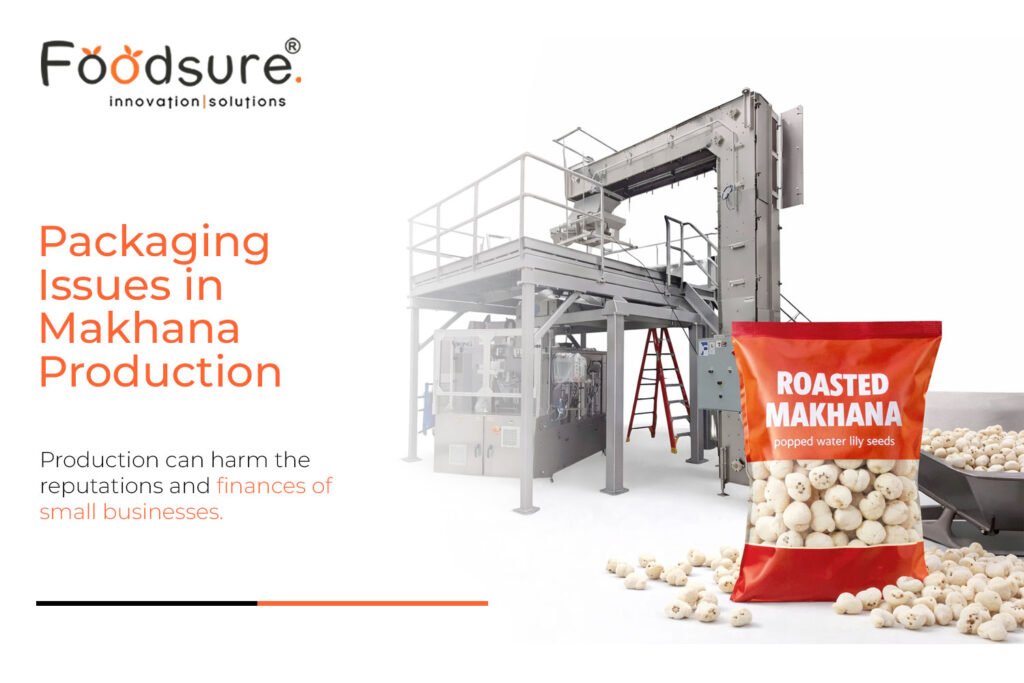
Packaging issues in makhana production can harm the reputations and finances of small businesses. Customers become irritated and initiate return items due to leaking packets, crushed makhana, and uneven pouch weights. The majority of these packaging problems originate upstream, during the roasting, cooling, or seasoning phases, and are not caused by the makhana packaging machine itself. Packaging Issues in Makhana Production: Common Problems You Can’t Ignore Producers of makhana often blame their losses on the packaging stage; however, the real problems generally take place earlier in the process. If these kinds of problems are not addressed properly, they lead to wastage of useful materials, higher labour costs, and unsatisfied customers. Common packaging issues in makhana production are an opportunity to identify the weak points in your line and take proactive measures to prevent damage accumulation. The Main Indicators of Packaging Malfunctions Pouches leaking oil or moisture – This is due to uneven seasoning or residual heat that enters the packaging machine. Leaks not only visually spoil the product, but they also cause deterioration. Makhana that is crushed or broken in packs – This is generally due to fluctuating output in the roaster, incorrect cooling, or rough handling during filling. Pouch weight that is not uniform – This leads to complaints and regulatory issues, which are usually associated with the batch feeding method or inconsistent hopper flow. Seal breakdown during storage or transport – This is often caused by warm makhana, inferior film quality, or high moisture content. Why Packaging Machines Alone Can’t Solve Quality Issues in Makhana Production The packaging issues in makhana production cannot be attributed to sealed. The raw material that enters the makhana packaging line must be consistent in order to ensure the efficiency of the packaging line. Unstable Roaster Output: Non-uniform puffing that is not uniform will result in varying bulk densities. This will cause the volumetric fillers to vary in weight and also produce bigger popped kernels, which will be crushed by the sealing jaws. The Cooling Gap: Once the makhana is packed before it reaches the normal temperature, the moisture migration will be triggered by the residual heat. This will lead to condensation forming inside the pouch, hence causing spoilage and seal failure. Uncontrolled Manual Seasoning: The process of hand-seasoning results in uneven distribution of oil. The extra oil on the product’s surface will interfere with the closing process, and the hermetic bond won’t be made. Leaks will happen as a result. Batch vs. Continuous Flow Mismatch: If there is no automated feeding, the packaging unit will experience an unreliable material supply. This starve-and-surge cycle will increase mechanical wear and also prevent the makhana making machine from maintaining the steady internal pressure that is required for optimal bag forming. The Hidden Costs of Poor Machine Integration and Quality Issues in Makhana Production Inaccurate machine integration is not only a primary factor that reduces production, but also steals profits every month in a silent way. When roasting, cooling, seasoning, and packaging occur simultaneously, losses are shared among labour, materials, and the brand’s credibility in the market. These costs are seldom reported individually, but when combined, they are a major reason for the shrinking of margins and the postponement of production plans. Cost Area What Causes the Loss Estimated Monthly Cost (₹) Annual Impact (₹) Extra labour for rework & repacking Seal failure, leakage, weight mismatch ₹15,000 – ₹25,000 ₹1.8 – ₹3.0 lakh Packaging film wastage Rejected or leaking pouches ₹8,000 – ₹15,000 ₹1.0 – ₹1.8 lakh Increased rejects & returns Crushed makhana, oil leakage ₹12,000 – ₹20,000 ₹1.4 – ₹2.4 lakh Distributor & retailer complaints Poor shelf quality, leakage ₹5,000 – ₹10,000 ₹60,000 – ₹1.2 lakh Brand trust erosion Discounts, replacements, lost orders ₹10,000 – ₹20,000 ₹1.2 – ₹2.4 lakh Makhana Machine Cost How Correct Machine Integration Fixes Packaging Issues in Makhana Production The stability of packaging will be greatly improved if not only the upstream makhana processing machines were designed for isolated upgrades, but also if the whole system worked as one. The correct integration will ensure that the product entering the makhana airtight packaging machine is uniform in terms of moisture content, and it will be in the form of powder, which eliminates the main causes of leakage, breakages, and seal failures. Steps for Proper Flow Controlled roasting output – Uniform puff size and controlled moisture result in constant fill weight and lower crushing during packaging. Forced cooling before seasoning – Slow down the temperature change, and the pouches will not absorb any moisture, which in turn will not affect the seal and will not shorten the shelf life. Measured oil dosing – The application of oil is done with great accuracy, which in turn prevents uneven coating and ensures that oil is not present on the surface, thereby preventing leakage and contamination of the film. Buffer hopper before packaging – Keeps product flow constant, thus eliminating the cases of feeds being starved or overloads that lead to weight variation and seal defects. Conclusion At Foodsure Machines, we consider packaging errors as integration issues rather than machine problems. Our method is based on ensuring that the steps of roasting, cooling, seasoning, and packaging all occur simultaneously. When our systems work together, there are fewer problems with packaging, the quality is better, and production is more reliable in the long run. FAQ What causes packaging issues in makhana production? Most failures start upstream. Uneven roasting, incomplete cooling, and inconsistent seasoning create unstable product long before it reaches the pouch. Why do makhana packets leak oil after sealing? Excess surface oil or trapped heat weakens seals. When oil and warmth stay inside the pack, leakage becomes almost unavoidable. Can packaging machines alone fix makhana packaging problems? No. Packaging machines can only handle what they receive. If flow and quality are unstable earlier in the line, problems repeat after packing. How does cooling affect the packaging quality of makhana? Warm makhana releases moisture after sealing.
Burnt & Under-Roasted Product Issues Fixed by Automatic Makhana Roaster
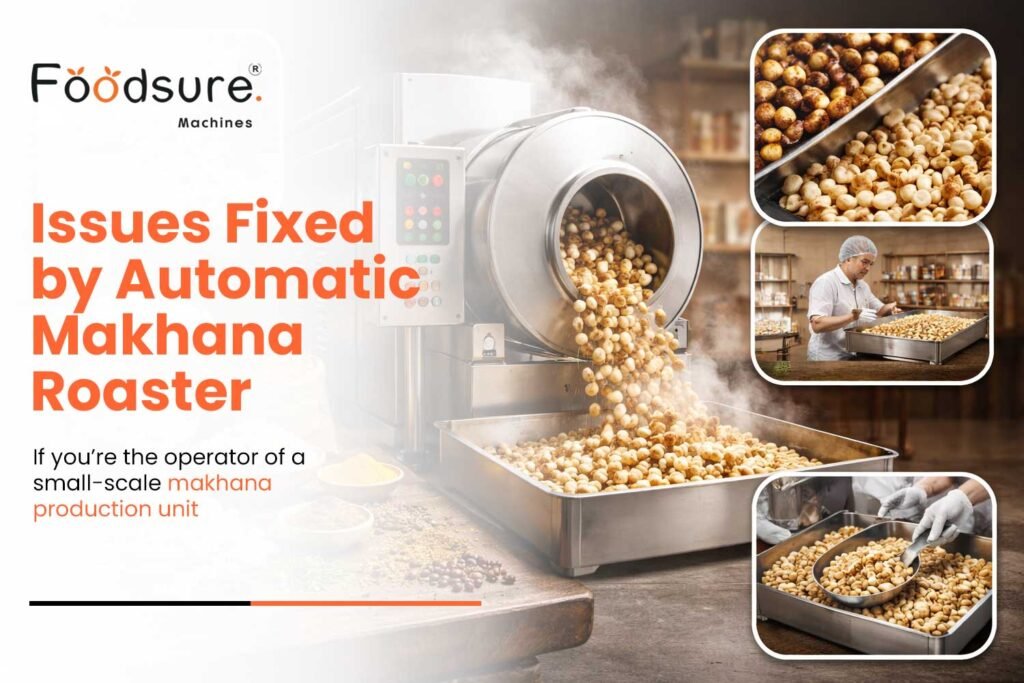
If you’re the operator of a small-scale makhana production unit, you’ve probably experienced the disappointment of burnt or under-roasted batches. This not only reduces yields, but it may negatively impact your reputation with customers. Here is some good news. Issues fixed by automatic makhana roaster technology are revolutionising the experience for FPOs and small manufacturers. In this blog, we’ll dive into why traditional roasting often fails, how automation ensures perfect batches every time, and the tangible benefits you can expect when you upgrade your roasting process. Why Manual Roasting Fails and How Automatic Makhana Roaster Benefits Solve It While small-scale manufacturers frequently employ roasting methods that are either manual or basic, these methods have several hidden problems that impact quality, yield, and profitability. The whole issue is as follows: Heated Unevenly Forces Product Loss: Traditional roasters often have hot spots or unequal distribution of heat. Some makhana will get burned while others remain under-roasted, resulting in mixed batches that cannot be sold. Processes that are Labour Dependent Multiply Errors: Manual tracking requires constant attention. Even the most experienced operators can sometimes err in timing or temperature, particularly when working on multiple batches, which typically results in roasts being either overdone or underdone. Growth Limitation due to Scaling Problems: Simply increasing the batch size in the manual roasters does not necessarily result in a large output. Larger batches will likely suffer more from uneven roasting and more wastage without getting the same production benefits. Energy inefficiency increases operating costs: Changing the temperature, rotating the pan, or adjusting the time of the batch frequently not only makes production slower, but it also requires more electricity or fuel. Increasing the operational costs per kilogram. Unseen Impact on the Profitability: The existence of these inefficiencies is silently consuming the profit margins. Waste, poor quality, and expensive labour and energy are the reasons that small manufacturers find it tough to go beyond 500-1000 kg monthly production without automation. Takeaway: A small-scale manual roasting applies only to limited batches. A small-scale automatic makhana roaster machine is often the reliable option to upgrade for the purpose of ensuring consistent quality, reducing losses, and scaling production efficiently. Issues Fixed by Automatic Makhana Roaster: Consistent Quality Every Batch The issues fixed by automatic makhana roaster are particularly constructed to overcome these typical problems. They depend on precise temperature regulation, automated timing, and uniform heat distribution to make sure that every batch of makhana is roasted to perfection consistently. Key Features That Prevent Burnt & Under-Roasted Makhana Precision Temperature Control: It ensures that every batch is roasted just right with precise temperature control. Automated Batch Timing: Operators don’t have to manually measure every single operation. Uniform Heat Distribution: Makhana are not burned due to extreme temperature. Adjustable Capacity: Suitable for small-scale units and can progress without sacrificing quality. Real Results from Small & Medium-Scale Units A farmer producer organisation (FPO) in Madhya Pradesh upgraded to an automatic roaster and cut wastage by 18% in the first month. Their monthly production increased from 800 kg to 1,200 kg without increasing the labour force. Complaints from customers regarding taste and quality went down to almost zero. Why semi automatic makhana machines fail How Upgrading to an Automatic Makhana Roaster Improves ROI and Productivity Upgrading to Issues fixed by automatic makhana roaster gives benefits that can be measured: Reduced wastage: Every batch of roasted makhana is produced in a consistent manner, resulting in fewer ruined products. Energy saving: The optimised roasting cycles perfectly roast the makhana, which not only improves the quality of the CUPS because there are no burns or moisture, but it also saves electricity. Parameter Traditional / Manual Roasting Automatic Makhana Roaster Business Impact Monthly Output Capacity 800–1,000 kg 2,500–3,000 kg 2–3× production without line overhaul Wastage Due to Burnt / Under-Roasted Makhana 12–20% 2–4% Direct raw material savings Raw Material Loss (Monthly) High (unrecoverable batches) Minimal Higher saleable yield Labor Requirement 2–3 operators per shift 1 operator per shift Lower manpower cost Labour Cost (Monthly) High & variable Stable & predictable Easier cost control Energy Consumption per kg High due to re-roasting & adjustments Optimized & consistent Reduced electricity / fuel bills Machine Downtime Frequent (manual dependency) Low (automated cycles) Better production planning Quality Consistency Batch-to-batch variation Uniform for every batch Better brand reputation Maintenance Cost Low but frequent issues Planned, preventive maintenance Fewer breakdown surprises Scalability Cost Requires more labour & supervision Modular expansion possible Scale without chaos Estimated ROI Timeline Not measurable 10–16 months (avg.) Faster payback on machine investment A Phased Upgrade Plan for Small-Scale Makhana Roaster Units Smart manufacturers do not take the risk of automating the entire process all at once. They instead adopt a gradual enhancement plan that secures liquidity and, at the same time, minimises the risk of interruptions in production. Begin with the Actual Bottleneck: Identify the stage where quality breaks down. This often occurs during roasting, which in turn leads to maximum wastage due to either burning or under-roasting. Improvement of this point can result in output quality being raised instantly. Keep Non-Critical Processes Manual: The initial phase may involve some manual operations for purposes like cooling, seasoning, and packing, etc. This way, the company saves a considerable amount that would have been spent on acquiring new makhana making machines while at the same time making a positive contribution towards the consistency of the final product. Continue with Modular Automation: Once the demand rises steadily, consider adding automatic makhana roaster machines further down the line. This way, the makhana production line remains balanced, and the company benefits from clear ROI for every upgrade. This gradual approach to automation ensures that every single rupee spent on automation yields not just higher capacity in theory but also measurable and long-term gains. Conclusion We at Foodsure Machines assist makhana producers in transitioning from erratic roasting to dependable, expandable production. Our automated makhana roasters are designed to reduce waste,
What Changes After 1,000 Kg/Month Production – Makhana Machine Scale-Up Study
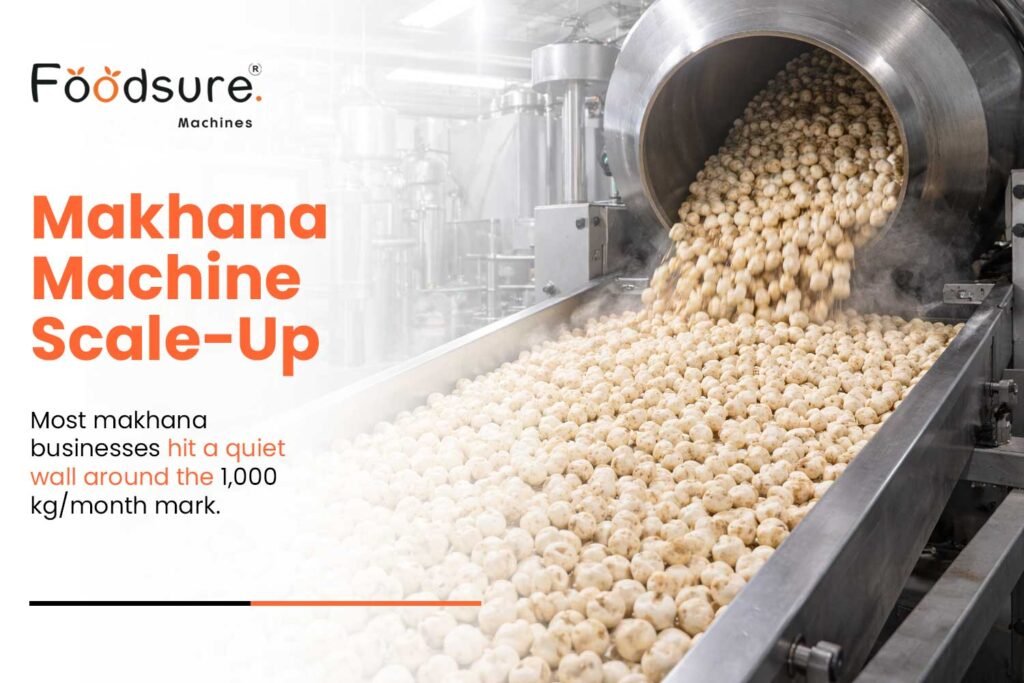
Most makhana businesses hit a quiet wall around the 1,000 kg/month mark. Orders are coming in, machines are running daily, yet growth feels oddly stuck. You’re producing more than a startup, but not enough to feel stable or relaxed. This is usually when loan EMIs start pinching, distributors ask for tighter timelines, and every delay feels expensive. A makhana machine scale-up isn’t just about higher output; it changes how time, money, and risk behave inside your factory. Beyond 1,000 kg/month, the rules of production shift, and this blog breaks down what actually changes, before the costs catch you off guard. Why 1,000 Kg/Month Is the Real Breaking Point for Makhana Units Transition from Batches to Continuous Flow: At 600 kg, a unit can have down days for maintenance. With a weight of 1000 kg, the operation turns into a never-ending cycle, and even a minimal hour of makhana making machine causes a disturbance in the plan for the whole week due to the accumulation. Thermal and Mechanical Fatigue: The entry-level roasters are mostly made for non-continuous use. The push for a tone per month has metal parts continuously exposed to and alternated with temperatures that are the same as those experienced during the peak periods, leading to thermal fatigue and frequent, unpredictable breakdowns. The Daily Line Stress Factor: While monthly output is a financial metric, daily line stress is the physical reality. It is the point at which manual popping cannot be faster than the mechanised grading, forming physical bottlenecks on the factory floor. Labor Saturation: In small FPOs, the workers are usually doing more than one job. At this level of makhana processing, workers will have to be specialists. If the same person is doing grading, roasting, and packing, context switching happens, which results in a significant decrease in quality and an increase in broken kernels. The Synchronicity Gap: This is where Makhana Machine Capacity Miscalculations become fatal. In a processing plant, there is a difference in speed between the makhana processing machines. For example, a grader that has a capacity of 200 kg/hr is working together with a roaster that processes just 50 kg/hr. What Starts Breaking First After You Cross 1,000 Kg/Month in Makhana Production Going over the limit of 1,000 kg/month is the critical zone, where traditional methods turn from being cost-effective to being a liability. If you want to keep profits, you will have to change from human supervision to process-driven engineering. Why Scaling Fails Without Automation Thermal Instability: Small-batch roasters lack the insulation and the exact control required for large-scale production. The temperature changes lead to the uneven expansion of the beans, resulting in a high percentage of rejection and loss of input materials. Precision Grading Collapse: Manual sorting cannot guarantee the ±1mm accuracy that is necessary for industrial packing. Inconsistent sizes cause mechanical jams in the automated sealers, which leads to expensive operational downtime. Energy Desolation: The heat generated by pushing manual equipment beyond its capacity is so large that it is hard to dissipate. Without integrated heat recovery, your electricity and fuel costs per kilogram rise sharply, taking away your net margins. The skill gap bottleneck: At this scale, it is risky to depend on a master roaster’s intuition. PLC-controlled parameters are needed to make sure that batch 100 is exactly like batch 1. Operational Pillar Below 1,000 kg (Manual / Small Batch) Above 1,000 kg (Industrial Scale) Thermal Efficiency High radiant heat loss; manual flame control. Integrated heat recovery; PLC-controlled roasting. Grading Precision Visual sorting, 15% size variance. Mechanised sieves, <2% variance for export. Labor Dynamics Skill-dependent (Master Roaster). Process-dependent (Machine Operator). Waste Recovery High rejection / broken kernels. Automated de-shelling, maximised puffing ratio. Why Higher Capacity Machines Backfire in Makhana Manufacturing The majority of failures during makhana machine scale-up can be traced back to a particular machine upgrade, adding one larger roaster to a production line that was changed. Although it seems good in general, it won’t happen right away. When an extensive machine has to be cleaned, graded, cooled, and seasoned by hand or with processes that are too compact, it makes less. This is precisely where line imbalance kills ROI. The high-capacity roaster makhana machine inflates the volume in bursts, but the rest of the line cannot cope with it. Operators hurry, quality varies, and energy consumption rises without an increase in saleable output that would justify it. The plant will not be able to scale smoothly, but rather get harder to manage. Mistakes are often made that cause this: Roaster with excess capacity: The larger batch size is available, but the handling of feed and discharge has not been improved up to the capacity of the roaster. Grading is still done manually: The labour becomes the bottleneck in the production process while the machine is waiting. No flow planning for buffer: There is no holding, cooling, or staging area between stages that can handle the rate of output. The Machine Shift That Actually Works at This Stage of Makhana Processing When you reach the production level of 1,000 kg/month, your industrial makhana setup will have to undergo a transformation from a minimal assembly of machines to a well-coordinated system. The objective is not only to produce more volume, but also to deliver a 5-star product that will be able to sell at the highest market price. Modular vs. Full Automation: Making the Choice Modular Automation: Instead of an inflexible machine, you are going to install separate automated modules. This gives you the opportunity to increase the capacity of particular sections just as the bottlenecks arise, without having to replace the whole line. The Semi-Automatic Limit: Semi-automatic installations are no longer economical if your daily production exceeds 150-200 kg. At this moment, the time wasted in manual loading/unloading, as well as the human error in heat control, is costing more than the machine itself. Synchronization > Speed: Even the fastest machines are not worth anything if they are not
Why Founders Miscalculate Makhana Machine Capacity Before Taking Loans
Banks approve loans based on statistics, not on ideologies. For many makhana entrepreneurs, that figure is the monthly EMI, closely linked to the capacity they pledge to operate from the start. Due to pressure to satisfy commissioning and bank deadlines, founders frequently believe that the machine capacity displayed in brochures is equivalent to the output they will achieve on the factory floor. In reality, makhana machine capacity rarely takes operator learning curves, power constraints, batch changes, or moisture variations into account. Instead of failure, the outcome is more subdued and detrimental equipment operating below schedule, fixed EMIs remaining constant, and cash being drained before the brand settles into an established routine. Bank-Approved Loans vs the Ground Reality of Makhana Processing Machines Strong start, high confidence: Bank approval and DPR numbers made the project secure. Early production optimism: Initial trial runs matched expectations for short durations. Reality sets in by month two: Moisture variation, uneven roasting, and grading rejects reduce usable output. Shorter effective run hours: Cleaning, adjustments, and operator learning cut daily throughput. Cash pressure emerges quietly: Output dropped, but EMIs stayed constant, tightening working capital. This mismatch wasn’t due to an outage machine; it came from planning capacity without accounting for real operating losses. The majority of first-time founders in Bihar and MP discover only after production stabilises. Founder Snapshot — Ground Reality After 3 Months Parameter What Was Planned What Actually Happened Loan Amount ₹48–55 Lakh (term loan + working capital) EMI fixed, cash flexibility limited Machine Rating 300 kg/hr (brochure capacity) Achievable only under ideal conditions Saleable Output 300 kg/hr assumed 165–190 kg/hr after rejects, moisture loss, downtime Where Most Makhana Machine Capacity Calculations Go Wrong The majority of new entrepreneurs assess the low-capacity roasted makhana machine through integrators’ brochures rather than the plant’s operation. On technical grounds, the calculation appears to be precise. In practical operations, the capacity is decreased in minor ways that add up and seldom reflect in a DPR. Rated Capacity vs Saleable Capacity A makhana making machine might be rated at 300 kg/hr, but the saleable production will always be less than that. Cleaning loss: The input to roasting is again reduced by broken shells, dust, and undersized kernels; this is the cleaning loss. Grading rejection: Mismatched sizes and defective surfaces cause a portion of the produce to be transferred to lower-value grades. Moisture loss after roasting: As moisture stabilises, the weight drops, cutting off saleable kilos even when the volume looks steady. The Time Factor Nobody Calculates Hourly capacity presumes the operation is running without interruptions, which is hardly the case. Batch heating: Roasters require stabilisation time before they start producing uniform output. Cooling cycles: The product has to cool down before it can be graded or packed, which is a flow-slowing process. Changeovers: Shifts in flavour, changes of sieves, and cleaning are silently consuming productive hours. One Wrong Machine Bottlenecks Everything The capacity is only as strong as its weakest part. Roaster > grader mismatch: The output coming from the roaster plus the excess of roasted output will either pile up or degrade while waiting. Packaging idle time: When the flow upstream varies, the packing lines sit underused. Why Banks and Consultants Often Miss Makhana Plant Capacity Reality Linear financial models are still particularly widespread in determining DPRs: The universal forecasting is that the plant’s full capacity will be used every month, which overlooks the variations in production intensity from day to day and season to season. Seasonal raw material quality is implicitly considered: The dimensions of the makhana, its moisture content and the hardness of its shell vary according to the season and the storage time, affecting the cleaning loss, roasting behaviour and grading yield directly. Ideal power circumstances are taken for granted: DPRs usually include the provision of stable voltage and smooth power, but many small units experience power cuts and fluctuations that slow heating and lengthen the batch cycle. Labour productivity is overreported: DPRs usually take into account the presence of fully trained operators right from the start, but the real-life situation is different. As teams take weeks to get fully efficient, the output from the makhana processing machine is low in the initial period. Common practice among small units: Similar gaps have been observed in the case of several small makhana units. Which means these are not exceptions but rather a recurrent planning defect in capacity-linked loan approvals. The Practical Way to Calculate Makhana Machine Capacity In calculating your ultimate ROI, it is necessary to go beyond the scale. Because of this, you can lower your running costs by using some advanced parameters: The “Turri” Factor: About 15-20% of the input will yield “unpopped seeds” (Turri). These can be sold for livestock feed, or they can be ground into makhana flour, but they should not be counted when calculating your “Grade-A” capacity. Moisture Volatility: If the seeds you are using contain more than 14% moisture. Your roasting time will be extended by 10-15% lowering your hourly capacity. Grading Precision: Machines with a high capacity usually do not give a good grading quality. For the sake of superior 7+ mm or 9+ mm sizing, the vibratory grader might have to be slowed down, thereby losing about 5-8% of throughput. The Significance of These Numbers: If you sign an agreement to supply 2 tons of makhana every week, you might think that investing in a 100 kg/hr machine will be enough for only 20 hours of work. But if you then apply the utilisation of 75% and the yield of 35%, realities: A 100 kg/hr machine provides 35 kg finished product per hour at best. To get 2,000 kg, you will actually need 57 hrs of runtime. If you add in the 75% efficiency limit for cleaning and upkeep. You will need 76 hrs of work each week. How Wrong Capacity Planning Affects Loan Repayment A situation where the capacity is overestimated reveals its first
Energy-Efficient Roasted Makhana Machine Reduced Power Cost by 32%
Electricity has become one of the vital cost pressures in makhana processing, particularly during roasting, where most of that power is consumed. Many processors assume that low fuel use means efficiency, but that’s rarely the case. This blog highlights how an energy-efficient roasted makhana machine reduced power costs by 32%, measured over time. Why Traditional Makhana Roasting Drives Up Power Costs in Small Processing Units Initially, the traditional makhana roasting setups have never been energy efficient by design. The majority of them rely on open heating, manual control, and long run cycles, all of which are gradually pushing electricity bills higher month by month. The actual problem is not only the type of fuel used or the size of the makhana making machine, but also the way power is reduced during the daily operation. If heat distribution is uneven and batch control is manual, the processors are losing money on energy, inconsistent product quality, and repeated work. Where Most Power Gets Wasted Uneven heat zones: Hot spots burn some kernels while cold zones prolong roasting cycles. Over-roasting batches: To circumvent undercooking, operators are pushing time and temperature higher than necessary. Long idle running time: Machines are kept on between batches, consuming electricity without producing anything. Monthly Electricity Cost Before Optimisation Average units consumed: High kWh usage resulting from extended roasting and reheating cycles. Cost per kg of roasted makhana: Increases continuously with the growing output inconsistency. Hidden losses: Re-roasting of rejected batches and the disposal of burnt makhana involve invisible power costs. Real Reasons the Processor Needed a More Energy-Efficient Roaster On a small scale, increasing power costs are not a big deal. However, when the production volume increases, the same roasting setup starts to be a disadvantage for the business anyway. The processor was not only doing it for optics but also helping with survival and growth. Scale limitations: Each increase in batch size required more roasting hours; consequently, the machines for food business were pushed beyond their optimal load, leading to a slowdown in daily throughput. Margin pressure: Electricity prices increased at a quicker rate than selling prices, thereby gradually eroding margins with every production cycle. Unpredictable power bills: Manual roasting and variable heat control resulted in monthly bills that varied a lot, hence making cost planning unreliable. Expansion plans blocked: Increased capacity would mean an energy spend proportionately higher, thus turning the growth into a financial risk instead of an opportunity. What Changed with the Energy-Efficient Roasted Makhana Machine The change was not related to introducing elements of complexity; rather, it was a matter of eliminating the waste that is related to roasting. The control of heat, time, and output consistency was given to the processor when the roasted makhana machine reduced power costs. The differentiating factors between the low power consumption and low fuel claims were not the former, but the latter, that the food making machine stopped doing the unnecessary work. Key Design Changes Controlled heating zones: Heat is distributed evenly across the roasting chamber, eliminating hot spots and cold patches. Improved insulation: Less heat escapes during operation, so the system doesn’t keep compensating with extra power. Optimised batch loading: Each batch is sized for uniform exposure, reducing over-roasting and repeat cycles. Automation That Actually Saves Power No overheating cycles: Temperature stays within a defined range. No manual guesswork: Sensors replace constant human adjustment. Consistent roast in one pass: No re-roasting, no energy duplication. Parameter Before (Traditional Roasting) After (Energy-Efficient Machine) Heat distribution Un-even Uniform, zone-controlled Power usage High and variable Stable and predictable Re-roasting Frequent Eliminated Cost per kg Rising Controlled and lower Measured Power Savings After 60 Days Using a Roasted Makhana Machine Reduced Power Cost The statistics indicated a noticeable change after two months, regardless of the fact that it was a continuous use of the system, not only in power but also in cost predictability. The measurements were taken from the electricity meter readings and the daily production logs instead of estimates. Makhana Machine Cost Metric Before Optimisation (Traditional Roasting) After Optimisation (Energy-Efficient Machine) Units consumed per batch 18–19 units 12–13 units Average batches per day 10 10 Total units per day 180 units 122 units Monthly operating days 26 days 26 days Monthly electricity units 4,680 units 3,170 units Avg. electricity cost / unit ₹8–9 ₹8–9 Monthly electricity bill ₹37,000–₹42,000 ₹25,000–₹28,000 Power reduction — 32% lower consumption Re-roasting / rejects Frequent Nearly eliminated How an Energy-Efficient Makhana Roasting Machine Improved Profitability and Daily Operations Reduction of energy usage has not only led to a minimum electricity bill but also significantly altered the daily performance of the whole roasting process. Price per kg decrease: The steady power consumption and fewer repeat cycles resulted in the effective price per kg of roasted makhana being down. Energy outlay was related to production, not a concealed overhead. Consistency of batches enhanced: Heat control and automation ensured even roasting throughout the batches, leading to fewer rejects as well as no re-roasting. Quicker processing: The single-pass roasting method reduced cycle time greatly; hence, more batches could be done in the same working hours. Scaling up made easy: Since power consumption per batch remained constant, it was no longer a matter of runaway operating costs when the capacity was increased. Expansion planning turned into a numbers decision instead of a risky guess. Is Energy-Efficient Makhana Roaster Right for Your Operation? Specialised energy-saving machine for roasting makhana is most beneficial to operators who are already experiencing power cost pressure, quality problems, or growth limitations, particularly in the important makhana production areas of Bihar, Madhya Pradesh, and Uttar Pradesh. FPOs & SHGs Perfect for FPOs and SHGs in Bihar and MP that are operating their own processing units. Reducing and fixing electricity consumption allows for financially viable joint operations. It becomes simpler to set prices, make payouts, and estimate seasonal volumes without surprises in the electricity bills. Rural Entrepreneurs Scaling from Manual
Flavour Coating Problems Solved with Automatic Makhana Flavouring Machine
Few things frustrate producers more than masala that clumps, oil that pools, and flavours that won’t stay consistent. What tastes perfect in a trial batch often becomes inconsistent during regular production, a classic problem with the makhana flavour coating machine. Manual coating works at a small scale, but it collapses as the volume expands. This is where a makhana flavouring machine becomes the turning point. Below, we break down real problems and the practical fix. Why Flavour Coating Problems Are So Common in Makhana Processing Flavour coating may seem straightforward, but it is still the primary source of problems when it comes to quality on a large scale. When output is increased, even by small amounts, manual gaps will always lead to defects that can clearly be seen in the final product. Uneven Masala Distribution The fine spice powder gradually settles at the bottom of the tray while the top layers remain unseasoned. Moisture and oil residues together cause clumping rather than the desired uniformity in adhesion. Hand shaking of trays or rotating of drums only leads to the redistribution of problems, rather than the improvement of flavour. Excess Oil Absorption Oil collects on some pieces while the others remain completely dry. Over-oiled makhana gives a heavy taste, loses its crunch swiftly, and has a shorter life span. This results in customer complaints, refunds, and rejected bulk orders. Batch-to-Batch Taste Variation An identical recipe but with a different taste every day due to errors in manual timing and mixing. Inconsistent flavour hurts brand trust, and hence, customers are less likely to order again. Here is where a makhana flavour coating machine becomes a necessity, as it ensures uniform control of oil spray, spice dispersion, and coating time across all the batches. What Poor Flavour Coating Is Quietly Costing Your Makhana Business Imperfect flavour coating not only impacts taste but also moderately cuts the margins of production throughout. The majority of processors realise the issue only when the rejection rates go up, but the losses actually begin much earlier. What actually goes wrong on the shop floor: Wastage of seasoning is between 15% and 25%. Imperfect adhesion leads to the loss of masala during mixing, cooling, and packing. The remaining masala at the bottom of the tray is a direct loss of raw material. More oil use per kg: In the case of manual coating, operators have to add extra oil to address poor adhesion. This not only increases the cost per kg but also makes the makhana greasy instead of crisp. Rejections by distributors: The inconsistency in colour and flavour makes the product subject to quality control checks, especially in organised retail and export supply chains. Shelf life is reduced: The issue is that the pieces with poor coating deteriorate faster, while oil pockets cause oxidation to occur more quickly; hence, the shelf life is cut short by weeks. Why Manual and Semi-Automatic Coating Machine Breakdown at Higher Volumes The manual and semi-automatic application techniques are entirely dependent on human resources rather than the process. Though it may be efficient for small-scale trials, it soon ceases to function in the production of flavoured makhana, where absolute uniformity is essential. Dependence on People: There are differences due to varying operator skill levels, experience, and daily judgment, which can affect the results. Quickly, the operator becomes tired, and this poor mixing and oiling done late results in missed coating stages. Uncontrollable Coating Parameters: Makhana flavouring drum speed is not controlled uniformly, so mixing intensity differs in each batch. No uniformity in tilt angle or dwell time, leading to some pieces being under-coated and others over-oiled. This is precisely the reason why a makhana flavouring machine is indispensable; the makhana machine eliminates human guessing and provides repeatable, confined coating that provides the same taste, texture, and appearance in every batch. How an Automatic Makhana Flavouring Machine Solves These Problems A fully automated coating machine eliminates the guesswork that often leads to flavour and texture problems in large-scale production. The process is no longer dependent on the operator’s decision; instead, it is scientifically controlled, repeatable, and measurable. Controlled Tumbling for Uniform Coating: The subtle and precisely controlled rotation keeps the makhana intact throughout the process. All the pieces are subjected to the same tumbling path, which helps in the uniform distribution of oil and seasoning rather than settling or forming clumps. Precision Oil & Seasoning Dosing: The oil is applied in accurately measured micro-quantities rather than being pooled. The seasoning is gradually dispersed, leaving no over-coated patches or dry spots behind. Consistent Results Across Every Batch: After the recipe is set, the results remain consistent across shifts or operators. This uniformity of the makhana flavouring machine makes it indispensable for stable taste, prolonged shelf life, and export-ready quality that distributors trust. The Makhana Flavouring Machine Features You Should Actually Care About Occasionally, every flavouring machine produces the same output. The proper type has a direct influence on coating quality, sanitation, and daily operation, particularly during continuous production. Food-Grade Drum & Inner Lining: There is no oil adsorption or taste transfer because the surfaces are smooth and non-reactive. In addition to preventing contamination, the food-grade lining satisfies the hygienic requirements needed for export and retail. Variable Speed Control for Fragile Products: Rotating speed that can be adjusted to protect the light, puffed makhana from being broken. Slow and controlled tumbling enhances masala adhesion without crushing. Easy Cleaning for Multi-Flavour Production: Quick-access doors and smooth interiors minimise downtime between flavours. Eliminates taste mixing when switching SKUs. Integration with Roasting & Cooling Lines: Uninterrupted flow eliminates handling delays that result in oil pooling and uneven coating. Temperature balance is maintained for better flavour retention and shelf life. What FPOs and Small Manufacturers Are Actually Achieving Once the flavour coating is standardised, the effect can be observed quickly in the daily operations, not only in the records. Reduction in
Why Roasted Makhana Shelf Life Drops – Roasting Machine Design Case Study
In Bihar, a farmers’ FPO struggled with short shelf life and high wastage while producing makhana manually. This case study explains why roasted makhana shelf life drops during conventional processing and how precision machine design solved it. Implementing a roasted makhana machine design from Foodsure Machines optimised roasting precision, improved batch consistency, and extended product shelf life, unlocking higher quality, reduced labour, and broader market reach for the cooperative. What Caused Roasted Makhana to Spoil Quickly – FPO Insights Many FPOs in Bihar incurred significant losses during the manual processing of roasted makhana, highlighting why roasted makhana shelf life drops even after doing their best; the batches would spoil more quickly than expected, thus limiting the market and reducing profitability. The main problems were: Unstable Roasting Temperatures The traditional method of roasting usually caused uneven heating during the whole process performed on a certain batch. Some kernels become too hot and brittle, while others remain moist, causing early spoilage. This means that there will be consistency in quality, less waste, and a certain shelf life. Packaging and Storage Limitations Several FPOs were using non-airtight packaging or were storing makhana in humid conditions. Air, moisture, and heat that came through the package and during the storage could oxidise and spoil the product’s flavour quickly. The shelf life was only 7-10 days without the proper temperature-controlled storage. How an Improved Roasted Makhana Machine Design Changed the Outcome In order to deal with the problem of shelf-life losses and address why roasted makhana shelf life drops, the FPO opted to transition from the manual batch process and conventional machine design for roasted makhana. The new makana making machine design enabled the control of the roasting process using industrial design principles that were right for FPO-scale production. Precision Temperature & Time Control Maintaining ±3–5°C, the highest roasting window was possible just through digital temperature control. In order to provide equal heating to all of the kernels, the kernels are retained at the cooking temperature for the designated time period. The outcome was a product showing uniformity in texture and quality, and it was also possible to produce it in reproducible amounts. Uniform Heat Distribution System Heating in multi-zones made it possible to eliminate hot and cold spots, which are normal in drum or pan roasting. Airflow that was controlled circulated heat all over the roasting chamber uniformly. The result was a consistent colour of the makhana throughout, and less breakage, which meant that fewer batches were rejected. Moisture Reduction & Cooling Integration The kernel moisture at the end was reduced to 3-4% because of the moisture-out integrated design. Cooling was performed right away after roasting to avoid condensation, and no internal sweating could occur. Consequently, the oxidation process was slowed down, and the rancidity was put off; the shelf life was extended. Continuous Vs Batch Roasting Upgrade Continuous roasting was the critical upgrade that replaced the stop-start batch cycles that caused the thermal shocks. The steady feed and discharge helped in the stabilisation of product quality across high volumes. The outcome was the ability to generate output that is scalable alongside the shelf life consistent with that of every lot. Results – Measurable Impact on Shelf Life and Production The introduction of a newly designed industrial roasted makhana machine has enabled the FPO to achieve an output that is of consistent quality and ready for export within just a few months. The controlled roasting and moisture management process resulted in reduced spoilage of the product, good quality of the batch, and product shelf life doubled without the use of any additives. Metric Before Upgrade After Upgrade Improvement Average Shelf Life 15 days 30 days +100% Usable Yield 70% 95% +25% Labour Cost per kg ₹12 ₹8 +33% Export Orders Met 0 3 / month New export access What It Costs and Why Foodsure Machines Is the Preferred Supplier Machine Component Function Estimated Cost (₹) Raw Makhana Feeding & Hopper System Controlled, uniform input to the roaster 40,000 – 70,000 Precision Roasting Chamber (SS Food-Grade) Controlled roasting with uniform heat 2.2 – 3.5 Lakh Temperature & Time Control Panel (PLC / Digital) Accurate heat & dwell time control 60,000 – 1.2 Lakh Uniform Heat Distribution System Eliminates hot & cold spots 80,000 – 1.5 Lakh Moisture Reduction & Exhaust System Removes excess moisture during roasting 50,000 – 90,000 Integrated Cooling Conveyor / Tray Prevents post-roast condensation 60,000 – 1.1 Lakh Continuous Discharge & Collection Unit Steady output without thermal shock 45,000 – 80,000 Electricals, Motors & Safety Systems Stable operation & overload protection 40,000 – 75,000 Installation, Training & Commissioning On-site setup & operator training Included / 30,000 – 50,000 What Made Foodsure Machines the Right Fit Roasted makhana machines for small-scale and industrial manufacturing are produced by the specialised manufacturer. The precision-engineering design ensures uniform roasting, low moisture retention, and the minimality of wastage. After-sales support, easy access to spare parts, and operator training through practice are the strongest characteristics of our company. Demonstrated outcomes: Several FPOs in the Indian states of Bihar and Madhya Pradesh have increased their domestic and export orders by using Foodsure Machines. Conclusion The design of the makhana roasting machine has been disclosed as a factor directly influencing the shelf life, thus making it obvious why roasted makhana shelf life drops and illustrating how FPOs can produce regularly, export-quality batches. At Foodsure Machines, practical engineering solutions that address real-world production issues are our primary concern. We create devices that enable FPOs and manufacturers to grow with certainty, producing results that are predictable and durable. Frequently Asked Questions Why does roasted makhana spoil quickly? If some kernels overheat while others stay damp, uneven moisture remains in the batch, causing roasted makhana to spoil faster than expected. Why does the roasted makhana shelf life drop in manual processing? Manual roasting cannot heat every kernel evenly. This uneven heating traps moisture, which leads to early spoilage and reduced shelf life. How can packaging affect roasted makhana
Village to Export Brand: Growth Story Using Industrial Makhana Machine
In a modest village in Bihar, farmers relied on manual methods to produce makhana for the local markets. Limited capacity restricted them to selling only small quantities, rendering it impossible to satisfy increasing demand. When orders started pouring in from beyond the district, manual methods fell short until an industrial makhana machine transformed their production. This is the story of how a simple automation step turned a local village operation into a scalable, export-ready brand. Manual Makhana Processing and the Limits of Local Sales Many small makhana processing machine units in Bihar have become operational through initially village setups or FPO-managed clusters. The majority of the work was performed manually, with farmers roasting seeds or utilising small-capacity devices capable of processing only a few kilograms per hour. Inadequate roasting and handling procedures led to notable variations in quality between samples. These were so substantial that it became hard to keep a product that was uniformly acceptable to buyers. The main sales channel was local traders and weekly markets, which not only limited the income but also the whole rural makhana business to a small scale. To get the small-scale market, it was hard to compete even in a local market. Expansion would be like placing a bet on the wrong side without sufficient investment in automation or advanced processing technology. Growth Pains: Why Small-Scale Makhana Units Struggle with Demand With manual roasting and limited machinery, the unit had to decline some orders as it could not provide the same quality, which could hurt its reputation. The workforce experienced more fatigue as they had to put in extra hours only to satisfy the growing demand. Missed delivery deadlines became a frequent issue, which not only frustrated customers but also diminished their likelihood of remaining loyal. Bihar Startup Case Study Why Manual and Semi-Automatic Makhana Processing Breaks Down at Scale Limited hourly output: Manual roasting and a semi-automatic makhana machine generally limit the output to a maximum of 15–25 kg/hour, creating a significant barrier for growth. Demand can reach this limit, but then orders accumulate rather than being fulfilled. Operator dependency: The quality of the output depends on the operator’s skill. Fatigue, shift changes, and human judgment all directly affect the roasting consistency and the batch recovery. Breakage and rejection increase: The restrictions imposed by these industrial makhana roasting machines of lower capacities lead to a greater number of broken shells, internal fractures, and strict size rejection. This invisibly reduces the saleable yield and profits at scale and is hence often neglected. Why the Business Shifted to an Industrial Makhana Machine The planned capacity available was equivalent to the demand: No orders were limited by hourly restrictions anymore. The manufacturing facility was chosen based on realistic peak demand, ensuring that production could scale without frequent stoppages. Continuous roasting made the process faster: Batch-wise operations delivered inconsistent throughput, varied heat exposures, and unpredictable outputs, which were important for achieving the consistency required for export-grade products. Food-grade construction: The use of stainless steel for contact parts, the enclosure of roasting zones, and the control of airflow resulted in higher standards of hygiene compliance and also a reduced risk of contamination during long production runs. Less dependence on labour: The process of automation reduced the dependence on skilled operators for the two aspects of the process, namely temperature judgment and the timing of the batches. One trained supervisor could now oversee the output that was previously handled by several workers using an industrial makhana machine. Key Components of an Industrial Makhana Processing Machine Automatic continuous roaster: Guarantees an even roast and maximises production yield with constant temperature zones during long runs. Precision grading system: It enables you to expand your market by charging higher prices through consistent quality by grading according to size and weight. Controlled oil application: No more oil to waste, and at the same time, the improved taste and quality of life of the product due to the controlled oil application. Cooling and hygienic transfer: Fast cooling and closed transport routes ensure that there will be no moisture, loss of product, and contamination by post-roasting. How Measurable Improvements Were Achieved in 6 Months 35–40% higher usable yield: The reduction in kernel breakage and internal cracking due to the uniform temperature zones and regulated oil application. The entire batch was transformed into export-grade makhana for sale instead of going to rework or rejection. Lower labour cost per kg: Automation has replaced manual monitoring of the batches and has also taken over the handling of the batches. There was a need for fewer operators per shift, and the labour output became predictable, thereby cutting the per-kg processing cost without increasing the working hours. Consistent batch quality: The roasting process was continuous, resulting in no variability in the quality across different batches. The brand reliability for the repeat buyers has improved because the colour, expansion, and moisture levels are kept within tight limits. Export-ready specifications achieved: The product’s uniform sizing, hygienic handling, and controlled roasting ensure compliance with the export standards for appearance, shelf stability, and food safety audits. Industrial Makhana Machine Cost Breakdown – What the Investment Really Looks Like Timeline What Improves First Operational Metrics (Indicative) Business Impact First 6 Weeks Process stability & consistency • Rejection drops from 10–12% to 6–8% • Output stabilises at 70–75% of rated capacity • Manpower per shift reduces by 1–2 operators Buyers receive uniform quality; daily losses become visible and controllable 6 Months Throughput & cost efficiency • Usable yield improves by 25–35% • Cost per kg reduces by ₹12–₹20 (labour + wastage) • Capacity utilisation reaches 80–90% Bulk and repeat orders become viable; margins stop fluctuating 1 Year Scale readiness & ROI clarity • Consistent output at 90–95% capacity • Annual volume increases by 1.4–1.6× vs manual setup • Net margin improvement of 8–12% Investment recovery becomes measurable; export &
Hidden Cost of Low-Capacity Roasted Makhana Machines for Startups
Most roasted makhana startups attempt to choose a Low-Capacity Roasted Makhana Machine by cost-cutting. In reality, it quietly limits output, strains labour, and caps growth before demand even stabilises. If your makhana roasting capacity is already dictating orders, margins, or delivery speed, you didn’t buy small; you bought a restrictive setup. Why Many Roasted Makhana Startups Start with Under-Capacity Machines Lower upfront costs feel safer:Usually, a Low-Capacity Roasted Makhana Machine comes with a smaller invoice, which seems to be less risky for first-time founders. If capital is tight, this makes the decision look financially responsible, even if it only solves today’s production needs. Early order volumes hide the limitation: Startup orders for roasted makhana are often small and irregular at first. During this period, limited roasting capability is not an issue, so the makhana making machine is viewed as sufficient rather than restrictive. Manual control seems manageable early on: When the production runs are short, hand-feeding, batch monitoring, and frequent adjustments feel doable. The issue only arises when the volumes expand, and human control begins to break consistency and speed. High-Capacity Vs Small-Scale Makhana Machines The Hidden Costs Startups Discover Only After Production Begins Here is the point where the majority of industrial roasted makhana machines for startups come to understand that the issue was never concerned with the price; it was the insufficient capacity. Output Bottlenecks That Break Order Commitments A roaster that claims to have the capacity of 25 kg/hour rarely produces that amount continuously due to reasons such as warm-up losses, batch gaps, and cooling cycles, which cut real output to 16-18 kg/hour. Peak demand exposes the mismatch: At 18 kg/hr, the output in an 8-hour shift is about 145 kg/day, which is distant from the 250–300 kg/day sudden demand of distributors. Missed dispatch windows become routine: Orders are broken across days, reliability goes down first, before any profits are affected, and logistics costs rise. Labour Dependency Increases Faster Than Output Extra shifts to chase volume: Startups that cannot afford to upgrade their capacity opt for the longer shifts rather than better throughput to compensate for low capacity. Skilled operator dependency: The Low-Capacity Roasted Makhana Machine needs constant manual judgment, such as temperature tweaking, batch timing, and visual checking, which makes output depend on the operator rather than the machine. Fatigue-driven errors creep in: As hours are stretched, consistency drops, and this is where many founders begin to re-evaluate high-capacity vs small-scale makhana machines in terms of scalability. Inconsistent Roasting Leads to Rejection & Returns Uneven heating across batches is one of the first signs your roaster is undersized. Smaller makhana processing machines struggle to distribute heat evenly, so parts of the batch over-roast while others stay underdone. Batch-to-batch variation is the next problem. When operators keep tweaking settings just to get acceptable results, it’s a clear signal that today’s output isn’t matching yesterday’s. That means your roasting process isn’t stable, and consistency is being held together by manual guesswork rather than control. Quality rejection & brand erosion: Distributors flag quality rejection cases, and consumers notice taste variation, and roasted makhana consistency; the basis of repeat orders starts to slip. Higher Cost per Kilo (The Silent Margin Killer) Labour cost per kg rises quietly: More hours, more hands, but still the same output. Power inefficiency at low throughput: Heating cycles use almost the same energy for fewer kilos. Rework and wastage: Unbalanced batches lead to either re-roasting or discarding. Forced Machine Upgrade Within 6–12 Months Double investment becomes unavoidable: The starter machine is taken out within the period of depreciation. Downtime during transition: Order flow is interrupted by installation, trials, and production stoppages. Learning curve resets: Operators go through retraining, processes get adapted, and consistency suffers a setback again, just when the business should be stabilising. Real-World Startup Scenario: When a 20 kg/hr Roaster Breaks at Scale Initial setup: A startup specialising in roasted makhana opts for a 20 kg/hr roaster to minimise the risk associated with capital. The demand for roasted makhana is quite low at the beginning, and production runs are short, so manual control is still quite effective and predictable. Order growth: Within four months, regular customers and a regional distributor increased the demand to 250–300 kg per day. The Output restriction moment: The actual output that can be used settles around 14–16 kg/hr. Long shifts, ignored maintenance periods, and uneven roasting are gradually leading to reduced dispatches. Cost impact: Labour hours have doubled, the cost of power per kilo has increased, rejection rates are higher, and margins have decreased, forcing the company to upgrade its machinery sooner than planned. How to Calculate the Right Roasted Makhana Machine Capacity Consider this table as a very useful practical planning tool, rather than a theoretical estimate. It aids the start-up companies to determine the actual roasted makhana machine capacity they require without the risk of underbuying or overpaying. Calculation Factor What to Consider Practical Rule of Thumb Daily order volume Confirm committed dispatch quantity, not enquiries Base capacity on confirmed kg/day, not average sales Peak season demand Festivals, retail promotions, distributor stock-up Add 30–40% buffer over normal daily volume Shift planning Number of working hours per shift Avoid planning beyond 8–10 hrs/day for consistency Rejection allowance Loss due to uneven roasting, breakage, and rework Factor 8–12% extra output to stay safe Conclusion Selecting the appropriate roasting capacity is not only a choice of the machine but a business decision. At Foodsure Machines, we help new companies prevent losses due to under-capacity with scalable solutions to address these issues. Our emphasis is clear: safeguard profits, maintain quality, and promote development with certainty. Frequently Asked Questions What is a low-capacity roasted makhana machine? It is designed to roast small batches of makhana per hour and is ideal for startups or trial-run production setups. What is the typical output? The output is usually 15–25 kg per hour, depending on the model and operating conditions. Is it suitable for startups? Yes, it
Common Reasons Semi-Automatic Makhana Machines Fail in Delhi During Expansion
Automatic Makhana Machines in Delhi are gaining traction as demand for roasted and processed makhana surges across the Delhi-NCR region. Most manufacturers begin with manual or semi-automatic makhana machine setups to control costs. However, as orders increase, these systems can limit output, consistency, and dispatch speed. This blog helps you assess when upgrading to automation becomes a smart business move. Why Manufacturers Are Actively Shifting to Automatic Makhana Machines in Delhi Makhana processors are constantly under pressure from labour fluctuations, increased compliance costs, and stringent dispatch commitments. Full manual and semi-automatic facilities require extensive monitoring, particularly during night shifts when production is at its lowest and mistakes are at their highest. There are industrial clusters in Bawana, Narela, Okhla, and Noida that are limited by space; batch-based workflows can’t cope with the seasonal demand spikes of retailers, exporters, and aggregators. Labour absences disrupt continuous production. Increased supervision fatigue can lead to errors in roasting and grading. Under volume pressure, rework and rejection rates go up. Parallel processing is limited by the availability of floor space. There is no buffer for batch delays because of fixed dispatch windows. The Bottlenecks That Automatic Makhana Machines Eliminate Dependency on Labour that breaks at scale: Every production hour is infused with variability due to manual control. Decisions made by operators about grading standards and roasting intensity change during shifts. Instead of being process-driven, output becomes person-dependent. Increasing the workforce promotes variation rather than ensuring consistency. Regardless of workforce availability or personal preference, an automated makhana processing equipment guarantees parameter-led output. The following major problems were resolved: Variability in skill-dependent quality. Fatigue from supervision during long or night shifts. Variability in output among operators. Batch Processing That Delays Dispatch Systems that are semi-automatic work sequentially. The subsequent batch is blocked by the previous one. Unfinished orders build up more quickly than clearance capacity during periods of high demand. Particularly in Delhi-NCR units with limited space, dispatch commitments are stretched. Continuous processing, cycle time compression, and delivery schedule stabilisation are made by a commercial makhana making machine. The following major problems were resolved: Orders pile up during seasonal spikes. Floor-space congestion from in-process merchandise. Quality Inconsistency Leading to Buyer Rejection Texture and shelf stability are compromised by uneven roasting. Container uniformity is distorted by inconsistent grading. Rejections, discounts, or fewer orders are the response from buyers. Rework increases expenses and subtly damages trustworthiness. Automation guarantees consistent grading and regulated roasting curves that meet commercial buyer requirements. The following major problems were resolved: Non-uniform roast profiles. Grading discrepancies across batches. Deterioration of brand credibility with exporters and retailers. Roasted Makhana Machine In Delhi What Makes Automatic Makhana Machines Practical for Delhi Units There is a common misconception that automatic systems require a lot of space and consume a significant amount of power. In fact, they are designed and developed to work in very crowded places like Delhi and Delhi-NCR, where the floor space, availability of labour, and the need to comply with regulations all meet. Reasons for their suitability for Delhi units: Compact Measurements: By reducing the number of machines dispersed throughout the Bawana, Narela, and Okhla facilities, integrated roasting, grading, and cooling operations free up useful floor space. Controlled Power Consumption: Manual roasting causes energy shortages that are avoided with the use of load-balanced motors and temperature-controlled heating. Cleaner Operations: The entire processing area is enclosed so that no dust, spills, or cross-contamination can occur, which is the most important part of FSSAI compliance and food audits. When Does Upgrading to an Automatic Makhana Machine Make Business Sense? Output per day is always above 300-400 kgs: For this amount, the manual control is already giving up. The heat control, the grading accuracy, and the throughput stability are all going down, and this causes operational stress and hidden losses. Rejection or rework going beyond 5-7%: The small inconsistencies are not only a problem, but the main problem. The activities of trimming, re-roasting, and repacking are gradually reducing the profit margins and postponing the dispatch. Labour management seems to be a nightmare: The different work schedules, unavailability of workers, and lack of skilled workers are not only making the production slower but also transforming the whole process into a daily battle instead of a predictable procedure. Dispatch delays becoming a common practice: Batch dependencies are prolonging the timelines, increasing the likelihood of incurring penalties from both the retailers and the exporters. Expansion envisaged in the next 6-12 months: The only guarantee that automation will provide is merely an increase in capacity without multiplying the labour, space, or quality risks. What to Look for When Buying Automatic Makhana Machines in Delhi The excellent choice of an automatic makhana processing machine not only saves money but also eliminates the possibility of future production stoppages. Capacity matching (not overbuying): Measure the present and near-future demand and choose machines accordingly. Bigger systems are not only expensive but also use up a lot of space in the expensive industrial areas of Delhi, with no ROI. Automation level vs operator control: Opt for configurable automation, where a whole process is done automatically, but it still allows human intervention for fine-tuning. This setup guarantees consistency while at the same time providing the option of flexibility for certain orders. Service Availability in Delhi-NCR: Prefer those suppliers who either have their service personnel stationed nearby or have quick response units located in Delhi, Noida, and Ghaziabad so that the unavailability time can be minimised. Spare parts &downtime risk: Confirm the availability of spare parts along with the lead times and guarantee. The lack of availability of spare parts leads to prolonged downtime and, thus, the stoppage of income. Future scale upgrade path: Check if the system is open for modular upgrades (e.g., larger feeders, sophisticated grading optics, or export quality packing). Thus, the company’s expansion will not require that an entire machine be replaced. Automatic Makhana Roasting Machine Conclusion The Automatic Makhana Machines in Delhi are not about taking jobs away from people but
Why Semi-Automatic Makhana Machines Fail During Scale-Up
Missed deadlines, rising product rejection, and constant labour coordination are initiall signs that growth is breaking your system. Why semi-automatic makhana machines fail is not because they stop working, but because they were never designed for scale. However, once orders scale, their hidden limits lead to output inconsistency, dependency on skilled labour, and process bottlenecks that quietly harm profitability and reliability. Why Semi-Automatic Makhana Machines Struggle as Makhana Production Scales Semi-automatic makhana machines for processing are usually the first choice for startups, farmer-producer organisations (FPOs), and village-level units. Initially, the maximum output is not the primary goal, but rather learning the process, testing market demand, and managing cash flow. These makhana making machines are perfectly suited to this situation. However, why semi-automatic makhana machines fail becomes clear only when production demand rises. Lower upfront cost: They enable business owners to start with the makhana trade without investing in expensive automation that may not justify itself until sales are assured. Easy handling: The majority of processes remain under the operator’s control, resulting in easier training in areas where skilled technicians are scarce. Best for small batches: Production runs that are small and under control can help to experiment with roasting time, grading quality, and seasoning without the risk of major rejections. What Changes Inside a Makhana Processing Unit as Output Increases Scaling up a makhana unit not only puts a strain on the machine but also on the whole process. Founders often face numerous orders at the startup stage. At this stage, the order size increases significantly, typically by 2-3 times, while customers still expect the same consistency. This is where founders start experiencing why semi-automatic makhana machines fail under pressure. Larger batch commitments: One delayed batch now affects multiple buyers, not only one shipment. Tighter delivery windows: The retail and distributor timelines provide almost no space for manual corrections or rework. Stricter quality benchmarks: No rejection is allowed anymore; uniform roasting and grading become mandatory. Rising labour dependency: Increased manpower is required to keep up the speed, which results in higher fatigue, errors, and coordination risk. 6 Reasons Semi-Automatic Makhana Machines Fail as Makhana Production Scales The increasing demand leads to the situation where semi-automatic makhana processing machines are having a hard time; not that they stop functioning, but the surrounding processes cannot accommodate the machines. This is the most practical explanation of why semi-automatic makhana machines fail in real factories. Manual Dependency Breaks Output Consistency (makhana processing capacity issues) Output is greatly dependent on the individual operator’s skill, which is not the same for different shifts. The operators become tired during the long hours of production, leading to uneven roasting and slower movements. The daily output is different, making production planning difficult. Batch Processing Creates Hidden Production Bottlenecks Every batch is waiting for the one before it to finish, thus creating dead time. Loading and unloading activities take up the time span of productive hours without giving any output. The dispatch schedules get delayed as the volume increases. Heat Control Variations Increase Rejection (product rejection in makhana processing) Manual heat adjustment leads to roasting or under-roasting on a large scale. Peak production does not result in yield but instead increases wastage. There is an increase in the number of quality complaints as consistency decreases. Labour Cost Scales Faster Than Output The hiring won’t bring about a proportional growth in capacity. Training gaps cause mistakes and slow down production. The availability of the workforce turns into a risk for production during peak times. Maintenance Downtime Hits Hard During Peak Demand The semi-automatic systems require frequent stoppages for cleaning and adjustment. A single fault can bring the entire line down with no alternative. Compliance & Uniformity Become Harder to Maintain (Makhana Quality Consistency) The level of manual handling determines the changes in food safety monitoring. It becomes hard to maintain uniform size, texture, and roast level at higher volumes. Also read: Top Semi-Automatic Makhana Flavoring Machine | Boost Output The Real Cost of Delaying an Upgrade in a Makhana Processing Unit Founders are often the ones who postpone upgrades just to be able to “extract the full value” from the current installations. However, this postponement quietly leads to increased losses throughout the system. When the volume of products increases, the makhana processing capacity concerns first appear in the form of higher rejection, not very dramatically, but steadily. The 3-5% rise is not so much, but it quickly accumulates on a large scale. The order processors are often unable to fulfil the entire order, resulting in partial shipments or missed dispatches. Over time, customers lower their expectations or, worse still, switch to new suppliers. The largest impact is on reputation: once the unit is regarded as unreliable in terms of quality or timely delivery, price negotiations become tense. Cost Factor Before Scale After Scale (No Upgrade) Rejection % 4–6% 10–14% Labour per kg Low High Output consistency Stable Unpredictable Cost per kg Controlled Inflated The Turning Point – When Makhana Processing Needs a Process Change The turning point for most founders is very clear when the production pressure reaches its peak. It is at this point that they first consult Foodsure Machines, not for a larger unit, but to determine the reason behind the system feeling under pressure, even with the industrial makhana machines running continuously throughout the day. The talk goes from equipment to process at this point. Process evaluation: All steps, including roasting, grading, cooling, and handling, are outlined so that the leakage of output in terms of time, heat, or labour can be identified. Capacity planning: We are not looking at current demand, but at what the realistic requirement will be in the next 6-12 months. Bottleneck identification: Instead of blindly adding more machines, we pinpoint the precise stage that is causing the slowdowns. Machine–growth alignment: We ensure that the output capability aligns with order commitments, not just peak-hour assumptions. When Is the Right Time to Upgrade Your Semi-Automatic Makhana
Raw Material Loss Due to Wrong Food Makhana Grading Machine – Case Analysis
Loss of raw material due to the selection of a food makhana grading machine rarely starts on the farm; instead, it usually starts after harvest. By mixing sizes, crushing kernels, and inflating rejection, poor grading subtly destroys margins. This case study demonstrates how the appropriate food makhana grading machine found hidden losses and fixed them before profits continued to escape. Why Makhana Grading Drives Profit and Ensures Product Superiority – Not Just Appearance or Size Uniformity Before packaging or branding processes have started, makhana grading has a big impact on profit. The reason is that consumers pay for uniform size, neat separation, and consistency in addition to the product’s overall weight. When premium, small, and broken kernels are combined, customers urge for a discount on the entire lot, not just the damaged part. As a result, even though the bulk of the batch is of high quality, the sellers are forced to offer the superiority fraction at the low price of the remainder. Negotiation power is also reduced by poor grading. In order to get rid of their product, processors are compelled to make bulk sales at discounted pricing rather than selling at premium rates by size. Reality Check: Even a small grading error, such as 5–7%, can destroy monthly margins because one mixed sack can lower the price of the entire dispatch, not just the faulty kernels. Case Background: How a Small Makhana Processing Unit in Bihar Handled Grading Challenges A small makhana processing unit located in Bihar that has a daily capacity of 250-300 kg. The unit is not only marketed its products locally but also to bulk buyers, and the prices depended significantly on size consistency and visual quality. The makhana grading process was done with the help of an extremely simple, low-speed food makhana grading machine, along with manual sorting of the kernels. Although this arrangement had the appearance of being low-cost, it did not provide the desired level of accuracy in grading. The main problem was that the makhana making machine was unable to correctly separate the grades of kernels that were very close in size. As a result, some medium and small kernels ended up in premium grades, leading to repeated complaints from buyers and price cuts being enforced. Where Raw Material Loss Was Really Happening: Inside the Makhana Grading Process The loss of raw materials in this processing unit occurred during the grading stage rather than as a result of inadequate output or poor storage. Inconsistent sizes, which required repetitive handling and prevented precise size separation, were the main cause of the loss at the core of makhana processing. Mixing of Sizes That Led to Buyer Rejections Due to an inefficient grading system, premium and medium makhana were frequently blended. Instead of consicutive superiority items from the bags, the purchasers evaluate the entire collection. True impact: The entire shipment may be labelled as non-premium based on a single discernible size difference. As a result, a shipment that was shipped for a higher price would eventually be sold for the average sale price. The per kg realisation has been directly impacted by this common inaccuracy in makhana size grading, which has lowered it. Breakage of Makhana During Repeated Handling and Processing The employees manually regraded the rejected lot in response to consumer complaints. Pouring, sifting, moving, and breaking the fragile seeds are all part of each re-grading cycle. The increase in the number of unrecorded damaged seeds: The majority of the most fragile and partially opened seeds cracked, increasing the amount of fines and waste that could not be used, leading to a loss that was never apparent in the stock records. Quality Product Sold at Low-Grade Price Top-quality kernels were combined with lesser grades and sold as a result of improper size separation. Pricing discrepancy: Even though the production quality was high, the maker of premium makhana was essentially failing to discount, which reduced the margin. The Real Issue: How the Wrong Food Makhana Grading Machine Hurts Size Accuracy The challenge was not about making efforts but rather using an unsuitable food makhana grading machine for the specific product and volume. The automated makhana grading machine applied fixed, improper mesh sizes, which were unable to distinctly separate very close makhana grades. Medium-sized kernels were often mistaken for premium ones, while the actual premium pieces fell to the bottom during the process of vibration. Vibration control was poor: vibration that was not constant produced uneven flow. Some kernels went through very quickly, while others bounced, which led to breakage being more than the separation of good and bad kernels. Dependence on humans: Operators had to manually adjust the speed of feeding and frequently stop the makhana machine. The grading results varied from one shift to another; the quality of grading was not determined by the control of the process, but rather by the judgment of the operator. Hidden Monthly Losses: How Makhana Processing Cost Increased Without Notice Monthly losses were not accounted for in a single large amount. Instead, they infiltrated the company’s operations through price reductions, rework, and unproductive labour. Errors in grading led to a reduction in the price of superiority makhana by ₹25–30 per kg, despite its good quality. Loss Impact Box (Monthly): Metric Value Avg processing volume 7,500 kg Avg loss per kg (₹) 25 Avg loss/month (₹) 1,87,500 Material downgraded (%) 12–15% Rejected lots 2–3 consignments Extra labour & rework cost ₹18,000–22,000 Also read: Start Your Profitable Makhana Processing Plant Setup In 90 Days The Solution: How the Right Makhana Grading Machine Stopped Size Loss The solution was not only simple but also very effective: the use of an automatic grading machine for makhana. The new machine had a grading logic based on the kernels’ size, which was completely different from the old setup; every kernel was classified correctly. Controlled vibration: The kernels didn’t bounce or crowd, and they moved steadily, resulting in very little breakage.
How Upgrading Roasted Makhana Machine Reduced Product Rejection by 18%
When demand surged, this makhana unit experienced increased wastage and inconsistent quality. By upgrading to a Roasted Makhana Machine Product Rejection Reduction, the team achieved an 18% rejection without slowing production. This case illustrates how the right machinery directly impacts efficiency and profitability in a small-scale makhana processing machine. The Challenge: High Product Roasted Makhana Machine Product Rejection Reduction High product rejection is a recurring operational issue for many small makers of makhana and FPOs. Outdated or manually operated machines for roasting makhana cannot consistently maintain quality, especially during peak production periods, resulting in increased waste, revenue loss, and frustration among workers. Key issues included: Roasting is not done evenly: some makhana pieces are burnt in one batch and uncooked in another. It changes the texture and the flavor. Breakdowns: Outdated machines are a primary cause of frequent maintenance and production delay. Quality fluctuations: A buyer’s rejection of the whole batch is the result of a difference in size, crispiness, or flavour of the makhana. Why Outdated Roasted Makhana Machines Hold Back Small Manufacturers Batched roasted makhana making machines or the outdated ones are often seen as eliable on the surface but create concealed bottlenecks that control the expansion of small manufacturers and FPOs. The limitations of these of makhana processing machines in terms of meeting the growing demand and quality standards result in losses in both efficiency and revenue. The primary issues consist of: Heating inconsistency: Some nuts become burnt, whereas others are not roasted enough; this leads to rejection of batches and complaints from customers. Human contribution: Constant adjustments by the operator increase the risk of errors, and slow down the production process. Small capacity: The production of small batches cannot meet peak demand, resulting in delays or order cancellations. The Upgrade: Investing in an Automatic Roasted Makhana Machine To reduce the number of rejections, the team invested a new, modern machine that roasts automatically, designed for small-scale manufacturers and FPOs. With this new technology, every roast is done uniformly and of the same quality, resulting in fewer manual errors, and the entire process can be easily scaled up to meet demand. Also read: High-Capacity Vs Small-Scale Makhana Machines: Best Choice 2026 Automated Roasting with Temperature Precision is the top feature of the new apparatus, which key features included: Automated Roasting with Temperature Precision: Every nut gets same heat treatment throughout the roasting cycle, so ensuring that makhana does not left undercooked. Higher Throughput through Continuous Operation: the larger lot size is divided into continuous processing with no bottlenecks created by the need to wait for the previous batch to finish. Hygienic Design and Easy-to-clean Feature: The risk of contamination and maintenance downtime between production runs is reduced. The enhancement that cleared the path for rejections that were due to insufficient roasting, frequent manual intervention, and low capacity paved the way for consistency improvement in the final product. The manufacturers were acheived have smoother operations, fewer batch rejections, and the ability to keep the quality even while handling higher order volume that were increasing. How an Automatic Roasted Makhana Machine Cut Product Rejection by 18% The automatic roasted makhana machine, equipped with modern features, brought practical improvements that could be quantified immediately. The machine was able to overcome the major problems that resulted in high wastage. As a result, the team was able to produce nuts of uniform roasting quality and at larger volumes. Metric Before Upgrade After Upgrade Improvement Product Rejection 22% 4% 18% reduction Daily Output 500 kg 650 kg 30% increase Manual Rework High Low – More Benefits: Quality Consistency: Texture, crispiness, and flavour standards were consistently met in every batch. Less Labor Wasted: The Time of the operators monitoring or correcting batches was reduced. Faster Order Fulfillment: The increased throughput enabled the team to meet peak demand without any delays. This improvement in the real world is demonstrates clearly of how a suitable roasted makhana machine can significantly enhance production efficiency and reduce the rate of roasted makhana machine product rejection reduction. Key Takeaways for Small Makhana Manufacturers Using Automatic Roasted Machines Scaling production may not impact the quality of small makhana producers and FPOs if they have the right methods and equipment in place. The lessons from this case include: Assess Machine Capability against Demand: Opt for machines that are achieved process the largest orders, not only the daily average, to avoid bottlenecks and loss of sales. Automate in Areas of Most Consistency: Machines that are fully automated for roasted makhana ensure consistent roasting, thus no human errors and less product rejection. Quality Loss Reduction by Frequent Maintenance: Routine maintenance involves cleaning, inspection, and adjustments of the machines, which maintains the quality of the products, shortens the downtime, and prolongs the machine’s life. Conclusion At Foodsure Machines, our primary goal is to help you reduce the rejection rate of roasted makhana machine products. The provided solutions ensure constant quality and significantly reduce waste levels, leading to efficient production and, consequently, business growth with our support. Roasted Makhana – Product Rejection Reduction FAQ What causes high product rejection in roasted makhana processing? Uneven roasting, manual handling errors, and heat that’s difficult to control. How does a roasted makhana machine reduce product rejection? It maintains steady temperature control so every batch behaves consistently. Can upgrading a roasted makhana machine really reduce rejection rates? Yes, most units see a visible 15–20% reduction once roasting becomes consistent. Is product rejection reduction possible without slowing production? Yes, continuous roasting machines improve quality while increasing throughput. Which feature matters most for roasted makhana machine rejection reduction? Consistent temperature control from start to finish. Are automatic roasted makhana machines better than batch machines? Yes, automation removes guesswork and reduces errors from manual adjustments. How does machine automation impact makhana quality consistency? It reduces human variation and keeps texture and roasting uniform. Do small makhana units benefit from machine upgrades? Absolutely — smaller units often see the
Batch vs Continuous Makhana Processing Line – Startup Case Study
Most makhana startups don’t struggle with demand; they struggle with managing their supply chain. As orders rise, nearly every growing unit faces the batch vs continuous dilemma during its makhana processing plant setup. This blog follows a real startup journey through that decision, based on what actually unfolded on the factory floor. Where the Makhana Business Began: Manual Processing & Early Challenges During the early stage of its operation, the startup had a makhana processing plant setup that included simple roasting drums and manual grading tables with a batch system. The raw makhana was procured locally in small batches and handled by a team of semi-trained staff. The majority of the decisions were made based on the operator’s judgment rather than control systems. This had the following implications on the processing floor: The roasting time for each batch varied, resulting in products with different textures and colours. Long procedures for roasting made the operator tired, and sometimes timing was missed. The quality of the product depended on the skill of the operator who was handling the makhana making machine. Rework and sorting were at their highest levels during the days of peak production. The processing of the startup’s makhana still seemed flexible at this phase, until scaling revealed that human-led batch processing was indeed the factor that limited repeatability and output control. Why Batch Processing Made Sense for Early Makhana Processing Machine for Startups Initially, batch processing seemed like the most suitable method and safer processing option for a startup like this. It allowed for the setup of a semi-automatic roasting and grading machine with lower investment and without the risk of costly continuous lines. It was possible to control the batches more easily, and operators could monitor the roasting process, water content, and texture. Watch now: Makhana Processing Machine: Grader → Roaster → Flavor → N₂ Packing (50–200 kg/hr) Reasons why batch processing was the first go-to: Allowed beginner workers to learn progressively. Ensured cash flow by manufacturing only according to local demand. Concentration on minor, regional orders while conducting quality tests on the product. How Growth Exposed the Limits of Batch Makhana Processing for Startups As orders grew, problems that were invisible at first started surfacing. Long hours on each batch wore operators down, resulting in slower overall output. Roasting consistency became a serious issue. Some batches came out slightly under-roasted, others over-roasted, which hurt texture and shortened shelf life. Moisture levels fluctuated, too. Some batches were too dry, others slightly damp. That added extra sorting and rework, slowing the process further. Rejection rates, usually 5–10%, started climbing. The result: lower profits and headaches in inventory planning. The team found itself in a situation during the peak season where dispatch timelines had to be revised, and order prioritization was implemented. The key points taken from the initial batch of problems: Scaling human-dependent setups for batch processing is a struggle. Minor process variations will become more apparent at higher volumes. Consistent output and quality control will be difficult without automation. The Turning Point: Scaling Challenges in Makhana Processing for Startups After months of adjustments, the founder came to the conclusion that the main problems were not due to human error but rather inherent in the batch system itself. The scaling of operations revealed limitations that could not be addressed with minor adjustments. Crucial turning-point revelations for makhana processing scalability: Uninterrupted batch adjustments could not completely remedy the problems of output or continuity. Small deviations in quality were amplified with the increase in order sizes. The number of man-hours worked rose, and fatigue set in, but the production gains were not proportionate. The process logic, rather than the operators, became the main limiting factor. The crucial query evolved from “How can we overcome the limitation of batch processing?” to “Is batch the right system for growth?” The fact was that the startup had made its first serious attempt at discovering production systems that are capable of scaling and are also consistently designed for the long term. Getting Process Clarity: How Foodsure Machines Helped Streamline Makhana Processing Plant Setup At this point, the founder turned to Foodsure Machines for advice on scaling production while maintaining quality. Here is what we proposed as part of the consultation service: Finding the bottlenecks in the roasting, grading, and packaging stages. Maintaining an analysis of throughput in relation to operator workload, thereby spotting fatigue. Keeping a close watch on moisture levels from one batch to another to identify risks of variability. Calculating inefficiencies through assessment of rework and rejection percentages. We noted that the only result of increasing the size of the batch system is an increase in labour demand and inconsistency. The operators can cope, but the human-dependent processes will struggle to deal with the higher volumes in a reliable manner. The main recommendation was: To make a switch to a modular continuous makhana processing plant setup, which would allow the synchronization of multiple stages running at once. A production that is predictable in amount and quality, requiring less manual intervention, and with a reduction in rework The option of scaling up by simply adding more modules instead of conducting an overload of a single batch process. The company, by prioritizing continuity over batch adjustments, could still rely on us for the production of reliable, growth-ready products. Read more: ROI Makhana Processing Machine For Village Units Operational Impact: How the Continuous Makhana Processing Line Transformed Production The transition to a continuous makhana processing plant setup had an immediate and noticeable impact on the operation. The main effects we saw were: Operator fatigue has decreased: key steps are now automated, allowing the team to focus on monitoring rather than constantly adjusting manually. Rejection rates have fallen sharply: Fewer defective products mean better overall yield and less wasted effort. Dispatch and planning are simpler: Predictable throughput makes scheduling shipments and meeting peak demand straightforward. Easier dispatch and planning: the predictable throughput made it easy to schedule
Why Makhana Businesses Fail During High Demand Due to Machine Limitations
Makhana demand is increasing, driven by packaged snack brands, export orders, and festive spikes, which are boosting volumes. Yet many processors struggle just when orders increase. This is why makhana businesses fail during high demand. The problem isn’t demand, it’s machine limitations. When capacity, consistency, or uptime breaks down, even a strong market pull cannot be converted into sustainable growth for makhana businesses. Why High Demand Exposes Weak Makhana Processing Units Understanding why makhana businesses fail during high demand starts with looking at order spikes and the limits of existing machines. During the festive and export seasons, makhana orders are typically placed in extremely high quantities, sometimes even 2–3 times more, over a short period of 10–20 days without any gradual increase. According to one report, units operating without issues at a daily capacity of 200–300 kg rely on manual pacing, flexible timing, and low stress on the machines. The same machines, when running at a rate of 700–1,000 kg/day, overheat, the temperature goes out of control, and the batch gets mixed up. One of the problems faced by roasters is uneven heating; graders also encounter volume and moisture variations, which increase rejection rates. The industrial makhana machine was designed for a constant daily output, not for sudden demand surges. It leads to machine breakdowns, quality degradation, and unfulfilled delivery commitments when the profit margins are at their highest. The Hidden Bottleneck: Machine Limitations Inside Makhana Units What this really shows is why makhana businesses fail during high demand: machines that seem adequate at low volumes quickly become bottlenecks under pressure. Along with the long roasting process, there is a decline in the accuracy of temperature sensors, a decrease in heat recovery, and, therefore, a problem in maintaining uniformity. In addition to the standard incoming moisture typical for bulk seasonal lots, roasting time is increased, and basic heating systems are overloaded. Manual feeding and discharge areas start to form queues, which affect the size of batches and lead to hasty processing decisions. Gradually, makhana processing machines that were meant for occasional use become the reasons for the slowest production rate, quality loss, and breakdowns due to demand pressure, resulting in inconsistent output. As a result, within the unit, equipment, not labor or market access, becomes the weakest link. 5 Machine Limitations That Cause Failure During Peak Demand Here’s a breakdown of the key reasons behind why makhana businesses fail during high demand. Low Throughput Capacity per Hour Many companies install makhana making machines designed to handle trial or pilot output rather than actual market demand. A makhana processing machine that can process 20-25 kg/hour simply cannot take the orders that suddenly require 80-100 kg/hour. The result is that backlogs continue to grow, dispatch timelines become increasingly longer, and buyers switch to other suppliers even if it is not the season for it. Inconsistent Roasting and Moisture Control The variations in temperature lead to burnt kernels being mixed with under-roasted batches. The inability to control moisture has various negative effects, including loss of crunch, shorter shelf life, and complaints from retailers. An automatic makhana roasting machine controls heat and moisture, but only if it is properly designed for load and not labels. High Manual Dependency During Continuous Runs Manual tasks, such as feeding, unloading, and temperature adjustment, are tiring and can increase fatigue when performed during long shifts. The number of mistakes increases after 6-7 hours, and the quality declines at the very time when more is being demanded. No Integrated Grading or Size Separation The mixture of different sizes in the output makes it impossible to set premium prices, forcing the seller to settle for the average price. Governments controlling the buying of bulk want uniformity; without grading, the buyer loses the power to set the price. Machines Not Designed for 8–12 Hour Operation Overheating, breakdowns, and forced shutdowns occur frequently in the middle of the season. When machines are used beyond their comfort limit, design is more important than price. What Really Breaks Down Inside Makhana Units During Peak Demand Week 1: Orders spike There is a sudden increase in bulk inquiries from distributors and exporters. Production schedules are extended, shifts are increased, and machines are pushed a little harder to keep up with the order. Week 2: Delays start There are throughput gaps. The roasting cycles are slower because the machine overheats, and the moisture has changed. Backlogs are formed, dispatch timelines get longer, and there is a need for temporary fixes that are less than stable instead of process control, which is stable. Week 3: Quality complaints Uneven roasting leads to a mixture of crunch and color. Retaining moisture shortens shelf life, thus causing rejections by buyers and returns by retailers. Week 4: Missed deliveries and cash stress Cancelled orders, penalties, and blocked payments are all together causing a strain in working capital just at the time when the costs for raw materials and labor are at their peak. Why the Right Makhana Processing Machine Helps Some Units Scale, and Others Fail Scalable units choose machines according to the peak season load rather than the daily averages that are comfortable. A makhana production line meant for 900–1,000 kg/day operates at 600 kg continuously without strain, thus providing an extra layer in case of order surges. They make the entire process automatic, where the quality is viewed as dependent on the consistency, mainly roasting temperature, time of residency, and moisture control, hence the reduction of pressure-induced variation from one batch to another. The machinery is built for uninterrupted 8–12-hour usage, with efficient heat dissipation, constant speed drives, and controlled material flow instead of the traditional stop-start processing. These selections prevent overheating, operator fatigue, and quality drift, allowing output to be increased without breakdowns, missed dispatches, or working-capital shocks during high-demand periods. Also read: ROI Makhana Processing Machine For Village Units Conclusion By understanding why makhana businesses fail during high demand, our
Bihar Startup Case Study: Scaling with the Right Makhana Processing Machine
In a place where raw makhana is abundant but processing infrastructure is lacking, the Bihar Startup Case Study turned disorganised production of low value into a high-quality processing model that is structured, unlocked scale, consistency, and ₹2.5 Cr+ annual turnover by means of smart machinery choices. Founders & Origin Story Origin: Patna, Bihar. Start Year: November 2024. Initial Capital: ₹3 lakh bootstrap funds. Initial Team: Two founders + seasonal labour. Core Idea: Industrialise the makhana value chain, starting with processing and quality control to replace traditional household methods and capture value addition locally rather than export raw nuts for others to process. Step 1: Building the First Working Machine Due to the lack of finances for fully equipped processing lines, the creators made a prototype processing machine by themselves using their knowledge of engineering and robotics. Key points: Iterative development for months. Found practical solutions: oil odour, humidity control, and uneven expansion quality. Sometimes they broke their machines during the trials, but they still continued refining the process. Worked 13 hours a day to make the process reliable. The first large orders were processed using this prototype machine; it served as a proof of concept before investing in industrial makhana machines. Step 2: Scaling with Equipment (Real Machines, Real Impact) Reinvestment-driven scale-up: When the cash flow turned out to be predictable, the profits, along with the small funding rounds, were directly used for purchasing reliable makhana processing equipment rather than marketing-heavy spending. This made unit economics better and less risky from the very beginning. Machine mix adopted: Usually, the scaling units in Bihar are graded for size uniformity, equipped with food-grade continuous roasters of 50 kg/hour+ capacity, then moved to flavouring drums for controlled coating, and finally to pouch packaging units for shelf-ready output. Operational impact: The high-capacity makhana machine is capable of getting rid of the batch-to-batch variation, cutting down the dependence on manual labour, and raising the throughput from 20 kg/hour or even more through hours of handwork. Market expansion: The standard roasting and flavouring lead to the availability of the same SKUs, classic, spicy, cheese, health blends, while the good packaging opens the door for the retail, distributors, and B2B buyers. B2B-First Go-To-Market Strategy for Scalable Makhana Processing Businesses Low-risk market entry: Rather than using their whole budget for developing a brand, the founders opted for a B2B white-label route, selling processed makhana to already existing brands that had distribution and demand. Fast cash flow generation: B2B bulk selling took place without any advertising costs, no retail listing fees, and little packaging complexity, which helped the unit to concentrate entirely on production efficiency. Operational discipline: The production of the very first order worth ₹ 4 lakh compelled the company to implement very strict quality control, ensure batch consistency, and meet delivery timelines, which are the very skills needed to scale. Scale with backing: Firm orders and bills strengthened their application for PMFME-type government schemes, which led to obtaining expansion capital. Key Outcomes: How a Makhana Processing Unit Scaled from Prototype to ₹2.5 Cr+ Metric Result Annual Turnover (2025 estimate) ₹2.5 Crore+ Facility Size 10,000 sq ft production unit Farmer Network 2,500+ associated farmers Brand Partnerships 40+ national & international Manufacturing Workforce 18 full-time + seasonal labour How the Right Strategy and Makhana Processing Machines Enabled Scale The right machinery as the backbone: The introduction of food-grade makhana processing machines not only brought about repeatable roasting profiles, but also uniform grading and predictable output, all of which are essential in meeting B2B quality clauses. Production capacity increased to more than 50 kg per hour, flavour coating was done with precision, and the margins per kg were better compared to the sale of raw produce. A value chain that is systematically organised: The direct connection with farmers lessened the quality difference and prevented the supply shocks that would otherwise come. The fewer the middlemen, the better price control and the having the opportunity to schedule production according to the institutional specifications rather than the spot-market availability. An overall sales strategy that was well-balanced: B2B orders were the first to give a stable cash flow. Only after they had proved their volumes, quality, and delivery discipline did they invest in building a consumer brand of their own. Also read: Start Makhana Business In Bihar: 7 Powerful Steps To Succeed Real Challenges Faced by a Growing Makhana Processing Unit Capital pressure: Makhana making machine failure without a sufficient buffer hit cash flow hard every time, since funds were limited. Idle inventory and long experimentation were not tolerated. Engineering risk: Inconsistent batches and material loss were the results of several breakdowns during trials, making learning costly before processes were stabilized. Market trust gap: Proof of consistency, audits, and repeat samples were the only ways for buyers to risk committing volumes to an unknown processor. Compliance complexity: A young unit could not afford the time and the costs that came with strict labeling, shelf-life validation, and certifications, which were demanded by export and large buyers. Operational strain: Seasonal labour, variation from batch to batch, and fluctuating raw makhana prices were giving constant pressure on both margins and planning; thus, they had to be managed carefully. Conclusion The Bihar Startup Case Study illustrates the way Foodsure Machines‘ precision machines guarantee uniformity in quality, increased output, and dependable and quantifiable growth. We facilitate the shift of unprocessed makhana into lucrative, market-ready products by providing support for new companies’ efficient scaling. FAQ What is this Bihar Startup Case Study about? It shows how a makhana startup in Bihar scaled production by fixing what was breaking inside its processing setup. Which industry does this Bihar Startup Case Study focus on? It focuses on makhana processing and value-added food manufacturing. Why is Bihar important for makhana startups? Because most of India’s makhana comes from Bihar, access to raw material is already solved. What was the biggest challenge faced by the startup? Rising demand exposed weak capacity and
Inconsistent Roasting Issues Solved Using Automatic Makhana Roasting Machine
Uneven roasting, burnt outer layers, and soft cores are common signs of inconsistent makhana roasting. These defects quietly damage product quality, weaken customer trust, and squeeze margins. In most cases, the issue isn’t raw material, it’s manual or poorly controlled heat. An Automatic Makhana Roasting Machine brings consistency back into the process through controlled, repeatable roasting. Why Inconsistent Roasting Hurts Makhana Quality and Profits Roasting inconsistency in makhana processing is not only a quality issue but also a profitability issue. If heat control is done through manual judgment, then the processors would have to deal with poor quality, which would be the output of the entire production. It would gradually lead to high rejection rates, increased operating costs, and loss of brand reliability, especially for those supplying to wholesalers or modern retail outlets. Common roasting issues faced by makhana processors Poor heat distribution: The areas with excessive heat roast the outer layers, while the core remains raw. Flame control by operator: The data is not being used by the operators; each operator has their personal way of doing things, which leads to different results from one shift to another. Batch-to-batch variation: Same raw material, different output quality, which makes standardisation impossible. Hidden costs of uneven roasting 8-15% batch rejection: Product that cannot be sold because it does not match in texture and colour. Re-roasting costs: Additional fuel consumption plus 1-2 extra labour hours per batch. Packaging delays & brand inconsistency: Mixed-quality lots slow packing and reduce the likelihood of getting repeat orders. Cost Factor Typical Impact Estimated Monthly Loss (₹) Batch rejection (8–15%) 80–150 kg rejected from 1,000 kg input ₹24,000 – ₹45,000 Extra fuel for re-roasting 10–18% higher fuel usage ₹6,000 – ₹10,000 Additional labor time 20–30 extra hours ₹4,000 – ₹6,000 Delayed packaging & dispatch 2–3 day shipment delays ₹5,000 – ₹8,000 Total hidden monthly loss — ₹39,000 – ₹69,000 Why Manual and Semi-Automatic Roasting Methods Fail at Scale The initial phases of testing may require a manual and semi-automatic makhana machine, but these will likely become inadequate as production volume increases. For instance, a small-scale company that utilises an automatic roasted makhana machine can only manufacture a limited number of snacks per day. Highly skilled Labor is a major factor: Over-tasking of the operator: Constant monitoring of the flame by the operator results in slow reaction time, which in turn increases the risk of the product being over-roasted or the quality becoming inconsistent at the end of the shift. Variation from one shift to the next: Different operators employ varying methods for heating and timing, resulting in differences in product texture and colour. No control over temperature and roasting time: No repeatability: The Same batch size but different results throughout the process. Quality standardisation is challenging: It is impossible to lock the uniform roast profiles for either bulk buyers or retail brands. Production pressure during peak demand: Festival seasons: Sudden 2–3× demand spikes lead to faster roasting, which in turn increases the burn and rejection rates. Bulk orders: Manual systems cannot maintain the speed of operations without compromising quality, resulting in late dispatches and client dissatisfaction. How an Automatic Makhana Roasting Machine Solves These Issues A fully automatic makhana roasting machine does away with human guesswork completely, simplifies the roasting process, and works under controlled and repeatable parameters. The machine no longer relies on visual cues; instead, it creates constant heat and motion. As a result, every single makhana kernel, even when processed in large quantities, gets the same roasting treatment. The uniform distribution of heat : The heat is controlled in different areas: The heat is distributed evenly throughout the chamber, so there are no hot spots that lead to burnt shells and soft centres. A continuous movement system is in place: The Makhana rotates and moves smoothly, which makes it impossible to get overexposed at any point. Every batch has the same crunch, colour, and taste: Roasting parameters are standardised, with time, temperature, and speed maintained at constant levels throughout the batches, resulting in consistent output. Quality complaints have been lessened: The distributors and retail buyers are more accepting due to the uniform texture and colour. Operational cost has been lowered with the higher output: Labour has been reduced: Only one operator is needed for the system, thereby reducing dependency on supervision. Reduced while simultaneously increasing The usage of fuel/electricity has been optimised: Efficient heat retention results in reduced energy wastage, while simultaneously increasing throughput. Also read: Top Energy-Efficient Makhana Roasting Machine | Save 40% Energy Manual vs Automatic Roasting Makhana Machine – A Practical Comparison Parameter Manual Roasting Automatic Roasting Roasting consistency Low High Batch rejection 10–15% <2% Labor requirement High Low Daily output Unpredictable Stable Product quality Variable Uniform Who Should Invest in an Automatic Makhana Roasting Machine? An Automatic Makhana Roasting Machine is a worthwhile investment when the manual process starts to limit the growth, quality, or profitability of the business. It is not a matter of replacing human labour, but rather of having a stable production output when the business is scaled up. FPOs that have grown beyond a 50 -100 kg/day capacity: As the production scale increases, manual roasting results in more rejections and operator fatigue. The Makhana making machine plays a crucial role in helping FPOs consistently meet the quality and standards required by institutional and bulk buyers. Rural entrepreneurs shifting to branded sales: The demands of branded packaging require roasted nuts to have uniform colour, crunch, and shelf stability, areas that manual roasting finds it hard to deliver consistently. Units that have had quality complaints or losses repeat: If there are frequent returns, re-roasting, or price negotiations, automation will then directly reduce hidden losses and restore margin control. Conclusion Foodsure Machines is all about solving the problem of roasting inconsistency with a dependable automatic makhana roasting machine. Our systems are a great help for processors as they enable them to reduce losses, maintain
Why Low-Cost Makhana Machines Reduce Profit Margins in the First 6 Months
Starting a makhana processing unit is fascinating, but first-time startups often fall into the trap of buying low-cost makhana machines. While the upfront price seems attractive, hidden operational, maintenance, and quality costs within the first six months can slash profits. In this blog, we break down the numbers and show how to protect your investment and scale profitably. Month 1: Startup Costs & Setting Up Your Makhana Processing Machine The price of low-cost machines: A 50 Kg/day low-cost makhana unit costs ₹2–3 lakh. Installation costs: One-time expenses of ₹30,000–50,000 will be incurred for installation, basic utilities, and minor staff training. Technical drawbacks: The lower-priced machines are often equipped with less durable and inferior-quality parts, such as motors, gears, and heaters that need to be frequently calibrated or even changed during the installation process. These minor defects could cost ₹10,000–20,000 in the first month. Production issues: Poorly constructed machines can cause uneven roasting and frequent breakdowns, delaying production and early deliveries. Cost Factor Approx. Amount (₹) Machine Purchase 2,50,000 Installation & Setup 40,000 Staff Training 5,000 Unexpected Parts Adjustment 5,000 Month 2: Daily Operational Challenges in Makhana Processing Frequent minor breakdowns: In the case of low-cost makhana machines, problems soon appear as belt slippage, uneven heating, sensor issues, or motor overheating. Although these problems do not halt the production completely, they lead to intermittent stoppages, which in turn lessen the daily output. Manual supervision increases: Roasting temperature, feed rate, and discharge timing have to be constantly monitored by the operators, which results in a higher dependence on skilled labour. Energy inefficiency: The combination of poor insulation and the use of outdated heating elements results in electricity bills being higher by ₹5,000–8,000 when compared to efficient machines. Rising labour costs: Wages for monitoring, manual sorting, and reprocessing, which are considered as extra hands, constitute an increment of ₹10,000–15,000 to the monthly labour expenses. Cost Factor Approx. Amount (₹) Labour 12,000 Electricity 6,000 Minor Repairs 15,000 Material Waste 7,000 Month 3: Hidden Operating Costs in Makhana Processing Start Adding Up Inconsistent roasting quality: The makhana making machine that costs less and is used for making makhana has difficulty controlling temperature and feed, thus giving rise to burnt kernels, uneven puffing, and higher breakage. As a result, the saleable output is reduced by 8–12% per batch. Raw material wastage: The poor-quality makhana that should be sold at a premium price just gets downgraded or disposed of, quietly taking away margins. Buyer rejections: Inconsistent size, colour, and texture are the most common causes of returned or rejected consignments, which cost ₹5,000–10,000 per month. Spare part expenses: The changing of belts, heaters, sensors, and bearings frequently adds another ₹3,000-5,000 to the monthly expenses. Cost Factor Approx. Amount (₹) Material Wastage 8,000 Client Returns 7,000 Spare Parts & Shipping 4,000 Downtime Revenue Loss 10,000 Month 4: Maintenance and Efficiency Issues in Makhana Machines Frequent breakdowns: After four months, the degradation of the motors, heaters, and transmission parts of low quality becomes a usual thing. The startups generally require 2–3 trips by a technician each month for quick repairs and recalibration, even for minor ones. Production downtime: The operating hours are lost with each breakdown, so the monthly output is reduced by 10–15% and, consequently, the revenue of ₹8,000–15,000 is lost. Maintenance expenses: The costs of technicians, their transportation, and spare parts are gradually increasing the overhead. Labour inefficiency: The workers are less productive as they have to supervise manually and do rework; per-kg processing costs are higher. Cost Factor Approx. Amount (₹) Technician Visits 12,000 Downtime 10,000 Labor 13,000 Electricity 6,000 Month 5: Operational Stress and Profit Dip in Makhana Processing Cumulative hidden costs: By month five, maintenance, energy inefficiency, labour overtime, spare parts, and wastage usually account for extra costs of ₹55,000–1,00,000 per month, much higher than the initial estimates. Revenue erosion: The volume of saleable product is reduced, and revenue is cut monthly, as the machine stoppages, inconsistent output quality, and rejected batches are frequent. Higher cost per kg: The processing cost per kg is growing dramatically, which in turn makes it difficult to compete with pricing without losing margins. Scaling limitations: The startups are concluding that the low-cost makhana machines cannot cope with the demand and operate for longer hours. Cost Factor Approx. Amount (₹) Labor 12,000 Electricity 6,000 Material Wastage 8,000 Repairs & Spare Parts 15,000 Client Returns 7,000 Downtime 10,000 Month 6: Break-Even Reality Check for Makhana Processing Units Cumulative hidden costs: By the sixth month, the sum of the separate costs relating to repairs, spare parts, energy losses, labour inefficiencies, downtime, and wastage can amount to between ₹3-6 lakh; this amount is often equal to or more than the cost of the original machine. Delayed or negative ROI: Due to increased operating costs and not having a constant output, many startups are unable to meet the break-even timelines. In some cases, the monthly cash outflow is higher than the revenue, resulting in marginal or negative ROI. Scaling roadblock: The equipment is not capable of supporting the higher capacity or longer working hours, thus making it necessary to reinvest earlier than planned. Read more: ROI Makhana Processing Machine For Village Units Cost Type Total 6-Month Impact (₹) Labor 70,000 Electricity 36,000 Repairs & Spare Parts 75,000 Material Wastage 45,000 Downtime 60,000 Client Returns 42,000 Total Hidden Costs 3,28,000–6,00,000 How Startups Can Avoid the 6-Month Profit Trap with the Right Makhana Machine Map true ROI before purchase: Go beyond the makhana machine price. Calculate the ROI by including all the other factors, such as maintenance, energy consumption, total labour hours, losses due to downtime, spare parts, and wastage of raw materials. What at first glance seems inexpensive can later become very costly in operations. Account for recurring operating costs: Every month, inefficient heaters, poor insulation, and manual monitoring increase the electricity and labour costs, which largely determine the profitability of your unit. Start small-scale smart: An industrial makhana
50 Kg vs 200 Kg Roasted Makhana Machine: Which One Fits Your Startup?
The correct equipment selection establishes the operational efficiency of your organisation. The 50 Kg vs 200 Kg Roasted Makhana Machine comparison shows that equipment size does not determine which machine performs better because the correct machine for each situation exists. A small-scale roasted makhana machine is considered when volume is limited, and cash flow is the only point to matter. The industrial roasted makhana machine requires three elements which include demand and manpower and systems to function properly. The right roasted makhana making machine for startups is the one that matches today’s reality, not tomorrow’s assumptions. Quick Comparison: 50 Kg vs 200 Kg Roasted Makhana Machine Here’s a quick overview for startups that want to establish Foxnut roasting facilities. Feature 50 Kg Machine 200 Kg Machine Batch Capacity 50 kg per batch (ideal for small operations) 200 kg per batch (suited for industrial scale) Investment Range ₹3–5 lakhs ₹12–15 lakhs Output Per Hour 50–70 kg (depending on roasting cycle) 180–220 kg (industrial batch cycle) Power Requirement 8–12 kW 22–30 kW Labor Requirement 1–2 operators 3–4 trained operators ROI Timeline 6–9 months (steady local demand) 12–18 months (bulk demand required) Best For Startups, pilot production, local brands Expanding businesses, bulk supply, distributors Key Takeaway: A 50 Kg roasted makhana machine keeps risk low and is ideal for testing markets. The 200 Kg roasted makhana machine enables businesses to handle large shipments through its lower cost per kilo pricing system, which operates when demand remains stable. 50 Kg vs 200 Kg Roasted Makhana Machine: Which Capacity Is Right for Startups? A 50 Kg Roasted Makhana Machine works best for small batches and trial runs. It needs very little manpower, keeps the initial investment manageable, and supports modest daily output. This option makes sense when you want to test the market, refine your product, and learn operations without locking in high costs. A 200 Kg Roasted Makhana Machine only makes sense when demand already exists. It delivers higher output and lowers roasting cost per kilo. But it also needs more space, trained operators, and serious capital. Without steady orders, that efficiency turns into pressure. Who Should Buy a 50 Kg Roasted Makhana Machine? Market Testers: The startup companies conduct local foxnut demand tests to validate their market potential before they proceed with business expansion. Budget-Savvy: The budget-friendly investment range of ₹8-12L costs less than 2-3 workers. Space-Constrained: The system provides a compact design that suits residences and small units while achieving a production capacity of 150 kg per hour. Beginner-Friendly: The program provides beginners with a safe learning environment that allows them to develop skills and test their recipes while evaluating product quality. Ideal For: The system provides controlled business expansion capabilities without causing financial distress to the organisation. Who Should Invest in a 200 Kg Roasted Makhana Machine? Bulk Confirmed: The system requires wholesale and export orders to be confirmed before bulk confirmation can proceed. Scale-Ready: The business requires ₹25-40L capital expenses and 5-7 employees to achieve its capacity-ready status. Large Facilities: Needs robust power, bigger space. Volume-Focused: The system achieves cost reductions through its ability to process high volumes of material. Ideal For: The solution works best for established businesses that aim to lead in retail, but it does not suit new companies. 50 Kg vs 200 Kg Roasted Makhana Machine Price Comparison Calculating the entire cost of a roasted makhana machine setup is not limited to the price displayed on the machine alone. Startups have to budget for purchase cost, installation charges, and regular operating expenses. A comparison table is presented below, which lists the typical cost components of a small-scale roasted makhana machine in contrast with an industrial roasted makhana machine. Cost Component 50 Kg Roasted Makhana Machine 200 Kg Roasted Makhana Machine Purchase Price Lower entry price – ideal for pilots & micro units Higher investment – industrial-grade build Installation Simple setup; minimal electrician work Requires more space layout & skilled installers Infrastructure Small floor area & basic utilities Larger footprint, ventilation & power upgrades Power Consumption Lower daily energy cost Significantly higher energy draw per shift Labor Costs 1–2 operators 3+ operators/shifts for full utilisation Maintenance Lower part replacement cost Higher servicing and periodic repair costs Packaging Line Needs Basic packing setup Automated/semi-automated packaging recommended Training & SOPs Short training cycle Longer SOP adoption & quality management training Daily Production of 50 Kg vs 200 Kg Roasted Makhana Machine When production is planned, knowledge of the daily output is crucial: 50 Kg Roasted Makhana Machine: It produces around 50-60 Kg per batch. With 23 batches per day, startups can expect 100-180 Kg of roasted makhana daily. It is suitable for pilot operations or local sales. 200 Kg Roasted Makhana Machine: It produces 200-220 Kg per batch. By running 2 batches daily, the output reaches 400-440 Kg. It is a good fit for high-demand markets or bulk supply. 50 Kg vs 200 Kg Roasted Makhana Machine: Quick Comparison Table Feature 50 Kg Roasted Makhana Machine 200 Kg Roasted Makhana Machine Daily Production 50–60 Kg 180–220 Kg Purchase Cost ₹3–5 Lakh ₹12–15 Lakh Monthly Operating Cost ₹50–60 K ₹2–2.5 Lakh Staffing Requirement 2–3 workers 5–6 workers Energy Consumption Low High ROI Timeline 6–8 months 12–15 months Ideal For Small startups, pilot projects Medium to large-scale operations Maintenance Simple, low-cost Requires trained staff, higher cost Scalability Limited — need a new machine to scale High — can meet growing demand Operational & Maintenance Differences Between 50 Kg and 200 Kg Roasted Makhana Machines Evaluating operational and maintenance requirements gives startups real control over their decisions. When you compare a 50 Kg vs 200 Kg Roasted Makhana Machine, the differences show up clearly once operations begin. Staff members change their work: According to their current ability to handle their tasks. An operator with basic skills can handle a 50 Kg machine with either one or two operators. The 200 Kg setup requires three trained people to maintain roasting operations while preventing any mistakes.
Wrong Makhana Machine Selection: Why This Bihar Startup Failed in 14 Months
Bihar dominates India’s makhana production processing startups that appears as low-risk. Yet this case study shows how a first-time entrepreneur with good intentions failed within 14 months due to the wrong makhana machine selection, despite demand, capital, and market access. Startup Failure Snapshot Total machinery investment: ₹52 Lakhs Actual machine utilization: 35–40% (idle capacity) Monthly operating cost: ₹6.5–7 Lakhs Average monthly revenue: ₹5–5.5 Lakhs Monthly loss: ~₹1.5 Lakhs (negative cash flow) Core operational issue: Severe process mismatch between machines Buyer impact: Inconsistent quality, rejected batches, pricing pressure Shutdown timeline: Business closed within 14 months Mistake #1: Wrong Makhana Machine Capacity for a Makhana startup failure reasons Scale Before Demand Validation – Drained Cash Fast: The problem faced by the firm is about potential demand which doesn’t match its production capability. With production rates at only 300-350 kg/day, equipment operating at much greater capacities was running at no more than 40% efficiency. Where the operating cost is most affected. Overlooked Ground Reality of Fixed Cost/Liability: Large-capacity roofed makhana roasters, full-size graders, and coating units held the start-up hostage to large power consumption, sophisticated labour, and regular maintenance costs that don’t scale down with increased sales. A huge capital was locked up in idle steel: Rs 52 lakhs were invested in machinery alone, while product validation, distributor testing, and working capital remained underfunded. The plant looked investible, but without any demand, it was burning cash with every passing minute. Mistake #2: Buying Makhana Machines That Didn’t Work Together Makhana making machines were purchased from three different suppliers, each optimized for a different workflow. Unconnected Machines Caused Hidden Bottlenecks: Each supplier had optimised their machine separately, and there was no continuous processing in the makhana lines. There was an overflow in the roasting capacity, and the grading lines were not able to handle it, causing an accumulation of hot products. The Timing of Any Process Was Never Always: Makhana needs controlled cooling before it can be seasoned. The waiting intervals between the roasting and seasoning stages led to some portions having uneven oil distributions, as well as some areas that were uncoated. Manual Intervention Increased Losses: For the high-capacity makhana machine to be balanced, there was additional work, resulting in cracked shells, dust, and a combination of different lots. It posed challenges in terms of delay, as well as taste, considering the reduction in sales resulting from customers rejecting lots. Also read: High-Capacity Vs Small-Scale Makhana Machines: Best Choice 2025 Mistake #3: Over-Automation Without Skill Readiness Automation Arrived Before Operator Maturity: The industrial makhana roasting machine was very capable, but the people were not ready. The local operators did not have hands-on knowledge to understand concepts like heat curves or residence time, or ratios of seasoning in the roasted makhana. Absence of SOPs = Absence of Repeatabilit: Without recorded preferences, each shift was basically an experiment. This is because each shift was using temperatures and speed, which worked one day but caused issues the next. Downtime Became the New Normal: These incorrect adjustments led to alarm signals, belt jams, and sensor problems. Because there were no in-house knowledge assets available that could handle these issues independently, the company had to employ outside experts even for the simplest issues, increasing the cost of maintaining these machines. Mistake #4: No ROI Mapping Before Purchase What Was Missing No break-even point was calculated. A machine-wise ROI estimate was also missing. There was no clarity on fixed vs variable costs. Numbers That Hurt Financial Metric Actual Figures Impact on Business Monthly Operating Cost ₹6.5–7 lakhs High fixed expenses regardless of production volume Monthly Revenue (Average) ₹5–5.5 lakhs Revenue failed to cover basic operating costs Net Cash Flow Negative from Month 3 Continuous cash burn started early Break-even Status Not achieved The unit never reached a sustainable operating point The Breaking Point: When Buyers Started Pulling Back Quality Drift Caused Buyer Pushback Inconsistent roasting and visible size variation made batches unreliable. Buyers noticed colour mismatch, uneven crunch, and broken kernels issues that directly influence shelf appeal and customer loyalty. Commercial Pressure Came After Quality Issues Rejected consignments resulted in the startup to a defensive pricing mode. Buyers requested discounts, longer credit periods, and more tightly controlled QC clauses, which further reduced the margins. Once Trust Was Lost, It Didn’t Come Back Food buyers put more value on predictability than promises. When confidence dipped, buyers reduced their orders quietly, then stopped. By Month 14, the unit closed down completely due to no stable off-take and mounting losses. Post-Failure Audit: What an Expert Review Revealed Capacity and Design Were Structurally Misaligned The audit revealed 35-40% of the capacity was not utilized, which is strong evidence that the sizing of the equipment was more influenced by the ambitions rather than the actual demand. The makhana extrusion machine was powerful, but at the same time, economically inefficient at low utilisation. Process Engineering Was Missing Inappropriate sequencing resulted in the repeated handling of the material and increased the waiting time. Automation, at this stage, added to the complexity without increasing the throughput. The Heat System Was Fundamentally Wrong. The burner and heat controls were not adjusted to the local makhana moisture and shell thickness, which resulted in roasting inconsistency. Corrective Insight: A modular pilot – first setup would have made it possible to do the tuning, scaling, and cash stability before the expansion. How Foodsure Machines Helped Prevent This Mistake for Other Startups After inspecting numerous failed and struggling makhana units, we at Foodsure Machines identified a repeating pattern of overinvestment, Makhana machine buying mistakes, and capacity choice that did not correspond to the real stage of the business. That is precisely the point where our approach differs. We do not just jump to the sales of an energy-efficient makhana roasting machine. Instead, we study expected sales volume, buyer type, and seasonality. Our objective is straightforward are ensure that the machine makes money before it expands. Bihar makhana is quite different from the rest
Manual to Automatic Roasted Makhana Machine: Startup Scale-Up Case Study
Due to organised retail and health-conscious consumers, demand for roasted makhana in India is growing rapidly. Most rural companies start with hand roasting to keep expenses low. However, a step rise in demand often brings output, consistency, and profitability to a standstill. This case study shows how moving from a Manual to Automatic Roasted Makhana Machine affected expenses, productivity, quality, and earnings. Manual Roasted Makhana Production: Small-Scale Makhana Processing Basics Roasted Makhana is made manually using simple earthen pots or cast-iron skillets for roasting dried seeds on high heat. After that, the seeds are popped manually using mallets. It is a good starting option for those who want to test the market. Production Capacity: The production capacity per day is 8-10 kg popped makhana, as the processing needs to be done manually. The average size of each production lot is 1-2 kg roasted, processed in 10-15 minutes at temperatures ranging from 250 to 320°C, taking 2-3 days for tempering. This requires the assistance of 4-6 trained labourer’s. Low investment requires only simple equipment such as pots and mallets, which facilitates easy startup by beginners with low investment, generating instant revenues of ₹400-₹450 per kg with losses typically remaining between 20-30%. Hidden Limitations Inconsistent roasting: Uneven heat in manual pans causes imperfect popping, while seconds of delayed malleting lead to burning of seeds. Uneven quality: There are substantial losses (loss rate 20-30%) due to sorting and grading by human workers. Labour dependency: Requires skilled labour for hot tasks, resulting in high labour costs, labour injuries, and scalability issues. How Manual Roasting Holds Back Small-Scale Makhana Growth The manual processes compel Makhana Enterprises to implement roasting machines within the next 6-12 months, enhancing production capacity by 5-10 times or up to 50-100kg/day. Key Benefits of Upgrade Scale Surge: Semi-automatic roasters are able to process 5-10 kgs in 8-10 minutes, thus enabling over 40 batches in a day with only two operators. Cost Reduction: Fuel costs drop by nearly 50%, and labour costs reduce by around 60%, saving approximately ₹10,000 per month; losses fall to about 5%. Quality Leap: Consistent 90% perfect pops, FSSAI compliant for hygiene, premium pricing set at ₹550 per kilo. Also read: Small Makhana Processing Machine | 5× Faster, High Output The Decision Point: Why the Startup Chose an Automatic Roasted Makhana Machine The startup shortlisted the Manual to Automatic Roasted Makhana Machine to overcome the limitations faced by the manual process and aim to produce output between 50-100 kg/day, having eliminated the other option, which was manual. Evaluation Criteria: The requirement of 20-30 kg per hour power capacity could be fulfilled through 3-5 HP single-phase power capacity and 8×10 ft room size. The investment will generate returns within 6 to 9 months because projected monthly sales will exceed ₹50,000. Manual Expansion Rejected: The company spends ₹40,000 every month when it hires 8 to 10 employees because there are no procedures for quality control. The inconsistency exists because fire outcomes show different results which leads to 25% rejection of results which makes it impossible to establish trust. The system can only handle 15 kilograms of material daily while there are unfulfilled wholesale orders. Dependence on Semi-Automatic Labour: The loading process maintains a staff level between 3 and 4 workers who handle mallets while they can only transport 25 kilograms per day because their turnover rate is excessive. The system produces double its normal output although it has 30 percent operational losses. The ROI period for the investment now lasts 18 months because the auto industry operates at 90 percent efficiency. Upgrading to Automatic: Installation & Transition Made Easy Installation and transition to the automatic roasted makhana machine took only 7-10 days, installing confidence in rural teams at Bihar’s processing hubs. Setup Timeline Makhana making machine installation is done within 2-3 days by technicians, including electric setup and calibration, in order to arrive at a throughput of 20-30 kg/hour. Trial runs entailed, in a period of three days, optimisation of sand temperature 250-320°C and batch timing for optimum popping, reaching 90% perfect pops. Basic training on the controls, safety, and cleaning, which was purely commonsensical, was imparted within two days, with simple manuals; no advanced skill is required. Operational Changes Manpower reduced: From 4-6 to 1-2 operators, which reduces costs by 60% and handles 50-100 kg/day. Smaller cycle times: 8-10 min batches vs. 15 min manual; this enables 40+ shifts without fatigue. Predictable quality: Uniform roasting eliminates variations, reducing rejects to 5% for FSSAI compliance. Rural workers adapted seamlessly due to intuitive PLC panels with minimal tech, many at only an 8th-grade education level of training, and mastered it in hours. Results After Switching to an Automatic Roasted Makhana Machine A Manual to Automatic Roasted Makhana Machine enabled it to increase production scale from 8-10 kg/day to 50-100 kg/day. Production Output Before: Only 8-10 kg per day, with only 4-6 batches. After: Peak orders are easily completed at the rate of 50-100 kg per day, without production delays. Labour and Cost Impact Manpower reduced: 4-6 people to 1-2 operators. Fuel conservation: 50% through optimal heating of sand, saving ₹5,000/month. Per kg control: The cost of production reduced from ₹250 per kg to ₹150 per kg. Investment Check: Did the Automatic Machine Pay Off? Cost/Benefit Type Details / Estimate Notes Machine Purchase Cost ₹2,50,000 – ₹5,00,000 Depends on capacity (50–150 kg/hour) and automation level Installation & Setup ₹20,000 – ₹50,000 Includes onsite setup and minor civil works Training & Labor Adjustment ₹10,000 – ₹15,000 One-time training for 2–3 workers to operate efficiently Monthly Electricity / Fuel ₹5,000 – ₹8,000 Slightly higher than manual roasting, but more efficient per kg Maintenance & Spare Parts ₹2,000 – ₹5,000 Average monthly, depends on machine load Monthly Labour Savings ₹15,000 – ₹25,000 Reduced manpower from 4–5 to 1–2 operators Monthly Production Increase 2–3× current output From ~50 kg/day → 150 kg/day (approx.) Additional Revenue Potential ₹60,000 – ₹90,000/month Based on higher production and better quality Estimated Payback Period 8–12 months
Why First-Time Buyers Overinvest in Makhana Machine – Startup Cost Case Study
Are you aware of this that over 80% of India’s makhana is grown in Bihar, yet First-Time Buyers Overinvest in Makhana Machine and stall profits? This case study explores a Bihar-based startup’s ambitious setup, where money went wrong, and production outcomes. It also shows how Foodsure Machines helped optimise investment and scale efficiently. Business Performance & Production Issues Before Switching to Right-Sized Makhana Machines Food startups were operating high-capacity machines at only around half capacity. This resulted in poor cash flow management and production downtime. These regular troubles mounted month after month due to outdated machinery and unqualified personnel. Food production became unpredictable with high waste and worsening during seasonal changes. Plants were operating far from actual capacity. Low Machine Utilisation: Machines that were designed for high volume production were operating between 40 to 60% capacity, and semi-automatic equipment slowed mixing and packaging processes due to minimal automation. Cash Flow Strain: Raw materials perish quickly. Add the effects of seasonality and a lack of credit extension, and liquidity becomes a rare commodity. Businesses were surviving on high-interest loans. Operational Inefficiencies: Many breakdowns are the norm. Inexperienced operation, poor maintenance, and energy-guzzling equipment are the causes. Output Instability: In the makhana production lines, imprecise emulsification and operating errors resulted in defective production, increased waste, and quality variability. Also read: Efficient Makhana Making Machine For 3× Higher Yield Investment Decisions of First-Time Buyers in Makhana Processing Machines The makhana production unit, a first-time purchase, has overlapping large capacity machines (45- 50 Lakhs) due to future proofing, replacement risks, and government incentives under India’s food processing schemes. Their plans for the demand in a month, which included the real need of 20 tonnes based on the consumption level of 80% from the very first month, were not justified based on the extrapolated demand of 50 tonnes. Key Errors Made by Risk Managers Oversized Capacity: Choose machines that have the oversized capacity of 1,000 L/h, but because of low demand, the machines are only 60-70% full. Fear of Loss Decisions: Small pilots are being avoided owing to replacement hassles, which adds to the capex growth of 40% over and above the need. Subsidy Factor: Attracted to 20-30% subsidies, and ignored ROI payoffs of over 3 years. Demand Mismatch: Basis of rapid growth based on unproven markets, resulting in inventory buildup and capital outlays. Where First-Time Buyers Overinvest in Makhana Making Machines Many first-time producers believe that bigger is better. They will go out and end up with high-capacity equipment, commercial-grade dryers, and complicated infrastructure systems because that’s how they think they can hasten their own rate of success. Area What Was Bought Why It Led to Overinvestment Core Processing Machine Oversized capacity Demand mismatch, low utilisation Dryer / Roaster Industrial scale Batch flow imbalance Power & Electrical Load High load Fixed monthly cost inflated Civil / Foundation Overbuilt Non-recoverable cost It is very clear from this table that the company had overinvested in some areas without any resulting gains. This occurred due to overscaled equipment and infrastructure, which led to an increase in fixed costs, having destructive implications for the company’s cash and flexibility. Overinvested Makhana Roasting Machines: Output vs What the Startup Really Needed Metric Planned Actual Reality Needed Machine Capacity High 35–40% utilised Moderate (based on monthly demand) Monthly Output Maximum Underused Targeted production for the market Cost per Kg Expected low Increased Optimised per kg cost Key Insights: It was observed that the makhana roasting machines were operating at a capacity utilisation level of just 35-40%, leaving the investment unused. There was a level of production that was lower than potential, given the use of equipment with a high capacity level, which resulted in per kg production costs that were higher than expected because of lower utilisation and higher energy consumption. Foodsure Machines Review: Finding Gaps and Fixes Foodsure Machines didn’t act without assessing the true condition the startup found itself in. We didn’t research the machines on paper. We looked into the way the plant operated, the areas where the money was being lost, and what we could change for the ultimate effect on the startup. Here is what we concentrated on: Demand-Capacity Mapping: The actual market demand was compared to the capacity of the machines installed to determine the equipment with low capacity utilisation. Cost-per-Kg Analysis: Real production cost calculation based on energy, material wastage, and labour inefficiencies, thereby identifying areas that are driving the overall unit cost up. Labour & Power Load Evaluation: Also evaluated the workforce allocation and power consumption for maximum optimisation of shifts, least idling, and minimum fixed costs. Year 2 Expansion Planning: Create a plan that would expand only when there was a reason to expand due to increased demand. Equipment Strategy Recommended by Foodsure Machines Having examined the structure that existed within the startup, we functioned within a framework that provided effective and value-for-money solutions. The aim was to ensure that there existed a corresponding machine size that provided effective responses to the challenge while preventing wastage and creating room for expansion. This is depicted below: Recommendation Reasoning Right-sized core machine Runs at 70–80% capacity → efficient cost/kg Modular dryer/roaster Matches batch flow → reduces idle time Minimal grading system initially Ensures saleable output without excess spend Expansion-ready layout Allows phased growth when demand rises Optimised electrical load Avoids fixed cost inflation Cost Investment Strategy Made Simple: Where, Why, How, and When Timeline Where to Invest Why How Indicative ₹ Range Within 1 Week Demand & capacity assessment Prevent wrong machine size Validate monthly sales & daily throughput ₹0–₹50,000 Within 1 Week Layout & power planning Avoid civil/electrical rework Map machine footprint & power load ₹0–₹30,000 Within 1 Month Core processing machine Controls cost/kg Select a machine for 70–80% utilisation ₹12–18 lakh Within 1 Month Dryer/roaster Prevent bottlenecks Match batch output ₹4–6 lakh Within 1 Month Grading system Market-ready sizes Install essentials only ₹3–5 lakh Within 3 Months Operator training &
How to Run a Successful Mayonnaise Factory in 6 Months: Complete Commercial Blueprint
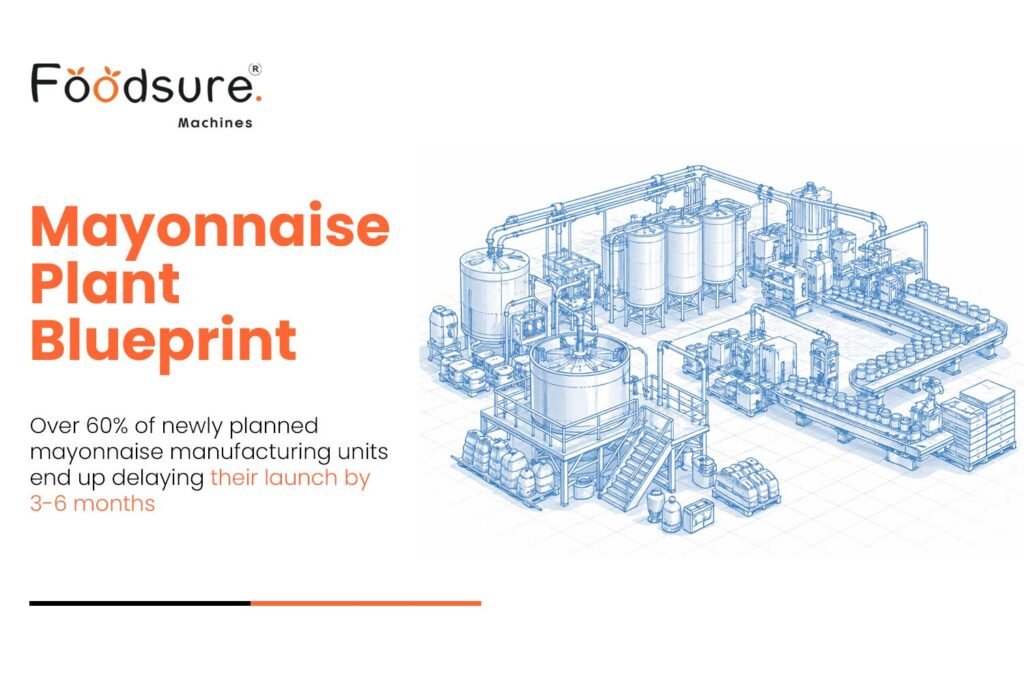
Over 60% of newly planned mayonnaise manufacturing units end up delaying their launch by 3-6 months, not due to emulsion failure, but also because of incorrect layouts and gaps in compliance. Why are there so many failures after the installation of the plants? A mayonnaise factory plant like this one reveals the hidden factors that ultimately determine whether your initial production will be sold or discarded. Month 0-1: Choosing the Right Market Before You Buy Anything The first month has to be devoted to finding out what goods you will offer and who your customers are, even before considering machines or factory space. Your decision of what to sell with your mayonnaise-producing business is basically a domino that determines the whole subsequent chain of events. Who Are You Selling To: Retail, HoReCa, or Private Label? Retail brands need long shelf life, attractive packaging, and room for distributor margins. HoReCa buyers are mostly interested in product consistency, bulk packs, and price stability. Private labels mainly focus on compliance, repeatability, and tight cost control. Egg-Based vs Eggless Mayonnaise: Commercial Impact In India, mayonnaise without eggs is more widely accepted by the market. It makes the labeling very convenient for the vegetarian markets; however, it requires a bit more stabilizers. A mayonnaise with eggs has to be produced under very clean conditions, and the cold chain has to be maintained very strictly. The choice you make at this point will decide your emulsification process, shelf life, and the kind of equipment that you will require. Also read: Egg-Free Mayonnaise – 5X Creamier & Healthy Delight Month 1-2: Designing a Factory That Passes Inspection and Actually Works Hygienic zoning prevents cross-contamination by separating areas based on risk, a critical step for egg-based products. Zone Separation: Differences in walls, pressure, and footbaths separate raw handling in Zone B from exposed product in Zone H. Personnel Controls: The microbial transfer from one zone to another is lowered by different uniforms, handwashing stations, and limited access per zone. India Compliance: Factories with FSSAI Schedule 4, which specifies the requirement for confirming zoning during audits, can operate without recall risks. Space Integration: 500-2,000 sq ft facilities, plan 30% of the area for the High Zone with SS surfaces and HEPA filters. Month 2–3: Equipment Selection Inside a Commercial Mayonnaise Plant Blueprint In commercial mayonnaise factories, emulsification is achieved using very high shear colloid mills or rotor-stator homogenisers (e.g., 5,000-20,000 rpm) to produce oil droplets of <10 μm for stable emulsions. Equipment Selection Essentials Batch Systems: 100-300 kg/batch (e.g., jacketed vessels + inline homogenisers); startup-friendly, 24-hour cycles, 10-20L investment. Semi-Auto Lines: 500 kg/hr, uses metering pumps for accurate oil, water sequencing, labour drops by 40%, 300- 700 kg/day capacity is perfect for small manufacturers. Turnkey: Full automation (PLC-controlled, CIP-ready), 1,000 kg/day, 12 months payback via 95% yield. Sizing Rule: Figure out 70% capacity utilization as a baseline. For example, a 200L mixer for 500 kg/day will not be overloaded, ensuring stable operations. Be in line with FSSAI-approved shear profiles to ensure a shelf life of more than 6 months. Also read: Mayonnaise Production Equipment For Profitable Food Business Month 3–4: Recipe Standardization & Shelf-Life Stability Factory-scale mayonnaise recipes fail lab replication due to shear mismatch (lab is 10,000 rpm vs. production is 5,000 rpm), causing >20 μm oil droplets and creaming. Standardize via pH 3.8-4.2 (acetic/citric acid), 0.51% xanthan/gum arabic, and sequential addition are water, egg, and oil at 20–25°C. Standardization Pointers Process Validation: Rheometer should be utilized for viscosity 10, 000- 50, 000 cP to pilot three batches that will be used for matching lab texture. Stability Modifications: 75- 90 days ambient (PET bottles, < 30 °C), 180 days chilled by 0.1% EDTA, aw<0.92. Testing Protocol: The real-time shelf life is six months, and the accelerated shelf life is four weeks at 40°C and 75% RH. Microbial load <10 CFU/g is the product quality indicator that confirms product stability and lowers the risk of returns. Month 4–5: Running Trial Batches and Locking Your Costs Trial production demonstrates that 15-25% of the output is lost due to emulsifier shear gaps or overfilling, and these losses can be recuperated by 3-5 documented runs that monitor pH (3.8- 4.2), viscosity (20,000- 40,000 cP), and centrifuge oil recovery (>95%). Run Protocol: Record temp/shear changes, sensory panels rate texture (1-5 scale), yield 92-96%. Loss Benchmarks: Oil separation less than 3% is regarded as normal; if it is more than 5%, it indicates that the recipe needs to be changed. Full Costing Depreciation: ₹10/kg (20L machine/2yr), selling target 200/kg for 40% margin. FSSAI Tip: Ensure by lab (TPC <10^4 CFU/g) before opening the market. Month 5–6: Preparing for Commercial Sales and Scale Engage at least 3 anchor customers to gather real-world feedback on product consistency (viscosity ±5%), packaging seal integrity (leak <0.1%), and dispatch efficiency (24-hr TAT).FSSAI labels need to indicate allergens, nutrition (fat 70- 80%), and best before, confirmed by ASLT. Customer Focus: Pilot 500kg/, log feedback on texture/oil, off, iterate per-scale. Packaging: PET/HDPE jars (200g-1kg), induction, sealed test drop/heat (40 °C). Automation Trigger: Automate 1,000 kg/day, stable yield >94% if not, manual fills save 30% capex. Metrics: Target 40% margin (200/kg sell), monitor OTIF >95%. Also read: Mayonnaise Machine Supplier Vs Turnkey: The Real Difference Why Most New Mayonnaise Plants Struggle in the First Year Mayonnaise factories lose 60% of their potential within the first year. Many failures happen because machines are purchased before finalizing the recipe, locking incorrect shear rate, for example, a 3,000rpm mixer instead of the required 15,000rpm can cause 20% oil separation. Poor layout may lead to FSSAI zoning issues, cross-contamination, and Salmonella risk (>10 CFU/g); the pilot masks 15-25% yield gaps from temperature changes (25±2°C critical). Fatal Mistakes & Fixes Machine Pre Buy: Finalize the recipe first; test the shear via a rheometer for <5m droplets. Emulsification Blindness: Sequence water, egg, oil at pH 4.0; disregard texture collapse. Layout Lapses: Implement 3, zone barriers, and positive
5 Hidden Things Engineers Check Before Buying a Mayonnaise Emulsification System
Over 60% of mayonnaise batch failures happen after machine installation, not at purchase. Why? Real mayonnaise machine buying criteria aren’t RPM or price, but performance under load. Here’s what engineers check before approval. This blog reveals the five hidden factors that decide texture, stability, and scale before costly production errors occur. Why Shear Stability Matters More Than Top Speed Shear performance is probably the most misunderstood mayonnaise making machine purchasing criterion. Several machines brag about high RPM, but engineers decide if the system can keep the shear when the viscosity is going to increase during the oil addition. If the shear decreases in the middle of the batch, the size of the oil droplets increases, and the stability of the emulsion becomes weaker. Engineers evaluate: The shape and the closeness of the gap of rotor-stator. Repeatability of shear from various batches. Devices that only count on high RPM usually give good results during demos and then crash in actual production. Does the Emulsion Hold After Production Day One? Emulsion stability is very important for automatic mayonnaise making machines, as laboratory tests sometimes hide problems that are only revealed in industrial runs. Engineers evaluate by testing: Full Oil Loading: Mayonnaise production line handles high oil phases (70–80%) at scale, controlling shear rates to avoid creaming or coalescence at 500–2000 L/h throughput. Long Continuous Runs: 8–12hr operations, pump fatigue, and homogeniser endurance test. Viscosity is tracked using Brookfield viscometers (target: <500 cP drop). Multiple Back-to-Back Batches: 5–10 cycles without CIP disclose residue buildup, zeta potential (40–60 mV) is used for droplet size uniformity (1–5 μm via laser diffraction). 24–72 Hour Storage: Accelerated tests at 40 °C verify phase separation (<2% oil off, top) and creaming index. The information that goes beyond initial appearance lowers rejection risks by 30–50% in FSSC 22000 compliant plants. Temperature Control During High-Shear Emulsification Extreme heat generated by high shear rotors (up to 10,000 rpm) can lead to egg yolk proteins in the mayonnaise being denatured, thus the viscosity drops (20–50 cP/min increase) and the emulsions become unstable. Engineers prioritise machines with precise thermal management for 70–80% oil phases. Temperature Rise Rate: The monitoring is done at less than 2 °C/min by PT. 100 probes during phase inversion. Protein coagulation at 55 – 65 °C is a risk that should not be exceeded. Jacketed Vessels/Inline Cooling: The double-walled constructions with glycol chillers keep the temperature at 20–40°C, the flow rates of 5–10 L/min prevent the heating of the large 1000–5000 L batches. Peak Shear Zone Stability: The inline heat exchangers after the homogenizer stabilize the temperature at less than 45 °C, and the PLC integration logs the profiles for FSSC 22000 audits. Long-Term Texture Impact: If the control is poor, there will be syneresis (5–10% serum separation) during the 4-week shelf life, thus the rework will increase by 15–25%. Validated systems achieved the consistent viscosities of 5000–20,000 cP; the inconsistencies after the launch are greatly reduced. How Easy Is the Machine to Actually Clean? CIP (Clean In Place) effectiveness is quite vital for mayonnaise production equipment that processes oil-rich emulsions (70–80%), where residues could lead to the growth of Listeria and flavour transfer. Poorly designed equipment accounts for 20–30% of audit failures under FSSC 22000/BRCGS, with ATP swab levels >100 RLU indicating the presence of potential hazards. Dead Zones in Rotor-Stator: Less than 1 mm gaps are checked. CFD modelling of turbulent flow (>2 m/s) helps eliminate 5–10% residue buildup in 3000–10,000 rpm zones. Seal Design/Oil Entrapment: EHEDG Type EL Class I mechanical seals with flush ports help to eliminate oil traps. Steam/sanitiser cycles discharge the bioburden <10 CFU/cm. CIP Flow Coverage: 360 spray balls + shear component jets accomplish >95% velocity coverage, confirm with riboflavin tests (no shadows post, 20 min cycle at 1.5% NaOH, 60 °C). Microbial/Flavour Impact: Insufficient CIP spikes TVC >10^4 CFU/g after 3 cycles, shelf life is reduced by 40%. Verified CIP shortens the time to production by 25% and also guarantees that there will be no rework. Scale-Up Predictability and Growth Readiness Scale-up predictability is a key feature of mayonnaise machines that enables a smooth transition of the process from pilot (500L) to commercial (5000L+) without the breakdown of the emulsion. According to FSSC 22000 case studies, expansion of the process in an unpredictable system results in 40- 60% of the time being wasted due to the system not working properly. Droplet Size Consistency: The size of the droplets is kept within the range of 1–5 μm through the continuous application of a constant shear (3000–10,000 rpm), which is done across all volumes. The pilot-to-plant ratio tests (1:10) are used to validate the results obtained by laser diffraction. Coalescence is avoided when the flow rate is >2000 L/h. Oil Throughput Without Shear Loss: Large, dose pumps (3 kg/s) are used to maintain 70–80% of the oil phases; the use of modular homogenisers allows for the prevention of the viscosity drop (>20%) by the use of CFD optimised flow paths. SKU Flexibility: The rotor quick change and the PLC recipe feature enable switching of vegan/low, fat variants in a time period of <30 min, the scalability of the stator gaps (0.1- 1 mm) ensures that no redesign is necessary. How the Right Mayonnaise Machine Buying Criteria Prevent Costly Mistakes Mayonnaise failures become visible after the launch. According to BRCGS audits, 25- 40% batch rejections are due to shear decay after 50 cycles or creaming in 30-day storage. The engineers decide to go for the real-world verification rather than the specification; they guarantee 98% OEE in 5000L+ plants. Repeated Runs: Locates residue buildup (>5% flavor carryover) through 100, cycle CIP tests. Volume Scaling: Measures droplet uniformity (1–5 μm) at 3x throughput without 15% viscosity loss. Storage Cycles: Ensures <2% separation at 40C/72h, avoiding 20% returns. Commercial ROI: Along with the time of the downtimes, it is cut by 30%, and the SKUs are scaled seamlessly for FSSC 22000 compliance. Read More: How to Choose a Mayonnaise
Case Study: How a 500 L Mayonnaise Machine Improved Yield by 30%
At Foodsure Machines, we are indulged with a mid-scale Indian food manufacturer producing packaged mayonnaise and sandwich spreads. The client was operating a 300 L batch mayonnaise making machine and supplying regional distributors, with monthly output capped by yield loss and batch inconsistency. This mayonnaise machine case study shows, with real plant data, how the right 500 L mayonnaise machine corrected yield losses and stabilised large-batch emulsification. The Production Challenge We Observed When the client came to us, it was clear that they had these 3 problems: 7-10% loss of raw material per batch due to unstable emulsification. Oil separation occurred frequently during peak production days. Scalability was constrained without additional labour or floor space. Their goal was straightforward: To raise the volume of output that is actually usable by at least 25-30% without an increase in batch failures. This mayonnaise machine case study highlights the real-world challenges mid-scale manufacturers face when small-batch systems can’t meet demand. Baseline Performance (Before Upgrade) Parameter Existing System Machine Capacity 300 L batch Average Yield 88–90% Raw Material Loss 7–10% Mixing + Cleaning Time 45–50 minutes Batches per 8-hour shift 8 Daily Sellable Output 2,100–2,200 L Monthly Output 42,000 L The Real Reason a 500 L System Was the Right Upgrade Upgrading to a single 500L Mayonnaise Machine simply restructures your mayonnaise production line by eliminating small parallel mixers, which reduces the inefficiencies of labor, cleaning, and batch variability. Scaling Advantages Reduced Labor Dependence: The operator involvement of a single unit is lowered by 50- 60% as the shear and mixing are automated for a hands-off, consistent result as compared to manual small-batch supervision. Minimized Cleaning Time: Shorter CIP (15-20 min) as compared to several units can reduce the total downtime by 40%, and throughput can be increased to 500 kg/hr. Quality Benefits Uniform High – Shear Emulsion: Keeps droplet sizes less than 5 microns throughout the entire volume, 98%+ yield, and repeatable quality are ensured. Fewer Batches: The machine makes the turnaround 2 – 3 times faster, thus less variation is present, and scalability is improved for a consistent supply to the market. A Closer Look at the 500 L Mayonnaise Machine The 500L Mayonnaise Machine is an industrial mayonnaise machine designed to produce high yield, consistent results using the most advanced engineering and high shear emulsification technology. Core Features for Yield The rotor-stator design has been optimised for emulsifying thick, high oil content water/oil emulsions (up to 70% oil content). The machine produces stable emulsions with droplet size <5 µm, with an average yield of at least 98%. The mayonnaise production equipment has a variable speed range (500 – 5000 RPM) for reproducibility and a 2–3% reduction in batch-to-batch variability. Core Features for Consistency Enhancement New internal geometry, including curved baffles, eliminates virtually all dead zones in the machine and creates uniform flow, yielding less than 1% waste. The machine has a fast cleaning cycle (automated Clean-In-Place (CIP) 15-20 minutes) that results in 40% less cleaning time and uses SS304 for cleanability and to avoid product residue on machines. What Changed After Installation Parameter After 500 L Machine Batch Volume 500 L Average Yield 96–97% Raw Material Loss 3–4% Oil Separation / Breakage Negligible Mixing + Cleaning Time 35–40 min Effective Cycle Time per Batch 45 min Batches per 8-hour Shift 10 Daily Sellable Output 4,800 L Monthly Output (20 days) 96,000 L Batch-to-Batch Consistency High (minimal viscosity variation) Rejection / Rework Rate <1% Labour Required per Shift 1 operator Cleaning Method Integrated CIP Water Used per CIP Cycle Reduced vs 300 L system Downtime Between Batches Minimal Energy Efficiency Improved per litre produced Cost per Litre (Processing) Lower than the previous setup Scalability Ready for higher shift utilization This section of the mayonnaise machine case study shows measurable gains in yield, efficiency, and batch consistency. Where the 30% Yield Gain Came From The first significant change came from a direct attack on the losses and inefficiencies in the process. As a result, the 500L Mayonnaise Machine has an effective usable output by 30% from 270L usable (300L batch) to 480L usable (500L batch). Yield Gains Raw Material Loss Reduction: Perfectly controlled high shear emulsification and dead zone-free geometry helped to lower the losses by 5- 6%, thus more oil and water emulsion was retained. Zero Rejected Batches: Stable droplet size (<5 microns) through variable RPM helps oil separation to be avoided, thus the previous waste of 10- 15% has been largely eliminated. Output Boost Higher Usable Per Batch: 96% yield (480L) against 90%, thanks to uniform mixing. Shorter Cycles: Processing time is 20- 25% shorter, plus CIP allows 20% more batches/shift, the monthly output has been increased by 30-35% without the need for extra staff. How These Results Compare to Industry Benchmarks Batch process efficiency: Generally, a batch facility for mayo of around 800 kg/day will be able to operate in 8 hours at a large scale. Thus, this shows that the capacity for small-scale is quite high. Mixing quality influence: To a great extent, high shear mixing technology can decrease the production costs and the consumption of raw materials by 20, 40% per kg of product, as a result of better emulsification and fewer rejects. The manufacturer’s performance after the upgrade is now operating at a higher level of efficiency when compared to typical smaller machines. Key Points The right capacity isn’t just about size; it’s about emulsion control and waste. Value added through a high-shear mixing machine continues from batch volume and increases the yield and quality performance. Benchmarking against popular techniques (industry loss ranges, batch capacity norms) enhances claims. Have a Question? Let’s Connect 🤝 Instant support for machines, production & process optimization. 📞 Call Now ✉️ Email Us Conclusion At Foodsure Machines, we concentrate on throughput and not just machine size. This is a mayonnaise machine case study in point to demonstrate what the right 500 L system can accomplish: winning losses back, stabilising quality, and scaling output profitably.
Mayonnaise Machine Supplier vs Turnkey Manufacturer: Which Partner Should You Choose?
More than half of new mayonnaise plants face launch delays due to compliance and formulation errors. The root cause is about choosing between a mayonnaise machine supplier vs turnkey partner blindly. This guide uncovers what really happens between delivery and your first invoice. What a Mayonnaise Making Machine Supplier Typically Offers Mayonnaise machine suppliers typically provide core processing equipment, including emulsifiers and mixers. This is different from turnkey suppliers, who take care of the whole plant integration. A mayonnaise making machine supplier is more appropriate for targeted needs rather than comprehensive setups. Scope of a Mayonnaise Machine Supplier Mayonnaise production line suppliers provide high-shear mixers, homogenisers, and storage tanks made of food-grade stainless steel for hygienic production. A basic installation comprises on-site assembly, alignment, and initial testing to confirm functionality. A small amount of operator training is limited to 1- 2 days of practical machine operation, basic troubleshooting, and safety regulations. When Choosing a Machine Supplier Makes Sense Perfect for 50- 500L R&D batches to test emulsions without the expense of the entire plant. In-house formulation teams: Utilise supplier machines for the creation of custom recipes when the experts are in charge of the optimisation. Short-term or pilot batches: Suitable for short-term or pilot batches under 1,000 kg/day to test market demand. Where Turnkey Support Makes the Biggest Difference A turnkey manufacturer sees mayonnaise production as a system, rather than just a single machine. Their commitment goes beyond handing over a machine until stable, repeatable output is achieved. Turnkey Means Owning the Output The major difference between a mayonnaise machine supplier and a turnkey partner is accountability. A turnkey partner is the one who designs the whole production flow: Ingredient dosing and mixing sequence. Shear control for stable emulsification. Batch consistency across shifts. Cleaning in place (CIP) integration. Operator, independent process control. Where Turnkey Adds Long-Term Value This leads to fewer batch failures during scale-up, a shorter gap between trials and commercial supply, built-in compliance readiness, and lower operator skill dependency. Mayonnaise Machine Supplier vs Turnkey: Side-by-Side Comparison Parameter Machine Supplier Turnkey Manufacturer Scope Equipment only Complete production system Responsibility Ends at installation Ends at stable output Recipe support Limited Full process support Scale-up planning Not included Built-in Compliance readiness Partial Designed into the layout Risk ownership Manufacturer Shared with partner The Hidden Risks of Choosing Only on Machine Price Many producers pick a supplier just because the mayonnaise machine equipment offer seems to be more economical. The actual costs become visible later on. Common Problems Seen After Installation. Oil separation after a few hours or days. Inconsistent viscosity between batches. The product behaves differently at 300 L vs 50 L. Such problems hardly ever point to defects in the machinery. These issues usually come from process design gaps, common when the mayonnaise machine supplier vs turnkey decision is made only on upfront cost. Also read: Mayonnaise Machine Setup Guide: From Delivery To First Batch How to Choose Between a Mayonnaise Machine Supplier vs Turnkey Setup The appropriate decision is contingent upon your current situation and your future position within 6 – 12 months. Decision of Machine Supplier, If: You have a mayonnaise formulation that is already validated. Your production is in small batches (less than 100 L). You have technical staff skilled in emulsions. The production is not running at a critical level for the market. Decision of Turnkey Manufacturer, If: You have a plan for commercial or retail sales. You want to be sure that the product will be the same from one batch to another. You want to go beyond pilot production quickly. You want to have a faster commissioning and fewer failures. Conclusion At Foodsure Machines, we not only supply equipment but also become partners in your production. Our complete solution guarantees that your mayonnaise line will be able to deliver a consistent output, performance that can be easily scaled, and lower failure rates. We help manufacturers decide what the best configuration is from the very first day, definitely not after problems have arisen. Frequently Asked Questions – Mayonnaise Machine Supplier vs Turnkey What is the real difference between a mayonnaise machine supplier vs turnkey? A mayonnaise machine supplier sells equipment, while turnkey means someone is accountable for working production. Which option suits first-time mayonnaise manufacturers better? In a mayonnaise machine supplier vs turnkey choice, turnkey reduces early mistakes for first-time manufacturers. Is a turnkey more expensive than buying from a supplier? On paper, maybe, but in a mayonnaise machine supplier vs turnkey comparison, turnkey usually costs less after rework and failures. Who handles product consistency in a turnkey setup? In a mayonnaise machine supplier vs turnkey model, turnkey partners own consistency, not just installation. Can I start with a supplier and scale later? You can, but mayonnaise machine supplier vs turnkey decisions made early affect how painful scaling becomes. Which option helps prevent oil separation? When comparing a mayonnaise machine supplier vs a turnkey setup, turnkey setups handle emulsification control far better. Does a machine supplier help with formulation? Usually, no, which is one of the biggest gaps in mayonnaise machine supplier vs turnkey setups. Who manages food safety and compliance in turnkey projects? In a mayonnaise machine supplier vs turnkey setup, turnkey partners design compliance into the process. Is turnkey only for large factories? No. In a mayonnaise machine supplier vs turnkey decision, size matters less than production goals. What breaks most often with machine-only purchases? Process stability fails first in the mayonnaise machine supplier vs turnkey choices focused only on machines. Which option gets products to market faster? Turnkey wins in most mayonnaise machine supplier vs turnkey comparisons because fewer trials are needed. How should I decide between a supplier and a turnkey? In a mayonnaise machine supplier vs turnkey decision, choose based on risk, not price.
Mayonnaise R&D + Manufacturing: The Exact Parameters That Decide 5★ Product Quality
Did you know that over 60% of commercial mayonnaise batches fail in texture or stability after lab trials? Why does a perfect recipe often flop at scale? The secret isn’t just ingredients, it’s precise mayonnaise formulation R&D and mayonnaise quality control parameters. This guide shows exactly how to get 5-star consistency every time. Why Most Mayonnaise Fails After Scale-Up | Mayonnaise Formulation R&D Issues If your mayonnaise was flawless in the pilot batches yet didn’t turn out well in production, you’re not alone. Typical problems after scaling up a production process might be: Oil separation within a few days or weeks. The product looks quite shiny, but a very weak structure. Inconsistency from one batch to another. Decreased shelf life. High rework and raw material loss. These issues are not the result of a wrong recipe. They arise because the most important quality parameters for mayonnaise control are not maintained in the manufacturing scale. The 6 Core Mayonnaise Manufacturing Parameters That Decide Final Quality Industry insight breaks down the 6 core factors of industrial mayonnaise production, which came from real-world emulsification challenges in a high-volume plant (e.g., 5- 10 ton batches). Missing these results in yield loss of 10%- 20% or product recalls. Oil-to-Water Ratio: Target 70 – 80% oil, 1% deviation causes creaming (droplet size >10 μm). For immediate O/W control, inline refractometers should be used along with 1- 2% egg yolk or modified starch as the emulsifier. Shear Rate & Mixing: 10,000- 20,000s⁻¹ through colloid mills, an inconsistent shear result yields D >5µm, causing separation. To avoid over-shear coalescence, you should balance it with RPM staging. Temperature Control: 20- 30°C is the ideal temperature for lecithin to be activated. At over 40 °C, proteins are denatured the zeta potential drops below 30mV. Viscosity changes are avoided by PID loops. Ingredient Sequence: Hydrate gums first (xanthan/guar 0.2 – 0.5%), then acidify after 50% oil, at <1 L/min. Scale reversals result in gelation failures. Emulsifier Dosage: 1- 3% very accurately via mass flow meters; an overdose of emulsifier causes the product to become bitter (off-flavor volatiles), while an underdosing reduces the shelf life to less than 6 months. Batch Handling: Holding for less than 30 minutes at agitation of less than 10 rpm, peristaltic pumps are used to minimize shear (<5000 s). Yields hit 98% with scraped-surface transfers. Also read: Top Industrial & Small-Scale Mayonnaise Machines: 7 Best Picks R&D vs Manufacturing in Mayonnaise Production | Common Quality Control Mistakes R&D vs Manufacturing in Mayonnaise Production uncovers significant differences are Lab trials (1-5kg) involve manual whisking at 500 – 1,000 s shear, resulting in D <2m droplets by visual checks, but do not consider scale-up physics. Production (5 – 10T batches) has 15,000s colloid mill shear, operator variances (5% dosing), and 2 4-hr hold times that decrease zeta potential from 45mV to 25mV, thus creaming rates are increased 3 times. Common QC Mistakes: Scaling recipes linearly (fails to take into account changes in Reynolds number, causing a 20% yield loss). Not conducting pilot (50, 500kg) validation emulsions break at 70% oil load. Operators overriding PID temps (>35C causing emulsifiers to denature. No inline NIR for real-time O/W ratios resulting in off-spec batches. Reconnect through CFD modelling and inline particle analysers to achieve 95%+ transferab How Industrial Mayonnaise Machines Maintain Quality & Stability Mayonnaise making machine (e.g., 5 – 10T/hr continuous lines) maintain their stability through very precise engineering, thus they are able to achieve around 98% yields vs. 80% in batch systems. Consistent Shear: Inline colloid mills deliver 15,000- 25,000 s at fixed gaps (0.1-0.3mm), thus they can maintain D <3m droplet, VFD motors auto-adjust RPM to prevent over-shear coalescence. Temperature Precision: Jacketed PID, controlled vessels maintain 22 – 28 °C (0.5C °C), thus they can preserve zeta potential > 35mV, heat exchangers recover 90% energy. Oil Dosing Accuracy: Coriolis mass flow meters (0.1% error) are the ones that sync 70- 82% oil with water, thus real-time NIR feedback is able to avert phase splits. Operator Independence: PLC/SCADA automation with recipe locking is the factor that leads to cutting variances by 70% auto CIP is the one that helps in downtimes, slashing to <2hr/shift. Yields increase by 15- 20%, shelf life reaches 12+ months, and rejections are reduced to less than 1%. Also read: Mayonnaise Machine Price India: 2026 Cost Guide & ROI Conclusion At Foodsure Machines, we are convinced that an excellent mayonnaise is the result of a carefully developed mayonnaise formulation R&D and not by chance. We support producers to integrate essential parameters into their operations in such a way that the quality can be maintained at a large scale. The process becomes flawless when we are the engineers of it; our partners widen their business without having to worry about rework. Frequently Asked Questions – Mayonnaise Formulation R&D What is mayonnaise formulation R&D? It’s the work of building recipes and process conditions that still hold up when production scales. Why does mayonnaise fail after scale-up? Lab formulations rarely match the shear, mixing, and stress of real production. What causes oil separation in mayonnaise? It usually comes down to weak emulsifier activation, poor shear control, or an unstable oil balance. Which emulsifier works best for industrial mayonnaise? It depends on oil load, shear intensity, and how the overall process is designed. How important is shear in mayonnaise formulation R&D? Shear controls droplet size, and droplet size decides texture, stability, and shelf life. What temperature is ideal during emulsification? Most processes work best around 18–25°C, where emulsifiers stay effective without damage. Can a lab recipe work in commercial production? Yes, but only after it’s rechecked against industrial equipment and real batch volumes. How does ingredient addition order affect mayonnaise quality? Get the order wrong, and the emulsion weakens before it has a chance to stabilize. Why is batch-to-batch consistency so hard to maintain? Manual control and loosely defined parameters introduce variation every single run. How is shelf life improved during
Why Most Mayonnaise Production Lines Fail After Pilot Runs And How to Prevent It
Did you know that over 60% of small and mid-scale mayonnaise plants see yield drops or inconsistent texture after pilot runs? Why do successful pilots stumble in full-scale production? Scale-up issues, such as uneven emulsification and ingredient mismatch, are the hidden culprits. In this blog, we’ll break down the most common scale up issues mayonnaise, why they happen, and step-by-step strategies to prevent them for smooth, high-yield production. Common Reasons Why Mayonnaise Production Lines Fail Production lines for mayonnaise typically suffer from failures that result from equipment mismatches, faulty emulsification processes, inconsistent ingredient quality, and untrained operators. As a result, there is separation, waste, and downtime during the scale-up process. Poor Equipment Selection: It is a common practice for manufacturers to start their operations with 50 – 200L batch mixers and then increase their demand without making the necessary upgrades to continuous inline homogenisers or colloid mills for 500L+ runs. Incorrect Emulsification & Yield Loss: High-shear mixers used in laboratories are capable of creating stable micro-emulsions; however, the industrial ones require staged oil addition (1-5% increments) through metering pumps so as to avoid phase inversion or foam due to cavitation. Ingredient Quality & Consistency Issues: Small changes of only 0.2% in the peroxide value of oil (>5 meq/kg), phospholipid content of egg yolk, or xanthan gum hydration rate can cause destabilisation of O/W emulsions, resulting in rejection of the full line. Lack of Operator Training: Missing the shear ramp-up (2,000-15,000 rpm over 10 min), which results in entraining air and cutting yield by 12-18%. Not paying attention to temp control (42–48°C optimal), the a risk of bacterial growth or emulsion inversion. Disregard pH monitoring (3.6-4.2) can cause syneresis. How to Prevent Scale-Up Issues in Mayonnaise in Pilot Runs To prevent mayonnaise scale-up problems during pilot production, equipment capacity ratio standardisation, training, and KPI follow-through are used to bring uniformity to the process to avoid emulsion failure and yield loss during transition to industrial-scale production. Choose the Right Machine Capacity: Select emulsifiers based on 20-50% headroom over pilot requirements, for instance, from existing 300L batch high shear mixers to 500L -1,000L inline colloid mills. This avoids shear fatigue, supports speeds of 15,000–20,000 rpm, and prevents yield declines of 15–25% caused by overloading. Similarity of testing geometries, based on ‘rotor tip speed,’ helps simulate process flow. Ingredient & Process Control: Standardisation Enter pilot ratios (for example, oil 70-80%, egg yolks 10-15%) using the same suppliers and variance less than 0.5% for peroxide value or viscosity using pre-blend tanks. Also, strictly follow SOPs for staged oil addition (between 2 – 5 L/min), pH range of 3.8 – 4.2, and temperature at 45°C using PLC (repeat all actions to prevent phase inversion during bulk production). Train Operators for Consistency: Run hands-on workshops modelling 300- 500L ramp control shear (start 3,000 rpm -18,000), temp (2 °C), and 25min cycles. Employ digital twins or AR apps for fault drills such as foam detection. Confirm through FSSC 22000 modules on CIP and deviations. Track KPI Metrics: Analyze yield (target >92%), viscosity CV (<5%), downtime (<2%), and waste (<8%) through Excel dashboards or SCADA software. Record per batch of emulsion stability (centrifuge test), sensory scores, and O/W droplet size (<5 μm microscopy). Trend analysis helps spot issues early, for example, a yield dip can signal a shear mismatch, enabling up to 95% first-pass success during scale-up. Read More: Mayonnaise Production Equipment That Scales Your Food Business Profitably Quick Preventive Checklist for Scale-Up Success A quick preventive checklist may be an excellent tool in a mayonnaise scale-up from pilot to production when the aim is to avoid emulsion failure, yield loss, and downtime by verifying key controls upfront. Machine Capacity Confirmed First of all, it is necessary to verify 20- 30% overcapacity (e.g., 400L – 300L pilots) with matching shear rates (15 000+ rpm). In order to prevent overload inconsistencies, test the rotor, stator geometry, and flow rates. Ingredients Standardized One of the points is to secure supplier specs: oil PV <3Meqq/kg, egg yolk at 10- 12%, stabilisers <1% variance. Batch pre-mixes should be prepared in the holding tanks, SOPs for ratios, pH 3.8-4.2. Operators Trained Individuals performing the hands-on drills are the best preparation for a ramp-up (speed/temp/timing). Staff should also be certified on CIP and deviations. Foaming fault simulation through AR tools can result in the reduction of errors by 90%. KPI Metrics Monitored Keep an eye on yield (>92%), viscosity CV (<5%), and waste (<5%) either by using spreadsheets or SCADA. Daily size of the droplets (<5 µm) and stability tests should be recorded. Read More: Mayonnaise Manufacturing Plant in India: Complete Setup, Machines & ROI Insights Conclusion Most scale up issues mayonnaise are not really problems of the recipe but are more related to equipment and process deficiencies. At Foodsure Machines, we build our mayonnaise making machine in such a way that it can be scaled up without any loss of yield or inconsistency. The result of a well-thought-out growth plan is that the performance does not drop; rather, it gets better. Frequently Asked Questions Why do most food startups fail after the pilot stage? Most failures occur due to poor scale readiness, cost miscalculations, supply chain gaps, regulatory issues, and lack of working capital. Does pilot success guarantee commercial success? No. Pilot success validates the product idea but does not confirm operational, financial, or market scalability. What is the biggest mistake startups make during scale-up? Assuming the pilot formulation, costs, and processes will behave the same at the commercial scale. How important is formulation optimisation before scaling? Extremely important. Scale-ready formulations ensure consistency, shelf life, and product stability in large volumes. When should regulatory compliance be addressed? Regulatory planning should begin during pilot development, not after scaling begins. Why is shelf-life testing critical before launch? Shelf-life failures lead to recalls, brand damage, and financial losses once products enter wider distribution. Can the wrong manufacturing partner cause failure? Yes. Manufacturing misalignment often leads to inconsistency, delays, cost
Mayonnaise Machine Setup Guide Walkthrough From Delivery to First Batch (Step-by-Step)
Were you aware that more than 60% of mayonnaise first-time batch trials end in failure during commissioning, not due to the recipe but as a result of a defective setup? Small manufacturers make the most costly mistakes between delivery and the first production batch. What happens when your oil separates, the texture collapses, or the raw material is wasted even before production gets stabilised? This mayonnaise machine setup guide details the exact step-by-step setup operation, which is a great way to avoid weeks of trial and error, to keep your yield safe, and to be able to start production from day one. Step 1: What to Prepare Before the Mayonnaise Machine Arrives The truck delivery should not hold up the start of the factory work, as an appropriate mayonnaise making machine setup goes even further back. Make sure your place of installation is suitable The floor must be flat and level with appropriate drainage. Enough space for operator movement and cleaning. Controlled airflow with clear separation between the raw material and finished product zones. Preparation of utilities Power supply must be stable and correspond to the machine specifications. The water line should be very clean, both for the water phase and CIP. Compressed air supply, if required by the system. If you decide to skip these basics, you will often find that there are delays on installation day. Step 2: Delivery, Positioning, and Machine Alignment A mayonnaise production line must be delivered and positioned properly if the emulsification is to be kept consistent and the uniform shear. Use laser tools to level it accurately to 0.5mm to prevent vibration-related oil separation. Key Installation Steps: Levelling: Employ spirit levels; supports that are not level may result in 10- 15% batch variability. Inspections: Examine clamps, O-rings, and joints for leaks. Testing: When the machine is without a load, verify the wiring, sensors, and E-stops. Step 3: Preparing Raw Materials for the First Batch One of the main reasons people fail in their attempt to make mayonnaise from their first batch is the improper mixing of the ingredients, and this failure is always related to poor emulsification as a result of the temperature mismatch between the ingredients or undissolved ingredients that have been forgotten. Major Preparation Steps: Oil Phase: A temperature between 20 – 25 °C is definitely the best one to get the most comfortable consistency. Try to use good, quality oils (e.g., soybean) with <0.1 % free fatty acids to be able to have stable droplet formation and avoid creaming. Water Phase: Emulsifiers (e.g., egg yolk at 10- 12%) and stabilisers (xanthan at 0.2, 0.5%) must be completely dissolved at 40 – 50 °C. The mixture should be passed through a 50-micron filter to remove the particles that cause shear instability. By adjusting the temperature and pre-filtering, the success of the emulsion is more than 95% with a smooth and stable texture, and the separation of phases is significantly less likely. Step 4: Starting Batch One Without Mistakes: The Correct Production Flow Correctly running the very first batch is what basically defines baseline emulsion stability in mayonnaise making. It is a layer of sequence errors that causes 70% of initial failures due to droplet coalescence. Key Execution Steps: Loading Sequence: Water phase (emulsifiers pre-dissolved) should be placed in the tank first; gentle agitation (400- 800 RPM) to form a vortex should be started, then oil should be added in 1- 2% increments every 30- 60 secs for progressive inversion emulsification. Parameters: Target 2500- 4500 RPM high, shear phase (shear rate 10,000–20,000 s⁻¹ ), total cycle 18- 25 min, keep < 42 °C by jacket cooling to avoid yolk coagulation. Step 5: Common First-Batch Mistakes (And How to Avoid Them) Typical errors in mayonnaise first, batch production are basically influenced by a hurried emulsification and thus result in a separation of the batch and in a non-uniform shear, accounting for 60–80% of failed trials. Oil Addition Overload: During 2000, 4000 RPM, add oil at 0.5 – 1 kg/min max (not >5% batch volume at once) to prevent droplet coalescence >10 microns, which is the main cause of phase inversion failure. Temperature Neglect: Keep the temperature < 40 °C with the help of cooling jackets; the excess heat (> 50 °C) causes the denaturation of the egg proteins and consequently a 30% drop of stability; if the temperature is rising >2 °C/min, take a break. Mid-Batch Tweaks: After validation, the RPM/shear/time should be fixed; changes interfere with zeta potential, giving variable viscosity (e.g., 5,000 – 100,000 cP swings). Practice less than 5% failure rate, which can be scaled up to FSSC-compliant runs. Step 6: From Trial Runs to Stable Production To move from trial runs to stable production of mayonnaise, 2 – 3 validated batches are required to lock parameters, thus ensuring less than 2% variability for scalability. Scaling Pointers: Trial Batches: Conduct 2 – 3 runs at 50 – 100% capacity, note RPM (3000 – 4500), temperature (< 42 °C), oil feed rate (1 – 2%/min), and viscosity (20k – 60k cP) to have a baseline. SOP Creation: Define the steps, cleaning (CIP 80°C), and QC checks (pH 3.8- 4.2, no free oil) in a one-page procedure that is in line with FSSC 22000. Operator Training: 4 hours practical: loading, monitoring, shutdown; certification through simulated faults. Locked setups deliver consistent output, thereby allowing 500- 2000 kg/shift with no splits. Self-Check: Is Your Mayonnaise Machine Properly Set Up? Self-check ensures mayonnaise production equipment readiness and identifies setup defects that are fixed before commercial runs, thus saving 20- 30% of batch losses. Deep Checklist Pointers: Levelling: Check <0.2mm difference with laser level; vibration <2mm/s to avoid shear drift. Sequence Doc: Confirm water, first, gradual oil SOP with exact times for consistency. Emulsion Proof: The very first batch keeps the 48h stability test (no separation, viscosity 25k-50k cP). Operator Mastery: Quiz on loading/RPM/emergency, 100% pass rate. CIP Clarity: Record 15 min alkaline/acid cycles at 70- 85 °C for
Mayonnaise Machine Price Guide With Capacity, Output & Cost Benchmarks for India 2026
Did you know that over 60% of small food manufacturers in India struggle to scale mayonnaise production because their machines can’t keep up with demand? Many rural entrepreneurs invest Lakhs in equipment, only to face rising production costs and stalled growth. Are you investing too much for a machine that won’t grow with your business? Understanding the mayonnaise machine price in India and the real cost per kilogram of output could be the difference between profit and loss. In this blog, we’ll break down prices, capacities, and ROI so you can choose a machine that truly scales your operations. Mayonnaise Machine Capacity, Cost & Output Insights To identify the appropriate mayonnaise making machine, you have to strike a balance between the capacity, the price, and the output with what you are producing: Capacity: The machine sizes are small, with the capacity of producing between 20-40 kg/hour, and large industrial lines of over 150 kg/hour. This machine will be effective by choosing a machine that suits your production objectives daily, since you will not overwork the machine. Price: The semi-automatic mayonnaise machine in India would start at about ₹4 Lakh, the automatic mayonnaise machine will cost between 8-15 Lakh, and a line in the industry can be established for more than 30 Lakh. The set budget will remove the expenses on the elements that are not vital. Output: The cost per kg of mayonnaise is output-influenced. Greater capacity machines are used wherein the fixed costs are divided between a greater number of units and the unit cost is lower, thus better ROI. Scalability: Semi-automatic machines can be selected for the pilots and SHGs, and automatic machines or industrial machines are designed to be scaled without a requirement to upgrade on a regular basis. Read More: Mayonnaise Production Equipment That Scales Your Food Business Profitably Mayonnaise Machine Price India: Cost Breakdown & Insights Machine Type Machine Price (₹) Key Service Parts & Maintenance (₹/year) Monthly Cost Weekly Cost Yearly Cost Suitable For Semi-Automatic 4–7 Lakh Motor, Pump, Blades, Agitator – 30,000–50,000 12,500–18,000 3,000–4,200 1.5–2.2 Lakh SHGs, pilot units Automatic 8–15 Lakh Mixers, Agitators, Sealing Parts, Control Panel – 60,000–1,20,000 25,000–42,500 6,000–10,000 3–5.1 Lakh Small manufacturers Industrial Line 18–30+ Lakh Motors, Mixers, Pumps, Control Panels, Agitators – 1,50,000–3,00,000 55,000–95,000 13,500–23,750 6.6–11.4 Lakh Large commercial units Estimates are made based on 3 to 5 years of depreciation, replacement times of parts per cycle, and normal operation use. The real costs will change with production volumes, downtimes, and maintenance activities. Insights: When service parts and maintenance are added, the cost per kg of mayonnaise will be realistic. Smaller-scale production and pilot batches require semi-automatic machines, which are inexpensive. The Cost per unit decreases with automatic machines and industrial machines when they are operating at full capacity. Regular change of essential components guarantees consistency in quality, reduces downtimes, and prolongs the life of the machine. Read More: Buy Mayonnaise Machine in India – 2025 Prices, Specs & Best Models How to Calculate Mayonnaise Machine Cost Per Output Break down the price per kg of mayonnaise to ensure profits. Use: Total Cost ÷ Net Output (kg). This reveals the invisible losses, like the inefficient machines. Machine Cost: Price of machine ( e.g., 50 Lakh)/total production during 5 years ( 150 kg/hr x 6000 hrs/year 4.5 million kg ). Gets ₹11/ kg. Running Costs: Additional ingredients ( 60-80/kg), manpower ( 1/kg), power ( 0.4/kg at 5.8 kWh/100 kg), packaging ( 10/kg). Total around ₹75-95/kg. Maintenance & Stops: Added annual repair ( 0.6 /kg ) + downtime ( 20/kg when downtime = 30 percent ). Target total = 30/kg profit margin 100/kg total. Tips for Choosing a Mayonnaise Machine That Scales Your Output Select the machines that can be scaled with the size of your business, where the emphasis is on support and expandability. The target sampling for full production without full replacement with full automation must be flexible. Flexible Capacity: Choose those that have variable speeds ( 20- 200 kg/hr) and additions (modular), such as additional hoppers. This enables semi-autonomous pilots to proceed to auto lines without any challenges. Maintenance & Spares: Using SS 316, <5% downtime/year; local spares (e.g., India vendors stock seals in 48 hrs). Check PM kits and 24/7 support. Vendor Support: Select makers FSSC 22000 fitted and trained, 2-year warranties. This is because the long-term ROI of the costly imports is superior to the cheap imports by a difference of 20 percent increment of OEE. Scale Path: Semi-automatic mayonnaise machine gives a minimal batch, fully automatic mayonnaise machine gives 100+ kg/hr, lines (1 ton/hr). Test demos for 70%+ net output. Read More: The ₹5 Crore Secret: How to Start A Mayonnaise Business in India With One Small Machine Conclusion Choosing the right machine goes beyond upfront cost. Foodsure Machines, we assist you in considering the price of a mayonnaise machine in India with actual output, expandability, and ROI. The growth of our mayonnaise making machine is to accompany your business growth, and this means our customers invest once and scale profitably. START MAYONNAISE PRODUCTION WITH CONFIDENCE Get Accurate Mayonnaise Machine Price, Capacity & Output Guidance for Your Startup Connect with Foodsure Machines experts to select the right mayonnaise machine based on your production goals, investment range, and automation needs. Get verified price benchmarks, output planning, and complete setup support for India 2026. Get Quote → WhatsApp Expert → Frequently Asked Questions What is the mayonnaise machine price in India? Most mayonnaise machines in India are priced between ₹4 lakh and ₹30+ lakh, depending on capacity and automation level. What is the starting price for a small mayonnaise machine in India? Entry-level semi-automatic mayonnaise machines typically start at ₹4 to ₹5 lakh. Does automation affect mayonnaise machine price in India? Yes. Higher automation increases upfront cost but significantly reduces labor dependency and operating errors. Which capacity mayonnaise machine is most cost-effective? For most manufacturers, machines with 50 to 100 kg per hour
How to Choose a Mayonnaise Machine That Actually Scales Your Factory – ROI Checklist
Did you know that over 60% of small mayonnaise units in India are unable to purchase machines that reach full capacity, losing lakhs of rupees in energy, labour, and waste? Are you risking the same hidden losses? Our Mayonnaise Machine ROI Checklist reveals exact numbers, percentages, and costs to help you choose a machine that truly scales your factory profitably. In this blog, we talk about how to pick the right semi-automatic or fully automatic machine, measure ROI, and avoid costly mistakes. How to Choose a Mayonnaise Machine: Semi-Automatic vs Fully Automatic Mayonnaise Machine The size of production, budget, and supply of labour are used to determine the choice of a mayonnaise machine for batches. Semi-automatic machines are optimally applicable to small batches, and fully automated machines are optimally applicable to large-volume businesses that demand consistency. Semi-Automatic Mayonnaise Machine: The manufacturing normally ranges between 20-100 kg/hr, operated by 2-3 people in a shift, who mix, load, and supervise. The advantages of low startup cost (₹2–12 Lakh) and flexibility for small/test batches. The disadvantages include high dependence on labour and slow scaling to high throughput due to manual processes. ROI monitor: It may experience net commercial output less than 70% of nameplate capacity. Pay close attention to tracking the mean time to failure. Fully Automatic Mayonnaise Machine: It can produce up to 100-1000 kg/hr and requires 1 -2 operators to monitor PLC controls and minimal interference. The benefits are high throughput, uniform quality of emulsions with inline homogenisers, and scale-up. The downsides are high CapEx ( ₹10–100 lakh) and maintenance by skilled personnel. ROI monitor: The target power consumption is 56 kWh/100 kg (e.g, 48 units/day at 50 kg/hr), with spares/training costs not exceeding 30% of total CapEx. Read More: 2025 Buyer’s Guide: Fully vs Semi-Automatic Mayonnaise Machines – Which One Wins? Mayonnaise Machine ROI Checklist Made Simple: A Smart Buyer’s Guide The cost analysis of the mayonnaise machine ROI checklist must focus on losses in food production plants. The scaling of competitive markets, such as India and South Africa, is calculated using an in-built 8-point checklist to ensure that the payback is scaled to suit the targets. Net Saleable Output: Achieve target capacity of 300kg/hr machine of ≥70% at rated capacity 210+ kg/hr post-downtime. Target net output ≥70% of rated 300 kg/hr (210+ kg/hr post-downtime). If actual output is 220 kg/hr, ROI may drop 25–30%. Track OEE via PLC logs. Emulsion Stability: 1% of batches may be unstable due to emulsion issues. This leads to 1000 kg/month of rejects, costing ₹1 Lakh. Use inline homogeniser checks at 5000–10,000 rpm to minimise rejects. Energy Efficiency: Ideal energy use is 5.8 kWh/100 kg. Excess 6.5 kWh/100 kg over 150,000 kg/month – ₹16,500 extra electricity. Cleaning-in-Place (CIP) time >20 min increases downtime and costs. Labour Productivity: Operators should achieve ≥5,000 kg/operator/month. Semi-auto machines require 2–3 cycles to reach full efficiency, adding extra labour cost. Use HMI interfaces to reduce interventions. Changeover & Multi-SKU Losses: Max changeover time 1.5 hrs/shift. Without optimisation, 3-SKU switches can cause ₹50,000/shift loss. Using recipes on PLC and pneumatic fillers can reduce losses by 50%.” Maintenance Burden: Preventive maintenance (PM) costs ₹50,000/year. Downtime >5 hrs/month from seal/bearing failures can hurt ROI. Maintain 10% spare inventory and vibration sensors to minimise breakdowns. Ensure BRCGS compliance. Upgrade & Scale Flexibility: Upgrades cost 30% of the initial price. Modular SS 316 design allows throughput doubling and extends machine life up to 7 years. Replacement after 3 years may cause a temporary negative ROI. Payback Period: Target payback: 18–30 months. Example: ₹50 lakh fully automatic machine at 150 kg/hr net output recovers faster than ₹12 lakh semi-auto at 40 kg/hr. Use a 12% discount rate in Excel NPV calculations. Mayonnaise Machine ROI Checklist: Cost, Maintenance & Production Gains at a Glance Machine Type Key Part Cost of Part (₹) Replacement / Maintenance Production Impact Notes Semi-Automatic Emulsifier ₹1,20,000 Replace every 12 months +20–50 kg/hr output Stability check monthly Semi-Automatic Motor ₹45,000 Servicing every 2 months +2–5% output Prevents downtime Semi-Automatic Pump ₹35,000 Servicing every 2 months +1–3% output Reduces rejects Semi-Automatic Mix Vessel ₹80,000 Minor maintenance every 2 months +1–2% output Ensure cleaning efficiency Fully Automatic Emulsifier ₹2,50,000 Replace after 1 year +100–200 kg/hr output Key for scale ROI Fully Automatic Motor ₹90,000 Servicing every 2 months +3–5% output High uptime required Fully Automatic Pump ₹60,000 Servicing every 2 months +2–4% output Affects batch consistency Fully Automatic Mix Vessel ₹1,50,000 Minor maintenance every 2 months +1–3% output CIP integration recommended Fully Automatic PLC / Automation Module ₹2,00,000 Optional upgrade after 1 year +5–8% output Improves multi-SKU efficiency Read More: Buy Mayonnaise Machine in India – 2025 Prices, Specs & Best Models Conclusion We assist factories in making the right mayonnaise machine equipment selections at Foodsure Machines. Our Mayonnaise Machine ROI Checklist ensures every mayonnaise making machine reaches its full potential to produce the best output at the lowest costs and increase profit. We take you through expenditures, repairs, and manufacturing profits so that your factory expands and grows efficiently and profitably. Frequently Asked Questions What is a Mayonnaise Machine ROI Checklist? It’s a simple way to track what your machine costs, what it produces, and where money leaks during operation. Why should I care about ROI for mayonnaise machines? Because buying the machine is only the beginning. Idle time, energy waste, and inefficiency quietly drain cash every month. How often should I track machine ROI? ROI should be reviewed monthly by checking production output, energy usage, and labor hours to catch issues early. Which machine type pays back faster – semi or fully automatic? Fully automatic machines usually pay back faster because they scale production efficiently despite higher upfront cost. What output should I aim for to hit ROI targets? Machines should operate at least at 70% of rated capacity after accounting for downtime to remain profitable. How does energy use affect ROI? Higher energy consumption directly raises costs. Even small differences in kWh
Makhana Making Machine Engineered for Steady Production, Not Just Demonstrations
Manual makhana processing yields minimal output, inconsistent results, and narrow margins. A makhana making machine delivers 2–5 times higher production, reduces labour by 40–60%, and boosts saleable yield by 10–20%. But how do processors scale from hand-popping to 20–200 kg/hour without breakage, wastage, or quality drops? This explains the shift. What Is a Makhana Making Machine A makhana making machine has a mechanism that is used to initiate raw fox nut seeds into puffed and clean marketable makhana. It substitutes the manual roasting with controlled heat, movement, and grading to provide consistency throughout its quality in daily continuous operation. Foodsure Machines has a strong presence and ranking for the makhana making machine keyword. You can see our visibility and performance for yourself, which reflects our industry expertise and commitment to delivering better machines and reliable service. How a Makhana Making Machine Delivers Consistent, Market-Ready Output It is expected to be a continuous output that is repetitive. Feeding & Pre-Cleaning: Cleans up dust, stones, and small grains, enhances the finished product, and cleans equipment. Controlled Roasting: Operating temperature: 180 – 250 °C. Even heat may accelerate the rate of popping and a low count of burnt seeds. Cooling: Instantly makes puffed makhana less crustaceous and brittle. Grading & Separation: Classification of makhana is based on size and quality, with an accuracy of 85-95%, which makes product pricing more consistent. Final Output: Clean and even makhan, which is ready to eat, is sold in bulk, seasoned, or packaged. Makhana Processing Machines What Actually Determines Performance in a Makhana Making Machine Processing Capacity: At 50-100kg/hour, you are in the real world of commerce. Here, packaging schedules, distribution guarantees, and output goals for each day are involved. The makhana processing machine required in this case is a long-run machines that require the maintenance of temperature. Level of Automation: The semi-automatic makhana machine also requires the skill of the operator. Roasting time and feed rate are generally at the discretion of the operator. This dependence is reduced by the fully automatic makhana machine. Control of feed rate, residence time, and heat exposure is performed mechanically, which only implies fewer obstacles. The labour cost is reduced, but significantly, in terms of quality, it is possible to reproduce it across the shifts and operators. Heat Control System: Manual burners are slow to respond. The batch might already be roasted or even over-roasted before the flame could be regulated by an operator. This is the reason you find black spots, half-popping or internal cracks that subsequently burst open in the grading process. Build Quality and Materials: Food-grade stainless steel cannot be used to compromise contact parts. Mild steel may be cheaper at first, but it also corrodes in the heat and moisture, pollutes the product, and decays faster. Yield Efficiency: It is here that profit is made. Most of these yields, which are used for manual processing, are 55-65% marketable due to uneven popping, overheating, and handler losses. The makhana production line is also well designed and yields 70-85%. The 10-20% that has been added is no minor. It digs straight into the completed production of the identical raw material, and it may be your biggest expense. Roasted Makhana Manufacturer in India Choose the Right Makhana Machine: Capacity, Price, and Who It Fits Machine / Component Capacity (kg/hour) Typical Price (₹) Suitable For Semi-automatic makhana machine 20–40 4–7 lakh SHGs, pilot units Automatic makhana machine 50–100 8–15 lakh Small manufacturers Industrial makhana processing line 150–200+ 18–30+ lakh Commercial processors Grading & Separation Unit (standalone) — 1–3 lakh approx. Quality-focused units Pre-cleaning + Feeding System (standalone) — 80,000–2 lakh approx. Small to midscale units Heat Control / Temperature Automation Kit — 50,000–1.2 lakh approx. Any machine needing precision Makhana Machine Cost in India Foodsure Machines’ Position in Google Search Rankings When a Makhana Making Machine Starts Making Financial Sense The machine making makhana is cost-efficient when processing is more than 25 to 30 kg daily. There is a sporadic or high cost of labor. Buyers demand standard size, feel, and cleanliness. Typical ROI Indicators: Labour savings are around 25,000-60,000 per month, whereas breakage reduction is 8-15%. The payback period for mid-scale units payback period is 12-24 months. Have a Question? Let’s Connect! Reach out to us anytime via call or email. 📞 Call Us ✉️ Email Now Conclusion At Foodsure Machines, we have earmarked our attention to developing a makhana making machine that is designed for continuous production in real life. Our systems flow to a steady production, improved productivity, and expected operating expenses- assisting processors to cross manual boundaries with ease and precision. FAQ What is the machine for making makhana? It automates the roasting, popping, and grading of fox nuts to ensure consistent quality. What is the average capacity of a commercial makhana making machine? Commercial machines generally process between 20–200 kg per hour, depending on the model. Can a makhana making machine fit small businesses? Yes, 30–50 kg/hour models are ideal for small and developing units. What kind of savings does a makhana making machine offer? It reduces manpower requirements by nearly 40–60% compared to manual processing. Does machine processing affect makhana taste? No, controlled roasting ensures uniform popping and a crunchy texture. What is the price range of makhana making machines in India? Prices usually start from ₹1,00,000 and can go up to ₹30,00,000 or more based on capacity. What power sources are used in makhana making machines? Most machines operate on electricity, LPG heating, or a combination of both. What is the average payback period of a makhana making machine? Most businesses recover their investment within 12–24 months.
Consistent Energy Bar Packaging Machine at 3–6× Speed
In order to increase production speed, packaging, consistency, and hygiene, an energy bar packaging machine automates the wrapping, sealing, and cutting of energy bars. With quick changeover features, these machines typically handle 60–300 bars per minute, which reduces manual labour by 40–60%, and support multiple SKUs. This makes them essential for small, medium, and large-scale manufacturers aiming to scale efficiently. In this blog, we explain how energy bar packaging machines improve efficiency, where automation adds the most value, and what manufacturers should consider when choosing the right packaging setup. Does An Energy Bar Packaging Machine Really Improve Production Efficiency Today, automated energy bar machines allow manufacturers to package more bars in less time and with fewer people being involved in the packaging process. So, manufacturers can produce more consistently than before, and less chance for error when packaging products. Furthermore, each day, manufacturers can track their production goals and have more control over their production. The increased efficiency provided by automation allows manufacturers to decrease their overall cost per bar. This enables them to be much more competitive in price-sensitive markets, while at the same time greatly reducing the overall cost of each bar compared to manufacturers who do not use automation systems. Read More: Energy Bar Production Line Strategies That Help Manufacturers Cut Costs by 40% What Is An Energy Bar Packaging Machine Used For Energy bar packaging machines manufacturers wrap and package energy bars for commercial distribution. Protecting against contamination, moisture, and damage. Energy bar packaging machines are used at energy bar, protein bar, and functional snack manufacturing facilities. The energy bar making machine provides consistency in the size of each energy bar and the quality of the seal. Therefore, provide energy bar manufacturers with the ability to meet retail packaging requirements. At the same time, it extends the shelf life of packaged energy bars. Which Is Better, Manual Packaging Or An Automatic Energy Bar Packaging Machine More energy bars will be produced than can be packaged manually due to rising demand, and therefore, the automated packaging machine offers manufacturers a solution to this problem. While many companies use manual packaging methods when packaging small amounts of energy bars, as the volume increases, so does inefficiency in manufacturing and higher labour costs associated with using a manual process. By automating the packaging process, manufacturers can reduce labour costs associated with packing energy bars and improve long-term operational efficiencies. In addition, manufacturers of energy bars can expect to benefit from increased speed of production and a higher production rate. Packaging energy bars using automated machines also enables greater quality control of the packaged products. Automatic energy bar machines offer manufacturers greater cost savings and lower packaging losses than traditional packaging methods. Read More: Everything You Should Know Before Buying an Energy Bar Machine Can One Energy Bar Packaging Machine Handle Different Bar Sizes Feature Typical Range / Value What It Means Supported bar length 40–180 mm One machine can pack short snack bars and long energy bars Supported bar width 20–60 mm Suitable for slim, standard, and wide bar formats Supported bar thickness 10–30 mm Handles soft, dense, and layered bars Number of SKUs per machine 5–20+ SKUs Multiple product variants on one line Changeover time 10–25 minutes Fast size changes with minimal downtime Tool-free adjustments Available in most models Reduces setup errors and labour Downtime reduction 30–50% Compared to manual size changeovers Read More: Comparing Energy Bar and Protein Bar Machines: A Complete Guide Conclusion At Foodsure Machines, the packaging machines we manufacture enable increased efficiency, food safety, and business growth through automation. Our automated solutions provide consistent quality products, reduce reliance on manual labour, and allow food manufacturers the flexibility to grow their businesses both now and in the future with greater certainty. Have a Question? Let’s Connect! Reach out to us anytime via call or email. 📞 Call Us ✉️ Email Now FAQ What is an energy bar packaging machine? It’s the equipment that wraps and seals energy bars automatically so they can move straight into storage or sale. How fast does an energy bar packaging machine work? Speed depends on the model, but most run anywhere between 60-300 bars a minute. Is an energy bar production line suitable for small manufacturers? Yes. If volumes are still moderate, smaller or semi-automatic machines do the job without overinvesting. Can one machine handle different bar sizes? Most can. You adjust the settings for length and width, and you’re good to go. What packaging materials are commonly used? BOPP, laminated films, and foil wraps are the standard options across the industry. Does using a machine really reduce labor costs? It does. In real terms, labour requirements usually drop by 40 to 60%. Are energy bar packaging machines food-safe? They are, provided they’re built with food-grade materials and maintained properly. Can the same machine pack protein bars as well? Usually yes. It only becomes an issue if the bar size or texture is significantly different. What kind of maintenance does the machine need? Nothing complicated. Regular cleaning, basic lubrication, and routine inspections keep things running smoothly. Is machine packaging good enough for export markets? Yes. Consistent seals and uniform packs meet most retail and export expectations. How much space does an energy bar equipment machine need? Most installations fit comfortably within 10 to 25 square meters, depending on capacity. When does it make sense to invest in one? Once you’re crossing around 5,000 bars a day and manual packing starts slowing you down, it’s time.
Protein Filling & Packaging Machine Prices in India: ROI-Driven Choices for High-Protein Brands

If you’ve researched for protein-filling & packaging machine price, you’ll notice ₹6 lakh- ₹30 lakh gap for machines that look similar. That gap isn’t random; it’s where 25 – 40% packing losses, breakdowns, and reduces the output. This guide reveals real Indian price bands, cost drivers, and how to choose a machine that protects margins as you scale. Why Protein Filling & Packaging Machine Prices Vary So Much There’s a lot of variation when it comes to protein powder packaging machines. These machines are not randomly priced; their cost is determined by the type of powder being packaged as well as how they are configured and designed to accommodate this product form The level of automation in a machine will have a direct impact on its overall cost. Semi-automatic protein bar machines require manual operation and typically cost between ₹5-15 lakhs. Automatic protein bar machines offer additional features to automatically fill and seal products, and therefore, their prices are typically in the range of ₹20-50 lakhs. Precision in filling accuracy is critical in avoiding large losses due to overfilling, which is typically in excess of ₹1-2 lakhs annually, and a servo-auger with an anti-dust nozzle prevents inaccuracies of greater than ±0.5 grams. The packaging format can also significantly impact machine pricing. Simple sachet machines have relatively low costs; multi-product packaging machines for a variety of formats, such as stand-up pouches and jars, typically add another ₹10–20 lakhs to the total price of the system. The need for hygiene in manufacturing cannot be overlooked. Machines made from SS316 steel, incorporating good manufacturing practices (GMP)-compliant easy-to-clean designs, and including dust extraction systems, are essential to prevent contamination during production. Also read: Best Protein Bar Packaging Machines For Your Line Protein Filling & Packaging Machine Price Range in India Machine / Component Typical Output Price Range (₹) Notes Semi-Automatic Auger Filling Machine 8–15 packs/min ₹5,00,000 – ₹9,00,000 Basic filling, manual pouch loading Automatic Filling & Sealing Machine (VFFS) 20–40 packs/min ₹12,00,000 – ₹22,00,000 Fills and seals pouches automatically Fully Automatic Packaging Line 40–80 packs/min ₹25,00,000 – ₹45,00,000+ Integrated system with conveyors Servo Auger Filler (Standalone) — ₹2,50,000 – ₹6,00,000 High-precision filling head Checkweigher (Standalone) — ₹2,00,000 – ₹5,00,000 Ensures weight accuracy per pack Conveyor Module — ₹1,00,000 – ₹3,00,000 Transfers packs between stations Printer / Coder — ₹50,000 – ₹1,50,000 Batch / Date / QR printing Dust Extraction / Vacuum System — ₹80,000 – ₹2,50,000 Controls powder dust in filling area Stand-Up Pouch Feeding System — ₹1,50,000 – ₹4,00,000 For flexible pouch formats Multi-Format Changeover Kit — ₹1,00,000 – ₹2,50,000 Quick change tooling for sachets / standies Which Protein Packaging Setup Is Right for You? Semi-automatic auger fillers: ₹8–20 lakh; 10–30 pouches/minute: With a manual loading option for low-volume (50–200 kg/day), semi-automatic auger fillers permit relatively low capital expenditures (CAPEX) for small startups, with added benefits of reduced dust/waste due to using standard servo drives. Automatic vertical form-fill-seal(VFFS) machines: ₹25–60 lakh; 40–80 pouches/minute. Automatic VFFS machines have a very short tool-free changeover time (less than 15 minutes). ±1 g accuracy for all sachets and stand-up pouches keeps downtime to a minimum. Fully automatic packaging lines: ₹80 lakhs–2 crores; 100+ pouches/minute: fully automated equipment consists of unwinding equipment, checkweighers, conveyor systems; all of which are constructed from stainless steel 316 for hygiene purposes. By utilising fully automated systems, the following benefits are realised for packing food products: Overall reduction of labour by 70%: Full compliance with the European Union’s Good Manufacturing Practices (BRCGS). Decreased cost per pack from ₹10 to ₹2–5 for standard-sized food products. Protein Filling & Packaging Machine Price: Hidden Costs Buyers Often Miss The hidden costs of protein powder packaging machines diminish profits without consumer awareness, frequently producing losses that outweigh any amount saved from selecting the least expensive machine available. Powder Losses: Augers not manufactured well can cause powder loss between 2%-5% for each product run. That equates to approximately ₹50,000–₹2 lakh each year for a one-tonne-per-day powder producer, lost to waste. Cleaning Downtime: If packaging equipment manufacturers do not design their packaging machines with the end user’s cleanliness in mind, cleaning will take 4-8 hours, requiring a machine to be out of service for an extended period each day. Dependency on Spare Parts: Repairing non-branded or proprietary parts may take 2-4 weeks, resulting in a business owner incurring between ₹1-3 lakhs in downtime. Conversely, businesses that purchase standardised parts produced by companies such as All-Fill and Viking Masek can expect parts in their facility within 24-48 hours. How to Get the Right Protein Filling & Packaging Machine Price Protein Types: Whey is considered free-flowing and is a powdery type of protein. Plant-based powders tend to be clumpy due to higher oil content, while blended protein powders fall somewhere in the middle. Packaging Sizes: Do you want to fill small, 5g sachets, or are you looking for 2kg jars? By knowing what size pack you are filling, you can determine whether you should use vertical form fill seal (VFFS) or rotary filling equipment. Filling Speed: For start-up brands, you may require only 20-50 packs per minute with semi-automatic systems. However, as your business scales, you may require 60-100+ packs per minute, which will require higher-powered servo motors and system integration and will ultimately impact your price per pack. Accuracy: If you’re looking for an inexpensive basic system that can fill ±1-2g accurately, those types of systems are available. There are premium packaging systems that have the ability to fill within ±0.5g by utilising check-weighers and can save you between ₹1-3 lakhs annually, particularly when filling high-value powdered products. Also read: Protein Bar Production Process: Clear Step-By-Step Guide Conclusion Choosing the appropriate setup for your package production is not a simple matter of looking at a price tag for protein filling & packaging machines, but instead understanding all aspects of return on investment, accuracy, and durable performance over time. At Foodsure Machines, we engineer our systems to be precise in your
Mayonnaise Manufacturing & Production Process Explained: Scale from 100 Kg to 1 MT with Precision
In the high-stakes world of food processing, mayonnaise is a masterclass in stability. A single deviation in mixing speed or oil flow can split a massive batch instantly. Success requires precision in the Mayonnaise Manufacturing & Production Process to deliver gold-standard quality across global retail and QSR markets. Why the Mayonnaise Manufacturing Process Is Unlike Any Other Sauce Production Because it is an oil-in-water emulsion, mayonnaise differs from other processed sauces. The stability of a processed sauce is achieved by cooking. In creating mayonnaise, all handling steps must be accounted for differently. No cooking stage: The stability of mayonnaise must be achieved by the same emulsification process every time. The vital aspect of the emulsification process to create mayonnaise is the method of high shear mixing. Gradual oil integration: When creating mayonnaise, the maximum percentage of the finished emulsion is added during the slow phase, while under vacuum or in a controlled environment. Minimal aeration: When mixing mayonnaise, you must do so without introducing any air into the mixture because the presence of air will shorten the shelf life of the finished product. However, no open kettle sauce kettles can be used. Cold & hot variants: Mayonnaise can be processed either cold, keeping its fresh taste, or hot. This provides pasteurisation and a longer shelf life. Read More: How To Set Up A Profitable Mayonnaise Production Line Mayonnaise Manufacturing & Production Process (Step-by-Step) Mayonnaise is a sensitive product. Producing mayonnaise should be done exactly because the emulsion produced must maintain stability. Unlike most hot sauces produced, it is impossible to fix mistakes by merely heating them over a burner. Ingredient Assessment: Check for the following: oil, egg yolk or powdered egg, vinegar, and salt. You must also check your ingredients for compliance with microbial safety regulations and also meet the correct pH standard (3.5-4.2), considering the manufacturer’s specifications. Water phase: Combine water, vinegar, sugar, and salt, maintaining a temperature of 20-30° C. Creating this mixture is the foundation of proper emulsification. Emulsification: When you want to emulsify oils in your water phase, the first step would be to add 70-80% of the oil being emulsified directly to the water phase. Homogenisation: In order to achieve a homogeneous emulsification of an oil and water mixture, you will need to utilise an inline homogeniser with a working pressure ranging from approximately 100 – 500 Bar for the process of emulsifying. De-aeration: After emulsification of the mayonnaise has been completed. It should go through a vacuum cycle (removing approximately 90% of the air) in order to extend shelf-life from 6-12 months. Lastly, a complete cleaning of the emulsion before filling will include the testing of the emulsion for microbial contamination, and viscosity adjustments (5,000 to 50,000 cP) before the jars are aseptically filled, thereby promoting uniform safety and correct emulsion textures. Read More: Why Automatic Mayonnaise Making Machines Are the Future of Food Processing Must-Have Machines for a Commercial Mayonnaise Plant Speciaised mayonnaise machine is required for the production of mayonnaise. The average commercial type mixer cannot provide the quality of mayonnaise acceptable for sale. To create an emulsion using eggs, oil, and vinegar, the emulsification process is done by using heating systems to heat the ingredients. The washer tanks contain vessels with agitator devices to mix the ingredients evenly and uniformly. High shear emulsifiers such as rotor-stator emulsifiers (like those made by Silverson) operate at a speed of 3000 rpm or higher. Inline homogenizers are required for creating and maintaining a creamy consistency in mayonnaise and also preventing the separation of emulsified oil, at pressures between 200-500 bar. Vacuum deaerators provide a linear removal of about 95% of air from the product by producing a vacuum pressure ranging from 0.8 to 0.9 bar. Read More: How to Start a Mayonnaise Manufacturing Business Which Mayonnaise Making Machine Capacity Suits Your Business? Process Step 100 kg Batch 200 kg Batch 500 kg Batch 1 MT (1000 kg) Batch Ingredient Handling & Storage Manual / Small Bins Hopper + Scales Bulk Bins + Weighing Bulk Silos + Automated Weighing Water Phase Mixer 200 L SS Tank with Agitator 300 L SS Mixer 600 L SS Mixer 1000 L SS Mixer High Shear Emulsification 100 kg Emulsifier (0.75–1.5 HP) 200 kg Emulsifier (1.5–3 HP) 500 kg Emulsifier (3–5 HP) 1 MT Emulsifier (5–10 HP) Homogenizer (Optional) Small Inline Medium Inline High-Capacity Inline Industrial Homogenizer Vacuum Deaeration System Small Vacuum Unit Mid-Range Vacuum Large Vacuum Vessel High-Capacity Vacuum System Quality Testing (Lab) Basic QC Tools Standard QC Kit Full QC Setup Advanced QC + Online Sensors Filling & Packaging Semi-Auto (50–100 kg/hr) Semi-Auto (100–200 kg/hr) Auto (200–500 kg/hr) Auto (500–1000 kg/hr) CIP (Clean-in-Place) Manual CIP Semi-Auto CIP Auto CIP Auto CIP with Recirculation Utilities Needed 5–10 kW 10–20 kW 20–40 kW 40–80 kW Footprint (Approx.) 25–35 sq ft 40–60 sq ft 80–120 sq ft 150–250 sq ft Typical Output / Day 400–800 kg 800–1500 kg 2.0–3.5 MT 4–8 MT Read More: Mayonnaise Manufacturing Plant in India: Complete Setup, Machines & ROI Insights How Process Control Drives Success in Mayonnaise Manufacturing Major Drivers of Mayonnaise Growth by Country A large share of Mayonnaise Manufacturing & Production Process sales in North America (41%) comes from the United States because of the integration of fast food and the introduction of new vegan and low-fat products such as Hellmann’s. Foodservice operations within the Hotel, Restaurant and Institutional (HRI) channel have increased significantly in South Africa, and growth will be supported by the ability to distribute heat-stable mayonnaise. Since the tourism industry in Dubai, United Arab Emirates, is increasing, premium mayonnaise imports and exports are on the rise. Heat-stable mayonnaise can be stored for 12 months at temperatures over 40 degrees Celsius. In the Asia-Pacific region as a whole, there have been increases in mayonnaise sales during the past five years due to urbanisation occurring at a fast rate within China and India, as well as increased interest in flavoured mayonnaise.
Nutrition & Protein Bar Contract Manufacturers Trusted by High-Growth Brands Nationwide

The majority of new protein bar brands fail due to production issues, which generate delays, irregular batches, and increased costs rather than problems with their recipe. Over 60% of food startups struggle to scale production. What if growth did not mean bigger risk? Trusted nutrition & protein bar contract manufacture helps brands scale faster, stay consistent, and reach shelves nationwide without factory stress. Top Nutrition & Protein Bar Contract Manufacturers in India for Fast-Growing Brands Most Indian manufacturers provide contract manufacturing for protein bars of a small size with specific ingredients or texture requirements. For instance, many Indian manufacturers provide limited-sized batch production. Foodsure Machines: Foodsure Machines has a competitive advantage with flexible capacity design, meaning a brand can begin with pilot or small-scale commercial production and scale up to larger volumes without changing its fundamental production process. Kalyan Machines: Kalyan Industries will provide contract manufacturing services for brands that do not yet produce enough products to warrant using larger commercial manufacturers. The services of Kalyan are best suited for brands that produce small-to-mid scale volumes of product. Papa Machines: Papa Machines provides companies with small-scale (compact) and semi-automatic production systems. Papa’s manufacturing equipment provides an option for machines that have a limited volume and require easier production processes. Read More: Top 5 Protein Bar Machine Manufacturers in India (2025) How Nutrition & Protein Bar Contract Manufacturers Solve Problems for Your Business Consistent Quality Over Batches: To achieve consistent quality over time, you must develop a protein bar machine manufacturing process that incorporates calibration of your equipment so that every time you manufacture a batch, the same quantity is produced. Working with a Third-Party Manufacturer: A third-party manufacturer allows you to increase your production based upon customer demand, without the need to invest in the purchase of expensive manufacturing equipment and hire large numbers of workers. Food Safety and Regulatory: Contract manufacturers can provide you with a certification for your production systems (FSSAI, ISO, HACCP, etc) to maintain the necessary documentation and records required to meet food safety regulations. Read More: Protein Bar Manufacturing Equipment: Solve Output & Consistency Issues How to Choose the Right Contract Manufacturer Production Capability and Technology: To verify the manufacturer’s capacity for both small runs and large-scale production. Check for Experience & Referrals: Although it’s easy to make claims, it’s far more important to have experience in the manufacturing of nutritional/protein bars, rather than just being a wholesale food processing company. To justify this, verify that your prospective contract manufacturer has experience in the right industry by requesting references from previous customers by type. Ongoing Support and Flexibility: Beyond just manufacturing products, your potential partner should be able to help with process troubleshooting and continuous improvement of product shelf life through minor formulation changes as your product continues to be developed and improved. Conclusion The decision on which Nutrition & Protein Bar Contract Manufacturer to work with impacts how easily your brand can scale. We help you scale without the burden of factory-related stress, quality problems, or delays. Foodsure Machines concentrates on simple aspects of contract manufacturing, i.e., reliable production, steady supply of consistent quality products, and a commitment to long-term success you can rely on. FAQ What are Nutrition & Protein Bar Contract Manufacturers? They provide you with the best protein bar machines so you can easily run your production. Who actually needs contract manufacturing? Those brands that want to grow their business, even if it’s small scale or a large scale. Can startups start with small batches? Yes, mostly manufacturers of protein bars start with a semi-automatic machine, which helps you to produce small batches of bars easily. Is contract manufacturing expensive? Here’s the thing. It’s far cheaper than setting up and running a plant yourself. How do manufacturers maintain product consistency? They follow fixed processes, so every batch tastes and performs the same. What about food safety and compliance? Good manufacturers already work within FSSAI and hygiene standards. How quickly can production scale? Once the recipe is locked, scaling usually takes weeks, not months. Can I control ingredients and nutritional values? Yes. You decide the formulation. They handle execution. Is packaging part of the service? Often yes, or they work with trusted packaging partners. Will my recipe stay protected? Yes. NDAs are standard practice. Can contract manufacturers handle large volumes? Yes, it depends on machine automation and capacity. How do I choose the right manufacturer? Look at experience, capacity, compliance, and how responsive they are when things get tough.
Mayonnaise Manufacturing Plant in India: Complete Setup, Machines & ROI Insights
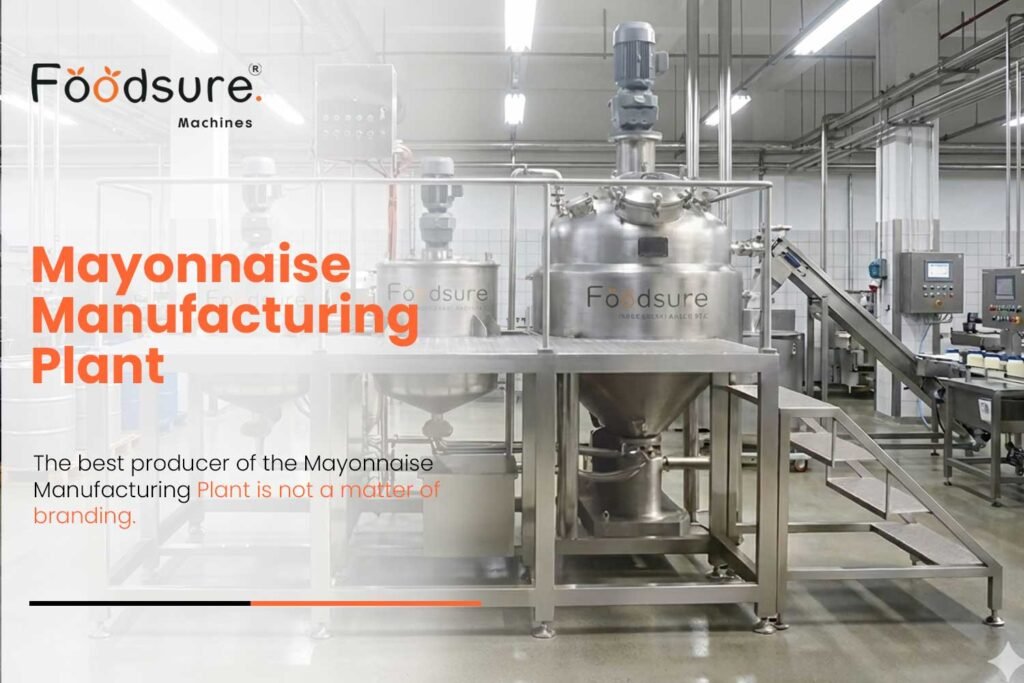
Majorly, mayonnaise brands don’t fail because of taste; they fail because of poor plant design. In India, demand for mayonnaise has increased threefold in the last five years, yet 60% of small manufacturers struggle with inconsistent quality and high costs. So what separates profitable plants from struggling ones? This guide breaks down the exact setup, machines, and ROI path that works. Why Choosing the Right Mayonnaise Manufacturing Plant Matters Selecting the best producer of the Mayonnaise Manufacturing Plant is not a matter of branding. It’s an operational choice that determines how well or poorly your business operates. Everything starts to fail if the mayonnaise production line is unable to provide the same texture, viscosity, and stability daily. Proper homogenisers and high-shear mixers are required, which will form the basis of a stable emulsion. If you get them wrong, you will have rejected batches, watery texture, and separation. Before anyone notices, the loss has already increased. The same rules apply for Food safety. This actually refers to food-grade stainless steel( usually SS304 or SS316L) and CIP systems that truly clean as meant. Production is not the initial thing that suffers when mayonnaise-making machines stop working in the middle of a shift; it also impacts the changes in scheduled labour. A quality manufacturer helps in assisting while selecting between batches or continuous systems, while maintaining an appropriate degree of automation to prevent future, expensive rebuilds due to growth. Read More: How to Start a Mayonnaise Manufacturing Business Types of Mayonnaise Plants Offered by Manufacturers in India Semi-automatic plants: A practical choice for startups and small manufacturers. Ingredient loading is done manually. However, mixing and emulsification are automated processes. While you’re still learning out the market, you save money up front and maintain the flexibility to modify recipes. Fully automatic plants: By automating the dosing, mixing, emulsifying, and discharging of the materials. Automation allows you to create a more uniform product as well as improve hygiene by removing many of the human variables. Read More: 2025 Buyer’s Guide: Fully vs Semi-Automatic Mayonnaise Machines – Which One Wins? Typical Cost and Pricing Overview for a Mayonnaise Manufacturing Plant Plant Type Daily Production Capacity Approx. Plant Cost (₹) Avg. Production Cost per Kg (₹) Avg. Wholesale Selling Price per Kg (₹) Semi-Automatic (Pilot) 200–300 kg/day 8–12 Lakh 90–110 130–160 Semi-Automatic (Medium) 500–700 kg/day 15–22 Lakh 85–105 130–170 Fully Automatic (Medium) 1,000–1,500 kg/day 30–45 Lakh 75–95 140–180 Fully Automatic (Industrial) 2,000–3,000 kg/day 55–75 Lakh 70–90 150–190 Read More: Buy Mayonnaise Machine in India – 2025 Prices, Specs & Best Models What Goes Into a Complete Mayonnaise Manufacturing Plant Setup Planning & Preparing the Ingredients for Mayonnaise: The Mayonnaise production process begins by determining how much of each ingredient (oil, eggs, water, vinegar, and dry ingredients) will go into the mixture and measuring/controlling that amount correctly so that your Mayonnaise tastes the same from batch to batch and produces stable Mayonnaise batches. Emulsifying the Mayonnaise: An emulsifying mayonnaise making machine is an essential piece of equipment for the mayonnaise production facility. The equipment will blend all ingredients with equal amounts of oil throughout the emulsifying mixture. Tanks Used for Storage and Transfer: After the emulsification process, the emulsified product moves to the holding tanks, where rest periods may occur before the product is either transferred to a batch or to a continuous production system for final processing. The holding tanks act as an area for staged products to rest before being shipped to a customer, retail store, etc. Filling / Packaging Interfaces: Modern packaging facilities allow for a more efficient transfer of product from production to the filling and packaging machine. With proper design and operation of the transfer operation, there should be no product loss, contamination, or waste. Hygiene Design: Most new production facilities have been designed with an emphasis on sanitary design and incorporate an efficient cleaning-in-place system. They also incorporate cleaning features that allow employees easy access to cleaning products and tools while remaining compliant with the applicable food safety laws and regulations. Conclusion We at Foodsure Machines create mayonnaise plants that are functional. Our priorities are growth, consistency, and efficiency. Our equipment, assistance, and knowledge enable your company without any problems in the future. Have a Question? Let’s Connect! Reach out to us anytime via call or email. 📞 Call Us ✉️ Email Now FAQ What does a mayonnaise plant factory mean? It is a location where machines and systems are installed in order to transform raw materials into standardized quantities of mayonnaise. How much would a mayonnaise plant cost in India? It is conditional on its size and level of automation. You are typically spending between 8 lakh and 75 lakh rupees. What is the capacity of a small mayonnaise plant? The small plants normally yield between 200 and 500 kilograms per day. Something to begin with, without straining your budget. Should a mayonnaise plant be approved by FSSAI? Yes. Any food production facility must comply with the regulations of FSSAI in order to be licensed legally. What is the difference between semi-automatic and fully automatic plants? Plants that are semi-automatic require some labor. Most of the steps are automated in fully automatic plants. Is it possible to have sauces created by another plant? Yes. When it is made in such a way that it can be mixed and cleaned easily, then you can change the products that you are using without much difficulty. The time taken to install a mayonnaise plant is how long? Usually one to three weeks. Larger or more elaborate installations may require a bit more time. Do they offer operator training by manufacturers? Yes. They ensure that your employees are acquainted with the operations of operating the plant effectively at the outset. Is it possible to increase the production later? Numerous facilities are constructed to expand your company. It is possible to increase the capacity or automation without the need for a new system. What is
Why Automatic Mayonnaise Making Machines Are the Future of Food Processing
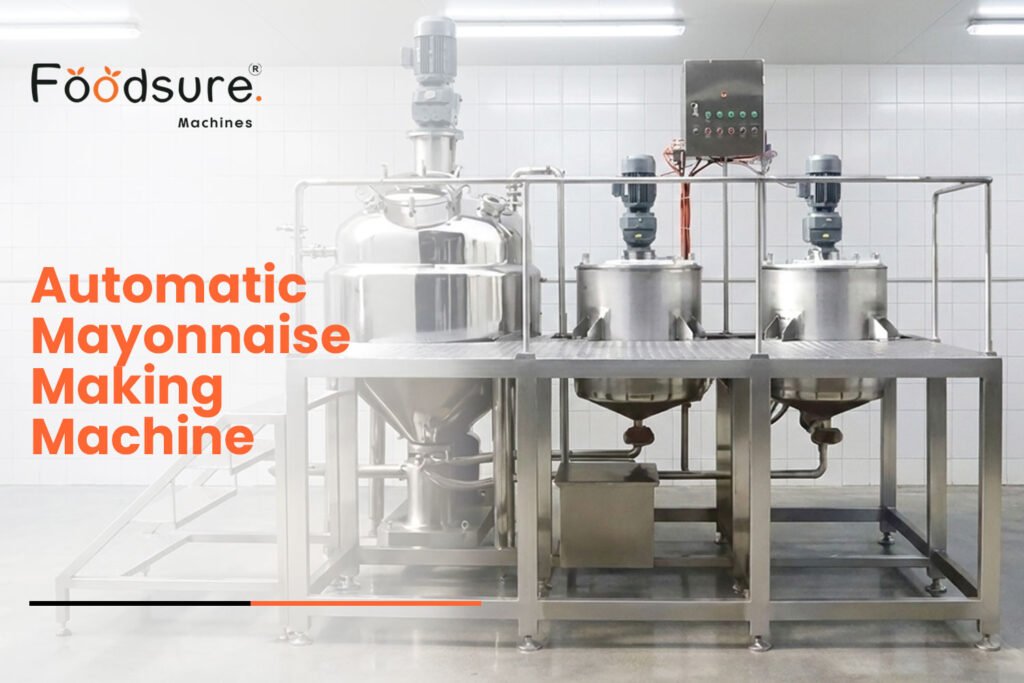
India’s processed food market is racing toward $535 billion by 2027, yet most small units still lose margin due to manual mixing, inconsistency, and high labour dependence. So here’s the question: what’s the one upgrade that fixes all three? Automatic mayonnaise making machines the system is built to remove errors, cut costs, and scale production fast. The Hidden Challenges Food Processors Face With Small-Scale Mayonnaise Machines This is due in part to many of the outside influences on the economy, as well as external economic pressures and challenges from the environmental sector. Disruption of Supply Chains and Rising Costs of Raw Materials and Energy have resulted in the continued high demand for raw material inputs in the processing industry and the increase in energy utilization by the industry. Labor Shortages are creating problems in attracting and keeping qualified workers and driving up operating costs. Therefore, there is a reliance upon automation and technological solutions for efficiency, productivity, and consistency. Additionally, Regulatory and Compliance issues associated with food safety and quality have increased the complexity of these requirements, making it difficult for processors to comply with these regulations. How Automatic Mayonnaise Making Machines Fix Everyday Production Problems A mayonnaise manufacturing machine that manufactures mayonnaise automatically addresses all the issues associated with producing mayonnaise using traditional methods through better control and more accurate measurement of ingredients. The process of producing a mayonnaise emulsion utilizing a high-shear emulsifier (HSE) under vacuum conditions guarantees a very fine, even emulsification of vegetable oils. The use of PLC-based dosing equipment allows for the accurate measurement and combination of all ingredients (including fats/oils), and therefore eliminates human error, spills, and product rework. CIP cleaning systems and sanitary stainless-steel products used in automated cleaning and sanitation reduce or eliminate the possibility of contamination, while greatly reducing the time and effort required to clean. The production of mayonnaise via high-speed manufacture and continuous running of multiple batches dramatically increases the output of the production facility and greatly reduces the amount of labour required to operate the machinery used to manufacture mayonnaise. What You Actually Save When You Switch to Automatic Mayonnaise Making Machines Parameter Manual / Semi-Auto Setup Automatic Mayonnaise Machine (100 kg/hr) What You Save Machine Price ₹3–6 lakh ₹12–18 lakh — (Higher upfront, faster ROI) Batch Time 60–90 minutes 20–30 minutes 40–60 minutes per batch Labor Required 4–6 people 1–2 people ₹1.5–3 lakh/month Batch Loss / Rework High (2–5%) Near zero ₹20,000–₹60,000/month Energy Usage Higher (no load optimization) Optimized motor load 10–18% lower bills Ingredient Wastage Frequent overdosing Automated dosing ₹15,000–₹40,000/month Hygiene & Compliance Cost More manual cleaning CIP (Clean-In-Place) system Saves labor & downtime Annual Savings — — ₹5–15 lakh/year Read More: 2025 Buyer’s Guide: Fully vs Semi-Automatic Mayonnaise Machines – Which One Wins? How to Pick the Right Automatic Mayonnaise Making Machine for Your Plant When buying an automatic mayonnaise making machine, you should consider three aspects: The capacity of the machine and its degree of automation: you should take the capacity of the mayonnaise processing machine (for example, 200 kg/hour vs. 1000 kg/hour) against what you expect to sell in each hour. A new company might want to use a partially automated machine that produces smaller batches and requires more manual labor. Emulsification: Your automatic mayonnaise making machine should include a vacuum high shear emulsification machinery so that the final product produced by the machine will contain particles less than (sub micron) in size and will be produced under a vacuum. Material and compliance (Food safety): Any part of the mayonnaise production equipment that touches food must be made from fully sanitary (TP 316 L or 304) stainless steel to ensure durability, be safe to use, and not corrode. Read More: How To Set Up A Profitable Mayonnaise Production Line What You Should Always Ask a Mayonnaise Machine Supplier It is critical to obtain complete and accurate data regarding the supplier’s overall performance, reliability, and total cost to own the product over the entire life of the product. To identify problems that may not be obvious and to avoid unexpected additional costs, it is necessary to ask the right questions prior to making an investment. Consider asking the following questions: Estimated manufacturing efficiency, actual hours of production, and batch time. Rework percentage and assurance of consistency with respect to the quality of work. Availability of trained technicians for technical support. Estimated installation, validation, and ongoing in-house support. Warranty availability, spare parts availability, and service level agreement. Read More: Best Mayonnaise Machine Companies In India: All You Need To Know Conclusion The automatic mayonnaise making machine is not only an improvement over existing machines. However, it also provides all processors with a new standard for speed, consistency, and hygiene. At Foodsure Machines, we help manufacturers scale smarter by providing them with consistent, reliable systems that allow manufacturers to grow faster. When you’re ready for increased production, let us help you achieve your goals by providing you with the best mayonnaise solutions available. Have a Question? Let’s Connect! Reach out to us anytime via call or email. 📞 Call Us ✉️ Email Now FAQ Q1. What is an automatic mayonnaise making machine? It’s a system that takes over mixing, emulsifying, and stabilizing mayonnaise so you don’t have to manage each step by hand. Q2. How does it improve consistency? It controls shear rate, RPM, and dosing with real precision, which means every batch comes out with the same texture. Q3. What capacity options are available? You’ll see models starting at 50 kg an hour and scaling well beyond 1000 kg an hour. Q4. Does it reduce labor needs? Yes. Most plants run the entire line with one or two operators. Q5. Is CIP cleaning included? In most automatic setups, yes. CIP keeps hygiene tight and cleaning predictable. Q6. Can it handle eggless and flavored mayo? It can. The PLC memory stores multiple recipes, so switching variants is quick. Q7. How much does it cost? Entry-level automatic machines start around ₹12 lakh and go up with
2026 Protein Bar Making Machine Price – Don’t Pay More Than You Should
The protein snack market is exploding to ₹1,200+ crore by 2026, but protein bar machine price are all over the place. If you are checking the protein bar making machine price in 2026, here’s the real question: What actually delivers ROI? This guide has your answer, showing which machines work best for small-scale, mid-range, and high-end production to boost efficiency, output, and profits. Quick Snapshot – Which Protein Bar Machine Is Right for Your Small Business? Small-scale manufacturers (<1000 kg/h): Entry-level machines handle multiple bar types with consistent quality. Ideal for startups or test kitchens. Mid-range manufacturers (1000–2000 kg/h): Semi-automatic machines give longer, smoother production and higher consistency. Large-scale / export-focused (>2000 kg/h): High-end automatic lines deliver maximum output with strict hygiene control and minimal downtime. Pro Tip: Match your Protein bar extruder machine price capacity with your daily production target, too much capacity = wasted investment, too little = missed revenue. Read More: Choosing the Best Protein Bar Machine in 2025: A Complete Buyer’s Guide Protein Bar Machine Price Tiers in 2026 – Find the Right Fit for Your Business The part most buyers skip straight to the Protein bar extruder machine price . It’s not random. It depends on capacity, how the protein bar production line is built, how much automation it has, and how well it handles sticky mixes. Tier Price (INR) Best For Key Benefits Output (Bars/Hour) Entry-Level Machines ₹3.5–8 lakh Beginners, test kitchens, low-volume production Low upfront cost; manual work required 200–600 Mid-Range Machines ₹8–18 lakh Small to medium manufacturers Balanced speed, consistency, less manual effort 800–2,500 High-End Commercial Machines ₹18–45 lakh+ Scaling brands, export units High output, automated controls, better hygiene, fewer operational issues 3,000–6,000 What You Get for Every Protein Bar Making Machine Price Tier in 2026 Entry Tier: Bar Output between 200-600 Bars per Hour. Low-cost option of the manufacturer; Operators will perform extensive hands-on work. This type of extruder is good for testing new recipes or making small quantities. Mid Tier Bar Outputs between 1,000-2,500 bars per hour. Increased consistent weight output. Easier to clean and maintain for reduced time and decreased error risk on production equipment. Good for developing brands and expanding them with limited resource pressure. High Tier: The company uses an advanced motor drive system and supplemental cooling functions combined with smart controls to completely automate production. Depending on the production system, the company can produce anywhere from 3,000 to 6,000 bars of product in an hour. Read More:Automatic vs Semi-Automatic Machines for Protein Bar Production (2025 Guide) Protein Bar Making Machine Price In India 2026 Machine Output (bars/hour) Key Features Price Compact Protein Bar Extruder (Entry Tier) 300–800 Good for startups, low maintenance ₹4 lakh – ₹7 lakh Semi-Auto Extruder + Cutter (Mid Tier) 800–1500 Better shape accuracy, low power load ₹8 lakh – ₹12 lakh Automatic Protein Bar Line (Mid-High Tier) 1500–2500 Automated feeding & cutting, ideal for scaling brands ₹14 lakh – ₹19 lakh Heavy-Duty Protein Bar Line (High Tier) 3000–4500 Continuous production, full stainless steel ₹22 lakh – ₹30 lakh High-Capacity Industrial Line 5000–6000 Cooling conveyor, shaping rollers ₹30 lakh – ₹45 lakh Customizable High-Mix Extruder 1000–3500 For granola or nut-heavy mixes, built to order Custom Quote Protein Bar Making Machine Cost Breakdown and What You Are Paying For Purchasing a product should also take into consideration the other expenses you will have and how much you will actually be paying out of pocket. Cost for setting up and training: This depends on how complicated it is to set up or train on protein bar manufacturing equipment India, but you should estimate that setting up and training will cost between ₹20,000 and ₹ 1 lakh. Cost for replacement parts: The cost for replacement parts usually ranges from ₹8,000–20,000 per month. Specifically, some items such as belts, bearings, and other components may need to be replaced sooner than you may expect. Annual maintenance: contracts will typically run from approximately ₹20,000–1.5 lakh/year, which would be considered as preventive maintenance on bar production machines that is destined for a factory-type environment. Protein Bar Making Machine Price – Real Examples That Make Sense 1. Small Manufacturer Example Machine: Mid-range semi-automatic line Output: 800 bars/hour Selling Price per Bar: ₹15 Gross Margin per Bar: ₹4 Daily Production: 2 shifts × 8 hours = 12,800 bars/day Daily Profit: 12,800 × ₹4 = ₹51,200 Machine Cost: ₹9 lakh Estimated Break-Even: ₹9,00,000 ÷ ₹51,200 = 18–19 working days (4.5–6 months assuming 22–24 working days/month) Insight: The ROI is realistic only when operations run consistently, downtime is minimal, and the product mix is optimized. Entry-level or inconsistent lines will extend the break-even period. 2. Scaling Brand Example Machine: High-end automatic production line Output: 3,000 bars/hour Selling Price per Bar: ₹20 Gross Margin per Bar: ₹5.5 Daily Production: 2 shifts × 8 hours = 48,000 bars/day Daily Profit: 48,000 × ₹5.5 = ₹2,64,000 Machine Cost: ₹24 lakh Estimated Break-Even: ₹24,00,000 ÷ ₹2,64,000 = 9–10 working days (~3–4 months assuming 22–24 working days/month) Insight: Scaling bar production machines drastically shorten ROI—but only if the line runs reliably, quality is consistent, and preventive maintenance is performed. Any downtime can significantly affect return timelines. Optional Additions to Boost Credibility: Energy Cost: Small line consumes = 8–10 kWh/day; high-end line 25–30 kWh/day Labor: Small line requires 2–3 operators; high-end line requires 4–5 operators per shift Space Requirement: Small line 80–100 sq.ft; high-end line 200–250 sq.ft Waste Factor: Assume 2–3% rejects for small lines, 1–2% for high-end machines Read More: Everything You Need to Know About Protein Bar Machines What to Check Before Buying a Protein Bar Making Machine Daily Production Target: Know exactly how many bars you need each day. Too much capacity and you’re wasting money. Mix Types: Nut-heavy, granola, or sticky mixes change how the machine handles production and how often parts need replacing. Recipe Changes: If you switch recipes often, pick a machine that adjusts quickly without slowing the line. Cooling Requirements: Some bars need conveyors or chillers to
2025 Buyer’s Guide: Fully vs Semi-Automatic Mayonnaise Machines – Which One Wins?
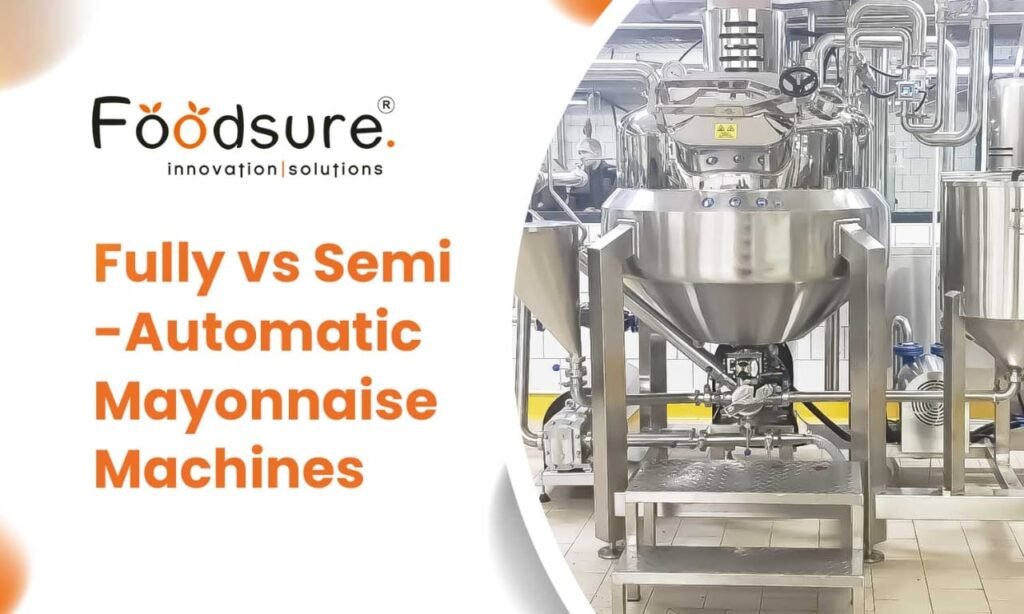
If we talk about today’s fast-paced food industry, hygiene and efficiency matter more than ever. And if we talk about making mayonnaise, one of the most loved and widely used flavorings, having the right production equipment can make a huge difference in growth. That’s where the Mayonnaise Machine steps in to lead the market. In 2025, choosing the right machine is very important for the food processing industry and for those who want to grow their business. This guide will help you understand Fully vs Semi-Automatic Mayonnaise Machines. And you can choose the machine that is best for your business growth. Today’s machines come with advanced technology that gives a smooth mix, creamy texture, and safe, clean production. It doesn’t matter which one you choose, but the right mayonnaise machine will give you massive growth. Why Mayonnaise Machines Are Smart Choices In 2025? The 2025 buyer mayonnaise machine stands out as a lead for businesses looking to grow their production without compromising quality. This machine is built for modern market demands with custom flavors and healthy varieties. Mayonnaise machines are perfect for food startups and large-scale industries aiming to increase efficiency. The reason why the mayonnaise machine is becoming the industry favorite: Perfect Texture & Smart Technology: Getting the right texture in mayonnaise is important for taste and customer satisfaction. If we talk about modern food machines, they use smart technologies like mayonnaise machines to make sure every batch is made perfectly. These machines come with advanced systems like grinding, heating, and automation. For example: industrial mayonnaise machine use high-speed mixers and blend ingredients smoothly and giving that creamy texture. Hygienic & Safe Production: Mayonnaise machines use SS304 food-grade stainless steel for all parts that come into contact with the ingredients. Modern mayonnaise machines are designed to meet the hygiene and safety standards, making sure every batch is clean and safe for consumption. This material prevents germs and withstands heat, acids, and wear. It also helps to meet global food safety regulations easily, leading to mayonnaise machines with cleaning-in-place systems. These machines give you faster cleaning and less manual work. Speedy Production and Time Saving: Modern mayonnaise machines are developed to work fast and save labour time. They help manufacturers meet high-demand production without compromising quality. The key to efficiency is automation, where high-speed mixers and automated filling and packing systems work together to make the process smooth and quick. Read More: Mayonnaise Market Trends 2025: Global Demand & Growth Opportunities MOC & Lifespan: Fully vs Semi-Automatic Mayonnaise Machines S No. Machine Name Used In MOC (Material Grade) Included in Semi-Auto? Included in Fully-Auto? Lifespan (Years) 1 High Shear Mixer Both Types SS 304/SS 316 Yes Yes 10+ 2 Inline Homogenizer Both SS 316 Optional Yes 10+ 3 Ingredient Dosing Tank Both SS 304 Yes Yes 8+ 4 Vacuum Deaerator Both SS 316 No Yes 10 5 PLC Control Panel Fully Auto – No Yes 10 6 CIP System Fully Auto SS 316 No Yes 10 7 Agitator Tank Both SS 304 Yes Yes 10 8 Jacketed Cooling Tank Both SS 316 Optional Yes 10 9 Packaging Machine (Form-Fill-Seal) Both SS 304 Manual Auto 8 10 Conveyor Line Fully Auto SS 304 No Yes 10 Now that you know the basics, let’s find out which fully vs semi-automatic mayonnaise machines will fit best to your business best. Read More: How to Start a Mayonnaise Manufacturing Business Fully Vs Semi-Automatic Mayonnaise Machines: Which One Is Best? When it comes to manufacturing mayonnaise, there are two types: egg-based and eggless. And if we talk about the types of machines used, they are semi-automatic and fully automatic. Both have their advantages depending on your production scale, budget, and quality needs. Semi-Automatic Mayonnaise Machines A semi-automatic mayonnaise system is a smart mix of machines and labor. In this process, machines do the heavy work while labor handles tasks that need attention, decision-making, and quality checks. Key features of semi-automatic systems Shared Workload: Machines and people work together. Machines do things like filling, sealing, and packing. And the labor includes checking, loading, and making decisions. Increased Efficiency: Machines make the work faster, while labor makes sure it’s done right. Computer-controlled workflow: Many systems are guided by computers that help manage both machine and labor tasks to keep things organized and without delay. Flexible production: These systems can easily adjust for different products, making them perfect for small to medium manufacturers. Tools: Conveyor belts and automatic feeders help move, assemble, and pack items. Lower cost: Machines reduce manual work time, speeding up the process and improving productivity. Quality control: Labor checks the quality and handles tricky parts that machines can’t. Safe for workers: Machines take care of risky jobs, reducing the chances of injury. Advantages of semi-automatic mayonnaise machines Affordable and efficient. Easy to adapt to product changes. Good for mixed production. Safer and less tiring for workers. Fully Automatic Mayonnaise Machines A fully automatic mayonnaise machine is an advanced, high-speed industrial system designed to make large batches of mayonnaise with very little human help. It combines everything from mixing to filling into one smooth, efficient process. This machine is ideal for commercial food factories, co-packers, large-scale production, and hygienic mayonnaise production. Key features of Fully Automatic Mayonnaise Systems: High-speed Mixing: It mixes oil, egg yolk (or eggless base), vinegar, and spices using powerful high-speed mixers. This creates a creamy, smooth mayonnaise. Automated Ingredient Handling: Ingredients are loaded into tanks. The machine system handles accurate dosing and mixing, and also there is no manual work needed. Temperature Control System: Built-in heating and cooling features in these machines also keep the temperature just right for safe and stable production. Vacuum Mixing: This mixing helps to improve texture, flavor, and shelf life. Hygienic and Safe: This machine is made from stainless steel, which keeps the machine food safe and easy to clean, and also supports auto cleaning for high hygiene. Automated filling and packaging: The machine automatically fills jars and bottles and seals them, which saves time
Best Protein Bar Manufacturing Machine Dealers in Surat (2026)
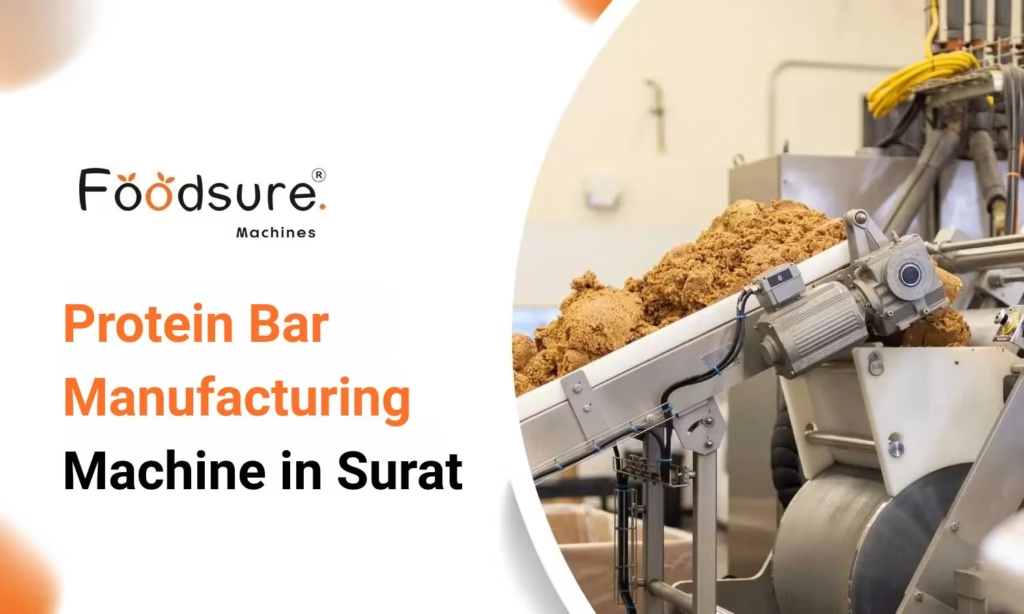
Are you trying to launch or expand your protein bar enterprise in Surat? The correct protein bar manufacturing machine in Surat provides essential support for your operations. The equipment produces uniform bars which maintain identical size, flavour, and product quality through each production cycle. A protein bar manufacturing machine provides advantages for both your small operation and your expanding business because it operates with less labour and improves production efficiency. Your business needs protein bar machines which you should purchase from local vendors to achieve your growth objectives through dependable equipment. Trusted Protein Bar Machine Suppliers and Dealers in Surat The dealer or protein bar machine supplier you choose will determine how smoothly your production operations run. The protein bar machine dealer who operates close to my location will deliver matching equipment which suits our production needs for small-batch and large-scale operations while providing us with future business growth capabilities. Foodsure Machines: Why Foodsure Machines Stands Out Ensures every bar is consistent in size, shape, and taste. Easy-to-use interface for smooth operation. Handles multiple bar types – protein bars, energy bars, seed bars, granola bars. Reduces trial and error and minimizes wasted batches. Ideal protein bar equipment for startups and growing food businesses. Other Suppliers & Multi-Row Production Systems Efficient layouts that reduce manual labor. Integrated encrusting and extruding systems for faster output. Made with food-grade stainless steel for hygiene and safety. A trustworthy protein bar machine supplier ensures ongoing support and service. Installation support A professional protein bar machine dealer near me provides more than just a machine: Expert Setup & Operator Training: Start production correctly and minimize mistakes. Spare Parts & Maintenance Support: Keep machines running longer with minimal downtime. Process Optimization Guidance: Improve raw material usage, reduce waste, and cut costs. Partnering with the right protein bar machine supplier ensures your production stays smooth and scalable. Read More: Top Protein Bar Machine Consultants in India (2025 Guide) How the Right Protein Bar Manufacturing Machine in Surat Dealer Drives Your Success The selection of a dealer determines more than equipment acquisition because it impacts both your production efficiency and your business expansion capacity. Customised Solutions: Your production requirements determine the design of protein bar manufacturing equipment, which provides your business with optimal operational output and consistent product quality. Process Optimisation Guidance: Experts use advanced protein bar equipment to help customers reduce raw material consumption and waste generation while achieving better batch consistency. Compliance & Hygiene: Machines fulfil food safety requirements while providing simple cleaning solutions, which safeguard product integrity and create a stress-free environment for your personnel. Scalability Enablement: You can start with a small operation and grow your business without losing product excellence while you balance market demand with product consistency requirements. Read More: How to Start a Protein Bar Company in India with the Right Machines Buy Protein Bar Machine Locally: Comparison of Surat-Based Protein Bar Manufacturing Machines Machine Type Capacity (kg/hr) Price (INR) Ideal For Compact / Small-scale 40–80 4–10 Lakh Startups & small brands Semi-automatic 100–200 10–20 Lakh Growing businesses Fully automatic 250–300 20–35 Lakh Large-scale commercial production A protein bar machine dealer near me can help you choose the right capacity and model for your needs. Get Your Protein Bar Production on Track Ready to Upgrade Your Protein Bar Production in Surat?Call or email today and discover how a professional protein bar manufacturing machine or protein bar equipment can transform your food business. Partnering with Foodsure Machines means less waste, more efficiency, and consistent bars every batch. Don’t just make protein bars make success. Buy protein bar machine locally from a trusted protein bar machine supplier in Surat. Have a Question? Let’s Connect! Reach out to us anytime via call or email. 📞 Call Us ✉️ Email Now FAQs Q1: How much does it cost to start a protein bar company?The range of startup expenses extends from ₹4 Lakh to ₹35 Lakh, based on the equipment users select and their operational requirements. Q2: How to manufacture protein bars?The protein bar manufacturing machine enables users to achieve consistent results through its capacity to mix ingredients, shape them, and create packaging. Q3: How to start a protein bar business from home?To establish local distribution operations, begin with a small protein bar package and a compact protein bar machine and small production runs and appropriate packaging materials. Get guidance from a local protein bar machine supplier in Surat. Q4: What is the cost of an energy bar machine?The price of small machines starts at ₹4 Lakh while complete automatic production systems cost up to ₹35 Lakh. Q5: Is the protein bar business profitable?Yes, with consistent quality and automation, profit margins increase while reducing waste. Q6: What is the startup cost for a protein bar?Small production systems begin at a cost of ₹4 lakh, whereas large production facilities require an investment of ₹35 lakh. Q7: Are protein bars a good investment?The demand for healthy snacks is currently experiencing growth, which makes automated production processes beneficial for businesses. Q8: How do I start my own protein company?To start your business, you need to select a production machine and your raw materials, packaging materials, and distribution method. Contact us to pick the right protein bar manufacturing machine for your brand. Q9: What is the failure rate of protein bars?Manual production creates inconsistent results, but automated protein bar equipment helps to minimise production failures. Q10: What are protein bars made of?The fundamental components include protein powders, nuts, seeds, sweeteners, and binding agents.
Top-Performance Protein Bar Cutting & Wrapping Machine
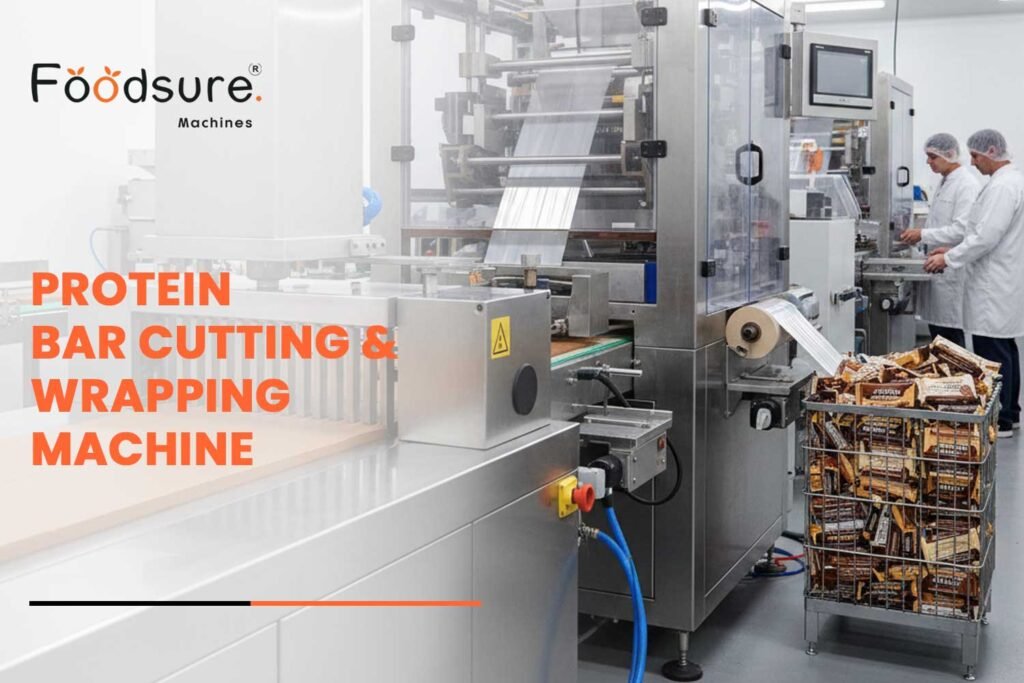
Over 70% of startups lose profits to slow bar handling, sometimes ₹1–3 lakh every month. Is your line facing the same hidden leak? This guide reveals the Protein Bar Cutting & Wrapping Machine that eliminates bottlenecks, boosts speed, and finally gives you consistent, retail-ready bars. Why the Protein Bar Cutting & Wrapping Machine Matters More Than You Think If you have ever tried scaling a protein bar business, you already know this part slows you down first. Cutting and wrapping create most of the problem, which makes bars crack and also causes the sizes to shift. Hygiene also becomes a part of this problem. And the team tries to keep up until they simply cannot. The reliable protein bar cutting and wrapping machine fixes these issues at the root. It gives you: Consistent bar size. Lower rejects and wastage. Faster wrapping without the usual jams. Stronger hygiene control. Higher daily output. Less dependence on manual labor. That means it gives you a predictable production of protein bars. This guide will show you how to choose the right protein bar making machine, what specifications to pay attention to, and the mistakes first-time buyers usually regret later. Read More: Protein Bar Production Process: A Beginner’s Guide to Step-by-Step Manufacturing Who Actually Needs a Protein Bar Cutting & Wrapping Machine? This protein bar production line isn’t for everyone. It’s for anyone who wants production to be predictable, fast, and consistent. Let’s break it down: Startups making 300–5,000 bars a day and hitting limits with manual work. Small food factories are tired of slow cutting and wrapping by hand. Nutrition bar brands are growing faster than their current setup can handle. OEMs and co-packers are adding a new line to take on more orders. Contract manufacturers are looking to expand capacity without adding extra staff. How a Protein Bar Cutting & Wrapping Machine Solves Everyday Bottlenecks Most protein bars typically fail at the mixing and baking stage. Here is a breakdown of those failures: Not all protein bars are created equal. Many protein bar lines experience inconsistent sizes and weights. This makes it very difficult to ensure that the bars are consistent in their weight and size. The manual process for cutting protein bars generates significant amounts of broken product and waste, which may go unnoticed. The manual process for packing protein bars creates a bottleneck on the production line and makes it difficult to keep up with the demand for these products. Multiple line operators handling the same protein bars over a short time frame creates a potential for cross-contamination. It puts additional strain on everyone working in the line. Increased demand causes a slowdown in production lines. How a Protein Bar Cutting & Wrapping Machine Actually Works The protein bar machine has been artificially assembled in order to automate the major phases of producing bars. These phases include: Feeding of Bars: Bars are fed onto the conveyor. These bars can either come as pre-cut bars or bars that have been extruded. Cutting of Bars: Bars are cut to precise weight and length with Blades to eliminate any excess material and thus reduce scrap. Aligning Bars: Bars are aligned so they can be conveniently wrapped up on time. Wrapping of Bars: Bars are wrapped up in a quick and consistent manner with either paper or film, creating a consistent look and feel to all of our products. Sealing of Bars: After all of the bars have been wrapped up, they are sealed to keep them in optimal condition, whether they are being stored or shipped to another location. Packaging of Bars: After all the bars have been sealed, they are sent to storage or shipment. What to Look for When Choosing a Protein Bar Cutting & Wrapping Machine Specification What to Look For Why It Matters Bars Per Minute 40–200+ Your throughput & ROI depend on this Cutting System Servo, blade quality Controls accuracy & wastage Wrapping Style Flow wrap / pillow Influences shelf life & branding Film Compatibility Printed, matte, metalized Helps future packaging upgrades Machine Footprint Compact design Important for small factories Power Load 2–5 kW Predict operational costs Changeover Time <10 minutes Important for multiple recipes Spare Parts Availability Local supplier Reduces downtime Warranty 1 year minimum Trust factor & support Compliance FSSAI, CE optional Buyer assurance Semi-Automatic or Fully Automatic: Which Protein Bar Machine Is Right for You? An analysis of semi-automatic and fully automatic machines generally consists of the following: 1) Semi-Automatic Protein Bar Machines Typically, the operator is required to put bars into the machine, although there may be some involvement in the wrapping process. However, the operator will typically be able to do so more cheaply. In addition, semi-automatic machines are typically much easier to maintain than full automatic machines and are typically better suited to lower volume production. 2) Fully Automatic Protein Bar Machines Fully automatic machines perform all of the functions of loading, cutting, wrapping, and sealing the product automatically with no operator required. Fully automated machines typically operate faster than semi-automatic machines and produce more consistent results, and require less independent labor to operate. Read More: Automatic vs Semi-Automatic Machines for Protein Bar Production (2025 Guide) How Installation and Support Work for Your Machine Acquiring a machine is only the beginning. The real key to your success is getting the machine up and running as soon as possible. Installation and Testing – The first step after purchasing a new machine is to install it properly and test it to make sure it’s ready for operation on day one. Operator Training – Operators will receive training in all areas of machine care and how to operate the machine securely. Ongoing Support – As the manufacturer provides ongoing support for your company, including help with machine repairs and replacements, you will not have interruptions in production. Conclusion Foodsure Machines provides you with a dependable protein bar cutting & wrapping machine that will
Automatic vs Semi-Automatic Machines for Protein Bar Production (2025 Guide)
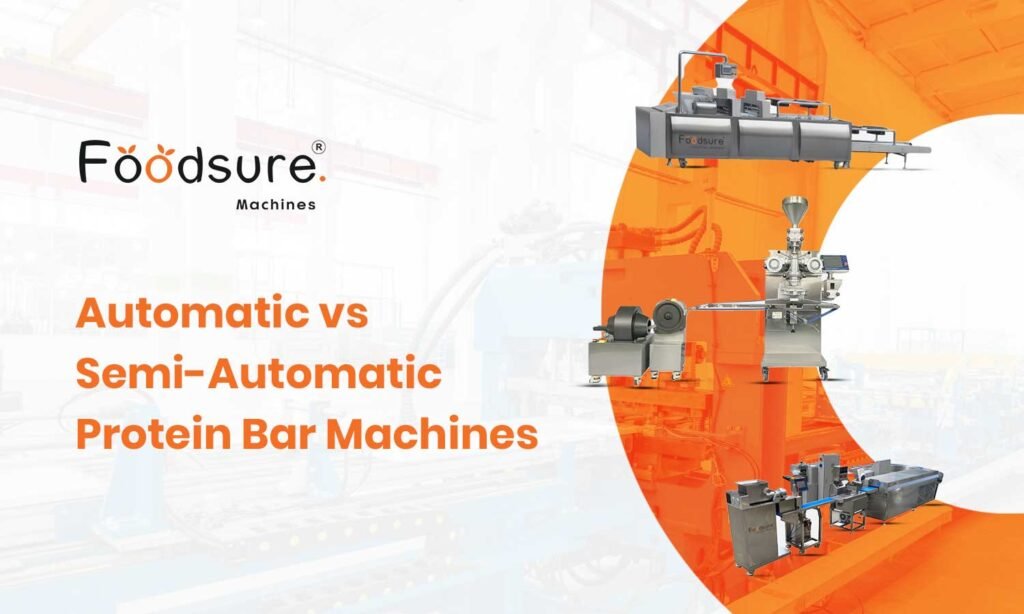
Protein bars have evolved from being a gym snack to a viable option for busy mornings, office snack breaks, and school lunches, which leads to a market that factory owners can’t ignore. Manufacturers now need to ask themselves not only how to make protein bars, but how to make them efficiently. The challenge? Whether it’s better to choose semi-automatic machines to maintain control against rapid automation, or choose automated machines for speed and consistency. This 2025 guide outlines the significant differences, costs, labor, and long-term benefits of automatic vs semi-automatic protein bar machines. Understanding Automatic vs Semi-Automatic Protein Bar Machines It’s essential to understand the difference between automatic vs semi-automatic protein bar machines before entering into a comparison. Semi-automatic equipment involves human involvement at several points. Manually feeding ingredients, changing trays, and transferring goods for packing. Almost all of the steps – mixing, forming, cutting, cooling, wrapping – are performed by automated equipment on a continuous line. To conclude, a semi-automatic machine gives professional, hands-on control but requires more labor. Automated lines provide speed, consistency, and little human involvement. Understanding the differences will help you as you determine the best device for your manufacturing goals. Protein Bar Processing Equipment Role in Production Whether you operate automatic or semi-automatic, strong protein bar processing equipment is your base of operation. These machines include mixers, extruders, cutters, cooling tunnels, and packaging equipment. Each machine in your system contributes to making sure your bars have the right texture, shape, and shelf life. In automatic vs semi-automatic protein bar machines, semi-automatic lines need employees to move products between steps, slowing production but allowing small batches. Automatic lines connect machines for higher output, less downtime, and consistent quality. Labor Cost in Semi-Automatic Protein Bar Making Explained in Detail Labor is a major consideration when deciding. Semi-automatic machines will have operators at different steps. Workers may be handling ingredient feeding, slab transfers, and packaging. This adds to the labor cost in semi-automatic protein bar making, especially in factories producing high volumes. Market costs are summarized as follows: Higher manning costs – more operators for process controls. Training costs – workers need to become familiar with machine operation, safety, and hygiene. Wages – as production rates go up, salaries add up at a rapid pace. Error – operator-induced manual steps can create inconsistencies or waste. For example, small to medium factories with steady demand may not see labor as a major cost. But as production grows, expenses rise quickly. Choosing automatic vs semi-automatic protein bar machines eliminates heavy labor dependency. A small team can run the line, cutting costs and minimizing errors from fatigue. Read More: How to Start a Protein Bar Business: A Complete Beginner’s Guide Fully automatic protein bar line benefits The shift of many large factories to automation is not without cause. The fully automatic protein bar line benefits are obvious: speed, uniformity, cleanliness, and long-term cost savings. Some of the major benefits include: Consistent quality – each bar is produced, coated, and packaged in the same manner. Increased output – machines operate around the clock without extended intervals. Better hygiene – less human interaction equals a lower risk of infection. Audit preparedness – Automated systems are more in line with the standards of international buyers. easy recipe changeover – helpful when creating different flavors or variations. Compliance is an additional advantage. Automated systems are preferred by buyers and international auditors because they increase traceability and lessen the chance of contamination. These advantages are frequently essential for exporters rather than just a luxury. Semi-automatic protein bar machine benefits Not every factory needs a complete automation system right away. Semi-automatic equipment is also useful, particularly for smaller companies or those just starting. The advantages are more in terms of affordability and flexibility. Some of the major benefits include: Lower investment – starting costs are much lower than automatic lines. Flexibility – more freedom to change recipes or try new small batches. Better control – operators can observe every stage of the process closely, and make small adjustments as needed. Ideal for small-scale – good for selling in local markets, custom orders, or lower-volume runs. Less maintenance – fewer intricate parts mean it’s easier to repair and maintain. Semi-automatic machines without major investment will let new plants start manufacturing. Using automatic vs semi-automatic protein bar machines, operators can stay hands-on, adjust recipes, and produce small batches efficiently, balancing cost and control. Cost comparison of automatic vs semi-automatic protein bar production lines Investment is always a determining factor. For startups or small-scale factories, semi-automatic equipment is initially more affordable. However, their higher running expenses, particularly labor and reduced productivity, make them cost more over time. Here’s a clear look at the cost comparison of automatic vs semi-automatic protein bar production lines: Semi-automatic – lower initial investment, higher ongoing labor costs, slower production speed. Automatic – higher upfront cost, but lower labor needs, higher capacity, and faster payback period. Hidden savings – automatic machines also cut down on wastage, which saves raw material cost. Scalability – semi-automatic setups struggle when demand grows, while automation handles growth easily. The best option depends on your objectives when you consider all of these aspects. Semi-automatic could be adequate if you want to manufacture small quantities for a local market. Automation pays for itself sooner than anticipated if your goal is to produce on a massive scale or for export. Which option should you choose? Choosing between automatic vs semi-automatic protein bar machines comes down to three main factors: production scale, available labor, and budget. If you’re starting and want to test the market, semi-automatic machines are a reasonable and inexpensive option. If you already have a stable demand or want to supply large retailers and export markets, then automatic machines make sense to invest in. If labor costs are trending up in your region, automation could save you headaches in the future. Read More: Everything You Need to Know About Protein Bar Machines Choose and Buy the Right Protein Bar Machine
Mayonnaise Plant Losing Profit? 7 Mayonnaise Machine Mistakes to Avoid
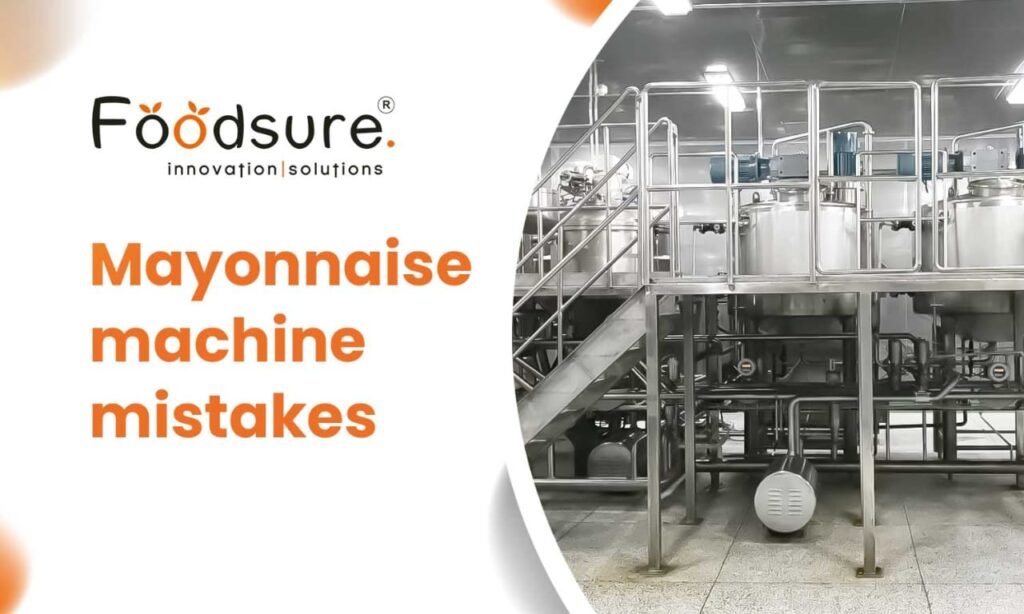
In modern times, even a small issue in your production makes a big problem, like overfilling, leaking, and delays, which can slowely reduce your profits. These problems seem small at first, but over time, they lead to wasted ingredients, extra costs, and missed business opportunities. As we know, mayonnaise is all about the smooth texture and creamy flavor, which is also safe to eat. If you don’t use the machine properly, it will create issues like leaks, spills, and uneven mixing. These problems will affect your market growth and your brand reputation. Upgrading your mayonnaise manufacturing equipment is not just about solving your issues; If you are making mayonnaise machine mistakes, it’s often because you don’t pay enough attention to your machine. Is Your Mayonnaise Plant Losing Profit? The global mayonnaise market size reached USD 12.97 Billion in 2025. If your mayonnaise machine mistakes start, maybe the main reason is that you don’t pay attention to your machine. Modern mayonnaise production is a high-risk, careful, and exact operation; even a small issue can quickly add up to major losses. If we see current market demands, they not only want a high output and consistent quality but also want to adjust to changing consumer desires like low-fat, vegan, and organic recipes. Automated systems are essential for maintaining uniform texture, taste, and thickness in every batch. If your machines are not set up properly, then they do not give a creamy texture to mayonnaise. So, it can cause some batches to be thrown away, wasting ingredients and time. If you have old machines and poorly maintained machines, it can cause blocking, directly impact production, and mayonnaise quality control. This blog reveals the top 7 machine mistakes that cause a plant to be unsuccessful and how you can avoid them with the right technical setup and support. Mistake 1 – Using A Non-Homogenized Mixing Vessel What happens if you make mayonnaise without using a blender? Will the oil, water, and egg yolk mix well, or will your mayonnaise turn out lumpy and watery instead of smooth and creamy? Our Solutions Our machines are made with smart mayonnaise mixing machine technology that helps you make smooth and creamy textured mayonnaise every time. The high-speed mixers blend all the ingredients, like oil, eggs, and water, perfectly, so your mayonnaise does not look lumpy and separate. These machines also have smart sensors that keep an eye on the mixing. If something goes wrong, it happens, and then machines quickly fix it. So, you can grow your mayonnaise production and get better results. How our machines help Creamy and smooth mayonnaise is in every batch. No more waste and rework. Getting better at mixing means better results. Longer shelf life and the same good quality every time. Safe, clean process that follows food rules. Mistake 2 – Incorrect Viscosity Control What happens if your machine doesn’t have a system to check the thickness? Could your mayonnaise end up undermixed or overmixed? Our Solutions If your mayonnaise is not smooth and it looks too watery, that means your mayonnaise mixing machine is not working properly. That problem can create a big issue for your mayonnaise production, like wasting ingredients and not meeting market demands. Our machines help you to avoid this problem and make sure every batch turns out just right. How our machines help Smart mixing: The machines mix everything smoothly with fast-moving blades and automatic controls. This means your mixture will be free of lumps no mistakes. Live Thickness Check: If the mix is too thick or too thin, the mayonnaise mixing can fix it on the spot. Adjustable Settings: You can choose how fast and deep the machine should mix, based on your recipe. The above feature works well for small or large batches. Read More: Request A Quote: Industrial & Small-Scale Mayonnaise Machines Mistake 3 – Inadequate Temperature Management During Emulsification What happens if you don’t control the temperature when your mayonnaise machine is mixing the ingredients like egg yolk, vinegar, and stabilizers? Our Solutions If the temperature control is not right while making mayonnaise, it can spoil your batch. The egg, vinegar, and other ingredients may lose their effect and make your mayonnaise too watery. How our machines help Keep the right temperature: Our machines have smart sensors that check and control the heat during mixing. So the mixer never gets too hot or too cold. Simple to use: You can set the temperature on a screen, and the machine will handle the rest without creating any mess. Smooth and safe mayonnaise: Your mayonnaise turns out creamy, stable, and safe to eat without waste and mistakes. This will help you grow your business with more market demand. Read More: Mayonnaise Types Guide: From Classic to Eggless & Flavoured for Manufacturers Mistake 4 – Improper Ingredient Addition Timing What can go wrong if you add oil too fast or drop all the powder at once while making mayonnaise? Our solutions If you pour oil too fast and add all the powder at once, it will make your mayonnaise too watery and separate. It won’t taste right, and it will affect your demand. For best results, you have to add oil slowly and mix powders gradually so everything combines equally. How our machines help They add oil and powder slowly so it turns out smooth with great taste. The machine mixes just right with no lumps and no mess. You just have to set a timer and speed, and the rest of the things the machines do. Tired of facing these problems in your plant? – Talk to a Machine Expert Now! Mistake 5 – Choosing the Wrong Filling Machine What problems can you face if you use regular liquid filling machines for thick products like mayonnaise? Our solution Clogs: If your liquid filling machine gives a thick mayonnaise, it can block the pipes and nozzles. This mayonnaise filling machine issues will stop your machine from working, which is causing delays in your production. Leakage and
The ₹5 Crore Secret: How to Start A Mayonnaise Business in India With One Small Machine
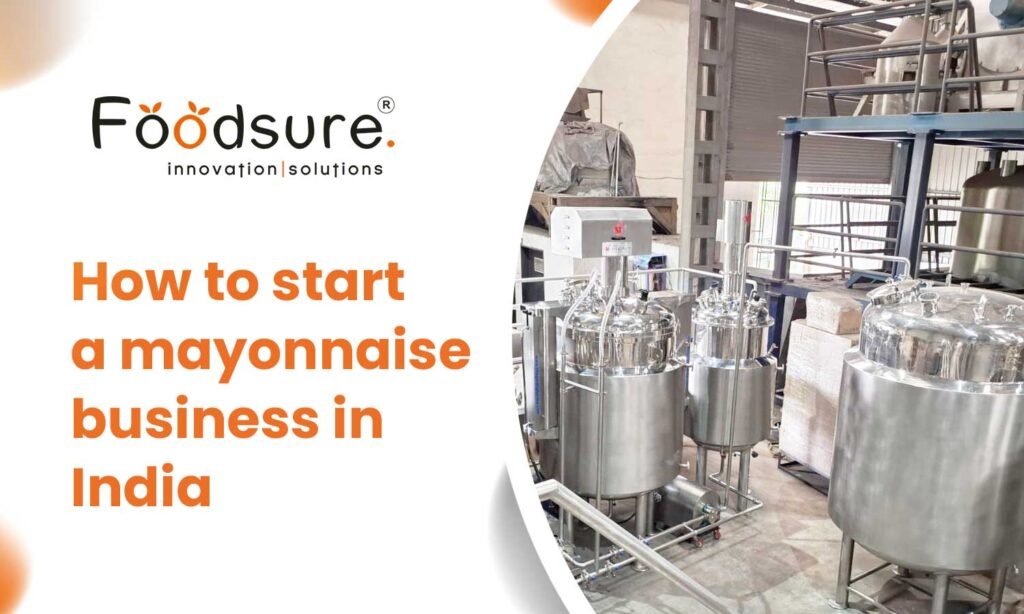
If you are looking for how to start a mayonnaise business in India, this blog could be the motivation for your automated mayonnaise production setup for food startups. You need a modest mayonnaise machine for low-investment food factories in India, managed to grow its sales to ₹5 crore help of one smart automated machine, no large team, no fancy setup, just the right move at the right time. When it comes to a mayonnaise-making machine for small businesses, it helps them save on labor, speed up production, and ensure batch-to-batch reliability. As the demand best machines for mayonnaise production units kept growing in India, they grabbed the opportunity and grew fast. Why India’s Mayonnaise Market Is Booming? Let’s take a look at why the demand for mayonnaise machines for low-investment food factories is growing in India. Best machines for mayonnaise production units are growing fast, with a projected 24.8% annual growth rate between 2025 and 2034. I think we’ve all seen that burgers, wraps, sandwiches, and salads. Mayonnaise is everywhere now, with the rise of western-style meals in India, it’s not just something you find in cafés or fast-food joints anymore; it’s in everyday kitchens like yours and mine. There is a rising demand for eggless, low-fat, and vegan options, especially among health-conscious individuals and those following a vegetarian diet. Read more: Mayonnaise Market Trends 2025: Global Demand & Growth Opportunities How To Start A Mayonnaise Business In India with Automation Let’s take a moment to talk about how to start a mayonnaise business in India. The dream was simple: to grow and be known in the market. But like many small food businesses, which struggled with limited resources and a small team, the rising demand quickly became overwhelming for them. Before Automation: Challenges Of Manual Mayonnaise Production Before adopting food processing automation, there were problems that small units struggled with that made progress nearly impossible. Let’s take a deep look at it. Uneven Quality: If we talk about the equipment at that time, there was no proper equipment, and every batch turned out a little different. If the mayonnaise was too thick or too watery, then it was very hard to make the mayonnaise taste the same every time, and when that happens, it tough to earn people trust or keep your customers coming back. Slow and Tiring Work: In the early days, everything was done by hand, even adding ingredients to the mixing. This took a lot of time and energy, especially with a small team, because the process was so slow, they lost out on bulk clients due to delays. Hard to Maintain Cleanliness: Most of us already know that back then, mixing was a slow, repetitive task with no machinery to assist. Quality varied, bulk orders were delayed, and keeping things hygienic, especially when handling raw ingredients, was a constant challenge. These problems weren’t just slowing things down, but also they were hindering their momentum. After Automation – What Changed For The Start a Mayonnaise Business in India Once they brought in a small-scale food factory for mayonnaise production, things started to turn around fast. Smarter Production with Consistent Results: Every batch came out the same with no changes in taste or texture. By carefully controlling how the single ingredients were mixed and in what amounts, this process removed all the guesswork. It gave them a reputation for reliability that buyers could count on. Maximized Output with Minimized Manual Labor: This machine automatically adjusts everything, streamlining production from mixing to packing, so the team could handle larger orders without burnout. Each batch turned out competitive edge, reliably, and of high quality, earning the trust of returning customers. Also, you can handle this with the same small manual team; they could handle more orders and say yes to new customers with confidence. Cost Optimization Through Process Automation: When you reduce manual mistakes and ingredient waste, fewer hands are needed, and a smarter use of resources, profits start to rise without increasing stress. CIP-Enabled Systems for Safe and Efficient Production: To make the product hygienic, this machine make it easier than ever. Built with food safety in mind, it cleaned itself (via built-in CIP systems) and kept raw ingredients from being mishandled. That meant fewer risks and more confidence in every batch. Before food processing automation, they were always catching up. After food processing automation, they finally got ahead. This automation step helped them deliver better, grow a small-scale food factory for mayonnaise production, and build an automated mayonnaise production setup for food startup success that’s ready for tomorrow. Read More: How to Start a Mayonnaise Manufacturing Business Have a Question? Let’s Connect! Reach out to us anytime via call or email. 📞 Call us✉️ Email now From Investment To Income: The Real ROI Of Mayonnaise Automation Investing in a mayonnaise-making machine for a small business might seem like a big decision at first, but it has turned out to be the smartest move they have ever made. Let’s break down the actual return on investment (ROI) and understand why this one machine changed the demand. Item Estimated Cost (INR) Mayonnaise Machine (300–500 L/hour capacity) ₹7–₹12 lakh Installation, training & setup support ₹50,000–₹1 lakh Utility Setup (Power, Water, Drainage) ₹80,000–₹1.5 lakh Packaging Unit (optional, pouch/jar filler) ₹1.5–₹3 lakh Gross Revenue ₹10,00,000/month Production Cost (₹55/liter) ₹5,50,000/month Gross Profit ₹4,50,000/month Read More: Mayonnaise Plant Losing Profit? 7 Mayonnaise Machine Mistakes to Avoid The Secret Behind Small Mayonnaise Businesses That Scale Big We are trusted by processed food businesses like yours all over the world. 12+ years of experience and happy clients in more than 7 countries, our experts know what it takes to help you grow. It’s creating your mayonnaise recipe, setting up production, or handling legal approvals; we’ve got everything covered in one place. Our smart planning can also help you save up to 40% on setup costs. If you are looking to grow a food business with the right support, Foodsure Machines is the partner you can
Request A Quote: Industrial & Small-Scale Mayonnaise Machines
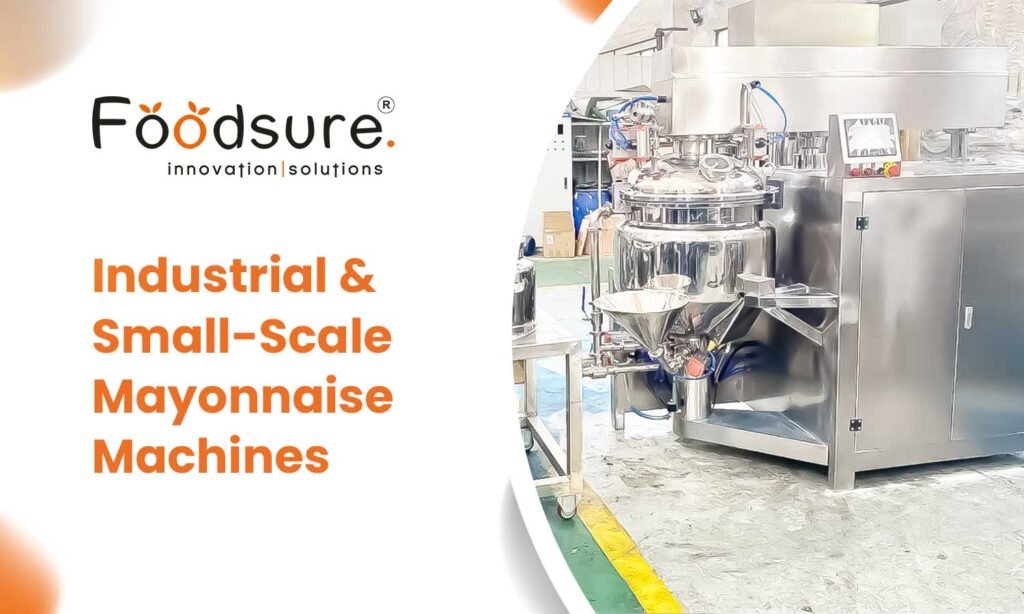
Getting a quote is not just about the price. It’s about finding a setup that fits in your batch size, space, and product goals. Even if you are making classic, eggless, or something more specialized types of mayonnaise. As the industrial & small-scale mayonnaise machines shift toward automation, improved hygiene control and flexibility in output. Choosing the right machinery early on sets you up to compete, not just produce. Whether you need a compact, easy-to-run mayonnaise-making machine for a small business or a fully automated line built for scale, requesting a quote helps you make the right move with confidence. You will get straight answers on specifications, real numbers on pricing, and clear support on installation and operations. Rising Demand For Mayonnaise Machines In India And Globally The global mayonnaise market size reached USD 12.97 billion in 2025. The industrial & small-scale mayonnaise machines market is gaining real focus both in India and around the world. What is behind it? Some are scaling up big, and others are starting small. But all of them want machines that work, deliver consistent results, and don’t slow them down. To clarify, here’s a visual of the current market trend. That’s how the mayonnaise market is shaping up: On the left, you will see the categories pulling ahead, eggless options, and online sales are set to grow the fastest between 2025 and 2034. It shows the direction of future consumer demand. On the right, North India holds the biggest slice of the market as of 2024. If you are planning your distribution or expansion, that is a region you can’t ignore. These are not just for numbers; they are signals for where to move next. Read More: Mayonnaise Market Trends 2025: Global Demand & Growth Opportunities Why Requesting A Mayonnaise Machine Quote Is The Smartest Step Requesting a quote for your industrial & small-scale mayonnaise machines is not just a formality; it’s a smart move. You will get an expert who will set up the right machine for your space and product goals, and provide a quick answer without delay. So, you can start your commercial mayonnaise equipment quote right away. If you are serious about scaling, this is how you do it right without wasting time or money. Here’s what you get when you request a quote: 1. Transparent Pricing with No Hidden Charges You have to know exactly what you are paying for a mayonnaise-making machine for a small business, like cost, shipping, installation, and even taxes. There are no hidden charges. Just remember clear numbers that help you plan properly and avoid budget blowouts. 2. Tailored Solutions for Your Business Size If you are running a compact food startup or scaling to a full-blown factory, the quote is tailored. It recommends the right machine size, features, and automation based on your production needs and floor space. 3. Smart Technical Advice from People Who Know This Stuff We look at your batch sizes, product type (classic or eggless), and processing flow, and then recommend the setup that keeps your quality high and processes efficiently. 4. Quick, Clear, and Detailed Response Quotes are not vague or delayed. If you get everything you need: specification, layout ideas, power requirements, and pricing in one well-explained response. Then there is no chasing, no confusion. 5. Insights on Cost-Saving and Efficiency Improvements Your quote includes machines built for efficient vacuum mixing, CIP cleaning, better yields, and lower energy use. These are not just features; they are bottom-line advantages. 6. Future-Ready Scalable Options We don’t limit you to short-term equipment. Your quote includes industrial & small-scale mayonnaise machines that can handle more output later or be adapted for new products as your business expands. 7. Comprehensive Support Including Installation & Training You can also get support details on who will install it, how training works, and what the service looks like after delivery. That way, you are not just buying a machine. You are setting up for smooth production from day one. Read More: Best Mayonnaise Machine Companies In India [2025 List]. Technical Specifications For Small-Scale Mayonnaise Production If you are running industrial & small-scale mayonnaise machines, you need to know exactly what you are working with. The table below details specifications that matter for a mayonnaise-making machine for a small business, like batch size, motor power, processing method, and level of automation. These machines are built for consistent output, tight process control, and efficient use of space. You have to get precision where it counts, without making it too complex in your setup. Specifications Entry-Level Mid-Range High-End Auto Line Capacity (LPH) 50–200 300–1000 1500–5000+ Material SS 304 SS 304 / SS 316 SS 316L Motor Power 1.5–3 HP 5–10 HP 15–30 HP Control System Manual Digital / Semi-auto PLC + HMI Touchscreen Cleaning Manual Basic CIP Full CIP Space Needed 1.5–2 m² 3–4 m² 6–10+ m² Ideal For Startups / Kitchens SMBs Scaling Up Export Units / Large Plants Read More: Choosing The Right Mayonnaise Machine: A 3-Minute Industrial Buyer’s Checklist From Startup To Scale-Up: Quote Your Mayonnaise Machine Even if you are just getting started or running a high-volume production, the right commercial mayonnaise machine equipment quote is not one-size-fits-all. It depends on what you are making, how much you need to produce, and how you want your line to run. That’s where a proper quote makes a real difference. It’s not just about price. It’s about figuring out what kind of system works for your team, your space, and your product. You will need to have clarity on things like batch size, automation level, power load, and whether you need features like vacuum mixing, PLC control, or a CIP setup. That means fewer surprises, better consistency, and smarter planning from the start. And here’s the thing: when your machine fits your process, everything else runs smoother. You cut down on waste, hit your hygiene targets, and get better output without overworking your team. So if you are serious about growing your food business in this
Makhana Making Machine in Chennai: Price, Models, and Suppliers
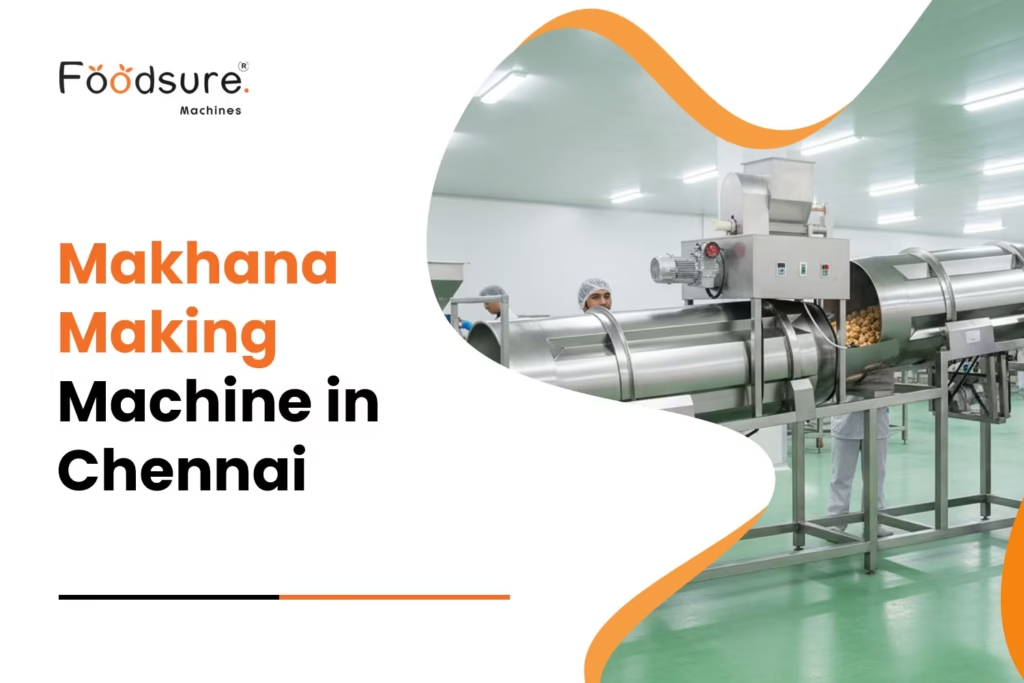
Chennai offers an increasing opportunity for healthy snacks such as makhana and is a great place for entrepreneurs interested in taking their vision and making it a viable project or if you are an industrialist, or want to be, and want to make a significant push into the area of diversification and alternative snacks, well at the end of the day, it comes down to a processing platform. This is a rigorous business plan based on our aspiring entrepreneur’s successful journey from Chennai, through their daily production rate of makhana (more typical and expected industrial production rates are 200-500 kg/hr), through to financing and the precise automatic makhana making machine in Chennai. Quality with consistency must be core, starting from day one. Essential Machines for a Complete Makhana Processing Line The procedure for Makhana processing does not utilize one magical machine. But rather a machine or set of machines. These are the makhana making machine in Chennai and the steps involved in the processing: Cleaning & Grading Raw: Grader / Vibratory screens (remove stones and dust and sort by size). Roasting & Puffed: Sand-roaster or hot air popping to puff the gorgon nut into puffed makhana – De-shelling (spray-leg de-sheller) – mechanical de-sheller – to remove the black outer shell without breaking the puffed kernel apart. Polishing/Final Grading: Polishing drum + vibro graders – to present at market sizes 5-suta, 6-suta, etc. Final Roasting/Drying: Rotary roaster or hot air dryer – for crispness and shelf-life. Flavoring/Coating: Tumble-coater/ seasoning drum – for value-added flavoring. Packaging – The packaging is done in a fully automated or partially automated setting using vacuum and gas-flushed pouches. Read More: Fully Automatic Makhana Line Can Boost Your Output by 3X? Makhana Processing Machine Capacity and Cost Guide for Chennai Scale Capacity Key machines included Typical machinery cost (INR) Micro / Home ≤ 10 kg/hr Roaster (small), manual grading ₹65,000 – ₹150,000 Small commercial 10–50 kg/hr Hot-air roaster, de-sheller, small grader, packing ₹3,00,000 – ₹10,00,000 Commercial / SME 50–250 kg/hr Integrated popping, de-sheller, polisher, dryer, and packing ₹10,00,000 – ₹25,00,000 Industrial 250+ kg/hr High-capacity automated line + CIP & PLC ₹25,00,000+ Read More: Makhana Machine Cost in India – ROI Analysis for Manufacturers Makhana Making Machine in Chennai That Suits Your Business Needs Market Testing / Pilot (10-50 kg/hr): In this stage, there is Semi-Automatic Roasting/Popping and manual grading. There is very low Capital Expenditure (CAPEX) (≈ ₹1- 5 Lakh) and more adaptability to determine their flavor profile and bundle. This is important because it is the lowest risk testing parameter. It is also about learning the systems and acceptance in the community before moving to commercial scale. Commercial Scale (50-150 kg/hr): Build a full Automated Popping and Roasting Line. An Automated process is important here because it efficiently establishes quality and texture. Consistency in product development for retail shelf presence and brand loyalty will be very important. Automation and systems help to drive down labor costs and lower costs and ensure uninterrupted production per unit. As a small-scale initiative, this is not sustainable to recover the cost of the employee for scale. Contract Manufacturing / Exports (>200kg/hr) The final integrated line is automated, flavoring, packing, continuous high speed, and sorting. The volumetric processing supports large B2B orders (e.g., 500-2000kg). From the traceability perspective, compliance (for exports- traceability systems) is non-negotiable (in International systems). Read More: From Manual To Modern: How Advanced Makhana Processing Machines Transform The Industry? Leading Chennai Suppliers of Makhana Processing Machines Foodsure Machines: Highly recommended in Chennai, with a strong presence in South India. A considerable line of modular lines to help you get started small and progress up (50 kg/hr to 200 kg/hr) with very few changes to the line. We also experienced vendors with solid after-sales service to support their makhana machines. Divy-Om: An established and trustworthy vendor who services all of India for any number of different food processing needs, including makhana. Tejoplast / Jyoti Brothers: A good recommendation because they offer low CAPEX options for food processing equipment. They are a good option for low-cost roasters/roasting and basic, low-cost food processing equipment. Blacknut: Specializes in specific post-popping processes, specifically for gaging and automating packing and sealing machines. Local Dealers (Coimbatore, for example): Very important due to speed of service, availability of parts on demand. Local tech service calls and time on service calls in Tamil Nadu. Read More: Top 5 Makhana Machines Companies In India What Chennai Buyers Should Know About Machine Installation & Support Installation and Training: Verify that the supplier you select is capable of performing on-site commissioning in Chennai. The local operators must undergo thorough training to ensure. The equipment is operated correctly from day one to mitigate potential downtime and improve the product quality. Spare Parts and Consumables: Downtime is expensive. Choose vendors that can provide a short lead time on parts. Better, the vendor should have service partners in Tamil Nadu that can come install or repair components. Without incurring fees and/or excessive lead time. Utilities/Analysis: Analyze your energy source for cost and availability. Electric Hot-Air Roasters provide very precise thermal control for very high-quality product. However, you will want to verify your local electric supply power/industrial capacity for tariffs in your area of Chennai. LPG/Diesel Roasters provide flexibility to operate but come with permitting, ventilation, and appropriate fuel storage challenges. Space Requirements: You will want to plan your install to comply with any regulations. Small Lines (Pilot/Semi-Automatic) will generally need 500-800 sqm. Medium/Industrial Lines (200+ kg/hr) will require approximately 1,200 sqft to have separate hygiene areas for pre-processing raw materials, processing area. Regulatory and subsidy support: Required registrations consist of FSSAI (Food Safety), GST, and local trade/fire clearance. As you feel ready, onboard a local MSME/PMFME consultant who will help with the paperwork and significantly increase your chances of getting a government subsidy either under a state and/or a central government scheme. Chennai Financial Support and Government Schemes for Makhana Processing Units PMFME (Central): Provides a 35% capital subsidy (up to ≈
Build a Successful Protein Bar Company in India with Our Expert Guidance
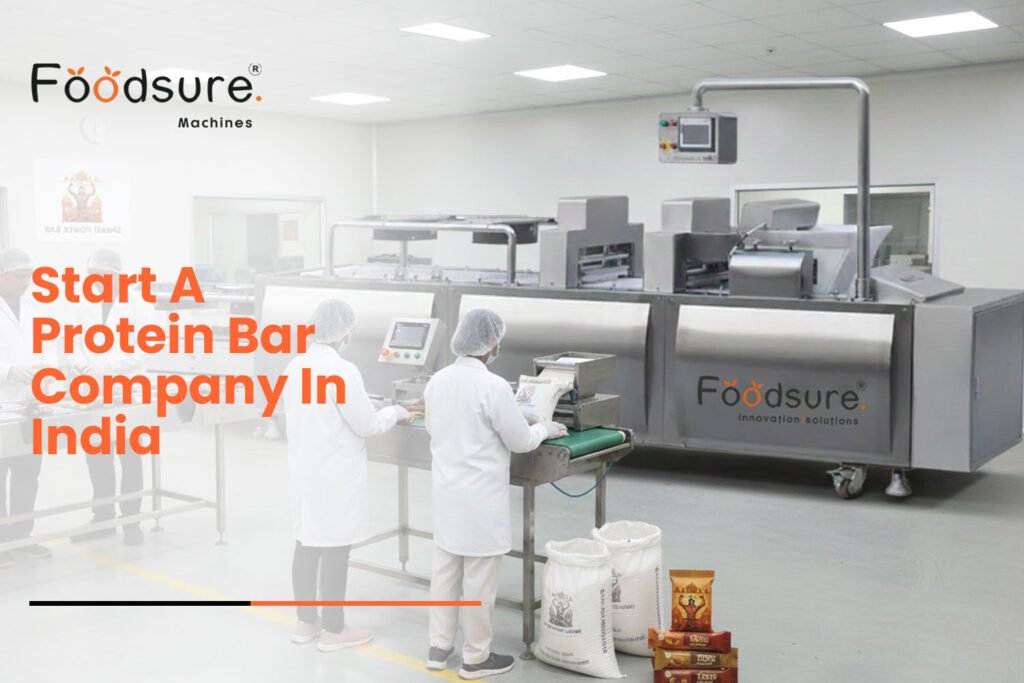
India’s high-protein snack market is exploding, yet quality manufacturing still lags behind demand. Most startups struggle with consistency, hygiene, and scale. This leaves a massive opportunity to start a protein bar company in India and solve the production gap. Here’s a simple guide to get started. India’s protein bar business in India is entering a rapid growth phase as demand rises for convenient, functional nutrition. Entrepreneurs researching how to start a protein bar brand or how to start a protein bar business India are now looking beyond recipes and focusing on scalable production. The protein bar market in India and the broader India nutritional bars market are expanding through gyms, modern retail, and D2C channels, making this the ideal time for a protein bar startup. Why This Is the Right Time to Start a Protein Bar Company in India In recent years, protein bar market in India for health snacks has increased significantly due to consumers shifting away from traditional sugary snacks toward healthier options that are high in protein and offer functional benefits. Additionally, as more people become involved in fitness-related activities (including going to the gym), there are larger amounts of younger professional consumers who are seeking quick/protein-based products immediately following their workouts. The high-protein bars provide manufacturers with an attractive profit margin of anywhere from 30 to 50 percent. This rapid shift is driving the India protein bars market, creating strong demand for reliable manufacturers who understand both nutrition and scale. For entrepreneurs exploring the protein bar business India opportunity, early entry can mean stronger brand positioning and distributor tie-ups. Read More: Protein Bar Market Trends 2025: Where Consumer Demand Meets Machine Innovation The Must-Have Machines You Need to Start Your Protein Bar Company in India If you want to produce large amounts of protein bars (between 80-500 kilograms) daily, and have complete control over the precision of your production. You need to have the right protein bar making machines for your protein bar production facility. The protein bar extruder machine creates all protein bars in the same uniform shape and consistency for quality control. The mixing and blending machine is used to combine all different types of proteins, nuts, etc., into a fully mixed product. The cooling conveyor/tunnel prevents the protein bars from sticking together during the cooling process, retains the shape of the bars, and ensures the bars remain cool while being transported. The protein bar cutter automatically cuts the protein bars to the required size. This significantly reduces the amount of time and manpower needed to produce your bars. The flow wrap packaging machine is used to package the protein bars in a hygienic manner (under sanitary and protective conditions), provides retail-ready packaging, and extends the shelf life of the protein bars. Choosing the right setup is critical for anyone serious about the protein bar business because machine precision directly impacts consistency, hygiene, and long-term profitability. Many protein bar startups fail due to poor production planning rather than lack of market demand. Read More: Choosing the Best Protein Bar Machine in 2025: A Complete Buyer’s Guide How to Set Up Your Protein Bar Manufacturing Unit: A Beginner-Friendly Step-by-Step Guide The area of start-up failure is most commonly due to a start-up introducing multiple product categories. It is best to focus your time, resources, and money on just one product category so that you can improve your manufacturing process. While decreasing costs and creating loyal consumers. There are four primary product categories to take into consideration. High Protein Bars (Targeted at Gym/Fitness Community): Fitness enthusiasts who drink protein shakes and are interested in either whey or plant protein can pay premium pricing due to the proprietary nature of the product. Energy Bars (Mass Market): More affordable to produce and get to market quickly in the convenience channel, though with lower margins than could be attained at the mass market level. Breakfast and Granola Bars: As a healthy snack for early risers and healthy eating habits. These types of bars are experiencing high demand at brick & mortar retail as well as eCommerce at this time. The basic ingredients are oats, nuts, seeds, and dried fruits. Clean/label Bars (Dates and Nuts): This type of business model is primarily direct-to-consumer based, with the goal of selling all-natural, minimally processed, and organic food products to premium consumers. If you select one category for your startup’s protein bar maker, you streamline your production process and ultimately improve your profitability. Read More: Top 5 Protein Bar Machine Manufacturers in India (2025) Cost Breakdown to Start a Protein Bar Company in India Component Estimated Cost (₹) Notes / Details Machines 7,00,000 – 22,00,000 Includes small-scale protein bar machines, extruder, mixer, cooling tunnel, cutting & packaging machines Raw Materials (per month) 50,000 – 2,00,000 Protein powder, oats, nuts, binders, sweeteners Licensing (FSSAI, GST) 10,000 – 25,000 FSSAI registration, GST setup, trade license Rent & Utilities (per month) 30,000 – 80,000 Production space, electricity, water, basic amenities Protein Bar Profit Margin & Business Potential in India The protein bar profit margin in India typically ranges from 30% to 55%, depending on ingredients, branding, and sales channel. When planning how much it costs to manufacture a protein bar, factors like protein type, nut content, and packaging style play a big role. Understanding protein bar ingredients and cost breakdown helps manufacturers price competitively while protecting margins. For those learning what is profit margin in food manufacturing, it simply refers to the percentage of revenue remaining after production costs are deducted. How to Calculate Protein Bar Costs & MRP Cost of Production: The variable costs associated with making a 40 g Protein Bar range from Rs 14 – 28. This is based on the type of Protein Source used, whether Nuts are included, and whether any premium ingredients are used. Market Price (MRP): Retailers are currently charging between Rs 45 and 99 based on several factors, including Branding or Marketing, packaging type, and channel of
Everything Indian Manufacturers Need to Know About Protein Bar Extruders
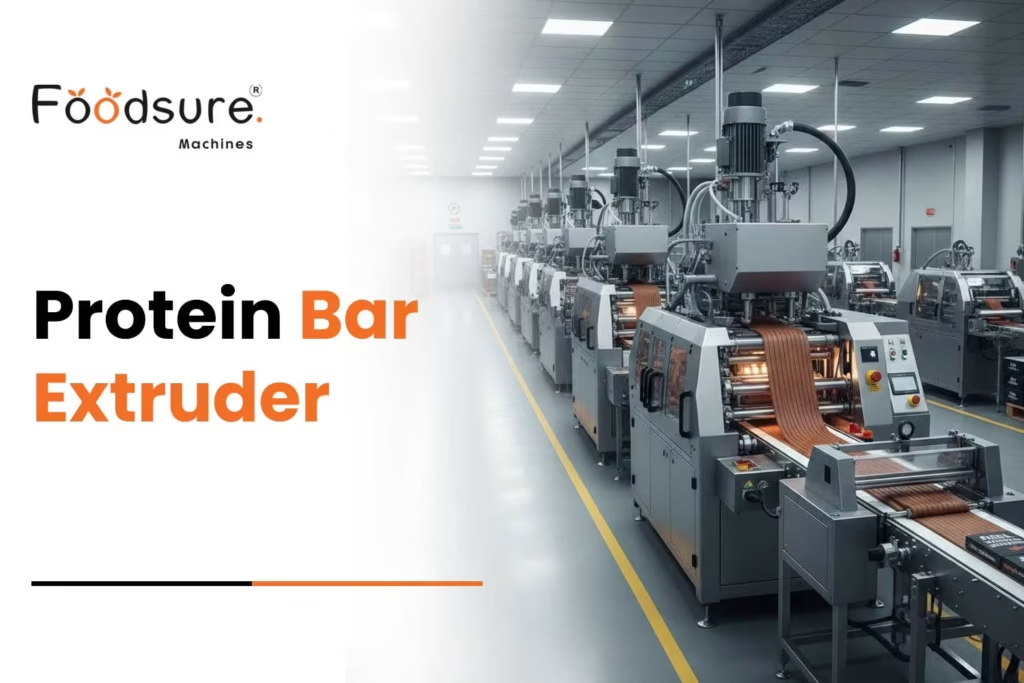
If you are manufacturing protein bars in India, choosing the wrong extruder machine can silently drain your profits through inconsistent bar weight, frequent downtime, recipe limitations, and high labor dependency. A protein bar extruder machine is not just production equipment, it is the backbone of scalable, hygienic, and profitable protein bar manufacturing. This 2026 buyer-focused guide is designed for startup founders, D2C brands, MSMEs, and large food manufacturers. It will help you select the right Protein Bar Extruder Machine in India based on recipe type, output capacity, automation level, budget, and return on investment (ROI), so you can invest with clarity and confidence. How a Protein Bar Extruder Works A protein bar extruder machine shapes mixed protein dough into uniform, continuous bars with consistent weight, size, and texture. It replaces manual molding and cutting, enabling manufacturers to achieve: Higher production speed Consistent nutritional values per bar Lower manpower dependency Better hygiene and food safety compliance Step-by-Step Working Process Feeding – Prepared dough is loaded into the hopper Transport & Compression – Screw augers or roller systems move dough forward Extrusion & Shaping – Dough passes through a die to form bars Conveying – Extruded bars move via conveyor belt Cutting – Guillotine or servo-controlled cutters portion bars uniformly This continuous process ensures high throughput with minimal variation, even for complex recipes. Which Protein Bar Extruder Machine In India Is Right for Your Business? Choosing the right protein bar extrusion depends on your stage of business, recipe complexity, and growth plans. The table below helps you quickly identify the most suitable extruder type. Business Stage Ideal Capacity Recommended Extruder Type Automation Level Typical Use Case Startup / Cloud Kitchen 50–150 kg/hr Single-screw extruder / Compact Manual / Semi-auto Market testing, pilot batches, D2C launch MSME / Growing Brand 200–500 kg/hr Twin screw extruder / Roller PLC + Servo cutting Multi-SKU production, consistent scaling Large Manufacturer 500+ kg/hr Multi-row extrusion Fully automated line High-volume, continuous production For MSMEs & Growing D2C Brands Capacity: 200–500 kg/hour Twin screw extruder Servo-controlled cutting PLC recipe memory Best for: Multi-flavor SKUs, export readiness, consistent scaling For Large-Scale Manufacturers Capacity: 500+ kg/hour Multi-row extrusion Fully automated integrated line Cooling tunnel, enrobing & flow-wrap integration Best for: National brands, contract manufacturing, private labels Top Features and Advantages of Protein Bar Extruder Flexible Extrusion Capability: Handles sticky, thick, and high-inclusion recipes such as nut butters, date pastes, seeds, and granola without breakage. Consistent Bar Size & Nutrition: Every bar has the same weight, dimensions, and nutrient value, ensuring label compliance and customer trust. High Production Output: Continuous operation enables production of hundreds of kilos per hour, drastically reducing per-bar cost. Quick Shape & Size Changeover: Interchangeable dies allow fast switching between rectangular, round, layered, or bite-sized bars. Hygienic & Easy to Clean: Food-grade SUS 304 stainless steel, smooth finishes, and quick-disassembly parts support CIP and food safety audits. Ready to See Which Protein Bar Extruder Fits Your Production Needs? Discover the machine that matches your recipe, output, and budget. Request Your Free Quote. Latest Innovations in Protein Bar Extruder Technology The global protein bar market size reached USD 3.8 Billion in 2024. Looking forward, IMARC Group expects the market to reach USD 5.7 Billion by 2033, exhibiting a growth rate (CAGR) of 4.8% during 2026-2033. Modern-day extruders are designed to assist in challenging recipes with better performance efficiencies: Feature / Innovation Description / Benefit Advanced Extrusion Systems Twin & Multi-Screw Designs for dense, plant-based formulations Low-compression zones protect large nut and seed inclusions Temperature-Controlled Barrels Thermoregulated jackets prevent premature setting Maintains dough temperature below 35°C for texture integrity Precision Automation PLC + HMI touchscreen controls Servo-synced cutters for precise weight control Recipe memory for rapid SKU changeovers Fully Integrated Production Lines Can be integrated with: – Automatic feeders – Cooling tunnels – Chocolate or yogurt enrobers – Flow-wrap packaging machines How Protein Bar Extruders Handle 2026 New Bar Trends By 2025, clean-label and plant-based nutrition bar extruders machine will need to be state-of-the-art. Plant-based/Whole food doughs require specialized screws with high shear sections and higher torque motors to accommodate dense and drier products (e.g., date or nut pastes) and avoid excessive friction and product sticking. High-Inclusion Bars need to be extruded with low compression to avoid breaking large nut/seed particulates down. Modern Protein bar production line setup demands flexibility: Plant-based & clean-label bars require high-torque motors and specialized screw geometry. High-inclusion bars need gentle extrusion to avoid ingredient breakage. Keto & low-carb SKUs demand fast recipe switching. A modern Protein bar extruder for startups should support die changeovers under 15 minutes and PLC-based recipe recall to maintain maximum line utilization and ROI. Read More: Protein Bar Market Trends 2025: Where Consumer Demand Meets Machine Innovation Protein Bar Extruder Setup and Essential Parts A Protein bar production line setup is an essential piece of equipment in an overall system: Mixing Equipment: This piece will carry out all of the necessary conditions to mix all of the ingredients well. Feeding Hopper: This device continuously feeds the dough into the extruder. Extruder: A single or twin screws will compress and shape the mixture after the mixing process. Die/Nozzle: This controls the width of the bar and the design of the cross-section of the bar Conveyor/Belt: Drives the shaped dough forward to the cutting equipment. Cutting Equipment: A guillotine cutter or Rolodex-type servo cutter will slice the bar consistently for a defined length/weight and maintain consistency for each cut. Control Systems: PLC touchscreen to control speed, temperature, and pressures, and recipe memory. Types of Extruders: Single-Screw: Simple, cheap, and limited mixing functionality Twin-Screw: Much more mixing functionality for more complex formulation. Multi-Row: Designed for producing a lot of bars at once for higher production quantities. Protein Bar Extruder Specifications and Utility Requirements Parameter Recommended Range / Value Why It Matters for Your Business Screw Torque 200–500 Nm Prevents stalling with dense, sticky, high-protein doughs Hopper Volume Maintain >25% fill level Ensures smooth dough flow and avoids air pockets Compression Ratio 1.5:1 – 2:1 Reduces heat generation and
How to Launch a Protein Bar Machine Unit in India
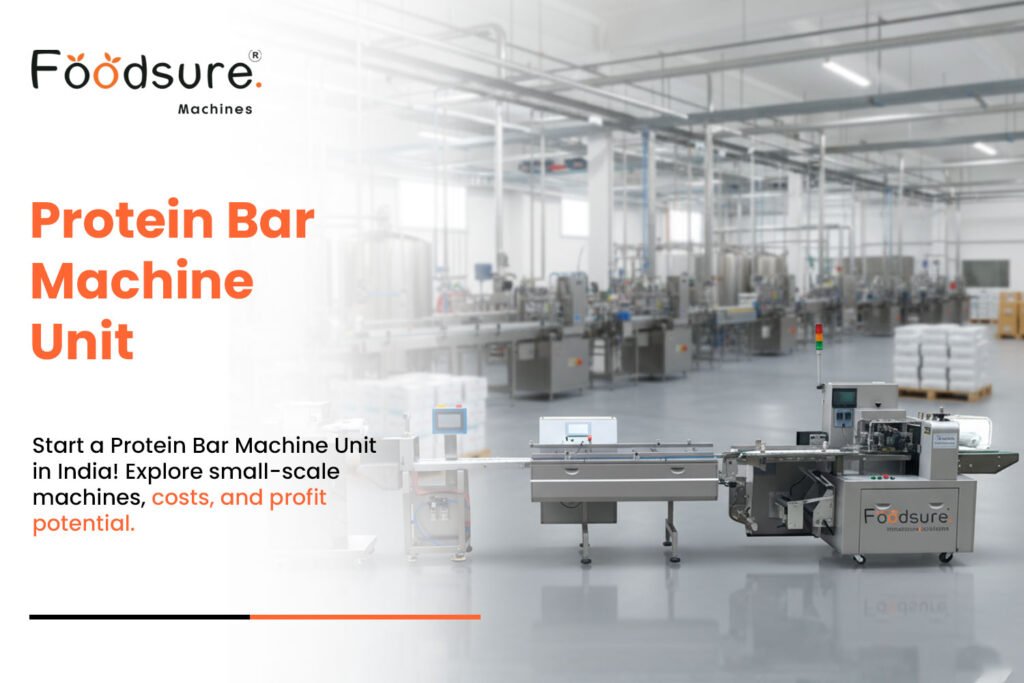
India’s protein food market is growing at over 12% annually, yet most small manufacturers fail due to wrong machinery choices. Want to avoid that trap? This guide on How to Launch a Protein Bar Machine Unit in India breaks down real costs, machines, and profit moves, so you start right, not risking. Why Now Is the Best Time to Launch a Protein Bar Machine Unit in India The combination of increasing awareness of the health benefits of eating protein and an economic growth rate averaging between 12-15% annually has resulted in a very successful Protein Money Establishment that produces protein bar manufacturing machines (PME) that are easy to obtain. Less Initial Capital Investment: The initial investment in a PME will be relatively easy for most small businesses to achieve, which opens avenues for many new young entrepreneurs. Rapid Production: Faster full-batch machines allow the new manufacturer to quickly launch their products. Multiple Revenue Channels: Many different markets exist for your product (Retail, Gym, etc.), and there are many customer segments that will buy from you (Consumers and Corporations). High Profit Margins: Since all aspects of the full volume of production are purchased by the end user with an automatic manufacturing machine, the increase in profit margin due to the elimination of waste on the company’s part is substantial. Protein Bar Machine Unit: Quick Facts & Overview There are four different types of protein bar extruder machines that manufacture the above products: mixing equipment, extrusion equipment, cutting equipment, and the packaging system. Based on the size of the machinery and the level of automation used in its production, the production capacity of manufactured products ranges from 50 kg per day to 500 kg per day. The start-up investment required for a business producing the above types of products is estimated to be a minimum of ₹3 lakhs to a maximum of ₹8 lakhs. The use of machinery will allow you to reduce your use of manual labour while creating uniformity in your product by producing it using machines as opposed to having individuals create each item of your product (composition of its ingredients, texture/flavour, etc. How Protein Bars Are Made: Step-by-Step Process The first step when creating a batch of protein bars is gathering all the ingredients needed for your recipe. Once you have assembled all of the selected ingredients. It is always best to pre-process each ingredient before combining. This will typically mean chopping them up into a consistent size. Next, you will need to either A. Use a protein bar extruding machine or B. Manually scoop out and shape each bar to make sure that all of your protein bars are the same size. You must cut each protein bar according to the size indicated in the recipe. So that they all contain the same amount of protein per serving. Read More: Everything Indian Manufacturers Need to Know About Protein Bar Extruders Cost Breakdown for Small, Medium & Large Protein Bar Machine Units in India Unit Size Machine & Equipment Cost (₹) Raw Material Cost (₹/month) Setup & Miscellaneous (₹) Total Initial Investment (₹) Daily Production Capacity Small 2,00,000 – 3,50,000 50,000 – 80,000 50,000 – 70,000 3,00,000 – 4,50,000 50–100 kg Medium 4,00,000 – 6,00,000 1,00,000 – 1,50,000 80,000 – 1,00,000 5,00,000 – 8,50,000 150–300 kg Large 7,00,000 – 12,00,000 2,00,000 – 3,50,000 1,50,000 – 2,00,000 10,00,000 – 17,50,000 400–500 kg Read More: Top Protein Bar Machine Consultants in India (2025 Guide) Common Mistakes to Avoid When Starting a Protein Bar Machine Unit Conducting thorough research on the market helps you as a manufacturer. To learn what your customers will want and help you determine their current demand trends. The production environment on a production line is enhanced by using the right equipment. Using machines that are too big or too small, or poor-quality machinery, will increase the expense of repairs, maintenance, and will negatively affect the total production output on the line. If manufacturers do not follow the necessary procedures for Quality Control (QC), the final product will likely differ from the anticipated taste. And texture will have a shorter shelf life. This can have a negative impact on a manufacturer’s brand image. The cost of raw materials depends on where in the world the ingredient is located. How much material is purchased at one time. Manufacturers need to plan for fluctuations in prices. Otherwise, they will likely not have acceptable margins for their product(s). The type of packaging used for a product will determine whether a product will be sold in a retail store or an online retailer. Therefore, if a product has a poor package, it is harder to sell than a product that is well-packaged. Typically will have a shorter shelf life than a well-packaged product. How Much You Can Earn: Profit & ROI for a Protein Bar Machine Unit Profit margins vary by size of protein bar processing unit, from 20-30%/kg for small units to 30-40%/kg for medium and large-scale processing units, assuming optimum production/processing efficiencies are achieved. Monthly sales revenue will vary by the size of processing units; small units (50-100 kg/day) will create sales revenue of ₹1.5-3 lakh per month; medium-sized protein bar machine units (150-300 kg/day) will produce sales of ₹4-10 lakhs/month. The breakeven point for investment recovery is typically 12-18 months for small processing unit types and 10-14 months for medium processing unit types. Conclusion With the right assistance, launching a Protein Bar Machine Unit in India is simple. At Foodsure Machines, we manufacture and sell very high-quality, reliable machines that produce the same amount of product every time and create very little waste. We also offer expert support to help you get your business off to a smart start, to help you avoid common pitfalls, and to help you build a successful protein bar business with our machines and expert support. Have a Question? Let’s Connect! Reach out to us anytime via call or email. 📞
How to Roast Makhana to Crispy Perfection Easily- Explained
Everyone loves the taste of roasted makhana. But roasting not only makes it tasty but also keeps it fresh for longer. You can roast it by hand and with the help of a machine. In this blog, we will show you how both methods work, the common issues with roasting, and why machines are a better option for larger batches. Roast your makhana at home or with a machine, easy, quick, and tasty. Get that perfect crunch every time. How to Roast Makhana. How to Roast Makhana at Home: Step-by-Step Guide Want your makhana perfectly crunchy? As you know, roasting it at home is not that hard because it just takes a little attention, the right heat, and a simple steps. What this really means is that you can get a tasty snack without any mess. Manual Dry Roasting First, heat a pan with a thick base on low to medium heat. Then add the makhana to the pan and mix it constantly for 8 to 10 minutes to make sure that every piece of makhana is evenly roasted. Once the makhana is nearly roasted, sprinkle some salt and any spices you like to add for flavor. After that, continue mixing throughout the process to make sure every piece becomes evenly crispy and golden. What Can Go Wrong with Manual Makhana Roasting Inconsistent roasting: Here’s the thing about makhana roasting process by hand: it rarely comes out evenly. Some makhana pieces get burnt while others stay soft because the heat is not spread consistently. Time-consuming: Roasting large amounts manually takes a lot of time and constant attention, which makes your production slow down and affects your market demand. High labor requirement: Someone has to stir and watch the makhana the whole time. This is tiring and quickly adds up in manpower costs if you’re handling bigger batches. Read More: From Manual To Modern: How Advanced Makhana Processing Machines Transform The Industry? Ways Roasting Machines Solve Common Makhana Problems Heat distribution: Even heat distribution means every single piece of makhana roasts the same way. No burnt bits, no undercooked ones. It’s consistent every time. Faster Roasting: Faster roasting isn’t just about speed. It cuts down the hours you spend on manual roasting. Large batches get done in a fraction of the time, and you don’t have to babysit the process. Labor Cost Reduction: Labor costs drop because the machine does most of the work. A couple of operators can manage what would normally take a whole team. Its efficiency you can see and measure. Enhanced Safety: This machine has automatic temperature control and automatic shut-off, which keeps the heat where it belongs, away from people. You can run it without constantly worrying about accidents. Scalability: This isn’t just for a small kitchen. You can go from 50 kg an hour to 1000 kg an hour depending on your needs. What this really means is your production can grow without rethinking the entire setup. Read More: Top 5 Features Every Industrial Makhana Roasting Machine Should Have Why a Makhana Roasting Machine Makes Sense for You The makhana machine delivers a consistent product and gives you better results, best roasted makhana every time, which makes your makhana meet commercial and export standards that make your brand demand in the market. If you are investing in a roasting machine that will help you save money over time because it uses energy efficiently, reduces labor costs, and reduces product wastage. This roasting makhana machine also has digital temperature controls that make sure every batch of makhana is evenly roasted, and keep your makhana batch consistent. Final Thoughts and How to Get Started A makhana roasting machine from Foodsure Machines changes that. It saves your time, reduces manual work, and delivers perfectly roasted makhana every single batch. You can produce more, maintain quality, and grow your business without constantly watching the pan. Take the next step and upgrade your roasting process with Foodsure Machines today. Have a Question? We’re Here to Help! Connect with us easily via call or email. We respond fast! 📞 Call Us✉️ Email Us FAQ Q1: How much protein is in makhana? Ans: Here’s the thing: makhana is surprisingly high in protein. And it has about 100 grams, which gives you 9 grams of protein and makes it a healthy snack for you. Q2: How much does a makhana processing machine cost? Ans: A semi-automatic makhana machine can cost you up to ₹3 lakh and ₹15 lakh, which usually depends on the size and the type of machine you select for your production. Q3: What budget do we need to know for makhana production? Ans: What this really means is that even a small commercial setup can start around ₹5 lakh, which covers equipment, raw materials, and basic labor. Q4. How long should you roast makhana? Ans: About 5–7 minutes on medium heat until they turn crisp. Q5. What flame is ideal for roasting makhana? Ans: Medium flame to avoid burning and ensure even roasting. Q6. How do you know makhana is perfectly roasted? Ans: They become light, crunchy, and break easily when pressed. Q7. Should makhana be washed before roasting? Ans: No, they should be dry; washing makes them soggy. Q8. Can you roast makhana without ghee or oil? Ans: Yes, dry-roasting works perfectly. Q9. How much ghee/oil is required for roasting makhana? Ans: 1–2 teaspoons per 2 cups is enough. Q10. Why does makhana turn chewy after roasting? Ans: Because of low flame or under-roasting. Q11. How to keep roasted makhana crunchy for long? Ans: Store in an airtight container after cooling fully. Q12. Can you roast makhana in bulk? Ans: Yes, but roast in batches for uniform crispiness.
How to Start a Profitable Makhana Business in 7 Simple Steps

Makhana has transformed from a traditional snack into a fast-growing opportunity in the healthy food industry. As demand rises across the country and internationally, many entrepreneurs are exploring how to start makhana business ventures that are scalable and profitable. If you are planning to launch a makhana business in India, this guide will walk you through a practical makhana business plan from setup and machines to branding and profits. What Is Makhana? The Superfood Driving a Business Boom Makhana, also known as fox nut, is a seed that grows in water, primarily in Bihar, India. It grows in aquatic systems and is protein-rich, low in fat, and contains several minerals, such as magnesium and iron. Because of this superior nutritional profile, Makhana is regarded as a superfood. It can be eaten as a healthy snack, cooked in a dish, and simply used as a garnish. Step-by-Step Guide to Building a Profitable Makhana Business A successful makhana business will definitely not happen by chance. from the moment you decide to sell, all the way to getting your product into customers’ hands. Whether you are a small manufacturer, a large manufacturer, or a startup, understanding every step helps minimize risks and grow sustainably. 1. Market Research & Makhana Business Planning Conducting effective market research into the makhana market is not just about the numbers. You want to consider who is actually buying it, what they want when they buy it, how much they are willing to pay for it, and where they purchase it. Interestingly, the makhana space has been rapidly increasing and is projected to be around 19.6 billion rupees by 2033. The increase in interest can be attributed to things like health trends, new types of snacks, and export potential. Proper research is the foundation of a strong makhana business plan, helping you estimate demand, pricing, and long-term makhana business profit potential. 2. Licensing & Certifications Required for a Makhana Business in India FSSAI License: If manufacturing, storing, and selling makhana legally in India. Getting an FSSAI license for makhana business operations is mandatory if you plan to sell packaged food legally in India. ISO 22000 / HACCP Certification: If you wish to sell to large clients and export makhana, ISO 22000 / HACCP Certification is also needed. This certification reassures those you sell to of the safety of your food product while allowing for acceptance into the international marketplace. GMP & Hygiene Standards: Good Manufacturing Practices (GMPs) are aimed at limiting quality risks, preserving the quality of the product, and providing trust to consumers. 3. Makhana Processing Machine Setup (Core Investment Area) Machinery is the core investment when planning how to start makhana business at a commercial level. Grading & Sorting Machines: A good makhana processing machine improves output consistency and reduces manual labor. These makhana machine will separate the makhana by size, utilizing a rotary screen that has the option of an adjustable multi-deck screen. Automatic brushes will keep the screen clean, so production time can be maximized. Most machines will sort makhana at a rate between 100 kg and 500 kg per hour, and are constructed with food-grade stainless steel for hygienic and durable equipment. Roasting & Puffing Machines: A temperature-controlled makhana roasting machine ensures proper puffing without burning, which directly impacts product quality and makhana business profit margin. Roasting refers to taking the raw makhana and turning it into a crispy product that is ready for consumption. Equipment for Coating & Slurry: Now that you have your kernels prepared, it’s time to apply the final tasty flavor coatings: masala, or sweet coating! A tilt drum and coating pan in stainless steel will do the job; both of which will coat the kernels evenly, while still covering all kernels. It will provide the same delicious flavor every time you coat, while also keeping material waste to a minimum. Equipment for Packaging: Modern packaging machines also support online sales if you plan on how to sell makhana online through marketplaces. Properly packaged products with either a vacuum or nitrogen flush machine will prevent moisture and oxidation from ruining your product. Semi-automatic or automatic machines can package the product anywhere from 30 to 60 packs a minute, and a machine that packages a product from 10 grams to 1 kilogram. 4. Production & Quality Management Production and quality management are the result of the process of makhana becoming a product that a consumer will buy. The key to it is roasting. The objective is to get the shells to pop, the kernel to puff, and not burn a batch. Then, shells are removed one by one to keep each seed whole. Grading then separates makhana by size and quality. This allows the makhana to be a consistent product, so it looks nice on a shelf, and would therefore sell better. Efficient production systems improve yield and directly influence your overall makhana business profit. 5. Branding & Packaging Strong branding not only builds trust but also increases your makhana business profit margin in retail and export markets. Packaging is how you present your product and assure customers overseas of quality and trust. What this actually means is that good branding allows you to charge more and create brand loyalty that captures the idea that people will pay for signature and trusted products. Practically, packaging needs to get the basics right – visible nutritional information, date codes, ingredient list, batch codes, and FSSAI symbols. So in theory, if you can achieve a balance of practical product packaging with commercial-grade design, etc. 6. Sales & Distribution Wholesale: Buyers who purchase processed food in bulk will order maximally on time so they can turn over their inventory as quickly as they can. If possible, wholesale buyers who can purchase from the processor or point of origin (e.g., the farmer) will also have pressure on the processed food price from lower wholesale pricing, and potentially have a source to assist in modifying the product to get it to larger city consumers. Retail: Point-of-sale consumers
How to Start Your Makhana Business in Madhubani – A Simple Step-by-Step Guide
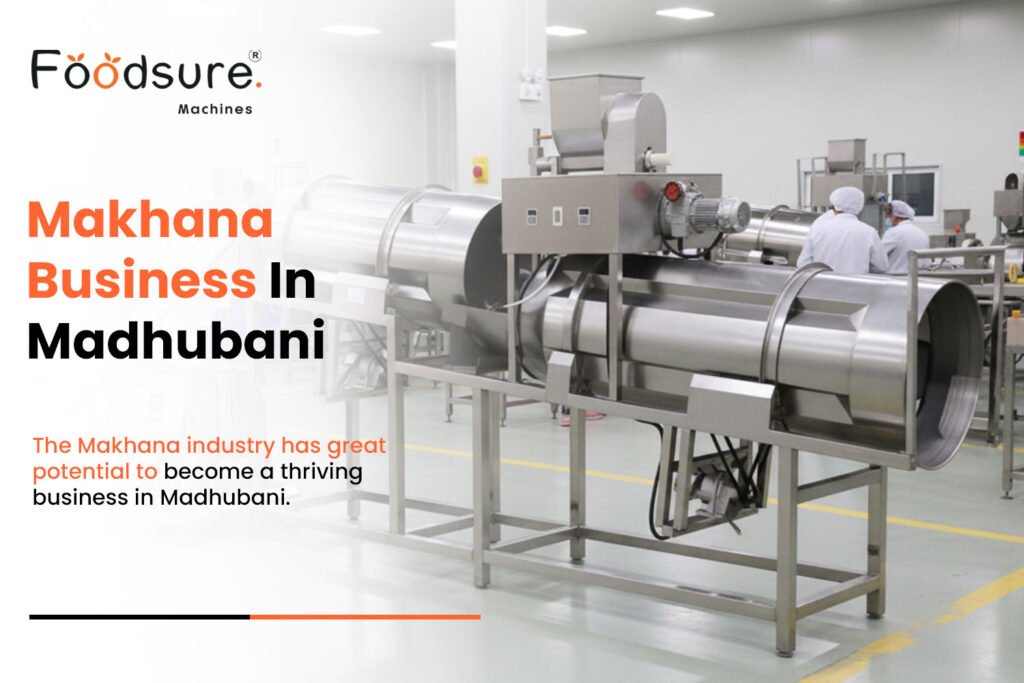
Over 70% of India’s makhana comes from Bihar, yet most farmers in Madhubani still sell raw seeds for thin margins. What if your Makhana Business in Madhubani could double its income through processing instead? This step-by-step guide shows exactly how to build profits from ground zero. Why the Booming Market Makes a Makhana Business in Madhubani a Smart Move The Makhana trade has now grown into a completely developed sector with the total market size forecasted to be approximately INR 8.50 billion by 2024 and an expected CAGR of 9.22% during the period between 2024 and 2032, bringing the total Market Size to approximately INR 19.60 billion by 2032. A growing desire for healthy snacks, along with the boom in Cafés and Restaurants, will drive Makhana Business Growth. The influence of Food Bloggers and their impact on generating interest in Makhana Products is another means to propel the growth of this sector. Therefore, if you are considering entering the Makhana Market in Madhubani, there should be no doubts as to the acceleration of Makhana Demand – it is indeed occurring. Read More: Makhana Machine Trends 2025: Industry Growth & New Opportunities Why Madhubani Is Ideal for Starting a Makhana Business The Makhana industry has great potential to become a thriving business in Madhubani. All the environmental conditions necessary are present in the area. Makhana is mainly produced in Madhubani, Darbhanga, and Muzaffarpur, the three districts of Bihar. These areas also produce Makhana seeds, allowing residents to obtain them easily and at low prices. The people of Madhubani are experienced at cleaning, drying, grading, and preparing Makhana for consumption. Therefore, these workers will easily learn how to run a Makhana processing business. The increasing number of people who are interested in eating healthy snacks in urban locations in Bihar, and across India in general, has created a growing market for Makhana. This growing market has led to increased prices for Makhana products and helped local companies expand. To summarise, the availability of sufficient amounts of Makhana, a trained workforce, and an expanding market present a golden opportunity for people from Madhubani to easily enter the Makhana business. Step-by-Step Process to Start Your Makhana Business in Madhubani The criteria for success in your local Makhana Business will be much defined by following these steps to start a Madhubani-based Makhana Business in this order: Choose Your Business Model: A finished product that has undergone Grading, Roasting, and Retail Packaging. This is done by the Makhana processing machine. Presently, most new business owners of the makhana making machine are small-scale makhana processing units. Locate an Appropriate Space for Your Business: Choose an Appropriate Space for your business that has good ventilation for drying, roasting, and packing makhana. You will need a space of between 500-800 square feet to perform these activities. If your business operates from a rural area, you can expect to have lower variable costs than if you operate from an urban area. As a result of lower variable costs, your start-up costs will also be lower. Purchase Equipment/Machinery: Based upon the volume that you anticipate selling, you should purchase the required machines to perform the activities of grading, roasting, and packaging of makhana. Purchase Raw Makhana from Farmers in Madhubani, Darbhanga, and Muzaffarpur: When you purchase your raw makhana directly from the farmers, you will derive the maximum profit from the gross margin of your makhana. Branding and packaging with a simple FSSAI-compliant brand help get into the retail market. Sales and distribution should start from wholesalers, pharmacy stores, and distributors of local snacks. Read More: From Manual To Modern: How Advanced Makhana Processing Machines Transform The Industry? How Much Does a Makhana Machine Cost? Real Prices Explained Machine / Part Typical Price Range (₹, India) Basic/Small-Scale Roaster / Roasting Machine (for small batches) ₹1.25 lakh – ₹2.50 lakh Medium-Capacity Roaster / Processing Machine (semi-auto) ₹2.45 lakh – ₹4.50 lakh Grading / Cleaning / Sorting Machine / Vibratory Sieve ₹75,000 – ₹1.40 lakh Packaging Machine (basic/semi-auto) ₹1.50 lakh – ₹3.50 lakh (for semi-automatic packing line) Small integrated processing setup (cleaning + roasting + packing) ₹3.5 lakh – ₹7.5 lakh (as small commercial unit baseline) Larger / Fully-Automatic Processing Line (for high capacity) ₹10 lakh and above (depending on capacity and automation) Read More: Makhana Machine Cost in India- ROI Analysis for Manufacturers How to Get Licenses & Government Benefits for Makhana Business in Madhubani In Madhubani, starting a Makhana business is a less complicated and less expensive endeavor when you know how to apply for all of the necessary licenses and take advantage of government-funded programs. The following Licenses and Programs will be useful when operating a Makhana business: You must register with the FSSAI if you are selling roasted or packaged makhana, which helps you gain the confidence of your customers and allows you to sell Makhana through Retail, Online, and Institutional Markets. Registering your business as a free MSME (Micro Small Medium Enterprises) with Udyam registration allows you access to Government Financial Programs, including Government Loans at reduced interest rates, along with various Subsidies. The PMFME Subsidy Program provides a 35% subsidy for the establishment of eligible food processing units (including Makhana Processing units). The Mudra Loans Government Scheme provides you access to ₹10 Lakhs maximum amount as a Collateral-free loan to acquire machinery, establish your business, and provide working Capital requirements. NABARD is a National Bank to support Agricultural and Rural Development, and it provides Special Financing and Grants for Infrastructure and Cluster Support for Farmer-Producer Organizations (FPOs). How to Choose the Right Supplier for Your Makhana Business Experience – Choose a supplier that has successfully installed a makhana machine in Bihar, or in regions that are similar in geography. Support – Ensure your supplier provides fast and accessible local on-site support; price alone isn’t enough; you need local support. Machinery Quality – Examine the type of steel used in manufacturing the machinery, as well as the
Protein Bar Market Trends 2025: Where Consumer Demand Meets Machine Innovation

The protein bar market is growing rapidly, with protein bars being consumed worldwide every day. The major brands already established in this field will challenge new entrants; however, due to the increased demand for plant-based foods and functional nutrition, as well as the ongoing challenges of manufacturing, pricing, and producing consistently high-quality protein bars in high volumes. Existing manufacturers of equipment for the manufacture of protein bars will offer solutions to some of these challenges. Protein Bar Market Size & Growth Outlook (2024–2033) The protein bar market is projected to reach $3.8 billion in 2024. In 2033, it is expected to grow to approximately $5.7 billion, with a CAGR of about 4.8% between 2025 and 2033. The reasons for this anticipated growth include more people making healthier food choices, more people leading busy lives and wanting convenience, and also an increased desire by many to consume high-quality protein and plant-based proteins, in conjunction with the continued development of interesting new flavours and textures for protein bars through advances in the functional protein ingredient industry. 2025 Protein Bar Market Trends Fueling the Next Wave of Growth As clean label and ingredient transparency continue to evolve, consumers will continue to shift towards products that do not contain artificial ingredients simply due to their ease of understanding and accessibility. The growing popularity of plant-derived (pea, soybean, nut) proteins is being driven by an increase in health benefits as well as sustainability associated with the cultivation and production of plant-derived proteins. In addition to protein convenience, many nutritional bars available today also offer additional benefits for skin and hair, along with support for healthy joints. As more consumers learn about the effects of gut health on total body health, they will continue to seek ways to support their digestive systems and immune systems through prebiotics, fiber, and probiotics. Protein Bar Manufacturing Machines Powering Industry Growth With the growing popularity of protein bars, protein bar makers from both established and startup brands are making heavy use of specialized machinery. Below, you’ve got a breakdown of numerous distinct pieces of equipment that are currently available in the marketplace, and examples of trends in the market for protein bar equipment. Forming Machines: Most manufactured protein bars are made using extrusion and forming equipment to produce the bar’s size, shape, and density. By mixing together the dough(s) or paste-like mixtures and then cooking them through the use of a custom-sized die in conjunction with modern-day manufacturing technology. The manufacturer of protein bars can continue to adjust the size and shape of each bar at the time of extrusion. Cutting Machines: After the protein bars have been extruded, cutting and loading equipment is needed to enable the proper sizing and packing of protein bars for sale and display. The cutting and forming protein bar equipment for protein bars includes a roller and cutter (where the protein bar is cut and rolled) and conveyor equipment (for transporting the cut protein bars from one location to another). All of which allow the protein bar manufacturer to maintain consistent product quality. Optional Coating / Enrobing Equipment: Other manufacturers may choose to add extra flavour and texture to their products by adding a coating machine or enrobing machine. which provides a layer of coating (flavour and texture) on the surface of the protein bars and provides an additional source of protein and/or energy. Machines for Packaging: The packaging of the bars, whether they are wrapped in foil, flow-wrapped, in film, or sealed wrappers, will not only help with the shelf-life but also keep the bar fresh and hygienic. This is particularly beneficial when selling to retail stores. Mixing & Blending Machines (Pre-Processing): Before the extrusion process can take place, the ingredients need to be mixed together in a uniform manner so that they are mixed equally and have the same texture throughout the finished product. This is why many production lines use a mixing/blending machine in conjunction with the rest of the production equipment. Read More: Choosing the Best Protein Bar Machine in 2025: A Complete Buyer’s Guide Latest Innovations in Protein Bar Manufacturing Machines (2025) 304 Food-grade Stainless Steel allows for easy-to-clean equipment and improved hygienic properties. Horizontal twin screw extruders allow you to process very dense, sticky, and high-protein material (nuts, syrups, filler-loaded dough) without clogging or inconsistency. The PLC Touch Screen Interface makes the protein bar making machines easy to operate with a variety of controls and provides the operator with multiple speeds. The Modular design of the machines also allows for the addition of Enrobing (Chocolate or Coating), Cooling Tunnels, and Packaging Lines, enabling the Manufacturer to create an entire Production Line over time. Custom Moulds and the ability to produce Bars in Different Shapes & Sizes allow Manufacturers to be Flexible in Terms of experimenting with New Manufacturing Formats to meet the Changing Consumer Tastes/Preferences. Why a Protein Bar Machine Is Key to Production Scale-Up in 2025 When establishing a new brand of protein bar or system, the advantages of starting small with a semi-automatic protein bar machine are twofold: You can get started for a lower investment and test out more recipes before launching them into the marketplace. As your brand grows, upgrading to expandable production lines is beneficial for your business; these systems allow for a greater level of production accuracy, provide economies of scale, and remove the need to operate many separate production lines. You could potentially use some of the flexibility in your production equipment (e.g., material options and mold size) to place your protein bars in a different category than that of the traditional protein bar. Consider hygiene, cleaning, maintenance, compliance, and packaging quality among the key elements of your business from the beginning. Use both the Market Insight data gathered and the capabilities of your production equipment to develop a streamlined, quick-to-market business model. Read More: Foodsure Machines Launches
Roasted Makhana Machine in Ahmedabad – Machine Price & Setup Cost
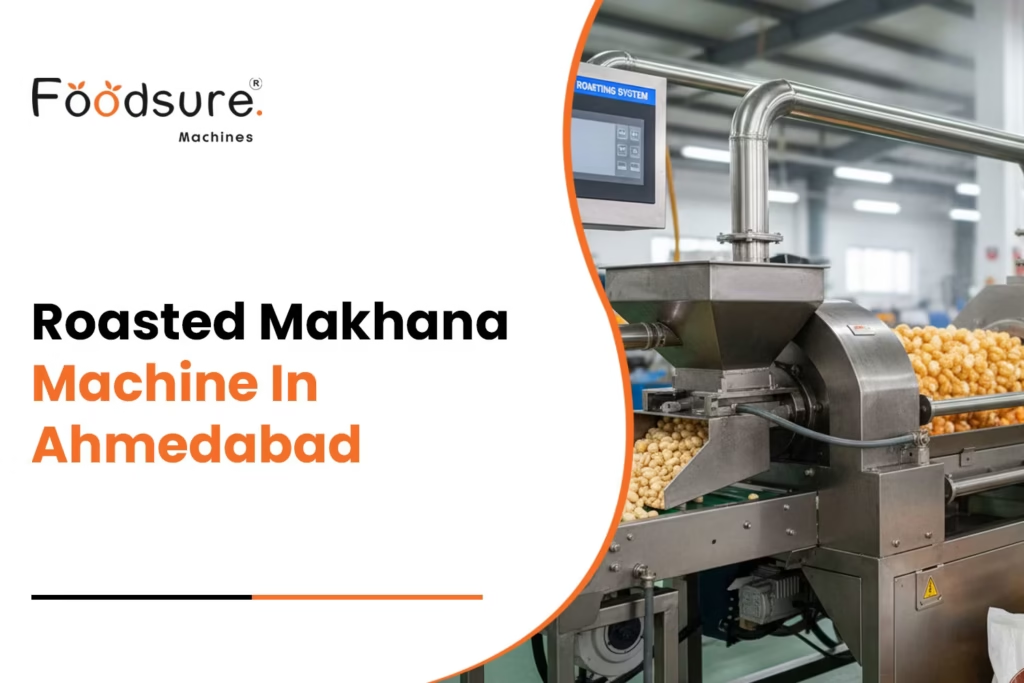
Investing in the best roasted makhana machine in Ahmedabad can change the way your small-scale business production. Because the right machine does not just speed up your production, it also makes sure every batch comes out with the same texture and high quality. That means less waste and a more stable output you can sell with confidence. In this blog, we will break down the main types of machines, the costs involved, and the key factors to consider so you can make a smart choice for your business. Top Reasons to Buy a Roasted Makhana Machine in Ahmedabad The best roasted makhana machine in Ahmedabad handles grading, roasting, sorting, and packaging automatically, which saves your time and effort. With the help of the roasted makhana machine, your every makhana batch comes out consistent with uniform taste and texture. So your product quality stays high. It saves labor time and minimizes wastage. This helps you to directly improve your profitability. The machines meet food safety and hygiene standards, which means your roasted makhana stays safe, so you can process with confidence and safety. Types of Roasted Makhana Machines Available In Ahmedabad Let’s take a closer look at the types of commercial roasted makhana machine in Ahmedabad. These differences help you to understand and pick the right machine for your production scale. Automatic Roasted Makhana Machine Ahmedabad (Ideal For Large Production) This automatic roasted makhana machine Ahmedabad handles automatic grading, roasting, coating, and packaging on its own, and saves your time and labor. It has automatic temperature-controlled chambers that ensure every batch is roasted evenly and tastes consistent. It separates makhana by size with the help of automatic grading and quality, so you get uniform output. It comes with a coating system that applies seasonings evenly across all batches. It gives you hygienic packaging that keeps freshness preserved and keeps it fresh longer. Semi-Automatic Roasted Makhana Machine Ahmedabad(Ideal For Small-Scale Production) Semi-automatic roasted makhana machine Ahmedabad handles makhana grading, roasting, coating, and packaging, and needs some manual handling, though temperature control is included. It is easier on the budget and simpler to maintain. This machine requires more hands-on effort to get consistent quality. Read More: Makhana Processing Machine In Rajkot Setup Guide How Much Does a Roasted Makhana Machine Cost in Ahmedabad When you invest in a roasted makhana machine in Ahmedabad, you are not just buying a single commercial roasted makhana machine price in Ahmedabad. But you are setting up a system that takes care of each part, like grading, roasting, coating, and packaging. Machine Type Grading (₹) Roasting (₹) Coating (₹) Packaging (₹) Setup Cost (₹) Total Investment (₹) Automatic 1,50,000 – 3,00,000 2,00,000 – 4,50,000 1,00,000 – 2,00,000 1,00,000 – 2,00,000 1,00,000 6,00,000 – 13,00,000 Semi-Automatic 50,000 – 1,00,000 80,000 – 2,00,000 40,000 – 80,000 30,000 – 70,000 50,000 2,50,000 – 5,50,000 Automatic makhana processing plant cost more higher starting investment, but they also deliver faster output and tighter consistency. On the other side, semi-automatic setups keep costs lower, though you will put in a bit more manual effort. What this really means is your choice comes down to volume, budget, and how hands-on you want the process to be. Read More: Makhana Machine Cost in India- ROI Analysis for Manufacturers Smart Tips to Pick the Best Roasted Makhana Machine for Your Setup First, start by looking at your production scale. If you are a startup or small-scale production, then you can definitely go for semi-automatic machines. While fully automatic makhana machine setups are better suited if you are aiming for medium to large output. Do not just compare machines by price. What really matters are features like roasting, grading accuracy, coating quality, capacity, and how simple the roasted makhana processing machine in Ahmedabad is to maintain. Check the factor in machine cost, labor savings, and the production volume you expect to see your real return on investment. A reliable partner with strong post-sales service and local support in Ahmedabad can save you from costly break time. If you select the right roasted makhana processing machine in Ahmedabad, it does not just add equipment to your unit, but it also improves consistency, raises productivity, and makes your production smoother. Read More: Top 5 Makhana Machine Companies In India Get Your Roasted Makhana Machine In Ahmedabad Today Investing in a roasted makhana machine in Ahmedabad from Foodsure Machines means you get consistent roasting, higher efficiency, and stronger profits. You get a hygienic processing, local support, and reliable performance; it’s the smart way to grow your makhana business. Get your roasted makhana machine in Ahmedabad from Foodsure Machines today. Request Your Free Quote Fast Please reach out to us anytime via phone or email. 📞 Call Us ✉️ Email Now FAQ Q1: What is the price of a roasted makhana machine in Ahmedabad? Ans: Here’s the thing: costs usually depend on the scale of your setup. The first one is small-scale machines that price start at around ₹1 lakh, and the next one is fully automatic setups that can reach up to ₹12 lakhs, which depend on capacity and features in your machines. Q2: Which machine is best for small-scale production in Ahmedabad? Ans: For smaller production, semi-automatic machines are the best. Because they are affordable and simple enough to manage without extra attention. Q3: Do suppliers provide installation and training support in Ahmedabad? Ans: Yes. Most suppliers handle installation, production training, and offer local after-sales support, so you are not left figuring it out on your own. Q4: What is the ROI for starting a roasted makhana business? Ans: What this really means is your return depends on scale and planning. Well-run setups often see ROI within 6 to 12 months. Q5. What is a roasted makhana machine used for?Ans: It is used to roast makhana evenly for commercial packaging and sales. Q6. Is a roasted makhana machine available in Ahmedabad?Ans: Yes, several manufacturers and suppliers deliver machines to Ahmedabad. Q7. What is the production capacity of these
Roasted Makhana Machine in Hyderabad – Plant Setup & ROI Analysis
A roasted makhana machine in Hyderabad is not just another piece of equipment, but it’s the backbone of a profitable makhana plant. As you know, the demand for roasted makhana is growing fast, and the real question is how quickly you can set up a plant and recover your investment. Let’s see the setup and ROI so you see the numbers clearly. How a Roasted Makhana Machine in Hyderabad Boosts Profitable Growth I think we all know that Hyderabad is the snack industry, which is growing quickly, and roasted makhana is a snack that helps you grow your small-scale business. The India makhana market size reached INR 8.5 Billion in 2024. For that, you need the right commercial makhana machine in Hyderabad, but the real challenge is not the demand. It’s keeping up with it. Growing market: Health-conscious consumers are picking roasted makhana over fried snacks, and retailers want a consistent supply. Manual roasting inefficiency: If roasting is done manually, then it takes a lot of time with uneven texture, and is labor-intensive. It limits your output and often leads to burnt or undercooked batches. Local supply gap: Market demand can’t keep up with your current production, then it leaves room for competitors to grab the space. What this really means is that a roasted makhana machine in Hyderabad is not just an advantage, but it gives you a big difference between small, inconsistent orders and running a profitable production with a commercial makhana machine in Hyderabad. Read More: Makhana Machine Trends 2025: Industry Growth & New Opportunities Plant Setup Essentials for Roasted Makhana Machine in Hyderabad Setting up a roasted makhana plant is not just about buying a machine. It’s about how you organize machinery, space, and utilities that decides whether your plant runs smoothly or constantly faces delays. Machinery (Semi-automatic, Fully Automatic): A semi-automatic makhana machine Hyderabad is great for small production. You can easily control your makhana roasting speed, batch size, and even an investment stays reasonable. If you need higher volume with consistent quality, a fully automatic makhana machine Hyderabad can easily handle large batches without any manual help. A commercial makhana machine in Hyderabad can even combine grading, roasting, coating/flavoring, and packing, saving your time and labor. Space & Manpower Requirements: For this industrial makhana machine in Hyderabad, you need a space that is more than square footage. You need room for raw material storage, roasting, cooling, flavoring, and packing. A semi-automatic makhana machine Hyderabad works in 500–700 sq. ft and in this machine, you need 4-6 workers. A fully automatic makhana machine Hyderabad may need 1000 sq. ft., and a fully automatic machine, you just need 2-3 skilled operators with helpers. Plant Layout & Utilities: A linear flow, grading → roasting → coating/flavoring → packing that machines help you to reduce handling and errors. Utilities are very simple but crucial: there is 3-phase electricity, ventilation for smoke and heat, a basic water line for cleaning, and dry storage for raw and finished goods. Proper layout and utilities for the industrial makhana machine in Hyderabad result in fewer operational delays, consistent quality, and smoother scaling as demand grows. Read More: From Manual To Modern: How Advanced Makhana Processing Machines Transform The Industry? Calculate ROI for Roasted Makhana Machine in Hyderabad Machine Type Daily Production (kg) Market Price (₹/kg) Daily Revenue (₹) Monthly Revenue (₹) Operating Costs (30–35%) (₹) Estimated Payback Period Semi-Automatic Roasted Makhana Machine Hyderabad 250 200 50,000 1,500,000 450,000–525,000 6–8 months Fully Automatic Roasted Makhana Machine Hyderabad 500 200 100,000 3,000,000 900,000–1,050,000 4–6 months What this really shows is that both setups can deliver fast returns, but the fully automatic machine scales profits and efficiency much faster. Start small with semi-automatic if capital is limited, and go big with fully automatic if your goal is higher volume and faster growth. Read More: Makhana Machine Cost in India- ROI Analysis for Manufacturers How to Choose The Best Roasted Makhana Machine Supplier in Hyderabad Picking the right supplier is not just about the price tag. It’s about making sure your makhana machine runs without any delays. Service and After-Sales Support: Always go with a suppliers who provide you with hands-on installation, production training, and prompt customer support. If your Makhana processing machine in Hyderabad gives you problems, then you want someone who answers fast and fixes the issue without long delays. Spare Parts Availability: Every makhana processing machine in Hyderabad needs maintenance. Select a suppliers who stock essential service parts locally, save your break time and extra costs. Because waiting weeks for replacements kills your productivity. Local Presence: Select a supplier in or near Hyderabad that can reach you quickly. That also helps you with transport and understanding your market conditions. Reputation and Reliability: Always ask for references, read supplier company reviews, and check their past customer experiences. A stable supplier keeps your production smooth. Read More: Top 5 Makhana Machines Companies In India Don’t Wait—Get Your Roasted Makhana Machine in Hyderabad Now Foodsure Machines makes it simple for Hyderabad entrepreneurs to scale their roasted makhana production. We provide you a stable machines, prompt service, and easy access to service parts. What this really means is less break time, faster output, and a quicker path to profit for small manufacturers and startups. Request Your Free Quote Fast Please reach out to us anytime via phone or email. 📞 Call Us ✉️ Email Now FAQ Q1. What is the cost of a roasted makhana machine in Hyderabad? Ans: If you are starting small, a semi-automatic machine will set you back around ₹12 lakh. Fully automatic, if you are looking at about ₹18 lakh, but you get higher production and less hands-on work. Q2. Which is better: a semi-automatic or a fully automatic roasted makhana machine? Ans: Semi-automatic works well for smaller setups or startups with limited capital. Fully automatic makes sense if you want to scale fast, produce more, and reduce labor dependency. Q3. How profitable is a roasted makhana plant in Hyderabad? Ans: What this really
Fully Automatic Makhana Line Can Boost Your Output by 3X?
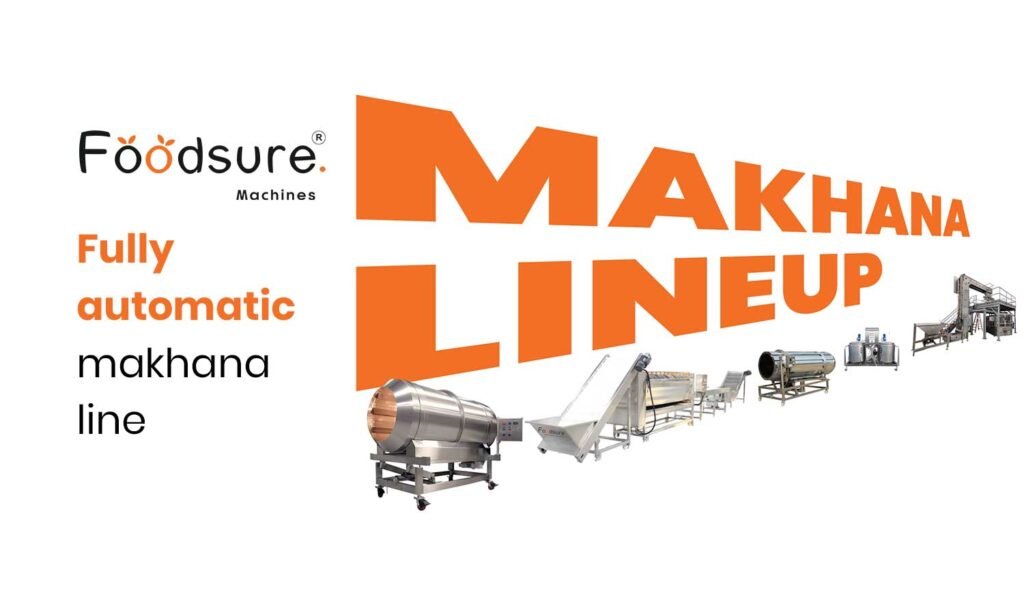
In the makhana industry, scaling up is necessary. As market demand for makhana increases across India and abroad, food manufacturers still relying on semi-automatic makhana machines face challenges in increasing makhana production to meet the growing demand. Recent industry studies show that a fully automatic makhana line is resulting in 3x increased output and 40% reduced labour costs. In this guide, we will take you through the benefits of upgrading to a fully automatic Makhana line, how to increase Makhana production with automation, Makhana production automation for higher ROI, and how Foodsure Machines‘ fully automatic Makhana line can boost your output by 3x. What Is A Fully Automatic Makhana Line? A fully automatic makhana line is a complete setup of integrated machines made to carry out the complete process of Makhana production, from raw seeds cleaning to grading, roasting, puffing, polishing, flavouring, and packaging, without manual intervention. The fully automatic makhana line includes: Makhana Grader Machine Automatic Makhana Rotary Roaster Makhana Puffing Machine Makhana Flavouring & Seasoning Machine Makhana Packaging Machine Auto control panels Benefits Of Upgrading To A Fully Automatic Makhana Line ➨ Increased Production Capacity: Automated makhana lines can operate continuously, processing large batches with minimal downtime. This directly increases your output, often by up to 3x compared to traditional manual setups. ➨ Improved Product Hygiene: With reduced human contact, the makhana processing line meets FSSAI and export hygiene standards, ensuring safer, cleaner, and contamination-free products. ➨ Better ROI: Though the initial investment is higher for a fully automatic makhana line, savings on labor, reduced wastage, and increased production allow most makhana businesses to recover costs within 12–18 months. ➨ Reduced operational errors: Auto control panels regulate temperature, timing, and flow of makhana, reducing the chances of manual labour mistakes like over-roasting or uneven puffing. ➨ Scability: A fully automatic makhana line is made to scale up your business. You can increase capacity by simply adding more units or upgrading individual machines, without interrupting existing operations. But how do all these benefits come together in day-to-day makhana factory operations? It starts with the right industrial Makhana processing machines built for scale and performance. Makhana Processing Machine For Large-Scale Manufacturing A Makhana processing machine is the backbone of industrial manufacturing. Our heavy-duty stainless-steel machines can handle tasks such as: ⮞ Cleaning ⮞ Grading and sorting ⮞ Pre-heating ⮞ Roasting ⮞ Puffing ⮞ Polishing ⮞ Flavouring and seasoning ⮞ Makhana packaging machine Each makhana automatic machine is built with food-grade material and made to handle continuous operation, so investing in a fully automatic makhana line for commercial use can help you increase your output by 3x. Read More: From Manual To Modern: How Advanced Makhana Processing Machines Transform The Industry? Fully Automatic Makhana Line For large-scale Makhana businesses, investing in a fully automatic Makhana line for commercial use is important. These commercial-grade setups are built to handle high volumes, maintain product consistency, and meet strict quality standards required by retail chains and international buyers. We offer industrial-grade Makhana lines equipped with: ➨ Heavy-duty Makhana processing machines ➨ Automatic roasting and puffing machines with digital controls ➨ Continuous belt-driven operations for non-stop production ➨ Automated sorting, polishing, and packing units ➨ Integrated control panels with temperature and speed regulation Made for makhana processing factory doing large-scale production, these lines help manufacturers meet rising market demands without compromising on efficiency, hygiene, or product quality. But how does automation boost Makhana output and efficiency? Let’s understand this now. How To Increase Makhana Production With Automation? Start with designing your factory space for the movement of materials, from raw makhana to the final packed product. A good production layout guarantees that each fox nut processing machine connects easily, reducing delays and extra handling. Install the right machines for each stage To fully automate makhana production, you’ll need the right makhana machines in your factory: Cleaning and Grading machine– removes dust, stones, and sorts by size Pre-heating machine– prepares seeds for uniform roasting Automatic makhana roasting machine– gives even roasting with precise temperature control. Makhana Puffing machine– adds the crunch with fast, consistent puffing. Polishing machine– removes the outer skin and improves shine Seasoning and flavouring machine– add masala or flavours like achari lemon, peri peri, chocolate, cheese & jalapeno, indian masala, tandoori, and more automatically. Packaging machine– packs makhana quickly with minimal manpower. ➨ Add automation control panels: Automation levels are the most important point of your makhana production line. They allow control of critical settings like roasting temperature, puffing time, conveyor speed, and moisture levels, all from a central unit. These panels help reduce human error, ensure product consistency, and make the entire process easier to manage. ➨Integrate machines for smooth operations: To achieve smooth, uninterrupted production, it’s essential to connect each machine in the line with conveyors. This ensures that Makhana moves efficiently from one stage to the next, without any delays. By integrating all the machines, you create a fully automatic Makhana line that operates continuously, improving speed, consistency, and overall efficiency. ➨ Monitor performance and optimize production: Once your automated Makhana line is running, it’s time to track its performance. Our advanced display controls allow you to monitor critical parameters like roasting time, puffing consistency, and moisture levels, helping you fine-tune settings for optimal output. ➨ Scale operations to meet growing demand: As your business expands and demand increases, our systems are made to scale makhana production with ease. Instead of overhauling your entire setup, you can add new machines or upgrade existing ones to increase capacity. Read More: Green Energy, Cleaner Makhana: Solar-Powered Roasting Lines in Far-Flung Villages Contact Foodsure Machines Call, email, or request a quote from Foodsure Machines. We’re here to support your food processing machine requirements. 📞 Call Us 💻 Email 📝 Request a Quote Why Choose Foodsure Machines For Fully Automatic Makhana Line? ➨ High-quality and durable engineering: Our fully automatic production line are manufactured using top-grade materials and advanced technology, ensuring long-lasting performance with less maintenance to increase
How to Pick the Best Food Processing Companies for Your Setup in India

Across India, numerous micro food entrepreneurs are evolving from basic operations to more advanced food processing companies. This is a genuine opportunity as demand is increasing for packages and also value-added food. However, there is one important variable that can significantly influence the value of that expansion: the food processing company you select to work with. In other words, your partner in food processing will be far more than a machine; they will provide automation, hygienic compliance, and capacity planning. The Hidden Problems with Outdated Food Processing Companies Many small-scale manufacturers begin to use local fabricators or rent/source equipment. This is a great way to start, but problems present themselves pretty soon: Some of the causes of variability for product quality are grounded in either manually operated machinery or semi-autonomously operated machinery. There is more waste due to inconsistencies or variability in preparation/processing or grading or heating, or combining. There is more downtime in production because of the inability to source consumable parts or service work on time locally. There is difficulty in meeting the standards of food safety for FSSAI or BRCGS. There is a limit to production opportunities because you aren’t able to scale up any of your machinery to meet the demand. All of this means that you have lost production due to waste, lost money, and a risk to your Business. So, practically every successful food entrepreneur in India today will also look to a trusted vendor for a combination of even food processing and/or packaging lines of machinery. Scalable Solutions from Food Processing Companies in India That Grow with You Contemporary food processing enterprises in India establish flexible operations, from small pilot facilities to large commercial plants. Instead of buying individual machines, you are buying a complete production line that has been designed and tested with an emphasis on efficiency and hygienics, and consistency. The facilitates an integrated line: Mixing, grinding, and emulsifying systems for various food products (sauces, non-dairy, snacks, etc.) Automated control panels that minimize manual operation and support uniformity CIP (Clean in place) technologies, which save a lot of time, plus support hygienics Energy-efficient roasting, extruding, and packaging lines for large and small formats How to Choose the Best Food Processing Company in India: A Quick Checklist Before endorsing a supplier, review these factors. Quality suppliers will meet or exceed what is listed below. 1. Technical Capability Do they have category knowledge of your product? A company that designs and supplies production equipment for specific food markets (snack food, dairy, and sauces) will provide much more service level than a general machinery supplier. 2. After-sales Service Make sure to ask about the availability of spare parts, technician response time, and annual maintenance. In India, a dependable after-sales service can be the difference between dependable production and capital losses due to downtimes. 3. Best Practices & Compliance You should look for machines made from SS-304/316 food-grade steel, which have GMP requirements and CIP operation. Reputable companies you can be sure will develop machines and processes in sanitation that will help you plant products pass audits to FSSAI, ISO, or BRCGS audits without panic at the last moment. 4. Opportunities for customization Every business has a unique business model. A suitable partner will assist you in getting started with a smaller line (e.g., 50 kg/hr) and then grow on it without replacing everything. 5. Customer references Ask current customers for knowledge. FPOs, or entrepreneurs in sedimentary regions such as Bihar, Madhya Pradesh, and Gujarat, will often be available for on-ground experience about energy consumption, product quality, and maintenance. Read More: One Brand, Two Powers: How Foodsure Recipe & Foodsure Machines Support Food Startups From Idea to Production How Food Processing Units Are Powering the Next Generation of Startups Connecting the kitchen to market: Modern food processing units enable businesses to transition from small-batch recipes to production that is consistent and scalable. Automated for efficiency: Compact and semi-automatic equipment reduces reliance on manual labor while providing uniform quality. Compliance-ready design: Designed to comply with both FSSAI and export compliance, thus reducing audits and licensing burdens for new entrepreneurs. Minimized waste and quick output: Systems with effective controls minimize the loss of raw materials while reducing time, critical to startups balancing costs. Scalable for growth: Protein bars, non-dairy whip cream, makhana, and modular processing lines enable easy scaling based on market demand. Support for rural entrepreneurs: Small-scale processing units allow FPOs and local startup businesses to develop branded, high-value products in rural communities. Conclusion Foodsure Machines sells dependable, applaudable equipment for the manufacturing process that supports startups and small manufacturers in India as a form of return in consistency, quality, compliance, and sustainable growth. Foodsure services reduce complexity and allow for greater customer cost management, allowing for peace of mind and growth in an effective and effective manner. All of this is why Foodsure, as a company, its customers find a dependable partner in sustainability – qualified, profitable, modern food processing units. BUILD YOUR FOOD PROCESSING SETUP WITH THE RIGHT PARTNER Get Expert Guidance to Choose the Right Food Processing Company in India Talk with Foodsure Machines experts to evaluate food processing companies based on equipment quality, production capacity, compliance, scalability, and long-term support. Make the right investment decision for your food business setup in India. Get Quote → WhatsApp Expert → FAQ Q1. Which are the premier food processing equipment manufacturers that you think of in India? Some noteworthy manufacturers are Foodsure Machines and those integrators local to the area that offer a full service to food startups or small manufacturers. Q2. What criteria do you use to determine the best food processing partner? When selecting a processing partner, examine their technical competence, their ability to support with regulations, their after-sales support, and their ability to scale. Q3. Are small entrepreneurs able to access innovative or new processing systems? Yes, they can. Q4. Which food processing business is most profitable in India? Snacks, dairy, frozen foods, and ready-to-eat segments are the most profitable. Q5.
Top Leading Energy Bar Machine Manufacturers in Bangalore for Your Business Growth
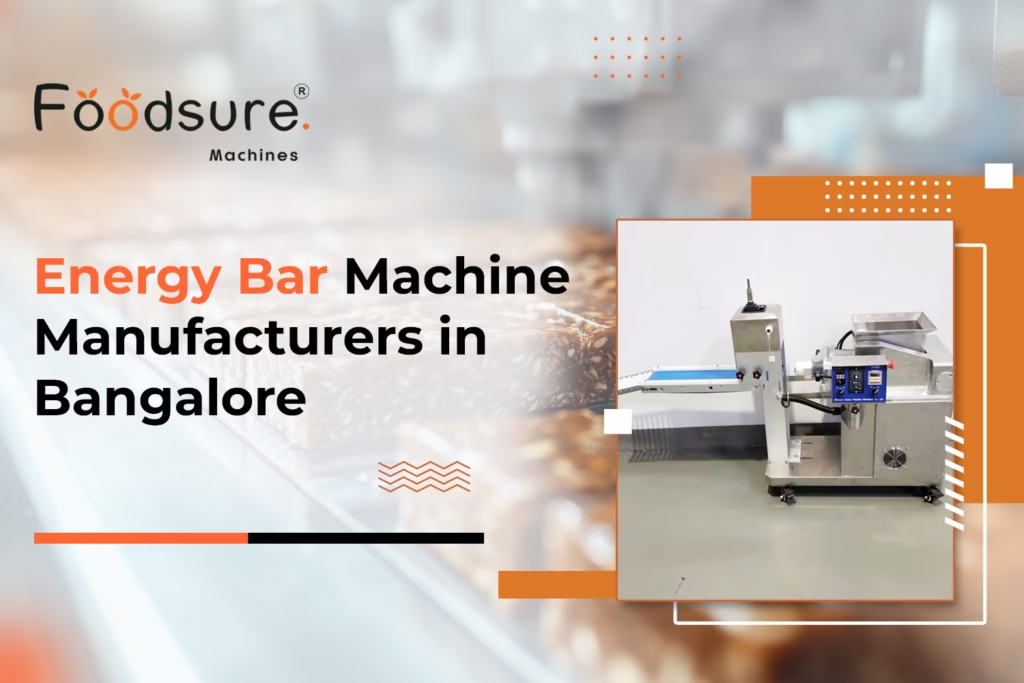
If you have ever wondered how the energy bar in your hand gets made so perfectly, the answer is simple: machines. Energy bar machine manufacturers in Bangalore are designing an automatic energy bar machine that handles mixing, pressing, cutting, and packing, helping your business grow into a trusted name in the market. The global energy bar market size reached USD 3.9 Billion in 2024. Let’s turn oats, nuts, and seeds into profits with smart machines that shape your snack business. Find the Right Energy Bar Machine Manufacturers in Bangalore Foodsure Machines Foodsure Machines gives you a high-quality energy bar machine that is designed for consistent performance and ease of use. Our energy bar making machine is known for its long-lasting and efficient performance, making it the best choice for many manufacturers. Key Features: Capacity: Our automatic energy bar machine has a capacity of up to 500 kg/hr. Material: Machine service parts are made from stainless steel. Automation: Our machines are fully automated systems. Warranty: Machines have a 1-year warranty. Customer Feedback: Positive Reviews: Our customers have praised the machines for trustworthiness and the company’s prompt customer support. Post-Sales Service: Foodsure Machines gives you complete training and maintenance support to make sure that your production runs smoothly. Experience: Many clients have reported that their production increased and also improved product quality after joining Foodsure Machines in our production lines. Also Read: Boost Profits With Top 5 Energy Bar Machines In 2025 Aviral Enterprises Aviral Enterprises specializes in Energy Bar Machine Manufacturers in Bangalore designed for the specific needs of its clients. Their products are made to be user-friendly and low-cost. Key Features: Customization: Energy bar production line are customizable to meet production requirements. Material: Their machines have high-quality materials, which makes them last longer. Support: They also offer you machine installation and training services. Customer Feedback: Ratings: Aviral Enterprises has received many positive reviews for its product quality and customer service. Post-Sales Service: Customers also appreciate the technical support and training provided by them. Experience: Clients have noted the ease of production and the significant reduction in production time after adopting Aviral’s machines. Kalyan Machines Kalyan Machines is known for its strong and efficient energy bar machines that serve both small and large-scale manufacturers. Key Features: Capacity: Their machines are made for various production scales. Design: Machines that are designed for compact and space-saving. Durability: Made to withstand continuous production. Customer Feedback: Ratings: Customers have rated Kalyan Machines highly for their product performance and trustworthiness. Post-Sales Service: The company gives you timely maintenance and service parts availability. Experience: Users have reported improved production capabilities and consistent product quality with Kalyan’s machines. Papa Industries Papa Industries provides advanced energy bar machines suitable for large-scale production. Their machines are designed for high efficiency and minimal break time. Key Features: Automation: Their machines are fully automated systems for stable production. Capacity: Machines have a high capacity that is ideal for large-scale production. Customization: You can customize machines that perfectly fit your production needs. Customer Feedback: Ratings: Customers have shared satisfaction with the machine’s performance and the company’s support services. Post-Sales Service: Papa Industries offers you complete post-sales support, including operator training and maintenance. Experience: Clients have experienced increased production volumes and reduced production costs after being involved with Papa’s machines. E & S Technologies Private Limited E & S Technologies specializes in providing energy bar machines equipped with the latest technology to ensure high-quality production. Key Features: Technology: Their machines have advanced technology for precision and efficiency. Capacity: Energy bar making machine that are designed for various production scales. Support: They also provide technical support and training. Customer Feedback: Ratings: Many customers have rated E & S Technologies positively for their innovative solutions and customer service. Post-Sales Service: The company offers you detailed training and responsive support to address any production issues. Experience: Users have reported improved product consistency and reduced production costs with E & S Technologies’ machines. How to Keep Your Energy Bar Machine Running Smoothly for Years Clean after every batch because it’s basic, but if you skip this, it can lead to spoilage and food safety issues. Always maintain moving parts and inspect regularly. Do not wait for small issues to turn costly. Working with a supportive Energy Bar Machine Manufacturers in Bangalore that gives you quick access to service parts and stable repair services can save you time and money when something goes wrong. Train your operators, a well-trained team easily handles, cleans, and troubleshoots the equipment properly, and also reduces downtime. Maintain detailed logs, keeping a record of maintenance helps you stick to schedules and prevents any stress. Follow recommended schedules. Regular upkeep is not optional. It’s how you protect your investment and ensure consistent, high-quality output. Conclusion Choosing Foodsure Machines is not about picking the fanciest equipment. It’s about getting an energy bar production line that works as hard as you do, without any stress. Our support and training make sure you are never left figuring things out on your own. What this really means is you can focus on growing your business while trusting the machine to deliver consistent results every day. It’s a decision that just makes sense. Get the support you deserve – choose one of Get the support you deserve – choose one of the top energy bar machine manufacturers in Bangalore, Foodsure Machines, and start scaling your business with confidence. Have a Question? Let’s Connect! Please reach out to us anytime via phone or email. 📞 Call Us ✉️ Email Now FAQ Q1. What’s the profit margin when using energy bar machines? Ans: Here’s the thing: you can expect around 20 to 40 percent, depending on how well you manage costs and production. But if you select the right setup, you definitely achieve your goals. Q2. What are common mistakes when operating energy bar machines? Ans: Most problems come from skipping maintenance, mixing ingredients incorrectly, or not training the team properly. These small oversights can slow you down fast. Q3. What ingredients can
Mayonnaise Filling & Packaging Machine Price with Practical Insights for Manufacturers
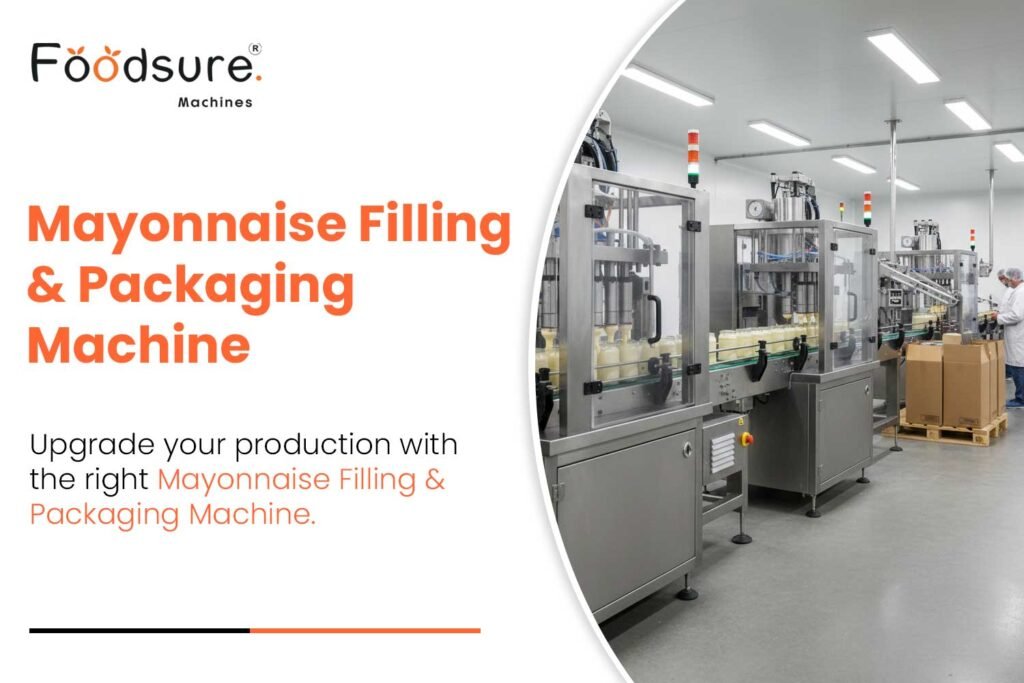
If you’re scaling a mayonnaise unit, the biggest constraint usually isn’t production; it’s packaging. Slow manual filling, uneven batches, spillage, and constant labour dependence all cut into margins. A reliable mayonnaise filling & packaging machine removes these friction points and gives you the accuracy, speed, and consistency needed to grow. This guide gives you a clear breakdown of machine types, price ranges, factors that influence cost, and the best setup for small, mid-scale, and large manufacturers. Why Manufacturers Choose to Upgrade Their Filling and Packaging Setup Using a manual filling method will only be effective when the volume of product being filled into each container is small; once you start filling based on the actual demand of your customers, significant gaps between your filled product and what was needed will immediately become apparent. Different shipments of packaged products are filled differently, often resulting in customers’ complaints about material waste, etc. It may seem like overfilling a container today is not significant; however, if you continue to overfill consistently, the costs of excess material will quickly accumulate. When the customer needs products filled most quickly, packing operations slow down. Packing issues arise due to employees being fatigued, no longer watching themselves or paying attention to details, which leads to mistakes being made during filling/packing operations. Filling and Packaging mayonnaise machines allow for consistent performance throughout the production run and maintain steady speeds while continuing to provide repeatable, consistent filling and packaging capabilities as compared to the manual process. This consistency is expected by our distributors, and if we do not provide them with the reliability and accuracy of our filling and packaging operations, they will become frustrated with us. Mayonnaise Filling & Packaging Machine Price in India (2025) Scale / Use Case Typical Capacity / Use Approx Price (INR) Starter / very small batches (semi-auto/manual filler) Small bottles or jars, low volume ₹ 60,000 Small-scale production (compact semi-auto / entry-level) Small batches, flexible runs ₹ 1–1.5 lakh Mid-scale production (automatic paste/liquid filler for jars/pouches) Regular daily throughput for small brands ₹ 3–6 lakh Mid-to-large scale (automatic line for sauces/pastes including mayonnaise) Higher output, consistent filling speed ₹ 5.5–7 lakh Industrial / Commercial-scale filling & packaging line High volume, retail-ready packaging, full automation ₹ 7–15 lakh Read More: Buy Mayonnaise Machine in India – 2025 Prices, Specs & Best Models What Affects Mayonnaise Filling & Packaging Machine Cost? The following five areas influence how much consumer pricing varies: Filling Accuracy – Consistent filling accuracy allows you to manage fill setups while minimizing overfill loss. Automation Levels – Manual to semi-automatic to fully integrated systems support the significant increase in both production output & the amount of capital invested in Automatic mayonnaise filling machine processes. Nozzle & Pump Application – The nozzle and pump application depend on the viscosity of the material. Mayonnaise making machine materials that are viscous will use servo-driven nozzles, anti-drip valve systems, and, in some cases, a heating jacket. Packaging Types – Jars, bottles, tubs, pouches, and sachets require different engineering and also have different price points for design. Food Grade Construction Quality & Safety – Stainless Steel 304/316L frames/pumps refer to the grade of stainless used; both grades are required for hygiene compliance and to be export-ready. What the Ideal Setup Looks Like for Every Type of Manufacturer The Perfect Set-Up for Small Manufacturers includes a Semi-Automatic mayonnaise filling machine with a Price range of ₹65,000.00 to ₹1,80,000.00. Semi-Automatic Fillers provide the level of accuracy required for Retail Sales and provide a Continuous Volume of Products. For Medium Scale Manufacturers, the Ideal Setup is an Automatic Single or Double Nozzle Filler with an Average Price Range of ₹4,50,000.00 to ₹6,00,000.00. Automatic mayonnaise Filling & packaging machines offer a Compromise between Accuracy and Speed and are Best Suited for packing on a large scale to Retailers, Manufacturers, and Regional Distributors. The Ideal Setup for Large Manufacturers consists of A Fully Automatic Filling Line with a Price range of ₹25,00,000.00 to ₹1,00,00,000.00. Fully automatic fillers allow for Continuous Production with multiple SKUs, Large Orders, and High-Volume Shipments. Read More: How To Set Up A Profitable Mayonnaise Production Line Quick ROI Example for Filling and Packaging Machines Decreased Waste: By reducing spillage and accurately filling jars, a semi-automated filling machine will produce savings of ₹1.50–₹2.00/jar(approx). Reduced Labor Costs: With the automation of the filling process, you will be using less labor for manual filling, resulting in savings in labor costs of available ₹20,000–₹30,000/month(approx). Increased Production: Due to the efficiency of using a semi-automatic filling machine to fill jars, you will realize an increase in your overall production and additional sales potential of up to ₹1,00,000/month(approx). ROI: For the majority of small and medium manufacturers, they will generally have a return on their investment in 2–4 months, while totally automatic mayonnaise production lines will normally achieve ROI in 6–12 months, depending on the volume of production. Conclusion Choosing the right mayonnaise filling & packaging machine ensures consistent quality, higher output, and faster ROI. At Foodsure Machines, we help small to large manufacturers select the perfect setup for their scale. With our expertise and reliable machines, you can streamline production, reduce wastage, and grow your business confidently. Have a Question? Let’s Connect! We’re here to assist you anytime. Contact us via call or email. 📞 Call Us ✉️ Email Now FAQs Q1. How to get a mayonnaise filling & packaging machine? Ans: It’s possible to purchase the machine(s) directly from the manufacturer, distributor, or online supplier in India that you trust. Q2. Is a mayonnaise filling machine suitable for small-scale production? Ans: Yes, semi-automatic machines are ideal for small batches under 200 kg/day. Q3. How is a mayonnaise filling machine operated step by step? Ans: You will fill the hopper with material, set the volume and speed that you want to dispense the material from, and start the machine. Q4. Why do prices for mayonnaise filling machines vary? Ans: Prices vary
Top-Rated Mayonnaise Machine Manufacturers In Hyderabad For Smooth Production
Hyderabad manufacturers supply mayonnaise machines that are easy to use and maintain. These machines take care of everything like mixing, blending, and even packaging. Mayonnaise machines are available in different sizes and types, making it easier to match your needs. And also help you to meet food safety standards. Even if you are new to the market and want to grow your business in a large production, these mayonnaise machine manufacturers in Hyderabad can help you keep up with market demand. Trusted Manufacturers of Mayonnaise Machines in Hyderabad Get your mayonnaise machines in Hyderabad with trusted technology, expertise, and support that help you scale your business smoothly. Foodsure Machines 13+ years of experience in making food machines. Specializes in mayonnaise machines with mixing, heating, and filling functions. Uses stainless steel that’s safe for food and lasts long. Machines can be adjusted for small or large batches. Customers say the machines are easy to operate, and the support team helps when needed. Durga Packaging Machine 10+ years of experience in making packing machines. Offers both semi-automatic and fully automatic packing solutions. Machines fill the right amount and pack it without waste. Good option for mayonnaise production lines. Customers like the affordable price and helpful technical support. Mayo World 8+ years of experience in making mixing machines for mayonnaise. Helps keep the texture smooth and handle different ingredients easily. Machines are built to last longer. Good for businesses that want to grow. Customers appreciate the support and flexibility of the machines. Read More: How To Set Up A Profitable Mayonnaise Production Line How to Choose the Right Manufacturer for Your Growing Business When you pick a good manufacturer, you get four things that make the manufacturer the best and trusted: experience, machines that are made for your setup, stable results in your business, and support when you need it. With these, you can easily grow your production without any problems. Experience and Expertise Not every manufacturer knows the ins and outs of your food product. Pick one that has experience in the machine industry. That way, they will understand the challenges you face and suggest a solution that actually works in your production. Product Testing and Demonstrations Before buying a machine, make sure the manufacturer tests the machine with your real ingredients. If you see the machines work on-site or in a lab, it shows how they will perform and also helps you to avoid surprises. Customization Options Always look for manufacturers that are open to adjusting the machine’s design for your needs, and the capacity, features that will match your space, and process. References and Track Record When you select a manufacturer, first check their client reviews, ask about case studies, and talk to other businesses they have worked with. This helps you understand how well the machines are and how good the service is after installation. After-Sales Support and Maintenance Every mayonnaise machine needs care. A manufacturer that provides quick technical help and spare parts nearby will keep your production running without unnecessary downtime. Read More: How to Start a Mayonnaise Manufacturing Business Final Thoughts At Foodsure Machines, we know how important it is to have equipment that works for your business, not against it. With over 13 years of experience, we build machines that are simple to use, food-safe, and adjustable to your needs. What this really means is you can focus on growing your production while we handle the technology and support. Request Your Free Quote Fast Please reach out to us anytime via phone or email. 📞 Call Us ✉️ Email Now FAQ Q1: How long does it take to set up a mayonnaise machine? Ans: Here’s the thing – depending on the machine, setup usually takes a few hours or up to a day, and we guide you through every step so you’re ready to start quickly. Q2: What raw materials are needed for mayonnaise production? Ans: Let’s break it down – you’ll need edible oil, egg yolk or emulsifiers, vinegar or lemon juice, and some basic seasonings like salt or spices. Q3: How can I get a mayonnaise machine from a manufacturer? Ans: What this really means is you just need to reach out to us, share your needs, and we’ll help you choose the right machine, arrange installation, and support you throughout. Q4. How is mayonnaise manufactured using machines in Hyderabad?Mayonnaise is produced using emulsifier mixers, homogenizers, and filling machines in a hygienic automated process. Q5.Why did mayonnaise production rules change in India for manufacturers?India enforced strict food safety norms due to raw egg risks and hygiene compliance. Q6. Is machine-made mayonnaise unhealthy for consumers?No, machine-made mayonnaise is safe when produced under FSSAI-approved hygienic conditions. Q7. What is the first ingredient used in commercial mayonnaise production?Refined edible oil is the primary ingredient in large-scale mayonnaise manufacturing. Q8. What are common production mistakes in mayonnaise factories?Poor emulsification, wrong oil ratios, and improper temperature control cause batch failures. Q9. Which oil is best for commercial mayonnaise machines?Refined soybean, sunflower, and canola oils work best for industrial mayonnaise production. Q10. Which country drives the highest demand for mayonnaise machines?The USA leads global mayonnaise consumption and processing machinery demand. Q11. How long does factory-made mayonnaise last in sealed packs?Commercial mayonnaise lasts 6–9 months when packed using proper sealing machines. Q12. Is mayo produced by Hyderabad manufacturers always veg?Most Hyderabad manufacturers focus on eggless mayonnaise due to Indian market demand.
Mayonnaise Market Trends 2026: Global Demand & Growth Opportunities

The mayonnaise market trends is stable yet growing and is forecasted to reach USD 13.8 billion by 2026. Mayonnaise is one of the growing sauce categories worldwide. Mayonnaise’s growth is caused by changing consumer choices towards newer, healthier quality spreads. In this blog, we will discuss the drivers of demand, market pressure, and actionable examples of how businesses can succeed in the sauce category. Mayonnaise Market Size & Forecast for 2026 The demand for India mayonnaise market is expected to rise around the world through 2026. The global mayonnaise market is estimated to be between USD 12.4 billion and USD 15.63 billion, depending on the growth rate, somewhere between 4.5% and over 12%. Both North America and Europe are highly dependent on the retail and foodservice channels. In APAC and India, there is movement with new flavours and adding healthy applications through usage in snacks and ready-to-eat meals. Private label continues to take market share while the foodservice segment continues to drive mayonnaise in bulk. The Big 5 Trends Shaping Mayonnaise Demand in 2026 Mayonnaise trends in 2026 are being defined by significant market shifts shaped by consumer demands for clean-label mayonnaise. The rising eggless mayonnaise market and evolving supply dynamics. Clean label & functional ingredients: They include protein fortification, added fibre, and natural emulsifiers and are achieving stronger shelf presence and consumer trust. Eggless & plant-based: The eggless & plant-based surge is being led by vegan and flexitarian consumers, where eggless varieties now capture over 40% of the market in 2026. Demand for Bulk Packaging and Shelf-Stable Mayonnaise in the QSR & Foodservice: In the QSR(quick service restaurants) and foodservice, we have witnessed a sharp uptick in demand for bulk packaging and shelf-stable mayonnaise, driven by the ever-growing cloud kitchen and quick-serve segments of the industry. Emergence of Private Labels and Smaller Brands: Private labels and smaller brands are emerging rapidly, relying on nimble production approaches, local flavours, and lower-cost distribution. Supply Chain & Pricing Pressures: As we come back to supply chain and pricing pressures, especially on edible oils and packaging, these strains are directing both strategic procurement and innovative costs across the category. Read More: Choosing The Right Mayonnaise Machine: A 3-Minute Industrial Buyer’s Checklist Winning Strategies for Mayonnaise in 2026 Now, let’s talk about the winning strategies for mayonnaise. As you know, in 2026, there are still business opportunities for commercial mayonnaise suppliers to increase their mayonnaise business. A fully developed market playbook aimed at understanding changes in consumer expectations and navigating an increasingly complex market. Product Development Checklist Reformulating products should be based on clean label ingredients, including non-oils and natural emulsifiers (sunflower & pea protein), with protein or fibre fortification for a healthier alternative. The type of emulsifier should be dependent on the segment (egg-based, vegan, or allergen-free) and not compromise safety. Focus on producing allergen-free products and create functional characteristics in mayonnaise profiles for niche consumer targets. Packaging Tactics Sachets for single-serve/on-the-go products, squeezable bottles for retail sell-through, and bulk for QSR. Natural exploration of alternative sustainable or shelf-stable solutions that utilise recyclable plastic and new barrier alternatives. Pricing and Distribution Incorporate value-based retail packs into grocery retailing, supermarkets, and online grocery retailers. Establish collaborations with quick-service restaurants and co-manufacture your private label partnerships to facilitate growth and secure your supply chain. Fulfil additional purchasing units concentrated on higher sales via volume discounts, multipacks, case discounts, and partnerships with distributors. Marketing Playbook Develop regional flavours that complement regional cuisine trends, aimed at a premium brand offer for urban millennials. Commit to targeted digital advertising, paid brand influencer partnerships, and a thoughtful SEO strategy. Do product demos and sampling at targeted B2B locations. Why Mayonnaise Machines Are a Growth Lever for Manufacturers Increasing Production to Meet Demand Commercial mayonnaise-making machines allow manufacturers to quickly scale your production while keeping a consistent quality of output. A machine helps to emulsify the ingredients consistently to achieve the proper smooth consistency and helps to produce an output more reliably from batch to batch, which is key for maintaining brand trust and quality. All machines are made hygienically from stainless steel (SS304/316) to acceptable food safety standards, which helps greatly to reduce contamination possibilities. Cost Efficiency & Margins The quick automation of commercial mayonnaise-making machines can save manufacturers money by drastically decreasing labour processes, addressing mixing, emulsification, and filling. The manufacturer can control the ratios of the various ingredients and save money on ingredient losses, improving yields and the consistency of the final product. The machines can continuously run and be high-production machines with the use of vacuum homogenising, increasing production capacity while decreasing downtimes and improving margins and profitability for the manufacturer. Versatility in product innovation Currently, manufacturing equipment primarily intended for the production of mayonnaise has as a baseline the ability to produce several mayonnaise-based products. For example, traditional egg mayonnaise, eggless or vegan mayonnaise, lower-fat mayonnaise, and flavoured mayonnaise. By determining these different mayonnaise products, manufacturers will have greater flexibility. And be able to trial new formulations without any quality and safety concerns. Food safety compliance and food quality enhancement standards Leading suppliers of mayonnaise machines build equipment with specific hygienic and food safety compliance and quality enhancement standards. As defined by government and regulatory bodies such as the Food Safety and Standards Authority of India (FSSAI) and a global food safety management system (FSMS) standard, such as the FSSC 22000. Read More: The ₹5 Crore Secret: How to Start A Mayonnaise Business in India With One Small Machine How the Mayonnaise Market Trends Is Performing in 2026 The worldwide mayonnaise market is growing rapidly, projected to have a CAGR of approximately 12.38% from 2026 to 2034, providing a significant chance for each manufacturer to invest in automated mayonnaise-making equipment. In fact, manufacturers using automated mayonnaise-making machines have found better margins with the new technology, with as much as a 15% increase due to reduced raw material waste, decreased labour costs, and processing efficiencies. Quick reorder cycles are now commonplace, as automated lines can
The Rise of Vegan and Egg-Free Mayonnaise: Opportunities & Challenges

If you were to visit a grocery store today, you would find something new. You would see jars labelled “vegan”, “egg-free”, or “plant-based” next to jars of traditional mayonnaise. This is not a temporary phenomenon; there is increased demand from consumers. This market segment includes health-conscious people, vegans, and people who are allergic to eggs. There are also flexitarians, a new consumer market segment, who would purchase a plant-based version. This category is also expected to see growth in the double digits over the next five years. Why Egg-Free Mayonnaise Isn’t as Simple as It Looks Shifting from egg emulsions to plant-based derivatives requires food manufacturers to understand more than just a simple exchange. Any small manufacturer should understand these three key considerations: Formulation and texture. Egg yolks have the advantage of being able to emulsify oil and water due to their functional and structural properties. When the emulsification properties of egg yolk are not used, food manufacturers typically replace them with one of three options: plant proteins (dairy or non-dairy), aquafaba (the cooking water from chickpeas), and modified starches. The biggest challenge is within formulation, as it involves not only developing a cream-like texture without separation. Shelf Life and Consumer Safety egg free mayonnaise market emulsions have more opportunities for spoilage to occur due to microbial, bacterial, and yeast activity if formulated poorly or without sufficient funds to meet the consumers’ safety requirements and potential shelf life. A food safety shelf-stable option should note how acid levels (pH), preservatives, and packaging conditions differ from traditional egg emulsion-labelled options, meaning many options that may seem limited are noted where shelf-stable compliance is satisfied. Labelling and Compliance In India, the labelling guidelines include allergen information and ingredient breakout based on the FSSAI guidelines. In markets regulated by the FDA/EU, labelling will also apply, as well as some of the new wave consumer purchase drivers, like vegan certification. The Simple Roadmap to Producing Vegan & Egg-Free Mayonnaise This guideline is appropriate for a small pilot batch and for an extensive scale of production. 1. Choose Your Base Ingredient Your options can be soy protein, pea protein, aquafaba, or an overall function of a starch blend. Each option will have different costs, availability, and flavour characteristics. Soy protein: Good cost, but it is an allergen. Pea protein: Clean label, neutral flavour, higher costs. Aquafaba: A trendy ingredient of choice for creating an eggless mayonnaise that does extremely well, but there is always a supply consistency to monitor. 2. Pilot Formulation & Shelf Testing For a lab-scale pilot batch, you want to confirm emulsion stability, pH, and flavour. You’re safe if the minimum is evaluating shelf life for storing in refrigerators for a 30-day life, a small test before larger-scale verification. 3. Specify the Right equipment. For eggless mayonnaise, you will need high shear for emulsifying equipment and mixing such that you will achieve close control. While traditional mayonnaise (in all windows) equipment can be utilised for plant-based, some equipment changes may be required to provide proper viscosity. 4. Packaging & Shelf Life Squeeze bottles or jars? The packaging you select will also help shape consumers’ beliefs in the product and shelf stability or shelf life. Lastly, since you’re choosing a plant-based protein, you may need UV packaging or products. 5. Pricing and Cost Structure Egg-free mayonnaise may be priced 15-30% higher than Australian mayonnaise. You can justify that premium price in the premium route to market (this may include exporting and health-and-supplement-oriented stores). 6. Go-to-market versions Potential private-label agreements with grocery chain group universes. Exporting to ‘vegan’ demand (EU, USA). Jars for consumers in urban ‘health’ or ‘wellness’ grocery environments. 7. Quality & Compliance Checklist Benchmarking scope for your first product, and before presenting to market for your first batch, from a quality and compliance perspective, please check if you have: Shelf life validation Allergen labelling HACCP/FSSAI licensed Optional: vegan certification Read More: Mayonnaise Types Guide: From Classic to Eggless & Flavoured for Manufacturers Choosing the Right Mayonnaise Machine for Egg-Free Production While great formulations and a clean label are an excellent jump-off point, once you scale a line of egg-free mayonnaise, the machine you select becomes extremely important. Substandard machinery will lead to low texture, unpredictable batches, and wasted production time and money. Essential Features to Look for in a Mayonnaise Machine High shear mixing: Develop emulsions with the same textural expectations as recipes that include eggs. Batch size capabilities: Pilot-size units (5-10 litres) for pilots and commercial size (500+ litres) for full production. Food Grade Hygienic Design: Food safe with construction in compliant stainless steel and hygienic design. Automation features: PLC or touch control for a consistent, predictable product. Energy Efficient: You will have a lower cost to produce per unit of product since you will run higher volumes of production with less hands-on human handling. Pilot vs Commercial-Scale Machines Pilot-scale machines: 5-50 litres are very useful in developing recipes and working through the R&D process and labelling, etc. Commercial-scale machines: 100-500 litres or larger are perfect for production, consistent results, ROI, and quality. Working with reputable suppliers: They work with your brand and reputable suppliers of mayonnaise machine technology, small machines, and bulk machines. Read More: How to Start a Mayonnaise Manufacturing Business Turning Test Batches into Profitable Production Let’s say you start production with a pilot batch of 100 litres per day. For the raw material, the vegan mayonnaise manufacturing plant cost to you is ₹80/lt on completion of your product. You sell it ultimately in a finished jar for a ₹140/lt margin. After all packaging and overheads are considered, you will have a gross margin of around 30%. You now have an emulsifier production scale, which will then be able to generate a business revenue of ₹30-35 lakhs per month and earn a very good profit whilst producing quality and consistency. Read More: Mayonnaise Production Equipment That Scales Your Food Business Profitably Is Egg-Free Mayonnaise the Right Move for Your Business? Eggless mayonnaise is not merely a
How to Start a Mayonnaise Manufacturing Business
The mayonnaise manufacturing business of India is expanding quickly because of rapidly changing food habits and increasing interest in ready-to-eat meals. The good news: there is still room for new players! In large cities and small towns, there is demand from consumers for flavored, eggless, and low-fat mayonnaise. With food processing equipment, you can make good mayonnaise safely and consistently. What You Need to Know About the Mayonnaise Market There has been a significant increase in mayonnaise consumption in India. In 2024, it was at 428 million USD, and approximately 800 million USD was expected by 2033 with a per annum growth of approximately 6.5%. Simply invest in food service safe, durable equipment that businesses believe will provide hygienic and stable production with process reliability. Before you know it, you will have developed a business unit that will have the potential for inefficiencies, productivity going forward, improved future margin, and scale. Read More: Mayonnaise Market Trends 2026: Global Demand & Growth Opportunities Finding the Right Size for Your Mayonnaise Manufacturing Business Before determining how large you want your mayonnaise production to be, and making a decision, briefly consider your objectives. Specifically, scale concerns are more than how much capital you will need to get started because they also affect your production process and workflow. So, if you choose the right size, it’s just about starting small or going big; it’s about using your resources productively and setting yourself up for profitability over the long term. Small Capacity Mayonnaise Manufacturing Plant This is suitable for local suppliers, entrepreneurs, and smaller brands. Start-up Costs are around ₹10 to 18 lakh (semi-automated). This machine has a batch size of 50 to 200 kg/h. It has full capability to experiment with multiple recipes and focused markets. The space requirement is typically 300 to 500 sq ft. It requires a small team, and it can be operated by a small team with straightforward processes. These mayonnaise production plant offer a low-cost, simple process, low risk, and low barrier to entry for start-ups, whether in rural or urban areas, to continue building a unique brand. Large Capacity Mayonnaise Manufacturing Plant Set up for long-term, high-volume production (could be 500kg/hr – 3,000kg/hr or more). low-fat mayonnaise manufacturing plant cost start around ₹35 to 80 lakh or more. It is fully automated and continuous with sanitary cleaning-in-place (CIP) systems and an advanced homogenization process. It provides you with a consistent quality and lower pricing for the volume. While it would be more difficult to manage, the capacity to do larger quantity orders and secondary recipes. A large capital investment, the ability to employ a higher-skilled workforce, and capacity and infrastructure set up to manage and expand the supply chain are required to operate and scale such a plant successfully. Read More: 2026 Buyer’s Guide: Fully vs Semi-Automatic Mayonnaise Machines – Which One Wins? How to Choose Machinery That Fits Your Mayonnaise Manufacturing Business The essential piece of mayonnaise machine, you will need to have a mayonnaise plant, and why that equipment is essential. High-shear mixers: Are the base of production. These function by using high-rotational speeds to make the oil come together with egg yolk and vinegar or lemon juice into a new and stable emulsion. Homogenizers or Emulsifiers: Take it a step further and emulsify, or cut fat particles down to a uniform droplet size. By doing this, you can produce a creamy and stable product. Mixing tanks: These are stainless-steel tanks that are equipped with either a motorized or agitated mixing unit, which will mix and blend your base ingredients together properly before the next production step. Filling Machines: Work semi- or automatic filling of jars, bottles, or sachets by accurately filling, while maintaining hygiene at the same time. Pasteurization Systems: Effectively process the product to kill the bacteria while following product rationalization for flavor and quality, while extending shelf life. Capping and Sealing Machines: Cap and seal your products with cap machinery so that leaking/ contamination does not occur. Labeling Machines accurately label your product brand, so it is ready for the retail store. Packaging Machines bulk finished products into boxes or cartons. Legal Requirements for Starting a Mayonnaise Manufacturing Business All mayonnaise producers must have either an FSSAI license or registration. For small producers, Basic FSSAI Registration is required (up to 100 kg per day). For medium and large-scale producers, you can either have a State FSSAI License or a Central FSSAI License. Having an FSSAI-approved license/registration will show both consumers and your brand that you are committed to hygiene and safe processing and have controls in place for quality. Being compliant means you have some sort of monitoring in place that allows you to meet Food Safety standards. By having an FSSAI-approved license, you are building trust with the consumer and creating credibility around your brand. Tracking when to renew your FSSAI-approved license can easily be managed by putting together a system for keeping your documents and records organized. Cost Breakdown of a Mayonnaise Plant in India Expense Category Estimated Cost (INR) Notes Land / Plant Space ₹5–10 lakh Depends on location and size (300–500 sq. ft. for small-scale setup) Machinery & Equipment ₹10–80+ lakh Small-scale: ₹10–18 lakh; Large-scale: ₹35–80+ lakh Licenses & Registrations ₹50,000–1 lakh FSSAI, GST, and local permits Utilities & Infrastructure ₹2–5 lakh Water, electricity, drainage Packaging Materials ₹1–3 lakh Initial stock for jars, bottles, labels Working Capital / Misc. ₹2–5 lakh Raw materials, labor, and marketing Total Approximate Investment ₹20–100+ lakh Varies based on scale, automation level, and plant location Read More: Buy Mayonnaise Machine in India – 2026 Prices, Specs & Best Models Conclusions At Foodsure Machines, we help people start their mayonnaise business and make their dreams come true. The machinery we manufacture is made for smooth production, hygiene, and consistency in quality, giving you the confidence to set up your plant, begin production risk-free, and grow your business. START YOUR MAYONNAISE BUSINESS Launch Your Mayonnaise Manufacturing Business with Expert Support Get complete support for
From Hand-Packing to 60 Pouches per Minute: Smart Packaging for Makhana Units
Hand-packing makhana works when you are small. But as orders increase, it holds you back. It’s slow, inconsistent, and too dependent on labor that may not show up. You end up with uneven pouches, and real questions about hygiene. Smart packaging changes that. These makhana packaging machine with nitrogen flushing can seal 200 to 3,000+ pouches an hour. Makhana machines don’t guess weights. Each unit operates with precision, speed, and consistency. This is exactly where a packaging machine for makhana changes the game. Instead of depending on manual work, a smart packaging machine gives you consistent sealing, accurate filling, and the ability to scale without stress.Many growing units now prefer a makhana pouch packing machine because it handles delicate kernels gently while maintaining speed and hygiene. 3 Ways Hand-Packing Is Slowing Your Growth When comparing the difference between manual and automatic packaging machines, the gap becomes clear in speed, hygiene, and long-term reliability. The flexible packaging machinery market is projected to grow from USD 8.6 billion in 2025 to USD 13.7 billion by 2035, with a CAGR of 4.8%. The market shows steady growth, beginning at USD 6.8 billion in 2021 and reaching USD 8.6 billion by 2025. Slow output means missed orders A packing machine small size unit can already outperform manual labor several times over, making it ideal for small processors ready to scale. If you are hand-packing, you are probably managing a few hundred pouches an hour at best. That might work for now, but as orders grow, delays start stacking up. Deadlines slip. Buyers lose patience. And you lose business. Inconsistent weights lead to complaints Humans aren’t machines. Pouch weights vary. Some are underfilled, others over. That’s not just a quality issue, it’s a trust issue. And in some cases, it’s a legal one too. Labor becomes a bottleneck This is why many processors shift first to a semi automatic makhana packaging machine before upgrading to a full smart packaging line.The kind who show up on time, work consistently, and don’t leave after two weeks. That’s hard to find and harder to manage. You spend more time training and chasing reliability than running the business. From Local to Global: Trends That Make Automation a Must If we’re being honest, manual packing won’t take you far. A food-grade makhana packaging machine makes a real difference when you are ready to grow beyond local limits. Exports need better packaging Strong makhana export packaging isn’t just about looks — it’s about airtight sealing, nitrogen flushing, and consistent weights that meet international standards. A reliable makhana pouch packing machine ensures every export pack meets hygiene and shelf-life expectations. Retail needs shelf-ready, barcoded packs Modern retailers now expect packaging automation solutions that deliver barcode-ready, uniform pouches at scale. Buyers expect reliability Distributors want airtight seals, correct weights, and traceability. Automation gives them that and gives you fewer headaches. READ MORE: Makhana Machine Trends 2025: Industry Growth & New Opportunities Built for Growth: Inside the Machinery of a High-Performance Makhana Line If you are building a serious operation, the food-grade makhana machine isn’t just a tool; it’s the engine that drives speed, consistency, and scale. Let’s look at what goes into a high-performing line. Core Components: A smart makhana pouch filling and sealing machine isn’t just faster, it’s developed to solve real problems. It starts with a vibratory feeder that moves the seeds gently to a linear weigher. That gives you accurate pouch weights without crushing the product. From there, the FFS machine forms, fills, and seals each pouch up to 60 per minute with clean, consistent results. This entire setup works as a smart packaging line, where feeding, weighing, filling, and sealing operate in one smooth, automated flow. For growing businesses, this type of packaging automation solutions setup reduces errors while improving output consistency. Output You Can Expect: High-speed output: Even a packing machine small size model can handle serious volumes compared to hand packing, making automation accessible for smaller units. A well-built small scale packaging machine can push out 30 to 60 pouches a minute. That kind of speed isn’t just impressive, but it also helps you to hit big orders on time and opens the door to serious retail and export volume. Flexible pouch sizes: That flexibility is one reason automatic makhana packing machine reviews often highlight adaptability as a key benefit. Even if you are selling trial packs or bulk family bags, the system handles weights from 10g to 200g without hassle. You can adjust quickly, match customer demand, and stay versatile as your product range grows. Cost efficiency: Makhana packaging machine price run anywhere from ₹1.5 to ₹6 per pouch. It depends on your setup, level of automation, and pouch size, but the key is this: you control the cost, and you get the speed and quality to justify it. From Manual to Profitable: How Smart Packaging Changes the Game Many processors researching automatic makhana packing machine reviews mention the same benefits: lower labor stress, better pack quality, and faster dispatch times. Whether you start with a semi automatic makhana packaging machine or go fully automatic, the move toward a smart packaging machine pays off quickly. If you are running a small-scale makhana packing unit, smart makhana pouch filling and sealing machine cuts your labor needs fast. It automatesmakhana pouch filling and sealing machine, so you rely less on manual work and avoid the slip-ups that come with it. That alone speeds up production and helps you ship faster. Read More: From Manual To Modern: How Advanced Makhana Processing Machines Transform The Industry? Real Results: A Bihar Unit’s Jump from Manual Labor to Smart Output The unit first considered a small scale makhana packaging machine, but demand pushed them toward a complete smart packaging line instead. Labour reduction A makhana unit in Bihar went from depending on three workers on the packing line to just one operator. That one shift cut labor costs by nearly 70% without slowing production. Production
How To Set Up A Profitable Mayonnaise Production Line
Mayonnaise might seem simple. But right now, it’s one of the fastest-growing products in India’s food industry. Look around, it’s everywhere. Homes, cafes, takeout menus, cloud kitchens. People want quick, tasty food, and mayonnaise fits right in. The market is growing fast and is expected to cross ₹8,000 crore by 2030. There is money on the table. And if you have ever thought about building your own food brand, this is a strong place to start. Now, let’s be real. You can’t build a business on just a good recipe. You need a setup that works perfectly and the right set up a mayonnaise production line, clean production, and packaging that lasts, ingredients that stay consistent. You don’t need to be a factory owner. But you do need to think like one. This guide will walk you through how to set up a mayonnaise production line that actually makes sense, even if you are starting from your home kitchen or planning a full-scale unit.So if you are not just making mayonnaise for fun and you are ready to turn it into something people will pay for then it’s time to set up a commercial mayonnaise production line around it. . Why Mayonnaise Is The Next Big Thing In India’s Food Market Here is the thing. Mayonnaise is no longer just a sandwich spread; it’s becoming a category of its own. From homes to hotels, cloud kitchens to cafes, demand has taken off. And more food businesses are realizing they can make their mayonnaise, control the quality, and save money while building their brand. What this really means is: if you have been thinking about getting into food manufacturing. Then, a mayonnaise machine for a food factory is not a risky experiment. It’s a proven product with growing mayonnaise market demand across India. You are not too early, and you are definitely not too late. Now is a smart time to build. Let’s take a deep dive into the mayonnaise market demand. Rising Indian Demand For Spreads & Convenience Foods The India mayonnaise market is valued at around USD 746 million in 2025. It looks forward to reaching USD 990 million by 2031, with annual growth rates ranking from 4.8% to 24.8%. In modern times, like Urban, busier lifestyles and double-income households have made convenience foods like mayonnaise a go-to choice, especially for easy, tasty home meals. Future Growth Outlook The mayonnaise market demand is expected to grow outstandingly in the coming years, with a compound annual growth rate (CAGR) of 28.2% from 2024 to 2028. By 2028, the market volume is calculated to reach US$26,273.5 million. Currently, the most mayonnaise is used in North India. But other regions like East, West, and South India are also growing rapidly, especially with supermarkets and home delivery services. Even a brand investing in a new packaging with Indian inspired flavors and health-focused development is set to attract new customers and maintain momentum. Read More: Mayonnaise Market Trends 2025: Global Demand & Growth Opportunities How To Plan Before Buying A Mayonnaise Machine In India If you are serious about set up a commercial mayonnaise production in India, the first step is not buying a machine. It’s getting clear on what you are actually planning to make. Then decide which product, scale, and business model to choose because these choices shape everything that comes next. Let’s break it down. 1. What Kind Of Mayonnaise Do You Want To Produce? Your recipe is not just about the taste. It also affects your mayonnaise machine equipment, ingredients, and even how you sell your product. Classic Mayonnaise: This is the standard egg-based recipe: oil, vinegar or lemon juice, seasonings. It’s the go-to for hotels, restaurant chains, and supermarkets. If you are keeping it traditional and than set up a mayonnaise production line is fairly straightforward. Flavored Mayonnaise: If you want to stand out in the market, think about the flavours like mint, garlic, tandoori, cheese, and peri-peri. This is where you get creative. But here is the catch: adding purees, herbs, or spice blends means your machine needs to handle smooth blending without clogging or separation. Eggless Mayonnaise: Even more consumers are choosing egg-free options for dietary, religious, or health reasons. But replacing eggs is not simple. You will need the right emulsifiers and a high-shear mixer to get that stable, creamy texture people expect. If you get this wrong, the mayonnaise won’t hold. So, before you price a mayonnaise machine equipment or lease a space, decide what is going into your jars. Because what you make will decide how you make it and how successful you will be. Read More: Mayonnaise Types Guide: From Classic to Eggless & Flavoured for Manufacturers 2. Identifying Your Business Scale : Scale Production Capacity Best Suited Machines Typical Buyers Startup / Micro 50–200 kg/day or small batches Manual or Semi-Automatic Startups, food trucks, home-based units SME (Small/Medium Enterprise) 200–2,000 kg/day Semi or Fully Automatic Local brands, small factories, and cloud kitchens Commercial / Industrial 2,000+ kg/day Fully Automatic, High-Capacity Large food brands, exporters, and hotel chains If we talk about semi-automatic mayonnaise machines, these machines are a mixture of manual and machine. While machines mix ingredients, and the rest of things are done by labour. In terms of fully automatic mayonnaise machines, this type of machine is fully automated without any labour and gives a smooth texture to mayonnaise. 3. Set Up A Mayonnaise Production Line : Quick Guide 1.Raw Materials: Always remember if you want to buy raw materials for machines, always buy good quality oil, egg or egg-less base, vinegar, and species. 2.Machinery & Equipment: For machines, get a high-shear blender, mixing tanks, and storage tanks(food-grade stainless steel). While for automation, add a chiller, RO water plant, and air pump (ideal for both small & large factories) 3.Packaging & Labeling: To get a packaging, choose bottles, jars, and pouches for your mayonnaise processing plant . Use filling and sealing machines for hygiene, and also check batch codes
Mayonnaise Types Guide: From Classic to Eggless & Flavoured for Manufacturers
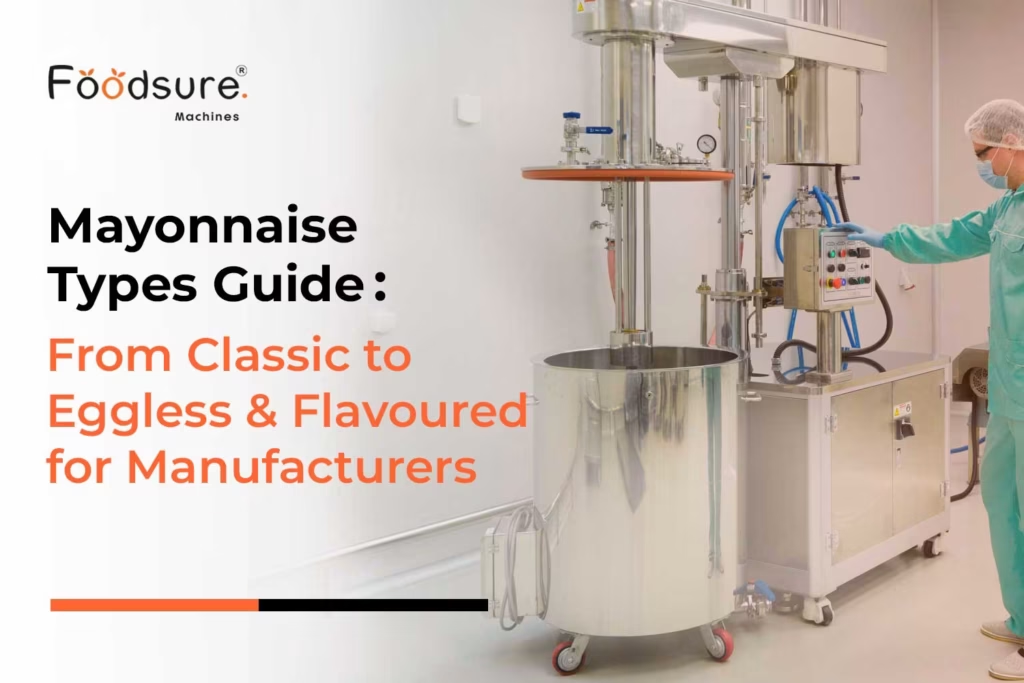
“Mayonnaise” is often synonymous with sandwiches or burgers with mayo, but there are many other uses for it. Today, how many types of mayonnaise available in the marketplace, serving a health-conscious, plant-based consumer base for food service and quick service. Classic egg mayonnaise, eggless mayonnaise, low-fat, flavoured, and specialty mayo – each of these segments of the mayonniase types industry has a product. As a small food operation or manufacturer, understanding the differences can mean more than flavour; it can also affect what you are selling and what type of machine you might want for production at scale. Premium & Specialty Mayonnaise Types: Organic, Olive Oil, Probiotic 1. Traditional Mayonnaise Containing Egg This is classic mayonnaise and consists of oil, vinegar or lemon juice, egg yolks, and seasoning, which are the main ingredients. Flavour: Rich, creamy, slightly tart Optimal Use: Devilled eggs, salads, and as a sauce topping on reduced foods. 2. Eggless, or Vegan, Mayonnaise Eggless mayonnaise is more fashionable now that many individuals are being more plant-based. Eggless mayonnaise is made from soy protein, pea protein, or aquafaba as an egg replacer. Taste/Texture: About the same as any other mayonnaise, but lighter. Best Suited for: Vegetarian, vegan, and Jain diets. Market Trend: Noteworthy demand in India and as a replacement in ongoing markets that export. 3. Light or Low-Calorie Mayonnaise This is the lower-calorie mayonnaise that has had the oil removed and/or limited and/or swapped out with a stabiliser. Taste/Texture: Less rich but more watery than either of the above, and still creamy. Best Suited for: Diet-friendly menus and salad dressings. Who Simply Tries to Purchase It: Consumers wanting to control fitness prices in urban café environments. 4. Seasoned Mayonnaise (Garlic, Chilli, Herb) Seasoned mayonnaise is becoming increasingly popular. Garlic mayonnaise is most commonly assumed to be an option for sandwiches and a dip, but garlic mayonnaise on fries is also a well-used method of adding flavour. Chilli mayonnaise has potential in cheeseburgers and is suited to a restaurant wanting to add some flavour to their menu. Herbs in mayonnaise on gourmet sandwiches or traditional dips have proven popular. Cheese mayonnaise, even if we have only seen a little bit in restaurants, has been relied upon as a type of lubricant for fast-food pizza outlets. 5. Specialty Mayonnaise (Organic, Olive Oil, Probiotic) In higher-end categories, special products are typically oils that are based on organic oils, mayonnaise developed with olive oil, or possibly developed with probiotics. Best: gourmet kitchens, premium sales, and memoranda on export to specialty shops. Market trend: slower sales trends that are associated with a higher margin Mayonnaise Types of Made Simple: A Quick Reference Table Type Main Ingredient Buyer Segment Shelf Life Best Use Classic Egg-Based Egg yolks Mass retail, fast food Medium Burgers, salads Eggless/Vegan Plant protein Vegan/vegetarian Medium Sandwiches, wraps Low-Fat/Light Less oil, stabilizers Health-conscious Shorter Diet menus, cafes Flavored Garlic, chili, herbs QSRs, gourmet Medium Dips, pizzas, wraps Specialty Olive oil, organic Premium buyers Varies Gourmet retail How to Choose the Right Mayonnaise for Your Business Startups and small manufacturers need to choose the correct mayonnaise option, or else it will impact cost, positioning, and scaling the business. The market: The mass market side prefers traditional mayonnaise. The premium category and vegan category are looking for “eggless”, “organic”, or even “dairy-free”, depending on whether the consumer chooses for health reasons or lifestyle. Price Points: Traditional mayonnaise consists of base ingredients and can provide an overall lower cost to the consumer. Speciality (vegan, low-fat, or flavour) has an increased cost of production based on the ingredients alone, but it may provide a better margin for the manufacturer producing a speciality product, as consumers are willing to pay for value-added products. Shelf life needs: Depending on the objective of the business, an export-oriented business would need to produce mayonnaise with stabilisers and vacuum homogenising for a longer shelf life potential. A business that is selling locally could produce a mayonnaise with a shorter shelf life to capitalise on it being sold as fresh due to the business being local. Production setup: Vegan and reduced-fat formulations will require stabilisers, vacuum homogenising, and the ability to mix faster and modernised mixing times to mix evenly through the product and maintain desirable consistency and taste. Growth Strategy: Many units will begin producing volumes utilising some form of traditional or eggless mayonnaise and then look to develop flavoured or premium varieties with the notion of entering niche categories and margin growth. Read More: Mayonnaise Production Equipment That Scales Your Food Business Profitably Mayonnaise Machines: Scaling Production with Precision Regardless of which mayonnaise types of you decide to purchase, regardless of whether you make your own mayonnaise, success will depend on execution, which is essential to highly successful execution. Manufacturing technology that is understood during the strategic investment phases could pay dividends after the mayonnaise production is in place. Batch Mixers → This is the best option possible for a small state of production (50-200 kg per day). It is affordable and flexible, catering to smaller operational scales – well-positioned if you are looking at a start-up situation. Vacuum Emulsifiers → This will take out air bubbles in the setup, produce a better texture, and prolong shelf life. This is a good option for trying to increase production and scale up. Automatic Mayonnaise Lines → This is the only option for continuous mayonnaise rounds of 500 kg per hour or more, but it has the same quality and safety standards. Hygiene Options → You will always want to choose a machine out of food-grade stainless steel with an embedded Clean-in-Place (CIP) system. To ensure hygiene is maintained. For your investment to be worthwhile for a product coming onto retail or other QSR chains, it is best to have money invested in a scalable mayonnaise making machine to continue to be competitive. Read More: The ₹5 Crore Secret: How to Start A Mayonnaise Business in India With One Small Machine Conclusions Foodsure Machines
Maximizing Makhana Success: Advanced Automated Sorting & Grading Machines Driving Efficiency
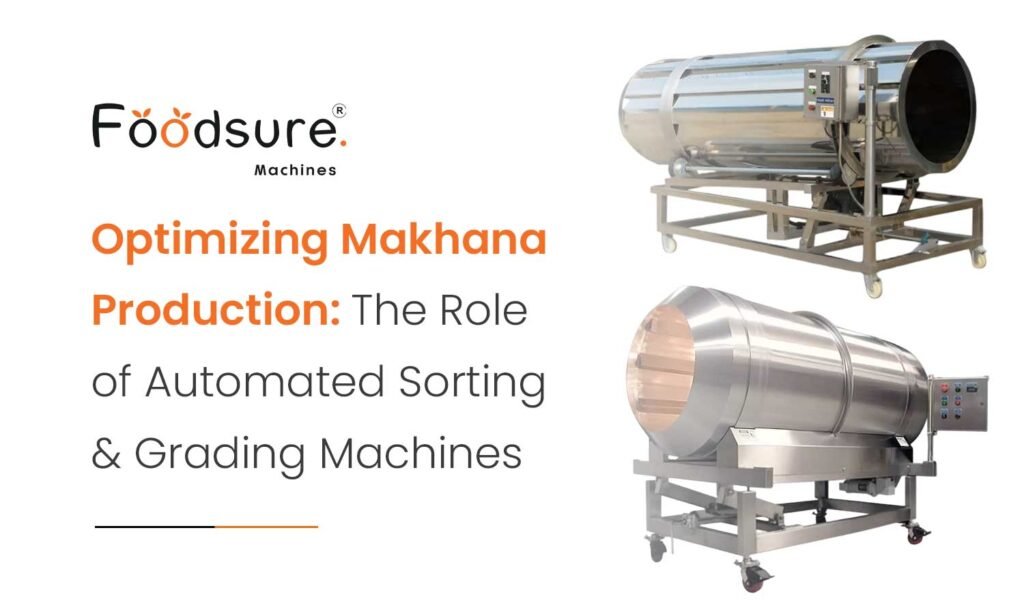
India’s makhana demand is growing at 12% CAGR, but processors still struggle with inconsistent grading, rising labor costs, and export rejections. What’s the real solution when manual sorting can’t match global standards? This guide breaks down market insights, why optimization matters now, and how automated sorting & grading machines can transform your output with Foodsure Machines’ support. Why 2025 Makhana Units Can’t Grow Without Automated Sorting Machines Makhana is gaining global popularity for its health benefits. However, meeting domestic and international demand requires strict quality control and high processing volumes, which cannot be done with manual makhana processing. By 2027, experts predicted that the global makhana market is projected to reach USD 60 billion, driven by the growing demand for superfoods (source). To get into this growing market, investing in automated makhana sorting and grading machines is no longer optional; it’s a strategic move. 2025 Demand for Makhana Sorting & Grading Machines in India Market Growth Drivers Health Consciousness Surge: Rising lifestyle diseases like diabetes and heart ailments are pushing Indian consumers toward healthier snacks. Makhana, a low-calorie superfood, is benefiting from this trend, supported by government health campaigns. By 2023, over 40% of urban households preferred healthy snacks like makhana (Source). Growing Demand for Organic Snacks: With 2.8M hectares under organic cultivation by 2022, India leads in Asia’s organic production. Makhana has emerged as a top choice among health-conscious consumers. E-commerce Expansion: India’s 660M smartphone users have enabled widespread distribution of makhana. Over 25% of makhana sales now occur online, by platforms like BigBasket and Amazon. Read More: Makhana Machine Trends 2025: Industry Growth & New Opportunities Market Challenges Low Consumer Awareness: Only about 20% of rural Indians are aware of makhana’s health benefits, limiting market growth in smaller towns and villages. High Manual Production Costs: Labor-intensive harvesting and water scarcity in Bihar and West Bengal drive up costs. With labor wages averaging INR 350/day, scaling production remains difficult without mechanization or subsidies. To reduce such high manual production costs, sorting & grading machines market an important role in your makhana business. How Automated Grading Machines Increase Output 3X & Cut Costs Fast Most small processors in Bihar lose 10–15% yield due to manual inaccuracies. Our Automated makhana grading machines are made to solve all the problems of manual makhana production. Here’s how automated sorting & grading machines can transform the makhana processing: Precision in Sorting and Grading Our automatic makhana grader is made with high resistance to corrosion and rust and is excellent for food-grade applications. They help to sort the makhana by their: Size Color Surface defects Density Increased Makhana Output Makhana grading plant can handle up to 100-300 kg/hr, hence increasing the makhana production and saving time. Consistent Makhana Quality Automated makhana processing machines maintain consistency across batches, helping you meet strict buyer specifications, especially for exports to the USA, Europe, and the Middle East markets. Labor Optimization Instead of needing 7-8 people for sorting, you need just 1-2 operators for running the machine, reducing labor costs by up to 60%. Reduced Wastage Automated sorting & grading machines help to achieve wastage rates below 1%, leading to significant material savings over time. Read More: From Chaos To Consistency: Why Every Makhana Unit Needs A Precision Grading Machine Key Features That Make Automated Makhana Sorting Machines Worth the Investment When you choose us, you invest in cutting-edge technology backed by industry expertise. Some of the features of automated sorting & grading makhana machines include: Material: Contact Parts- Stainless Steel 304 (SS304) and food safe size grading equipment. Material Sieving: Designed for separating materials by size, effectively sorting from larger to smaller sizes. Properties: High resistance to corrosion and rust, excellent for food-grade applications, durable, and easy to clean. Applications: Commonly used in environments where hygiene is critical, such as in food processing equipment and medical instruments. Power Load: 0.75 KW Cost: INR 150,000.00(makhana grading machine price) Why Leading Makhana Units Trust Foodsure’s Automated Sorting Machines Foodsure Machines is your trusted partner for makhana production in India and worldwide due to: High-quality & Durable Machines Our machines are made for powerful performance and longevity, guaranteeing a strong return on your investment. Trunkey Solutions From plant layout planning to complete production of makhana, like grading, roasting, seasoning, and packaging, to equipment supply, installation, and operator training and after-sales support, we deliver a full turnkey setup that gets your plant running smoothly and profitably from day one. Advanced Technology Our machines are made with the latest technology to ensure efficient, consistent, and high-quality makhana processing. Complete Support We support installation, training, and after-sales to ensure smooth operations and increase profits. Global Standards Our makhana machines adhere to international quality and safety standards, making them suitable for manufacturers worldwide. The Future of Makhana Processing: Why Automation Will Decide Market Winners Industry reports project the global makhana market to exceed USD 60 billion by 2027. Buyers, especially from the US, EU, and Middle East, now demand product consistency and compliance with international food safety standards. This makes it essential for makhana manufacturers in India to: Adopt automated sorting & grading machines Ensure consistent product quality Reduce dependency on manual labor Increase production capacity to meet large-scale demand Optimize Your Makhana Production With Foodsure Machines! We are your trusted partner for optimizing your makhana production to meet your business needs. From installation to after-sales, you have full support and guidance from our side. Foodsure Machines will provide you with turnkey solutions, i.e, from planning to market launch of makhana and help you to know how to optimize makhana production that can help for better success in your makhana business. 🚀 Upgrade to Smarter Makhana Processing Book Your Demo Now! 📞 Call Now✉️ Email Now FAQ Q1. What is an automated sorting system? An automated sorting system uses sensors and precision technology to separate makhana based on size, color, and defects—without manual labor. Q2. What are automated grading systems? Automated grading equipment
Choosing the Best Protein Bar Machine in 2025: A Complete Buyer’s Guide
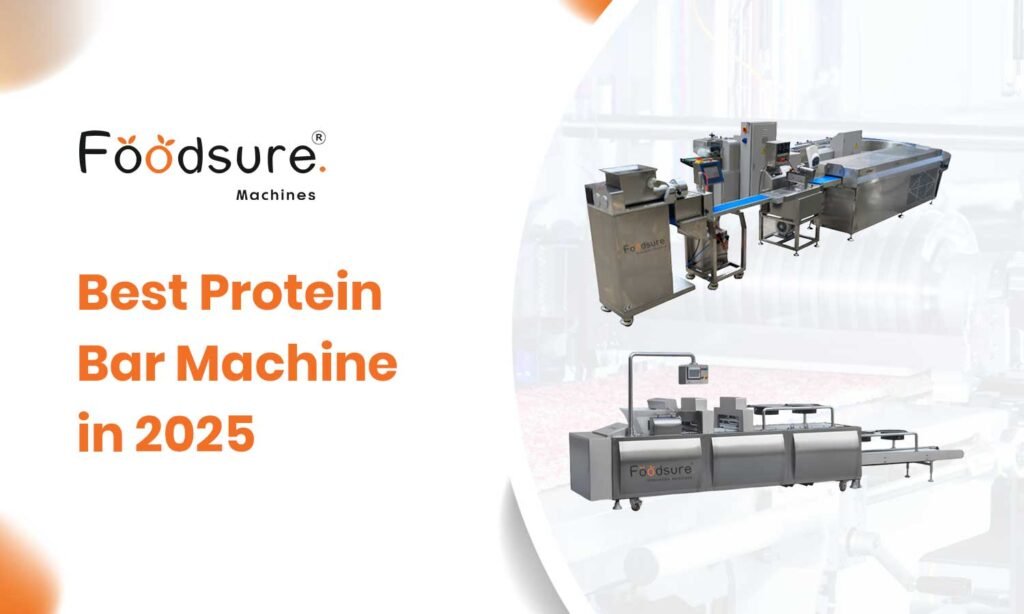
The protein bar sector is growing in India. A growing number of people are choosing nutritious portable snacks, and manufacturers are scrambling to keep up with this demand. But, starting or expanding capacity isn’t as easy as just buying the machine. The best protein bar machine in 2026 can make your process more efficient, safer, and more consistent, while providing consistency across your bars in taste and quality. Selecting the wrong equipment can lead to delays, increased costs, and a lot of variability in products. How to Identify the Best Protein Bar Machine in 2026 Understanding your production objectives is the first step to selecting the best protein bar machine in 2026. Are you deciding if you are going to operate in a high-volume environment or small batch production runs? There are distinctions in these machines’ automation, capacity, and speed. Look for features like: Stainless steel construction for sanitary conditions Easy maintenance and cleaning Variable speeds and mixing options Energy efficient Support and training from the manufacturer Having properly installed or the training included in your investment reduces operational risk and saves you critical time. Choosing the Right Machine Size and Capacity Matters When purchasing the best protein bar machine in 2026, picking the right size and capacity is important. Making the wrong decision could limit production, increase waste, or even add expenses. Start by checking your projected requirements of daily production. Are you looking to produce a few hundred bars a day or thousands for retail and exporting? Think about these considerations: Daily Production Needs: It is important to identify how many bars you want to produce each day. This allows you to consider the machine’s size and speed. Space Considerations: A large machine requires more space on the floor. Before investing in a large machine, ask if your factory has enough area to operate without it impacting production. Level of Automation: Depending on the type of machine you use will determine your staffing levels. Semi-automatic equipment will require more staff, and fully automatic machines can handle larger volumes. Scalability: It is wise to buy a machine that can grow with your business. A machine with a modular design will allow you to add capacity down the road. Energy Efficiency: Larger equipment may be more efficient. It’s good practice to figure out your energy costs to avoid any negative surprises. When you have purchased equipment for snack and health bar production that is sized correctly and at the appropriate capacity, it can help your operation run effectively, support product quality, and improve your return on investment! Key Features of Protein Bar Production Equipment The most important considerations for protein bar production equipment should be efficiency, safety, and reliability. Consider the following when analyzing machines: Uniform mixing and consistent distribution of ingredients Consistent form and portion size Emergency shutoffs and other safety devices Support for multiple recipes for versatility simple to use control panels Keep in mind that a decent machine is not only about speed; it also consistently makes bars of the highest quality while ensuring the safety of your employees. Choosing Industrial Protein Bar Machinery for Factories High-volume production is the goal of industrial protein bar machinery. These machines typically include: conveyor systems that facilitate efficiency automated cutting and mixing functions Mechanisms that reduce human interaction to maintain cleanliness Important considerations before buying industrial machinery: Installation space needs Using energy wisely to save costs Availability of replacement components ease of upkeep and cleaning Buying the right equipment now can help avoid problems later and keep your business running smoothly as it grows Read More: What Is A Protein Premix Machine and How Does It Support Innovation In Food Processing Understanding the Protein Bar Production Line Process The various processes involved in a full protein bar production line include mixing, molding, baking or setting, cooling, and packing. The machines that carry out these functions are: Reduces manual input Maintains hygienic practices Boosts productivity Maintains consistent product quality Think about the flow when planning your production line. A machine that fits well into your line will reduce errors, save time, and increase productivity. Advantages of Using an Energy Bar Making Machine Protein bar manufacturing machine that produce energy bars increase production speed and reduce variability. The benefits include: Every bar is uniform in size and flavor Reduces manual labor and human error Automated shaping and temperature regulation Less waste increases profit margin When you are dealing with multiple customers, consistency in every bar creates confidence and leads to repeat customer orders. Read More: Everything You Need to Know About Protein Bar Machines Tips for Choosing Food Processing Equipment for Bars When selecting food processing equipment for a bar, you need to keep in mind a number of factors regarding hygiene, durability, and efficiency. Here are some factors to take into account: Wherever possible, opt for stainless steel to maximize safety. Investigate how easy aides are to clean and maintain. Assess energy efficiency to reduce operating costs. Confirm the availability of spare parts. Check for manufacturer support and give after-sales service. An understanding of your production needs and marrying bar production machines with the right support will help guarantee everything runs smoothly day-to-day. How to Plan for Machine Maintenance and Longevity No matter how a best protein bar packaging machine is, it will wear down eventually. If maintained correctly to prolong the life of the machine, you can help keep the machine performing well. Daily cleaning and sanitizing. Regular visual inspections of belts, motors, and blades Lubrication of parts that move Ongoing scheduled maintenance is done by a qualified professional Always keep a few spare parts on hand for your machine So having a safety maintenance plan in place will help stop delays, reduce repair costs, and keep the production line running. Budgeting and ROI for Protein Bar Machines Investing in the best protein bar machine in 2026 is not simply purchasing equipment—it is purchasing a business decision. Here are some things to consider when calculating ROI: Estimate
Buy Mayonnaise Machine in India – 2026 Prices, Specs & Best Models
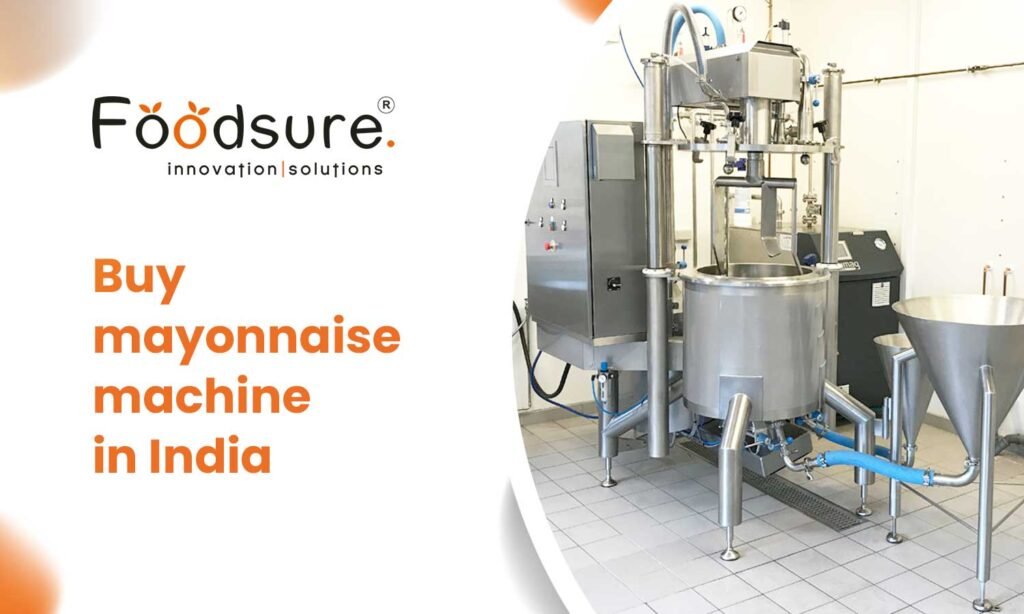
India’s mayo demand is growing faster than ever part of a USD 12.97 billion global market. But ask yourself: is your machine ready for the jump from 100 kg to 1,000 kg a day? Based on our audits across 150+ food factories, most businesses hit bottlenecks because they choose the wrong mixer or automation level. In this guide, you’ll finally see how to buy mayonnaise machine in India the smart way clear specs, real prices, zero confusion. If you’re scaling production in 2026, choosing the wrong machine can cost you ₹2–5 lakh a year in losses. Let’s fix that. Best Mayonnaise Machine to Buy in India (Small, Medium & Industrial | 2026 Guide) Even when you are running a small-scale mayonnaise production line or a large-scale mayonnaise production line for a national brand. As you know, global mayonnaise market size reached USD 12.97 Billion in 2024. Looking forward, IMARC Group expects the market to reach USD 18.20 Billion by 2033, exhibiting a growth rate CAGR of 3.80% during 2025-2033. This will be helpful for you to choose the right commercial mayonnaise-making machine that suits your batch size, workflow, and team capacity. Let’s break it down: 1. Small-Scale Mayonnaise Machines (₹1.53L–₹1.65L | Best for Startups) Capacity: Usually between 10 and 500 liters per batch. Price Range: ₹1,53,000 – ₹1,65,000 These small mayonnaise production lines are built for tight spaces and small teams. They are compact, easy to move, and simple to operate. Key Features: Easy to use, manual, or semi-automatic. Mixes everything smoothly. Heats and cools as needed. Connects easily to the packing setup. Fits with your existing filling system. Where they fit best: If you are testing recipes and making small batches for local markets, then this setup does the job without making it too difficult for you. Not ideal if you’re planning to scale to 1,500+ kg/day within 6 months. 2. Medium-Scale Machines (500–1000 L): The Sweet Spot for Fast-Growing Brands Capacity: Around 500 to 1,000 liters per batch. Price Range: ₹1,50,000 – ₹4,00,000 Here’s the sweet spot for growing brands. These machines give you higher output and better control, without creating a problem. Key Features: Mixes fast and smooth with no lumps. Simple controls with auto settings, if you need. Keeps the right temperature while making. Works with your packing setup, no hassle. Who it’s for: It is perfect for companies that want to scale up, and those who need more volume, tighter process control, and still want equipment that is easy to run and maintain. If your order volume grows 20% month-on-month, move to a medium-scale unit. Outcome: Medium-scale plants cut batch time by 30–45%. 3. Industrial Mayonnaise Plants (1000–5000 L): Built for Nonstop Production Capacity: 1,000 to 5,000+ liters per hour or batch. Price Range: ₹3,52,000 – ₹4,52,357 These machines are built for nonstop production. They are fully automatic mayonnaise machines, highly accurate, and can be combined into large processing lines. If you are looking for a commercial mayonnaise making machine on a scale, then this is the level you are looking at. Key Features: One-touch control with saved recipes and batch tracking. Smooth and air-free mixing with built-in heat & cooling. Keeps running with auto ingredient dosing. Self-cleans fast between batches. Packs into jars, pouches, or bottles as your choice. Best suited for: Large-scale manufacturers and export-focused factories. If you are shipping nationwide or beyond, this fully automatic mayonnaise machine keeps your production consistent and compliant. Read More: 2026 Buyer’s Guide: Fully vs Semi-Automatic Mayonnaise Machines – Which One Wins? Mayonnaise Machine Price in India (2026): Real Costs, Hidden Fees & Best Models If you are planning to buy mayonnaise machine in India, here is a detailed look at what you are paying for the mayonnaise processing plant price. And also the price of key parts like the high-shear mixer and PLC control panel. Total Typical Investment for a mayonnaise making machine price in India: ₹3.5 lakh – ₹12 lakh depending on automation. Part / Module Function Included In Approx. Price (INR) Mixing / Emulsifying Tank Uniform emulsification & ingredient blending All machines Included in all setups High-Shear Mixer Fast dispersion of oil & liquids Semi-auto and above ₹1,50,000+ Homogenizer Stable, consistent texture Industrial and premium setups ₹3,52,000+ Vacuum System Removes air for a longer shelf life High-end industrial & premium lines ₹3,60,000+ Heating / Cooling Jacket Safe temperature control (pasteurization) Most automatic and all industrial setups Included in most models PLC Control Panel Automation, recipe memory, batch control Auto and industrial plants ₹3,52,000+ Ingredient Feeders Automated dosing of raw materials Industrial & premium lines ₹3,60,000+ Holding / Buffer Tank Collects finished mayo for filling Optional, included in larger setups ₹1,50,000+ Filling / Packaging Unit Bottles, jars, or pouches Optional / bundled with full lines ₹4,00,000+ CIP System (Clean-in-Place) Automated internal cleaning Premium-grade, full lines only ₹10,00,000+ 4 Critical Specs That Decide Your Mayonnaise Quality (Don’t Ignore #2) Let’s walk through the core specifications and real-world features that matter when you are buy mayonnaise machine in India. Capacity : It starts with a small 5 liters for R&D and test kitchens. But on the production floor, you will see a machine handling 25L to 1,000L per batch. For industrial mayonnaise production line setups, it goes up to 5,000 liters per hour. A good high-shear mixer reduces emulsification time by 40–70%. Motor Power: Small units run on as little as 0.5 kW. For commercial or industrial plants, expect motors from 5 kW to 20 kW. More power = faster, more consistent mixing. Voltage Option: Mayonnaise machines come ready for standard 220V single-phase (for small units) or 380–460V three-phase for industrial mayonnaise production lines. Material Quality: Everything that is made by the flavored mayonnaise manufacturing plant is from SS 304 or SS 316 stainless steel. If the grade is higher quality, then it’s better for the hygiene and strength. Most good machines include a highly polished surface for easier cleaning. Read More: Mayonnaise Plant Losing Profit? 7 Mayonnaise Machine Mistakes to Avoid Why 150+ Brands Trust Foodsure Machines (Fastest ROI in Mayonnaise Production)
Makhana Machine Cost in India- ROI Analysis for Manufacturers
Did you know that the makhana, once a regionally specific snack, has now become a superfood snack in India and the worldwide food industry? Experts predict the overall puffed snacks market to exceed approximately USD 105 billion in 2032, with makhana becoming the most prominent one due to its properties of being gluten-free, protein-rich, and antioxidant-packed. India alone is expected to expand at a CAGR of 6.86% by 2030. For food manufacturers in India and worldwide, this increasing demand for makhana is a golden opportunity to invest in the efficient and powerful makhana processing plant to grow your business. But you might be thinking that what will be the actual makhana processing machine price in India? This guide will take you into the crucial aspects of makhana machine cost in India, ROI analysis for manufacturers, and how Foodsure Machines can be your partner in the growing makhana market. Benefits of Makhana Machines In India Increased Output Automated makhana machines can process larger quantities of makhana compared to traditional manual methods. For example, a continuous makhana puffing machine can handle up to 100-300 kg/hr, hence increasing the makhana production Reduced Labour Costs Makhana processing machines reduce the need for manual intervention across various processes like grading, roasting, puffing, flavouring, and packaging, which leads to savings on labour expenses. Uniform roasting and puffing Automated makhana processing machines with precise temperature controls guarantee even heating and consistent roasting that reduces the inconsistent texture, colour, and taste of makhana through manual labour. Meeting growing makhana demand Investing in automated makhana machinery helps food manufacturers increase their production to meet the growing global demand for makhana. Low operational costs Although the initial investment might be higher, automated makhana machines lead to lower long-term operational costs due to reduced labour, minimised waste, and optimised energy consumption. Read More: Top 5 Features Every Industrial Makhana Roasting Machine Should Have Makhana Machine Price Breakdown Machine Type Function Cost Specifications Makhana Grading machine Price Made for separating materials by size, effectively sorting them from larger to smaller sizes. INR 1,50,000 (approx.) • Made with Stainless Steel (SS304) • Power load – 0.75 KW • High resistance to corrosion and rust Makhana Roasting Machine Price India Uniform roasting to improve the taste and shelf life of makhana while reducing manual labour. INR 3,85,000 (approx.) • Power load – 18 KW • Capacity – 80–100 kg/30 minutes • Made with Stainless Steel (SS304) Makhana Flavouring & Seasoning Machine Add flavours like achari lemon, peri-peri, tandoori, Indian masala, cheese, and more to make it more tasty. INR 2,50,000 (approx.) • Power load – 0.75 KW • Additional seasoning sprinkler for even distribution • Stainless Steel (SS304) for longer durability Makhana Packaging Machine Helps to pack them in air-tight, moisture-proof pouches to maintain shelf-life, freshness, and quality. INR 6,50,000 (approx.) • Packaging Speed – Up to 40 pouches/min • Made with Stainless Steel (SS304) • Hygienic Design ROI Analysis For Manufacturers A thorough Return On Investment (ROI) analysis is necessary before investing in a makhana processing unit cost. Key Factors Influencing ROI Production Capacity- Higher capacity machines allow for greater output and potential revenue. Automation Level- Automation reduces labour costs but involves a higher initial investment. Raw Material Costs- The price of raw makhana is a major factor. Selling Price of Makhana- Market prices for makhana vary based on quality, packaging, and branding. Operational Costs- Include electricity, maintenance, packaging materials, and labour. Market demand & Sales Volume- The ability to sell the produced makhana is important. Hypothetical ROI Calculation Let’s assume a food manufacturer invests in a semi-automatic makhana processing line from Foodsure Machines for ₹ 20,00,000. Assumptions Production Capacity: 150 kg of processed makhana per day (8 hours of operation). Working Days per Year: 300 days. Annual Production: 150 kg/day * 300 days/year = 45,000 kg. Raw Makhana Cost: ₹ 80 per kg (this can fluctuate). Processing Cost per kg (excluding raw material & packaging): ₹ 20 (includes electricity, labour, maintenance). Packaging Cost per kg: ₹ 15. Selling Price of Processed Makhana: ₹ 250 per kg. Calculations Total Annual Revenue: 45,000 kg * ₹ 250/kg = ₹ 1,12,50,000 Total Annual Raw Material Cost: 45,000 kg * ₹ 80/kg = ₹ 36,00,000 Total Annual Processing Cost: 45,000 kg * ₹ 20/kg = ₹ 9,00,000 Total Annual Packaging Cost: 45,000 kg * ₹ 15/kg = ₹ 6,75,000 Total Annual Operating Costs (excluding machine cost): ₹ 36,00,000 + ₹ 9,00,000 + ₹ 6,75,000 = ₹ 51,75,000 Annual Profit: ₹ 1,12,50,000 – ₹ 51,75,000 = ₹ 60,75,000 ROI (Return on Investment): (Annual Profit / Initial Investment) * 100 ROI = (₹ 60,75,000 / ₹ 20,00,000) * 100 = 303.75% Payback Period: Initial Investment / Annual Profit = ₹ 20,00,000 / ₹ 60,75,000 ≈ 0.33 years (approximately 4 months) Important considerations for ROI for food manufacturers Market Fluctuations- Raw material Prices and selling prices can vary. Operational Efficiency- Maintaining optimal efficiency is important to achieve projected output and costs. Marketing & Distribution Costs- These also play an important role in the successful production. Scaling Operations- As makhana production increases, you might need to invest in additional machinery. Quality Control- Maintaining high quality is important for customer satisfaction and continuous business. Read More: Top 5 Makhana Machines Companies In India Why Choose Foodsure Machines For Makhana Production? Foodsure Machines is your trusted partner for makhana manufacturers in India and worldwide due to: High-quality & Durable Machines Our machines are made for powerful performance and longevity, guaranteeing a strong return on your investment. Customized Solutions We understand that every food manufacturer has unique needs. We offer modified solutions to match your specific production requirements and budget. Advanced Technology Foodsure machines are made with the latest technology to ensure efficient, consistent, and high-quality makhana processing machines. Complete Support We support installation, training, and after-sales to ensure smooth operations and increase profits. Global Standards Our makhana machines adhere to international quality and safety standards, making them suitable for
Top 5 Makhana Machines Companies In India
Makhana has long been part of traditional Indian diets, and today it’s becoming a global superfood. India proudly leads the makhana production, contributing over 90% to the global supply, with Bihar alone producing over 80%. Known for its nutritional value, makhana, also known as fox nut or lotus seed, is packed with protein, calcium, and antioxidants, making it a popular choice among health-conscious consumers globally. But behind every high-quality pack of makhana lies a well-structured makhana processing system, and that’s where the role of Makhana Machines Companies in India becomes necessary. These companies are taking innovation in processing technology, ensuring every batch of makhana meets the highest standards of quality, hygiene, and efficiency. If you’re a food entrepreneur, agro-industrialist, or someone planning to start a makhana processing unit, Foodsure Machines is your trusted partner in the makhana industry. We offer you the latest roasting, grading, and packaging equipment made for the consistent quality of makhana. 1. Foodsure Machines – Makhana Making Machine In India Great list! Foodsure Machines really stands out for modern and efficient solutions. Foodsure Machines provides advanced makhana processing equipment that is designed for efficiency, quality, and scalability in India’s growing snack market. Our makhana machines are a combination of semi-automatic and fully automatic, which gives you automated roasting, grading, flavoring, and packaging. 2. S K Engineering, Bihar Located in the heart of makhana production — Bihar, S K Engineering has made a mark in providing makhana popping and grading machines. They offer customized setups for small to medium-scale units and are known for after-sales support. USP: Local expertise, cost-effective, ideal for startups. 3. Hytek Food Equipment, Haryana Hytek provides a wide range of food processing machines, including makhana roasters and poppers. Their machines are robust and are often used in industrial-scale setups. USP: Durable machines, great for industrial use. 4. Tooltech Engineering, Gujarat Known for quality control and innovation, Tooltech offers both traditional and modern makhana processing units. They also offer training for machine operation. USP: Strong technical support and modern designs. 5. Shree Krishna Industries, Madhubani They have become a go-to option for budget-friendly makhana machines in Bihar. Their machines are simple to operate and perfect for village-level entrepreneurs. USP: Local pricing, simple setup, and rural entrepreneur-friendly. Government Support & Subsidies PMEGP (Prime Minister’s Employment Generation Programme) Mudra Loan FME Scheme (Food Processing Ministry) Some companies even assist with documentation for subsidies and MSME quotations. Ready To Start Your Makhana Business? The rise in health-focused snacking has placed Makhana at the center of India’s food innovation space. For entrepreneurs, it’s a golden opportunity to start or grow a profitable business, and choosing the right Makhana Machine Company in India is your first step. When selecting a company, don’t just go by price. Look at support, quality, user experience, and training. A good machine setup can run smoothly for years and help you scale your business across India and even for exports. FAQ What is the price of a Makhana machine in India? Prices vary, typically ranging from ₹50,000 to ₹5,00,000 depending on capacity and features. Which company manufactures Makhana machines in India? Companies like Shree Sai Agro, Shubham Machinery, and Gajanan Enterprises manufacture Makhana machines in India. Where can I buy Makhana machines in India? Makhana machines can be purchased from local suppliers, online marketplaces, and specific manufacturers like Shubham Machinery. What is the capacity of a Makhana machine? Makhana machines typically range from 100 kg/hr to 500 kg/hr, depending on the model. What are the key features of a Makhana machine? Key features include heating elements, roasting, packaging, and automated processing capabilities. How does a Makhana roasting machine work? It uses dry heat to roast Makhana seeds, ensuring uniform roasting and preserving flavor. Are Makhana machines suitable for small-scale production? Yes, smaller models are available for small-scale operations, starting from 100 kg/day. Can Makhana machines be used for other snacks? Some Makhana machines can be adapted for roasting other seeds or small snacks like peanuts or chickpeas. What is the maintenance cost of a Makhana machine? Maintenance costs are typically low, with regular cleaning and occasional part replacements. Which is the best Makhana machine for large-scale production? High-capacity machines from brands like Shubham Machinery and Gajanan Enterprises are ideal for large-scale operations.
Roasted Makhana Machines Gujarat
Gujarat, known for its strong industrial base and progressive agro-processing ecosystem, contributing nearly 7.5% to India’s total agricultural output and over 25,000 registered food processing units as per data from the Ministry of Food Processing Industries, is rapidly emerging as a promising market for roasted makhana machines. With the increasing demand for healthy snacking options, roasted makhana, also known as fox nuts or lotus seeds, has gained massive popularity across urban and rural Gujarat. As a result, many food entrepreneurs and processing units are now looking for roasted makhana machines Gujarat to scale their operations efficiently. Cities like Ahmedabad, Rajkot, Surat, and Vadodara are witnessing a growing demand for automated and semi-automated roasting equipment tailored for makhana. To support this shift, Foodsure Machines’ roasted makhana machines in Gujarat ensure efficient processing, energy savings, and consistent roasting quality that meets both domestic and export standards. Why Are Roasted Makhana Machines Gujarat Important For Businesses? Roasted makhana machines in Gujarat play an important role in makhana businesses due to their ability to make production smooth and increase the makhana’s quality. Types Of Roasted Makhana Machines Gujarat Machine Type Target Users Features Benefits Fully Automatic Makhana Roaster Machines Large-scale manufactures Handle the entire roasting process, from raw material feeding and roasting to cooling and packaging.High-speed, continuous operation. Maximizes production capacity.Consistent quality.Reduced labor requirement. Semi-Automatic Makhana Roaster Machines Medium-sized companies It’s a perfect blend of automation and manual labor. Efficient roasting while allowing operators to look at and manage the process. Cost-effectiveScalable for growing businessesBalanced control and automation Manual Makhana Roaster Machines Start-ups or small businesses Easy operation and maintenance.Batch-based roasting with consistent quality Affordable entry point into the makhana processing industry.Ideal for small batch production Roasted Makhana Machines Price in Gujarat The makhana manufacturers in Gujarat differ based on their automation level—manual, semi-automatic, or fully automatic. These costs vary as: Read More: Makhana Machine Cost in India- ROI Analysis for Manufacturers How to Choose Makhana Roasting Machine in Gujarat? Choosing the right machine depends on: Process of Roasted Makhana Machines Gujarat The process of the roasted makhana machines is not limited to roasting; you have to undergo the whole process of makhana, from grading to packaging. The whole makhana processing includes the following: Before roasting, the raw makhana needs to be cleaned to remove impurities like dust or stones. Foodsure Machines’ Automatic Makhana Grader machines guarantee uniform size sorting, hygienic processing, and higher efficiency in roasting. Specifications Makhana roasting is an important step in the whole process. Foodsure Machines’ Makhana Rotary Roaster helps in uniform makhana roasting that improves the taste and shelf life of makhana while reducing manual labor. Specifications After the makhana roasting, it’s important to add flavors and seasonings to make the makhana more tasty for your consumer. But the flavor and seasoning of makhana doesn’t stick only to spices; in fact, it’s more extended to this! Foodsure Machines offers flavors and seasonings like achari lemon, peri peri, chocolate, cheese & jalapeno, indian masala, tandoori, and more. Specifications Makhana packaging is the most important step in the whole makhana process. Foodsure Machines’ makhana packaging machines help to pack them in air-tight, moisture-proof pouches to maintain their shelf life, freshness, and quality. Our semi-automatic and fully automatic packaging lines offer custom packaging sizes for your makhana business. Specifications Why Foodsure Machines Are the Best for Roasted Makhana Machines in Gujarat? We offer installation, training, maintenance, and after-sales service for roasted makhana processing machines in Gujarat. Whether you’re located in Ahmedabad, Rajkot, Vadodara, Bhavnagar, or Jamnagar, our experts are just a call away for your business. Whether serving a small village cooperative processing 500 kg monthly or an industrial operation handling 8+ tons, Foodsure Machines offer scaled solutions. This range allows businesses to invest in technology that matches their current needs while providing clear upgrade paths as they grow. Foodsure Machines produce high-quality makhana roasted machine that meets international food safety standards. The stainless steel construction (food-grade SS304/SS316) and temperature control systems ensure hygienic processing without compromising the nutritional value that makes makhana a superfood in Gujarat. We provide excellent value for your investment. Our fox nut processing machine are affordable to ensure you get the best return on your investment. We offer high-quality roasted makhana machines in Gujarat at lower prices, making it easier for businesses of all sizes to enter the makhana processing industry. We provide expert training and consultation services to help you get the most out of your investment. Our team of professionals will guide you through the setup, operation, and maintenance of your roasted makhana machines, guaranteeing proper performance. Contact Foodsure Machines To Have The Best Roasted Makhana Machines In Gujarat! Foodsure Machines is your one-stop solution for the 25,000 registered food processing units as per data from the Ministry of Food Processing Industries in Gujarat that are modified to meet your business needs. From installati on to after-sales, you have full support and guidance from our side. Our roasted makhana machines Gujarat help you maximize makhana production, guarantee consistency, and increase profits that are made for efficiency and durability. We provide our services in Ahmedabad, Rajkot, and all over Gujarat. Enquire Now for Roasted Makhana Machines in Gujarat! Reach out to us anytime via phone or email. 📞 Call Us ✉️ Email Now FAQ 1. Which company makes the best roasted makhana machines in Gujarat?Several Gujarat-based manufacturers offer reliable, high-efficiency makhana roasting machines. 2. What is the price of a roasted makhana machine in Gujarat?Basic roasting machines in Gujarat typically start from affordable small-scale models. 3. Which state leads in producing roasted makhana machines?Gujarat is one of the key states known for manufacturing makhana processing equipment. 4. Is the roasted makhana machine business profitable?Yes, profit margins are strong due to rising demand for roasted makhana snacks. 5. How much does 1 kg of roasted makhana processing cost using machines?Machine-based roasting significantly reduces per-kg processing cost. 6. Which machine is used for roasting makhana?Automatic hot-air or drum roaster machines
Best Mayonnaise Machine Companies In India: All You Need To Know
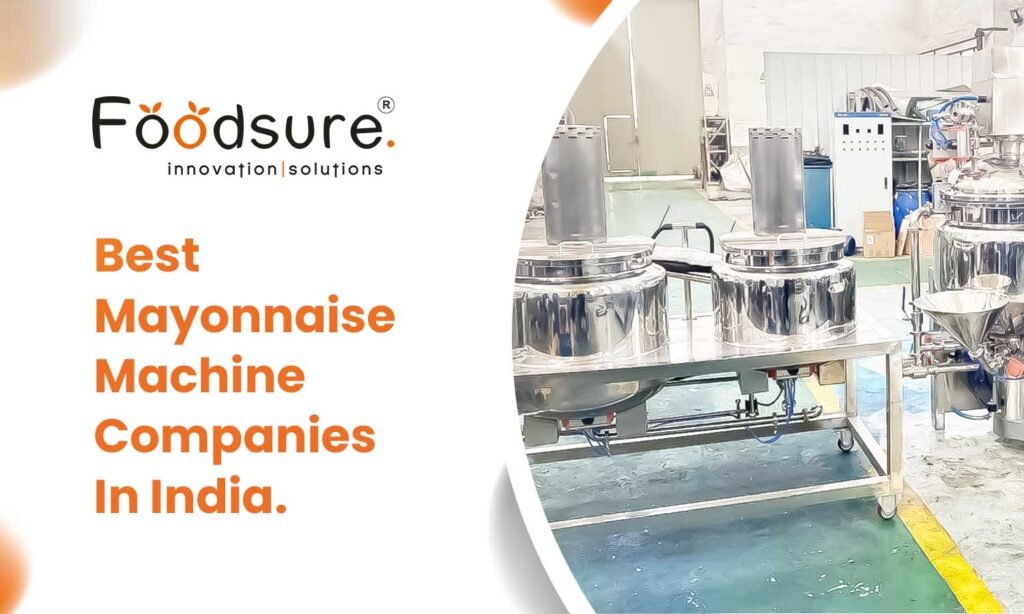
We all know why commercial mayonnaise machines are growing fast. This is due to the increasing demand for high-efficiency, food-grade manufacturing equipment. There are numerous global food brands and companies nationwide that are expanding their operations to meet the growing demand for sauces and dips. It does not matter if you are running a large automated facility or a small factory; what matters is choosing the right equipment for your production capacity and product consistency. Now, there are many of the best mayonnaise machine companies in India that make machines for mayonnaise, from small mixers to fully automatic mayonnaise machines. This blog will help you find the best mayonnaise machine companies in India. Why Choosing The Right Mayonnaise Making Machine Is Key Before Selecting A Manufacturer Before choosing the best mayonnaise machine company in India, first, understand what kind of machine your business needs. There are many types of mayonnaise making machines out there. And you have to choose which commercial mayonnaise-making machine is best for your business. Firstly, in this business, your focus should be on a mayonnaise-making machine that balances cost, speed, and consistency. And the other thing is about choosing the right commercial mayonnaise making machine that helps you to make smooth and creamy mayonnaise every time, and also saves ingredients and reduces the risk of the machine breaking down. Did you know that a good machine can also speed up your production and follow food safety rules like FSSAI standards? So, it’s not just about making mayonnaise, it’s about making your work easier, keeping your quality high, and building a strong, trustworthy brand people love. Now, let’s move on to the mayonnaise production equipment company and find out which company is a great choice for you. Best Mayonnaise Machine Companies In India (2025 Update) Are you planning to start a mayonnaise manufacturer in India? So, we will give you an idea of why choosing the right company to buy your mayonnaise making machine. Because they give you a trustworthy supplier who not only delivers equipment but also guides you and provides you support, and helps you to set up your production without any problems. Below are some of the best mayonnaise machine companies in India. Foodsure Machines (Delhi NCR) – Best Mayonnaise Machine Manufacturer Foodsure Machines is known for the best mayonnaise machines that suit perfectly with your business. Our expert team helps you set up everything, making it easy to operate. What We Do Best: We provide you with a complete food processing setup, especially for making sauces, like mayonnaise. Suitable for: Best for small food brands that want to grow. Big industries that need large-scale production. Price Range: Our mayonnaise manufacturing plant cost range starts from ₹6 lakhs to ₹25 lakhs or more, depending on the size and automation level. Why People Choose Foodsure Machines: Foodsure Machines parts are built with strong and high-quality materials. Machines are made with food-grade stainless steel for hygiene and durability. We give you advanced automation and energy-efficient designs. These machines are easy to operate, clean, and maintain. Microtech Engineering(New Delhi) – Great for Small Budgets If you are looking for a simple, budget-friendly commercial mayonnaise making machine? Microtech is a good choice for small businesses and startups. Speciality: Compact machines for small-scale production. Popular Machines: Inline emulsifiers, small batch mixers. Ideal For: Small food units, test kitchens. Pricing: ₹4–12 lakhs. Why Choose Them: Low cost, easy to use, and quick service. Shiva Engineers (Maharashtra) – Good for Custom Sauce & Mayo Lines Shiva Engineers gives you machines that are designed to match your specific production needs. They are a good choice if you need a custom setup for mayonnaise. Speciality: Customized food processing machines for sauces and mayonnaise. Popular Machines: This company’s mayonnaise processing machine are popular for vacuum mixers, emulsifying tanks, and automatic mixing lines. Ideal For: Medium-sized manufacturers to large-sized manufacturers Pricing: ₹6–20 lakhs Why Choose Them: Durable machines, flexible options, and solid technical support Zigma Machinery (Tamil Nadu) – Easy Upgrade for Growing Food Units Zigma Machinery is a good pick for when you are moving from manual work to a semi- or fully automatic mayonnaise making machine in India. Their machines are simple to use and come with helpful support. Speciality: A semi-automatic mayonnaise machine and fully automatic mayonnaise machines for sauce. Popular Machines: Batch mixers, conveyor-based production lines. Ideal For: Small to medium-sized food businesses. Pricing: ₹5–15 lakhs. Why Choose Them: Easy-to-use machines, good local service, and flexible setup options. Adinath International – High-End Machines for Export & Hygiene A main focus of this company is on high-quality equipment, which is used in larger factory setups. And their machine are developed to meet strict hygiene and global food standards. Speciality: Advanced food and pharma-grade machinery. Popular Machines: Emulsifiers, CIP-ready mixing systems, full production lines. Ideal For: Export units, hygiene-sensitive production. Pricing: ₹10–30 lakhs. Why Choose Them: CE-certified machines, strong automation, ideal for high-output needs. Read More: How to Start a Mayonnaise Manufacturing Business Which Mayonnaise Machine Fits Your Business? – Technical Specifications Table If you are planning to grow with a fully automatic mayonnaise machine in India, first thing always remember that it’s essential to know what kind of production you want to grow or start (small mayonnaise industry & large mayonnaise production). Then check all the things like how much it can make, how it runs, and what it’s made of really matter. Below is a simple table to help you choose the right commercial mayonnaise machine for your business. Specifications Entry-Level Mid-Range High-End Auto Line Capacity (LPH) 50–200 300–1000 1500–5000+ Material SS 304 SS 304 / SS 316 SS 316L Motor Power 1.5–3 HP 5–10 HP 15–30 HP Control System Manual Digital / Semi-auto PLC + HMI Touchscreen Cleaning Manual Basic CIP Full CIP Space Needed 1.5–2 m² 3–4 m² 6–10+ m² Ideal For Startups / Kitchens SMBs Scaling Up Export Units / Large Plants Read More: 2025 Buyer’s Guide: Fully vs Semi-Automatic Mayonnaise Machines
One Brand, Two Powers: How Foodsure Recipe & Foodsure Machines Support Food Startups From Idea to Production

The rapid growth of food innovation is impressive; however, executing on those concepts has always been the most challenging part of food innovation. The ability to use both Foodsure Recipes and Foodsure Machines together allows you to transition from concept to the final product without having to go through the difficult trial-and-error method used by most companies. The result is no more inconsistencies in batch size and equipment. This also allows you to develop faster because you have an overall plan, which leads you through your production and ensures that you will get consistent results. Foodsure Machines Driving Efficiency and Innovation in Food Production We design and manufacture food processing machines, from startups to large corporations. We’ve developed products designed to meet your specific manufacturing process needs. After you purchase one of our products, we will provide you with continued technical support and assistance, enabling you to grow your operation without having to replace everything you have purchased previously or endure extended periods of downtime. Machine Name Why Foodsure Machines is Different Services Makhana processing machine Ensures uniform size, precise roasting, and minimal wastage Consultation on capacity, pre-sale demo, post-sale training, and ongoing maintenance Tomato Ketchup Plant Hygienic filling, leak-proof sealing, and easy for startups Facility planning, customization options, installation support, and technical guidance Energy bar manufacturing machine Multi-flavor capability, uniform shape, high output Pre-sale demonstrations, post-sale training, troubleshooting, and long-term partnership Protein bar manufacturing machine Precise portioning, even coating, customizable recipes Guidance on recipe scaling, installation support, maintenance checks, and priority technical support Mayonnaise Making Machine Consistent emulsion, hygienic, scalable for startups End-to-end support from demo to installation, ongoing guidance, and consistent production assistance Also read: Protein Bar Production Process: Clear Step-By-Step Guide Foodsure Recipe Turning Ideas Into High Quality Market-Ready Products For snack and food product development, including flavored snacks and beverages, we have a large variety of ready-to-use recipes available to you as a customer through your account. Our team is composed of individuals who have both a background and experience in the marketplace. With our process, you’ll be able to develop new products quickly and at a lower cost than is typically incurred when developing a new product; we’ll provide you with consistent, high-quality flavours, stability, and regulatory compliance. Recipe / Product Key Highlights Services Highlights Makhana Recipe Clean-label seasoning, consistent batch taste, multiple flavour profiles. Recipe development, trial batches, scaling support, and shelf-life optimization. End-to-end R&D with no concept charges. Tomato Ketchup Recipe Stable viscosity, natural colour, preservative-optional options. Ingredient sourcing guidance, formulation customization, and production training. Complete R&D to manufacturing support. Energy Bar Recipe Nutritionally balanced, uniform texture, multi-flavour flexibility informed by Foodsure’s nutrition engineering capabilities. Batch testing, nutritional planning, cost optimisation, and training for bar consistency. Idea-to-market development support. Protein Bar Recipe High-protein formulation, chewy texture, clean-label ingredients, built using Foodsure’s scientific, scalable R&D standards. Recipe scaling, shelf-life improvement, and packaging compatibility guidance. Full lab-to-market execution with no concept fees. Mayonnaise Recipe Perfect emulsion stability, smooth texture, scalable for any production, aligned with Foodsure’s market-proven R&D systems. Oil-emulsion training, ingredient ratio guidance, trial production, and flavour customization. Complete formulation-to-manufacturing support. Also Read: Top Trends In Food Product Development The Real Benefit for You: ( Foodsure Recipe & Foodsure Machines) Gone are the days of having to work with 4-6 separate suppliers or having every experience be a bit of an experiment. Foodsure takes care of the recipe, and then Foodsure Machines develops equipment for food processing that is tailor-made to go with that recipe. Both groups of experts work hand-in-hand to ensure that both formulations and machinery actually work well together, eliminating confusion regarding specifications. Launch your new product quicker and grow without having to constantly fight fires. Your risk lowers, your quality stays the same, and your production is seamless. Conclusion Foodsure knows how to make a recipe that works. Foodsure Machines knows how to make that recipe at scale without headaches. What this really means is you don’t have to juggle vendors, guess on equipment, or worry about consistency. You get a product that works and a line that runs, simple as that. Have a Question? Let’s Connect! Reach out to us anytime via call or email. 📞 Call Us ✉️ Email Now FAQ Q1. What does Foodsure provide for startups? Foodsure helps you with Food and Beverage Consultant, R&D, and Beverage Formulation, so you can move from idea to a product that actually works in the market. Q2. How is Foodsure Machines different from other equipment suppliers? Our Makhana roasting machines are built to match the recipes Foodsure creates, which means your batches stay consistent when you scale. Q3. What services come under Foodsure’s recipe support? You get formulation, taste refinement, shelf-life testing, and help with compliance, so nothing holds you back during launch. Q4. What types of food products will be available through Foodsure? Snacks, Beverages, Sauces, Protein Bars, Processed Foods. Q5. What is the relationship between Foodsure and Foodsure Machines? The recipe development and the machinery design occur in conjunction with one another, ensuring that the quality and scale of production remain consistent over time. Q6. What advantages are gained from the use of both services? You can expedite your launch, create a consistent product, ensure compliance, and expand your production without reinventing the wheel. Q7. How can a startup create production capacity quickly and easily? By using Foodsure’s R&D to create a recipe methodology and matching it with machines that were specifically designed to support that methodology. Q8. Following the installation of your machine, what kind of support is provided? You receive training on-site, troubleshooting support, spare parts, and continued support for the adjustment of the process. Q9. How does the collaboration between Foodsure and Foodsure Machines reduce the level of risk associated with starting a business? If the recipe and the machine are aligned from day one, the startup will be less likely to incur the high costs associated with the failed attempts. Q10. What basic principles
Roasted Makhana Machine In Lucknow – Cost & Manufacturing Support
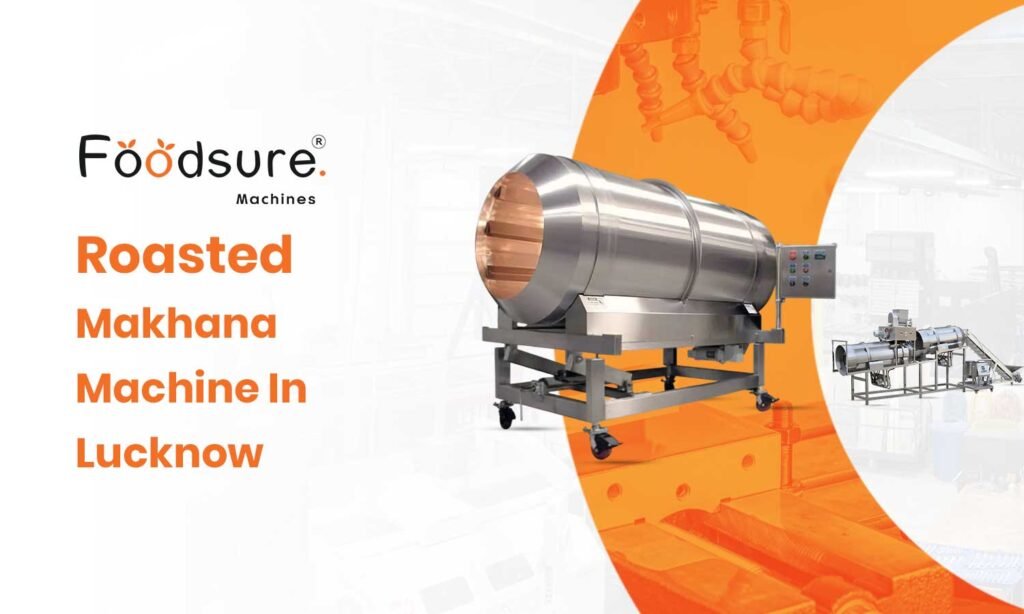
Roasted makhana machine in Lucknow has become the go-to choice for small manufacturers, FPOs, and local startups as the demand for healthy snacks keeps rising across the city and nearby UP markets. For anyone serious about scaling production, the first real step is choosing the right roasting machine. What this really means is finding equipment that matches your output needs, keeps the roasted makhana quality consistent, and stays within budget. When you look at the commercial roasted makhana machine in Lucknow, it’s not just about the price tag; it’s about long-term efficiency and how quickly you can recover your investment. Business Potential Of Roasted Makhana Machine In Lucknow Here’s the thing: the roasted makhana market in Lucknow is growing faster than most people realize. If you’re an FPO, startup, or small manufacturer, the numbers make the case clear. National demand is climbing: The makhana industry in India touched about INR 8.5 billion in 2024 and is projected to reach nearly INR 19.6 billion by 2033, with steady annual growth. UP is a natural hub: The state already produces around 4,000 MT each year and has easy transport links to Delhi, Punjab, and Bihar. That keeps supply consistent and logistics simple. Urban buyers are driving sales: More health-conscious consumers are picking roasted fox nuts as their go-to snack, with demand in India expected to grow at nearly 7% every year till 2030. Lucknow has a location advantage: Being central in UP, it’s positioned well for processing, packaging, and distribution. Room for entrepreneurs: Local FPOs and startups can tap into this momentum by investing in a commercial roasted makhana machine in Lucknow, keeping quality uniform, and meeting bulk demand from retail chains and national distributors. The bottom line is that the opportunity is already here. With the right automatic roasted makhana equipment and packaging, even a small unit in Lucknow can plug directly into the growing health snack segment. How To Select The Right Roasted Makhana Roasting Capacity Your success doesn’t just depend on buying an Industrial makhana roasting machine Lucknow; it depends on picking the right size for your goals. Small-Scale Units (10–20 kg/hr) If you are a startup, a women’s self-help group, or an FPO testing the waters, a small-scale roasted makhana machine Lucknow makes sense. It is easy to install and simple to run. You can serve local markets, supply nearby shops, and make a boutique snack brand without taking on too much yourself. This roasted makhana production equipment helps you learn the trade while keeping risks low. Medium-Scale (30–50 kg/hr) Now, if you are aiming bigger, say, supplying your district, partnering with organized retailers, and running a farmer-producer organization, a medium-scale commercial makhana roasting equipment setup is a smarter fit. These automatic roasted makhana equipment strikes a balance between investment and output. They give you better consistency, automation options, and enough volume to make reliable regional supply chains. Industrial-Scale (100+ kg/hr) For manufacturers chasing wholesale contracts, bulk supply, and export, the game changes. Here, an industrial roasted makhana machine becomes essential. These makhana machine manufacturer run continuously, consume less energy per unit, and deliver high volumes with fewer people on the floor. In a competitive healthy snack sector, this level of capacity isn’t a luxury; it’s the baseline if you want to stay ahead. How Much Does A Roasted Makhana Machine In Lucknow Cost? The makhana roasting machine price India depends on the capacity and type of setup you choose. Below is a simple price for commercial roasted makhana machines in Lucknow to help you plan better: Feature Energy Bar Machine Protein Bar Machine Mixing Handles light mixes like oats & fruits Built for dense, protein-heavy mixes Extrusion Standard forming/extrusion High-pressure extrusion Cooling Basic cooling tunnels Advanced cooling for heavy bars Coating Handles chocolate/yogurt coatings easily Needs precise control to avoid cracks Cost Lower investment Higher investment Best For Small/medium setups Large-scale, export-focused factories Customization Usually standard models Often customized for recipes Read more: District Spotlight: The Success Story of Makhana Processing in Rajkot Roasted Makhana Machine Installation And Local Manufacturing Support In Lucknow Users of the roasted makhana machine in Lucknow benefit from local installation and manufacturing support that keeps daily work simple. Quick Issue Resolution With local technicians available, any problem with your small-scale roasted makhana machine Lucknow can be fixed faster. This reduces downtime and keeps production steady. Smooth Installation & Setup Foodsure Machines provides complete installation support, ensuring your machine is calibrated correctly from day one. Operator Training Staff training is part of the package. Operators learn how to use the roasted makhana machine, maintain hygiene standards, and keep product quality consistent. Post-Sales Service Regular care, simple upkeep, and help fix problems, and make your roasted makhana production equipment last longer. Scalability Support Whether you are a startup, FPO, or large unit, local support makes it easier to expand production without worrying about machine reliability. Read More: Top 5 Makhana Machine Companies In India Ready To Start Your Roasted Makhana Unit In Lucknow? Starting a roasted makhana unit in Lucknow means checking market demand, choosing the right roasting capacity, knowing the cost of a roasted makhana machine in Lucknow, and securing local support. With Foodsure Machines, you get pre-sales guidance, smooth installation, post-sales services, logistics, and full manufacturing support to keep your unit running strong in the growing healthy snacks market. Get in touch with Foodsure Machines today! Reach out to us anytime via call or email. 📞 Call Us ✉️ Email Now FAQ 1. What is the cost of a roasted makhana machine in Lucknow? The cost depends on capacity and features. Small roasted makhana machines in Lucknow start at a few lakh rupees, while larger units cost more. 2. Which machine capacity is best for a startup in Lucknow? For a new business, a 25–50 kg/hour roasted makhana machine is usually the best choice. It keeps investment low and output steady. 3. Does Foodsure Machines provide after-sales support in UP? Yes, Foodsure Machines offers pre-sales
Village-Level Investment: 7 Questions Before Buying A Makhana Extrusion Machine Kit
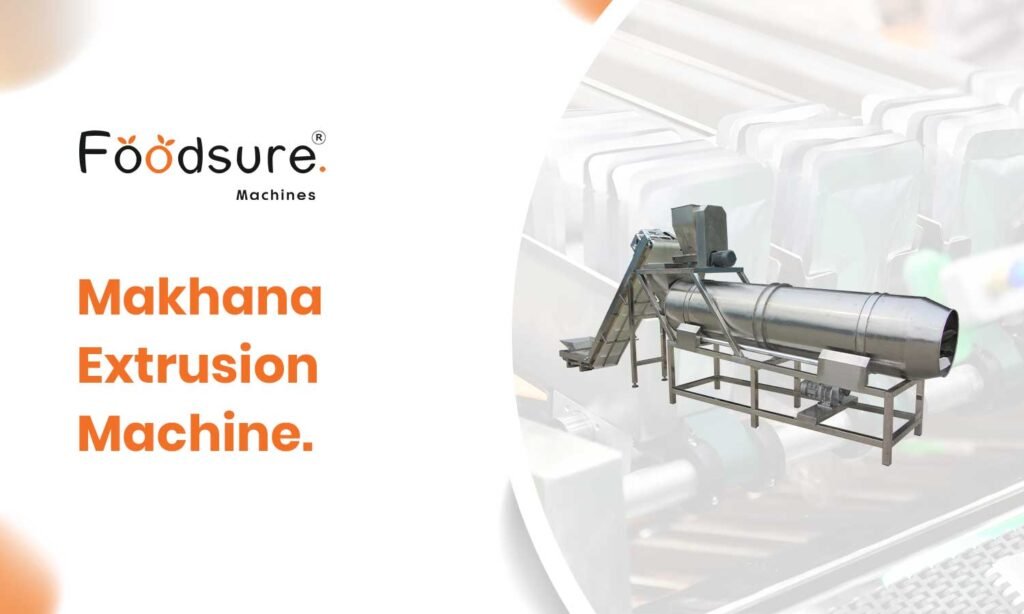
Thinking to buy makhana extrusion equipment for village use? Make a confident, informed purchase. The right makhana extrusion machine becomes the engine of your local business. Most first-time buyers focus on price or output and miss the deeper questions that actually matter, like how it handles your raw material, or if it fits your team’s current skill level. This checklist of 7 key questions will help you avoid expensive mistakes, choose smarter, and make sure your investment delivers results. Why The Right Makhana Extrusion Machine Matters For Rural Units Power isn’t always reliable. Your small-scale makhana processing machine should still run when the voltage dips or the grid gets shaky. That’s just the reality in many village setups. You won’t always have a big team. The makhana extrusion machine kit needs to be simple to operate; no engineering degree required. If two people can manage it, that’s a win. Every rupee counts. This isn’t about buying the cheapest machine. It’s about buying the one that actually works for your setup and makes every input count. The wrong machine won’t just slow you down; it can stop your entire operation. Small-scale makhana processing machine built for other contexts often fail in rural conditions. That leads to downtime, repairs, and frustration. You need a makhana machine kit that’s built for how you work, not how city factories work. Compact. Easy to clean. Minimal maintenance. Ready to run in real-world conditions. 7 Smart Questions Before Buying A Makhana Extrusion Machine Kit Let’s be honest: buying a makhana extrusion machine kit in India isn’t just about ticking specifications off a brochure. It’s about how well that commercial makhana extrusion machine for villages fits your real-world setup, your power supply, your team, and your pace of work. Too many people skip the right questions and end up with equipment that looks good on paper but fails on the floor. Let’s not do that. These seven questions will help you see clearly before you commit. Ask them now, and you will thank yourself later. Curious how real rural units are using the right extrusion kits to grow? The Success Story of Makhana Processing in Rajkot 1. Can Your Makhana Extrusion Machine Run on Rural Power? Most rural units run on single-phase electricity. Many commercial makhana extrusion machine for villages require three-phase power, which is harder to access and more expensive to install. Stick to low-power machines. Look for something in the 3–20 kW range that can run on single-phase or low-load three-phase. Power cuts are real. If the best makhana equipment for small-scale manufacturing kit can also run on LPG, you’ve got a solid backup that keeps work moving. Why it matters: You won’t waste money upgrading infrastructure or dealing with installation delays. You get a smoother start and fewer surprises later. 2. What Is the Hourly Output, and Can I Scale It Later? Hourly output isn’t just a specification; it’s how you match production to your actual goals. For most SHGs or FPOs, machines in the 25–100 kg/hr range cover early-stage needs. If you are planning batches of 25–50 kg at a time, make sure the kit delivers that efficiently. Ask how easily you can scale up later. Can you add a second line? Swap in a larger hopper? Automate a few steps? A scalable makhana extrusion machine kit means you don’t need to start from scratch when demand grows. 3. Will This Makhana Extrusion Machine Process Both Popped and Raw Makhana? More input options mean more sourcing flexibility. A best makhana equipment for small-scale manufacturing kit that processes both types gives you the freedom to work with whatever is available or affordable. Inflexible machines lead to real losses. Makhana extrusion machine in India that jams or overheats mid-run causes downtime you can’t afford, especially where tech help isn’t nearby. Look for smart design. Temperature control, moisture tolerance, and smooth extrusion matter. These are the things that keep your unit running batch after batch. 4. Can Semi-Skilled Workers Operate the Makhana Extrusion Machine? Makhana machines for rural use should be designed for first-time users, even for someone who’s never touched industrial equipment before. Clear buttons, labeled indicators, and direct instructions go a long way in avoiding mistakes and keeping things moving. The better suppliers, like Foodsure Machines, don’t just drop off the machine; they walk you through it with training that fits real village conditions. When machines are designed with people in mind, productivity rises and downtime falls without needing an engineer around. See it in action before you buy — Book a free demo 5. What After-Sales Service Is Available in My District or Block? On-site service matters. For installation and major issues, having a technician visit your unit is still the gold standard. But speed matters too. Remote support via phone support, video calls, or WhatsApp fixes can solve smaller problems fast without waiting days. Go with a supplier who does both. A smart support system combines hands-on help with quick digital responses. That keeps your machine running and your time protected. 6. Is the Machine Built with Food-Grade, FSSAI-Compliant Materials? Let’s be clear: material choice matters, especially when you are dealing with food. Stainless steel (specifically SS304) isn’t just a fancy add-on. It’s what keeps your makhana safe during processing. Some best makhana extrusion kit for production scale machines even come with CIP systems, Clean-In-Place, which means internal cleaning happens without taking the machine apart. That saves time, cuts down labor, and keeps things consistent. If you are aiming for quality, safety, and less hassle, SS304 and CIP compatibility aren’t optional; they are essential. 7. What’s the Total 3-Year Cost, Not Just the Purchase Price? Choose a vendor who plans with you. Local support, fair AMC pricing, and available spares keep things running and costs under control. Cost Component Year 1 (₹) Year 2 (₹) Year 3 (₹) Total (₹) Notes Machine Purchase Price 1,65,000 – – 1,65,000 One-time upfront investment AMC (Annual Maintenance) 0 12,000 12,000 24,000
How One ₹5.5 Lakh Packaging Machine Unlocked FMCG Retail Entry for a Startup
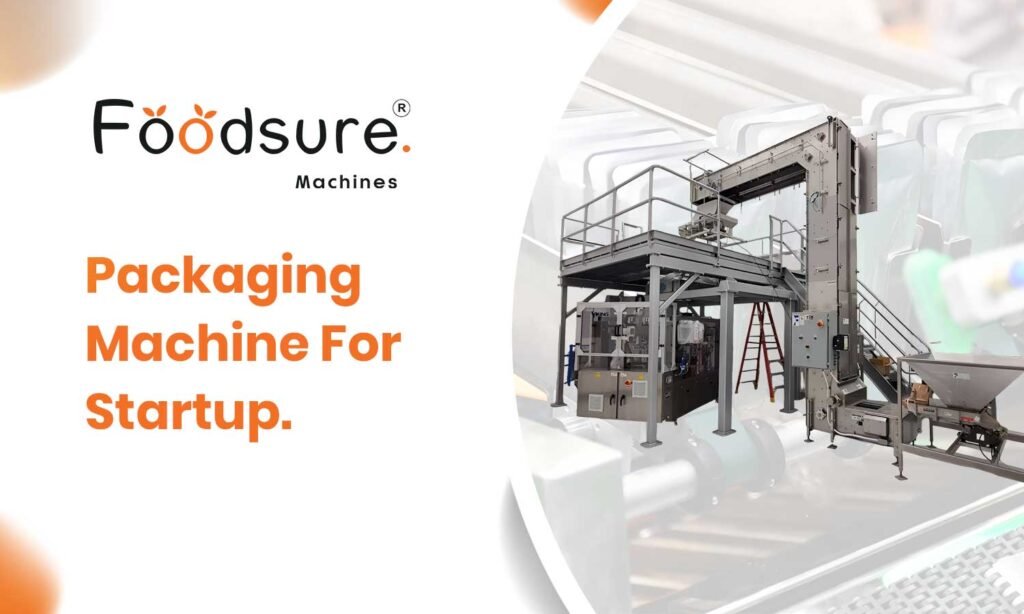
In just 45 days, one snack brand turned around its packaging problems and unlocked modern retail orders. The team wasn’t struggling with demand; they were losing out because of leaks, short shelf life, and missing batch codes. So they invested ₹5.5 lakh in a packaging machine for startup with nitrogen flushing. That one decision changed everything. Shelf life jumped. Returns dropped. Retailers who once said no started placing trial orders. It was the food packaging machine for small business that finally matched the product quality. Old Packing, New Problems: What’s Stopping Your Growth Here’s the thing: the product was solid, but the makhana machine packaging wasn’t pulling its weight. And the market noticed. Manual sealing caused trust issues The team was sealing by hand, which meant weak, uneven pouches. Some leaked, some just looked sloppy. That’s a big red flag for retailers. If it doesn’t look clean and reliable, they will not stock it, no matter how good it tastes. No nitrogen flush, no shelf life Oxygen stayed trapped inside every pouch. That sped up staling and caused the bags to puff. Distributors started seeing stale stock. A full 17% of what went out was coming back. You can’t scale with that kind of loss. No batch coding, no entry to modern trade There was no way to track when or where a batch was packed. That’s a non-starter for big retailers. Compliance needs traceability. Without coding, the product never made it past the first pitch. The fallout? ₹2.3 lakh in the finished product was rejected outright. 3 major retail deals gone. 17% of stock returned, unopened, due to bloated pouches. What this really means is: they didn’t have a product issue. They had a packaging bottleneck, and it was blocking growth at every level. Once they fixed that, the rest of the business could finally move forward. How a Smart Packaging Bet Unlocked Retail Growth Most food-packaging machine for small business don’t fail because the product isn’t good. They fail because the packaging can’t keep up. So they made one clear decision: fix the weakest link. Not with a massive factory overhaul. Just a smart, focused investment in a proper packaging machine for startup. And once that small scale vacuum packing machine was in place, everything shifted. Here’s how that single move unlocked growth: Vacuum + Nitrogen Flush Packaging Machine For Startup (around ₹5.5 lakh): We moved on from hand-sealing. This food packaging machine for small business packs up to 60 pouches per minute, gives reliable leak-proof seals, and keeps our product fresh by flushing out oxygen. It fixed our biggest shelf-life and quality issues in one step. Batch Coding Unit (approx ₹25,000): Retailers want traceability. Without batch codes, we weren’t even considered. This food-grade vacuum sealing machine add-on unlocked access to organized retail and helped us tick all the compliance boxes. SS304 Hygienic Contact Parts: Every part that touches food is stainless steel, food-grade SS304. It’s non-negotiable for hygiene, and we didn’t cut corners. Delivery and Training (around ₹18,000): Our team handled everything delivery, installation and full staff training. We were up and running in 15-20days. Other Costs: GST and packaging materials weren’t included, and they vary by region and suppliers. But the core small scale vacuum packing machine gave us what we needed to stop losing money and start scaling. What This Really Meant for the Business We stopped bleeding money on spoiled stock. Returns dropped, shelf life improved, and every pouch looked consistent and retail-ready. Modern trade buyers finally took us seriously. We weren’t blocked at the packaging gate anymore. Instead of apologizing for our finishing or shelf life, we could focus on growing the brand. 45 Days to Retail-Ready Packs and Fewer Returns It took 45 days. Once the right packaging machine for startup was in place, things moved fast. Quality shot up. Complaints dropped off. Retailers stopped hesitating, and buyers started coming back. Let’s break it down with real numbers: Metric Before After Shelf life 30–40 days 90+ days Output 250–300 pouches/hr 3,600 pouches/hr Labour 3 people 1 operator Complaints Frequent Near zero Cost per pouch ₹3.12 ₹2.73 Returns/losses ₹18,000/month ₹1,500/month Distributor reorder rate 62% 91% Monthly revenue ₹1.4 lakh ₹3.2 lakh (in 3 months) Speed, Shelf Life, and Sales: Why the Right Machine Changed Everything Built for Hand-Packing Units: Ideal for small to mid-sized brands, makhana machine, peanuts, chana, or foxnuts by hand. It helps move from basic sealing to automated packaging without over-investing. Affordable Nitrogen Flushing: Adds nitrogen flushing essential for long shelf life and freshness at a price much lower than the ₹10–15 lakh industrial setups. That means protection from spoilage without overspending. Meets Retail & Export Standards: Includes batch coding and food-grade vacuum sealing machine hygiene to help you meet modern trade and export compliance, with no more disqualifications over packaging. Solves Common Packaging Problems: Say goodbye to weak seals, puffed pouches, and high return rates. This packaging machine for startup improves consistency and shelf appeal without increasing your team size Foodsure Machines Our team at Foodsure Machines stepped in with a ₹5.5 lakh vacuum and nitrogen flush packaging machine for startup that did 60 pouches a minute. We didn’t just drop off the machine; we installed it, trained their team, and made sure it was compliant and clean. That single move fixed returns, improved shelf life, and gave the startup the packaging standards big retailers actually expect. Ready to Make Your Product Retail-Ready? Contact Foodsure Machines at your convenience via phone or email. 📞 Call Us ✉️ Email Now FAQ 1. How did the ₹5.5 lakh packaging machine solve the startup’s key challenges? It replaced hand-sealing with automated vacuum and nitrogen flush packaging. That stopped leaks, cut down returns, and gave the product a longer shelf life. Adding a batch coder meant each pouch met traceability norms, no more rejections from retailers. 2. Why is compliance with packaging regulations critical for FMCG retail entry? Without proper batch codes, labels, or food-grade packaging, most retail
Everything You Should Know Before Buying an Energy Bar Machine
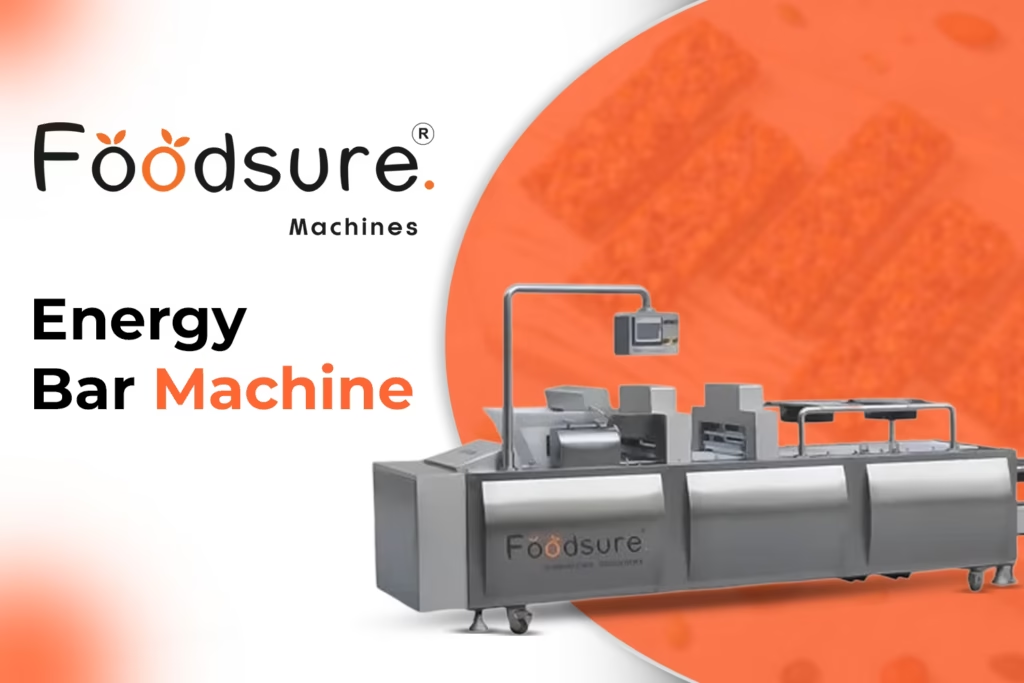
Many people in India are now gravitating towards energy bars as a snack choice, and entrepreneurs are eager to satisfy that need. The main challenge is scaling production without sacrificing quality or speed. An energy bar machine allows you to leverage your tasty snack for a consistent source of income. Energy Bar Market Insights Every Manufacturer Should Know Energy bars are rapidly growing in India as part of the overall rise of healthy snacking, a trend driven by increasing consumer awareness about nutrition and fitness. Industry forecasts expect the healthy snacks sector in India to continue to grow at over 7% CAGR to beyond 2030 as urban consumers increasingly shift to practical, protein-based energy bars that can conveniently fit into their active lifestyles. Besides, growing disposable income, wellness trends, and lifestyles have also positively influenced the growth of the demand for energy bars with clean-label or natural-based ingredients. What is an Energy Bar? Energy bars are combinations of nutrients, and they are an easy, quick form of energy, protein. Energy bars can be put into three types: protein bars (high protein, low sugar), cereal bars (high protein and fiber with whole grains), or health & energy bars (vitamins or minerals or other functional ingredients). Problems Every Manufacturer Faces in Energy Bar Production Manual handling results in inconsistent quality with textures and taste, which could affect brand image. Small batch production capacity has struggled to keep up with demand in growing markets. Labor costs are high because operating in a manual way decreases profit margins. Shelf-life issues arise when energy bars are not made, packaged, or stored properly, resulting in bar spoilage. An automated snack bar production line with bar machines will facilitate consistent output, increased throughput, improved shelf-stability, and considerably reduced labor and operating expenses. Energy bar manufacturing equipmentfor the energy bar industry will also allow startups to resolve some of the toughest challenges. How an Energy Bar Machine Solves Production Challenges It achieves full automation of the snack bar production line process from mixing, filling, and packaging at the highest efficiencies and levels of scalability. Produces energy bars of the same size and flavor, ensuring both quality and consistency. Nutrition bar manufacturing is able to produce hundreds of energy bars each hour to satisfy the increasing consumer demands in the marketplace. Significantly reduces manual labour and human errors to assist in lowering labour costs. Snack bar equipment is constructed with food-grade stainless steel to safely and hygienically handle the food. 100% able to suitable for both small-scale and large producers with fully automated lines and processes. Programmable controls to allow the operator to accurately control the process from mixing, extruding, cutting, and cooling. Energy bar equipment helps reduce waste and allows for maximum shelf life to deliver a longer product through processing, and reduces packing processes. A utility with a recipe bar allows for variability in the product capabilities produced. Energy Bar Making Process: From Ingredients to Packaging 1. Ingredient Blending Industrial mixers thoroughly blend protein powders, oats, nuts, sweeteners, and binders into a consistent dough. This ensures an even distribution of nutrients, taste, and texture, all critical components to consider for preparing pre-made orders in bulk. 2. Extrusion/Forming Snack bar equipment extrudes dough into various sizes and shapes, and directly forms it into bars. This process creates standardization in size and weight. This process allows for ensuring consistent dimensions for the prepackaged bars, while providing flow and scale for the whole process, for consistent expected production outputs. 3. Bake Off or Cooling Process The bars are baked or cooled depending on the recipe. Baking is to develop and strengthen the final texture and durability for shelf-life, while cooling ensures heat-sensitive nutrients are preserved and intact. This process is where the final texture, firmness, and stability of the bar are produced. 4. Energy Bar Packaging Machine The bars are placed on conveyor belts and transferred to automated or manual pack lines. The bars are either individually flow wrapped or packed in a box. Properly packaged for the consumer, the final product will help keep it safe for the consumer, protect it from contamination, and enhance the visual appeal of the product. Understanding the Energy Bar Manufacturing Plant Cost Item Description Estimated Cost (INR) Notes Energy Bar Machine Small-scale to semi-automatic machine 2,50,000 – 7,50,000 Depends on capacity & automation Installation & Commissioning Set up at the facility, calibration, and initial training 20,000 – 50,000 One-time cost Optional Accessories Molds, cutters, wrappers, ingredient hoppers 15,000 – 60,000 Optional, depending on production needs Electricity / Power Monthly power consumption 3,000 – 8,000 Based on machine size and usage Labor Operators/helpers 10,000 – 25,000 per month For small production units Other CAPEX Tables, storage, safety equipment 25,000 – 50,000 One-time investment Total Estimated Setup Cost CAPEX + First 3 months OPEX 3,23,000 – 8,93,000 Varies by scale and location Conclusion At Foodsure Machines, we aim to make life easier for small manufacturers and businesses to produce energy bars in an efficient and cost-effective manner. Our nutrition bar manufacturing will equip your business with the ability to produce a quality energy bar in volume and with limited labor at an excellent return on investment and at one of the best prices in the country. What are you waiting for? If you are ready to start selling your energy bar production, we can help you start production today and grow your business! Have a Question? Let’s Connect! Please reach out to us anytime via phone or email. 📞 Call Us ✉️ Email Now FAQ Q1. What market entry exists for the energy bar machines market in India? Ans: There is a growth momentum happening in the energy bar market, and therefore, there is a market entry opportunity for energy bar machines to assist small producers and new entrants in optimizing their production time. Q2. What nutrition bar making machine is best for small producers in India? Ans: A small semi-automatic machine from a solid manufacturer and brand, such as Foodsure Machines, is your
Everything You Need to Know About Non-Dairy Whipping Cream Machine
Your customers expect perfection from you. Does your whipping cream keep up? Running a bakery, cafe, or food unit is challenging when you depend on manual labor. The result? Lumps, delays, and uneven textures that cost you time and quality. A Non-Dairy Whipping Cream Machine changes that, giving you perfect results every time. That machine is designed for speed, hygiene, and even texture. It helps your business grow faster without affecting quality. What is Non-Dairy Whipping Cream? Non-Dairy Whipping Cream is a simple plant-based option to dairy whipping cream. It is especially for those with allergies and for vegans. It is a product that does not contain any milk fat and comes from plant source oil, which is often coconut oil, palm kernel oil, and soybean oil. It also contains water, sweetening agents, texture agents, mixing agents, and proteins (plant protein, or milk proteins), and depending on the vegan formulation, they may not contain any proteins at all. The fat found in Non-Dairy Whipping Cream will generally be comparable to the dairy cream range of 20–25%, as it was always higher before, but now some Non-Dairy Whipping Cream versions are available in less than 20% fat. If you are going to use non-dairy whipping cream, especially in commercial environments where large quantities are needed. The non-dairy whipping cream machine is essential for you to get the best results. The Struggles of Making Non-Dairy Whipping Cream Without a Machine Making non-dairy whipping cream by hand is far from easy. The air mixing of creams must be performed with such precision to maintain air mixing for stability; therefore, the outcome in each case using a hand whisk may differ from another time, dense or flat (just due to the manual method). Now think about that larger scale. Larger batches take a lot of time, reduce the time in production, and depend on skilled employees who watch each batch closely and handle it with care. If the whipping is allowed to go too long, the cream splits. If you purposely try not to whip too long, the cream is runny, and in either case, you lose cream or money. All this to say that manual methods can be a serious barrier at scale, and they have no consistency as needed for food businesses. That is why commercial non-dairy whipping cream machines are used in commercial kitchens. How a Non-Dairy Whipping Cream Machine Can Transform Your Business Purchasing a commercial non-dairy whipping cream machine is not merely automating production. It also means more production with less cost, while keeping customers satisfied. Think of it as a more quality, labor savings, and customer satisfaction: Higher Output – An whipping cream manufacturing plant enables a consistent whip that entails a larger batch, which is accomplished in minutes, which means serving more customers with fewer interruptions. Quality – You consistently received a smoother, stable batch every time you whipped. Labor savings – You reduced productive labor, which also means you did not require a skilled team of laborers using mixers for whipping. A simple automatic whipping cream machine means you will have one operator and the whipper, which means less labor costs and capacity for errors. Customer satisfaction – Consistent cream means consistent toppings, fillings, and decorations, as consistent in the food product also results in goods looking and tasting good, and repeat customers. At the end of the day, it allowed you to increase your production while keeping sanitation and placement as a reliable source in your area and other markets. The Working Process of a Non-Dairy Whipping Cream Machine Add cream: You start with your base of non-dairy cream with added cold and whip parameters in your polished stainless steel container. Set parameters: Next, you enter your whipping parameters (speed, time, and cooling temperature) for your desired texture. Automatic whipping: After that, the automated non-dairy whipping cream machine proceeds to whip using controlled air mixing to ensure that you remain at the right volume, and the texture is consistently smooth. Output cream: At the same time, when you are whipping, the temperature is maintained so that the product quality is consistent and safe. Once the cycle is complete, the whipping cream manufacturing plant cost is ready to serve immediately into cakes, desserts, pastries, or drinks, with no rework and little manual labor. The Real ROI of a Non-Dairy Whipping Cream Machine Cost Factor Without Machine (Manual/Semi-Manual) With Machine (Automated) Savings/ROI Impact Initial Investment Low (hand mixers ₹10k–₹20k) Moderate (₹3–6 lakhs avg.) Higher upfront, but scalable Labor Cost / Month ₹60,000–₹80,000 (3 skilled staff) ₹20,000–₹25,000 (1 operator) Saves ₹40k–₹55k/month Production Capacity / Day 10–15 liters 50–100 liters 4–6x more output Ingredient Wastage 8–10% (splits, over-whipping) 1–2% (controlled air mixing ) Cuts wastage cost Electricity / Month ₹3,000–₹5,000 ₹6,000–₹8,000 Slightly higher, offset by savings Consistency & Quality Unreliable Uniform & stable Boosts customer loyalty Payback Period — 6–12 months The machine pays for itself fast. Conclusion At Foodsure Machines, we understand that our industrial non-dairy cream machine is a vital resource for bakeries, cafes, and dessert companies who want to expand and streamline their daily operations. Here’s the deal: our whipping cream making machine do not just make whipped cream but can offer consistency, make production easier, and provide you with an early return on investment. FAQ Q1. What does a non-dairy whipping cream machine do? Ans: Here’s the thing: it takes non-dairy cream and whips it fast and evenly. Every batch comes out with the same smooth texture and consistent volume, even for large quantities. Q2. Why use a non-dairy whipping cream machine? Ans: It also saves your time, reduces manual work, and reduces mistakes. What this really means is you get high-quality, even whipped cream, without constantly checking the process. Q3. How is non-dairy whipping cream different when whipped with a machine or manually? Ans: A machine controls speed and air mixing earlier. The result is fluffy, uniform cream every time. Manual whipping is slower and often uneven. Q4. Who benefits most from a non-dairy
The Real Difference Between Dairy and Non-Dairy Whipping Cream
Dairy and non-dairy whipping cream, which is right for your recipes? Some are rich and buttery, while others will whip up faster and have a longer shelf life. Dairy whipping cream has a natural flavor, but non-dairy alternatives avoid separation and can create consistency and ease of use in your recipes. Each one brings something unique to recipes that delivers on both taste and texture. What Is Dairy Whipping Cream? Dairy whipping cream is made from cow milk and contains at least 30 percent dairy fat. It is the fat in cream that creates a creamy texture, smooth mouth feel, and support for soft peaks. It is also the reason that cream has a rich texture and holds its smooth consistency for desserts, drinks, and baked goods. Some products intended for commercial purposes may have texture enhancers, mixing aids, and other ingredients to attain consistency and shelf life. It is primarily fresh cream, more or less, and the fat does everything else. It is a true dairy product and will impart true dairy flavor with a classic dairy brand mouthfeel, which can be bested by plant-based options. What Is Non-Dairy Whipping Cream? Non-dairy whipping cream is an alternative to traditional whipping cream that is plant-based. This would be used for whipping and decorating cakes, pastries, and desserts. Non-dairy products are typically made with vegetable oils, water, added sweeteners, and blending agents, thickeners, and some non-dairy whipping creams having added plant or milk proteins for body and performance. The advantages of working with a non-dairy whipping cream are that it will hold its shape. The non-dairy whipping cream will typically have a good shelf life, and you will get consistent results in the busy environment of a kitchen. Additionally, it is a product that is safe for someone who is dairy-sensitive and safe for someone living a vegan lifestyle. The point is, these products are multi-use enough to be used in baked goods and restaurants. And also allow you to have the same stability and visual presentation. The Nutrition Difference Between Dairy and Non-Dairy Creams Dairy whipping cream is made from milk fat and is typically 30 to 36% milk fat. Beyond the fat richness, it also contains natural protein, calcium, and natural vitamins A, D, and B12. The challenge is that it has a bit more calories, saturated fat, and cholesterol. Non-dairy whipping cream takes a different approach. It is made from vegetable oil, which usually allows for lower levels of saturated fat and cholesterol as well. The disadvantage of most non-dairy whipping cream is that added sugars, maintain consistency, and blending are often added to create the depth of flavor and texture that dairy cream provides. Most non-dairy whipping cream is likely not to have some of the natural vitamins and minerals that some dairy whipping cream will have, but it is a vegan and lactose-free alternative to dairy. Key Nutrition Differences Dairy cream whip cream -It is higher in protein, calcium, and natural vitamins, but higher in saturated fat and cholesterol. Non-dairy whipping cream– generally have lower saturated fat and cholesterol, but it can have sugar added or other ingredients that are artificial. Non-dairy products usually have lower naturally derived nutrients, but it is animal-free and ok for lactose-free diets. Why Non-Dairy Whipping Cream Is on the Rise The growing acceptance of dairy and non-dairy whipping cream is on an rise and is projected to reach a value of USD 1.27 billion in 2025 and USD 2.19 billion in 2035. This assumes the consumption trends will follow a yearly directed pattern of growth of around 5.6%. The past five years (2020-2025) have seen the growth of non-dairy whipped cream at around 5.3% and will continue to experience growth until it peaks and levels off. A large portion of the growth is coming from the dairy-free whipped cream market. New consumer preferences for vegan and plant-based foods are on the rise, and lactose intolerance and allergy concerns offer another reason to market to those who may be looking for a product that aligns more closely with their dietary requirements. Moreover, there is an increasing group of health-driven consumers who like that non-dairy whipped cream typically has less saturated fat and less cholesterol than dairy whipped cream. Non-dairy whipped cream also lasts longer, holds better when baking/decorating, and is more convenient to the end-user when cooking in busy kitchens, in comparison to whipped cream made from dairy. Brands have also improved flavor and texture, making non-dairy whipped cream just as rich as a whipped cream made from dairy. Non-dairy whipped cream is no longer a targeted product, but is quickly becoming the “cream of choice” for more bakers, restaurants, and home cooks, and will continue to grow. How to Produce Whipping Cream Using a Machine The process of whipping cream using machines involves several steps. The cream used for this is a cream with a fat content of 30-36%, which is first treated for safety to destroy any bacteria. Then it is uniform to reduce the fat particle size and develop smoothness and evenness of texture. Following this, the cream is then matured, refrigerated at about 4-5 °C for a maximum of 2 to 4 hours, to enable potentially more effective/stronger fat setting during whipping. While traditional methods may use the whipping stands with beaters, industrial machines will process this to provide a whipped cream product in batches, or through an inline continuous method. If this cream has been whipped, you are preparing a soft and airy structure like whipping cream, at approximately 7-12 °C to maintain stability. This includes multiple optional stabilizers and emulsifiers, which will help hold the product together in order to maintain stability and a longer shelf life. The cream will then be released from a hygienic space and placed into a whipped cream can or container. At this point, all packaging will occur in the hygienic space, and all storage will happen inside the sanitized zone until the cream is recognized as ready for
How Bakeries Are Scaling with a Non-Dairy Whipped Cream Plant in Delhi NCR
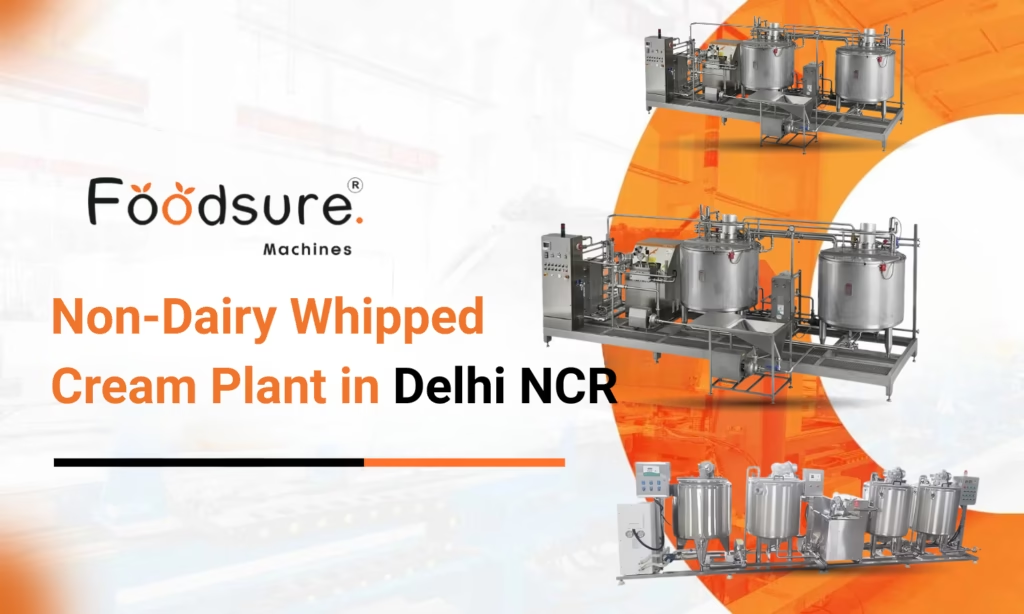
Just a few years ago, bakers in Delhi NCR were struggling to meet the increased demand for light, stable whipped cream. Now, the situation has completely changed. With the availability of non-dairy whipped cream, bakeries are growing at rates that people would never believe. They have even textured whipped cream that makes every cake and dessert great. What Is Non-Dairy Whipped Cream? Non-dairy whipped cream is simply whipped cream without dairy. It may be made from plant sources like coconut, almond, and soy. Non-dairy whipped cream is light and fluffy and can be useful for everyone for any reason when someone wants to avoid dairy. But what does all that mean to any of us? It means you can have the creamy texture without the lactose, it has a longer shelf life, and you don’t have to worry if you are baking correctly. Why Non-Dairy Whipped Cream Demand Is Growing in Delhi NCR The Delhi NCR market continues to have an active interest in vegan whipped cream. There has been an increased awareness by consumers of health and eating habits and interest in vegan or lactose-free products, and the dairy-free whipped cream market is anticipated to continue to increase from USD 3.52 billion in 2025 to USD 5.2 billion in 2035, respectively, a projected CAGR of 3.9%. The bottom line is this: the bakery sector within the Delhi NCR market is doing a lot of heavy lifting in this space. Food manufacturers can no longer count on traditional dairy cream to meet the market demand. This is where a non-dairy whipped cream machine comes in. It gives consistent production of plant-based cream on-site, maintaining quality and texture without depending on pre-packaged products. How a Delhi NCR Bakery Overcame Its Non-Dairy Whipped Cream Challenges In the Delhi NCR region, a bakery business focused on quality cakes and pastries to order. A lack of trustworthy supplies of whipped cream has made filling orders very challenging. Not to mention the many issues with the cost and shelf life of whipped cream. Which have been a headache to the supply chain, and is growing an already confusing situation of using imported cartons that do not allow a stable local supply. Partner with the local non-dairy whipped cream facility In 2023, the bakery partnered with a facility for producing local plant-based whipped cream in the Delhi NCR region with support from Foodsure Machines. With setup and supply, it was able to offer an affordable and dependable plant-based whipped cream that had true demand and supply of local cream. Final Results: Order delays were down by 20%. Whipping cream manufacturing plant cost reduced by 15% in 3 months. Shelf life increased from 3-4 days to over 10 days. Key Takeaway: The bakery has dependable local cream that allows the bakery business to focus on new ideas and the customer experience. Bakeries in the Delhi NCR region with non-dairy whipped cream available in local supply. It will begin to open capacity for small-scale production facilities that are both long-lasting and productive. How a Non-Dairy Whipped Cream Plant in Delhi NCR Supports Bakery Success Trustworthy Supply of Regional Product: The soy-based whipping cream suppliers in Delhi NCR provide a guaranteed long-term local supply of plant-based whipped cream to replace the imported cream substitutes. Our ability to offer a local product removes the need for imported products. Actual Cost Savings: When you do the whipping cream process in-house, it saves you from the burden of all logistics and duties by not bringing in the product. This means a huge improvement in profit margins for bakeries, especially smaller to medium-sized bakeries, while maintaining the same quality. Food Safe Hygienic Equipment The equipment is stainless steel with sanitary specifications. The machines will meet the highest food safety standards, and also build customer confidence. Extended Shelf Life Locally made whipping cream can stay out longer with less waste. The actual shelf life for whipped cream is, in fact, significantly longer, so that means you keep more of the profits. Scalable Production The way the non dairy whipping cream in india works is that it works in small batches, for example, for a cloud kitchen, and it is scalable to an industrial level. You can increase production volumes to meet demand. Conclusions In the Delhi NCR area, we are the trustworthy choice for machines for non-dairy whipping cream. With our experience, we help you all the way through from pre-sale consultation to installation and post-sale service. This results in your bakery having the ability to grow, maintain quality, and the knowledge that we confirm the supply side for you. When you really need a complete solution, go with Foodsure Machines. Speak to an expert today to take your bakery’s production to the next level! Have a Question? Let’s Connect! Reach out to us anytime via call or email. 📞 Call Us ✉️ Email Now FAQ Q1: In a machine for making non-dairy whipped cream, what is the process involved in making whips? Ans: The non-dairy whip machine is really a machine that has plant-based components. It incorporates and aerates at the perfect incorporation temperature, which gives you the non-dairy whipped cream every time. Q2: Is non-dairy whipped cream healthy? Ans: Of course, a plant-based option without dairy is typically lower in cholesterol. Thus, it is healthy for vegans or any person looking for an alternative to whipped cream that has fewer calories, is healthier, and tastes better. Q3: How long can we store non-dairy whipped cream? Ans: When ingredients are loosely manufactured and set up correctly at a temperature, non-dairy whipped cream will last 10 days in your refrigerator. Again, it’s a nice way not to just limit waste but provide some ease of use for a bakery to establish production and community demand. Q4. What is a dairy-free substitute used in a Non-Dairy Whipped Cream Plant? Vegetable oils, stabilizers, and plant-based proteins are commonly used. Q5. Can a Non-Dairy Whipped Cream Plant produce fully dairy-free whipping cream? Yes, the plant is
The Complete Guide on How to Make Makhana for Commercial Success
For generations, makhana has been part of traditional diets. Today, it’s finding a fresh place in modern lifestyles as a healthy, crunchy snack. For people who are looking for healthier options, makhana is one of the best choices for them. The popularity of makhana is rising, and it opens big opportunities for those who want to grow their business. With advanced makhana-making machines giving you a smoother production, this healthy snack is reaching more health-conscious consumers worldwide. Every snack break is a healthy crunch with Makhana. In this blog, we tell you about how to make makhana, and why it is becoming a popualr snack. What is Makhana and Why It’s Becoming a Popular Snack Makhana is also known as fox nuts, and it grows in ponds and lakes where the water remains calm and the temperature is warm. Pond lily plant seeds are small and black at first, and then they slowly start to turn white. Also, makhana is full of nutrients that are good for your heart and bones, digestion, and also controls your blood sugar management. Makhana Made Of Nutritious Crunch That Everyone Loves Makhana is mostly made up of carbohydrates, which are about 77 to 79 percent. It is a light snack that gives you energy without making you feel heavy. It has many minerals like magnesium, potassium, calcium, and more. These are important for your heart health and bone strength in good shape. How is Makhana Made: The Step-by-Step Process Behind the Perfect Snack Step by step, so you can see how makhana goes from the pond to the packet. Harvesting & Cleaning The first step is for farmers to collect seeds from shallow ponds using nets. They usually collect the seeds early in the morning when the weather is best. This helps keep the seeds fresh and of good quality. Drying and Grading After cleaning, the seeds are arranged in the sun for a couple of hours. This helps to reduce moisture in the seeds, which prevents wastage of seeds and makes the seeds easier to roast later. Now, they are sorted by size using different grading tools. Pre-heating and Tempering Next step, the seeds are started to heat in cast-iron pans. After heating, the seeds are left to rest for 40 to 72 hours. This helps the inner seeds separate, which makes roasting work well. Roasting and Polishing The makhana are roasted at a set heat so they cook evenly. This brings out their natural flavor and makes them crunchy. How to Grow Your Makhana Production with Ease Scaling makhana production is not easy, even though demand is increasing. Many processes are still done manually, which results in makhana of inconsistent quality and also creates hygiene problems. Limited tools and guidance make it tough to maintain standards and improve production. The supply chain is not connected, which lowers farmer incomes and makes it harder to meet export rules. What this really means is that without better tools, training, and organization, growth is held back. Investing in equipment, skills, and market connections is essential to make your producers scale. How to Make Your Makhana Business More Profitable Using the right machines and simple steps helps you grow your makhana business without extra hard work. There are machines for grading, roasting, and packaging that make the seeds more even and cut down on manual labor. Tools like moisture meters and filters check that the seeds are the same size and have the right amount of moisture, which is needed to meet market rules. Roasting with less energy helps you save money while keeping the product good. Training programs teach small producers how to use their machines better and improve their work to get the best results. Conclusion If you want your makhana business to grow and meet the rising demand of the market, then getting the right process is key. At Foodsure Machines, we provide a full range of equipment for grading, roasting, polishing, and packaging. What this really means is that our makhana machines help you keep quality consistent, cut down on time, and reduce the hard manual work that slows production. Power Your Makhana Business with the Right Machine – Connect Today! Have a Question? Let’s Connect! Reach out to us anytime via call or email. 📞 Call us✉️ Email now FAQ Q1. Can makhana be good for your health? Ans: Yes, makhana is full of nutrients that support your heart, bones, and digestion. Also, it is a simple snack that actually helps you stay healthy. Q2.Can makhana help with weight loss? Ans: Makhana is low in fat and light on your stomach. It is a snack that fills you without adding extra calories. Q3. How does makhana help people with diabetes? Ans: What this really means is makhana can help keep your blood sugar levels under control while giving you a healthy, tasty option between meals. Q4. How to identify good quality roasted makhana from a machine?Ans: A good machine delivers uniform color, crispness, and minimal breakage. Q5. Who is the biggest supplier of roasted makhana machines in Mumbai?Ans: Mumbai’s industrial distributors and food-processing OEMs lead the supply. Q6. Why are roasted makhana machines expensive now?Ans: Advanced heating tech and stainless-steel builds have increased costs. Q7. How to start a roasted makhana processing unit in Mumbai?Ans: Begin with a quality roasting machine, proper space, licensing, and packaging setup. Q8. What is the cost of roasting 100g of makhana in a machine?Ans: It costs very little since machines are energy-efficient per batch. Q9. Which food-processing business is most profitable with roasting machines?Ans: Makhana roasting is among the most profitable due to high margins. Q10. What is the profit margin using roasted makhana machines?Ans: Profit margins often stay high because roasting costs are minimal. Q11. How many makhana pieces can a 1kg roasting machine handle per batch?Ans: Around 1,500–2,000 pieces depending on size. Q12. What license is required for a roasted makhana unit in Mumbai?Ans: A basic FSSAI food license is typically required.
Advanced Roasted Makhana Machines in Mumbai
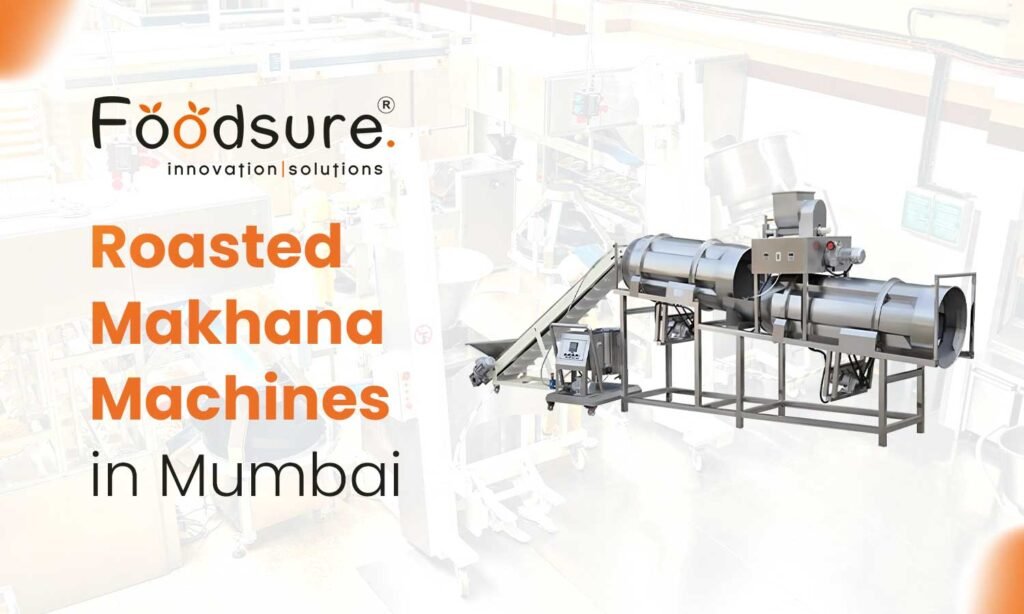
Roasted makhana machines in Mumbai are most effectively produced to meet the needs of the city’s developing food processing industry. These machines provide heat control with a crunchy texture that has made them famous in the world. Mumbai is growing fast in every way, including the love for healthy snacks like roasted makhana. If you’re someone planning to start or grow your makhana business, having a roasting machine can make a big difference. It saves time, gives you better quality, and helps meet demand smoothly. In a city like Mumbai, where speed and scale matter, a makhana machine is not just helpful—it’s a smart move. Why Mumbai City Is The Best Place To Scale With Automation? Mumbai is one of the best cities to grow your business. The city already has a powerful industry setup and big events like Automation Expo 2025—India’s biggest and Asia’s leading automation trade show. It brings together over 1,000 exhibitors and 50,000+ professionals from across the globe. These makhana machines are globally famous in the world. Mumbai’s automation space is wide; it covers a massive part of the food processing industry. Businesses here benefit from innovations like advanced machines, process control, and machines that help improve speed, quality, and texture. Another plus point: Mumbai is also moving towards eco-friendly automation. And let’s not forget the talent. Mumbai has skilled professionals and support from industry experts. That’s why many companies choose Mumbai to start or expand automation—it’s easier to meet the right people and explore the food processing industry. Roasted Makhana Machines In Mumbai For Fast Quality Production As food entrepreneurs, snack brands and commercial kitchens mainly focus on healthy products for their audience. Old-time traditional manual roasting methods are slow, require a lot of effort, and can result in unevenly roasted batches. These roasted makhana machines in Mumbai are made for modern snack producers. In case you’re a small local brand or growing to meet market demand, makhana machines in Mumbai are developed to handle massive quantities without compromising on quality. These machines have advanced features like automatic temperature control, roasting many batches at once, and saving energy. The popularity of roasted makhana in Mumbai is limitless for health stores. Many food startups are now investing in makhana machines for better production. And machines like these are making it possible. Manual To Modern Transformation of Roasted Makhana Machines In Mumbai Makhana roasting machines are reshaping the way makhana is manufactured, mainly for health-focused snack brands and commercial kitchens. Here’s an effortless, in-depth look at real impact, and why these machines are a milestone for makhana businesses in Mumbai and outside. High-Quality Roasting Every Time: Manual roasting makes uncooked or overroasted snacks, and also takes a lot of time to make makhana snacks with a lot of work, and even the taste doesn’t meet the authentic flavor that the market demands. Makhana roasting machines in Mumbai use automatic temperature control and uniform heat distribution to roast every batch evenly. These roasting machines give a taste of crunch and high nutrition for a healthy diet. Faster Production and Higher Efficiency: Makhana roasting machines in a single time provide a large quantity which gives growth to production. You can achieve your goals without delay. Automation reduces the need for constant manual attention, makes work easier for labor, and cuts down working hours. Energy and Cost Savings: Modern makhana roasting machines are designed to be energy-saving. Features like low-power and temperature controls give low electricity consumption with high quality. This helps improve profit margins by streamlining operations Improved Hygiene and Food Safety: Roasting machines are automated, which means snacks are made without human contact, which lowers the chances of getting germs in a product. These machines are safe, stainless steel, and easy to clean. Heat Control at your fingertips: The makhana machine includes temperature control and time environment, giving full control with proper texture, whether it’s a light crunch or a deeper golden flavor, its taste sets a vibe with endless growth. Technical Structure of Makhana Roasting Machines Roasted Makhana machines in Mumbai are built differently; they give you all the features in one machine and even save your energy, and also boost your production. When we think about roasting makhana in bulk, it’s not just about heat. It’s about consistency, control, and saving time without compromising on taste or quality. And that’s exactly what a well-designed makhana roasting machine does — it works smart, not hard. Feature Start-up Machinery Commercial Machinery Automation Semi-Automatic Fully Automatic Capacity 10 – 50 kg/hr 50 – 500 kg/hr Power Load 6 – 10 KW 10 – 65 KW Area Required (sq ft) 500 – 800 sq ft 800 – 10,000 sq ft Machine Size (L x W ft approx.) 8 x 4 8 x 4 to 200 x 12 Material of Construction (MOC) SS 304 SS 304 Read More: Top Makhana Machines Company India Biggest Challenges and Solutions for Makhana Machines In Mumbai Mumbai’s makhana faces several unique challenges as it affects machine-based automation, but there are also practical solutions that can help businesses grow efficiently. Quality Control Ensuring ideal sizes, textures, and flavors is difficult with manual labor. Inconsistent roasting or popping can lower product quality and market value. Solution Makhana Machines gives you the ideal shape with different tastes like peri-peri, pudina & more, and eventually it improves business growth even if you are new in a market that matches your vibe. Labor-intensive Harvesting The initial collection of makhana seeds is manual and physically tiring for laborers. Without using any advanced technology, it affects your business goals & targets. Solution To achieve your aim, you have to go for advanced makhana machines that give you all the benefits in one machine, like rapid growth, audience attention, and market demand. Market Access and Awareness Farmers and small businesses often don’t get fair prices due to middlemen and a lack of direct market access. Many consumers are still unaware of makhana’s profitable business. Solution Digital marketing, selling products directly to
Roasted Makhana Machine in Chandigarh – Complete Plant Setup
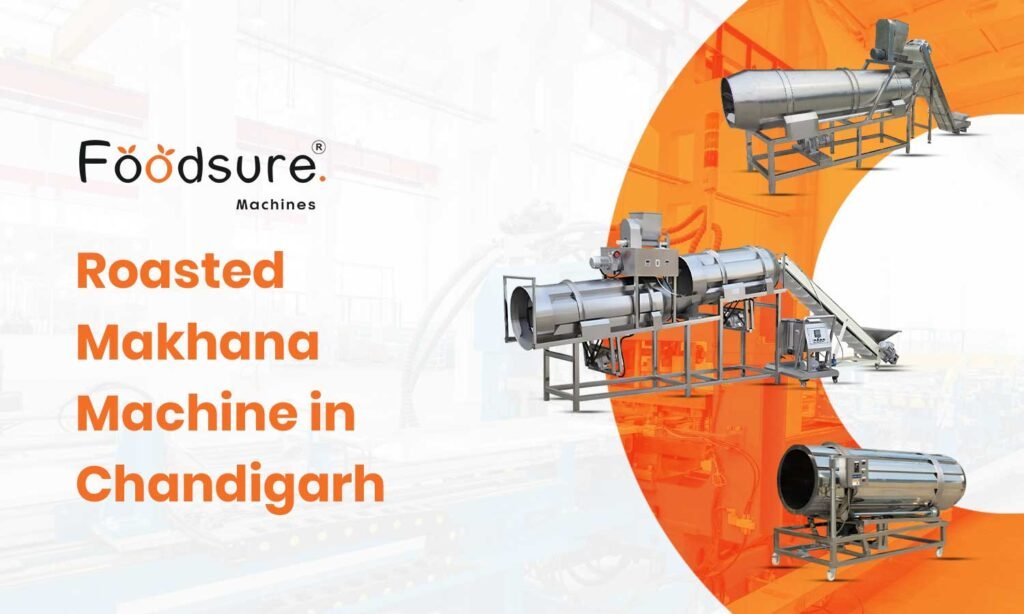
Makhana roasting has shifted from being a small kitchen task to a serious business in Chandigarh. The snack is in demand, and that demand is not slowing down. Even startups and small factories now need machines that can roast in bulk, maintain quality, and keep hygiene standards high. If you are thinking about starting a roasted makhana machine in Chandigarh, you will need the right machine, a practical setup, and a clear idea of costs. Why Chandigarh Units Are Choosing Roasted Makhana Machines Chandigarh is quickly turning into a space for packaged food startups, and roasted makhana is right at the center of that growth. The demand for makhana is growing fast, but manual roasting has its limits. Here’s why: Manual roasting takes a lot of time and money, and you are always dependent on skilled workers. Your makhana batches do not always roast evenly, which makes the taste and texture uneven. When makhana is roasted manually, the daily production capacity is very low, usually only a few kilos (say 5–10 kg) instead of the hundreds of kilos a machine can handle. Now, the commercial roasted makhana production plant in Chandigarh solves all these problems. The makhana roasting factory in Chandigarh is automatic. So, the laborers do other work, and that saves labor time. They deliver uniform roasting, so every batch of makhana tastes and texture looks the same. They scale up capacity, letting you move from kilos to hundreds of kilos per day. That helps you grow more demand. And most importantly, they give startups and small-scale makhana machines the chance to scale up confidently and meet growing demand. Complete Plant Setup for Roasted Makhana in Chandigarh There are two types of industrial roasted makhana machine in Chandigarh. The first one is an automatic roasted makhana machine in Chandigarh, and the second one is a semi-automatic roasted makhana machine in Chandigarh. The choice depends on how much you want to produce. Let’s take a closer look at it. Fully Automatic Roasted Makhana Plant(Large-Scale Production) Grading Automatic rotary graders do the heavy lifting here. With automated output measures and a digital display, the machine types makhana into size categories without any manual effort. That means you get a faster throughput and consistent results. Roasting Large-scale production gives you a uniform roasting with batch after batch. A 22-foot rotating drum and advanced air convection roaster keep the temperature control at 120–130°C, delivering you continuous makhana output without any under-roasting. Coating & Seasoning A stainless steel drum (10 feet or more)connected with a cutter system handles seasoning evenly across the makhana batch. Slurry kettles and dosing units mix and apply coatings exactly with no stress work and no wastage. Packaging This is where speed really shows. Automatic nitrogen-flushing packaging machines keep your makhana fresh for longer. There are two options that usually make sense: a Two-head unit, 24–26 pouches per minute, and a four-head unit, 35–40 pouches per minute. Material & Hygiene This automatic roasted makhana machine in Chandigarh has every part made from food-grade stainless steel (304). That is not just about rules, but it also makes cleaning easier and makes sure your product stays safe. Semi-Automatic Roasted Makhana Plant Grading A semi-automatic roasted makhana machine in Chandigarh makhana rotary grader, still kinds by size, but it involves some manual work. It gives you an output that is consistent enough for small to medium units without the higher cost of full automation. Roasting If you are roasting makhana at 30–50 kg per hour, then you do not need a 22-foot drum. Even a medium-capacity roaster and a 48-inch coating pan with hot air circulation do the job well for smaller runs. Coating & Seasoning For a coating & seasoning, you need a 36-inch flavoring drum. This helps operators to handle the seasoning more directly and gives you the flexibility to experiment with multiple flavor profiles. Packaging If we talk about the packaging machine, then a semi-automatic nitrogen-flushing units cover the basics. Pouching is stable, though the weighing and sealing may need an operator’s hand. Because it’s slower than the automatic line, but keeps the investment manageable. Material & Hygiene Like the fully automatic plant, all machinery uses food-grade stainless steel (304). But a little difference is that it’s a mix of manual and automatic steps that keeps costs low while still meeting food safety standards. Cost & ROI of Roasted Makhana Plant in Chandigarh The investment in a roasted makhana plant mainly goes into four types of makhana machines, like grader, roaster, coating system, and packaging. Below is a cost comparison of semi-automatic and fully automatic setups. It helps you to choose the best makhana factory setup cost in Chandigarh. Machine Type Capacity (kg/hr) Approx. Cost (INR) Key Features Estimated Daily Output Estimated ROI Timeline Ideal For Small Scale 10–20 1.5–3 Lakh Semi-automatic, stainless steel, energy-efficient heating, manual flavor coating 100–150 kg/day 6–8 months Startups, SHGs, small home-based units Medium Scale 30–50 3.5–6 Lakh Semi-auto/automatic, precise temperature control, easy cleaning, flavor coating 300–400 kg/day 8–12 months FPOs, regional suppliers, growing businesses Industrial Scale 100+ 7–15 Lakh Fully automatic, continuous operation, integrated packaging, advanced temp control 800–1,200 kg/day 12–18 months Large manufacturers, exporters, commercial units Read More: Makhana Machine Cost in India- ROI Analysis for Manufacturers Where to Buy Roasted Makhana Machines in Chandigarh Selecting the right supplier is the starting point for setting up a makhana processing plant in Chandigarh. Because it shapes how smoothly your unit runs and how stable it grows. Foodsure Machines stands out because we do not just sell machines, but we also deliver roasting, grading, and packaging systems that are made to fit your setup. We also provide you a proper installation and dependable after-sales support, so you can see why we earned that trust. Startups and large factories across India already work with Foodsure Machines for one reason: because our makhana processing machines give you a consistent quality and the ability to scale without any headaches. On the
How to Choose a Makhana Flavoring Drum for Uniform Coating & Zero Waste
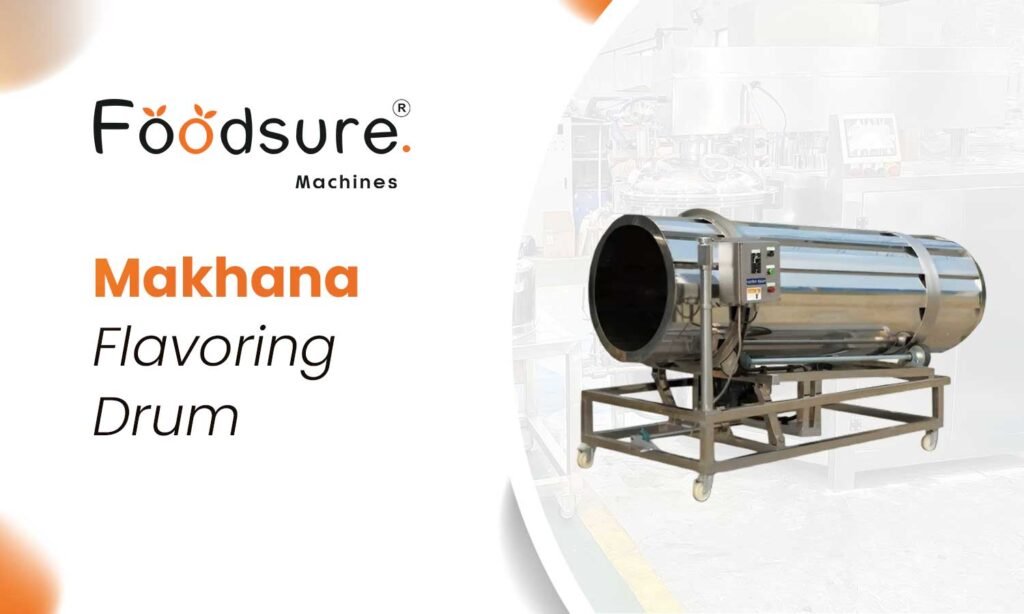
The India makhana market size was valued at INR 9.29 Billion in 2025 and is projected to reach INR 19.95 Billion by 2034, growing at a compound annual growth rate of 8.85% from 2026-2034. Buyers demand uniform taste and product excellence throughout all orders as product need increases. Many processors encounter difficulties with their seasoning process because they need to handle production increases. Excessive coating occurs on some makhana pieces while other pieces receive insufficient coating which results in ingredient waste and quality issues that cause buyer complaints. The main issue in most situations results from the makhana flavoring drum instead of the recipe. The system results in unequal coating which causes product loss because of its improper rotation and incorrect speed as well as its defective drum design. The correct drum system maintains makhana complete while achieving uniform coating for each piece which results in decreased waste and better product uniformity. This guide will assist you in selecting a production-ready flavoring drum for roasted makhana. Why You Need The Right Makhana Flavoring Drum The right automatic makhana machine shapes how your makhana tastes, how much you waste, and how reliably you can grow. It’s not just a piece of equipment; it’s the difference between smooth output and repeating problems. If you are scaling up, this is where things either start working better or start breaking down. So before you invest, focus on what actually matters: Even, Uniform Coating: Flavor should stick to every piece, not gather in some, but disappear in others. When the coating is uniform, the snack delivers the same taste every time. That’s what brings people back. Higher Throughput Without Holdups: A well-designed automatic makhana flavoring machine moves in line with the rest of your process. No pileups and no trays waiting. There is just steady, high-speed makhana flavoring machine output without slowing things down. Minimal Waste, Maximum Output: The seasoning goes where it should on the flavoring drum for roasted makhana, not wasted inside the drum or on the floor. Puffs stay intact, and you get more cleaner, finished product per batch. Easy to Clean, Made for Hygiene: The SS 304 stainless steel flavoring drum for makhana production functions with quick cleanouts which enable faster transitions between different flavors. The system allows you to maintain compliance while keeping your operation clean and preventing production delays through uninterrupted line operation. Makhana Flavoring Drum: Inside The Process The automatic makhana flavoring machine lets us explore its operations which determine the speed and flavor and consistency of your final product. Rotating for Uniform Coating: A roasted and graded makhana enters the stainless steel flavoring drum for makhana which rotates to toss each kernel so that it will make proper contact with the seasoning. Step-by-Step Seasoning: The surface receives an initial coating from a fine oil spray which gets followed by precise measurement of dry spice and flavor powder applications. This layering ensures flavor sticks without lumps or gaps. Controlled Speed: The high-speed makhana flavoring machine establishes two product-specific tuning options which enable fast processing while maintaining gentle handling that protects the integrity of the makhana. Ready for Packing: The makhana exits the drum after it achieves full coating which leaves it crisp and flavorful for its next step. The system sends the product to either the cooling process or packing process based on your existing system. The process eliminates all rework requirements while delivering a completed product which stands ready for retail display. Key Specifications Of Makhana Flavoring Drum What matters most in an industrial makhana flavoring equipment is the specifications that drive performance and consistency. These details shape how well your makhana processing machine runs and how reliably your product turns out. Feature Specification Capacity 30–100 kg per batch Drum Size 700–1000 mm dia × 1200–1500 mm length Power 1.5–3 kW, 3 Phase, 415V Speed Control VFD-based adjustable rotation Coating System Oil/slurry spray + dry spice dosing Advanced Features In Modern Makhana Flavoring Drums The fundamental elements become insufficient when your organization needs to expand. Your organization needs specific features because they improve your coating process while your cleaning speed increases and your material waste decreases. We will examine which elements bring actual significance. Complete Wet and Dry Coating Application The process requires no additional equipment. The drum starts with oil or slurry then moves to dry spices which you can process in sequence or simultaneous mode based on your specific recipe requirements. The process results in reduced transfer operations which create less mess while providing superior operational control. Drum Angle Operational System User Control Drum tilt adjustment allows you to determine how much time your makhana will remain inside the drum. A gentler angle for delicate puffs, or a steeper one when you need faster movement. The basic structure delivers essential protection which prevents product damage. Clean-In-Place Cleaning System Without Any Difficulties Nobody wants to break down a machine between every batch. The system enables you to initiate the cleaning process through one button which operates the CIP system to remove waste materials efficiently through automatic cleaning procedures without the need for disassembly. Intelligent Control Systems Which Increase Operational Efficiency The system uses touchscreen controls with PLC technology to save different flavor settings which you can access through the system. You don’t need to dial things in every time. Just load your recipe and go. Your products maintain identical characteristics through all production runs. Foodsure Machines: Your Makhana Flavouring Machine For Growth Foodsure Machines makes it easier to get the right industrial makhana flavoring equipment drum for your setup. Our industrial makhana flavoring equipment drums are made from food-grade stainless steel, built to scale, and designed for even coating with zero waste. This machine also has precision slurry dosing and smart PLC controls; the machines keep your batches consistent and your output high. Cleaning is quick, operation is simple, and their support actually shows up when you need it. If you are growing your makhana production, this is a system that grows with you.
How One Roaster Upgrade Reduced Burn Rate And Fuel Cost In A Village Cooperative
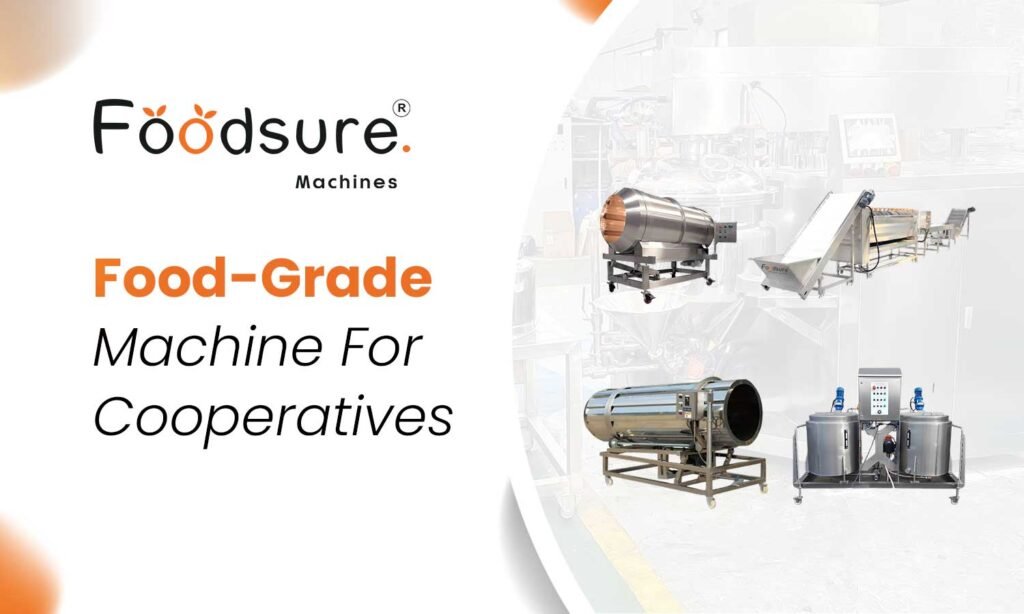
Small-scale village cooperatives face real issues with traditional roasting: uneven batches, high fuel use, and high product waste. These issues are already tight margins and make it hard to grow. But with the food-grade machine for cooperatives, the results were seen immediately. The fuel-efficient roaster for the co-op immediately reduced fuel costs. Burnt batches became rare. And product quality improves, giving them a better product to sell at higher prices. With precise heat control and consistent output, they could finally rely on every batch. Let’s be clear: you don’t need a massive upgrade or a big factory setup. You just need energy-saving roasting equipment co-operative for your work, which will help you scale. One smart shift in your roasting setup can improve quality, reduce costs, and open up new markets. The Challenge: High Wastage And Inconsistent Results In Traditional Roasting Many small village roasters still use drum or pan roasters powered by open flames or old gas units. These setups bring real issues: Unstable temperature control: Operators adjust heat by feel, so batches often come out over-or under-roasted. Uneven roasting: Some beans burn, others stay raw. There is no consistent heat spread. Heavy fuel use: Poor insulation and inefficient heat transfer burn through fuel fast. Product loss: Burnt or uneven batches can’t be sold at full price or at all. Constant manual effort: Workers have to monitor every batch closely just to avoid spoilage. What’s really happening: Every one of these issues chips away at profits. Quality goes down, fuel-efficient roaster for co-op costs go up, and market-ready product becomes harder to guarantee. If buyers pay for consistency, this kind of system is working against you. The Solution: Investing In An Automated, High-Efficiency Roaster The village roaster upgrade benefits cooperatives decided to replace their old roasting setup with the food-grade machine for cooperatives, designed for small-scale roaster fuel savings. It wasn’t just a new machine; it changed the way they worked. Let’s see how it helped. 1. Steady Heat Control Without Trial & Error Older machines need constant attention. This roaster upgrade benefits the co-operative by using automatic controls to handle temperature and airflow properly. Even stable heat keeps batches from burning or staying underdone. Saved settings make it easy to repeat the same roast each time. That means fewer manual mistakes, since the system handles key parts of the process. 2. Reusing Heat to Lower Fuel Use Most older machines lose a lot of heat. This one reuses it. Recycled hot air helps preheat new batches instead of escaping. Thick insulation keeps heat from leaking out. Better airflow spreads heat more evenly. 3. Less Waste, More Product Ready to Sell Even roasting meant fewer over-roasted pieces, extra sorting, or repeat work, which saved time and effort. More of each batch could be sold. Their waste dropped from 12% to under 5%, which made a noticeable difference. 4. Quicker Roasting, More Output The food-grade machine for cooperatives heats up in about 7 minutes. The old one needed 20 to 30. Faster warm-ups mean less waiting and less fuel burned doing nothing. They could roast several batches a day without stopping. Operators had more time to focus on the final output. What The Cooperative Gained From One Change All these energy-saving roasting equipment co-operative changes didn’t just look good on paper; they made a real difference in day-to-day operations. The food-grade machine for cooperatives began to see clear improvements where it mattered most: fuel use, output, staffing, and sales. Take a look at what changed after the upgrade: Lower fuel use from a fuel-efficient roaster for co-op. By holding onto more heat and using it again, they used 28% less fuel. That saved them a lot of money each year on gas and charcoal. More sellable products with fewer roasting mistakes, more products were ready for sale, and buyers were willing to pay better prices and had less dependence on labor. They only needed 1–2 people for roasting instead of 4–5, and others could focus on packing or higher-value work with better buyer interest. With steady product quality, they started hearing from larger buyers and even got interest from exporters. Key Takeaways: What To Look For When Upgrading Your Roaster If you run a small-scale roaster fuel savings setup, whether it’s coffee, makhana, or nuts, these are the kinds of changes that can make your work more reliable. When fuel-efficient roaster for co-op costs and product loss are high, even a single energy-saving equipment can make a big difference. What this really shows is: Feature Specification Capacity 30–100 kg per batch Drum Size 700–1000 mm dia × 1200–1500 mm length Power 1.5–3 kW, 3 Phase, 415V Speed Control VFD-based adjustable rotation Coating System Oil/slurry spray + dry spice dosing Smarter Roasting Starts With Foodsure Machines Foodsure Machines gives the food-grade machine for cooperatives, exactly what they need to roast better and waste less. Our automated tunnel roasters are built to keep heat steady, cut fuel use, and take the guesswork out of the process. The system recirculates heat efficiently and holds the temperature where it needs to be. This means small processors finally save fuel, reduce labor, and gain control. Want to know if this roster is right for your unit?! Reach out to us anytime via call or email. 📞 Call Us ✉️ Email Now FAQ 1. How did the roaster upgrade reduce the burn rate in the village co-op? The old system relied on manual adjustments, which often led to overheating. The new roaster uses automated controls to hold temperature and airflow steady, so every batch roasts evenly. No more burnt kernels. No more second-guessing. That one change cut down product loss in a big way. 2. What impact did the roaster upgrade have on fuel costs? Heat used to escape through thin walls and open vents. Now, it’s recycled back into the process. Add better insulation, and the roaster holds onto heat instead of wasting it. Fuel use dropped by nearly 30%. That’s
Roasting Redefined: Inside A Modern Tunnel Roaster That Handles 50 Kg/hour
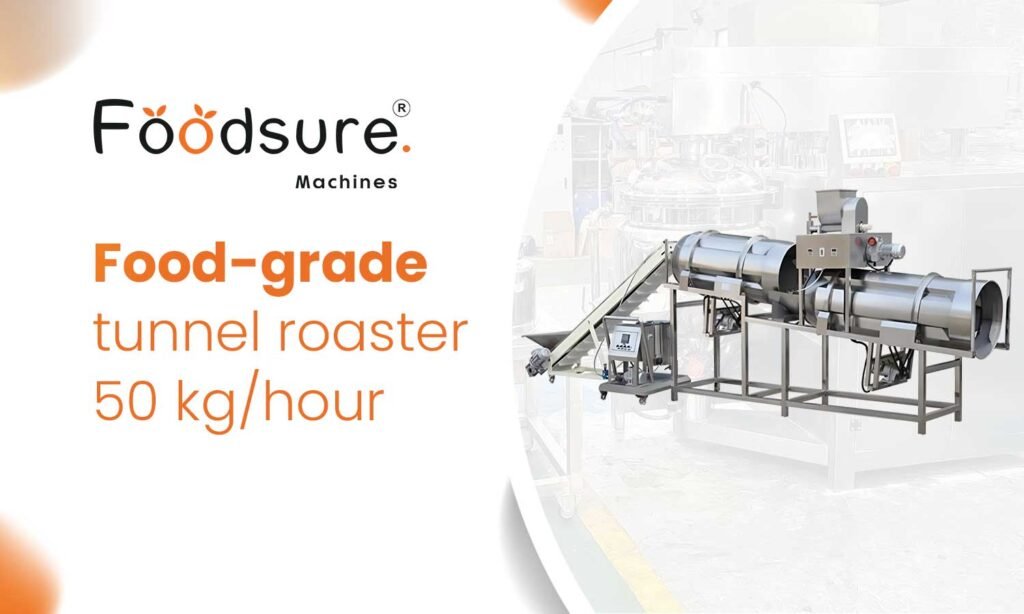
Uniformity, speed, and control. These are not optional in food processing. They are the baseline. Even if you are handling nuts, seeds, or something as delicate as makhana, the roasting step affects product quality. And if it’s unpredictable, your entire operation starts leaking profit. That’s where modern tunnel roasters come in, especially the food-grade tunnel roaster 50 kg/hour models now being adopted by serious small and mid-scale processors across India. This blog gets into the details: how these roasters are built, what makes them efficient, and why they are showing up in every smart food industry tunnel roaster supplier. If you are scaling a snack brand, understanding this equipment is not optional; it’s the starting point. What Is A Tunnel Roaster This 50 kg/hour tunnel roaster feed system does one thing reliably well: it makes roasting consistently precise, batch after batch. Instead of tossing ingredients in a pan or drum and hoping for even results, this system moves food, even its makhana, peanuts, or anything similar, through a controlled heating tunnel on a conveyor belt. That means every piece gets the same treatment, every single time. Key Components And How They Work A food-grade tunnel roaster 50 kg/hour might look simple from the outside, but it’s a carefully engineered system. Here’s an overview of its main components and what they do: Heating Zones These are the heart of the tunnel. Multiple sections, each with its own temperature and airflow settings, let you fine-tune how the heat hits the product. The result? Consistent roasting from starting to end. Digital Control Panel This is where the operator takes control. You can adjust speed, temperature, and time with a precision roasting system for food factories. And because it’s all visible in real time, you are not guessing, but you are managing. Conveyor Belt System The food-grade tunnel roaster 50 kg/hour belt spaces out the kernels evenly, moves them at a regular pace, and makes sure each one gets equal exposure. That’s how you get uniform results without burning or undercooking anything. What this really means is: no more rework, no more wastage, and industrial makhana machines for makhana process that finally matches the scale of your operation. Comparison Of A Tunnel Roaster Vs Conventional Systems The table below shows the major comparison of a food-grade tunnel roaster 50 kg/hour when compared to a conventional drum roaster. Feature Conventional Drum Roaster Modern Tunnel Roaster Capacity 15–20 kg/hour 50 kg/hour Heat Control Manual Digital, multi-zone Labor High Low Roasting Quality Inconsistent Uniform and repeatable Energy Usage Less efficient Optimized fuel or electric Batch Predictability Variable Highly consistent Automation Minimal Fully programmable Maximize ROI And Scale Profitably With High-Capacity Tunnel Roasters Switching to a modern food-grade tunnel roaster 50 kg/hour transforms your operation by automatic nut roasting equipment key processes and ensuring precision roasting system for food factories. This not only improves efficiency but also raises product quality, creating a strong competitive advantage in today’s food roasting equipment supplier. You save serious labor costs Instead of 5–10 workers constantly watching over pans or drum heating tunnel, you need just 1–2 people to run the food industry tunnel roaster supplier. Everything else is automated temperature control, timing, and movement. Over time, that 40–60% drop in labor costs adds up. Buyers pay more when the quality stays the same Roast consistency isn’t just nice to have, but it directly affects how much you can charge. With uniform heat zones and controls, you hit the same roast profile every time. That’s what buyers want and it allows you to charge a premium. You lose fewer deals to quality issues If you are selling to exporters or big buyers, rejections cost real money. They expect uniformity, batch after batch. Precision food roasting machines for food factories delivers exactly that. You stop wasting product and opportunities because of over-roasted or under-roasted batches. Technical Specifications Of The 50 Kg/Hour Tunnel Roaster The 50 kg/hour tunnel roaster is built with industrial-grade components and advanced control systems. Below are the detailed specifications that highlight its robust design and safety-focused features, making it ideal for modern food manufacturing equipment. Specification Details Machine Length 10–14 feet Material Stainless Steel (SS304 food-grade) Belt Width 400–600 mm (customizable) Temperature Range Up to 250°C Roasting Time Adjustable from 5–25 minutes Power Source 3-Phase Electric / LPG / Diesel Control System PID + PLC options Maintenance Modular design, easy access hatches Safety Features Thermal protection, emergency kill switch. Makhana Processing With Tunnel Roaster Integration A modern commercial food-grade roasting machine handling 50 kg/hour is best utilized as a key module within a fully integrated snack processing line. 1. Raw Cleaning: Dust & Husk Removal Everything starts with clean input. Raw kernels go through aspirators and magnetic traps to pull out dust, husks, stones, and stray metal. This isn’t just about hygiene; it protects your equipment and lays the groundwork for smooth, consistent processing later. 2. Grading: Size Sorting Next comes grading. The cleaned product moves through an automatic nut roasting equipment grader that separates kernels by size. Why does this matter? Because even roasting depends on consistent sizing. If you want even color, crunch, and cook time, this step is non-negotiable. 3. Roasting: Precision Tunnel Roasting This is where the real transformation happens. The kernels then travel through the automatic nut roasting equipment on a food-safe belt through a commercial food-grade roasting machine with programmable heating zones. The result? Even roasting, less than 8% wastage, and a steady output of 50 kg/hour. No overcooked edges. No raw centers. Just batch after batch of consistent quality. Transform Roasting With Foodsure Machines Foodsure Machines is changing how roasting gets done. Our 50 kg/hour tunnel roaster does not just roast; it delivers consistent results, batch after batch, with zero manual trial. Programmable heating zones keep temperatures locked in, while commercial food-grade roasting machine move the product smoothly through the system. The real power? It fits right into a full production line. From grading to cooling
Grader Game-Changer: How Automated Sizing Increased a Bihar Unit’s Revenue by 32%
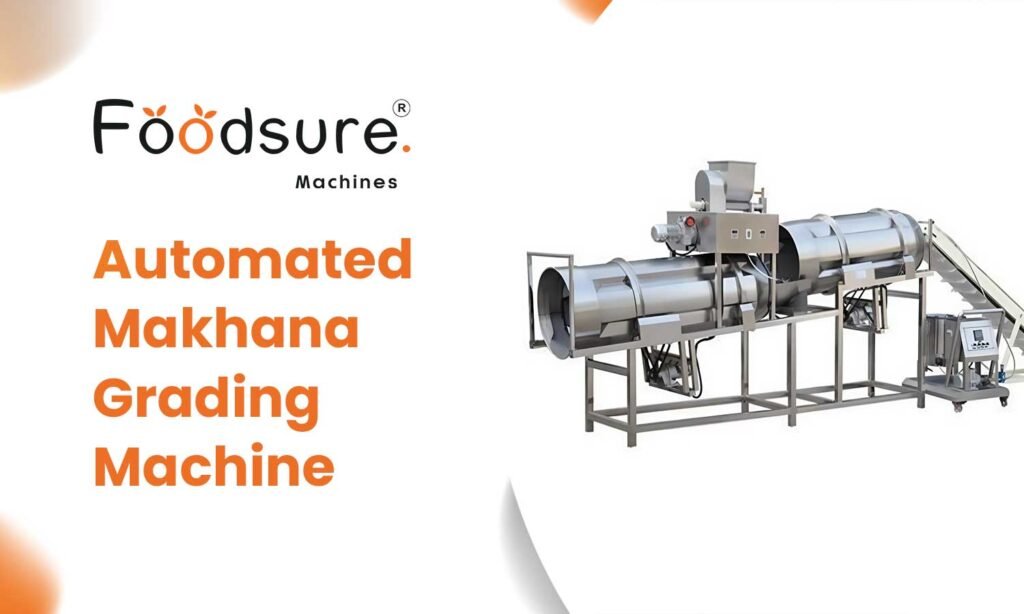
Bihar grows nearly 90% of India’s makhana, but a surprising number of units still sort it all by hand. Roasting became a guessing game. Some seeds burned, while others remained half-cooked, and wastage increased by 20–25%. Between 2020 and 2024, the market maintained an impressive 6.7% CAGR. Local buyers pushed prices down by 10–15% because the product just didn’t look right. Meanwhile, more than 15 workers were stuck doing one job, sorting without actually fixing the problem. Labor costs increased, but quality remained unchanged. That’s the reality that too many makhana units are still living with when a Automated Makhana Grading Machine could change everything. The Turning Point: Investing In A Precision Automated Makhana Grading Machine In early 2023, this unit made a smart move: the team invested in a high-precision makhana grader and built it to do one job and do it right. It sorted every kernel by size with scientific accuracy. Small, medium, large, and everything in between were separated by industrial makhana equipment. There was no guesswork, and no re-sorting. Just clean, and reliable automated makhana grading machine that took the uncertainty out of the process and gave them full control over quality from the start. Why Automated Makhana Grading Machine? Let’s break It Down: Precision and speed: It could handle thousands of kilos per hour. With no delays, no human errors. Just clean, reliable grading at scale. Consistency, batch after batch: Uniform sizes meant better roasting, neater packaging, and zero surprises in the final product. That’s what premium buyers want. Fewer hands, more skill: Since the makhana sorting machine did the heavy lifting on sorting, staff could shift to other important roles. That saved time and made better use of the team’s skills. Clean design, clean product: The stainless steel build wasn’t just sleek; it made cleaning simpler and upheld food safety without extra effort. Ready to grow: The best part? It fit right into their existing setup and left room to expand. They didn’t need to overhaul the line. Just plug in and scale when ready. What this really means is the processor stopped guessing and started building a system that worked with them, not against them. Implementation: How the Machine Changed Daily Operations Before The Machine Everything was done by hand. Workers sat around large trays, picking through piles of makhana, trying to sort by size. It was slow, exhausting, and honestly, not very effective. Mixed-size kernels still ended up in the same batch. That’s where the real trouble started. Roasting became unpredictable; even some kernels stayed raw, and others got burnt. Wastage shot up, and because grading took so long, shipping was delayed, which resulted in missed orders and lost time. The whole operation was stuck in a cycle that just didn’t scale. Introducing a high-precision makhana grading plant is what breaks this cycle, turning unpredictable results into consistent quality, higher margins, and business growth. Post-Installation Process With Automated Makhana Grading Machine Loading Made Simple: Makhana kernels are directly fed into the machine’s hopper with no manual trays, no bottlenecks. Scientific Size Sorting: Built-in precision food safe size grading machine separate kernels into exact size categories: small, medium, large, and sub-sizes. With no overlaps, no errors. Clean, Sorted Output: Each grade of makhana is collected in separate bins, fully ready for roasting or packaging without extra handling. Roasting Adjusted by Grade: Separate roasting cycles are now customized to each size group. No more guesswork, just consistent, quality roasting every time. Case Study: Revenue Growth & Profitability Increase By Makhana Machine Here’s the thing: once the automated grading equipment is in use, the numbers start telling a different story. Within six months, the unit’s monthly increase in makhana factory automation solutions revenue jumped by 32%. They weren’t just moving more product; they were moving it smarter. Makhana grading machine price solutions climbed from around ₹45 lakhs to ₹59 lakhs a month. And that wasn’t just volume talking. Better pricing from consistent quality and less wastage meant stronger margins too. Metric Before Automation After Automation Percentage Improvement Daily grading capacity 400 kg 600 kg 50% Sorting time per batch 4–6 hours <1 hour ~80% reduction Wastage 20–25% 7–8% ~70% reduction Export rejections 15–20% 4–5% ~75% reduction Price per kg (avg.) ₹300 ₹345 15% Labor cost for sorting ₹60,000 / month ₹36,000 / month 40% reduction Monthly revenue ₹45,00,000 ₹59,00,000 32% Why This Matters For Bihar’s Makhana Sector: Unlocking Growth & Global Potential Automated makhana grading machine isn’t optional anymore; it’s the foundation of a serious business looking to use a makhana size grading machine. When you get precision right from the beginning, everything else gets easier. You waste less, you need fewer hands on the line, and you move product faster. Buyers notice the consistency, and that’s what gets you better prices and repeat orders. Most units recover the cost of the automatic grading machine in under a year just through higher margins and smoother operations. And here’s the bigger picture: when more units in Bihar makhana sector upgrade, the entire region becomes stronger in the export market. That’s how you shift from just surviving to building a brand that lasts. Grow Your Makhana Profits With Foodsure Machines Foodsure Machines gives makhana processors a smarter way to scale. Our makhana size grading machine sorts kernels by size with real accuracy, no guesswork, no waste. That alone makhana processing machine, like roasting, packaging, and pricing. But we don’t stop there. Our full line of machines, roasters, flavor coaters, conveyors, and hygienic packers is built to work together. So instead of juggling disconnected equipment, you get one clean, efficient setup. The result? Uniform quality, fewer labor hours, and makhana that’s ready for export without the usual stress. If you are looking to grow, this is the kind of system that gets you there. READY TO INCREASE YOUR PROCESSING REVENUE? Upgrade to Automated Grading and Improve Profitability Discover how automated grading systems help food processing units improve product consistency, reduce manual errors,
How Can Automated Hex-Type Roasters Improve Makhana Puffing Efficiency by 40%?
Struggling with unevenly roasted makhana? Foodsure’s Automated Hex-Type Roaster for Makhana Business improves efficiency by 40%, delivers perfectly puffed seeds, reduces manual effort, and optimizes fuel use. This makhana processing plant ensures consistent quality, saves time, and grows your makhana business. Challenges In Traditional Makhana Puffing Process That You Can’t Ignore! Makhana, also called Fox nuts or Lotus seeds, is gaining global demand as a superfood, Roasting Machine Market is estimated to be valued at USD 183.2 million in 2025 and is projected to reach USD 268.6 million by 2035, registering a compound annual growth rate (CAGR) of 3.9% over the forecast period. But traditional makhana puffing methods are causing the makhana industry to go down. Some major challenges in the traditional makhana puffing process are: The biggest drawback of manual processing is the inconsistent makhana puffing. The traditional makhana puffing process requires continuous observation, yet achieving perfect makhana puffing remains difficult. Uneven heating often results in over-roasted or under-puffed makhana. Manual makhana processing requires skilled laborers who can continuously observe the temperature and stir the makhana seeds. This not only increases labor costs but also reduces production capacity to a limit.
How Makhana Processing Machines Sparked a Food Business Boom in Rajkot
Rajkot has never been known for makhana, but now the Makhana Processing Machine in Rajkot makes flavoured snacks that people all over India buy. Local processors switched from trading raw materials to making goods with extra value by using machines for grading, roasting, and flavouring. That change led to consistency, better profits, and strong demand from stores. Rajkot demonstrated that you don’t have to be in Bihar to run a successful makhana business India. All you need are the right tools and a smart plan for how to run it. Rajkot Made It Work with Small Scale Food Processing Machines There was no tradition of makhana here, no head start, but that didn’t matter. They saw a chance and didn’t wait around. No hype, no over-planning, just clear steps that made sense. The idea wasn’t to look big. What this really proves is that good decisions matter more than having a huge budget. Rajkot’s success came from executing quick moves and products that could hold their own on retail shelves. Availability of Skilled Agriculture Entrepreneurs After COVID, a lot of farmers and agri-entrepreneurs shifted into affordable fox nut processing machine in Rajkot instead of selling raw produce. Their experience farming helped them understand raw material quality, which cut down on waste and raised returns. Makhana market was expected to grow from ₹8.5 billion to ₹19.6 billion, so makhana business India owners saw a clear demand opportunity and acted early. Adoption of Small-Scale Food Processing Machinery Compact equipment for sorting, roasting, and flavouring led to growth, not huge factories. These small-scale makhana machines run on low power, need fewer workers, and are easy to operate. First-time processors were able to launch multiple flavour SKUs and serve metro buyers because the output was consistent. Businesses could grow without taking big loans or taking on risks when the cost of machinery went down. Support from the Local Ecosystem Small businesses and the government helped processors by giving them loans and other resources. Non-governmental organisations(NGOs) and training centres helped new business owners learn how to use machine operations and food processing basics. Local machine suppliers assisted with installation, trials, and troubleshooting, lowering the fear of starting. Rajkot’s environment made it possible for other districts to use it as a model for affordable fox nut processing machine in Rajkot. Makhana Processing Machine Cost in Rajkot and Profit Potential The main point that entrepreneurs focus on centres around two factors that determine their potential income from their investment. Estimated Machine Cost for a Small Setup Machine Purpose Approx Price (₹) Grading Machine Size sorting and cleaning 1.2 – 2.5 lakh Roasting Machine Puffing and roasting 2 – 5 lakh Flavoring Machine Seasoning and coating 1.5 – 3 lakh Packaging Machine Pouch filling and sealing 2 – 4 lakh Total setup investment A small-scale makhana processing unit in Rajkot can start around ₹2.5 lakh and go up to ₹15 lakh, depending on automation and capacity. Simple Monthly Profit Example: The small unit processes 1,000 kg of makhana every month. Extra revenue from value addition results in a monthly income of ₹1,20,000. Estimated Monthly Operating Costs Labour costs range from ₹40,000 to ₹60,000. Power and fuel costs range from ₹15,000 to ₹25,000. Packaging materials costs range from ₹20,000 to ₹30,000. Miscellaneous expenses cost between ₹10,000 and ₹15,000. The total monthly cost ranges from approximately ₹90,000 to ₹1,30,000. What Happens When Small Scale Food Processing Machines Meet Local Action Here’s the thing, Rajkot didn’t wait for a perfect blueprint. It just started. And the numbers now tell a sharp, undeniable story. Growth Metric 2021 2025 Change Processed Makhana Volume 120 metric tons 480 metric tons 300% increase Active Processing Units 8 units 35 units 4x more operators Flavored Makhana SKUs 2 variants (Classic, Spicy) 7 variants (e.g., Masala, Cheese) New product lines added Annual Retail Pack Output 15,000 packs 110,000 packs 7x increase in market-ready SKUs Rajkot Used Small Scale Food Processing Machines to Move Fast and Win The entrepreneurs in Rajkot pursue business growth through their production operations, which they maintain at their current level. The entrepreneurs establish successful snack brands through their small-scale makhana machines, which produce snacks that customers buy from stores. The makhana processing machine model succeeds across India because of its following attributes: The system requires a capital investment between ₹2.5 lakh and ₹15 lakh for its full operation, which includes sorting and heating, flavouring and packing processes. The system uses compact automation technology, which decreases both workforce requirements and operational expenditures for each day of business. The majority of units achieve financial returns within 12 to 18 months because they generate higher profits from their value-added makhana products. From Raw Commodity to Branded Snacks The processors stopped selling raw makhana as a loose product. Machines create flavoured and roasted SKUs which are available for retail sale through retail-ready packaging. Branded makhana products generate significantly better profit margins compared to raw bulk products. The system maintains constant production capabilities because it can handle increased production demands. The makhana processing machine in Rajkot produces consistent output because it delivers precise grading and complete roasting results. The system achieves quality standards for retailers and distributors because it produces consistent results between different production groups. The system enables testing of new flavours through simple SKU samples, which allow production to continue without interruptions. From Zero to Shelf: Powered by Makhana Machines Makhana processing machine in Rajkot aren’t scaling by chance. The shift came when compact, purpose-built machines hit the ground, simple to run, easy to maintain, and made for high food-grade standards. Now, let’s look at what’s powering this change: Built for Small Spaces, Big Results You don’t need a giant factory to get started with a makhana processing plant in Rajkot. A compact grading machine will sort your kernels by size and quality accurately, batch after batch. Roasting units can handle 50 to 100 kilos an hour, and the digital heat controls keep the roast even without burning. Start Small, Grow Smart The
Rural Makhana Revolution: Top Equipment Empowering Village Entrepreneurs
Across India, women-led SHGs are building real businesses with the best makhana machine for rural entrepreneurs. One group started with grading and roasting, earning ₹1.5 lakh in their first season. Two years later, after they added flavoring and packaging, they hit ₹10 lakh. No need to leave their village. No middlemen. Just teamwork, practical tools, and consistent progress, proving that rural women can drive serious economic growth from the ground up. Why Makhana Works For Rural Units Low Investment, Real Potential: You don’t need crores to get started. A full makhana processing machine for rural areas, with grading, roasting, flavoring, and packaging, can be set up for under ₹15 lakhs. That’s practical for SHGs, FPOs, and the best makhana machine for rural entrepreneurs ready to move beyond raw selling. Easy to Store, Easier to Move: Makhana has a long shelf life and hardly weighs anything. That means fewer losses, simpler logistics, and one less thing to worry about. People Want Healthier Snacks: Urban and global markets are shifting. Makhana fits what buyers are looking for: clean, light, and protein-rich. If your branding and packaging are right, margins follow. Govt Schemes That Actually Pay Off: This isn’t just policy talk. MIDH, ODOP, PMFME. They offer real support. That includes funding, training, and the push to move beyond local mandis. Machines That Work Where You Are: When you choose the best equipment for makhana production, FPOs and SHGs don’t have to depend on city processors. You can roast, flavor, and pack right where the crop is grown. There are no middlemen, no hauling raw stock. Best Makhana Machines For Rural Entrepreneurs Here’s the thing: if you have the three best equipment for makhana production in place, you are not just processing raw makhana. You are running a unit that can create real value, right from a village setup. Compact Roasters These machines are built for small-scale makhana machine equipment. Firewood, gas, or electric, you pick what works. A 50 kg/hour capacity gives you smooth flow with consistent roasting. The crunch and fresh makhana smell depend on temperature control, and these machines get that right. They don’t take up much space and don’t need big infrastructure, which makes them ideal for rural processors who just want reliable results. Automatic Flavoring Drums No more uneven batches or spice clumps. These automatic flavoring drums coat every piece properly, which means the taste and look stay consistent. That’s a big deal if you are building a brand. You can control the speed and mixing to match your flavor. Less wastage, better hygiene, and there is no need for manual mixing. Affordable Packaging Units Good packaging matters. These makhana packaging machines do 30 to 60 pouches a minute, with options for vacuum and nitrogen sealing to keep the product fresh longer. They are simple to run and maintain, even in a village unit. And they are what take you from bulk product to shelf-ready packs that actually sell. Looking for the best makhana machine for rural entrepreneurs? Start here: Top Makhana Machine Companies in India. How Village Units Are Growing With The Right Machines The best makhana machine for rural entrepreneurs is turning a basic makhana processing machine for rural areas into a serious income source. Here’s what that looks like in practice. A small SHG in Bihar A small-scale makhana machine equipment SHG in Bihar put ₹2.7 lakh into a roaster, flavoring drum, and pouch sealer. They process about 100 kg a day and sell directly to local mandis and kirana stores. Their margins are higher, and demand stays consistent. In Madhya Pradesh An FPO put in ₹10 lakh for makhana processing equipment that handles grading, roasting, and packaging. Instead of selling raw makhana, they now move finished products across nearby districts. That shift means better earnings and more control over pricing. In Gujarat A repeatable business model is building units that use the same best makhana machines for rural entrepreneurs and packaging formats. Each unit runs independently, but the products look and taste the same. That consistency makes branding easier and expands reach without losing the local connection. What this really shows is that with a few machines and the right low-cost makhana machines for setup, small producers can stop selling raw and start building real food brands right from their villages. Startup Costs For Small Makhana Machine Units Feature Entry-Level (₹2.5–₹4 Lakh) Growth-Ready (₹5–₹8 Lakh) Capacity 100 kg/day 100–200 kg/day Grading Manual/Semi-auto Fully automatic Roasting Batch roaster (50 kg/hr) Tunnel roaster (100–150 kg/hr) Flavoring Basic drum Auto drum with spray system Packaging Manual or basic sealer Semi-auto with nitrogen/vacuum sealing Power 2–3 kW (Single phase) 4–5 kW (Three phase) Operators 1–2 people 2–4 people Material SS 202 / basic food-grade SS 304 (high hygiene) Government Schemes & Real Support For Makhana Units That kind of support, financial, technical, and shared, gives small units a real shot at running smart, not struggling alone. Real Support Makes a Real Difference Starting a makhana processing equipment unit isn’t just about buying machines. It’s about knowing you won’t be left on your own when things get tough. That’s where schemes like PMFME come in, offering you up to 35% subsidy on your total project, low-cost makhana machines for setup. It helps small processors take the first step without getting crushed by capital pressure. Shared Infrastructure Eases the Load FPOs play a big role here. When best makhana machine, common processing units instead of going solo, the risks drop and the possibilities grow. You don’t need ₹10 lakh upfront. You need access, collaboration, and a good plan. You are Not Expected to Know Everything on Day One Most machine suppliers train you during installation. That’s not just a hand-holding gesture; it’s the reason even first-time operators can run their setup without needing outside help. Learn it once, do it well every day. Why Foodsure Machines Work Best For Rural Units Starting a best makhana machine for rural entrepreneurs unit in a village
The ₹2.5 Lakh Fix: Replacing Manual Coating With A Semi-Automatic Flavoring Drum
Small makhana units often struggle with uneven flavoring. Hand-coating leads to broken pieces, wasted seasoning, and batches that just don’t taste the same. That kind of inconsistency turns off retailers and limits how far you can grow with a manual coating. A semi-automatic makhana flavoring machine for small business can change that completely. It controls seasoning flow, drum speed, and batch size so every batch comes out evenly coated, with less waste and less labor. You get better flavor, better margins, and a product that earns retailer trust. For a small processor, it’s a big step toward making your makhana ready for serious retail. Is Manual Coating Silently Killing Your Profit Margins? Uneven flavor loses customers: If it doesn’t taste the same every time, buyers stop trusting your brand. Manual labor creates unpredictable output: Some batches come out okay, others do not. That kind of unpredictability kills your momentum. Hand tossing breaks the product: Broken makhana means lower yield and less sellable stock. Inconsistent quality leads to rejections: Retailers and export buyers won’t risk shelf space on unreliable batches. Manual processes: They are not built for hygiene or growth. And you can’t scale something that doesn’t meet basic retail standards. Read more: Makhana Processing Machines For Sorting, Roasting & Packing What Changed When We Switched to Semi-Automatic Coating The semi-automatic makhana flavoring machine for small business is a smart move for small and mid-sized processors. It fits right into your current makhana machine setup without slowing things down or requiring major changes. The system controls how much slurry goes in, lets you adjust semi-automatic makhana flavouring machine speed, and handles batch sizes that match your production. You get a consistent, even semi-automatic makhana coating machine without extra labor or constant tweaking. Compared to hand-mixing, it saves time, cuts seasoning waste, and protects your product from breakage. That consistency matters. It builds buyer confidence and makes sure each batch looks and tastes the same, which is exactly what retailers and exporters expect. Margins improve because you lose less and produce more without overspending on labor or production costs. If your flavoring still relies on trial-and-error, then makhana flavoring equipment for startups gives you control, reliability, and retail-ready results. Essential Specifications: Semi-Automatic Makhana Flavoring Machine Detail Value Price ₹2.5 lakh (approx.) Daily Capacity 100–300 kg Labor Required 1 operator Batch Size 10–50 kg Cleaning Time 10–15 minutes Space Needed 6×4 ft area Power Supply Single-phase Why ₹2.5 Lakh Is a Smart Investment Let’s be honest, it takes more people, wastes more mix, and still leaves you guessing on consistency. A semi-automatic makhana flavoring machine for small business solves that in one move. You go from 3–4 workers to just one. Coating time drops by half. Every batch tastes and looks the same. That’s the kind of reliability buyers trust. What this really means is you can scale from 150 to 300 kg a day without hiring more people or risking your quality. It’s a simple upgrade with serious impact, and it gives small processors the control they’ve been missing. The Payoff Of A Semi-Automatic Makhana Flavoring Machine Automates flavor mix and application Even if you are running spicy, herby, or sweet, this industrial makhana machine handles it. Changeovers are fast, which makes SKU switching smooth. Manual seasoning is one of the messiest, most inconsistent parts of the process. This food-grade flavoring machine for makhana takes that off your plate. It controls how much flavor goes in and how it spreads across each batch, so you’re not guessing, tossing, or redoing. Cuts labor needs and brings down daily costs Let’s break it down: what used to take three or four people can now be handled by one. That’s not just a staffing win, it’s a cleaner, more focused workflow. The rest of your team can move to packing or prep without slowing down the line. You waste less seasoning and protect your margins. Reduces waste and improves flavor use Food-grade stainless steel, compact enough to drop into your line without rewiring your whole setup. Seasoning is expensive, and most of it gets wasted with hand-coating clumps, spills, and overuse. This makhana flavoring equipment for startups applies flavor evenly and efficiently. You end up using less mix for the same (or better) taste. That’s money saved on every batch. Sets you up for real growth What this really means is you are not stuck anymore. Even if you are doing 100 or 300 kg a day, the food-grade flavoring machine for makhana keeps pace. You don’t need a bigger team, just a smarter process. And once your output looks retail-ready, new markets start to open up. Foodsure Machines Drive The Shift To Smarter Flavoring The Foodsure Machines semi-automatic makhana flavoring machine is a smart upgrade for small makhana machine. It handles slurry dosing and semi-automatic makhana flavoring drum speed automatically, so every batch gets a clean, even coating with no breakage. You cut down on seasoning waste, reduce labor, and boost consistency, all without overhauling your setup. It’s a simple way to scale up without losing control of quality. Every Delay Has a Cost—Here’s the Fix That Stops the Leak. For more info contact Foodsure Machines now +91-8826663121 The Fix That Stops the Leak! For more info, contact Foodsure Machines by call or email. 📞 Call Us ✉️ Email Now FAQ 1. What problem does the ₹2.5 lakh semi-automatic flavoring drum solve? Manual coating is messy and inconsistent. This machine gives you clean, even flavoring with less breakage, so your makhana tastes better, looks uniform, and gets accepted by more buyers. 2. How does this machine benefit small makhana producers? It turns a slow, tiring process into a fast, one-person job. It will help you to save on labor, reduce flavor waste, and double your batch speed. That means more output, more consistency, and better odds of getting into high-paying markets. 3. Why is this upgrade important for accessing modern retail and export markets? Because
How BIHAR Farmers Are Doubling Makhana Output with Affordable Machines
A Bihar-based FPO turned a ₹3 lakh start makhana business in Bihar setup into a solid profit. Earlier, slow manual processing led to losses and missed demand. With a small local unit, they started roasting, drying, and packing on time, cutting waste, and selling ready-to-eat makhana. Every member earned more. What this proves: affordable makhana machinery for rural units, not massive factories, is powering real growth in rural food businesses. Why Old Makhana Methods Keep Rural Profits Stuck What this really means is simple: old methods keep profits low and effort high. The right commercial makhana processing equipment for villages changes that. Here’s what better looks like in practice: Manual Roasting Roasting makhana by hand over open flames leads to uneven puffing, burns, and constant smoke exposure. It’s slow, risky, and hard to scale. Hand-Packing & Grading When seeds are sorted and packed by hand, sizes get mixed, hygiene slips, and selling prices drop. No consistency means no buyer trust. Slow Sun-Drying Drying seeds in the sun takes days and depends on the weather. One rainy spell can ruin an entire batch and stall production for weeks. High Waste, Low Profits These roadblocks in commercial makhana processing equipment for villages create too much waste, block access to premium markets, and keep rural incomes stuck. Read: Why Every Makhana Unit Needs A Precision Grading System How Compact Machines Are Flipping the Script on Village Processing These compact start makhana business in Bihar are making right where people live. With basic training and under ₹6 lakh investment, even small SHGs or local groups can take care of roasting, grading, and flavoring, packing all in one setup. The India makhana market size reached INR 8.5 Billion in 2024. Looking forward, IMARC Group expects the market to reach INR 19.6 Billion by 2033, exhibiting a growth rate (CAGR) of 9.22% during 2025-2033. A daily capacity of 100–200 kg means they are not just producing more, they are meeting actual demand with a product that sells. What this really means is: less waste, more output, and income that stays in the village. The affordable makhana machinery for rural units runs on regular electricity, doesn’t need skilled operators, and is often shared between families. It’s not a side hustle, it’s a real food business that works. Build a Profitable Makhana Unit in Bihar for Under ₹6 Lakh What it comes down to is that how to start makhana business in Bihar doesn’t need a massive factory. They need to buy makhana processing machine in Bihar with a clear plan, and a makhana processing plant cost they can actually work with. Item Approx. Cost (INR) Roasting Machine ₹1,50,000 – ₹2,00,000 Flavoring Drum ₹75,000 – ₹1,25,000 Packaging Machine ₹1,25,000 – ₹1,80,000 Grading/Sorting Machine ₹90,000 – ₹1,50,000 Total Setup Cost ₹4.5 to ₹6.5 Lakh Govt Subsidy (Up to 35%) ₹1.5 to ₹2.2 Lakh Net Investment ₹3 to ₹4.5 Lakh Want exact pricing for your village unit? Get a Custom Quote →Contact Us The Madhubani Model: How One FPO Turned ₹3 Lakh into a Thriving Brand The Mithilaraj Krishak Producer Company in Madhubani didn’t wait around for miracles. With just ₹3 lakh, they brought together 700 farmers and built something real, a makhana production machine for local startup brand that scaled from 2 tons a year to 150. They used simple, practical commercial makhana processing equipment for villages to roast, grade, and pack locally. That alone raised the quality and shelf life, and made bulk orders easier to fulfill. Then they went further. Instead of just selling raw makhana, they started making powder and sweet products with more value per kilo. With government support and a smart push at trade fairs, they built visibility and demand. The result? Better incomes, local jobs, and start makhana business in Bihar that actually works. This is what transformation looks like when people organize, use the right tools, and focus on results These Small Machines Power Real-World Makhana Production If you are building a small makhana unit, you need the start makhana business in Bihar that delivers without a fuss and with no gaps. Below is a quick look at what each makhana manufacturers in bihar can handle, so you can plan with clarity. Machine Capacity Power Material Output/hour Roaster 50–100 kg 3–6 kW SS304 40–80 kg Flavoring Drum 50 kg 1–2 kW SS304 1 batch/10–15 min Packing Machine 20–60 pouches/min 1.5–2 kW MS/SS 60 pouches/min Grader 3–4 grades Manual/Auto SS Frame 50–70 kg/hour Government Schemes That Actually Help You Launch and Scale Most makhana processing machine for small business miss out on support simply because no one breaks it down clearly. But these schemes can actually cover a large share of your setup cost, if you use them right. Here’s how they add up: PMFME Scheme: It covers up to 35% of the project cost (max ₹10 lakh). It also helps buy a makhana machine for rural entrepreneurs, set up units, and market products. Also, with the support of SHGs with early investment and FPOs with infrastructure and marketing support. ODOP (One District One Product): Gives focused support to makhana-producing districts. Helps with a better makhana processing machine for small business for packaging and marketing to increase local sales and exports. MSME Scheme: Makes it easier to get loans and adopt better tech. Useful for improving the makhana processing machine for small business without running into funding challenges. FPO Support: FPOs can access subsidies and grants to set up shared roasting, grading, or packaging units, reducing costs and improving output. Food Processing Loans: Offers affordable credit with flexible terms for buy makhana processing machine in Bihar with equipment, funding operations, or expanding capacity. Need help applying? We’ll guide you. Contact Us → Smart, Rural-Ready Machines That Work Where Bihar Farmers Are At Foodsure Machines, we build equipment that fits how best makhana machines for rural entrepreneurs actually work. Energy-efficient, high-performing, easy to operate. Our makhana manufacturing machine handle roasting, grading, polishing, flavoring, and packaging, modular enough to grow with
Roasted Makhana Machine in Indore – Prices & Best Models
Looking for a commercial roasted makhana machine in Indore that actually helps you improve your production and makes your makhana batches more consistent? Picking the right roasted makhana production plant is not just about buying the most expensive model. It’s about finding one machine that fits your capacity and your budget. Even if you are running a small startup or a large-scale factory. The right choice can save you hours of work and give you a product your customers will trust. Why Choose a Roasted Makhana Machine in Indore As we know, Manual roasting takes time, and it gives you makhana inconsistent. Here’s the thing: a commercial roasted makhana machine in Indore changes that. This machine gives you a consistent makhana quality with every batch, so the taste and texture stay just right. Machines handle larger volumes without any manual help, increasing output, keeping up with growing demand. This industrial roasted makhana machine reduces labor costs, which directly improves your return on investment. You can select your machine between fully automatic or semi-automatic models, depending on your budget and production needs. It is designed to be energy-efficient; the roasted makhana production plant keeps running costs low and helps your business operate smoothly over time. Read More: From Manual To Modern: How Advanced Makhana Processing Machines Transform The Industry? Best Roasted Makhana Machines in Indore – Models, Features, and Prices Let’s take a closer look at what each machine type offers you and why it could be the right choice for your business. Below, the details of the commercial roasted makhana machine in Indore. Machine Type Capacity Process Covered Key Features & Parts Price (INR) Best For Fully Automatic 50–150 kg/hour Grading, Roasting, Coating, Packaging Roasting Drum, Heating Element, Temperature Controller, Output Conveyor, Cooling Tray, Coating Unit, Packaging Unit, Energy Saver ₹3,50,000 – ₹7,50,000 Startups to industrial units needing minimal supervision and high-volume output Semi-Automatic 50–100 kg/hour Grading, Roasting, Coating, Packaging Roasting Drum, Manual Control Panel, Heating Element, Coating Unit, Output Tray, Packaging ₹5,50,000 Medium-scale units wanting more control without high automation costs How to Choose the Right Roasted Makhana Machine in Indore for Your Unit First, check how much makhana you actually need to roast. Because startups usually run 10 to 20 kg per hour, and on the other hand, larger production often needs 30 to 100 kg. Then decide the level of automation that actually fits your workflow. There are two types: a Semi-automatic roasted makhana machine, which gives you control without slowing things down, and does things with little help of labor help. The automatic roasted makhana machine runs continuously without any labor help. All industrial roasted makhana machine parts should be made of stainless steel 304 grade, which keeps your machine hygienic and is made to last for daily use. Always make sure roasting temperature controls are accurate. What this really means is every makhana batch comes out evenly roasted without burning. Semi-automatic roasted makhana machine that runs efficiently, saves money over time, and makes your production more cost-effective. Read More: Top 5 Makhana Machine Companies In India Roasted Makhana Machine Prices in Indore – Complete Overview Not all automatic roasted makhana machine are the same. Let’s break it down so you can see the capacity, features, and pricing at a glance and pick the right makhana roasting machine price in Indore for your unit. Machine Type (Process Included) Capacity (kg/hr) Price (INR) Automation Level Voltage (V) Control System Material Automatic Roaster (Grading, Roasting, Coating, Packaging) Up to 100 ₹1,000,000 Fully Automatic 420 PLC Stainless Steel Industrial Roaster (Grading, Roasting, Coating, Packaging) Up to 100 ₹1,500,000 Fully Automatic 440 PLC Stainless Steel High-Capacity Roaster (Grading, Roasting, Coating, Packaging) Up to 500 ₹1,500,000 Fully Automatic 440 PLC Stainless Steel Read More: Makhana Machine Cost in India- ROI Analysis for Manufacturers Final Thoughts: Pick the Right Makhana Machine Today Start by comparing different makhana machines based on how much makhana you want to roast and what fits your budget. Request detailed quotes so you know exactly what you are getting. Foodsure Machines in Indore makes food-grade equipment made to meet your needs and backs it with stable post-sales support. What this really means is you can scale your business efficiently while keeping quality consistent from roasting to packaging. Get a Quote Today and Upgrade Your Roasted Makhana Production in Indore. Ready to Start Your Roasted Makhana Machine Journey? Connect with us online for quick support. 📞 Call Now ✉️ Email Us 💬 WhatsApp FAQ Q1: How much does a roasted makhana machine cost in Indore? Here’s the thing: prices usually range between ₹3 lakh and ₹8 lakh. The exact cost depends on your machine’s capacity and even it’s semi-automatic or fully automatic. Q2: Which capacity works best for a small manufacturer? For small-scale units, machines that handle 50 to 100 kg per hour are generally enough. Because they balance efficiency with cost without overloading your setup. Q3: Are fully automatic machines worth the investment? Yes. What this really means is you spend less on labor, get consistent roasting quality every batch, and can see a faster return on your investment. Q4: How long does it take to set up a roasted makhana plant? It depends on the scale, but most setups take around 2–4 weeks. That includes delivery, installation, and getting the machines running smoothly. Q5: How to start a roasted makhana business in Indore?Buy a machine, source raw makhana, and set up roasting & packaging. Q6: What is the market price for 1 kg of roasted makhana in Indore?Typically ₹400–600 per kg depending on quality and brand. Q7: Which license is required to start a roasted makhana unit?FSSAI license is mandatory for food processing units. Q8: Can we process makhana in Madhya Pradesh?Yes, Madhya Pradesh has suitable facilities and market demand. Q9: Do I need a license to sell roasted makhana from home?Yes, a basic FSSAI registration is required for home-based sales. Q10: Which district supplies raw makhana for Indore units?Bihar
Roasted Makhana Machine in Jaipur – Top Suppliers & Manufacturing Guide
Have you ever noticed how roasted makhana is suddenly everywhere in Jaipur? The thing is that small manufacturers and entrepreneurs are realizing that the best roasted makhana machine in Jaipur changes the game. And it’s not just about roasting; it’s about consistent quality, higher output. Even if you are running a small batch and thinking about scaling, if you pick the right machine, it can save you time, money, and stress. What this really means is you get a product that sells and a process that actually works. Why Investing in a Roasted Makhana Machine in Jaipur Makes Business Sense? Ever wondered why roasted makhana is becoming a favorite snack in Jaipur? Because people want healthy snacks that use makhana. Now, small-scale production and startups are realizing that doing everything by hand does not work anymore. With the help of machines, you can make the process faster and cleaner. What that really means is that if a roasted makhana is done manually, then it can be inconsistent, but a roasted makhana machine makes sure your makhana is of uniform quality. Then there is efficiency. A makhana machine manufacturer in Jaipur can roast larger amounts at the same time, but if it is done manually, then it takes time to do a few kilos by hand. The machine gives you less waste, more consistent output, and fewer mistakes. A commercial roasted makhana machine in Jaipur makes a huge difference in labor and time. One or two operators can run a semi-automatic roasted makhana machine and a fully automatic roasted makhana machine that would otherwise need a team of people. And machines make growth simple. Even small units can increase their production without adding more staff. The roasted makhana processing machine in Jaipur easily handles the workload, so scaling up becomes manageable. Read More: District Spotlight: The Success Story of Makhana Processing in Rajkot Top-Rated Roasted Makhana Machine Suppliers in Jaipur for Consistent Quality Let’s take a quick look at what makes each supplier a good choice and why their best roasted makhana machine in Jaipur could work for your roasted makhana business. 1. Foodsure Machines – Jaipur’s Leading Supplier If we talk about the Foodsure Machines is the best choice if you want roasted makhana that gives you consistent and high-quality. We offer both semi-automatic makhana machines and fully automatic makhana machines, so you can easily start your small business and scale up later. Why Foodsure Machines stands out: Our machines are ISO-certified for safety and durability. It gives you a consistent roasting with minimal errors and breakdowns. We provide you a reliable post-sales support, and if you face any problem, we are always available when needed. These machines are suitable for small manufacturers, large production factories, and entrepreneurs. It is easy to use, practical, and made to last long. Contact: Boost Your Makhana Production! 2. S & SB Associated Engineers S & SB Associated Engineers usually focuses on semi-automatic makhana machines that are perfect for small-scale production. Key benefits: Their machines are easy to operate, and no technical team is required. These machines are energy-efficient and low-maintenance. Machines come in different capacities to add more capacity when needed. It is ideal for starting production without a large investment. These give you a practical solution for FPOs and small manufacturers in Jaipur. 3. Nirav Food Machine Pvt. Ltd. Nirav Food Machine serves Jaipur with fully automatic machines. Which is best for larger production volumes. Why choose Nirav: It gives you a high-volume production with minimal supervision. All machine parts are made of stainless steel for easy cleaning and hygiene. It has durable construction with strong warranty support. These machines maintain consistent quality batch after batch. It is perfect for businesses focused on scaling production quickly. Read More: Top 5 Makhana Machine Companies In India Which Roasted Makhana Machine is Best for Jaipur Manufacturers? Selecting a roasted makhana processing machine in Jaipur is not just about capacity or price. What really matters is how easily it handles grading, roasting, coating, and packaging because that is what decides the quality of your final product. Let’s break it down. Semi-automatic roasted makhana machine Jaipur Best for: The semi-automatic roasted makhana machine is ideal for FPOs, small manufacturers, and entrepreneurs starting production. Key Features: Capacity: It gives a capacity of 50–100 kg/hour Grading: With the help of grading, it separates the sizes of makhana before roasting. Roasting: The roasting machine makes sure of heat control for consistent color and crunch of makhana. Coating & Flavoring: It can be done manually, which gives you control over taste. Packaging: Packaging is done manually, which is suitable for small batches. Material: All machine features are made of SS 304, food-grade, and easy to clean. Why it’s perfect for small-scale production: This semi-automatic roasted makhana machine Jaipur, is an affordable investment and has lower running costs. It is simple to use without a technical team. You can easily experiment with flavors and batch sizes. It gives you hands-on control over quality, so nothing slips through. What this really means: You can easily handle your production. Because it’s flexible, practical, and ideal if you are testing the market or running a small production. Read More: The ₹2.5 Lakh Fix: Replacing Manual Coating With A Semi-Automatic Flavoring Drum Fully automatic roasted makhana machine Jaipur Best for: Fully automatic roasted makhana machine is best for large manufacturers or factories aiming for high-volume output Key Features: Capacity: It gives you capacity up to 100 kg/hour or more. Grading: It has an automatic grading system that separates makhana by size; only uniform makhana gets roasted. Roasting: With the help of an automatic roasting makhana machine, you can get a consistent heat for uniform taste and crunch in every batch of makhana. Coating & Flavoring: The Automatic coating machine makes sure that every makhana is evenly coated. Packaging: It gives you a fully automatic packing machine for makhana. Material: All the features are made of SS 304, with a premium
From Manual To Modern: How Advanced Makhana Processing Machines Transform The Industry?
People have roasted makhana seeds over direct flames for centuries, making the process perfect from one generation to another. However, as the demand for makhana seeds, also known as Fox nuts or Lotus seeds, increases as a superfood, traditional makhana methods face difficulty in meeting that growing demand. But now, modern makhana processing machines, also known as Fox Nut processing machines, are transforming the makhana industry, making the production of makhana faster, more profitable, and more consistent. If you’re in the food business, makhana processing machines might be an innovation that you’re waiting for! Foodsure’s makhana processing machines guarantee more profits, better quality, and reduced operational costs in your makhana production. It can give high performance to all your makhana processing solutions. Let’s get into how makhana processing machines are transforming the industry and how Foodsure is the ultimate partner to your makhana business. How Are Makhana Processing Machines Transforming The Industry? 1. Fast And Clean Drying of Makhana Makhana processing machines use controlled heat and airflow to do fast and clean drying of makhana while maintaining its accurate moisture levels, hence reducing the dependency on the Sun to dry the makhana and having a quick preparation. 2. Accurate Roasting and Popping of Makhana The roasting and popping of makhana can be a difficult task. But with the Makhana roasting and popping machine for makhana, every batch of the makhana is evenly roasted, giving a higher popping rate, and reducing the waste. 3. Proper Grading and Sorting of Makhana Manual sorting of makhana can be slow and inaccurate. But with Makhana sorting and grading machines, your makhana production can be done quickly and easily. The Makhana grader helps to separate the makhana seeds into different sizes, shapes, and qualities. 4. Saves money to make a smart business move in the makhana industry Investing in makhana processing machines means spending less and earning more in your business. It helps to cut down labor costs, reduce material waste, and increase production speed, making the whole makhana production budget-friendly. 5. Increase Growth and Market Opportunities for your business Makhana processing through machines opens doors to faster growth and increases market reach. By increasing production capacity, businesses can easily meet rising demand without extra labor costs. Makhana processing factory can expand into new regions, supermarkets, and international markets through consistent quality and large-scale production. Read More: Best Makhana Machine Companies In India Makhana Processing Machines And Their Specifications Machine Name Function Material Capacity Size Feature Makhana Grading Machine Sorts makhana seeds by size and quality Stainless Steel (SS304) 50 kg/hr – 1000 kg/hr 6suta & above, 5suta-6suta, 4suta-5suta, below 4suta grade (likethurri, murah) High-speed processingAdjustable sorting parameters Makhana Roasting Machine Roasts makhana to develop aroma, flavor, and crunchiness Stainless Steel (SS304) 100 kg/hr 4-6ft length Uniform roastingTemperature control Makhana Popping Machine Pops the makhana to make it nutritious and healthy Stainless Steel (SS304), Cast Iron 50 kg/hr – 200 kg/hr Compact design Low fuel usageConsistent popping Makhana Flavouring Machine Mixes makhana with spices and flavors for taste Stainless Steel (SS304) 50 kg/hr – 400 kg/hr Medium to Large Adjustable speedProper and even seasoning Makhana Packaging Machine Packs makhana into bags for sale Stainless Steel (SS304) 10-100 packs/min Compact Design Automatic sealingCustomize bag sizesAccurate weight control Read More: Automated Hex-Type Roasters Improve Makhana Puffing Efficiency by 40%? How Can You Choose The Right Makhana Processing Machine For Your Business? The right makhana processing plant can improve efficiency, increase quality, and maximize profits in your business. But with so many options available, how do you make the best choice for your makhana machine? Don’t worry—Foodsure has got you! We have made some points to help you choose the right makhana processing machine for your business. Firstly, identify your business needs Before going to buy a makhana processing machine, first understand your business goals and needs: Look for must-have features for your best makhana processing machine While purchasing a makhana processing machine that is best suitable for your business needs, look for factors like capacity, size, durability, material, easy maintenance, and energy efficiency. Looking for the best features is an important thing when buying the makhana processing machine. Do smart budgeting while buying your Makhana processing machine While investing in a makhana processing machine, you should focus on long-term benefits rather than just the initial cost. This includes looking for high-productivity makhana machines and ensuring low maintenance of the machines. How Foodsure Machines Can Be Your Top Choice For Makhana Processing Machines? Looking for good makhana processing machines? Foodsure Machines can be your top choice! Roasted Makhana Machines Gujarat Roasted Makhana Machines Bihar More Output, Less Effort – Upgrade Your Makhana Production With Foodsure Machines! Foodsure Machines will help you easily produce high-quality makhana. Let’s upgrade your makhana business to the next level—start now! Have a Question? Let’s Connect! Reach out to us anytime via call or email. 📞 Call Us ✉️ Email Now FAQ 1. What is the cost of a makhana processing machine unit?A full makhana processing setup costs ₹4 lakh to ₹20 lakh, depending on automation. 2. How much is 1 kg of processed makhana?Processed makhana sells for ₹600–₹900 per kg based on grade. 3. How much does a makhana packaging machine cost?Makhana packing machines typically cost ₹1.2 lakh to ₹6 lakh. 4. Is the makhana business profitable with processing machines?Yes, profit margins range from 25% to 45% with automation. 5. How to start a makhana processing factory?Install processing machines, get FSSAI/GST, source raw makhana, and begin production. 6. What is the shelf life of packaged makhana?Properly packed roasted makhana lasts 6–9 months. 7. What is the lifespan of a makhana pouch packing machine?A good-quality packing machine lasts 8–12 years with maintenance. 8. What is the price of a
The Impact Of Moisture Control Technology In Makhana Roasting Efficiency
Moisture control technology in makhana roasting has become an important part of modern makhana processing operations. Studies show that the raw makhana contains around 11-18% internal moisture, which must be reduced to 2-3% before or during roasting to ensure proper texture, shelf stability, and energy efficiency. Failure to maintain correct moisture levels during makhana processing can result in uneven puffing, poor texture, microbial growth, and increased energy usage. In industrial food processing, especially with puffed and roasted products, precision dehydration and humidity regulation are essential. As a result, manufacturers are increasingly adopting automated Makhana roasting machines equipped with real-time moisture sensors. At Foodsure Machines, our goal is to integrate the best technology for moisture control in Makhana processing, helping manufacturers to increase their operations while maintaining high product quality. Why Moisture Levels Matter In Makhana Roasting? Moisture is an important variable in the texture, taste, and shelf life of roasted Makhana. Raw Makhana kernels typically contain 11% to 18% moisture, and this needs to be brought down to 2%-3% for ideal roasting. Proper moisture removal during makhana processing: Improves product crispness Reduces microbial risk Increases roasting uniformity Enhances storage life Cuts down energy consumption These benefits are only possible when moisture control technology is built into every stage of your Makhana roasting line. Step-by-Step Process Of Makhana Processing Before getting into how moisture control technology helps to grow your makhana business, let’s understand the step-by-step process of makhana processing: Post-harvest drying After harvesting, raw makhana seeds are sun-dried or mechanically dried to reduce surface moisture. Grading and pre-cleaning Before roasting, the raw makhana needs to be cleaned to remove impurities like dust or stones. Automatic Makhana Grader machines guarantee uniform size sorting, hygienic processing, and higher efficiency in roasting. Roasting Our Makhana Rotary Roaster helps in uniform makhana roasting that improves the taste and shelf life of makhana while reducing manual labor. Popping Roasted makhana seeds are then popped through makhana popping machines. Flavouring Our flavouring and seasoning machines offer flavors and seasonings like achari lemon, peri peri, chocolate, cheese & jalapeno, indian masala, tandoori, and more. Packaging Makhana packaging machines help to pack them in air-tight, moisture-proof pouches to maintain their shelf life, freshness, and quality. Now, let’s understand why moisture control technology is important in makhana roasting to increase the productivity of your makhana business. Read More: How to Roast Makhana to Crispy Perfection Easily- Explained Role of Moisture Control Technology in Makhana Roasting 1. Consistent Roasting Quality The impact of moisture control on makhana roasting quality is critical- too much retained moisture results in a soggy texture, while over-drying can burn the makhana seeds. With advanced precision moisture control systems, operators can maintain the ideal humidity levels inside the roasting chamber. Our roasting equipment comes equipped with real-time moisture sensors that monitor and adjust the humidity automatically. This results in a uniform, golden-brown roast every time. 2. Improved Makhana Energy Efficiency Drying Makhana seeds to the accurate moisture level before roasting saves energy during the roasting phase. Our energy-saving Makhana roasting machines with moisture control reduce unnecessary heat application by using automated feedback from moisture detection systems. This lowers electricity or fuel usage and cuts down operational costs. 3. Automation in Makhana Processing In modern factories, automation in Makhana processing has increased productivity. Our automatic Makhana machines in India are integrated with: Digital moisture analyzers Humidity control modules Auto-adjust roasting parameters These innovations reduced the dicey procedure from roasting time and significantly increased both product quality and labor efficiency. 4. Increased Shelf Life Of Makhana By ensuring that final moisture levels are accurate, moisture control technology prevents microbial growth and rancidity in packaged Makhana. This is important for makhana exporters and large-scale suppliers looking to meet food safety standards and extend the product’s shelf life. 5. Controlled Humidity for Better Makhana Texture The impact of controlled humidity on Makhana texture is directly seen in the crispness and puffiness of the final product. Controlled humidity prevents over-roasting and guarantees proper crunch, which is highly preferred in retail packaging. Read More: 5 Key Features to Look for in an Advanced Industrial Makhana Roasting Machine Features Of Moisture Control Systems In Our Machines At Foodsure Machines, we have made our Makhana roasting machines with cutting-edge features that offer proper moisture control: Integrated Moisture Sensors: Monitor the humidity inside the roasting drum in real-time. PID Control Systems: Adjust heat intensity based on moisture readings to avoid under- or over-roasting. Drying-Air Circulation Units: Promote even dehydration during the Makhana drying process. Data Logging Interfaces: Help quality control teams track historical moisture levels for better consistency. Variable Roasting Chambers: Support both batch and continuous roasting modes depending on production scale. Benefits Of Moisture Sensors In Makhana Roasting Moisture sensors provide instant readings and can adjust the moisture control system’s operation to maintain optimal moisture levels. Here are some advantages of moisture sensors: Reduced makhana batch rejection Faster makhana processing cycles Improved makhana texture consistency Reduced human mistakes during makhana production Better compliance with food safety regulations While moisture sensors increase accuracy and consistency during makhana roasting, it’s equally important to understand how precise moisture control directly influences the final texture and consumer appeal of roasted Makhana. Balancing Moisture Retention vs. Crispness In Roasted Makhana One of the major challenges in Makhana roasting is balancing moisture retention while getting the right crispness of makhana. Too dry will result in brittle makhana, while too moist will feel rubbery. With modern moisture control systems in puffed food processing, we fine-tune the drying and roasting phases of makahan to reach this balance. This allows us to customize outputs based on customer needs, whether for retail snacking, flavored Makhana, or export packaging. Achieve Moisture Accuracy With Real-time Makhana Roasting Technology Our automatic moisture control Makhana machines in India come with a user-friendly control panel that enables: Setting target moisture thresholds Alerts for deviations Batch-specific moisture profiles Automated data reports for audit compliance These features make our systems
How To Choose The Right Makhana Grader For Uniform Size & Better Pricing
Choosing a makhana grading machine manufacturer is just not about appearance; it directly shapes how much you can charge, how clean your packaging looks, and who is willing to buy. A larger, evenly sized makhana doesn’t just roast better, but it also sells better. Premium buyers look for consistency. The best makhana processing equipment gives your product that shelf-ready packaging. Here is the thing: if your makhana mixture is uneven, you are not getting the full value for your product. This blog helps you through why commercial makhana grader matters, how it affects your pricing, and how to choose the right makhana grading machine, not just any machine, but the right one for your setup. Even if you are just starting or trying to scale, we will help you to show how to get cleaner grades, waste less, and turn a better profit with every batch. How Uniform Makhana Grading Boosts Quality Higher Pricing Power When your makhana grading machine manufacturer gives you a uniformly sized product, then you are not just selling a snack, but you are also selling consistency. These things are noticed by buyers and Exporters. If your makhana size grading machine is properly roasted with different flavors, then it grows your demand in the market. A clean, uniform batch can fetch 20–40% more per kilo compared to a mix of odd sizes. Meet Market Standards Retailers and export buyers are not just hoping for consistency, but they also require it. If your batch does not hit the size specification, it might get rejected or sent back. That’s wasted effort, wasted packaging, and a damaged reputation. Best makhana processing equipment helps you meet those standards right out of the machine. Better Roasting, Less Waste Here’s the thing: uneven makhana does not roast evenly. Small kernels overcook, large ones stay underdone, and you end up with bitter bits, wasted stock, and a product that nobody wants to re-order. But when the size is consistent, roasting becomes uniform; it is because of the best makhana processing equipment. It improves flavor, shelf life goes up, and customers remember your brand for all the right reasons. Makhana Grading Machines Types: Find The Right Fit For Your Business But choosing the right types of makhana grade is just step one. What really drives your price, consistency, and profit are the features inside the machine, like adjustable sieves, build quality, and how well it handles seasonal variation. These are the details that separate a commercial makhana grader from one that actually pays for itself. Let’s break down what to focus on before making the investment. Grader Type Capacity Best For Pros Pedal-Operated Drum ~700–750 kg/hr Small setups, low power areas Very affordable, easy repair Vibratory Sieve Grader 100–2,000+ kg/hr Medium/large enterprises High precision, multiple grades Rotary Drum Grader 100–500 kg/hr Small/medium processors Gentle on kernels, simple Air Jet/Gravity Separator 100–1,000 kg/hr Exporters, highest quality Extremely precise Adapt Your Grading To Market Needs And Seasonal Changes The Market Sizes Let’s break it down. Most buyers expect the food grade precision size grader to fall into standard size grades—Small (9.5–12.7 mm), Medium (12.7–15.8 mm), and Large (above 15.8 mm). These are not just labels; they shape how your product is priced, packed, and positioned. That’s why it’s so important to choose the right makhana grading machine, one that can consistently deliver clean output within these standard size ranges. Export Requirements Export buyers are even stricter. Some want size tolerance within just 1–2 mm. That level of precision does not happen by chance, but it takes a food safe size grading equipment that delivers consistent, repeatable accuracy. If you can hit that mark, you are not just selling makhana, but you are running industrial makhana grading machines that serious buyers trust. Adapt to Natural Variation Here’s the reality: makhana size shifts with every season. Rainfall, soil, and harvest timing all change the size mix. So if your grader can’t adapt, then it’s locked into a fixed setting, and you will end up misgrading or wasting good product. The right Industrial makhana grading machine. Let’s you tweak sieve sizes and separation levels to match the crop. Key Makhana Grading Machine Price That Boost Profit Key Aspect Why It Matters for Better Pricing Approximate Price (₹) Multiple Sieve Sizes Produces uniform sizes that command higher prices. ₹3,00,000 – ₹8,00,000 Grade Separation (Chutes) Sorts multiple grades at once, improving yield. ₹5,00,000 – ₹10,00,000 Adjustability Maintains quality despite batch variations. Adds ₹50,000 – ₹1,00,000 Capacity & Throughput Matches production needs to avoid delays. ₹1,50,000 – ₹10,00,000+ (based on scale) Build Quality (Material) Ensures hygiene and durability for premium buyers. ₹3,00,000 – ₹12,00,000 Automation & Integration Increases consistency and reduces labor costs. Adds ₹1,00,000 – ₹3,00,000 Why Foodsure Machines Are The Smart Choice For Makhana Grading If consistent grading is what gets you better pricing and serious buyer confidence, then your machine needs to be built for it. That’s where Foodsure Machines comes in. When you choose the right makhana grading plant, you are not just buying a machine, but you are securing consistency, control, and pricing power. Our makhana size grading machine are not just reliable, but they are built with the kind of adjustability, sieve control, and food-grade construction that actually matters when margins are tight and buyers are picky. It’s why smart processors who care about quality keep choosing Foodsure Machines. Want Better Prices for Your Makhana? Let’s Get You the Right Grader. Frequently Asked Questions What grading mechanism should I look for? + Choose a grader with interchangeable precision sieves for small, medium, and large sizes. This flexibility lets you meet exact buyer specifications without compromise. How important is adjustability in a grader? + Extremely important. Raw makhana varies by harvest, supplier, and storage. Adjustable vibration speed and sieve angle ensure consistent grading every time. Should I consider throughput and automation? + Yes. Automation features like auto-feeding and discharge improve efficiency, reduce manpower dependency, and support scaling operations. What role
From Chaos To Consistency: Why Every Makhana Unit Needs A Precision Grading Machine
The mess inside most industrial makhana grader units is not about lazy staff or untidy packaging. It’s a system problem. When an industrial makhana grader is manual, the whole operation slips into chaos. Makhana of all sizes get mixed up, roasting becomes guessing, and the results are either under-popped or burnt. That way, you lose a product before it even hits the market. That’s not due to lack of effort; it’s because of manual grading machine by hand that just can’t deliver that level of Precision Makhana Grading Machine. What this means is: until grading becomes scientific and reliable, every batch will carry too much risk and too little reward. This blog will help you to overcome that chaos by showing exactly how the right precision makhana grading machine for export changes everything. Grading Effectiveness & Production Capacity Of Makhana Grader vs. Manual Grading Now, you can see it clearly in the numbers how precision makhana grading machine doesn’t just speed things up, but also changes how your entire operation runs. The India makhana market size reached INR 8.5 Billion in 2024. Looking forward, IMARC Group expects the market to reach INR 19.6 Billion by 2033, exhibiting a growth rate (CAGR) of 9.22% during 2025-2033. Accuracy shoots up, labor demand drops, and your product finally hits the standards serious buyers expect. What this really means is: less chaos, fewer rejections, and better margins. How Inconsistency Affects Makhana Business Outcomes Buyers drive prices down: When your commercial makhana grading plant for export is not consistent, buyers can’t count on getting what they need. That makes negotiation easy for them and painful for you. They will push the price lower or walk away from the deal entirely. While leaving you with stock that either sells cheap or doesn’t sell at all. Packaging suffers: Makhana, which is all over the place in size, looks messy and unprofessional on the shelf. No matter how good it tastes, uneven presentation kills the premium feel. As you know, the shelves are crowded if you don’t get a second chance to look like a serious brand. Roasting becomes a risk: Small kernels pop fast, big ones take time. Mix them all, and you either burn some or under-roast others. That means more waste, less consistency, and a final product that doesn’t live up to expectations. If customers notice that inconsistency, then they don’t come back. Export is risky at best: Did you know that global buyers are strict? They check size, texture, and even appearance. They want everything to match. If you are not using a proper commercial precision grading equipment for export, then rejections become routine. And every rejected shipment means money lost, time wasted, and trust ruined. Why Precision Grading Is Not Optional Anymore Here’s the thing: Precision makhana grading machine isn’t just a nice-to-have anymore. It’s the baseline if you are serious about scaling your commercial makhana grading machine and staying in line with the market demand. Especially in premium retail and export markets, expect tight consistency in size and quality. One bad batch, and you risk losing their trust and their orders. A solid precision makhana grading machine fixes that. It brings every batch up to specifications, builds buyer confidence, and keeps the repeat business flowing. It also puts you in control of your pricing. When you know your product is consistently top-grade, you don’t have to wait for the market to decide your value. You can set it yourself. Precision makhana machine tightens up your whole operation. Roasting becomes more improved, waste drops, packaging gets easier, and your team spends less time fixing problems and more time moving forward. If you want to grow, sell smarter, and run a cleaner, more profitable unit, the makhana grading system is not optional. It’s the move. This Is What Consistent Grading Actually Looks Like A good food grade precision size grader doesn’t just sort makhana. It unlocks control, consistency, and pricing power. And that’s the difference between running a unit that survives and one that grows. No More Last-Minute Rashing: The machine does the sorting in one clean run. You are not stuck with workers frantically hand-picking sizes before dispatch. The industrial makhana grader handles it all faster, more accurately, and without the stress. Clear, Accurate Size Separation: Every kernel goes exactly where it belongs: small, medium, large, and even finer sub-sizes if you need them. No overlaps, no confusion, and you get clean batches ready for roasting or packaging right off the line. Roasting That’s Predictable: Even sizes roast evenly. That means no bitter, half-burnt makhana and no undercooked bits either. Just a crisp, reliable product every time, so the taste and texture stay consistent across every packet. Pricing With Confidence: When you know how much top-grade makhana you are producing, you can price it properly. Whether you are creating premium product lines or negotiating with buyers, you are not guessing; you will have data and clarity on your side. Choose Foodsure Machines, From Chaos To Control Precision makhana grading machine isn’t just about sorting makhana. It’s about running a business that’s predictable, profitable, and built to grow. At foodsure Machines, we build a makhana grading system that gives you exactly that. You get clean batches, consistent size separation, fewer rejections, and a product you can price with confidence. No more last-minute fixes or wasted stock. Just smooth operations and makhana that’s ready for serious markets. Ready to upgrade your grading? Talk to Foodsure Machines and take control of your makhana line today! Ready to Start Your Roasted Makhana Machine Journey? Connect with us online for quick support. 📞 Call Now ✉️ Email Us 💬 WhatsApp Frequently Asked Questions How much time and product do you lose every month because of inconsistent grading or manual sorting? It’s probably more than you are tracking. Manual grading slows everything down and still sends mixed sizes into roasting. That leads to more waste, more rework, and less sellable product. If your grading sorted every batch to export quality standards, how
Reliable Roasted Makhana Machine in Patna – Trusted Dealers, Leading Manufacturers & 2026 Prices
Trusted dealers and manufacturers of roasted makhana machine in Patna offer machines that range from simple manual units to fully automatic setups. Startups and large producers can find the best options that suit their scale. This helps them meet growing market demand easily. These Small Scale Roasted Makhana Machine Patna roast makhana evenly, use less energy, and are made from food-grade stainless steel. Why Patna Entrepreneurs Are Choosing Roasted Makhana Machines Patna entrepreneurs are turning to Small Scale Roasted Makhana Machine Patna to make production easier and meet growing demand. Here’s the thing: these Industrial roasted makhana machine Patna are not just for large factories. Even small manufacturers can use them too, and they can bring real benefits: It delivers consistent roasting quality without any manual effort. These machines reduce operational costs and increase output production. That helps small industries expand their production. Heating systems use less energy while still giving you consistent roasting results. Even a small team can operate the machines without any problem. Investing in a Makhana Machine for SHGs / FPOs Patna grow production, reach more customers, and increase earnings while keeping product quality consistent. Discover How Roasted Makhana Machines in Bihar Can Boost Your Production! Top Roasted Makhana Machine Dealers And Manufacturers In Patna Foodsure Machines is a trusted company for roasted makhana machines in Patna. We offer high-quality industrial roasters and complete processing setups designed for small and large producers alike. These Makhana Machine for SHGs / FPOs Patna are made with stainless steel and controlled heating for perfect roasting. So, the makhana does not burn. It gives you a uniform roasting for every batch while keeping nutrients intact. You can easily control for different flavor coatings without compromising quality. You get a continuous production that is suitable for scaling production. It gives you combined packaging options to improve the workflow process. Other Local Suppliers in Patna Local manufacturers in Patna offer Small Scale Roasted Makhana Machine Patna, which are suitable for small to medium-scale producers. Here’s what you get from these options: You get an efficient roasting at an affordable price. It gives you a batch of roasters and packaging units to meet varied production needs You get local support for maintenance and customization Let’s break it down: selecting either a trusted brand like Foodsure Machines or a local supplier helps small and mid-scale manufacturers in Patna scale their production, meet demand, and maintain product quality without any stress. Read More: Top 5 Makhana Machine Companies In India How To Choose The Best Roasted Makhana Machine In Patna For Your Business Selecting the right roasted makhana processing machine in Patna can really improve your production and efficiency. As you know, it’s not just about buying a machine; it’s about picking a machine that perfectly fits your business. Temperature control: It can easily control heating from around 100°C to 450°C, keeping roasting even without burning the makhana. Automation level: Semi-automatic machines mix manual work with automated roasting, which is good for small to medium producers. Fully automatic machines handle everything for larger setups, keeping quality stable and output high. Capacity: Select a roasted makhana production machine Patna that matches your scale. Startups and self-help groups can use 10–20 kg/hr units, Makhana Machine for SHGs / FPOs Patna may need 30–50 kg/hr, and big manufacturers or exporters can go for 100+ kg/hr machines. Scalability: Always pick an automatic roasted makhana equipment Patna that helps you grow with your business, so you don’t have to replace it too soon. If you select a commercial roasted makhana machine in Patna helps you grow efficiently, maintain quality, and run production smoothly. Cost And ROI Of Roasted Makhana Machines In Patna: What You Need To Know Choosing the right roasted makhana machine in Patna based on your needs and budget helps you grow production, keep the quality consistent, and earn back your investment in a few months. Machine Type Capacity (kg/hr) Approx. Cost (INR) Key Features Estimated Daily Output Estimated ROI Timeline Ideal For Small Scale 10–20 ₹1.5–3 Lakh • Semi-automatic • Stainless steel build • Energy-efficient heating • Manual flavor coating 100–150 kg/day 6–8 months Startups, SHGs, home-based units Medium Scale 30–50 ₹3.5–6 Lakh • Semi-auto / automatic • Precise temperature control • Easy cleaning • Flavor coating 300–400 kg/day 8–12 months FPOs, regional suppliers, growing businesses Industrial Scale 100+ ₹7–15 Lakh • Fully automatic • Continuous operation • Integrated packaging • Advanced temperature control 800–1,200 kg/day 12–18 months Large manufacturers, exporters, commercial units Read More: Makhana Machine Cost in India- ROI Analysis for Manufacturers Get Your Roasted Makhana Machine In Patna And Start Producing Today Foodsure Machines, a trusted supplier in your area, offers stable and energy-efficient roasted makhana machines in your area. Our Roasted makhana production machine Patna gives you consistent roasting and even flavor coating, making it easier to produce your high-quality makhana. We also help you with installation, training, and ongoing support, so your production starts smoothly and keeps running without any problems. Request a Free Quote for Your Roasted Makhana Machine in Patna Today. Contact Us – +91 9870533566 FAQ Q1. What is a small scale roasted makhana machine Patna suitable for?It’s ideal for startups, SHGs, and home-based units needing low investment and easy operation. Q2. Where can I find trusted roasted makhana machine dealers in Patna?Reputed dealers offer installation, training, and service support along with machine supply. Q3. What does a roasted makhana production machine Patna do?It ensures uniform roasting, better texture, and higher output for commercial production. Q4. Is there a makhana machine for SHGs / FPOs Patna?Yes, compact and semi-automatic units are designed for SHGs and FPO groups with low power needs. Q5. Who should buy an industrial roasted makhana machine Patna?Large processors, exporters, and brands needing continuous high-capacity roasting benefit most. Q6. How much production can a small scale roasted makhana machine Patna handle?Most units process 10–20 kg per hour, perfect for local market supply. Q7. Why choose roasted makhana machine
Energy-Efficient Makhana Roasting Machines for Rural Units | Save ₹40,000/Month
As diesel costs rise, rural makhanas are slowly losing money, but makhana roasting machines that use less energy are changing the rules. FPOs and small processors are saving money on fuel costs and improving roast quality by using solar-powered models and low-consumption devices. The result is lower costs, better quality output, and a growth path that is more sustainable and focused on getting profits. Why Traditional Makhana Roasting Setups Fail Rural Units The traditional makhana roasting units have multiple problems which need to be addressed. The rural units face high fuel expenses because their diesel and firewood consumption rates lead to faster fuel depletion, which reduces their operational income. The market value of the product decreases because non-uniform heating causes certain batches to become either undercooked or burnt. The traditional method fails to meet food safety standards, which leads to product sale difficulties because of its inadequate hygiene standards. The implementation of energy-efficient makhana roasting machines and solar-powered makhana roasting machines will solve existing problems while enhancing business profits. What Makes a Energy-Efficient Makhana Roasting Machine ? Fuel-Saving Technology Smart heating systems which include hot air systems and drum roasting systems achieve energy savings through their operation. The combination of insulation and heat recovery systems provides continuous temperature control. The system achieves cost savings through reduced energy waste which results in decreased fuel expenses for each production batch. Uniform Heating for Consistent Quality The energy-saving makhana roaster machine together with its conveyor systems achieves complete seed roasting through its operation. Automated temperature control system delivers temperature regulation for the production of identical product batches. The market price of a product increases when its quality maintains consistent standards. Solar & Hybrid Power Options The system enables users to switch between solar power and grid power and diesel power without interruption. The system enables continuous production to occur in remote areas that experience power supply interruptions. The system decreases energy expenses while the business maintains its production capacity. Real Savings: A Case from Bihar’s Madhubani District The Farmer Producer Organization in Madhubani, Bihar faced two main challenges which included their high fuel expenses and their unpredictable results during roasting. The organization operated a diesel-powered makhana roasting machine which required 120 liters of diesel fuel each month and generated monthly expenses of approximately ₹48,000 while producing products that failed to meet market standards. The FPO selected Foodsure Machines for the 2026 installation of their solar-powered energy-efficient makhana machine which featured a 50 kg/hour makhana roasting capacity and hybrid power system that combined solar energy with LPG fuel. Madhubani FPO Case Study: Solar-Powered Makhana Roaster Machine – Before vs After & ROI Parameter Traditional Diesel Roaster Solar-Powered Energy-Efficient Roaster Improvement / Notes Monthly Fuel Consumption 120 liters diesel 48 liters LPG + free solar energy 60% reduction Monthly Fuel Cost ₹48,000 ₹18,000 ₹30,000 savings Roasting Consistency 70% batches uniform 95% batches uniform +25% quality improvement Labor Requirement 3 workers/day 1 worker/day Reduced 66% Power Supply Dependency Full diesel Solar + LPG backup Reliable production Machine Cost ₹4,00,000 ₹4,00,000 Includes solar panels + hybrid setup Monthly Savings on Fuel – ₹30,000 Diesel replaced by solar & LPG Additional Revenue from Quality – ₹10,000 Higher market price due to uniform roasting Total Monthly Profit Improvement – ₹40,000 Fuel + quality gain Payback Period – 10 months Machine cost ÷ total monthly profit improvement Profit Margin – 25–30% Based on total sales and reduced expenses Hybrid Makhana Roasting Machine Cost & Specification Breakdown The project expenses will decrease through the adoption of solar energy which provides actual financial benefits to the company andmakes roasting operations more stable while reducing fuel-related operational difficulties. The actual financial impact of each makhana roasting machine price option will become clear when you present the makhana roasting machine price and monthly cost data. Feature / Parameter Entry‑Level Roaster Mid‑Range Industrial Roaster High‑End Integrated Line Full Processing Setup Typical Price (₹) 85,000 – 1,95,000 1,45,000 – 3,00,000 10,00,000 – 11,80,000 14,50,000+ Capacity (kg/hr) 10–100 kg/batch 50–200 kg/hr Up to 100 kg/hr 100–250 kg/hr Fuel / Power Source Electric / small LPG options Electric / Heater system or LPG PLC‑controlled Electric/Hybrid Solar + Grid + LPG hybrid Automation Grade Semi‑Automatic Automatic Automatic PLC Control Semi‑Automatic to Fully Automatic Material of Construction SS304 / MS options MS/SS mixture SS304 Food‑Grade SS304 Food‑Grade throughout Temperature Control Manual / Basic Manual with indicator Digital PID / PLC based PLC / Digital with multiple stages Typical Power Consumption 6–9 kW ~10 kW / 2hp motor ~20 W (control system) 20–40 kW (entire line) Warranty & After‑Sales 6–12 months 1 Year Standard 1 Year + Support 1 Year + Installation Support Best For Small units / pilot projects Mid‑size units Industrial processors Large FPOs & commercial plants For a full guide on how leading processors in Rajkot are upgrading with Best solar makhana roaster, read this case-based breakdown. Financing and Government Support for Energy-Efficient Equipment Government Support Is Real The MNRE supports Energy-saving makhana roaster through its solar-based programs. The PM KUSUM program provides solar energy systems with a subsidy that reaches 30% of their total cost. The subsidy program provides funding that can reach 50% in remote locations. The Solar Machines Get Preference If you operate a solar-powered roasting unit that uses hybrid technology your system already meets approval requirements. The MNRE has established relaxed solar panel efficiency requirements for rural solar units. The Best solar makhana roaster becomes more affordable because of these changes which make installation simpler. The Modernization Process Controls Loan Disbursement. The FME scheme provides better chances of success for food safety and energy-saving compliant units. The state of Bihar together with Madhya Pradesh provides specific benefits through feeder-level solarisation and state subsidies which make these system upgrades more affordable. Want to know which subsidy fits your unit best? Explore Government Support for Solar Food Processing Why Energy Saving Makhana Machine Make Sense for Rural Units The advanced insulation together with controlled heating establishes diesel or electricity usage reduction through its operation.
How Makhana Machines Are Building Rural Prosperity in Bihar
Bihar’s makhana processing machines aren’t sitting in giant factories; they are transforming villages. Local teams are using graders, roasters, flavoring drums, and packing machines to turn raw makhana into branded, retail-ready products. Farmers are earning more. FPOs(farmer-producer organizations) are running real businesses. The value stays closer to where the crop is grown. This blog breaks down the automatic makhana machines in Bihar that are driving the change, how rural units are scaling up, and what it means if you are serious about building something in this space. How Makhana Machines in Bihar Are Driving a ₹50/kg Profit Shift Most farmers in Bihar grow makhana, but very few get the full value from it. The raw seeds leave the village early, cheap, unprocessed, and underpriced. Makhana machines in Bihar change that. They let the work and the money stay local. Here’s what that actually looks like when the system works. Traditional vs Automated Makhana Processing 🚫 What’s Broken in Traditional Processing ✅ What Improves with Automation Manual work is slow, exhausting, and risky. Faster processing completes in under 20 hours with fewer people. Inconsistent roasting, some undercooked, some burnt. Uniform quality with digital control over roasting and grading. No value addition, raw makhana is sold cheaply to traders. Local processing adds value and captures better prices. Most profits and jobs leave Bihar. Income and employment stay in the village. High breakage, lots of waste, constant manual correction. Precise machines reduce error, waste, and fatigue. Low profit margins for farmers. Profits jump up to ₹50 more per kilo, with 300–400% growth potential. The Core Machines Behind Bihar’s Fastest-Growing Makhana Units If you are building village-based makhana, these are the core automatic makhana machines in Bihar that do the heavy lifting. Makhana Grading Machine This is where the makhana grading machine starts. The makhana processing machine sorts makhana by size, making sure only the best kernels move forward. That consistency matters; buyers pay more for it, rejections go down, and the rest of the process runs smoother. Food-Grade Roaster (50–100 kg/hr) Roasting by hand is messy, uneven, and slow. This makhana production line fixes that. It delivers consistent texture and flavor batch after batch, with just one or two operators. It’s clean, smoke-free, and makes sure every batch hits the safety and taste marks needed to sell at scale. Automatic Flavoring Drum This is how small-scale makhana factories in Bihar start building brands. The automatic flavoring drum evenly coats makhana with spices, cheese, or masala, whatever the market wants. You can launch multiple flavors confidently, tap into modern snacking trends, and turn a raw seed into a product line. Makhana Pouch Packing Machine Speed matters. This makhana production line packs 30 to 60 pouches a minute, sealing in freshness and making every pack ready for retail. It cuts manual labor, extends shelf life, adds batch coding for traceability, and makes export or supermarket entry possible. What this really means: When they buy a makhana processing machine, rural makhana processors can control quality, increase output, expand their product range, and sell to bigger markets, all without leaving the village. Also Read: Top Makhana Machine Companies in India Real Case Studies from Bihar Where Makhana Machines Changed the Game These aren’t just success stories; they are proof that with the right automatic makhana machines in Bihar and a clear plan, rural food units can scale fast, earn better, and stay local. Madhubani FPO Scaling to ₹1 Cr+ : Location: Madhubani, Bihar. Setup: Grading + Roasting line (50 kg/hr), later upgraded with flavoring drum + pouch packing machine. Started by: Small village-based food startup. Began with basic processing, reduced manual errors, improved yield, and delivered consistent roast quality. Upgraded to flavoring and packing for multi-SKU production (Classic, Spicy, Cheese, Masala). Machines allowed quick flavor changeovers and smooth production with just 3–4 operators. Result: ₹1+ crore in annual turnover, stronger margins, local jobs created, and fast-growing brand recognition in regional markets. Women’s Makhana Unit Near Darbhanga Location: Darbhanga, Bihar. Setup: 50 kg/hr food-grade roaster + grading machine. Led by: Local women’s group. Trained women in machine use, hygiene, and quality control. Delivered consistent, retail-grade makhana. Built supply ties with wholesalers and started direct-to-consumer (D2C) sales. Reduced manual workload and increased household income. Result: A self-sustaining, women-run unit producing traceable, market-ready snacks that meet both rural and urban demand. Investment and Payback Insights from Real Makhana Units in Bihar If you are serious about starting small-scale makhana factories in Bihar, understanding the real costs and how quickly they come back is key. Here’s what rural processors are actually spending, and how fast those makhana processing unit in Bihar start paying for themselves. Entry-Level Setup (₹2.5–₹5 Lakhs): Small-scale makhana factories in Bihar usually start here. A basic 50 kg/hour line with grading, roasting, and pouch packing gets the job done. It’s enough to improve quality, reduce wastage, and enter local or regional markets. Perfect for FPOs or small farmers who want to start adding value without overextending. Mid-Scale Commercial Unit (₹12–₹15 Lakhs): For FPOs(farmer-producer organizations) or processors with bigger goals, this setup offers 100–150 kg/hour capacity with automatic grading, roasting, flavoring, and packing. It’s built for running multiple SKUs like spicy, cheese, or classic variants. With higher output and SKU variety, these units unlock access to premium distributors and organized retail. Payback and Economics: When they buy a makhana processing machine in Bihar, it lowers labor needs and energy use, so most units break even within 9 to 18 months. Consistent processing improves yield, reduces mistakes, and gets products shelf-ready faster. The result? Quicker returns, stable income, and a real path to rural scale without burnout. This isn’t theory. These numbers reflect what’s working across Bihar. Even if you are starting small or ready to scale, smart investment in makhana machinery is proving to be one of the most reliable ways to grow rural income in under two years. Also Read: Makhana Machines Cost In India Why Foodsure Machines Lead the Makhana Revolution
From Backyard to Market Using a Small Makhana Processing Machine in Tribal Areas
Makhana processing in tribal areas has been stuck with too much manual work and not enough return. The tools were slow. The output? Inconsistent. Now that’s changing. Compact automatic makhana machine kits are helping local units using small makhana processing machine process faster, cleaner, and smarter. They are simple to run and don’t need big setups. What this really means is more sellable makhana, better prices, and real income from what used to be a backyard effort. Small teams can now build something that actually scales. The Big Barrier: Tribal Makhana Farming Without Processing Power Most rural farmers put in the work but barely see the upside. It’s not a question of effort; it’s about missing tools, weak infrastructure, and zero support when it’s needed most. Let’s break down what’s holding them back: Most farmers who sell makhana raw or semi-processed are missing out on higher profits from value-added products. Manual processing setups in villages lack roasting, grading, and packaging equipment. Long distances to factories, poor electricity, and no local tech support block small units from improving. SHGs and small farmers are stuck doing low-value work while others take the bigger margins. Even with growing demand, rural producers lose income because they can’t process locally. The Solution: Compact Makhana Kits For Small Villages And Tribal Belts Let’s be real, tribal and village-based producers don’t need massive factories. What they need is a compact makhana machine kit: a simple, low-power setup that handles roasting, grading, and sealing with just one or two people. These small makhana processing machine are created for rural conditions: easy to clean, easy to use, and tough enough to run without constant support. For SHGs, FPOs, and women-led groups, this makhana processing kit for tribal entrepreneurs changes everything. It cuts out traders, improves hygiene, and turns raw makhana into sellable, value-added products right at the source. The result? Better quality, better prices, and a clear path from backyard to market. Ready to Build Your Own Makhana Unit?- Get a Kit Quote Now What’s Inside The Kit? Core Machines That Work Together A small makhana processing machine kit isn’t just a bunch of machines. It’s a simple, reliable system made to turn raw makhana into packaged products that actually sell. Each part plays a clear role, and when combined, they help small producers work smarter, not harder. Here’s what goes into the makhana processing equipment kit: Roaster This is where it starts. No matter if you go with electric or LPG, automatic or semi-automatic makhana machine, the goal is the same: even roasting and perfect popping. Good roasting equals better taste and higher value. Grader Uniform size matters. Graders sort makhana by size, improving shelf appeal and pricing. It’s not just about looks; it’s about the consistency buyers trust. Sealing Machine The final step is a clean, airtight packaging machine that keeps your product fresh and ready for retail. It also sets up trust because nobody wants loose, dusty packs. Optional Add-ons Makhana flavoring drums help create variety: masala, sweet, whatever your market wants. Air classifiers clean out broken bits and dust, which means less waste and better quality in every packet. Put these together, and you get a small makhana processing machine kit that saves time, cuts labor, reduces waste, and makes your product stand out. It’s exactly what SHGs, FPOs, and rural entrepreneurs need to build serious value, locally. Real Results: How Tribal Groups Increased Output, Sales & Value What changes when tribal groups use a compact makhana processing kit? The production scales up, quality improves, and incomes rise. Let’s break down what that impact really looks like: Impact Area Before (Manual) After (Compact Makhana Kit) Product Output Low, inconsistent batches 2–3x increase with consistent quality Selling Price ₹200–₹300/kg (raw, unprocessed) ₹500–₹800/kg (packaged, retail-ready) Labor Burden High manual effort, mostly by women Lower effort, safer, more dignified work Market Access Local buyers only, low demand Retailers, wholesalers prefer hygienic packs Income Potential Low margins, seasonal income Higher profits, year-round earnings How to Start A Kit-Based Makhana Batch In Your Village Launching a small makhana processing machine unit in your village doesn’t need to be complicated. With the right makhana machine for local farmers, even a small group can start producing retail-quality makhana and earn consistently. Here’s how to get started, step by step: 1. Pick a Space and Power Option Use what’s already there, a spare room, courtyard, or shared building with a clean setup and basic power. These small makhana processing machine don’t need much. A 1–2 kW electric supply or even LPG is enough to run a compact unit efficiently. 2. Talk to a Reliable Machine Supplier Reach out to a supplier who understands small-scale, rural setups. Share your available space, power source, and goals. The right supplier will help you choose makhana processing equipment that fits your setup and budget, and offer clear guidance. 3. Ask for a Demo and Layout Plan Before buying a makhana machine for local farmers, always request a demonstration. A trustworthy supplier will walk you through the machines, give you a layout plan designed for your space, and provide training and support. You will have what you need to set up, run batches, and deliver clean, retail-ready makhana. All it takes is the right space, a good machine partner, and some guidance to turn local makhana into a stable business. Why Foodsure Machines Are Ideal For Rural Cases We create our machines to work where it matters most: rural villages and tribal regions. Foodsure Machines run on low power, handle rough areas, and are easy to clean and operate. You don’t need fancy infrastructure to get started. Our setups are already working well in places like Jharkhand and MP, where local teams run small units with confidence. We stay involved with layout planning, training, and support. So the operation keeps moving and the business keeps growing. Establish a Tribal Food Business That Lasts. START YOUR MAKHANA PROCESSING BUSINESS WITH CONFIDENCE
Disaster-Proof Your Makhana Harvest: Machines That Beat Monsoon Losses

Unpredictable monsoons are causing heavy post-harvest losses for makhana growers, especially in humid regions like Bihar and West Bengal. A disaster proof makhana machine helps control drying and roasting, prevents fungus, and protects seed quality. It’s the smartest way to reduce spoilage and keep makhana production running during the rainy season. Disaster Proof Makhana Machine: What’s Failing & Why It Hurts Erratic monsoons hit makhana hard. When drying slows after harvest, moisture levels rise in the absence of proper makhana moisture control equipment for small units, and fungus spreads quickly. In Bihar’s Seemanchal and tribal belts of Madhya Pradesh, farmers lose batches within days if skies don’t clear. The drying window is tight, just 24 to 36 hours. Let’s be clear: without reliable drying and roasting equipment, you are risking your harvest. Cracked seeds, short shelf life, and a popping rate that drops by nearly 40%. They can destroy up to 30% of your crop’s value. Problem Impact on Yield Why It Happens Delayed Drying Seeds retain moisture → Poor popping or spoilage Lack of sun during extended monsoons Fungal Growth Mold spreads → Seeds rejected during grading High humidity with no mechanical control Inconsistent Popping Low-quality output → Reduced market price Uneven drying, moisture trapped inside seeds Overall Post-Harvest Loss Up to 30% yield loss during erratic weather No reliable drying or storage infrastructure Top Machines That Keep Makhana Safe During Monsoon Season If you are trying to protect your makhana yield from unpredictable rain, you need makhana moisture control equipment that actually fixes the problem. Let’s break it down: Automatic Makhana Dryers Automatic makhana dryer machine aren’t just about heat. They pull out excess humidity fast, using controlled hot air. That means no fungus, no delays. Whether you are drying 50 or 500 kg, they keep your batch on track even when the weather doesn’t cooperate. This is where makhana moisture control equipment for small units really pays off. Precision Roasters Moist seeds don’t pop well. Roasters in a monsoon-proof makhana processing plant apply heat evenly, so you still get good output even when conditions aren’t perfect. Simple to run, made for rural fuel setups, and consistent where it counts. Grading and Packaging Systems Wet makhana clumps. The best makhana grader for humid weather solves that. Seal it properly, and the gains are real. Good packaging keeps wetness out before it sneaks back in. You get better shelf life, less spoilage, and makhana that actually sells, not one that sits and spoils. Tribal FPO’s Smart Bet: Disaster Proof Machine That Saved Their Season A tribal FPO in central India had a tough season. The rains came late, the drying window was short, and the batch was already starting to spoil. Manual roasting wasn’t cutting it. Some pops burned, others stayed raw, and nearly a third of the lot was turning to waste. They didn’t overthink it. Just brought in a small, automatic roasting machine and drying setup that fits their batch size and doesn’t require special training. Within days, the difference showed. The roast was even, the drying was faster, and they saved the batch just in time to sell. Now, they are helping nearby SHGs set up the same model with fewer mistakes and better margins. They started with a makhana moisture control equipment for small units for rain-ready production and scaled it up smartly. Tribal and rural FPOs are turning to compact,district-level makhana processing kits that work even during unpredictable weather seasons. From 0% to 10% Yield: Makhana Recovery with Disaster Proof Setup Season: Monsoon Location: Tribal Zone, Central India Problem: Heavy rains wiped out early harvests due to a lack of drying and roasting infrastructure. Solution: Gradual investment in the affordable makhana processing unit for villages (dryer + roaster + grader). Year Investment Made Equipment Added Batch Saved Yield Recovered 2021 ₹0 No machinery 0% 0% 2022 ₹1.5 lakh Automatic dryer (small capacity) 40% ~4% 2023 ₹3.2 lakh (cumulative) Precision roaster + basic grader 70%+ 10% 2024 ₹5.5 lakh (cumulative) Full-line grading, moisture control, packing 90%+ 15%+ What this really means is the FPO didn’t just protect their crop; they turned a risky season into a reliable income stream. And they did it by picking the right Monsoon-Proof Makhana Machine, at the right time. Their investment in a monsoon-proof makhana processing plant paid off. Want a setup like this in your village? Let’s talk numbers, not promises. 3 Game-Changing Machines That Monsoon-Proof Makhana Machines Let’s not wait for the damage to happen. If you want to protect your harvest and your profits, these three moves can make all the difference. 1. Know Your Monsoon Reality Start with local facts. How long does it usually rain? When does high humidity spike? If you can map your region’s weather patterns, you can plan your drying and storage systems before the skies open up. 2. Strengthen the Weak Links Most post-harvest losses don’t happen in the field; they happen during drying, grading, and storage. If your batches sit wet or poorly sorted, you are inviting fungus, weight loss, and market rejection. Fix these stages first. Consider adding the best monsoon-proof makhana processing plant for humid weather to reduce quality drops. 3. Equipment for the Climate You Actually Have Don’t waste money on oversized machines. Focus on the ones that handle rain-prone conditions well, automatic makhana dryer machinethat don’t rely on sun, roasters that can work in high humidity, and graders that speed up your flow. Look into a small makhana plant for rain-ready production or an affordable makhana processing kit for villages to start with. Looking for the top companies offering reliable makhana processing equipment? Here’s a complete list to explore. – Top Companies Makhana Machine Trusted: Foodsure Machines Monsoon-Proof Makhana Machines Foodsure Machines help makhana farmers stay ahead of unpredictable monsoons. Our automatic makhana dryer machine pull out moisture fast, even when the sun doesn’t show up. The roasters keep batches uniform, so nothing gets undercooked or wasted. And
Pilot-Scale Makhana Processing Units in Madhya Pradesh: Machine Setup, Cost, Government Subsidy & ROI Guide
Madhya Pradesh is implementing actual solutions. The state-backed pilot units provide practical business solutions which assist you to establish your makhana business operations from these locations. The best makhana processing machine in Madhya Pradesh exists together with training programs which match their operational needs. The concept exists as both a technological solution and a framework for people to exercise control. The organization enables better product quality management and cost control and establishes sustainable opportunities for developing regional food enterprises. Why Madhya Pradesh Needed the Best Makhana Processing Machine Most makhana in Madhya Pradesh is still sold raw. The business loses money at its initial stage. Without local processing, value addition happens far away. The middlemen profit while farmers experience losses. The absence of pilot-scale units prevents organizations from managing both product quality and product pricing. Farmers must accept low prices because consumers will pay higher prices later. The village economy will succeed through improved product quality and higher profit margins. The village economy will benefit from better products and stronger profit margins through localized setups. The state of Madhya Pradesh requires additional small-scale makhana machines because they serve as fundamental equipment for operation. Read More: Explore top makhana machine manufacturers in India Inside the Setup: Best Makhana Processing Machine in Madhya Pradesh How to start makhana business in Madhya Pradesh that only works if the basics are in place. Let’s break it down. Reliable 3-Phase Power and Road Access You need steady 3-phase electricity. No power, no production. And without decent roads, raw material gets stuck, and finished goods don’t move. Both are non-negotiable. Train Local Operators, Not Outsiders Don’t wait for city technicians. Train people from the village. They will run the makhana processing unit setup, fix small issues, and keep things going. Affordable, All-in-One Equipment The small scale makhana machine in Madhya Pradesh should do it all: extrude, roast, grade, and pack. They must be affordable, reliable, and simple enough for small teams to run daily. Want to build your own pilot-scale setup? Talk to our expert. Real Results: Makhana Units Using the Best Processing Machines in Madhya Pradesh Let’s see how villages are running compact pilot setups using the best makhana processing machine in Madhya Pradesh. These aren’t just ideas on paper; they are working and they are creating real change. Dindori District: Compact Setup, Real Results In Dindori, a tightly designed pilot unit with extrusion, grading, roasting, and blower machines helped farmers cut losses and improve product quality. More importantly, it gave them control. Processed makhana now sells locally at better prices, and that’s putting more income directly into village hands. Chhindwara: From Low Output to Market-Ready Chhindwara’s processors were stuck with old makhana processing plant, wasting time and raw material. When they switched to a modern makhana processing unit setup in Madhya Pradesh, with new extrusion and grading kits, everything changed. Output nearly doubled. The affordable makhana processing equipment product looked cleaner, lasted longer, and finally met the standards to reach bigger markets. Mandla (Tribal FPO): Local Packing, Local Pride In Mandla, a tribal FPO set up compact processing gear that let them do it all, extrusion, grading, roasting, and packing right where they are. They stopped depending on outside facilities. That cut costs, created jobs, and gave the community a real sense of ownership over the final product. Government Schemes Supporting Makhana Processing Machine Setups in Madhya Pradesh Let’s be honest: the best makhana machine for rural entrepreneurs has the drive but not the capital. That’s where these government schemes come in. If you are in Madhya Pradesh and planning a small-scale makhana machine, these three programs are worth your attention: PM-FME Scheme (Pradhan Mantri Formalisation of Micro Food Enterprises) This one’s big. It offers a 35% subsidy, up to ₹10 lakh, for setting up food processing units. It’s open to FPOs, SHGs, cooperatives, and individuals. Makhana is listed as an ODOP (One District One Product) crop in select MP districts, which makes your project even more eligible. NABARD Tribal Development Fund If you are a tribal FPO or working in a tribal block, this fund helps cover makhana processing plant cost. It’s not just paperwork; real projects are getting funded. You can also combine this with state-level schemes to fully cover the makhana production line setup. MP State Mandi Board & Agri Department Schemes In districts like Dindori, Mandla, and Anuppur, local government bodies are stepping in with support, and collector-led programs are using rural development funds to install pilot-scale makhana units, especially for tribal and women-led groups. Get More Information about the Government Scheme – Click here. Makhana machine price in Madhya Pradesh: Machines, ROI, and Payback Let’s be real: you don’t need a massive budget to start. With ₹3.5–7.5 lakh, makhana factory setup cost in Madhya Pradesh unit can handle extrusion, grading, roasting, packing, and flavoring drum. Even at 100–300 kg per month, FPOs can earn ₹15,000–₹60,000 by keeping processing local and selling directly, no middlemen, no margin loss. Most units pay for themselves within 12 to 18 months. Setup Component Estimated Cost (₹) Extrusion Unit ₹1.2–1.8 lakh Grading & Blower System ₹90,000–₹1.4 lakh Roasting Machine ₹1.5–2.2 lakh Packing Unit (Basic) ₹60,000–₹1.5 lakh Total Estimated Setup ₹3.5–₹7.5 lakh Supports your income claim with a real-world case – Read More Build with Confidence: Foodsure Machines Trusted Statewide We set up the best makhana processing machine in Madhya Pradesh that actually works. At Foodsure Machines, we handle the full setup, planning your site, delivering the right makhana factory setup cost, and training your team to use them. Extrusion, grading, roasting, and packing- our machines are built for it. Need help later? You get a full year of support, including local partners, remote fixes, and regular check-ins to keep your unit running and earning. Ready to turn your village unit into a working makhana business? Let’s build it right. Get started with Foodsure Machines today. Have a Question? Let’s Connect! Reach out to us anytime
Agri-Fintech Meets Makhana: Machinery That Qualifies for Rural Micro-Loans
Small makhana processors often face one big roadblock: the makhana processing plant cost more than they can afford upfront. Agri-fintech platforms are changing that. Instead of complicated business loans, they offer direct financing for essential processing machines like roasters, graders, and packers. The result? Access to advanced machinery, faster, better product quality, and a real plan for scaling up. It’s not just easier credit. It’s a way to turn loan-approved makhana processing equipment into a stable, income-generating business. The Reality: Why Loan-Approved Equipment Is a Must Even a basic makhana processing setup costs ₹5–15 lakhs. That’s out of reach for most SHGs, FPOs, and small rural businesses. They are stuck with manual work, slow, inconsistent, and hard to scale. Quality suffers. So do profits. Banks Drag Their Feet. Fintech Doesn’t. Traditional banks see these small units as risky. The paperwork alone takes weeks. That’s where agri-fintech platforms are changing the game. They offer faster, smaller loans, specifically for processing equipment. What These Loans Cover Roasters, crackers, poppers, graders, polishers, packers, the full line. All are set up with food-grade stainless steel, so hygiene and compliance aren’t a concern. It’s not partial funding. It’s the full setup, just made possible in steps. What This Means on the Ground Machines bring consistency. Labor drops, output rises. Better quality means better market prices. That directly improves margins. More local jobs, more sustainable village units, and a real seat at the table in India’s food economy. What Counts as Loan-Approved Makhana Equipment Rural entrepreneurs investing in loan-approved makhana processing equipment can now access financing more easily if the machines meet the right criteria. Automatic roasters, grading units, and packaging systems that are GST-compliant, invoice-ready, and aligned with schemes like PMFME, NABARD, and AIF typically qualify. Lenders also favor machinery with documented use in the field and available local service support. Agri-fintech platforms and NBFCs are more confident funding setups that show cost transparency, low maintenance, and government compliance. For rural FPOs and SHGs, that means faster access to loans, better processing capacity, and lower manual effort without waiting for subsidy delays. It’s a practical path to modernize and grow makhana businesses with reduced upfront burden. Case Study: How a Small FPO in Bihar Got ₹6.5 Lakh Financing for Makhana Setup If you are running a rural food processing machine unit, getting financing for an affordable makhana machine for rural entrepreneurs is no longer a shot in the dark. Banks and NBFCs are far more open to funding when your equipment ticks a few clear boxes. Here is the thing: loan-approved makhana processing equipment that comes with GST billing, official invoices, and aligns with government schemes like PMFME, NABARD, and AIF tends to get approved quickly. Add a local service backup and proof that others have used the same setup successfully, and lenders feel more confident. It’s not just about what you buy, but how well it fits into a system that’s already working. Read More: How BIHAR Farmers Are Doubling Makhana Output with Affordable Machines Loan vs. Makhana Equipment Cost Breakdown Let’s break it down. If you are building a rural food processing machine unit that’s both efficient and loan-worthy, here’s what matters: the loan-approved makhana processing machine you choose, the work they do, and how much they will cost. The setup below is lean, practical, and focused on what gets results: roasting, grading, coating, and packaging. Machine Purpose Capacity Estimated Cost (₹) Loan Eligibility Notes Automatic Makhana Roaster Uniform roasting of raw makhana 50–100 kg/hr ₹2.5 – ₹4.5 lakh PMFME/NABARD-ready if GST invoice + local support Grading Machine Size-based sorting (S/M/L) 100–200 kg/hr ₹1.5 – ₹2.5 lakh Essential for quality-based pricing Flavor Coating Machine Adds masala, ghee, or jaggery coating 50–80 kg/hr ₹1.2 – ₹2 lakh Qualifies under value-addition funding Semi-Automatic Packaging Unit Weighing, sealing, and basic labeling 200–400 pouches/hr ₹90,000 – ₹1.5 lakh Supports retail-ready micro-enterprise setups Total Estimate For 50–100 kg/hr pilot setup — ₹6.2 – ₹10.5 lakh EMI-friendly under PMFME/NABARD/AIF Loan-Approved Makhana Machine: Key Features Loan-approval makhana processing equipment starts with what’s on your shop floor. If your affordable makhana machine for rural entrepreneurs doesn’t look reliable or compliant, lenders hesitate. They need proof that your setup can run safely and make money. Here’s what features matter: Invoice-ready, GST-billed machines These aren’t just formalities. A proper invoice with GST creates cost clarity. It’s what lenders and government schemes want to see. Without it, your loan file might not even get off the desk. After-sales service guarantee Loan-approved makhana processing equipment break. What matters is who fixes them and how fast. A supplier who offers AMC or local repair backup makes your setup reliable. That reduces downtime and makes lenders more willing to bet on you. Government scheme compatibility (PMFME, AIF) Schemes like PMFME or AIF aren’t just paperwork; but they are the checklists. Loan-approved makhana processing equipment that meets their specifications is easier to approve, especially when subsidies are involved. It also means NBFCs and fintech lenders are more likely to say yes. So what does all this add up to? It means better access to small-ticket loans. Rural entrepreneurs, especially in areas like loan-approved makhana processing equipment, can finally scale with confidence. And not just start something, but keep it running and growing. If you’re applying for a government-backed loan, check whether your unit qualifies under the PM-FME Scheme. Ready to Launch Your Makhana Unit with Financing? Starting a loan-approved makhana processing equipment unit doesn’t have to mean waiting years to save up. With Foodsure Machines, you get GST-billed, loan-ready equipment, clear paperwork, and support that actually helps, from expert financing guidance to connections with lenders. The kit is compliant with PMFME and designed to scale as you grow. It’s a practical, low-risk way for rural entrepreneurs to access funding and kickstart their Makhana business with confidence. Want Help Setting Up a Finance-Backed Makhana Unit? Have a Question? Let’s Connect! Reach out to us anytime via call or email. 📞 Call
Roasted Makhana Machine In Delhi
Delhi, a major centre for food processing in India, contributes significantly to the country’s food manufacturing output. With over 1500 registered food processing units and a growing demand for healthy snacks, the need for a roasted makhana machine in Delhi NCR is increasing rapidly. Many food processing units in Delhi NCR are shifting to industrial makhana roasters or automatic makhana roasting machines to improve production efficiency and maintain consistent quality. We, as the best roasted makhana machine manufacturers in Delhi NCR, ensure efficient processing, energy savings, and consistent roasting quality that meets both domestic and export standards. Why Is Roasted Makhana Machine Delhi Important For Business? Roasted makhana machine in Delhi play an important role in the makhana business due to their ability to make production smooth and increase the makhana’s quality. Increased makhana productivity: The Makhana roasting machine Delhi makes the makhana production process easy, hence saving a lot of time and manual labor. They help to handle large-scale operations and roast uniform quantities of makhana in each batch. Consistent makhana quality: Getting uniform roasting and puffing of makhana is tough with traditional methods. Roasted makhana machine in Delhi controls the temperature and distributes even heat, which results in consistent crispiness and high-quality makhana. Cost-friendly: By reducing labor requirements and energy consumption, roasted makhana machine Delhi lowers the operational costs for your business, as their energy-efficient designs save a lot of electricity while maintaining high production of makhana. Increased Product Safety: Made with food-grade stainless steel (SS 304), these machines guarantee durability and compliance with food safety regulations so that the final product is hygienic and safe for consumption. Read more: Automatic Makhana Flavoring Machine For High Retail Margins. Types Of Roasted Makhana Machine Delhi Machine Type Target Users Features Benefits Fully Automatic Makhana Roaster Machines Large-scale manufacturers Handle the entire roasting process, from raw material feeding and roasting to cooling and packaging. – Maximizes production capacity – Consistent quality – Reduced labor requirement Semi-Automatic Makhana Roaster Machines Medium-sized companies Efficient roasting while allowing operators to monitor and manage the process. – Cost-effective – Scalable for growing businesses – Balanced control and automation Manual Makhana Roaster Machines Start-ups or small businesses – Easy operation and maintenance – Batch-based roasting with consistent quality – Affordable entry point into the makhana processing industry – Ideal for small batch production Makhana Processing Unit Cost In Delhi The roasted makhana machine in Delhi differs based on its automation level: manual, semi-automatic, or fully automatic. These makhana roasting machine price India vary as: Fully automatic roasted makhana machine: ₹ 22-23 lakhs (approx.), which has a capacity of up to 100 kg/hr Semi-automatic roasted makhana machine: ₹ 8-9 lakhs (approx.), which has a capacity of 50 kg per batch. How To Choose The Right Makhana Roasting Machine in Delhi? Choosing the right machine depends on: Your daily production target Your budget and energy preference (LPG/electric/diesel) Whether you want manual or semi-automatic systems The type of end product (plain, flavored, oil-roasted, or oil-free) Complete Turnkey Solution For Makhana Roasting Machine Delhi The process of the roasted makhana machines is not limited to roasting; you have to undergo the whole process of makhana, from grading to packaging. The whole makhana processing includes the following: Automatic Makhana Grader machines Our Automatic Makhana Grader machines clean the raw makhana seeds to remove impurities like dust or stones. Specifications Material- Contact parts are made of Stainless Steel 304 (SS304), Non-contact parts of Stainless Steel 202 (SS202), assuring longer durability. Properties- High resistance to corrosion and rust, excellent for food-grade applications, durable, and easy to clean. Commonly used- In environments where hygiene is important, such as in food processing equipment and medical instruments. Power Load- 0.75 KW. Cost- 1,50,000 approximately. Makhana Rotary Roaster Our Makhana rotary drum roaster helps in uniform makhana roasting that improves the taste and shelf life of makhana while reducing manual labor. Specifications Capacity- 80-100 kg/ 30 Minutes. Material- Contact parts are made of Stainless Steel 304, 16 Gauge, with a thickness of 18 to 20 mm; Non-contact parts are Stainless Steel 202. Power- 18 KW Electric Control Panel- Integrated for efficient operation and monitoring Cost- 3,85,000 approximately Flavoring and Seasoning Makhana Machines Our makhana flavouring machine offers flavors and seasonings like achari lemon, peri peri, chocolate, cheese & jalapeno, indian masala, tandoori, and more. Specifications Material of drum- Stainless Steel-304 with Other construction material- Stainless Steel-202. Durability- The use of Stainless Steel-304 and Stainless Steel-202 materials provides long-lasting performance and resistance to corrosion Power Consumption- 0.75 KW Uniform Coating: The tumbler’s design and additional seasoning sprinkler ensure even distribution of seasoning, resulting in consistently flavored products. Cost- 2,50,000 approximately Makhana Packaging Machines Our semi-automatic and fully automatic packaging lines offer air-tight, moisture-proof pouches to maintain their shelf life, freshness, and quality. We custom package sizes for your makhana business. Read more: ₹2.5L Fix: Semi-Automatic Makhana Flavoring Machine. Specifications Material- Multihead Weigher Platform made of Stainless Steel 202 (SS202), Contact Parts made of Stainless Steel 304 (SS304) Packing Speed- Up to 40 pouches per minute (actual speed depends on product type, weight, and the number of heads used) Hygienic Design- Use of SS304 in contact parts ensures that the machine meets stringent hygiene standards required in the food industry Durability- The combination of SS202 and SS304 materials ensures the machine’s longevity and reliable performance. Cost- 6,50,000 approx. Why Choose Foodsure Machines In Delhi NCR? Best roasted makhana machine services in Delhi NCR Modified solutions for all production scales High-quality roasted makhana machines Affordable Pricing Expert Training and Consultation ISO certified Equipment Contact Foodsure Machines For Best Roasted Makhana Machine In Delhi NCR! Foodsure Machines, the best makhana roasting machine manufacturers in Delhi, is your one-stop solution for the roasted makhana machine in Delhi that is modified to meet your business needs. From installation to after-sales, you have full support and guidance from our side. Our roasted makhana machine in Delhi helps you maximize makhana production, guarantee consistency, and increase
Roasted Makhana Machine in Kolkata – Affordable & Reliable Machines
Roasting makhana in Kolkata, the manual method of roasting takes excessive time because it produces inconsistent results, which lead to financial losses. The automated roasted makhana machine in Kolkata changes that completely. The system roasts all batches with perfect uniformity while it operates at full capacity. The system results in decreased expenses for both fuel and labour requirements. The organisation enables rapid business growth which results in its ability to maintain product excellence throughout all operations. The snack demand from West Bengal enables you to meet all of your business requirements. The manufacturing process which enables startups and manufacturers and FPOs to expand their operations, creates more production capacity for their businesses. The Limitations of Hand-Roasting Makhana and How It Affects Growth The Makhana processing machine in Kolkata may produce two outcomes which include one batch becoming burnt while another remains undercooked and you will observe a drop in quality before anything occurs. The important factors which drive business expansion are two major elements: The process produces inconsistent outcomes because some makhana achieve complete roasting while others become either soft or burnt. The process produces different results because of this combination of factors. The customers require higher quantities from your manual operation which produces only limited output that becomes available after prolonged periods needed to fulfill current market demands. The overtime system fails to provide enough labor resources which results in minimal production increase while demand keeps rising. The process of open roasting creates food safety dangers because it lacks proper hygiene measures which results in customer health risks. The process of hand roasting makhana uses more fuel resources than necessary for its operations. The manual roasting process proves effective for backyard use but it prevents Kolkata businesses from achieving their expansion goals. Why Automated Roasted Makhana Machines in Kolkata Are the Real Solution Manual roasting slows you down, leaves too much to chance, and often compromises consistency. An automated roasted makhana machine in Kolkata solves that problem with precision and reliability. Now, see how an automated roasted makhana machine in Kolkata promotes growth. Consistency you can count on: Every batch comes out evenly roasted with no half-cooked makhana. There are no burnt ones, just uniform quality that keeps customers coming back. Scalability without strain: Even if you are a small startup working with 30kg/hr or a large unit pushing over 100kg/hr, the best roasted makhana machine is a fit for your pace of growth. Lower operating costs: Energy-efficient designs mean you do not have to lose money on electricity bills while still keeping performance high. Built for food safety: Stainless steel construction and included roasting chambers meet hygiene standards that regulators and consumers expect. Local service you can trust: Suppliers in Kolkata back the best roasted makhana machine with installation support, training for your staff, and regular maintenance. That means less break time and longer machine life. What this really means is simple: instead of fighting the limitations of manual roasting, Kolkata’s food businesses now have a stable way to scale production, improve product quality, and strengthen their place in a booming makhana market. Real Growth Story: Kolkata Units Using Automated Makhana Roasters Automation in Kolkata’s makhana units isn’t theory anymore. It’s already reshaping how small and mid-sized producers roast, scale, and stay profitable. Case Study 1: Barasat Startup Doubles Output with Automation Manual roasting only takes you so far. A small FPO in Barasat began with hand-roasted makhana. The initial operation worked successfully until the team lost control of production because customer demand exceeded their capacity. The production process had low efficiency because of its intermittent operation which resulted in worker fatigue. The customers detected product quality fluctuations which led to unmet demand. The company made a transition after purchasing a 50 kg/hr automatic roasted makhana machine which operates in their Kolkata facility. The production output increased twofold without any extra staff members. The identical crunch and colour of each batch established product dependability with their customers. The company established its operational capacity and product standardisation, which allowed it to access wholesale markets in New Market and Sealdah. Essential Features of a Roasted Makhana Machine for Consistent Quality The selection process for makhana production equipment in Kolkata requires specific operational information that exceeds what marketing materials can provide. Let’s proceed with the explanation. Capacity: A small operation needs a 30 to 50-kilogram-per-hour machine because it provides consistent output without demanding excessive financial investment. The business should select equipment that can handle 100 kilograms per hour because this capacity enables them to satisfy customer requirements. Heating System: Choose your heating system according to your operational requirements. Electric heating provides cleaner operation and exact temperature control. Gas heating becomes more economical when energy prices permit. Automation: Semi-automatic models work fine for tighter budgets, but if you want consistent quality and lower labor costs, fully automatic machines are the way forward. The equipment can perform all required tasks including grading and roasting and discharging without needing operator assistance. Hygiene & Compliance: Don’t compromise here. The use of food-grade stainless steel (SS304 or SS316) enables simple cleaning operations which maintain food safety standards required by all Kolkata-based units. After-Sales Support: Commercial makhana machine don’t just need buying, they need backing. The supplier should provide installation services, staff training, and easy access to necessary service components. The business incurs high expenses during breaktime, and a dependable support infrastructure enables continuous productivity. How Much Does a Roasted Makhana Machine Cost in Kolkata? Understanding the Roasted makhana machine price in Kolkata helps you plan an investment based on capacity and automation. The costs of different options depend on their output specifications, available features, and the quality of their construction materials. The Roasted makhana machine price in Kolkata allows you to select a machine that matches your financial limits and future business expansion needs. Feature Small-Scale Startup Machine Medium Unit Machine Large-Scale Industrial Machine Capacity (kg/hr) 10–20 50–100 150–250 Power Consumption 3–5 kW 10–15 kW 20–30 kW Automation Semi-automatic Automatic Fully
Roasted Makhana Machines Bihar
Bihar, the fastest-growing economic state in India, is not just popular for its rich culture and historical heritage but also for being the largest producer of makhana in India. The leading state significantly accounts for around 90% of India’s makhana production, aiming to increase the production, processing, and marketing of the state’s most iconic agricultural product, makhana. With the rapid growth of makhana, also known as Fox Nuts or Lotus seeds, as a healthy snack, the demand for high-quality Roasted Makhana Machine in Bihar is also increasing. That’s when Foodsure Machines’ roasted makhana machines Bihar help you with your makhana processing business! Foodsure Machines offers you the best roasted makhana machines in Bihar to meet the growing demand for the makhana business in Bihar. We help businesses expand their makhana processing unit by ensuring uniformity and quality of makhana, smoothly and easily. Through this guide, you will be able to know the growing demand for makhana business in Bihar, the importance of roasting makhana through machines, and how Foodsure Machines is leading the charge of roasted makhana machine services in Bihar and across areas in the state. Why Are Roasted Makhana Machines Bihar Important For Businesses? Roasted makhana machines in Bihar play a key role in makhana businesses due to their ability to make production smooth and increase the makhana’s quality. 🡺 Increased productivity: The roasted makhana machines Bihar makes the makhana production process easy, hence reducing manual labor and saving a lot of time. They help to handle large-scale operations and roast uniform quantities of makhana in each batch, which helps to meet the growing market demands. 🡺 Consistent makhana quality: Getting uniform roasting and puffing of makhana is tough with traditional methods. Roasted makhana machines in Bihar control the temperature and distribute even heat, which results in consistent crispiness and high quality of makhana. 🡺 Cost-friendly : By reducing labor requirements and energy consumption, roasted makhana machines Bihar lower the operational costs for your business, as their energy-efficient designs save a lot of electricity while maintaining high production of makhana. 🡺 Increased Product Safety: Made with food-grade stainless steel (SS 304), these makhana manufacturers in bihar guarantee durability and compliance with food safety regulations so that the final product is hygienic and safe for consumption. Types Of Roasted Makhana Machines Bihar Machine Type Target Users Features Benefits Fully Automatic Makhana Roaster Machines Large-scale manufacturers • Handles entire roasting process: feeding → roasting → cooling → packaging• High-speed, continuous operation • Maximizes production capacity• Consistent quality• Reduced labor requirement Semi-Automatic Makhana Roaster Machines Medium-sized companies • Blend of automation + manual labor• Efficient roasting with operator monitoring • Cost-effective• Scalable for growing businesses• Balanced control and automation Manual Makhana Roaster Machines Start-ups / Small businesses • Easy to operate & maintain• Batch-based roasting with consistent quality • Affordable entry point• Ideal for small batch production Roasted Makhana Machines Price in Bihar The makhana processing machine price in India vary based on their automation level—manual, semi-automatic, or fully automatic. These cost differs as: 🡺 Fully automatic roasted makhana machine: ₹ 22-23 lakhs (approx.), which has a capacity of up to 100 kg/hr 🡺 Semi-automatic roasted makhana machine: ₹ 8-9 lakhs (approx.), which has a capacity of 50 kg per batch. How to Choose the Right Roasted Makhana Processing Machines in Bihar? Choosing the right machine depends on: Process of Roasted Makhana Machines Bihar The process of the roasted makhana machines is not limited to the roasting; you have to undergo the whole process of makhana, starting from grading to packaging. The whole makhana processing includes the following: 🡺 Grading and Cleaning: Before roasting, the raw makhana needs to be cleaned to remove impurities like dust or stones. FoodsureMachines’ automated cleaning and grading machine guarantees uniform size sorting, hygienic processing, and higher efficiency in roasting. 🡺 Roasting: Makhana roasting is an important step in the whole process. Foodsure Machines’ makhana roasting machines control rotating drum technology to roast makhana evenly without burning it. They also help in oil-free or minimal oil roasting options for makhana and maintain the uniform color and crispiness of every batch. 🡺 Flavoring and Seasoning : After the makhana roasting, it’s important to add flavors and seasonings to make the makhana more tasty for your consumer. But the flavor and seasoning of makhana doesn’t stick only to spices; in fact, it’s more extended to this! Foodsure Machines offers flavors and seasonings like achari lemon, peri peri, chocolate, Thai chili, wasabi, butter garlic, and more. 🡺 Packaging: Makhana packaging is the most important step in the whole makhana process. Foodsure Machines’ makhana packaging machines help to pack them in air-tight, moisture-proof pouches to maintain their shelf life, freshness, and quality. Our semi-automatic and fully automatic packaging lines offer custom packaging sizes for your makhana business. Why Foodsure Machines Are the Best for Roasted Makhana Machines in Bihar? 🡺 End-to-end roasted makhana machine services in Bihar: We offer installation, training, maintenance, and after-sales service for roasted makhana processing machines in Bihar. Whether you’re located in Patna, Muzaffarpur, or a remote district like Supaul, our experts are just a call away for your business. 🡺 Modified Solutions for all production scales: Whether serving a small village cooperative processing 500 kg monthly or an industrial operation handling 8+ tons, Foodsure machines offer scaled solutions. This range allows businesses to invest in technology that matches their current needs while providing clear upgrade paths as they grow. 🡺 High-quality roasted makhana makhana: Foodsure Machines produce high-quality roasted makhana that meets international food safety standards. The stainless steel construction (food-grade SS304/SS316) and temperature control systems ensure hygienic processing without compromising the nutritional value that makes makhana a superfood in Bihar. 🡺 Affordable Pricing: We provide excellent value for your investment. Our makhana machine manufacturer are affordable to ensure you get the best return on your investment. We offer high-quality roasted makhana machines in Bihar at lower prices, making it easier for businesses of all sizes to enter the
Best Roasted Makhana Machine Mumbai – Latest Price & Top Suppliers
Mumbai’s roasted makhana demand has jumped nearly 40% in the last two years, driven by consumers who want clean, crunchy, guilt-free snacks. But here’s the real question: how do you keep consistency when labour, heat control, and fuel costs keep fluctuating? That’s exactly where the best roasted makhana machine in Mumbai changes everything stable batches, lower costs, and the reliability your business needs to scale without stress. Best Roasted Makhana Machine in Mumbai: What Smart Buyers Check Before Investing Choosing the best roasted makhana machine in Mumbai isn’t just about picking the cheapest option. The point is you need a machine that matches your production goals, keeps output consistent, and comes with support you can rely on. Automation Level Commercial roasted makhana machine come in manual, semi-automatic, and fully automatic roasted makhana machine versions. If you are running a serious unit, a semi-automatic or automatic roasted makhana machine is the way forward. These versions are preferred because they cut labor, reduce mistakes, and give you the consistency that keeps customers coming back. Roasting Capacity Commercial roasted makhana machine come in capacities from 25 kg/hr all the way to over 1,000 kg/hr. Here’s the thing: the key is matching the machine to your production goals. A 25 kg/hr unit works well for a small startup, 50–100 kg/hr fits a growing business, and anything above 100 kg/hr is built for large-scale operations. Energy Source You will find gas, electric, and hybrid systems. In Mumbai, electric or hybrid often makes sense; they are cleaner, easier to install, and more reliable in urban settings. Gas still has its place where fuel is cheap or the electricity supply is shaky. Hygiene & Stainless Steel Compliance The best makhana flavouring machine in Mumbai are designed from food-grade stainless steel, like SS304 or SS316. In practice, this ensures strength, rust-free design, and hygiene that meets industry standards. With buyers increasingly focused on health, this isn’t a nice-to-have; it’s expected. After-Sales Support in Mumbai A makhana processing machine is only half the story. The other half is service. Installation, training, maintenance, and spares should all be part of the package. Buy makhana roaster machine Mumbai, including Foodsure Machines and Fans Bro Erectors, who provide that kind of backup, minimizing downtime low and keeping your production growing. Top Roasted Makhana Machine Dealers & Suppliers in Mumbai Finding the best makhana roaster machine suppliers Mumbai isn’t just about picking a name off a list. Here’s the takeaway: choose a supplier who provides reliable machines and transparent pricing. Let’s break down the top makhana roaster machine dealers Mumbai and suppliers in the city so you know exactly where to start and make a smart decision. Mumbai buyers usually compare machines on 5 things: consistency, batch control, energy use, hygiene grade, and after-sales support. Foodsure Machines Foodsure Machines is a leading name in makhana roasting equipment. Our stainless steel SS304/316 roasters handle 25–300 kg/hr with precise temperature control and a hygienic design. Local technician support across Mumbai Transparent pricing with no hidden charges Fast delivery for both small and large roasting units Fans Bro Erectors It designs versatile roasters from 22 kg/hr to 5000 kg/hr with hybrid fuel options. Suited for manufacturers chasing high volumes. IndiaMART Dealers IndiaMart aggregates multiple suppliers. Their prices start near ₹15 lakh, covering manual, semi-auto, and automatic units. Handy for quick comparisons. TradeIndia Vendors Their lists roasters from the 50–300 kg/hr bracket, priced from about ₹17.7 lakh upward. Flexible delivery and maintenance options. Aajjo with Fans Bro Erectors Supplies conveyor-type roasters with hybrid fuel systems and end-to-end support. IndustrialRoaster.in Custom design for large-scale efficiency, automation, and scale-up. Also provides training and recipe consultancy. Roasted Makhana Machine Price Comparison in Mumbai This comparison helps you avoid overspending on capacity you don’t need while choosing a machine that keeps your Mumbai production line smooth and predictable. The makhana roasting machine price india 2025 is just one part of the picture when choosing the best roasted Makhana Machine in Mumbai. It’s important to consider capacity, automation, and local support alongside cost. Supplier / Brand Capacity Range Approx. Price Range Fuel / Power Options Compliance & Build Quality Best Suited For Foodsure Machines 25 – 300 kg/hr ₹12 – ₹30 lakh Electric / Gas SS304/316, FSSAI, ISO, FDA Small entrepreneurs to large snack processors Fans Bro Erectors 22 kg/hr – 5000 kg/hr ₹18 lakh – ₹1.5 crore+ Hybrid (Gas, Diesel, Wood) Heavy-duty SS, Industrial Grade High-volume manufacturers IndiaMART Dealers 50 – 500 kg/hr Starts ₹15 lakh+ Manual / Semi-auto / Auto Varies by vendor Buyers who want quick comparisons FoodSure India (Bins & Services) 50 – 200 kg/hr ₹14 – ₹25 lakh Electric / Gas Modular SS, Easy-to-clean Mid-size food factories TradeIndia Vendors 50 – 300 kg/hr ₹17.7 lakh – ₹35 lakh Electric / Hybrid Flexible options Units needing flexible delivery & contracts Aajjo + Fans Bro Erectors 100 – 2000 kg/hr ₹20 lakh – ₹1 crore+ Hybrid fuel with conveyors SS with automation options Large-scale roasters with conveyor systems Industrial Roaster 500 kg/hr – 5000 kg/hr ₹40 lakh – ₹2 crore+ Custom (Gas / Electric) SS, Automation, Training support Custom large-scale units Get Your Best Roasted Makhana Machine in Mumbai Today – Request a Free Quote from Foodsure Machines! How to Choose the Right Supplier for Your Business Picking the right supplier is not just about the lowest price. This ensures finding someone you can trust, a buy makhana roaster machine Mumbai that works consistently, local support when something goes wrong, and pricing that’s upfront and clear. If you need a 25–300 kg/hr roaster with hygiene compliance and stable output, Foodsure Machines has ready stock for Mumbai buyers. Balance Budget and Output Identify your production goals: 25 kg/hr for startups, 100–500 kg/hr for growing units. Don’t just look at the price. The point is weighing efficiency, the level of automation, manual, semi-automatic, or fully automatic, and how easily the machine can grow with your business. Spending a bit more upfront on higher automation can
Top Makhana Machine Companies in Andhra Pradesh Driving Quality & Growth in 2025
India’s makhana market is set to hit ₹19,600 crore by 2033, and Andhra Pradesh wants a big slice of it. But here’s the real question: Can local processors maintain roasting consistency, grading accuracy, and export-level quality at scale? This is exactly why the Top Makhana Machine Companies in Andhra Pradesh are now stepping in solving losses, boosting output, and finally making AP units globally competitive. Why Demand for Makhana Machines in Andhra Pradesh Is Exploding Andhra Pradesh is stepping up in the makhana game. The climate works, the farming base is strong, and the government is not just talking, they are backing it with real support. Demand is not creeping up; it’s climbing fast. The state is not just joining the market, it’s positioning to lead it. Ideal Climate ➣ Warm tropical and subtropical conditions, typically 20–35°C. ➣ Stable humidity and reliable rainfall that suit makhana perfectly. ➣ Consistent weather means stable yields and dependable quality. Government Support (2025) ➣ A dedicated Makhana Development Board operates in the state. ➣ Crop included in the One District One Product (ODOP) program. ➣ Subsidies are available for both cultivation and processing. ➣ Investment in storage facilities, cold chains, and marketing support. Growing Market Trends Consumers are looking for snacks that are healthy and gluten-free, and makhana fits the bill. The roasted and flavored varieties are no longer a niche; they are in demand everywhere from local kirana shops to export markets. Eco-friendly packaging is no longer optional; it’s what buyers expect. Top Makhana Machine Companies in Andhra Pradesh (Ranked List) Planning to start or scale your phool makhana manufacturer in Andhra Pradesh? The top makhana machine companies in Andhra Pradesh, they help you set up, train your team, and keep things running. Here are some of the top makhana machine companies in Andhra Pradesh. Foodsure Machines (Vijayawada, Visakhapatnam, Guntur) – Best All-in-One Makhana Processing Partner Foodsure Machines is the go-to choice in Andhra Pradesh for complete makhana processing equipment. You get everything in one place grading, roasting, flavoring, design to deliver consistent results day after day. The makhana processing equipment are designed for easy cleaning and maintenance, which keeps hygiene standards high and downtime low. Our Strength: We set up a complete processing lines that cover every step, grading, batch roasting, flavoring, and packaging. Every automatic makhana machine is made from SS 304 stainless steel to keep things clean, durable, and reliable. Suitable For: ➣ This machine is for startups aiming for premium-quality output. ➣ Large producers needing 80–500 kg/hour capacity. Price Range: ₹7 lakhs to ₹28 lakhs+ depending on scale and automation level Why People Choose Foodsure Machines: ➣ Because Foodsure Machines parts are made with durable, high-quality materials. ➣ Automatic makhana machine are made with food-grade stainless steel for hygiene and durability. ➣ We give you advanced automation and energy-efficient designs. ➣ We don’t just deliver machines. But we also handle installation, train your team, and stay available around the clock to keep your operation running smoothly. AgroTech Equipments (Vijayawada) – Energy-Efficient Choice AgroTech Equipment in Vijayawada set up a makhana processing units that work hard without exhausting. They are a solid pick if you want efficiency without losing performance. ➣ Specialty:Semi-automatic, customizable makhana machines ➣ Popular Machines:Roasters, graders ➣ Ideal For:Mid-sized producers scaling operations ➣ Pricing:₹5–14 lakhs ➣ Why Choose Them:Low power use, scalable design, good maintenance support Sree Sai Engineering Works (Visakhapatnam) – Budget-Friendly Machines Sree Sai Engineering Works in Visakhapatnam focuses on commercial makhana machines that stay within budget and makes them a practical pick for cost-conscious buyers. ➣ Specialty:Cost-effective roasting, flavoring, and packaging machines ➣ Popular Machines:Basic roasters, coating units ➣ Ideal For:Small to medium enterprises. ➣ Pricing:₹3–9 lakhs ➣ Why Choose Them:Low maintenance, easy operation, fast local service Lakshmi Food Processing Machines (Guntur) – Export-Ready Equipment Lakshmi Food Processing Machines in Guntur makes gear that’s made to ship anywhere, with quality that holds up in both domestic and export markets. ➣ Their Specialty:Modular, scalable graders, roasters, and coating machines. ➣ Popular Machines:High-capacity grading and roasting lines. ➣ Ideal For:Export-oriented producers. ➣ Pricing:₹8–20 lakhs ➣ Why Choose Them:Consistent quality, customizable layouts, training support. Top Makhana Processing in Andhra Pradesh: Detailed Technical Specification & Cost Breakdown Machine / Process Capacity Power Consumption Key Features Approx. Cost (₹) Roasting Machine 50–100 kg/hour 3–5 kW Uniform heating, temp control, food-grade SS ₹1.5–2.2 lakh Grading Machine 100–200 kg/hour 1–2 kW Multi-layer grading, adjustable sieves ₹1–1.8 lakh Popping Unit 30–50 kg/hour 2–3 kW High-yield popping drum, safety insulation ₹2.5–3.5 lakh Cleaning / Sorting Unit 200–300 kg/hour 1 kW Dust removal, gentle handling ₹0.8–1.2 lakh Packaging Machine 20–40 packs/minute 2–3 kW Nitrogen flushing, adjustable pack sizes ₹1.5–2.5 lakh Complete Processing Line 200–300 kg/hour 12–15 kW All-in-one automated line ₹8–12 lakh How to Choose the High Tech Makhana Partner in Andhra Pradesh for Reliable Growth Here is the thing: Selecting the top makhana machine companies in Andhra Pradesh is not just about buying a machine. It’s about finding someone who can keep quality stable, match your production needs, and be there when things go wrong. ➣ Quality Assurance: Go for partners using SS 304 or higher food-grade steel so hygiene isn’t left to chance. Their roasting, grading, and flavoring should be consistent enough for both domestic and export standards. ➣ Capacity and Scalability: First always check, their setup fits your current needs. Starting with 50 kg/hr gives you a solid base without locking you into limits. When demand grows, you can push past 500 kg/hr using the same system. ➣ Reliability and Experience: Always stick with the top makhana machine companies in Andhra Pradesh that have a solid presence in Vijayawada, Visakhapatnam, and Guntur. ➣ After-Sales Support This is where a partnership proves its worth. Expect installation, training, quick fixes, and spare parts as part of the deal. Response times should be fast. Warranties and advanced paths mean your investment stays valuable. Ready to Start Your Makhana Machine Companies Journey? Connect with us online for quick support.
Transform Your Snack Production With a High-Performance Roasted Makhana Machine in Noida
The makhana market in India will grow from its current value of ₹8.5 billion to reach ₹19.6 billion by the year 2033. The main question presents itself through the need to determine whether Noida processors can fulfil their capacity requirements without experiencing batch failures or producing inconsistent crunch products or facing increased energy expenses. Foodsure Machines provides a makhana roasted machine that operates with automated roasting systems which use PID temperature control and moisture stabilization and export-grade hygiene standards for its Roasted Makhana Machine in Noida. The proper roasting machine selection process requires this guide which also enables option comparison and Noida makhana production setup development. Market Insights: Why Noida’s Demand for Makhana Roasting Machines Is Increasing India’s makhana market touched INR 8.5 Billion in 2024 and is projected to reach INR 19.6 Billion by 2033 (9.22% CAGR). This growth is strongly visible in Noida, where healthy snacking, expanding cafes, and rising D2C brands are pushing demand for consistent roasted makhana. With makhana’s strong nutritional profile, high protein, antioxidants, B-vitamins, and only ~102 calories per 32 g—local consumers are choosing it more than ever. As a result, manufacturers now need reliable Makhana Roasting Machines in Noida to deliver uniform roasting, zero burn, and 30–100 kg/hour output. For Noida’s FPOs, startups, and small units, upgrading to efficient roasting equipment has become a direct competitive advantage. Makhana Roasting Machine Noida: Why It’s Becoming a Must-Have in 2026 Demand for makhana manufacturer in noida shift from manual roasting to consistent, faster, and energy-efficient automated systems. Uniform roasting for consistent makhana quality Getting uniform roasting and puffing of makhana is tough with traditional methods. Roasted makhana machine in Noida controls the temperature and distributes even heat, which results in consistent crispiness and high-quality makhana. Cost-effective operations By reducing labor requirements and energy consumption, the roasted makhana machine lowers the operational costs for your business. Energy-efficient heating systems help reduce electricity use by 20–30%, cutting operational costs while maintaining high output. Optimize makhana roasting operations for increased output The Foodsure Makhana machine Noida makes the makhana production process easy, hence saving a lot of time and manual labor. These machines streamline operations, reduce manual labour, and handle 50–100 kg batches, depending on the model. Increased Product Safety and Compliance All machine contact parts use SS 304 certified for FSSAI and export compliance, ensuring hygienic and safe makhana processing. Types Of Roasted Makhana Machine Noida For Industrial Use Here are the three most commonly used makhana roasted machine among Noida-based manufacturers. Machine Type Target Users Features Benefits Fully Automatic Makhana Roasting Machine Large-scale manufacturers – Integrated conveyor system for continuous roasting – Built-in sensors for real-time monitoring – Automated temperature and time controls – Consistent quality – Maximizes production capacity – Reduced labor requirement Semi-Automatic Makhana Roasting Machine Medium-sized companies – Modular design for future upgrades – Adjustable roasting parameters with manual oversight – Balanced control and automation – Cost-effective – Scalable for growing businesses Manual Makhana Roaster Machines Start-ups or small businesses – Simple mechanical design – Easy operation and maintenance – Low power consumption – Ideal for small batch production – Affordable entry point into the makhana processing industry Fully automatic systems are preferred by Noida’s large units, while semi-automatic machines work best for growing startups. Industrial Makhana Roasting Machine Price In Noida The roasted makhana machine in Noida differs based on its automation level: manual, semi-automatic, or fully automatic. The roi of the makhana processing machine vary as: Fully automatic roasted makhana machine: ₹ 22-23 lakhs (approx.), which has a capacity of up to 100 kg/hr Semi-automatic roasted makhana machine: ₹ 8-9 lakhs (approx.), which has a capacity of 50 kg per batch. Manual roasted makhana roaster: ₹1.2–1.8 lakhs, ideal for small units. How To Choose The Right Makhana Roasting Machine in Noida? For most Noida manufacturers, semi-automatic roasting machines offer the best balance of cost, capacity, and automation. Your daily production target Your budget and energy preference (LPG/electric/diesel) Whether you want manual or semi-automatic systems The type of end product (plain, flavored, oil-roasted, or oil-free) Our Complete Turnkey Makhana Roasting Machine Plant In Noida A complete makhana processing plant includes grading, roasting, seasoning, and packaging. Our turnkey setup in Noida covers every stage of production. Automatic Makhana Grader machines Our Automatic Makhana Grader machines clean the raw makhana seeds to remove impurities like dust or stones. Specifications Properties- High resistance to corrosion and rust, excellent for food-grade applications, durable, and easy to clean. Material- Contact parts are made of Stainless Steel 304 (SS304), Non-contact parts of Stainless Steel 202 (SS202), assuring longer durability. Commonly used- In environments where hygiene is important, such as in food processing equipment and medical instruments. Power Load- 0.75 KW. Cost- 1,50,000 approximately. Makhana Rotary Roaster Our Makhana Rotary Roaster helps in uniform makhana roasting that improves the taste and shelf life of makhana while reducing manual labor. Specifications Capacity- 80-100 kg/ 30 Minutes. Electric Control Panel- Integrated for efficient operation and monitoring Material- Contact parts are made of Stainless Steel 304, 16 Gauge, with a thickness of 18 to 20 mm; Non-contact parts are Stainless Steel 202. Power- 18 KW Cost- 3,85,000 approximately Flavoring and Seasoning Makhana Machines Our flavouring and seasoning machine offers flavors and seasonings like Pudina, achari lemon, peri peri, chocolate, cheese & jalapeno, indian masala, tandoori, and more. Specifications Material of drum- Stainless Steel-304 with Other construction material- Stainless Steel-202. Durability- The use of Stainless Steel-304 and Stainless Steel-202 materials provides long-lasting performance and resistance to corrosion Uniform Coating: The tumbler’s design and additional seasoning sprinkler ensure even distribution of seasoning, resulting in consistently flavored products. Power Consumption- 0.75 KW Cost- 2,50,000 approximately Makhana Packaging Machines Our semi-automatic and fully automatic packaging lines offer air-tight, moisture-proof pouches to maintain their shelf life, freshness, and quality. We custom package sizes for your makhana business. Specifications Packing Speed- Up to 60 pouches per minute (actual speed depends on product type, weight, and the number
Roasted Makhana Machine in Bhopal – Verified Suppliers, Prices & Models
Looking for the best roasted makhana machine in Bhopal that boosts output, cuts labour, and keeps every batch consistent? Whether you run a small unit, or a growing brand, the machine you choose directly decides your quality, speed, and profit.With a reliable industrial roasted makhana machine Bhopal, you get consistent roasting, stable output, and support from a supplier who actually shows up when needed. Why Bhopal Units Are Switching to Roasted Makhana Machines (2026 Report) When it comes to roasted makhana, the industrial roasted makhana machine Bhopal, you pick shapes for your whole production. Because the right roasted makhana processing machine Bhopal does not just process nuts, but also keeps product quality consistent, and actually makes running the business easier. That means you get reliable results without any stressful work. Automated makhana roaster machine that controlled temperature keeps every batch consistent and efficient. The taste and texture stay uniform, so your makhana quality never changes. Less manual work cuts down labor and keeps daily production smoother. Stainless steel construction makes cleaning simple and ensures food safety, meeting standards. Local suppliers in Bhopal handle installation, maintenance, and support, so your machine keeps running without delays. Verified Roasted Makhana Machine Dealers in Bhopal (Suppliers Listed) If we talk about the local suppliers and dealers for roasted makhana machines in Bhopal, they are focused on key markets like roasted makhana machine dealer near me Bhopal – Jumerati Market, Chowki Imambada, Purana Kabad Khana, and Gulmohar Colony. These bhopal roasted makhana manufacturers carry multiple models, offer flexible order sizes, and respond quickly when you need support. Verified traders and distributors: TradeIndia and local wholesale: You can also connect with verified traders and distributors through marketplaces such as TradeIndia and local wholesale listings. What this really means is you get trustworthy contacts without wasting time on unverified sources. Why Foodsure Machines Is Bhopal’s Most Trusted Makhana Equipment Supplier Foodsure Machines stands out as a trusted supplier, an expert in roasting and flavoring machines made for consistent results. Our automatic roasted makhana machine Bhopal, features are made with full stainless steel construction, digital temperature control, and high-capacity roasting up to 100 kg per hour. Why We Are Best: We also provide a one-year warranty, eco-friendly design, ISO 9001:2015 certification, and export-ready capabilities. We can supply up to five automatic roasted makhana machine Bhopal per month, priced around ₹10,00,000 per unit. Selecting Foodsure Machines means exact roasting, stable performance, and high hygiene standards. What this really means is you can scale production confidently without worrying about inconsistent batches. Read More: Top 5 Makhana Machine Companies In India How to Choose the Right Roasted Makhana Machine in Bhopal (Avoid These Mistakes) When choosing a commercial roasted makhana machine Bhopal, we have to see the capacity of the machine. Small-scale production might need 50 to 100 kg per hour, but if you are planning large-scale production, then you are looking at 300 kg per hour and more. That means matching the machine to your workload so it does not slow point your production. Automation changes in every commercial roasted makhana machine Bhopal because it depends on how you run the business. Fully automatic machines make large-scale production easier, while semi-automatic ones give startups and save costs without complicating things. Food safety is very important for roasted makhana. Always make sure machine parts are made from Stainless steel construction that keeps the makhana machine manufacturer clean and food-safe, while meeting certifications like FSSAI or ISO. Make sure you stay compliant. Power-saving affects your production and affects your bottom line. Roasted makhana processing machine Bhopal with protected heating and efficient energy use reduces running costs when you are roasting makhana batch after batch. After-sales support is critical. Select a supplier who provides you with a local technical service, service parts, and operator training. What helps you is fewer interruptions and smoother long-term production. Read More: District Spotlight: The Success Story of Makhana Processing in Rajkot Roasted Makhana Machine Price & Technical Comparison – Bhopal Edition Feature / Specification Small-Scale Machine Medium-Scale Machine Industrial Machine Capacity (kg/hr) 50–100 150–250 300–500 Automation Semi-Automatic Semi-Automatic / Fully Automatic Fully Automatic Material / Construction Stainless Steel Stainless Steel Stainless Steel Temperature Control Manual / Digital Digital Digital + Controlled sensors Energy Efficiency Basic insulation Optimized heating Insulated heating, low energy consumption Flavor Infusion Optional Optional Included After-Sales Support Local service available Local service + spare parts Local service + spare parts + training Compliance / Certifications FSSAI compliant FSSAI / ISO 9001:2015 FSSAI / ISO 9001:2015 Price (Approx.) ₹3,00,000 – ₹5,00,000 ₹6,00,000 – ₹9,00,000 ₹10,00,000 – ₹15,00,000 Supplier Example Local Bhopal Dealers Local Bhopal Dealers Foodsure Machines Monthly Supply Capacity 1–2 machines 2–3 machines Up to 5 machines Read More: Makhana Machine Cost in India- ROI Analysis for Manufacturers Ready to Buy a Roasted Makhana Machine in Bhopal? Get Prices Today Foodsure Machines makes the best roasted makhana machine in Bhopal, made to deliver consistent results. Our fully automatic stainless steel machines can handle up to 100 kg per hour while keeping energy use low and production eco-friendly. What this really means is every batch comes out evenly roasted with uniform flavor. Connect with Foodsure Machines in Bhopal and start scaling your makhana business. 📞 Contact Foodsure Machines Get in touch with our team for food processing machine requirements. Quick support via call, email, or WhatsApp. 📞 Call Us ✉️ Email Marketing Team 💬 Chat on WhatsApp FAQ Q1. How much does it cost to set up a makhana plant in Bhopal?A small makhana plant in Bhopal typically needs ₹3–10 lakh, depending on capacity and automation. Q2. How to start a makhana factory in Bhopal?Get the right roasting, grading, and packaging machines, secure FSSAI, and partner with a reliable Bhopal supplier for setup. Q3. Is roasted makhana good for business in Bhopal?Yes, roasted makhana has high demand, strong margins, and fast-moving sales in Bhopal’s urban and retail markets. Q4. Which company offers the best roasted makhana machine in Bhopal? Foodsure Machines is widely trusted
Buying the Best Roasted Makhana Machine in Bengaluru? See the Fastest Models of 2026
Bengaluru’s demand for roasted makhana has increased by 112% in just three years, but most local manufacturers still use machines built a decade ago. This gap is the biggest reason why small units are losing bulk orders. In this guide, you’ll see how the right Roasted Makhana Machine In Bengaluru fixes real world problems and boosts your output immediately. Bengaluru Makhana Market In India 2026: Growth, Costs & Real Profit Numbers The best makhana business in India is experiencing unpredictable growth in 2026, driven by rising demand for healthy snacks, city growth, and development in food processing. Here’s a data-driven look at the market trends and the central role of roasted makhana machines. The makhana market in India reached a stunning INR 8.5 billion (US$8.5 billion) in 2024 and is projected to rise to INR 19.6 billion (US$19.6 billion) by 2032, with a CAGR of 9–11% during 2026–2032. From a factory viewpoint, India’s fox nut seed output was 63,680 tonnes in 2022, with a strong 13.24% CAGR from 2013 to 2022. Bengaluru alone contributes nearly 7–9% of India’s roasted makhana retail consumption, making it one of the fastest-scaling markets in South India. Accounting for 90% of global output and exports. Roasted Makhana Machine in Bengaluru: Top Features & Business Benefits (2026 Update) Roasted makhana machine in Bengaluru solve your real makhana roasting factory challenges like, high labour costs, small processing spaces, and inconsistent heat output due to changing humidity. Increased Productivity (Up to 3× Output): The roasted makhana machine in Bengaluru make the makhana production process easy, give a smooth production, and save a lot of time. They help to maintain strict quality standards, which helps to meet the growing market demands. Consistent makhana quality: Perfect roasting and puffing of makhana is tough with traditional methods. Roasted makhana machine in Bengaluru control the temperature, which results in consistent crispiness and high-quality makhana. Cost-friendly operations: Investing in makhana processing machines means spending less and earning more in your business. It helps to cut down labor costs, reduce material waste, and increase production speed, making the whole makhana production budget-friendly. It helps to grow your business with low maintenance. Increased product safety: long-lasting makhana making machine to solve your real challenges and maintain good quality to increase efficiency with careful packing for timely delivery. Read More: Best Roasted Makhana Processing Machine In Bangalore – Cost, Trusted Dealers & Supply Chain Best Price to Performance Deals on Makhana Processing Plant Cost in Bengaluru (2026) Here’s a quick look at the best makhana processing unit cost options available in Bengaluru for 2026. The machines provide startups and FPOs and large processors with Industrial makhana processing equipment selection makhana processing unit cost that match their production requirements and budget constraints. Machine Type Capacity (kg/hr) Technology Used Ideal For Price Range (₹)(approx) Semi-Automatic Roasted Makhana Machine 25–40 kg/hr Gas/Electric Roasting Small Units, Startups ₹75,000 – ₹1.2 lakh Automatic Roasted Makhana Roaster 50–60 kg/hr Digital Temp Control Growing FPOs, SMEs ₹1.5 lakh – ₹2.5 lakh Food-Grade Tunnel Roaster 80–120 kg/hr Conveyor + Uniform Heat Medium Factories ₹3.5 lakh – ₹7 lakh High-Capacity Industrial Roaster 150–300 kg/hr Fully Automated System Large Processing Units ₹8 lakh – ₹18 lakh Custom Makhana Roasting Line 300+ kg/hr Continuous Roasting + QC Export Plants ₹20 lakh+ Want to invest in makhana processing plant cost without compromising quality? Contact our Foodsure Machines consultants Today! How a Roasted Makhana Machine Works in Bengaluru (Step-By-Step Guide + Real Results) Foodsure makhana roasting machine are designed to smooth the entire roasting process, providing high productivity and consistent quality. Grading and Sorting: The process starts with raw makhana being purified and sorted to remove impurities. The cleaned seeds are then fed into a container, which controls the flow and evenly distributes the makhana onto an automatic belt. Temperature Control: The makhana making machine container helps to control heat and temperature without damaging the makhana with a proper full crunch and without overroasting. It automatically adjusts temperature with a single touchscreen. Making it a user-friendly and high-quality product. Roasting Chamber and Drum Roller: This container takes the makhana into our roasting chamber, where heat is managed at an optimal range of 300–400°C. This roasting process makes sure each makhana is evenly roasted, retaining its natural crunch and nutritional value without overroasting. Seasoning: After roasting, the makhana is moved to the other section, which is seasoning, where flavors can be added according to consumer needs, to maintain freshness. Finally, the Industrial makhana processing equipment automates the packaging method, securing the roasted makhana in hygienic packs ready for location. Packaging: By using roasted makhana machines, businesses can enhance performance, maintain good product quality, and meet growing consumer demand. Read More: Top Makhana Machines Company India Why Bengaluru Manufacturers Trust Foodsure Machines for the Best Roasted Makhana Units Foodsure Machines are your only solution to building your business with more confidence and with more production growth. We give you training and the installation process to set up the makhana roasting machine. We are not only for setup; they are long-lasting, quality machines that grow with you, with more advanced technology. Scale your makhana business faster with proven, high-ROI machinery. Get in touch with us for massive success. Have a Question? Let’s Connect! Reach out to us anytime via call or email. 📞 Call us✉️ Email now FAQ Q1. How much does a roasted makhana factory cost to set up in Bengaluru? Setting up a roasted makhana unit in Bengaluru costs ₹75,000 to ₹20 lakh, depending on machine capacity, automation level, and factory size. Q2. Is makhana roasted profitable to manufacture in Bengaluru? Yes, Bengaluru’s rising urban demand makes roasted makhana processing highly profitable, with margins of 25–45% and growing retail consumption. Q3. How long does a machine, which roasts makhana, take to roast makhana in Bengaluru? A machine roasts makhana in 3–6 minutes per batch depending on the temperature, and machine type. Q4. How much does a roasted makhana machine cost in Bengaluru? Between ₹1.5
Flavored Success: How Small Additions In The Mixing Drum Create Big Retail Margins
Tiny adjustments inside your automatic makhana flavoring machine for small business can quietly improve profit margins over time. This is not just about your ingredients. It’s about what happens once they hit the drum. Precision dosing, well-timed sprays, and the right rotation speed decide how evenly the flavor sticks, how much gets wasted, and how your product tastes at scale. These details matter because they shape shelf appeal, reduce rejections, and turn one-time buyers into repeat customers. When you get the process right inside the drum, you are not just improving the makhana flavor coating machine. It strengthens your margins, trust, and supports long-term growth. Smart Flavoring With Automatic Makhana Flavoring Machine You do not earn your best margins by just selling plain products. You earn them by making that product taste better, look better, and feel worth more to the buyer. That’s what smart flavoring does. It’s not just a final step, it’s a value shift. Let’s break down how smart flavoring maximizes the value from your product flavouring machinery for small business: Value Transformation Add the right flavor, and plain equipment for flavor manufacturing stops being just a healthy snack; it becomes a premium product people actually crave. That shift is what lets you charge double, sometimes more, without changing your base ingredient. Better Profit per Pack The flavored makhana machine is not just tastier, it’s more profitable. When the same raw material sells for ₹400 as-is but jumps to ₹800 with a flavor coat, you are not just selling more, but you are earning smarter. Brand Differentiation Uniformly coated, well-balanced flavors instantly set your pack apart on the shelf. It doesn’t look generic; it looks like something someone chose. That’s how you win space in retail and mindshare with buyers. Customer Experience When flavoring is done right, the makhana flavouring drum doesn’t feel like a compromise. It feels like a treat. That one shift from plain to something that feels like a treat is what keeps people coming back for more. Repeat purchases don’t happen by accident. They happen when the snack tastes good every single time. Read More: The ₹2.5 Lakh Fix: Replacing Manual Coating With A Semi-Automatic Flavoring Drum What Drives Profit In Automatic Makhana Flavoring Machine Adding flavor isn’t enough; it’s how well you do it that counts. Inside the makhana flavoring drum is where consistency, quality, and margin are either made or lost. Even coating, balanced oil, and repeatable seasoning? That’s what makes your product sell and keeps buyers coming back. Here’s what makes it work: Accurate Flavor Mix Control When flavor mix dosing is accurate, you waste less and get more flavor per gram. It keeps ingredient costs in check while dialing up the taste that buyers actually notice. Batch Consistency When every batch tastes the same, you build trust. Retailers stop worrying about customer complaints, and loyal buyers keep coming back. That consistency supports higher pricing and long-term brand value. Dust-Free Coating Loose seasoning creates a mess inside the packet. A cleaner makhana flavor coating machine means fewer complaints, less spoilage, and a better-looking product that stays retail-ready longer. Reduced Breakage A well-designed automatic makhana flavoring machine handles makhana gently. More whole puffs make it through the process, which means less waste and a higher percentage of product you can actually sell. Key Features Of The Automatic Makhana Flavoring Machine Small design details can change everything. Use this checklist to focus on what actually affects taste, speed, and final product quality: Feature Why It Matters What to Look For Accurate Dosing Cuts seasoning waste, improves taste control Slurry pump with flow control or precision dosing nozzles Even Slurry Spray Prevents clumps and patchy coating Fine mist sprayer with adjustable angles Gentle Tumbling Reduces makhana breakage, protects yield Angled paddles or spiral baffles with soft rotation Quick Cleaning Speeds up batch changeovers, saves downtime Easy-access panels, CIP nozzles, smooth finish Polished Interior Prevents residue buildup, ensures hygiene Food-grade stainless steel with mirror polish Speed Control Matches drum pace with the rest of the line VFD-based speed controller with easy adjustment How Smart Brands Use Automatic Makhana Flavoring Machine A brand using a makhana flavouring machine for small business often grows fast because of bold makhana flavors and the fresh, small-batch taste buyers recognize. But what trips many of them up: hand-flavoring does not scale well. Manual seasoning is messy. If you want to grow without slipping, you need control. Automation gives you that. It lets you lock in drum speed, spray timing, and batch size so every pack hits the same flavor. You don’t need a massive facility. What you need is a clean, smart setup with digital controls that save your recipes and eliminate manual trial. Modern retailers and export buyers aren’t just looking at taste; they are checking how clean your process is. That means choosing an automatic flavoring drum for makhana with easy-to-clean drums, and CIP systems that prevent buildup and cut down on hygiene problems. Read More: Even Coating, Zero Waste: Choosing The Right Makhan Flavoring Drum For Scale-Up Flavor Variety: Makhana Flavoring Machine Strategy Did you know that growth doesn’t always mean adding more? It often just means doing more with what you already have. You have to nail your base product; the smart move is to stretch it into a full lineup. An automatic flavoring drum for makhana helps you stand out, take more shelf space, and keep your brand moving forward without adding complexity. Let’s break down how that plays out: One base product = 5–7 SKUs, multiple flavors from the same makhana batch increase shelf presence. More SKUs (Stock Keeping Units) = more leverage, stronger position when making deals, better with distributors and retailers. No extra sourcing hassle = flavor variety without adding new raw materials or suppliers. Pilot drums = smart testing, test new flavors in small batches before scaling up. Keeps your brand fresh = steady innovation without slowing down your main line. Foodsure Machines
Air-Tight, Shelf-Stable: How a Makhana Airtight Packaging Machine Boosts Shelf Life by 40%
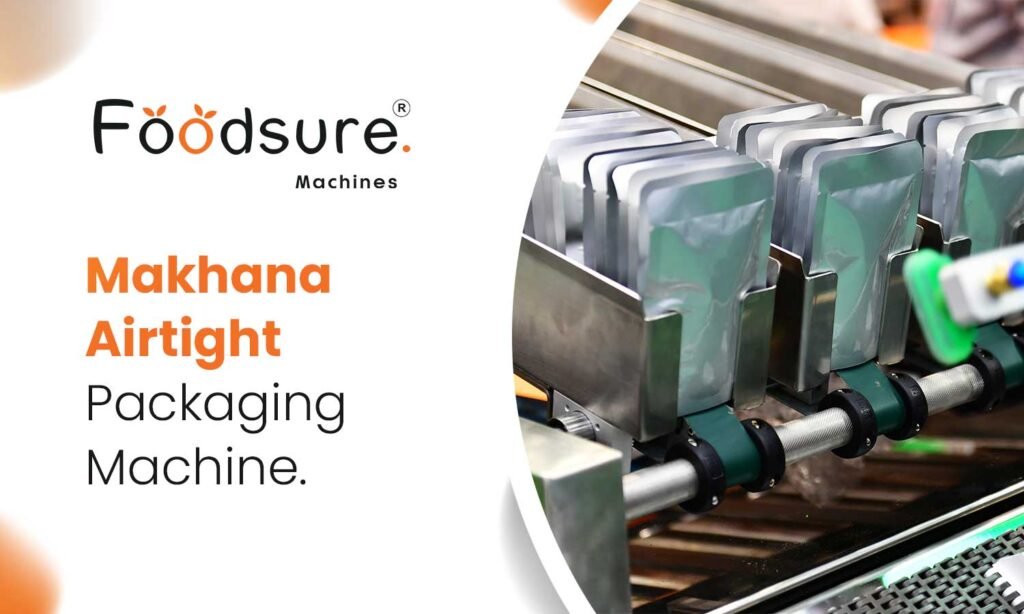
Short shelf life eats into margins. It leads to returns, rejections, and buyers who quietly walk away. As makhana gains ground in retail and export, long-lasting freshness is no longer optional; it’s expected. But old-school packing methods still let air in. They fall short on hygiene and weaken product stability. And that’s not just a quality issue; it chips away at trust, makes your shelf presence look unstable, and kills repeat orders. What actually works is a makhana airtight packaging machine. It locks in freshness, holds shelf life longer, and gives your brand a real shot at staying competitive. Why Traditional Packing Fails & How It Affects Makhana Shelf Life Traditional makhana packing comes with real problems that eat into product quality and sales potential. Loose Seals Kill Freshness When oxygen sneaks into the pouch, it doesn’t take long before things start going downhill. Fats oxidize, moisture evaporates, and what should be a crunchy, clean-tasting makhana turns stale. That one flaw, poor sealing, can quietly ruin shelf life and damage your reputation with every bite. Hand Packing Slows You Down and Adds Risk If one pouch is fresh and the next falls short, people notice. Distributors notice. Customers remember. And those small slip-ups? They don’t stay small. They pile up into lost reorders, silent exits, and doors that close behind you. If your product can’t stay consistent, neither can your buyers. Short Shelf Life Shrinks Your Market Traditional packing shortens how long your product stays fresh. That impacts shelf life, limits how far you can ship, and leads to more returns. Distributors get frustrated. Retailers reorder less. And that leftover stock? It often just sits there or gets tossed. Here’s the thing: if your product can’t hold up through transport and storage, growth stalls. You are not just losing freshness. You are losing shelf space, repeat buyers, and revenue. Quality Inconsistency Erodes Trust Fast Customers remember when one pouch is fresh and the next is off. Distributors remember, too. Over time, those small quality issues pile up into lost trust and missed opportunities. And in a space where buyers have choices, consistency is what keeps your brand moving forward. How to Increase Shelf Life of Makhana with an Makhana Airtight Packaging Machine What actually helps makhana last longer on the shelf: better packing, done right. It starts with nitrogen flushing. That means removing oxygen from the pouch and replacing it with nitrogen, a gas that won’t react with the product. No oxygen, no oxidation. So the texture stays crisp, the flavor holds, and the nutrients don’t break down. It’s how trusted brands package. Then comes the seal. The makhana packaging machine applies consistent heat and pressure to make each pouch airtight. There are no weak spots, no leaks, no surprises. And because the whole process is automated, it’s repeatable. Sensors monitor each step, so you don’t get one perfect pack and five risky ones. What this Makhana Airtight Packaging Machine gives you is longer shelf life, better hygiene, fewer returns, and packaging that holds up to export standards. Big Wins for Processors: How Airtight Makhana Packaging Boosts Shelf Life & Reduces Losses If your makhana goes soft, stale, or gets returned, it’s not just a packaging issue; it’s a profit leak. what is useful life of packaging machines, the right food-grade Makhana Airtight Packaging Machine doesn’t just seal a pouch; it protects your margins and gives your brand room to grow. Let’s break it down. What does a smart vacuum packing machine for makhana actually deliver? Up to 40% Longer Shelf Life With proper nitrogen flushing and a strong, airtight seal, your product stays fresh longer. We’re talking up to 40% more shelf life. That means less product wasted, fewer complaints, and more flexibility in distribution. That’s not theory; it’s backed by both machine specifications and field results. The result? Crunchier texture, locked-in freshness, and nutrients that hold up far longer than what outdated methods could ever deliver. Fewer Returns, More Trust When your product stays fresh longer, you get fewer complaints, fewer returns, and far less tension with distributors. It builds confidence, simplifies quality checks, and makes your brand easier to work with. Export-Ready, Without the Hassle An automatic Makhana Airtight Packaging Machine for makhana makes it easier to meet international food safety and shelf-life standards. Even during long shipments, your makhana stays fresh. That opens doors to new markets. Less Wastage, Better Margins A longer shelf life means retailers and distributors have more time to move your product. That cuts down on spoilage, reduces write-offs, and gives you better profit margins without waste piling up. Who Gains Most? Co-Manufacturers & Private Label Brands Using Airtight Packing A smart makhana airtight packaging machine gives co-manufacturers and private label units real control over complexity. When you are juggling multiple SKUs and clients, consistency matters. An automatic packaging machine for makhana helps you deliver airtight seals, uniform pouch weights, and clean labeling batch after batch. That’s how you protect brand quality, even if you are packing for one client or twenty. But consistency is just the start. These food-grade makhana packing machines come equipped with real-time monitoring and built-in sensors that track every step, from filling to dispatch. Here’s the thing: when your vacuum packing machine for makhana delivers consistency, everything else runs cleaner. You solve problems faster. Audits don’t turn into stress tests. Compliance becomes a box you can confidently check. You also get clear data from every batch, so spotting a slip in quality takes minutes, not hours. Less rework. Less waste. And the real win? Your clients see that reliability, and they stay. Manual vs. Machine: Why Modern Makhana Airtight Packaging Machine Wins Every Time Feature Manual Packing Modern Makhana Packers Shelf Life 2–3 months 5–8 months Sealing Consistency Low High Nitrogen Flushing No Yes Labor Required 3–5 1 Operator Retail Readiness Inconsistent Shelf-Ready Seal The Advantage With Foodsure Machines At Foodsure Machines, we don’t just speed up Makhana Airtight Packaging
Extraordinary Roasted Makhana Machine in Gurgaon Designed for Startups & Large-Scale Units
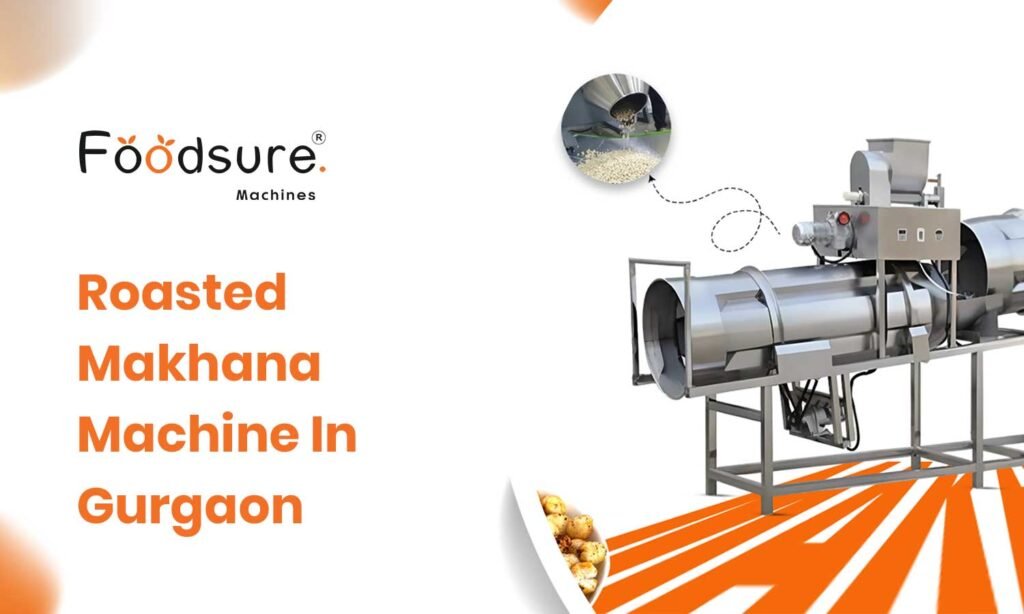
If you want consistent, premium-quality roasted makhana, your roasting process must be accurate, fast, and uniform. The Roasted Makhana Machine in Gurgaon is designed exactly for this, it controls heat precisely, maintains flavour, and preserves nutrients in every batch. Whether you’re a small startup or a large-scale unit, the machine handles both small and bulk production smoothly, ensuring your makhana looks better, tastes better, and sells better. Why Startups and Large Units Need a Reliable Roasted Makhana Machine Startups and large-scale units benefit a lot from having a dependable roasted makhana machine. Let’s break it down. For startups: A consistent machine means every batch comes out right, helping to make a strong reputation without wasting time or effort. Less manual work cuts operational costs and keeps production moving smoothly. Accurate temperature control maintains nutrients and gives the crunch customers expect. For large-scale units: Machines need to run continuously and handle high volumes without frequent breaks. Solid construction, smart automation, and energy-efficient operation keep production steady. Food-grade stainless steel guarantees hygiene and meets safety standards, ensuring compliance is easier. For all businesses: Dependable machines reduce non-productive time thanks to a long-lasting design and local support for maintenance and service parts. Scalable options let you expand capacity as your demand grows. A good roasted makhana machine in Gurgaon improves consistency, keeps your production smooth, and enhances profitability in a market that keeps getting more competitive. Key Challenges in Roasted Makhana Production The roasted makhana machine in Gurgaon has high growth demand, but it comes with some real challenges. Let’s break them down. Keeping the roast consistent: Uneven roasting changes the taste, texture, and overall quality. Customers notice, and trust can slip fast. Commercial makhana roasting equipment needs effective heat distribution, even if that’s hot air circulation or a rotating drum design. Continuous mixing ensures every piece gets the same even heat contact, so each batch comes out just right. Scaling production without losing quality: Startups often run into production slowdowns when trying to increase output because machines or process controls can’t keep up. Larger units need high-capacity machines that handle big batches without compromising consistency. Equipment made for scalability keeps products uniform, no matter how fast you grow. Meeting hygiene and safety standards: Roasted makhana is ready-to-eat, so following FSSAI or ISO norms is very important for the food business. Food-grade stainless steel makes your machines easier to clean. Temperature-controlled roasting keeps your product safe, avoiding burning. The right roasted makhana machine in Gurgaon does more than just roast by protecting product quality, guaranteeing safety, and keeping customers coming back. Must-Have Features of a Roasted Makhana Machine in Gurgaon Selecting the right roasted makhana machine in Gurgaon is not just about picking the biggest or most expensive option. It’s about the production capacity, automation, and other factors. Production capacity: Pick an industrial roasted makhana machine that meets today’s needs but can grow with you. Startups often do well with 25–50 kg/hr machines. Larger production needs 100 kg/hr or more to keep up with rising demand without constant capacity expansion. Automation: Semi-automatic machines fit startups because they are easy to use and keep labor costs in check. Fully automatic systems are better for large units. Because they combine feeding systems, temperature controls, and automatic discharge, they keep output consistent and reduce manual work. Energy efficiency: A roasted makhana processing machine that uses electricity saves money over time, especially for continuous roasting. Energy-efficient makhana roasting machines is a good insulation and optimized heating reduce energy loss and cut costs, which adds up fast. Maintenance: Look for a roasted makhana processing machine that is easy to clean and service. Modular parts and clear maintenance guidelines reduce non-productive time and keep your production smooth. Roasting technology: Hot air roasting circulates heat evenly. Mixer-equipped machines move the makhana constantly to avoid burning and guarantee a uniform roast. Advanced hot-air systems combine both techniques for the best texture and flavor preservation. That means each choice of capacity, automation, maintenance, and roasting method affects your product quality, consistency, and efficiency. Roasted Makhana Machine Specification & Price Comparison for Startups & Large Units Feature Small-Scale Startup Machine Medium Unit Machine Large-Scale Industrial Machine Capacity (kg/hr) 10–20 50–100 150–250 Power Consumption 3–5 kW 10–15 kW 20–30 kW Automation Semi-automatic Automatic Fully Automatic Roasting Method Hot air Hot air + stirrer Hot air + advanced stirring Maintenance Easy Moderate Skilled maintenance required Price Range (INR) 1–3 Lakh 5–10 Lakh 15–25 Lakh Ideal For Startups / FPOs Medium-scale units Large commercial units Request a Free Quote Today and Upgrade Your Production Efficiency! Trusted Roasted Makhana Machine Suppliers & Dealers in Gurgaon Choosing the right supplier for a roasted makhana machine in Gurgaon can make or break your production setup. Let’s break it down. Transparent pricing: You know exactly what your investment covers, with no hidden costs. This clarity helps startups and large units plan budgets confidently. Installation and training: Suppliers guide you through the setup and train operators properly. Well-trained operators reduce mistakes, run machines efficiently, and extend equipment lifespan. Local after-sales support: Dedicated teams handle maintenance, troubleshooting, and service parts quickly. Fast service keeps non-productive time minimal, so production doesn’t stop. Service contracts can be customized to fit your operation and growth plans. Hygiene and energy efficiency: The top roasted makhana machine are made from food-grade stainless steel and designed to operate efficiently. This ensures safe, clean production, regardless of even if you are a small startup or a large industrial unit. What this really means is that picking the right supplier isn’t just about the top roasted makhana machine. It’s about getting a partner who supports your business, keeps operations smooth, and helps you maximize your investment. Makhana Factory Setup Cost Explained: From Parts to Price Feature Small-Scale Startup Machine Medium Unit Machine Large-Scale Industrial Machine Heating Chamber Cost (INR) 30,000–50,000 80,000–1.5 Lakh 3–5 Lakh Stirring Mechanism Cost (INR) 20,000–40,000 50,000–80,000 2–3 Lakh Control Panel Cost (INR) 15,000–25,000 30,000–50,000 1–2 Lakh Frame &
2025’s Best Roasted Makhana Machine in Pune – Higher Output, Lower Costs
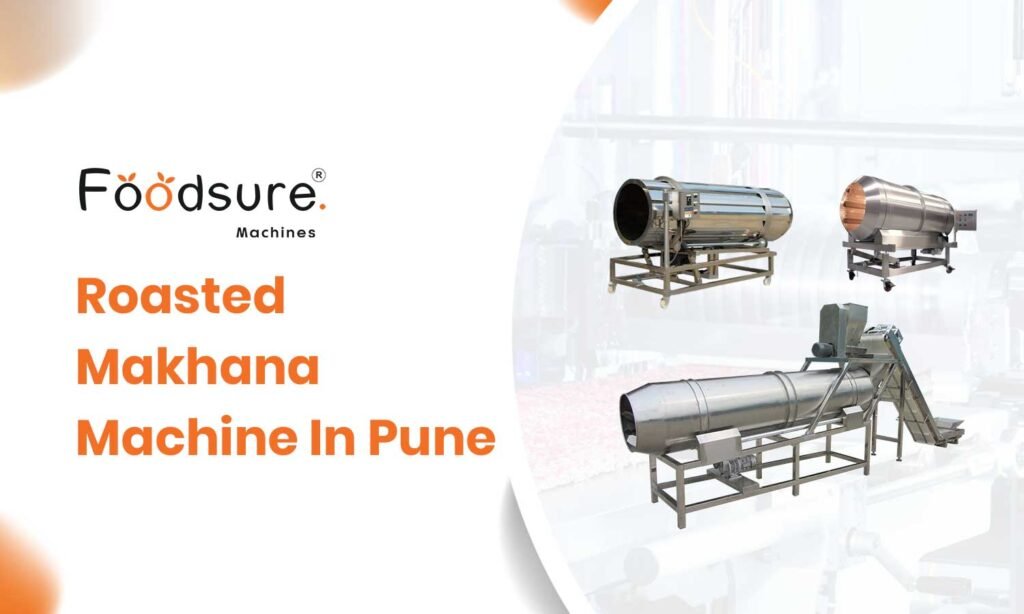
In Pune, 7 out of 10 small FPOs still roast makhana manually, losing up to 30% of potential output—despite market demand soaring 112% in 3 years. Small units roast 25–50 kg/day, while industrial machines now handle 100+ kg per batch. So, how do you pick a machine that triples output without burning your budget? If you’re struggling with inconsistent roasting, high energy bills, or downtime, the right commercial roasted makhana machine can fix all of it. This guide breaks down how Pune-based processors can choose a machine that delivers cleaner roasting, lower running cost, faster setup, and reliable local support, so you start strong from day one. 4 Shocking Reasons Pune FPOs Lose 30% of Roasted Makhana Profits The Pune FPO was getting inconsistent roasted makhana because everything was done manually. Manual roasting cost Pune FPOs 25–30% of potential daily output. They couldn’t scale beyond 50 kg/day due to outdated heating systems. Investing in a roasted makhana machine solved these problems and boosted output 3X. Manual roasting ate up time and labor, which kept production low. Inefficient heating systems pushed energy costs higher, cutting into profits. What this really meant was they couldn’t scale or meet growing market demand. Investing in a roasted makhana machine in Pune became essential to improve quality, reduce costs, and stabilize production. Best Roasted Makhana Machine in Pune: Boost Output 3X with Energy Efficiency When you are looking for a food processing machine manufacturer in pune, local suppliers don’t all offer the same quality or features. Some stand out by providing a commercial roasted makhana machine Pune that roasts consistently, uses energy efficiently, and comes with stable after-sales support. That support matters because even the best roasted makhana production equipment isn’t much use if it’s still waiting for parts or service. Let’s break down the key features of an Industrial makhana roasting machine and why they matter: Grader: The Grader separates makhana by size, perfect for batches from 25–100 kg/day. Roasting Unit: A stainless steel drum distributes heat uniformly using electric, gas, and diesel systems. This unit makes sure your makhana roasts perfectly without burning. Coating Machine: The coating machine applies flavorings, spices, and coatings evenly over your roasted makhana and giving each batch a consistent taste. Slurry Kettle: A kettle helps to prepare oil- and spice-based mixtures and applies them efficiently to improve flavor and texture. Packaging Machine: Makhana packaging machine comes in two types: two-head and four-head units, which help to fill, seal, and cut pouches at 30–60 packs per minute. This keeps your process hygienic and safe. What this really means is that the right roasted makhana production equipment doesn’t just roast makhana. It smooths out your entire production line, from sorting to packaging, and reduces manual work, so every batch meets your quality standards without extra effort. Read More: Why Upgrading To A Fully Automatic Makhana Line Can Boost Your Output by 3X? Step-by-Step Pune Setup Guide: Roasted Makhana Machine Running in Hours Pre-Installation Checklist Before you bring a high-capacity roasted makhana equipment into your factory, you need the basics in place. Make sure there is enough space for your machine. Also, check that your power supply is stable and meets the machine’s voltage and current requirements. Because safety is not optional. It’s about the proper grounding and fire protection keep your team safe and your production running smoothly and safely. Installation Process Site Preparation: Here’s the thing: clear and clean the area where the energy-efficient makhana roasting machine will go. Make sure power, air supply, and other utilities are ready and working. Machine Placement: Set the energy-efficient makhana roasting machine on a level surface and secure it. Taking care of vibrations now prevents problems down the line. Electrical Connection: Connect the power exactly as the makhana manufacturers in pune instructs. Double-check wiring and grounding to avoid any risks. Component Assembly: Assemble all parts, graders, roasters, coating units, mixture kettles, and packaging machines. Everything should fit smoothly and operate as intended. Staff Training & First Batch Your team needs to know the high-capacity roasted makhana equipment inside out. Train them on production, safety, cleaning, and troubleshooting. Watch the first batch closely, monitor roasting times, and coating consistency. Take notes, adjust settings, and encourage questions. Doing this upfront cuts break time, keeps the industrial makhana making machine in peak condition, and make sure every batch of roasted makhana processing machine meets your quality standards. Ready to scale production? Request a quote for your roasted makhana machine in Pune today. Industrial Roasted Makhana Machine in Pune: 3–4X Output, Lower Energy Costs & Rapid ROI Parameter Before Machine After Machine Impact Production Capacity 50–60 kg/day 150–200 kg/day 3–4x increase Roasting Quality Inconsistent batches, uneven color Uniform roasting, consistent texture Better taste & appearance Wastage 10–15% 2–3% Reduced raw material loss Energy Cost High, due to inefficient heating Lower, energy-efficient system Cost savings Labor Requirement 4–5 operators 2–3 operators Less manual intervention ROI (Small Units) N/A 8–12 months Faster payback ROI (Medium Units) N/A 6–9 months Quick recovery & scaling Boost output 3–4x and reduce wastage. Speak with our experts and schedule a demo! Limited Pune installations available this month — Book Your Machine Today! A roasted makhana machine in Pune from Foodsure Machines gives you consistent roasting, energy efficiency, and reliable performance. What this really means is you can scale production without sacrificing quality. Whether you’re starting small or running a larger operation, you get expert installation, local support in Pune, and dependable after-sales service. The end result is higher output, lower costs, and the confidence to meet growing demand with ease. Get your high-capacity roasted makhana machine in Pune now. 🚀 Power Your Factory Get Your Machine Quote Now 📞 Call Now✉️ Email Now FAQ Q1: What is the ideal capacity for a Pune FPO? Here’s the thing: for most small to medium operations, 25–100 kg per batch hits the sweet spot. It’s enough to meet demand without overinvesting. Q2: How much does installation cost locally? The installation
Top 5 Features Every Industrial Makhana Roasting Machine Should Have
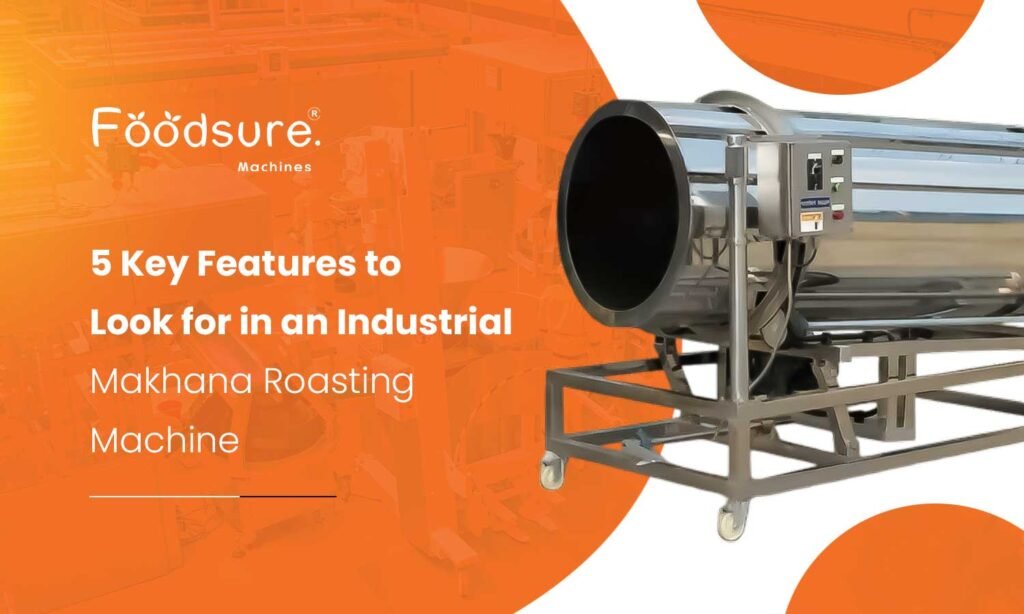
Roasted makhana demand is exploding worldwide, growing at 12%+ CAGR, and Indian manufacturers are scrambling to keep up. But here’s the real challenge, how do you scale output without burning batches, losing crunch, or wasting fuel? The answer starts with choosing the right Industrial Makhana Roasting Machine. In this guide, you’ll discover the 5 features that actually impact output, quality, and ROI. Plus how Foodsure Machines helps processors move from inconsistent manual roasting to stable, high-profit production. The #1 Reason Most Makhana Batches Fail: Poor Temperature Control Based on 45+ real installations, temperature fluctuations remain the #1 cause of rejected makhana batches. The makhana roasting temperature control system is the single most important factor in makhana processing. Unlike other nuts, makhana seeds are extremely sensitive to heat; if the temperature remains too low, they will stay chewy and raw from inside, and if it is too high, they will burn quickly, resulting in bitter flavors and a loss of nutrients. Client in Bihar increased output from 120 kg/day to 360 kg/day using our high-capacity roaster. Why Precise Temperature Control Matters in Industrial Makhana Roasting Maintaining quality is important: Makhana must be roasted at an optimal range of 140°C to 160°C, depending on the size, moisture content, and roasting style. Even a 5-10°C change in temperature can impact crunch, color, and shelf life. Even a 7°C spike can burn 20% of a batch. Uniform Roasting: Manual or semi-automated roasted makhana machines often create uneven heat distribution. This results in some batches being under-roasted while others get over-roasted. Reduction of Nutritional Value: Over-roasting can destroy essential amino acids and antioxidants found in Makhana. With proper temperature control, the protein content (around 9.7g/100g) and micronutrients are better preserved. How High-Capacity Roasters Can 3X Your Makhana Output Instantly Any Makhana manufacturer needs a high-capacity feature in their roasting machines to increase productivity. A high-capacity industrial Makhana roasting machine allows you to handle 80-100 kg/ 30 Minutes, compared to just 5-10 kg with traditional models. This also helps in the uninterrupted operation of Makhana. Upgrading to high-capacity roasters cut roasting time from 4 hours to 1 hour for most Foodsure Machines clients. Why Choosing a High-Capacity Makhana Roaster Drives Higher Output More output in less time- High capacity makhana roaster machine produces 80-100 kg/ 30 minutes, allowing multiple batches to meet daily targets. It guarantees to triple the production of makhana than manual labour, without extending the working hours. Continuous roasting- Our conveyor-based systems support continuous input and output of makhana, reducing the downtime between batches. This means fewer starts and stops, no cooling delays, and smooth integration with flavoring, sorting, or packaging lines. Low labour and energy costs- Higher capacity means fewer cycles and less manual handling. One operator can manage a larger volume, reducing the need for extra labor. Plus, roasting more per batch improves energy efficiency in comparison to small-batch systems. Read More: High-Capacity vs. Small-Scale Makhana Machines Cheap Roasters Fail Fast – Here’s Why Food-Grade Machines Last 10+ Years Our machines’ contact parts are constructed with Stainless Steel 304 16 Gauge, Thickness 18 to 20 mm, and non-contact parts are of Stainless Steel 202, renowned for its corrosion resistance, ease of cleaning, and compliance with global food safety standards. This powerful material ensures the machine withstands continuous operation and harsh cleaning protocols, delivering years of reliable service. Why Food-Grade Construction Matters In Makhana Roasting Machines? Increased Sanitation and Hygiene- SS 304 is designed to prevent the buildup of bacteria and pathogens. Smooth, non-porous surfaces make cleaning and sanitization necessary, which is critical for maintaining the strict hygiene standards required in food processing environments. Operational efficiency- Food grade construction in makhana making machine also eases maintenance and cleaning, minimizing production downtime and increasing overall production. SS 304 material machines maintain uninterrupted operations and consistent product quality. Regulatory Compliance- Using food-grade materials ensures compliance with global food safety regulations, such as FDA, 3-A, and ASME BPE standards. This compliance is not just about avoiding legal issues; it’s about guaranteeing that your makhana roasting process consistently meets the highest safety benchmarks, protecting your business from costly recalls and reputational damage. Slash Your Roasting Cost Per Kg: Energy-Efficient Machines Explained Inefficient roasters can burn ₹18–30 per kg in energy losses alone. Energy efficiency and cost-effectiveness are important features when choosing an makhana processing unit, as they directly impact your bottom line and operational sustainability. Our machines are engineered to deliver high roasting output while minimizing power consumption, making them a smart investment for any scale of operation. Why should machines be energy-efficient and cost-friendly? Lower Operating costs- Energy-efficient machines reduce electricity and fuel consumption, which can account for a major portion of a food processor’s expenses. By optimizing energy usage, businesses can achieve substantial cost savings, freeing up capital for growth or innovation. Increased Profitability- Lower energy bills directly increase profit margins. When machines use less power to achieve the same or better results, the cost per unit of makhana processed decreases, making your operation more competitive in the market. Environment saving- Energy-efficient equipment helps reduce greenhouse gas emissions and the overall carbon footprint of your facility. This not only supports global sustainability goals but also increases your brand’s reputation among eco-conscious consumers and partners. From Raw to Roasted Automatically: How Modern Machines Do 90% of the Work Manual roasting creates inconsistency because every batch depends on the operator. Integrated automation and user-friendly operation are the most important in our industrial makhana roasting machines, transforming the entire production process into an easy and powerful workflow. Step-by-Step Automation Process Of Makhana Our makhana roasted machine are made to automate every stage of makhana processing, from raw input to final packaging. The automation process of industrial makhana roasting machines is: It begins with a vibrator hopper that ensures a steady, clog-free flow of raw makhana onto the conveyor belt. This conveyor moves the makhana at a controlled speed through the roasting chamber, guaranteeing each nut receives
Best Protein Bar Machine Manufacturers in India | Buy Locally [2026]
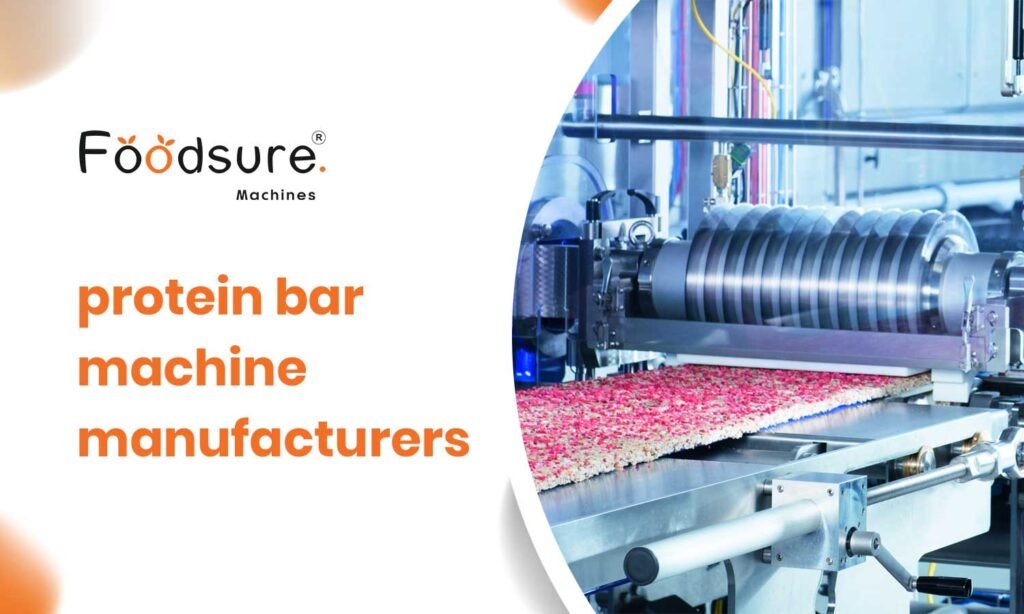
The Indian market for healthy snacks is growing due to protein bars, and companies are working to make better versions of them. Businesses need to identify the right protein bar machine manufacturers who operate in India to achieve their expansion goals. The right protein bar production equipment enables manufacturers to produce more bars while meeting international shipping requirements and food safety regulations and quality control and hygiene standards. This blog compares the best companies that make machines for making protein bars. It also discusses the costs of these machines and the essential factors that need to be evaluated when purchasing a protein bar production line in India. Top Protein Bar Machine Manufacturer in India (2026 List) Here are some of the most reliable protein bar machine manufacturer in India known for quality, support, and performance. 1. Foodsure Machines (Noida, Uttar Pradesh) Foodsure Machines has built its reputation as a reliable manufacturer of protein bars throughout India. Our food-grade stainless steel machines provide complete processing capabilities which include mixing and cutting and optional coating and packaging functions. The systems operate with simple controls, while Foodsure Machines delivers complete support which includes installation services and staff development training and provision of replacement components. The system delivers operational efficiency to both small startups and large factories through its combination of high standards and functional design. Get your Foodsure protein bar machine today and start hassle-free production. 2. E & S Food Technologies (Mumbai/Thane) E and S provide adaptable solutions through their customizable mixers and dryers and conveyors that support multiple product types. The machines enable you to adjust production recipes during the process while their technical support guarantees production efficiency and product quality maintenance and operational flexibility to manufacturers testing their new protein bar products. 3. Shree Industrial Equipments (Hyderabad, Telangana) Shree Industrial Equipment operates as a local manufacturer with limited resources yet it provides trustworthy solutions to its customers. Their whey protein bar mixer handles 200 kg per batch while operating efficiently and allowing operators to use it without difficulty. The company provides both installation support and practical maintenance guidance to its customers. For factories looking for simple, reliable machinery, this makes Shree a solid choice. 4. K.P. Engineering (Ahmedabad, Gujarat) K.P. Engineering offers automatic stainless-steel protein bar machines that operate with efficient, eco-friendly design. The company provides fast shipping services which typically deliver products within one week, while offering basic customisation options for your factory layout. K.P. Engineering serves as an Indian manufacturer that delivers reliable services at budget-friendly prices. 5. Kalyan Machines (Noida, Uttar Pradesh) Kalyan Machines is a reliable protein bar manufacturers in India that provides a variety of food processing machinery, such as protein bar-making machines. The Automatic Energy Bar Processing Line combines an extruder with a bar cutting conveyor and a cooling system to create an efficient and hygienic processing solution. The devices that operate at a price range between ₹6.5 and ₹7.5 lakh serve as perfect solutions for businesses of medium size and larger. Cost of Protein Bar Manufacturing Machine Parts in India (2026) The protein bar machine price in India depends on automation level, capacity, and whether you invest in individual units or a complete protein bar production line. Machine Component Price Range (₹) Function Mixing & Blending Machine ₹1.5–3 lakh Blends protein powders, oats, syrups evenly Extruder Machine ₹2–4 lakh Shapes mixture into uniform bars Cutting Machine ₹1–2 lakh Cuts bars into precise sizes Coating Machine (Optional) ₹2–3 lakh Adds chocolate or yogurt coating Packaging Machine ₹1.5–2.5 lakh Hygienic wrapping or boxing Quality Control Equipment ₹1–2 lakh Weighing, inspection, metal detection Ready to Start Your Protein Bar Machine Journey? Call/Email today at or connect with us online for quick support. 📞 Call Now ✉️ Contact Us How to Choose the Best Manufacturer for Your Factory The selection of protein bar machine manufacturers will determine your business performance results. The product provides machine operators with three essential benefits which include peace of mind and dependable service and complete operational support. The following elements represent the essential aspects which need evaluation: Warranty & Reliability – A good warranty shows the manufacturer stands behind their protein bar manufacturing machine. You receive protection for all potential problems which may occur. Hands-On Training – Your team needs proper training to run and maintain the equipment efficiently. Staff members who receive proper training make fewer errors which results in more efficient production processes. Spare Parts & Quick Support – Bar production machines will need maintenance at some point. Select a manufacturer who provides immediate parts access and instant repair solutions when any problems arise. Hygiene & Compliance – Look for tools that are easy to clean and meet GMP and FSSAI requirements. Your business needs dependable equipment which remains sanitary to maintain product quality and brand reputation. A bar production machines is only part of the equation. The people behind it, their support and expertise- make the real difference. The business should concentrate on developing long-lasting benefits which extend beyond initial expenses. Cost Of Protein Bar Manufacturing Equipment India Understanding the protein bar machine price and overall protein bar making machine price is essential before investing in a production line. The cost of protein bar manufacturing equipment in India depends on automation level, machine capacity, and the type of production line required. Manufacturer Price Range (₹) Machine Type After-Sales Support Customization Foodsure Machines (New Delhi) ₹30-40 Lakh (approx.) Full line: mix, extrude, coat, pack Installation, training, spares Medium – step-by-step setup E & S Food Technologies (Mumbai/Thane) ₹30-40 Lakh (approx.) Modular, mixers, dryers, conveyors Technical support & project engineering High – flexible formats Shree Industrial Equipments (Hyderabad) ₹3.75 Lakh per unit Whey protein bar mixer Standard regional support Low – simple design K.P. Engineering (Ahmedabad) ₹10,00,000 (approx) Automatic, stainless-steel machines Quick delivery and setup Medium Kalyan Machines (Noida, Uttar Pradesh) ₹6.5–7.5 Lakh Automatic energy/protein bar line Installation & domestic/export support Medium – customizable setup Why Choosing the Right Protein Bar Machine Manufacturer Matters Buying a protein bar making machine is
Best Roasted Makhana Processing Machine In Bangalore – Cost, Trusted Dealers & Supply Chain
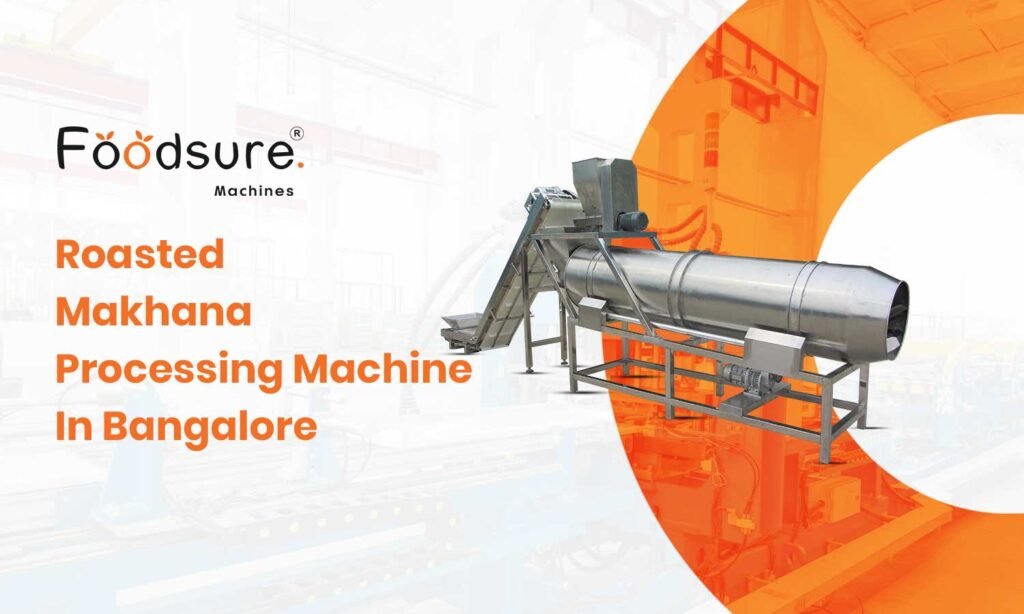
If you are serious about setting up the best roasted makhana unit in Bangalore, your first decision is obvious: the best roasted makhana processing machine in Bangalore. Most buyers hit the same roadblocks. Because they do not know what a fair price looks like, which dealers they can actually trust, or how supply and after-sales support really work. This blog helps you clear that up, step by step. Types Of Roasted Makhana Processing Machines You Can Buy In Bangalore Selecting the right commercial roasted makhana machine in Bangalore can save you time and money. But not every option fits your production, so let’s break it down. Which machine is best for your production? Semi-Automatic Roasted Makhana Machine – Mid-Level Production A semi-automatic roasted makhana machine is perfect for units that require small-scale production, and this machine also requires manual help. It has automated roasting and stirring while keeping costs reasonable. This makhana flavouring machine easily maintains consistent quality without a huge upfront investment. It is ideal for a commercial roasted makhana machine in Bangalore for startups and mid-sized producers. Fully Automatic Roasted Makhana Machine – Large-Scale Factories It easily handles grading, roasting, coating, and sometimes even packing in one flow. This fully automatic roasted makhana machine reduces labor needs and keeps your output stable. It falls under makhana making machine. It is designed for large manufacturers aiming at big markets. What this really means is fewer errors, uniform quality, and more predictable production schedules. Read More: Start a Makhana Business in Maharashtra with the Best Processing Machines Makhana Processing Machine Price in Bangalore – What Buyers Should Expect Let’s talk about the makhana factory setup cost in Bangalore, and which depends on the type of machine you buy, it’s about capacity, and how automated it is. Knowing these factors helps you plan your investment and avoid surprises. Machine Type Capacity (kg/hour) Automation Level Estimated Price Range (INR) Key Cost Factors Who It’s For Semi-Automatic 50–150 Semi-Automatic ₹5–12 Lakh Roasting + stirring automation, batch control, moderate output Growing startups and commercial units Fully Automatic 150–500+ Fully Automatic ₹12–35 Lakh Integrated roasting, grading, cooling, sometimes packing, high output Large factories and industrial-scale production Read More: Makhana Machine Cost in India- ROI Analysis for Manufacturers What To Check Before Buy Roasted Makhana Machine In Bangalore As we all know that not all makhana roasting machine in Bangalore are made the same, and what separates a decent unit from a reliable one are the features that matter most. When you are investing in the best makhana processing unit cost in Bangalore, keep these points in mind: Food-Grade Stainless Steel Design – Always make sure your makhana stays safe, hygienic, and free from any impurities. It also makes the machine long-lasting and resistant to rust. Energy Efficiency & Roasting Precision – Machines that control temperature and roasting time consistently save your power and produce uniform makhana quality every batch. Easy Cleaning & Hygiene Compliance – Choose a makhana factory setup cost that allows quick cleaning and follows food safety standards. This reduces break time and maintains product quality. Automation Level – Semi-automatic vs fully automatic affects your output, labor needs, and overall efficiency. Always choose a machine that matches your production scale. After-Sales Support Availability – Select a makhana machine manufacturer who provides local service, service parts, and training can save months of troubleshooting. What this really means is, if you pick the right makhana processing unit cost for your production, it helps you upfront, prevents headaches, ensures better makhana processing plant cost, and keeps your product consistent from day one. Trusted Dealers For Roasted Makhana Processing Machine In Bangalore Choosing the right makhana machine manufacturer can save you time, money, and your production delays. Let’s break it down by some trusted options: Foodsure Machines We offer both semi-automatic and fully automatic roasted makhana processing machines. It easily handles capacities up to 500 kg/hour. All makhana roasting machine features are made with food-grade stainless steel that keeps your product safe and hygienic. Makhana making machine automation is exact, simple to operate, and backed with after-sales support, installation, and training. What this really means is fewer production errors, consistent quality, and a partner you can rely on. Yushan Technology Corporation It is a Bengaluru-based supplier for small to mid-sized units. They use airflow puffing technology for even roasting. It is ideal for startups and growing businesses looking for manageable output without overspending. Tejoplast It is known for energy-efficient machines that save power without compromising production. They offer multiple models for different production scales. They make it easier to expand production gradually without a huge upfront cost. Read More: Top 5 Makhana Machine Companies In India Supply Chain Support For Best Roasted Makhana Processing Machine In Bangalore Buy roasted makhana machine in Bangalore is just the first step. What really matters is how it’s supported after-sales support. Let’s break it down. Service Parts on Hand – Trusted suppliers keep essential parts ready. This means if you face any problem with the machine. So, your production doesn’t stop. Annual Maintenance Contracts – Regular servicing keeps your machine running smoothly. It also reduces unexpected breakdowns and makes life easier for your team. Hands-On Training – If you get proper training, make sure your staff can operate the machine efficiently and safely. What this really means is you can easily get fewer mistakes, consistent product quality, and faster output. Local Technician Support – Having technicians in Bangalore means help is nearby. They can give you a quick response time, which saves your time, money, and stress. Read More: District Spotlight: The Success Story of Makhana Processing in Rajkot Ready To Invest In A Roasted Makhana Processing Machine In Bangalore? At Foodsure Machines, we design and supply a roasted makhana processing machine in Bangalore made for consistent quality and efficiency. We handle everything from installation to training, and our local support in Bangalore makes sure your production runs smoothly from day one.
Take Your Protein Bar Business in Jaipur to the Next Level with Trusted Machines and Suppliers
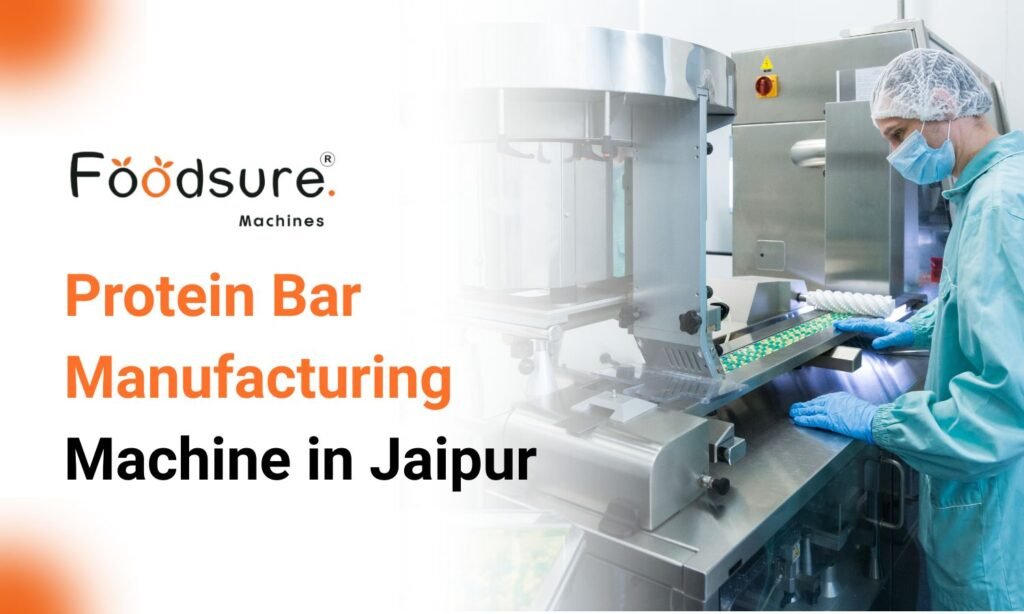
With India’s nutrition market growing 20%+ yearly, Jaipur is becoming a hotspot for protein bar brands. But here’s the real struggle: slow production, inconsistent quality, rising labor costs. What if one upgrade could fix it all? Discover how a high-output protein bar manufacturing machine in Jaipur can transform your entire business. Trusted Protein Bar Manufacturing Machine In Jaipur Suppliers Looking for trusted protein bar machine suppliers in Jaipur? These names stand out for their quality, support, and simple setup. To make your protein bar journey smooth, we have listed Jaipur’s top machine suppliers who bring experience and easy support. Supplier A: Foodsure Machines Why we’re good: At Foodsure Machines, we make fully automatic protein bar equipment that is made to last. Our protein bar production machine are designed with food-grade stainless steel, so they are easy to clean, safe for use after basic training, and strong for years. Our experience: We have been working in this industry for more than 12 years. Our team of engineers and food experts knows what it takes to set up a production line and manage a smooth & stable production line. What customers say Many of our customers give us top ratings. Because they often mention how simple our machines are to install and also how easy they are to use. How our team supports them with recipes, setup, and troubleshooting. How we support you We don’t just hand over the machine. But we also help with installation, give technical training, and provide after-sales service whenever you need it. Our team also guides you to meet important food safety standards, so your business runs without worry. Supplier B: Kalyan Machines Why they’re good Kalyan Machines offers affordable and practical solutions, especially for small businesses. Their commercial protein bar manufacturing equipment is compact and customizable, so you can start small and expand later. Experience They’ve been working for over 12 years and serve well-known companies like Mother Dairy and Ananda. They have experience dealing with different business needs. Reviews Customers appreciate their reliable machines and helpful customer service. Their machine prices are affordable, and they also provide support when you need it. Support Kalyan helps you with installation, maintenance, quick delivery, and training, so you are not left handling things on your own. Supplier C: Papa Machines Why they’re good Papa Industrial specializes in fully automatic protein bar equipment that makes different types of bars easily. Their machines use touch controls and precise cutting, so the process is simple and you don’t need much manual work. Experience They’ve been supplying machines in India and other countries like the US and UK for many years, which makes them a trusted choice. Reviews Customers like how strong and safe their machines are. Many mention that the protein bar making machine helps produce more bars with less effort. Support Papa Industrial helps with testing, remote guidance, and full integration options if you want additional equipment like enrobers and packagers. Why A Protein Bar Manufacturing Machine In Jaipur Boosts Growth It’s not just about faster production. The right protein bar manufacturing machine in Jaipur helps you to deliver better quality, saves time, and helps you to grow your brand. Why it’s a must for your business. It makes sure that every bar has the same texture, taste, and nutrition, so customers trust your brand. With the help of commercial protein bar manufacturing equipment, it also reduces manual work and helps you produce more in less time. It increases your production as demand grows without losing quality. Keeps operations cost-effective while maintaining clean and safe production. Allows you to try new recipes and bar types with adjustable settings. Helps your business grow by giving consistent results, saving time, and supporting expansion. Why Protein Bar Manufacturing Machine In Jaipur Suppliers Lead The Market It has a proven record with many successful setups, so you can trust the protein bar-making machine. They provide you with technical support and training to help your team run the machines easily. They also offer flexible financing and maintenance options that fit different budgets. It gives you access to genuine service parts and expert service for quick repairs and minimal downtime. Turn Demand Into Success With Protein Bar Manufacturing Machines Meeting growing demand is only part of the challenge. What really matters is producing protein bars consistently, keeping quality high, and running your business without constant hiccups. That’s where Foodsure Machines comes in. Our protein bar manufacturing machine in Jaipur is designed to make your production straightforward, stable, and efficient. We also support you with training, guidance, and service so you can focus on growing your business. Your brand, your success. Foodsure machines make it real. Have a Question? Let’s Connect! Reach out to us anytime via call or email. 📞 Call Us ✉️ Email Now FAQ Q1. What is the cost of a protein bar manufacturing plant? ₹ 5–20 lakh (approx) for a small to mid-scale automated setup. Q2. Are protein bars profitable? Yes, they can be very profitable once you scale, because of high margins. Q3. How are protein bars manufactured? Ingredients (protein powder, nuts, sweeteners) are mixed, shaped, cooked/pressed, and packaged. Q4. How big is the protein bar market in India? India’s protein bar market was ~USD 124.20 million in 2024. Q5. How long does 1 kg of protein powder last? Typically 28–30 servings, so if you take one scoop daily, about a month. Q6. How much does a protein factory cost? Similar to a manufacturing plant – ₹ 5–20 lakh for modest capacity. Q7. Is a bar business high risk? Yes , high competition, cost of raw materials, and marketing make it risky. Q8. Which food has the highest profit margin? Packaged snack bars (like protein bars) and specialty health snacks often have very high margins. Q9. Why are protein bars costly? Because of expensive high-quality protein, preservatives, and processing costs. Q10. What’s the shelf life of protein powder? About 1–2 years when unopened; 3–6 months once opened. Q11. What drives
High-Capacity vs. Small-Scale Makhana Machines
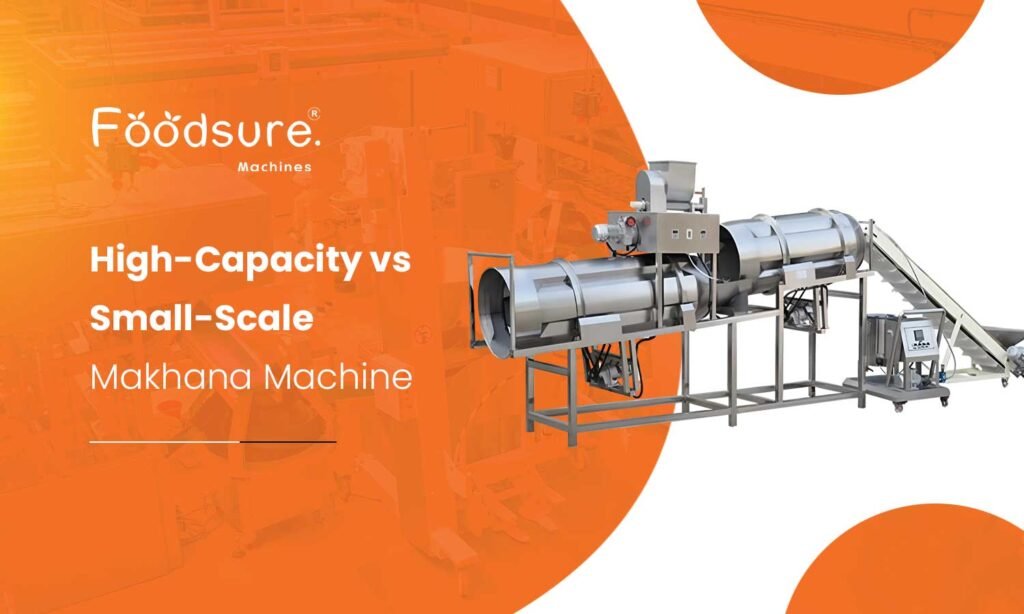
Makhana is now a ₹4,500+ crore global superfood, growing at 20% yearly, but most brands still struggle with uneven roasting, high wastage, and low output. So what’s the smarter investment: High-Capacity vs Small-Scale Makhana Machines? This guide breaks down the real differences, costs, ROI and reveals which system fits your business best with Foodsure Machines. The Growing Business Of Makhana Processing In India Over the past few years, the consumption of makhana has seen a rapid increase due to rising health awareness and demand for organic snacks. India produces more than 90% of the world’s makhana, with Bihar alone contributing to over 80% of this production. From a volume perspective, makhana has experienced a growth of 8.84% CAGR during the period from 2018 to 2023 in India. It is expected to expand at a CAGR of 6.86% from 2024 to 2030. In terms of value, the Indian makhana market has recorded a CAGR of 39.33% between 2018 and 2023 and is expected to grow at a CAGR of 15.76% from 2024 to 2030. With the increasing market insights of makhana, we know how important makhana is to grow your business, and with that, perfect makhana processing machines are also. So now, let’s understand High-Capacity vs Small-Scale Makhana Machines: which one fits your business? High-Capacity Makhana Machines In India For the entrepreneurs who want to expand their makhana business, reach export standards, or advance the makhana production process, high-capacity makhana machines are perfect. These machines offer industrial-grade efficiency and are built to handle large volumes consistently. Technical Specifications Production Capacity- 100 – 300 kg/hr Motor Power- 40 – 75 kW Material Used- SS 304 (Stainless Steel) Voltage Requirements- 440 V Automation Level- Fully Automatic makhana machine Benefits of High-Capacity Makhana Machines in India Rapid ROI from high production volumes. Reduced dependency on labor. Precise roasting and uniform popping quality. Increased safety, hygiene, and compliance with export norms. Scalable setup for expansion. High-capacity makhana machines are best suited for Large-scale makhana exporters Food processing units B2B suppliers Government-affiliated Farmer-Producer Organizations (FPOs) Small-Scale Makhana Machines In India If you are planning to start a small makhana factory or begin with a limited investment, a small-scale makhana machine is a perfect choice. These machines are specifically made for new entrepreneurs and small machinery for home business on a limited budget. Technical Specifications: Production Capacity- 80 – 100 kg/hr Motor Power- 3-6 kW Material Used- SS 304 (Stainless Steel) Operation- Manual to Semi-automatic Makhana Machine Roasting Temperature- Adjustable temperature, mostly between 120°C to 180°C, depending upon machine and batch size Voltage Requirements- 220 V Benefits of Small scale Machines in India Easy to use, even for beginners, with simple controls. Enable uniform roasting, preserving nutrition, and crispiness. Durable, hygienic, and made from food-grade stainless steel. Produce high-quality makhana with consistent flavor and texture. Reduce labor costs and increase productivity for small businesses and farmers. Small-scale makhana machines are best suited for: Rural Self-Help Groups (SHGs) Home-based entrepreneurs Cottage industries Government-supported MSME projects High-Capacity vs. Small-Scale Makhana Machines Categories Small-Scale Makhana Machines High-Capacity Makhana Machines Production Capacity 80-100 kg/hr 100-300 kg/hr Motor Power 3-6 kW 40-75 kW Material Used SS 304 SS 304 Voltage Requirements 440 V 220 V Automation Level Manual to Semi-automatic Fully automatic Operation Mode Batch or continuous roasting, simple controls Continuous roasting with integrated flavouring and cooling Roasting Temperature Adjustable, 120°C–180°C Precisely controlled, adjustable for uniform roasting Energy Efficiency Energy-efficient for small-scale operations High, designed for industrial-scale cost savings Machine Size Compact, suitable for limited space Larger footprints Ideal For Small businesses, startups, local producers Large industrial units, commercial manufacturers Additional Features Basic flavouring and roasting functions Integrated grading, seasoning applicators, cooling conveyors Cost Lower investment, affordable for small enterprises Higher investment due to scale and automation How To Choose The Right Machine For Your Makhana Business? Making the right investment decision depends on several factors: Market Size & Demand If you serve a small-town market, a small machine may suffice. For supermarkets or international buyers, higher capacity and automation ensure consistent quality. Capital Investment Small-scale makhana machines are affordable and good for testing the business. High-capacity machines need more investment but offer faster returns if you have financial support. Manpower Availability Small machines need more manual labor. High-capacity machines reduce labor costs through automation. Future Expansion If you plan to grow, export, or launch branded products, it’s better to invest in scalable, high-capacity machines from the start. To know more about High-capacity vs Small-scale makhana machines that will be perfectly suitable for your makhana business, contact us Today! Why Choose Foodsure Machines For Your Makhana Business? At Foodsure Machines, we don’t just manufacture equipment; in fact, we offer turnkey makhana processing solutions that are customized to your makhana business goals. Our expertise includes Custom-built Machines- Designed for your exact production requirement Installation & Setup- Complete on-site installation and plant layout assistance Operator Training- Hands-on training for your workforce After-sales Support- Regular maintenance and emergency support Trusted by 45+ Food Entrepreneurs With 45+ project executions and an equal no. of happy customers, we are proud to serve our roasted makhana machines in Bihar, Gujarat, Delhi NCR, and other states. Proudly provides machines in 5+ countries, our key export destinations include Oman, Zambia, USA, Bangladesh, Sri Lanka, Riyadh, India, and many more countries. Ready to Start Your Makhana Business? Foodsure Machines is your one-stop solution for the makhana processing machines that are modified to meet your business needs. From installation to after-sales, you have full support and guidance from our side. Get in touch with Foodsure Machines today. Frequently Asked Questions Q1. Which is more profitable: high-capacity or small-scale makhana machines? High-capacity machines give higher long-term ROI, while small-scale setups offer faster low-investment returns. Q2. How much does a high-capacity makhana machine cost? Typically ₹8–25 lakhs depending on automation and output. Q3. What is the ideal machine size for a new makhana startup? A small-scale 50–100 kg/hr machine is best for beginners. Q4. Which machine delivers the best roasting consistency? High-capacity
Protein Bar Manufacturers Machine in Indore – Complete Manufacturing Line Setup
Indore is becoming a key spot for small and medium-scale protein bar production. People here are getting more health-conscious, and the city’s infrastructure makes it easier to set up manufacturing. If you want to start a protein bar business or grow the one you already have, picking the right Protein Bar Machine Manufacturers in Indore matters. A reliable commercial Protein Bar Manufacturers Machine in Indore doesn’t just make bars. It keeps the quality consistent, boosts your output, and makes it easier to follow hygiene standards. Protein Bar Manufacturers Machine in Indore: Why Your Business Needs One As you know, Manual production takes a lot of time. It slows you down, creates inconsistencies. Here’s what changes when you start using a proper Protein Bar Manufacturers Machine in Indore: With the help of a commercial protein bar machine, you get the same size, same taste, same packaging, product batch after batch. Machines let you scale your production without any labor costs. The industrial protein bar machine uses only ingredients that are measured and used efficiently, so you easily save money with every run. Commercial machines are made for continuous use, and reducing your costly break time. If you use a Protein Bar Manufacturers Machine in Indore , it helps you to grow your production, so you can easily meet bigger orders and take on new markets without any problem. Protein Bar Machine Manufacturers in Indore: Semi vs Fully Automatic Options When you are choosing an industrial protein bar machine, it usually comes down to two options. Let’s break it down. Semi-Automatic Protein Bar Machine in Indore Best fit for startups and small units testing the market. Handles shaping and forming with some operator involvement. A semi-automatic protein bar machine is ideal for startups and small-scale production, because it is affordable for them. This machine produces a range that starts from around 50–150 kg per day, which is enough to supply local retailers. Fully Automatic Protein Bar Machine This machine is made for medium to large businesses where scale and speed matter. Fully automatic protein bar machines are fully automated, which do nearly everything, like mixing, shaping, cooling, cutting, and even wrapping. This machine has a Higher upfront cost, but it pays off with minimal labor and faster production. Production capacity can cross 500 kg per day, making it suitable for wholesalers and bigger contracts. Delivers consistent quality, which makes branding and market expansion easier. Best Protein Bar Manufacturers Machine in Indore – 2025 Models Compared Machine Type Daily Capacity Price Range (₹) Key Features Service & Spare Parts Support Semi-Automatic Protein Bar Machine 50–150 kg 4–7 Lakh Requires an operator for wrapping, flexible for small batches, low power use 1-year warranty, local service partners in Indore, easy spare part availability Fully Automatic Protein Bar Machine 500–1000+ kg 15–25 Lakh Automatic mixing, shaping, cooling & wrapping with consistent bar quality AMC plans, 24/7 helpline, stocked spare parts in Indore, on-site technician support How Much Does It Cost to Install a Protein Bar Manufacturers Machine in Indore? Buying the protein bar production line is only part of the picture. Setting up a smooth production line comes with its own costs. Production space: You need room not just for the protein bar production line, but also for packaging and storage. Modifying or renting a small facility in Indore usually costs ₹50,000–1.5 Lakh. Electrical setup and safety: Machines need stable power, proper grounding, and compliance with safety norms. Setting up circuits, stabilizers, and safety measures can run ₹50,000–2 Lakh. Packaging and storage equipment: Wrappers, conveyors, storage racks, and cooling units keep production moving. Expect ₹1–2 Lakh for small-scale setups. Total estimated setup cost: Small-scale units: ₹3–5 Lakh Medium-scale units: ₹8–15 Lakh Protein Bar Production Tips: Increase Efficiency and Cut Waste in Indore A machine is only as good as the way you run it. You can have the fastest, most advanced equipment, but without attention to the machine process, you will still see waste and uneven bars. If your products’ ingredients, like raw materials and some other ingredients, are not in the same ratio, then you can get a smooth product. So, that will be your wasted products. Your team should know how to use a machine’s service parts, like adjusting settings, and how to clean it properly. If your team is fully skilled, then it prevents any type of mistakes and also stops unnecessary break time. Always check machine service parts like belts, motors, and cutting blades to see if they work perfectly. A small inspection now avoids a big breakdown later. Final Thoughts on Protein Bar Production Machines in Indore At Foodsure Machines, we design Protein Bar Manufacturers Machine in Indore that helps you scale with confidence. Our semi-automatic and fully automatic machines deliver consistent bars, reduce wastage, and keep operations smooth. With our local support and spare parts in Indore, your production stays on track. Ready for consistent, high-quality bars? Talk to Foodsure Machines in Indore. Request Your Free Quote Fast Please reach out to us anytime via phone or email. 📞 Call Us ✉️ Email Now FAQ Q1: What is the ROI for small-scale protein bar production? Ans: Here’s the thing: with consistent production and steady demand, small-scale units in Indore can recover their investment within 12–18 months. Q2: How much space and electricity are needed? Ans: Semi-automatic machines need about 300–500 sq. ft. and 3–5 kW power; And if we talk about fully automatic machines, they require more space and higher electricity. Q3: Are there any compliance certifications required in India? Ans: What this really means is you need FSSAI certification, and following GMP practices helps keep your production hygienic and market-ready. Q4. How to start a protein bar business from home in Indore? Ans: Begin with a small protein bar machine, FSSAI registration, and a basic mixing-shaping setup. Q5. Which brand makes the best protein bar machines in Indore? Ans: Foodsure Machines is among the most reliable protein bar equipment suppliers in Indore. Q6. How are
Makhana Machine Trends 2026: Industry Growth & New Opportunities
Health-based eating habits are changing how consumers snack, and fox nuts are tapping into that space. More shoppers are looking to eat something light, low in fat, and still considered nutritious, and makhana fits the bill. The market in India was valued at INR 8.5 billion in 2024, and is on a rapid growth trajectory as it is projected to be nearly INR 19.6 billion by 2033. This steady, sustainable growth is being sustained with a 9.22% CAGR forecasted for the period from 2025-2033. Makhana is becoming a more mainstream solution as a real potential viable economic model, rather than simply a niche snack. Why the Makhana Market Is Rising Faster Than Ever Around 60 to 65 percent of urban snack consumers are looking for healthy alternatives, which is making makhana front of mind. Indian makhana has now launched in over 20 countries across the US, the Middle East, and Europe, and it is still expanding in export markets. The flavoured profiles of peri peri, cheese, and herbs are not merely a niche offering anymore, now representing almost 30 percent of retail sales. Packaged snacks in India are generating a compound annual growth rate of 12 to 14 percent, and makhana is riding that wave directly. Most projections in the industry are forecasting a steady growth rate of a further 10 to 12 percent for the category in the next five years. Top 5 Makhana Market Trends for 2026 and Beyond Premium and exotic flavours Peri peri, Italian herbs, smoky BBQ, and caramel are getting real attention in modern stores Shoppers want simple, tasty options, and these flavours help makhana feel more familiar This shift is pulling makhana into the mainstream snack space Rising global export demand Indian brands are shipping to the US, UK, Dubai, and Australia These markets see makhana as a clean, light snack Consistent quality is becoming essential for exporters Shift toward automation Manual roasting has limits in scale and consistency Roasting machines give the same result batch after batch Brands use them to improve hygiene and increase output Clean-label and vegan snacking People prefer snacks with fewer preservatives Low-oil recipes and simple seasonings are winning attention Clean labels help brands build trust quickly Ready-to-eat makhana boom Convenience snacks are growing across retail and online Standardised roasting is needed to keep the taste steady Higher demand pushes companies to adopt better roasting systems What’s Fueling the Demand for Advanced Makhana Machines Consistency and Quality Here’s the thing. Manual roasting swings a lot. Some kernels burn, some stay soft, and the flavour shifts from batch to batch. A good makhana machine keeps the heat steady and treats every kernel the same. The result is predictable colour, crunch, and taste. Higher Production Output Let’s break it down. You can’t meet growing orders with 20–30 kilos a day. Automated roasting lines push production into the 300–1000 kilo range without stressing the team. What this really means is you can sell to more buyers, and plan for wholesale or export without losing sleep over consistency. Labour Efficiency Most small units struggle with finding and keeping skilled workers. A modern roasting setup changes that. One trained operator can manage the line without running from one station to another. It cuts mistakes, reduces labour issues, and keeps the work predictable. Read More: From Manual To Modern: How Advanced Makhana Processing Machines Transform The Industry? Conclusion At Foodsure Machines, we believe the makhana industry is entering its strongest growth phase. With the latest processing technology for roast makhana, we can help you achieve a higher level of quality and consistency. Ready to increase your capacity? Contact us for more information. FAQ Q1. What are the main trends impacting the makhana market through 2026? Ans: Flavor options, clean-label snacks, and roasting and processing automation offer ways for brands to grow and to differentiate. Q2. What is the health of demand in makhana today? Ans: Demand is growing domestically in India and abroad as consumers look for lighter high high-protein snacks that are helping grow retail and export. Q3. What are pricing trends for the makhana business? Ans: Pricing is stable due to ongoing demand and increased processing, but baked/roasted/seasoned makhana offers premium margins.
Foodsure Machines Launches Automatic Protein Bar Making Line to Power India’s Functional Food Growth
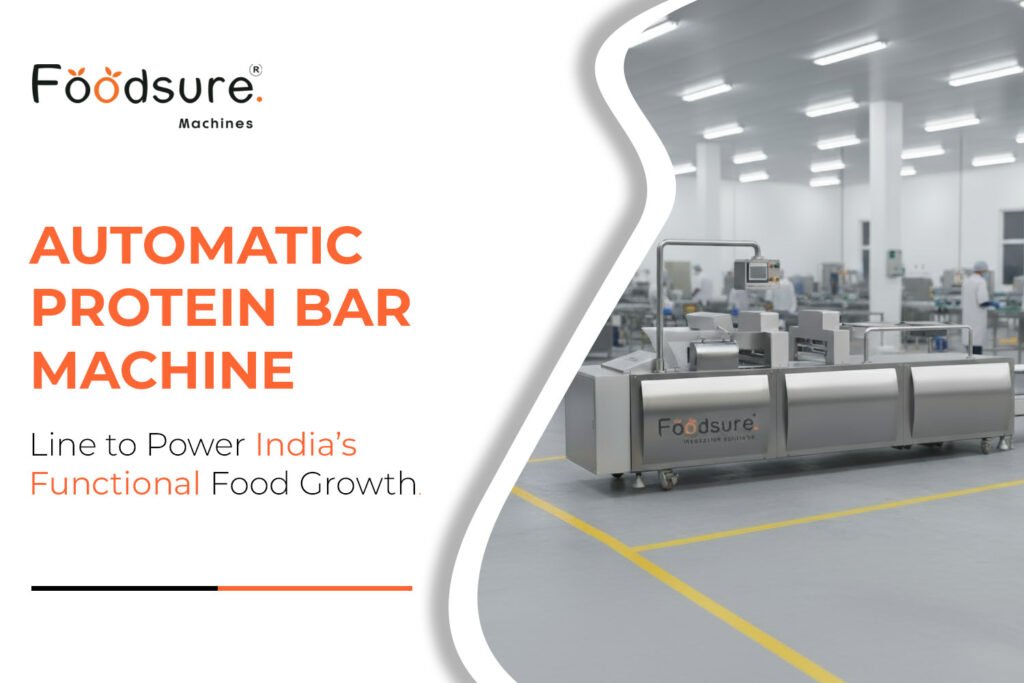
The functional snack market is experiencing rapid growth, which has made protein bars the most popular product in this emerging trend. Manufacturers need automatic protein bar making line for small and medium manufacturers because these machines deliver three essential benefits which include faster production times and better sanitary conditions and more reliable product results. The protein bar manufacturing process requires proper protein bar production line selection which needs to be understood by both new nutrition brands and existing brands who want to grow their businesses. Metric Insight Source / Notes Global protein bar market size USD 15.97 billion in 2024 (Fortune Business Insights) From Fortune Business Insights Global projected size USD 24.25 billion by 2032 (Fortune Business Insights) Implies growth across 2025–2032 Global CAGR 5.45% CAGR (2025–2032) (Fortune Business Insights) Baseline for global market Global protein snacks market USD 24.0B (2024) → USD 74.1B (2034), ~12.1% CAGR (InsightAce) Protein bars fall under this category India protein bar market size USD 863.9M in 2024 (Grand View Research) India-focused study India market projection USD 1,266.9M by 2030 (Grand View Research) Forecasted growth India CAGR 6.6% CAGR (2025–2030) (Grand View Research) Higher than global India energy / protein-rich bars growth 14%+ CAGR; protein bars ~44% share (Mordor Intelligence) Signals strong demand Protein Bar Manufacturing Process (Step-by-Step) A commercial protein bar manufacturing process requires precise control at every stage to maintain texture, nutrition, and shelf life. Ingredient Weighing & Mixing: The mixing process combines proteins with syrups fats and fibers and inclusions through temperature-controlled mixers. This step directly affects the quality of bars made using a protein bar manufacturing machine. Binder Heating & Blending: The process involves heating liquid binders such as glucose and maltitol before mixing them with dry ingredients. Incorrect heating can cause texture failure in the protein bar production steps. Slab Forming / Extrusion: The protein bar extrusion machine and slab former shape the blended mass into its desired form. The compression pressure establishes the bar’s density through this measurement process. Rolling & Thickness Control: Modern automatic protein bar production lines require uniform thickness to achieve proper cooling and cutting results. Cooling Tunnel: Cooling tunnels provide stabilisation for both fats and binders. The bars produced by a commercial protein bar machine will experience oil separation when the cooling process lacks proper control. Cutting & Forming: automated wrapping on a protein bar production line requires precise cutting which creates uniform dimensions. Wrapping & Packaging: The process of wrapping the bars requires a consistent bar size which directly impacts the sealing quality and shelf life of the product. The Hidden Gaps in Protein Bar Manufacturing It is science to create a protein bar that is soft, chewy, and nutritionally stable. How do we do that? Protein, while important, can often make our bars too dense or dry, due to this often very high protein content. The problem is, without strict control of a set of variables related to temperature, mixing, and moisture, each batch can come out a little differently. Our product will also face a few bottlenecks during production when: Most challenges come from poor control of critical variables like: Protein-to-moisture ratio Thermal load effect on binders Ingredient particle size & hydration Cooling time uniformity Compression force during forming When these are not standardized, protein bars can: Become too hard, especially over shelf life Crack/crumble during cutting and wrapping Show oil separation due to unstable fat binding Lose texture and become chalky due to protein denaturation Common Problems in Manual Protein Bar Manufacturing Manufacturer using semi-automatic setups may have following problems: Touch texture issue was observed between different batches. Bars tend to harden over shelf life. Cracks develop during cutting. Over-dependence on labor. Some delays in lead times, but limited throughput. Inefficiency essentially characterizes certain small-scale set-ups, and therefore, thoughts as to the existence and need for an automatic protein bar-making machine were found in the customers. Foodsure’s Solution: Consistency = Confidence The Foodsure automatic protein bar making line for small and medium manufacturers ensures that all aspects of production, including mixing and molding, are carried out in accordance with the set parameters. Performance & Profitability Advantages Perfect Shape & Size Every Time Advanced forming and cutting units ensure uniform dimensions + ideal bar density to avoid rejections during wrapping. Designed for High-Protein, Clean-Label Recipes Can process 30–40% protein bars, nut bars, granola bars, energy bars, keto bars — without cracking or hardening. Shelf-Life Stability Engineered Controlled mixing temperatures prevent protein denaturation + sugar alcohol crystallization → softer texture over shelf life. Low Manpower Dependency → Lower Cost/Unit Automation reduces labor by up to 60%, allowing faster scaling without adding staff. Inline Cooling for Texture Control Prevents oil separation, stickiness, or moisture migration — maintaining bite consistency. Why It Matters: Business Wins Challenge Foodsure Machine Solution Batch-to-batch variability Full automation + parameter lock Texture hardening Thermal + moisture balance control High wastage Precise dosing + cutting accuracy Low output 30–40% more throughput Hygiene issues SS304 food-contact build The automatic protein bar making line for small and medium manufacturers is available in four different models, each with production capacity: 50kg/hr, 100kg/hr, 200kg/hr, and 500kg/hr. Each production line includes PLC automation, temperature-controlled mixing, and an extrusion module built for food processing durability. Why an Automatic Protein Bar Making Line Is a Game-Changer The Automatic Protein Bar Making Line provides measurable advantages through its upgraded system. Consistent Quality: The system provides consistent product quality to customers. Higher Output: The system maintains protein integrity through exact temperature control during its protein mixing process. Reduced Labor Costs: The Automatic Protein Bar Making Line enables production increases of 30 to 40 percent when compared to traditional manual methods. Suitable for High-Protein Formulas: The protein bar manufacturing system becomes more economical because automation decreases required worker hours. Modern protein bar extrusion machines can process bars containing 30 to 40 percent protein without cracking. Automatic Protein Bar Making Line Capacity Options Model Capacity Suitable For 50 kg/hr Startups Pilot nutrition brands 100 kg/hr Growing brands Regional
Protein Bar Manufacturing Equipment: Solve Output & Consistency Issues
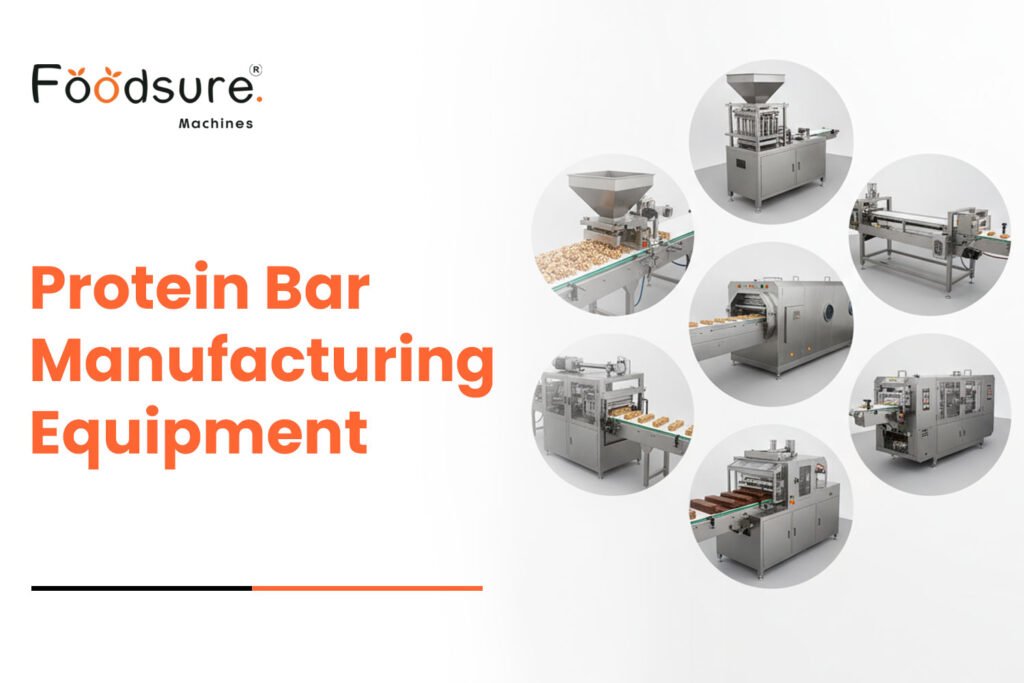
You have a wonderful recipe, and for reasons you cannot fully understand, people enjoy consuming your protein bars. The only issue is that the process of making them by hand takes an immense amount of time. The shapes are not consistent every time, and the batches are always inconsistent. It’s a little defeating when you consider the amount of time and effort taken to create the product and how it actually looks. By purchasing a set of protein bar manufacturing equipment, you will be able to maintain the same recipe, create a much better product, with more consistency, and at the end of the day, produce enough product for the true demand. This is how something you began in your home kitchen develops into a real, stand-alone business. What’s Really Holding Back Small Protein Bar Brands Making protein bars by hand seems easy until you try to keep every batch consistent. Small setups often just use basic tools, and that is when it all starts to fail. Mixing isn’t even: The protein and binder don’t blend the same way every time, so taste and texture change. Sizes vary: One bar’s heavy, the next is light. That throws off packing and labeling. Texture slips: Without steady temperature control, bars turn sticky or dry out fast. Cleanliness is tough: Too much handling means a higher risk of contamination. Output stays low: Meeting growing demand becomes impossible. How the Right Equipment Turns Small Batches into a Scalable Business You have advanced protein bar producing machines that combine mixing, forming, cooling, and packing machinery into one seamless operation. Now, while producing significantly more bars, you can maintain that every bar looks and tastes the same, all completed in a fraction of the time. Automated Mixing & Forming Units These units make sure every ingredient blends evenly and every bar keeps the same shape and weight. The automated bar forming machine removes guesswork and keeps your recipe steady from start to finish. Cooling & Cutting Systems The cooled conveyor gives bars time to set properly before cutting. No sticking, no broken edges, just clean, even pieces that look store-ready. Integrated Packaging Lines This is where your product is completed. The protein bar line will automatically wrap, seal, and label each bar. You maintain food safety, keep the shelf life longer, and free up your time for what matters: growing your business. Read More: How to Start a Protein Bar Business: A Complete Beginner’s Guide Why Automation Pays Back Faster Than You Think When you move to a protein bar production machines, your production starts to grow with fewer mistakes, and the work feels lighter. More output: The protein bar manufacturing process gives you a stable rhythm, which helps you to make two to three times more bars without hiring more people. Less waste: Every mix of bar and cut is measured, so you lose fewer ingredients, and it also saves your money. Better shelf life: This protein bar making machine has consistent blending and packing, keeping your bars fresh longer. Cleaner process: With less handling, it’s easier to stay within FSSAI hygiene rules. Quick returns: The benefits of a protein bar production line show up fast, higher yield, lower costs, and smoother days on the floor. How to Choose the Right Protein Bar Setup for Your Scale The ideal configuration relies on how much you are ready to produce, and not on how large you want to be in the future. A small-scale protein bar production machine is more than sufficient if you are working on a recipe, creating texture, or doing a small order. Pilot-scale units: Best for R&D and small startups. Simple to clean, easy to adjust, and great for learning production control. Full commercial lines: Ideal for large-scale or export units that run continuously and need full automation. Read More: Top 5 Protein Bar Machine Manufacturers in India (2025) Conclusion Good machines don’t just make bars; they make your business steady. At Foodsure Machines, we design protein bar manufacturing equipment in India that helps you work faster, keep quality steady, and waste less. We’ve seen small setups turn into strong brands just by choosing the right equipment and process. If you’re planning to grow, start with a setup that grows with you. Request a custom quote, and we’ll help you build the right system for your scale and budget. Contact us: +919870533566 Email now: wecare@foodsure.in FAQ Q1: How can I set up my own protein bar manufacturing unit? Start with the right protein bar manufacturing equipment. You’ll need a mixer, a bar former, a cooling tunnel, and a packaging unit. Once these are in place, you can make consistent, shelf-ready bars without relying on manual work. Q2: What is a protein bar manufacturing machine’s method of working? It takes your recipe from the beginning to the end without any interruptions and utilizes the latest technology. The ingredients are mixed, shaped into bars, cooled down for the texture to set, and packed into boxes all automatically. This is a huge time saver, and it can guarantee each production batch is consistent with the previous batch. Q3: What is the cost of a protein bar manufacturing equipment? A small-scale production setup could cost in the ballpark of ₹10-15 lakhs. It varies depending on how automated you are and how much you can produce.
Efficient, Reliable Protein Bar Packaging Machines That Boost Your Production
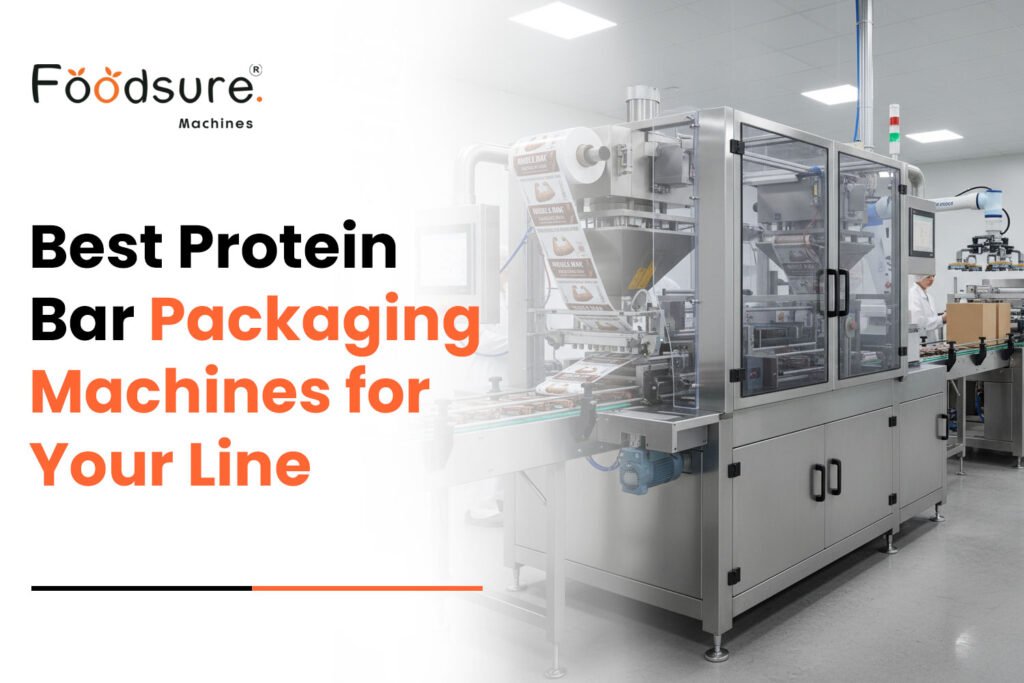
You’ve put time, energy, and care into making your protein bars just right. Every batch is your recipe, your effort, your idea. But then comes the hard part: shaping them evenly, wrapping them neatly, keeping them fresh. It’s slow, it’s frustrating, and small mistakes can ruin hours of work. It can make the dream of turning your kitchen creation into a real brand feel far away. A protein bar packaging machine changes all of that. It packs bars quickly, cleanly, and the same way every time. You save time, cut down waste, and your product looks professional on the shelf. This really means that you can spend more energy growing your business, trying new flavors, and reaching more customers instead of wrestling with every single bar. Here’s how you can take your brand from your kitchen counter to something people notice and trust. Protein Bar Packaging Machines: Horizontal Flow Wrapping vs VFFS Explained 1. Horizontal Flow Wrapping Machine A horizontal flow wrapper machine wraps snack bars lengthwise in an endless film to form a bag-like shape, like a pillow. The design of these machines is based on speed and consistency, which is beneficial when packing high volumes. How it works: Once the bars are dropped onto the conveyor automatically, the film wraps around the bar, then folds and seals the end seals. Any excess film is then trimmed, and the finished bars are pushed off as completed product. Things to consider: More than one style of machine will take up more space. Some maintenance is more difficult. The upfront cost is higher than the bulk packing options. Best for: Bars that keep their shape well and that need to be packed quickly. Brands want a consistent square pillow shape package. 2. Vertical Form Fill Seal (VFFS) Machine VFFS (Vertical Form Fill Seal) machines create vertical pouches from flat banners or rolls of film. Bars are inserted inside pouches and sealed at both ends, which is an effective solution if you need to package bars in flexible sizes/ shapes. The process works like this: the film wraps around a forming tube and is sealed vertically; the bars drop into the bag, the top is sealed, and the bag is cut off the roll. VFFS offers the benefits of being: Space-efficient both on the floor and in production size Adjustable for flexible package sizes Creates an airtight seal to keep bars fresher. Perfect for small-to-medium production amounts. There are considerations when using a VFFS system. More time-consuming than similar horizontal flow wrappers. Extra film material waste is also something to consider, so considering the value of the bar compared to the quantity of seals is an important factor. Operating requires a specific training process (film-handling knowledge). Best suited for: Bars that are just going to be pouches. Use as a protein bar production line, operations are small-to-medium-sized and space-limited. Which Protein Bar Packaging Machine Is Best for Your Production? The main idea is: selecting the best protein bar packaging machine depends on your actual requirements. Production volume: If you’re packaging a lot of bars quickly, horizontal flow wrappers are the right machines. Horizontal flow wrappers will, in a fast, efficient way, produce every bar in the same pillow packaging, with room for multi-month production. Custom or unique-sized packages: If your bars use pouches or are varied in size, a VFFS machine will suit your needs better. VFFS is compact, flexible, and easily usable in any small area. Startups vs established brands. Startups will typically perform better with semi-automatic or VFFS machines. The small protein bar packaging machine for food is typically easier to run and at a lower price point, which establishes a lower labor cost compared to an automatic machine, absorbing the tougher or harder operational costs. In short, not every protein bar machine fits every purpose. Keep your production volume, packaging needs, and space in mind before selecting which machine fits your needs. Read More: Start A Protein Bar Business: Tips, Machines & Growth Why Foodsure Machines Lead in Protein Bar Packaging Solutions Consistency, speed, and sanitation: Designed to be effective and keep everything secure and sanitized, packaging protein bars has never been anything other than a trustworthy feature. Reliability: With 45+ installations throughout India and practically anywhere else, there is not much that would interrupt the dependable, smooth production you will have. Smart technology: Packaging, cutting, sealing, and batch coding that is accurate, easy, and straightforward, while servo motors, PLC controls, and touchscreens allow you to lower human error. Food safe and durable construction: SS304 stainless steel made to FSSAI, FDA, and GMP specifications. Versatile applications: flexible in-line packaging allows you to package various protein bar sizes and types, shapes, or sustainable materials in HFFS, VFFS, and semi-automatic methods. What does this mean to you: More production in less time, consistently packaged bars with less waste, and looking professional to instill trust in your customers. Read More: Protein Bar Production Process Conclusion Foodsure Machines makes protein bar packaging easy and reliable. Your line stays clean, runs smoothly, and handles any production size. Call +919870533566 and get your packaging working the way it should. Email now: wecare@foodsure.in FAQ Q1. What kinds of packaging are used for protein bars? Most protein bars use a pillow-style flow wrap or pouches for packaging. The base material can simply be plastic, foil, or perhaps an eco-friendly film, depending on what your brand has to offer. Q2. Is a protein bar packaging machine a good investment? With more people now opting for healthy snacks, a reliable packaging machine will save time, reduce labor, and decrease waste. What that means is lower costs and higher profits over time. Q3. What is the cost of a Mespack protein bar packaging machine in India? The cost of the same depends on the type of model and level of automation. Generally, the price is estimated to fall in ₹10 lakh to ₹50 lakh, depending upon speed and features.
Granola Bar Making Machines That Keep Your Production Steady and Profitable
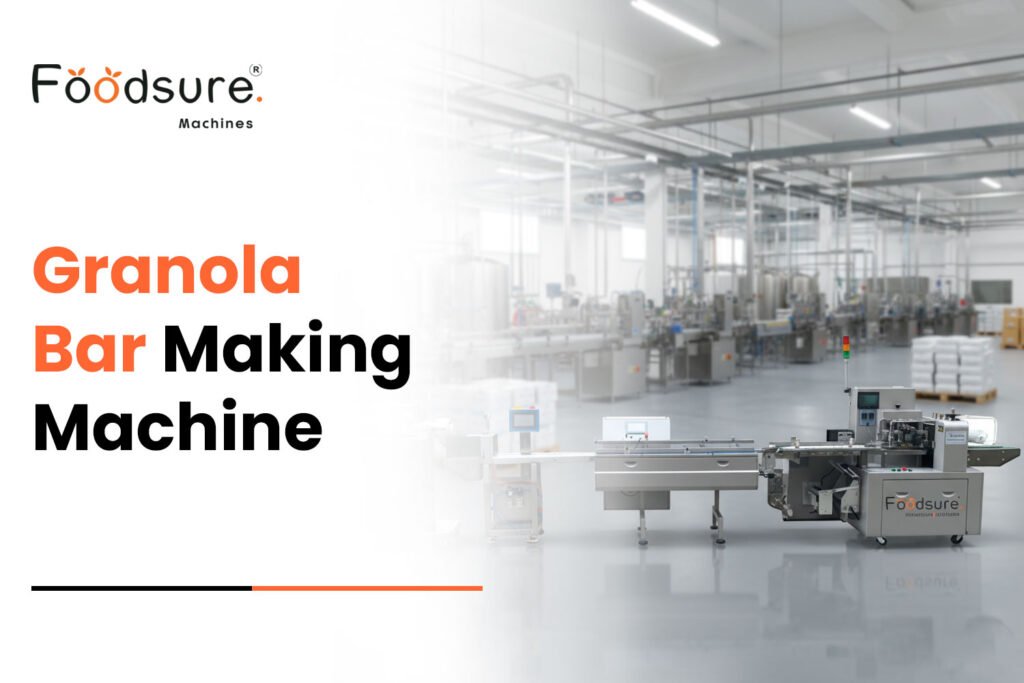
Every food business begins with excitement, a recipe people love, and a dream of seeing it on more shelves, in more hands. But once orders started growing, the kitchen suddenly started feeling too small. Mixing, pressing, and cutting each granola bar manually takes time, and no matter how hard you try, every batch turns out a little different. That’s where a Foodsure granola bar making machine starts to change the story. It keeps the taste and texture consistent, saves hours of manual work, and solves every problem you face in the manual process. Let’s uncover the secret to high production with a granola bar-making machine. A Quick Guide to Semi-Automatic and Fully Automatic Bar Production Machines For a granola bar, there are mainly two types of bar processing machines. And also you get a question in your mind “ which type of machines is best for my production”, “does this machine help me to grow my scale”, and many more. So, let’s clear your questions with some information about the machines. Here is the answer to your questions: Semi-Automatic Protein Bar Machines These bar making machines are great for small batches, startups, and testing new recipes. But it’s a combination of manual and machines, where some work is done by machines and some by manual like mixing, forming, and cutting. Here is a good part that they are affordable, easy to run, and you do not need much space. Also, maintenance is simple, too, which makes them practical for anyone just getting started. Capacity: 50kg-100kg Material: stainless-steel (304/316) Automation: Requires some help from labor Power: Lower per consumption per hour( 7.5Kw – 20kw) Fully Automatic Production Lines If we talk about the automatic protein bar machine. These setups are designed for factories that run larger production and need stable output. This protein bar manufacturing machine does every step of the process from mixing and forming to cooling, cutting, and packaging. You get consistent shape, weight, and texture with every bar, which makes it perfect for the market. Capacity: 100kg-200kg Material: stainless-steel (304/316) Automation: Combined PLC Control for all steps (Mixing to Wrapping). Power: High per consumption per hour( 10Kw – 30kw) You may also like: Automatic vs Semi-Automatic Machines for Protein Bar Production (2025 Guide) Granola Bar Manufacturing Equipment: Automation and After-Sales Support That Matter Now, you know about the protein bar extruder. Let’s focus on automation features and maintenance with support. A good granola bar making machine should make your life easier. And your goal should be simple: keep your production stable, keep quality consistent, and keep downtime low. Automation Features Mixing and Ingredient Control: These features keep your batch even, so the texture and mixture stay the same. Forming and Cutting Systems: With the PLC controls, it makes sure each bar comes out neat and uniform. Cooling Conveyors: Let the bars hold their shape before wrapping. Automatic Wrapping and Counting: This feature saves your time, and also cuts down on manual work, and avoids mistakes. Flexible Setup: With a few changes, the same line can make protein bars, seed bars, and cereal clusters. Maintenance and Support Regular Care: These machines can be cleaned easily and maintain product hygiene. This helps the machine run smoothly without any problems. Remote Help: There are many suppliers who can check and guide you online if there are any problems. Spare Parts and Updates: Always choose a local supplier because it makes to have easy access to replacements and software updates, which keeps your production stable. Operator Training: In a market, there are many suppliers who provide training to operate a machine. This helps you work to operate the machine easily. After-Sales Support: There is are real difference between a good and great supplier in how they help you after installation. If you get a trusted support, that means you get fewer breaks, longer machine life, and better returns on your investment. You may also like: Everything You Need to Know About Protein Bar Machines What You Need to Know About Granola Bar Making Machine Prices Machine Part Semi-Automatic (₹) Fully Automatic (₹) Mixer ₹1,50,000 – ₹2,50,000 ₹2,50,000 – ₹4,00,000 Forming Unit ₹2,00,000 – ₹3,50,000 ₹4,00,000 – ₹6,00,000 Cutting System ₹2,00,000 – ₹4,00,000 ₹5,00,000 – ₹7,00,000 Cooling Conveyor ₹1,00,000 – ₹2,50,000 ₹2,50,000 – ₹4,00,000 Wrapping Unit ₹2,50,000 – ₹4,00,000 ₹5,00,000 – ₹8,00,000 Control Panel (PLC) ₹1,00,000 – ₹2,00,000 ₹2,00,000 – ₹3,00,000 Support & Maintenance (Annual) ₹50,000 – ₹1,00,000 ₹1,00,000 – ₹1,50,000 How to Choose the Right Granola Bar Making Machine Supplier After getting to know about the machine type and automation with features. Now, the main point is the supplier, which is important for your scale. As you know, if you select the right equipment, is not just about the supplier, but it’s about the partnership. Below, we see what to look for in a Granola Bar Making Machine Supplier and why it is important. What to Look For Experience and Compliance: Always select a supplier who has experience in manufacturing. And their machines are approved under GMP and CE standards. That is how you make sure your setup meets safety and quality rules without any problem. Support: Be sure that adequate training, parts availability in a timely fashion, warranty, and support are all easy to understand. Why It Matters A dependable supplier saves you labor and money, beyond just money. They help avoid downtime, maintain consistent product quality, and keep you compliant with FSSAI or FDA deliverables. Typically, a bad supplier comes with confusion associated with your supply base, late shipments, and loss of cash. A reliable supplier helps keep your line running, supports your team, and preserves your brand. You may also like: Automatic vs Semi-Automatic Machines for Protein Bar Production (2025 Guide) Conclusion For over 12 years, we’ve been focused on helping food brands set up dependable production systems. We have over 45 installations in 5+ countries, and our machines and support systems are built for consistency and expansion. At
Roasted Makhana Manufacturer in India Redefining Premium Healthy Snacks
There is no longer time to trade health for taste. This Roasted makhana manufacturer in India is arguably one of the pioneers of snack revolution, carefully elevating the Fox nut into a premium, guilt-free superfood, creatively balancing ancient nutritional properties with modern gourmet flavors, and creating a definition of a nutritious, filling snack food. Why Makhana Is Becoming India’s Favorite Healthy Snack The Indian subcontinent makhana market is rapidly developing nationally in India. It was valued at INR 8.5 billion in 2024. It is projected to reach approximately INR 19.6 billion by 2033 with an annual growth of nearly 9%. Meanwhile, food vloggers are making it popular. Everything presents makhana as more than a snack, and it is quickly trending towards being a food option that more and more people will soon incorporate into their daily meal life. Top Roasted Makhana Machines for Commercial and Small-Scale Units The Roasted makhana manufacturer in India is the most important investment for any makhana manufacturer. It decides the quality of your product, how consistent it is, and how much profit you can make. Semi-Automatic Roasting Machines (Small Scale) These are meant for small units producing 50 to 100 kg per hour. These makhana processing machine temperature controls are easy to use, and maintenance is also simple. They do not take up much space, so you can shift to your production without spending a lot. Fully Automatic Tunnel Roasters (Large Scale) If you need higher output, these makhana roasting machines are essential. They keep the roasting temperature stable and produce an even roast every time. These machines are made from stainless-steel construction that keeps your product clean and safe. That means it has a lower energy cost per kilogram and a product that tastes and looks the same in every batch. Integrated Production Flow A modern makhana making machine can connect directly to grading and packaging lines. That means you can produce export-ready makhana with the right weight and longer shelf life thanks to nitrogen-flushing technology. Read More: From Manual To Modern: How Advanced Makhana Processing Machines Transform The Industry? How to Choose the Right Roasted Makhana Machine for Your Business Choosing the right energy efficient makhana roasting machine matters more than most people realize. A small startup has very different needs than a factory making export-quality makhana. Production Capacity: A small unit may only produce 50 kilograms per hour. Larger businesses may be able to handle only greater than 300 kilograms per hour. Your machine being able to match your capacity requirement is even more important than knowing what the capacity of the machine is. Energy and Operating Costs: This has to do mainly with what is available in the area you live in and what the costs are for the different kinds of fuel. Each gas, diesel, and electric vehicle has a plus and minus with energy and operation costs. Determine which energy you want to go with: Cost and your needs to have production sustained. Compliance & Hygiene: Stainless Steel 304 is the material for machines that make hygiene compliance much easier to clean and maintain, plus they hold up better and longer. Safe and clean machines make life simpler. Automation Level: Make sure you have enough automated makhana grading machines to meet the skill level of your team and the end goal of your project applications. A manual machine or a semi-automatic makhana machine is ideal for small applications; however, a fully automatic makhana machine is better when you want to get the same or higher bulk production numbers and do not want to slow your production or introduce any inconsistencies. Service & Support: Machines always need proper maintenance. You want a manufacturer that will make sure the proper setup, training of the staff, and support. You may also like: High-Capacity vs. Small-Scale Makhana Machines How a Rural Startup Became a Leading Roasted Makhana Manufacturer in India Mithila Snacks is a small startup from a rural area that used a semi-automatic roaster, which was a 50 kg/hour roaster. Batches were uneven, and costs were too high. After several batches, they got a fully automatic tunnel roaster that also allowed them to incorporate grading and packaging lines. In six months, production went to 200 kg/day with waste below five percent, and energy costs were reduced by almost 40 percent. Essentially, a timely investment in the right machine turns a small operation into a serious player. Production quality was consistent enough that they received their first export order to the UAE, which essentially put them on the board as a player in the market for India’s roasted makhana. Conclusion The right roasted makhana manufacturer in India and a partner like Foodsure Machines can turn a small makhana unit into a strong, profitable business. Consistent quality, lower costs, and real support make it possible to grow from local production to national and export markets with confidence. Get your custom machine plan today and start producing consistent, high-quality roasted makhana. Contact us: +919870533566 Email now: wecare@foodsure.in FAQ Q1. What type of license is required for a makhana manufacturing business in India? To legally manufacture and market makhana, you will be required to get an FSSAI license, which simply asserts that your food product complies with the Food Safety and Standards Authority of India standards for hygiene. Q2. What is the minimum investment to establish a makhana manufacturing unit in India? A makhana manufacturing can cost around ₹5–10 lakh for a small-scale operation, whereas for larger-scale manufacturing, you will need a minimum investment of around ₹25 lakh and above, dependent on your machinery, space hiring, etc. Q3. How do we calculate the cost of an FSSAI license for a makhana manufacturer? An FSSAI license for a makhana manufacturer would cost you anywhere between ₹100 to ₹5,000 per year, based on whether you are getting a low license, a state license, or a central license.
Protein Bar Forming Machine: Scale Your Nutrition Bar Business Efficiently
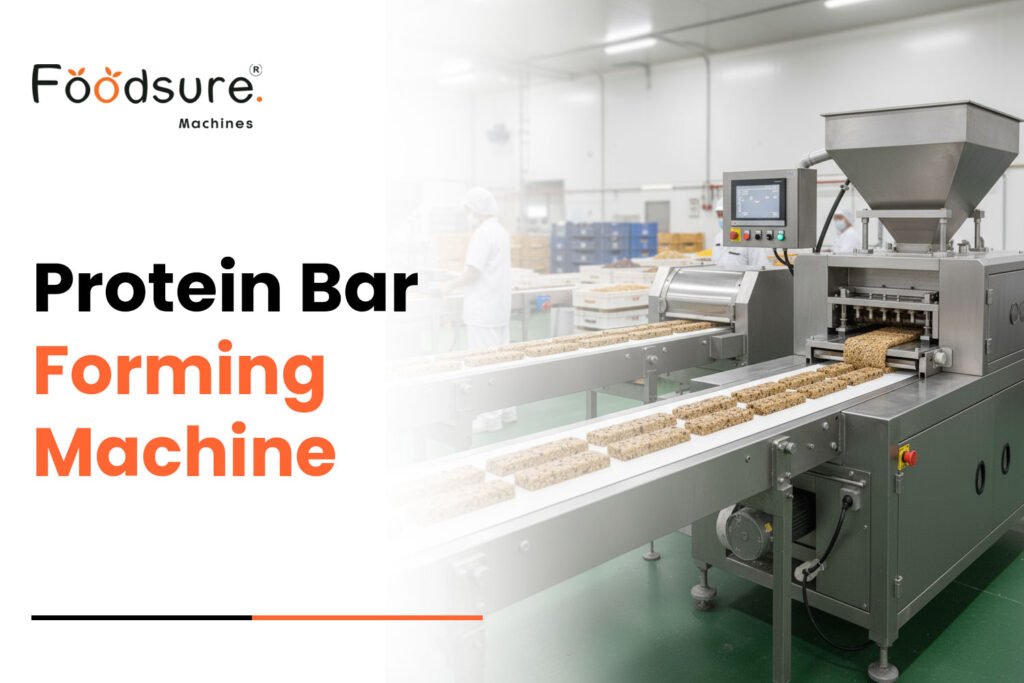
The protein and nutrition bar market is experiencing rapid growth in India, but small manufacturers face the same challenges of inconsistent quality, slow production, and wasted efforts. That can all change with a protein bar forming machine. A Protein Bar Forming Machine alleviates, if not fully solves, all of these issues. These machines create a streamlined production process that is faster, cleaner, and far more consistent. This article will outline all of the different types of machines, what the actual workflow looks like, what actual benefits you can expect from automation, and what your return on investment could look like. By the end of this article, you will understand exactly what you should be looking at when evaluating machines to purchase. Which Protein Bar Forming Machine Suits Your Production Needs When considering options for increasing your production, it helps to know the types available. They include the following: Semi-Automatic Protein Bar Machine Semi-automatic is more suited for a smaller volume of production (around 50 to 200 kg/day). Requires less upfront capital than a fully automatic protein bar machine. It requires some manual handling since you’ll need to load the raw ingredients into the machine and then package your bars by hand, which will still have some level of human involvement. An excellent option for a bar that will be produced in small volumes and a variety of flavors. Fully Automatic Protein Bar Machine Produces high volume production (around 200 to 500 kg/day). Produces a bar that is a uniform shape, weight, and quality each time. Less labor is needed in comparison to the semi-automatic machine to run the assembly line, and less risk of non-hygiene-compliant conditions. The best option for a manufacturer who wants to grow production and doesn’t want to sacrifice quality. How a Protein Bar Forming Machine Transforms Your Workflow Automation transforms small-scale manufacturing operations into organized and dependable businesses. Here is what it does for you: Improved Capacity: Whether fully automatic protein bar manufacturing or semi-automatic protein bar manufacturing, both produce many more bars in a short period of time, without sacrificing quality. Reduced Labor Force Cost: If a process has little human interaction, then the use of skilled labor is eliminated, and the manufacturing cost is less expensive. Improved Sanitation and Compliance: Automated machines are designed, tested, and packed to consistently maintain a clean and hygienic state every time the bars are manufactured or processed. Process Consistency: Consistency in shape, size, and weight of the bar increases your efficiency every time you pack with your pre-set packaging, and the product has a defined professional presentation. Scalability: A fully functioning protein bar manufacturing line will allow the customer to scale production, no matter the demand, with a larger run of greater production without skilled labor; it just happens to be easy. Read more: How To Start A Protein Bar Business Step By Step ROI and Cost Benefits of a Protein Bar Forming Machine Protein Bar Production – Key Aspects Aspect Details / Explanation Machine Cost Semi-Automatic: ₹4–6 lakh Fully Automatic: ₹10–18 lakh (depending on capacity and features) Labor Savings Automation reduces manual work by 40–50%, lowering recurring labor costs Reduced Wastage Consistent bar size, shape, and weight reduce ingredient wastage by 10–15% Production Capacity Semi-Automatic: 50–200 kg/day Fully Automatic: 200–500 kg/day Faster Revenue Generation Higher output allows manufacturers to meet growing demand and increase sales Estimated ROI Semi-Automatic: 12–18 months Fully Automatic: 10–14 months Scalability Fully automatic protein bar production lines allow smooth expansion without additional machine costs Finding a Reliable Supplier for Your Protein Bar Forming Machine Here’s the thing: not all suppliers are the same, and picking the right one can save you a lot of trouble. Start with machine reliability and warranty. You want equipment that works without constant issues and comes with a clear warranty so you’re not left paying for fixes. Then, check their after-sales service and maintenance support. Machines can run into problems. A supplier who responds quickly and provides parts or guidance keeps your production moving. Next, think about customization. Your production needs might not match someone else’s setup. A supplier who can adjust machines to fit your ingredients, batch sizes, or workflow makes life much easier. Finally, look at pricing transparency. No hidden charges, no surprises. Everything, from installation to optional features, should be spelled out up front. Conclusion We build protein bar forming machines that small manufacturers can actually rely on. Foodsure Machines deliver consistent results, whether you choose semi-automatic or fully automatic models. We handle installation, training, and support ourselves, so you’re never left guessing. That’s why so many startups and nutrition brands trust us. Get a quote or demo from Foodsure Machines today. Contact us: +919870533566, +918826313121 Whatsapp now: +919870533566 Email now: wecare@foodsure.in FAQ Q1 How do I start my own protein bar business? Start small. Get a good protein bar forming machine, choose quality ingredients, and get your basic FSSAI license. Once you find what sells, you can grow step by step. Q2. How much can a protein bar forming machine produce in a day? A semi-automatic setup can make around 50–80 kg a day. A full automatic line can easily cross 500 kg if you have a steady demand. Q3. What types of protein bar forming machines are there? Mainly two. Semi-automatic machines suit small units or test batches. Fully automatic ones are for higher output and longer runs. Q4. How can I start a protein bar company in India? Get the right licenses, plan your recipes, and buy a forming machine that matches your capacity and budget. You can start small and scale up fast. Q5. Do protein bar machines need any approval? Yes. Your setup should meet FSSAI hygiene and food safety standards so you can sell confidently in the market.
Mayonnaise Production Equipment That Scales Your Food Business Profitably
India’s mayonnaise market is expanding at more than 20% a year, and that growth is not coming from multinational brands alone. Local food startups, café chains, and private-label manufacturers are driving a quiet revolution in ready-to-use sauces. Making good mayonnaise is not the challenge. But making it consistently, at scale, without losing texture and taste. That is where your equipment matters. The right mayonnaise production equipment gives you precision, hygiene, and repeatable results. How Growing Mayonnaise Consumption Is Powering the Need for Modern Mayonnaise Production Equipment The worldwide mayonnaise market had a value of around $12.97 billion in 2024. And is expected to grow to approximately $18.20 billion by 2033 for a consistent growth rate of 3.8% each year. Growth has come mostly from simple adjustments to mayonnaise products. Better packaging for adequate shelf-life, promotion of international flavors, and a seemingly limitless amount of cooking content shared in a visual space on the internet. Real Challenges Entrepreneurs Face While Setting Up Food Production Equipment 1. Inconsistent Emulsion and Separation In an industry, many small units face the same problem, which is that oil and water do not blend properly. And the batch ends up separating. This problem usually happens when the mayonnaise-making machine mixer does not create enough force, and the temperature is not stable. As we know, mayonnaise is all about stability. If you use a well-designed machine, it helps you to keep the mix balanced so every batch turns out smooth and uniform. 2. Hygiene and Food Safety Concerns When mayonnaise production equipment is made from cheap materials and has poor welds, food particles get stuck in tiny gaps. That problem turns into contamination. And you failed to achieve food safety checks and a shorter shelf life. For the machines, always use clean, food-grade steel and equipment that is easy to wash and keeps your production line safe. 3. Overspending on Unnecessary Automation A lot of new brands are directly buying fully automatic mayonnaise machines, thinking it will make them more efficient. But the machine depends on your production level and automation. For many small setups, a semi-automatic mayonnaise machine is enough to meet demand and maintain quality. 4. Space and Layout Issues Before buying a mayonnaise-making machine, always first check which machine layout is best for the space you have. Then buy a machine. Rather than a poor setup slowing everything down, like materials piling up, workers get in each other’s way, and efficiency drops. 5. Hidden Maintenance Costs An imported mayonnaise processing line often look appealing at first, but can become expensive to maintain. Service parts take weeks to arrive, and service is not always available nearby. Always select equipment with local support and easy-to-replace parts saves time, money, and a lot of unnecessary stress. What You Can Do to Solve These Equipment Buying Problems 1. Stop Emulsion and Separation Problems Before buying, check how evenly a machine mixes and heats. A stable unit will keep the blend smooth without you having to keep adjusting it. 2. Maintain Clean and Safe Production Clean machines make safe food; it’s that simple. Stainless steel 304 machines with smooth surfaces and no tiny corners where food can stick. Because it is easier to clean, it gives you a better product quality, and the shelf life will be longer. 3. Choose the Right Level of Automation There are mainly two types of mayonnaise processing lines. Which usually depends on your production levels and automation, which is best for your business. A semi-automatic mayonnaise machine is ideal for a small business. A fully automatic mayonnaise machine is ideal for large-scale production. 4. Plan Your Layout Before Buying A lot of production delays happen because the layout wasn’t planned well. Think about how materials move from start to finish, keep the flow straight and simple. Check your space before buying a machine and review with the machine supplier. 5. Avoid Maintenance Surprises Many suppliers import mayonnaise production equipment, but in the early days often looks great until something breaks. Then you wait weeks for parts or service. Go with machines that have local support and easily available spares. Things Every Food Entrepreneur Should Check Before Buying Equipment Most food entrepreneurs make the mistake of rushing through equipment choices. But the small details are what keep your production smooth and your product consistent. Food-grade SS304 build: This is the metal you can trust. It keeps your product safe and prevents rust. Vacuum or high-shear mixer: It gives you a smooth, stable mix every time, without separation. Temperature and RPM control: These settings help you repeat the same quality batch after batch. CIP cleaning system: Makes cleaning simple and fast, saving hours of manual work. Warranty and spare support: You’ll thank yourself later when a part wears out and help is just a call away. Local after-sales service: It’s not just convenient, it keeps your downtime low and production steady. How to Calculate ROI Before Buying Mayonnaise Production Equipment Setup Type Capacity Investment (₹) Break-Even (Months) Semi-Automatic 500–1,000 jars/day 8–15 lakh 10–14 months Fully Automatic 2,000+ jars/day 20–35 lakh 12–18 months Start Your Mayonnaise Production Journey with Foodsure Machines Building a mayonnaise business isn’t just about recipes; it’s about setting up the right industrial mayonnaise machine from day one. Foodsure Machines helps you plan your production, choose an industrial mayonnaise machine that fits your capacity, and keep operations simple and reliable. You get real guidance, not just a catalog of equipment. Have a Question? Let’s Connect! Reach out to us anytime via call or email. 📞 Call Us ✉️ Email Now FAQ Q1. What are the raw materials necessary for mayonnaise equipment? The equipment utilizes basic styles of ingredients (e.g., oil, egg yolks, vinegar or lemon juice, and stabilizers), which process the food ingredients to manufacture a smooth, consistent, stable emulsion. Q2. What will you require for machines or equipment for a mayonnaise operation? You will require at least a mayonnaise processing equipment system, which
Top Protein & Energy Bar Machine Manufacturer in India (2025) – Trusted by Leading Food Brands
If you’re an entrepreneur or managing a food enterprise, you have witnessed the speed growth of the Protein Bar category in India. As more people embrace healthy snacks on a daily basis, the competition in this category has increased dramatically. The variable that differentiates each successful protein/energy bar brand is not just the recipe. It’s the machine that makes the protein bars. This article will examine the Top Protein Bar Machine Manufacturer in India (2025) to help us understand what makes their equipment the primary choice for many of the larger food companies in India. Best Protein Bar Machine Manufacturers You Can Trust 1) Foodsure Machines Why we lead: SS304 food-grade stainless steel: We are at the leading because we care about hygiene and safety. Our machines are made fully from SS304 food-grade stainless steel. To make sure that food ingredients won’t stick and bacteria cannot live on them. Servo-guillotine cutters: Every bar is the same weight. That means your product claims about protein, calories, and nutrition remain valid. Standard machines: Managing throughput will be very suitable for you as well. Our standard machines can be delivered within 30 days of the order and advance payment being completed. 2) ABC Agro & Food Machine (Coimbatore) Why They Lead Strength: They have a set of sheeting and cutting machines, and some experience with traditional bars like chikki. Their machines are designed for use with granola and protein bars. Good Fit: Budget projects and facilities, adjusting the individual modules. 3) Snactek (Pune) Why they lead: Strength: Snactek makes strong strengthening systems with their slitting and guillotine machines. They also have sheeting machines that would work with customized lines. Good Fit: Consumers building modular systems around a mixing system and cooling overhead. 4) VEC (Chocolate & Bar Equipment) Strength: Although VEC specializes in chocolate, it also makes granola and protein bar machines. One area shines, and that is when coating production and handling mixtures are in the design. Good Fit: Any line that needs chocolate, from day one. How to Choose the Right Protein Bar Machine Cutting Precision and Yield: Request specifications for the servos and cut-tolerance (±1 mm), to make sure all of the bars will be consistently weighted and keep the margin of production even. Cooling Plan: Find out whether the machine uses chilled cooling (4-10 °C). If in a warm situation and using any covered products, this is especially important, based on your situation. Changeover Speed: Look for specifics such as quick-release belts and tool-less guides. Ask for a demo video of a real SKU in a similar vein to see for yourself how fast it is. Documentation Package: Check if the supplier provides the DQ/IQ/OQ reports, FAT/SAT records, and SOPs for the machine. This type of confidence up front will save weeks of audit time. Service SLAs: Ask for timelines on installation, on-site training, help via WhatsApp/video, and service lead time. Knowing what to expect is important for maintaining safe production flow. Utilities and Layout: Request a layout, then a utilities checklist, to include power (kW), compressed air (LPM), refrigeration (TR), drains, and hygiene zoning. You want to have confidence that even your facility is ready and compliant. Core Specifications for a Standard Protein Production Line Capacity: 50, 100, or 200 kg/hr systems with slab former + calibrator, slitter + servo-guillotine, chilled tunnel. Add-ons: Optional flow-wrap with coder, metal detector, checkweigher; chocolate enrober or decorator for premium SKUs, etc. Controls: PLC with 7–10″ HMI and recipe memory, VFDs, servo-driven cutter, interlocks, and emergency stops. Material of Construction (MOC): SS304 for all contact parts, passivated welds, and food-grade belts. Why Foodsure Machines Are the Trusted Choice for Health-Focused Food Businesses With over 13 years of practical experience, Foodsure Machines places a great focus on hygiene, consistency, and efficiency. The machines will be capable of delivering mixtures-cutting with correctness, and quickly fulfilling your custom order. You will have the training and support needed to start production with confidence. Have a Question? Let’s Connect! Reach out to us anytime via call or email. 📞 Call Us ✉️ Email Now FAQ Q1: Can you start with less than 50 L? Ans: Yes, mixer, binder kettle, slab former (or extruder), basic cooling, guillotine (semi/auto), then you could add a slitter, wrapper, QA, and Amazon warehouse. Q2Is it better to extruder/or a slab former? Ans: Generally, a pure date/no-bake would prefer an extruder, high inclusions/granola hybrids would prefer a slab with a slitter, guillotine. Many operations have both. Q3: What is the lead time for dispatch? Ans: For paint and layouts, materials are approximately lead time for a typical configuration from industry tier one, now typically target 30 days (from time purchase order, advance, site conditions).
Empower Your Food Business With A Nutrition Bar Making Machine In India
India’s health and protein bar market is on the rise. It’s expected to cross ₹1,500 crore by 2027. Every few weeks, new fitness snack brands show up online. Many start with promise, but only a handful manage to stay consistent once orders increase. A good recipe does not automatically turn into scalable products. As production grows, even a small difference can affect texture, shape, or taste. That is when a Nutrition Bar Making Machine becomes essential. You get reliability, speed, and control, three things that separate small brands from serious players. Let’s take a closer look at how the machine makes that possible. Why Every Modern Food Startup Needs Nutrition Bar Machines And Protein Bar Equipment The global nutrition bar market was valued at around USD 7.4 billion in 2024 and is expected to keep growing at about 6% a year through 2034. Over the years, many people have started to pick up nutrition and protein bars because they are perfectly fit for healthy snacks in their daily routines. This rise in demand is not just about fitness trends. But it’s also about comfort and trust. People want snacks that are healthy. That’s why food startups and local brands in India are investing in small-scale nutrition bar machines and productive protein bar equipment. Why Every Nutrition Bar Making Machine Needs These Key Components The small business nutrition bar production line focuses on three main things: making bars the same every time, keeping everything clean, and having control over the process. If you are using an automatic protein bar-making machine with a stainless steel food-grade line. You can produce bars that are consistent in taste, size, and shape. Below, we see how it works. Mixing: Dry and wet ingredients are blended into the heated mixer until the mixture is lump-free. The mixer and forming contouring unit are configured to allow the mixture flow to come together in one procedure as a smooth mix (liquid). Pre-heating: The liquid is heated at temperature-at-non-lump condition to make it soft enough to roll on the cutting former. Rolling: The liquid is then rolled through rollers, which will dispense the liquid to a wide surface area evenly. This operation maintains an even thickness for each bar, assuring the quality of each bar. Cooling: The sheet cools to hold its shape and maintain no tackiness for the next operation, and the automatic conveyor lines the cool, flat sheet of the bar to keep things clean while the bar cools. Cutting/ Shaping: A cooled bar is cut with the servo cutter into equal-weight bars for mass, uniformity, texture, and feel. Wrapping/ Packaging (Optional): wrapped bars for clean tier retail if necessary. Materials & Hygiene: The complete line is constructed of SS304 food-grade, quality standard construction through FSSAI for nutrition bar making machine safety, durability, and ease of cleaning. What Capacity And Power Options Are Available For Nutrition Bar Machines? Selecting the right nutrition bar making machine usually depends on your batch size and budget. There are two types of machines: Semi-automatic and fully automatic protein bar-making machines. Below, you get to know about their difference and which type of production unit is ideal for them. Semi-Automatic Nutrition Bar Machine Capacity: 50 kg/hr, 100 kg/hr, 200 kg/hr. Type: Semi-Automatic. Power: 7.5 kW to 20 kW (3 Phase). Material: Food-grade Stainless Steel 304. Feeding: Automatic hopper. Bar Size: Customizable, width 25 mm – 60 mm. Why is it ideal for small businesses For this nutrition bar production line, you need some manual work during production. It is cost-friendly for small to medium startups. It has a modular design that makes it easy to upgrade to fully automatic later. With the help of a semi-automatic nutrition bar machine, you can produce consistent bars in small batches. Fully Automatic Nutrition Bar Machine Capacity: 50 kg/hr – 200 kg/hr, scalable for larger units Type: Fully Automatic Power: 10 kW – 20 kW (3 Phase, customizable voltage/frequency) Material: Food-grade Stainless Steel 304 / 316 Feeding: Fully automatic with continuous flow Bar Size: Customizable, width 25 mm – 60 mm, adjustable length Why it works for high-volume production This machine handles everything from mixing to forming, cutting, cooling, and packaging (optional). You just need minimal manual work to reduce mistakes. It is perfect for consistent output for retail and online sales You get a modular design for this, which allows you to make future upgrades. How Much Does A Nutrition Bar Making Machine Cost In India? Machine Type Capacity Range Features Included Material Approx. Price Range (₹) Best For Semi-Automatic Line 50 – 100 kg/hr Mixer, forming unit, manual or servo cutting, basic cooling system SS 304 Food Grade ₹8 – ₹15 lakh Startups and small-scale food units Fully Automatic Line 100 – 200 kg/hr Complete line with automatic feeding, forming, cutting & cooling conveyor SS 304 / SS 316 Grade ₹20 – ₹35 lakh Medium to large production businesses Why Foodsure Machines Are the Smart Choice For Bar Production Foodsure Machines has manufactured food machines for over 13+years and we know what is important on the production floor. Our nutrition bar making machine is designed with real use in mind, rather than brochure use. They’re clean, efficient, and scaled to fit your brand. It is the honest guidance we provide, the hands-on support we give, and our team that understands food manufacturing from the nuts and bolts up. Ready to start producing your own bars with confidence? Have a Question? Let’s Connect! Reach out to us anytime via call or email. 📞 Call Us ✉️ Email Now FAQ Q1. Is it possible to have one production of nutrition bars a day with the machine? It is definitely possible to start with one day’s production based even on the smallest machine capacity of 50 kg/hr featured for a start-up or home-based size business. Q2. What is the starter investment amount for a small functional nutrition bar-making machine plant? Complete lines start at approximately ₹8-10 lakh for semi-automatic equipment, but
Protein Bar Machines in India: Cost, Process & Best Options for Small Businesses

Looking to start a protein bar manufacturing business in India? With demand rising fast, investing in the right protein bar machine for small business can help you produce consistent, high-quality bars while keeping labor costs low. That’s where protein bar machines come in. A protein bar machine for startup business ensure your bars have consistent taste, texture, and nutrition while boosting production speed and reducing labor costs. In this guide, you’ll discover: Which type of protein bar machine fits your business How much setup and production really cost in India Step-by-step workflow for making high-quality bars Tips to scale efficiently while staying FSSAI compliant Whether you’re starting small or planning to grow quickly, this guide will show you exactly how to make your protein bar business successful. What Is a Protein Bar? Market Demand in India Explained A protein bar is an easy and healthy snack option. A macro-dense health snack offering high-quality protein and potentially other ingredients like nuts, seeds, dried fruit, oats, fiber, and healthy fats. Packaged with the factor of all ingredients combined. It is considered energizing for exercise, meal replacement, and providing an increase in nutrition during busy workdays. The protein bar market is expanding in India. In fact, it is on target to reach an estimated USD 1.26 billion by 2030. This amounts to around 6.6% per year over a period of approximately twelve years. The increased demand for the product is primarily urban-driven, and consumption is the primary push for growth as gyms and young/new urban professionals look for quick & healthy snacks. In addition, you can see the uptake, slowly but surely, of rural India as these consumers join the health & wellness customer segment. Challenges Every Protein Bar Business Encounters Small protein bar machine manufacturers in India are experiencing many ongoing issues, which prevent them from developing positively and growing. Labor issues: It seems to be a consequence of unskilled labor shortages and high employee turnover. Due to the training costs associated with hand mixing, milling, shaping proteins, and packaging. Poor quality: Inconsistent product quality is another problem, as many do not have consistent taste, texture, and proper shelf stability from batch to batch. As a result of biological variation in the starting raw materials and the inability to carry through standard recipes. Low productivity: It seems correlated to semi-automated and manual equipment issues. Manufacturers that are working at slower speeds will not grow beyond small-batch manufacturing of protein bars. Common Problems in Small Scale Protein Bar Manufacturing (And Why Machines Matter) Purchasing protein bar manufacturing equipment can be very advantageous for small scale protein bar manufacturing, focused on automation and reducing labor costs. Production Quality: The protein bar making machine ensures consistent texture, size, and nutritional values, building trust and supporting brand loyalty. Automation Reduces Labor: Protein bar manufacturing equipment streamlines ingredient handling (mixing, shaping, packaging), boosting efficiency and making it easier to scale without increasing labor costs. Operating Costs: Fixed and operating costs for protein bar preparation are reduced, improving speed, ROI, and time-to-market for growing health snack demand. How to Choose Between Different Protein Bar Machines Feature Semi-Automatic Protein Bar Machine Fully Automatic Protein Bar Machine Best For Startups & small-to-medium businesses Medium to large-scale manufacturers Production Capacity 100–200 kg/hour 800+ kg/hour Labor Requirement Moderate (manual feeding/handling needed) Minimal (highly automated line) Automation Level Partial automation End-to-end automation Process Included Mixing + forming (some manual packaging) Mixing + forming + cutting + packaging Consistency Good consistency Excellent, batch-to-batch precision Initial Investment Lower capital cost Higher capital investment Operational Speed Moderate production speed High-speed continuous production Scalability Suitable for gradual growth Ideal for rapid scaling & exports Hygiene Standards Standard food-grade build Advanced hygienic stainless-steel construction Technology Used Basic control systems PLC controls, servo-driven cutters Business Stage Fit Businesses upgrading from manual production Established brands expanding production capacity If you’re starting a small scale protein bar manufacturing and testing the market, a semi-automatic Protein bar machine for small business keeps investment lower while improving consistency. If demand is already strong or you plan to supply retail chains, a fully automatic protein bar production line gives you the speed and uniform quality needed to scale fast. Protein Bar Manufacturing Process Step-by-Step Choosing Ingredients: Select protein sources, seeds, nuts, sweeteners, and binding ingredients based on bar type and nutritional specifications. Mixing: Blend ingredients in an industrial food scale mixer for uniform distribution and texture; mold or extrude bars for consistent shape and size. Baking or Cooling: Use the protein bar production line to bake bars for flavor development or cool to stabilize nutritional properties; optionally coat with yogurt or chocolate and add nut/seed toppings. Quality & Packaging: Assess nutrient accessibility, flavor, safety, and shelf-life; package mechanically or with adjustable protein bar production line to maintain freshness, protect against moisture, and enable retail display. Protein Bar Machine Setup Cost in India: Investment You Need to Know If you’re planning to invest in a protein bar machine for small business, understanding the total setup cost is essential. The investment depends on machine capacity, automation level, and your production scale. Below is a realistic cost breakdown for starting a protein bar machine for startup business in India. Item Description Estimated Cost (INR) Notes Protein Bar Machine Small-scale to semi-automatic protein bar manufacturing machine 2,50,000 – 7,50,000 Depends on capacity & automation Installation & Commissioning Setup, calibration, and operator training for the protein bar production line 20,000 – 50,000 One-time cost Optional Accessories Molds, cutters, wrappers, ingredient hoppers for protein bar making machine 15,000 – 60,000 Based on production needs Electricity / Power Monthly power use of your protein bar manufacturing machine 3,000 – 8,000 Varies by machine size Labor Operators/helpers for running the protein bar production machine 10,000 – 25,000 per month Small unit estimate Other CAPEX Tables, storage racks, safety gear for food production 25,000 – 50,000 One-time investment Total Estimated Setup Cost CAPEX + First 3 months OPEX for protein bar machine setup in India 3,23,000 – 8,93,000 Varies by
Top Protein Bar Machine Consultants in India (2026 Guide)
The market for protein and energy bars is expanding rapidly in India. More factories are exploring this area because of health-conscious consumers, busy professionals, and growing export demand. However, establishing a protein bar factory involves more than simply purchasing machinery. The dangers of making mistakes are significant, ranging from selecting the appropriate equipment to complying with regulations and perfecting recipes. That’s where top protein bar machine consultants in India come into play. They help businesses and producers grow in a planned rather than a painful way. Why India’s Protein Bar Market Needs Expert Consultants Before investing in expensive machinery, it’s worth asking why the right consultant can make or break your protein bar project. India’s protein bar market is growing rapidly, driven by health-conscious consumers, fitness culture, and growing exports. Choosing the wrong production line or equipment size can end up costing you financially and your time. Compliance with FSSAI and international food safety regulations is complicated and unavoidable. Whether your bar will be noticed or lost in the mix will be driven by product differentiation and recipe development. Using skilled consultants makes the learning-through-expensive-failure shorter and easier, as well as saves you time and money. Essentially, a protein bar production line consultant in India gives clarity in sometimes challenging circumstances. They don’t only recommend machines, they align your investment with product goals, compliance requirements, and market expectations. When it comes to scaling any factory, working with the right consultant is not an optional step; it is a foundation for success. List of Top Protein Bar Machine Consultants in India If you’re planning a protein bar business, the toughest part is selecting and installing the right protein bar-making machine. Expert guidance makes this easier. They help you pick the right model, cut costs, and avoid mistakes. Here are the top protein bar machine consultants in India to guide you. Foodsure Machines Services: Foodsure is well known for providing end-to-end solutions in the food space. They assist in selecting a protein bar machine, plan factory layout, and offer guidance with food safety certification like FSSAI, ISO, or BRCGS. Best For: If you are new in the marketplace and looking for someone to help with everything from machines to compliance paperwork, Foodsure Machines is a safe bet. USP: The unique selling point of Foodsure is “hand-holding”. Foodsure doesn’t just sell you advice; they stay with you through setup, including making sure your factory is “audit” ready! Choose Foodsure Machines and turn your recipe into a reliable production line. Fermentis Life Sciences Services: Fermentis focuses on technology-based solutions. They do provide protein bar machines, but can also advise on food R&D, sourcing of ingredients, or custom formulations. Best For: If you are looking to innovate, say a high protein bar with unique flavourings, or clean-label ingredients, then Fermentis is the consultant for you. USP: The USP for Fermentis is the joining of science with practical factory needs. They won’t just sell you equipment; they will also help you in designing recipes that are not only related to consumer trends but also considered for production efficiency. SolutionBuggy Services: SolutionBuggy is a consulting platform that connects manufacturers with verified experts from the industry. They help you with machine selection, funding support, factory setup, and compliance certifications. Best For: Medium to large-sized food companies that want project oversight in a structured manner. USP: They are like a bridge – you have access to an entire network of specialists who can work on equal and separate parts of your project rather than just one consultant. Vecchocotech Services: Vecchocotech focuses on automation and advanced machinery. They help food businesses upgrade from semi-automatic to fully automated production lines. Best For: Factories that have some sort of setup but want to grow and make higher volumes quickly and efficiently without hiring more people. USP: Their specialty is automation. Many companies in food, such as pastry production, undervalue automation, but it helps you cut down on wastage, output is faster, and it maintains consistent food quality. Shanti’s Services: Shanti’s has been in the business for decades and is trusted for the food processing equipment they provide. They give consultation on machine installation, maintenance, and staff training. Best For: Small and medium businesses that want affordable but reliable machine solutions without making things complicated. USP: Their biggest advantage is experience. They know what works on the ground for Indian factories and avoid trial-and-error pitfalls. Read more: Energy Bar And Protein Bar Machines | Complete Guide How to Choose the Best Consultant for Your Factory Choosing the top protein bar machine consultants in India can prevent you and your factory from experiencing expensive mistakes. Here are a few points to consider: Industry experience- Make certain to check that the consultant has experience with factories similar to yours. Experience helps by understanding the project obstacles when suggesting practical solutions. Machine experience- It is one thing to buy machines. A qualified consultant understands which machine models fit your production, capacity, and budget, as well as what is required for installation and training. Compliance- Factory operations have to deal with certifications and audits. A qualified consultant helps you navigate and comply with standards for food safety, labor, and quality to avoid delays in dealing with buyers or regulators. Post-sale support – Machines require service, upgrades, and emergency fixes. There is continued value to your project when the consultant remains available for consulting services long after installation. If you’re planning a food or snack unit, look for turnkey protein bar project consultants in India who can handle everything from setup to scale-up. The top protein bar machine consultants in India don’t just sell advice; they help you build a smooth, profitable operation from day one. Read more: Best Protein Bar Machine In 2026 Buyer Guide Cost of Hiring Protein Bar Machine Consultants in India The protein bar production line cost in India depends on several factors, like plant size, machine type, and consulting scope. Here’s a breakdown: Factor What It Means Approx. Cost Range (INR) Plant
Choosing The Right Mayonnaise Machine: A 3-Minute Industrial Buyer’s Checklist
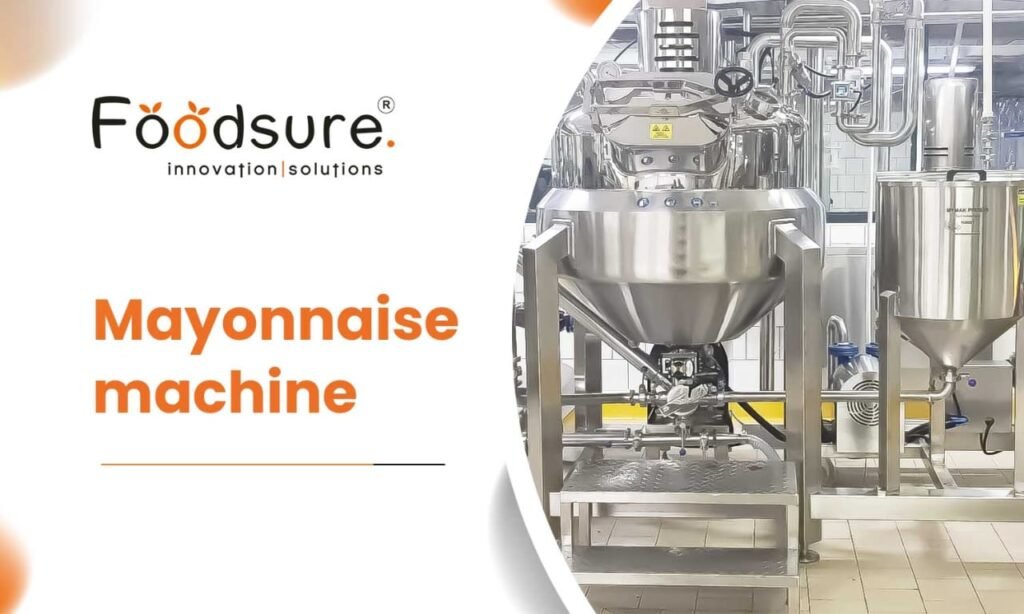
When you are running a food production business, a smart mayonnaise setup does more than mix ingredients because it lays the foundation for consistency, speed, and scalable growth. It helps you make smooth, tasty mayonnaise while saving time and effort. Which industrial mayonnaise machine is suitable for a food production business and easy to clean? It’s better to get a machine that has a cleaning system. Always look for a machine that uses less power but still works fast. In this 3-minute blog, we will help you understand what to look for before buying a commercial mayonnaise making machine for your factory. Why Selecting The Right Mayonnaise Machine Is Business-Critical As we all know, to make the right mayonnaise making machine in your factory, having the right industrial mayonnaise machine is very important. It gives your brand the edge it needs in hygiene and scale. Here’s why it matters: Same Taste Every Time: If you use good mayonnaise manufacturing equipment that mixes everything properly, your mayonnaise will ensure consistent texture and batch quality every time. Faster Work: Modern machines can make more mayonnaise in less time, helping you finish a big order quickly. Saves money: These machines use less power, reduce waste, and do not need much repair. Safe and clean: Good mayonnaise manufacturing equipment is made with food-safe materials and is easy to clean, keeping your product safe. So, if you use the right industrial mayonnaise machine, it helps your business to make better mayonnaise and grow faster. Checklist For Selecting The Right Mayonnaise Manufacturing Machine Now, let’s talk about how it helps you to make better mayonnaise and build your unit for future-ready production. Here’s a super simple checklist to help you choose the best machine: Choose the Types of Mayonnaise You’re Making: When you buy mayonnaise manufacturing equipment, always make sure that it fits the type of mayonnaise mixing and filling machine that you need to make. If you use eggs in your mayonnaise, then the machine should heat the mix to the right temperature (around 64-68°C). This mayonnaise manufacturing equipment kills any germs and keeps the mayonnaise smooth without overcooking eggs. And the other option is eggless or vegan mayonnaise. These machines mix every ingredient very smoothly, even thick ingredients like starch and gums that make your mayonnaise creamy and smooth in texture. Batch Size & Scalability: When you are choosing a mayonnaise plant, every time, make sure it fits how much mayonnaise you make in a day. If you are testing or making small batches, then choose a pilot-scale machine (10-20 kg). If you want a medium production, go for a mid-scale machine (100-500 kg per day). For a large factory, use an industrial machine (1-10 tons per day). If you want your business to grow in the future, no matter what happens, always choose a machine that can handle more mayonnaise later without buying a whole new setup. This will help your business boost long-term production efficiency and stay ahead in the market. Material of Construction (MOC): When you think of starting up in the food processing industry, first check the material of the machine; it is very important for safety and long life. SS 304 is a strong stainless steel that works well for semi-automatic mayonnaise machines, which are best for small production because they give you good protection against rust and are also more affordable. It’s good for a normal commercial mayonnaise-making machine. If your commercial mayonnaise-making machine has more acid, like vinegar or lemon juice, then you should go with SS 316. This steel is stronger and also best for long-term scalability in industries that want to transform their production capabilities because it has something called molybdenum (brittle silver-grey metal), which protects it better from rust and damage. Emulsification Efficiency: If you’re looking to scale your business with higher speed and precision, choose a machine that handles most tasks on its own. For those just starting in the food industry, a simpler model that allows more manual control can be a smart and affordable way to begin. In the points below, we give you an idea of which emulsification efficiency you should go with: If you want to make a small amount of mayonnaise, then your machine should have a special mixer called an emulsifier. It mixes the ingredients very well and lets you change the speed to get the right texture. If you want to make a large amount of mayonnaise, use an inline mixer. It works all the time (not in batches), and it mixes very fast. This makes the mayonnaise smoother and more stable to produce. If you use the right mixer, it will help to scale your business faster with better margins. Automation Level: Choose your commercial mayonnaise-making machine automation level based on your production needs. In a market, there are two types of automation machines. The first is a semi-automatic mayonnaise machine, and the second is a fully automatic mayonnaise machine. Here is how to match the automation type to your growth goals. Semi-automatic mayonnaise machines are a mix of manual and machine, which is good for small batches. These machines use basic mixers, and filling is done by hand. After all, this mayonnaise mixing and filling machine is ideal for small businesses. Fully automatic mayonnaise machines are best for an automatic mayonnaise production line. Features of these machines are touchscreen controls, inline emulsifiers, and automatic filling and sealing, perfect for consistent output in any food production business. Machinery List For Automatic Mayonnaise Production Line (Approved By Our Experts) Machine Name Function Our Grade Recommendation Oil Dosing Pump Precise oil addition during emulsion Food Grade SS316 Inline Homogenizer High shear emulsification 3-phase, 3000 RPM Vacuum Emulsifier Mixer For eggless mayo Automatic with PLC Jacketed Kettle Heating base paste SS 316 with temp sensors Auto Filler Clean filling 2–4 head piston filler Cap Sealer Final sealing Induction or vacuum capper Labeling Machine For PET/Glass jars Servo-based label applicator Foodsure Machines- Your One-Stop Solution For Your
Best Mayonnaise Machine in Chhattisgarh for Small and Large Food Processing Units
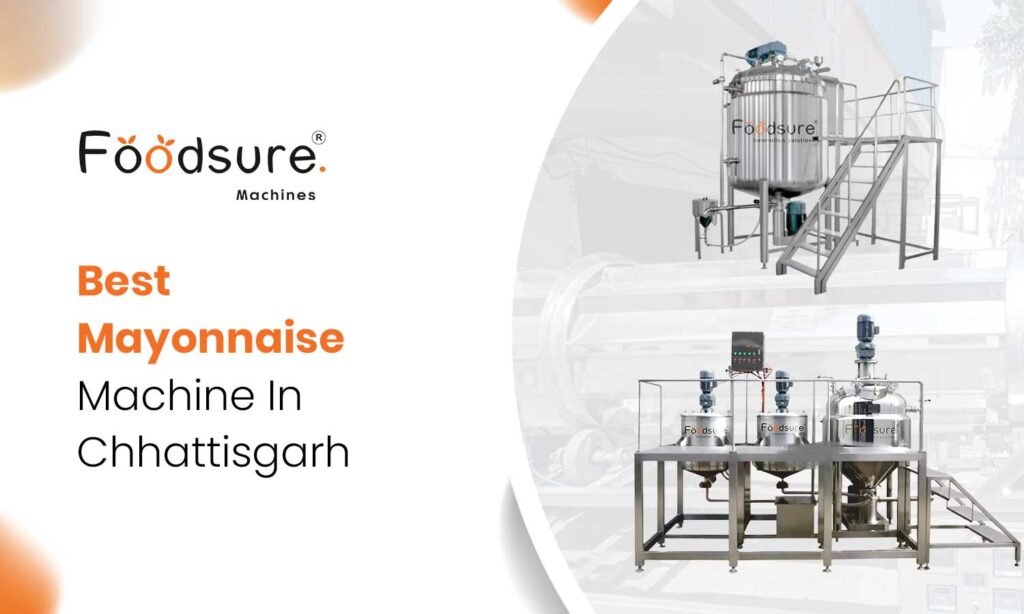
If you are starting a mayonnaise production in Chhattisgarh, your best mayonnaise machine in Chhattisgarh choice will shape everything, output, consistency, and efficiency. Small units usually start with semi-automatic machines handling 100–500 kg/hr stainless steel, mixers, and cooking kettles. But once you scale, you will need full automation: PLC control, vacuum homogenizer, temperature regulation, and packaging. That’s how you grow without sacrificing quality. Why Chhattisgarh Is the Right Place to Start Mayonnaise Production Chhattisgarh makes real sense for anyone serious about mayonnaise production. Here’s why: Demand is growing fast. Urban households and foodservice outlets are using more mayonnaise than ever, and the rise of quick, ready-to-eat meals. People want variety. Flavored and eggless mayonnaise options are picking up, giving local producers a chance to tap into different consumer preferences. Retail is expanding. From supermarket shelves to online grocery apps, mayonnaise is getting easier to sell and distribute across the state. Government support is strong. Subsidies, training programs, and food park infrastructure make it easier to set up and scale, even if you are starting small or planning big. What this really means is: if you are looking to set up something solid in the food space, Chhattisgarh isn’t just available, it’s ready. Key Challenges Faced by Local Food Entrepreneurs Manual mayonnaise production might look affordable upfront, but it rarely holds up in practice. Here’s what local producers in Chhattisgarh are actually running into: Inconsistent quality: Ingredients don’t blend evenly, taste shifts, and the product doesn’t stay fresh as long. That’s not just a technical issue, it’s something your customer can taste. Hygiene risks: Open systems are harder to clean and manage, making pollution more likely. Scaling is tough: Without process control, it’s hard to maintain product consistency as demand grows. Mayonnaise machine manufacturers solve these problems by delivering repeatable mixing, better hygiene through closed systems, and easier compliance with safety standards. The upfront cost is higher, but so is the reliability. Types of Mayonnaise Machines Available for Chhattisgarh Units Starting a mayonnaise unit in Chhattisgarh? The best mayonnaise machine in Chhattisgarh makes all the difference. Here are the main types to choose from. Feature Compact (10–20 L) Medium Scale (50–100 L) Large Capacity (200–500 L) Ideal for Startups, home kitchens FPOs, SHGs, cloud kitchens Large-scale commercial units Automation Manual/semi-auto Semi-auto with PLC Fully automatic Emulsification Basic mixer Controlled, consistent Vacuum + homogenizer Material SS304 SS304 SS304/316 Cleaning Manual, easy Moderate CIP and sanitization systems Packaging Manual Add-on options Fully integrated Motor Power 1–3 kW 5–10 kW 10–20+ kW Cost Low Moderate High Features to Look For in a Quality Mayonnaise Machine Before you invest, know what matters. The best mayonnaise machine in Chhattisgarh isn’t just about output, it’s about consistency, hygiene, and ease of use. Here’s what to look for. SS304 Contact Parts: Design for Food Safety The best mayonnaise machine in Chhattisgarh doesn’t just run well, it protects what you are making. SS304 stainless steel on all surfaces means no rust and a clean production environment. It’s durable, easy to sanitize, and meets every hygiene standard that matters to mayonnaise machine manufacturers. Homogenizer or Emulsifier Quality: Where Texture is Won or Lost This is the heart of your mayonnaise. A Commercial mayonnaise machine for food units, solid emulsifier ensures oil and water stay blended, no splitting, no rework. The better your homogenizer, the smoother and more stable your product. Consistency sets up trust, and trust sells. Cleaning & Maintenance: Don’t Waste Time or Water Mayonnaise making machine that are hard to clean slow you down. Look for the best mayonnaise machine in Chhattisgarh that disassembles quickly, has no tight corners, and allows fast washdowns. CIP (clean-in-place) systems? Even better. Less downtime, fewer hygiene risks, and more time actually producing. How Much Does a Mayonnaise Machine Cost in Chhattisgarh? Here is the thing, pricing isn’t one-size-fits-all. It depends on how much mayonnaise you plan to produce, the level of mayonnaise making machine automation you actually need, and even if you are paying for features you will use or just shiny extras. Let’s break it down so you can budget without the guesswork. Machine Type Capacity Price Range (INR) Ideal For Bench-Top Mayonnaise Mixer 5–10 Litres/Batch ₹1.5 – ₹2.5 Lakh Small home-based or test kitchens Semi-Automatic Unit 20–50 Litres/Batch ₹3 – ₹5 Lakh Small-scale commercial food businesses Fully Automatic Mayonnaise Plant 100–200 Litres/Hour ₹6 – ₹9 Lakh Medium-scale food factories Industrial-Scale Setup 300+ Litres/Hour ₹10 – ₹12 Lakh+ Large manufacturers and export facilities Real-Life Success: A Small Unit in Raipur That Scaled Up A small unit in Chhattisgarh started with a 20-litre manual mixer. The result? Uneven texture, hygiene gaps, and too much time wasted. As demand picked up, thanks to local stores and online orders, they hit a wall. The old setup couldn’t keep up. They switched to an Industrial mayonnaise processing plant with proper emulsification, temperature control, and SS304-grade parts. Output jumped to 100 litres per batch. And they are not facing any more texture issues. Food safety? On point. Less manual work meant fewer errors, lower wastage, and more room to experiment with new flavours. With help from government financing schemes, they scaled from a micro unit to a trusted medium-scale brand. What this really shows is that upgrading your Commercial mayonnaise machine for food units isn’t just about volume; it’s about control, consistency, and building long-term credibility in the market. Ready to Launch Your Mayonnaise Unit in Chhattisgarh? At Foodsure Machines, we design our best mayonnaise machine in Chhattisgarh to help you scale without compromising quality. Even if you are just starting or expanding, our best mayonnaise machine in Chhattisgarh handles everything automated mixing, precise emulsification and food-grade hygiene. We make it easy to clean, energy-efficient, and set up for real production needs. If you are serious about growing your unit in Chhattisgarh, we’re ready to back you with an Industrial mayonnaise processing plant that actually works. FIND THE RIGHT MAYONNAISE MACHINE IN CHHATTISGARH Get Expert Help Choosing the Best Mayonnaise Machine for Your Production Scale
How to Start a Protein Bar Business: A Complete Beginner’s Guide

Nowadays, with all the sugary and unhealthy snacks that drain energy rather than provide it, consumers are looking for healthier snacks. Protein bars provide taste and nutrition in one packaging solution. If you are considering a protein bar business, you are definitely filling a true need in the marketplace today. However, there is more to being successful than simply adding oats to whey. It takes the right strategy, tools, and action. Why Start a Protein Bar Business Now? The functional foods industry is expanding in India, and protein bars are at the forefront. The global protein bar market is anticipated to reach over USD 14.26 billion by 2024. The protein bar market in India was USD 863.9 million in 2024 (Statista) and is growing, with health-conscious urban consumers leading the growth. This is your cue, as this is the time to enter this market. If you have considered protein bars, go for it. Whether as a sole proprietor or a food start-up, you could reasonably enter this space for much less than you ever thought you could if you put in the effort. Craft the Right Recipe to Start a Protein Bar Business Before you get into designing your label or consider any marketing, get a product to sell. Protein Options: Whey: A high biological value protein has a branding history with strength training. Plant: Pea protein, soy protein, rice protein, or plant proteins would play into the vegan markets. Novel: Chickpea protein, lentil protein, or protein from your region could add value to your offering. Nutrition Goals: Protein – Each bar to contain between 12 and 20 g (industry tastings). Calories – 180-250 kcal that fit with a fitness/snacking lifestyle. Sugar – < 7-10 g (preferably organic sweetener). Shelf life & stability: 3-4 months on bars, or having stabilisers, could mean 9-12 months shelf life. Package matters too. Pairing between shelf life and brand aesthetic. How to Choose the Right Protein Bar Machine for Your Business Protein bar production machines may be semi-automatic or fully automatic, depending on the needs of a specific business. Semi-Automatic Protein Bar Machines Semi-automatic machines can work for small or medium businesses, as they require a person to perform one or more steps, such as feeding the product ingredients into the machine, forming the bars, or cutting the bars. Semi-automatic machines are also typically less expensive and more flexible, and you would also have a more hands-on approach throughout the protein bar-making process. This can be advantageous for start-up businesses or businesses experimenting with new formulations. However, the output is typically less (around 50-200 kg/hour) and will need more labour to achieve consistency throughout batching and packaging. Fully Automatic Protein Bar Machines On the other hand, completely automatic systems combine all the steps (mixing, forming, cutting, packaging, etc.) on a PLC or by digital controls on all steps to minimise labour, assure homogenous quality, and produce products. At a volume range of approximately 250 kg per hour to 500 kg per hour, to meet high-level production standards. The costs are higher than all previous systems; however, this system provides benefits in that it will use significantly less labour, increase production throughput, promote quality consistency, and offer worker hygiene protection. Overall, provide a more efficient process for mass production or scaled-up production if the company is mass-distributing the product. How to Handle Compliance and Labelling for Protein Bars Here are some of the main compliance requirements for protein bar labelling and manufacturing within India: First of all, if you will be selling your product, you will need to apply for an FSSAI licence first. All batches would need to have positive lab tests, if you are using lab tests, for nutritional facts, microbes (if testing for), and shelf life. The labelling would need to have a nutrition facts panel detailing for every serving the total amount of protein, fats, carbohydrates, sugars, and calories. Allergens need to be indicated; some common allergens you may want to note are milk/whey protein powders, soy protein powders, and nuts. Provide traceability records of ingredient inputs from the supplier and raw materials, in addition to taking precautions such as Quality Control (QC) practices to be compliant with FSSAI. All in all, if you are compliant with each area of FSSAI labelling and display laws, you would avoid fines and keep consumer trust high. How a Protein Bar Machine Boosts Profits and Efficiency Cost Factor Without Machine (Manual/Semi-Manual) With Protein Bar Machine (Automated) Savings / ROI Impact Initial Investment Low (hand mixers ₹10k–₹20k) Moderate (₹3–6 lakhs avg.) Higher upfront, but scalable Labor Cost / Month ₹60,000–₹80,000 (3 skilled staff) ₹20,000–₹25,000 (1 operator) Saves ₹40k–₹55k/month Production Capacity / Day 10–15 bars 50–100 bars 4–6x more output Ingredient Wastage 8–10% (splits, over-mixing) 1–2% (controlled mixing) Cuts wastage cost Electricity / Month ₹3,000–₹5,000 ₹6,000–₹8,000 Slightly higher, offset by savings Consistency & Quality Unreliable Uniform & stable Boosts customer loyalty Payback Period — 6–12 months The machine pays for itself fast How to Manage Costs and Scale Your Protein Bar Business Depending on the capacity of the system and level of automation, the capital expenditure (Capex) for own manufacturing could run between ₹5 lakh and ₹20 lakh. Operating expenditures (Opex) could be roughly ₹1 lakh to ₹3 lakh on a monthly basis, which would cover raw materials, packaging, labour, and utilities. Breakeven performance could be achievable at approximately 8,000 to 12,000 bars sold a month. If all costs and marketing activities are handled well, the business could be profitable between 12 and 18 months. Once breakeven is reached, there may be opportunities for scaling. Opportunities may include the following: Developing multiple alternatives of flavours, bar sizes, and SKUs that may appeal to an even larger consumer audience. B2B with schools, gyms, cafes, corporations, or health clubs could all be explored for bulk orders. Expanding, with a relative rise in market demand for healthy snacks in countries such as the Middle East and/or Southeast Asia. Conclusion At Foodsure Machines, we have 13+ years of experience
Maximizing ROI: How Deep-Cooling Dryers & Graders Save 30% in Village Runs
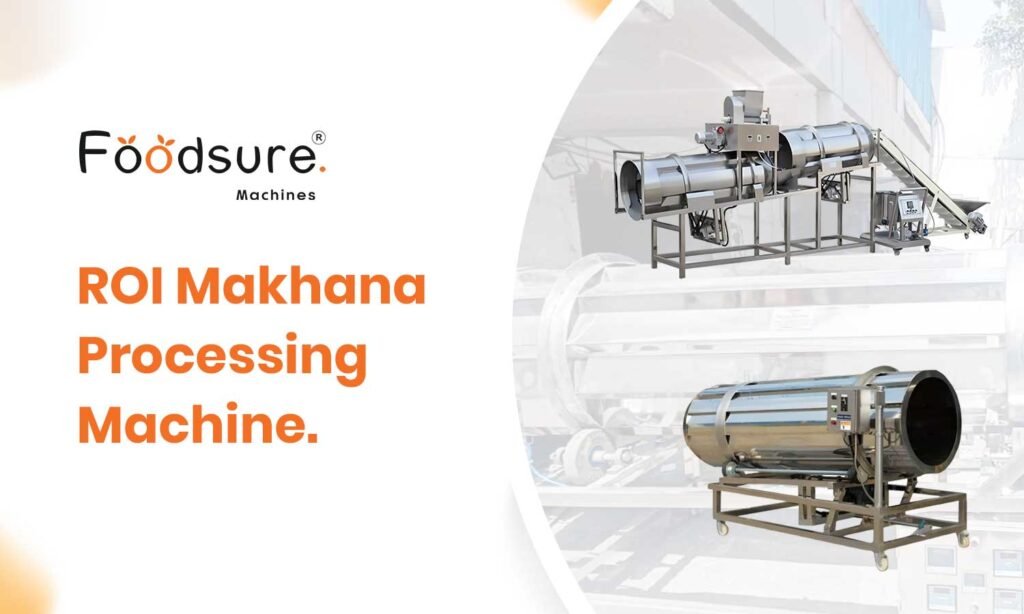
Deep-cooling dryers and automated graders help rural ROI makhana processing machine units cut post-harvest losses by up to 30%. The dryers remove excess moisture quickly, even in high-humidity or erratic monsoon conditions, preventing spoilage and fungus. Graders separate wet, clumped seeds that ruin roasting quality. Together, they speed up drying, improve consistency, and increase market value. For village processors, that means less waste, better quality, and stronger profits, especially when the weather doesn’t cooperate. The Hidden Profit Loss in Village Makhana Units — Data Breakdown Up to 30% post-harvest loss in village makhana units, mainly from poor drying during erratic monsoons. Excess moisture leads to fungal spoilage, turning viable seeds into waste. Manual drying losses average ₹2,575 per batch, due to labor inefficiencies and inconsistent results. 10–15% of batches get rejected or downgraded from wet clumping and grading errors, hurting final sale prices. Looking for reliable options? Here’s our curated list of Top Makhana Machine Manufacturers in India, trusted by FPOs and rural startups. Where Your Makhana ROI Vanishes: Top Loss Points in Village Processing Most village units don’t see the real cost of manual makhana processing until the losses pile up. From spoilage to rejected batches, the drain is silent but reliable. Let’s break down where the real damage happens and how the right machines fix it. Moisture Overload = Fungal Loss Erratic monsoons slow down drying, giving fungi time to ruin your makhana. Delayed drying alone can wipe out up to 13% of your harvest’s value. Fast, uniform drying with a proper makhana dryer machine stops that rot before it starts and helps you hold onto both weight and price. Inconsistent Grading = Broken Pricing Chain When grading is manual, quality varies. Clumping and size mix-ups mean 10–15% of batches get rejected or undervalued. The best makhana grading machines in India solve this by sorting accurately. Protect the popping quality, and help your pricing stay consistent all the way to the buyer. Manual Handling = Time + Labour Waste Old-school drying and sorting waste costs more than ₹2,500 per 100 kg, not counting the time lost. Makhana dryer machine cuts drying time sharply, reduces labor costs, and helps you reach the market faster with better margins to show for it. How Deep-Cooling Makhana Machines Fix Each Profit Leak in Rural Processing Monsoon patterns are no longer predictable, and that uncertainty hits small processors the hardest. But here’s the thing: the makhana processing plant setup in India can help you take back control. Let’s break down how the right ROI makhana processing machine protects your makhana yield when the weather doesn’t. Rapid Moisture Removal Automatic makhana dryer for rural units processes 50–500 kg batches and brings moisture below 10% within hours. This speed is crucial during monsoons when humidity risks fungal growth and spoilage. Consistent Roasting Makhana processing plant setup in India with precision roasters, digital temperature controls that distribute heat evenly, even with wet makhana. You get consistent popping and fewer burnt or under-roasted kernels. Accurate Grading Best makhana grading machine in India, vibratory or rotary, sort by size, cut clumping, and reduce rejection rates. That means better pricing and more market-ready output. Shelf-Life Protection Village-level makhana machinery setup, heat sealing, and vacuum packaging keep moisture out after drying. No reabsorption, no quality loss, just longer shelf life and fewer returns. Energy Efficiency + Local Fit These ROI makhana processing machine run on LPG, diesel, or electricity and are made with food-grade stainless steel. They scale well, adapt to rural setups, and help cut running costs. In regions like Rajkot, deep-cooling dryers and precision graders are already helping units cut moisture loss and improve yields. See how Makhana Processing Machines in Rajkot are driving change locally. ROI Comparison: Traditional Makhana Drying vs Deep-Cooling Setup Before investing in any best ROI makhana processing machine setup, it helps to see the numbers clearly. Here’s a side-by-side comparison of how a typical manual setup stacks up against a deep-cooling setup when it comes to daily output, losses, labor, and profitability. Take a look: Parameter Manual Setup Deep-Cooling Setup Daily Output 100 kg 150 kg Loss % 20% 5% Net Saleable Output/day 80 kg (after 20% loss) 142.5 kg (after 5% loss) Profit per kg ₹8 ₹14 Monthly Profit (25 days) ₹16,000 ₹49,875 Yearly Profit ₹1.92 lakh ₹5.98 lakh Beyond ROI: How Better Makhana Machines Bring Predictability & Growth Smart makhana units know that an ROI makhana processing machine isn’t just about money, it’s about control, predictability, and growth you can count on. Easier buyer price talks. When every batch is consistent thanks to automated drying, roasting, and grading, buyers stop questioning quality. That opens the door to longer contracts and better prices. More confident inventory planning. The best makhana grading machine price in India that controls moisture precisely means fewer surprises. You are not guessing what will spoil or stressing over sudden rejections. That makes forecasting a whole lot easier. Scaling without chaos. Monsoons or no monsoons, an automatic makhana dryer for rural units keeps things moving. You are not stuck waiting for the sun or struggling for labour. You can actually plan growth and deliver. 2021–2024 Cost Data: Manual vs Deep-Cooling Makhana Setup in Villages Let’s cut through the theory and look at what actually happens on paper. From 2021 to 2024, one setup eats into margins with hidden losses. The other quietly compounds returns. This village-level makhana machinery setup isn’t just about saving time or effort; it’s about keeping more of what you earn, every single day. 📊 Makhana Processing Profit Projection Year Setup Type Annual Output (kg) Sellable Output (kg) Profit per Kg (₹) Annual Profit (₹) Cumulative Profit (₹) 2021 Manual 30,000 24,000 ₹8 ₹1,92,000 ₹1,92,000 2021 Deep-Cooling 45,000 42,750 ₹14 ₹5,98,500 ₹5,98,500 2022 Manual 30,000 24,000 ₹8 ₹1,92,000 ₹3,84,000 2022 Deep-Cooling 45,000 42,750 ₹14 ₹5,98,500 ₹11,97,000 2023 Manual 30,000 24,000 ₹8 ₹1,92,000 ₹5,76,000 2023 Deep-Cooling 45,000 42,750 ₹14 ₹5,98,500 ₹17,95,500 2024 Manual 30,000 24,000 ₹8 ₹1,92,000 ₹7,68,000 2024 Deep-Cooling
Start a Makhana Business in Maharashtra with the Best Processing Machines
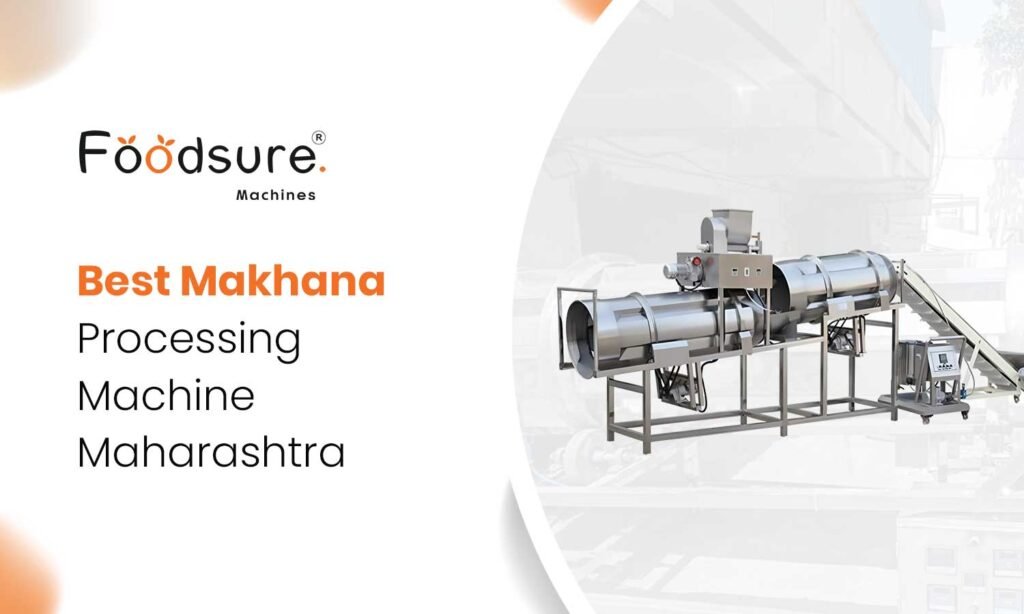
To start a makhana business in Maharashtra, get the best makhana processing machine Maharashtra, roaster, grader, flavoring, and packaging machines. Prioritize food-grade automation, hygiene, FSSAI approval, and smart branding. Know your market. The opportunity is real, but only if you build it right from day one. Why Now Is the Right Time to Start a Makhana Business in Maharashtra Urban demand is rising. Makhana is catching on fast among health-conscious buyers in cities and towns who want clean, protein-rich snacks. Profit margins are strong. Processed and flavored makhana sells at a premium, especially with smart packaging and branding. Government support is real. Schemes like PMFME offer financial help, subsidies, and skill-building for food processors in Maharashtra. The state has infrastructure. Food processing zones provide access to modern machinery, trained manpower, and easier distribution. It’s the right time to enter. With both demand and institutional backing in place, Maharashtra is a great place to start or expand a makhana business. Which Makhana Machine Is Right for You? Here’s the thing: the best makhana processing machine Maharashtra isn’t the fanciest one, it’s the one that fits your setup. Compact Units (10–25 kg/hr) If you are just starting out, this is the kind of setup that makes sense. Small footprint, lower investment, and the best makhana machine for small business to do the basics right, roasting, grading, and simple batch handling. No wasted energy, no unnecessary complexity. Just a solid way to get production off the ground in a small space. Mid-Level Units (25–50 kg/hr) This is where things start to scale. You are not a beginner anymore, and your volumes show it. These best makhana processing machine Maharashtra come ready with stainless steel components and handle roasting, grading, coating, slurry dosing, and packing through a two-head system. You get better speed, more control, and consistency that customers notice. Pilot-Scale Units (50–100 kg/hr) Now we’re talking automatic makhana roasting and grading machine. If you are supplying retail chains or building a serious makhana brand in Maharashtra, this is what you’ll need. These best makhana processing machine Maharashtra run fully automatically. You get precision roasting, dust control, accurate slurry dosing, coating, and clean, fast four-head packaging. Food-grade compliance? Already built in. What Happens When Small‑Scale Food Processing Machines Meet Local Action in Maharashtra (2021–2025) Maharashtra didn’t wait for big factories or perfect conditions. Small processors got in early, figured out what worked, and scaled it. The results? Hard to ignore. Take a look: Growth Metric 2021 2025 Change Processed Makhana Volume 120 metric tons 480 metric tons 300% increase Active Processing Units 8 units (pilot setups) 35 units (across 6 districts) 4x more operators Flavored Makhana SKUs 2 variants (Classic, Spicy) 7+ variants (Masala, Cheese, etc.) New product lines added Annual Retail Pack Output 15,000 packs/year 110,000 packs/year 7x rise in market-ready SKUs Real Impact: Maharashtra Entrepreneurs Who Started Small A Maharashtra-based entrepreneur started a makhana processing unit setup in 2022 using the best makhana processing machine Maharashtra, a compact 20 kg/hr grader and roaster. The goal was clear: supply clean, high-quality roasted makhana to local health stores in Pune and Mumbai. Instead of going big right away, they started with a makhana processing unit setup, small but smart. In year one, they used into Maharashtra MSME support and PMFME subsidies to invest in flavoring and slurry dosing equipment. That move expanded their product range and gave them a better edge with urban customers. Next came infrastructure and tech support from the state’s food-processing zones. With that, they added a two-head hygienic packaging machine, something that instantly made their packs retail-ready. What this really means is they didn’t just scale up; they scaled with purpose. Over two years, production grew to 50 kg/hr. Quality stayed consistent. New flavors got traction. And by 2024, their makhana was reaching homes through e-commerce across Maharashtra. Makhana Machine Price in Maharashtra: Complete Cost Breakdown Here’s a clear cost and feature breakdown of semi-automatic vs Automatic makhana roasting and grading machine. Use this to plan your makhana business machine price in Maharashtra based on your scale, output, and budget. Component Semi-Automatic Machine Estimated Cost (Semi-Auto) Fully Automatic Machine Estimated Cost (Auto) Grader (Rotary Grader) Basic size sorting; manual inspection; no digital features ₹60,000 – ₹90,000 Digital display, auto output indicator, visual segregation ₹2.5 – ₹3.5 lakh Roaster Air blow roasting, 48-inch drum, 30–50 kg/hr, batch-based ₹1.2 – ₹1.5 lakh Drum or air convection roasting, 120–130°C, 22-ft rotating drum ₹5 – ₹6 lakh Coating Unit 36-inch coating pan, manual operation ₹70,000 – ₹90,000 10 ft+ stainless steel rotating drum, auto coating system ₹3 – ₹4 lakh Slurry Dosing / Kettle Manual mixing with a seasoning bowl ₹30,000 – ₹50,000 Slurry dosing kettle with precise blending (olive oil + seasonings) ₹2 – ₹2.5 lakh Packaging Machine (2-head) Optional – Manual sealing or single-head pouch sealer ₹85,000 – ₹1 lakh 2-head, 24–25 pouches/min, nitrogen flushing; 4-head version offers 35–40 pouches/min ₹3.5 – ₹4.2 lakh Licenses & Certificates Required for Makhana Food Processing in Maharashtra If you are setting up a best makhana processing machine Maharashtra, getting the right paperwork isn’t optional; it’s what keeps you legal and trustworthy. Here’s what actually matters: FSSAI License You can’t run a food business without this. It’s legally required under the Food Safety Act. Depending on your turnover and capacity, you will either need a basic registration, a state license, or a central one. The right FSSAI license makes your operation credible and avoids fines. Factory License If your best makhana machine for small business crosses certain size or manpower limits, the local authority will need to issue you a factory license. It proves your workplace is safe, regulated, and legally recognized. Pollution Control Board Clearance Running a roasting unit or bulk packaging line? You will need clearance from the Maharashtra Pollution Control Board. It’s not just a formality; it covers waste, pollution, and how your unit impacts the environment. GST Registration Once you cross the annual turnover
What Is A Protein Premix Machine and How Does It Support Innovation In Food Processing
Post-pandemic consumer behavior has permanently shifted. Consumer behavior has shifted permanently. Nutrition is no longer aspirational, it’s foundational. Protein-enriched foods, supplements, and functional snacks are now essential, not niche. For manufacturers, this creates massive opportunity, but also operational pressure: manual processes can’t keep up with scale, consistency, or compliance. Enter the Protein Premix Machine. It’s not just equipment, it’s a strategic asset that ensures precision, efficiency, and hygiene in protein food processing machinery. What Is a Protein Premix? A Protein Premix Machine is an industrial mixer designed to: Accurately dose powders and micro-ingredients. Uniformly blend protein, vitamins, and minerals. Maintain hygiene and comply with FSSAI/GMP standards. Applications include: Product Type Typical Use Protein bars Consistent texture, weight, and nutrient profile Meal replacements Smooth, lump-free powders Functional bakery items Precise protein fortification Ready-to-drink powders Rapid solubility and taste consistency Nutritional snacks & supplements Batch-to-batch uniformity Read More: Protein Powder Blending Machine for Food Factories Delivering 95% Batch Consistency Why Your Food Production Needs a Protein Premix Machine High-Quality Products Manual mixing leads to inconsistency in size, texture, and taste. With a protein bar manufacturing machine: Proteins, micronutrients, and functional ingredients blend uniformly. Finished products maintain premium quality and compliance. Greater Production & Scalability Semi-automatic machines: under 100 kg/hr (ideal for startups). Fully automatic lines: 100–1000 kg/hr (industrial-scale production). Easily scale production without compromising quality. Flexibility Across Protein Types Supports whey, casein, soy, pea, rice, and mixed protein formulations. Switch recipes or create new product variants without halting the line. How a Premix Processing Equipment Works: Step-by-Step Step Process Benefit 1 Ingredient Feeding – automated/manual dosing Accurate nutrition & consistency 2 Pre-Mixing – dry blending Eliminates clumping & segregation 3 Controlled Heating (optional) Activates binders, preserves flavor 4 Extrusion Ensures density & uniform structure 5 Precision Cutting Weight control & packaging-ready 6 Cooling & Setting Reduces stickiness, extends shelf life 7 Coating (optional) Chocolate, yogurt, or flavored coatings 8 Hygienic Packaging Protects against contamination & moisture Foodsure Machines Protein Processing Equipment: Specs & Pricing Model Capacity Automation Price (₹) Power Notes Foodsure Machines FS-PM-100 100 kg/hr Semi-automatic 5,00,000 3–4 kW Ideal for startups Foodsure Machines FS-PM-500 500 kg/hr Fully automatic 9,50,000 5–7 kW Mid-scale production Foodsure Machines FS-PM-1000 1000 kg/hr Fully automatic 15,00,000 10 kW Industrial-scale production Why Choose Foodsure Machines: Designed for precision, hygiene, and high speed. Supports all protein types & custom blends. Easy recipe adjustments for new product innovation. Minimal wastage, consistent output, high ROI. Benefits and Features of Protein Premix Machines You Should Know Protein food processing equipment for premixes eliminate uncertainty when blending protein powders and other ingredients. They provide consistency in the final mix and minimize potential errors that can impact taste, texture, and nutrition. They can be used for blends that are whey, casein, plant proteins, or custom blends, so this provides some versatility depending on the product. Because the mixing is designed for high speed, this machine improves overall production, while also eliminating a good deal of labor through the automated system. These protein bar machine maintain the hygiene of food and the quality of the products, as the machines can be easily cleaned. They provide effortless options to adjust the controls of the machine, allowing ease of new product innovations and developments. Overall, the machines themselves allow for less waste and produce an entire batch with quality in mind, giving consumers peace of mind. Condensed, machines facilitate easier production for nutritious and high-quality products consistently. Conclusion A Protein Premix Machine transforms nutrition production from a variable-driven process into a controlled industrial system. It ensures consistency, safety, scalability, and speed, while enabling brands to innovate without operational compromise. If you are serious about competing in the health food and supplement market, manual blending is not a strategy, it’s a liability. Partner with Foodsure Machines and build a production line that delivers confidence, compliance, and commercial scale. Have a Question? Let’s Connect! Reach out to us anytime via call or email. 📞 Call Us ✉️ Email Now FAQ Q1. What is a protein premix machine used for?It uniformly blends protein powders, vitamins, and micronutrients for consistent nutrition products. Q2. Is a protein premix machine suitable for whey and plant proteins?Yes, it handles whey, casein, soy, pea, rice, and mixed protein formulations. Q3. What is the production capacity of a protein premix machine?Capacities range from under 100 kg/hr to over 1000 kg/hr depending on automation level. Q4. Can protein premix machines be used for protein bars and powders?Yes, they support bars, powders, meal replacements, and functional food products. Q5. Are protein premix machines fully automatic?They are available in semi-automatic and fully automatic industrial configurations. Q6. How does a protein premix machine ensure uniform mixing?Precision mixing systems eliminate segregation and ensure batch-to-batch consistency. Q7. Is a protein premix machine compliant with food safety standards?Yes, when installed in an FSSAI-compliant facility and operated under GMP norms. Q8. What industries use protein premix machines?Health foods, sports nutrition, supplements, bakery, and functional food manufacturers. Q9. How much investment is required for a protein premix machine?Initial investment typically starts from ₹5 lakh and increases with capacity and automation. Q10. Is a protein premix machine profitable for manufacturers?Yes, high demand and scalable production make it a profitable long-term investment.
Protein Bar Manufacturing Machine in Mumbai – Best Suppliers & Price Guide 2025
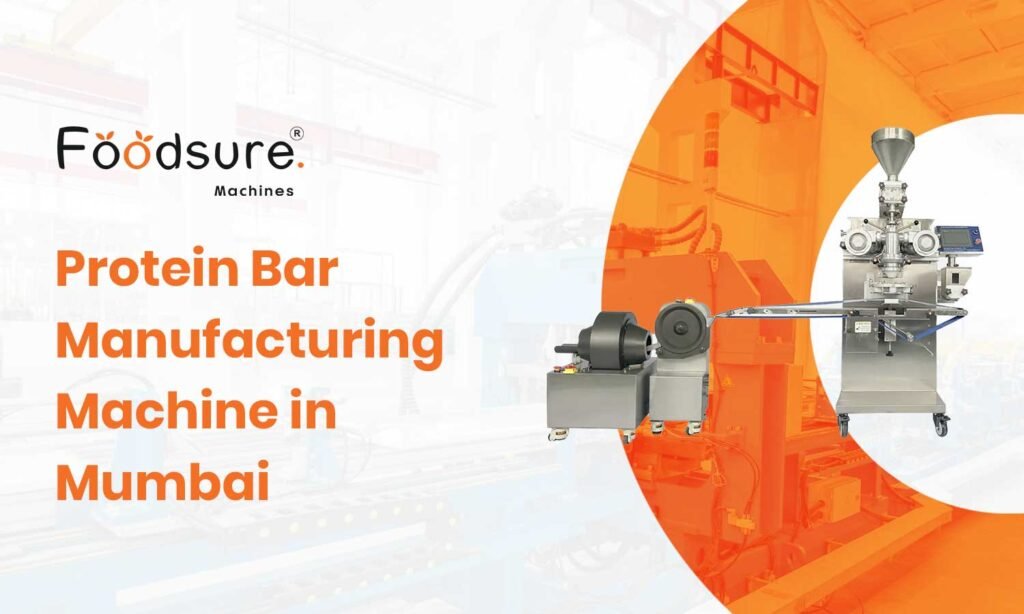
India’s protein bar market is projected to reach ₹3,000 crore by 2027, making it a high-growth opportunity for manufacturers. However, selecting the wrong machinery can cost businesses lakhs. To avoid hidden costs and set up a profitable production line, it’s crucial to choose the right protein bar manufacturing machine in Mumbai. Here’s how to make an informed decision. Why Mumbai is the Best Place to Buy Your Protein Bar Manufacturing Machine Mumbai isn’t just a commercial hub; it’s also a leading center for food processing machinery. Here’s why you should consider buying your protein bar manufacturing machine in Mumbai: Wide Range of Equipment: From small, semi-automatic devices to fully automated production lines, Mumbai offers a vast selection of machines to suit all production scales. Local Support and Training: Most suppliers provide installation and employee training, ensuring smooth operations from day one. Easy Access to Replacements: In case of machine failure, local technicians and readily available replacement parts minimize downtime. Affordable Logistics: Purchasing locally reduces shipping costs, import taxes, and waiting times, making the entire process more cost-effective. Established Supplier Networks: Suppliers in Mumbai have worked with both startups and large manufacturers, offering a reliable track record. In short, buying a protein bar manufacturing machine in Mumbai saves you time, money, and effort—whether you’re just starting small or scaling up your production. How to Compare Protein Bar Machine Price in Mumbai Choosing the cheapest option is not the only consideration when buying a protein bar manufacturing machine in Mumbai: prices can range greatly depending on the characteristics, automation, and capacity. Knowing what you need will prevent shocks and enable smart investments. Remember the following considerations when comparing the Protein bar plant setup cost in Mumbai: Production Capacity – How many bars are you planning to produce each hour? Degree of automation – Semi-automatic equipment is less expensive but needs more manual labor. Although they are more expensive at first, fully automated systems save labor. Dependability of the provider – To ensure you receive a high-quality machine, always verify the references of Mumbai protein bar manufacturing equipment providers. After-sales assistance — Local assistance might save time and money since machines require upkeep. Flexibility – A flexible protein supplement bar machine is a superior option if you wish to manufacture a variety of flavors or kinds of bars. Feature Small-Scale Machine Fully Automatic Machine Production Capacity 200–500 bars/hour 1000–2000 bars/hour Price Range ₹4–8 lakh ₹25–30 lakh Manual Effort Moderate Minimal Best For Startups Medium to large manufacturers What this really means is that knowing your production goals and comparing features will help you choose the right protein bar manufacturing machine in Mumbai without overspending. Reliable protein bar production line suppliers Mumbai Here are some reliable suppliers offering protein bar production lines in Mumbai: Foodsure Machines Offers dependable protein bar production solutions for companies in Mumbai and other cities from its Noida headquarters. Our machines are high-capacity, hygienic equipment guarantees consistent quality, energy efficiency, and expert support, making it perfect for creating a seamless production line. Kalyan Machines Kalyan Machines is renowned for its fully automated energy and protein bar lines. It offers high-capacity solutions with stainless steel fabrication, innovative pressing and cutting synchronization, and customizable designs. Despite being located in Noida, they have a large presence in Mumbai. Vijay Foodtech Established in Mumbai in 1989, Vijay Foodtech offers stainless steel low-cost, long-lasting protein bar-making machinery with efficient cutting capabilities. With great customer service and superior quality, they are very well-known and have a notable footprint all over India. E S Food Technologies Pvt Ltd With a base in Mumbai, E S Food Technologies manufactures food processing machinery, such as protein bar manufacturing lines, with a focus on quality and industrial-scale output. These suppliers combine local accessibility with quality manufacturing expertise to meet diverse protein bar production needs in Mumbai. Read more: Top 5 Protein Bar Machine Manufacturers in India (2025) Comparing the Protein Bar Machine Price in Mumbai The cost of a Protein Bar Manufacturing Machine in Mumbai might vary greatly. Keep these considerations in mind as you make your selection: Small-scale machines: Plant-based protein bars manufacturing cost ₹4–8 lakh, ideal for startups testing the market. Simple, reliable, and easy to operate. Completely automated lines: Ideal for medium to big manufacturers, costing between ₹25 and 30 lakh. Cut down on manual labor, save time, and increase manufacturing more quickly. Included services matter: Some companies provide installation, training, and local help. This may prevent future headaches and save money. Check multiple suppliers: Speaking with a few Mumbai-based protein bar manufacturing line providers helps to gain insight into price, features, and support. Versatility and Features: A protein supplement bar machine that can handle various flavors or bar kinds is more valuable than a simple version. What this really means is that comparing costs, features, and support will help you choose the best equipment for your needs without paying too much. Where to Buy a Protein Bar Production Line in Mumbai If you’re wondering where to buy a protein bar manufacturing machine in Mumbai, consider the following options: Foodsure Machines: Known for offering high-quality machines with excellent customer service. Vijay Foodtech: Based in Mumbai, offering reliable, long-lasting machines for protein bar production. E S Food Technologies Pvt Ltd: Another Mumbai-based supplier with a strong reputation for quality and industrial-scale output. When purchasing, look for: Transparent Pricing: Ensure there are no hidden costs, including installation and training fees. Local Support: Choose suppliers who offer accessible technicians and replacement parts. Experience: Prefer suppliers with a proven track record in both small-scale startups and large-scale manufacturers. Buying locally from a reputable supplier ensures seamless installation and faster production setup, allowing your protein bar business to hit the ground running. . Read More: Foodsure Machines Launches Automatic Protein Bar Making Line to Power India’s Functional Food Growth Start Protein Bar Production with the Right Supplier Choosing the right Protein Bar Manufacturing Machine in Mumbai and a reliable supplier sets your business up for success. Contact Foodsure Machines today to
Unlock Consistent Quality and Boost Your Ketchup Business with the Best Machines in Gujarat
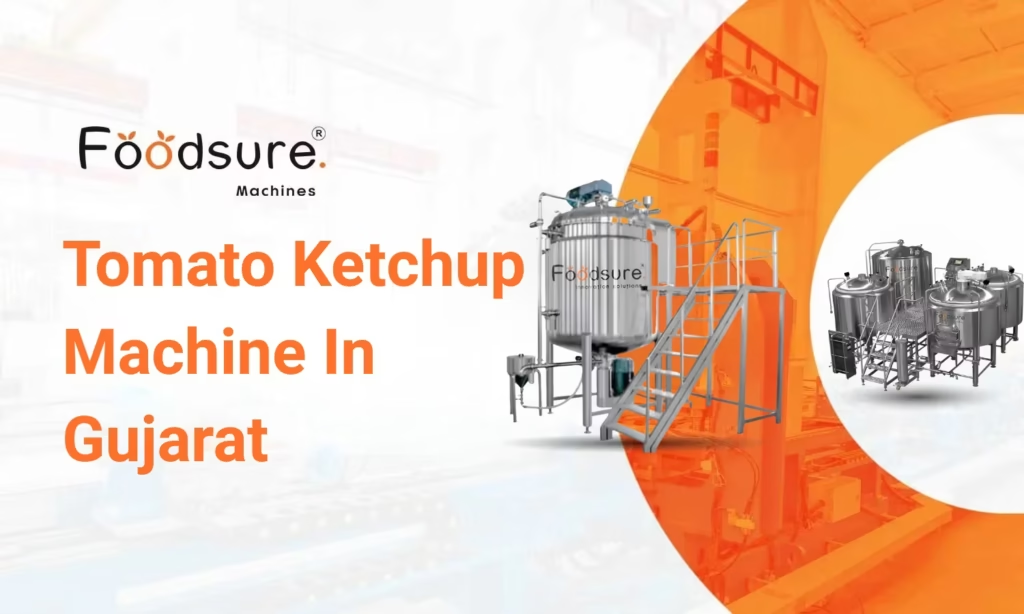
Are you tired of dealing with inconsistent tomato ketchup production? As the ₹3,500+ crore ketchup market in India grows at 15% annually, businesses are facing challenges like fluctuating textures and production bottlenecks. The solution? The right tomato ketchup machine in Gujarat. Imagine boosting your efficiency, cutting down on errors, and consistently delivering high-quality ketchup. Discover how upgrading to the right machine can transform your production line, boost profits, and set your brand apart in a competitive market. How the Right Tomato Ketchup Machine In Gujarat Can Improve Productivity Boost Productivity Advanced ketchup machines can handle everything, like crushing, pulping, blending, cooking, and filling. What that means is you can easily produce more products without worrying about losing flavor and texture. Easy Operation If we talk about the controls, they are simple and easy to follow. It has digital guides that walk you through every step, so mistakes are less likely and your new staff get up to speed faster. Consistent Quality Fully automatic tomato ketchup machines have automatic temperature and mixing control, which makes each batch of ketchup have the same texture and taste. Cost-Effective This machine has automation that reduces manual labor, reduces ingredient waste, and lowers running costs. At the end of the day, that helps you to increase margins and make your production grow. Hygienic & Safe These machines are made from stainless steel, so you can easily clean them and also meet safety standards. That protects both the product and the people you work with. The Main Features of Tomato Ketchup Machines Automated Cooking and Pulping These food processing machinery do not just mash tomatoes. But, they also cook and soften them first, which makes the pulping process smoother and more consistent. The temperature and timing are carefully controlled by machines, so you get a seedless base every time. Mixing and Seasoning Unit Mixing ketchup is not as simple as regular mixing. With the help of high-shear mixers and automatic dosing systems, it adds ingredients like vinegar, sugar, salt, and spices in the right amounts. This ensures that every batch tastes the same, without any stress. Food-Grade Construction Most models of tomato ketchup machines are made from stainless steel, such as SS304 and SS316, which are easy to clean and meet food safety standards. There are no shortcuts, just stable materials. Vacuum Emulsification Some advanced machines go a step further by using vacuum systems to blend and emulsify the sauce. This machine keeps air from getting trapped inside, resulting in a smoother ketchup that holds together better. Filling and Packaging Automation Automated fillers take the stress out of portioning. They fill the bottles and pouches of ketchup with a clean process. These machines speed things up and cut down on labor, without compromising on quality. Which Type of Tomato Ketchup Machine Works for You Semi-Automatic Tomato Ketchup Machine Semi-automatic machines are a great option if you are running a small-scale industry. That machine was a balance between automation and manual control, so you can work smoothly without any stress. These machines handle tomato processing, cooking, mixing, and filling, but also need some manual help to operate the machines. What this really means is lower costs while keeping the product consistent and hygienic. They’re easy to use and perfect if you want reliable results without hiring too many hands. You’ll typically see capacities between 50 kg per hour and 500 kg per hour. Fully Automatic Tomato Ketchup Machine If you want a machine for large-scale production, fully automatic tomato ketchup machines are ideal for you. They take care of everything from washing the tomatoes to packaging the final ketchup product. These tomato sauce machine have advanced controls and ingredient dosing, which keep the process smooth and continuous. That means higher output with less reliance on manual labor. These machines meet strict safety standards while making sure each batch looks and tastes the same. Final Thoughts Don’t let production hiccups hold your business back. With the Foodsure Machines, you can scale up your output, maintain consistent quality, and reduce costs. Whether you’re just starting or looking to optimize a large-scale operation, this machine is the key to streamlining your ketchup production process.Ready to boost your ketchup production? Get your Tomato Ketchup Machine today and watch your business grow. Contact us now for an exclusive offer Have a Question? Let’s Connect! Reach out to us anytime via call or email. 📞 Call Us ✉️ Email Now FAQ What is the cost of a tomato ketchup machine in Gujarat?₹2 lakh to ₹25 lakh, depending on the capacity and automation level. How does a tomato ketchup machine work?It cooks, pulses, mixes, and fills ketchup automatically, ensuring consistent quality. What are the benefits of a fully automatic ketchup machine?Increased production, consistent quality, reduced labor, and lower operational costs. How much space is required for a ketchup production line?Between 800–2,000 sq ft depending on production scale. Can a ketchup machine improve product quality?Yes, it ensures consistent texture and taste with controlled cooking and mixing. What is the production capacity of a ketchup machine?It ranges from 100 kg/hr to over 2,000 kg/hr. Is a tomato ketchup manufacturing business profitable in Gujarat?Yes, with stable demand and high profit margins, it’s a profitable business. How many tomatoes are needed for 1 kg of ketchup?Around 2.2–2.5 kg of tomatoes for every 1 kg of ketchup. What are the features of a good ketchup machine?Features include automated cooking, pulping, mixing, vacuum emulsification, and hygienic design. Which brand offers the best tomato ketchup machine in Gujarat?Foodsure Machines is known for its consistency, durability, and high output quality.
Tomato Sauce Making Machine Price in India: Capacity & TCO Guide
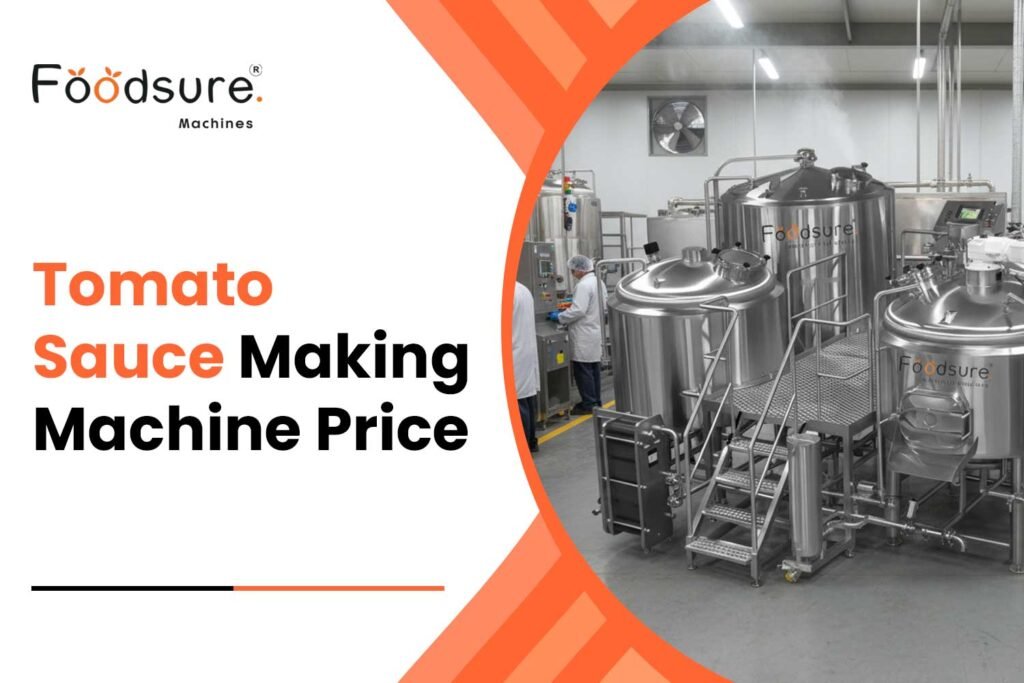
Tomato sauce making machine price in India depends mainly on capacity (kg/hr), automation level, heating type (steam/electric), SS grade, and packaging integration. In this guide, you’ll see a price-by-capacity table, what modules are included in a sauce line, and a buying checklist to help you choose the right setup for consistent quality and faster production. Quick Price Snapshot (Tomato sauce making machine price in India – indicative): Small setup (50–100 kg/hr): ₹2 lakh – ₹6 lakh (basic cooker + pulper/finisher). Mid-scale (200–500 kg/hr): ₹6 lakh – ₹25 lakh (semi/automatic line with better mixing & filtration). Industrial (500–5,000 kg/hr): ₹25 lakh – ₹1 crore+ (fully automatic line, optional pasteurizer + packing integration). Tomato Sauce Machine Price in India by Capacity Capacity / Setup What It Usually Includes Typical Price Range (India) Best For 50–100 kg/hr (Starter) Cooking kettle, pulper/finisher, basic filtration (manual or semi-automatic) ₹2 lakh – ₹6 lakh Startups, SHGs, pilot batches 200–500 kg/hr (Mid-scale) Washing system, pulping, steam cooking, blending tank, improved filtration ₹6 lakh – ₹25 lakh Growing brands, B2B bulk supply 500–1,000 kg/hr (Commercial) Semi or automatic line, temperature control, optional pasteurizer ₹25 lakh – ₹60 lakh Rising Demand for Tomato Products: Why the Market Keeps Growing The global industry for tomato processing was 48.5 million metric tons in 2024 and projected to grow at about 3.2% a year to reach approximately 64.6 million metric tons by 2033. Not only are consumers eating more tomato products, but they are also expanding the way they consume tomato products. Tomato sauces, pastes, ketchup, and other forms of tomatoes are increasingly featuring in people’s everyday eating etiquette instead of being designated for special occasions. This growing demand is also driving the sauce making machine market, as manufacturers look to scale up production to meet consumer needs. Read More: Tomato Ketchup Market Size, Demand & Growth Trends in India [2025] 2-Year Total Cost of Ownership (TCO) Example Setup / Capacity One-time Machine / Line Cost Labour per Month Power per Month Spares / Maintenance per Year Output per Day (8–10 hrs) Estimated Payback 50–100 kg/hr (Starter) ₹3,50,000 ₹35,000 ₹15,000 ₹60,000 400–900 kg 10–16 months 200–500 kg/hr (Mid-scale) ₹15,00,000 ₹60,000 ₹30,000 ₹1,20,000 1,600–4,500 kg 12–18 months 500–1,000 kg/hr (Commercial) ₹40,00,000 ₹85,000 ₹55,000 ₹2,50,000 4,000–9,000 kg 14–22 months 1,000–5,000 kg/hr (Fully Automatic) ₹95,00,000 ₹1,50,000 ₹1,20,000 ₹6,00,000 8,000–45,000 kg 18–30 months How Foodsure Machines Delivers More Value Than a Standard Tomato Making Machine Selecting a tomato sauce machine is not just about the equipment. It’s about getting a system that actually works for your production and your recipe. That is where Foodsure Machines comes in. We offer complete solutions, whether you’re testing a small pilot setup or running a fully automated tomato processing machine. With over 12 years of experience and more than 45 successful installations, we guide manufacturers through designing, installing, and optimizing their sauce units. Our approach covers the whole process from process design and automation controls to packaging integration. Feature Foodsure Machines Line Standard Supplier / Generic Machine Installation & Training Included with on-site guidance and operator training Often basic guidance; training may be limited Customization (Recipe & Capacity) Configured for sauce viscosity, solids, and target kg/hr Standard model with limited customization Automation Controls Optional PLC controls for temperature, mixing, and batch consistency Manual or semi-automatic controls; more batch variation Spares & Support Planned spares availability with after-sales support Support varies; spares availability may be slow Packaging Integration Can integrate pouch, bottle, or jar packing as per plan Usually separate; integration not always supported Warranty Coverage Clear warranty terms with service support Warranty terms vary by seller Conclusion If you’re serious about scaling, the tomato sauce machine cost India shouldn’t be your only decision factor. What matters more is how much sauce you can produce per day, how consistent the texture stays, and how low your wastage and labour costs go once the line starts running. The right setup pays back faster because it improves output, reduces rework, and keeps quality stable batch after batch. At Foodsure Machines, we don’t just sell a machine—we build a sauce line that fits your capacity, recipe, and packing format. Share your required kg/hr, packaging type (pouch/bottle/jar), and heating option (steam/electric), and we’ll recommend the best configuration with a clear quotation. Contact us: +919870533566 Email now: wecare@foodsure.in FAQ 1) Is the tomato sauce business profitable? Yes, with a profit margin of 20-30% and efficient scaling. 2) What is the price of tomato sauce making machine in India? Prices range from ₹2 lakh for small units to ₹1 crore+ for industrial lines. 3) How to sell your own tomato sauce? Develop a unique recipe, package it properly, and target local markets and stores. 4) Which business gives 2 lakh per month? Tomato sauce production with scalable machinery can generate around ₹2 lakh/month. 5) What food has the highest profit margin? Sauces and condiments like tomato sauce offer high margins due to low production costs. 6) What is the price of Kissan ketchup 500g? Typically priced around ₹60–₹80, depending on the retailer. 7) What is the price of tomato ketchup? Standard brands like Kissan or Maggi can cost ₹40–₹100 for 500g. 8) What is the price of Maggi tomato ketchup 1kg? Around ₹110–₹150 for a 1kg pack. 9) How much is 500 grams of tomatoes? Typically costs ₹20–₹30 in local markets, varying with season. 10) How much does it cost to set up a tomato processing plant? Setting up a tomato processing plant can cost anywhere from ₹10 lakh to ₹1 crore+ depending on capacity and automation.
Best Tomato Ketchup Plant Manufacturer: Cost, Capacity & Automation Explained (2026)
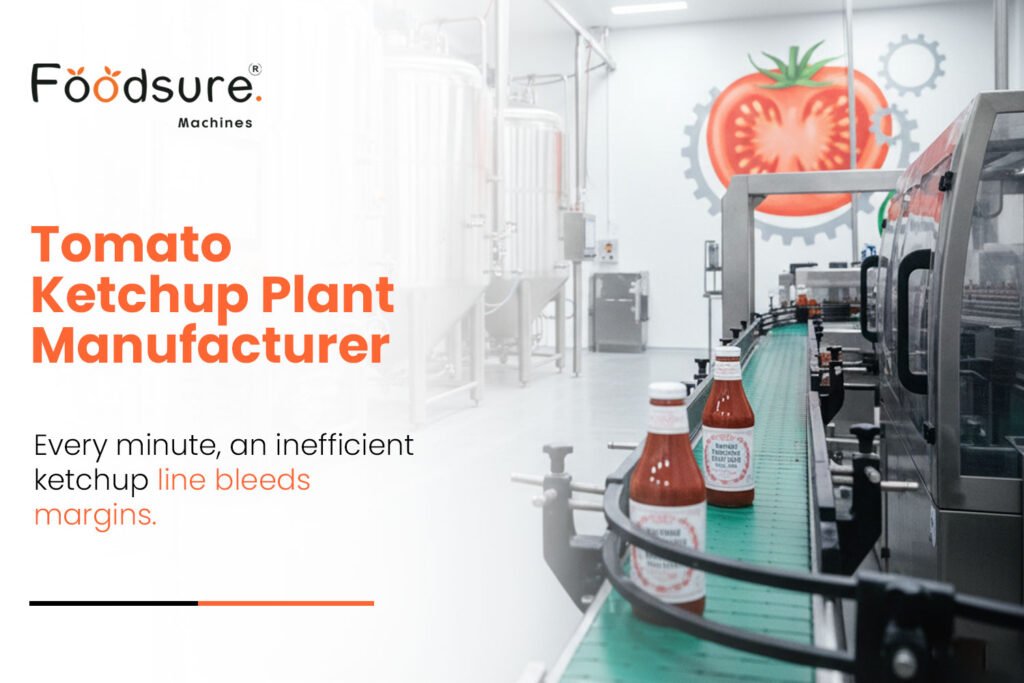
Choosing the wrong tomato ketchup plant manufacturer can increase energy costs, reduce product yield, and lock your business into inefficient equipment for years. This blog is written for food manufacturers, sauce brands, and processors planning to set up or upgrade a tomato ketchup production plant in India. Inside, you will understand how modern ketchup plants are designed, which production capacity realistically fits demand, what a tomato ketchup plant costs in 2026, and how automation, vacuum processing, and material quality directly impact long-term profitability. Based on real manufacturing practices and industry-grade processing standards, this guide helps you evaluate manufacturers with clarity, avoid costly mistakes, and invest in a plant that delivers consistent quality, scalable output, and measurable ROI. What Is a Tomato Ketchup Plant Manufacturer? A tomato ketchup plant manufacturer is not just a supplier of individual machines. They design, engineer, and install the complete production line, including cooking, mixing, concentration, homogenisation, and hygienic filling. This system-based approach ensures consistent product quality, predictable production output, and compliance with food safety standards, which are critical for commercial-scale ketchup manufacturing. Who Typically Works With a Tomato Ketchup Plant Manufacturer? These are not only manufacturers that sell automatic tomato sauce manufacturing machines. They deal with commercial food brands, label and contract makers of sauces, export-oriented ketchup, institutional suppliers, HoReCa clients, and regional processors, and leave behind manual or batch operations. That means they are familiar with the difficulties on all levels and can provide a system that exactly meets your requirements. Read More: How to Make Tomato Ketchup in India Business & Manufacturing Guide How a Tomato Ketchup Manufacturing Plant Works The reason why a tomato puree and ketchup processing plant works is that all the steps are regulated and reproducible. We can divide it into distinct steps. Raw material handling: The base is made of tomato paste of 28-30 degrees Brix or fresh tomato pulp. The inline dosing of sugar, salt, vinegar, spices, and stabilisers is added. This actually translates to the fact that the recipe remains within a margin of 1-2 % every time. Mixing and cooking: The mixture is transferred into steam jacketed or thermic fluid kettles. The cooking is done between 85 & 95°F. Burning is avoided, and the thickness is maintained due to constant agitation. Vacuum concentration: Plants that are quality-oriented make use of vacuum systems. The working temperatures are reduced to approximately 55-65 °C. Colour remains vivid, taste remains pure, and power consumption can be reduced by a third or a half. Homogenization: The size of particles is made less than 100 microns. The outcome is the creation of a smooth texture and stable ketchup that does not separate. Deaeration: Pre-filling is accomplished by the removal of trapped air. This enhances oxidation resistance and prevents the weight of fill from being inconsistent. Filling and packaging: Hot fill or aseptic systems are used to fill the ketchup. The right configuration can be used to process bottles, pouches, sachets, and bulk packs. Read More: Produce Premium Ketchup at Scale – Vacuumised Tomato Ketchup Plant with 50% Energy Savings What Equipment Goes Into a Tomato Ketchup Plant Equipment Function Mixing Tank Uniform blending of ingredients Steam Jacketed Kettle Controlled cooking Vacuum Evaporator Low-temperature concentration Homogenizer Texture and shelf-life stability Heat Exchanger Rapid heating and cooling Filling Machine Hygienic, accurate packaging CIP System Automated cleaning and sanitation Read More: Affordable Tomato Sauce Making Machine Price That Boosts Your Production and Profits What Determines Price and Efficiency in a Complete Tomato Ketchup Plant India Production Capability: The smallest size of processing plant (300-500kg/hr) is intended for low-volume processing. For sustained commercial demand, a processing rate of 1-2 tonnes per hour is appropriate. For the purpose of scaling operations, plants that process 3-5 tonne/hour or greater would be considered High Capacity. Automated Systems: With semi-automated production lines, production relies on a combination of human labour and machinery. The ability to have fewer employees and lower entry costs is offset by the impact this type of system has on production consistency. Processing Methods: Processing methods that do not use vacuum processing (open kettle) typically require a lower capital investment to acquire; however, these types of processing methods require more energy to operate, offer less precision in operation, and produce a less consistent end-product. Material Selection: A material of SS 304 Stainless Steel has adequate corrosion resistance, provided it will be used under conditions that fall within the common uses of food product manufacturing. Compliance with Food Safety Standards: If a tomato ketchup machine is designed to comply with the food safety standards applicable in the region where it is designed (e.g., FSSAI, FDA, USDA, CE, EHEDG, etc.), this will make the approval process easier. Read More: Tomato Sauce Machine Buyers Guide 2025 with Models, Prices, and Setup Cost in India How Much Does a Tomato Ketchup Plant Cost (Machine & Plant Prices) Machine / Equipment Capacity / Role Approx. Price (₹) Basic tomato sauce / ketchup making machine Entry-level processing ₹70,000 Tomato sauce machinery (semi-automatic) 500 kg processing ₹70,000 Industrial ketchup manufacturing machine 100 to 1000 L batch ₹4,00,000 Tomato ketchup & sauce making machine (higher capacity) Up to 200 kg/hr ₹10,00,000 – ₹30,00,000 Tomato sauce processing plant (automatic / larger unit) Up to 3000 kg/hr ₹10,00,000 Common Mistakes When Choosing a Tomato Ketchup Plant Manufacturer When you decide on a Manufacturer based solely on what you need now, you will quickly outgrow your current Manufacturer’s capabilities, creating a need to expand, which can increase in cost, disrupt your operations, or require you to make difficult decisions regarding future investments. While lower upfront costs for a product made from the wrong material type may seem appealing, it’s typically a guarantee for increased maintenance costs as time goes on. If you underestimate the amount of time required to undergo cleaning or CIP, your overall production times will be affected. In addition, your company’s labour cost will increase, and there will be
Vacuumised Tomato Ketchup Plant: Save Up to 50% Energy & Cut Production Cost – 2026
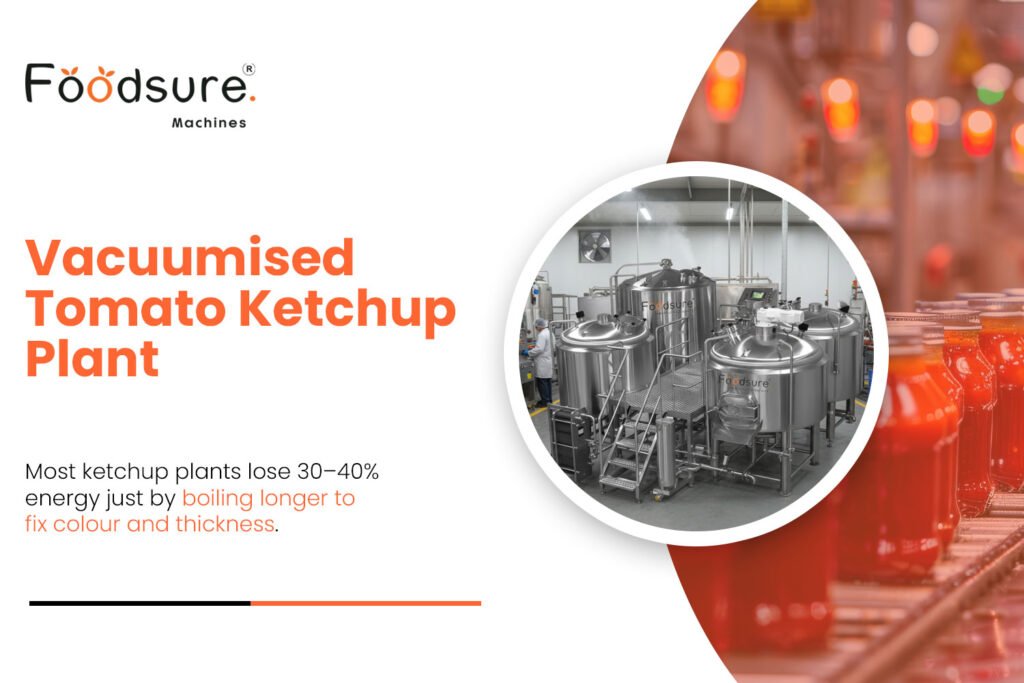
Most tomato ketchup plants lose 30–40% energy due to excessive boiling, rising fuel costs, and repeated batch corrections. This increases production costs, affects batch consistency, and puts pressure on margins. A vacuumised tomato ketchup plant solves this by cooking at lower temperatures, preserving natural colour and flavour, and cutting energy consumption by up to 50% without slowing output. In this blog, we explain how vacuumised ketchup plants benefits, how they reduce energy and fuel costs, the complete process flow, available plant configurations, investment range, and ROI benchmarks to help you decide if this technology is right for your production scale. Vacuumised Tomato Ketchup Plant – Quick ROI Snapshot Energy savings: Up to 30–50% per batch compared to conventional boiling. Cooking temperature: 55–70°C (lower heat loss, better colour retention). Batch cycle time: 20–35% faster, enabling more daily batches. Labour requirement: 25–40% lower due to automation. Product consistency: Uniform viscosity, colour, and flavour. Typical investment range: ₹8 lakh – ₹75 lakh (based on capacity & automation). Estimated payback period: 18–30 months. Best suited for tomato ketchup plant manufacturer facing high fuel costs, batch rejections, or inconsistent ketchup quality. Vacuumised Ketchup Plant Configurations (Choose by Scale & ROI) Vacuum cooking ketchup machineare available in different configurations based on production volume, automation level, and investment capacity. Choosing the right setup ensures faster ROI and stable operations. Small-Scale Vacuumised Ketchup Plant (Semi-Automatic) Best for: Startups, FPOs, SHGs, and regional brands. Production capacity: 300–800 kg/day. Semi-automatic operation with controlled vacuum cooking. Lower initial investment and flexible batch sizes. Reduced energy consumption with consistent quality. Ideal for businesses upgrading from open-pan boiling. 📌 Balances cost control with improved colour, flavour, and yield. Medium-Scale Vacuumised Ketchup Plant (Automatic) Best for: Growing brands, B2B suppliers, contract manufacturers Production capacity: 1–3 tons/day. Automated vacuum cooking, dosing, and homogenization. Faster batch cycles with lower manpower dependency. Better viscosity control and reduced batch rejection. Scalable layout for future expansion. 📌 Designed for consistency, speed, and repeatable quality. Industrial Vacuumised Ketchup Plant (Fully Automatic) Best for: Large manufacturers and national distribution. Production capacity: 5+ tons/day. Fully automated vacuum processing with PLC controls. Integrated CIP, pasteurization, and packaging options. Lowest operating cost per batch at scale. Strong economies of scale and long-term profitability. 📌 Built for high-volume production with maximum energy efficiency. How to Choose the Right Configuration Start small if you are testing the market or replacing manual boiling. Move to automation if labour cost and batch variation are rising. Choose full automation when fuel cost, output consistency, and scale matter most. Read More: Tomato Sauce Machine Buyers Guide 2025 with Models, Prices, and Setup Cost in India How Vacuumised Processing Achieves Up to 50% Energy Savings Lowering the cooking temperatures will help lessen your thermal losses from the surroundings because steam and evaporated fuel are produced during cooking at lower temperatures. By eliminating excess moisture through the use of quicker concentrate removal systems during each batch cycle, you will shorten the overall cycle time for batch processing. Less reprocessing and rejection of the same product batch will result in more uniformity in the viscosity and flavour of the final product. An effective heat transfer method is to use the most efficient heating jacket and a hot vacuum environment available today. Step-by-Step Process Flow in a Vacuumised Ketchup Plant Tomato Washing & Sorting. Crushing & Pulping. Pre-heating. Vacuum Cooking & Concentration of Tomato Pulp. Spice/Ingredient Dosing. Homogenization. Fill & Package. Read More: Tomato Sauce Manufacturing Machine in India: Your Partner for Scalable Production Key Performance Metrics That Define the ROI of a Vacuumised Tomato Ketchup Plant Parameter Average Range (Approx.) What It Means for Your Business Initial Investment ₹8 Lakh – ₹75 Lakh Depends on plant capacity and automation level Production Capacity 300 kg/day Suitable for small manufacturers Energy Consumption 30–50% lower per batch Direct reduction in fuel and electricity costs Cooking Temperature 55–70°C Lower heat loss and improved flavour retention Batch Processing Time 20–35% faster Enables more batches per day Manpower Requirement Reduced by 25–40% Automation lowers dependency on skilled labour Raw Material Yield Higher yield per kg of tomato Less over-cooking and evaporation loss Product Rejection Rate Significantly reduced Consistent viscosity and taste across batches Operating Cost per Batch Lower than traditional plants Energy and labour savings Estimated Payback Period 18–30 months Faster ROI due to operational efficiencies Read More: Affordable Tomato Sauce Making Machine Price That Boosts Your Production and Profits Conclusion: Cut Energy Costs Without Compromising Ketchup Quality Rising fuel costs, inconsistent batches, and excessive boiling losses are common problems in traditional ketchup manufacturing. A vacuumised tomato ketchup processing plant directly addresses these issues by reducing cooking temperatures, improving heat efficiency, and delivering consistent colour, flavour, and viscosity. For manufacturers aiming to improve margins and scale production safely, vacuumised processing offers a clear advantage: up to 50% energy savings, faster batch cycles, and a predictable ROI within 18–30 months. Whether you are upgrading from open-pan boiling or setting up a new plant, choosing the right configuration is critical to long-term profitability. Take the Next Step: Design the Right Vacuumised Ketchup Plant At Foodsure Machines, we help ketchup manufacturers design vacuumised plants tailored to their production capacity, budget, and growth plans. From semi-automatic setups for small processors to fully automatic industrial lines, our solutions focus on efficiency, hygiene, and consistent output. 📌 Get a clear quote, layout, and ROI estimate for your vacuumised ketchup plant. 📞 Talk to our experts today and take control of your energy costs without sacrificing product quality. FAQs: Vacuumised Tomato Ketchup Plant Q1. What is a vacuumised tomato ketchup plant? A vacuumised ketchup plant cooks tomato pulp under low pressure, allowing concentration at lower temperatures. Q2. How much energy does a vacuumised ketchup plant save? Most plants save 30–50% energy per batch compared to traditional open boiling. Q3. Does vacuum cooking improve ketchup colour and taste? Yes, lower temperatures help retain natural red colour and fresh tomato flavour. Q4. What is the cost of a vacuumised ketchup plant in India?