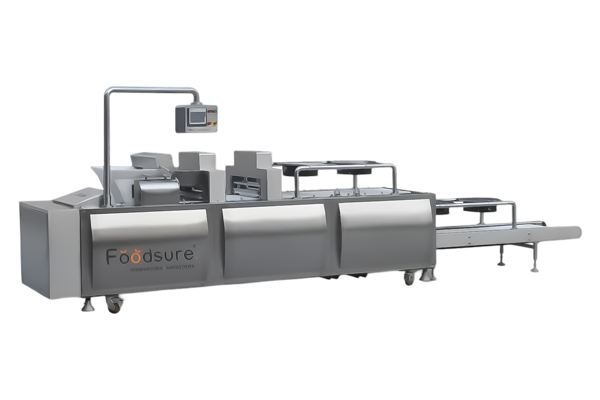

The need for convenient ready-to-eat snacks has opened up possibilities for manufacturers and snack brands in India. Roasted and flavored makhana is one such product line that businesses can consider adding to their snack range. But commercial production needs careful roasting, controlled heating, hygiene, and proper packaging.
Investment in roasted makhana machines in gujarat would assist the producers to increase efficiency, minimize manual handling, and ensure consistent quality. The correct machine will depend on the production capacity, needs of the product, available space, and the degree of automation.
Why Invest in Roasted Makhana Machines in Gujarat?
Gujarat is a state that has a well-established food processing industry and manufacturing industry, which opens up chances for people who are willing to manufacture snacks. Businesspersons can consider manufacturing roasted makhana in Gujarat for selling in both local and regional markets.
Commercial roasting equipment can support this business model in several ways.
1. Consistent Roasting Quality
Roasting influences the texture, crispness, color, and taste of makhana. Proper control of heat allows for consistency in quality from batch to batch.
2. Higher Production Capacity
Manual roasting can get quite challenging as the orders grow in quantity. The commercial machine can take care of processing large numbers depending on its maximum capability.
3. Reduced Manual Intervention
With automated or semi-automatic machinery, there is a lesser requirement for constant monitoring by hand. Workers can concentrate on tasks such as quality control, seasoning, packaging, and manufacturing.
4. Better Process Control
Temperature, roasting time, and product movement influence the final result. A suitable roasting system helps manufacturers manage these parameters more consistently.
5. Scope for Business Expansion
Companies can start with a roasting machine that fits their immediate needs and can increase their processing line as their sales increase. Other equipment for cleaning, grading, flavoring, and packaging can be added as needed.
What Is a Commercial Roasted Makhana Machine?
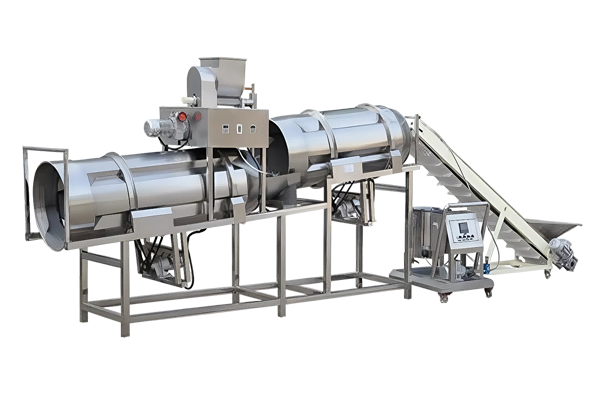
Commercial roasting machine is food processing machinery that has been developed for roasting of makhana by keeping control over its operating conditions. According to its design, it can have a rotating drum or any other suitable mechanism for heating the food item.
A typical roasted makhana production process includes:
Raw Makhana → Cleaning → Grading → Roasting → Cooling → Flavouring → Packaging
The process is different for the products being produced. For the producers of plain roasted makhana, they may not necessarily have a flavoring process. Flavored snacks manufacturers may need extra machines for coating and seasoning.
The company can use a roaster separately if it is small. The large companies can integrate the roasting process with other machines.
Makhana Roasting Equipment in Gujarat: Key Features to Consider
When comparing makhana roasting equipment in Gujarat, manufacturers should evaluate the machine’s technical features alongside its purchase price.
Temperature Control
This heating mechanism should make it possible for operators to control the roasting process in accordance with product needs. Proper control reduces the chances of under-roasting or over-roasting.
Uniform Heat Distribution
The machine should provide effective heat distribution across the product. Uneven heating can affect texture, colour, and overall quality.
Suitable Production Capacity
The capacity needs to match the output requirements per hour or per day. An undersized machine may hinder the manufacturing process, while an oversized one may cause higher costs and require more room.
Food-Grade Construction
Food-contact surfaces should use suitable materials and allow effective cleaning. Hygienic construction is important for maintaining safe processing conditions.
Easy Operation
Easy-to-control systems and operating ease will facilitate the production process. Automation systems should be chosen based on the needs of the production capacity of the organization and its labor force needs.
Maintenance Accessibility
Operators should be able to inspect, clean, and maintain key parts easily by using the equipment. Technical assistance and spare parts can also be considered before buying.
How Does a Commercial Makhana Roaster Work?
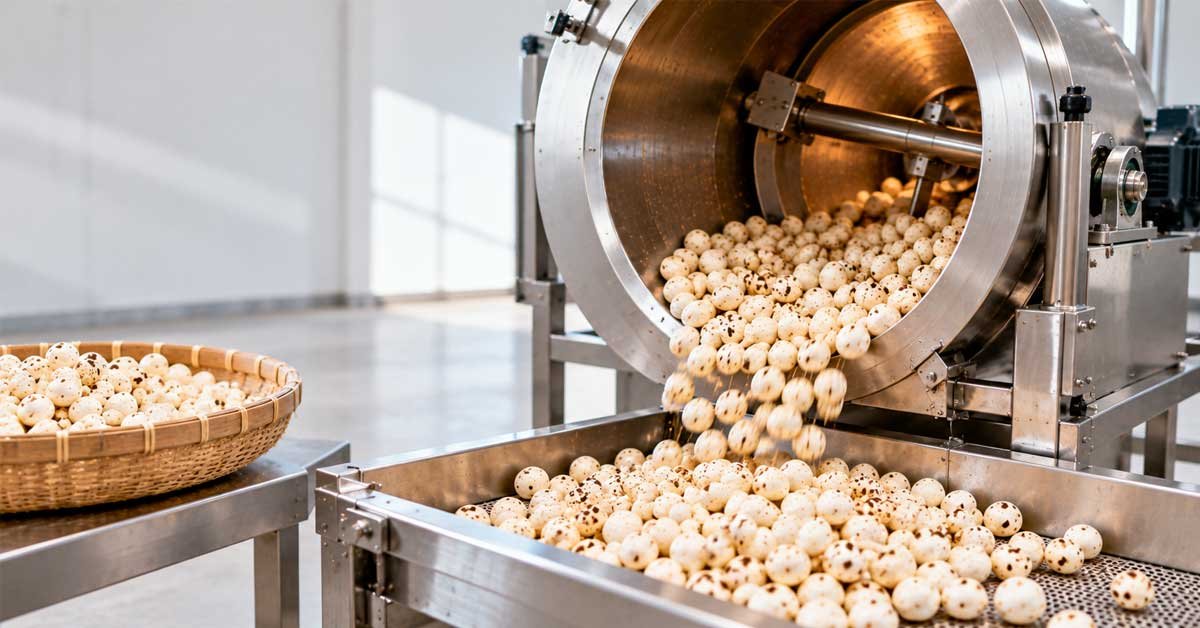
A commercial makhana roaster in Gujarat can be selected according to the heating system, production volume, and required processing method. Although machine designs vary, the general operation follows several stages.
1. Raw Material Preparation
Makhana is cleaned and inspected before roasting. Any undesirable matter and inappropriate parts should be separated for efficient processing.
2. Loading
The prepared product is loaded according to the machine’s recommended operating capacity. Overloading can affect product movement and heating uniformity.
3. Roasting
The machine generates heat during the movement or agitation of the product, depending on the design. The operating parameters must be set based on the product requirements and the guidelines from the equipment manufacturer.
4. Cooling
After roasting, the product may require cooling before seasoning or packaging. This helps prepare the makhana for further handling.
5. Seasoning and Packaging
Flavored products can have their roasted makhana transferred to the seasoning system. The end product is then packed through suitable packaging equipment.
Types of Roasted Makhana Machines
Different production requirements may call for different equipment configurations.
Batch Roasting Machines
These types of machines handle a certain amount of makhana in every cycle. These may be appropriate for firms that produce in limited quantities or manufacture various products.
Semi-Automatic Roasting Machines
Semi-automatic systems are systems that integrate automatic coffee roasting with manual tasks like loading, unloading, and transferring the product. These systems can be quite balanced in terms of automation and cost.
Automatic Roasting Machines
The automated systems can reduce human involvement by introducing more controls. Depending on their design, they could offer controlled operating parameters.
Continuous Roasting Systems
The continuous system is engineered to ensure constant material flow during the roasting process. It could be suitable for larger-scale production only if the required capacity and other parameters match the machine.
It all depends on the needs of production rather than the type of machine itself.
Makhana Processing Machinery in Gujarat for a Complete Production Line
Businesses planning to manufacture packaged makhana at scale may require more than roasting equipment. Makhana processing machinery in Gujarat can include different machines for preparation, roasting, flavouring, and packaging.
|
Machinery |
Purpose |
|
Cleaning machine |
Removes dust and unwanted material |
|
Grading machine |
Separates makhana according to size or grade |
|
Roasting machine |
Roasts makhana under controlled conditions |
|
Flavouring machine |
Applies seasoning to roasted makhana |
|
Cooling arrangement |
Cools the product before further processing |
|
Packaging machine |
Packs the finished product |
It is not necessary for every company to have all machinery from the very beginning. A company can start its manufacturing with basic machinery and get additional machinery as the need arises.
Businesses comparing regional options may also review a roasted makhana machine in ahmedabad when assessing equipment availability, installation arrangements, and supplier support.
How to Choose the Right Commercial Makhana Roaster in Gujarat
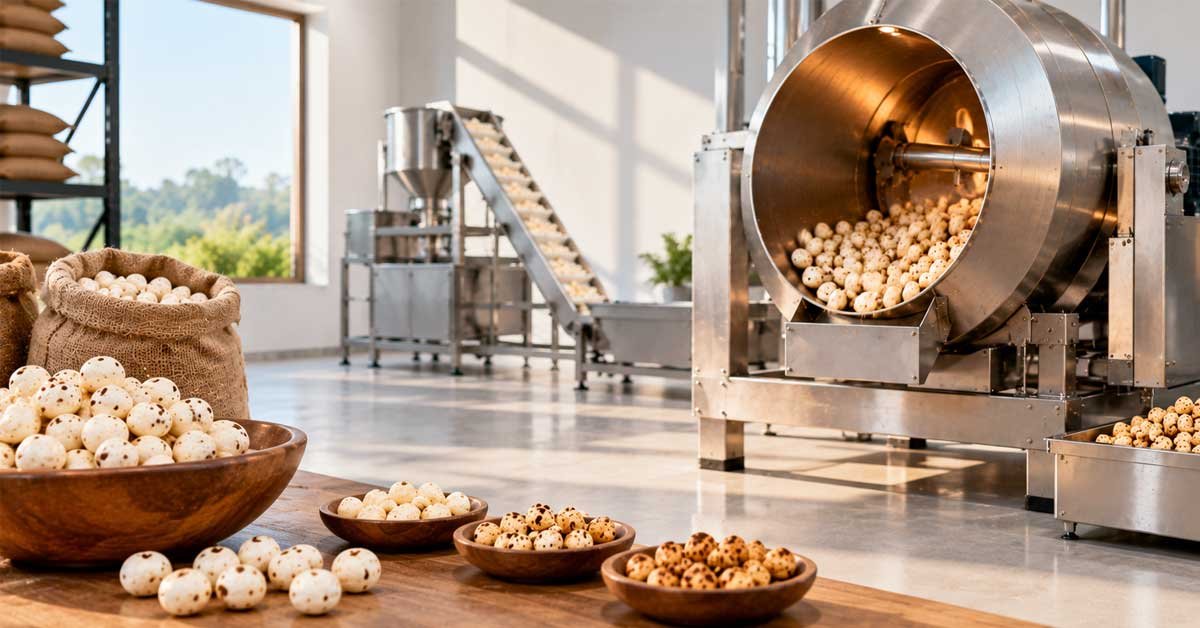
Selecting suitable equipment involves evaluating both production requirements and long-term operating needs.
Production Requirements
Calculate how much makhana is needed per hour or per day. Take into account expected orders, seasonality of demand, and plans for business expansion.
Heating Technology
Evaluate the available heating options and their suitability for your facility. Consider utility availability, energy requirements, installation needs, and operating costs.
Automation Level
Manual, semi-automatic, and automatic machines have different costs associated with their purchase and operation. It is important to opt for machinery whose size and automation suit your ability to handle manual operations.
Installation Space
Measure the available area and allow sufficient room for material movement, operator access, cleaning, and maintenance.
Cleaning and Hygiene
The equipment should be easy to clean and maintain. In addition, businesses will need to develop proper methods of cleaning and handling.
After-Sales Support
Before finalising a supplier, clarify installation, operator training, warranty coverage, spare-parts availability, and technical support arrangements.
Factors Affecting Machine Cost
The cost of roasting machines is determined by their capacity, heating system, construction material, automation, and configuration of the machinery. Other equipment will add to the cost.
When comparing quotations, consider:
- Rated production capacity
- Heating method and utility needs
- Automation and control options
- Installation and commissioning expenses
- Cleaning and maintenance considerations
- Warranty and after-sales service
- Compatibility with other processing equipment
However, the cost of purchase doesn’t guarantee that you will have a lower cost to own. Factoring in operating costs, production needs, and support is necessary when making a choice.
Maintenance and Hygiene Practices
Proper maintenance allows ensuring efficient operation of the equipment and avoiding unexpected failures.
One must perform the cleaning, inspection, and maintenance of the equipment according to the manufacturer’s recommendations. One needs to pay special attention to the heating elements, moving parts, wiring, controls, and areas coming into contact with the food.
A practical maintenance routine should include:
- Cleaning the machine at the right intervals
- Checking moving and rotating parts
- Ensuring proper heating operation
- Examining the electrical connections
- Checking nuts and bolts
- Ensuring regular maintenance is scheduled
- Teaching the operators how to safely operate the machine
Food safety also requires proper raw material storage, hygienic handling, suitable packaging, and compliance with applicable food business requirements.
Who Should Invest in Roasted Makhana Machines?
Commercial roasting machinery may be suitable for several types of businesses.
- Start-ups and small snack brands: The business can start with a machine that meets its initial production needs.
- Manufacturers growing: Manufacturers with high demand can go for increased capacity or increased automation.
- Contract manufacturers: Manufacturers who manufacture makhana for other brands will gain from repeatable roasting and an organised production process.
- Food processing companies: Large manufacturers can combine the roasting with seasoning, cooling, and packaging process to improve material handling.
Before investing, each business should assess demand, available working capital, facility requirements, and the expected utilisation of the machine.
Conclusion
Using appropriate roasted makhana machines in gujarat would enable food companies to gain better control over their roasting process, become more efficient, and cut down on manual effort. But proper machinery needs to be chosen based on factors like production rate, heating needs, automation, hygiene, space, and expandability.
Businesses comparing makhana roasting equipment in Gujarat should also evaluate supplier support, maintenance requirements, installation costs, and compatibility with other processing machinery. A well-selected commercial makhana roaster in Gujarat can become an important part of an organised production setup.
For future success, the producers must consider using proper machinery along with proper sources of raw materials, quality checking, hygiene in processing, and proper packaging. This will enable the development of a more reliable and scalable roasted makhana business.
Frequently Asked Questions
What is a roasted makhana machine used for?
A roasted makhana machine is one that helps in roasting makhana in a heated environment. The commercial machines have been designed to help facilitate increased processing and production.
How do I select the right makhana roasting equipment in Gujarat?
Think about capacity, heating system, temperature regulation, automation, construction material, installation room, maintenance, and technical assistance.
Can a small business use a commercial makhana roaster?
Yes. Small firms can opt for small commercial equipment based on their production needs and budget constraints.
Is roasting machinery enough for a complete makhana production line?
Not always. Depending on the finished product, a production line may also require cleaning, grading, cooling, flavouring, and packaging equipment.
What should I check before buying a makhana roasting machine?
Check the machine specifications, rated capacity, utility needs, quality of manufacturing, installation assistance, warranty, spare parts availability, and after-sales service.