This new trend towards fitness, convenience in nutrition, and healthy snacking is leading to increased opportunities for food businesses in India. Consumers are becoming increasingly interested in the protein-rich snacks suitable for everyday consumption, which includes ready-made snacks, nutrition bars, and food-based functional products.
The protein bar market in India has caught the fancy of not only startups and food manufacturers but also fitness companies and food business entrepreneurs wishing to venture into health snacks. Protein bars are no longer just for the gym or sportspersons. They can attract even working individuals, students, travelers, and people who look for convenient snacking options.
From the business point of view, it provides various areas of activity, including product development, brand creation, distribution, contract manufacturing, and commercial food processing. But it requires knowledge of the preferences of consumers, maintenance of quality, suitable manufacturing process, and the right business model.
Understanding the Protein Bar Market in India
The protein bar market is an integral part of the nutrition and snack industry as a whole. The protein bars are made by combining the protein sources along with other ingredients in order to make convenient products.
These products can be used for various purposes depending on the ingredients and positioning of the product.
The protein bar industry is evolving along with the increased demand for foods that contain high amounts of protein. Protein bars have been covered by the industry in terms of how protein is becoming more common in food types other than protein bars.
Entrepreneurs can take advantage of such trends to create products for different customer groups instead of creating one type of product only.
Key Trends Shaping the Protein Bar Market in India
Several developments are influencing product development and consumer expectations across the category.
1. Growing Interest in Protein-Rich Snacking
Awareness of proteins can go beyond the usual sports nutrition users. People may be interested in looking for protein-filled snacks that suit their busy days of work, traveling, exercising, or any day-to-day activities.
This will give room for positioning the product as convenient snacks for certain events. Still, marketing claims about the products should always relate to their nutritional value.
2. Demand for Better Taste and Texture
Despite all nutritional benefits, consumers do not always buy back products due to lack of taste, texture, smell, sweetness, and convenience.
In this regard, manufacturers may experiment with the taste, texture, and composition of their products. It is essential to have consistent mixing, forming, and cutting.
3. Plant-Based and Vegetarian Options
The varying dietary preferences in India provide an opportunity for the manufacture of products that use protein ingredients from plants. The ingredients that can be used will depend on the formulation of the product and include peas, soy, nuts, seeds, or grains.
It is important to consider the compatibility of the ingredients, the texture, any allergens, and the nutritional profile of the product. Plant-based products should be informed by accurate information regarding the ingredients.
4. Clean-Label and Ingredient Transparency
Many consumers are focusing on the ingredients list, sweeteners, sugar, allergens, and nutritional data.
There is a chance for a brand to clearly communicate its product features. One needs to make sure that all the claims made on the package are accurate and comply with food labelling regulations.
5. Expansion of Online and Digital Distribution
Online marketplaces, direct-to-consumer sites, and fast commerce offer further opportunities for brands to connect with their target audience. Digital channels could be useful for new companies to test products and gather consumer feedback in addition to increasing brand visibility.
But having an online presence does not ensure sales. Other factors that should be taken into account include product positioning, delivery, packaging, and customer experience.
Protein Bar Consumer Trends: What Are Buyers Looking For?
Understanding protein bar consumer trends can help manufacturers identify product opportunities and develop a clearer market strategy.
| Consumer consideration | Business opportunity |
| Convenient nutrition | Develop portable bars suited to busy routines |
| Taste and texture | Explore flavours and textures that encourage repeat purchases |
| Protein content | Communicate verified nutritional information clearly |
| Dietary preferences | Consider suitable vegetarian or plant-based options |
| Ingredient transparency | Provide clear ingredient and allergen information |
| Product variety | Develop distinct products for different customer segments |
| Easy availability | Evaluate online, retail, fitness, and distribution channels |
These preferences are not the same for all customers. The ingredients and branding of a product meant for sports nutrition will be different from that of a snack bar.
The company needs to test its assumptions through market research and sales results before scaling up production.
Protein Bar Business Opportunity in India
The protein bar business opportunity in India extends beyond launching a branded product. Entrepreneurs can enter the category through several business models, depending on their experience, investment capacity, and access to manufacturing facilities.
Building a Branded Protein Bar Business
The business is able to develop its own brand and sell products via online mediums, retailers, health clubs, distributors or other sales mediums.
This approach provides more control over brand building and customer relations. However, it does necessitate development of the product, packaging of the product, quality of the product and so forth.
Contract Manufacturing
Using protein bar contract manufacturing enables an enterprise to deal with an external party rather than having its full-blown manufacturing plant in-house.
This option might fit a startup seeking to confirm demand before sinking investments in dedicated manufacturing facilities. The manufacturer’s quality standards, capacity to manufacture particular products, minimum order quantities, confidentiality policies, and reliability should be assessed by the businesses.
Establishing an In-House Manufacturing Facility
Businessmen who have enough resources and a detailed long-run production plan can think about setting up their own plant.
In-house production has advantages in the form of better control of production scheduling and process control. On the other hand, a lot of planning is required for machinery, utilities, manpower, cleanliness, maintenance, quality control, and regulations.
The model chosen should be based on the requirements of the business firm.
How to Start a Protein Bar Brand
Understanding how to start a protein bar brand requires a structured approach that connects product planning with manufacturing and sales.
Identify Your Target Audience
Start by determining who will be the target group for your product. Such potential groups can be fitness-oriented individuals, sportsmen, professional workers, students, and people seeking convenient nutrition.
The target audience makes it easier to define how to position the product, package it, distribute it, and communicate with it.
Define the Product Category
Decide whether the brand should be targeted towards protein bars for sports nutrition, snacking needs, plant-based consumers, or some other distinct niche.
The ingredients, texture, shape of the bar, and its nutritional value must fit the product being created.
Research Competitors and Customer Needs
Research existing protein bar brands to learn about their product lines, flavors, packaging, communication, and distribution methods.
Instead of just imitating the existing products, try to find out the needs of your customers that are not being met yet. Product testing and customer feedback will help you to determine the uniqueness of your idea.
Choose a Manufacturing Model
Compare contract manufacturing to manufacturing within the firm. Think about anticipated demand, production control, quality control standards, available resources, and future expansion possibilities.
Plan Packaging and Distribution
The product packaging must protect the product while giving clear information on the ingredients, nutrition, allergens, and any relevant storage instructions.
The distribution plan must factor in product handling, inventory management, and other conditions necessary to sustain product quality during the distribution process.
Prepare a Business Plan
A proper protein bar business plan needs to contain information about customers, product positioning, production, distribution, operations, quality control, and financial forecasts.
Other elements that need to be considered when creating the plan include raw materials, packaging, logistics, marketing, regulations, and demand. The financial forecasts need to be realistic and need to be based on quotations from suppliers and business studies.
Role of Protein Bar Manufacturing Machinery in Business Growth
With increasing demand, manufacturing capacity is one of the key factors that companies need to consider.
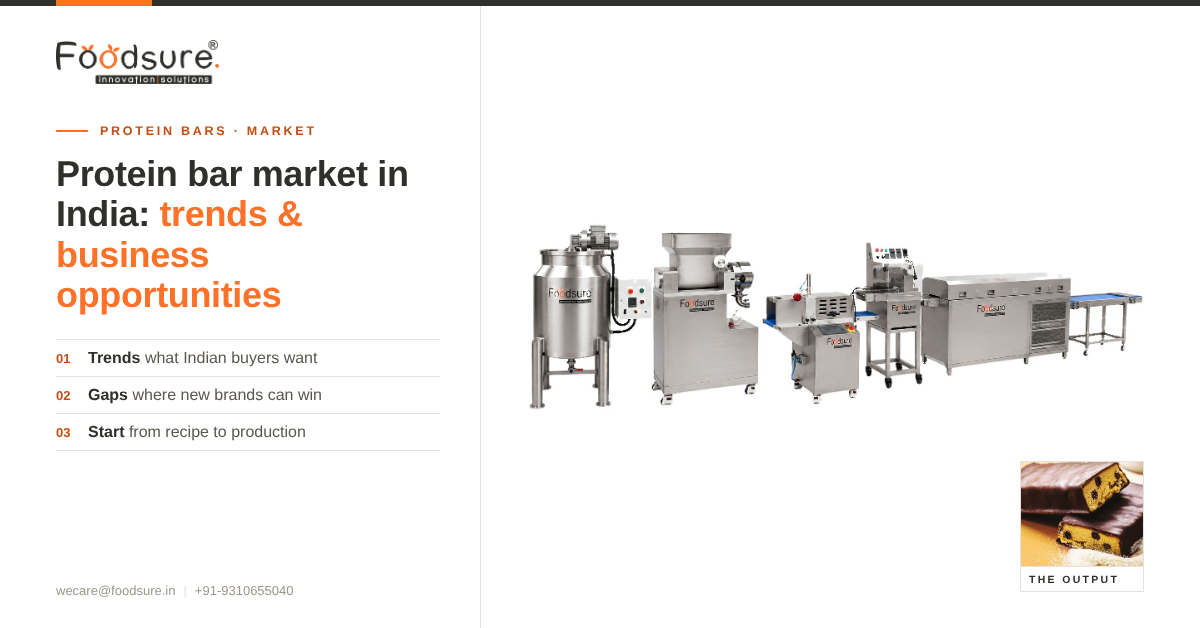
A protein bar manufacturing machine is capable of automating certain aspects of the production process, such as mixing, forming, cutting, and packaging. Based on the design, further machinery for cooling, coating, and packaging may be necessary.
Proper machinery is capable of facilitating consistent production, minimizing repetitive manual tasks, and streamlining the manufacturing process.
Key Equipment in a Protein Bar Production Setup
A commercial production setup may include:
- Mixing equipment: Ingredients mixed together in the form of a mass that can be formed.
- Protein bar extruder: Cohesive mixtures formed using appropriate dies.
- Protein bar forming and cutting machines: Bars formed and cut into individual bars.
- Cooling systems: Aid in stabilizing product prior to further processing.
- Optional coating machines: Chocolate/compound coatings applied if necessary.
- Packaging machines: Packaging of bars for distribution and sale.
The exact configuration depends on the product’s texture, ingredient structure, required output, and packaging requirements.
Businesses should evaluate the complete production process rather than selecting a machine based only on its advertised capacity.
Protein Bar Plant Setup: What Should Businesses Consider?
A protein bar plant setup involves much more than merely acquiring a forming machine. The manufacturers need to design the entire process for handling the ingredients in the factory.
Important considerations include:
- Production capacity: Assess realistic production needs and future demand prior to choosing the equipment.
- Factory design: Ensure that enough room is provided for the equipment, personnel, raw materials, finished goods, cleaning, and maintenance.
- Utilities and infrastructure: Make sure there is enough electrical supply and other utilities needed by the chosen equipment.
- Sanitation and quality assurance: Develop proper cleaning practices, handling controls for ingredients, and quality controls.
- Packaging and storage: Ensure that provision for handling of finished goods and packaging materials is done.
- Installation and support: Ensure commissioning, training, maintenance, and spare parts.
A properly planned setup helps reduce production bottlenecks and supports a more consistent manufacturing workflow.
Protein Bar Machine Price: Factors That Influence Investment
The protein bar machine price will depend upon the structure of the equipment and how large the production setup is to be done. It is important for companies to consider equipment according to their needs and not the cost of purchase.
Factors that can influence the investment include:
- Capacity of production and degree of automation
- Mixing and forming process
- Cutting and cooling process
- Coating and packaging machinery
- Control system and machine arrangement
- Requirements for installation and commissioning
- Preparation of facility and utilities
- Maintenance and technical assistance
Prior to asking for a quotation, the manufacturers need to provide information on their desired product type, bar sizes, desired production, ingredients, coating needs, and packaging preferences.
This will enable the suppliers to suggest an ideal layout and know exactly what will be supplied under that quote.
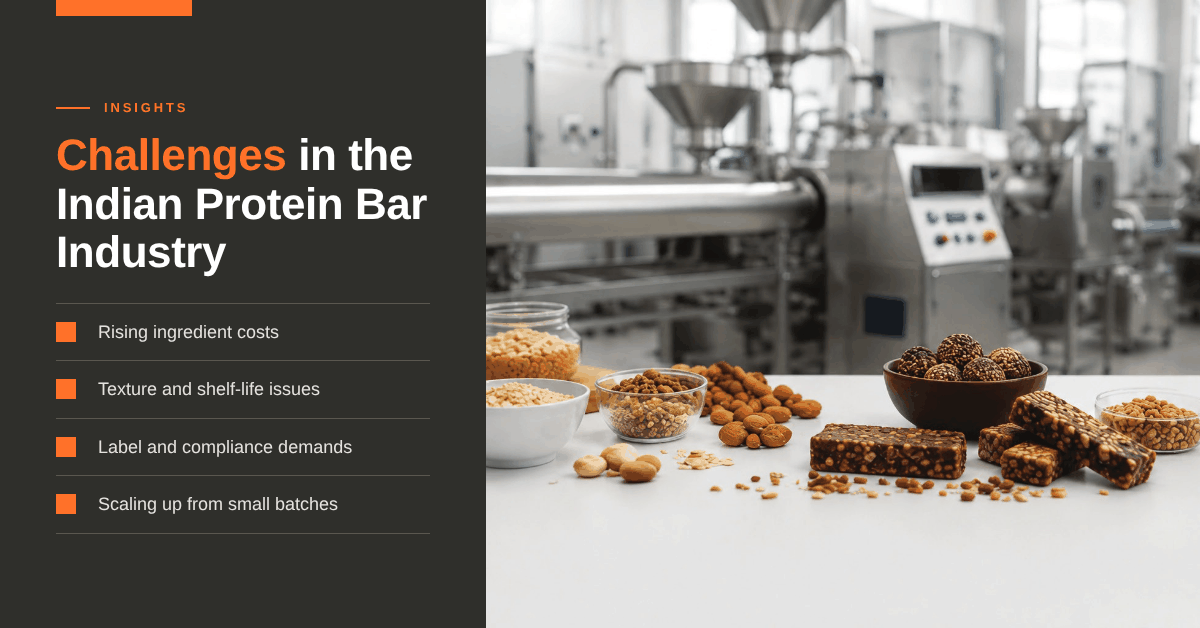
Challenges in the Indian Protein Bar Industry
Although the category offers opportunities, businesses must also consider several challenges.
Competitive Differentiation
The more protein bar brands emerge on the market, the less effective it is just to have a high-protein product. It is important to have an advantage that will convince consumers to pick a brand, and the advantage should be grounded in taste, quality, positioning, or convenience.
Product Consistency
Modifications to the raw material, water content, texture, or processing can have an impact on the final product. The company must have proper process control in place.
Consumer Trust
Claims regarding nutrition need to be truthful, and product descriptions should be unambiguous. Companies should refrain from making any false promises and ensure that their labels conform to food rules in India.
Distribution and Repeat Purchases
Customer interest at the outset does not always equate to sustained demand. Companies need reliable distribution channels, mechanisms for obtaining customer feedback, and goods that prompt repeat business.
Operational Planning
Machinery, raw materials, packaging, staffing, and production schedules must work together. Poor planning can lead to delays, wastage, or underused equipment.
Why Choose Foodsure for Protein Bar Manufacturing Equipment?
Foodsure supplies machinery for food processing to help firms plan the creation and expansion of their bar production. The selection of the equipment is based on one’s understanding of the products and the process of creating, manufacturing requirements, cooling, and packaging.
In the case of a business either establishing or expanding the facilities, machinery is supposed to be chosen depending on the production realities.
Conclusion
The protein bar market in India offers possibilities to entrepreneurs and food companies who are looking for easy-to-eat protein bars. The demand from consumers regarding protein intake on a daily basis, variety of products, ingredients, and digital distribution provides scope for those brands that know their customers.
However, developing a sustainable protein bar business is not only about developing the product. Businesses need to identify demand from customers, distinguish their products, develop plans for distribution, ensure product consistency, and determine the appropriate production method.
When it comes to setting up their own manufacturing process, having the proper protein bar manufacturing machine and a good protein bar plant setup will aid in efficiency and even future expansion. With proper positioning, realistic planning, and effective manufacturing processes, a company will be able to have a solid footing in India’s protein bar market.
Frequently Asked Questions
1. Is the protein bar market in India a good opportunity for new businesses?
The protein bar market in india offers potential opportunities as interest in protein-rich and convenient snacks develops. However, success depends on product quality, differentiation, pricing strategy, distribution, customer demand, and effective business planning.
2. What is the protein bar market size in India?
The protein bar market size in India varies across research reports because providers may use different definitions, datasets, and forecast periods. Businesses should compare reports carefully and verify the scope of each estimate before using it for investment decisions.
3. How can I start a protein bar business in India?
To start a protein bar business, identify your target audience, define the product, research competing brands, choose between contract manufacturing and in-house production, plan packaging and distribution, and prepare a realistic protein bar business plan.
4. Is protein bar contract manufacturing suitable for startups?
Protein bar contract manufacturing can help startups test their products without establishing a complete manufacturing facility. Before selecting a partner, evaluate quality controls, production capabilities, minimum order requirements, and supply reliability.
5. What machinery is needed for protein bar manufacturing?
The arrangement for a protein bar manufacturing machine can comprise mixing, extrusion or slab forming, cooling, cutting, possible coating, and packing equipment. This depends entirely on the nature of the product to be manufactured.