
In the high-stakes world of food processing, mayonnaise is a masterclass in stability. A single deviation in mixing speed or oil flow can split a massive batch instantly. Success requires precision in the Mayonnaise Manufacturing & Production Process to deliver gold-standard quality across global retail and QSR markets.
Why the Mayonnaise Manufacturing Process Is Unlike Any Other Sauce Production
Because it is an oil-in-water emulsion, mayonnaise differs from other processed sauces. The stability of a processed sauce is achieved by cooking. In creating mayonnaise, all handling steps must be accounted for differently.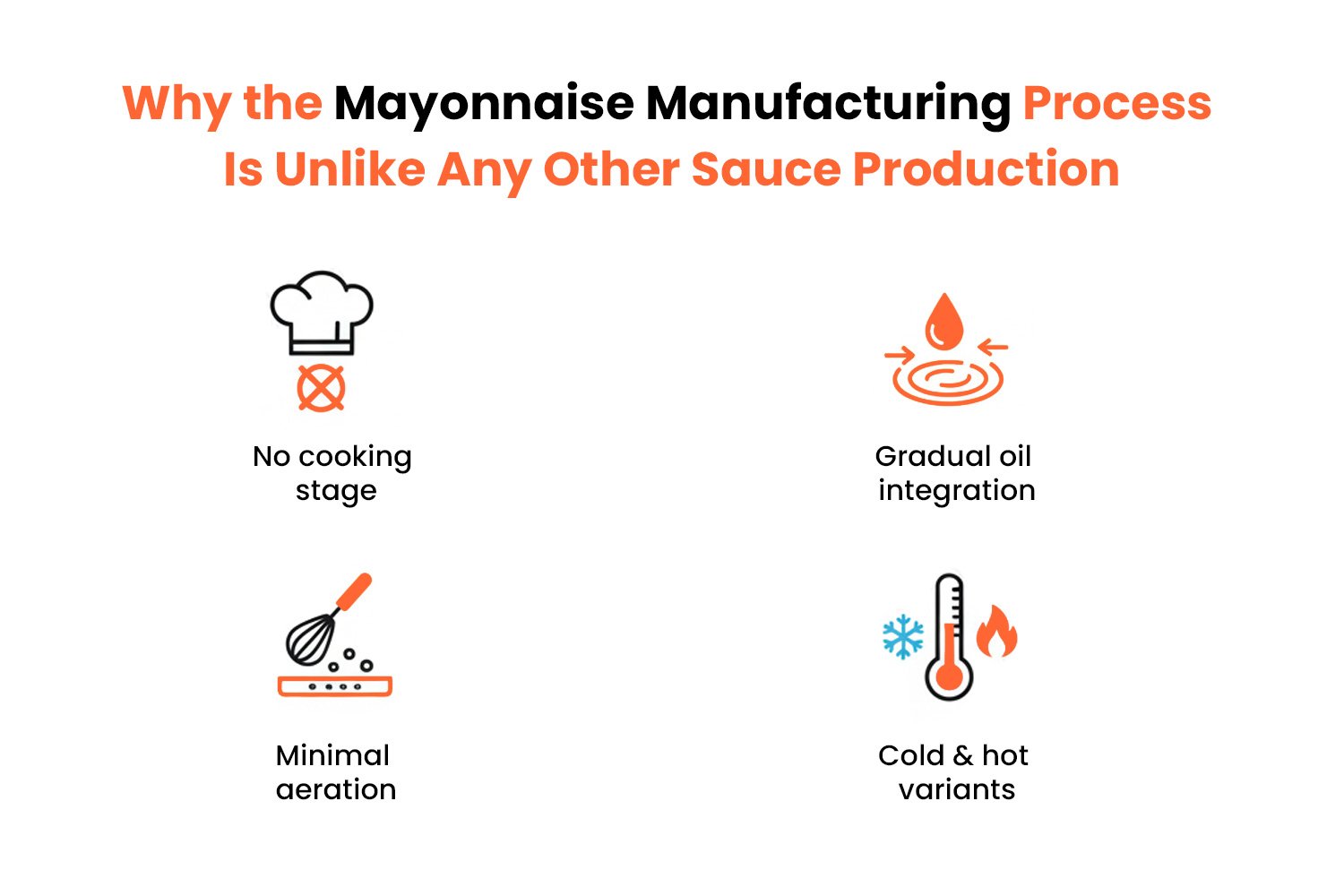
- No cooking stage: The stability of mayonnaise must be achieved by the same emulsification process every time. The vital aspect of the emulsification process to create mayonnaise is the method of high shear mixing.
- Gradual oil integration: When creating mayonnaise, the maximum percentage of the finished emulsion is added during the slow phase, while under vacuum or in a controlled environment.
- Minimal aeration: When mixing mayonnaise, you must do so without introducing any air into the mixture because the presence of air will shorten the shelf life of the finished product. However, no open kettle sauce kettles can be used.
- Cold & hot variants: Mayonnaise can be processed either cold, keeping its fresh taste, or hot. This provides pasteurisation and a longer shelf life.
Read More: How To Set Up A Profitable Mayonnaise Production Line
Mayonnaise Manufacturing & Production Process (Step-by-Step)
Mayonnaise is a sensitive product. Producing mayonnaise should be done exactly because the emulsion produced must maintain stability. Unlike most hot sauces produced, it is impossible to fix mistakes by merely heating them over a burner.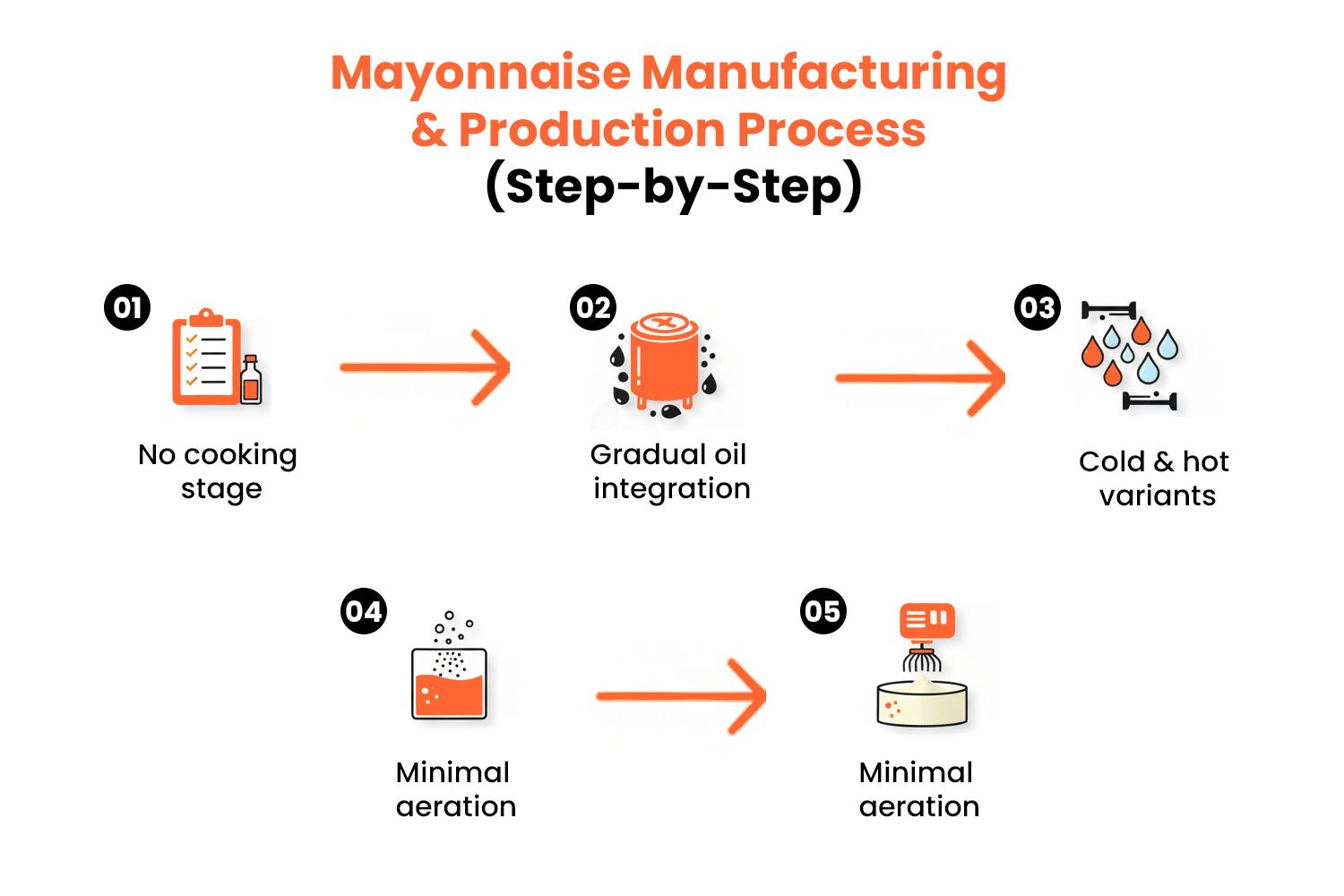
- Ingredient Assessment: Check for the following: oil, egg yolk or powdered egg, vinegar, and salt. You must also check your ingredients for compliance with microbial safety regulations and also meet the correct pH standard (3.5-4.2), considering the manufacturer’s specifications.
- Water phase: Combine water, vinegar, sugar, and salt, maintaining a temperature of 20-30° C. Creating this mixture is the foundation of proper emulsification.
- Emulsification: When you want to emulsify oils in your water phase, the first step would be to add 70-80% of the oil being emulsified directly to the water phase.
- Homogenisation: In order to achieve a homogeneous emulsification of an oil and water mixture, you will need to utilise an inline homogeniser with a working pressure ranging from approximately 100 – 500 Bar for the process of emulsifying.
- De-aeration: After emulsification of the mayonnaise has been completed. It should go through a vacuum cycle (removing approximately 90% of the air) in order to extend shelf-life from 6-12 months.
Lastly, a complete cleaning of the emulsion before filling will include the testing of the emulsion for microbial contamination, and viscosity adjustments (5,000 to 50,000 cP) before the jars are aseptically filled, thereby promoting uniform safety and correct emulsion textures.
Read More: Why Automatic Mayonnaise Making Machines Are the Future of Food Processing
Must-Have Machines for a Commercial Mayonnaise Plant
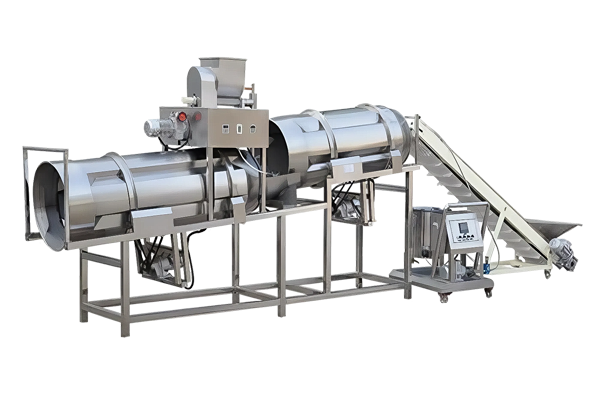
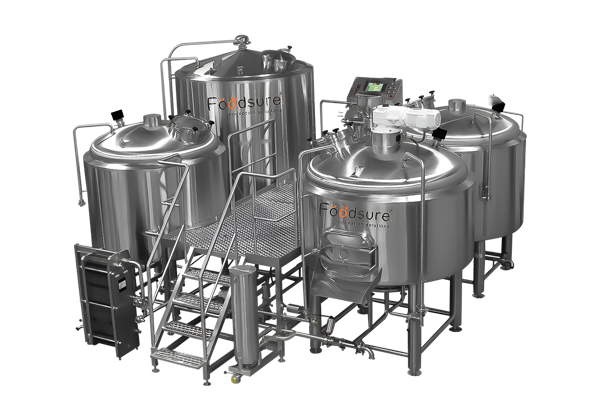
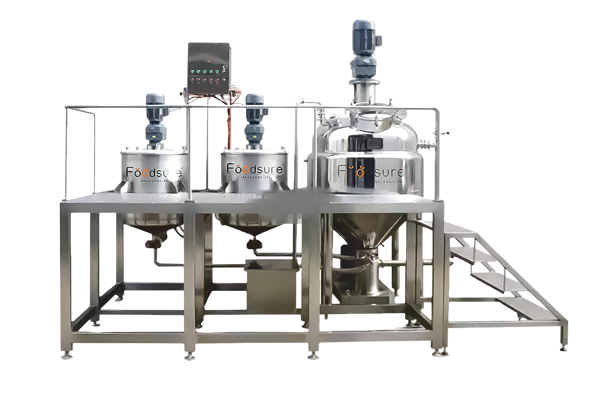
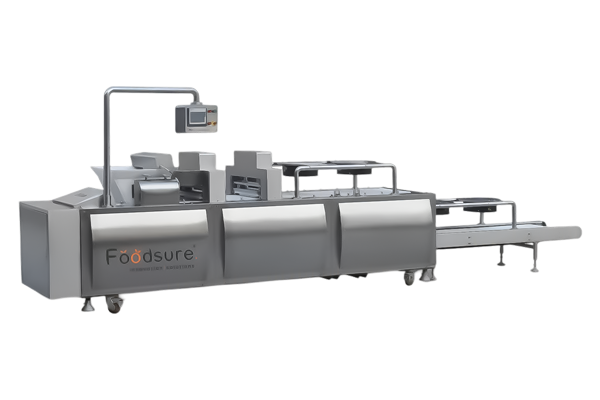
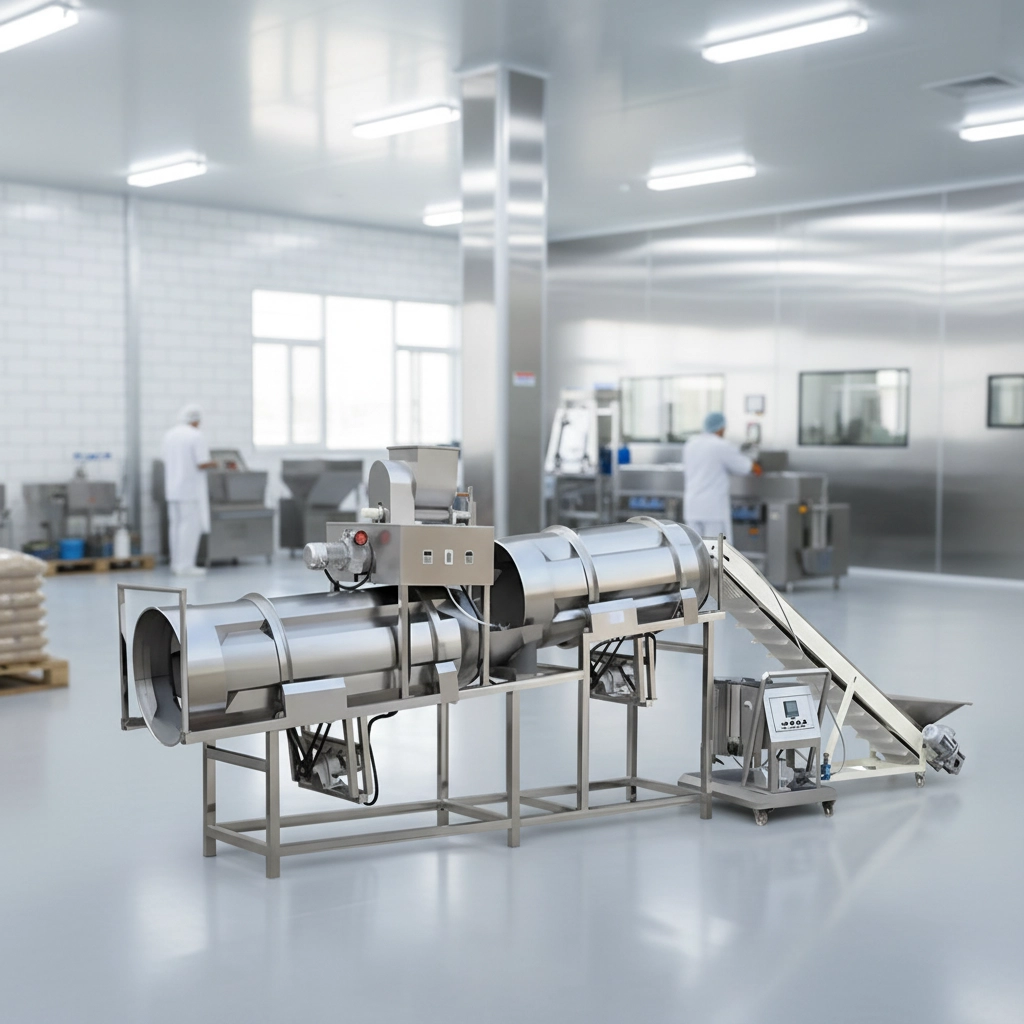
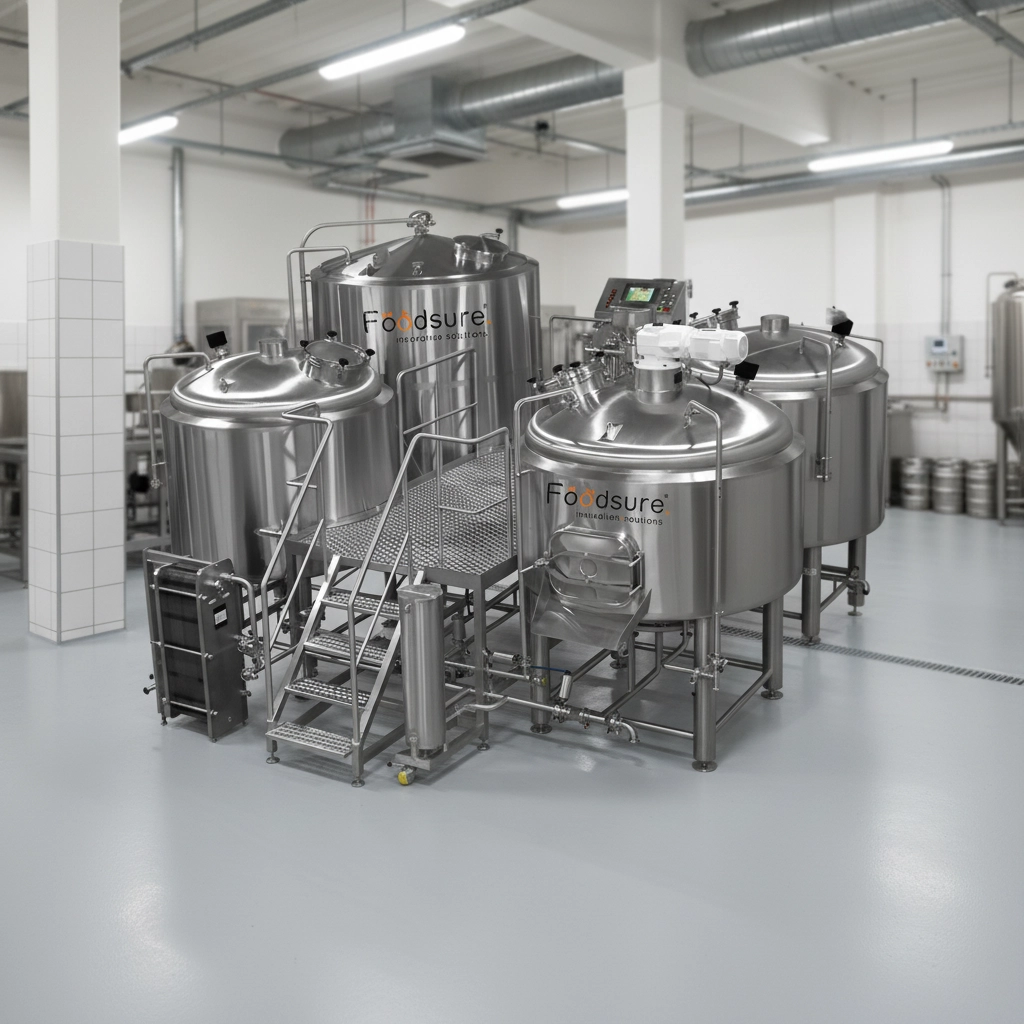
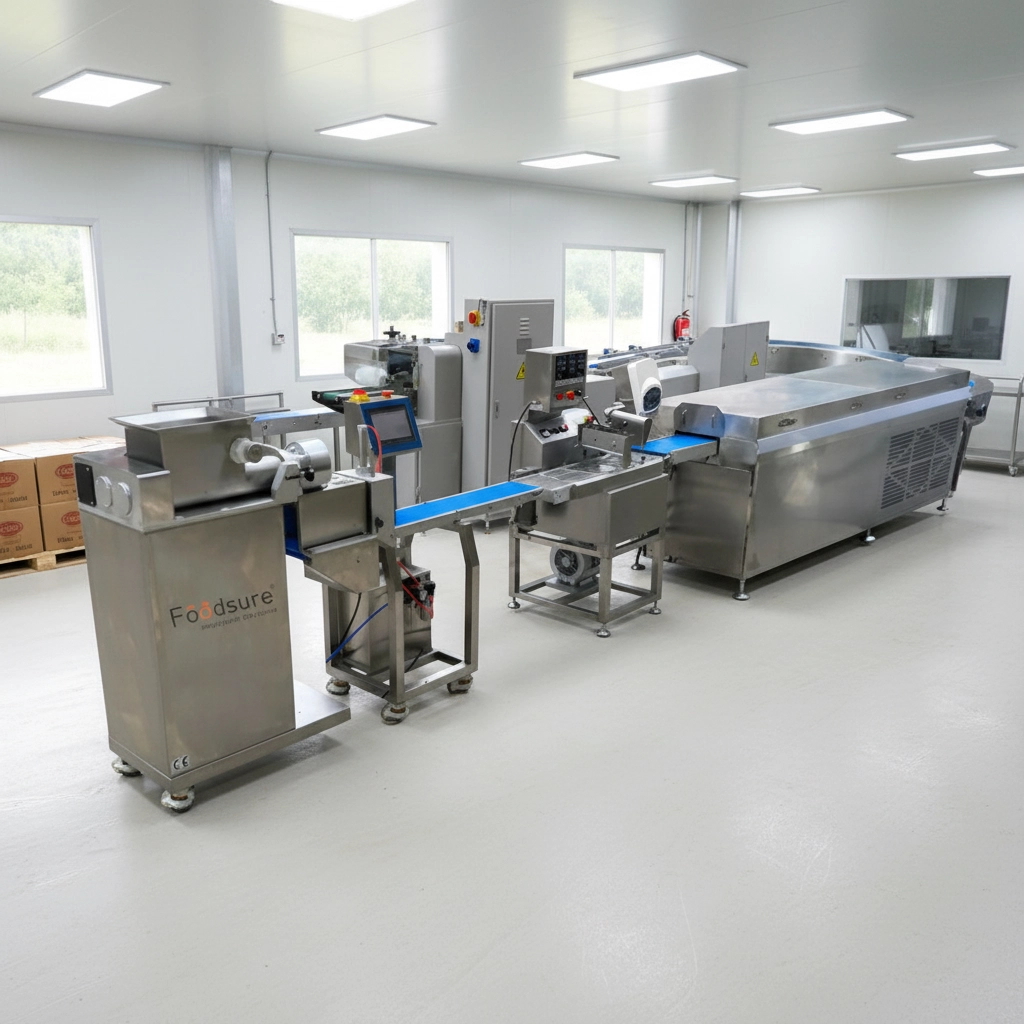
Speciaised mayonnaise machine is required for the production of mayonnaise. The average commercial type mixer cannot provide the quality of mayonnaise acceptable for sale.
- To create an emulsion using eggs, oil, and vinegar, the emulsification process is done by using heating systems to heat the ingredients.
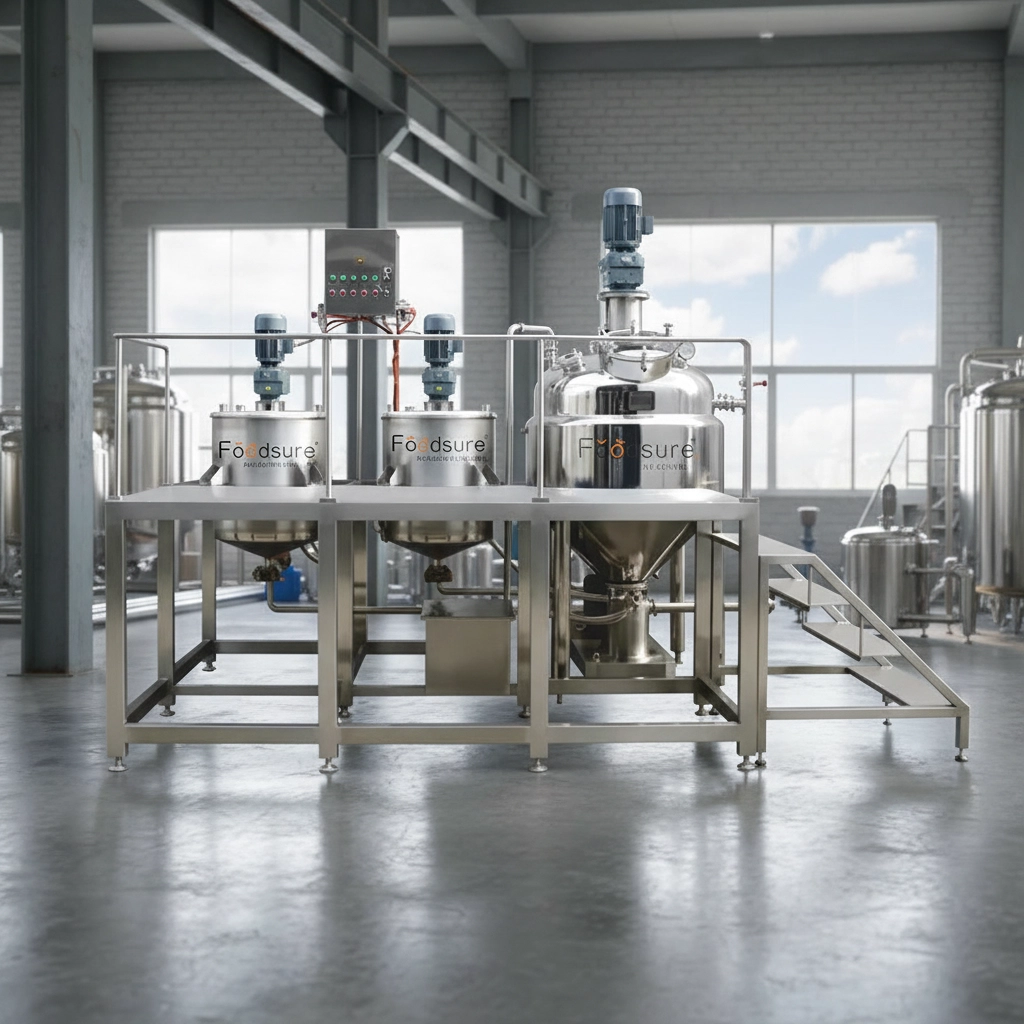
- The washer tanks contain vessels with agitator devices to mix the ingredients evenly and uniformly.
- High shear emulsifiers such as rotor-stator emulsifiers (like those made by Silverson) operate at a speed of 3000 rpm or higher.
- Inline homogenizers are required for creating and maintaining a creamy consistency in mayonnaise and also preventing the separation of emulsified oil, at pressures between 200-500 bar.
- Vacuum deaerators provide a linear removal of about 95% of air from the product by producing a vacuum pressure ranging from 0.8 to 0.9 bar.
Read More: How to Start a Mayonnaise Manufacturing Business
Which Mayonnaise Making Machine Capacity Suits Your Business?
| Process Step | 100 kg Batch | 200 kg Batch | 500 kg Batch | 1 MT (1000 kg) Batch |
| Ingredient Handling & Storage | Manual / Small Bins | Hopper + Scales | Bulk Bins + Weighing | Bulk Silos + Automated Weighing |
| Water Phase Mixer | 200 L SS Tank with Agitator | 300 L SS Mixer | 600 L SS Mixer | 1000 L SS Mixer |
| High Shear Emulsification | 100 kg Emulsifier (0.75–1.5 HP) | 200 kg Emulsifier (1.5–3 HP) | 500 kg Emulsifier (3–5 HP) | 1 MT Emulsifier (5–10 HP) |
| Homogenizer (Optional) | Small Inline | Medium Inline | High-Capacity Inline | Industrial Homogenizer |
| Vacuum Deaeration System | Small Vacuum Unit | Mid-Range Vacuum | Large Vacuum Vessel | High-Capacity Vacuum System |
| Quality Testing (Lab) | Basic QC Tools | Standard QC Kit | Full QC Setup | Advanced QC + Online Sensors |
| Filling & Packaging | Semi-Auto (50–100 kg/hr) | Semi-Auto (100–200 kg/hr) | Auto (200–500 kg/hr) | Auto (500–1000 kg/hr) |
| CIP (Clean-in-Place) | Manual CIP | Semi-Auto CIP | Auto CIP | Auto CIP with Recirculation |
| Utilities Needed | 5–10 kW | 10–20 kW | 20–40 kW | 40–80 kW |
| Footprint (Approx.) | 25–35 sq ft | 40–60 sq ft | 80–120 sq ft | 150–250 sq ft |
| Typical Output / Day | 400–800 kg | 800–1500 kg | 2.0–3.5 MT | 4–8 MT |
Read More: Mayonnaise Manufacturing Plant in India: Complete Setup, Machines & ROI Insights
How Process Control Drives Success in Mayonnaise Manufacturing
Major Drivers of Mayonnaise Growth by Country
- A large share of Mayonnaise Manufacturing & Production Process sales in North America (41%) comes from the United States because of the integration of fast food and the introduction of new vegan and low-fat products such as Hellmann’s.
- Foodservice operations within the Hotel, Restaurant and Institutional (HRI) channel have increased significantly in South Africa, and growth will be supported by the ability to distribute heat-stable mayonnaise.
- Since the tourism industry in Dubai, United Arab Emirates, is increasing, premium mayonnaise imports and exports are on the rise. Heat-stable mayonnaise can be stored for 12 months at temperatures over 40 degrees Celsius.
- In the Asia-Pacific region as a whole, there have been increases in mayonnaise sales during the past five years due to urbanisation occurring at a fast rate within China and India, as well as increased interest in flavoured mayonnaise.
Conclusion
The quality, precision, and control of each step in the mayonnaise production process lead to the success of this food product. Foodsure Machines manufactures a dependable Mayonnaise Manufacturing & Production Process for its customers to avoid inconsistent emulsification, hygiene, and shelf stability. Every machine manufactured by Foodsure Machines converts meticulous planning into predictable production.
Ready to scale mayonnaise production with precision?
Get expert guidance on mayonnaise manufacturing machines, batch sizes from 100 Kg to 1 MT, automation, consistency, and setup cost.
FAQ
What is the mayonnaise manufacturing & production process?
You build an emulsion by slowly blending oil into a water base under controlled high shear.
Why is mayonnaise different from other sauces?
Because it’s an oil-in-water emulsion. You can’t rescue it later with heat.
What is the most critical step in mayonnaise production?
Emulsification. Push oil too fast or lose shear control, and the batch gives up.
Which equipment is essential for making mayonnaise?
A high shear emulsifier with precise speed control. Everything else is secondary.
What role does homogenization play in mayonnaise?
It tightens the texture, improves visual appeal, and holds the emulsion together longer.
Why is vacuum deaeration used in mayonnaise plants?
To remove trapped air that weakens the structure and shortens the shelf life.
What is the ideal pH range for mayonnaise?
Between 3.6 and 4.0. That’s the safe zone for stability.
Can mayonnaise be produced without preservatives?
Yes, if pH, hygiene, and air exposure are controlled properly.
What batch size works best for small manufacturers?
100 kg to 200 kg. Large enough to sell, small enough to manage.
How is shelf life ensured in commercial mayonnaise?
By locking pH, protecting the emulsion, and filling under clean conditions.
Is temperature control important during mayonnaise making?
Very. Excess heat breaks the emulsion before it’s obvious.
Can the same process scale from 100 kg to 1 MT?
Yes. The process stays the same. The machines and automation scale up.