
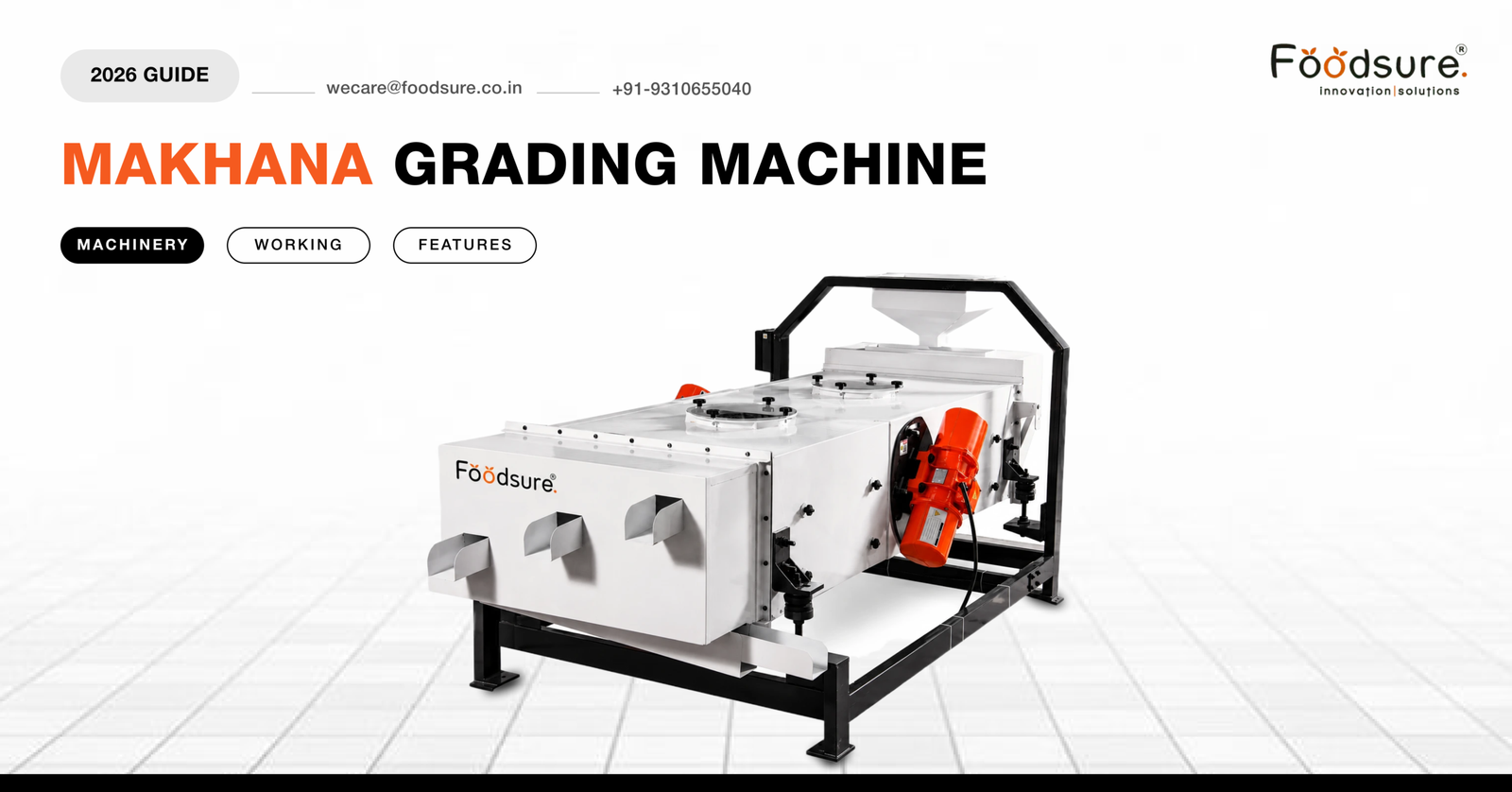
Processing of makhana involves some vital procedures like cleaning, roasting, grading, seasoning, and packaging. Among all these procedures, grading is a crucial step because it helps ensure the uniformity of the products as well as prepare them for various commercial needs. With rising demands for packaged and high-quality makhana, there arises a need for such equipment among food companies.
The makhana grading machine is useful in sorting makhana grains into sizes because it makes the process faster and more reliable compared to manual grading. The machine can be used by firms that need to grade products for packing, wholesaling, and other purposes.
For companies that plan to increase their production capacity, proper selection of grading machines will make their workflow efficient and reduce repetitive manual labour.
What Is a Makhana Grading Machine?
A makhana grading machine is food-processing equipment designed to separate makhana into different size categories. Depending on the machine’s design, grading may be performed using screens, sieves, or other mechanical separation mechanisms.
The purpose of size grading is to ensure that the manufacturers get more consistent batches of the product. It helps in organizing the product based on the grading needs of the manufacturer. Size grading becomes important when firms provide different grades of makhana to various clients.
Commercial grading can take place after cleaning but before processing or packaging. This will depend on the production line as well as whether the grading process is conducted prior to or after roasting the makhana.
Why Is Makhana Grading Important for Commercial Production?
Grading involves more than merely sorting makhana based on size. It enables manufacturers to better organize their stock and arrange products in a manner suitable for customer needs.
1. Consistent Product Size
Sizing will ensure that companies maintain consistency from one batch to another. The grading machine sizes the makhana into particular classes, thus ensuring that products are prepared as per required commercial specifications.
2. Improved Processing Efficiency
Manual grading can be quite time-consuming and laborious, especially when the volume of production increases. Mechanical grading is useful in handling higher volumes and minimizes reliance on repetitive manual sorting.
3. Better Product Presentation
Consistency in size will help to enhance the appearance of the packaged makhana. It will be helpful for those companies that emphasize on premium snack foods and packaging.
4. Easier Inventory Management
The grading of the makhana enables the companies to classify their stock in terms of different sizes. It will help the companies to have better management of the orders and the batches.
5. Support for Commercial Expansion
With an increase in production levels, manual sorting may become increasingly difficult to manage. Automation of grading equipment will assist the business as it grows to process larger volumes of work.
How Does a Makhana Size Grading Machine Work?
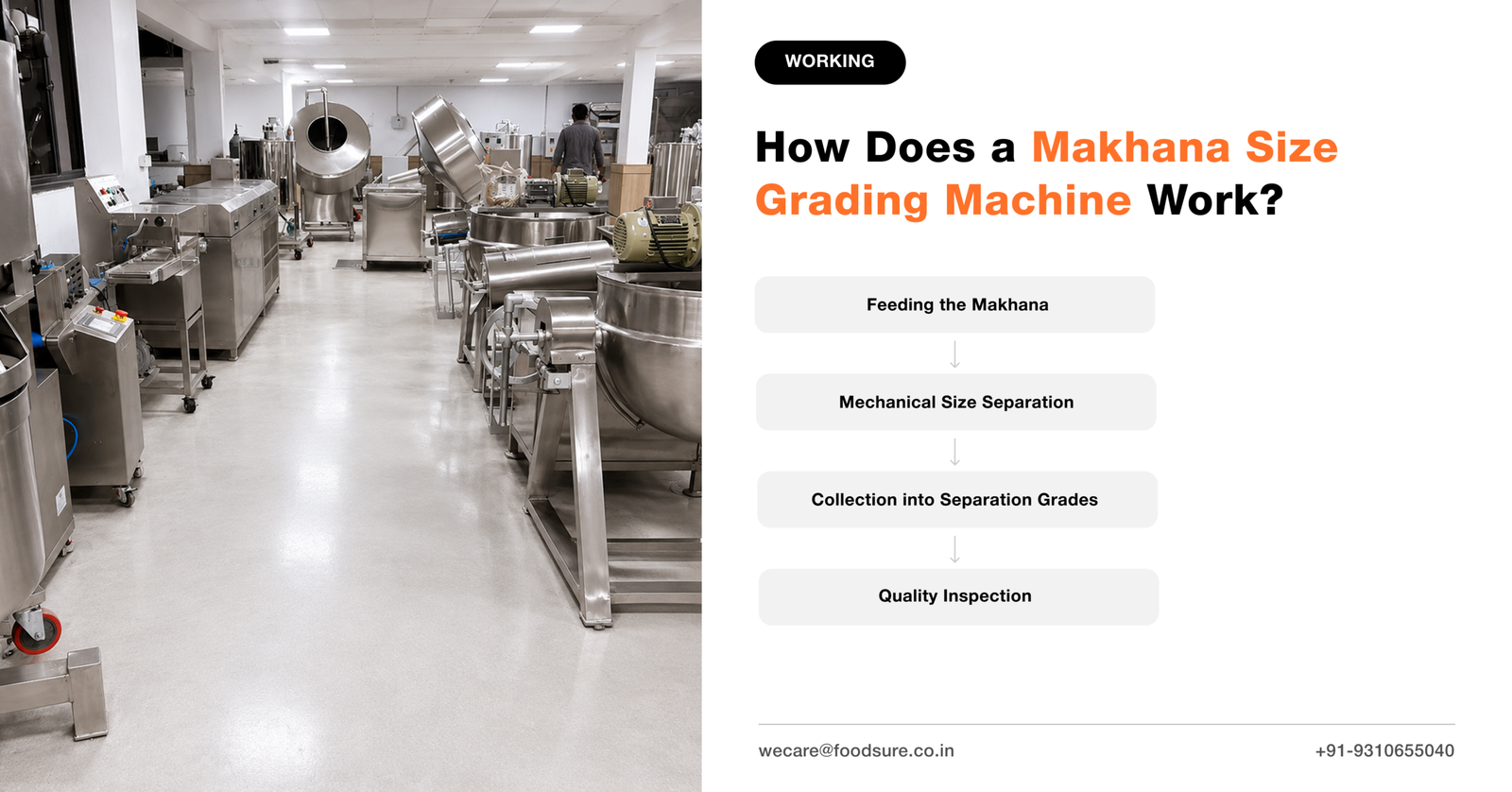
A makhana size grading machine grades the makhana based on the size standards that have been set up for the manufacturing process. Even though the operation of the machine differs from one type to another, the basic process entails the insertion of the product into the grading system.
The typical process follows this sequence:
1. Feeding the Makhana
The makhana is loaded into the machine through its feed mechanism.
Proper feeding will help to maintain proper product flow, which assists in proper segregation.
Prior to grading, the manufacturer should make sure that the product can be properly handled by the machine, and any excess dust is filtered out before grading.
2. Mechanical Size Separation
The product passes through the machine’s grading system. Depending on the design, screens or sieves with varying sizes separate the makhana based on their size.
The separation process should be appropriate for the product’s physical properties in order to reduce breakage.
3. Collection into Separate Grades
After the separation, makhana in various sizes will be directed into their respective collection outlets or containers. In this way, the operators can ensure that the grades remain separate for further processes.
4. Quality Inspection
After classification, inspection by manufacturers may take place to ensure that these products conform to size standards. Other checks may be necessary according to the type of product and buyer needs.
Makhana Sorting Machine vs Makhana Grading Machine
The terms sorting and grading are sometimes used interchangeably, but they can describe different functions in a commercial processing line.
Makhana sorting machine can be considered as those machines used for separating products based on certain criteria chosen. Depending on the level of technology, the criteria for separation can include size, color, defectiveness, etc.
A grading machine primarily classifies makhana into size categories or predefined grades. Some machines may perform overlapping functions, so businesses should confirm the specific capabilities of the equipment before purchasing.
| Parameter | Makhana Grading Machine | Makhana Sorting Machine |
| Primary purpose | Separating makhana into size grades | Separating products according to selected characteristics |
| Common mechanism | Screens, sieves, or mechanical grading systems | Mechanical separation or specialised sorting technology |
| Main benefit | More uniform size categories | Improved product separation based on machine capability |
| Suitable application | Size classification before further processing or packaging | Sorting based on size or other detectable characteristics |
| Selection factor | Required grade sizes and throughput | Sorting criteria and required detection technology |
The most suitable equipment depends on whether the business needs size classification alone or additional sorting functions.
Key Features to Consider When Buying Makhana Grading Equipment
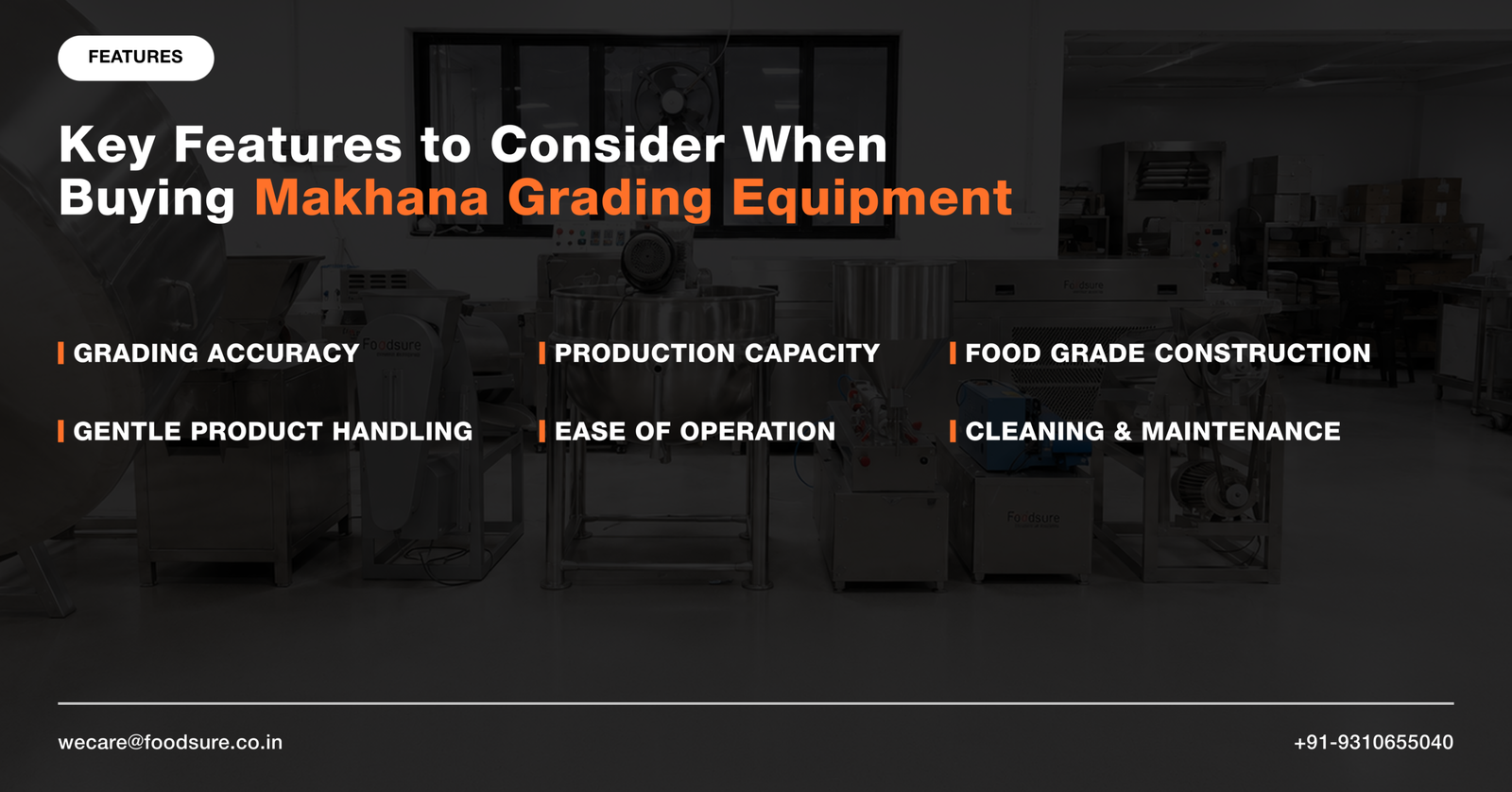
Selecting the right makhana grading equipment requires evaluating the production process, product characteristics, and expected output. Businesses should compare the following factors before investing.
Grading Accuracy
The machine should separate makhana into the size categories required by the business. Ask the supplier how the grading mechanism works and whether it can meet the intended specifications.
Production Capacity
The capacity of the machine should be based on the amount of makhana that will be processed per hour. Machines with low capacity may limit the production process, while those with high capacities might unnecessarily increase costs.
Gentle Product Handling
Makhana can break during processing if handled roughly. Consider the machine’s feeding, movement, and discharge mechanisms to help minimise product damage.
Food-Grade Construction
Food-contact equipment must be made from food-contact material and have a hygienic design. Smoother and easily accessible surfaces make cleaning and inspection easier.
Ease of Operation
Simple control and grading components will make the day-to-day operation easier. It will be easy for operators to feed the product, grade it into different grades, and perform checks.
Cleaning and Maintenance
Processing dust and product residues may accumulate. Ensure that the equipment is easy to clean, inspect, and maintain for hygiene and minimal avoidable downtime.
Integration with Existing Machinery
The grading machine should easily integrate into the production system design and interface seamlessly with upstream and downstream machinery where necessary. Firms considering installing an entire line should take into consideration the flow of products, space, and the transfer method between machinery.
Where Does a Makhana Grading Machine Fit in a Processing Line?
The grading machine can form part of the whole makhana processing plant. The placement of this machine will depend on the manufacturer’s process, the state of the raw material, and the final product required.
A typical processing sequence may include:
Raw Makhana → Cleaning → Grading → Roasting or Further Processing → Cooling → Seasoning → Packaging
There are some cases where grading is done after the process of roasting. This depends on the kind of producer and whether he/she would want to grade the unprocessed material or the end product.
Such a food makhana grading machine could help in implementing this process, as it would assist in the classification of makhana before it goes to the next production phase. The configuration for such an implementation will depend on the processing needs and machinery used.
The enterprise using its investment in the full line can consider the purchase of a makhana making machine as well. Still, the machinery to be purchased depends on the process steps the company plans to carry out.
How to Choose the Right Makhana Grading Machine for Your Business
Equipment selection for grading entails more than simply choosing between the least expensive option or the most capacity-oriented machine. It is necessary to ensure that the equipment matches the production and quality demands of the business.
Consider the following factors:
- Daily production capacity: Determine the amount of makhana that is to be graded daily.
- Number of sizes required: Determine the number of grades that are required and the specifications.
- Condition of product: Determine whether the machine will grade raw, roasted, or processed makhana.
- Separation accuracy: Determine the expected performance and allowable tolerance with the supplier.
- Breakage rate: Determine how the machine handles the fragile makhana in the feeding and separation process.
- Installation space: Consider the space required by the machine, operators, collection bins, and maintenance space.
- Cleanability of machine: Determine the accessibility of the machine parts for cleaning.
- Operating costs: Consider power consumption, labor, maintenance, and replacement parts.
- After-sales services: Determine the availability of installation services, operator training, technical assistance, and spare parts.
- Expansion potential: Determine whether the selected machine can be upgraded in the future for increased production capacity.
Where possible, try to get a product trial using the kind and amount of makhana that you expect to process through your business. This will be useful in assessing the performance of grading and handling of the product.
Benefits of Using a Commercial Makhana Grading Machine
Commercial grading equipment can provide several operational advantages when selected and operated correctly.
- Speedier sorting: Machine sorting allows processing of bigger quantities and less repetitive work.
- Enhanced uniformity: Separate sorting lines make it possible to achieve greater consistency in sizes.
- Proper organization of work processes: Separate grades allow easier handling of stocks and batching.
- Less labor-intensive work: Machine operators are able to concentrate on inspections and other activities.
- More organized packing: Separate grades may be used for appropriate packing systems.
- Expandable manufacturing processes: Appropriate machines could be employed by businesses to deal with expanding manufacturing volumes.
The actual results depend on machine design, feed consistency, operating conditions, product quality, and the grading specifications being used.
Maintenance Tips for Makhana Grading Equipment
Regular maintenance helps maintain grading performance and supports reliable operation. A practical maintenance routine should include the following activities.
Clean the Machine Regularly
Clean the remaining products and dust as per the manufacturer’s guidelines. Perform necessary food safety steps before using the equipment.
Inspect Screens and Sieves
Check grading screens for damage, blockage, or wear. Damaged or unsuitable screens may affect separation accuracy and should be addressed promptly.
Check Moving Components
Examine the moving parts of the machine, its driving system, and other parts in accordance with the maintenance program. Any lubrication and adjustments should be done as per the guidelines of the manufacturer.
Monitor Product Breakage
Observe the product during operation. An increase in broken makhana may indicate unsuitable operating conditions, excessive handling, or a maintenance issue.
Follow the Recommended Service Schedule
Routine servicing would enable any problem to be identified in advance before interrupting production. Keep the servicing records up-to-date, and make sure that the operator knows how to operate it.
Conclusion
Grading is an essential aspect of makhana production in the business setting since it enables the manufacturers to sort out the goods based on sizes and prepare them according to their intended destination. With the right makhana grading machine, it will be easier to do so.
Prior to purchasing the grading machine, there is a need for assessment of its grading efficiency, capacity, handling of products, hygiene construction, maintenance, and compatibility with the existing processing line. Also, testing of the product together with an idea about the desired size of the product is important when selecting the appropriate machine.
Choosing a grading machine based on their production requirement can help both new snack food producers and well-established processors.
Frequently Asked Questions About Makhana Grading Machines
What is a makhana grading machine used for?
A makhana grading machine segregates makhana into sizes depending on their size categories. This assists in having more consistency among batches and organising products for further processing or packaging.
What is the difference between a grading machine and a sorting machine?
A grading machine normally segregates the makhana based on their sizes, whereas a sorting machine separates different products based on some other criterion, depending on its technology. Some machines have multiple functions.
How do I select the right machine capacity?
Select equipment based on the anticipated production rate of makhana per hour, and the number of grades required. It will be wise to seek confirmation from the supplier as to whether the selected throughput is achievable.
Can makhana grading equipment reduce product breakage?
While correct equipment may aid in minimising handling, its success relies upon design, feeding, quality of the product, and operations. Seek a demo of the equipment before buying.
Can a grading machine be integrated into an existing makhana processing line?
Yes, as long as the machine’s capacity, design, feeding process, and discharge system can work with the current machinery.




