
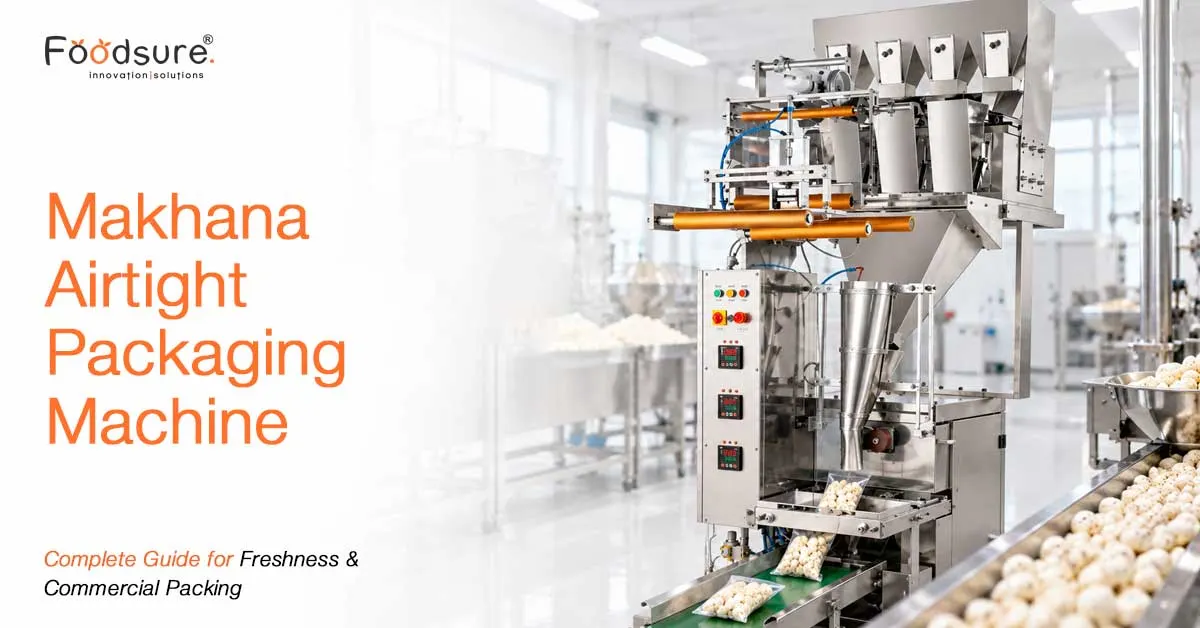
Makhana is a fragile delicacy that loses its crunch when subjected to moisture and inappropriate packaging. With growing demand for roasted makhana products in the packaged food industry, there is a need for packaging mechanisms that maintain sealing efficiency.
The Makhana Airtight Packaging Machine is a machine that is used for packaging and sealing of makhana in appropriate packaging systems. This will help in ensuring that the makhana is protected from elements like air and moisture. In industrial settings, proper packaging systems are important.
What Is a Makhana Airtight Packaging Machine?
A Makhana Airtight Packaging Machine is packaging equipment used to fill and seal makhana in pouches or other suitable packaging formats with controlled sealing.
The main reason behind using airtight packaging is to provide protection through proper sealing of the pack to avoid exposure of the roasted makhana to the environment. This is especially because moisture may alter the crispy nature of the product.
Depending on the machine configuration, an automated packaging system can perform functions such as:
- Product feeding
- Weight or volume filling
- Pouch formation or pouch handling
- Product filling
- Heat sealing
- Date or batch coding
- Discharge of finished pouches
The exact configuration depends on the packaging material, pack size, production capacity, and level of automation required.
Why Does Makhana Need Airtight Packaging?
Makhana, when roasted, is moisture-sensitive. When there is not enough packaging, the product will slowly become soft and will have an unpleasant texture.
An appropriate packaging design can be useful in:
Protect Crispness
A well-sealed pouch helps limit exposure to external moisture, supporting the desired texture of roasted makhana.
Improve Product Shelf Stability
The right type of packaging can assist in ensuring that the product remains safe when being stored and transported, even though the shelf life of the product may vary due to different considerations.
Reduce Contamination Risk
A properly sealed package provides a physical barrier between the finished product and the external environment.
Improve Product Presentation
Consistent pouch formation and sealing can create a cleaner and more professional appearance on retail shelves.
Support Commercial Production
Automated packing reduces repetitive manual operations and allows manufacturers to handle larger production volumes more efficiently.
How Does an Airtight Makhana Packing Machine Work?
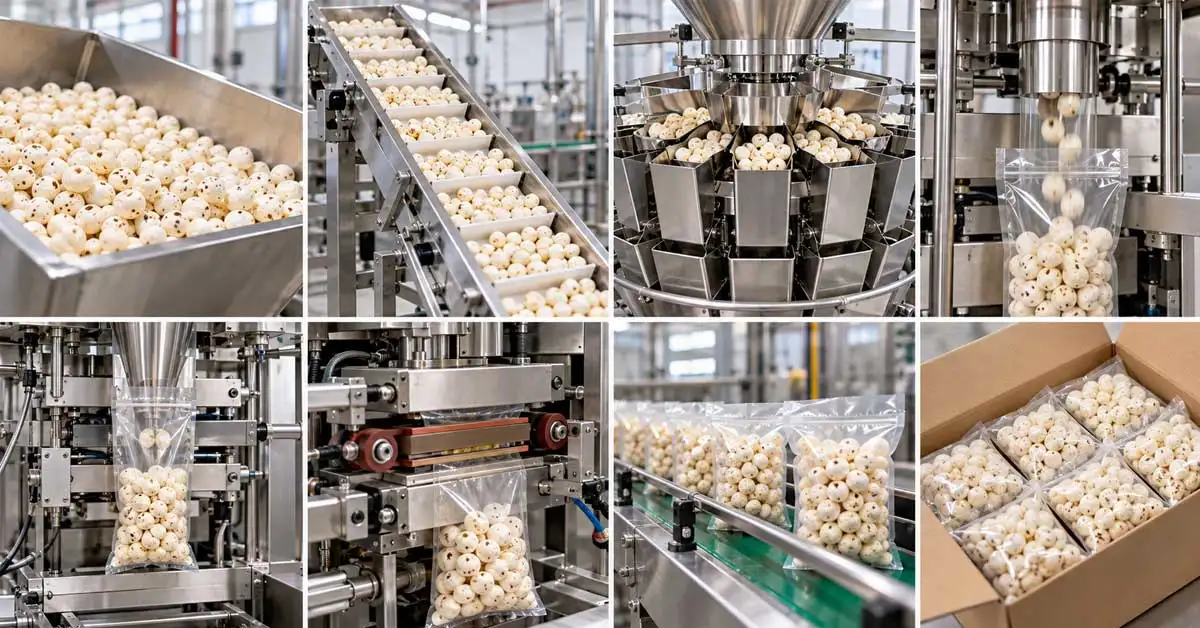
The working process depends on the machine design, but a typical automated packaging sequence includes several stages.
The makhana is supplied to the machine through a feeding system. A weighing or dosing mechanism controls the quantity entering each pouch.
The pouch that has been filled is then sealed using an appropriate sealing machine. Temperature, pressure, and the sealing time are critical factors for ensuring a reliable seal.
Other auxiliary equipment may be used based on the packaging line.
Airtight Makhana Packing Machine vs Manual Packing
Manual packing may be suitable for very small businesses, but it becomes increasingly difficult to maintain consistency as production volumes increase.
An airtight makhana packing machine can automate repetitive filling and sealing operations while reducing operator dependency.
| Factor | Manual Packing | Automated Packing |
|---|---|---|
| Filling Consistency | Operator-dependent | More controlled |
| Sealing Consistency | Can vary | More consistent |
| Labour Requirement | Higher | Lower |
| Production Speed | Limited | Higher |
| Pack Presentation | Can vary | More uniform |
| Scalability | Limited | Easier to expand |
| Batch Handling | More manual | More organised |
The appropriate system depends on production volume, available workforce, packaging format, and investment requirements.
Key Features to Consider
Choosing packaging equipment requires attention to both the machine and the final packaging material.
Accurate Filling
Consistent filling helps maintain the required pack weight and improves product presentation.
Reliable Sealing
The sealing process must create a consistent seal for each production run. Defective seals may enable entry of moisture or air inside the pack.
Adjustable Pack Sizes
Manufacturers producing different product quantities may benefit from equipment that can accommodate multiple pouch sizes.
Food-Grade Construction
Product-contact components should be made from suitable food-grade materials and designed for practical cleaning.
Easy Operation
Simple controls can help operators manage filling, sealing, and other packaging parameters more efficiently.
Easy Maintenance
Accessible components and straightforward maintenance procedures can help reduce downtime.
Role of a Makhana Sealing Machine
A makhana sealing machine is an important part of the packaging process because the quality of the final seal directly affects package protection.
Heat sealing generally involves applying controlled heat and pressure to the packaging material so that the layers bond together.
Important sealing parameters can include:
- Sealing temperature
- Sealing pressure
- Sealing time
- Packaging material
- Film thickness
- Contamination of the product in the sealing region
If makhana pieces or seasoning powder become trapped in the sealing area, the seal may not form correctly. Maintaining a clean sealing zone is therefore important.
Packaging Materials for Makhana
The material used for packaging is another important factor that affects the effectiveness of product protection and packaging appearance.
Depending on the type of product and packaging needs, companies might use various types of flexible packaging that offer an adequate barrier against moisture and the environment.
Important factors include:
- Moisture barrier
- Oxygen barrier where required
- Seal strength
- Film compatibility
- Puncture resistance
- Print quality
- Pack size
- Storage conditions
It is essential that the selection of packaging material depends on the properties of the products and the conditions for their storage and distribution.
Automatic Makhana Packing Machine for Commercial Production
An automatic makhana packing machine can be useful for manufacturers handling larger production volumes.
Automation can connect the filling and sealing stages into a more organised packaging workflow.
A typical commercial setup may include:
Automation could lead to fewer repetitive manual tasks and would help keep the consistency of pack weight and sealing uniform.
For businesses planning further expansions in the future, automation could be included with conveyors and other machinery in the process line.
Benefits of Using a Makhana Airtight Packaging Machine
A Makhana Airtight Packaging Machine can offer several advantages for commercial snack manufacturers.
Better Moisture Protection
A properly sealed package helps reduce unwanted exposure to environmental moisture.
Consistent Packaging
Automated filling and sealing can improve consistency across production batches.
Reduced Labour Dependency
Automation reduces the need for repetitive manual filling and sealing operations.
Improved Hygiene
Less direct handling of finished products can support better hygienic processing practices.
Higher Productivity
Automated machines can handle repetitive packaging processes better than manual processes can.
Better Retail Presentation
Uniform pouch sizes, filling, and sealing can create a more consistent finished product appearance.
Common Packaging Problems and Troubleshooting
Even automated packaging systems can experience issues if operating conditions are not properly controlled.
Weak or Incomplete Seals
Causes could range from improper sealing temperature/pressure/time to unsuitable packaging material or the presence of product particles between sealing surfaces.
Uneven Pack Weight
This may result from inconsistent feeding, incorrect dosing settings, or variations in product flow.
Product Trapped in the Seal
Seasoning powder or broken makhana pieces can enter the sealing zone and prevent proper sealing.
Film Tracking Problems
Incorrect film alignment, unsuitable film properties, or mechanical adjustments may affect pouch formation.
Packaging Material Damage
High sealing temperature and/or physical movement may affect specific packaging materials.
Before adjusting all the machines’ settings at once, operators need to determine the real cause of the problem.
Maintenance of a Makhana Packaging Machine
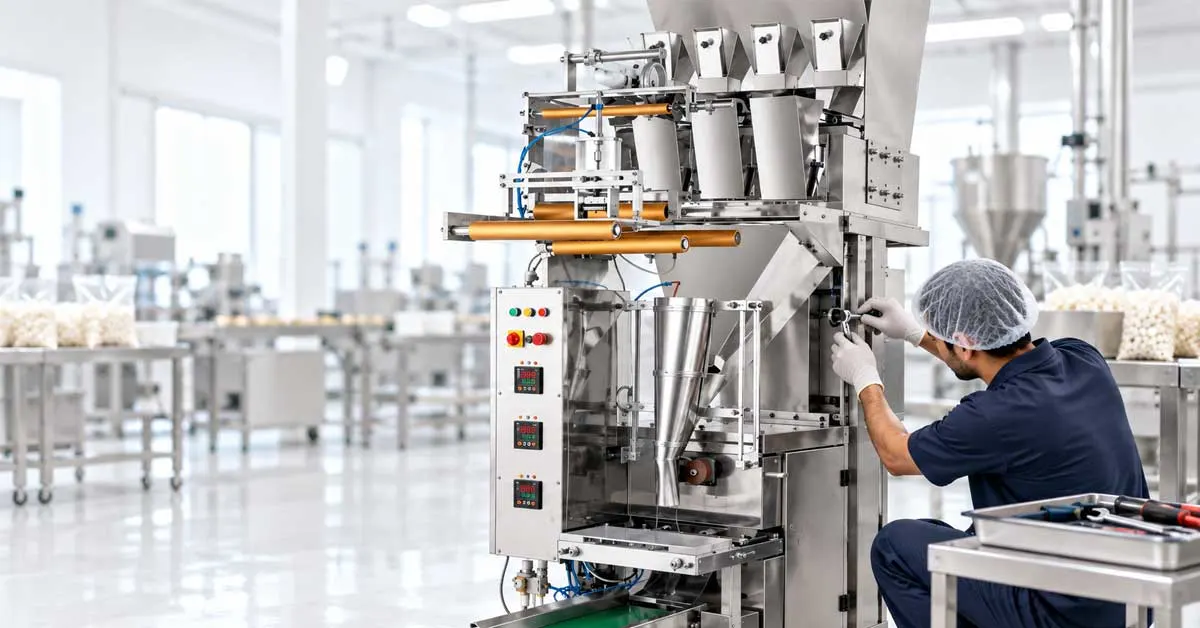
Regular maintenance is important for reliable packaging performance.
Operators should routinely inspect:
- Sealing jaws
- Heating devices
- Sensors
- Feeding parts
- Film rollers
- Cutting units
- Conveyor systems
- Electrical connections
- Product contact surfaces
Cleaning becomes very crucial while manufacturing flavored makhana since the seasoning powders tend to deposit in the areas where feeding and sealing are done.
Preventive maintenance of a makhana packaging machine helps in diagnosing worn-out parts before any unplanned production downtime occurs.
How to Choose the Right Machine
Before purchasing packaging equipment, manufacturers should evaluate their actual production requirements.
Production Capacity
Determine the number of packs required per hour or day.
Pack Size
Consider the different pouch sizes the business currently produces and may introduce later.
Product Type
Roasted makhana without seasoning and makhana with strong seasoning may have different feeding and packaging properties.
Packaging Material
Ensure the machine is compatible with the selected film or pouch structure.
Automation Level
Small businesses may require a simpler system, while high-volume manufacturers may benefit from a fully automated packaging line.
Available Space
Think of machine size, along with access for the operator, material handling, and cleaning and maintenance needs.
Future Expansion
If production is expected to increase, the packaging system should be selected with future capacity requirements in mind.
Cost Factors
The cost of airtight packaging equipment varies according to the machine configuration and production requirements.
Important factors include:
- Packaging capacity
- Level of automation
- Number of filling stations
- Pouch type
- Sealing system
- Control system
- Coding requirement
- Integration with conveyor
- Material of construction
- Other accessories
Not only should one compare the costs of the initial investment in the machine, but one should also keep in mind operational aspects, maintenance, spare parts, packaging materials, and the anticipated output quantity.
Businesses can also consult an experienced makhana machine seller in India to understand available machine configurations and select equipment according to their production requirements.
Conclusion
A Makhana Airtight Packaging Machine becomes a crucial factor for ensuring that roasted and flavoured makhana do not get exposed to moisture during the process of packaging. For commercial purposes, automation makes the process of packaging more efficient and uniform.
The choice of a suitable automatic makhana packing machine would involve considerations of capacity, packaging size, packaging material, sealing efficiency, hygiene, maintenance, and scalability. The right packaging process will form an integral part of the whole makhana processing process.
Have a Question? Let’s Connect
Need expert guidance on food processing machines, production setup, or process optimization? Our team is ready to help you choose the right solution for your business.
Frequently Asked Questions
What is a Makhana Airtight Packaging Machine?
A Makhana Airtight Packaging Machine is equipment designed to fill and seal makhana in suitable packaging formats while helping protect the product from external moisture and environmental exposure.
Why is airtight packaging important for makhana?
Well-sealed or airtight packages ensure that the roasted makhana is protected from moisture, which may influence its crunchiness. Packaging efficacy will depend on the packaging materials used.
What is a makhana sealing machine?
A makhana sealing machine is equipment used to seal filled makhana pouches. It creates a controlled seal that helps protect the packaged product during storage and transportation.
Is an automatic makhana packing machine suitable for large-scale production?
Yes. An automatic makhana packing machine can automate filling and sealing operations and is suitable for commercial production where consistent packaging and higher productivity are required.
How do I choose the right airtight makhana packing machine?
Think about production capacity, pouch size, packaging material, sealing process, degree of automation, space available, maintenance requirements, and any future growth in production when choosing equipment.




