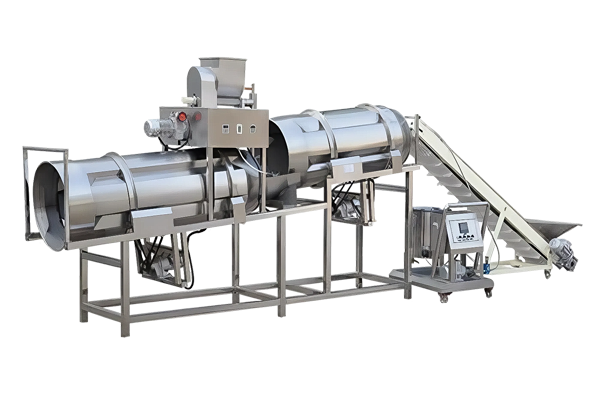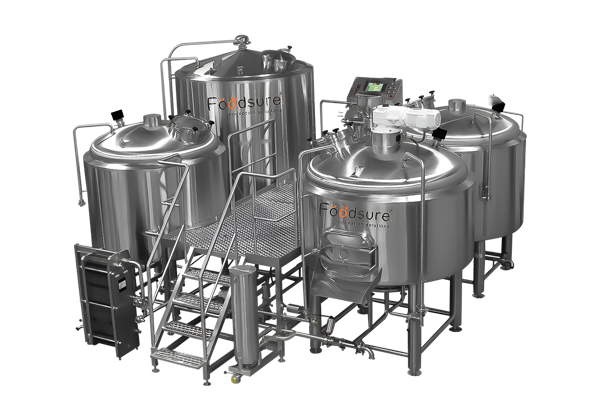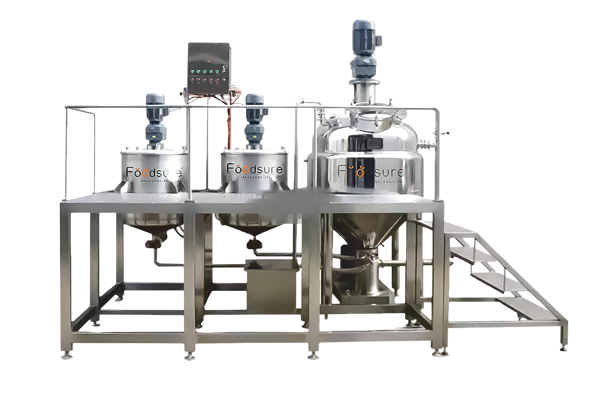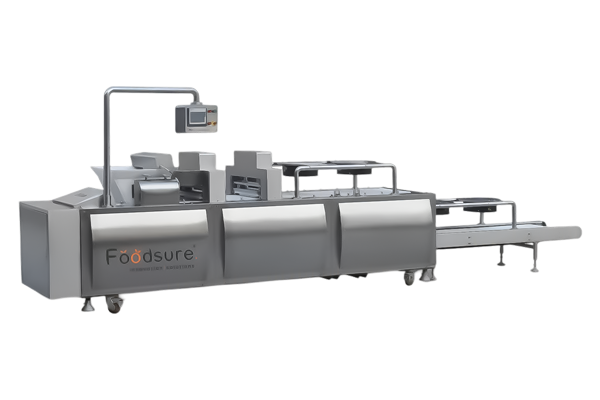
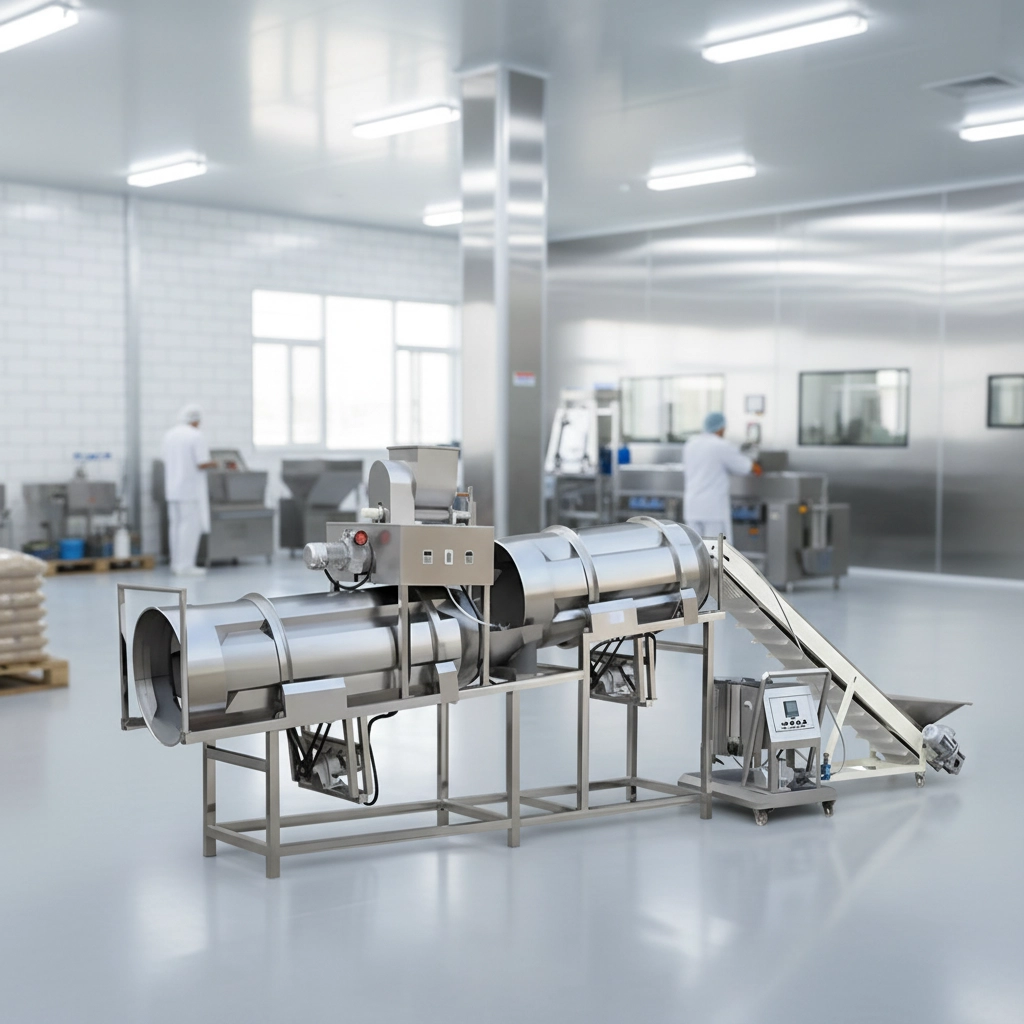
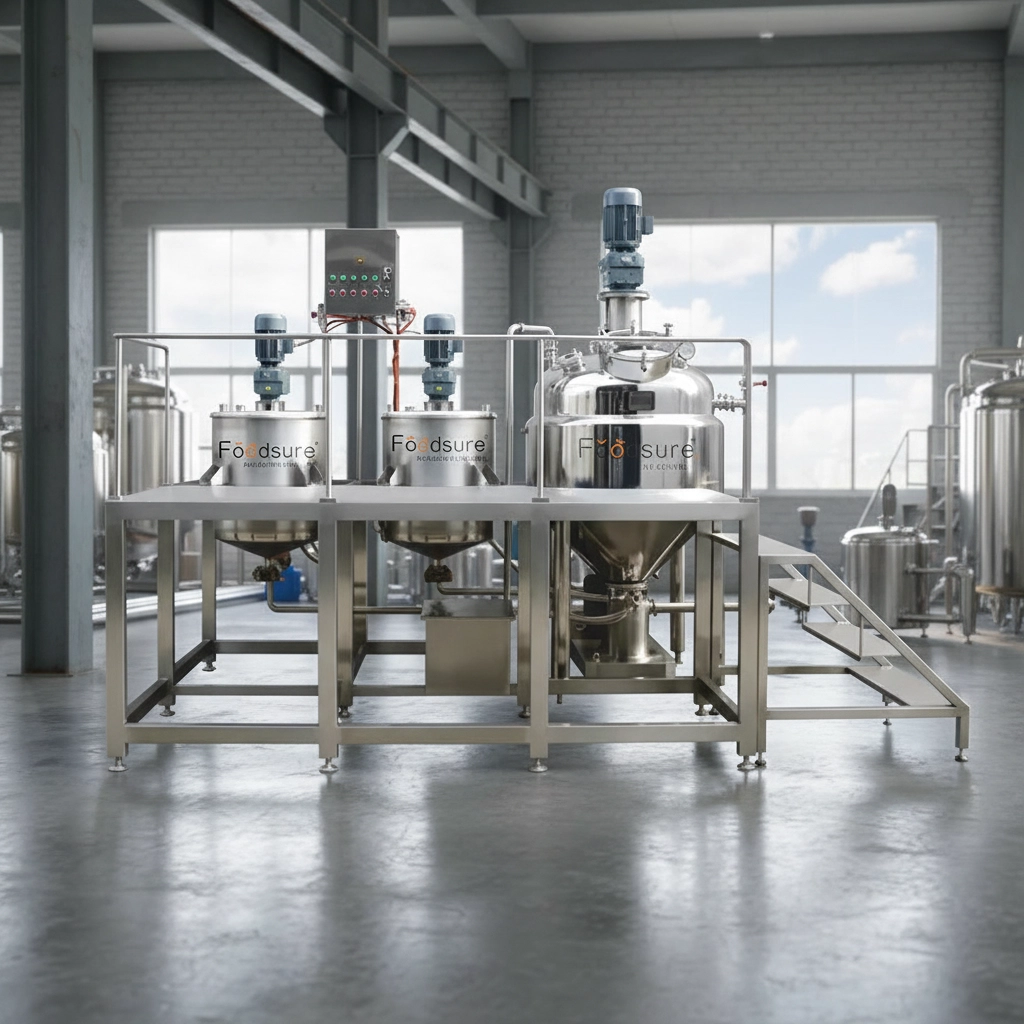
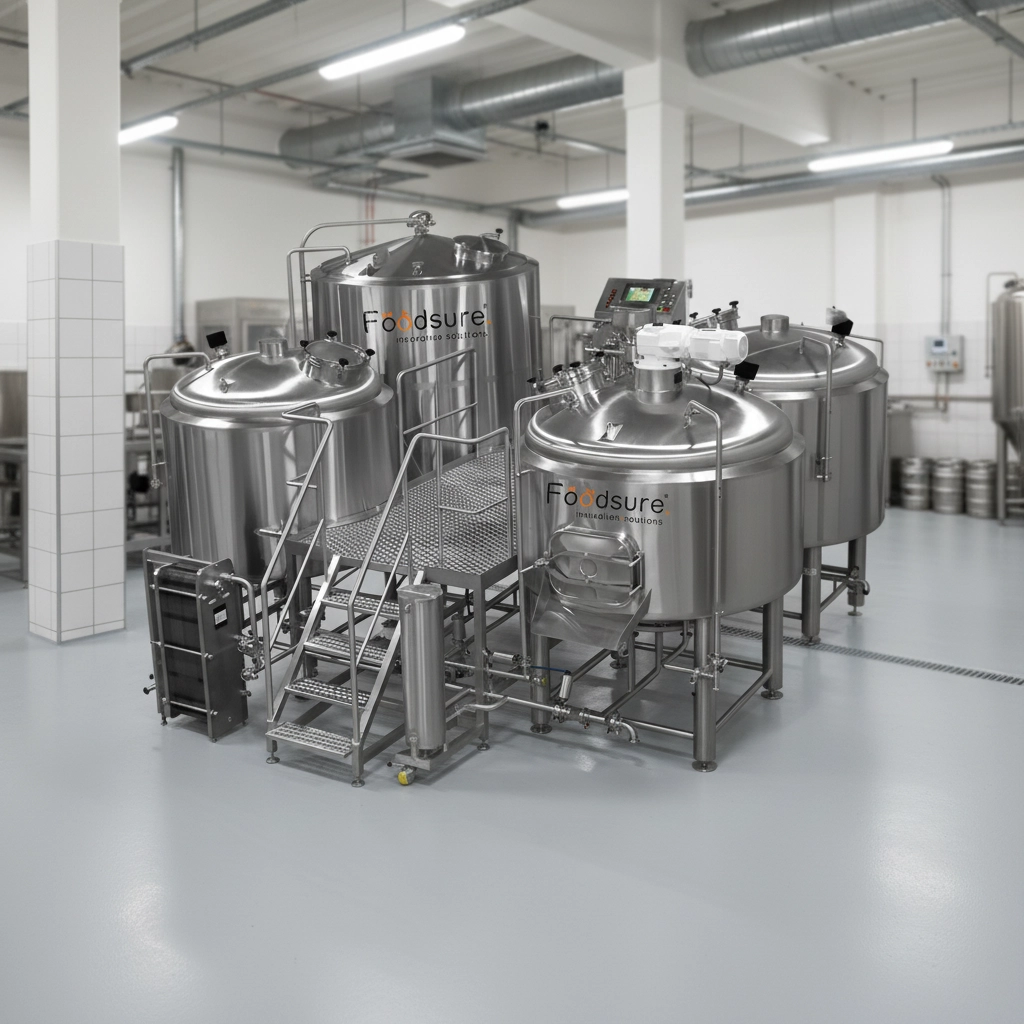
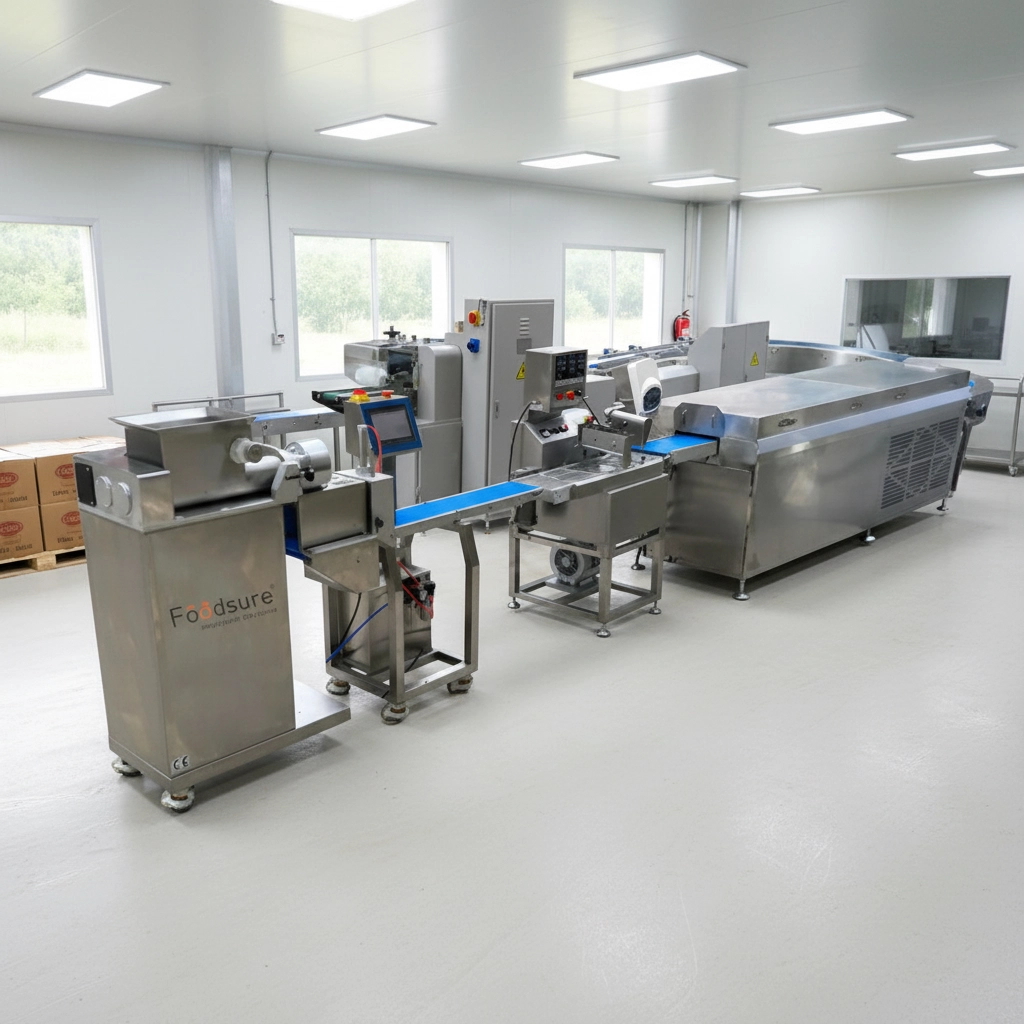
In Bihar, a farmers’ FPO struggled with short shelf life and high wastage while producing makhana manually. This case study explains why roasted makhana shelf life drops during conventional processing and how precision machine design solved it. Implementing a roasted makhana machine design from Foodsure Machines optimised roasting precision, improved batch consistency, and extended product shelf life, unlocking higher quality, reduced labour, and broader market reach for the cooperative.
What Caused Roasted Makhana to Spoil Quickly – FPO Insights
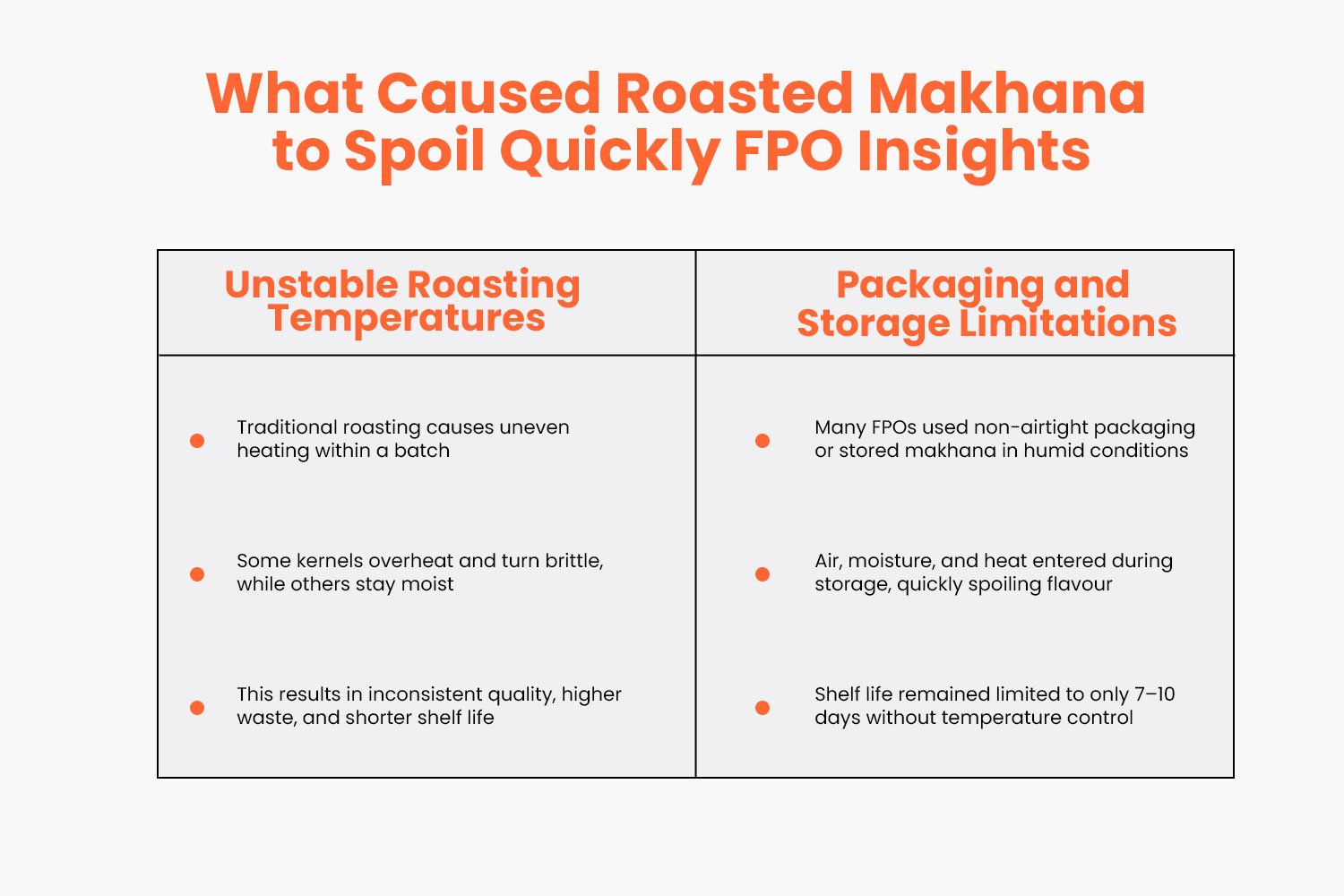
Many FPOs in Bihar incurred significant losses during the manual processing of roasted makhana, highlighting why roasted makhana shelf life drops even after doing their best; the batches would spoil more quickly than expected, thus limiting the market and reducing profitability. The main problems were:
Unstable Roasting Temperatures
- The traditional method of roasting usually caused uneven heating during the whole process performed on a certain batch.
- Some kernels become too hot and brittle, while others remain moist, causing early spoilage.
- This means that there will be consistency in quality, less waste, and a certain shelf life.
Packaging and Storage Limitations
- Several FPOs were using non-airtight packaging or were storing makhana in humid conditions.
- Air, moisture, and heat that came through the package and during the storage could oxidise and spoil the product’s flavour quickly.
- The shelf life was only 7-10 days without the proper temperature-controlled storage.
How an Improved Roasted Makhana Machine Design Changed the Outcome
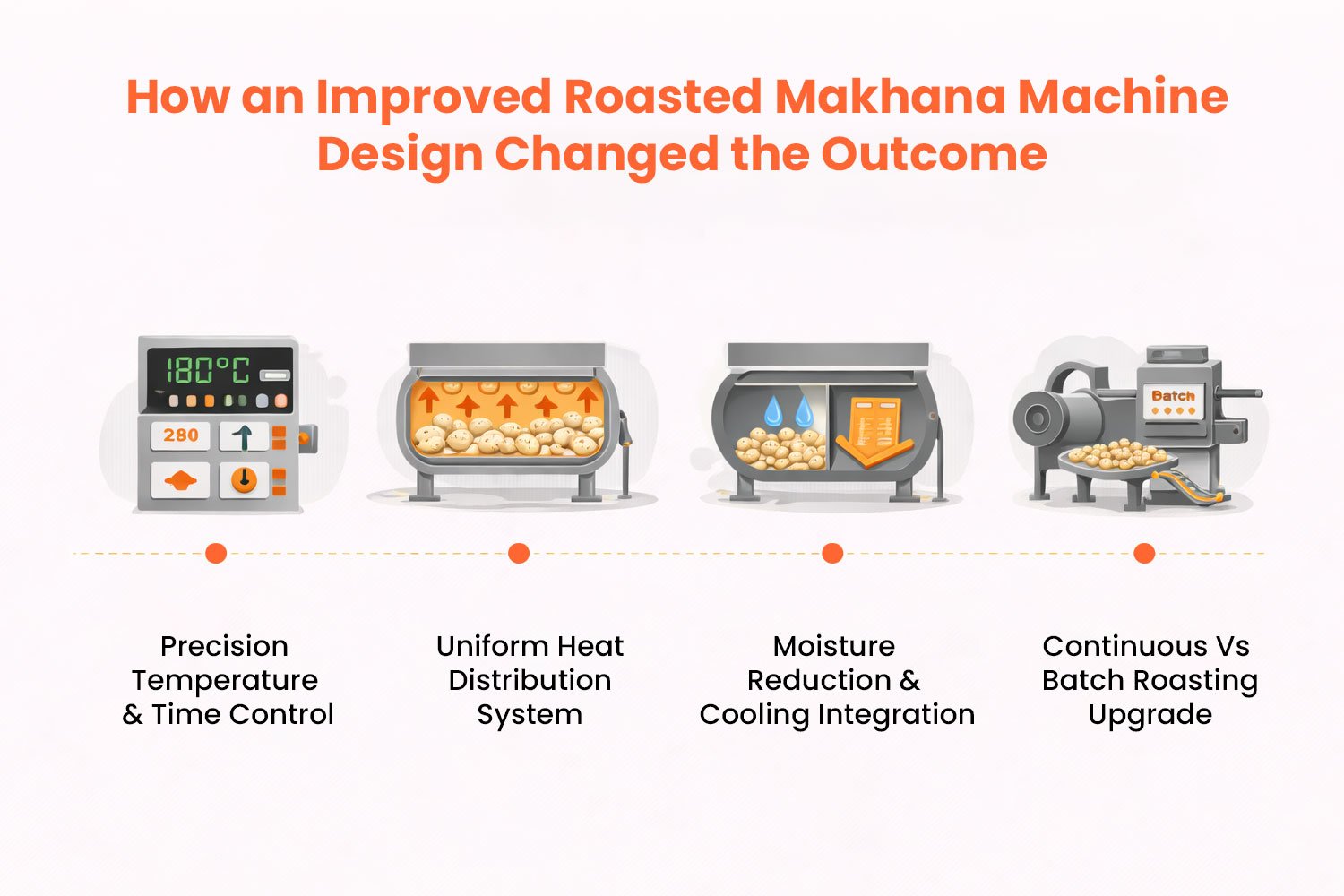
In order to deal with the problem of shelf-life losses and address why roasted makhana shelf life drops, the FPO opted to transition from the manual batch process and conventional machine design for roasted makhana. The new makana making machine design enabled the control of the roasting process using industrial design principles that were right for FPO-scale production.
Precision Temperature & Time Control
- Maintaining ±3–5°C, the highest roasting window was possible just through digital temperature control.
- In order to provide equal heating to all of the kernels, the kernels are retained at the cooking temperature for the designated time period.
- The outcome was a product showing uniformity in texture and quality, and it was also possible to produce it in reproducible amounts.
Uniform Heat Distribution System
- Heating in multi-zones made it possible to eliminate hot and cold spots, which are normal in drum or pan roasting.
- Airflow that was controlled circulated heat all over the roasting chamber uniformly.
- The result was a consistent colour of the makhana throughout, and less breakage, which meant that fewer batches were rejected.
Moisture Reduction & Cooling Integration
- The kernel moisture at the end was reduced to 3-4% because of the moisture-out integrated design.
- Cooling was performed right away after roasting to avoid condensation, and no internal sweating could occur.
- Consequently, the oxidation process was slowed down, and the rancidity was put off; the shelf life was extended.
Continuous Vs Batch Roasting Upgrade
- Continuous roasting was the critical upgrade that replaced the stop-start batch cycles that caused the thermal shocks.
- The steady feed and discharge helped in the stabilisation of product quality across high volumes.
- The outcome was the ability to generate output that is scalable alongside the shelf life consistent with that of every lot.
Results – Measurable Impact on Shelf Life and Production
The introduction of a newly designed industrial roasted makhana machine has enabled the FPO to achieve an output that is of consistent quality and ready for export within just a few months. The controlled roasting and moisture management process resulted in reduced spoilage of the product, good quality of the batch, and product shelf life doubled without the use of any additives.
| Metric | Before Upgrade | After Upgrade | Improvement |
|---|---|---|---|
| Average Shelf Life | 15 days | 30 days | +100% |
| Usable Yield | 70% | 95% | +25% |
| Labour Cost per kg | ₹12 | ₹8 | +33% |
| Export Orders Met | 0 | 3 / month | New export access |
What It Costs and Why Foodsure Machines Is the Preferred Supplier
| Machine Component | Function | Estimated Cost (₹) |
|---|---|---|
| Raw Makhana Feeding & Hopper System | Controlled, uniform input to the roaster | 40,000 – 70,000 |
| Precision Roasting Chamber (SS Food-Grade) | Controlled roasting with uniform heat | 2.2 – 3.5 Lakh |
| Temperature & Time Control Panel (PLC / Digital) | Accurate heat & dwell time control | 60,000 – 1.2 Lakh |
| Uniform Heat Distribution System | Eliminates hot & cold spots | 80,000 – 1.5 Lakh |
| Moisture Reduction & Exhaust System | Removes excess moisture during roasting | 50,000 – 90,000 |
| Integrated Cooling Conveyor / Tray | Prevents post-roast condensation | 60,000 – 1.1 Lakh |
| Continuous Discharge & Collection Unit | Steady output without thermal shock | 45,000 – 80,000 |
| Electricals, Motors & Safety Systems | Stable operation & overload protection | 40,000 – 75,000 |
| Installation, Training & Commissioning | On-site setup & operator training | Included / 30,000 – 50,000 |
What Made Foodsure Machines the Right Fit
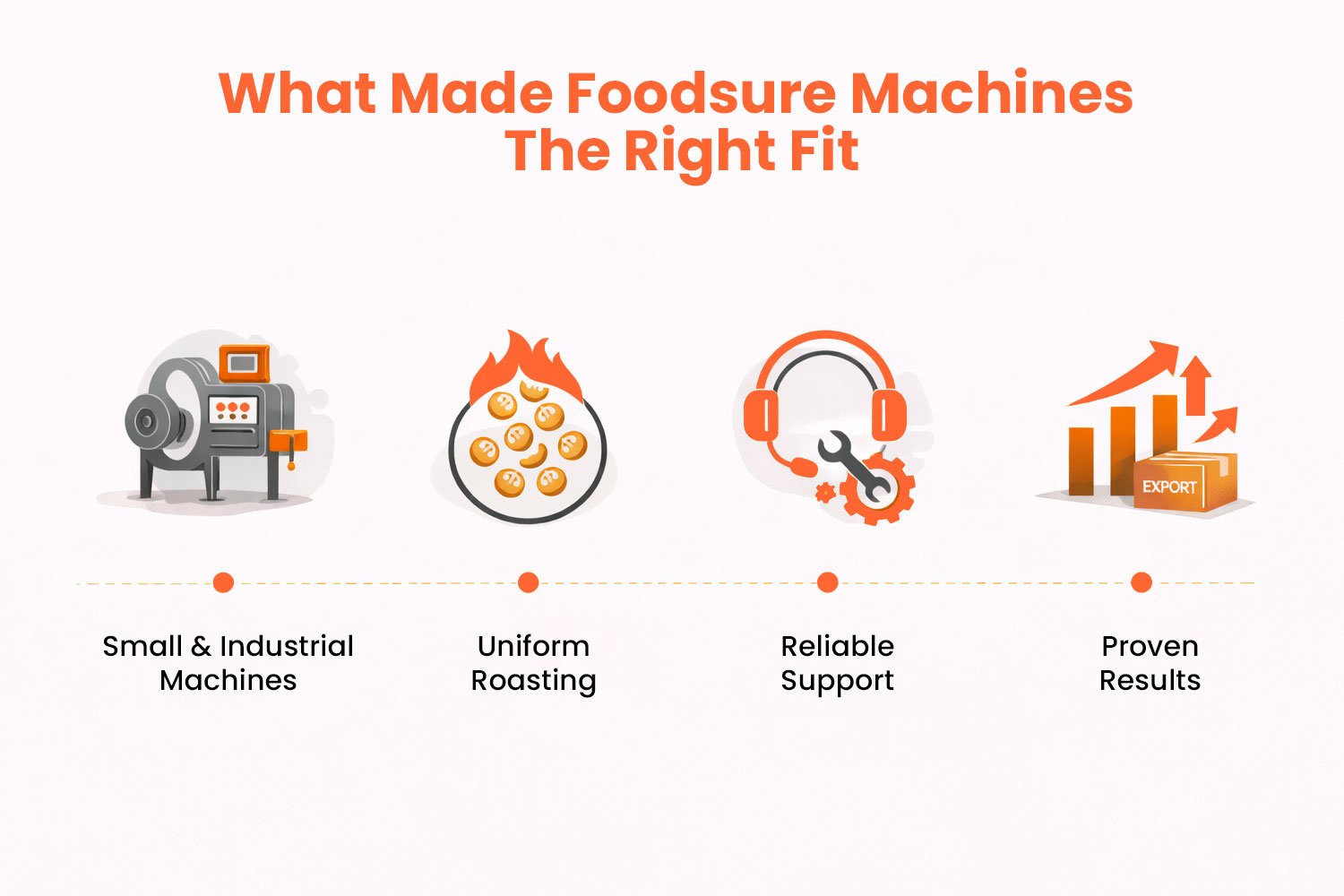
- Roasted makhana machines for small-scale and industrial manufacturing are produced by the specialised manufacturer.
- The precision-engineering design ensures uniform roasting, low moisture retention, and the minimality of wastage.
- After-sales support, easy access to spare parts, and operator training through practice are the strongest characteristics of our company.
- Demonstrated outcomes: Several FPOs in the Indian states of Bihar and Madhya Pradesh have increased their domestic and export orders by using Foodsure Machines.
Conclusion
The design of the makhana roasting machine has been disclosed as a factor directly influencing the shelf life, thus making it obvious why roasted makhana shelf life drops and illustrating how FPOs can produce regularly, export-quality batches. At Foodsure Machines, practical engineering solutions that address real-world production issues are our primary concern. We create devices that enable FPOs and manufacturers to grow with certainty, producing results that are predictable and durable.
Frequently Asked Questions
Why does roasted makhana spoil quickly?
If some kernels overheat while others stay damp, uneven moisture remains in the batch, causing roasted makhana to spoil faster than expected.
Why does the roasted makhana shelf life drop in manual processing?
Manual roasting cannot heat every kernel evenly. This uneven heating traps moisture, which leads to early spoilage and reduced shelf life.
How can packaging affect roasted makhana shelf life?
Poor packaging allows air and humidity to enter. This exposure speeds up rancidity and causes roasted makhana to lose freshness quickly.
Does roasting temperature control impact roasted makhana shelf life?
Absolutely. Steady and controlled roasting temperature ensures even cooking, removes excess moisture, and helps roasted makhana last longer on the shelf.