
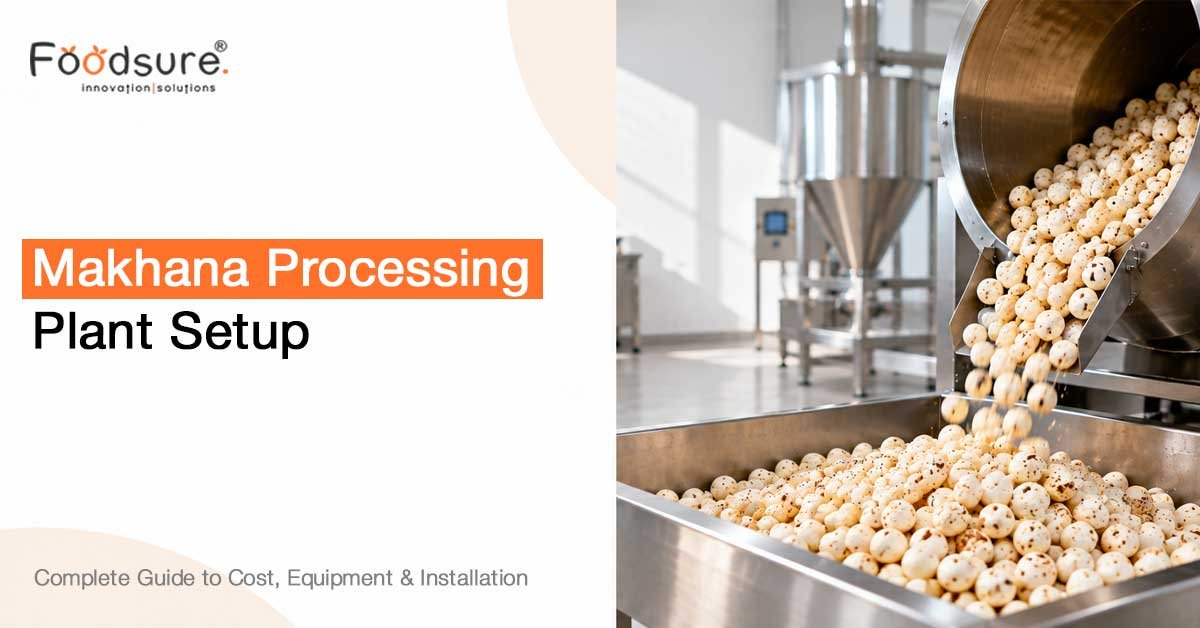
Increased interest in roasted, flavored, and packaged Makhana opens up business opportunities in food entrepreneurship and food production. This type of business not only needs procurement of raw Makhana but also entails production planning, machinery, plant layout, food safety procedures, packaging, and distribution.
A well-planned makhana processing plant setup helps businesses organise production, maintain consistent product quality, reduce manual handling, and expand operations as demand increases. The ideal setup depends on the type of makhana products being manufactured, expected production capacity, investment budget, and level of automation.
What Is a Makhana Processing Plant?
A makhana processing plant is an establishment that has facilities to undertake one or more processes in the manufacture of makhana. These include cleaning, sorting, roasting, seasoning, cooling, and packaging.
The set-up will depend on the business model. A small-scale setup will be able to roast and pack the makhana for immediate consumption, while a bigger one can combine several machines to form a processing line.
A typical processing flow may include:
Raw Makhana Receiving → Cleaning → Grading → Roasting → Cooling → Flavouring → Packaging → Finished Product Storage
Not every plant requires all these stages. Businesses should select equipment according to their raw material, finished product, and production requirements.
How to Plan a Makhana Processing Unit Setup
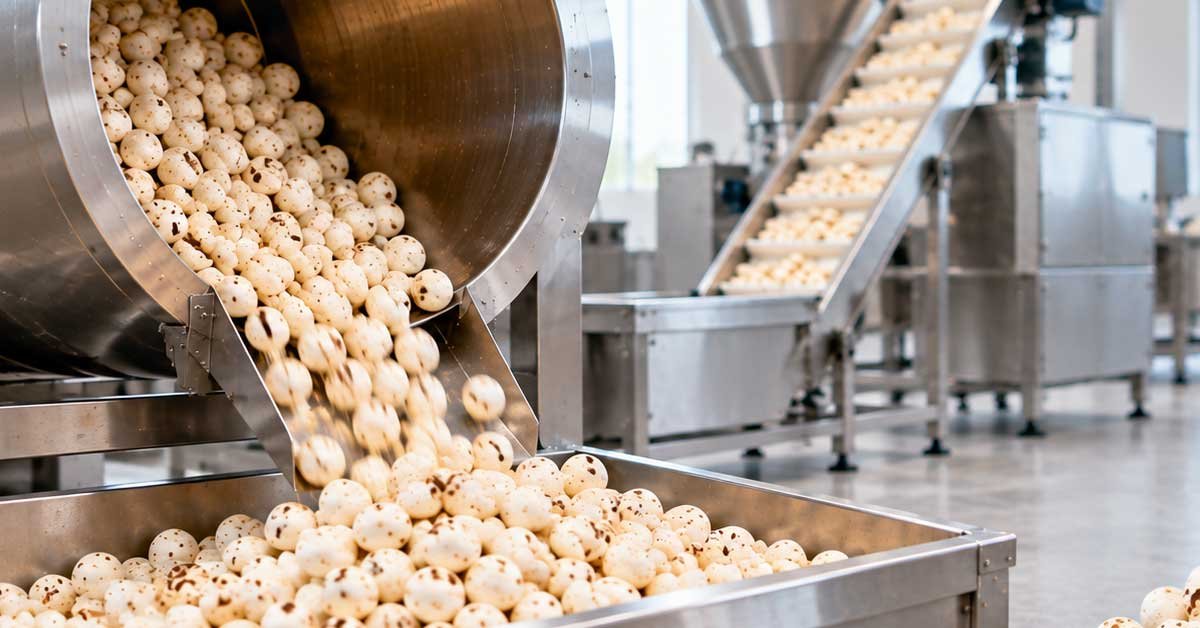
Planning a makhana processing unit setup begins with defining the business objectives and identifying the most suitable production model.
1. Decide Your Product Range
Decide whether you wish to handle unprocessed makhana for bulk sale, make roasted makhana, make flavored snacks, or sell packages of your products to retailers and other brands.
Based on what kind of products you are making, the kind of equipment, packaging format, and processing that will be involved will vary.
2. Estimate Production Capacity
Determine what the expected output will be per hour or per day. Take into account sales estimates, customer orders, seasonality, and future growth.
Choosing capacity according to realistic demand can help you prevent any unnecessary expenses due to oversized equipment or production problems due to undersized machines.
3. Choose a Suitable Facility
There must be sufficient room in the production plant for storage of raw materials, placement of machines, processing, packing, and storage of finished products.
Think about electricity, ventilation, washing facilities, movement of materials, entry of workers, and maintenance space. A good layout is always helpful in reducing unnecessary movement.
4. Plan the Production Workflow
Organize machines in a manner consistent with the sequence of operations. There should be a logical flow of material through the various stages of production while taking appropriate steps to minimize contamination of input material from finished goods.
Planning in this regard can assist in minimizing layout changes after installation.
Makhana Processing Equipment Required for Commercial Production
The required makhana processing equipment depends on the products being manufactured and the degree of automation.
| Equipment | Primary Function |
| Cleaning machine | Removes dust and unwanted material |
| Grading machine | Separates makhana according to size or grading requirements |
| Roasting machine | Roasts makhana under controlled conditions |
| Flavouring machine | Applies seasoning to roasted makhana |
| Cooling arrangement | Cools the product before subsequent handling |
| Packaging machine | Packs finished makhana into suitable packaging |
Makhana Processing Plant Cost: What Determines the Investment?
Makhana processing plant cost varies with a number of considerations. There is no set cost that would be applicable to all plants. This means that a small roasting and packing plant would require a different investment than an integrated processing plant.
Major cost components include:
- Machinery: The cost will depend on the kind of machinery used, its capacity, construction, and automation level.
- Preparation of facilities: Floor, electrical works, ventilation, storage, and other installation needs will influence the budget.
- Utilities: Electricity and other utilities will have to cater to the chosen machinery.
- Packaging: Machines and materials used in packaging will add costs.
- Licensing and compliance: Budget for any licences and testing.
- Labor: Labor will be needed based on the production system.
- Working capital: Materials, packaging, labor, transport, and operational costs have to be financed.
How to Choose the Right Machinery Supplier
Selecting a reliable supplier is important for machine performance, installation, and long-term maintenance.
When evaluating a makhana machine seller in india, consider the following:
- Machine specifications and rating capacity
- Heating and automatic facilities
- Materials in contact with food
- Technical assistance during installation
- Operator training
- Conditions of guarantee
- Availability of spare parts
- Cleaning and maintenance needs
- Technical assistance after installation
Ask the supplier to provide additional information on whether the offered configuration contains all the equipment necessary for your production process. The more detailed quote you get, the easier it will be to compare suppliers.
Licences and Food Safety Requirements
Food safety must be integrated into the design process right from the start. Companies have to determine what registration or licence they need for the processing of their foods.
Important considerations include:
- FSSAI Registration or Licence
- Hygienic premises and equipment
- Proper handling of raw materials
- Suitable storage conditions
- Sanitation practices
- Pest control
- Packaging and labeling
- Proper production and quality records
Understanding fssai compliance for makhana processing unit requirements before installation can help businesses plan suitable storage, processing areas, cleaning access, and material movement.
The requirements depend upon the type of operation and its size. Companies must check the current requirements with the relevant authorities before going into business production.
Automation Options for a Makhana Processing Plant
The level of automation should match production volume and operating requirements.
Small-Scale Setup
Small-scale setups could make use of individual machines to roast, flavor and package their product, transferring manually from one station to another. Such an option would be effective for cases where the production levels are low.
Semi-Automatic Setup
Semi-automatic systems are a combination of machines and operator activities. They might help to minimize manual work while being flexible enough to produce various goods.
Fully Integrated Setup
The automation of the line can involve connecting different stages of processing in order to enhance material handling and minimize manual labor. This method can be used for companies that have higher production needs and a reliable demand level.
Automation must be done depending on the utilisation, labor force, maintenance, and extra costs needed.
Common Mistakes to Avoid During Plant Setup
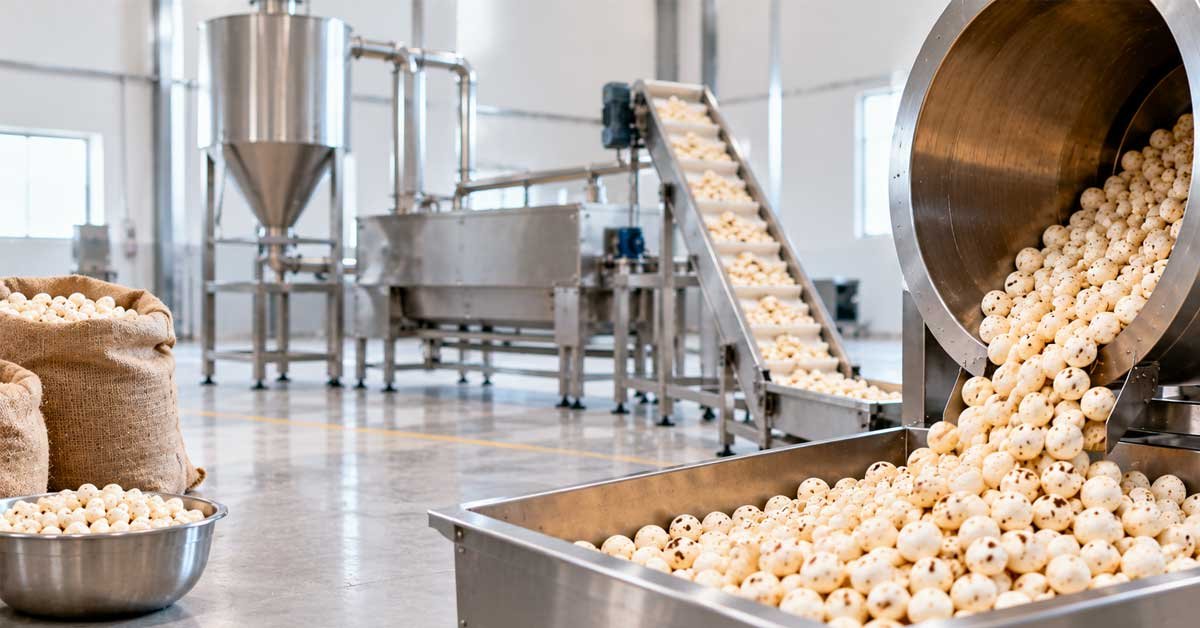
Businesses can face avoidable costs when planning is rushed, or equipment is selected without considering the complete production process.
Common mistakes include:
- Purchasing machines before determining actual needs
- Neglecting installation and utilities considerations
- Selecting machines regardless of final output
- Underestimating working capital needs
- Forgetting accessibility for cleaning and maintenance purposes
- Not planning storage of raw materials and final products
- Neglecting food safety and labelling needs
- Not selecting suppliers by assessing their technical support capability
A detailed project plan and equipment comparison can help businesses avoid these problems.
How to Improve Efficiency After Installation
After the plant is set up, proper monitoring will help keep production consistent and control operating costs.
The business needs to develop standard procedures for machine operations, cleaning, inspections, and quality control. The operators need to be trained for equipment operation and safety practices.
Keep track of raw material losses, roasting, packaging, downtime, and production output. Checking these factors will help you detect bottlenecks in the process.
Machine maintenance needs to follow the manufacturer’s guidelines, especially for heating elements, moving parts, electricity, and food contact surfaces.
Conclusion
A successful makhana processing plant setup requires careful planning of production capacity, machinery, facility layout, investment, food safety, and distribution. Businesses should begin by defining their product range and estimating demand before selecting equipment.
Understanding makhana processing plant cost, comparing suitable machinery, and planning a practical makhana processing unit setup can help entrepreneurs manage their investment more effectively. The right makhana processing equipment should match current production requirements while allowing room for future expansion.
Through the selection of dependable equipment, provision of a hygienic processing environment, and development of standardized processes, manufacturers will be able to develop an efficient makhana processing system.
Frequently Asked Questions
What machinery is required for a makhana processing plant?
According to the production model, machinery can be made up of cleaners, graders, roasters, flavorizers, coolers, and packaging machines. The specific machinery will depend on the finished product and production capacity needed.
What determines makhana processing plant cost?
The cost depends on machinery capacity, automation, facility preparation, installation, utilities, packaging equipment, licensing, and working capital.
Can a small business start with a basic processing unit?
Yes, because a business can start with certain equipment that suits its production needs and later expand depending on market demand. The first step should still consider hygiene, storage, and licensing requirements.
How do I select a makhana processing equipment supplier?
Consider the specifications, capacity, materials of contact, installation assistance, warranty, spare parts, and after-sales service. Ask for a quotation for the full system.
Is an FSSAI licence required for a makhana processing plant?
Food enterprises need to have the FSSAI licence or registration relevant to their category and size of business. The requirements need to be verified prior to starting operations.




