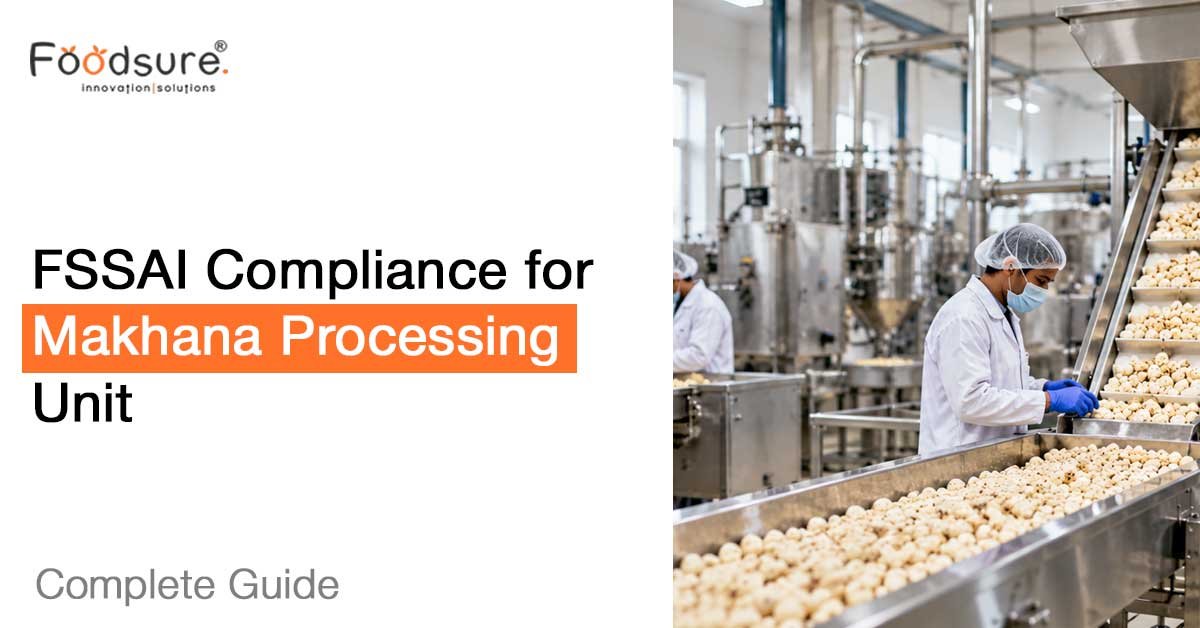
Makhana processing entails several steps such as cleaning, sorting, roasting, flavoring, and packaging. As production shifts from a small scale to a commercial scale, the need for food safety and licensing comes into consideration.
It is imperative that manufacturers know about fssai compliance for makhana processing unit prior to initiating production. Licensing, a clean processing environment, proper handling procedures, and correct packaging are all key to running a business ethically.
What Is FSSAI Compliance for a Makhana Processing Unit?
FSSAI compliance for makhana processing unit refers to following the food safety, hygiene, licensing, processing, storage, and packaging requirements applicable to a food business operating a makhana processing facility.
Food businesses in India are regulated by the Food Safety and Standards Authority of India (FSSAI) under the Food Safety and Standards Act of 2006. A makhana processing business must determine the right FSSAI registration/licence depending on various aspects, including the nature and size of the food business.
Compliance does not only include having a licence. A processing unit must have hygienic premises, food contact equipment, safe handling practices, contamination control measures, and labelling of packaged foods.
FSSAI Requirements for Makhana Processing
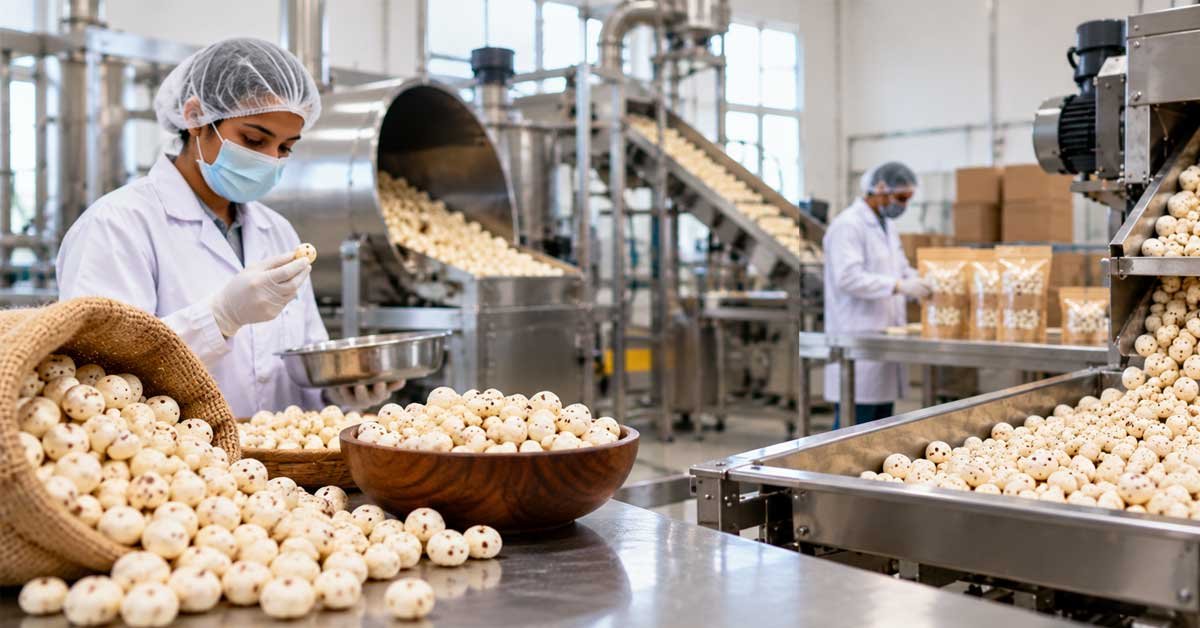
The exact requirements depend on the type and scale of the operation. However, businesses should consider the following areas when planning their facility.
1. FSSAI Registration or Licence
An important part of FSSAI requirements for makhana is obtaining the appropriate registration or licence before conducting food business activities.
Small-scale food enterprises might be eligible for basic FSSAI registration, while larger-scale enterprises may be eligible for either a State or Central FSSAI licence, depending on the nature of the business. The application process is likely to require relevant information regarding the business and the premises.
Based on the license category, documents relating to the processing plant, machinery, products, and other necessary information might also be needed. It is recommended that one first confirms their eligibility for the FSSAI license before making an application.
2. Hygienic Processing Premises
The process area needs to be designed and maintained to ensure there is no contamination. The floors, walls, ceilings, drainage, ventilation, light, and working areas must be kept clean.
There should be separate handling or storage of the raw material and finished goods wherever necessary. There should also be proper management of movement of personnel, raw material, packing material, and finished products.
A cleaning schedule should be made for the production area, storage area, equipment, and food contact surfaces.
3. Food-Grade Processing Equipment
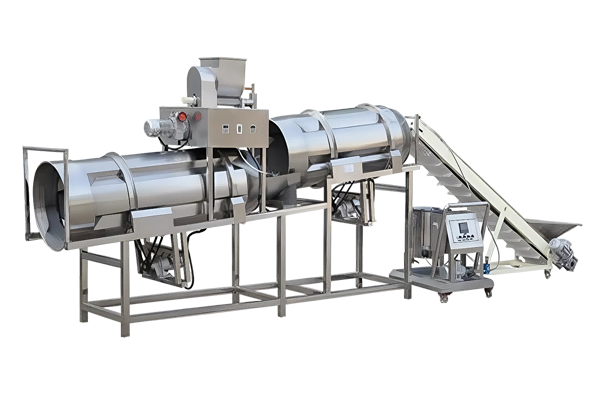
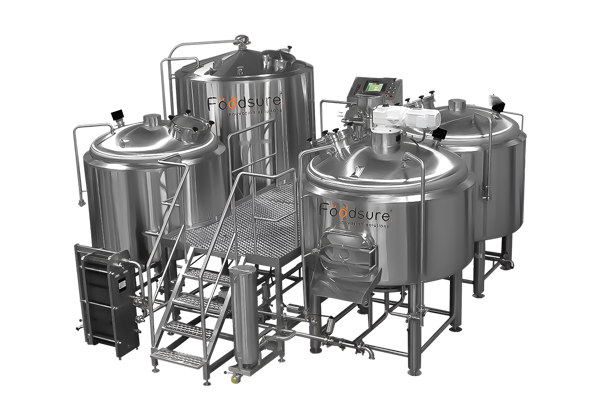
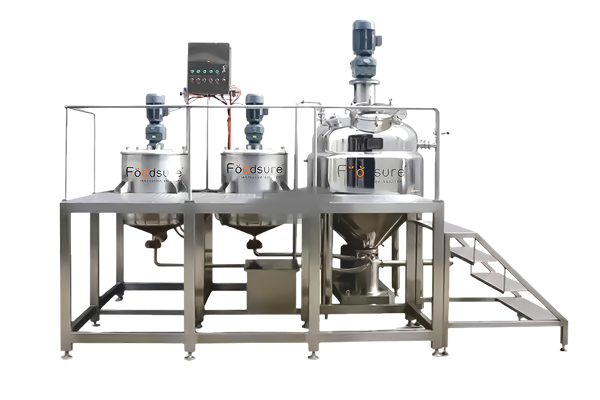
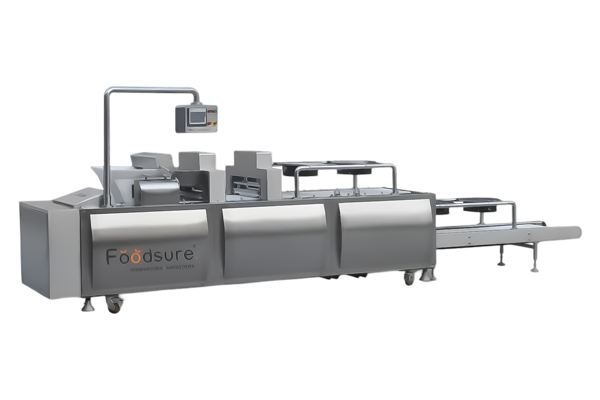
Cleaning, grading, roasting, flavouring, and packaging machinery should be fit for use in food processing applications.
Surfaces of the equipment that come into contact with the makhana product should be made of the right food-grade materials and should be easy to clean and maintain.
A makhana machine used commercially can contribute towards the standardisation of the processing procedure, but the machine alone does not guarantee food safety. Cleaning and maintaining the machine according to the manufacturer’s guidelines is essential as well.
Makhana Processing Licence: What Businesses Should Know
A makhana processing licence is an important regulatory requirement for businesses carrying out commercial food-processing activities. The applicable licence category depends on the nature and scale of the food business rather than simply the fact that the product is makhana.
Before applying, a business should determine:
- Food processing activity undertaken
- Capacity to produce/handle the food product
- Nature of business and premises information
- Product which is being produced/processed
- Licence Category under FSSAI
- Documents required for licence application
It is vital to note that not all the makhana businesses will need the same kind of FSSAI license. There might be differences between the requirements of a small roasting and packaging business and a large automated processing business.
Businesses should also ensure that they update their licensing information in case of any change in the business, premises, product, or any other information concerning the license.
Food Safety Requirements for Makhana Unit
Following food safety requirements for makhana unit operations helps reduce contamination risks and supports consistent product quality.
Raw Material Handling
Makhana should be sourced from trustworthy suppliers and examined prior to processing. Contaminated makhana should be detected and removed.
The raw material should be stored under hygienic conditions to protect it from moisture, contaminants, chemicals, and pests.
Cleaning and Processing
The cleaning and grading process should be done under controlled conditions. Dust, foreign objects, broken grains, and any other impurities should be removed before any further processing.
The processing equipment should be cleaned at the right time. In case there are multiple products or flavors, the cleaning process should be considered carefully to minimize contamination.
Roasting and Flavouring
Roasting should be performed under controlled processing conditions to ensure uniform quality of the product. Over-roasting may influence colour, texture and taste, whereas under-processing may influence the required characteristics of the product.
In the case of flavoured makhana, seasoning and coating machines should be kept in hygienic condition. The ingredients used for the process of seasoning should be food grade.
Storage
Makhana, when ready, should be stored in appropriate conditions that will protect it from moisture, contamination, pests, and any other form of damage.
Appropriate packaging should be chosen depending on the requirements of the product. Proper sealing may help prevent moisture from affecting roasted makhana.
Labelling and Packaging Compliance
For packaged makhana products, businesses should ensure that labels comply with applicable FSSAI food labelling and packaging requirements.
Depending on the product and packaging format, the label may need information such as:
- Name of the food product
- Ingredient details, when applicable
- Quantity of the item
- Nutritional details, when applicable
- Batch/lot code
- Date-related details
- License number of FSSAI
- Manufacturer or marketer’s information
- Storage directions, when applicable
- Allergen declarations, when applicable
Labelling requirements may vary depending on the product type and regulations. Hence, firms are advised to ensure that they are updated on the current labelling requirements before printing their packaging materials.
Hygiene Practices for Workers
Workers within the makhana processing facility have a critical role to play in ensuring food safety.
Appropriate personal hygiene should be maintained, including clean protective clothing, hand hygiene, and safe handling techniques. Workers should also be trained on how to prevent actions that will lead to food or food-contact surface contamination.
Illness reporting and hygiene practices in the workplace should form part of the food safety practices in the facility.
Training will help workers understand cleaning, equipment handling, contamination prevention, and food safety practices.
Documentation and Record Keeping
Maintaining proper records is part of compliance as well. A commercial processing facility can develop documentation regarding how to clean, maintain, produce, inspect, and carry out other processes.
Keeping such records will enable a company to show that it has been adhering to its food safety processes, and it also helps in identifying the problem sources in case of a problem with quality.
Important records may include:
- Cleaning and sanitation records
- Maintenance records for equipment
- Raw material receipt records
- Production records
- Batch records
- Pest control records
- Employee training records
- Product test results records, where relevant
- Complaint records
The exact documentation required can depend on the applicable licence and food business category.
Setting Up a Compliant Makhana Processing Unit
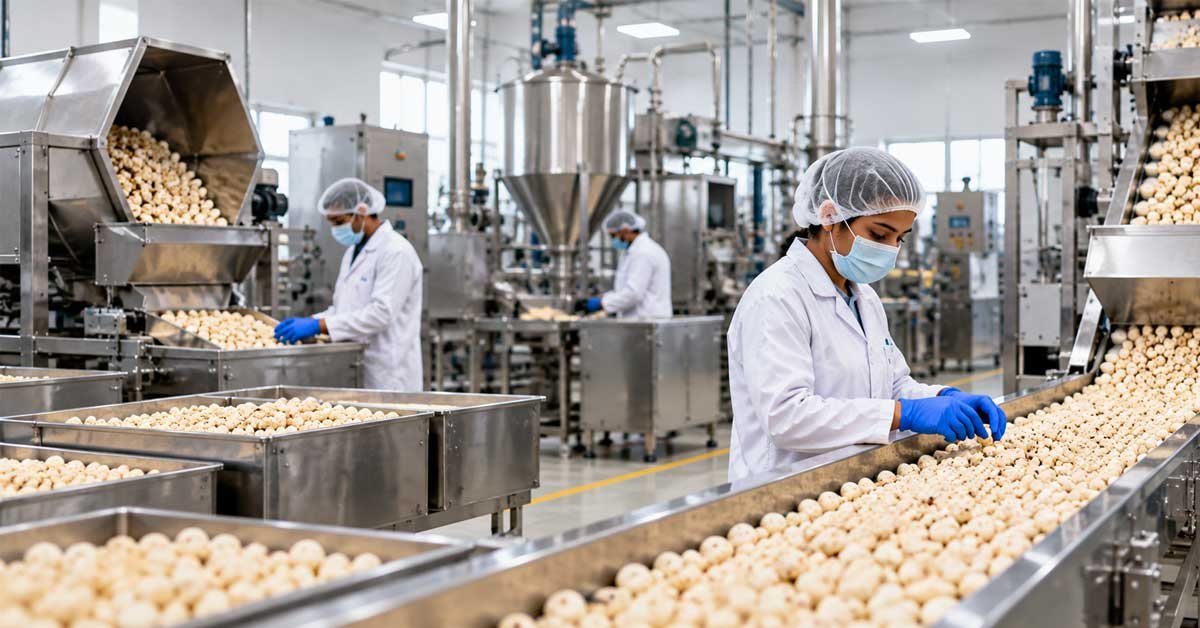
Compliance should be considered while designing the facility rather than after production begins. Businesses planning a makhana processing plant setup should consider the complete flow of raw materials, processing, storage, packaging, and finished products.
A typical commercial setup may include:
Raw Makhana Receiving
↓
Cleaning
↓
Grading
↓
Roasting / Processing
↓
Flavouring, if required
↓
Cooling
↓
Packaging
↓
Finished Product Storage
The design must facilitate movement while enabling the segregation of raw material handling from finished product processing when required.
Additionally, equipment must be designed in such a way that operators have easy access to those food contact surfaces that need to be cleaned and maintained.
Role of Machinery in FSSAI Compliance
Automation could help to maintain food safety through providing better control in the processing process. Machines can limit any unnecessary handling and improve consistency during processing, such as cleaning, grading, roasting, flavoring, and packaging.
Nonetheless, automation does not automatically ensure compliance. The machines need to be properly chosen, installed, cleaned, maintained, and run by skilled operators.
For this very reason, companies need to assess the machinery and the processing environment when setting up their commercial facilities.
Common Compliance Mistakes to Avoid
Makhana businesses can face avoidable problems when regulatory and hygiene requirements are considered only after production starts.
Common mistakes include:
- Commencing commercial activities without proper FSSAI registration/license
- Use of improper or hard-to-clean machinery
- Lack of segregation of raw and processed food
- Poor cleaning schedule
- Improper storage of raw materials
- Disregarding pest control measures
- Using wrong or insufficient labels on the food
- Maintenance of inadequate production and sanitation records
- Lack of updating license and business information
- Considering food safety a mere licensing issue
A better approach is to integrate compliance into facility planning, equipment selection, employee training, production procedures, and quality control.
Benefits of Maintaining FSSAI Compliance
Proper compliance provides more than regulatory protection. It can also support better operational control and brand credibility.
A well-managed food safety system can help businesses:
- Keep the production environment clean
- Avoid contaminations
- Ensure consistency in the process
- Develop consumer trust
- Keep better records of production
- Facilitate well-organized business practices
- Get ready for inspections and audits
- Increase production with proper procedures
For businesses planning to expand from a small processing operation to a larger commercial facility, establishing good practices early can make future expansion easier.
Conclusion
Following fssai compliance for makhana processing unit requirements is one of the significant aspects of ensuring a safe and organized makhana processing business. FSSAI compliance involves having the right FSSAI registration or license, having hygienic premises, using appropriate food processing equipment, safe handling processes, storage, packaging, and record-keeping.
Understanding FSSAI requirements for makhana, obtaining the appropriate makhana processing licence, and implementing practical food safety requirements for makhana unit operations can help businesses build a stronger foundation for commercial production.
For a new facility, compliance should be considered from the initial makhana processing plant setup stage so that the layout, machinery, hygiene systems, storage areas, and production flow work together effectively.
FAQs
Is FSSAI registration required for a makhana processing business?
Absolutely. A food business is required to have the relevant FSSAI registration/license in respect of its category of food business before engaging in any regulated food business operations.
What are the main FSSAI requirements for makhana processing?
These include licensing, hygienic premises, food safety procedures, equipment, storage, sanitation, pest control, packaging and labeling, and record-keeping.
What is a makhana processing licence?
A makhana processing licence refers to the applicable FSSAI licence or registration required for a business involved in processing or handling makhana as a food product. The category depends on the nature and scale of the business.
Does machinery affect FSSAI compliance?
Yes. The food processing equipment used must be appropriate for food processing and must be kept in clean conditions. Appropriate choice, cleaning, and maintenance of equipment are important aspects of food processing.
Should FSSAI compliance be planned before setting up a makhana unit?
Yes. Taking compliance into consideration when designing facilities and machines will help companies design an efficient production process, a proper hygiene system, and an organized processing procedure right from the start.