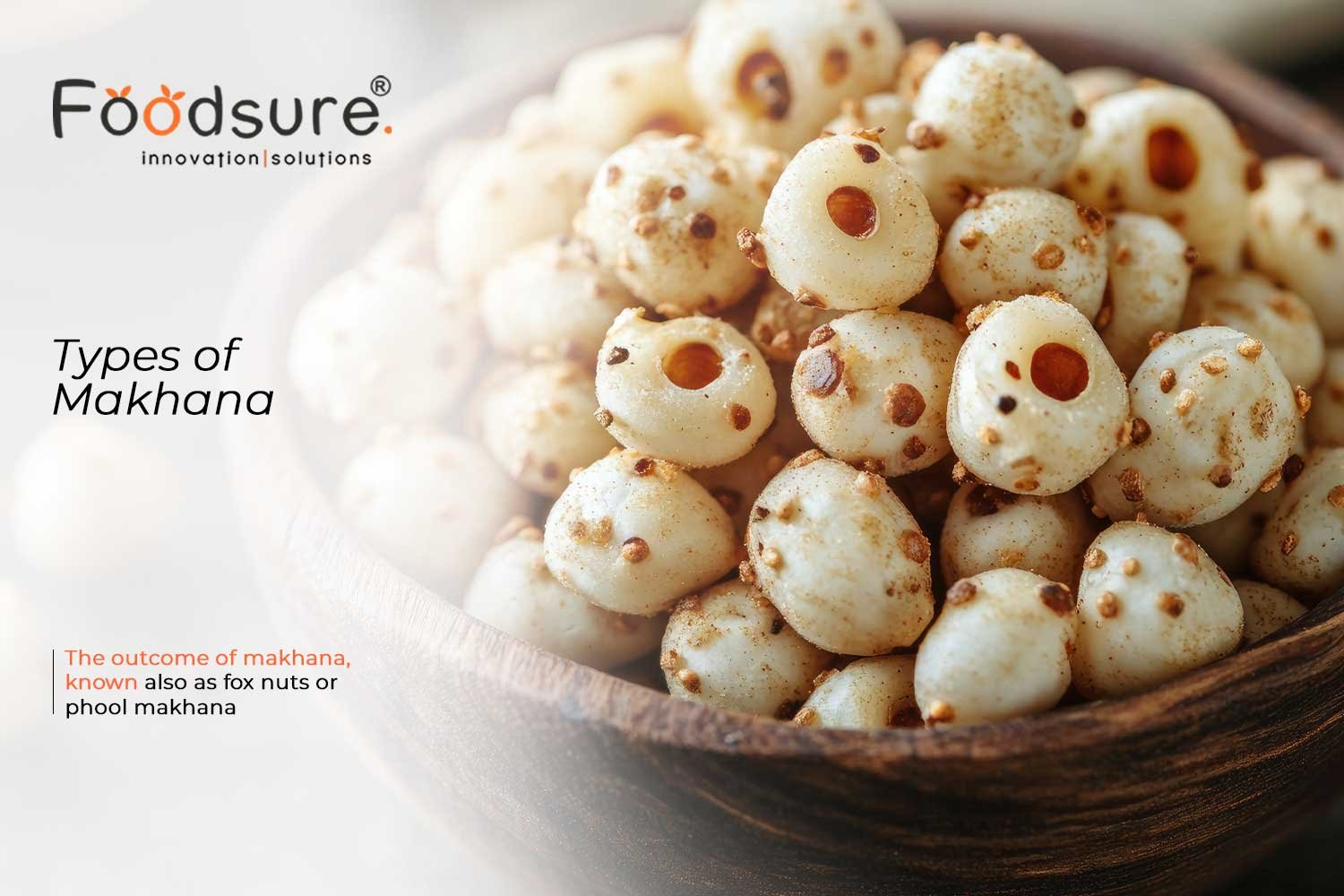
Makhana is also referred to as fox nuts and gorgon nuts and is a popular aquatic plant crop that is eaten as a healthy snack. Though it might be difficult to distinguish the differences between the various types of makhana crops, they are different in terms of quality, size, characteristics, and commercial value. This paper seeks to provide an overview of the types of makhana.
Types of Makhana include different forms of the product, such as varieties, types, grading, sizing, and quality, which may be present in the market. Among these, the most significant types are makhana varieties and makhana sizes when considering the purchase and further processing of the product.
What Are the Different Types of Makhana?
Makhana is mainly categorized according to the variety, size, appearance, and quality of the product. These variations may be visible after popping since the seeds attain their distinct puffy and white appearance.
Some of the main categories that are taken into account when mentioning the types of makhana are:
- Various varieties grown or obtained naturally.
- Small, medium, and large-sized makhana.
- Various grades according to appearance.
- Separation of makhana according to quality and processing needs.
- Various applications of the product in the food industry.
These classifications enable the buyers to choose appropriate raw materials according to the type of product they need.
Makhana Varieties and Their Characteristics
Different makhana varieties may show variations in seed characteristics, yield, size, and suitability for processing. In India, makhana cultivation is strongly associated with regions such as Bihar, where it is an important agricultural and food product.
The variety can play a role in the quality of the final popped makhana. Nonetheless, the variety is not the only determinant of the final grade. There are other things like growing conditions, harvesting, drying, popping, handling, and storage that can play a role in the outcome.
Some makhana may produce larger and more uniform popped kernels, while others may have smaller or more varied sizes. This is why commercial buyers often assess both variety and physical grade before purchasing.
Different Types of Fox Nuts Based on Size
Size classification is a practical way to understand the different types of fox nuts, as size requirements vary by consumer preference and application.
After popping, makhana can generally be grouped into different size categories such as:
Small-Sized Makhana
The small variety of makhana possesses a smaller popped kernel as well. It may be good for use in products that do not require uniformity of size, or where smaller pieces are desired. They may also be useful in certain snack preparations and mixes as well.
Medium-Sized Makhana
Medium sized makhana has characteristics somewhere between small and large makhana. It provides an ideal balance between size, visual appeal, and utility. This type of makhana is often used when the producer requires a grade that is versatile for use in food preparation.
Large-Sized Makhana
Large makhana will have larger and more developed popped kernels. The large size makes them more suitable to be used in premium snacks since the large size makes them more appealing. Commercially speaking, large sizes fetch better prices than small sizes.
Read More :- makhana farming market size
Understanding Makhana Size Classification
Makhana size classification helps processors and buyers organise the product into different grades. Instead of treating all makhana as one category, size-based grading allows businesses to separate the product according to specific requirements.
Such classifications can be made on the basis of:
- Popped corn kernel size.
- Consistency in a batch.
- Appearance.
- Quality of the product.
- End use of the product.
A consistent makhana size classification system can make buying, selling, processing, and packaging easier. It also helps manufacturers maintain consistency between different production batches.
Why Makhana Size Matters
- Size is not only a physical attribute but also an aspect that may affect the processing and handling of the makhana.
- Large size may be preferred for the premium range of the makhana due to its physical attractiveness, while small sizes may be used for blends.
- Moreover, consistent sizes can lead to a better presentation of the packed product since having makhana of a similar size in a pack will make the product look neat and professionally packed.
- Choosing an appropriate size range will help manufacturers achieve product consistency and appropriate market positioning.
How Are Different Types of Makhana Graded?
- Grading of makhana usually entails sorting the product on the basis of its size and quality attributes. After processing, the makhana kernels can be sorted out into various grades.
- The manual grading is a process where the makhana is checked by people’s naked eyes and separated. Although this is a viable method for small-scale production, it is not practical for larger amounts of products.
- Commercial grade makhana processing machines can use mechanical separators in order to sort out different sizes of makhana and put them in separate compartments.
- The choice of grading method depends on production quantity, necessary precision, space, and the number of size categories.
Types of Makhana Based on Quality
Apart from size, quality is another important factor when classifying the types of makhana available in the market.
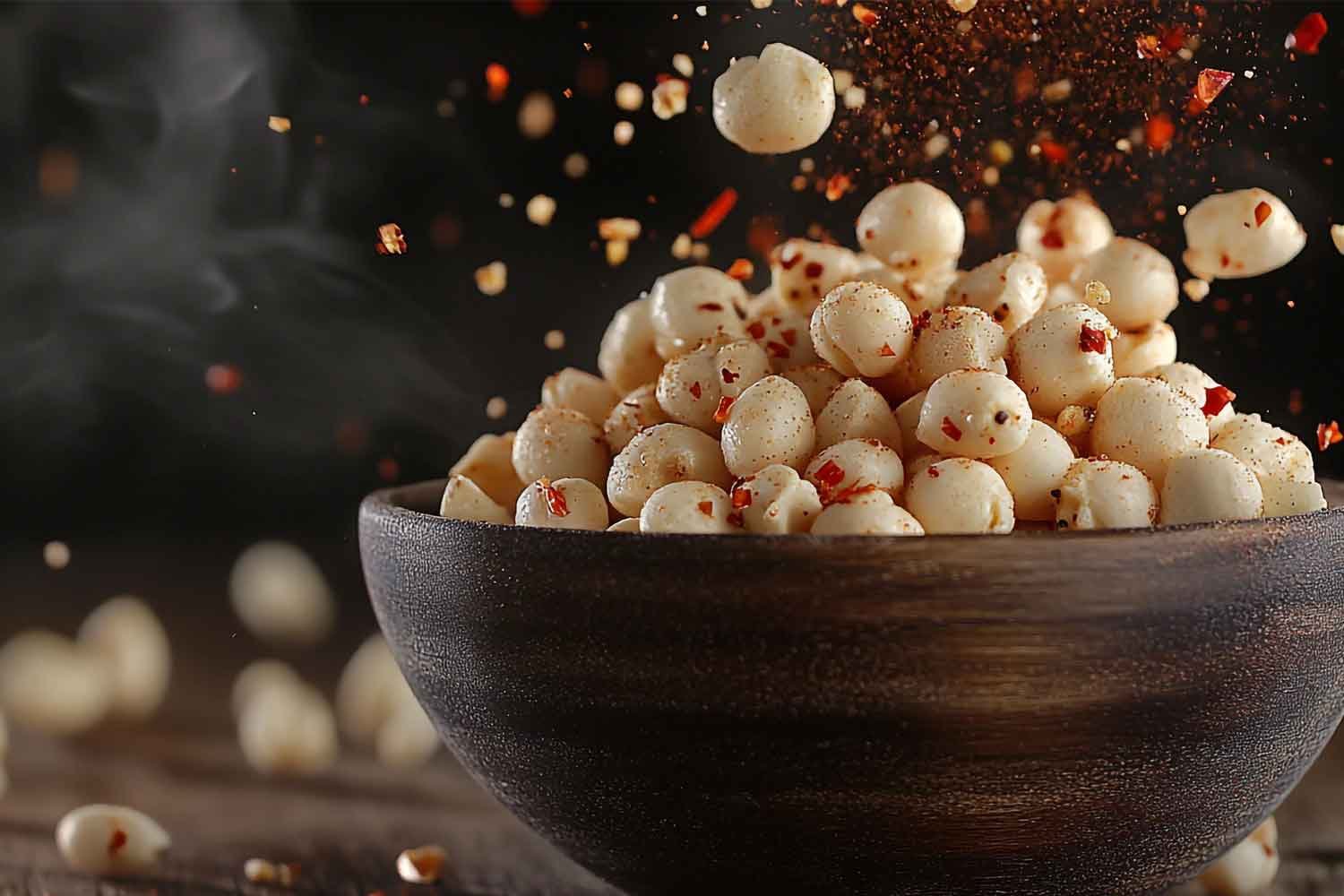
Good quality makhana usually has an attractive appearance, good puffing, uniform texture, and few defects. Other qualities that customers look for in good quality makhana include colour uniformity, less impurity, and good storage quality.
Quality is affected by many stages like:
- Quality of seeds
- Growing environment
- Harvesting process
- Drying
- Popping
- Grading
- Storage
- Transportation and packing
Thus, size alone cannot determine the quality of makhana. While large size makhana looks beautiful, there are other aspects like cleanliness, texture, uniformity, and freshness among others.
Which Type of Makhana Is Best?
- There is no best makhana for all purposes. It all depends on the purpose, consumer demands, product positioning, and finances.
- In the case of luxury snacks, bigger kernels could be desirable because they look better visually. The medium sizes could work well for regular snacks, whereas small sized could be good for snacks that will go into mixes.
- When consumers just want a snack, they have an option to choose based on their preferences. However, in commercial industries, the considerations would be product specifications and consumer demands.
- When selecting different types of fox nuts, businesses should therefore evaluate size, quality, uniformity, appearance, and intended application together.
Types of Makhana Used for Snacking
- Makhana is popularly eaten as a snack since it can be fried and flavored in various ways. Different sizes of makhana have the potential to impact the appearance and eating characteristics of the end product.
- The large, even kernels are usually good for packaged snacks. Medium grades of makhana can be good for regular snack foods, and the small sizes can be used in snacking blends.
- The final product can also be processed into roasted makhana with different seasoning profiles depending on consumer preferences.
- For commercial snack manufacturers, maintaining consistency in size and quality is important when producing packaged makhana at scale.
How to Choose the Right Makhana Variety and Size
Businesses purchasing makhana should consider more than just the visual size of the product. The selection should match the final application and production requirements.
Consider the Product
First determine whether the makhana will be sold as a plain snack, seasoned product, snack mix, or used as an ingredient.
Check Size Uniformity
A batch with consistent sizing is generally easier to process and package than one containing significant size variations.
Evaluate Quality
Check appearance, cleanliness, puffing, texture, and the presence of damaged or defective pieces.
Consider Customer Requirements
Premium products may require larger and more uniform kernels, while other applications may allow a wider size range.
Assess Supply Consistency
For commercial production, suppliers should be able to provide consistent quality and grading across repeated orders.
Consider Processing Requirements
The chosen grade must be suitable for the processing and packaging process. Firms should take into consideration equipment needs and production capacity as well.
Why Size Classification Is Important for Commercial Makhana Processing
Commercial processors handle larger quantities and require consistency from one batch to another. Proper makhana size classification makes it easier to maintain defined product categories and manage production.
Graded makhana may be targeted at different product ranges depending on the size and quality of the makhana. This will aid manufacturers to come up with different products without necessarily blending the grades.
Good grading standards may enable smooth packaging of the product. If the product is fairly uniform, the manufacturer can achieve consistency in packing.
For those businesses that wish to expand their makhana business, it is important to acquire good machinery for processing and grading. But it is also important to note that machinery should always be acquired depending on the capacity and product specification requirements.
Makhana Processing and Commercial Opportunities
The rise in consumption of makhana as a snack has provided openings for companies involved in the processing, roasting, flavoring, packaging, and marketing of makhana.
Product formulations can be based on various grades and taste preferences. Large-size makhana can be marketed in a way that is different from regular size makhana.
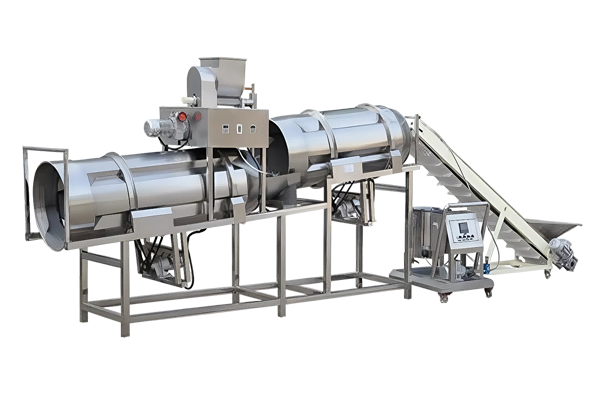
The overall investment required for commercial processing depends on factors such as production capacity, automation, machine configuration, and the stages included in the production line. Businesses researching makhana processing machine price should evaluate complete machine specifications and long-term production requirements instead of comparing only the initial purchase cost.
Conclusion
Understanding the types of makhana is important for consumers as well as commercial food businesses. Makhana can differ according to variety, size, quality, appearance, and intended application. Among these factors, makhana varieties and makhana size classification are particularly useful for selecting the right product for different markets.
For the manufacturers, using the correct grade will help in improving consistency and processing. Irrespective of whether the requirement is for the premium product, a standard product, or any processed food product, using the correct grade and size will help in making a consistent product.
Have a Question? Let’s Connect
Need expert guidance on food processing machines, production setup, or process optimization? Our team is ready to help you choose the right solution for your business.
Frequently Asked Questions
What are the various types of makhana?
Various types of makhana can be described in terms of their variety, size, quality, appearance, and applications. Types such as small, medium, and large can be taken into account based on the criterion of size.
What are the varieties of makhana?
Varieties of makhana include various kinds of cultivated or naturally growing makhana that may differ by seed size, yield, and processability.
What are the types of fox nut with regard to their size?
Types of fox nuts can be broadly classified by their size, and these are small, medium, and large.
Why does the classification of makhana by size exist?
Size classification is needed for the differentiation and separation of seeds into grades that will be easier to process and distribute.
What is the best kind of makhana for snacking?
It depends on the desired product and individual preferences; larger and more uniform kernels work better for premium snacks.