Any research about a makhana business will eventually lead you to this point, whereby all suppliers give you different prices without giving you an explanation of what is included. A processing line can be either one unit capable of performing multiple functions or five separate units put together. This alone will be enough to make you budget for a few lakhs extra.
The cost of makhana processing line in India in 2026 is normally between ₹3-8 lakhs for a small semi-automatic line and ₹30 lakhs – ₹1 crore or more for a large-scale automatic makhana processing line with all process stages included. The amount to pay will depend on your required production capacity, level of automation and number of process stages for which equipment is needed.
This guide will take you through the makhana processing plant cost stage by stage.
What Does a “Complete” Makhana Processing Line Actually Include?
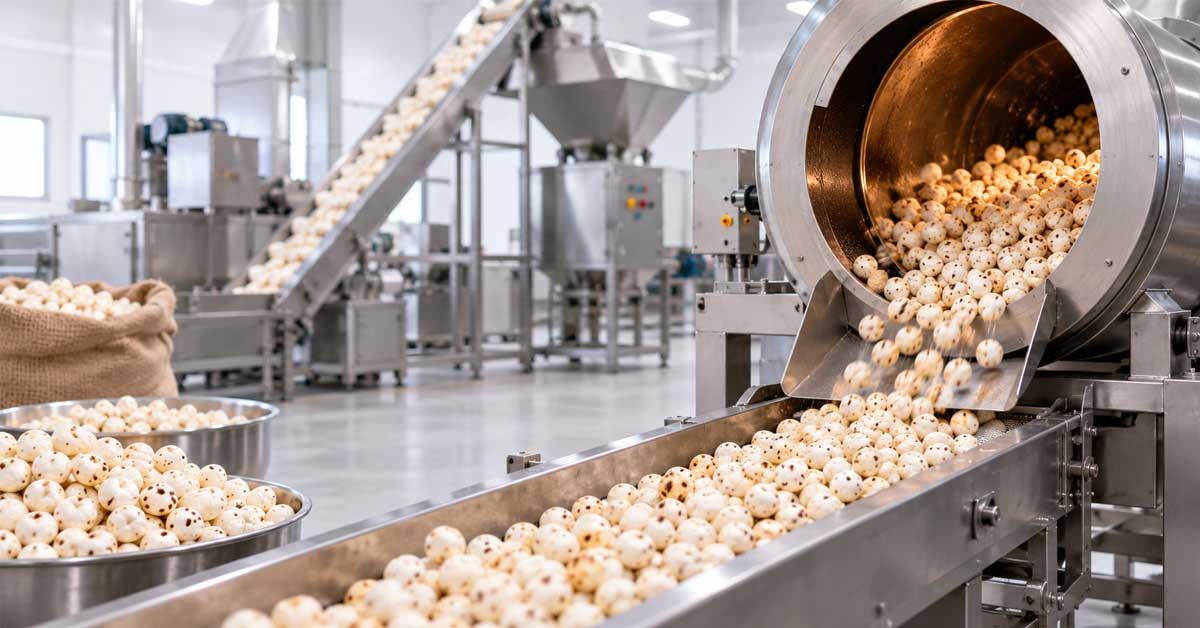
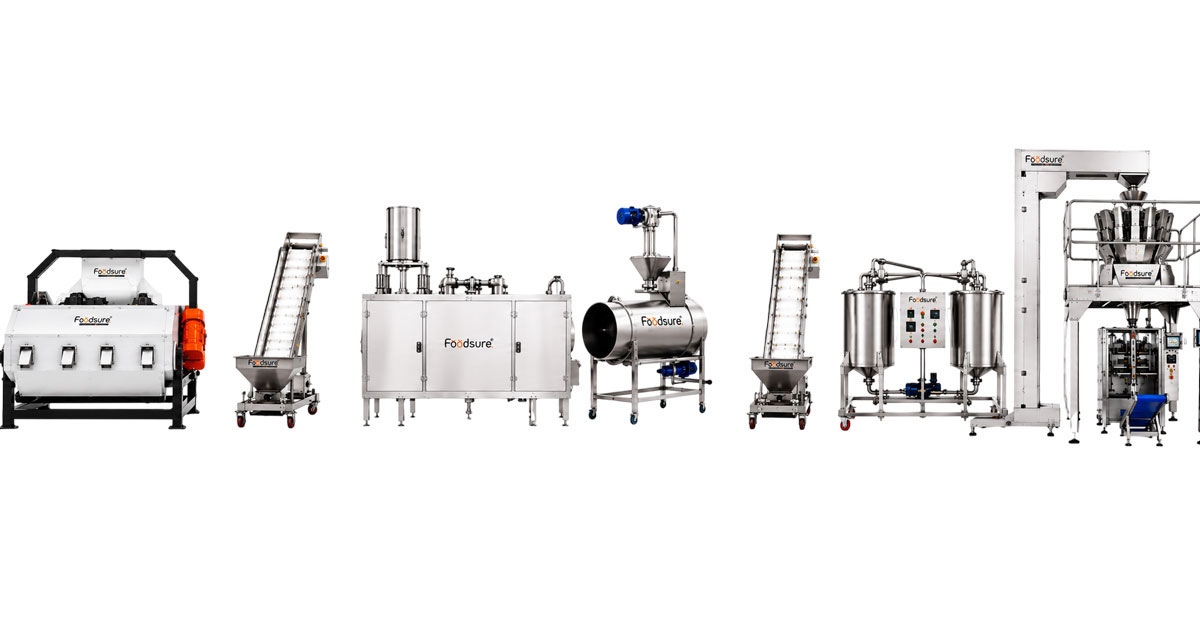
The entire process chain in makhana processing includes cleaning and popping, roasting, grading, and finally packaging. Additional equipment can be included in some cases to perform coating and flavoring as another step.
The entire chain includes:
- Cleaning and dehusking equipment – for cleaning seeds from shells and impurities
- Popping and roasting machine – to pop up the seed in the heated environment into the puffed form
- Grading machine – to grade the popped up makhana according to their sizes in premium, regular, and inferior
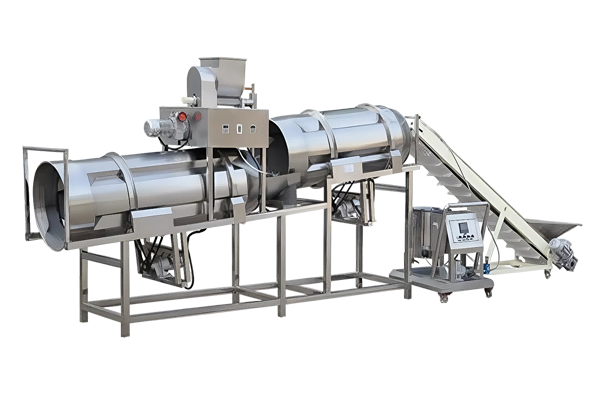
- Coating/flavoring equipment (optional) – for those who produce flavored or roasted forms as snacks
- Packaging line – for weighing and packaging the product
Every company may not need all the steps at once. There are many cases where small machines use only popping and roasting machine and grading equipment manually or semi-automatically.
Makhana Processing Line Cost: Stage-by-Stage Price Breakdown
Here’s roughly what each stage costs on its own in the current Indian market, based on typical listed prices from equipment manufacturers and suppliers.
These figures are indicative ranges drawn from current supplier listings, not fixed quotes. Actual makhana processing line price will vary by manufacturer, region, and negotiated terms always get written quotations before budgeting.
Why the Grading Machine Line Item Matters So Much
The cost of the makhana grading machine is usually underestimated by buyers making their first purchase. The simple manual-assisted machine will cost ₹1.5 lakh, but an automatic machine that can grade at 200 kg per hour will be in the range of ₹10-14 lakh.
This is important since the makhana grading process is what dictates the quantity of your premium makhana that you can sell at high prices. Cutting costs in your machine could end up costing you more than you expect.
What Drives Makhana Processing Machine Cost Up or Down?
Six factors explain most of the price variation you’ll see between quotes.
- Production capacity – A machine that has a production capacity of 20 kg per hour is much cheaper compared to 200+ kg per hour machine as the latter requires high capacity engines and other parts.
- Automation – Machines that require human assistance to operate are cheapest while machines that work automatically with program control are expensive.
- Build material – Machines that are made of food-grade stainless steel are much more expensive but durable and can comply with export hygiene requirements easier than machines that are made of mild-steel.
- Number of processes combined – There are some manufactures who manufacture combined machines that have multiple process stages built in (e.g., popping and grading process stages in one machine).
- Manufacturer name and support after purchase – Machines manufactured by reliable companies and those with good after-sales service are more expensive.
- Extra features – Temperature control, energy-efficient heating and automatic feeding system are among extra features that add to the basic cost of the machine.
When to Choose Manual-Assisted vs Fully Automatic
- If you are just beginning your venture and want to test the waters, consider a manual or semi-automatic system.
- If you are working with several quintals of produce per day, serving brand retail or export clients, or plan to expand in 1-2 years, then an automatic system will suit you better.
Return on Investment: How Long Does a Makhana Processing Line Take to Pay Back?
Most machines claim a payback period of 12-24 months for mid-scale semi-automatic production lines, provided there is an assured flow of raw materials and consistent demand for output, depending on regional factors.
Some considerations affect your ROI period:
- Cost of raw makhana seed and its seasonality in your region
- Your ability to sell higher quality at premium pricing versus selling all of it for the same price
- Machine utilization and cost of maintenance
- Whether you are selling raw, roasted, or flavored/coated product (value-added products have better profit margins)
Spend some time doing the math yourself before investing. An apparently costly machine may be a more economical choice once you include the benefits of labor savings and quality control.
Common Mistakes When Budgeting for a Makhana Processing Plant
- Overinvesting in equipment when you don’t require it — owning too big a line that remains partially idle won’t increase your margins; it will only cost you more money.
- Neglecting the grading process — many buyers allocate a lot of money to the roaster and treat grading as an afterthought, resulting in low-quality product.
- Failing to provide money for installation, electrical connections, and working capital — the cost of the machinery is often not the total cost.
- Selecting the least expensive seller without considering their customer support — after-purchase services become even more important than one can imagine when the machine is in regular operation.
- Not visiting the supplier or checking references — you learn much more from seeing the equipment run somewhere else.
Government Subsidies and Support for Makhana Processing Units
There are many such schemes provided by both the state and central governments for food processing MSMEs, especially makhana processing units, where there is a lot of makhana produced in Bihar. Schemes like the PMEGP (Prime Minister’s Employment Generation Programme) and other food processing subsidy schemes offered at the state level can cover up quite a few costs for you related to the machines you use.
Depending on the scheme and the state, eligibility criteria, subsidy percent, and required documents may differ, but it will be wise to verify this before coming up with your budget because of the subsidy amount available.
Buying Checklist: What to Confirm Before You Order
- Obtain capacity in kg per hour and not “small” or “large”.
- Request machine power consumption and voltage requirement.
- Inquire about material composition – use food-grade stainless steel where food comes into contact with the machinery.
- Inquire about references from previous users with the same capacity as the one you want.
- Find out about installation, training, and warranty in writing.
- Get spare parts lead time and local service support information.
Choosing the Right Makhana Machine Supplier
Price should not be the sole factor that influences your decision-making process when selecting a seller. A trusted makhana machine supplier will provide you with true information about capacity, reasonable price without additional fees for installation, and actual delivery period. Machines produced by specialized makhana processing equipment manufacturers will be more suitable for this product than those produced by general food machinery suppliers.
It is advisable to learn about the processes involved in each stage first before making your decision about purchasing the machine. Our article on makhana grading machines versus manual sorting explains what benefits you may get from grading makhana mechanically, while our guide to establishing a makhana processing unit covers all stages of installation.
Why Choose Foodsure?
Key Takeaways
- Cost of a full-fledged makhana processing plant in India ranges from ₹3 lakh to ₹80 lakh and above, depending on whether it is semi-manual or fully automatic in nature.
- Capacity and degree of automation are two key parameters that determine the pricing of a makhana processing machine.
- Since grading machinery has a direct impact on the quantity of premium produce that you can market, it should be given a decent budget allocation.
- Government subsidy programs such as the PMEGP program can save you a considerable amount of money upfront.
- The only way to budget properly is by getting written capacity-based quotations from different suppliers.
Conclusion
The range in the cost of the makhana processing line is huge because there is no single figure, rather, it is an addition of different figures that arise from the choice of capacity, the level of automation, and the stages of processing you want equipment for. It makes sense for newcomers to start with a small line and expand when demand rises, while experienced producers who supply a branded product to retail will often discover that a more automatic line with bigger capacity quickly justifies the investment.
Have a Question? Let’s Connect
Need expert guidance on food processing machines, production setup, or process optimization? Our team is ready to help you choose the right solution for your business.
FAQs
What is the average cost of a makhana processing line in India for 2026?
The price of a small semi-automatic unit will be around ₹3-8 lakh, whereas that of a fully automated one will be in the range of ₹35 lakh to ₹80 lakh.
What is the average cost of a makhana processing plant for medium-scale businesses?
The price of a mid-capacity semi-automatic plant usually ranges from ₹12 lakh to ₹30 lakh, based on the number of stages involved.
Is the price of a makhana processing line inclusive of packaging equipment?
This may not be true, as some suppliers might only provide the price quotation for popping and grading machines separately.
What is the price of a standalone makhana grading machine?
A manual assisted grader starts from ₹1.5 lakh, whereas an automatic one could cost ₹10-14 lakh.
Are there any incentives/subsidies available to lower the price of makhana processing machines?
Yes, subsidies such as PMEGP and state food processing subsidy schemes could help recover a part of your initial investment.
How do I get a reliable makhana machine supplier?
Make sure that you crosscheck the capacities with references from existing buyers, also check the quality of after-sales service and choose specialized manufacturers rather than generic suppliers.
What is the payback period of a makhana processing line?
12-24 months of payback period is quite common for most processors.