
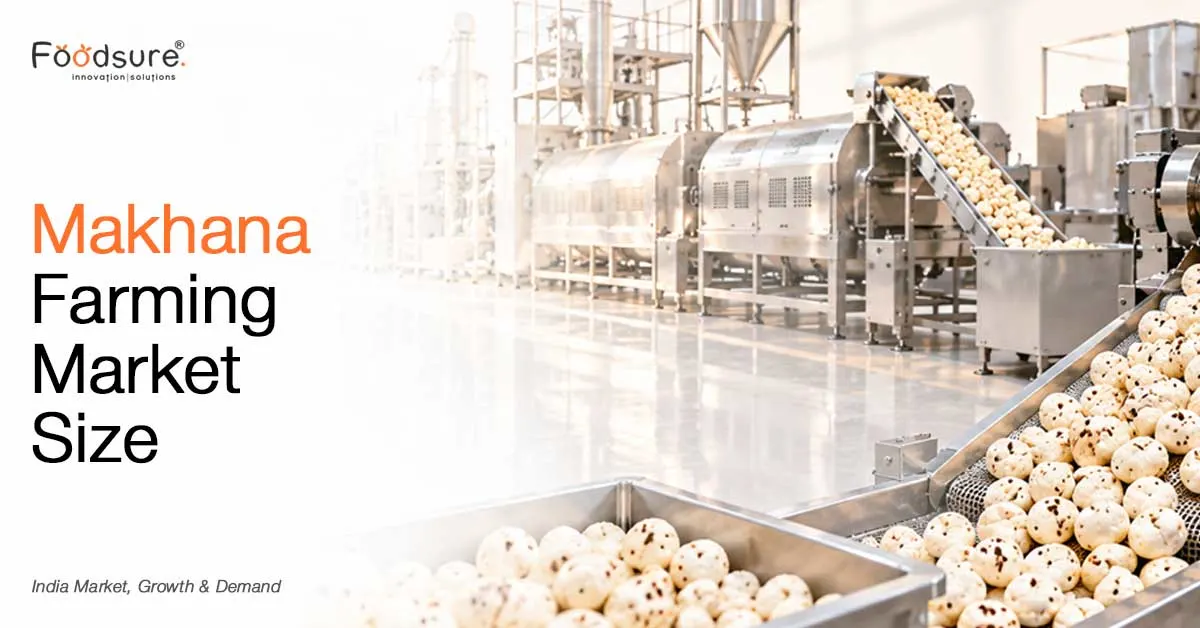
Makhana has been grown and eaten in India since ancient times, but there has been an increased scope for makhana in the food industry because of the rising trend of processed, roasted, and flavored varieties. There have been more opportunities not just for growers but also for processors and manufacturers of makhana.
The understanding of the makhana farming market size needs to go beyond just the cultivation process. The value chain consists of farming, harvesting, seed processing, popping, grading, roasting, packaging, and distribution. Therefore, any changes in consumer preference and value-added makhana products could affect the whole industry.
What Is the Makhana Farming Market?
The makhana farming market comprises the cultivation and primary production of makhana, especially the growth of the aquatic plant from which fox nuts are sourced. The process of farming forms the beginning of a bigger supply chain that links agriculture with processing and consumption.
After harvesting, makhana undergoes several stages before reaching consumers. These can include:
Because of this interconnected supply chain, developments in farming can affect the availability and pricing of raw material for processors and manufacturers.
Makhana Farming Market Size in India
The makhana farming market size is influenced by several factors, including the area under cultivation, production levels, farmer participation, raw-makhana prices, processing capacity, domestic consumption, and demand for value-added products.
There is a need to separate the value of the agriculture component from the value of the entire makhana market. This is because market estimates can differ in terms of definition, period, output volume, or even revenue figures. It would be best for firms to examine both agriculture and processing components instead of looking at market size figures alone.
Makhana Market in India
The makhana market in India includes multiple levels of the supply chain, from farmers and local processors to organised food manufacturers and retail brands.
Makhana is sold in several forms, including:
- Raw or processed makhana
- Plain roasted makhana
- Flavoured makhana
- Seasoned snack products
- Bulk products
- Packaged retail products
The growth of packaged goods has led to the need for processes, quality control, branding, and packaging. Through this, companies can become part of the business without having to be involved in agriculture.
Factors Driving Makhana Industry Growth
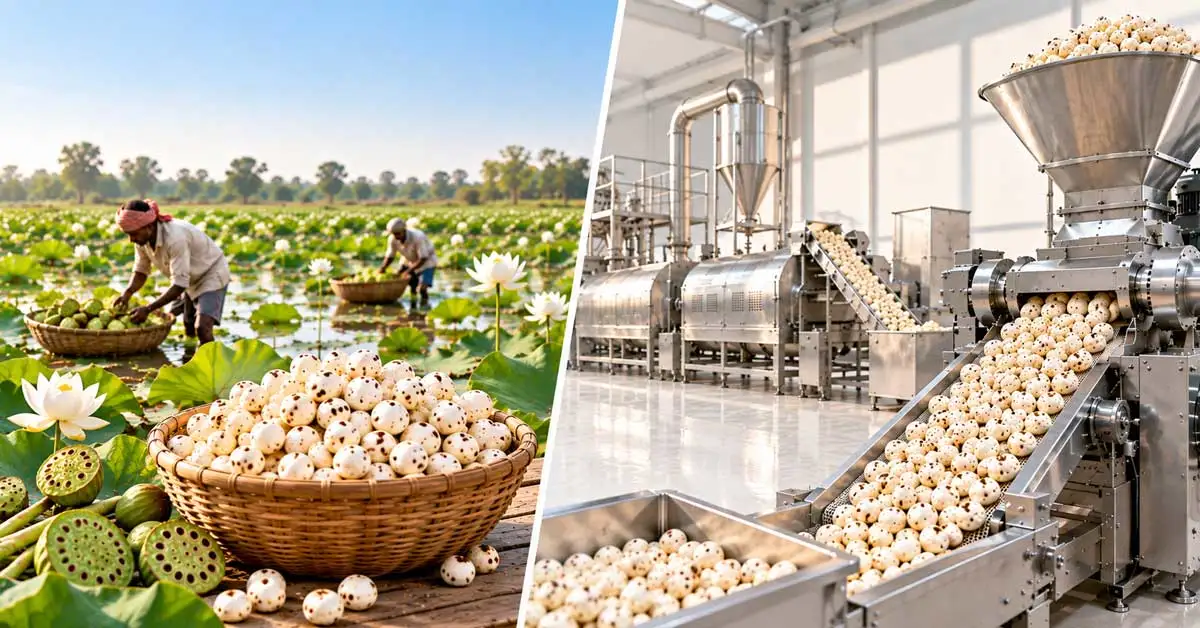
Several factors contribute to makhana industry growth and the expansion of commercial opportunities around the product.
Growing Interest in Packaged Snacks
Consumers have become more and more familiar with packaged snack foods through supermarkets, internet portals, specialty food stores, and other sales outlets. Makhana has also joined the league of packaged snack foods.
Expansion of Roasted and Flavoured Products
The plain form of makhana can be transformed into value-added products through roasting, seasoning, and flavoring. This enables manufacturers to design various product forms depending on consumer needs.
Increasing Processing Activity
As the market shifts toward processed and branded goods, efficiency is becoming essential. Machines for cleaning, grading, roasting, flavoring, and packaging will help organize production.
Wider Distribution
The makhana products are not confined to traditional markets alone. The packaged makhana products can be made available to the consumers through various marketing channels.
Export Opportunities
Indian makhana products can also reach international markets, creating additional demand for consistent quality, suitable packaging, and organised commercial production.
Fox Nuts Market Demand
Fox nuts market demand is influenced by consumer awareness, product availability, pricing, packaging, product variety, and the development of new consumption formats.
The product is usually considered a snack but can also be used in many other food-based products. Roasted and flavored products enable manufacturers to provide convenience products that fit modern demands.
It is important to note that the demand can differ from market to market and even between different products. This means that manufacturers should analyze their consumers.
Role of Makhana Farming in India
Makhana farming in India forms the foundation of the domestic supply chain. Farming conditions, cultivation practices, harvesting methods, and raw-material quality can influence the subsequent processing stages.
Reliable sourcing is also crucial for processors due to variations in properties between raw materials that may influence processing efficiency and output quality.
Farmers/agri-businesses could thus stand to gain from knowing the demands from downstream processes, while processors should be mindful of the properties and availability of the raw material.
From Farming to Commercial Processing
The journey from cultivation to a packaged makhana product involves several stages. After harvesting, seeds undergo processing to produce the makhana that enters commercial supply chains.
A simplified value chain is:
There is an opportunity to form a business at each level. The agricultural businesses can concentrate on growing, whereas processing businesses can specialize in primary processing, roasting, packing, or value addition.
Impact of Processing on Market Opportunities
Through processing, more variety can be brought about in the products available in the market. Rather than being limited to selling raw or barely processed makhana, firms can package products with various flavors and sizes.
This creates opportunities for:
- Snack manufacturers
- Food-processing businesses
- Private-label brands
- Packaging companies
- Distributors
- Retailers
- Exporters
The development of these downstream activities can also increase the importance of consistent grading, roasting, flavouring, and packaging.
Machinery Requirements for a Growing Makhana Market
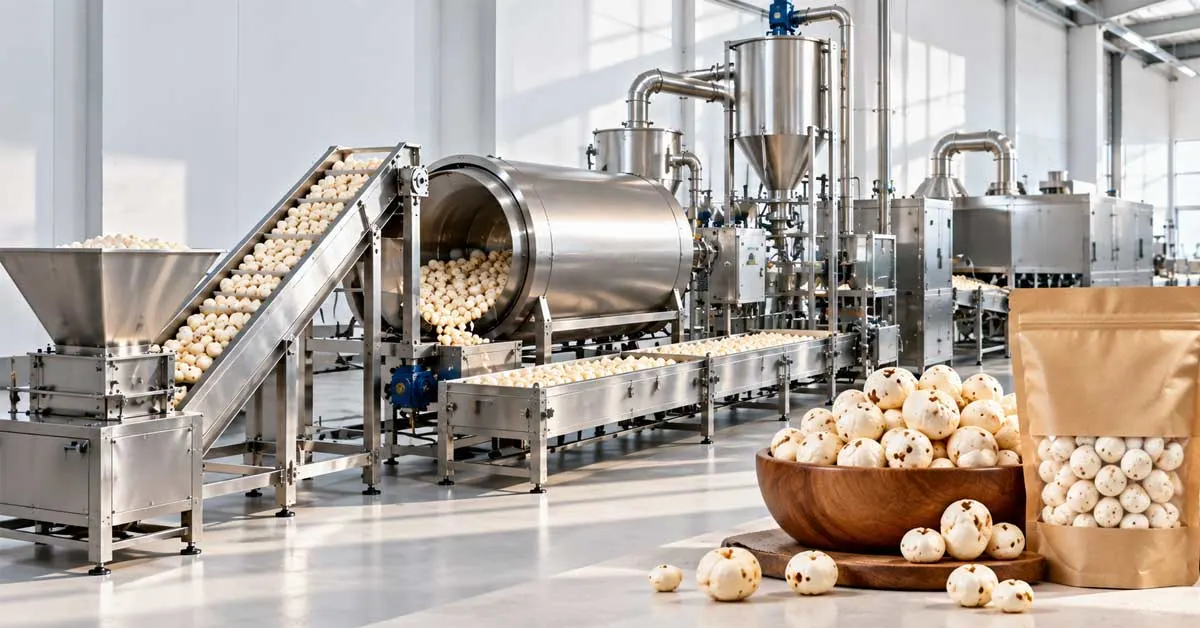
As commercial production expands, machinery can help businesses manage higher volumes and improve process consistency.
Depending on the production model, equipment may include:
- Cleaning machines
- Sorting and grading equipment
- Drying systems
- Roasting machines
- Cooling systems
- Flavouring equipment
- Packaging machines
Businesses planning larger processing operations may work with a makhana machine supplier in India to select equipment according to their required capacity and production workflow.
The right machinery should be selected according to actual production requirements rather than simply choosing the highest-capacity equipment available.
Challenges Affecting the Makhana Market
Despite the opportunities, the sector also faces challenges that businesses need to consider.
Raw Material Availability
Variations in methods of cultivation, harvesting, climatic conditions, and sourcing can influence availability of raw materials.
Processing Consistency
Variations in raw material can make consistent processing more difficult, particularly for businesses producing large quantities.
Machinery Investment
Commercial processing requires investment in equipment, infrastructure, utilities, maintenance, and labour.
Storage and Packaging
Makhana products need suitable storage and packaging practices to maintain quality during distribution.
Market Competition
In addition to new firms joining the field of packed makhana, product differentiation may be required to help businesses compete in the market.
Future Outlook for the Makhana Sector
The future of this industry will be shaped by progress in the realms of agriculture and food processing. Greater production and organization of supply chains may ensure that more materials become available for use, whereas progress in processing and packaging may lead to a greater variety of products.
The creation of roasted, flavored, and packaged products may provide opportunities for businesses that work further down the value chain.
However, market development must be analyzed based on present production, prices, consumption, and business figures since these factors may evolve over time.
What Should Businesses Monitor?
Businesses researching the sector should track several indicators rather than relying on market-size estimates alone.
These include:
- Cultivation & Production Trends
- Raw makhana Prices
- Process Capabilities
- Consumer Demand
- Sales of Packaged Products
- Pricing Strategies
- Exports
- Advanced Processing Technologies
- Packaging Trends
- Distributing Products
Monitoring these factors can provide a more practical understanding of the market and help businesses identify changes in demand.
Conclusion
The makhana farming market size is part of a broader value chain that extends from cultivation and harvesting to processing, roasting, flavouring, packaging, and distribution. The makhana market in India therefore offers opportunities across both agricultural and food-processing activities.
Makhana industry growth is influenced by factors such as packaged-snack demand, product diversification, processing capacity, distribution, and consumer interest. At the same time, fox nuts market demand can vary according to product type, market, pricing, and consumer preferences.
Businesses that wish to enter or expand in the industry need to have a good grasp of the entire supply chain process. The knowledge of makhana farming in India, coupled with information on processing, can give a bigger picture of the workings of the industry.
Have a Question? Let’s Connect
Need expert guidance on food processing machines, production setup, or process optimization? Our team is ready to help you choose the right solution for your business.
Frequently Asked Questions
What factors affect makhana farming market size?
Production area, output quantity, prices of raw makhana, farmers’ participation, processing capacity, domestic consumption, exports, and demand for value addition products may affect the market.
What is included in the makhana market in India?
The market includes cultivation, raw-makhana supply, processing, grading, roasting, flavouring, packaging, distribution, retail, and other value-added activities.
What is driving makhana industry growth?
Increasing consumption of packaged snacks, product diversification, enhanced processing, improved distribution, and business opportunities can help drive industry growth.
What affects fox nuts market demand?
Demand can be influenced by consumer preferences, product availability, pricing, flavours, packaging, distribution, and awareness of makhana as a food product.
Is machinery important for the growing makhana sector?
Yes, commercial processing equipment will make it easier for companies to deal with greater quantities and provide consistency in cleaning, grading, roasting, flavoring, and packaging.




