It’s an important decision for a manufacturer in the development of protein bars, to choose the appropriate chocolate coating. When discussing the compound chocolate versus real chocolate in protein bars, often important factors such as price, production requirements, shelf-life, and the overall product are involved.
Both of them are commonly used for the production of protein bars but it differs in composition, processing and in functionality. A good knowledge of compound chocolate versus real chocolate in protein bars will enable manufacturers to choose a suitable chocolate coating for protein bars.
What Is A Compound Chocolate?
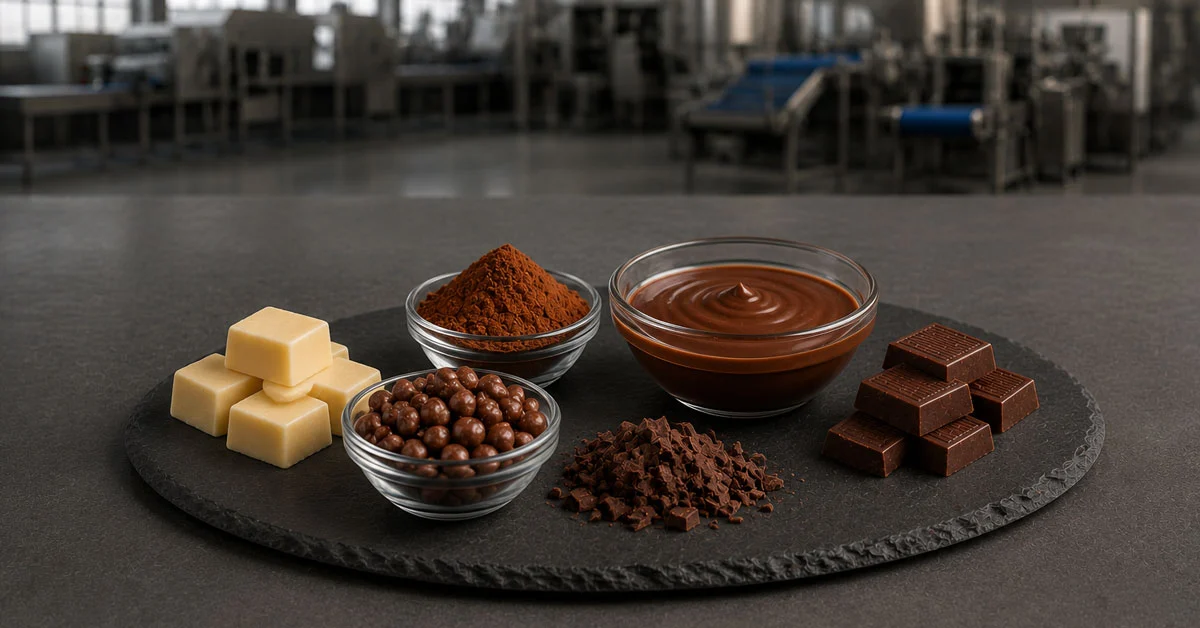
Compound chocolate has substituted cocoa butter for vegetable fat, such as palm kernel oil or coconut oil.
Main Ingredients
- Cocoa powder
- Sugar
- Vegetable fats
- Milk solids (optional)
- Emulsifiers
- Flavors
Main Benefits
- Lower cost to produce
- Simpler to use in production
- Does not require tempering
- Higher melting point
- Longer shelf life
In general, compound chocolate is chosen by many manufacturers when creating protein bars in high volumes.
Read More :- protein bar recipe
What Is Real Chocolate?
Real chocolate is defined as any product containing cocoa solids and cocoa butter as its sole source of fat.
Main Ingredients
- Cocoa liquor
- Cocoa butter
- Sugar
- Milk solids (for milk chocolate)
- Natural flavorings
Main Benefits
- Superior flavor profile
- Creamy texture
- Excellent mouthfeel
- Higher customer preference
- Premium positioning
In discussions concerning compound chocolate vs real chocolate in protein bars, the former is generally preferred for premium or high-end products.
Production Process Comparison
The biggest difference in compound chocolate vs real chocolate for protein bars is the manufacturing process.
Compound Chocolate Production Flow
Real Chocolate Production Flow
Real chocolate requires tempering, while compound chocolate does not.
Difference Between Compound Chocolate and Real Chocolate
The difference between compound chocolate and real chocolate becomes clear when comparing ingredients and processing requirements.
| Parameter | Compound Chocolate | Real Chocolate |
|---|---|---|
| Fat Source | Vegetable Fat | Cocoa Butter |
| Tempering Required | No | Yes |
| Cost | Lower | Higher |
| Taste | Good | Premium |
| Shelf Stability | High | Moderate |
| Heat Resistance | Better | Lower |
| Processing Difficulty | Easy | More Complex |
What Kind of Chocolate Should Be Used For A Protein Bar?
“Which kind of chocolate should we be using for our protein bars?” is the main question that all manufacturers ask.
Compound Chocolate should be used if:
- The cost is crucial
- High volumes of bars are being manufactured
- Bars will be sold in a warm environment
- The desired shelf life of the product is very long
Real Chocolate should be used if:
- The bars will be positioned as a premium product
- The taste of the product is the top priority
- A higher retail price point is desired
- The bars are to be positioned as a premium product
There is not a right or wrong answer to “what kind of chocolate is best for a protein bar?” It depends on the target customer and business objectives.
The Coating Impacts The Protein Bar Manufacturing Process.
Compound Chocolate requires
- Faster production
- Simple equipment and operation
- Lower cost and maintenance
- Less power consumption
Real Chocolate requires
- Temper machines and extra equipment
- Greater control over production
- Higher standards
- More complex operation
Manufacturers should evaluate how the chosen coating fits into their overall protein bar manufacturing process.
Types of Ingredients Used In Protein Bar Production
Chocolate coating is not the only component of a formulation. Here are a few different types of ingredients used in protein bars and their effects on the finished product.
| Ingredient Category | Examples |
|---|---|
| Protein Sources | Whey Protein, Soy Protein, Pea Protein |
| Sweeteners | Honey, Maltitol, Stevia |
| Binders | Syrups, Glycerin |
| Fats | Cocoa Butter, Vegetable Oils |
| Inclusions | Nuts, Seeds, Fruits |
| Coatings | Compound Chocolate, Real Chocolate |
The chocolate selected must be appropriate for the other kinds of ingredients chosen for use in protein bar formulas.
Cost Comparison:
Cost has a large factor in deciding whether to use compound chocolate versus real chocolate for protein bars.
| Cost Factor | Compound Chocolate | Real Chocolate |
|---|---|---|
| Raw Material Cost | Lower | Higher |
| Processing Cost | Lower | Higher |
| Equipment Requirement | Basic | Advanced |
| Energy Consumption | Lower | Higher |
| Maintenance Cost | Lower | Higher |
Compound chocolate is a cheaper alternative, particularly for start-up companies or high-volume manufacturers.
Choosing the Right Chocolate for Your Production Line
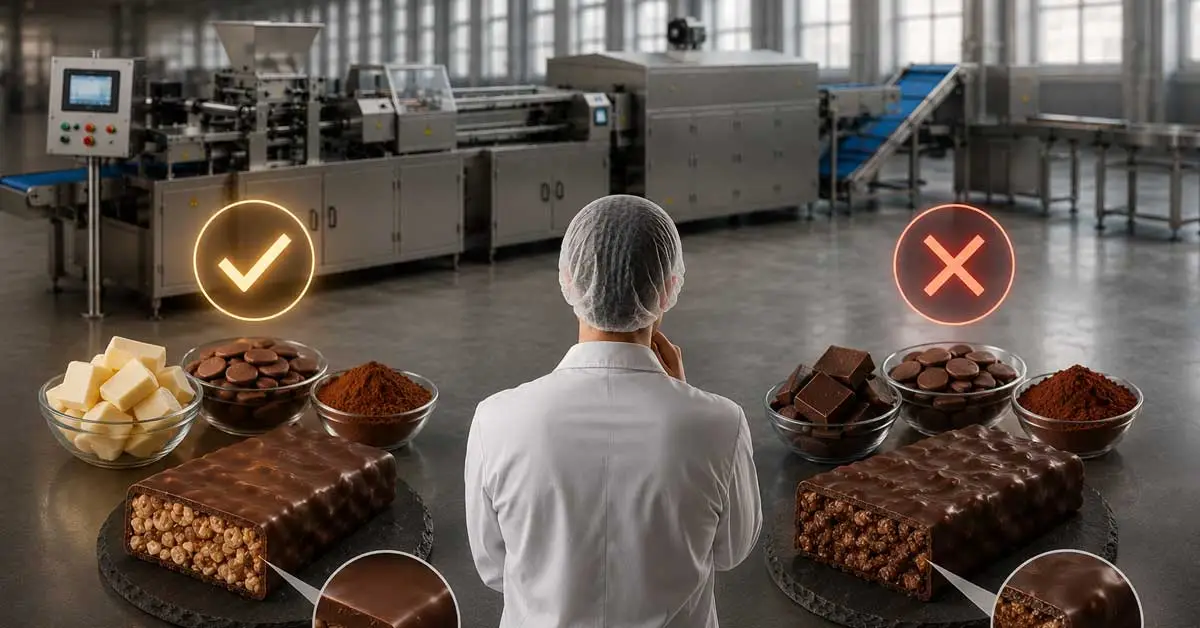
Selection Flow Chart
This simple approach helps manufacturers decide on which chocolate is best for protein bars based on production goals.
Pros and Cons
Compound Chocolate Pros
- Cost effective
- Easy to produce
- Heat stable
- Scalable
Compound chocolate Cons
- Less premium feel
- Different texture compared to pure chocolate
- Real Chocolate
Real Chocolate
Pros
- Excellent taste
- Higher perceived quality
- More popular among consumers
Cons
- Must be tempered
- More expensive to make
- More sensitive to heat
These are factors that play a role when comparing the suitability of compound chocolate versus real chocolate for a protein bar.
Why Foodsure Machines?
Foodsure Machines offers food manufacturing equipment that helps in the production of protein bars and chocolate coated products such as:
- Protein bar manufacturing line
- Chocolate coating line
- Cooling tunnels
- Chocolate melting machines
- Automated packaging systems
Foodsure Machines can assist manufacturers in optimizing protein bar manufacturing process and selecting a suitable coating for protein bar depending on their production capacity.
Conclusion
The decision to use compound chocolate or real chocolate for protein bars will hinge on objectives, production budget, product positioning, and capabilities of production. Compound chocolate will result in lower production costs, higher ease of production whereas real chocolate would be used to attain premium taste profile and consumer appeal.
Foodsure Machines
Foodsure Machines offers the machines required to produce the protein bars and chocolate-coated products. Their range of equipment includes the following:
- Production lines for protein bar manufacturing
- Chocolate coating machines
- Cooling tunnels
- Chocolate tempering machines
- Automated packaging equipment
Foodsure Machines assist the manufacturers to achieve optimal protein bar production and offer appropriate coating solutions tailored for individual production demands.
Frequently Asked Questions
1.Compound Chocolate vs Real Chocolate – what’s the difference?
The main difference is the fat content: compound chocolate contains vegetable fat while real chocolate contains cocoa butter.
2.Is either better for protein bars?
This all depends on the goals for the protein bar. Compound chocolate will probably be better for a cheaper protein bar and real chocolate will be used for a more deluxe version.
3.Does compound chocolate need tempering?
Compound chocolate doesn’t need tempering and will therefore be easier to use.
4.What are the benefits for manufacturers using compound chocolate for protein bars?
Manufacturers will use compound chocolate for protein bars because it is cost effective, they hold their temperature well and are easy to use.
5.What common ingredients are present in a protein bar?
Proteins, binders, sweeteners, fats, nuts, fruit and coatings.