
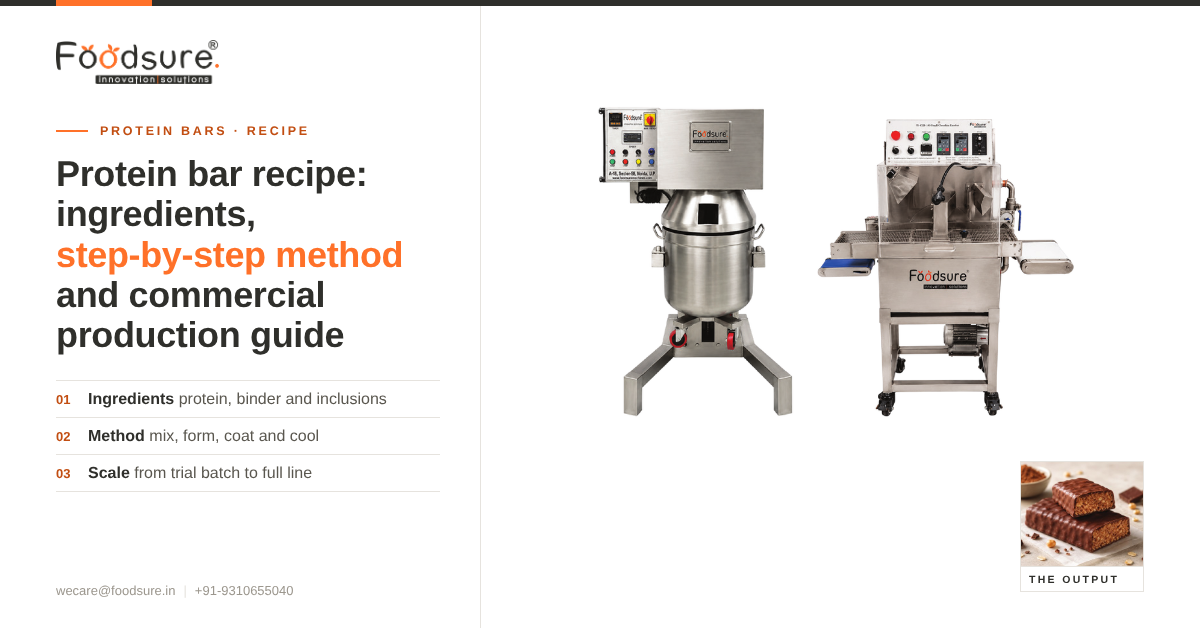
A good protein bar consists of a combination of protein sources, a proper binder, and a proper texture that makes a nutritious snack. No matter if you plan to make your own snack or create a product for commercial purposes, picking the right recipe of protein bars is key to creating a desired flavor and texture.
The choice of ingredients and method of preparation may depend on whether your bar is going to be soft, chewy, crunchy, chocolate-coated, or a sports bar.
This guide explains how to make protein bar at home step by step, how the main ingredients work together, and what businesses should consider when adapting a recipe for commercial production.
What Is a Protein Bar Recipe?
A protein bar recipe is a combination of ingredients and processing steps used to create a bar containing protein sources alongside other ingredients that provide flavour, texture, sweetness, and structure.
Protein bars may contain protein powder, oats, nut butter, dates, seeds, cocoa powder, and appropriate binders. The composition varies based on the amount of protein required in the final product.
For consumer products, protein bar formulation involves coming up with and balancing the right composition of ingredients and processing conditions that will ensure uniformity of product quality. Protein bar formulation is more than just adding more protein powder because protein sources may impact moisture uptake, binding, hardness, and texture.
A successful recipe should balance:
- Protein content and ingredient suitability
- Taste and sweetness
- Binding and shape-holding properties
- Softness, chewiness, or crispness
- Processing and slicing demands
- Storage and packaging considerations
Protein Bar Ingredients: What Do You Need?
Selecting suitable protein bar ingredients is the first step towards preparing a balanced and enjoyable bar. Each ingredient has a specific role in the final product.
1. Protein Source
Protein powder is often added to boost the protein in both home-made and commercially manufactured bars. Whey protein, soy protein, pea protein, and others may be added, depending on diet and product needs.
Different types of protein act in different ways when combined with liquids and binders. Some soak up more liquid than others.
2. Binding Ingredients
The protein bar binder binds the ingredients and provides the structure of the bar. Some examples of binders that can be used when preparing homemade protein bars are nut butter, date paste, and proper syrups.
The right type of binder will depend on the particular protein source, moisture levels, required sweetness, and other factors. Not enough binder leads to crumbling, while too much binder produces a very sticky bar.
3. Dry Ingredients
Ingredients such as oats, seeds, ground nuts, and other dry ingredients help in providing form and texture. They might also provide fibres and other nutrients based on the ingredients.
4. Flavoring Ingredients
Ingredients like cocoa powder, vanilla, cinnamon, dried fruits, and chocolate chips could help in improving flavor and variety of products.
5. Liquid Ingredients
Ingredients like milk, water, or any other appropriate liquids could be used in some recipes for modification. This would also mean modification in moisture content, which would influence shelf life.
For home-based production, such ingredients could be customized according to one’s taste and preference. The commercial producers would require more specifications with regard to ingredients.
How to Make Protein Bar at Home Step by Step
This simple no-bake protein bar recipe is suitable for home preparation. It uses oats, protein powder, nut butter, and a natural binder to create a soft, chewy snack.
Step 1: Combine Dry Ingredients
Combine the rolled oats, protein powder, and optionally cocoa powder in a mixing bowl. Ensure that the dry ingredients are well blended.
Breaking up any clumps will make mixing easy.
Step 2: Include Binding Material
Pour the peanut butter and date paste into the mixing bowl. Blend together until all the ingredients are properly mixed.
The peanut butter acts as the main ingredient that binds the rest since it contains fats, while the date paste provides extra bonding properties, besides sweetness.
Step 3: Mix to the Desired Thickness
Slowly pour the milk as you mix the ingredients. Do not stop mixing until the ingredients reach the consistency where they can stick without being too dry or sticky.
The mixture should not be too dry, so more liquid can be added. However, if it is too wet, then more oats and protein can be mixed in.
Step 4: Add Extra Ingredients
Incorporate your chopped ingredients such as seeds and nuts into the mixture.
This is to ensure uniform mixing.
Uniform consistency will help obtain the same thickness of bars.
Step 6: Chill and Slice
Chill the mixture until it has hardened enough to be able to slice without breaking. Take out the mixture and slice it up into equal-sized bars using a knife.
Step 7: Proper Storage
Store the bars in an airtight container in the fridge. This particular recipe does not have commercial shelf-life testing done on it, so it cannot be assumed that it can be stored at room temperature safely.
Make smaller batches as needed and handle the food appropriately.
How to Improve Protein Bar Texture
The protein bar texture depends on the balance between dry ingredients, protein sources, binders, fats, and moisture.
A bar may become hard, crumbly, sticky, or excessively soft when these ingredients are not balanced properly.
Avoiding Dry and Crumbly Bars
The protein powder and oats may absorb moisture and make the mixture hard to mold. Increase or decrease the binder and liquid content until you get a moldable mixture.
Avoiding Too Sticky Bars
The addition of too much binder or liquid may cause the bars to be too sticky. Balance the ingredients well and give enough time for chilling before cutting.
Getting a Chewy Bar
The date paste and nut butter may provide chewiness. The end result will depend on the ratio of these ingredients to the dry ingredients.
Consistency
Use consistency in the use of ingredients, method of mixing, bar thickness, and chilling. For industrial manufacturing, these factors should be controlled.
What Is the Best Binder for Protein Bar?
The best binder for protein bar production depends on the product’s intended texture, sweetness, ingredient composition, and storage requirements. No single binder works equally well for every protein bar.
| Binder | Typical Role | Considerations |
| Date paste | Adds sweetness and helps bind ingredients | Moisture and natural sugar content can vary |
| Nut butter | Contributes fat, flavour, and cohesion | Allergen management may be necessary |
| Suitable syrups | Can provide binding and chewiness | Sweetness and stickiness depend on the type |
| Honey | Provides sweetness and binding | Not suitable for vegan products |
| Specialised commercial binders | Can support controlled texture and processing | Selection depends on recipe and process requirements |
For home-made dishes, the binding agent can be modified depending on one’s preference and desired consistency. For industrial purposes, the chosen binding agent should go well with the chosen protein source as well as the processing conditions.
Protein Bar Formulation for Commercial Production
A protein bar formulation for commercial production must be developed around measurable product requirements rather than relying only on a successful homemade recipe.
Protein, water, texture, ingredient uniformity, dimensions of the bar, and processing and packaging considerations are some of the factors considered during the commercialization of a product.
Ingredient Compatibility
There is variability in the way protein sources act with fats, fibers, sugars, and binders. Ingredient tests can establish compatible ingredient mixes which will give the necessary texture and flavor.
Mixing and Binding
The mix must have the right balance of binding properties to hold together without being inappropriate for the product being made. It must not harm ingredients like nuts and seeds through excessive mixing.
Forming and Cutting
The recipe must work with the forming method chosen for the product. Dense mixtures may be formed using extrusion, but others that use nuts, seeds, or cereal flakes may need slab forming.
Product Repeatability
In a commercial context, there needs to be set ingredient guidelines, mixing methods, and process controls.
Protein Bar Recipe for Machine Production
A protein bar recipe for machine production must be compatible with the equipment used for mixing, forming, cooling, cutting, and packaging.
The recipe that works fine when squeezed by hand does not always work when run through an industrial machine. The recipe might be too sticky for the continuous forming process, too dry to maintain its form, or too brittle to be transferred.
Before scaling a recipe, manufacturers should assess:
- Behavior of ingredient feeding and mixing
- Consistency of the formed bar mass
- Suitability for extrusion or slab forming process
- Shape-holding property while cooling
- Cutting behavior and dimensions
- Handling of product during packaging
A suitable protein bar manufacturing machine can support commercial production when its design and operating conditions match the recipe. Equipment selection and recipe development should therefore be treated as connected activities.
How to Improve Protein Bar Shelf Life
Understanding how to improve protein bar shelf life is essential for manufacturers planning storage, distribution, and retail sales.
Shelf life depends on several factors, including moisture content, water activity, ingredient quality, fat stability, packaging, processing hygiene, and storage conditions.
Control Moisture and Water Activity
The moisture content and water activity are two related, but not the same, parameters. Water activity can be used to estimate the amount of water that is available for supporting microbial growth and some quality changes.
Appropriate product specifications have to be set by commercial producers and verified.
Choose Proper Ingredients
Quality and stability of ingredients may affect the final product. Some fats can go rancid, and other ingredients can take moisture and change their structure during storage.
Choose Proper Packaging
Packaging has to be designed in order to protect the product from moisture, oxygen, light, and contamination depending on its particular needs. The proper packaging material will depend on the recipe and distribution conditions.
Maintain Hygienic Processing
Good manufacturing practices, clean equipment, and proper handling can minimize contamination risks.
Validate the Shelf Life
Do not assign a commercial shelf life based only on appearance or short-term storage tests. Manufacturers have to conduct appropriate microbiological, chemical, sensory, and packaging tests depending on the product.
Commercial Protein Bar Development and Manufacturing Support
There are more aspects apart from selecting ingredients that businesses may require when launching protein bars into the market. These include recipe testing, ingredient procurement, pilot production, machinery, and packaging testing.
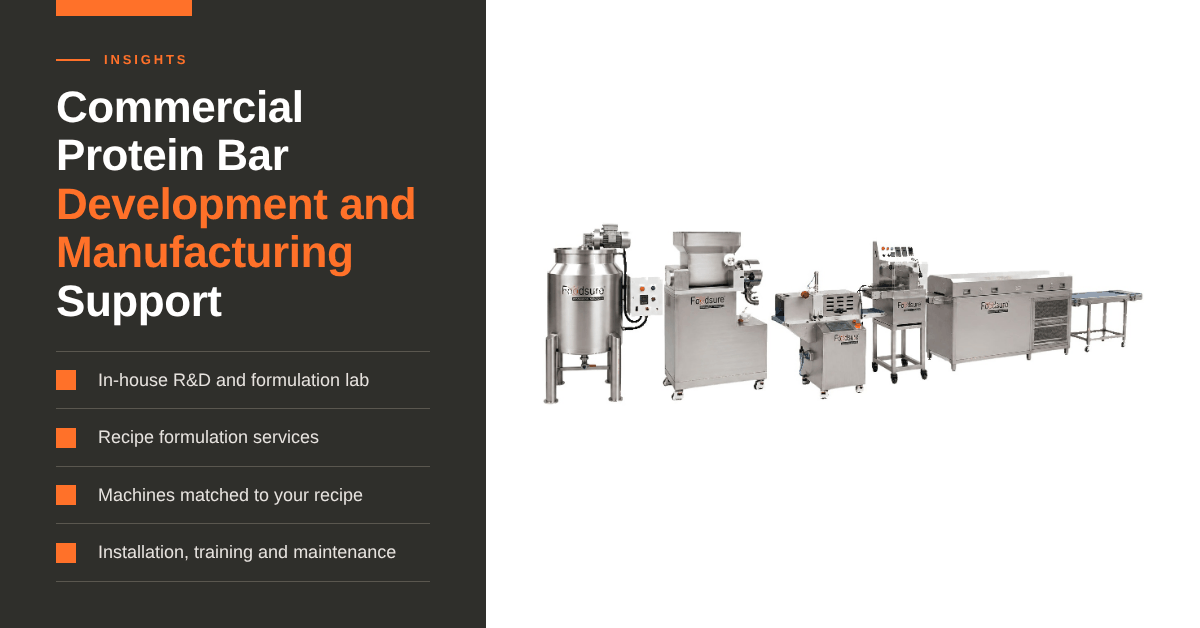
A protein bar product development service could be useful for companies to evaluate their ingredients’ combination, texture, product consistency, and processability before going for full-scale production.
A protein bar pilot batch is helpful to test the recipe in small-scale production settings. This could help identify problems related to binding, shaping, cutting, taste, and packaging before the recipe goes to full-scale production.
Also, collaborating with the right protein bar raw material supplier could help manufacturers get consistent specifications for ingredients as well as consider other ingredients if the current one is not meeting the requirements of the product.
In case companies are not looking to start their production facility at once, protein bar contract manufacturing could be another way to go. The suitability of this option would depend on the manufacturer’s capabilities, requirements of the product, minimum production arrangements, and quality controls.
Why Choose the Right Protein Bar Manufacturing Machine?
Selecting the right protein bar manufacturing machine is important when moving from recipe trials to repeatable commercial production.
The machine must be able to accommodate the texture of the product being produced, the composition, the size, and even the output expected from it.
Some of the machines needed include those for mixing, forming, cooling, cutting, coating (if necessary), and packaging the product.
One must consider issues such as compatibility of the machines, their hygienic construction, maintenance and cleaning, the control systems, as well as the possibilities for the future when deciding.
A request for assistance with respect to machinery needed for commercial food processing might be made to Foodsure.
Frequently Asked Questions
1. What is a basic protein bar recipe?
A basic protein bar recipe can include oats, protein powder, nut butter, date paste, and a small amount of liquid. The ingredients are mixed, pressed into a tray, chilled, and cut into bars.
2. How do I make protein bars without baking?
Ingredients like oatmeal and protein shake can be blended with something sticky like nut butter and date paste. Add the liquids little by little, press the mixture in an oiled tray, and freeze to set before cutting them.
3. What is the best binder for protein bar production?
The best binder for protein bar production depends on the recipe and target texture. Date paste, nut butter, and suitable syrups are common options, while commercial products may require more carefully controlled binder systems.
4. Can a homemade protein bar recipe be used for commercial production?
A homemade recipe can form the basis for this process, but it needs to be perfected before its use in manufacturing. There are several issues that manufacturers have to consider, including ingredient stability, compatibility with equipment, and shelf life.
5. How can manufacturers improve protein bar shelf life?
Stability of the item on the shelf will be achieved by managing the water activity and moisture, using suitable ingredients and suitable packaging, and validating the product with proper testing.
Conclusion
A good protein bar formulation takes into account the right balance of proteins, dry materials, binding agents, flavoring, and moisture levels to make a protein bar that meets the taste and texture requirements. Homemade recipes are a good basis, but making products for commercial purposes needs extra steps, like ingredient homogenization, forming, slicing, sanitation, packaging, and shelf life testing.
When companies create their own products, they need to analyze their protein bar formula, try a protein bar pilot run, and choose the right protein bar making equipment. If done systematically and using appropriate processing machinery, companies can create a more consistent and scalable protein bar production process.




