Dark chocolate protein bars are one of the rapidly evolving categories in sports nutrition, healthy snacking, and functional foods.
Customers now demand products with:
- High Protein content
- Improved taste profiles
- Higher premium dark chocolate experiences
- Convenient nourishment
- On-the-go consumption
But commercial manufacturing of dark chocolate protein bars is not just mixing the two ingredients together. Successful protein bars require: appropriate formulation, process control, chocolate coating technology, cooling systems and packaging systems.
Proper dark chocolate protein bar manufacturing process control is essential for consistent product quality and shelf stability.
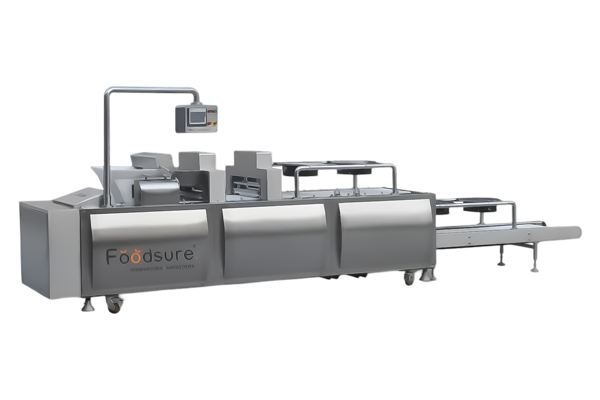
At Foodsure Machines , we work with brands on formulating their protein bar recipes, sourcing their equipment, controlling their production processes and scaling from the lab to mass production. Foodsure partners with brands in high-end Chocolate Enrobing Solutions to support commercial protein bar production.
Why Customers Prefer Dark Chocolate Protein Bars
Consumer psychology is an extremely important aspect of the purchase decision.
Customers often associate dark chocolate with:
- High-end ingredients
- Higher quality
- Fitness life style
- Lower perceived sugar value
- Higher cocoa percentages
Many customers purchase dark chocolate protein bars for their perceived healthy value compared to regular sweets and confectioneries. A brand needs to fulfill both nutritional and indulgence requirements.
Read More :- chocolate coating machine price in india
Typical Ingredients Used In Dark Chocolate Protein Bar
Protein Sources:
- Whey protein isolate,
- Whey protein concentrate,
- Milk protein,
- Pea protein,
- Brown rice protein
Binding Ingredients :
- Dates,
- Chicory fibers,
- Syrups systems,
- Nut butters
Functional Ingredients:
- oats,
- almonds,
- cashews,
- seeds,
- cocoa powder
Coating Ingredients:
- dark chocolate,
- Compound dark chocolate,
- cocoa-based coating system
The selection of ingredients is dependent on target nutritional values, texture required, target costs. The starting point of any commercial dark chocolate protein bar recipe formulation should be robust.
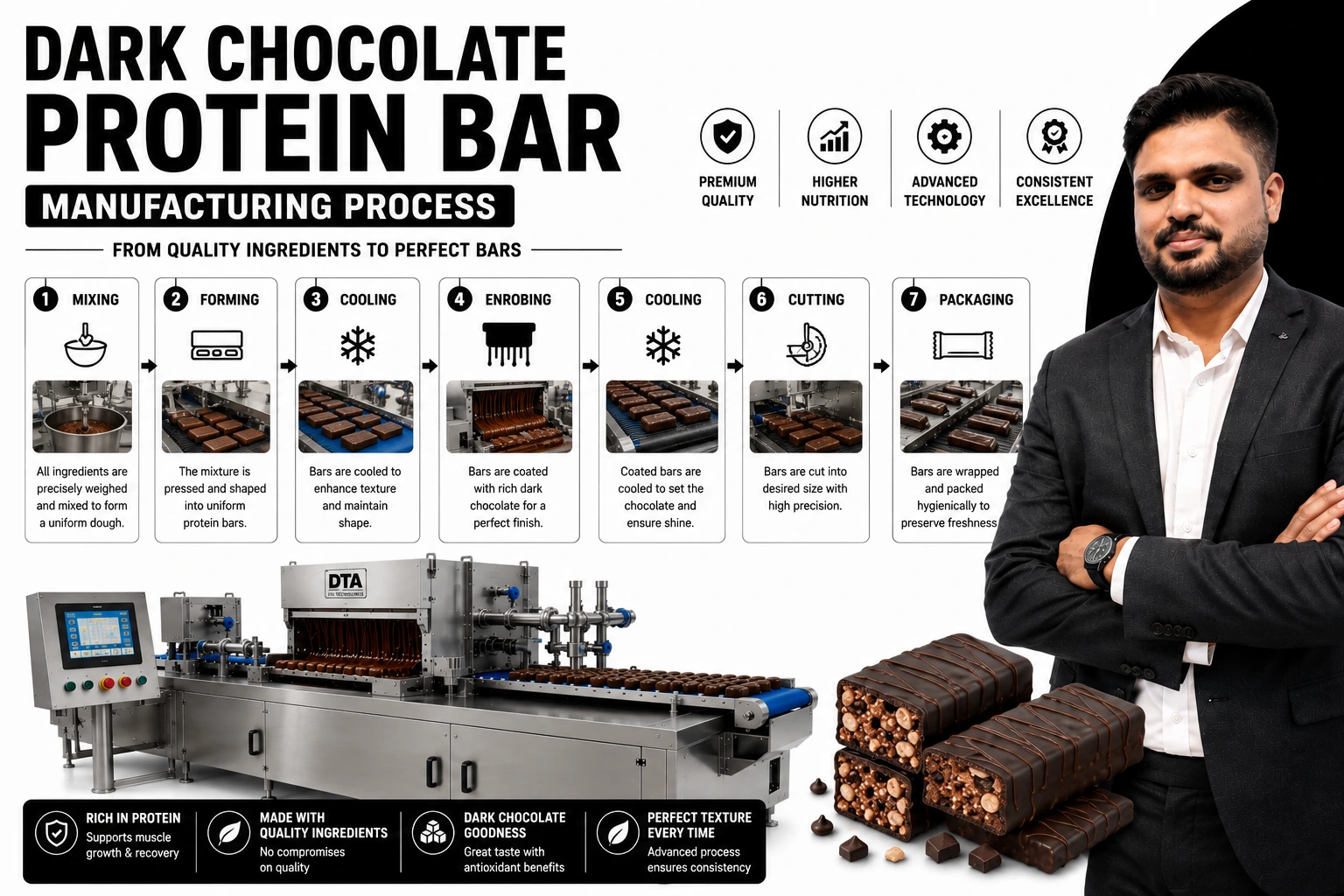
Dark Chocolate Protein Bar Manufacturing Process Flow Chart
The protein bar production line as we know it today will combine all these steps and be utilized for mass production.
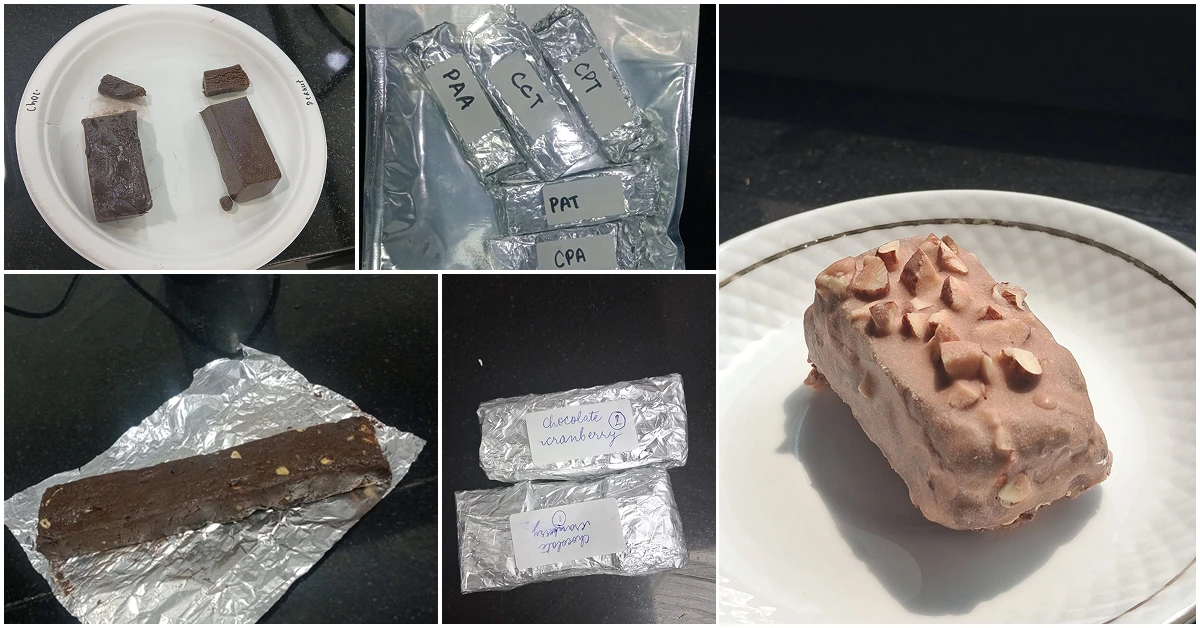
Overview of The Protein Bar Production Process:
Step 1: Inspection of raw materials
Raw materials are inspected before processing.
They are checked for:
- Moisture
- Appearance
- Aroma
- Package integrity
- Quality Specification
Poor quality raw material results in bad final product performance.
Step 2: Weighing of ingredients
All the ingredients are weighed as per approved recipe.
Consistency at this stage ensures :
- Ensures uniform nutrition
- Ensures consistent texture
- Guarantees better quality product
Accurate weighing of ingredients is vital for commercial manufacturing.
Step 3: Mixing and Dough Preparation
Protein Bar dough is prepared using commercial food equipment.
Foodsure Machines recommends food mixers such as:
- Ribbon Blender
- Sigma Mixer
The aim of mixing:
- Uniform protein dispersion
- Consistent texture
- Proper Dough Formation
Dough formation improves forming efficiency and product quality.
Choosing the right Protein Bar Machine improves dough consistency and production efficiency.
Step 4: Slab Forming Process
After mixing, the dough is transferred to the slab former.
The slab former extrudes a continuous sheet from the dough.
The advantages of Slab Forming:
- Uniform product height
- Consistent production output
- Excellent process control
The stage prepares products for cutting.
Step 5: Thickness Adjustment
The slab passes through roller systems to achieve:
- Consistent Height
- Uniform Appearance
- Standard Product Weight
Lack of uniformity in thickness will result in weight variations and packaging problems.
Step 6: Protein Bar Cutting
The sheet is then cut to size bars.
Foodsure Machines recommends a cutting machine which can provide:
- Consistent product dimension
- Uniform product weight
- High production speed
Product consistency gives consumer confidence in the product.
Step 7: Cooling Process
Protein bars are cooled before the chocolate coating.
The process:
- Stabilizes product texture
- Makes product easy to handle
- Prepares product for enrobing
Incorrect cooling of the products before coating can lead to defects in coating.
Step 8: Dark Chocolate Enrobing
The most important step in the whole process.
The protein bar moves through a Chocolate Enrobing Machine.
The Chocolate coating procedure
The product acquires:
- Premium appearance
- Better taste
- Increased consumer appeal
The product is judged on the quality of its coating.
Achieving uniform coating and consistent chocolate flow for all chocolate coated protein bars is contingent upon temperature control of the enrobing and flow characteristics of the chocolate.
Step 9: Cooling Tunnel
Bars move through a cooling tunnel which allows for:
- Setting of the coating
- Better gloss
- Improved snap
The bars are ready for packaging.
A good cooling tunnel ensures the prevention of bloomed coatings and other defects.
Step 10: Packaging Process
Product packaging protects the product and aids in brand presentation.
Foodsure recommends:
Flow Wrap Packaging Machine
Used for individual bar packaging.
Nitrogen Flushing System
- A nitrogen flushing system improves the shelf life by preventing:
- Oxidation
- Rancidity
This has great importance to the consumer.
An optimized Protein Bar Packaging Process helps preserve freshness and extend shelf life.
Foodsure Machines Protein Bar Production Line
A typical commercial line could consist of:
Processing Section
- Ribbon Blender
- Sigma Mixer
Forming Section
- Slab Former
- Roller system
- Bar cutting machine
Coating Section
- Chocolate tempering machine
- Chocolate enrobing machine
- Cooling tunnel
Packaging Section
- Flow wrapper
- Metal detector
- Checkweigher
The exact configuration of the line will depend on capacity.
The Foodsure Machinery in Foodsure Machinery today is designed for robust and scalable protein bar production.
Common manufacturing problems
Protein Bar Too Hard
Causes may include:
- Too much protein
- Not enough moisture
- Wrong ratio of syrup
Protein Bar Too Soft
Causes may include:
- Too much moisture
- Poor process control
Chocolate Bloom
Causes may include:
- Poor tempering
- Temperature changes
Uneven chocolate coverage
Causes may include:
- Incorrect settings on the enrober
- Poor chocolate flow
Validating the process can help to prevent these issues.
A comprehensive dark chocolate protein bar manufacturing process review assists in solving and preventing production issues early
Conclusion
Dark chocolate protein bars are one of the most appealing snack options on the market because they offer both indulgence and nutritional benefits. These are currently one of the largest categories in both the healthy snack market and the sports nutrition sector.
For success, a Protein Bar must incorporate
- A strong recipe
- The correct machinery
- Controlled chocolate coating
- Reliable packaging
- Commercial validation
Achieving optimized chocolate coated protein bar manufacturing depends on controlling the processes of mixing, shaping, enrobing, cooling, and packaging.
Foodsure Machines can guide brands through every aspect of the product development cycle, including from recipe to commercial launch.
Looking to Launch a Dark Chocolate Protein Bar Brand?
Foodsure Machines offers:
- Protein Bar Recipe Development
- Chocolate Enrobing Solutions
- Machinery selection
- Contract manufacturing support
- Packaging Development
- Commercial scale-up
A well-planned Dark Chocolate Protein Bar Recipe Formulation combined with the right machinery ensures long-term product success.
Frequently asked questions
What machinery is involved in the Dark Chocolate Protein Bar
manufacturing process?
The process usually requires a mixing system, slab former, cutting machine, chocolate enrober, cooling tunnel and packaging machinery.
Why is a cooling stage needed prior to the chocolate coating stage?
The cooling stage is used to stabilize the bar for even coating coverage.
What is the role of a Chocolate Enrober machine?
The chocolate enrober applies a consistent layer of chocolate to the exterior of the Protein Bar.
Why do the Protein bars crack after being coated?
Cracking can be caused by improper tempering, rapid cooling, product temperature discrepancies, etc.
What is the ideal form of packaging for protein bars?
Flow wrap packaging using nitrogen flush is common for commercial products.
Are Dark Chocolate protein bars contracts manufactured?
Yes. Most brands outsource contract manufacturing in the early stages before setting up their own facility. The Protein Bar Packaging Process plays a major role in maintaining product freshness and appearance.