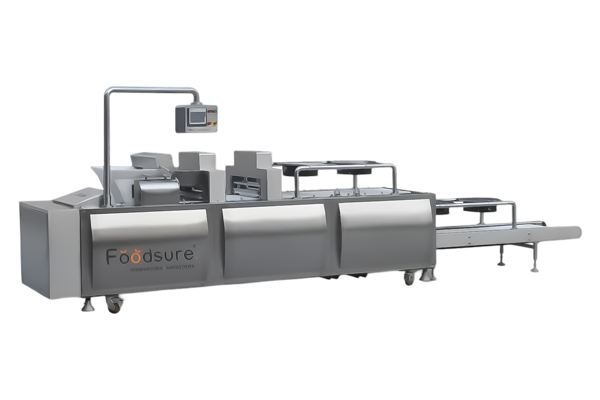

Setting up a High Protein Snack Manufacturing Plant in Saudi Arabia means combining the right processing line, Compliance with SFDA/GSO standards, and the development of a strategy designed specifically for the fitness and functional food market in the GCC region. The design of a turnkey protein snack factory usually consists of extrusion/baking, protein enrichment, coating, and Halal packaging solutions all under one roof.
In case you consider investing into a protein snack factory in Saudi Arabia, this guide will help you to assess the market potential, choose the equipment, and comply with the regulations from the start.
Why Saudi Arabia Is a Serious Opportunity for Protein Snack Manufacturing
Numbers often tell the story more clearly than optimism alone. According to Saudi Arabia’s General Authority for Statistics, 58.5% of adults aged 18 and above reported completing at least 150 minutes of physical activity per week in 2024. That gives manufacturers a useful indication of the country’s active consumer base and the potential demand for convenient, protein-focused foods. Source: General Authority for Statistics, Physical Activity Statistics 2024.
The protein bar category is also showing steady growth, although the exact market size varies depending on how the category is defined. Mordor Intelligence estimates the Saudi Arabia protein bar market at USD 25.13 million in 2026, with the figure expected to reach USD 34.63 million by 2031, representing a 6.62% CAGR. The report connects this growth with rising health and fitness awareness, demand for convenient nutrition, modern retail, e-commerce, and the localization of food manufacturing. Source: Mordor Intelligence, Saudi Arabia Protein Bar Market.
Looking at the broader category, Mordor Intelligence estimates the Saudi Arabia snack bar market at USD 28.43 million in 2026, increasing to USD 40.11 million by 2031 at a 7.11% CAGR. Cereal bars currently account for the leading product type, while protein and energy bars continue to develop within the wider snack bar category. Source: Mordor Intelligence, Saudi Arabia Snack Bar Market.
The healthy-snacking segment is attracting attention as well. IndexBox estimates that Saudi Arabia’s healthy snacks market could grow at an 8–12% CAGR between 2026 and 2035. Its analysis also identifies snack bars, including protein bars, granola bars, and meal-replacement bars, as an important area of growth. These are market research estimates rather than official government figures, so they are best viewed as projections rather than confirmed market values. Source: IndexBox, Healthy Snacks Market in Saudi Arabia.
For manufacturers, the opportunity is not limited to one type of snack. Consumer needs can be addressed through several formats, including protein bars, extruded snacks, baked snacks, protein chips, popcorn, and other functional snack products. Each format brings its own considerations around formulation, protein content, texture, processing, shelf life, packaging, and target consumer.
So, if you are considering setting up a High Protein Snack Manufacturing Plant in Saudi Arabia, it makes more sense to look beyond a single market-size figure. The bigger picture includes an active consumer base, growing interest in convenient nutrition, expanding modern retail and e-commerce, and opportunities to serve both local demand and wider regional markets.
Saudi Arabia Protein Market Snapshot

Published market estimates should not be treated as equivalent datasets because different research companies can use different product definitions, channels, methodologies, and forecast assumptions.
What a Turnkey High Protein Snack Plant Actually Includes
The term turnkey is casually applied in this industry, but some precision is warranted. A turnkey protein snack plant is more than just a string of machines. It is a system in which input of raw material, processing, protein fortification, shaping, drying or baking, coating, cooling, and packaging are arranged into an integrated flow, configured to your target capacity, and taking into account SFDA/GSO food safety requirements beforehand.
An appropriate scope for a turnkey package would typically cover:
Machine selection and configuration engineering
Installation, commissioning, and training
Formulation assistance for fortified snacks
Compliance documentation for relevant GSO technical standards
After-sales service and parts availability
Line integration
Quality assurance considerations
The distinction between purchasing individual machines and purchasing a turnkey line will come to light during operation. Overmatching or undermatching of capacities between stations, problems during drying or coating, and hygiene design rework are typical problems encountered when the machines are selected without taking into account the entire process.
For a High Protein Snack Manufacturing Plant, machinery should therefore be selected only after the product format, recipe, expected production requirements, packaging method, and quality controls have been established.
The Protein Snack Processing Line, Step by Step

Here’s the production flow most protein snack factories follow, whether the end product is a protein bar, protein-fortified chip, popcorn, or extruded puff:
Finished packs are grouped and prepared for storage, distribution, and dispatch.
Each stage matters for a different reason. Mixing accuracy determines whether the finished formulation remains consistent with its specifications. Cooling before coating can help control moisture migration and product stability. Metal detection and other appropriate control points form part of a suitable food-safety system.
For a High Protein Snacks Plant in the Middle East, the production flow should also consider climate, ingredient characteristics, storage conditions, packaging requirements, and the intended distribution network.
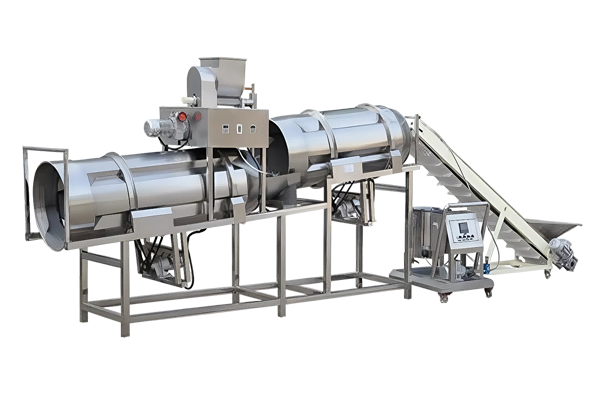
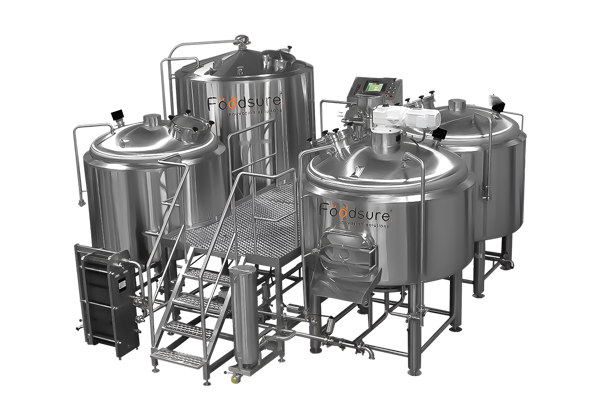
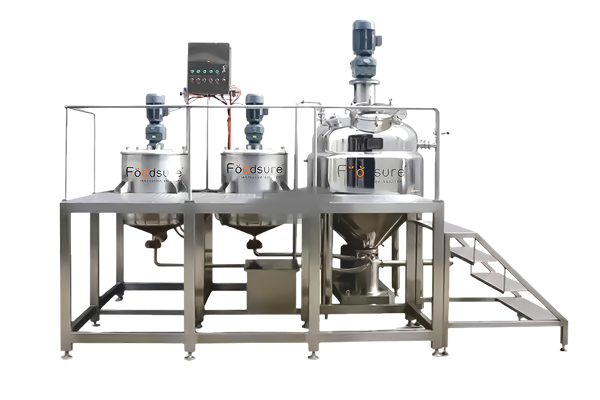
Machinery Checklist for a Protein Snack Factory
High Protein Snack Manufacturing Plant should not be designed around machinery alone. Equipment selection needs to follow the recipe, product texture, ingredient behavior, packaging format, quality requirements, and target market.
Regulatory Landscape: SFDA, GSO, and Halal Compliance
This is one area where first-time investors need to plan ahead. Food products entering the Saudi market must meet the requirements of the Saudi Food and Drug Authority (SFDA), along with the applicable Gulf technical regulations. Compliance is not something that should be left until the production line is ready.
SFDA provides the Unified Electronic System, GHAD, for food-related regulatory services. Its Product Classification System can also help businesses understand how a particular product is classified and whether specific registration or approval requirements apply. Source: Saudi Food and Drug Authority.
For high-protein foods and other foods intended for special uses, SFDA’s published food-clearance requirements refer to relevant GSO technical regulations and supporting documentation. The authority’s guidance also specifically includes high-protein foods among foods and beverages for special uses. Source: SFDA, Conditions and Requirements for Food Clearance.
Food safety needs to be considered at the factory-planning stage as well. HACCP-based controls, hygiene requirements, process controls, and other food-safety measures are much easier to build into the plant layout and production flow from the beginning than to correct after installation. SFDA guidance for conformity assessment bodies also references HACCP or ISO 22000 certification within the relevant quality-system framework.
Halal requirements deserve attention too, particularly for high-protein products that use ingredients derived from animals. Protein sources, flavours, processing aids, and other inputs may need to be reviewed to establish whether Halal certification or supporting documentation is required. SFDA’s Saudi Halal Center provides information and certification services through recognized bodies. Where certification applies, the required certificate and supporting documents should be obtained from the appropriate recognized source.
This is why protein sourcing should be reviewed during formulation itself, not once the product has already been finalized. The choice of whey, milk proteins, collagen, gelatin, or other animal-derived ingredients can affect not only the nutritional profile and cost of the product, but also its regulatory and Halal compliance requirements.
Read more:- protein popcorn manufacturing
Labeling Requirements
Labelling is another area where manufacturers can run into avoidable problems, especially when it is considered only after the product and packaging have already been finalized.
SFDA identifies SFDA.FD/GSO 9 for the labelling of prepackaged foods, SFDA.FD/GSO 2233 for nutritional labelling, and SFDA.FD 2333 for health and nutrition claims. These requirements need to be considered while developing the product and its packaging, rather than being treated as a final-stage compliance check. Source: Saudi Food and Drug Authority.
The language used on the pack also needs attention. SFDA states that when another language is provided alongside Arabic, the information must be identical to the Arabic information. For manufacturers entering the Saudi market, this makes bilingual packaging more than just a translation exercise. The label, nutritional information, claims, ingredients, and other required details need to remain consistent across both languages. Source: SFDA food-labelling guidance.
For a High Protein Snack Manufacturing Plant, it is therefore worth deciding the intended Arabic or bilingual packaging format before finalizing the packaging equipment. Things such as label placement, coding, printing, and pack handling can be planned around the actual format instead of making modifications to the line later.
Foreign investors also need to look beyond the food regulations themselves. Business setup and investment requirements should be reviewed through the Ministry of Investment of Saudi Arabia. The Kingdom’s Foreign Investment Law provides the framework for licensed foreign investment, although individual business activities may have their own conditions, approvals, and obligations. Source: Ministry of Investment, Saudi Arabia.
Raw Material Sourcing in the Kingdom
Protein source selection shapes both your cost structure and your Halal-certification pathway. Whey protein remains an important ingredient for dairy-based protein products, while pea, soy, rice, and other plant proteins can support plant-based SKUs.
Binders such as dates, honey, and glucose syrup can be used according to the formulation. Fiber sources such as oats and inulin can also be incorporated depending on the product concept.
Flavor systems can include cocoa, nut butters, fruit flavors, spice blends, savory seasonings, and other profiles suited to regional preferences.
Sourcing locally where possible can also support product positioning. Dates, for example, are a significant agricultural product in Saudi Arabia and can be incorporated into protein bars and other snack formats.
The right sourcing model depends on formulation specifications, supplier consistency, food-safety documentation, Halal requirements, logistics, and overall product positioning.
Investment, Capacity, and Cost Planning
Capital requirements swing widely based on automation level, product format, capacity, packaging configuration, and whether you’re running a single-product line or a flexible multi-format setup.
Rather than quoting a generic machinery price or capacity as though it applies to every factory, the plant should be sized around validated demand and the manufacturer’s production model.
A pilot or small-batch configuration can be used for:
- Product development
- Test-market production
- Private-label runs
- Initial commercial validation
A mid-scale configuration can support:
- Regional brand expansion
- Modern retail supply
- Multiple product variants
- More automated processing
A larger industrial configuration can support:
- Wider domestic distribution
- Multiple shifts
- Export-oriented production
- Higher levels of process automation
For a High Protein Snack Manufacturing Plant, the most important planning questions include:
- What product formats will be manufactured?
- What formulation has been commercially validated?
- What level of automation is required?
- How many SKUs will run on the line?
- What packaging formats will be used?
- What quality-control systems are required?
- Will the plant serve Saudi Arabia only or export to other GCC markets?
- How much flexibility is required for future product development?
Instead of selecting the largest available line, manufacturers should match equipment configuration with realistic demand, product requirements, available space, utilities, workforce, and future expansion.
Distribution Channels That Move Product in the GCC
Proper equipment alone is only half of the solution. It is equally crucial to figure out where you will sell your product.
Contemporary retail allows access to a wide array of consumers due to hypermarkets and supermarket chains. Stores specialized in health and retail counters at gyms may allow targeting consumers seeking sports nutrition and functional food items.
Moreover, e-commerce provides the opportunity of reaching customers directly via selling, discovering products, using subscription models and launching products digitally.
Market research studies confirm this idea. According to Mordor Intelligence, supermarkets and hypermarkets made up 37.16% of the protein bars market share in Saudi Arabia in 2025, and online retail is considered as the fastest-growing distribution channel according to their forecasts. Moreover, in the Saudi snack bars market report, supermarkets and hypermarkets are the leading distribution channels. Source: Mordor Intelligence, Saudi Arabia Protein Bar Market and Saudi Arabia Snack Bar Market.
A distribution plan for a High Protein Snacks Plant in the Middle East should account for both domestic and regional aspects of retail. Export markets may have different requirements for product registration, labeling, packaging, documentation, and logistics, so these factors should be reviewed before finalizing the production and packaging setup.
For a new protein snack factory, a practical go-to-market strategy may combine modern retail, specialist health channels, gym partnerships, distributors, and e-commerce rather than relying on a single sales channel.
Common Setup Mistakes and How to Avoid Them
Undersizing the Mixing and Dosing Station
Protein accuracy is critical because the final product needs to remain consistent with its formulation and nutritional declaration. A dosing system that cannot deliver consistent ingredient addition can create quality and compliance problems.
Treating Halal Certification as an Afterthought
Waiting until formulation is locked to check whether your protein source requires Halal documentation can create avoidable delays. Vet suppliers for appropriate certification and supporting documentation during formulation rather than after the product is finalized.
Underestimating the SFDA Compliance Process
Regulatory requirements should be incorporated into the project schedule from the beginning. Documentation, inspections, product information, food-safety systems, and labeling should be planned alongside machinery procurement.
Skipping Bilingual Packaging Design at the Equipment-Selection Stage
Packaging equipment should be compatible with the intended Arabic and bilingual labeling requirements. Retrofitting packaging systems after installation can create unnecessary complications.
Designing the Plant Around Machinery Instead of the Product
The product should determine the processing route. An extruded puff, protein bar, baked chip, and coated snack can require very different equipment configurations.
Read more :- high protein chips manufacturing
Final Word
Saudi Arabia’s protein snack category is developing alongside a broader shift toward convenient nutrition, fitness-oriented consumption, modern retail, and e-commerce. The opportunity is not limited to protein bars. A properly planned High Protein Snack Plant can be configured around extruded snacks, protein chips, popcorn, baked products, bars, and other functional formats.
A turnkey protein snack plant engineered for accurate ingredient dosing, appropriate food-safety controls, SFDA/GSO requirements, suitable packaging, and a Halal-ready sourcing strategy can give manufacturers a clearer path from formulation to commercial production.
For businesses exploring a High Protein Snack Manufacturing Business, the starting point should be a validated product concept followed by formulation development, process selection, machinery planning, regulatory review, packaging development, and commercialization.
A High Protein Snacks Plant in the Middle East can serve more than a single product category when the facility is designed with appropriate flexibility. Protein bars, extruded snacks, baked products, protein chips, popcorn, and other formats can be considered according to market demand and manufacturing feasibility.
The businesses entering this category should therefore treat regulatory planning and machinery selection as connected decisions, not separate ones. The right plant is not necessarily the largest one. It is the one designed around the product, validated demand, regulatory requirements, production model, and market it is intended to serve.
Have a Question? Let’s Connect
Need expert guidance on food processing machines, production setup, or process optimization? Our team is ready to help you choose the right solution for your business.
FAQs
What licenses do I need to start a protein snack factory in Saudi Arabia?
You need to review the applicable food-establishment, business, food-safety, product-registration, labeling, and Halal requirements with the relevant Saudi authorities. Foreign investors should also review applicable investment-registration requirements through the Ministry of Investment.
How long does it take to get SFDA approval for a food factory?
The timeline can vary according to the project, documentation, inspection requirements, licensing route, product category, and regulatory requirements. It is better to build an appropriate regulatory buffer into the project schedule than rely on a fixed generic timeline.
Is Halal certification required for protein bars made with whey protein?
The requirement depends on the source and composition of the ingredients and the applicable Saudi requirements. Whey and other animal-derived ingredients should be reviewed with the relevant certification authority and supported by appropriate supplier documentation.
What’s the minimum investment for a turnkey protein snack processing line?
It depends heavily on scale, automation, product format, packaging configuration, utilities, and plant layout. A pilot-scale setup will have very different equipment requirements from a fully automated industrial operation. The right approach is to size the line to validated demand rather than defaulting to maximum capacity.
Which retail channels matter most for launching a protein snack brand in Saudi Arabia?
Hypermarkets and supermarkets remain important channels, while specialist nutrition stores, gyms, distributors, convenience retail, and e-commerce can support targeted growth. Mordor Intelligence identifies supermarkets and hypermarkets as a significant protein-bar distribution channel in Saudi Arabia, with online retail showing faster projected growth. Source: Mordor Intelligence.
Can plant-based protein snacks skip Halal certification requirements?
Plant-based formulations can simplify ingredient-related Halal considerations because they avoid many animal-derived inputs. However, manufacturers should still review applicable market, retailer, certification, ingredient, and manufacturing requirements before deciding whether certification is necessary.