
Starting a high-protein snack manufacturing business in the UAE requires more than choosing a high-protein snack machine. Entrepreneurs need to consider the snack format, production technology, facility requirements, manufacturing licence, food-safety systems, halal requirements, packaging, and distribution strategy before investing in a production line.
The UAE is an attractive market for protein-focused food products because consumer interest in health, wellness, convenient nutrition, and functional foods continues to influence purchasing behaviour. The country’s healthy snacks market is projected to grow steadily, while protein is also emerging as an important product claim within the wider healthy-snacking category.
For manufacturers, this creates an opportunity to develop locally produced protein bars, bites, puffs, chips, cookies, crackers, and other high-protein snack formats for the UAE and wider GCC market.
Why the UAE Is the Right Launch Market for High-Protein Snacks
The UAE healthy snacks market is showing consistent growth, supported by increasing consumer interest in nutritious, convenient, plant-based, high-protein, and functional food options. Grand View Research estimates that the UAE healthy snacks market generated USD 731.8 million in 2025 and projects it to reach USD 1.28 billion by 2033, representing a CAGR of 7.4% over the forecast period.
Protein is also becoming an increasingly important part of the global healthy-snacking landscape. Grand View Research identifies high-protein snacks as the fastest-growing claim segment within the global healthy snacks market, with a projected CAGR of 9.4% between 2026 and 2033.
The broader protein snacks market is expanding as consumers look for convenient products that combine nutrition with portability. Fortune Business Insights estimates the global protein snacks market at USD 59.65 billion in 2026 and projects it to reach USD 120.43 billion by 2034, with a CAGR of 9.18%.
The UAE also has an established retail environment for packaged food. LuLu Retail currently operates 43 hypermarkets in the UAE and has a wider network of stores across the GCC.
This gives local manufacturers several potential routes to market, including supermarkets, hypermarkets, speciality retailers, gyms, wellness businesses, foodservice operators, e-commerce platforms, and direct-to-consumer channels.
There is also a supply-side opportunity. The UAE imports a significant proportion of its food products, creating room for manufacturers that can produce specialised snacks locally while developing products specifically for regional tastes, nutritional preferences, packaging expectations, and regulatory requirements.
What a High-Protein Snack Machine Actually Includes

A High Protein Snacks Machine UAE setup is not the name of one specific machine. It is a broad category covering different production technologies, and the right configuration depends on the final snack format.
Bar and bite formats
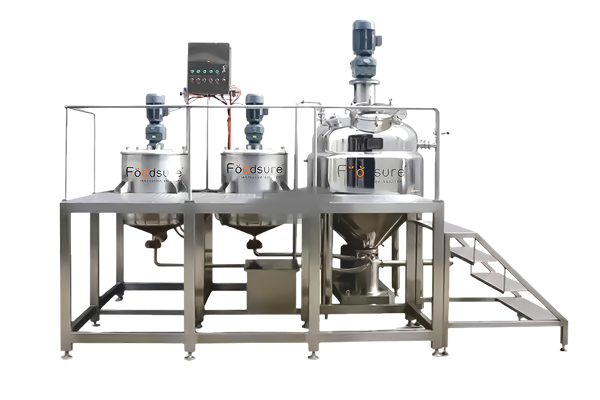
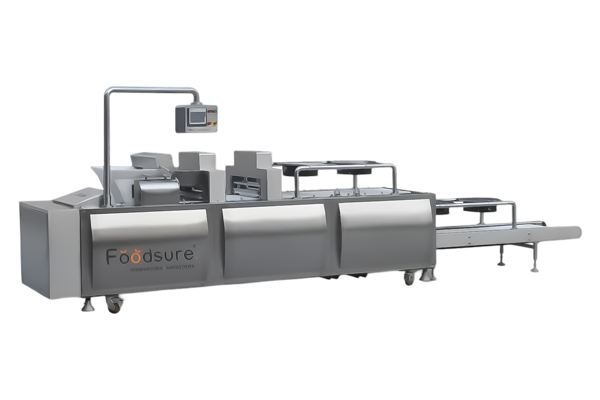
Protein bars, energy bites, fibre bars, and similar products generally use a mixer, forming or extrusion unit, and cutting system.
The same basic production concept can be adapted for different shapes and sizes through changes in dies, moulds, and forming configurations. Additional equipment may be required for centre-filled products, chocolate coating, cooling, or packaging.
Puffed and extruded formats
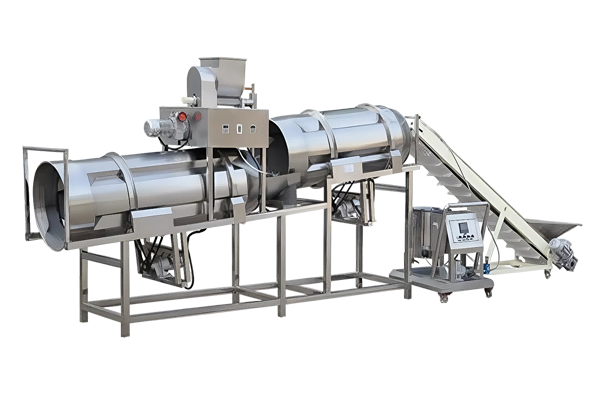
Protein puffs, protein-fortified chips, crisps, and similar products commonly use twin-screw extrusion technology.
A controlled blend of ingredients such as grains, plant proteins, soy protein, or other protein sources is processed through the extruder under controlled heat, pressure, and moisture conditions. The material passes through a die and expands as it exits, creating the characteristic structure of the finished snack.
Baked formats
Protein cookies, crackers, biscuits, and other baked snacks generally use a mixing and forming system followed by an industrial baking oven.
The production configuration depends on the dough characteristics, product shape, moisture target, baking profile, and required texture.
Complete protein snack production lines
A complete protein snack production line can integrate mixing, forming or extrusion, cooling or baking, cutting, coating, and other processing stages into a coordinated production system.The exact configuration should be developed around the product rather than treating every protein snack as requiring the same machinery.
Core Components That Affect Machine Selection
Production format
The first decision is whether the product will be a bar, bite, puff, chip, cookie, cracker, or another format. This determines the basic processing technology.
Automation level
Manufacturers can choose between semi-automatic and fully automated configurations depending on production requirements, labour availability, facility layout, and future expansion plans.
Product specifications
Protein percentage, moisture, texture, particle size, shape, coating, filling, and ingredient composition can all affect equipment configuration.
Additional processing modules
Depending on the product, the line may require additional systems for coating, enrobing, cooling, baking, cutting, seasoning, or product handling.
Food-contact materials
Food-contact parts should be selected according to applicable food-safety and hygiene requirements. Stainless steel construction is commonly used for food-processing equipment because it supports hygienic production and cleaning.
Packaging
The core processing line does not necessarily include final packaging. Protein snacks may require flow wrapping, pouch packing, cartoning, or other packaging systems depending on the product and route to market.
Step-by-Step: Starting a High-Protein Snack Business in Dubai or Abu Dhabi
Before investing in equipment, define the product you want to manufacture, your target customer, and expected production capacity. In Dubai or Abu Dhabi, the right snack format will influence ingredient selection, processing method, machinery, factory layout, packaging, and overall investment. This decision creates the foundation for every step that follows:
Step 1: Choose Your Snack Format and Machine Type Before Anything Else
The product format should be finalised before machinery is selected.A protein bar requires a different processing configuration from a puffed snack, protein chip, cookie, or cracker. Trying to make the machine fit the product after purchase can create unnecessary modification costs and production limitations.Before requesting machinery quotations, define the product format, ingredient profile, target texture, pack size, SKU range, and intended production model.
Step 2: Size Your Capacity to Real Retail Targets
Capacity planning should begin with realistic sales projections rather than purchasing equipment simply because a machine has a high stated output.Consider the number of retail outlets you expect to serve, expected weekly sales, product shelf life, SKU mix, production days, changeover requirements, and future expansion.
The UAE’s modern grocery sector provides access to large retail networks. LuLu Retail operates a substantial hypermarket and express-store network across the UAE, while Carrefour maintains a nationwide store presence through its UAE retail operations.A manufacturer supplying a limited regional distribution network may therefore require a very different production setup from a company targeting national retail distribution or GCC exports.
Step 3: Choose Your Licensing Route
Entrepreneurs can explore mainland and free-zone structures depending on their manufacturing, warehousing, distribution, ownership, and market-access requirements.Industrial areas and manufacturing-focused economic zones can be considered when establishing a dedicated food-production facility. The final licensing route should be evaluated alongside facility approvals, food-control requirements, warehouse requirements, import and export activities, and intended distribution channels.
Step 4: Build Halal and Food-Safety Compliance Into Facility Design
Halal compliance should be considered during facility and product planning rather than after production begins.The UAE Ministry of Industry and Advanced Technology lists UAE.S 2055-1 as the standard covering general requirements for halal food and UAE.S 2055-2 for halal certification bodies. The Ministry also states that the Halal National Mark can apply to products, services, and production systems.
Food manufacturers should also establish appropriate food-safety systems and comply with applicable UAE food-control and labelling requirements. Depending on the business model and customer requirements, systems such as HACCP and ISO 22000 may be relevant.The exact certification requirements should be confirmed with the relevant UAE authority and certification body because requirements can vary according to the product, facility, ingredients, and intended market.
Step 5: Budget for Installation, Training, and Maintenance
Machinery selection should include installation, commissioning, operator training, spare parts, preventive maintenance, and after-sales support.A production line that performs well during initial trials can still create operational problems if operators are not properly trained or critical wear parts are difficult to source.For UAE operations, manufacturers should also evaluate technical support availability, response times, spare-parts supply, remote assistance, and the supplier’s experience with international installations.
Step 6: Explore Equipment Financing
Entrepreneurs may also consider financing rather than funding the entire machinery investment from working capital.Khalifa Fund currently offers several financing programmes, including microfinance, small loans, expansion loans, and fixed-asset financing for machinery and equipment. Eligibility and financing limits depend on the programme and business circumstances.
The Emirates Development Bank also provides financing and support for SMEs and strategic sectors. The bank reported AED 1.8 billion in SME loan approvals in 2022, including direct and indirect financing.Businesses should assess eligibility, repayment terms, collateral requirements, and financing costs before selecting a funding route.
Understanding the Economics of a Protein Snack Manufacturing Business

The economics of a High Protein Snack Manufacturing Business depend on the product formulation, protein source, ingredient prices, packaging format, production efficiency, distribution model, retail margins, and selling price.
Protein concentrates and isolates can represent a significant portion of formulation costs, particularly in products positioned around high protein content. Packaging, coatings, flavour systems, logistics, labour, utilities, certification, warehousing, and retailer margins also influence the final economics.
Rather than relying on a generic ROI calculation, manufacturers should build a product-specific financial model covering:
- Raw material cost
- Protein ingredient cost
- Packaging cost
- Manufacturing cost
- Labour
- Utilities
- Facility and warehouse expenses
- Quality testing
- Certification and compliance
- Distribution
- Retailer and distributor margins
- Marketing and customer acquisition
- Machinery depreciation
- Working capital
This provides a more realistic picture of profitability than calculating payback purely from machine output.
Sourcing: India vs China vs Europe for a UAE-Bound Line
The right equipment source depends on more than the initial quotation.
China
Chinese machinery manufacturers can offer a broad range of processing equipment and may be suitable for businesses prioritising initial capital efficiency and standardised production systems.
However, buyers should evaluate fabrication quality, automation components, documentation, spare-parts availability, installation support, and previous international installations.
India
Indian machinery manufacturers can be attractive for UAE-bound businesses because of geographical proximity, established food-processing expertise, easier communication for India-linked entrepreneurs, and access to engineering and spare-parts support.
Businesses should separately verify the applicable customs treatment for their specific machinery under the India-UAE CEPA and ensure that the equipment qualifies under the relevant rules of origin. Preferential treatment should not be assumed solely because the machinery is manufactured in India.
Europe
European machinery suppliers generally operate at a higher price point but may offer advanced engineering, established automation systems, detailed documentation, and extensive experience with international food-production environments.
For manufacturers targeting premium products or large retail and export operations, these factors can be more important than the initial machine quotation.
Local UAE and GCC fabrication
Local fabrication and engineering companies can be useful for installation work, conveyors, modifications, facility integration, support structures, and certain auxiliary systems.
For a complete production line, however, manufacturers should evaluate whether the local supplier has the required experience with the specific processing technology.
The sourcing decision should ultimately consider total landed cost, technical capability, installation support, spare parts, compliance documentation, lead time, and long-term service availability.
UAE Import Duties and Taxes
Import-related costs should be considered when comparing machinery suppliers.
The UAE Government states that the standard customs duty is generally applied at 5% of the value of imported goods plus cost, insurance, and freight, although specific products and preferential trade arrangements can have different treatment.
The UAE also applies a standard VAT rate of 5% to taxable supplies, subject to applicable exemptions and zero-rated provisions.
Businesses importing machinery should therefore check the applicable HS classification, customs treatment, VAT implications, and any preferential trade agreement before finalising the purchase.
Frequently Asked Questions
How much does a high-protein snack machine cost in the UAE?
Machine pricing varies significantly according to the snack format, automation, production requirements, processing stages, materials, and additional modules. A protein bar machine, extrusion line, and baked-snack line can have very different configurations and therefore should be quoted according to the product specification.
What licence do I need to manufacture protein snacks in Dubai or Abu Dhabi?
A food manufacturing business requires the appropriate business and manufacturing approvals along with compliance with applicable UAE food-safety, facility, product, labelling, and halal requirements. The exact licensing route depends on the emirate, business structure, facility, and intended activities.
Is a protein snack production line different from a protein bar machine?
Yes. A protein bar machine is one type of protein snack production system. Puffed protein snacks and protein chips generally require extrusion technology, while cookies and crackers typically require mixing, forming, and baking systems.
How long does it take to become profitable?
There is no universal payback period for a protein snack manufacturing business. Profitability depends on product pricing, formulation cost, production utilisation, distribution margins, retail placement, marketing expenditure, and working-capital requirements.
Should I buy from China, India, or Europe?
There is no single best sourcing country. China may suit businesses prioritising equipment variety and capital efficiency, India can offer advantages in engineering support and proximity for India-linked businesses, while European suppliers may be suitable for manufacturers seeking established international engineering and automation capabilities.
The decision should be based on total ownership cost, technical suitability, compliance documentation, service support, spare-parts availability, and the manufacturer’s track record.
Have a Question? Let’s Connect
Need expert guidance on food processing machines, production setup, or process optimization? Our team is ready to help you choose the right solution for your business.
Get a Tailored Quote for Your UAE Protein Snack Line
Foodsure Machines works with food manufacturers on equipment selection, production-line configuration, capacity planning, installation requirements, and expansion planning for a High Protein Snack Manufacturing Business.
Whether you are developing protein bars, bites, puffs, chips, cookies, or another high-protein snack format, the right production line should be built around the product, formulation, facility, and intended market.
For businesses planning a High Protein Snack Production in UAE, Foodsure Machines can help evaluate the required processing technology, capacity, equipment configuration, and production-line requirements.
The right High Protein Snack Manufacturing Plant should be planned around your product format, formulation, target capacity, facility, and intended market rather than selecting machinery based only on output specifications.
Get in touch with Foodsure Machines for a customised protein snack production-line proposal based on your product format and manufacturing requirements.