
The creation of a profitable protein bar in the laboratory or on a pilot scale is already an impressive success. But, as practice shows, the production of the same product in large quantities at commercial volumes involves a whole new range of difficulties. That which is effective in a laboratory environment sometimes does not prove to be equally efficient on a large scale.
With the growth of volumes, the complexity of such components as the behavior of ingredients, conditions of production, performance of equipment, and effectiveness of manufacturing increases significantly. Also, the importance of the performance of a protein bar machine grows since the limits of the equipment affect the efficiency of production directly.
Understanding protein bar scale up challenges is extremely important for companies planning to launch their products into mass production. This blog is devoted to the most frequent difficulties of the process.
What Is Protein Bar Production Scaling?
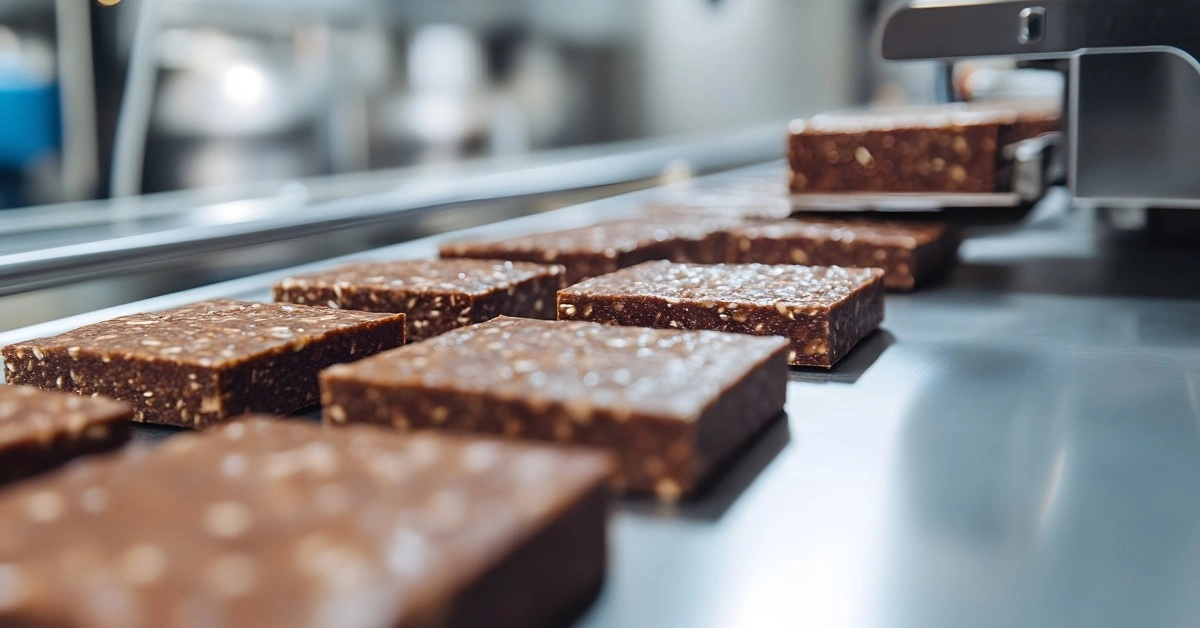
Protein bar production scaling is the process of expanding the manufacturing capability of the product while ensuring quality, consistency, and efficient operations. When manufacturers develop products, they make small pilot batches to test the formula and determine customer acceptance. Nevertheless, when demand grows, production lines have to be able to manufacture many more products without damaging the performance of the product.
Manufacturing pilot production to commercial protein bar production requires great effort and proper planning. If it is not done properly, producers often face various production issues.
Read More:- protein bar recipe
Protein Bar Scale-Up Journey
Why Commercial Scale-Up Is More Difficult Than It Appears
Most producers believe that increased production scales require just a simple increase in batches. However, large-scale production brings some new elements that might affect product quality and production efficiency.
As volume increases, there are some possible changes such as:
- Ingredient interactions might be different
- Mixing might behave differently
- The processing time might increase
- Equipment capacity might matter more
- Quality control might become more difficult
These factors contribute to many common protein bar manufacturing challenges faced during commercialization.
Common Scale-Up Changes During Commercial Production
| Factor | Pilot | Commercial |
|---|---|---|
| Batch Size | Small | Large-scale production |
| Ingredient Behavior | Easier to control | May vary between batches |
| Mixing Process | Simple and uniform | Requires optimized process parameters |
| Equipment Usage | Pilot-scale equipment | High-capacity production machinery |
| Quality Control | Limited testing | Continuous monitoring and validation |
| Production Efficiency | Moderate | High-volume, process-driven manufacturing |
Formulation Changes During Scale-Up
One of the most common protein bar scale up challenges involves formulation performance.
What works for small batch productions may not work during large scale production.
Ingredient functionality
Ingredients like proteins, binders, fibers, and sweeteners will behave differently during large scale production due to changes in:
- Texturing
- Moisture content
- Consistency
- Stability
Batch Uniformity
Maintaining uniform ingredient distribution becomes increasingly difficult as batch sizes increase. Without proper process controls, manufacturers may experience variations between production batches. This is why formulation validation remains a critical component of successful protein bar manufacturing.
Read More: protein bar shelf life
Equipment Limitations and Production Bottlenecks
Production equipment plays a major role in scale-up success. Many businesses encounter difficulties because the equipment used during pilot production cannot support commercial manufacturing requirements.
Capacity Constraints
Production systems can have difficulty coping with increased amounts. With higher demand, machinery working at its highest capacity can lead to problems in production scheduling. Manufacturers need to take into account their future needs for production before increasing production.
Process Compatibility
Formulations need distinct processing requirements in order to uphold the quality standards of products. There may be instances when there is a need for adjustment in the process of mixing, forming, or cooling. The choice of a protein bar machine will help avoid production constraints.
Equipment Integration
The production lines need to function as integrated systems as opposed to separate machines. Lack of integration among machines can cause delays, inefficiency, and even losses. Integration of processing machines, forming machines, cooling, and packaging machines will ensure improved efficiency.
Proper equipment planning helps support long-term protein bar production scaling objectives.
Maintaining Product Consistency During Commercial Production

Consistency is one of the most important factors in commercial protein bar production. Consumers expect every product to deliver the same experience regardless of production volume.
Texture Variations
The process on a large scale may affect the texture and structure of the bars. Slight variations in the degree of mixing, distribution of ingredients, and other aspects of the process may cause the bars to be too hard or too soft.
Moisture Management
The moisture content can be inconsistent for large batch production. Poor moisture control can adversely impact the shelf life and freshness of the product.
Appearance Differences
Shape, color, and finish variations could affect consumer perception and acceptance. Consistent appearance is very crucial in retail goods because the appearance plays a major role in buying decisions. Consistency requires effective quality control measures and a standard production process.
Raw Material Supply Challenges
Ingredient sourcing becomes more complex as production volumes increase. Many manufacturers underestimate the impact of raw material management on large-scale operations.
Supply Reliability
A reliable supplier is needed for commercial production since such interruptions can affect the production schedule and lead to operational inefficiencies where alternative supply sources cannot be found.
Ingredient Variability
Variations in ingredient quality may have a profound effect on the production process. Protein, moisture, and other aspects of ingredient functionality could play an important role.
Inventory Management
The manufacturer must balance inventory availability with efficient storage and cost containment. Lack of inventory
Process Standardization and Quality Control
As production expands, process standardization becomes increasingly important.
Without standardized procedures, manufacturers may experience:
- Increased product variability
- Lower production efficiency
- Higher operational costs
- Greater quality risks
Standard Operating Procedures
Properly designed production procedures contribute to maintaining consistency in shifts and batches of production. Standardization guarantees that manufacturing procedures are carried out in a consistent manner, irrespective of who performs the task or when it is done.
Quality Control
Regular control makes it easy for manufacturers to spot and rectify problems before they cause quality problems. Consistent quality checks guarantee consistency and help minimize product rejects.
Process Validation
Validation procedures enable manufacturers to confirm that production systems give consistent results. Validation ensures that processes become consistent despite increased production volumes.
Strong process control systems support successful commercial protein bar production.
Labor and Operational Challenges
Production scale-up often requires workforce expansion and operational restructuring.
Training Needs
The employees need to be trained on how to use the machines, quality standards, and production processes. Training is very important because it prevents errors and enhances productivity levels.
Operation Coordination
Big-scale manufacturing plants need to improve their communication and workflow. Coordination of departments prevents delays and improves the production process.
Labor Efficiency
The manufacturers should keep monitoring their labor and process efficiency. They will be able to find some opportunities for improving their operations and increasing production.
Addressing these operational factors helps improve production performance during protein bar production scaling.
Protein Bar Manufacturing Process Optimization During Scale-Up
The protein bar manufacturing process makes the scale-up process safer and more efficient.
The optimization process usually involves:
- Equipment performance
- Raw material management
- Process flow
- Production scheduling
- Resource management
Companies that work on their continuous improvement usually enjoy favorable results in the production process and profits. Process optimization is helpful for future production capacity growth.
The Role of the Right Protein Bar Machine in Scale-Up Success
The selection of the equipment can play a vital role in determining the results of commercialization.
Appropriate choice of the protein bar machine will help the manufacturers:
- Ensure production uniformity
- Prevent downtime issues
- Boost productivity
- Reduce product wastage
- Plan for scalability
Businesses that plan to expand commercially need to assess their equipment capabilities before increasing their production volume.
How Foodsure Supports Protein Bar Manufacturers
Foodsure deals with food manufacturers who require an efficient manufacturing system, a scalable manufacturing strategy, and commercialization assistance. Foodsure assists companies through equipment recommendations, manufacturing strategy development, and technical expertise in overcoming scale-up problems and increasing efficiency.
Businesses interested in learning more about Foodsure’s industry experience, manufacturing expertise, and food processing solutions can visit our About Us page.
Companies that want to choose production equipment may consider the state-of-the-art protein bar machine available for scalable protein bar manufacturing.
Commercially expanding companies can benefit from an organized manufacturing strategy that increases productivity and assists future business growth.
Contact us for protein bar manufacturing needs.
Ready to Scale Your Protein Bar Production?
Business expansion needs more than just increased volumes of production. The manufacturers need to make sure that their formulations, machinery, processes, and quality control systems can handle higher volumes effectively.
By understanding and addressing common protein bar scale up challenges, businesses can reduce risks, improve production performance, and accelerate successful commercialization.
To know more about the scalable protein bar manufacturing solutions, Contact Us now.
Conclusion
Successful scale-up of protein bars needs proper planning, process optimization, equipment, and quality control. The companies that will plan and resolve potential protein bar manufacturing issues early enough will have an easier time scaling up their protein bar manufacturing process. This will give the company a good chance of growing its business through effective and efficient protein bar production.
Frequently Asked Questions
What are protein bar scale up challenges?
Protein bar scale up problems involve formulation changes, equipment, consistency problems, supply chain management, and other problems related to increased production.
Why is the protein bar scale up difficult?
Protein bar scale up presents new factors, such as ingredient behavior, equipment, quality control, and manufacturing, that are often unknown during pilot production.
What are some protein bar manufacturing difficulties?
Protein bar manufacturing difficulties are associated with consistency, raw material variance, production optimization, and equipment compatibility problems.
How can companies enhance their commercial protein bar manufacturing?
Companies can enhance their commercial protein bar manufacturing by implementing process standardization, equipment optimization, quality control, and production planning.
Why is the protein bar manufacturing process critical in scale up?
The protein bar manufacturing process is critical in scale up due to its ability to help maintain consistency and efficiency in production.