
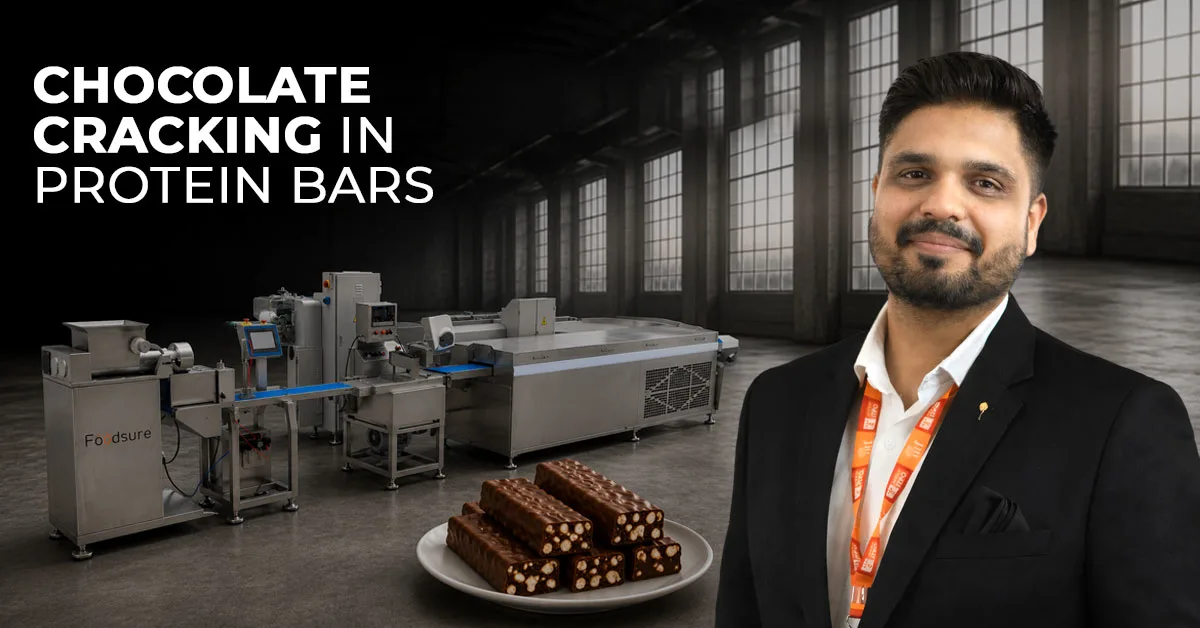
Chocolate coated bars are extremely popular with consumers due to their taste, looks and health benefits.However, manufacturers face quality problems in manufacturing, one of which being Chocolate Cracking in protein bars.
The defects in coating lead to poor looks, customer appeal and shelf life of the bar. The solutions to various causes can prevent these problems.
In this article we highlight common Chocolate Cracking problems in protein bars and their respective solutions.
Why Does Protein Chocolate Bar Crack ?
Chocolate cracking on the protein bar occurs when stress is induced between the coating and the protein bar core due to various factors like temperature variations, inefficient cooling, incompatibility of ingredients or processing errors.
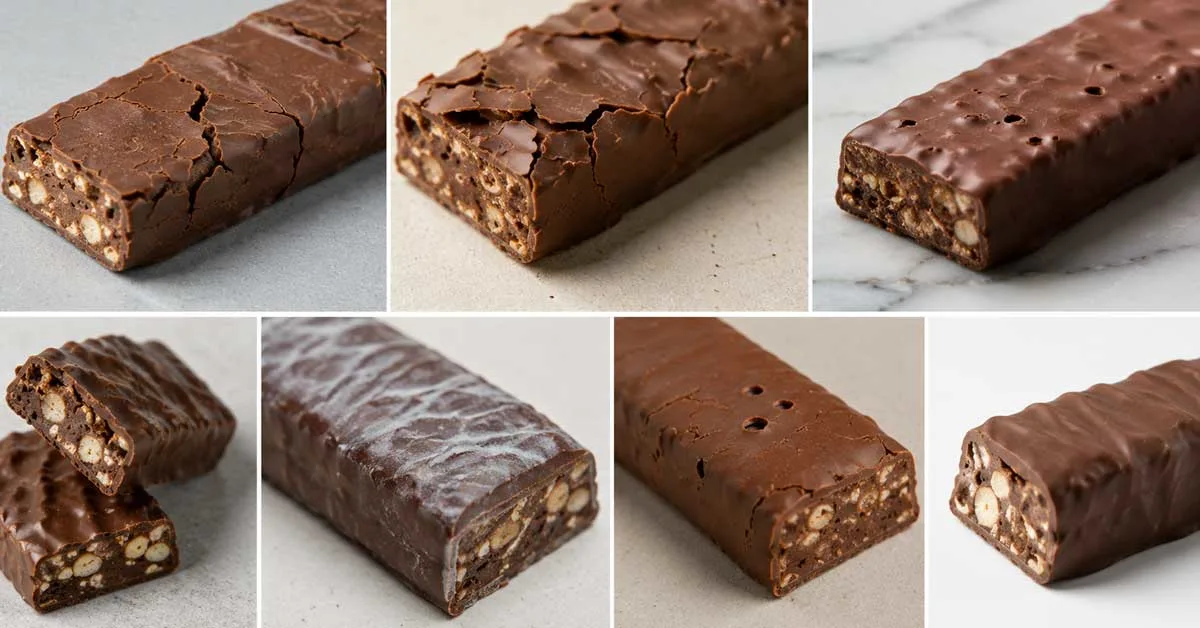
Signs of Cracking:
- Surface cracks
- Hairline fractures
- Chocolate peeling
- Separation of coating
- Odd looks of the bar
Some of the commonly occurring Chocolate Coated Protein Bar Defects.
Common Chocolate Cracking Issues in Protein Bars
Issue 1: Rapid cooling after coating
This is one of the most commonly found causes of Chocolate Cracking in Protein Bar.
Problem
As soon as the bar enters a very low-temperature cooling tunnel, the chocolate shell contracts at a faster rate than the protein core.
Result
- Surface cracks
- Stress cracks
- Bad aesthetics of bar
Solution
- Controlled cooling stages
- Appropriate tunnel temperature
- No dramatic changes in temperature
| Parameter | Range |
|---|---|
| Cooling Temperature | 8°C–15°C |
| Cooling Time | 10–20 Minutes |
| Relative Humidity | Below 50% |
Issue 2: Temperature mismatch of the core and coating.
Temperature mismatch usually creates a Protein Bar Chocolate Coating Problems.
Problem
A warm protein bar core is coated with a cooler coating.
Results
- Imbalance expansion and contraction
- Coating strain
- Visible cracking
Solution
- Allow the core temperature to stabilize prior to coating
- Control production conditions consistently
- Monitor product temperatures.
Issue 3: Incorrect tempering of chocolate
Chocolate tempering affects product stability.
Problem
Unstable crystalline structure when not correctly tempered.
Results
- Brittle coating
- Structural weaknesses
- A rise in Chocolate Cracking of Protein Bars
Solution
- Use correct tempering equipment
- Monitor temperatures closely
- Regular quality tests.
Chocolate Tempering Flow Chart
Issue 4: Protein Bar Expanding On Storage
Storage conditions can also lead to degradation of coating.
Problem
Protein bar core has moisture gain or its composition changed.
Result
- Increased inner pressure
- Stress on the coating
- A variety of Chocolate Coated Protein Bar Defects
Solution
- Moisture proof packaging materials
- Proper storage environment
- The stable storage temperatures should be maintained
Issue 5: High Humidity Level
Humidity is also one of the important factors for the Protein Bar Chocolate Coating Problems.
Problem
The effect of the moisture on stability and adhesion properties of chocolate.
Result
- Surface degradation,
- chipping and cracking.
- Poor appearance
Solution
- Keep the room humidity at a low level.
- Equip the humidity control systems.
- Continuous monitor of the environment.
| Factor | Level |
|---|---|
| Relative Humidity | < 50% |
| Room Temperature | 18°C–22°C |
| Storage Temperature | 15°C–20°C |
Issue 6: Poor compatibility between ingredients
There are certain types of formulations which can contribute to the problem of coating issues.
Problem
Protein core with excess amount of moisture or oil may lead to inadequate binding with chocolate.
Result
- Coating separation
- Surface cracking
- Chocolate Coated Protein Bar Defects on the rise
Solution
- Ingredient optimization
- Compatibility tests
- Adjust the moisture level before coating
Issue 7: Mechanical force imparted during packaging procesz
The issue of Chocolate Cracking in Protein Bars can also be encountered during the process of packaging.
Problem
Excessive force applied during handling or operation of the machines leads to deformation of the coating.
Result
- Breakdown of coating
- Rejection of products
- Customer complaints
Solution
- Optimization of machine settings
- Soft handling / transport mechanism
- Proper training to personnel involved in the operation
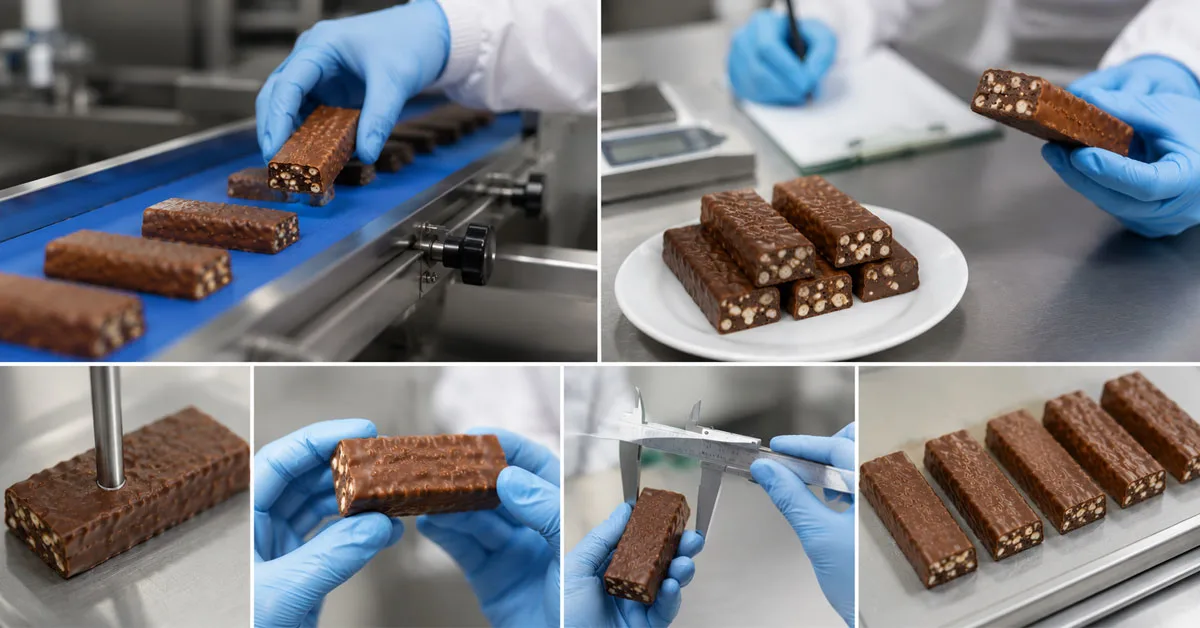
Quality control procedures for preventing cracking
The manufacturers should apply rigorous quality control during the entire production process.
Checklist
- Temperature of the chocolate
- Temperature of the core
- Parameters setting in cooling tunnel
- Level of humidity
- Quality of the packaging
- Conditions of the storage
This can minimize the Protein Bar Chocolate Coating Problems to the lowest possible extent.
Root Cause Analysis Flow Chart
The Effect of Production Design On Quality Control
Designing an appropriate factory configuration is beneficial in preventing many common coating issues. During the Protein Bar Manufacturing Process the control of temperatures, cooling systems, and the movement of the product is critical.
Manufacturersthat adhere to a well-organized Protein Bar Manufacturing Process tend to have fewer issues with coatings and a more consistent output. The selection of proper equipment can also make a large impact in the efficiency of the Protein Bar Manufacturing Process and minimize damage to the product.
Businesses interested in developing a new factory should focus on quality-control needs for the Protein Bar Manufacturing Process in order to anticipate operational problems.
Foodsure Machines: End-to-End Solutions For Protein Bar Manufacturers
Foodsure Machines is a leading supplier of integrated and flexible manufacturing systems for protein bars. They have a range of services to assist producers of protein bars.
- Services offered:
- Plant Consultation
- Production Line Design
- Machinery Manufacturing
- Plant Installation and Commissioning
- Operator Training
- After Sales Service
Their know-how in protein bar manufacturing assists firms to upgrade their products and improve operational efficiency. Additionally, they offer the “Protein Bar Factory Setup Guide” that can support firms to obtain insights on facility design and equipment choices.
An effectively written “Protein Bar Factory Setup Guide” enables the firm to avoid the issues they may confront in production and build an efficient operating system.
The “Protein Bar Factory Setup Guide” assists the firm on its decision on factory layout, utilities, and automation for its production capacity increase. Successful manufacturing can be driven by the recommendations offered in a thorough “Protein Bar Factory Setup Guide.”
Conclusion
Protein bar chocolate coating defects can affect the product quality and the satisfaction of the consumers. With an appropriate control on cooling conditions, tempering process, humidity levels, and the packaging process, manufacturers can greatly reduce problems caused by cracks. A sound factory setup and quality control procedures are vital in creating an optimal protein bar production system.
FAQs
1.What causes chocolate cracking in protein bars?
Rapid cooling, improper tempering, humidity, and temperature differences between the core and coating are common causes.
2.How can manufacturers prevent chocolate cracking?
Proper cooling control, accurate tempering, humidity management, and optimized packaging can help prevent cracking.
3.Does storage temperature affect chocolate-coated protein bars?
Yes, temperature fluctuations can create stress within the coating and lead to cracking.
4.What are the most common protein bar chocolate coating problems?
Cracking, peeling, bloom formation, coating separation, and surface defects are among the most common issues.
5.Why is chocolate tempering important for protein bars?
Tempering creates stable chocolate crystals, improving coating strength, appearance, and resistance to cracking.




