
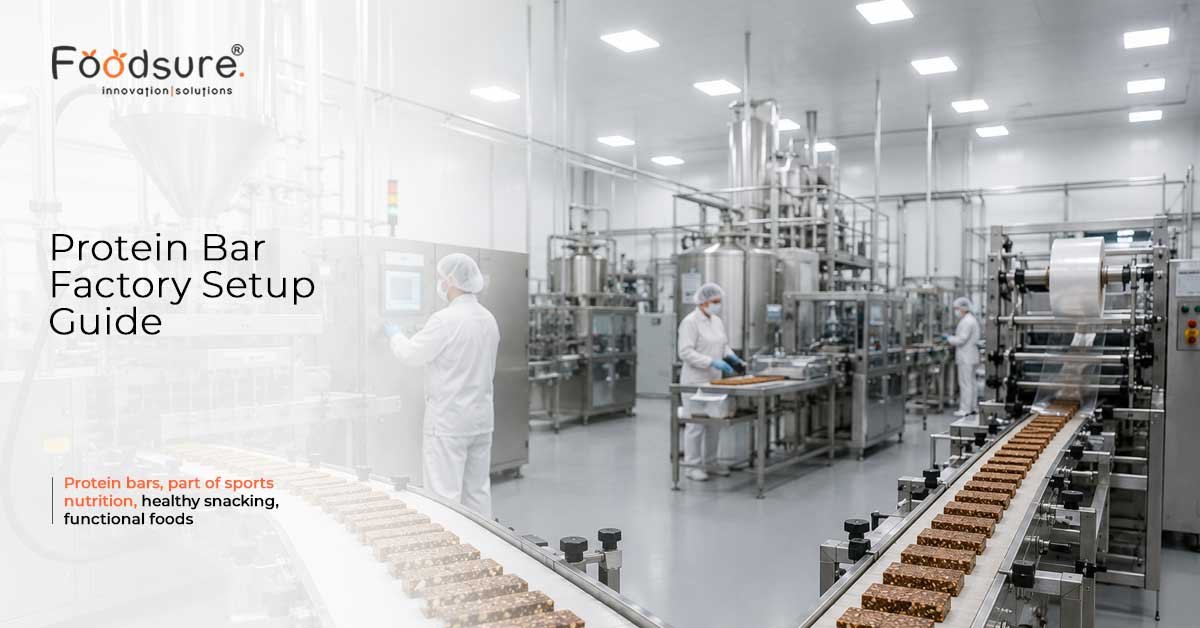
Protein bars, part of sports nutrition, healthy snacking, functional foods and meal replacements category, is one of the fastest growing segments. Consumer desire to consume convenient, high protein and ‘better-for-you’ snacks, across India, UAE, Europe and the USA, has led to multiple startups planning to establish their own protein bar brand.
One of the fundamental challenges being raised is:
How to set up a complete Protein Bar Factory successfully?
This guide has comprehensively explained the complete Protein Bar Factory Setup process in a simple and practical way – machinery, facility requirement, product portfolio, production process, manpower, utilities and business opportunities.
A strategically designed protein bar manufacturing plant allows new ventures to effectively and efficiently produce quality protein bars, which satisfies the food safety, scalability, and market demands.
Why start a Protein Bar manufacturing business?
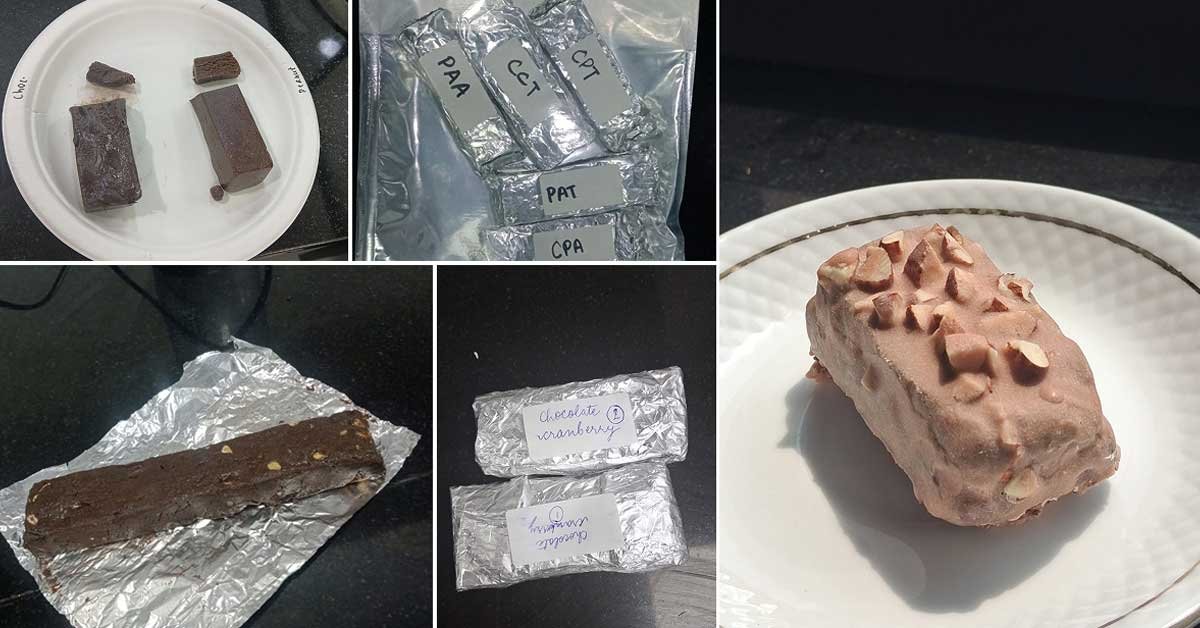
The demand for protein bars continues to increase because consumer needs protein bars for-
- High Protein Snacks
- Healthy Snacks
- Meal Replacements
- Functional Nutrition products
- Sports Nutrition Products
- On-the-Go Nutrition
The increasing popularity to start a protein bar business in sports nutrition, healthy snacks, meal replacement, and functional food categories can be a strong opportunity for aspiring entrepreneurs in this field.
Growing Categories
| Category | Market Potential |
|---|---|
| Protein Bars | Very High |
| Energy Bars | High |
| Nutrition Bars | High |
| Date Bars | High |
| Vegan Protein Bars | Growing |
| Functional Bars | Growing |
| Kids Nutrition Bars | Emerging |
| Keto Protein Bars | Growing |
Step 1: Define your product portfolio.
Before buying any machine, one should determine the products they intend to manufacture.
Recommended launch portfolio.
- SKU Product
- SKU 1 Chocolate Protein Bar
- SKU 2 Peanut Butter Protein Bar
- SKU 3 Date Energy Bar
- SKU 4 High Fiber Nutrition Bar
- SKU 5 Vegan protein bar
- SKU 6 Functional wellness Bar
Starting with a product portfolio of 4 to 6 SKUs will help you to test the market while simultaneously ensuring operational efficiency.
Step 2: Select the appropriate Protein Bar machine.
One of the most crucial decisions to be made in the production of protein bars, that is; deciding on which Protein Bar Making Machine, directly impacts the potential capacity of production, the consistency of product and the expansion for future.
Your decision on machines determines your future scalability.
Machines options
| Machine | Application |
|---|---|
| Single Extrusion Protein Bar Machine | Standard Protein and Nutrition Bars |
| Twin Extrusion Protein Bar Machine | Filled Bars with Cream, Fruit Paste, or Other Centers |
| Chocolate Enrobing Machine | Chocolate-Coated and Premium Protein Bars |
| Cooling Tunnel | Chocolate Stabilization and Product Cooling |
| Flow Wrap Machine | Automatic Bar Packaging and Sealing |
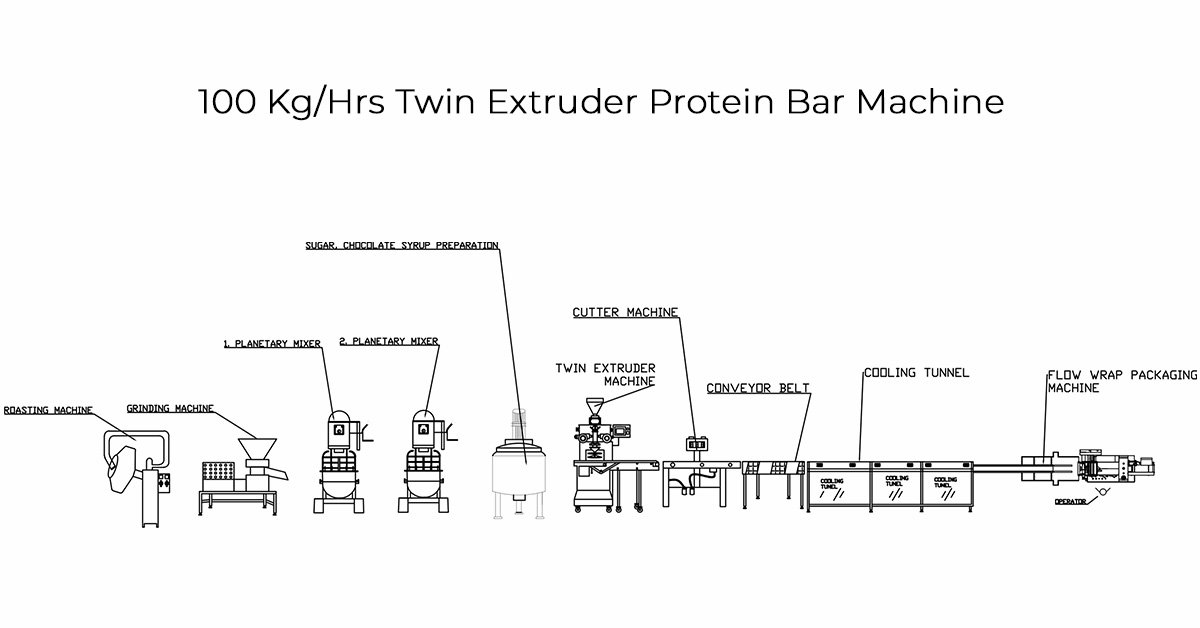
Full Protein Bar Production Line mainly involves mixing, extrusion, cooling, cutting, enrobing and packaging machines to work for continuous production.
Recommended capacities:
| Stage | Capacity |
|---|---|
| Startup | 100–200 kg/hr |
| Growing Brand | 200–500 kg/hr |
| Large Commercial Plant | 500+ kg/hr |
Modern protein bar machine solutions are available in different capacities, allowing startups to begin with smaller production volumes and scale up as demand grows.
Today, the 200 kg/hr Twin Extrusion Protein Bar Machine is mostly preferred by start-ups as it can support future expansions.
A properly configured protein bar machine unit can support multiple product formats, including protein bars, energy bars, vegan bars, and filled functional bars.
Step 3: Choose the right Factory Space.
A well-designed factory can enhance efficiency and food safety standards.
Recommended area
| Area | Suggested Size |
|---|---|
| Production Area | 3,000–4,000 sq ft |
| Raw Material Storage | 1,500 sq ft |
| Packaging Material Storage | 1,000 sq ft |
| Finished Goods Storage | 2,000 sq ft |
| QA/QC Area | 500 sq ft |
| Office & Utilities | 1,000 sq ft |
| Total Facility | Approx. 10,000 sq ft |
The overall Protein Bar Factory Setup Cost depends on factors such as facility size, automation level, utility requirements, production capacity, and packaging infrastructure.
Step 4: The Layout of the Factory
A well-designed layout of the factory aims to prevent cross-contamination as well as ensuring efficiency.
Step 5: Utilities Needed
A protein bar factory, like any factory, is going to have a set of supporting utilities.
Electrical Requirements
| Parameter | Requirement |
|---|---|
| Connected Load | Approx. 65 kW |
| Power Supply | Three Phase |
| Stabilizer | 75–85 kVA |
| UPS | Extruder & Packaging Machine |
Compressed Air
| Requirement | Specification |
|---|---|
| Compressor | 10 HP |
| Type | Food Grade Oil-Free Preferred |
Water
Protein bar production uses relatively low water.
| Requirement | Value |
|---|---|
| RO Water | 100 L/day |
| TDS | Below 30 ppm |
| Hardness | Below 50 ppm |
Step 6:HVAC & Temperature Control
Perhaps one of the most ignored elements in protein bar manufacturing is climate control.
Ideal environmental conditions:
| Area | Temperature |
|---|---|
| Production | 18–22°C |
| Enrobing Zone | 18–20°C |
| Packaging | 20–22°C |
| Storage | Below 25°C |
Relative Humidity
< 50 % RH
This is important in:
- Handling of Chocolate
- Stability of texture
- Shelf life
Step 7: Learn About The Manufacturing Process
The Manufacturing flow chart for Protein Bars
Protein Bar Manufacturing Flow Chart
Advantages of Automation
- Increased output
- Consistent quality
- Reduced waste
- Improved weight control
Step 8: Product Development & Formulation
The machine alone will not make a product successful.
There needs to be a suitable formulation:
- Right choice of protein
- Texture balance
- Shelf-life testing
- Cost-efficiency
- Sensory panel testing
Complete Protein Sources –
| Ingredient | Application |
|---|---|
| Whey Protein Isolate | Premium Protein Bars |
| Whey Protein Concentrate | Cost-Effective Protein Bars |
| Milk Protein Concentrate | Soft Texture Protein Bars |
| Pea Protein | Vegan Protein Bars |
| Rice Protein | Vegan Protein Bars |
Step 9: Packaging Selection
Packaging plays a critical role in shelf life.
| Format | Application |
|---|---|
| Flow Wrap | Standard Packaging |
| Metallized Film | Premium Packaging |
| High Barrier Laminate | Long Shelf-Life Products |
| Retail Cartons | Multipack Packaging |
Packaging Goals
- Protection against moisture
- Barrier to oxygen
- Improved look
- Store-ready
Step 10 Quality control systems.
A system should exist for all protein bar factories.
| Test | Purpose |
|---|---|
| Moisture | Shelf Life Assessment |
| Protein | Nutrition Claim Verification |
| Weight Compliance | Regulatory Compliance |
| Microbiology | Food Safety Validation |
| Sensory | Consumer Acceptance & Product Quality |
Step 11: Develop Private Label Business
The one major opportunity in protein bars is through Contract Manufacturing.
So many brands would rather hire another factory instead of building their own facilities.
Private Label Opportunities
- Sports Nutrition Brands
- D2C Brands
- Nutrition Companies
- Functional Food Start-Ups
- Import companies from foreign countries
Benefits –
| Benefit | Impact |
|---|---|
| Better Capacity Utilization | Higher Revenue |
| Lower Risk | Multiple Clients |
| Faster Growth | Scalable Business |
Step 12: Developing the product portfolio.
Once 6 SKUs are launched, grow progressively.
| Phase | Products |
|---|---|
| Phase 1 | Protein Bars |
| Phase 2 | Energy Bars |
| Phase 3 | Vegan Bars |
| Phase 4 | Functional Bars |
| Phase 5 | Meal Replacement Bars |
| Phase 6 | Premium Enrobed Bars |
Maximizing machine use and achieving good market share are enabled by this.
Common Start-up Mistakes
Mistake 1: Buying machines without final products.
Mistake 2: Not considering air conditioning requirements.
Mistake 3: Not anticipating packaging.
Mistake 4: Not testing shelf life.
Mistake 5: No private label strategy.
Mistake 6: Not looking past the recipe; thinking only about making it and not the entire business of it.
Why is Twin Extrusion Machine popular
With the rise of filled/indulgent bars to replace bars from International Brands.
Possible Products
- Filled Protein bars
- Cream filled bars
- Barebells style bars
- Layered bars
- Premium Functional bars
Benefits
- Premium price point
- Improved consumer experience
- Strong differentiation
This category is expected to drive forward future growth in the protein nutrition.
How Foodsure can help protein bars start-up?
Foodsure Machines can offer the following to protein bar startups:
- Protein bar recipe formulation
- Protein bar machine selection
- Factory layout designing
- Product development
- Scale up support
- Packaging solutions
- Contract manufacturing services
- Private label business development services
From the start to the market, Foodsure Machines helps protein bar startup to establish their scaled-up business.
Conclusion –
Setting up a Protein bar factory requires much more than acquiring a Protein Bar Machine.
Key success factors are:
- A correct product mix
- A correct range of machinery
- Appropriate factory layout
- Temperature control system
- Quality control
- Packaging expertise
- Proper product development
The set up of a well-planned protein bar factory would enable manufacturers of protein bars, energy bars, nutrition bars, vegan bars, functional bars and premium enrobed bars to create strong positions for both branded sales and private label production.
If your ambition is to set up a competitive and scaled-up protein bars business, making the best factory setup choice from day one is the wise thing to do.
It is important to choose reputable and experienced protein bar machine manufacturers as it will guarantee reliable equipment performance and guarantee technical support, installation guidance, and capacity to support future production expansion.
FAQs
1. How much investment is required to start a protein bar manufacturing unit?
A startup protein bar factory typically requires an investment of ₹50 lakh to ₹3 crore depending on capacity and automation.
2. What machines are needed for protein bar production?
A protein bar factory requires a mixer, extruder, cooling system, packaging machine, and optional chocolate enrobing equipment.
3. How much space is required for a protein bar factory?
Most commercial protein bar factories require approximately 5,000–10,000 sq ft of production space.
4. What licenses are required to manufacture protein bars in India?
FSSAI registration, GST registration, factory license, and local statutory approvals are generally required.
5. What is the production capacity of a startup protein bar factory?
Most startup facilities begin with a production capacity of 100–200 kg per hour.




