
The leading cause of failed chocolate coatings are errors in the temperature control of your Chocolate Enrobing Machine. Proper Chocolate Enrobing Temperature Control is essential for achieving consistent coating quality and appearance. Although the purchase of a quality machine is important, it is still very common for manufacturers to experience problems such as:
- Chocolate Bloom
- Lack of Gloss
- Chocolate Cracking
- Tacky Surface
- Dull look to the Chocolate
- The Chocolate pulling away from the product
- High Chocolate Consumption.
Nearly every time the problem is temperature. A well controlled chocolate enrobing line not only adds value to the final product, but also cuts out product waste and improves consumer purchase rates. This Chocolate Coating Temperature Guide helps manufacturers understand critical process temperatures.
Here at Foodsure Machines we assist manufacturers fine tune their chocolate coating line for protein bars, energy bars, cookies, wafers, and functional snacks.
This Chocolate Coating Temperature Guide helps manufacturers understand critical process temperatures. We describe all about chocolate temperatures in plain terms.
Chocolate temperature coating control is paramount to a successful product. A change of only a few degrees effects.
- The look of the Chocolate coating
- The Texture of the coating
- The Gloss of the coating
- The Snap of the coating
- The shelf life of the coating
- Consumer appearance and perceptions.
The consumer notices defects immediately on the finished product.
A smooth and shiny coating look suggests a quality product whereas a dull grey coating does the reverse.
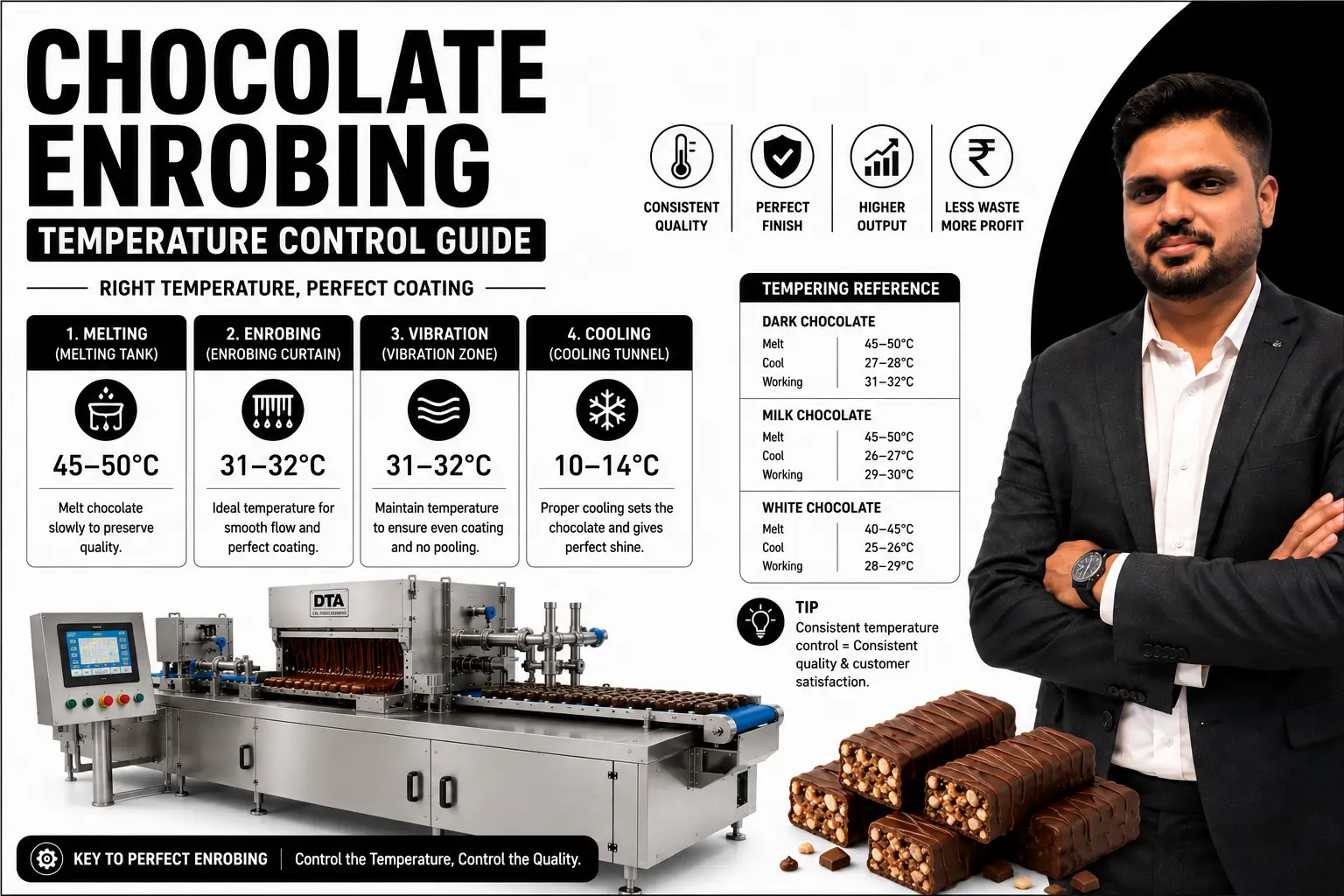
Complete Chocolate Enrobing Process Flow
Every stage requires temperature adjustment.
Temperature consistency in the process is key to a successful protein bar chocolate coating.
Critical Temperature Zones
Zone 1: Melting Chocolate
The goal is to fully melt chocolate before tempering.
Typical Temperature Ranges
- Compound Coating: 40C to 45C
- Dark Chocolate: 45C to 50C
- Milk Chocolate: 40C to 45C
- White Chocolate: 40C to 45C
Points to Note:
- Do not overheat chocolate
- Stir constantly
- Even melting is very important
Overheated chocolate can damage flavor and texture..
Zone 2: Chocolate Tempering
Tempering is the most important process.
The aim is to form stable cocoa butter crystals.
Advantages of tempered chocolate include:
- Better Gloss
- Better Snap
- Reduced bloom
- Better shelf-life
Typical Tempering Temperatures
| Type | Melt | Cool | Work |
|---|---|---|---|
| Dark | 45–50°C | 27–28°C | 31–32°C |
| Milk | 40–45°C | 26–27°C | 29–30°C |
| White | 40–45°C | 25–26°C | 28–29°C |
Zone 3: Product Temperature before Enrobing
Most manufacturers think about chocolate temperature only.
Product temperature is equally important.
Protein Bars
Suggested: 18C to 24C
Energy Bars
Suggested: 18C to 24C
Cookies
Suggested:
- Ambient Stable Temperature
Products too cold would cause cracking.
Products too hot would create defective coating.
Proper chocolate enrobing temperatures will ensure you don’t end up with bloom, cracks, and dull coatings.
Zone 4: Chocolate Enrobing Machine
Here the actual coating takes place.
Chocolate must be at a stable working temperature.
A well-adjusted chocolate enrobing machine will give even coverage and waste minimal.
Typical Working Temperatures
Dark Chocolate: 31C to 32C
Milk Chocolate: 29C to 30C
White Chocolate: 28C to 29C
Foodsure Enrobing systems ensure that the chocolate is at a stable temperature all throughout. Present-day Foodsure Chocolate Machine setups ensure very controlled temperatures are maintained throughout the enrobing process.
Advantages include:
- Uniform coating
- Better visual appeal
- Reduced waste
- Consistency of product quality.
Zone 5: Cooling Tunnel
After coating, products go into the cooling tunnel.
The objective is smooth and stable solidification of chocolate.
Typical Cooling Tunnel Temperatures
8C to 12C
Cooling Time
- Dependent on product size
- Dependent on coating thickness
Advantages:
- Better gloss
- Better snap
- Stable coating
- Ready for packaging.
Too fast cooling is undesirable.
The more gradual the cooling, the better the results.
By thoroughly reviewing the Chocolate Coating Temperature Guide, the efficiency of the cooling tunnel could be enhanced.
Typical Problems Due to Temperature
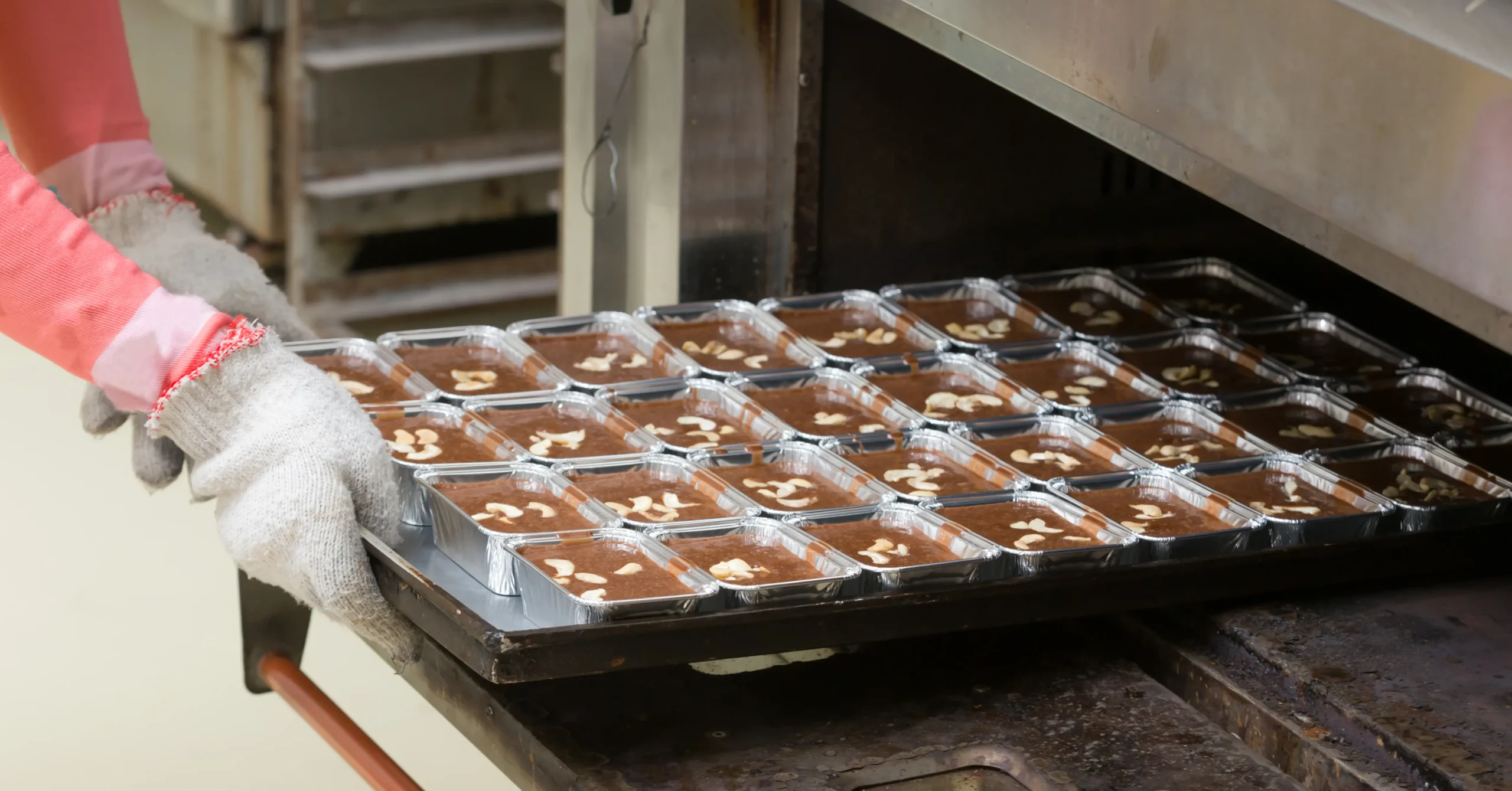
01 Problem: Blooming (White Bloom)
Causes:
- Incorrect tempering
- Temperature variation
- Incorrect storage
Solution:
- Correct tempering procedure.
- Control warehouse temperature.
- Stable cooling process.
Good Chocolate Enrobing Temperature Control significantly reduces bloom-related defects.
02 Problem: Chocolate cracking
Causes:
- Cold product
- Fast cooling
- Excessive coating thickness
Solution:
- Product temperature correct.
- Cooling tunnel settings optimize.
- Coating thickness adjusts.
Constant protein bar chocolate coating requires the temperature of both the product and the chocolate to be balanced.
03 Problem: Matte effect of chocolate
Causes:
- Incorrect tempering
- Humidity in the workshop.
- Improper cooling
Solution:
- Tempering process checked
- Workshop controlled for environmental
parameters
- Cooling tunnels efficiently.
This topic is also often covered in detail in a complete chocolate manufacturing guide
04 Problem: Sticking on the surface
Causes:
- Cooling insufficient
- Workshop ambient temperature is high
- Incorrect tempering
Solution:
- Cooling increases efficiency.
- Chocolate temperature check.
- Process controlled correctly.
Foodsure Recommendation on Chocolate Coating Line
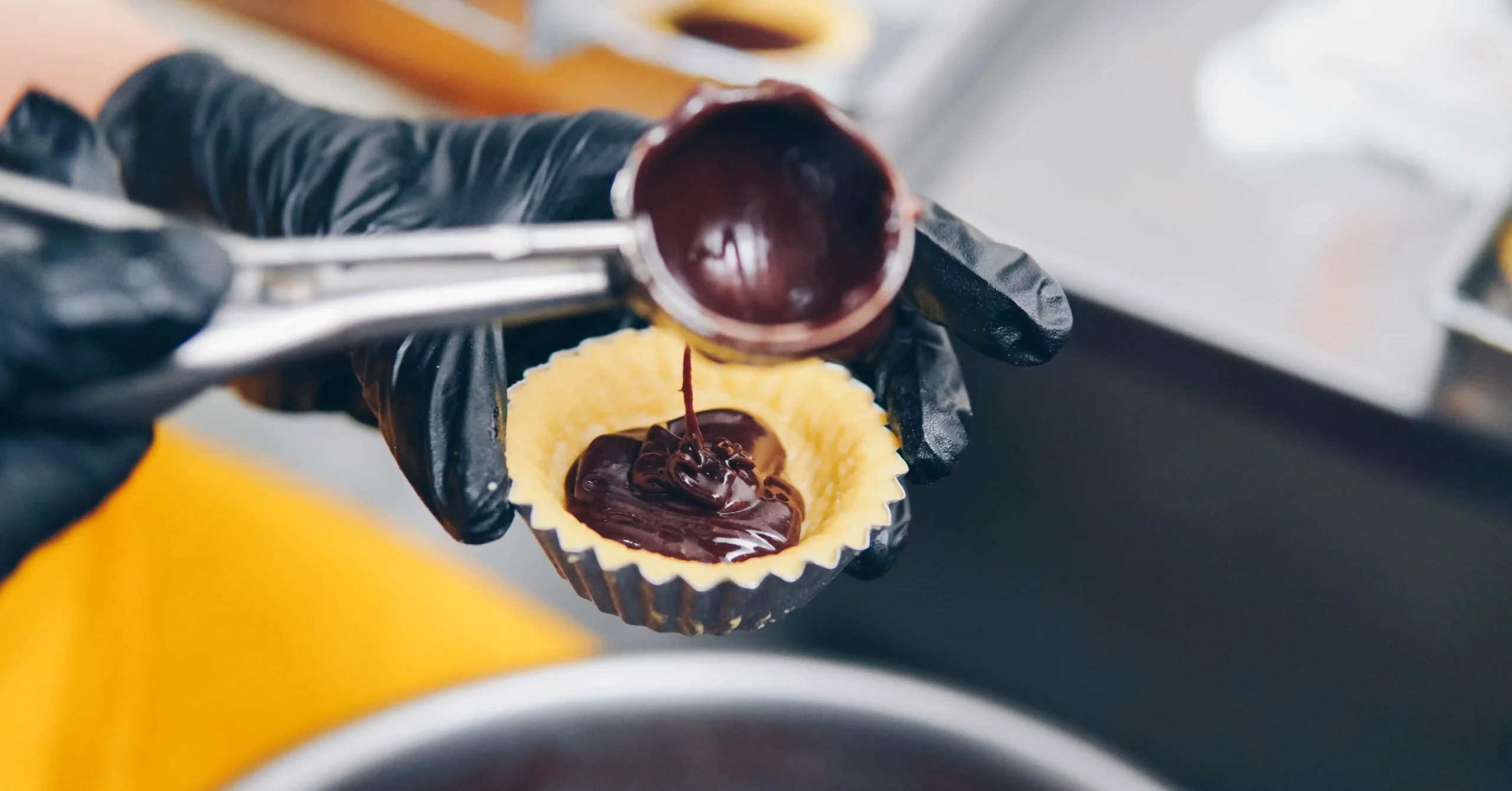
Complete commercial line configuration includes:
Chocolate Zone
- Melting tank for chocolate.
- Tempering machine for chocolate.
- Holding tank for chocolate.
Enrobing Zone
- Enrobing machine.
- Air blower system.
- Vibrator zone.
Cooling zone
- Cooling tunnel.
Packing zone
- Flow wrapper packing machine.
- Nitrogen filling system.
- Metal detector.
The complete line has great improvement of consistency.
The entire chocolate enrobing machine system results in better product quality and a stable production process. Through Foodsure chocolate machine technology, operational loss can be reduced.
Read More : chocolate coating machine price in India
Conclusion
Chocolate coating is dependent on the Chocolate Enrobing Machine alone.
You need to have control over the working temperature at all stages:
- Chocolate Melting
- Tempering
- Product Conditioning
- Enrobing
- Cooling
- Packaging
Precise Chocolate Enrobing Temperature Control: Better quality and efficiency.
Manufacturers that can control this parameter have:
- Improved Product Appearance
- Reduced Wastage
- Improved Shelf Life
- Enhanced Customer satisfaction
A properly designed chocolate manufacturing guide could assist the manufacturer in each step of the manufacturing processes.
Foodsure works with you to provide:
- Chocolate Enrobing Machines
- Protein Bar Production Lines
- Chocolate coating optimizing services
- Cooling Tunnel Systems
- Factory setup consultant services
- Commercial scale-up consultant services
Foodsure Machines provides tailored chocolate enrobing solutions for food brands in growth
Frequently Asked Questions
01. What is the optimal temperature of the chocolate when coating Protein Bars?
It is important that the temperature working is specific for each type of chocolate used. However, for dark chocolate a temperature of 31 C – 32 C usually works well for coating, while milk chocolate can be coated as low as 29 C – 30 C.
02. Why does the chocolate bloom after the protein bars are wrapped?
This occurs mostly as a result of inadequate tempering, fluctuating temperatures, and inadequate storing.
03. Why is the chocolate coating on my protein bars cracking?
Usually cracking can occur if the products are too cold when going in for coating, or if cooling is too rapid.
04. What should the cooling tunnel temperature be?
Most commercial setups run between 8 C – 12 C depending on the specifications of the protein bars.
05. Can I coat Protein Bars without tempering?
It is recommended that you temper your real chocolate coating to improve gloss, stability and shelf-life.
06. What is the most critical temperature in chocolate coating?
Usually the tempering temperature is the most critical one.




