This protein bar manufacturing process flow chart is a detailed explanation of various controllable stages involved in the production process of protein bar machine from its raw ingredients to ready to be distributed finished protein bar products. Understanding each of the steps involved in the production process would enable the manufacturers to control the quality, consistency and food safety while increasing the production efficiency.
This guide elaborates the full protein bar manufacturing process and explains by flow chart, equipment and production stages.
The protein bar manufacturing process involves ingredient selection, weighing, mixing, blending, forming, cooling, cutting, optional chocolate coating, quality inspection, and packaging. Commercial production uses automated machinery to ensure consistent weight, texture, and product quality.
Protein Bar Manufacturing Process Flow Chart
Step by Step Protein Bar Production
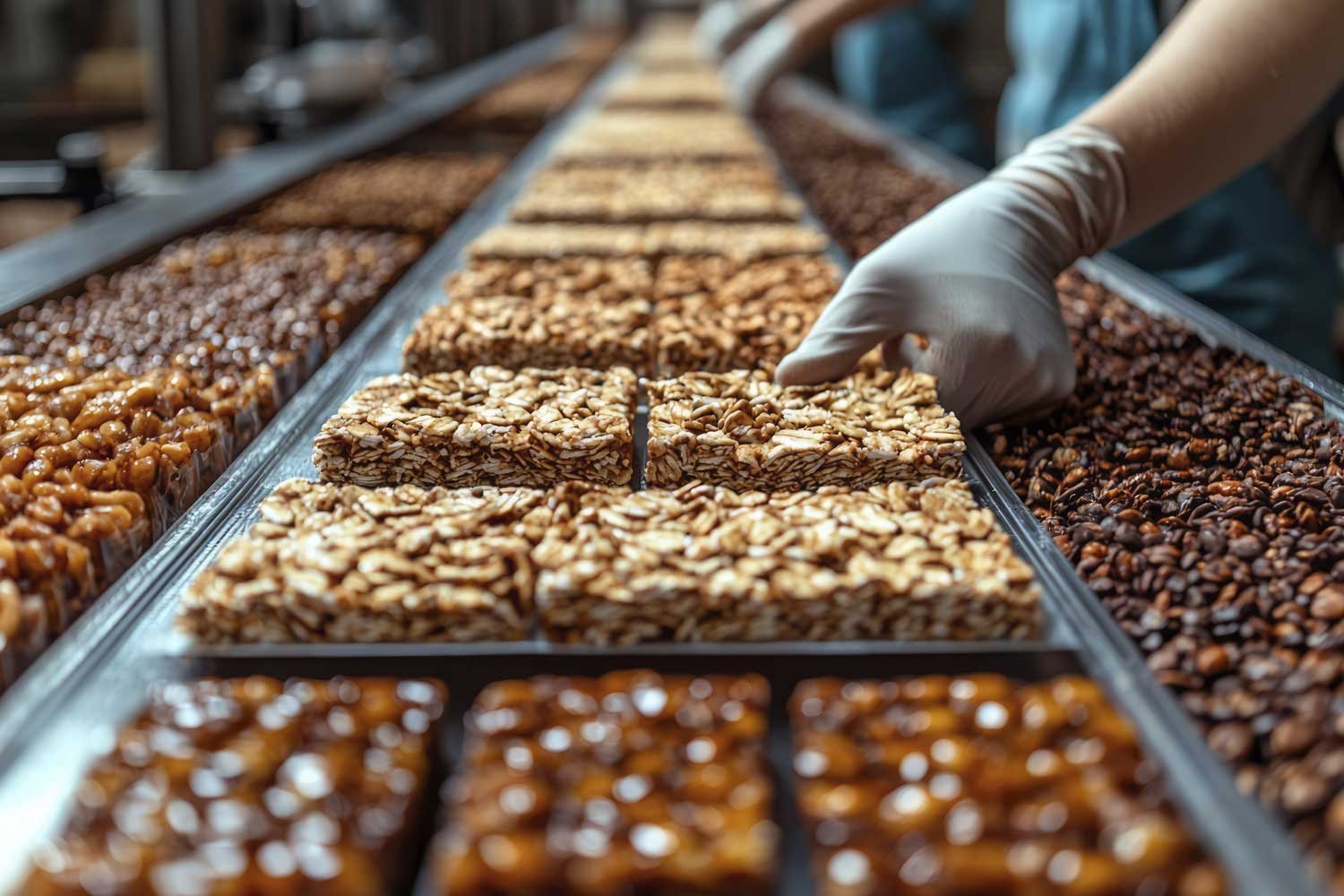
The step-by-step protein bar production process creates consistency in texture, flavor and nutritional profile of the product.
| Stage | Purpose | Key Output |
|---|---|---|
| Raw Material Receiving | Source Ingredients | Approved Materials |
| Inspection & Testing | Verify Quality and Safety | Tested Ingredients |
| Batching | Accurate Ingredient Measurement | Production Batch |
| Mixing | Uniform Ingredient Blending | Homogeneous Mixture |
| Forming | Shape the Product | Continuous Bar Sheet |
| Cutting | Create Desired Sizes | Individual Bars |
| Cooling | Stabilize Texture | Set Bars |
| Coating | Add Chocolate or Yogurt Coating | Finished Bars |
| Packaging | Protect Product | Retail-Ready Bars |
| Storage | Maintain Shelf Life | Distribution-Ready Stock |
Manufacturing Raw Material Purchases
Raw materials are purchased by manufacturers and can include:
- Protein powder (whey, soy, pea)
- Oats and cereals
- Nuts and seeds
- Sweeteners
- Flavors
- Vitamins and minerals
Ingredients must be food-grade.
- Material Inspection and Testing
Ingredients are inspected and tested for the following before going into production:
- Moisture content
- Microbiological safety
- Ingredient specifications
- Supplier certifications
Approved ingredients are sent for production.
- Weighing and Batching
All ingredients are weighed to match the formula specifications.
Goals:
- Product recipe consistency
- Nutritional integrity
- Waste minimization
Automated scales are often used to weigh ingredients.
- Mixing and blending
Ingredients are poured into large mixers, and all dry ingredients and liquids are then mixed.
Key factors involved:
- Mix time
- Temperature
- Moisture content
Critical for texture and product quality
- Shaping & Extrusion
The mixed batch is fed into extrusion systems, to create continuous ropes or sheet.
| Method | Application |
|---|---|
| Extrusion | High-Volume Production |
| Slab Forming | Dense Protein Bars |
| Molding | Specialty Products |
- Cutting and Forming
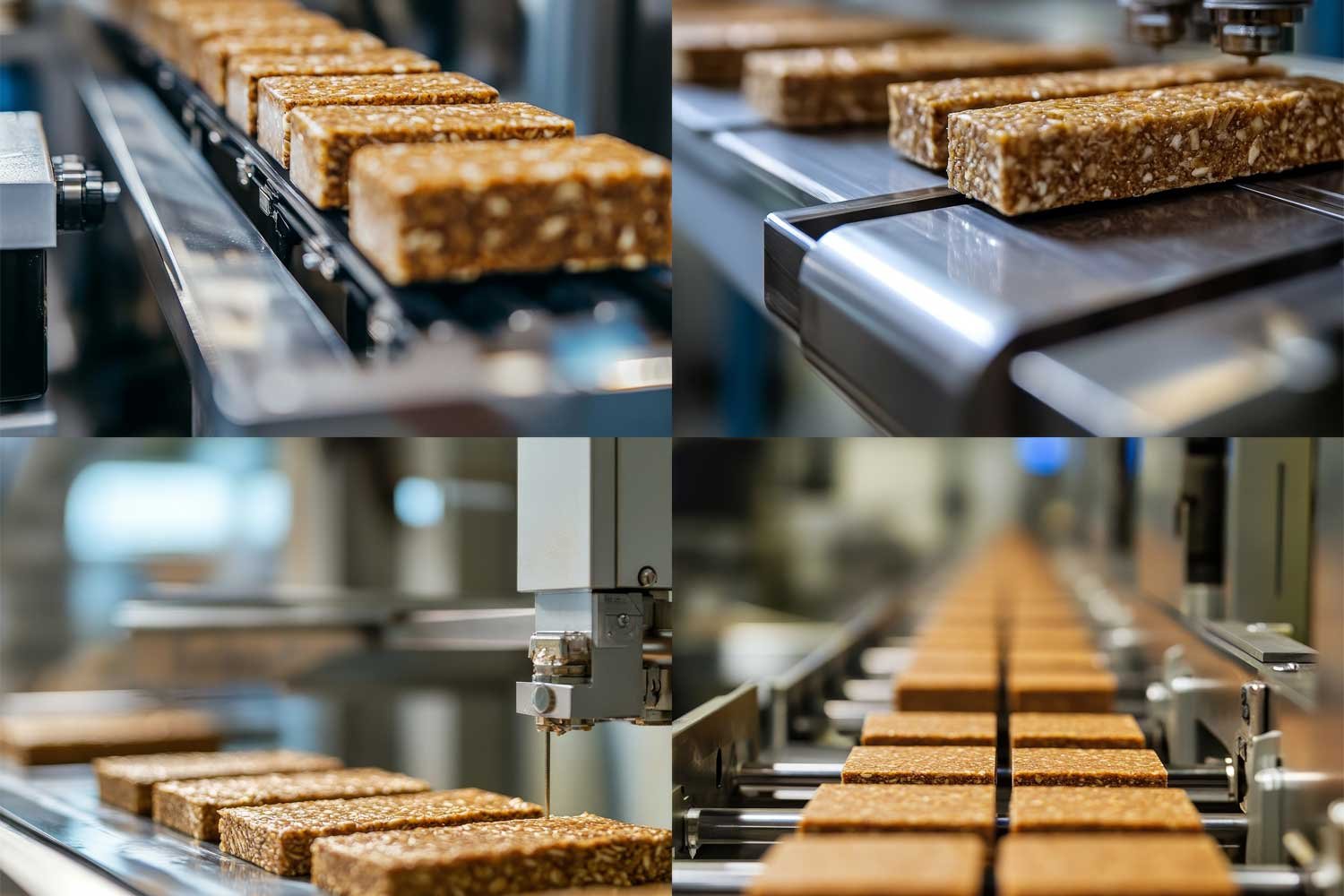
The continuous sheet is separated into bars using an automated cutting device. Some important settings to adjust are:
- Weight uniformity of the bars
- Size of the bars
- Condition of the edges
By cutting accurately, material is wasted less.
- Cooling/Setting
The freshly produced bars need to be set properly.
Cooling Procedures:
The advantages are:
- texture improvement,
- prevention of deformation and
- efficient handling efficiency.
- Coating (Optional)
Depending on the requirements of the product, bars may be given;
- Chocolate coating;
- Yogurt coating;
- Caramel layer;
- Protein drizzle.
Coating systems provide even coverage and ensure the desired coating thickness.
- Quality Inspection
Quality inspections are performed at all stages of the process. Parameters for inspection include:
- Weight control;
- nutritional composition control;
- product appearance control;
- texture control;
- microbial safety control;
- packaging control.
Products that do not meet specifications are discarded from the line.
- Packaging
The role of packaging is to protect the product from moisture, oxygen and contamination.
Typical packaging used:
- flow wrap packaging;
- pillow packs;
- multi-packs or outer cartons.
Common packaging line features include:
- Date coding and batch coding;
- metal detection;
- check weighing.
- Storage and Distribution
The finished products are stored at room temperature, in controlled environments prior to distribution.
Standard storage controls:
- Storage conditions such as temperature;
- stock control;
- stock rotation.
Manual vs Automatic Protein Bar Manufacturing
| Feature | Manual | Automatic |
|---|---|---|
| Capacity | Low | High |
| Labour | High | Low |
| Consistency | Moderate | Excellent |
| Scalability | Limited | Excellent |
Protein Bar manufacturing equipment layout:
A good design of protein bar manufacturing equipment layout increases efficiency of production and enhances the flow of products.
| Production Area | Equipment |
|---|---|
| Raw Material Handling | Storage Bins, Conveyors |
| Batching | Weighing Systems |
| Mixing | Ribbon Mixers, Planetary Mixers |
| Forming | Extruders, Slab Formers |
| Cutting | Guillotine Cutters |
| Cooling | Cooling Tunnels |
| Coating | Enrobers, Coating Systems |
| Inspection | Metal Detectors, Checkweighers |
| Packaging | Flow Wrappers, Cartoners |
Typical Layout Flow
Read More :- protein bar market
How To Start A Protein Bar Business
The setup of manufacturing the protein bar business should be focused on:
Product formulation development
- Regulatory conformance
- Equipment purchasing
- Supplier certification
- Quality management system
- Packaging design
- Distribution pathways
A process line for scalability would make the transition for expansion seamless without compromise in product quality.
It is essential that the protein bar manufacturing process is validated prior to starting production at a commercial scale.
Conclusion
The protein bar manufacturing process begins with selecting ingredients and conclude with packaging and distribution. Through accurate batching, mixing, forming, cooling and quality control the uniformity of product quality is obtained. With a well designed production line and equipment layout, efficiency increases and wastage is decreased while also facilitating mass production.
About Foodsure Machines
Foodsure Machines is a food processing consultancy and manufacturing solutions company which offers all the relevant services to guide businesses from the conception phase to the scaling and optimizing of food production activities. In the end, the clients will be provided with support services on product development, factory set up, regulatory affairs, and operational process optimizing for food types.
The firm possesses and utilizes profound industry know-how to help start-ups and experienced manufacturers in creating efficient production lines which also conform to certain safety and quality requirements. By partnering closely with the client, Foodsure Machines works on optimizing operational processes and bringing their products to market faster.
For companies who intend to launch or scale up their protein bar manufacturing operation, Foodsure Machines also provides machine manufacturing and tailor-made production line solutions which may consist of mixing machines, extrusion equipment, cutting machines, cooling tunnels, coating machines and automated packaging line solutions to perfectly match certain product parameters and needs.
Frequently Asked Questions (FAQs)
How do I manufacture protein bars?
The process includes ingredient selection, batching, mixing, forming, cutting, cooling, inspection, packaging, and distribution.
What equipment is needed to make protein bars?
Typical equipment would include mixers, extruders, cutters, cooling tunnels, coating systems, metal detectors, and packaging machines.
What is the process of manufacturing a protein bar?
It depends on the line and the product formula; a process usually lasts between a couple hours to one whole production shift.
What quality controls are utilized when making protein bars?
Weight, texture, looks, nutrition data, micro analysis and packaging analysis are carried out to produce an excellent bar.
How can I succeed with starting a protein bar business?
To have a market ready formula and gain proper regulatory approvals, ensure you buy the right equipment, apply correct quality controls, and identify viable distribution networks.