
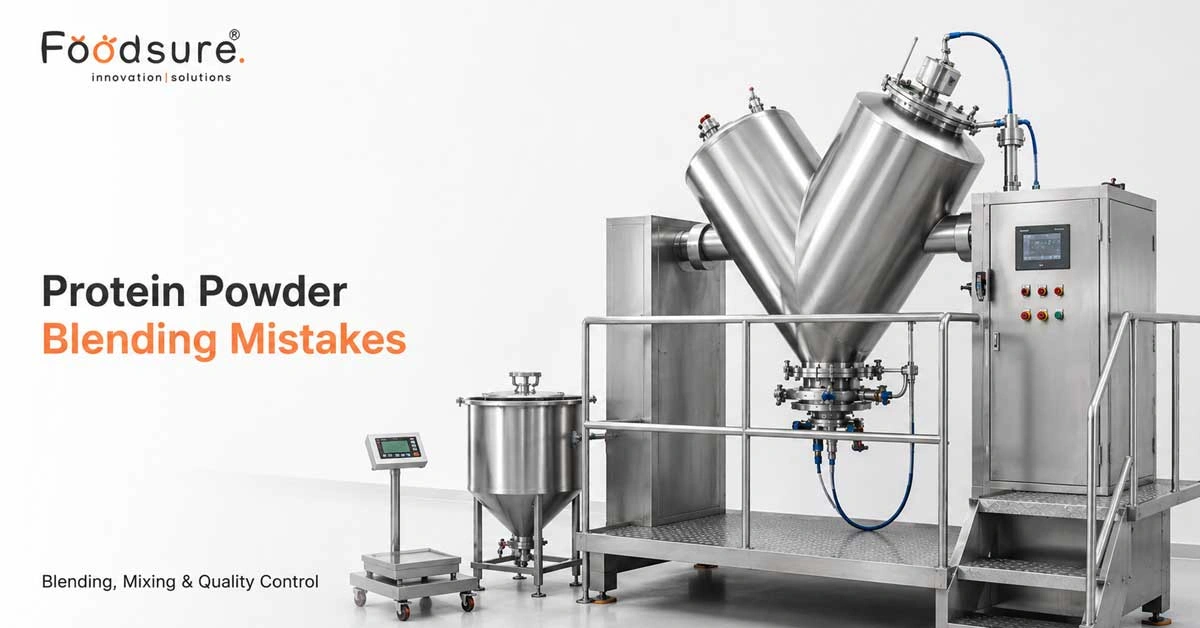
Manufacturing high-grade protein powder is not as simple as blending different components. In contemporary protein powders, there is a combination of different proteins, vitamins, minerals, flavors, and functional ingredients, which need to be evenly dispersed into each batch.There are nume rous instances of protein powder blending mistakes encountered by manufacturers, resulting in improper blending, segregation of ingredients, poor mixability, dust problems, and productivity losses.
Proper knowledge of these protein powder blending problems is very important for increasing quality and efficiency. In this blog, you will be informed about the challenges, their causes, and prevention methods for these blending challenges.
Why Batch Consistency Matters in Protein Powder Manufacturing
For protein powder users, each scoop is expected to have consistency in taste, texture, nutritional content, and mixability. Consistency between batches is an important factor that can quickly erode consumer trust in an environment where consumers are very conscious about the quality of products they purchase.
A consistent Protein Powder Blending Process can enable manufacturers to:
- Provide constant nutritional value in each dose.
- Ensure consistent taste and texture.
- Make the powder more fluid and blendable.
- Minimize rejections and customer complaints.
- Ensure compliance with regulations.
- Establish good brand credibility.
Thus, consistent blending is not only an issue of quality but also an important part of business development.
Understanding the Science Behind Protein Powder Blending
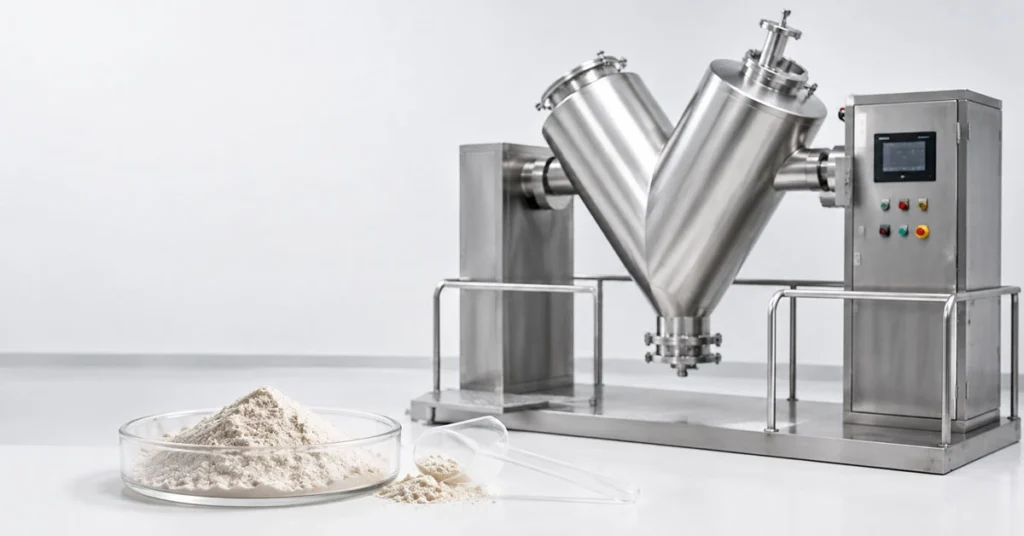
The components present in the protein powder formula exhibit varying particle sizes, densities, moisture sensitivities, and dosages. Protein is usually added in large quantities, while vitamins, minerals, flavors, and other functional agents are added in small amounts.
If the blending is not done under control, the heavier particles may sink while the lighter particles stay concentrated at particular places. This will create batches with uneven composition where the scoops may have varying levels of nutrients or flavors.
The choice of an appropriate protein powder machine and standardization of the blending process help in the distribution of ingredients without causing segregation of ingredients during the manufacturing process.
Common Protein Powder Blending Mistakes and Their Solutions
Sometimes even seasoned producers have problems blending ingredients if certain parameters are not properly regulated. The list below describes some of the most frequently made protein powder blending mistakes.
Uneven Distribution of Micro-Ingredients
Unbalanced Distribution of Micro-Ingredients is among the most prevalent protein powder blending issues. Although the quantities of such ingredients used are minimal, they play an important role in the quality of the products. Such problems usually arise due to the addition of ingredients without premixing.
To avoid poor mixing, manufacturers should:
- Make a micro-ingredient premix
- Add trace ingredients slowly
- Apply accurate dosing systems
- Conduct regular blend uniformity testing
Excessive Shear Force and Heat Generation
The use of high-speed blending machines can lead to excess friction within the mixing process, thus leading to an increase in the temperature of the product. Some protein-based ingredients, such as whey protein isolates and certain plant proteins, can have their properties adversely affected by unnecessary heating over a long period of time.
Selecting the right blending machine that ensures gentle mixing is crucial in ensuring quality and avoiding degradation through excess heat.
Inadequate Mixing Time
Another reason for variation in batches may be reducing the blending time to boost production. Inadequate blending leads to areas of unblended components, leading to inconsistent flavor, nutritional value, and product performance.
Manufacturers need to determine the appropriate blending time for each formula and not stick to a predetermined one for all formulas.
Sampling at different locations in the blender ensures that the batch is consistently blended.
Ignoring Density Differences Between Ingredients
The composition of proteins varies in terms of the size and density of particles, resulting in separation where the denser particles end up settling while lighter particles do not mix evenly.
Manufacturers can minimize this issue by:
- Use compatible particle sizes for all ingredients.
- Avoid any unnecessary handling of the mixture post-blending.
- Move the mixture directly from the blending stage to the packaging process.
Poor Dust Control During Production
Fine protein powder creates dust naturally as a result of loading, mixing, and unloading operations. The absence of an efficient dust extraction system could lead to material loss, variable batch weight, poor housekeeping, and inefficiency in production.
Dust extraction systems will not only improve working conditions but also assist in maintaining accurate yields of batches.
Best Practices for a Consistent Protein Powder Blending Process
Using a standardized protein powder blending process can help minimize mistakes in production while ensuring the highest level of consistency and efficiency during the process.
Manufacturers must:
- Prepare micro-ingredient premixes.
- Stick to validated times for each formulation during the blending process.
- Control the temperature of the product during the process.
- Reduce delays from blending to packaging.
- Employ calibrated weighing/dosing equipment.
- Maintain proper dust collection.
- Perform regular testing on blend uniformity.
Adopting the above strategies will help manufacturers avoid Common Protein Powder Mixing Mistakes.
Protein Powder Batch Quality Checklist
Having a simple checklist before packaging will aid in identifying any blending problems before the product gets into the hands of the consumers.
- Ensure that all ingredients are correctly weighed.
- Ensure that micro-ingredients are correctly pre-blended.
- Validate the blending time for the present batch size.
- Monitor blending temperature.
- Monitor the blend uniformity at various sample points.
- Compare the batch weight and ingredient input weight.
- Move the blend immediately to packaging.
Regular verification will enhance process reliability and minimize batch rejection.
Common Blending Problems and Solutions
Protein Powder Blending Workflow
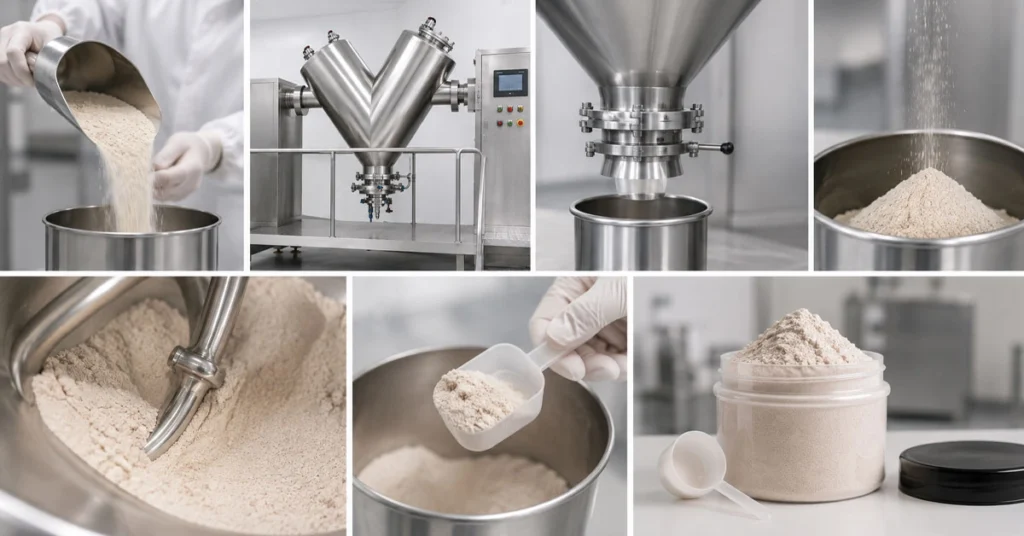
A standardized production sequence helps maintain batch consistency while reducing production variability.
Following this workflow helps manufacturers minimize Protein Powder Blending Mistakes while improving overall production efficiency.
How Foodsure Helps Improve Protein Powder Manufacturing
Foodsure provides complete protein powder manufacturing solutions, including selection of the most appropriate protein powder machine and the enhancement of the blending procedure. We will help you select equipment, develop the procedure, plan the factory design, install the equipment, and optimize the process.
If you are starting a new plant or increasing the capacity of your current facility, we can help you find the best solutions for your needs and production capacity.
Conclusion
Ensuring that there is consistency in the quality of the product starts with not making mistakes during the process of protein powder blending. This may include problems like uneven distribution of micro-ingredients, too much heat creation, insufficient mixing time, settling of ingredients, and lack of dust control.The process of ensuring good protein powder blending can be done through adopting the standardized protein powder blending process, conducting quality checks, and purchasing the right protein powder machine.
Frequently Asked Questions
What are some common Protein Powder Blending Errors?
Some common protein powder blending errors are uneven distribution of micro-ingredients, generation of too much heat during blending, insufficient blending time, segregation of ingredients based on their densities, and poor dust control.
Why is consistency in batches essential while producing protein powders?
Consistency in batches helps ensure that each batch provides the same nutrition, taste, and mixability.
How can manufacturers minimize Protein Powder Blending Issues?
Some ways in which manufacturers can minimize protein powder blending issues include standardization of the blending process, creation of micro-ingredient mixes, verification of mixing time, maintenance of temperature and regular inspection of quality.
How does a good protein powder machine help in manufacturing?
A good protein powder machine helps with efficient blending and distribution of ingredients in the process of manufacturing protein powders.
What is the frequency for testing blend uniformity?
Blend uniformity testing should be done on a regular basis, especially when developing a new product, when there is a change in processes or scaling up the production process.
Why is dust collection an important process during protein powder blending?
The importance of dust collection includes the reduction in losses and weight accuracy of the batches produced.




