
For the past 10 years, we’ve been witnessing tremendous growth of the protein bar business. Consumers are looking for healthy, convenient, and protein-packed snacks. Although making protein bar from scratch at home is pretty straightforward, scaling a recipe for a profitable business is much more complicated. Most startup fail when it comes to this very point.
Understanding of Protein Bar Recipe VS Commercial Production is critical to anyone attempting to enter the functional food industry. There are more elements in commercial production than just increasing a batch of the home-made recipe, from the selected ingredients and production equipment to quality control and distribution.
Read More :- protein bar forming machine
Understanding Protein Bar Market
The international market for protein bars continues to flourish due to increased health consciousness, the fitness phenomenon, people’s fast paced lifestyle and demand for instant nutrition products.
Major Market Drivers –
- The rising sports and fitness nutrition industry
- The increasing popularity of meal replacement bars
- Growing consumer concern about adequate protein intake
- The development of e-commerce and direct-to-consumer brands
- An emerging trend towards clean labels and plant-based food
Market Opportunities
The market opportunity is excellent, yet few start-ups realize how difficult it is to move a homemade recipe to high volume manufacturing.
Homemade Protein Bar Recipe
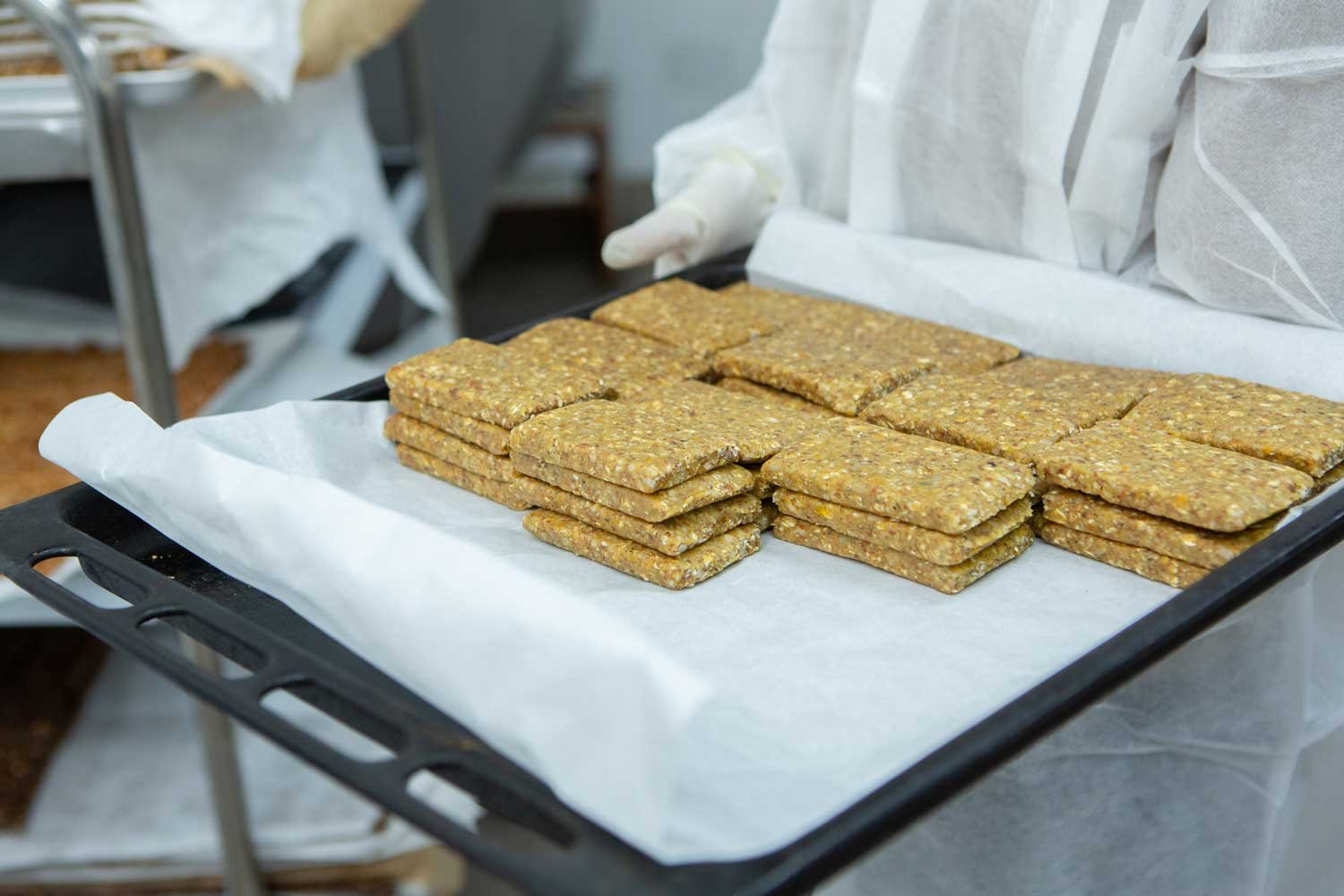
A basic protein bar recipe can be created using readily available ingredients and kitchen equipment.
Essential Ingredients –
Simple Protein Bar Recipe
Ingredients
- 2 cups rolled oats
- 1 cup whey protein powder
- ½ cup peanut butter
- ⅓ cup honey
- ¼ cup chopped almonds
- 2 tablespoons chia seeds
- 2 tablespoons cocoa powder
Tools Required
- Mixing bowl
- Measuring cups
- Spatula
- Baking tray
- Refrigerator
Preparation Steps
- Mix dry ingredients.
- Add peanut butter and honey.
- Blend until a thick mixture forms.
- Press into a lined tray.
- Refrigerate for 2-3 hours.
- Cut into bar shapes.
- Package or consume immediately.
The process can function adequately on a personal scale but is extremely problematic on a production level.
Commercial Protein Bar Production: Core Ingredients
Commercial producers may use slightly more sophisticated formulations to give their products more stability and a longer shelf life than a homemade alternative:
Core Ingredients –
- Whey Protein Isolate
- Whey Protein Concentrate
- Soy Protein Isolate
- Pea Protein
- Oat Flour
- Rice Crisps
- Nut Butter
- Glycerin
- Fiber syrups
- Inulin
- Natural Flavors
- Sweeteners
- Preservatives (if needed)
- Vitamins & Minerals
Functional Ingredients –
Often the ingredient system in commercial production of protein bars is much more intricate than one at home.
Protein Bar Recipe vs Commercial Production
What’s the main difference between the Protein Bar Recipe and Commercial Production is the consistency, scalability, shelf life, food safety and operational efficiency.
This is a common assumption made by most startups, that if it is easy enough to make at home it must be easy enough to produce commercially. In fact commercial production will demand machinery and a certain level of expertise.
Protein Bar Manufacturing Process
The production of protein bars consists of many steps to assure uniformity and quantity.
Step 1: Ingredient Weighing
The raw ingredients are accurately measured using industrial weighing systems.
Step 2: Mixing
Ingredients are combined and blended using industrial mixers to ensure uniformity.
Step 3: Dough Preparation
Protein mixtures are converted into a viable dough. Moisture levels are key and controlled.
Step 4: Forming
The protein dough is converted into the shape of the bar using a protein bar forming machine.
Step 5: Cooling
This ensures that texture and structure is stable for packaging.
Step 6: Cutting
The bars are automatically sliced to the appropriate size using an automatic cutter.
Step 7: Coating (Optional)
The bars may also be coated in a variety of flavorings (yogurt, chocolate, fruit, etc.).
Step 8: Packaging
Automatic wrapper machines seal the bars.
Step 9: Quality Inspection
The final protein bar products are checked for weight, appearance, and safety.
Using all of these steps in combination assures uniformity for thousands of protein bars.
Protein Bar Making Machine
The protein bar making machine can perform all the shaping and forming operations by itself. It is good to achieve high speed, low manpower consumption and quality improvement.
Protein Bar Forming Machine
A protein bar forming machine shapes dough into specified bar dimensions; this machine is crucial to ensure uniform appearance.
Components of a Protein Bar Production Line
A total protein bar production line integrates machines into a unified and automatic system.
Typical Production Line Layout:
- Ingredient Feeding System
- Industrial Mixer
- Dough Conveyor
- Forming Machine
- Cooling System
- Cutting Machine
- Coating Section
- Packaging Unit
- Inspection Station
With a totally automatic protein bar machine, we are able to produce several thousand bars per hour with little labor inputs.
Why the Majority of Protein Bar Startups Fail:
1.Inability to scale from recipe to manufacturing
Most of the entrepreneurs tend to believe that increasing the quantity of ingredients can lead to the production of thousands of bars. However, raw materials behave differently in massive proportions leading to textural problems, varying quality of products, and inefficiency in manufacturing processes.
Ways to Scale:
- Conduct pilot production trials to see how your product behaves at a commercial level.
- Work with food technologists to get formulation optimized.
- Understand the commercial Protein Bar Recipe vs Commercial Production complexities before jumping in the production.
2. Poor knowledge of commercial protein bar production
Whereas the Protein Bar Recipe (homemade) emphasizes on taste and health benefits of the bar, Commercial Protein Bar Production involves consistent product quality, shelf life, food safety and efficiency in manufacturing processes.
Common issues found are:
- Inconsistent product quality.
- Poor shelf-life stability.
- High production costs.
- Production delays.
Ways to Scale:
- Learn food manufacturing principles.
- Develop standard operating procedures (SOPs) for production.
- Seek partnership with an experienced manufacturer if needed.
3.Protein Bar Making Machine selection error
Most startups select machines based on their price, rather than its capability for a specific type of production. If an inappropriate Protein Bar Making Machine is selected it can result in bottlenecks, increase the downtime, and produce inferior quality bars.
Ways to Scale:
- Purchase the equipment based on anticipated production volumes.
- Invest in scalable machinery.
- Evaluate equipment’s service support and expansion needs.
The correct Protein Bar Making Machine can be instrumental to the production efficiency and profitability of your enterprise.
4.Lack of efficient protein bar production line
It is possible that your company is still operating based on manual labor methods, which at higher production volumes can prove extremely ineffective and cost-prohibitive.
An efficient protein bar production line typically involves:
- Mixing.
- Forming.
- Cutting.
- Cooling.
- Packaging.
Without an automated protein bar production line, businesses generally face difficulty in meeting their consumers’ demands.
Ways to Scale:
- Invest in automation early.
- Design the production system for scalability.
- Reduce reliance on labor by investing in automated manufacturing systems.
5.Deficient protein bar manufacturing process
Protein Bar Manufacturing Process is more than just a combination of raw materials. Every stage, from weighing the ingredients to packaging them, impacts the quality of the bar. Most startups are often lacking this control of the production process, which results in:
- Inconsistent product.
- Excessive wastage.
- High operational costs.
- Customer complaints.
Ways to Scale:
- Document every aspect of the protein bar manufacturing process.
- Establish quality control standards.
- Continuous evaluation of the production process.
- Bad bar formation & product consistency
The most ignored aspect of a commercial manufacturing business is the quality of the bars formed. If not formed properly by a suitable Protein Bar Forming Machine, bars can vary in weight, shape, and appearance. Consumers want uniformity, and inconsistencies can negatively affect brand image.
Ways to Scale:
- Invest in a quality Protein Bar Forming Machine.
- Ensure uniformity of dimensions and weight of bars.
- Use automated forming systems for quality enhancement and cost effectiveness.
The Biggest Misconception: A Good Recipe Equals a Good Business
Many founders start with a successful homemade product and assume commercial success will naturally follow. The reality is different.
A homemade recipe may perform well in a kitchen environment, but commercial production introduces challenges such as:
- Shelf-life stability
- Ingredient consistency
- Manufacturing efficiency
- Packaging performance
- Food safety compliance
- Distribution requirements
- Retail expectations
This gap between Protein Bar Recipe vs Commercial Production is where most startups encounter their first major obstacles.
Startup Success Factors
Businesses entering the protein bar market should focus on the following
Product Development –
- Carry out shelf-life testing
- Adjust texture
- Validate nutritional information
Manufacturing Planning –
- Choose the appropriate Protein Bar Making Machine
- Invest in automation that works reliably
- Design the formulation that will scale
Market Strategy –
- Find the correct target customer base
- Work towards brand distinctiveness
- Emphasize customer loyalty
Quality assurance –
- Follow food safety standards
- Keep records for each batch
- Conduct consistent testing
Homemade vs Commercial Production Comparison
Conclusion
This comparison between Protein Bar Recipe and Commercial Production makes it clear why most startups go out of business even with an awesome idea. While a homemade recipe can gauge market demand, success in a large-scale market depends heavily on sophisticated formulation, the right equipment, rigorous quality controls and streamlined production. Companies that know what it takes to engage in Commercial Protein Bar Production, purchase a comprehensive Protein Bar Production Line, and streamline their protein bar production process are most likely to succeed in this market.
Foodsure Machines is a leading food innovation, product development, and manufacturing solutions company that helps food startups and established brands transform ideas into market-ready products. With expertise in formulation, compliance, contract manufacturing, and industrial equipment solutions, Foodsure supports businesses throughout their entire product commercialization journey.
Foodsure Machines is a reliable partner in food innovation and manufacturing that supports startups and scale ups by offering services such as recipe formulation, food consulting, contract manufacturing, FSSAI compliance, commercialization, etc. To move from Protein Bar Recipe vs Commercial Production to successful scale ups, and a comprehensive Protein Bar Production Line for their commercial productions.
FAQs
What is the difference between a homemade protein bar and commercial protein bars?
Commercial protein bars are built for scale, consistency and long shelf-life whereas homemade bars do not have long shelf life .
What kind of machine is used to make protein bars?
Protein Bar Making Machine, also known as protein bar forming machine are typically used in this type of production.
How long can commercial protein bars last?
Most protein bars available in the market last for 6-12 months.
Why do protein bar startups fail?
Poor formulation, unstable production systems and lack of market planning are the most common reasons.
Is the protein bar market growing?
Yes, and with demand for convenience high protein snacks continuing to soar, the market for protein bars is growing exponentially.




