
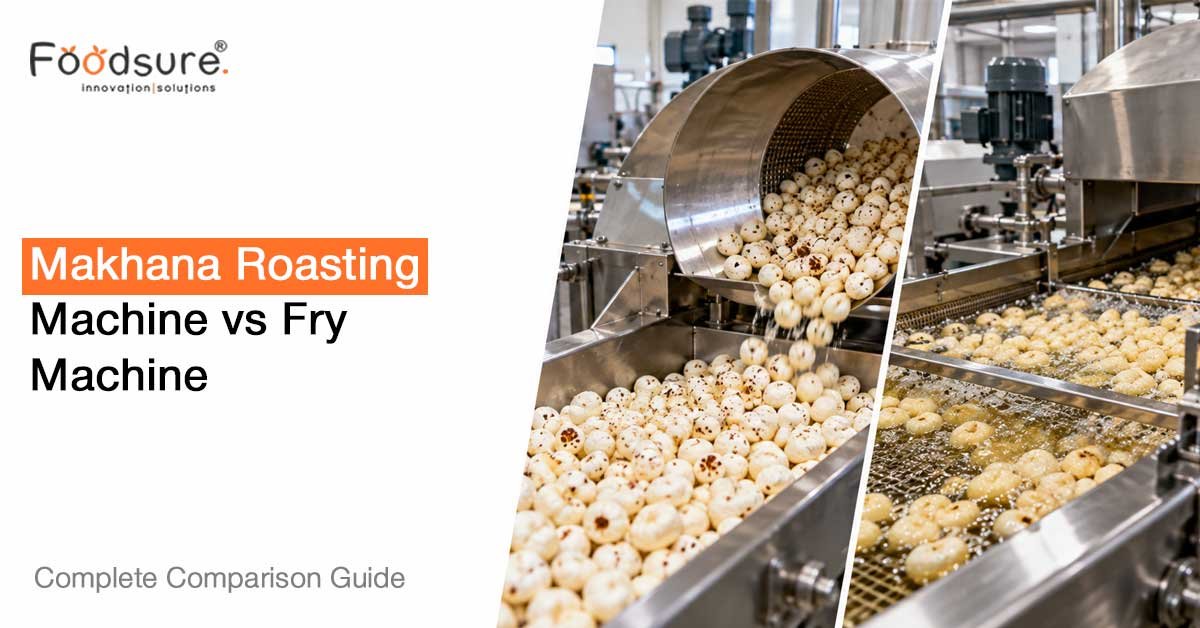
Makhana can undergo various heat processing techniques based on the desired product, texture, manufacturing volume, and business plan. Roasting and frying are two techniques that can be considered for such heat processing of makhana. Although the two techniques are capable of producing ready-to-eat makhana products, their processing procedures differ.
It becomes crucial to know about makhana roasting machine vs fry machine for any business that has to make a decision regarding the most appropriate technology in their commercial production process. This is because there are many things that will depend on the type of technology.
Makhana Roasting vs Frying: What Is the Difference?
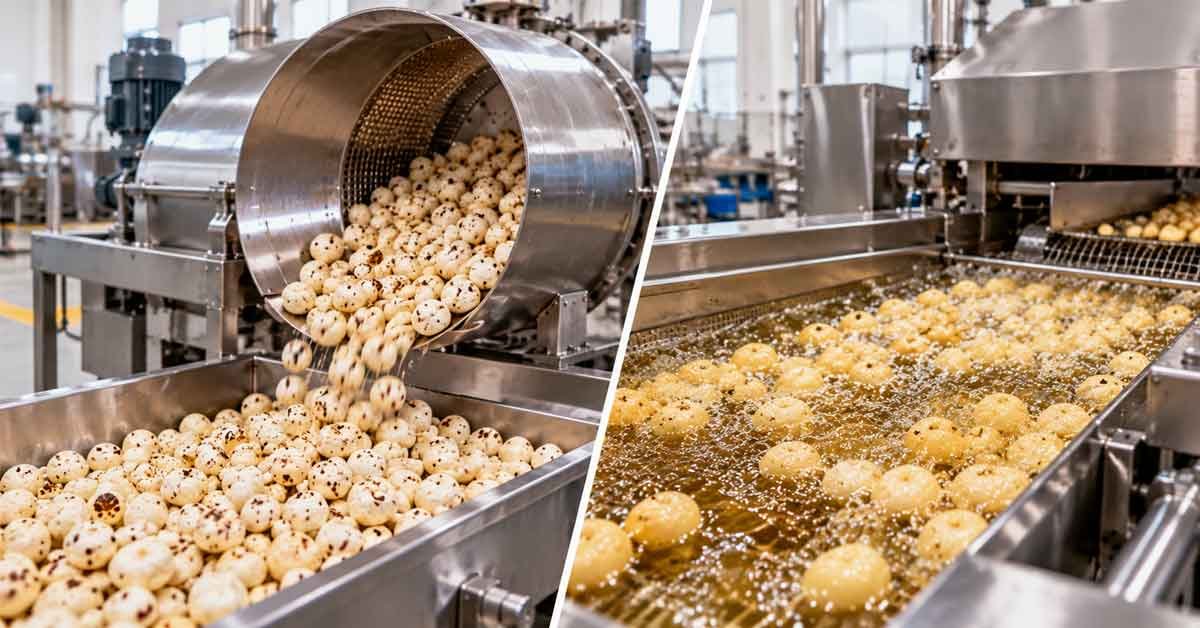
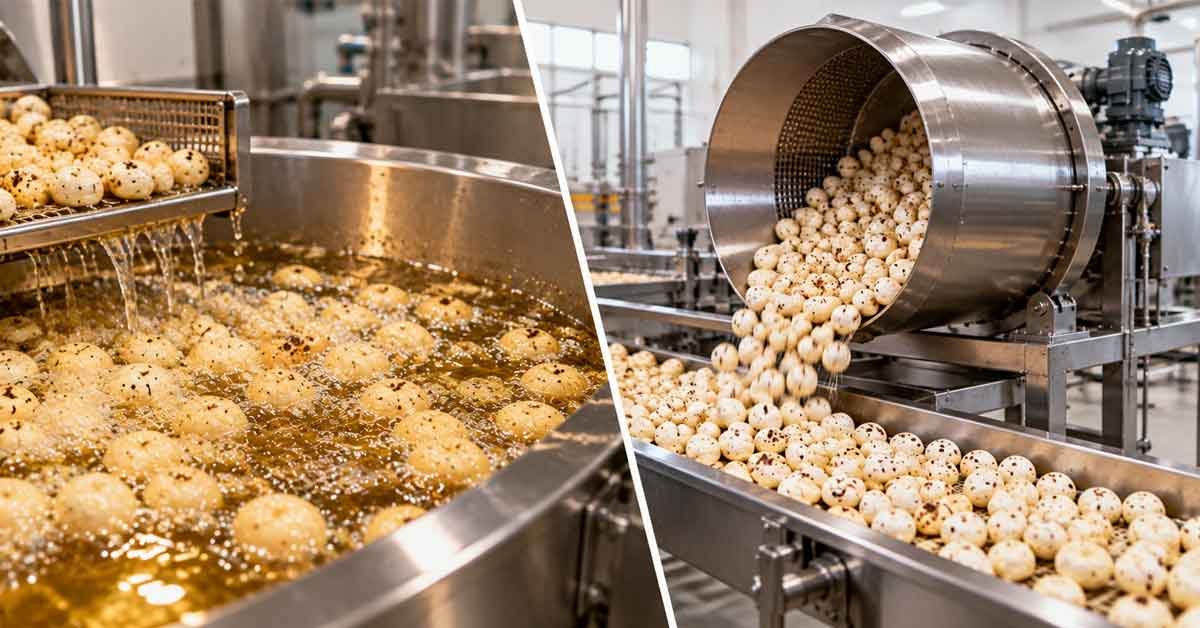
Processing using roasting is done through controlled heating of makhana, but not by placing the makhana in cooking oil. Processing of makhana using frying is done by heating makhana in cooking oil.
There can be many differences that arise due to the variation in the processing method.
In simple terms:
Roasting:
Makhana + Controlled Heat → Roasted Product
Frying:
Makhana + Heated Oil → Fried Product
Both methods can have applications in food production, but they are suited to different product requirements.
Roasted vs Fried Makhana
The comparison between roasted vs fried makhana depends largely on the product positioning and processing objective.
The roasted form of makhana is usually linked with the dry-snack version since the fried version has a distinct flavor and texture due to the exposure of the product to heated oil.
| Factor | Roasted Makhana | Fried Makhana |
| Main heating medium | Hot air / controlled heat | Cooking oil |
| Oil involvement | Not required for basic roasting | Essential to frying |
| Texture | Crisp and dry | Crisp with fried characteristics |
| Process control | Heating and product movement | Oil temperature and frying time |
| Oil management | Not required for roasting | Required |
| Equipment cleaning | Generally simpler | Requires oil and residue management |
| Product positioning | Often suited to roasted snack formats | Suited to fried snack formats |
The final choice should be based on the intended product rather than assuming that one method is universally better.
How Does a Makhana Roasting Machine Work?
A makhana roasting machine uses controlled heating to roast the product while maintaining suitable product movement.
A typical process is:
Raw Makhana Feeding
↓
Controlled Heating
↓
Product Movement
↓
Roasting
↓
Cooling
↓
Flavouring / Packaging
Operating conditions vary depending on the machinery used, the nature of the raw materials involved, production capacity, and the end products expected.
Controlled heating may be an advantage for producers in ensuring consistency in their batches rather than manual roasting.
How Does a Makhana Frying Machine Work?
The frying process involves heating the oil and using it as a cooking medium. In the frying process, the makhana is subjected to oil at a certain temperature for the desired period of time.
A simplified frying process is:
Makhana Feeding
↓
Oil Heating
↓
Frying
↓
Oil Drainage
↓
Cooling
↓
Seasoning / Packaging
Frying requires additional attention to oil temperature, oil quality, filtration, drainage, and cleaning.
Makhana Frying Machine Comparison
A makhana frying machine comparison should consider more than the heating method. Businesses should evaluate production requirements, product characteristics, operating procedures, maintenance, and long-term processing needs.
Roasting Machine
Roasting equipment will be useful in such a case if the company intends to roast the makhana using dry heat. Such machinery can be combined with cleaning, grading, cooling, flavoring, and packing equipment.
Frying Machine
If it is essential that oil be used for the food preparation process, then the frying equipment would be ideal. There must be facilities for storing, heating, transporting, filtering, draining, and cleaning of the oil.
For firms that intend to produce roasted snacks, the roasting equipment would offer an alternative processing approach.
Roasting and Frying Methods for Makhana
Different roasting and frying methods for makhana can be used depending on the scale of production.
Batch Roasting
In batch roasting, a defined quantity of makhana is processed at a time. This approach can be suitable for smaller or medium-scale operations.
Continuous Roasting
Continuous systems allow material to move through the roasting equipment at a controlled rate. They can be more suitable for higher-volume commercial production.
Batch Frying
Batch frying involves processing a fixed quantity of makhana in heated oil before removing and draining the product.
Continuous Frying
The continuous fryer system would allow for the transportation of the product through an oil heating zone. Continuous fryers could be considered in cases of large-scale production needs.
The proper system would depend on production needs, the type of product, the space available, and the degree of automation required.
Key Factors When Comparing Roasting and Frying
1. Desired Product
The first thing to consider would be the end product itself. If the company desires a dry roasted snack, roasting machines would be a necessity. An oil-fried product would require the use of frying equipment.
2. Process Control
Roasting requires control over heating and product movement. Frying requires additional control over oil temperature, frying time, oil circulation, and drainage.
3. Oil Management
Frying introduces an additional operating requirement because oil needs to be monitored, filtered, stored, and eventually replaced.
Roasting does not require oil as the primary heating medium.
4. Cleaning and Maintenance
Both systems require regular cleaning, but frying equipment generally requires additional attention to oil residues and grease accumulation.
5. Production Capacity
Companies need to consider their desired hourly capacity in deciding which type of machinery to use. Roasters as well as fryers can be purchased in various models.
6. Product Consistency
Consistent raw material quality, controlled operating conditions, appropriate loading, and regular machine maintenance all contribute to consistent final products.
Electric vs Gas-Fired Roasting
Selection of energy source is one more important aspect when considering roasting machine equipment. Things like available utilities, operational conditions, capacity, and cost of energy can play a role.
Businesses comparing electric vs gas fired makhana roasting machine India options should evaluate the heating requirements and infrastructure available at their facility.
The decision must not hinge only on the initial cost of equipment. Other factors include installation costs, operational expenses, maintenance costs, temperature controls, and future production needs.
Which Machine Is Better for Commercial Makhana Production?
There is no single answer for every business. The appropriate machine depends on the product and production model.
A roasting machine may be more appropriate for businesses focusing on:
- Roasted Makhana
- Dry snacks
- Flavoured roasted makhana
- Health-based positioning for snacks
- Automatic roasting lines
A frying machine may be more appropriate for businesses specifically producing:
- Fried snack products
- Oil-based makhana snacks
- Products requiring fried texture and flavour
Businesses should therefore define the final product before choosing the processing technology.
Roasting Machine vs Frying Machine: Maintenance
Regular maintenance is important for both systems.
For roasting equipment, maintenance may include:
- Cleaning product residue
- Inspection of heating elements
- Checking for moving parts
- Temperature control inspection
- Inspection of electrical or gas connections
- Inspection of unusual noise and vibration
For frying equipment, additional attention may be required for:
- Oil filtration systems
- Oil circulation components
- Frying chambers
- Drainage systems
- Oil residue removal
- Heating elements
Following the manufacturer’s recommended maintenance schedule can help reduce unexpected downtime.
Choosing a Machine Supplier
The supplier plays an integral role in any investment in machines. Companies need to evaluate machine construction, production capacity, heating system, automation, installation, spare parts, and after-sales services.
A good makhana machine seller in India must also be in a position to know the production needs of the business and provide the relevant machinery according to that.
Buyers need to communicate their needs in terms of capacity, product type, utility, floor area, and future needs before buying the machine.
Conclusion
Makhana roasting machine vs fry machine is critical in determining the machinery to be employed in commercial production of makhana. Roasting and Frying employ different methods of heating and therefore can yield different characteristics of the end product.
For companies manufacturing dry roasted or flavored makhana, roasting equipment can be a good solution for processing. Frying equipment is the right choice for products that need to be fried using oil.
A proper makhana frying machine comparison should therefore consider product requirements, capacity, process control, oil management, maintenance, energy requirements, and long-term scalability.
Through analysis of these elements prior to investment, the producer will be able to select an appropriate processing technique.
FAQs
What is the difference between a makhana roasting machine and fry machine?
A roasting machine uses controlled heat to process makhana, while a frying machine uses heated oil as the cooking medium.
Is roasted makhana better than fried makhana?
There is a distinction between roasted and fried makhana. Oil is not used in roasted makhana as the heating medium. However, oil is used for heating makhana during frying. The suitable selection would depend on the desired output.
Which machine is suitable for commercial makhana production?
The appropriate machine depends on whether the business wants to manufacture roasted or fried products, along with its production capacity and automation requirements.
What should I consider when comparing roasting and frying equipment?
Think about product demands, capacity, heating system, oil system, power source, maintenance, hygiene, space, and future operating requirements.
Can roasted makhana be flavoured after roasting?
Yes. Roasted makhana can be sent for seasoning/flavoring post-cooling, depending on the process layout and the nature of the end products desired.




