
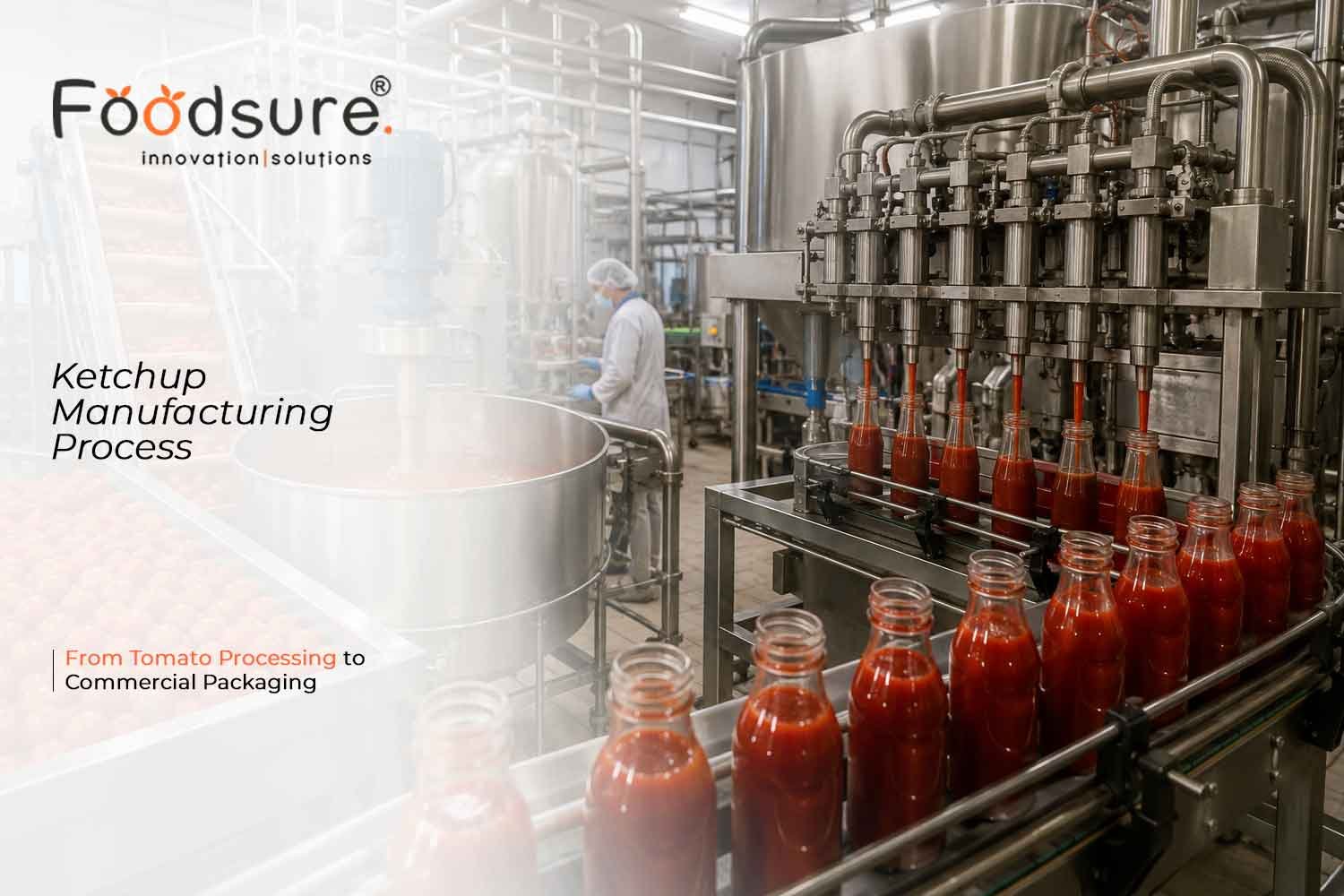
An example of a food processing product that is utilized in the Indian market and overseas is tomato ketchup. Ketchup experiences great demand in several sectors for diverse uses like retail, HORECA, and contract packing. It is vital that the food producers understand the process of making tomato ketchup.
Production of products on a commercial scale is far more organized than food production at home. The process includes selection of raw materials in an organized manner, formula development, heat processing, packaging, and quality inspection.
Complete Ketchup Manufacturing Process Guide for Food Brands and Processors
The primary challenge facing the production of ketchup is the differences in quality of the tomatoes used in the manufacturing process. These differences may arise due to seasonal changes based on the color, pulp percentage, acidity, and total soluble solids of the tomatoes. The effect of this challenge on the product will be felt directly on its taste and texture.
Yet another challenge is the similarity in the taste, texture, and rheology of each batch produced. The slightest alteration in the amount of sugar, salt, vinegar, spices used, or in processing time can affect the outcome dramatically. Some solutions to such challenges include formulation standardization, heating, and processing tests.
Moreover, the preservation of the product and control over the growth of microorganisms in the product cannot be disregarded. This is because both solid and liquid contents are present in ketchup; hence, improper handling may shorten its shelf life significantly.
Tomato Ketchup Production Process: Plant Setup, Machinery and Quality Control
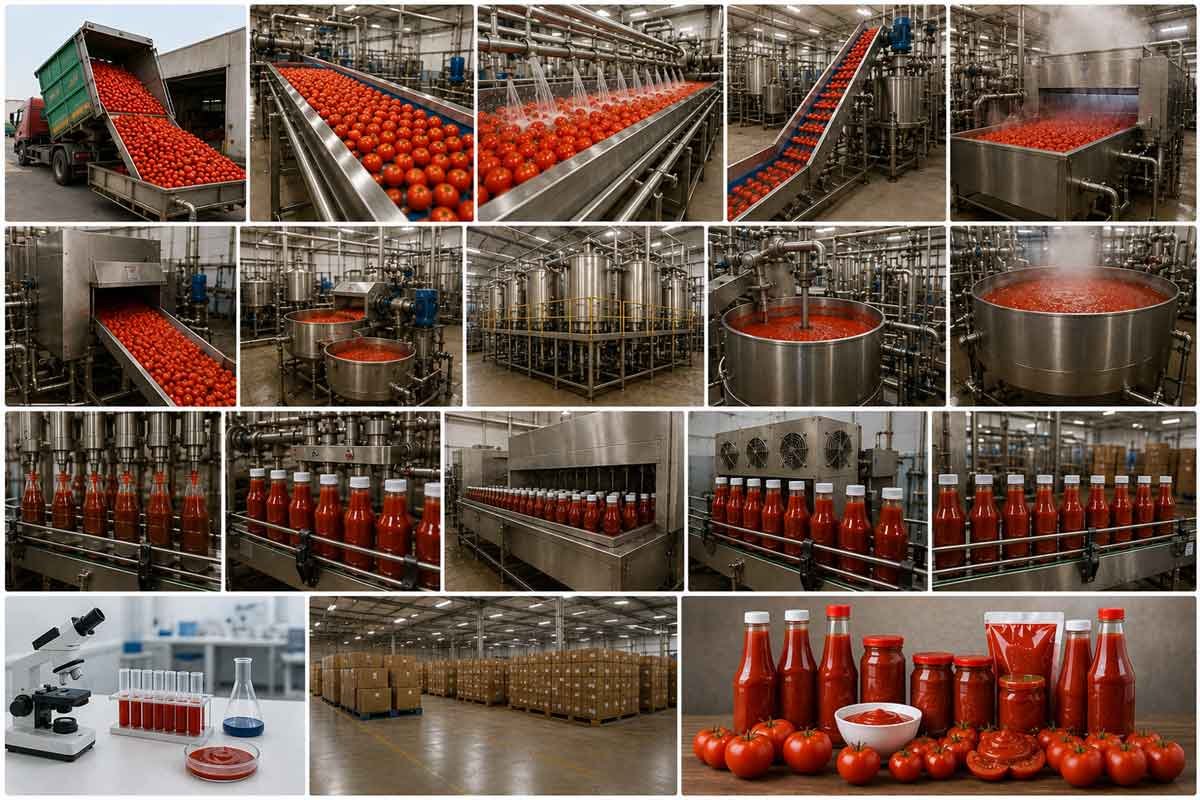
Ketchup production is the procedure of converting tomatoes into ketchup products using the commercial process. It involves several stages, such as handling the materials, pulping, formulating the product, cooking, homogenization, pasteurization, packaging, and filling.
The procedure involved in the production of tomato ketchup in the manufacturing industry greatly varies from that of the domestic environment. This is due to the fact that while cooking in the domestic environment, the primary focus lies on taste. It is essential to know the procedure of tomato ketchup preparation in the manufacturing industry.
Unit Operations in the Ketchup Manufacturing Process
These processes include the sorting, cleaning, and inspection of tomatoes; crushing, pulping, and refining of these tomatoes. The next step entails the mixing of the pulp with sugar, salt, vinegar, and spices. This mixture will then be cooked and concentrated to get the right body and flavour.
The homogenisation process improves texture, whereas the deaeration process can also be carried out in order to reduce the entrainment of air. Finally, there is ketchup filling, capping, and storage.
How the Ketchup Manufacturing Process Works in Commercial Food Plants
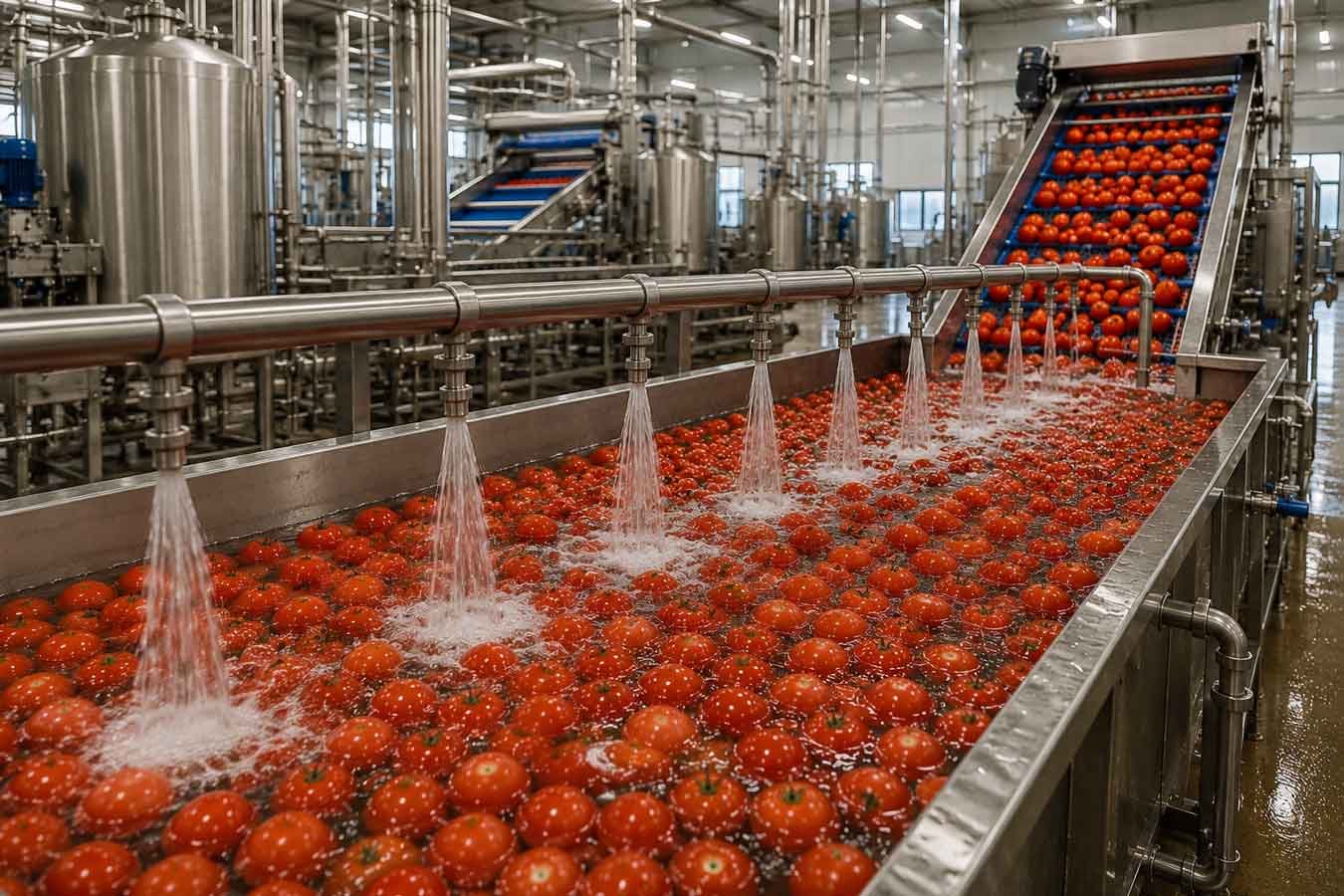
The process of a commercial production starts with the acquisition of tomatoes and their inspection. Tomatoes are delivered, checked, and sorted out to ensure no damaged or immature tomatoes pass through. This is followed by washing of the tomatoes.
After washing, they are broken down and pulped. In this process, seeds and skins are removed by means of pulping and refining methods. This tomato pulp after being refined is sent into a mixer/cooking vat where the mixture is prepared with sugar, salt, vinegar, spices, onion, garlic, and other additives as per the recipe.
The product is subjected to heating and concentration to achieve the desired taste, coloring, and viscosity. The reason why this step is crucial is that insufficient cooking would result in a thin product whereas too much cooking could impact taste and freshness.
Read More :- tomato ketchup manufacturing
Industrial Ketchup Manufacturing Process: Step-by-Step Production Guide
A basic flow chart for commercial purposes can be represented as follows:
Tomato Processing Flow Chart
The flow chart assists in depicting the process flow and machinery requirements.
Tomato Ketchup Manufacturing Process: Equipment, Ingredients and Plant Planning
In the manufacturing process of tomato ketchup, the following equipment is generally needed:
- Tomato washer
- Inspection conveyor
- Crusher
- Pulper
- Refinery
- Steam-jacketed kettle/cooking tank
- Mixing tank
- Storage tank
- Homogenizer
- Pasteurizer
- Filling and Capping machine
- Labeling and Packing equipment
Machine selection is directly related to the efficiency, output, labor force, and the quality of the final product. Ineffective design of the machines can lead to wastage when pulping and uneven heat when cooking. For this reason, it is important that tomato ketchup machine selection be done based on the following factors:
Commercial Tomato Ketchup Production: Full Manufacturing Process Explained
Ketchup sold commercially is often prepared using ingredients such as tomato paste, sugar, salt, vinegar or acetic acid, and seasonings. Other components such as onion, garlic, flavors, thickeners, or stabilizers might be included for certain recipes or cost purposes. Any allowable preservatives and additives can be used when necessary.
The ratio of ingredients is very crucial. An excess of sugar may cause the product to be sweetly dominated, while an excess of acidity will make it too strong and harsh, while imbalance of the solids will have an effect on its viscosity.
Ketchup Production Process Guide: Raw Tomatoes to Finished Retail Packs
Quality characteristics are brix, pH, acidity, viscosity, colour, taste, flavour, and safety. In addition, packaging integrity and shelf-life performance should be validated prior to its launch in the market.
Laboratory tests have a crucial role in the processing of tomato ketchup. Despite being a delicious product, without stability and consistency, it would not be commercially successful.
Modern Ketchup Manufacturing Process: Processing Steps, Machinery and Compliance
The cost of building a ketchup factory depends on how big the project is, how automated it is, how much it can make, and what kind of packaging it uses.
| Scale | Approximate Setup Type | Major Investment Heads |
|---|---|---|
| Small-scale | Basic semi-automatic unit | Cooker, pulper, filler, utilities, packaging |
| Medium-scale | Commercial brand setup | Processing line, homogenizer, pasteurizer, manpower, working capital |
| Large-scale | Automated high-capacity plant | Full automation, utilities, storage, packaging line, QC lab |
The main costs are for machinery, utilities, packaging materials, labour, testing, working capital, and storage. Before making an investment, it’s helpful to have a full DPR.
Tomato Ketchup Plant Setup Guide: Manufacturing Process, Cost and Operations
The production of ketchup is possible through several different modes of doing business. This includes small-scale operations for local sales or regional distribution, medium-scale operations that will create their own brand, or outsourced production through third parties.
Manufacturing private label ketchup is yet another promising business opportunity, particularly for distributors, modern trade retailers, and HORECA suppliers. The bulk ketchup production business model suits institutions like hotels, cafes, restaurants, and catering services well.
Read More :- tomato ketchup manufacturing process
Licenses Required for Ketchup Manufacturing in India
A unit for producing ketchup needs to obtain licences under the Food Safety and Standards Act, registration under the Goods and Services Tax Act, registration under the Udyam scheme, and local trade or factory approvals based on size and setup.
Labels, declarations in packaging, and food safety guidelines need to be adhered to strictly. Always check current laws before launching your product commercially.
Step-by-Step Tomato Ketchup Making Process for Commercial Food Businesses
Wastage can be reduced at the pulping stage, consistency can be achieved in batches by controlling processes, correct heat treatment can be used for shelf life, packaging options can be selected according to market demands, and production planning can be done according to the seasonality of tomatoes.
Conclusion
Ketchup production involves more than just preparing tomato-based sauces seasoned with spices. Rather, it is an intricate business operation that entails the choice of raw materials, processing, blending, heat treatment, packaging, and quality control, among other aspects, to produce a shelf-stable product.
When it comes to Foodsure Machines , knowing how ketchup is produced on an industrial level will help you be more consistent and increase shelf life while saving costs. When setting up your own small manufacturing unit, making your own private label products, or manufacturing commercial products, proper processes and machines can have a great impact.Thinking about setting up or improving your own ketchup manufacturing process? If you desire a product which is stable, scalable and ready for the market, get in touch with Foodsure to take you from concept to reality.
ketchup manufacturing process.
ketchup manufacturing process.support in India.
(FAQs)
What is the process for making ketchup?
The process involves industrial transformation of tomatoes into ketchup using steps such as pulping, mixing, cooking, pasteurising, and packing.
How does ketchup get made in factories?
Ketchup production involves tomato processing, blending of ingredients, concentration of the mixture, and packing of the mixture.
Which machines are employed in tomato ketchup processing?
Typical machines are washer, crusher, pulper, cooking vat, homogeniser, pasteuriser, filling machine, and capper.
Which raw materials are needed to make ketchup commercially?
Tomato pulp/paste, sugar, salt, vinegar, spices, and perhaps additives are utilised.
Is tomato ketchup manufacturing profitable in India?
Yes, it can prove profitable provided proper quality, shelf life, packaging, and marketing techniques are followed.




