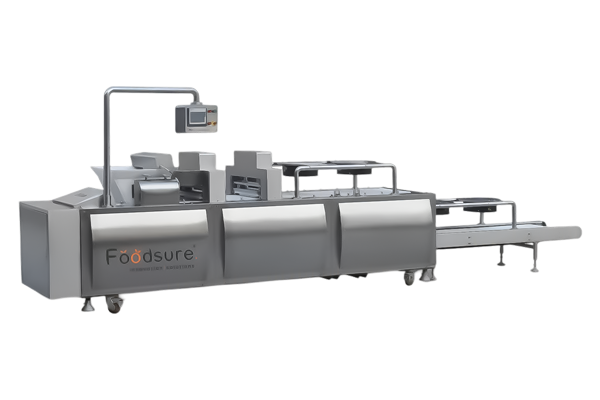
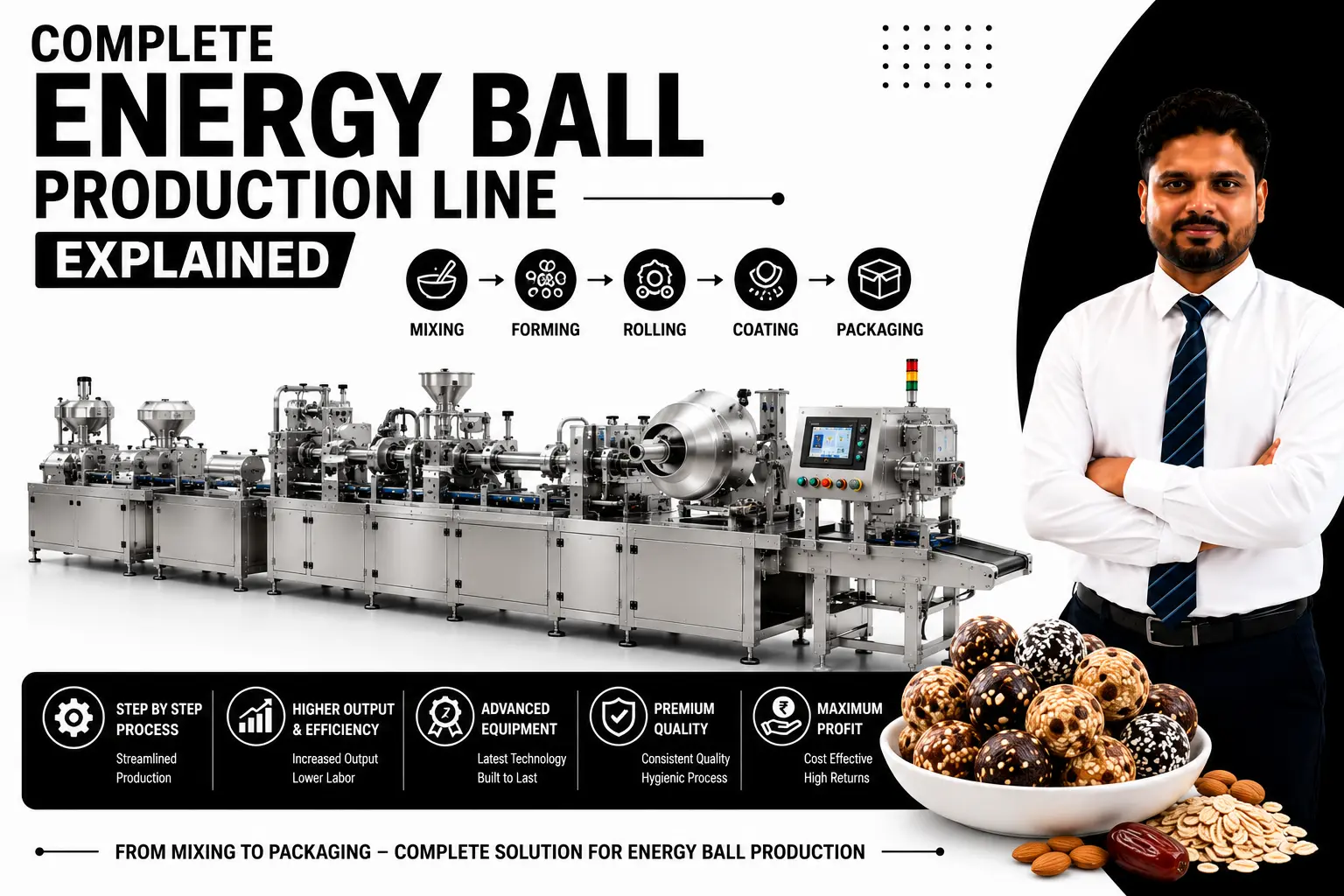
The market for Energy Balls is growing at an amazing pace in healthy food segments. Customers are seeking products that are quick, wholesome, protein-rich, fiber-rich, and natural-labeled. Regardless of whether it’s a Date Energy Ball, a Protein Energy Ball, a Nut Energy Ball, or a Functional Energy Ball, a commercial product manufacturing is more complicated than merely combining ingredients.
Many successful businesses begin by making a product in a home kitchen, but falter when trying to expand production from a 5kg to a 500kg batch.
Here the involvement of Commercial Energy Ball Manufacturing, standardization of process, appropriate equipment is.
At Foodsure Machines, we help startups, D2C brands, exporters and food businesses create recipes, specify machinery, optimize their process and set up commercial production of energy balls.
What are Energy Balls?
Energy Balls are a functional, bite-sized snack made from the following ingredients:
- Dates
- Almonds
- Cashews
- Peanuts
- Oats
- Seeds
- Protein Powders
- Cocoa Powder
- Functional Ingredients
- Natural Flavors
The products are usually labeled as:
- High Protein Snack
- Healthy Snack
- Sports Nutrition Product
- Functional Food
- Meal Replacement Snack
- Kids Nutrition Product
- Weight Management Snack
Why Are Energy Balls Gaining Popularity?
Consumers are demanding a product which is:
- Convenient Nutrition
- Clean label Ingredients
- High in Protein
- Naturally Sweetened
- Consumable on-the-go
- Portion-controlled
Unlike a conventional confectionery product, an Energy ball can be a wellness product.
Popular product categories are:
- Protein Energy Balls
- Date Energy Balls
- Peanut Butter Energy Balls
- Functional Energy Balls
- Gut Health Energy Balls
- Kids Nutrition Balls
- Sports Nutrition Balls
Various brands are investing in a specific system for Protein Energy Ball Manufacturing, as the demand for the same is increasing.
Commercial Energy Ball Manufacturing Process
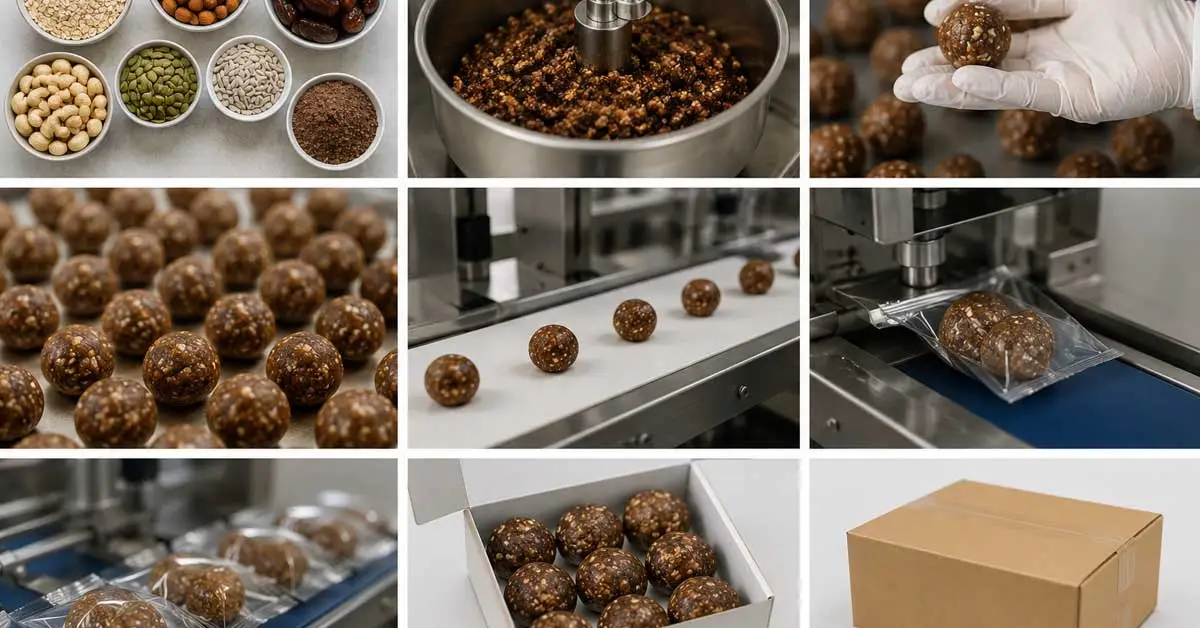
A commercial manufacturing setup entails following a methodical procedure to produce a consistent, quality product:
Step 1: Raw Material Inspection
Incoming raw materials are analyzed to determine the:
- Moisture Content
- Microbial Quality
- Physical Defects
- presence of Foreign Matter
- Condition of packaging
The quality of raw materials directly affects the shelf life of the finished product and its consistency.
Step 2: Ingredient Weighing
Ingredients are weighed as per approved formulation.
Typical ingredients are:
- Dates
- Almonds
- Cashews
- Oats
- Protein Blend
- Cocoa Powder
- Functional Ingredients
Accurate weight of ingredients is necessary to produce a consistent product.
Step 3: Grinding and Size Reduction
The larger particles are ground into smaller pieces. These are the types of machines that are required for this step:
- Almond Grinding
- Cashew Grinding
- Date Paste preparation
- Peanut processing
The goal is to have uniformly sized particles.
Step 4: Mixing Process
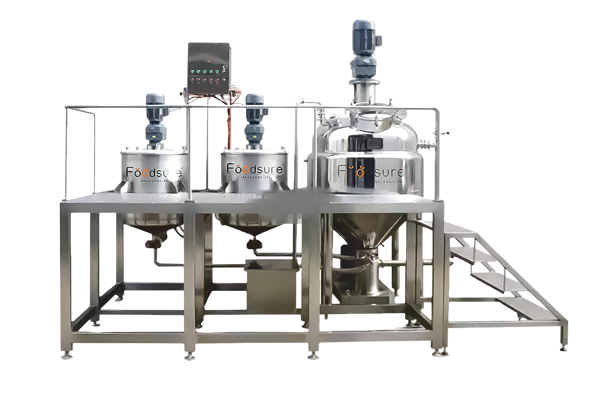
Ingredients are added into a commercial mixing machine. Foodsure machines usually recommends the following mixers:
- Ribbon Blender
- Sigma Mixer
- Paddle Mixer
This step ensures:
- Uniform distribution of all the ingredients
- Consistency of the product
- Proper binding of all ingredients
Flow Chart of Energy Ball Production Line
Step 5: Ball Forming Process
This is where the final product form will be achieved.
The decision on using one of the following varies on production requirements.
Manual ball forming
- Appropriate for small startups
- Pilot scale productions
Semi Automatic Energy Ball forming Machine
- Appropriate for growing brands
- Medium scale manufacturing
Automatic Energy Ball forming Machine
- Appropriate for commercial manufacturing
- Large scale production processes
Advantages are:
- Accurate Weight
- Precise Shape
- Enhanced production rate
- Reduced labor dependencies
Foodsure Machinery Recommended Setup:
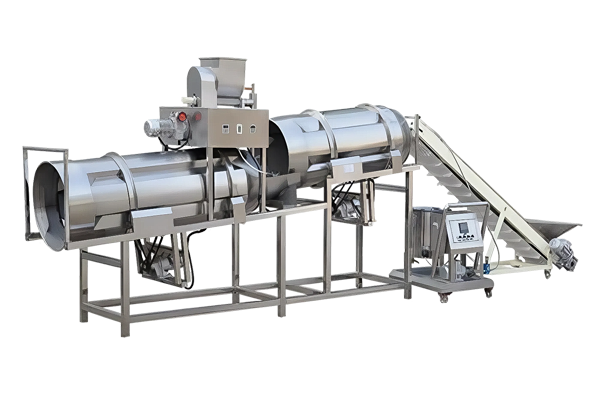
A standard Energy Ball Production Line for commercial manufacturing would involve:
Processing Section
- Grinder
- Date Paste System
- Ribbon Blender
- Sigma Mixer
Forming Section
- Energy ball forming machine
- Weight control system
Packaging Section
- Flow wrap machine
- Pouch packaging machine
- Nitrogen flushing system
Quality Control Section
- Metal detector
- Check weigher
- Moisture analyzers
Quality Control Parameters
Each batch of products should be tested for:
Physical Parameters
- Weight
- Diameter
- Shape
- Texture
Chemical parameters
- Moisture
- Water activity
Microbiological parameters
- Total plate count
- yeast and mold
- Pathogens
A quality test of your products guarantees a pleasant experience for your customers.
Energy ball packaging options
The chosen packaging format will rely on the market positioning and shelf life expected for your energy balls.
Typical formats would be:
- Single energy ball pack
Suitable for :
- Sampling
- Counter display
- Multi-pack pouch
Suitable for :
- D2C brands
- Modern trade
- Jar packaging
Suitable for :
- premium brands
- Club packs
Suitable for:
- Exports
- Institutional use
Common issues during commercial production:
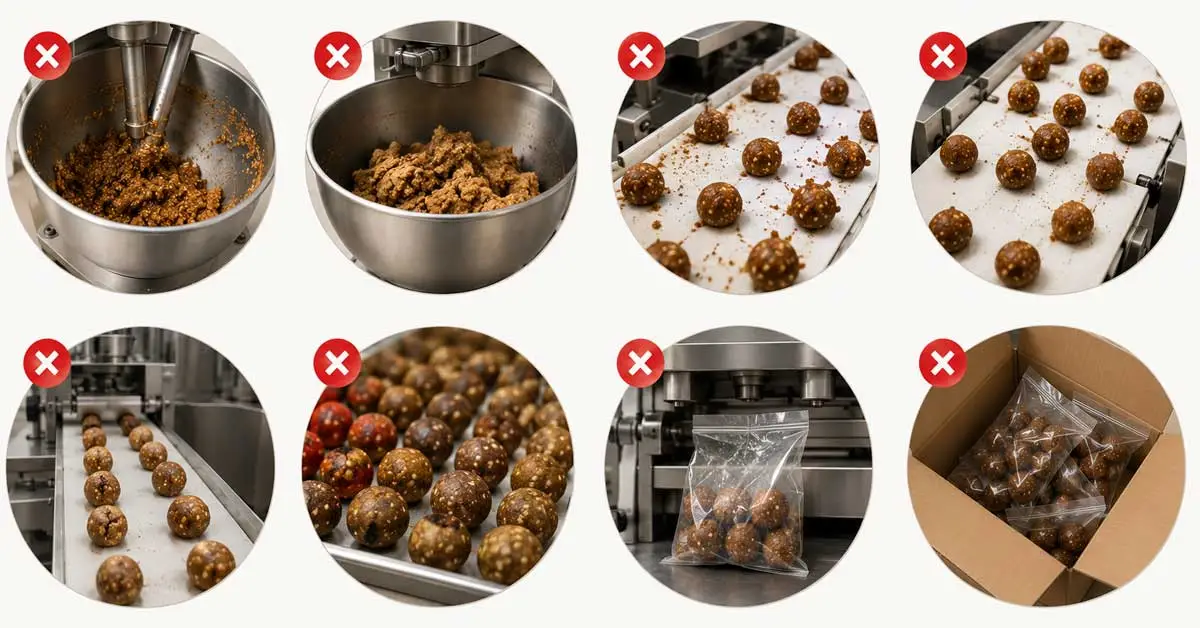
Many founders encounter issues such as:
Product Too Hard
Caused by –
- Wrong Moisture
- Over mixing
Product too soft
Caused by-
- Too much date paste
- Too high Water activity
Shape Variation
Caused by –
- Manual production
- Dough not consistent enough
Product having short shelf life
Caused by –
- Wrong ingredients selection
- Wrong packing process
The validation during commercialization of products helps solve all of the above issues before the product hits the market.
Read more :- energy bar packaging machine
Why Machinery Selection is Important?
Some of the brands concentrate on developing the recipes but not the machinery part.
The operation of Commercial Energy Ball Manufacturing is highly reliant upon the selection of appropriate equipment for the product and its capacity,
However, the machinery selection have influence on:
- Consistency of the product
- Cost of the production
- labor involved in the production
- Production capacity
- Scalability of the product
Using the right kind of machinery will benefit the brand to get the profit and operate more efficiently.
Foodsure Machines Support for Energy Ball Business Development :
Foodsure Machines supports both startup and existing manufacturers on:
- Energy ball recipe formulation
- Protein Energy Ball Manufacturing and
product development
- Functional ball development
- Machinery selection
- Plant layout design
- Contract manufacturing support
- Shelf life study
- Package design and development
- Commercialization support
Conclusion
It has grown into one of the indispensable items not only in the snacks segment but also in sport nutrition and Functional Food Manufacturing category. To become successful, more is required beyond just the good recipe. The formulation of the balls along with the right manufacturing processes, machinery, and commercialization strategy are the key. Be it the production of Protein Energy balls, Date Balls, Functional Balls, or clean label Nutrition Products, the manufacturing system plays a significant role.
Foodsure Machines helps brands transform the idea into a commercial product through formulation of recipes, selection of the machine. supports contract manufacturing support, packaging designing and production scaling-up.
Frequently Asked Questions (FAQs)
What machine is used to manufacture an Energy Ball?
The machines commonly used for commercial manufacturing are mixer, grinders, energy ball forming machines, packaging machines, and quality controlling instruments.
Is it possible to produce energy balls without preservatives?
Yes. Their shelf life can be adjusted depending on the selection of ingredients, moisture content control, packaging, and manufacturing processes.
What should be the suitable batch size for commercial production?
Batch sizes depend on production volume and market demands. Commercial operations commonly use 50 kg-hundreds of kgs per batch size.
Can Protein Energy Ball Manufacturing be performed on the same machine?
Yes. Most of the energy ball forming machines will have the ability to produce protein balls, date balls, nut balls and functional balls with adjusted formulation.
Which packaging is suitable for energy balls?
Most common are multi-layer laminate pouches with nitrogen flushing that helps to increase shelf-life of the product.
What is the biggest mistake start-ups make?
Commercializing the product without validating commercial production and packaging performance, shelf life and process.
Business Enquiries
Email: carrierfoodsure@gmail.com