
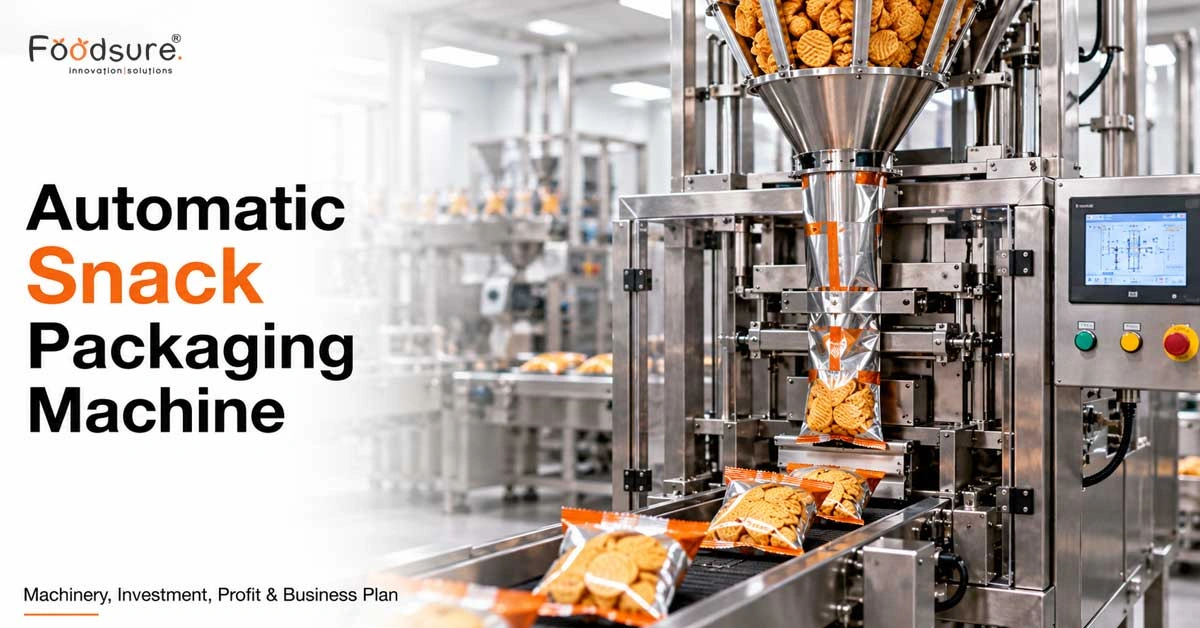
Increasing consumption of makhana, namkeen, chips, and other ready-to-eat snacks requires quicker and better ways of packaging. Manual packaging becomes challenging when higher volumes of production are being dealt with, and the same applies to weighing and sealing of packs.
An automatic snack packaging machine comes in handy for manufacturers, helping in carrying out all processes associated with packaging. When it comes to makhana and other kinds of snacks, it becomes necessary to choose a proper packaging machine.
The objective of this guide is to provide snack and makhana companies with a basic understanding of various aspects that need to be kept in mind before buying an automatic food packaging machine.
Why Automatic Packaging Matters for Makhana & Snacks
As the quantity of snacks manufactured increases, the process of packing them manually may pose a serious challenge. Weighing the snack batches, loading each pack, sealing them, and keeping the packaging rate constant throughout the day is an extensive task. An automatic packaging machine for snacks could help automate some of these tasks.
Advantages include:
- Even packing: Automation systems will ensure even filling of the packs.
- Efficient production: Increased speed in the process of packaging may result in higher production volumes.
- Reduced manual intervention: Less manual involvement is needed for packaging processes.
- Proper sealing: Automatic sealing ensures even closure of the packs.
- Efficient production process: Packaging can be integrated with other production processes.
- Scalability: This system will be scalable for growing businesses producing snacks.
For makhana producers, automated systems can be especially useful since the product should be handled with great care and at the same time provide even pack quantities.
Understanding the Automatic Snack Packaging Machine
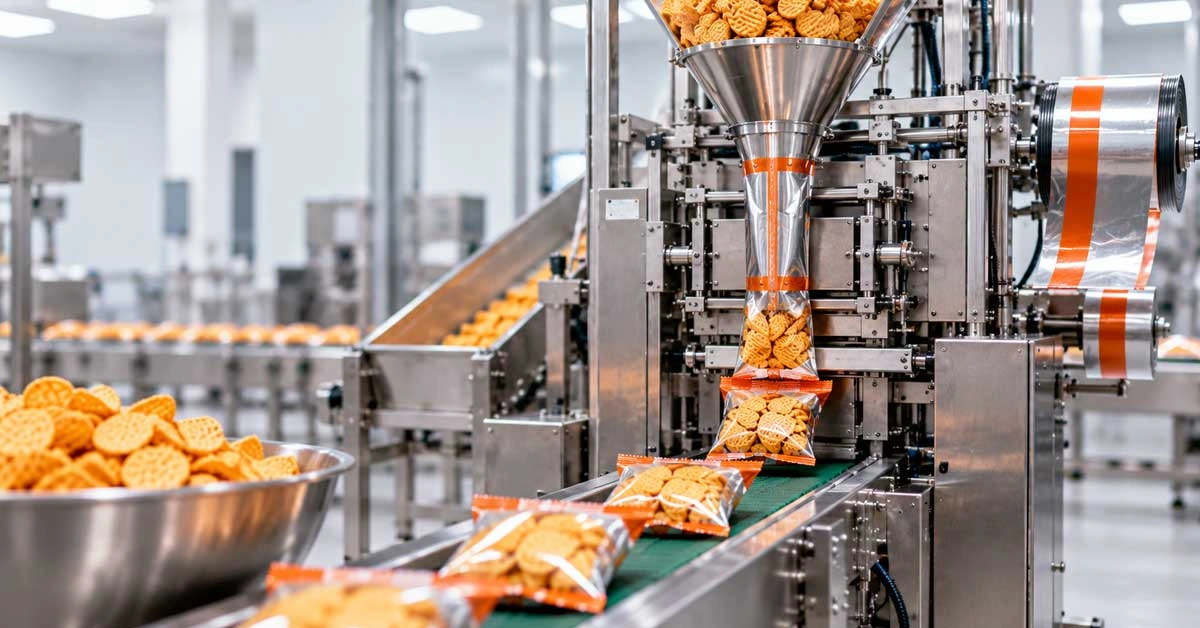
Automatic Snack Packaging Machine is a machine that can carry out several packaging functions with minimal human interaction. Depending on the machine design, some of these functions include product feeding, weighing, filling, pouch formation, sealing, cutting, coding, and release of packed products. The exact machine design will depend on the type of packaging and the product.
A typical automated packaging sequence may involve:
Product Feeding → Weighing → Filling → Pouch Formation → Sealing → Cutting → Coding → Finished Pack
The above packaging steps are not carried out by all the machines in the same way. Thus, manufacturers should consider the entire machine design and not just the speed of the machine.
How Snack Packaging Works
Packaging commences after the product has moved to the feed zone. Thereafter, the product will be weighed in accordance with the pack requirements and finally introduced into the packaging material.
After filling the product into the pack, the packaging material is sealed in order to keep out any external elements. At this point, depending on how the process is designed, date coding and other forms of identification can be done.
In order to have an efficient snack packaging machine, all processes should run at corresponding speeds. If the filling process is too fast compared to the sealing and feeding processes, inefficiencies arise.
Filling Accuracy in Snack Packaging
Accurate filling is one of the primary factors to consider when choosing an automatic food packaging machine because customers will want the amount stated on the packet to stay constant, while manufacturers will have to avoid giveaway of their products. In case the food item is snacks such as makhana, chips, namkeen, etc., the filling mechanism must be appropriate for the nature of the item.
Considerations for the manufacturer include:
- Product size and shape
- Density
- Flow characteristics
- Target weight per pack
- Filling speed
- Accuracy
The appropriate filling method may assist in achieving an effective balance between speed and accuracy without harming the product.
Packaging Speed and Production Capacity
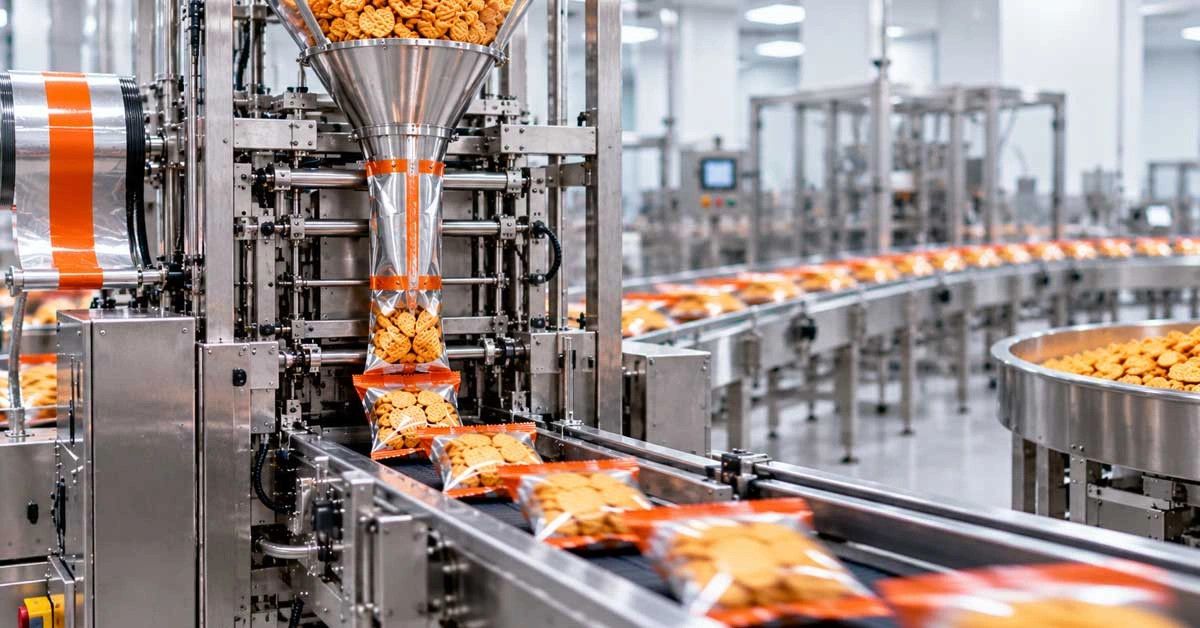
The speed of the packing machine must be in tune with the capacity of the manufacturing machine. Selecting a machine simply because of its high theoretical speed will not be of much help if the manufacturing machine is unable to produce at the same speed.
Before choosing an automatic snack packaging machine, one should consider:
- Production volume anticipated
- Number of packs needed per minute
- Size of the pack
- Number of shifts for operation
- Feeding capacity
- Production capacity from upstream
It is preferable that the packaging segment of the process not be a bottleneck to the entire production line.
Handling Makhana Without Excessive Breakage
Makhana is comparatively light and may get affected by the overhandling of the product mechanically. Therefore, the packaging equipment should enable proper and smooth movement of the product from feeding to filling.
The appropriate makhana packaging machine should be selected based on the parameters of the product such as size, shape, density, and vulnerability of the product.
Proper handling of the product can minimize breakage of the product and maintain its appearance. This will become significant when packing premium makhana products.
Choosing the Right Packaging Format
The packaging format should be decided before finalising the packaging machinery. Different formats can require different forming, filling, and sealing arrangements.
Snack manufacturers may consider:
Pouches
Flexible pouches are very versatile packaging options which are suitable for various snack products and can be made in various sizes. Flexible pouches can also offer flexible options for manufacturers in developing various package sizes.
Sachets
Small sachets can also be suitable for trial packages, one-time use portions, or small-size servings. Filling and sealing machines should be chosen depending on the required amount of product.
Pre-Made Pouches
Pre-made pouches can offer a different type of packaging and may be suitable for premium snack products. The machine configuration will depend on pouch sizes and desired output speed.
The choice of packaging should correspond to the target market, product positioning, and package size.
Automatic Food Packaging Machine for Different Snack Products
An automatic food packaging machine should be selected according to the product being packed. Makhana, chips, namkeen, popcorn, and extruded snacks can differ in size, shape, density, and fragility.
Makhana
Makhana is a fragile item that needs careful handling in order to avoid breakage and ensure the correct filling. The equipment used needs to suit the nature of the product, which is light and awkward.
Namkeen
Namkeen comprises varying proportions of different items and sizes of the snacks. The feeding and weighing system needs to accommodate the product without segregation.
Chips
Chips are also very fragile and can easily break under mechanical movement. Hence, product handling and filling need to accommodate this.
Extruded Snacks
Extruded snacks have different sizes and shapes and hence need packaging systems that accommodate the particular product.
That’s why a single generic snack packaging machine configuration isn’t ideal for all snack manufacturers.
Makhana Packaging Machine: What Manufacturers Should Consider
The choice of a makhana packaging machine depends on the physical nature of the commodity, packaging type, and production needs. Makhana is lightweight and fragile, and therefore any excess movement of the product during feeding and packing may cause breakage.
Before investing in the process, manufacturers need to consider the following:
- Product handling: The process needs to transport the makhana without unnecessary damage.
- Filling: Precise weighing ensures that the product is packed in uniform packs and avoids giveaway of products.
- Pack size: The machine needs to be able to pack the varying pack sizes being produced.
- Production speed: The output should be able to match the capacity of the processing and conveying lines.
- Sealing: Sealing helps protect the product during storage and transportation.
A well-selected makhana packaging machine can ensure product quality and efficient packing of products.
Packaging Requirements for Makhana
Makhana needs packaging that protects the product from moisture, contamination, and physical damage during storage and distribution. The selected packaging material and sealing system should therefore be appropriate for the product and intended shelf life.
These decisions may depend on:
- Pack size and quantity per pack
- Nature of packaging material
- Sensitivity of the product to moisture
- Shelf life
- Presentation in retail outlets
- Shipping and storage conditions
In the case of flavoured makhana, the packaging system should consider the product post-seasoning also.
How Packaging Capacity Affects Your Production Line
The packaging capacity should match the processing line. If the snack packaging machine is too slow, it can create bottlenecks and product accumulation.
Capacity planning should consider:
- Output
- Pack size
- Packs per minute
- Production shifts
- Changeover
- Growth in production
This is why capacity balancing becomes an important aspect when choosing an automatic snack packaging machine.
Automation Level: Semi-Automatic vs Fully Automatic
Not every manufacturer needs the same level of automation. A smaller snack business may prefer a semi-automatic setup, while a high-volume manufacturer may benefit from a fully automated line.
Semi-Automatic Packaging
Semi-automatic equipment allows for human intervention during the automation of packaging operations. Such a system may be appropriate in the case of medium-volume production or several small-scale productions.
Fully Automatic Packaging
In fully automatic equipment, there is less human intervention in feeding, weighing, packing, sealing, and discharging processes. These kinds of systems are more appropriate for commercial production.
It will depend on the volume of production, availability of labor, budget, product line, and plans for expansion.
Hygiene and Maintenance Considerations
Hygiene and ease of maintenance need to be considered in the design of food packaging machines. If machines are not properly cleaned, product residues will build up near feeding, weighing, and sealing mechanisms.
When selecting an automatic food packaging machine, manufacturers should consider:
- Food-grade materials
- Ease of cleaning
- Maintenance friendly
- Less product build-up
- Reliable sealing mechanism
- Parts replacement
Proper cleaning and preventive maintenance can go a long way in maintaining packaging effectiveness.
Integrating Packaging With a Complete Makhana Processing Line
Packaging should be planned as part of the complete production system rather than as a separate operation. For a Complete makhana processing line, the packaging section needs to match the output of the processing, roasting, flavouring, and conveying stages.
A well-integrated setup can help maintain a smooth product flow while reducing unnecessary manual handling. The packaging system should be selected according to the product type, production capacity, pack size, and required automation level.
For manufacturers using a makhana machine, it is important to consider how the processed product will move from production to flavouring and finally into the packaging section. Matching the capacity of each stage can help prevent bottlenecks and improve overall production efficiency.
Connecting Packaging With Makhana Processing Equipment
Requirements related to packaging should be taken into account when choosing upstream equipment. For instance, a company that uses the makhana making machine should analyze how its production rate can integrate with the downstream processing and packaging parts.
The production capacity of the processing equipment being larger than that of the packaging equipment might result in accumulation. Conversely, a lack of capacity on the part of the packaging equipment might hinder the use of the entire production chain.
Thinking about the whole production process might help companies develop a balanced system.
Packaging Flavoured Makhana
Flavoured makhana needs gentle handling after seasoning to reduce breakage and maintain product quality. A suitable makhana packaging machine should work smoothly with the flavouring and conveying systems.
The complete setup should support:
- Controlled product transfer
- Consistent filling
- Minimal product damage
- Reliable sealing
- Efficient packaging output
This becomes especially important for premium flavoured makhana products where appearance and consistency influence consumer perception.
Common Buying Mistakes to Avoid
Selecting an appropriate snack packaging machine depends on factors other than just the speed of the machine. It is important to look at how well the equipment will work with the specific product, packaging material, and system.
Common mistakes include:
- Selecting based on speed alone: The maximum speed attained may not be the production requirement.
- Neglecting product nature: Makhana and fragile snacks need gentle treatment to avoid breaking.
- Failing to consider package material: There are different pouch types that need different sealing provisions.
- Failure to plan for expansion: The machine should enable the company to expand its production in the future.
- Failure to integrate into the production line: The packing machine capacity should match the upstream operations.
Reducing Product Wastage During Packaging
Product wastage may have an impact on profit, especially when packing high-value products like flavoured makhana.
The snack packaging machine needs to ensure proper product feeding, proper filling, and minimal product handling.
Proper monitoring of filling accuracy, product handling, and the machine itself can be helpful to detect any unnecessary product wastage.
Improving Packaging Efficiency
Factors influencing package efficiency include machine speed, but there are other factors to consider. A properly balanced system will have consistency in product feed, accurate fill, proper sealing, and consistent discharge of the finished packages.
An automatic food packaging machine will help eliminate repetitive tasks and maintain a production rhythm.
It is important for manufacturers to also consider changeover time when manufacturing different types of snacks or package sizes.
Selecting a Machine for Multiple Pack Sizes
Snack products may have a variety of packages available in order to cater to different customers, including retail, trial, and family packages. There needs to be an appropriate level of flexibility within the packaging line for such needs.
Before the procurement of the automatic snack packaging machine, there is a need to verify:
- Minimum and maximum package weight
- Package size
- Product
- Packaging filling method
- Package sealing method
- Changeover needs
The packaging machine that will allow the desired package variety in the future will be more flexible.
Why After-Sales Support Matters
Packaging equipment is an important part of commercial production, so technical support should be considered before purchase.
Manufacturers should look for support covering:
- Installation and commissioning
- Operator training
- Preventive maintenance
- Spare parts
- Technical assistance
- Machine troubleshooting
Reliable support can help reduce downtime and keep the makhana packaging machine operating efficiently over the long term.
Foodsure Machines for Makhana & Snack Packaging
Foodsure Machines offers an integrated solution of food processing and packaging for manufacturing companies that use makhana, snacks, and other food items.
The packaging configuration can be done considering the type of products being manufactured, packing size, manufacturing capacity, degree of automation, and packaging type. Companies can even plan their packaging along with the entire processing line, unlike choosing individual equipment.
For manufacturers who are setting up a complete makhana processing line, Foodsure machines can help in planning the equipment for processing, handling, flavouring, and packaging. The right machine and packaging system for makhana making can be selected as per the manufacturing needs.
Conclusion
Choosing the appropriate automatic snack packaging machine is an essential factor in order to improve packaging efficiency and increase the output of snacks. The machine must fit the food being packaged, the pack size, production capacity, packaging materials, and automation requirements.
In the case of makhana producers, the control of the packaging process and filling are especially critical for maintaining the integrity of their product and preventing the breakage of grains. An appropriate makhana packaging machine combined with the rest of the processing equipment will ensure a smooth passage from processed food to the packaging process.The right planning will allow manufacturers to develop an automatic food packaging machine system that meets their production needs now and in the future.
Have a Question? Let’s Connect
Need expert guidance on food processing machines, production setup, or process optimization? Our team is ready to help you choose the right solution for your business.
FAQs
What is an automatic snack packaging machine?
An automatic snack packaging machine is a machine that performs packaging activities like product loading, weighing, filling, forming a pouch, sealing, and packing completion, etc., depending on the nature of the machine.
Which packaging machine is best for makhana?
The machine used for makhana packing will be the one that is capable of delivering accurate filling along with good product handling and is also compatible with the packaging.
What all do I need to consider before buying an automatic food packaging machine?
I would consider aspects like product characteristics, filling accuracy, production rate, packaging format, seal quality, degree of automation, hygiene, maintenance, and compatibility of the machine with the production line, among others.
Is there any chance that the same machine will be able to pack all kinds of snacks?
Possibility exists; however, the snacks may have different characteristics when it comes to packing. Makhana, chips, namkeens, etc. can be considered some examples of that.
Can packaging equipment be integrated with a makhana processing line?
Yes. A makhana packaging machine can be integrated with upstream processing, flavouring, conveying, and other equipment to create a more continuous production flow.




