

Walk into a supermarket and the snack shelf is still mostly about one thing: taste.Chips, puffs, rings, curls, sticks and other crunchy snacks have been part of everyday snacking for years. But the conversation around snacks is changing. Consumers are paying more attention to ingredients, nutrition, protein, fibre and what a product actually offers beyond being crunchy and tasty.This creates an interesting opportunity for food manufacturers.Instead of building another conventional fried snack brand, manufacturers can develop high-protein chips, protein puffs, protein rings, protein curls and other extruded snacks that fit into a familiar snack format while offering a different nutritional proposition.For businesses exploring Protein Snack Manufacturing Opportunities in Sri Lanka, this is where things get interesting. Protein Snack Manufacturing in Sri Lanka does not have to mean producing bars sold only in gyms or sports nutrition stores. It can also mean a crunchy masala puff, a protein ring, a savoury chip or a pulse-based snack that people can eat during work, travel or between meals.
Sri Lanka’s snack market already includes salty snacks such as potato chips, puffed snacks, rice snacks and vegetable or pulse chips. Euromonitor’s 2025 research also identifies growing interest in clean-label, plant-based and functionally positioned snacks, including products associated with protein and fibre.
That gives manufacturers a useful starting point.
The opportunity is not simply to add protein to an existing recipe. It is to create a snack that actually tastes good, has the right crunch and texture, can be manufactured consistently and makes sense at the price consumers are willing to pay.
For entrepreneurs researching a High Protein Snack Manufacturing Business, the product format can be just as important as the protein claim. A familiar snack shape can make the product easier for consumers to understand.
What Are High-Protein Extruded Snacks?
High-protein extruded snacks are savoury or flavoured snack products made using an extrusion process and formulated with protein-rich ingredients.
Depending on the formulation and equipment, manufacturers can develop products such as:
- High-protein chips
- Protein puffs
- Protein rings
- Protein curls
- Protein sticks
- Protein pellets
- Pulse-based extruded snacks
- Soy-based snacks
- Pea-protein snacks
- Multi-grain protein snacks
The exact protein content and nutritional claims depend on the final formulation and applicable food regulations.
The important point is that these products are designed to feel like snacks first.
A consumer should not have to think, I am eating a fitness product.
They should be able to think, this tastes good, and it also fits what I want from my snack.
Why Protein Snacks Are Becoming Relevant in Sri Lanka

Sri Lankan consumers already have a strong relationship with savoury snacks. Chips, biscuits, nuts, pulse-based foods and other convenient foods are familiar parts of the market.
What is changing is the way some consumers evaluate these products.
Euromonitor’s 2025 Snacks in Sri Lanka report identifies interest in clean-label, plant-based and functionally positioned snacks, including products associated with protein and fibre. The research also covers puffed snacks, potato chips, vegetable and pulse chips within Sri Lanka’s savoury snack market.
This matters for manufacturers because it means the product format already exists.
You do not have to teach consumers what a puff or a ring is.
The innovation can happen inside the product.
For manufacturers considering Protein Snack Manufacturing in Sri Lanka, a familiar crunchy snack format can provide a starting point for experimenting with soy, pea, chickpea, lentil, rice, cereal or other protein-containing ingredients.
For businesses researching a High Protein Snack Manufacturing Business, this can also open up several possible product formats instead of restricting the brand to one type of snack.
Sri Lanka’s Food-Based Dietary Guidelines also encourage consumers to include protein sources such as pulses, fish, eggs, lean meat, nuts and oily seeds, while recommending that people limit salty foods and read packaged-food labels.
This does not mean every consumer is looking for a high-protein snack. But it does create a useful nutritional context for product development.
Consumer Segments for High-Protein Snacks
One of the biggest advantages of protein chips, puffs and rings is that the product does not have to be restricted to the sports-nutrition market.
Fitness and Active Consumers
Fitness consumers are an obvious audience.
They may look for snacks that provide protein while still offering the texture and flavour of a conventional savoury snack.
Potential products include protein puffs, protein chips, protein rings, soy-based snacks, pea-protein snacks and pulse-based extruded snacks.
But the product still needs to taste good.
A high-protein snack that feels dry, hard or overly powdery is unlikely to get much repeat purchase just because its label has a high protein number.
Young Professionals
This is another useful segment.
Office workers and young professionals often want something convenient between meals. A small pouch of seasoned protein puffs or chips can be easier to carry than a meal and more familiar than a specialised sports-nutrition product.
Single-serve packaging can be particularly useful for this type of positioning.
Students
Students are another possible market for affordable, convenient snacks.
The product could be positioned around taste and convenience while keeping the nutritional profile stronger than a conventional snack.
Pricing becomes particularly important here. Protein ingredients can increase formulation costs, so manufacturers need to find a balance between protein level, taste and retail price.
Families
Family snack products need a slightly different approach.
Parents may look at ingredient lists, protein content, salt, sugar, portion size, allergens and packaging information.
Sri Lanka’s dietary guidelines specifically advise consumers to read labels on packaged food and beverages and to limit salty foods and sugary foods.
That makes transparent labelling especially important for brands entering this category.
Plant-Based Consumers
Plant-based formulations are another area manufacturers can explore.
Potential raw materials include soy, pea, chickpea, lentil, rice, corn, peanuts, seeds and other pulses.
Sri Lanka’s dietary guidelines include pulses, nuts and oily seeds as important parts of the diet, providing a useful base for developing snacks around familiar plant ingredients.
Why Extruded Protein Snacks Can Be Interesting for Manufacturers
The biggest difference between a protein bar and a protein puff or ring is the manufacturing process.
With extruded snacks, the extrusion system becomes the centre of production.
That opens up multiple product shapes from one broad processing platform.
A manufacturer can potentially develop:
Puffs → Rings → Curls → Sticks → Other shaped snacks
The exact products depend on the formulation, extruder configuration, die design and downstream equipment.
This gives brands room to experiment with flavours and shapes without completely changing their manufacturing concept.
It also gives a manufacturer the possibility of serving different snack categories from a common production setup, where the equipment configuration allows it.
Protein Snack Manufacturing Process
Protein Snack Manufacturing involves more than simply putting protein powder into an extruder.
The formulation, moisture, temperature, screw configuration, die design and drying conditions all influence the final snack.
A typical process can look like this.
Step 1: Raw Material Selection
The first step is choosing ingredients that can work together during extrusion.
Depending on the product, the formulation may contain soy protein, pea protein, chickpea flour, lentil flour, rice, corn, wheat, pulse ingredients, protein concentrates, starch, fibre and seasoning ingredients.
The exact combination depends on the desired protein level, expansion, texture, flavour and cost.
This is where product development becomes important.
A formulation that looks nutritionally impressive on paper may not produce a good puff.
Step 2: Ingredient Weighing and Mixing
The selected ingredients are weighed according to the formulation and mixed to achieve an even distribution.
Uniform mixing matters because variations in the raw-material blend can affect extrusion behaviour and the consistency of the finished snack.
Moisture is also important.
Too little or too much moisture can change the way the material behaves inside the extruder.
Step 3: Conditioning and Feeding
Depending on the production setup, the blended material may be conditioned before entering the extrusion system.
The objective is to deliver a reasonably consistent feed into the extruder.
In commercial production, inconsistent feeding can lead to changes in product density, shape and expansion.
Step 4: Extrusion
This is the heart of the process.
The prepared material enters the extruder and is subjected to controlled mechanical energy, temperature and pressure.
As the material moves through the barrel, it undergoes cooking and structural transformation.
At the die, the material exits in the desired shape.
Different dies can be used to develop puffs, rings, curls, sticks, tubes and other customised shapes.
The extrusion parameters need to be matched to the formulation.
Increasing protein content can change expansion and texture, so the same processing settings cannot simply be copied from a conventional corn snack and expected to work perfectly.
Step 5: Cutting
The extruded product can be cut into the required size depending on the product design.
Cutting speed and die configuration influence product dimensions.
For a commercial snack brand, consistency matters. A bag containing pieces of completely different sizes does not look very controlled.
Step 6: Drying
Freshly extruded snacks normally contain moisture that needs to be reduced to achieve the desired texture and storage stability.
Drying conditions depend on the formulation and product.
The objective is not simply to make the snack dry.
The manufacturer needs to achieve the right combination of crispness, moisture, texture, stability and shelf life.
Step 7: Seasoning
Once the snack reaches the required condition, seasoning can be applied.
This is where a manufacturer can create different SKUs from a similar base product.
Possible flavour directions include masala, cheese, peri-peri, barbecue, tomato, sour cream and onion, salted, chilli and regional spice blends.
For Sri Lankan brands, local flavour profiles can also be explored rather than copying the same flavours already available in every international snack aisle.
Step 8: Cooling
The seasoned product is cooled before final packaging.
This helps bring the product to a suitable condition for packing and reduces the risk of heat and moisture affecting the package.
Step 9: Packaging
Packaging needs to protect the snack from moisture and other environmental factors that can affect crispness and shelf life.
Depending on the product, manufacturers may use pillow packs, centre-seal packs, stand-up pouches, single-serve packs, family packs and multi-packs.
Packaging should be selected based on the actual product and its shelf-life requirements.
Machinery Required for Protein Chips, Puffs and Rings
For businesses planning Protein Snack Manufacturing in Sri Lanka, machinery selection should begin with the product.
Not the other way around.
A protein puff, ring and chip may all be extruded, but their formulations, die designs, cutting requirements and downstream processing can be different.
A typical production line may include:
The final equipment combination depends on the product.
A company producing only protein puffs will have different requirements from a manufacturer planning puffs, rings, curls and multiple seasoned snack formats.
For businesses looking for a High Protein Snack Machine Sri Lanka, the extruder should therefore be evaluated together with the die, cutter, dryer, seasoning and packaging stages rather than as an isolated machine.
How to Choose the Right Extruder
The extruder should be selected according to the formulation and product.
Important considerations include raw material composition, protein percentage, moisture, desired expansion, product density, shape, die configuration, throughput requirement, drying requirement, seasoning method and packaging format.
This is one of the areas where product trials can save a lot of trouble later.
Before investing in a complete production line, manufacturers should understand how their actual formulation behaves during extrusion.
A machine can have an impressive theoretical capacity and still be the wrong machine for a particular protein formulation.
This is especially relevant when planning a High Protein Snack Manufacturing Business, because the initial product may not remain the only SKU for long.
Foodsure Machines for High-Protein Snack Production
For manufacturers planning to enter the category, this is where Foodsure Machines can fit naturally into the project.
Foodsure Machines works on food processing setups for products such as high-protein snacks and extruded snack formats. The machinery configuration can be planned around the product rather than treating every snack as the same.
Depending on the product, the line can include stages such as:
The actual configuration depends on the recipe, shape, capacity and level of automation required.
For example, a manufacturer planning a protein puff line may need a different die and downstream arrangement from a manufacturer producing protein rings or curls.
That is why the machinery conversation should ideally happen after the product has been technically evaluated.
For businesses planning Protein Snack Manufacturing in Sri Lanka, Foodsure Machines can also work with businesses that are moving from product development toward commercial manufacturing, helping connect the processing stages into a complete production setup.
Businesses researching a High Protein Snack Machine Sri Lanka can therefore evaluate the complete processing flow instead of selecting an extruder without considering the rest of the line.
Choosing Production Capacity
I have not used fixed figures such as 30–50 kg/hour or 300–500 kg/hour here because production capacity should not be presented as a universal startup, medium or large-business rule.
The appropriate capacity depends on number of products, expected sales, production hours, number of shifts, packaging speed, formulation, extruder configuration, factory space and future expansion plans.
A new brand testing one protein puff may have completely different requirements from an established snack manufacturer planning several SKUs.
The sensible approach is to estimate expected production requirements first and then select equipment around that requirement.
That approach is particularly useful in Protein Snack Manufacturing, where formulation behaviour and product variety can influence the actual production requirement.
Raw Materials for Protein Snack Manufacturing in Sri Lanka
One advantage of developing protein snacks in Sri Lanka is that manufacturers can explore combinations of local agricultural ingredients and specialised protein ingredients.
Potential raw materials include chickpeas, lentils, mung beans, rice, corn, peanuts, sesame, coconut, seeds, soy, pea protein and rice protein.
The Food-Based Dietary Guidelines for Sri Lanka encourage foods including pulses, nuts and oily seeds, while recommending a balanced diet with multiple protein sources.
This gives manufacturers room to experiment with products that are not simply copies of imported protein snacks.
For businesses entering Protein Snack Manufacturing in Sri Lanka, a pulse-based masala ring or a coconut and spice-flavoured protein snack could create a stronger local identity than a generic cheese puff.
The formulation still needs to work technically, of course.
Product Development Is Critical
This category looks simple from the outside.
You mix ingredients, extrude them, season them and pack them.
In reality, protein changes the behaviour of the snack.
Adding more protein can affect expansion, crispness, hardness, colour, flavour, density, water absorption and extrusion behaviour.
This is why product development should happen before finalising the production line.
A formulation specialist can work on the nutritional and sensory side while the machinery team evaluates how that formulation behaves during processing.
That connection is useful.
A recipe that works in a laboratory but cannot run consistently through a commercial extruder is not yet a finished commercial product.
For a High Protein Snack Manufacturing Business, this product-development stage can prevent costly machinery decisions based only on theoretical specifications.
Market Opportunities for Protein Snack Manufacturers in Sri Lanka
The market opportunity is broader than gyms.
A manufacturer can potentially target supermarkets, convenience stores, gyms and fitness centres, cafés and hotels, online stores and corporate or institutional channels.
For businesses considering Protein Snack Manufacturing in Sri Lanka, supermarkets can be particularly relevant because protein chips and puffs can fit into the existing savoury-snack section instead of being placed only with sports supplements.
Small packs can work for on-the-go consumption, while larger packs may suit family or home consumption.
Online sales can also help smaller brands test flavours and packaging before investing heavily in physical distribution.
For entrepreneurs researching a High Protein Snack Manufacturing Business, online reviews can provide useful feedback on flavour, crunch, pack size, price, repeat purchase and product positioning.
Private Label Protein Snack Manufacturing
There is another business model worth considering.
Instead of launching a consumer brand, a manufacturer can produce high-protein chips, puffs or rings for another company.
Potential private-label customers include nutrition brands, fitness companies, supermarkets, food startups, cafés, hotels, distributors and retail chains.
This model can allow a manufacturer to work with multiple brands using a shared processing facility.
However, private-label production also means dealing with different customer specifications, flavours, packaging formats and quality requirements.
So the factory needs to be flexible.
Challenges in Protein Snack Manufacturing
Maintaining crunch is one of the biggest challenges.
Protein-rich formulations can behave differently from conventional corn or potato snacks. Getting the right balance between protein, starch, moisture and processing conditions is often one of the biggest formulation challenges.
More protein does not automatically mean a better snack.
Increasing protein can affect expansion, hardness, taste and mouthfeel.
Moisture affects crispness and shelf stability. Seasoning needs to distribute consistently across the product. Protein ingredients and pulse flours can vary between suppliers and batches.
Shelf life should also be validated under relevant storage conditions instead of assuming that a dry snack will automatically remain stable.
These are all important considerations in Protein Snack Manufacturing, particularly when the product is expected to move through multiple retail and distribution channels.
Trends Manufacturers Can Explore
The protein snack category can be developed in several directions.
Plant-based protein, pulse-based snacks, clean-label positioning, reduced-sugar savoury snacks, regional flavours and different shapes can all be explored.
Soy, pea, chickpea, lentil and other plant-based ingredients can be used to create different product concepts.
Pulse ingredients are particularly interesting because they can connect protein positioning with ingredients that consumers already recognise.
For Sri Lankan brands, regional flavours can also provide room for differentiation.
Puffs, rings, curls and sticks can give brands different visual identities while working within the broader extruded-snack category.
How Technology Can Improve Production
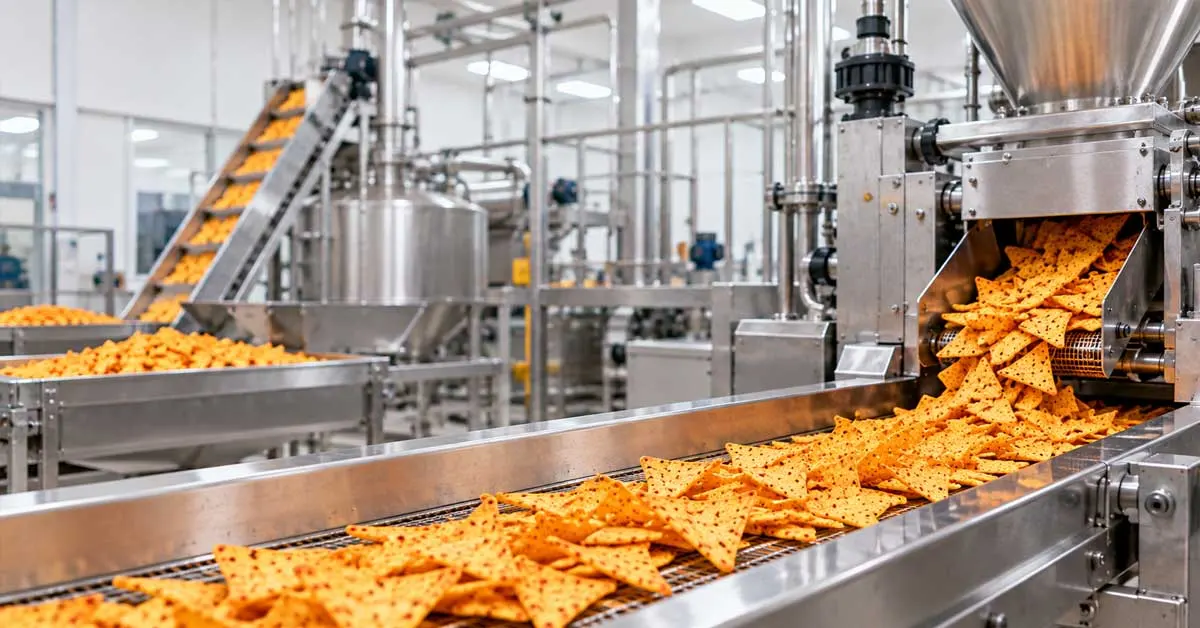
Modern snack production is not only about producing more kilograms per hour.
It is about producing the same product repeatedly.
Good process control can help manufacturers manage ingredient feeding, mixing, extrusion, product shape, drying, seasoning, cooling, packaging and weight control.
Automation can also reduce unnecessary manual handling and make production easier to monitor.
For manufacturers planning multiple SKUs, flexible equipment can become particularly useful.
A business might start with one protein puff and later introduce rings, curls or another shaped snack. The production setup should be considered with that possibility in mind.
This is a key part of Protein Snack Manufacturing in Sri Lanka, especially for businesses that want to expand their product range after validating their first SKU.
Why Foodsure Machines for Protein Snack Manufacturing?
Choosing machinery for high-protein snacks is not just about buying an extruder.
The formulation has to work with the machine.
The die needs to suit the product.
The dryer needs to achieve the required final moisture.
The seasoning system needs to match the product.
And the packaging machine needs to handle the final snack without damaging it.
This is where Foodsure Machines can support manufacturers looking to build a complete high-protein snack production line.
Foodsure Machines works on food-processing equipment and production setups for snack manufacturers, including high-protein extruded snack formats such as puffs, rings and other shaped products.
Depending on the project, the production flow can include:
Mixing → Extrusion → Cutting → Drying → Seasoning → Cooling → Packaging
The actual configuration depends on the product formulation, desired shape, production requirement and automation level.
For a manufacturer entering this category, that product-first approach matters.
You might have a protein puff formulation today and want to introduce a ring or curl later. The machinery should be planned with that kind of product development in mind instead of locking the factory into one format from the beginning.
For manufacturers evaluating Protein Snack Manufacturing in Sri Lanka, this approach also allows the production setup to be considered around the actual product portfolio.
Businesses looking for a High Protein Snack Machine Sri Lanka can evaluate the complete line based on the formulation, desired shape and downstream requirements.
Conclusion
There is a much bigger opportunity in protein snacks than protein bars.
For Sri Lankan manufacturers, high-protein chips, puffs, rings, curls and other extruded snacks can bring protein into a format consumers already understand.
The country’s existing savoury snack market provides familiar product formats, while current market research points towards growing interest in functional, plant-based and health-oriented snack propositions.
But the product still has to pass the most basic test.
Does it taste good?
Does it have the right crunch?
Does the seasoning work?
Does it stay stable during storage?
And can the manufacturer produce the same product batch after batch?
That is where product formulation and machinery need to work together.
For businesses exploring Protein Snack Manufacturing Opportunities in Sri Lanka, the practical route is to start with the product concept, develop and test the formulation, understand how it behaves during extrusion and then build the production line around those requirements.
With the right setup, a manufacturer can move beyond conventional chips and explore protein puffs, rings, curls, sticks and other snack formats that combine familiar eating experiences with a different nutritional proposition.
For businesses considering a High Protein Snack Manufacturing Business, the machinery should therefore be treated as part of the product-development process rather than as a standalone purchase.
And that is the space where Foodsure Machines can become part of the project: not simply as an extruder supplier, but as a machinery partner for building the processing flow around the actual high-protein snack the business wants to manufacture.
Frequently Asked Questions
What are protein snacks?
Protein snacks are convenient food products formulated to provide protein as part of their nutritional profile. They can include extruded products such as protein chips, puffs, rings, curls and sticks made from ingredients such as soy, pea, pulses, rice and other protein-containing raw materials.
Can protein snacks be made as chips and puffs?
Yes. Protein-rich formulations can be developed into different extruded snack formats, including puffs, rings, curls, sticks and chip-like products. The final shape depends on the formulation, extrusion process, die configuration and downstream equipment.
What machinery is required for protein puff manufacturing?
A typical line can include a mixer, feeder, extruder, die and cutter, dryer, seasoning system, cooling conveyor and packaging machine. Metal detection and check weighing can also be included as part of the finished-product line.
What ingredients can be used in protein chips and puffs?
Depending on the formulation, manufacturers can use soy protein, pea protein, chickpea, lentil, rice, corn, pulses, protein concentrates, starches and other ingredients. The formulation needs to be developed around both the nutritional target and extrusion behaviour.
Is extrusion suitable for high-protein snacks?
Extrusion can be used for a range of shaped snack products, but the suitability of a specific formulation depends on factors such as protein source, moisture, starch content, processing conditions and the required product structure.
Can one production line make different snack shapes?
Potentially, yes. The range of products depends on the extruder, die system, cutter and downstream equipment. Different shapes such as puffs, rings, curls and sticks may require different dies or processing configurations.
Can Sri Lankan manufacturers export protein snacks?
Sri Lankan manufacturers can explore exports when their products meet the applicable food safety, labelling, packaging and regulatory requirements of the destination country. Export suitability needs to be evaluated market by market.
Which food safety standards are relevant?
GMP and HACCP principles are commonly used as food-safety foundations. ISO 22000 provides a food safety management system framework, while FSSC 22000 adds scheme-specific requirements. FSSC’s current Version 7 was released in May 2026.
What should manufacturers consider before buying a protein snack machine?
The product formulation should come first. Manufacturers should understand the desired protein level, shape, texture, moisture, seasoning, production requirement and packaging format before finalising machinery.




