
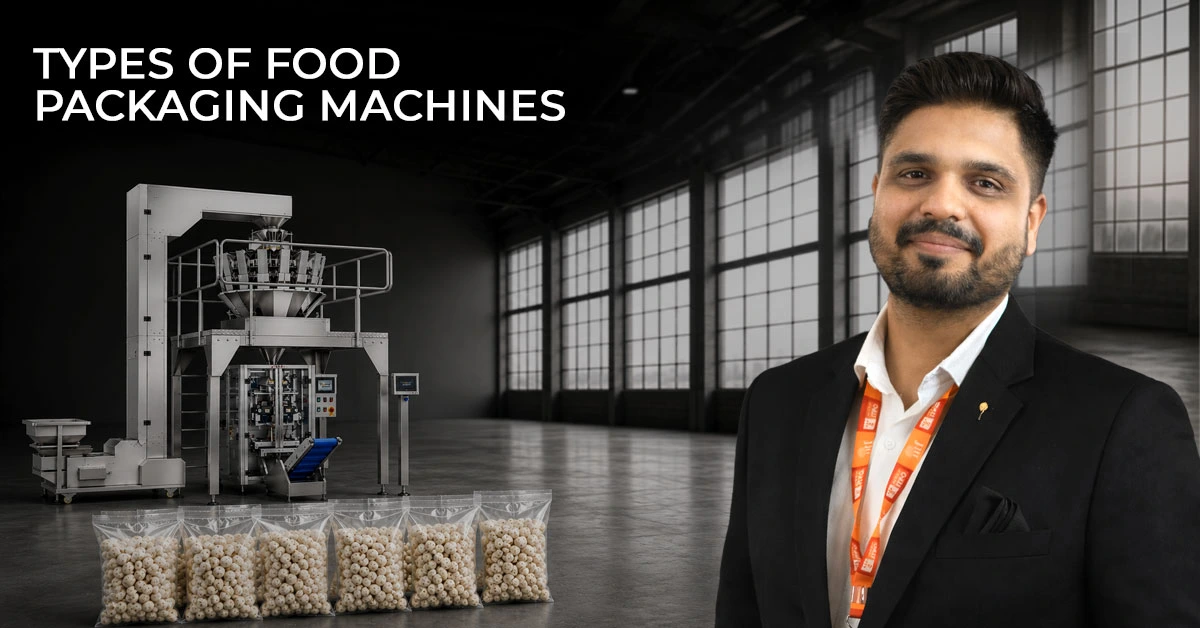
Every tempting meal, quick snack, or thirst-quenching drink that passes through your lips owes its life to a hidden hero: the food packaging machinery. These amazing machines serve as our food’s armour; providing both flavour and bacterial defence, and allowing goods to make it around the globe. Without the correct machinery in place, efficiency gains and waste reduction are unattainable for food businesses.
In the world of automation and food is the realm of inventive mechanical engineering. Whether its liquid, brittle potato chips or the highest of liquids, it’s likely that a machine is dedicated to the task of wrapping that item. Join us as we investigate the technologies at the heart of our global food pantry and explore the most advanced types of food sealing machine used in modern factories.
Read more :- food processing unit
Types of Food Packaging Machines
Categorizing FFS, VFFS, and HFFS Machinery by Motion and Bag Style
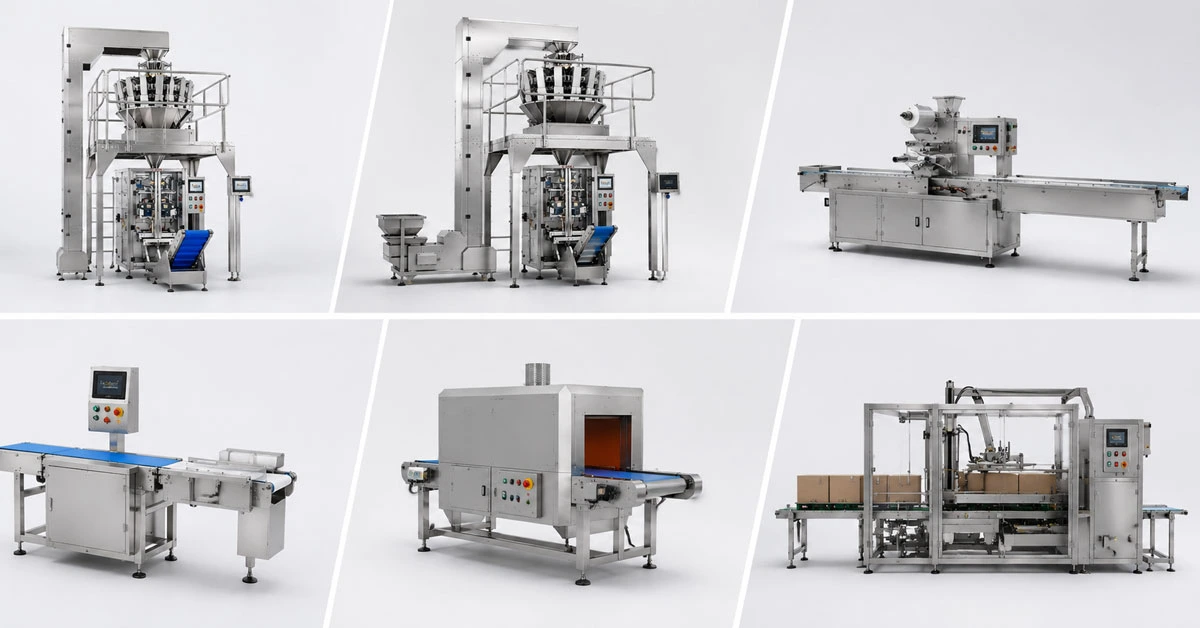
01 Form, Fill, and Seal (FFS) Automation : These are the workhorses of the modern food industry. They use a single, flat roll of plastic film to produce a bag and then fill it with product, saving cost on the expensive pre-formed bags and space in the factory. These clever machines make a tube from the film and seal bottom, fill with food and cut off a new bag from the one underneath.
02 Vertical Form, Fill and Seal (VFFS): VFFS packaging machines utilize gravity to complete the entire packaging process. The packaging film travels down vertically around a specialised circular tube. A heat seal creates the bottom and sides of the bag, and the product then drops from an overhead feeder into the bag. As the process runs vertically, the machinery takes up a minimal amount of space in the food factory. These are extremely rapid machines suitable for free flowing products like confectionery, tea, or coffee beans and frozen vegetables like peas. Many manufacturers prefer this pouch packing machine setup for fast-moving food products.
03 Horizontal Form, Fill and Seal (HFFS): HFFS machines perform the same three actions (form, fill and seal) but in a horizontal direction on a horizontal moving conveyor line. These machines form a pouch around the item (or items) and seal the side and ends of the pouch to contain it safely within the film wrapper. Delicate items which would be damaged if dropped would benefit from the gentler handling in a horizontal form, fill and seal machine. You will see this type of machine packaging cookies, confectionery bars, sliced cheese and many other items. HFFS systems are highly efficient types of food packaging machines for delicate and premium products.
Industrial Filling and Dosing Systems
The job of the filler machine is very demanding: it has to put the precise amount of food in each container. Too little, and the business violates consumer trust legislation. Too much and they lose money every time they sell one item. They are like digital referees, equipped with sensitive scales and valves, and will not be content until the portions are completely identical. A modern filling and packaging machine helps manufacturers maintain consistency and minimise waste.
| Machine | Best Foods | Method | Benefit |
|---|---|---|---|
| Auger Fillers | Flours, spices, protein powders | Rotating internal screw | Keeps dust out of factory air |
| Piston Fillers | Salsas, honey, peanut butter | Reciprocating piston stroke | Handles thick products smoothly |
| Timed Gravity Fillers | Water, juices, vinegars | Time-controlled valves | Very fast liquid filling |
| Multihead Weighers | Chips, jelly beans, vegetables | Computerized scales | Excellent weight accuracy |
- Liquid and Paste Dispensing:
Liquids have such mechanical problems like splashing, foaming and dripping. Volume piston fillers pull an empty paste out of a heavy cylinder cleanly into jars/bottles. Gravity fillers use such precise micro second that they just have a valve which opens for a precise micro second when juice runs out, it is not sticky around bottles.This category of filling and packaging machine is widely used in beverage and sauce production lines.
- Dry and Solid product Weighing:
The mechanical problem is so diverse when dealing with dry and solid food, and requires calculation. In the multihead weighers, the food runs into about ten to twenty different weighing cups arranged around a circle. The whole process takes less than a second, and a computer instantly takes a scan of the ten or twenty cups and computes what combination of cups is the exact one.
3. Wrapping and Bundling Solutions
Wrapping machines, such as those used in clean room operations are machines used to individually seal items tightly in film, foil, or paper for use as either a primary clean barrier around a single product or for creating a bundle of individual products that are then shipped in a bundle to the grocery stores. These systems are important types of food packaging machines used across food and beverage industries
Flow Wrappers
These types of machines simply feed the product forward while wrapping the individual item in one long, flowing film sheet, finishing the seal along the bottom by forming a “fin seal”, and then crimping each end together. Many companies integrate a food sealing machine into flow wrapping systems for secure and airtight packaging.
Shrink tunnels
Machines used to bundle products by wrapping a loose film around the individual products, and then inserting it into a heated tunnel causing the film to shrink tightly around the product or the cardboard tray holding the products.
Stretch wrappers
Positioned at the end of the line, stretch wrappers tightly bundle multiple boxes of products to prevent the load from falling when shipped to the grocery store.
4. Freshness and Preservation Machinery
Beyond keeping the food packed with the wrong kinds of chemicals, manufacturers use machinery to keep foods fresh by controlling the environment of the package itself. These machines are designed to adjust the atmosphere within the package so that fresh food deteriorates slower. Advanced types of food packaging machines are essential for extending shelf life and preserving product quality.
Vacuum Packaging Units
Vacuum sealers suck all of the air out of a tough plastic bag and create a hot seal on the edges. Without air, and with it oxygen, mold and the various aerobic bacteria that make food go bad are eliminated from the environment of the bag. This means that steak, cheese blocks, or smoked fish will keep for weeks as opposed to days. A high-quality vacuum packaging machine is commonly used in meat, seafood, and dairy processing industries.
Modified Atmosphere Packaging (MAP)
Foods like potato chips or leafy greens can’t just be vacuum packed or the entire product will be completely flattened by the process. Modified atmosphere packaging (MAP) machines remove ambient air and then fill the package with a specially formulated mixture of natural gases (like nitrogen and carbon dioxide). These gases keep salad greens fresh and green without turning red meats grayish; and they cushion the products, like snack chips, from being crushed into small crumbs.
Read more :- how to start a food processing business in india
5. Pre-Made Pouch and Cap Sealing Machines
While producing bagstock and sealing bag-making machines might be the most cost effective way to start off with bagging food products, most modern brands have moved towards purchasing high-quality, pre-made bags. These stand-up pouches come with integrated features such as zips and viewing windows, and can often be shaped with decorative patterns to the delight of the consumer-meaning they require special machines to handle. Businesses often invest in a modern pouch packing machine for attractive retail packaging.
Pick, Fill, and Seal Machines (PSF)
PFS machines employ a number of robotic arms that manually grasp a pre-made bag from a stack. They cycle through a number of mechanical processes: one arm pulls the pre-made bag and opens up the zipped closure; another blasts hot air into the bottom Gusset of the bag, inflating the bottom to accept food products; one arm dumps the food from above into the inflated bag; finally the bag is heat-sealed on the final station. PFS machinery is extremely adaptable and can be readily switched between different bag shapes.This versatile pouch packing machine is ideal for snacks, coffee, and frozen foods. A reliable food sealing machine ensures leak-proof and contamination-free packaging.
Capping and Seaming Hardware
Sturdy mechanical closings are needed to ensure no leaks when packaging with Rigid glass jars, Plastic jugs, and Aluminum cans. Rotary Capping machines simply take the finished product and spin the cap on using the correct torque at appropriate speeds for different products. Heavy Duty Can Seamers are used for all carbonated products and mechanically roll and crimp Aluminum lids around the can body to produce a strong gas-tight seal. A reliable food sealing machine ensures leak-proof and contamination-free packaging.
Final Secondary packaging at the end of the line
After the food products are safely sealed in the primary bags or bottles, they transition into the world of secondary packaging. These industrial heavy duty systems ready single retail items for shipment and warehousing.
| Equipment | Task | Food Material | Location |
|---|---|---|---|
| Carton Erectors | Opens cartons and seals bottoms | Cereal and snack boxes | Mid-line processing |
| Case Packers | Loads products into cases | Bottles and can trays | Near exit area |
| Robotic Palletizers | Stacks boxes on pallets | Bulk finished goods | Warehouse floor |
- Box Erectors
A vacuum pulls a flat cardboard piece off a stack, opens the box to an ideal shape and glues the bottom flaps together.
- Pick-and-place robots
Mechanical arms with soft vacuum grips (safe to touch food), pick up light bags of food and organize them in a shipping box.
- Automatic palletizers
Big industrial robots place boxes stacked in interlocking rows onto a wooden pallet, providing a solid, perfectly balanced stack.
Cleanliness, Maintenance, and the Intelligent choice
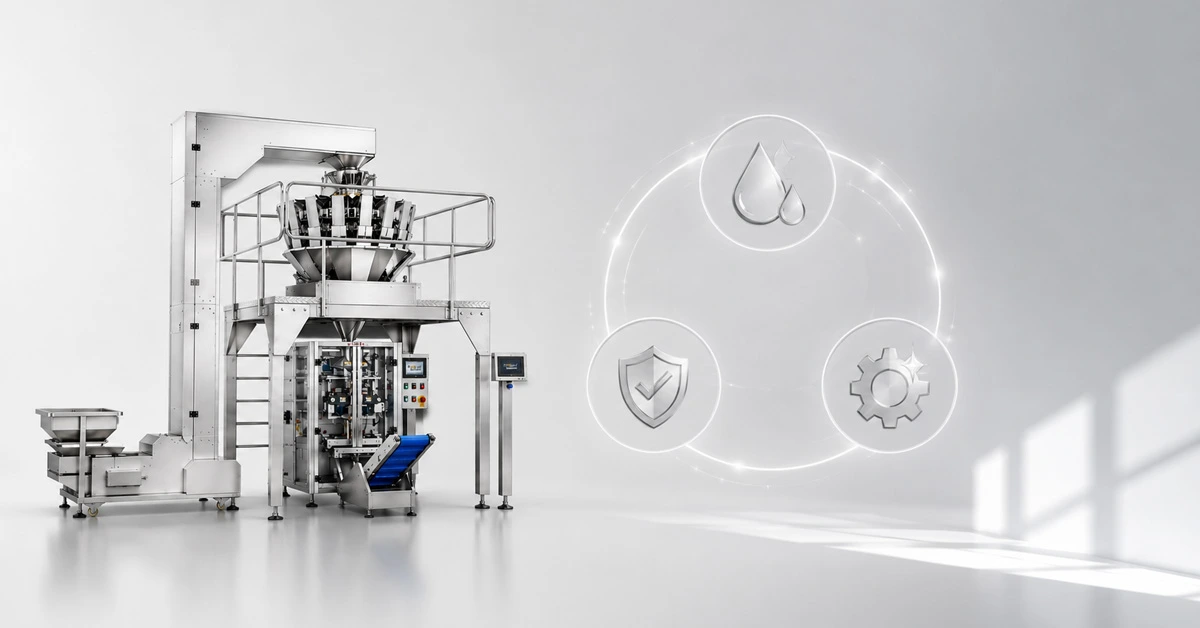
There is high hygiene required when working in the food industry, due to easy food build-up in pipes and pumps, most machinery used in this field is made out of highly-resistant, rust-free stainless steel. Modern filling lines are designed with an automatic CIP (Clean-in-Place) system. CIP consists in the circulation of heated water and cleaning substances, without the need for worker disassembling the whole machine, therefore, the inner tubes and parts of the pump and filling machine get totally cleaned up.When deciding which equipment is best to bring into a facility, a business needs to evaluate these factors to guarantee an effective ROI:
Condition of product
The machine’s design must fit the condition of your food (liquid, powder, sensitive solids)
Rate objectives
Your target speed is defined in bags/minute. Choose the speed your new machine will provide.
Floor space
Before purchasing, consider the dimensions of your factory; you need to take measurements of your factory’s ceiling height and the footprint your future production line would take, in case of vertical or horizontal lines.
Future investments
Modular design solutions are preferable since they permit quick and inexpensive modification of the packaging size.Investing in packaging equipment is not only a means of increased production; it’s a method of preserving your brand’s effort, the safety of your consumers, and the final perfect appearance and taste of your food when opened.
Conclusion
FAQs
What are the main types of food packaging machines?
The main types include filling machines, sealing machines, wrapping machines, labeling machines, and form-fill-seal (FFS) machines.
Which food packaging machine is best for small businesses?
Semi-automatic filling and sealing machines are best for small businesses due to their affordability and ease of use.
What is a form-fill-seal (FFS) machine?
A form-fill-seal machine forms packaging, fills it with product, and seals it in one continuous automated process.
How do I choose the right food packaging machine?
You should consider product type, packaging material, production capacity, and level of automation required.
What industries use food packaging machines the most
Food packaging machines are widely used in snacks, dairy, bakery, beverages, and ready-to-eat food industries.




