
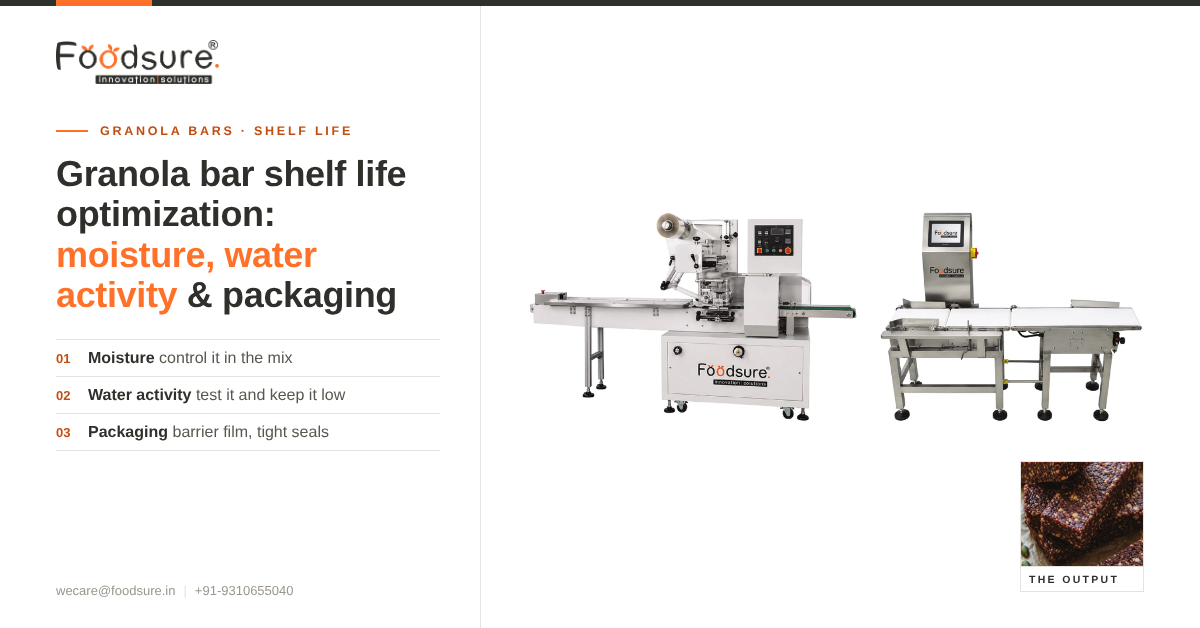
While a granola bar might be excellent right after its production process, retaining its quality during storage becomes a completely new set of difficulties. Moisture might alter its texture, binders might deteriorate its crunch, and oxidation due to air contact might spoil nuts and seeds. This all affects the quality of the product despite the condition of the packaging itself. That is why granola bar shelf life needs attention from the recipe development stage itself. These are essential considerations for commercial manufacturers if they want to develop granola bars that can retain their quality during their entire storage period.
What Determines the Shelf Life of a Granola Bar?
The shelf life of a granola bar is the time duration for which the product retains acceptable quality under prescribed storage conditions. This shelf life is dependent on ingredients, moisture content, water activity, processing, and packaging.
Some important factors that influence granola bar shelf life include:
- Moisture content: Influences softness, crispness, and texture.
- Water activity: Shows how much water is present that may be used by microbes and other forms of degradation.
- Quality of ingredients: Oats, nuts, seeds, and dried fruits might impact stability.
- Composition of binders: Various binders provide different levels of moisture, affecting texture.
- Process: Mixing, heating, cooling, and handling might impact quality.
- Packaging material: Regulates exposure to moisture, oxygen, light, and contamination.
- Storage conditions: Impact quality during shipping and storage.
These factors work together. Improving one aspect alone may not be enough if the rest of the process is not properly controlled.
Moisture Content vs Water Activity: What’s the Difference?
Moisture content and water activity are related, but they do not measure the same thing. Both are important when evaluating the stability of granola bars.
What Is Moisture Content?
Moisture content is the total amount of water contained in the food item. Granola bars will contain moisture due to the presence of ingredients such as honey, date paste, dehydrated fruits, and syrup.
The moisture content in a bar could affect its consistency as being soft, chewy, hard, or crispy. High moisture content in a food item might cause the product to be sticky and may reduce the crispness of the crispy components.
What Is Water Activity?
Water activity, abbreviated as aw, is the measurement of how much moisture is available in an item for microbial growth and some physical or chemical reactions.
Water activity is measured on a range of 0 to 1, where high water activity would mean high availability of water while low water activity would mean low availability of water.
Water activity is different from moisture content since two items might have the same amount of moisture but different water activity due to differences in the binding properties of ingredients.
Why Should Manufacturers Measure Both?
Moisture content gives manufacturers an idea of the moisture level in the product, but water activity tells them more about its stability.
Both of these measurements will be useful for developing new products and controlling their quality. The right values for each should be defined for each particular type of granola bar based on its ingredients and production process.
How Do Granola Bar Ingredients Affect Shelf Life?
The choice of granola bar ingredients has a direct impact on moisture balance, texture, and storage stability. Ingredients that work well together in a freshly prepared bar may behave differently over time.
| Ingredient | Contribution to the Bar | Shelf Life Consideration |
| Rolled oats | Structure and grain texture | Can absorb moisture and lose crispness |
| Nuts | Crunch, flavour and natural fats | Fats may oxidise and develop rancid flavours |
| Seeds | Texture and nutritional value | Natural fats may be sensitive to oxidation |
| Dried fruits | Sweetness and chewiness | Can contribute moisture and influence water activity |
| Honey and syrups | Sweetness and binding | Affect moisture balance and stickiness |
| Nut butter | Binding, flavour and fat | Fat stability and ingredient quality matter |
| Chocolate | Flavour and coating | Can be affected by temperature and storage conditions |
| Protein and fibre ingredients | Nutritional and functional properties | May change water absorption and texture |
Manufacturers should evaluate the complete ingredient combination instead of assessing each ingredient separately.
How Does the Granola Bar Binder Affect Shelf Life?
A granola bar binder holds oats, nuts, seeds, and other ingredients together. It also influences the moisture level, sweetness, firmness, and chewiness of the finished bar.
Some of the common binders used in baking products include honey, glucose syrup, date paste, and nut butters. These act differently depending on their composition and other ingredients in the recipe.
For instance, the date paste can add moisture to the final product, while the syrup can act as an agent to hold the dry components together. The nut butter can also add flavor to the product.
There is no single best binder for granola bar production. The right choice depends on the intended product, processing method, and storage requirements.
When developing a commercial recipe, manufacturers should assess:
- Water content of the binder
- Its capacity to coat the dry ingredients
- Its influence on firmness and cohesiveness
- Compatibility with the shaping and cutting operation
- Texture changes during storage
- Its interaction with other ingredients
The objective is to achieve a stable bar that maintains its intended texture without becoming excessively hard, soft, or sticky.
How to Improve Granola Bar Shelf Life
If you are considering how to improve granola bar shelf life, the first step is to understand what is causing quality changes. A bar that becomes soft may have a different problem from one that develops an unpleasant smell or taste.
The following practices can help manufacturers improve product stability.
Control Moisture during Manufacturing Process
Determine and control the level of moisture that is added through binders, dried fruits, and other ingredients. Excess moisture may affect the crispness, stickiness, and quality of the product.
Processors must also ensure proper processing and cooling before packaging.
Water Activity Testing
Water activity tests are used to determine the availability of water in the product. It can assist in the development of new products as well as in the identification of any change in stability over time.
Tests should be performed on selected samples using the right calibrated equipment.
Use of Quality Ingredients
Use high-quality oats, nuts, seeds, and dried fruits from trusted suppliers and in appropriate storage conditions. Poor quality or inappropriate storage can negatively affect the stability of the finished product.
Protection of Nuts and Seeds from Oxidation
These natural products contain fats that will be oxidized if exposed to oxygen, heat, and light. Use quality ingredients, limit exposure to these elements during the manufacturing process, and use proper packaging.
Ensure Proper Processing Hygiene
Hygiene in processing is achieved through proper cleaning of machinery, handling, and storage. Food manufacturers must practice safe food handling and hygiene measures during processing.
Package the Product at the Appropriate Stage
The granola bars must be fully cooled and stable when packed. Warm products may cause condensation to occur inside the pack.
The appropriate cooling and packaging order must be determined for the product and the processing method used.
Choosing the Right Packaging for Granola Bars
Packaging is significant for the protection of granola bars when stored, transported, and distributed in retail stores. The product may lose its quality even though there might be a highly developed recipe for it because of inadequate packaging.
Material for packaging should be chosen depending on the humidity resistance, fat content, and storage period.
Moisture Barrier
Appropriate moisture barrier keeps the product from getting absorbed by moisture in the environment. This is especially critical for granola bars since moisture absorption affects their crunchiness.
Oxygen Barrier
Exposure to oxygen can lead to oxidation of the fats in nuts and seeds. An appropriate oxygen barrier in the package could help prevent that.
Light Protection
There are some materials that are sensitive to light exposure. Packaging that does not transmit light might have an effect on the protection of the product depending on its ingredients and storage.
Seal Strength
The packaging seal should stay sealed during transportation and delivery. Unsealed, pinhole, or compromised packages will expose the product to outside elements such as moisture and oxygen.
Compatibility of Packaging Material
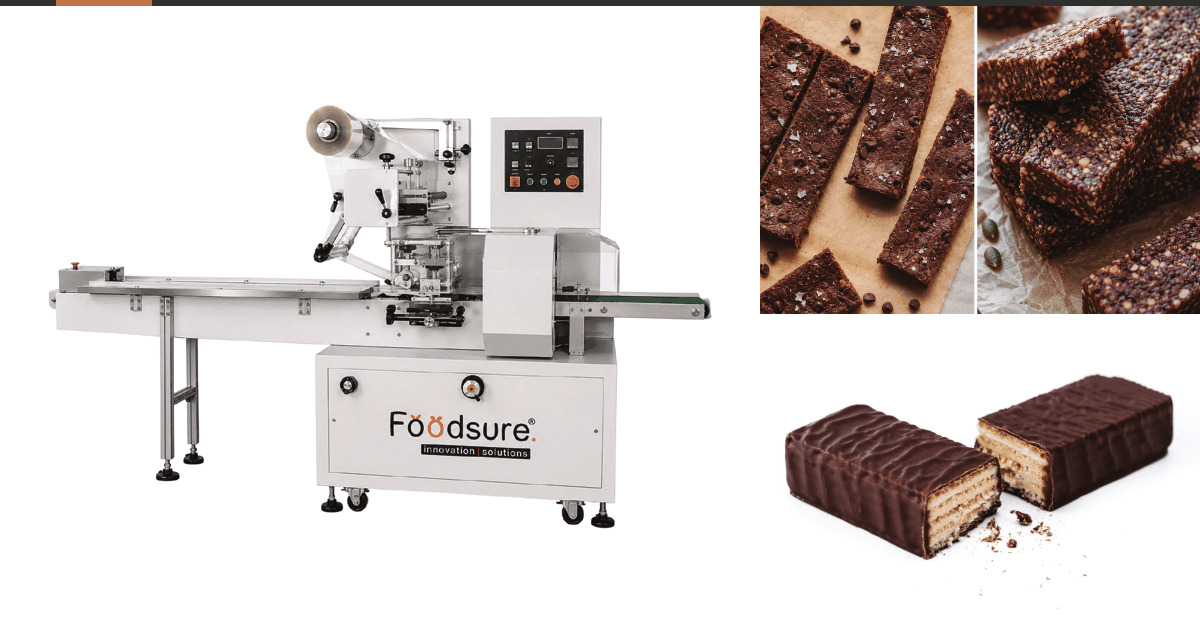
The packaging material must be appropriate for the product and chosen storage. It is necessary to ensure that it can be used for packaging in the particular packaging machine.
How to Test Granola Bar Shelf Life
The shelf life should be determined through tests and not just by analyzing the recipe or package used.
Shelf Life Testing can provide the manufacturer with insight into how the product evolves with time.
Representative Sample Preparation
Use bars that are made by the actual manufacturing procedure. Samples must reflect the typical product, packaging, and batching conditions.
Testing for Initial Product Quality
The initial quality of the product should be recorded, including its moisture level, water activity, texture, color, odor, and flavor.
Storage Under Prescribed Conditions
Store samples under prescribed conditions. In case the product is transported under various conditions, other storage conditions can be included.
Conduct Periodic Evaluation
At defined intervals, assess relevant quality parameters. These may include:
- Moisture level
- Water activity
- Texture and hardness
- Crunchiness and stickiness
- Color and appearance
- Flavor and odor
- Quality of microbiology, if applicable
- Condition of packaging and seal
Establish the Shelf Life
The test results shall be used to find out for how long the product will remain of satisfactory quality under the stated conditions. The shelf life needs to be backed up with relevant information.
Granola Bar Formulation for Commercial Production
Granola bar formulation for commercial manufacture should consider the entire production and packaging process. A formulation that is good for making granola bars in your kitchen may require some modification before being able to make the product on an industrial scale.
A practical granola bar formulation for commercial production should consider:
- Ingredient ratios: Ensure that the ratio of the ingredients is balanced.
- Moisture level: Determine the amount of water each ingredient contributes to the formulation.
- Binder effectiveness: Determine the ability of the binder to hold the mixture together.
- Texture: Determine the texture you require in the finished product, whether crunchy, chewy, or soft.
- Processability: Ensure that the mixture can be mixed, formed, and cut uniformly.
- Stability: Determine the effect of storage on moisture, texture, flavor, etc.
- Packaging: Choose an appropriate packaging material for the product
A granola bar recipe should therefore be tested under actual or representative production conditions before it is finalised.
Granola Bar Recipe for Machine Production
A granola bar recipe for machine production needs to work with the mixer, forming system, cooling arrangement, cutting equipment and packaging line.
A typical production process may follow:
Raw Material Preparation
↓
Ingredient Weighing
↓
Mixing
↓
Slab Forming or Extrusion
↓
Cooling or Setting
↓
Cutting
↓
Optional Coating
↓
Packaging
The type of forming process used will depend on the material composition. The slab forming process can be used if the product includes whole oats, nuts, and seeds. On the other hand, extrusion is an option if the material is cohesive enough.
A granola bar manufacturing machine has to be chosen based on the formula, product size, output, and extent of automation. Consistency of the process would enable manufacturers to make samples for shelf life testing.
What Role Does a Granola Bar Pilot Batch Play?
A granola bar pilot batch helps manufacturers test a recipe and process before moving to larger-scale production.
It provides an opportunity to evaluate:
- Ingredients interaction
- Bond material efficiency
- Mixing and molding characteristics
- Item weight and size
- Cutting quality
- Water content and water activity
- Texture post-processing
- Packaging appropriateness
- Storage behavior
Pilot testing is useful in identifying problems that might not be easily identifiable when producing a small amount by hand. Additionally, pilot testing enables manufacturers to make adjustments to the recipes/processes before large-scale production.
Should You Consider Granola Bar Contract Manufacturing?
Businesses that want to introduce granola bars without immediately setting up their own production facility may consider granola bar contract manufacturing.
The appropriate manufacturing partner will assist in planning for production, processing, packaging, and quality assurance, based on what they provide. Before settling on one, talk about the formula, raw material sources, production capacity, and packaging needs.
A granola bar product development service can also help businesses evaluate ingredient combinations, develop the desired texture, and test the recipe under suitable processing conditions.
Working with a reliable granola bar raw material supplier is equally important. Consistent quality of oats, nuts, seeds, binders, and dried fruits supports better control over product quality and storage performance.
Why Choose Foodsure for Granola Bar Production Solutions?
Foodsure helps businesses looking to explore commercial food-processing and food manufacturing options. The right formula for making a granola bar for commercial production involves the right balance between ingredients, processing methods, texture, and packaging.
The right granola bar manufacturing machine configuration would depend on the product itself, the ingredient structure, and the production capacity needed. Foodsure can assist businesses in evaluating the equipment and production line needs for their products.
Whether it is a new granola bar or an existing range of products, careful planning and testing can help achieve a more consistent production process.
Conclusion
The increase in shelf life of granola bars can be achieved by understanding the factors that affect it. The factors include the formulation of the ingredients and their behavior. The components include oats, nuts, seeds, dried fruits, and the binding agents.
For commercial manufacturers, shelf life should be considered during recipe development rather than only after production. A carefully tested granola bar formulation, suitable packaging, and a well-controlled manufacturing process can help maintain product quality during storage. Pilot batches and appropriate shelf life studies provide a practical way to evaluate these factors before scaling up production.
Frequently Asked Questions
1. What is the typical shelf life of a granola bar?
There is no shelf life for all granola bars. This will depend on many factors, including ingredients used, moisture levels, water activity, processing, packaging, and storage. Shelf life will have to be determined via tests on the product.
2. How can I improve granola bar shelf life?
To understand how to improve granola bar shelf life, manufacturers should control moisture, monitor water activity, use good-quality ingredients, prevent unnecessary oxidation, maintain hygienic processing, and select suitable packaging.
3. What is the difference between moisture content and water activity?
Moisture content is used to quantify the quantity of water present in a particular product, whereas water activity is used to quantify how much of that water can be used by microorganisms or participate in certain degradation reactions.
4. Does the granola bar binder affect shelf life?
Yes. A granola bar binder can influence moisture, stickiness, firmness, and texture. Its effect depends on the binder type, quantity, and interaction with other ingredients.
5. Which packaging is suitable for granola bars?
The package must have appropriate barriers to moisture and oxygen, along with seal integrity, and also compatibility with the product and packaging machinery. The choice of material depends upon the requirements of the product.




