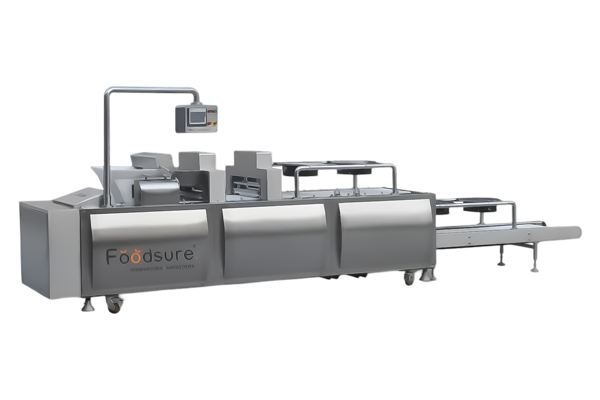
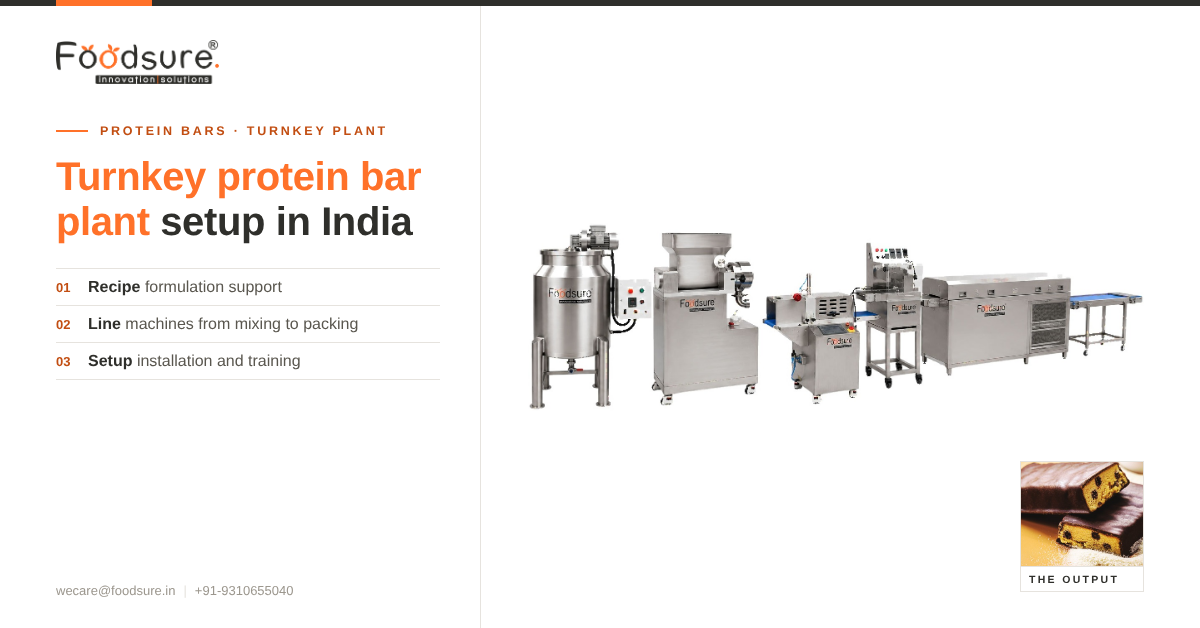
Protein bar production plant set-up involves detailed planning, the right equipment, production layout, and technical support. Firms venturing into the health food industry require a production system that is capable of ensuring consistency in product quality and future growth.
The use of turnkey protein bar plant setup in India provides a holistic perspective on setting up a manufacturing plant. Rather than individually arranging for machines and arranging the activities of their installation separately, organizations can work with one vendor for the planning, machine integration, installation, commissioning, and operational activities.
Whether you are launching a new brand or expanding an existing food-processing business, understanding the equipment, layout, utilities, and project requirements can help you plan a more efficient protein bar manufacturing unit.
What Is a Turnkey Protein Bar Plant Setup?
A turnkey protein bar plant is a complete manufacturing solution designed to bring the essential production stages together within a coordinated system. Depending on the project scope, it can include plant layout planning, machinery selection, utility coordination, equipment installation, commissioning, trial production, and operator training.
The objective is to simplify project execution by coordinating the major elements of the manufacturing facility.
A typical turnkey project may include:
- Production capacity planning and machinery selection
- Plant layout and machinery placement for protein bars
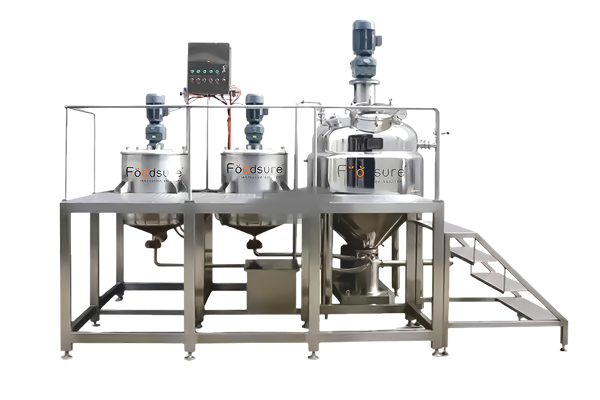
- Preparation of raw materials and blending machines
- Bar formation machines, such as extrusion, slabs and others
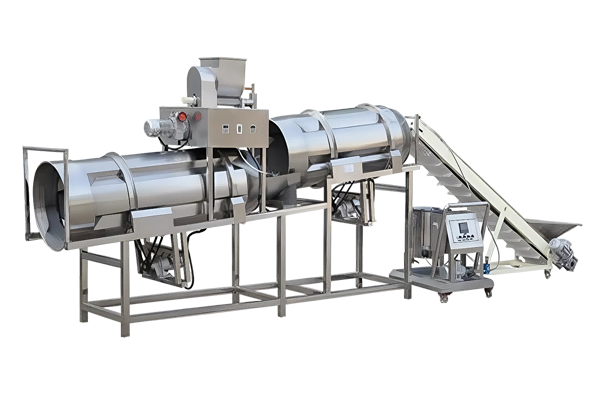
- Machines for cutting, cooling and coatings
- Conveyor and packaging machines
- Electrical installation planning
- Commissioning and trials
- Operator Training
The exact scope depends on the product range, production capacity, factory infrastructure, and automation requirements.
For businesses planning to establish a new facility, a turnkey protein bar plant setup in India can simplify coordination between different machinery stages and help create a more organised manufacturing workflow.
Why Choose a Turnkey Protein Bar Plant?
A factory setup by itself would mean coordination among equipment suppliers, contractors, installers, and utilities. If all these are not done in coordination, there could be production bottlenecks.
A turnkey approach brings the major project activities under a coordinated plan.
Integrated Project Planning
Machinery, layout, utilities, and production process are all planned as one unit. This allows firms to know the need for space, machines, and potential problems beforehand.
Improved Compatibility of Machines
In integrated projects, it becomes easy for manufacturers to consider how mixing, molding, cooling, cutting, and packaging will be done.
Installation Process Simplified
It becomes easier to manage the difficulties of connecting independently sourced machines through coordinated installation and commissioning.
Consistent Production Process
It becomes easy to manage the movement of materials from one production process to another.
Scope for Future Expansion
A properly planned turnkey protein bar plant can account for future production increases, additional product variants, and potential equipment upgrades.
How to Set Up a Protein Bar Manufacturing Plant in India
Businesses researching how to set up a protein bar manufacturing plant in India should begin with product requirements and production goals rather than purchasing machinery immediately.
The following stages provide a practical framework for planning the project.
1. Finalize the Protein Bar Product Line
First, determine which products will be produced at the plant. Various types of protein bars have different ingredient compositions, textures, and requirements for processing.
For instance, dense bars made from dates may need an extrusion forming process, while those consisting of whole nuts, seeds, oats, and cereal flakes may be more appropriate for slab forming.
Before selecting equipment, it is important to specify the product line, size of bars, properties of ingredients used, coating needs, and packaging type.
2. Calculate the Production Capacity
Calculate the necessary production capacity based on expected demand, sales channels, and future business development plans.
Capacity planning must take into account the number of bars that will be needed per hour or per shift, number of working hours, and production schedule.
The forming, cooling, cutting, and packaging processes must be chosen as a coherent system. High-capacity forming equipment will fail to provide all its capabilities if the downstream packaging equipment cannot work with such a large volume of bars.
3. Design the Factory Layout
A well-planned protein bar factory setup requires a layout that supports a logical movement of raw materials, work-in-progress products, and finished goods.
There should be enough space for machines, personnel, materials handling, cleaning, maintenance, and packing. There also needs to be consideration for the hygienic flow from areas where raw materials are handled to finished product areas. The positioning of equipment should provide for safe access to the operation controls, inspections, and maintenance points.
4. Select the Machinery
The machinery list must be prepared based on the recipe chosen, production capacity, and method of manufacture.
Extrusion or slabs may be needed by some products. The use of roasters, enrobers, metal detectors, and any further coolers is optional depending on what type of manufacture we are undertaking.
5. Utilities and Infrastructure Planning
The power supply, compressed air, ventilator needs, cooling needs, and water supply need to be assessed prior to designing the layout of machinery.
These needs will vary based on the machines chosen, the total load of the machines being used, and the factory infrastructure.
6. Installation of the Machinery
Once the machinery has been delivered, the installation team positions the machinery, utilities, aligns the machinery and tests the working of the integrated system.
Trial production could now be done with the planned raw material and process settings. This helps in assessing any changes that may be needed before commercial production.
7. Training of Operators
Operators need to be trained regarding machine operations, machine cleaning, maintenance, safety, and production control measures.
Prior to the beginning of commercial production, the firm needs to set up its quality control processes and raw material check and record keeping system.
Protein Bar Factory Layout and Machinery List
A practical protein bar factory layout and machinery list should reflect the complete manufacturing process rather than focusing only on the main forming machine.
The following table outlines common equipment and its role in production.
| Machinery or System | Primary Function |
| Raw material handling and weighing equipment | Measures and prepares ingredients for processing |
| Roaster, where required | Processes nuts, oats, seeds, or other suitable ingredients |
| Dry ingredient mixer | Distributes powdered and dry ingredients |
| Planetary, paddle, or suitable dough mixer | Combines ingredients and binders into the required mass |
| Syrup preparation kettle, where required | Prepares suitable binders or syrup mixtures |
| Protein bar extruder or slab former | Forms the mixture into a continuous profile or slab |
| Calibrator or shaping system | Helps achieve the required product dimensions |
| Bar cutter or guillotine cutter | Divides the formed product into individual bars |
| Cooling conveyor or tunnel | Stabilises the bars before subsequent processing |
| Enrobing machine, where required | Applies chocolate or compound coating |
| Metal detector and other inspection equipment | Supports the planned product-safety and quality-control system |
| Flow-wrap packaging machine | Wraps individual bars for storage and distribution |
| Batch coding equipment | Prints relevant production and traceability information |
| Conveyors and control systems | Connect production stages and coordinate machine operation |
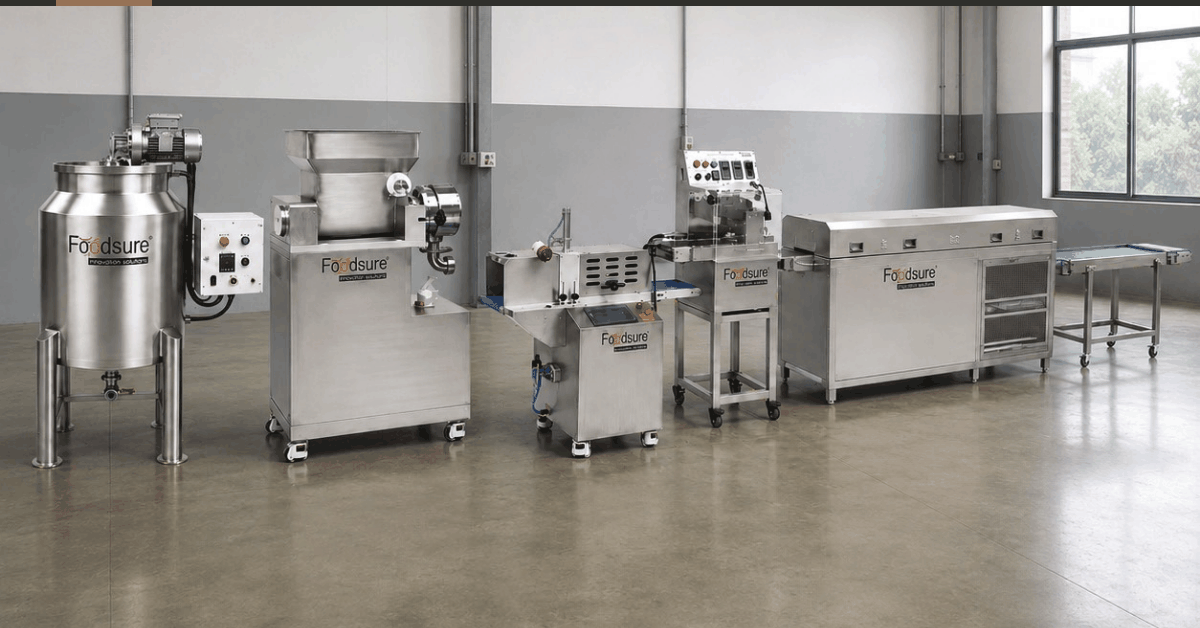
The type of machinery to be used depends on whether the product is baked or no-baked, type of ingredients, the process of molding, and the degree of automation required.
This implies that machinery to be used in a plant that produces uncoated bars made from dates might not be similar to the one that produces coated protein bars.
How to Plan the Protein Bar Plant Layout
The protein bar plant layout should support a logical sequence from receiving ingredients to dispatching finished products. A well-organised arrangement helps reduce unnecessary material movement and makes production easier to supervise.
Storage of Raw Materials
Provision of adequate storage space for protein materials, cereals, nuts, seeds, binders, sugars, films, and other raw materials is important. The storage environment should cater for the needs of each raw material.
Processing Room
Equipment such as weighing, mixing, forming, and cutting machines should be arranged appropriately to reduce handling of the product and ensure efficient movement of the product from one station to another.
Cooling and Enrobing Room
The arrangement of cooling equipment should consider the stabilizing needs of the product. In case of enrobing of the product, the equipment layout should consider the enrobing and cooling equipment to be used.
Packaging Room
This should be arranged with enough room for flow wrapper, coding equipment, inspection equipment, and other packaging materials. It should have capacity consistent with the capacity of finished bars.
Finished Products and Dispatch
Finished products should be moved to an appropriate storage and dispatch area. Proper segregation, stock keeping, and handling will ensure good product quality.
Protein Bar Unit Space and Power Requirement
The protein bar unit space and power requirement depends on the plant’s capacity, machinery configuration, production workflow, and level of automation. There is no single layout or electrical-load specification suitable for every facility.
Space Planning
The total space requirement should account for more than the footprint of the machines. Manufacturers should also allow room for:
- Raw material storage
- Manufacturing machines
- Cooling, slicing, and packing areas
- Storage of finished goods
- Operator traffic
- Cleaning plant
- Quality control work
- Office and administrative space for staff, where necessary
A detailed layout should be prepared before finalising the facility so that equipment can be installed and operated safely.
Electrical and Utility Planning
The electrical load calculation should be done based on the machines selected and their needs. The motors, heaters, refrigeration units, compressors, and packing machinery could form part of the load.
Utilities could include the compressed air, water for processes/cleaning, ventilation, and cooling, among others.
Manufacturers should request a consolidated utility schedule from their protein bar plant machinery supplier before arranging electrical infrastructure. The final load and utility provisions should be verified against the actual equipment specifications and site conditions.
How Long Does It Take to Set Up a Protein Bar Plant?
The answer to how long does it take to set up a protein bar plant depends on project scope and readiness. A facility using an existing production space and a relatively straightforward equipment configuration may follow a different timeline from a project involving building modifications, extensive automation, or a customised production line.
The main activities that influence the schedule include:
- Completion of product and capacity requirements
- Development of plant layout and machinery specifications
- Machinery configuration confirmation
- Production and delivery of machinery
- Factory preparation and utilities preparation
- Installation of machinery
- Trial production and operator training
If the site is not ready, the utilities are not available, or the equipment specifications change after the procurement process, there will be delays.
It is essential that the realistic project schedule is made with the supplier after considering the above factors.
Turnkey Protein Bar Plant for Startups vs Established Manufacturers
A turnkey protein bar plant for startups may have different priorities from a project intended for an established manufacturer.
| Consideration | Startups | Established Manufacturers |
| Production planning | Start with a clearly defined core product range | Plan around existing demand and expansion goals |
| Machinery selection | Prioritise essential equipment and practical scalability | Consider higher throughput and integrated automation |
| Layout | Use available space efficiently | Optimise material movement and production flow |
| Product range | Begin with manageable product variants | Accommodate multiple products and changeovers |
| Quality systems | Establish essential checks and traceability from the beginning | Integrate controls with existing quality systems |
| Future growth | Allow for additional equipment where practical | Plan capacity increases and production-line integration |
Simplicity is crucial for start-ups while making sure that the machines manufacture the required product reliably.
Old companies might focus more on throughput, less handling of machines, integration into existing plants, and scheduling of production processes.
In both scenarios, the right configuration should be based on the real business needs and not on the myth that more automation means better.
Factors Affecting Protein Bar Plant Setup Cost
The protein bar plant setup cost depends on the scope of the project, machinery selection, infrastructure, and operating requirements. Businesses should evaluate the complete project rather than considering the forming machine in isolation.
Key cost factors include:
Machine Setup
The quantity and kind of machinery needed may have an important impact on the total investment. Any optional roasting, coating, cooling, inspection, and packaging systems should be chosen based on the process.
Production Capacity and Automation
Greater production capacity and automation may need a different machine setup. The selected capacity should suit the actual production requirement and future expansions.
Plant Readiness
A ready-built plant might need electrical installation, floor changes, ventilation, utilities, and other installations before any machines can be installed.
Packaging Requirement
The needed pack setup, packaging speed, coding, and inspection systems may have an effect on the total plant setup.
Installation and Technical Support
Installation, commissioning, operator training, and after-sales services should be taken into consideration when assessing suppliers’ proposals.
Businesses researching protein bar machine price should compare the machine’s capacity, included components, technical specifications, and scope of supply. A quotation for an individual machine may not cover the same items as a complete turnkey project.
How to Choose a Protein Bar Factory Consultant and Machinery Supplier
Selecting a suitable protein bar factory consultant and protein bar plant machinery supplier is important for planning an integrated facility.
Before finalising a supplier, evaluate the following:
Knowledge About the Product
The supplier must know about the texture of the bars, the composition used, forming process, cooling needs, and packing needs.
Coverage of Project in Proposal
Whether the proposal covers layout planning, provision of machinery, utilities coordination, installation, commissioning, trial production, and training of operators.
Compatibility of Equipment
Inquire as to how the equipment will connect and whether the capacities are in sync in terms of mixing, forming, cooling, cutting, and packing.
Hygiene and Safety
Examine the food contact materials used, cleanability of equipment, machine guarding, emergency stop facilities, and access for maintenance.
Support Documentation
Ensure that equipment specifications, operating instructions, maintenance information, spares and technical support are available post-commissioning.
Scalability
Inquire whether other machines and production lines, and more packing capacity can be added in future without making any significant change to the existing setup.
Why Choose Foodsure for a Turnkey Protein Bar Plant?
The company Foodsure helps businesses with planning a turnkey protein bar plant in evaluating machinery, production capacity, layout needs, equipment integration, and automation needs.
A suitable project can encompass all required steps in producing protein bars – from preparing and mixing ingredients, through shaping, cooling, cutting to packaging. Other systems may also be taken into account depending on the product and production needs.
Moreover, the company Foodsure will assist in evaluating the extent of machinery supply, installation, commissioning, and operational needs. Such an evaluation will help businesses define what the project encompasses and how well the equipment suits the workflow.
Whether you are setting up a new protein bar manufacturing unit or upgrading an existing production facility, the goal is to have a realistic and integrated system that will facilitate production and further business expansion.
Conclusion
A properly thought-out turnkey protein bar plant project in India will aid the business in coordinating all aspects of machinery, utilities, layout, installation, and commissioning under one project structure. The choice of the appropriate machinery and the organization of the production process are crucial for ensuring quality and efficiency in business operations.
Prior to setting up a protein bar manufacturing plant, assess the needs of your products, capacity, factory space, electricity consumption, compatibility of machinery, hygiene issues, and further expansion of your business. A well-defined scope of your project and a good supplier of protein bar plant machinery will make things easier for you.
Frequently Asked Questions
What are the contents of a turnkey protein bar manufacturing plant project in India?
These would include plant planning, designing, machinery supply, utility arrangements, installation, commissioning, trial runs, training, and technical support. The details of what is to be included need to be specified in the supplier’s proposal.
How do I start up a protein bar manufacturing plant in India?
First, you need to finalize your product range, production capacity required, and the process for making your protein bars. Thereafter, you should design the plant layout, choose machinery, utilities, install it, do trial runs, and also quality control and food safety procedures.
What kind of machinery is needed for a protein bar manufacturing unit?
The usual machines needed for this purpose are ingredient scales, mixers, an appropriate extruder or slab former, cutters, cooling conveyors, packing machinery, and coding machines. Roasters and coating machines may be added as per the manufacturing process.
How much space and power does a protein bar plant require?
The protein bar unit space and power requirement depends on the production capacity, selected machinery, factory layout, and utilities. These requirements should be calculated from the actual equipment specifications rather than relying on a general estimate.
How long does it take to set up a protein bar plant?
Project duration will depend on manufacture and delivery of equipment, site preparation, installation of utilities, equipment installation, and pilot run of the project. The supplier must prepare a specific schedule for the project after assessing the entire project scope.