
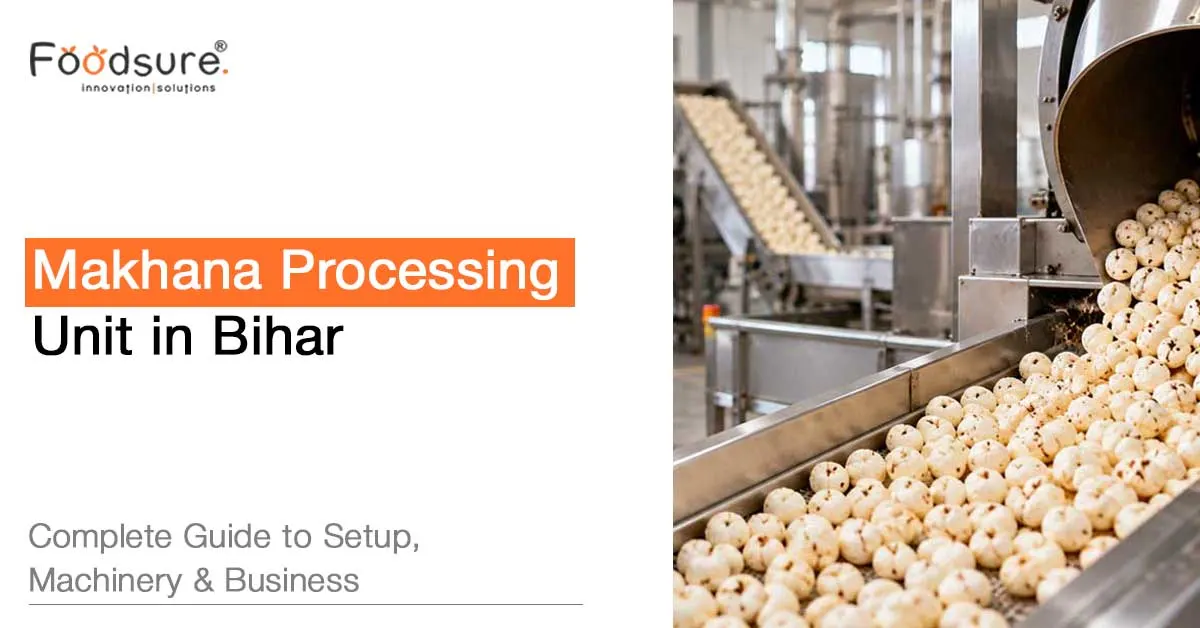
Bihar is one of the significant areas where makhana production is carried out. Due to the availability of raw materials along with demand for processed and flavored products, there is scope for companies involved in makhana processing.
A makhana processing unit in Bihar may be run on various scales, ranging from small plants that undertake simple cleaning and sorting of makhana to large-scale plants capable of roasting, adding flavors, and packaging the product. It is necessary to know about processing steps, machines needed, infrastructure, and other factors before starting the plant.
What Is a Makhana Processing Unit?
A makhana processing unit in Bihar is a facility where harvested makhana seeds are cleaned, dried, graded, processed, and converted into market-ready products.
It all depends on the business structure. Some companies will only deal with processing the raw Makhana into popped kernels, while others will even process further by roasting and flavoring the product.
A typical commercial setup may include:
Not every unit requires all these stages. Equipment selection should be based on the intended product and production capacity.
Why Set Up a Makhana Processing Unit in Bihar?
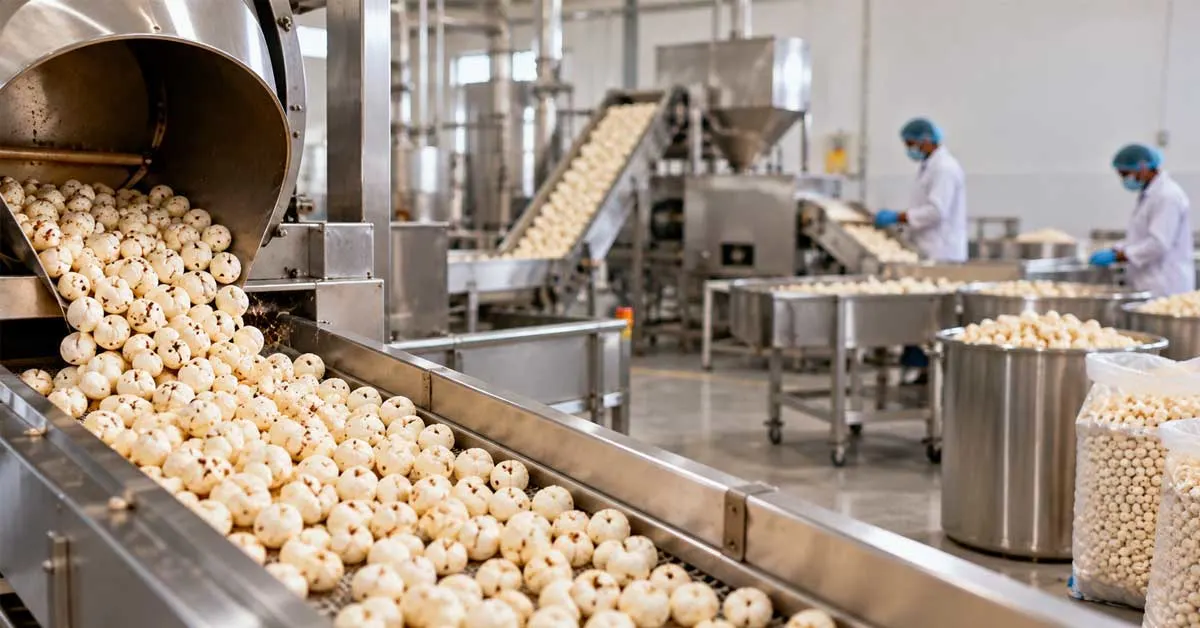
Being associated with the growth of makhana is an asset for business houses seeking to set up processing units near the origin of the raw material.
It is possible that setting up processing units nearby would result in savings from unnecessary transportation of raw materials.
Key factors supporting interest in a makhana processing plant in Bihar include:
- Availability of regions where makhana is grown
- Agricultural & trade network connections
- Growing demand for prepared makhana
- Popularity of health-oriented snack products
- Possibilities for roasting and adding flavor
- Package branding opportunities
- Connection potential between farming and food processing
The business opportunity is not limited to buying and selling the raw material itself but involves the added value that can be gained through processing.
Major Stages of Makhana Processing
A commercial unit generally includes several processing stages. The configuration can be customised depending on the type of product being manufactured.
1. Raw Material Receiving
The process starts with getting makhana seed or material in its raw form from the harvesters.
The incoming material needs to be checked for impurities, physical damage, moisture problems, and general quality before going through the processing phase.
2. Cleaning
Raw material may contain dust, plant residues, and other unwanted particles. Cleaning equipment helps remove these impurities before further processing.
Mechanical cleaning can reduce manual sorting and create a more consistent starting material for downstream operations.
3. Drying
Moisture management is critical to storage and further processing. As per the condition of the raw material and processing needs, a separate drying step may be added.
The drying process will ensure consistency in the condition of the material prior to grading or processing.
4. Grading
Makhana is classified based on its size or other physical attributes. Grading helps businesses to organize the raw material for various product groups.
5. Roasting and Popping
Roasting or popping is one of the critical steps in the processing of edible makhana kernels. Processing machinery will give better control of heat and materials compared to entirely manual operations.
The type of machine arrangement required will depend on the desired product and process involved.
6. Flavouring
With value-added snacks, makhana can be roasted and flavoured using various seasonings. There is a need for a flavouring system that will help to ensure consistency during coating.
7. Packaging
After processing and quality inspection, finished makhana can be packed into suitable retail or bulk formats.
Packaging equipment may be selected according to pouch size, production volume, sealing requirements, and desired level of automation.
Machinery Required for a Makhana Processing Unit
The amount of machinery needed would depend on the size of production and the product that would be produced. Some processing plants might need less machinery, while others would need more machinery to complete various processes.
Common equipment may include:
- Makhana cleaning machine
- Makhana drying equipment
- Makhana grading machine
- Roasting equipment
- Flavouring or coating equipment
- Conveyors
- Weighing systems
- Packaging machines
A suitable makhana machine should be selected according to the raw material, required capacity, available space, and desired automation level.
Makhana Manufacturing Unit in Bihar: Infrastructure Requirements
A makhana manufacturing unit in Bihar requires more than processing machinery. The facility should have adequate space for raw material receiving, production, finished-product storage, utilities, and movement of workers and materials.
Important infrastructure considerations include:
Production Area
There must be enough room around the equipment to operate, clean, inspect, and maintain it.
Raw Material Storage
The storage of raw materials should be done under such conditions that prevent them from getting wet, contaminated, and damaged.
Finished Product Storage
Processed and packaged products should be stored in a clean and organised area before dispatch.
Utilities
Depending upon the type of equipment, the plant may need suitable electric power, ventilation, light, water, and other services.
Material Movement
There should be reduced unnecessary motion within the factory. An efficient production process flow could help increase efficiency.
Makhana Business Setup in Bihar
Planning a makhana business setup in Bihar requires decisions about the scale, product category, target customers, and level of processing.
A business may choose one of several models:
| Business Model | Main Activity | Typical Focus |
|---|---|---|
| Basic Processing | Cleaning, drying, grading | Raw/processed supply |
| Roasted Makhana | Roasting and processing | Bulk or retail products |
| Flavoured Makhana | Roasting + seasoning | Snack market |
| Packaged Makhana | Processing + packaging | Retail sales |
| Integrated Unit | Multiple processing stages | Larger commercial operations |
The appropriate model depends on available investment, raw material access, market requirements, and desired production capacity.
Factors to Consider Before Setting Up
Before investing in a processing facility, entrepreneurs should evaluate several factors.
Raw Material Availability
Access to reliable sources of quality makhana is important for maintaining production continuity.
Production Capacity
The capacity should depend on the level of demand and not the largest machine that is available. It should match the output level.
Product Category
The equipment needs for production of bulk roasted makhana would be different from that of a facility making flavoured retail products.
Automation Level
Automation can reduce repetitive manual work and improve process consistency, but the investment should be appropriate for the planned scale.
Labour
Even automated facilities require operators, quality personnel, maintenance support, and workers for activities such as material handling and packaging.
Market Access
Companies need to think about where their products are going to be sold and how they will get there through wholesalers, retailers, distribution centers, or even online sites.
Role of the Makhana Board in Bihar
The evolution of the makhana industry also includes institutional support and initiatives at the industry level. There is scope to monitor information and developments related to the Makhana Board in Bihar as well as similar agricultural and processing institutions.
This could form part of considerations while evaluating the ecosystem as a whole for production, processing, research, farmer support, and marketing.
The entrepreneurs need to clear all such considerations, criteria, regulations, etc. before they come to a decision on investment.
Hygiene and Quality Management
Food processing is a process that demands constant hygiene and quality control. The food-processing factory must put in place mechanisms for cleaning machines, handling raw materials, overseeing the production premises, and preserving the finished product.
Important practices include:
- Regular equipment cleaning
- Controlled raw material handling
- Separation of raw and finished products where required
- Proper storage conditions
- Routine equipment inspection
- Worker hygiene practices
- Preventive maintenance
Good process control can help reduce contamination risks and maintain consistency between batches.
Maintenance of Processing Machinery
Maintenance is essential for dependable manufacturing. The equipment must be checked at the intervals that the manufacturer suggests.
Operators can monitor:
- Unusual noise or vibration
- Loose fasteners
- Worn components
- Blockages
- Material build-up
- Electrical connections
- Feeding and discharge performance
Preventive maintenance can help identify problems before they cause extended production interruptions.
Scaling a Makhana Processing Business
The processing unit does not necessarily have to start with an entirely integrated facility. It is possible for firms to grow based on demand and available resources.
One can start with the basic processing and then add machines for roasting, flavoring, grading, or packing as one grows.
As one increases the number of sales, automation and increased processing capacity will enable one to meet the increasing demands.
Such an approach will ensure that equipment investments match the growth of the business.
Future Opportunities for Makhana Processing in Bihar
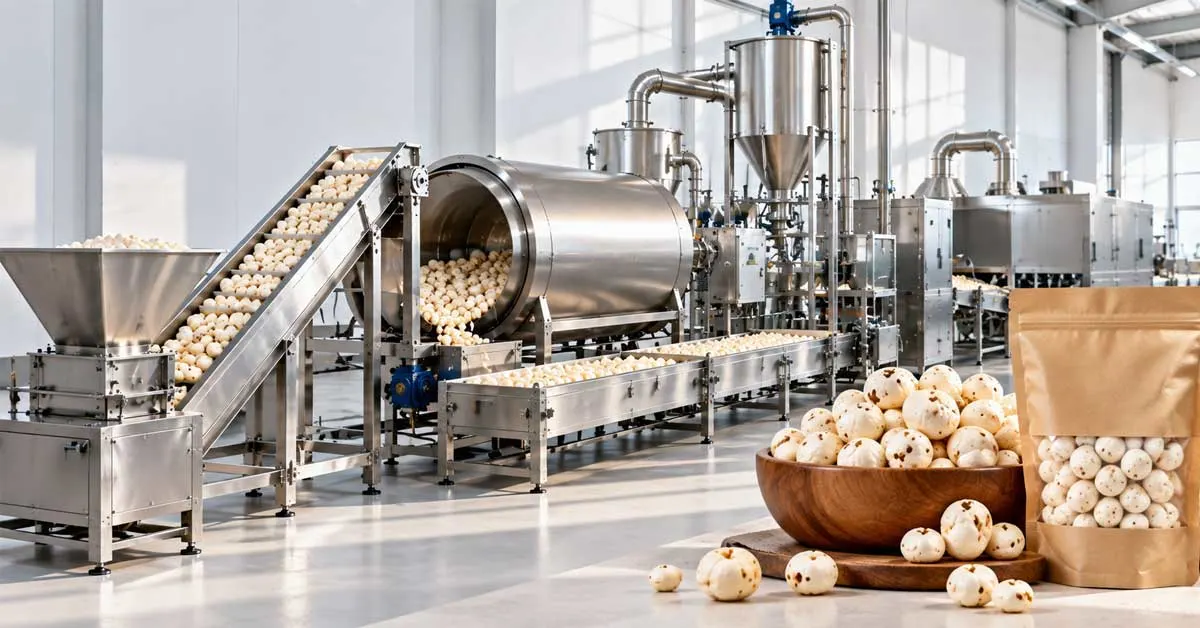
Increased demand for snacks based on makhana provides possibilities at each stage of the chain. Manufacturing companies can sell bulk raw material to other firms or make their own branded retail products.
Potential areas include:
- Roasted makhana
- Flavoured makhana
- Premium packaged snacks
- Bulk processed makhana
- Private-label production
- Institutional supply
- Export-oriented processing
The development of organised processing infrastructure can also create stronger connections between farmers, processors, distributors, and consumers.
Conclusion
There is a potential for a makhana processing unit in Bihar to act as an important bridge between makhana farming in Bihar and the expanding demand for processed and value-added products. There are different ways of processing makhana, including cleaning, drying, sorting, roasting, flavoring, and packaging; businesses can choose one depending on the target market.
Setting up a makhana manufacturing unit in Bihar needs to be carefully planned with regard to raw materials, machinery, infrastructure, labor, hygiene, capacity, and market reach. Entrepreneurs need to analyze their business model first before determining the amount of automation needed.
With proper planning and scalable machinery, a processing plant can facilitate consistency in production and provide avenues for value addition in the makhana industry.
Have a Question? Let’s Connect
Need expert guidance on food processing machines, production setup, or process optimization? Our team is ready to help you choose the right solution for your business.
Frequently Asked Questions
What is a makhana processing unit?
A makhana processing unit is a facility where raw makhana is cleaned, dried, graded, roasted, flavoured, or packaged depending on the production model.
Why is Bihar suitable for makhana processing?
The state of Bihar is well-known for its connection to the production of makhana and also has an agricultural and business environment that facilitates the process.
What machines are required for a makhana processing plant?
Depending on the production model, a plant may require cleaning, drying, grading, roasting, flavouring, conveying, weighing, and packaging equipment.
How much space is required for a makhana processing unit?
Space requirements will be dependent on production capacity, machinery arrangement, storage requirement, utilities, and the general layout of the plant. The site should be planned to ensure enough space for operation and maintenance.
Can a small makhana processing business be expanded later?
Yes. It is possible for a company to start with certain processing stages and then acquire more machinery as its output grows. It enables the setup to grow with the company.




