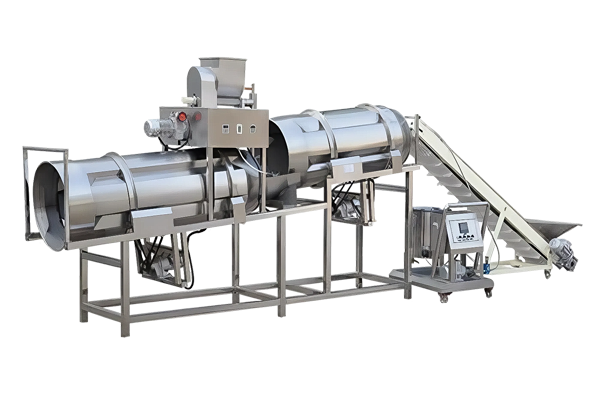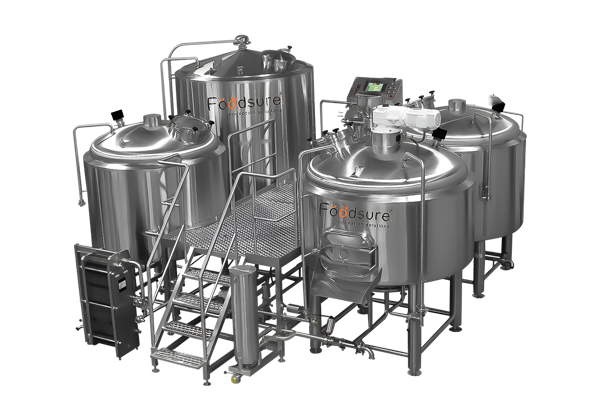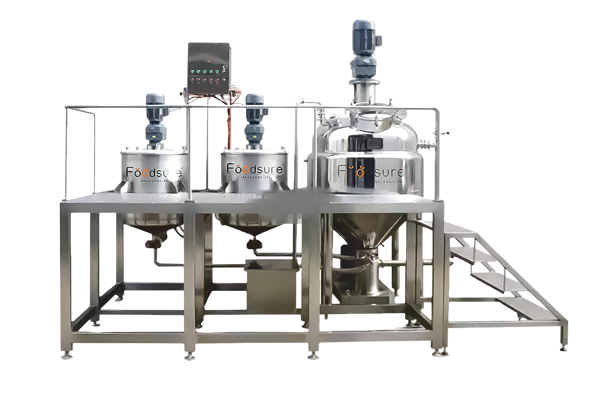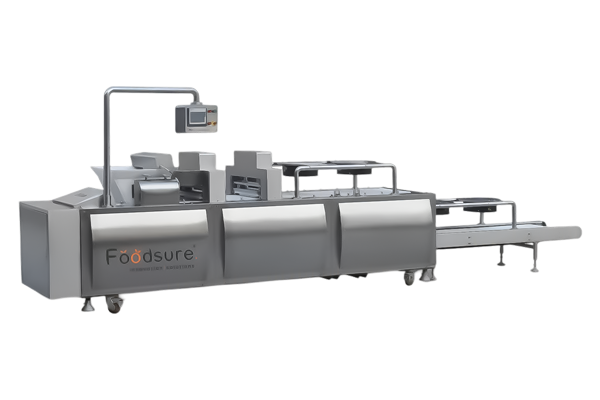
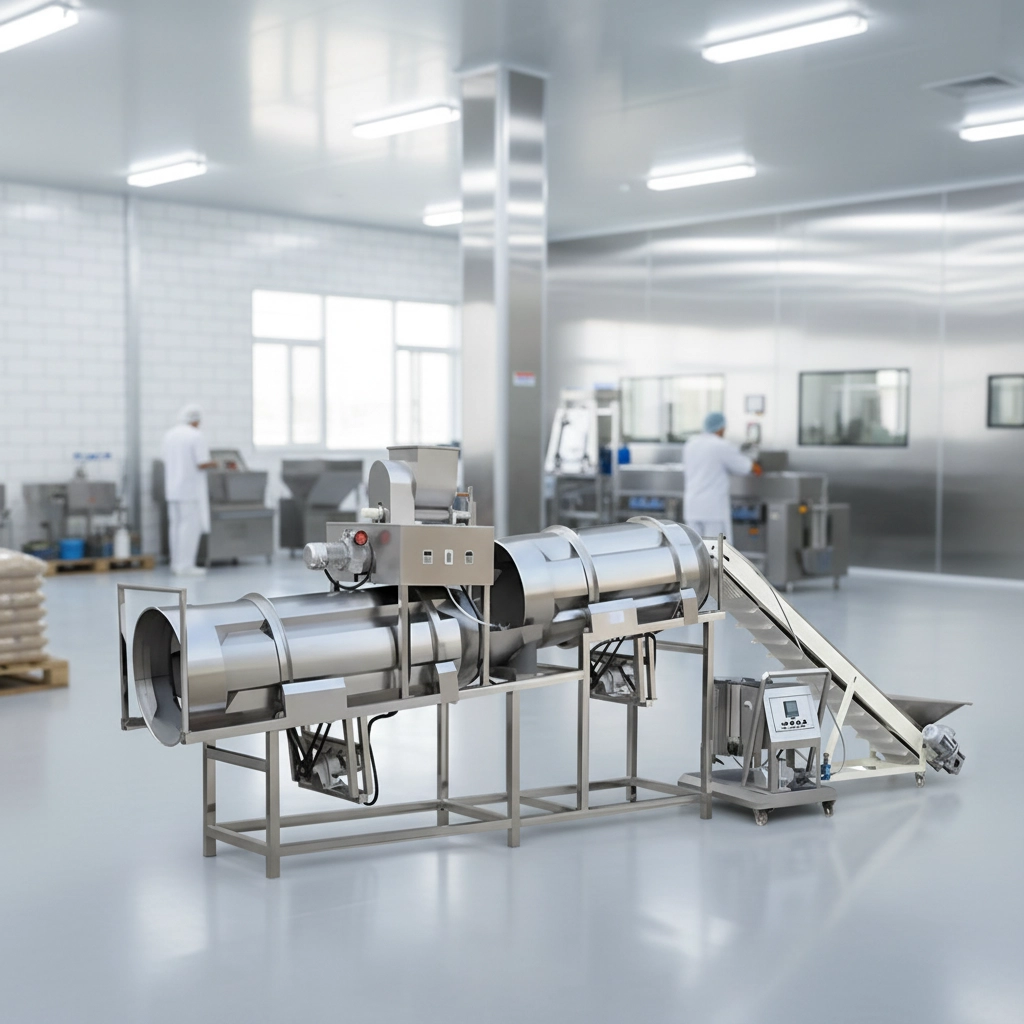
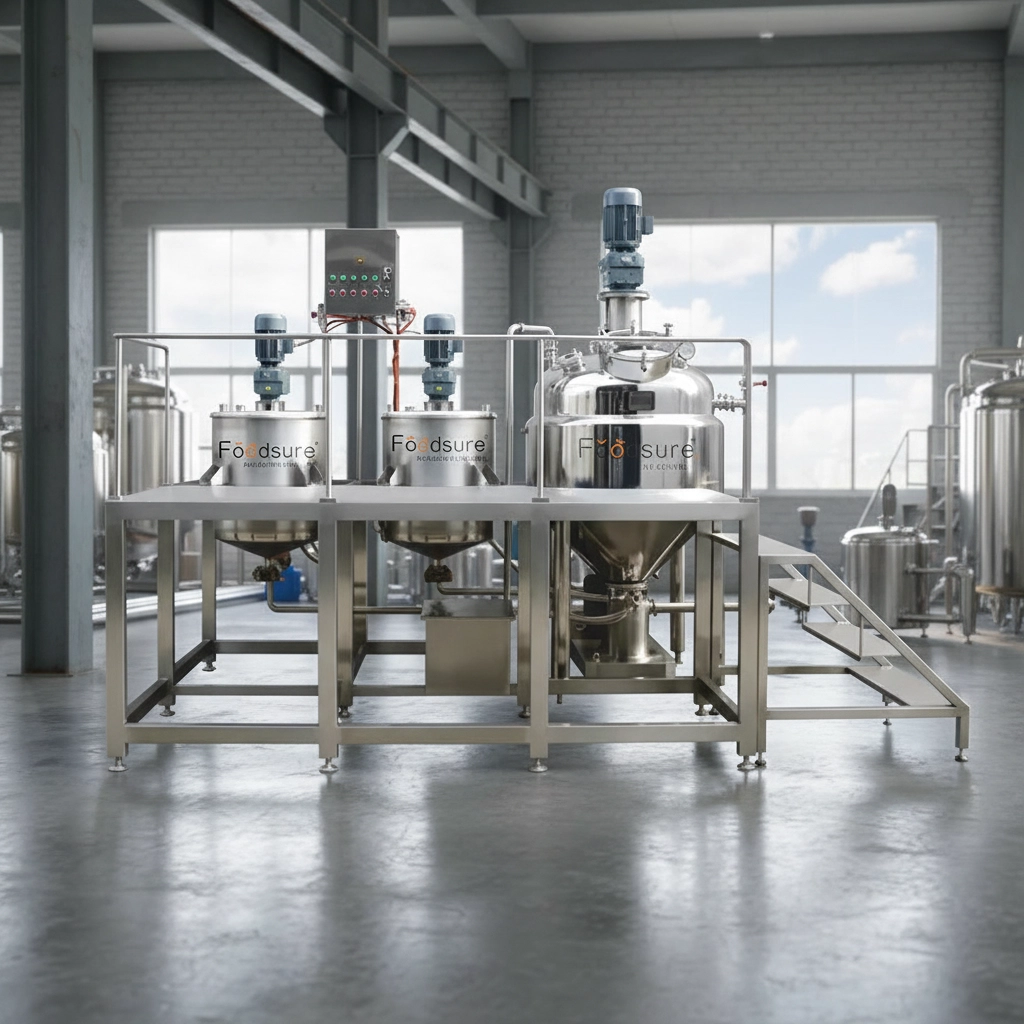
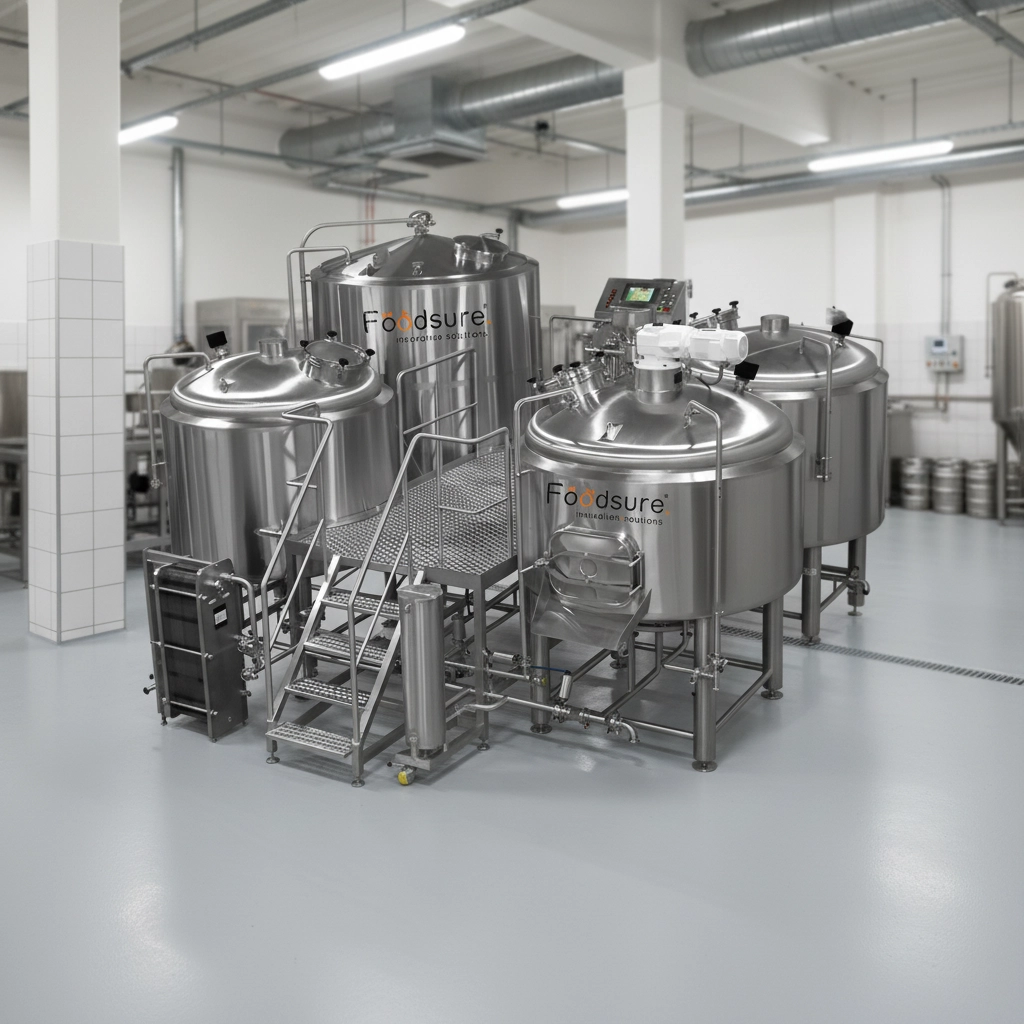
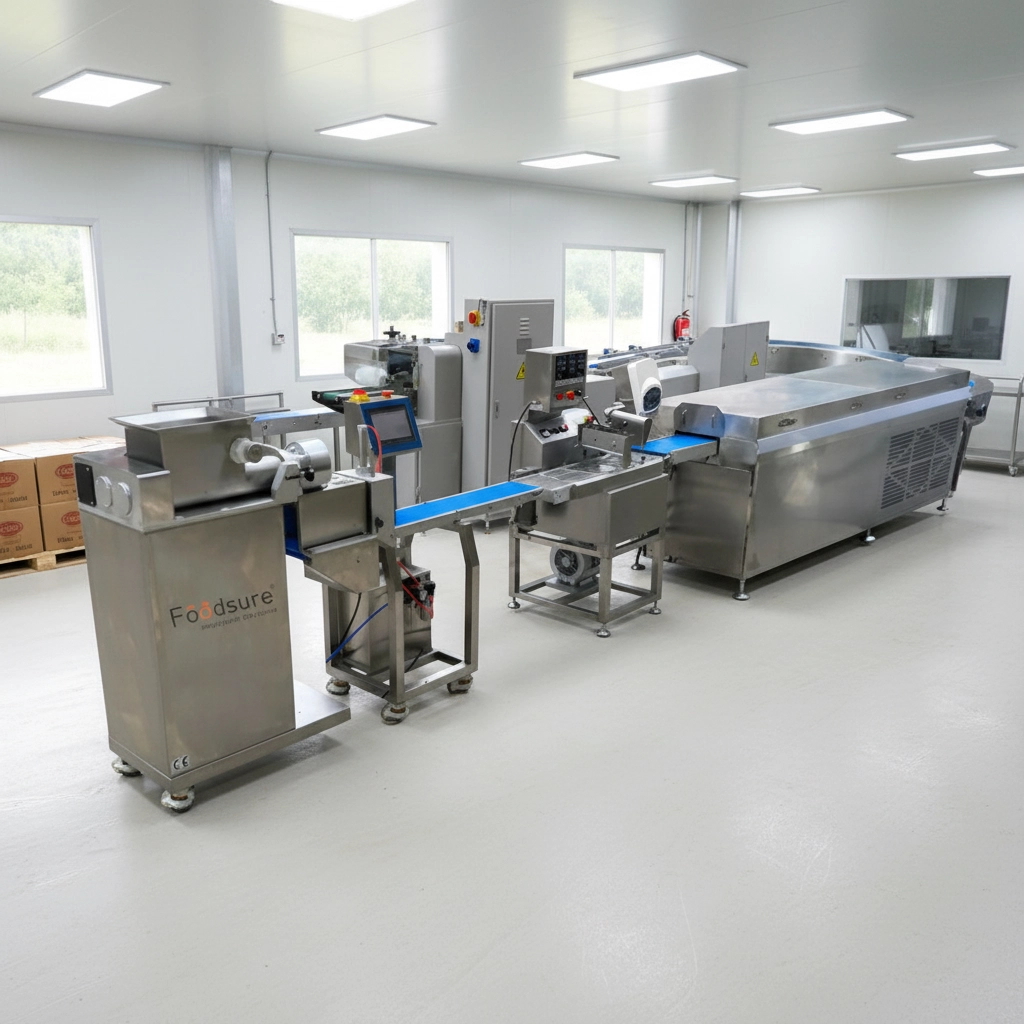
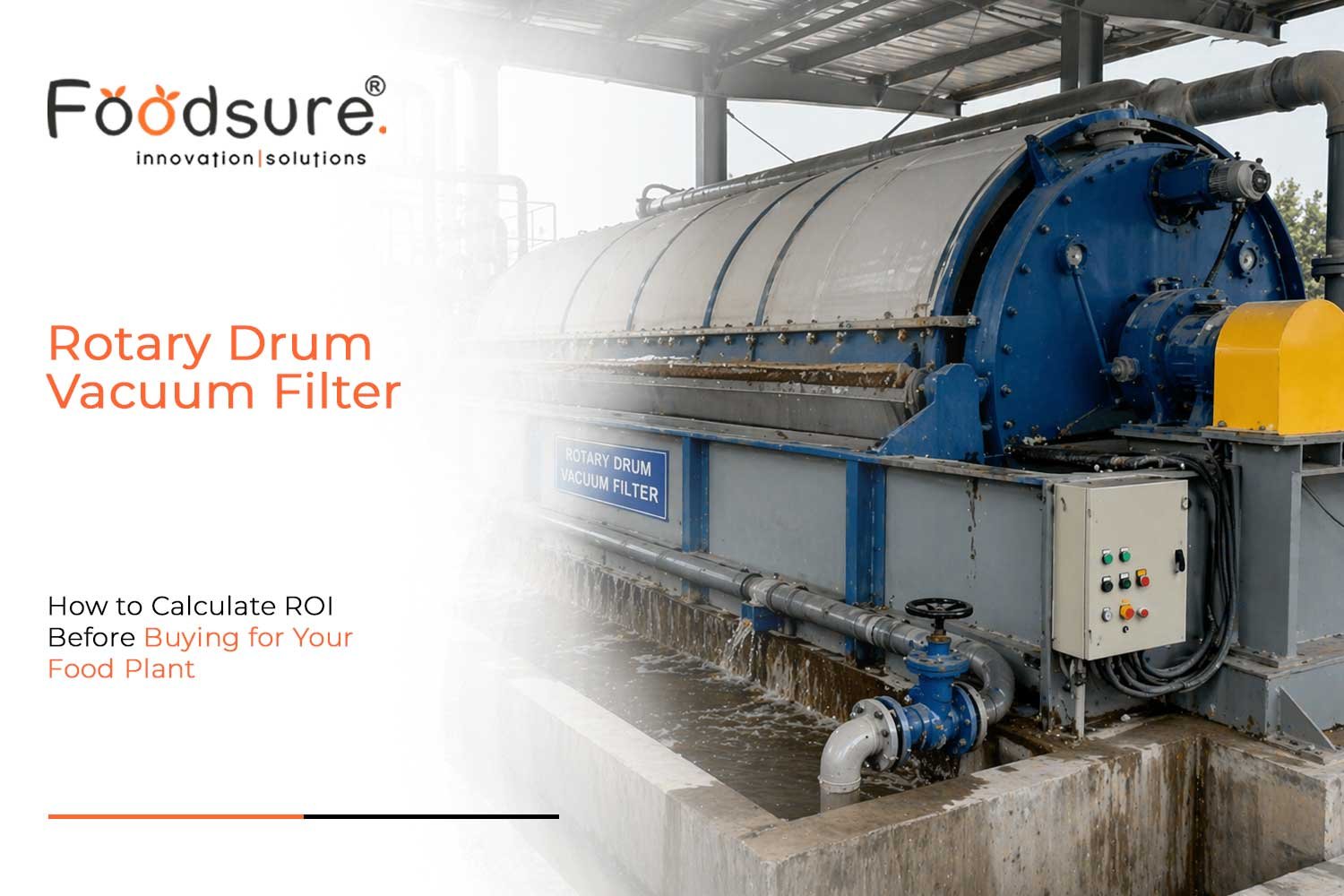
Every year, food manufacturing plants spend ₹20-40 lakh on filters for better performance and reduced operating costs. Many of them fail to achieve the desired performance because they have unrealistic expectations, resulting in soaring energy bills and frequent maintenance needs. The reason is not a bad choice of the equipment. The main problem is that many food manufacturing plants fail to estimate return on investment and make their equipment selection accordingly. It does not matter how efficient the equipment is if it brings no economic benefits. Most food manufacturers pay attention only to such characteristics of equipment as its capacity and automation level.
An optimal choice of an industrial rotary drum vacuum filter can lead to better productivity and lower operating expenses, but only if an appropriate return-on-investment calculation is made. This blog is going to be of great help in this situation.
How to Calculate Rotary Drum Vacuum Filter ROI for Food Processing Plants
| Category | Component | Monthly (₹) | Annual (₹) | After Filter Savings (%) | Annual Savings (₹) |
|---|---|---|---|---|---|
| Current Losses | Manual Labor | 50,000 | 6,00,000 | 60% | 3,60,000 |
| Product Loss / Waste | 40,000 | 4,80,000 | 50% | 2,40,000 | |
| Downtime Loss | 30,000 | 3,60,000 | 50% | 1,80,000 | |
| Energy Inefficiency | 20,000 | 2,40,000 | 25% | 60,000 | |
| Total Savings | — | — | 16,80,000 | — | 8,40,000 |
| Investment | Machine + Installation | — | 32,00,000 | — | — |
| ROI (%) | — | — | — | — | 26.25% |
| Payback Period | — | — | — | — | ~3.8 Years |
How Rotary Drum Vacuum Filter Improves Efficiency: Labour Savings, Faster Processing & Material Recovery
Labor Saving
- Automated Cycle Operation: Removes the need for loading and unloading operations for the plate-and-frame filter.
- Operator Control: Permits control of several machines at once compared to individual batch control.
Increased Speed
- Continuous Processing: The cylinder is operated in a continuous cycle to ensure constant filtration activity.
- Longer Operating Periods: Clean-in-place (CIP) operation and automated scrapers facilitate uninterrupted filtration periods.
Material Savings
- Improved Dryness: The vacuum draws out liquids through the filter media faster compared to gravitational action.
- Liquid Recovery: Ensures maximum liquid removal from slurries with no residual moisture left in the slurry.
Hidden Factors That Impact Rotary Drum Vacuum Filter ROI
Profitability is not only determined by the cost of the equipment but also by the efficiency of its functioning over time.
Want to maximize your filter ROI?
Get expert help on sizing, operating cost, maintenance, and the right rotary drum vacuum filter for your food plant.
Effective Solid Concentration and Filtration Efficiency:
- Better resource utilisation: The drier the produced solids are, the less liquid is lost. Thus, there is no need for additional expenses for drying and waste management.
- High-quality filtration: More clean liquid is obtained, increasing the production yield.
Fast Filtration Cycle and High Output:
- Effective processing: With the adjustable drum speed, higher amounts can be processed without interruption.
- Smooth functioning: A stable filtration process prevents disruptions and, therefore, ensures efficient production line operation.
Energy Usage Per Ton:
- Effective vacuum application: The modern rotary drum filter machines are optimised to utilise vacuum power and decrease energy usage per ton.
- Low-cost operation: Lower energy usage translates into increased profits.
Efficient Automation in Rotary Drum Filter Machine:
- Lower human error rates: Automation manages the vacuum and drum functions efficiently and consistently.
- Reliability: Higher efficiency in automation results in fewer malfunctions, lower maintenance costs, and better productivity.
How Rotary Drum Vacuum Filter Improves Production Efficiency
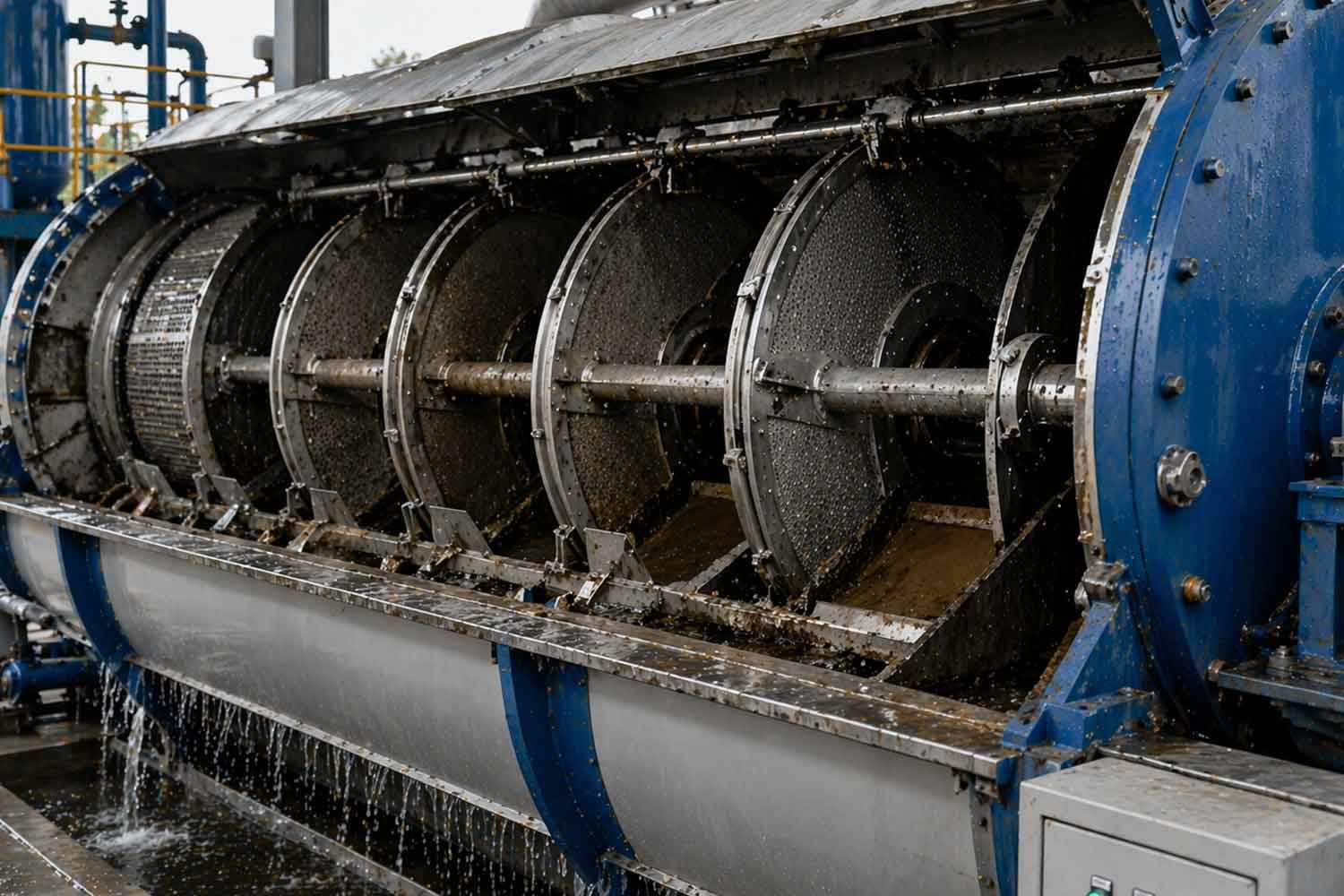
Integrating an automatic filtration system is a major step towards modernising food plants, switching from inefficient manual processes to efficient, mass-producing ones.
Importance of Continuous Processing Systems for Foods:
Whereas traditional machines operate intermittently, continuous drum vacuum filters run uninterrupted. As the drum operates round-the-clock, there is always a continuous supply of the finished product, keeping your food production line functioning at maximum capacity without the interruptions characteristic of batch processing systems.
Effectiveness in Mayonnaise, Makhana, and Protein Extract Processing Lines
In industries where processing involves making mayonnaise, nut products (e.g., makhana), and extracting proteins, speed and purity define efficiency.
- Purity: It eliminates extraneous matter instantly, ensuring that your end product meets strict quality standards.
- Flexibility: Whether you are working with dense sauces or protein suspensions, these machines are versatile enough to process a variety of textures.
These machines will help you to connect directly to your vacuum drum filter for food processing filtration. Because automation takes place with regard to the process of filtration, you will be eliminating the chances of any human errors. You can rely on automation for consistent production because the machine works uniformly throughout. The way the machine works will save you a lot on operation cost and improve productivity.
Rotary Drum Vacuum Filter ROI Calculation for Food Plant (Step-by-Step)
To determine the value of your investment, you must compute the rotary vacuum drum filter system cost and the returns that you gain through its application, compared to your present operations.
Step 1: Calculate Current Operational Losses
First, list the following costs that you may not realise:
- Labour: Consider the time spent by workers to clean and maintain filters manually.
- Product Waste: Determine how many litres are wasted, as you still need to remove the moisture content before disposal.
- Down Time: Include any cost that comes from halting the entire manufacturing process to initiate another filtration process.
Step 2: Estimate Gains from Rotary Vacuum Drum Filter System
These are the advantages that you will gain with the installation of the system:
- Increased Production: Calculate the additional quantity that you can produce by using an automatic machine that runs continuously.
- Disposal Savings: Since you will have less moisture in the solid waste, there will be fewer charges for its disposal.
- Savings in Manpower: Consider the labour savings that will come from using the automatic system.
Step 3: ROI Benchmark and Payback Period
Divide the cost of the new machine by your monthly savings from labour reduction, lost-product recovery, and reduced waste-disposal costs. The result is the number of months required before the machine pays for itself. In many cases, an improvement such as this can change an inefficient task into a profitable operation within one to two years.
Cost vs Efficiency of Rotary Drum Vacuum Filter Machine
The choice between investing in an inexpensive or efficient filtration system determines your future business success.
Low-Cost vs High-Efficiency Systems
- Inexpensive System: It usually has a relatively lower purchase price but uses light materials that wear out quickly. There may be no accurate control of vacuum pressure, resulting in increased power costs and more part replacements.
- Efficient Filtration System: Although its purchase price is higher, an efficient filtration system uses high-quality components and automation to ensure consistent vacuum pressure. This helps minimise wastage and power consumption, making it less costly to operate.
Long-Term ROI Comparison
- Reliability: An efficient filter can operate continuously with little maintenance. Although an inexpensive one may have lower upfront costs, it will likely result in additional expenses due to repair costs and production disruptions.
- Labour Cost Reduction: Automated separation allows for fewer staff hours needed for operation.
Industrial vs Entry-Level Drum Filter Machines
- Entry-Level: Ideal for small businesses or pilot plants. Though smaller and easier to install, entry-level machines may not be able to cope with the massive requirements of an industrial facility.
- Industrial: Made for durability, with strong pumps and automated systems that manage massive amounts of materials with ease. This machine will give you maximum production in just one hour.
Energy Consumption of Rotary Vacuum Drum Filter System
Energy use is essential to understand since it will directly affect your operating cost as well as the profitability of your filtration process.
Power Usage Breakdown
The energy consumption in the case of a rotary vacuum drum filter mainly consists of the following:
- Vacuum Pump: The most energy-consuming part is usually a vacuum pump. Its continuous operation allows it to draw liquids through filter elements.
- Drive Motor: It makes the drum rotate. Important to note that although necessary, drive motors consume much less energy than the vacuum pump does.
- Pumps and Agitators: Pumps are needed to supply the tank with slurry, while agitators keep the mixture moving.
How Energy Impacts ROI
- Operational Cost: The vacuum system consumes energy all the time; any improvement in its efficiency may result in lower electricity expenses.
- Cost Efficiency: When purchasing equipment, you should consider not only its cost but also how much energy it consumes per ton of processed product.
Choosing Energy-Efficient Industrial Filtration Equipment
- Properly Sizing the System: It is always important to have the vacuum capacity suit your needs; an oversized pump wastes electricity.
- Automation: Employing a controller allows you to manage the vacuum according to your needs, using just enough power that is required for handling a particular material.
Maintenance Cost of Rotary Drum Vacuum Filter Machine
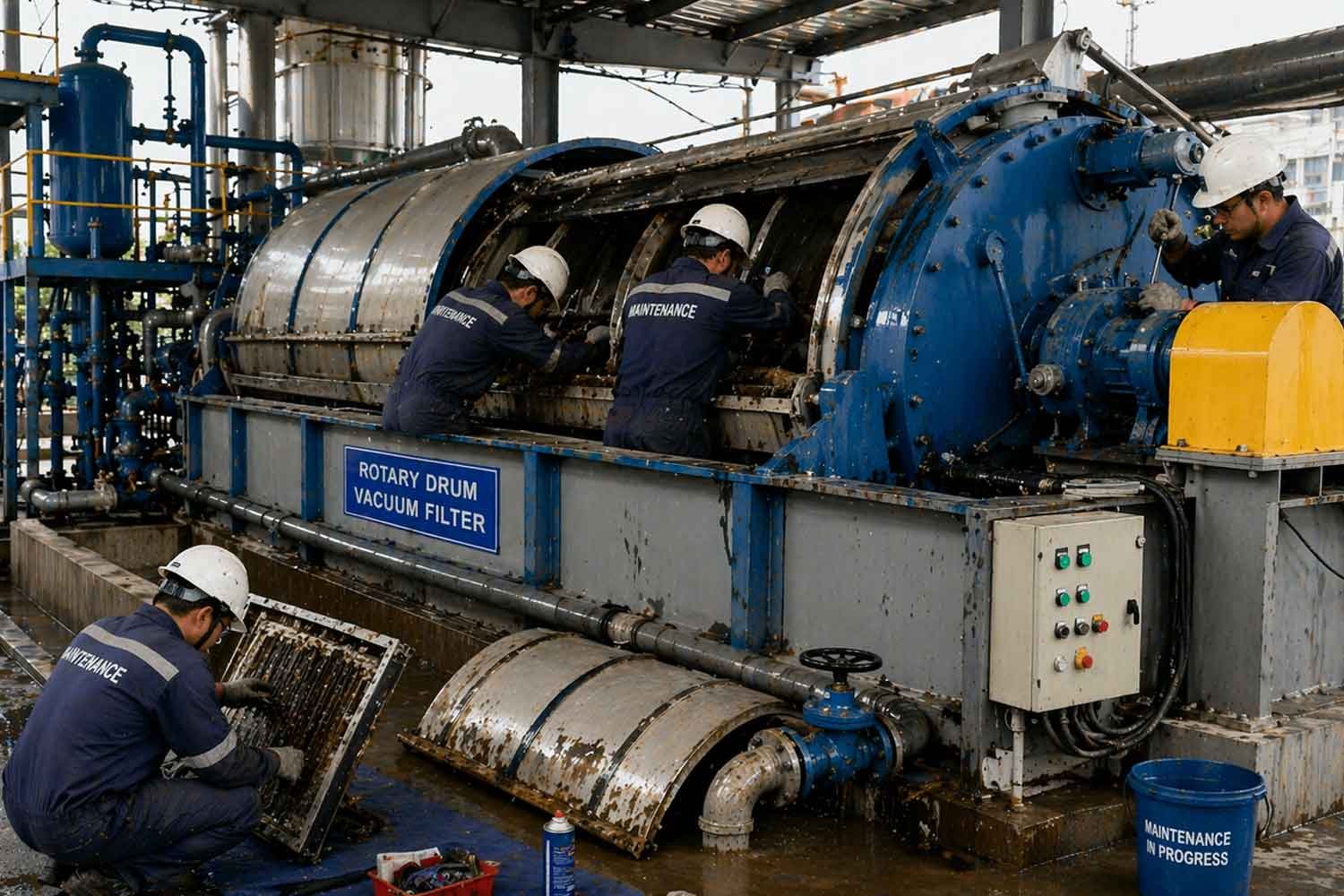
A structured maintenance program is needed to maintain the optimal performance of your filtration equipment. Despite their ability to work 24/7, any neglect can cause unanticipated downtime and financial loss.
Requirements for Routine Maintenance
Maintenance is divided into categories according to the frequency of maintenance work done to increase the lifespan:
- Daily inspection: Listen for any unusual noise or vibration from the machine, and check pipelines and seals for leaks. Make sure the discharge area is clear.
- Quarterly Inspection: Examine the filter cloth for wear and tear, clogging, or improper mounting. Conduct thorough maintenance of the vacuuming system and check the drum for corrosion and mechanical wear.
- Annual Overhaul: Carry out full disassembly to examine the condition of bearings, roundness of the drum, and seals, replacing parts that have already worn down.
Downtime and Operational Impact
The hidden cost of downtime is the biggest one. Should something as essential as the tensioning wire for the cloth or a vacuum seal break down, the whole assembly line stops. With a computer-monitored system, you will be able to identify degradation patterns and arrange for timely replacement.
Cost Comparison with Other Filtration Systems
Rotary vacuum drum filters are less labour-intensive compared to batch processes such as filter presses due to their self-cleaning nature. Although rotary vacuum drum filters might need to undergo regular examinations of their components more often than bag filters, their continuous operation without needing high-pressure pumps can make them a more economical choice for bulk processing industries.
Conclusion
A rotary drum vacuum filter is not only a filtration machine but is also an investment that plays a direct role in enhancing efficiency, controlling costs, and improving production. By making the right decision regarding return on investment, one can save a lot of labour, increase productivity, and extract maximum value from all the materials used for filtration.
In Foodsure Machines, we know how to incorporate the use of a filtration device into the whole production chain, regardless of the product, whether you produce mayonnaise, makhana, protein bars, or energy bars.
Need help choosing the right vacuum filter?
Get expert advice, pricing, ROI guidance, and the best filtration solution for your food processing plant.
FAQ
Q1. What is a rotary drum vacuum filter used for in food processing?
Answer : The rotary drum filter is employed in large-scale solid-liquid separation in filtration plants in the food industry.
Q2. How do you calculate rotary drum vacuum filter ROI for a food plant?
Answer : The return on investment (ROI) for the rotary drum vacuum filter in the food processing plant is determined by the flow rate, labour cost reduction, and lower waste treatment expenses.
Q3. What is the price of a rotary drum filter machine in India?
Answer: The rotary drum vacuum filter machine cost in India, with ROI calculation, would depend on the size, automation capability, and filtration efficiency of the machine.
Q4. How does a rotary vacuum drum filter improve production efficiency?
Answer: The rotary vacuum drum filter system helps in the continuous filtration process, thereby increasing efficiency in the filtration system.
Q5. What factors affect the maintenance cost of a rotary drum vacuum filter?
Answer: Rotary drum vacuum filter machine maintenance cost varies depending on the type of drum material and the filtration medium in solid-liquid separation equipment.