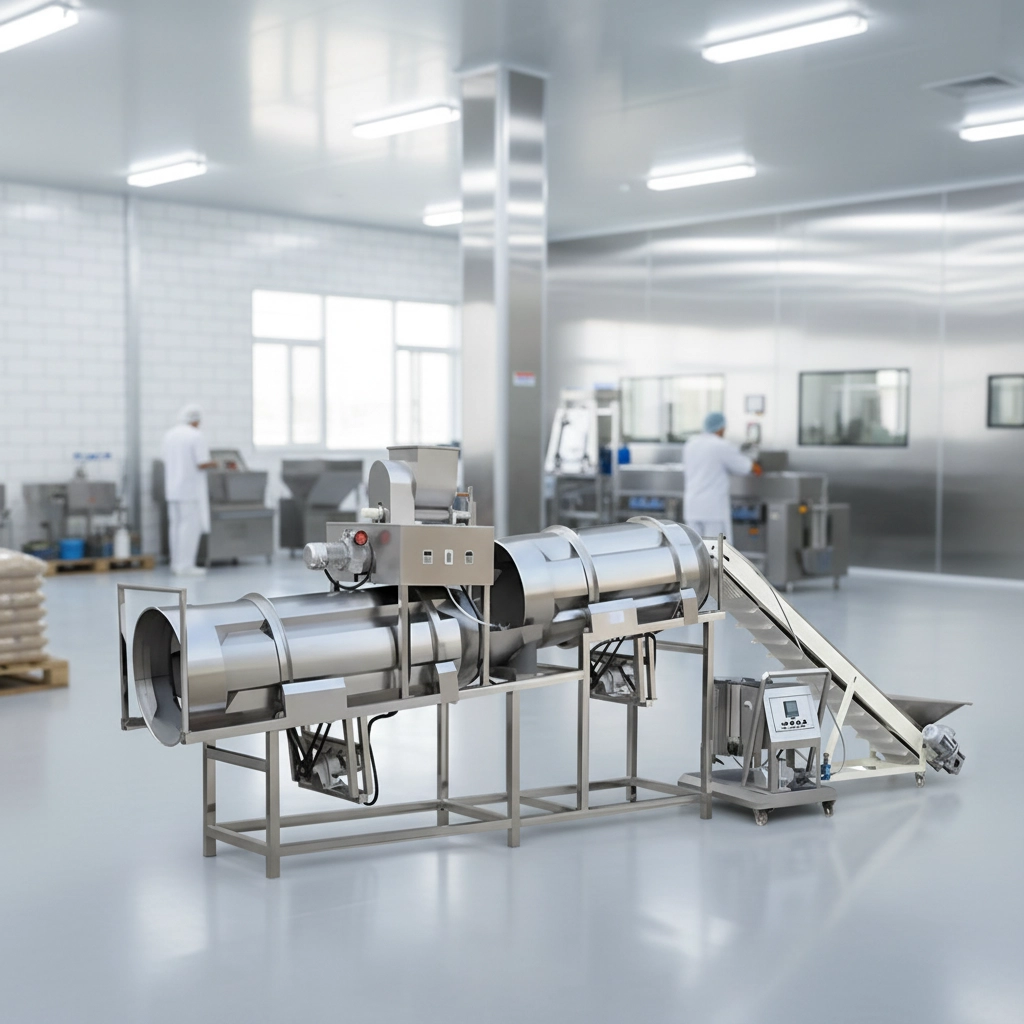
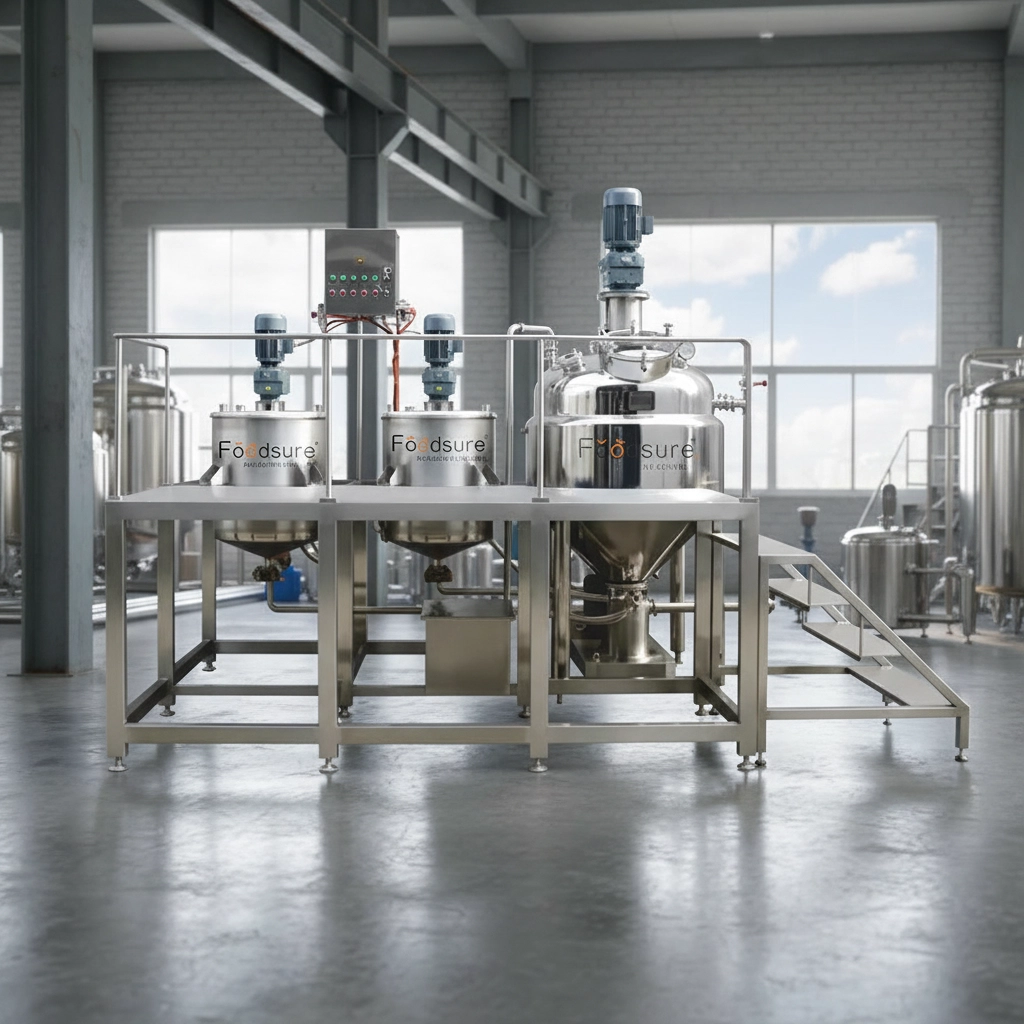
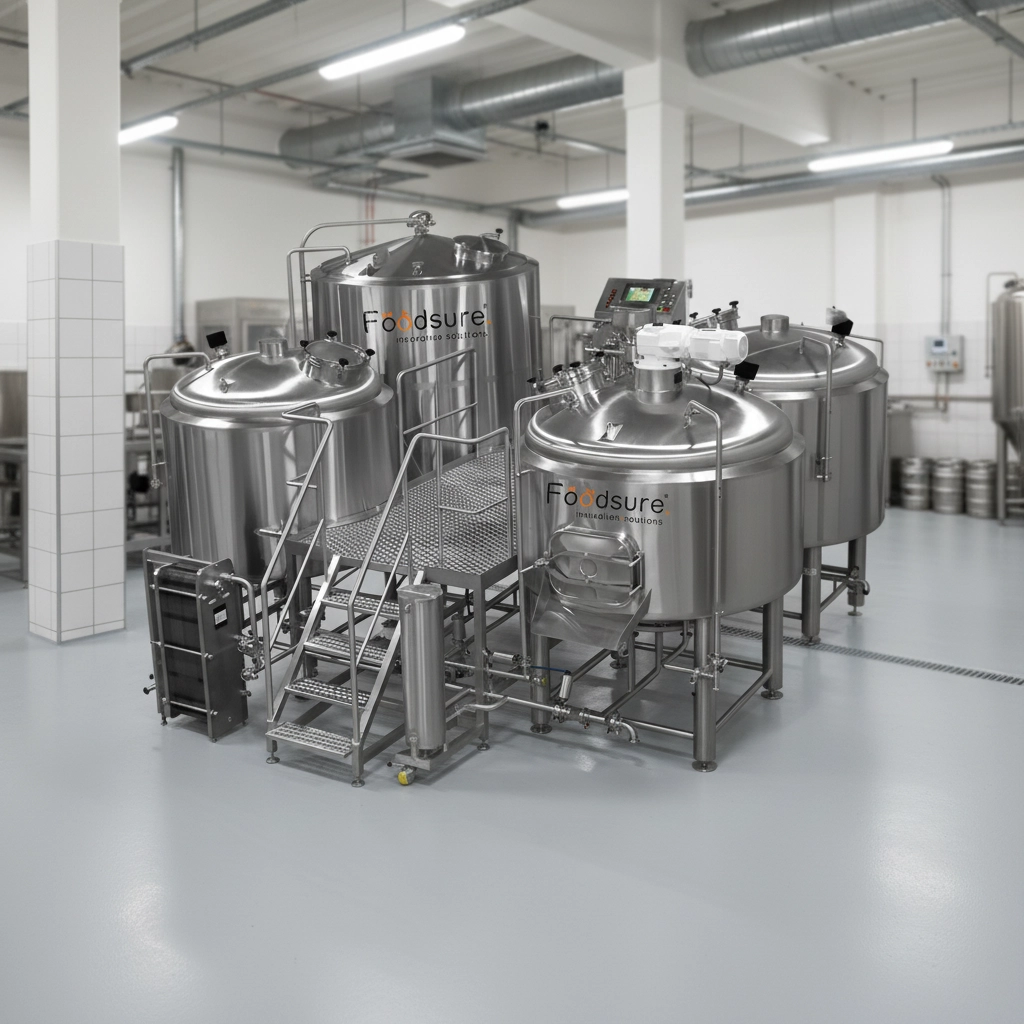
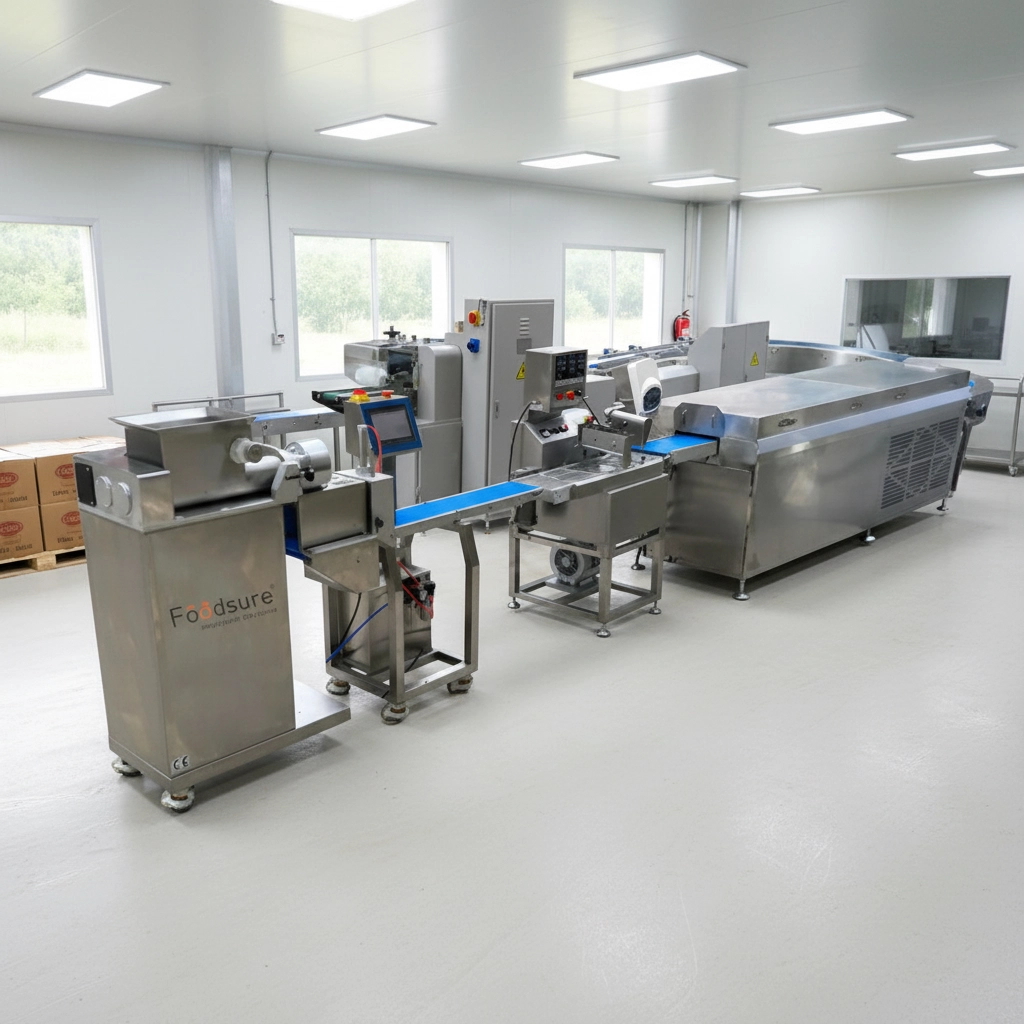
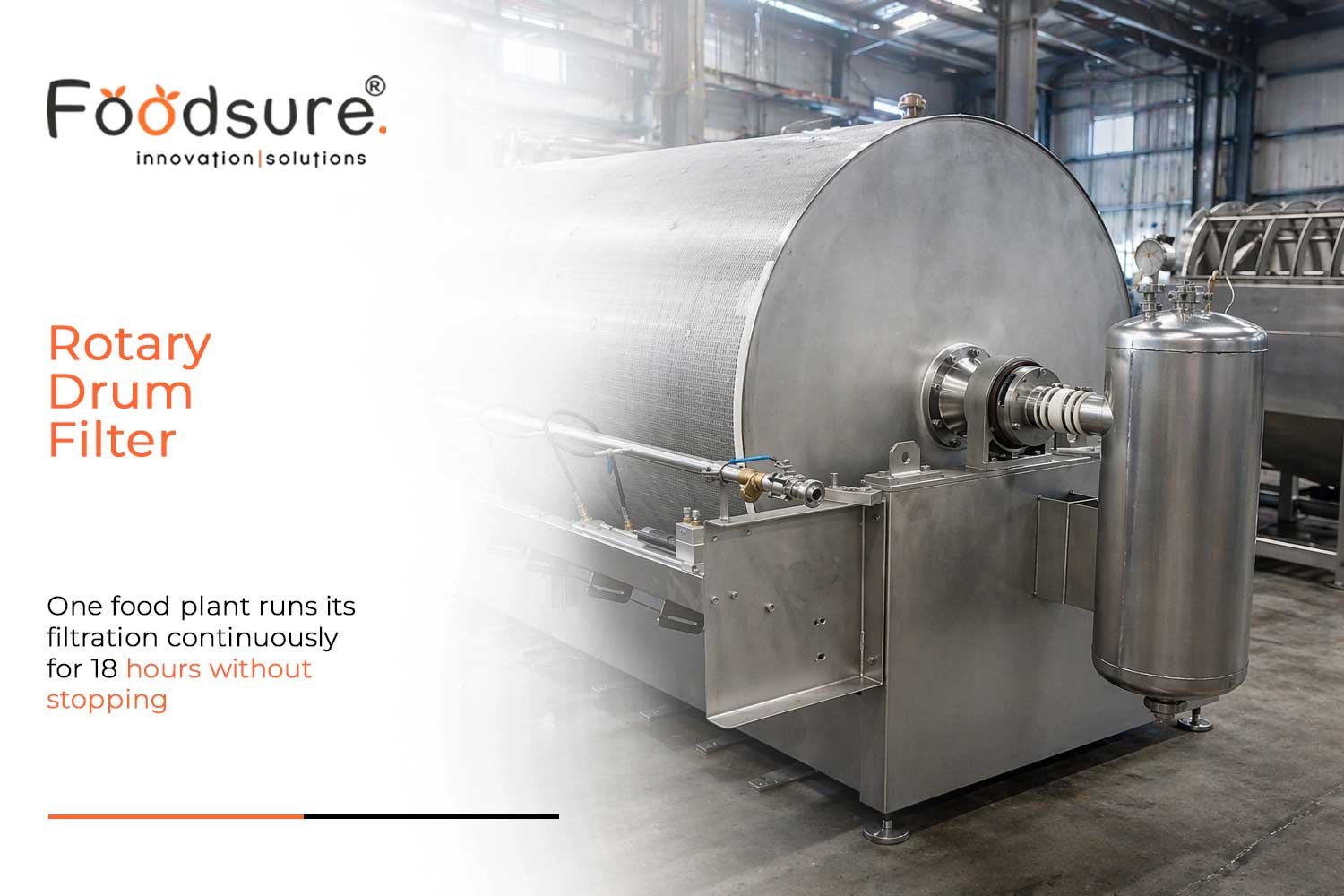
One food plant runs its filtration continuously for 18 hours without stopping, with minimal product loss and almost no manual intervention. Another plant, in the same industry, loses hours every shift to cleaning, rework, and inconsistent output. The difference is rarely the product. The industrial filtration system is the primary factor that distinguishes products from each other.
The rotary drum filter operates as a highly efficient solid-liquid separation equipment when used in appropriate conditions because it was designed for continuous operation with high slurry volumes while needing minimal human intervention. The system turns into a costly production delay, which introduces extra complications when it is used inappropriately.
What Is a Rotary Drum Filter Machine and How Does It Work in Food Processing?
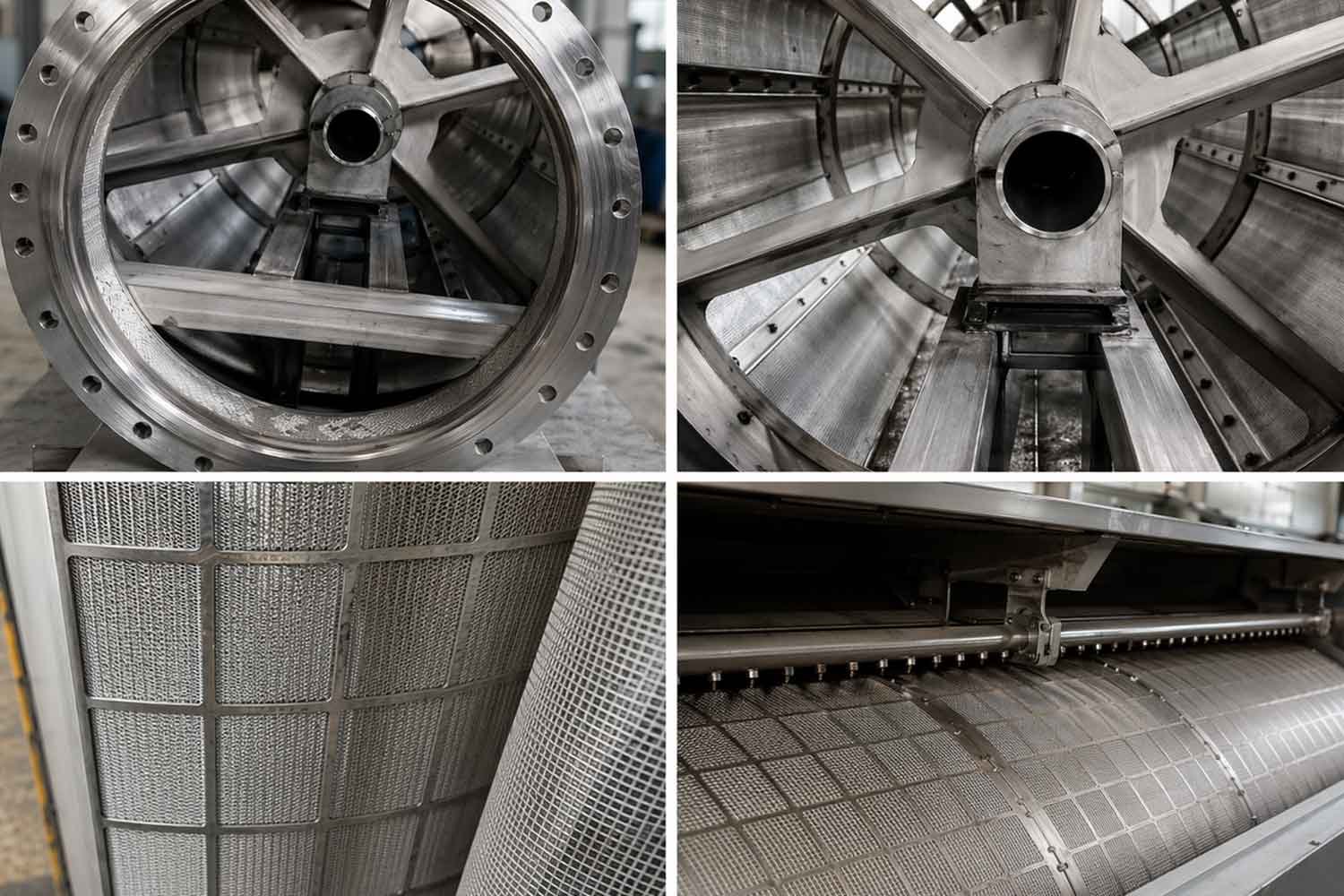
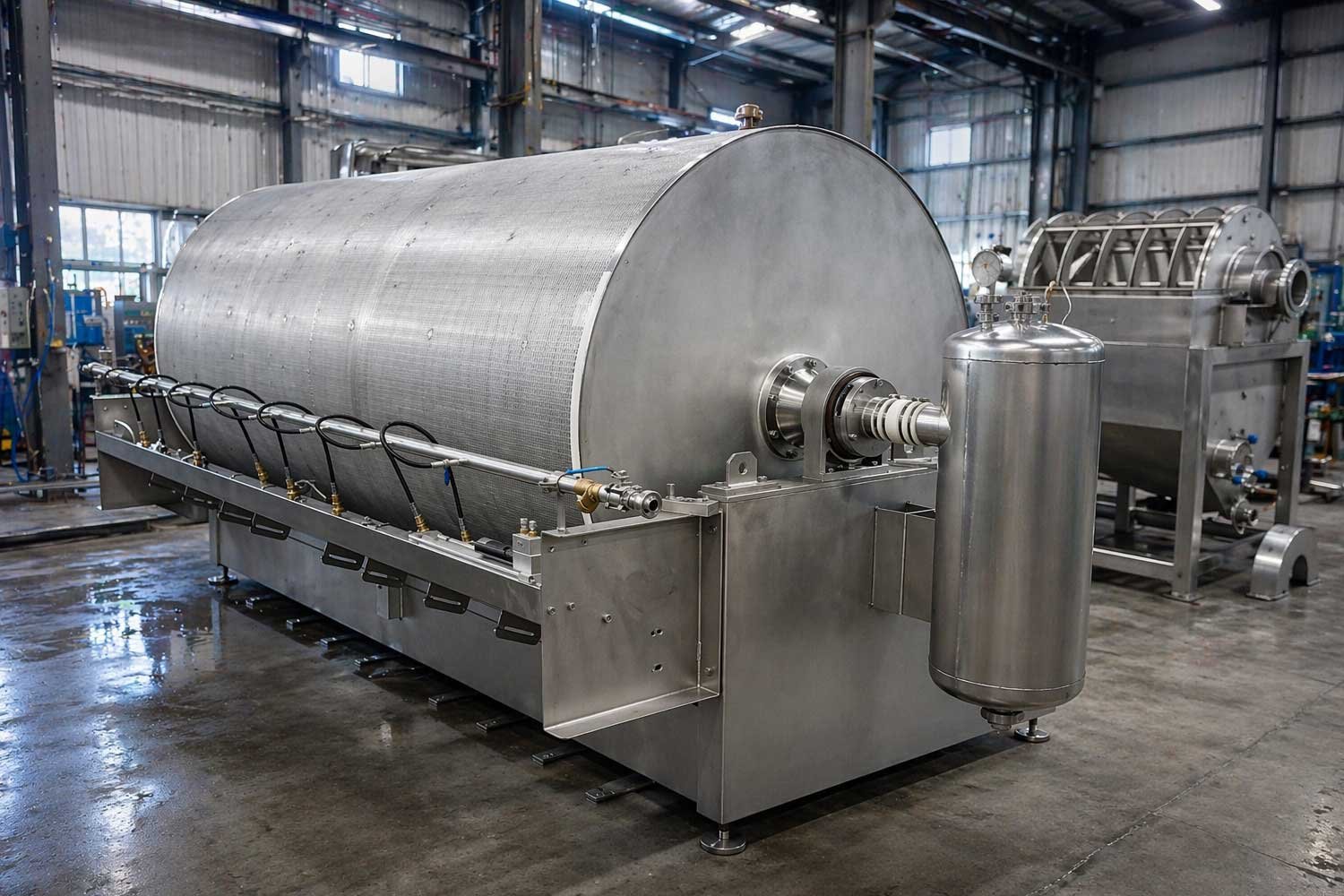
The rotary drum filter operates as a solid-liquid separation system through its ability to process slurries that contain high solid materials. The system consists of a horizontal drum, which functions as a large cylinder that holds a filter medium, while the drum partially rests in a feed trough. The continuous rotary drum filter serves industrial dewatering operations through its unbroken system, which operates throughout the entire process.
The Working Flow:
The rotary vacuum drum filter operates through a seamless, automated cycle:
- Slurry Feed: The mixture enters a trough where agitators keep the solids in suspension.
- Drum Rotation & Vacuum: The rotating drum creates an internal vacuum that pulls liquid through the filter cloth.
- Filtration: The outer surface traps solids, which create a product while the internal piping systems draw the filtered liquid.
- Discharge: The system uses a scraper blade string or air blowback to remove the dried product before the drum completes its rotation, which prepares the surface for the upcoming cycle.
Why Most Filtration Equipment for the Food Industry Fails in Real Processing Conditions
The conventional process of food production is highly dependent on manual involvement, which will always result in inefficiency. If the processors use an outdated system, then their operations are limited to “start and stop,” which affects their hygiene and profitability. In the absence of a continuous and automatic solid/liquid separator, it is extremely difficult to achieve the correct temperature or chemical equilibrium of the processed foods.
- Batch Processing Drawbacks: Conventional batch processing techniques involve shutting down the system during the process of dumping and restarting, making it stop-and-go.
- High Costs: Multiple stoppages result in high expenses and affect the balance of heat or chemicals needed for sensitive foods.
- Human Factor: Overdependence on manpower makes errors and contamination probable.
- Irregularity: Absence of automation causes fluctuations in transparency and consistency of the end products, leading to their rejection.
- Sanitation Issues: The absence of continuous solid-liquid separation technology may affect the quality of the end product.
Best Applications of Rotary Drum Filter in the Food Processing Industry and When to Use It
High-Throughput Continuous Processing
- Removes Production Bottlenecks: This continuous filtration technology is not batch-based; hence, production can happen 24 hours a day.
- Consistent Supply: Downstream processes, such as evaporators or heat exchangers, get a steady flow of fluid.
Processes with High Slurries
- Handling Solids Capacity: This filter machine is designed to handle thick processes such as starch and sugar production.
- Efficient Clarification: Efficiently removes fibre from juices without blocking the filter element.
Need for Automation and Minimal Labour Force
- Autonomous Machine: An industry rotary drum filter works on its own, requiring minimal supervision; thus, saving labour costs.
- Sterile Process: Automation means limited exposure of humans to the product; hence, higher safety and sterility levels.
Solutions that Work Best For
- Popular Uses: These include the corn wet-milling process, wine lees filtration, and beverage clarification.
- Value Extraction: Ability to separate solids from fluids, making waste products profitable.
Need the Right Food Processing Solution?
Talk to our experts for machine recommendations, pricing, and complete business setup guidance.
Limitations of Rotary Drum Filter in the Food Industry: When Not to Use It
Although very efficient, a rotary drum filter cannot be applied universally. It is important to have an understanding of the shortcomings of rotary drum filters in food processing applications in order to avoid the mistakes of buying the wrong device and investing in something inappropriate.
Small Volume Processes
- For those considering whether a rotary drum filter works well for small-volume food production, we can say that most of the time, the answer would be negative.
- The equipment is built to handle large volumes of material and is not applicable for laboratory-scale operations and small production facilities that process material in batches.
Ultra-Filtration Needs
- A rotary drum filter is a device that is excellent for separating solid materials. However, it cannot perform fine filtration of liquids unless additional coatings are used on the filter.
- For products requiring ultimate sterilisation and fine filtration, this type of filtration system will allow some contaminants and micro-particles to go through the filtering medium.
Fine Filtration Requirements
- The rotary vacuum drum filter is a champion of bulk filtration, but it is not intended to polish liquids to a sub-micron degree.
- In cases where you need a completely sterile product or an extremely clear product, like some kinds of pharmaceuticals or fine clear liquors.
- The filter could let microscopic contaminants pass unless it is encased in an elaborate and costly pre-coat.
High Viscosity or Sticky Liquids
- Highly viscous liquids have issues conforming to the concept of rotary vacuum drum filtering.
- If the liquid being filtered is too viscous, it will not be possible for the vacuum to draw the liquid through the media. Also, highly sticky proteins or gums can blind the filter medium in seconds.
Rotary Drum Filter vs Filter Press in Food Industry: Which Filtration System Is Better
Choosing an appropriate device for separating solids and liquids is a difficult decision, which can come down to selecting one of two heavyweights in the industry: the rotary drum or the filter press. Although they have proven efficiency, the working mechanisms of both these machines are different from each other.
| Factor | Rotary Drum Filter | Filter Press |
|---|---|---|
| Operation | Continuous | Batch |
| Labor | Low (Automated) | High (Manual / Semi-auto) |
| Output | High Volume | High Precision |
| Automation | High | Medium |
| Footprint | Large | Modular / Variable |
Key Decision Pointers:
- Flow Continuity: The rotary vacuum drum filter offers constant flow continuity, making it suitable for supplying evaporators continuously, unlike the filter press, which stops intermittently due to its surge and stop method of action.
- Moisture Retention: Filter presses tend to produce drier solids since they apply pressure mechanically. However, the rotary filter utilises vacuum, which makes it efficient in handling volume but might produce wetter solids as opposed to the filter press.
- Cleaning Frequency: Rotary filters have a lower cleaning frequency since they are automatically cleaned throughout the process cycle. The filter press must be manually disassembled and cleaned after each batch cycle.
- Product Susceptibility: For products that are sensitive to oxygen contact, a filter press can provide an advantage since it offers a fully closed system, unlike the open rotary system of a drum.
Why Industrial Rotary Drum Filter Systems Improve Food Processing Efficiency
The main advantage of the industrial rotary drum filter is the fact that it works continuously. In other words, this equipment operates in a constant loop where there is filtration and draining at all times. It is crucial in food production because the process will not be disrupted. This feature ensures that production can continue without disruptions, and thus, production can move smoothly into the next phase.
Furthermore, the machines have been designed in such a way that they can manage high amounts of high-solid slurry efficiently. It is because the system is self-managing that there is low labour cost. This means that it is possible for employees to monitor the food product and ensure that it meets quality standards without engaging in maintenance work.
Key Benefits:
- Stable Throughput: Provides uninterrupted production at all times by eliminating the on-off interruptions of conventional batch filtering systems.
- Decreased Labour Requirements: The automated system reduces human interaction and lowers costs.
- Scalability: Ideal for large-scale operations that deal with products such as starch, sugar, and fruit juice.
- Improved Sanitation: The continuous release of product makes stagnation impossible.
Rotary Drum Filter Price in India for Food Industry: Investment and Cost Factors Explained
There can be vast differences in the price of rotary drum filters available in India that are meant for food industries. It depends a lot on their technical specifications and manufacturing standards. The right decision here is to make the most of your capital investment while ensuring operational efficiency.
Key Factors Influencing Cost:
- Production Capacity: Prices are proportionate to the size of the filter drum. Clearly, the cost of a machine that handles an hourly output of 500 litres would differ greatly from one capable of processing thousands of litres.
- Material of Construction: Stainless steel (304 or 316L) is the only option in case of food items to comply with standards set by FSSAI and other international organisations. This choice influences the final quote significantly.
- Level of Automation: Advanced options like PLC panels, VFDs for controlling drum speed, and automated discharge facilities raise the purchase cost but lower labour costs in the future.
Conclusion
While rotary drum filters are not the right equipment for every food processing application, they can be extremely effective when designed correctly. If the filter is integrated into your entire operation, including the desired flow rate and particle size range, then it will produce consistent results over time, along with reduced operating costs through automation.
Rotary drum filters are best suited to large food manufacturing plants producing high volumes of slurry due to their reliability and cost-effectiveness; however, smaller businesses with complex products may want to evaluate alternative forms of environmental food processing filtration equipment.
Our team at Foodsure Machines works with manufacturers to help determine which type of industrial filtration system meets specific customer needs (not necessarily the most well-known) and how greatly that choice could affect overall performance.
Need the right filtration setup for your food plant?
Learn when a rotary drum filter makes sense and get expert guidance for the best processing solution.
FAQ
When to use rotary drum filter in food processing?
Utilise a rotary drum filter in food processing where high volume production of slurries requires automated solid-liquid separation.
What are the advantages of rotary drum filter in food processing?
The key benefits of using rotary drum filters in food processing applications involve continuous operation, minimal labour requirement, efficiency, and constant production.
What is the rotary drum filter working principle in food industry?
The rotary drum filter mechanism in the food processing sector involves the use of vacuum filtration using a rotating drum for the removal of solids from liquids.
Is a rotary drum filter suitable for small scale food processing?
Generally, rotary drum filters are not used in small-scale food processing operations due to cost considerations, space requirements, and continuous process designs.
What is the rotary drum filter price in India for food industry?
The rotary drum filter cost in India for food processing applications is dependent on capacity, materials, and automation levels, among others.