
Moisture control technology in makhana roasting has become an important part of modern makhana processing operations. Studies show that the raw makhana contains around 11-18% internal moisture, which must be reduced to 2-3% before or during roasting to ensure proper texture, shelf stability, and energy efficiency. Failure to maintain correct moisture levels during makhana processing can result in uneven puffing, poor texture, microbial growth, and increased energy usage.
In industrial food processing, especially with puffed and roasted products, precision dehydration and humidity regulation are essential. As a result, manufacturers are increasingly adopting automated Makhana roasting machines equipped with real-time moisture sensors. At Foodsure Machines, our goal is to integrate the best technology for moisture control in Makhana processing, helping manufacturers to increase their operations while maintaining high product quality.
Why Moisture Levels Matter In Makhana Roasting?
Moisture is an important variable in the texture, taste, and shelf life of roasted Makhana. Raw Makhana kernels typically contain 11% to 18% moisture, and this needs to be brought down to 2%-3% for ideal roasting. Proper moisture removal during makhana processing:
- Improves product crispness
- Reduces microbial risk
- Increases roasting uniformity
- Enhances storage life
- Cuts down energy consumption
These benefits are only possible when moisture control technology is built into every stage of your Makhana roasting line.
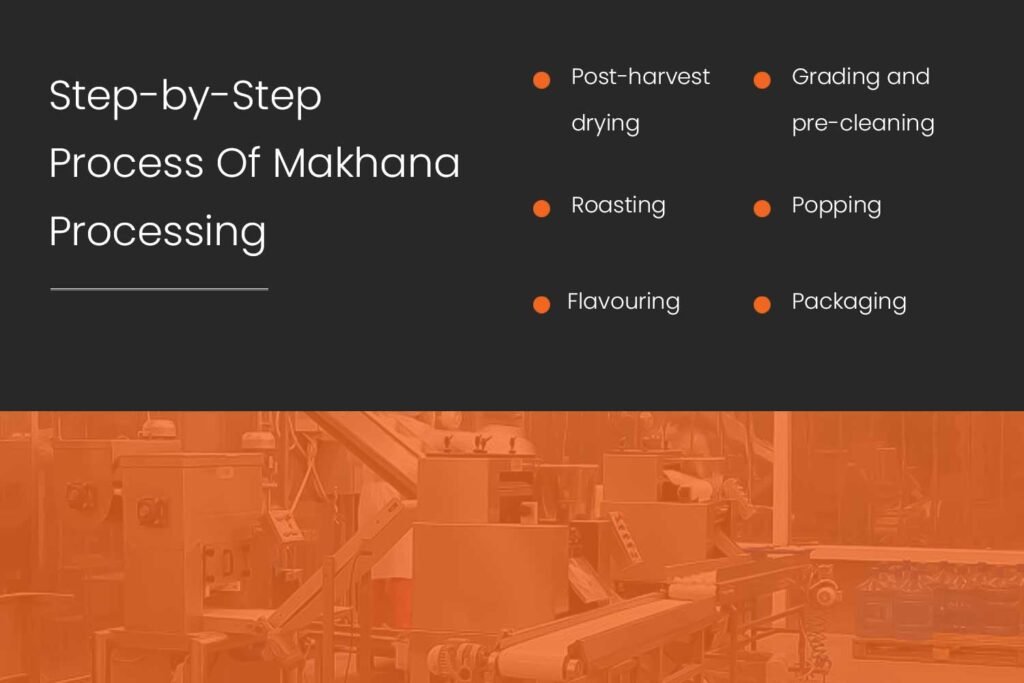
Step-by-Step Process Of Makhana Processing
Before getting into how moisture control technology helps to grow your makhana business, let’s understand the step-by-step process of makhana processing:
Post-harvest drying
After harvesting, raw makhana seeds are sun-dried or mechanically dried to reduce surface moisture.
Grading and pre-cleaning
Before roasting, the raw makhana needs to be cleaned to remove impurities like dust or stones. Automatic Makhana Grader machines guarantee uniform size sorting, hygienic processing, and higher efficiency in roasting.
Roasting
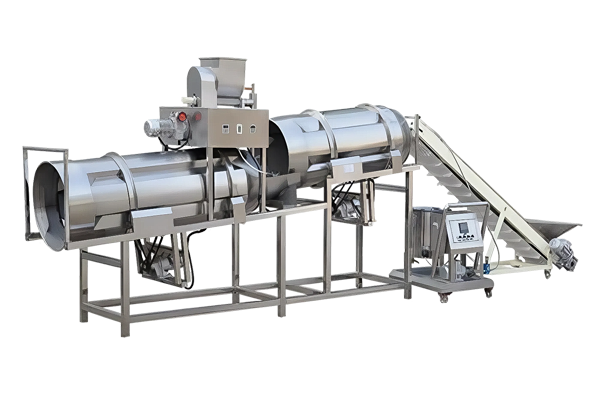
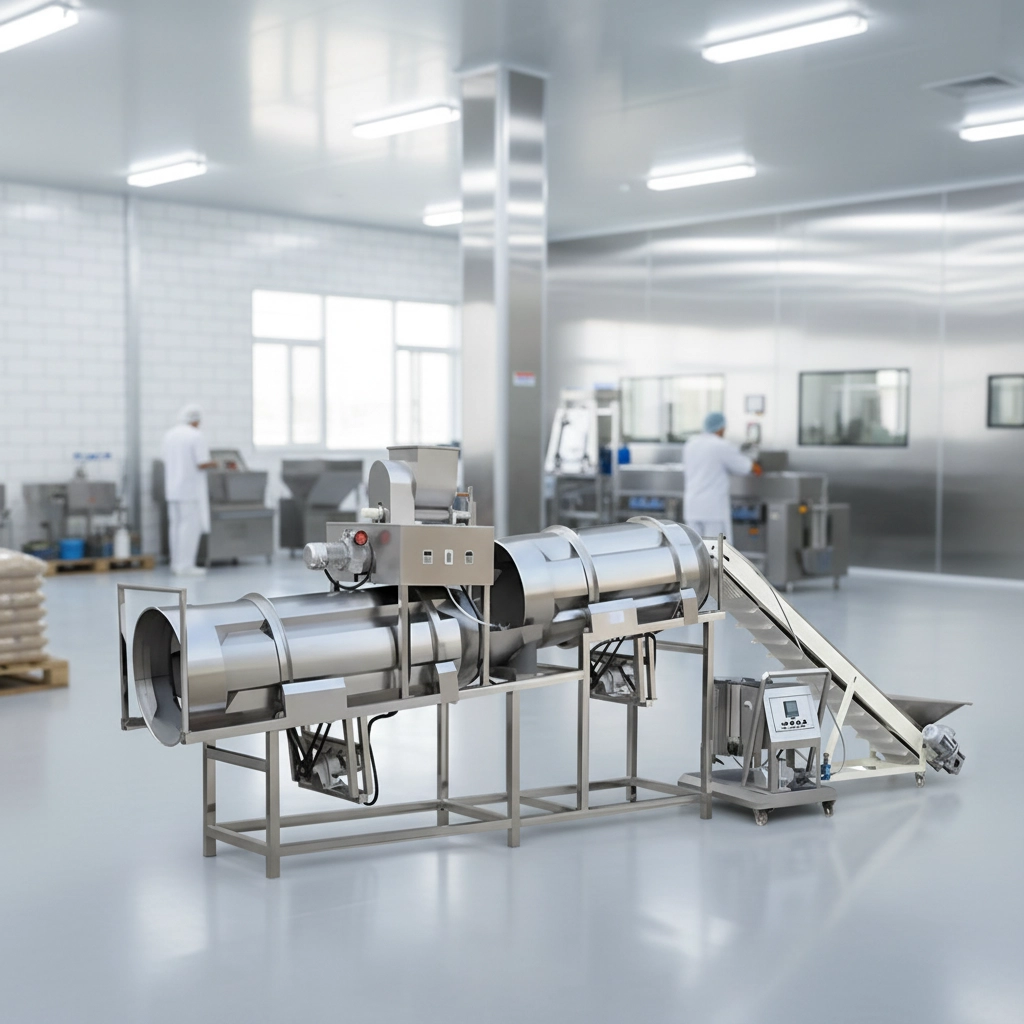
Our Makhana Rotary Roaster helps in uniform makhana roasting that improves the taste and shelf life of makhana while reducing manual labor.
Popping
Roasted makhana seeds are then popped through makhana popping machines.
Flavouring
Our flavouring and seasoning machines offer flavors and seasonings like achari lemon, peri peri, chocolate, cheese & jalapeno, indian masala, tandoori, and more.
Packaging
Makhana packaging machines help to pack them in air-tight, moisture-proof pouches to maintain their shelf life, freshness, and quality.
Now, let’s understand why moisture control technology is important in makhana roasting to increase the productivity of your makhana business.
Read More: How to Roast Makhana to Crispy Perfection Easily- Explained
Role of Moisture Control Technology in Makhana Roasting
1. Consistent Roasting Quality
The impact of moisture control on makhana roasting quality is critical- too much retained moisture results in a soggy texture, while over-drying can burn the makhana seeds. With advanced precision moisture control systems, operators can maintain the ideal humidity levels inside the roasting chamber.
Our roasting equipment comes equipped with real-time moisture sensors that monitor and adjust the humidity automatically. This results in a uniform, golden-brown roast every time.
2. Improved Makhana Energy Efficiency
Drying Makhana seeds to the accurate moisture level before roasting saves energy during the roasting phase. Our energy-saving Makhana roasting machines with moisture control reduce unnecessary heat application by using automated feedback from moisture detection systems. This lowers electricity or fuel usage and cuts down operational costs.
3. Automation in Makhana Processing
In modern factories, automation in Makhana processing has increased productivity. Our automatic Makhana machines in India are integrated with:
- Digital moisture analyzers
- Humidity control modules
- Auto-adjust roasting parameters
These innovations reduced the dicey procedure from roasting time and significantly increased both product quality and labor efficiency.
4. Increased Shelf Life Of Makhana
By ensuring that final moisture levels are accurate, moisture control technology prevents microbial growth and rancidity in packaged Makhana. This is important for makhana exporters and large-scale suppliers looking to meet food safety standards and extend the product’s shelf life.
5. Controlled Humidity for Better Makhana Texture
The impact of controlled humidity on Makhana texture is directly seen in the crispness and puffiness of the final product. Controlled humidity prevents over-roasting and guarantees proper crunch, which is highly preferred in retail packaging.
Read More: 5 Key Features to Look for in an Advanced Industrial Makhana Roasting Machine
Features Of Moisture Control Systems In Our Machines
At Foodsure Machines, we have made our Makhana roasting machines with cutting-edge features that offer proper moisture control:
- Integrated Moisture Sensors: Monitor the humidity inside the roasting drum in real-time.
- PID Control Systems: Adjust heat intensity based on moisture readings to avoid under- or over-roasting.
- Drying-Air Circulation Units: Promote even dehydration during the Makhana drying process.
- Data Logging Interfaces: Help quality control teams track historical moisture levels for better consistency.
- Variable Roasting Chambers: Support both batch and continuous roasting modes depending on production scale.
Benefits Of Moisture Sensors In Makhana Roasting
Moisture sensors provide instant readings and can adjust the moisture control system’s operation to maintain optimal moisture levels. Here are some advantages of moisture sensors:
- Reduced makhana batch rejection
- Faster makhana processing cycles
- Improved makhana texture consistency
- Reduced human mistakes during makhana production
- Better compliance with food safety regulations
While moisture sensors increase accuracy and consistency during makhana roasting, it’s equally important to understand how precise moisture control directly influences the final texture and consumer appeal of roasted Makhana.
Balancing Moisture Retention vs. Crispness In Roasted Makhana
One of the major challenges in Makhana roasting is balancing moisture retention while getting the right crispness of makhana. Too dry will result in brittle makhana, while too moist will feel rubbery. With modern moisture control systems in puffed food processing, we fine-tune the drying and roasting phases of makahan to reach this balance.
This allows us to customize outputs based on customer needs, whether for retail snacking, flavored Makhana, or export packaging.
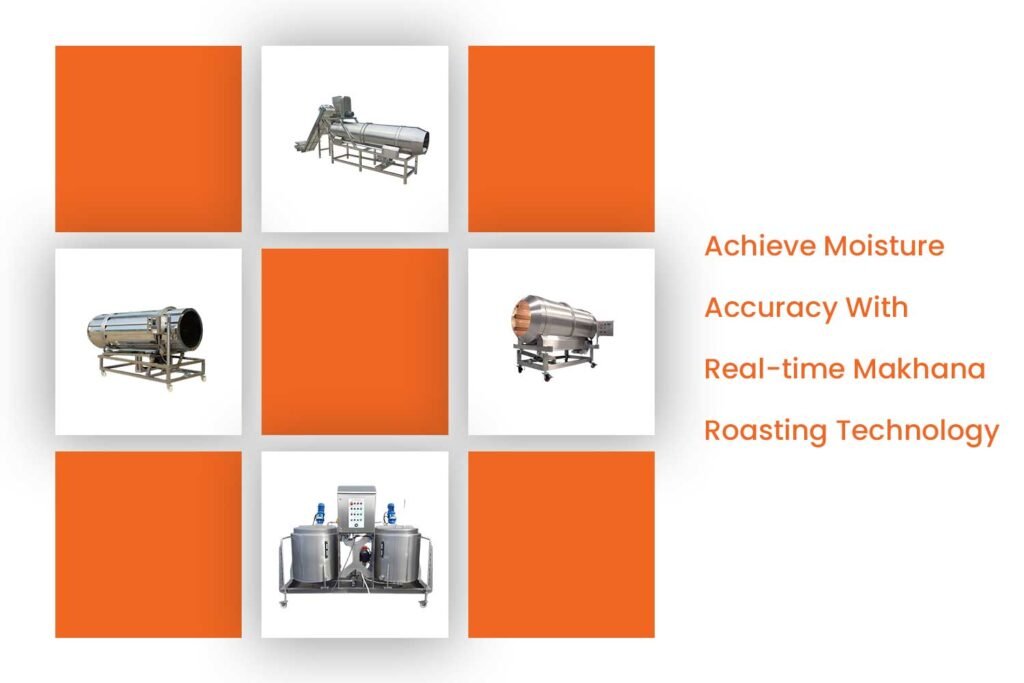
Achieve Moisture Accuracy With Real-time Makhana Roasting Technology
Our automatic moisture control Makhana machines in India come with a user-friendly control panel that enables:
- Setting target moisture thresholds
- Alerts for deviations
- Batch-specific moisture profiles
- Automated data reports for audit compliance
These features make our systems ideal for businesses aiming to scale up and maintain consistency in large volumes of makhana.
Why Choose Foodsure Machines?
Foodsure Machines is your reliable partner for delivering high-performance, durable, and precision-engineered Makhana processing machines to food manufacturers across India and abroad.
We are known for:
- Custom-built industrial Makhana machines
- End-to-end support for setup, training, and maintenance
- Integration of post-harvest processing technology
- Focus on energy savings and sustainability
- Proven results in improving food roasting efficiency
Get In Touch With Us For Moisture Control Technology In Makhana Roasting!
At Foodsure Machines, we combine innovation with practical engineering to offer roasting machines that deliver consistent results, batch after batch. Whether you are just starting in the Makhana business or upgrading your existing plant, our automatic Makhana machines with advanced moisture control are made to meet your needs.
FAQ
1. How many grades of makhana are there after moisture-controlled roasting?
Typically 3 to 5 grades, depending on size and moisture uniformity.
2. How to keep makhana crispy using moisture control technology?
Maintain low moisture levels and store in airtight, moisture-proof pouches.
3. What is an acceptable moisture content in roasted makhana?
Ideal moisture is 5–7% for perfect crispiness.
4. What is the moisture content of raw makhana before roasting?
Raw makhana usually contains 12–15% moisture.
5. How to increase the shelf life of roasted makhana with moisture control?
Use uniform moisture removal followed by high-barrier airtight packaging.
6. What is the moisture content of makhana in general storage?
Stored makhana maintains about 6–8% moisture for stability.
7. How to identify the best quality roasted makhana using moisture control?
It should be light, crunchy, low-moisture, and evenly roasted.
8. What is the moisture content of makhana after controlled roasting?
Moisture drops to around 5–7%, ideal for long-lasting crispiness.
9. What is the shelf life of raw makhana without moisture management?
Raw makhana lasts 4–6 months, depending on humidity levels.
10. What is the cost of 100 g roasted makhana made with moisture control tech?
Typically ₹60–₹80 per 100 g, based on quality and brand.
11. How to keep roasted makhana crispy for a long time using this technology?
Maintain low moisture + airtight laminated packaging.
12. How many pieces are in 1 kg of moisture-controlled roasted makhana?
Usually 900–1,500 pieces, depending on size and grade.