
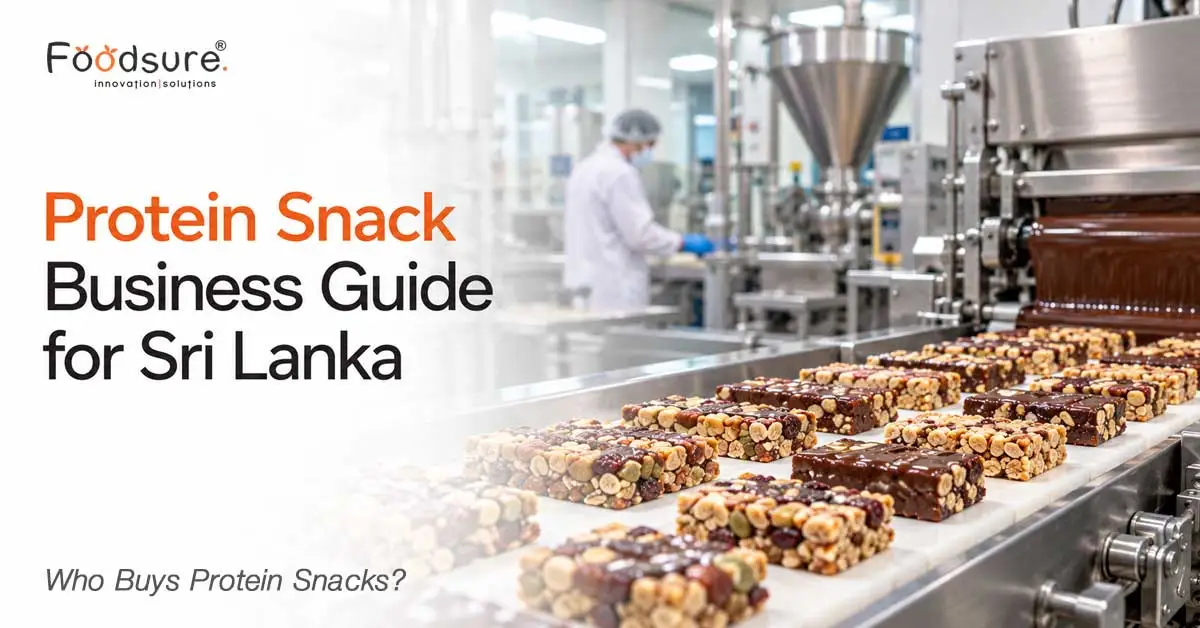
Sri Lankan consumers are becoming more interested in the components of their food. High-protein snacks that were previously marketed only to professional athletes and bodybuilders have now become an addition to daily meals of common consumers. Working adults search for healthy office snacks, students need a good source of energy, members of gyms need high-protein snacks instead of candy, and parents are also very choosy about their kids’ snacks.
Thus, this trend creates new business opportunities. A company dealing with production of high-protein snacks no longer addresses a small community of consumers. It can enter not only supermarkets and drugstores but also gyms, cafes, e-commerce, corporate offices, and other businesses from all around the world searching for quality food products from South Asia.
Are you going to set up a business of food manufacture that would enjoy high demands in the long run? This guide will provide all the necessary information on starting such a business. You will discover details about the market of Sri Lanka, product categories, manufacturing issues, investments, regulations, and other aspects of business growth.
Why Protein Snacks Are Becoming Popular in Sri Lanka
Nutrition awareness is affecting the consumer behavior within the food sector in Sri Lanka. Whereas traditional snacks are prevalent on the supermarket shelves, consumers are slowly turning towards healthy yet convenient snacks.
Some of the reasons behind this shift are:
- Increasing fitness trends
- Growing awareness of protein consumption
- Expansion of modern retail chains
- Demand for ready-to-eat products
- Global nutritional trends
- Online grocery stores
- Imported health food ingredients
Increase in the disposable incomes of the middle class for premium food items
As opposed to traditional snacks that only cater to the need of satisfying hunger pangs, protein-based snacks not only satisfy hunger but also offer nutrition advantages. Therefore, these snacks can target different customers groups.
Who Buys Protein Snacks?
Protein snacks are purchased by a wide range of consumers, including:
| Consumer Group | Common Buying Motivation |
|---|---|
| Gym members | Muscle recovery and daily protein intake |
| Office professionals | Healthy snacks during work hours |
| University students | Convenient meal replacements |
| Parents | Better snack options for children |
| Travellers | Portable, filling food |
| Diabetic consumers | Controlled snacking options (depending on formulation) |
| Weight management consumers | High-protein, satisfying snacks |
Serving multiple customer groups helps reduce dependence on a single market segment and creates opportunities for product diversification.
Understanding the Protein Snack Market in Sri Lanka

The protein snack category is still developing in Sri Lanka compared to more mature markets. That presents an advantage for businesses entering early with differentiated products, consistent quality, and strong branding.
Consumers are increasingly exposed to international food trends through social media, e-commerce platforms, and travel. Products such as protein bars, roasted snacks, granola clusters, trail mixes, and high-protein cookies are becoming more familiar, especially among urban consumers.
Local manufacturers also have an opportunity to combine global nutrition trends with ingredients that are readily available in Sri Lanka.
Common Ingredients Used in Protein Snacks
Depending on the product type, manufacturers often use ingredients such as:
- Whey protein concentrate
- Soy protein isolate
- Pea protein
- Oats
- Peanuts
- Cashew nuts
- Pumpkin seeds
- Chia seeds
- Sesame seeds
- Coconut
- Rice crisps
- Cocoa
- Natural sweeteners
- Dates
- Dried fruits
- Milk solids
- Flavouring agents approved for food use
Selecting the right combination depends on product positioning, target consumers, shelf life requirements, and manufacturing costs.
Popular Protein Snack Products
Businesses entering the market often begin with one or two product categories before expanding.
Common options include:
- Protein bars
- Energy bars
- Roasted protein snacks
- High-protein granola
- Nut clusters
- Seed mixes
- Protein cookies
- Protein bites
- Breakfast bars
- Functional snack mixes
Starting with a focused product range helps maintain production efficiency while building brand recognition.
Protein Snack Business Opportunities in Sri Lanka
The protein snack industry in Sri Lanka is moving beyond being a niche segment. Demand is gradually expanding as consumers become more aware of balanced nutrition, active lifestyles, and convenient food choices. While imported brands continue to occupy premium shelves, there is significant room for local manufacturers to introduce affordable, high-quality protein snacks tailored to Sri Lankan tastes.
Entrepreneurs entering the market today have the advantage of building products around local ingredients, efficient manufacturing, and competitive pricing. Instead of competing solely on cost, successful brands are creating value through cleaner ingredient lists, functional nutrition, attractive packaging, and consistent quality.
For manufacturers, this presents opportunities across both business-to-business (B2B) and business-to-consumer (B2C) channels.
High-Potential Business Segments
Different customer groups require different products. Understanding these segments helps businesses develop targeted product lines and marketing strategies.
| Business Segment | Opportunity |
|---|---|
| Retail supermarkets | Everyday healthy snacks |
| Fitness centres | Protein bars and recovery snacks |
| Pharmacies | Nutritional snack products |
| Schools and universities | Convenient, portion-controlled snacks |
| Corporate offices | Healthy vending and pantry solutions |
| Hotels and cafés | Premium grab-and-go snacks |
| Online stores | Direct-to-consumer subscriptions |
| Export distributors | South Asian and Middle Eastern markets |
Rather than serving every segment immediately, many successful manufacturers begin with one primary market before expanding into additional channels.
Is the Protein Snack Business Profitable in Sri Lanka?
Yes, the business can be profitable when manufacturers focus on efficient production, quality ingredients, strong branding, and effective distribution.
Profitability depends on several factors rather than product pricing alone. Businesses that optimise production costs while maintaining product consistency often achieve stronger long-term margins.
Major Profit Drivers
- Consistent product quality
- Efficient production planning
- Competitive sourcing of raw materials
- Attractive packaging
- Distribution partnerships
- Brand positioning
- Product innovation
- Repeat customer purchases
Businesses that launch multiple protein snack variants under a single brand can also reduce marketing costs while increasing customer retention.
Popular Protein Snack Products You Can Manufacture
One of the biggest advantages of entering this industry is product diversification. Manufacturers are not limited to protein bars. A modern production facility can often produce multiple products using similar equipment with minor process adjustments.
Protein Bars
Protein bars remain one of the fastest-growing categories due to their convenience and portability.
Popular varieties include:
- Chocolate protein bars
- Peanut protein bars
- Fruit and nut bars
- Oat protein bars
- Low-sugar protein bars
- Vegan protein bars
Energy Bars
Energy bars are designed for consumers seeking sustained energy throughout the day.
Common ingredients include:
- Oats
- Dates
- Honey
- Dry fruits
- Seeds
- Nuts
- Plant proteins
Protein Cookies
Protein cookies attract consumers who want healthier alternatives to traditional biscuits without compromising on taste.
Protein Granola
Granola products continue gaining popularity among breakfast consumers.
Manufacturers can create:
- Chocolate granola
- Fruit granola
- Seed granola
- High-protein breakfast mixes
Roasted Protein Snacks
Roasted snacks offer lower oil content while maintaining crunch and flavour.
Examples include:
- Roasted chickpeas
- Roasted peanuts
- Mixed nuts
- Seed blends
- Lentil snacks
Protein Snack Mixes
Snack mixes combine multiple ingredients into convenient ready-to-eat products.
Typical combinations include:
- Nuts
- Seeds
- Dry fruits
- Protein crisps
- Roasted legumes
Offering several product categories helps businesses reduce dependence on a single revenue source while appealing to a broader customer base.
Machinery Required for Protein Snack Manufacturing
The production setup depends on the type of snack being manufactured. Semi-automatic systems suit startups, while fully automated production lines are better for businesses planning higher output and consistent quality.
Common Machines Used
- Ribbon blender
- Dry ingredient mixer
- Dough mixer
- Protein bar forming machine
- Slab former
- Roller system
- Cooling conveyor
- Cutting machine
- Enrobing machine (optional)
- Packaging machine
- Metal detector
- Check weigher
- Batch coding machine
Automation reduces production time, improves consistency, and minimises ingredient wastage.
Typical Manufacturing Flow
- Raw material inspection
- Ingredient weighing
- Mixing and blending
- Dough preparation
- Forming
- Rolling or shaping
- Cooling
- Cutting
- Optional chocolate coating
- Packaging
- Quality inspection
- Storage and dispatch
A streamlined production process helps maintain uniform product size, texture, and nutritional consistency across every batch.
Estimated Investment for a Protein Snack Business
The investment required depends on production capacity, level of automation, facility size, packaging requirements, and product range.
Major Cost Components
| Expense Category | Typical Investment Area |
|---|---|
| Manufacturing machinery | Production equipment |
| Factory setup | Utilities and workspace |
| Food-grade infrastructure | Hygienic production areas |
| Raw materials | Protein sources, grains, nuts, flavours |
| Packaging | Primary and secondary packaging |
| Food testing | Laboratory analysis |
| Licences and approvals | Regulatory compliance |
| Branding | Logo, labels, marketing |
| Working capital | Initial operating expenses |
Businesses often begin with semi-automatic production to validate demand before investing in fully automated manufacturing lines.
Choosing the Right Manufacturing Facility
The manufacturing facility plays a critical role in maintaining food quality, operational efficiency, and regulatory compliance.
When selecting a location, consider:
- Reliable electricity supply
- Continuous water availability
- Easy transportation access
- Hygienic surroundings
- Adequate storage space
- Room for future expansion
- Proper waste management systems
- Compliance with food manufacturing regulations
Designing the facility with a logical production flow from raw material receiving to finished goods dispatch reduces cross-contamination risks and improves productivity.
Food Regulations and Licences for Protein Snack Manufacturing in Sri Lanka
Building a successful protein snack brand starts with more than developing a good recipe. Food businesses must comply with Sri Lanka’s food safety regulations to protect consumers, maintain product quality, and establish credibility in the market.
Meeting regulatory requirements from the beginning also reduces delays when expanding into retail chains or export markets.
Essential Regulatory Requirements
Depending on the scale and nature of your business, you may need:
- Business registration
- Local authority approvals
- Food manufacturing approvals
- Product labelling compliance
- Nutrition information declaration
- Food safety management procedures
- Employee hygiene and sanitation protocols
- Fire and workplace safety compliance
Manufacturers supplying supermarkets or international buyers are often expected to demonstrate stronger food safety practices through recognised management systems.
Why Compliance Matters
A compliant manufacturing facility offers several advantages:
- Builds consumer confidence
- Simplifies retail approvals
- Reduces product recalls
- Improves export readiness
- Enhances brand reputation
- Supports long-term business growth
Food safety should be treated as an ongoing process rather than a one-time requirement.
Selecting High-Quality Raw Materials
The quality of a protein snack depends largely on the ingredients used. Even advanced manufacturing equipment cannot compensate for poor-quality raw materials.
Manufacturers should work with trusted suppliers who provide consistent quality and proper documentation for every batch.
Common Protein Sources
Popular protein ingredients include:
- Whey protein concentrate
- Whey protein isolate
- Soy protein isolate
- Pea protein
- Rice protein
- Milk protein
- Plant-based protein blends
The choice depends on your target audience, nutritional claims, product positioning, and production costs.
Supporting Ingredients
Protein snacks also require ingredients that improve flavour, texture, and shelf stability.
These may include:
- Oats
- Peanuts
- Almonds
- Cashew nuts
- Pumpkin seeds
- Sunflower seeds
- Flaxseeds
- Chia seeds
- Coconut flakes
- Cocoa powder
- Dates
- Raisins
- Honey
- Natural flavourings
Whenever possible, sourcing ingredients locally can reduce transportation costs and strengthen supply chain reliability.
Export Opportunities for Sri Lankan Protein Snack Manufacturers

Sri Lanka’s food manufacturing sector has growing potential to serve international markets. High-quality protein snacks with compliant packaging and food safety standards can attract buyers across regions where healthy convenience foods continue to gain popularity.
Export success often depends on product consistency, regulatory compliance, and competitive pricing rather than production volume alone.
Promising Export Markets
Potential regions include:
- South Asia
- Middle East
- Southeast Asia
- Europe
- Australia
Export-ready manufacturers should also adapt packaging and nutritional labelling to meet destination-country requirements.
What International Buyers Expect
Export customers generally look for:
- Consistent product quality
- Food safety compliance
- Reliable production capacity
- Competitive pricing
- Attractive packaging
- Stable shelf life
- On-time delivery
- Transparent documentation
Building these capabilities from the beginning makes future expansion considerably easier.
Common Mistakes to Avoid When Starting a Protein Snack Business
Many new businesses focus heavily on production while overlooking market research and long-term planning.
Avoiding common mistakes can save significant time and investment.
Frequent Challenges
- Entering the market without validating demand
- Choosing machinery that exceeds production needs
- Ignoring food safety procedures
- Using inconsistent raw materials
- Weak branding
- Poor packaging design
- Inaccurate nutritional claims
- Limited distribution planning
- Underestimating working capital
- Neglecting digital marketing
Learning from these challenges early helps create a stronger foundation for business growth.
Future of the Protein Snack Industry in Sri Lanka
The protein snack industry in Sri Lanka is entering an exciting phase. Consumers are no longer choosing snacks based only on taste or price. Nutrition, ingredient quality, convenience, and brand transparency are becoming equally important purchasing factors.
As lifestyles become busier and awareness around preventive health continues to grow, protein-rich snacks are expected to become a regular part of daily eating habits rather than occasional purchases.
Manufacturers that invest in innovation today are likely to benefit from this long-term shift in consumer behaviour.
Several developments are likely to influence the future of protein snack manufacturing in Sri Lanka.
Clean Label Products
Consumers increasingly prefer products with simple ingredient lists and recognisable ingredients. Brands that minimise artificial additives and communicate ingredient transparency can build stronger customer trust.
Plant-Based Protein
Demand for plant-based nutrition continues to rise worldwide. Products made with pea protein, soy protein, rice protein, chickpeas, lentils, and seeds are attracting consumers looking for vegetarian and vegan alternatives.
Functional Nutrition
Protein alone is no longer the only selling point. Functional snacks that include dietary fibre, probiotics, vitamins, minerals, collagen, or superfoods offer greater value to health-conscious consumers.
Sustainable Packaging
Environmentally responsible packaging is becoming an important purchasing factor. Businesses adopting recyclable or reduced-plastic packaging may appeal to environmentally conscious buyers while strengthening their brand image.
Smart Manufacturing
Automation, quality monitoring systems, digital production tracking, and data-driven inventory management are helping manufacturers improve efficiency, reduce waste, and maintain consistent product quality.
Final Thoughts
Starting a protein snack business in Sri Lanka is more than introducing another food product to the market. It is about understanding changing consumer preferences and delivering convenient, nutritious snacks that meet modern lifestyle needs.
With careful market research, the right manufacturing equipment, high-quality ingredients, attractive packaging, and a strong digital marketing strategy, entrepreneurs can build a profitable and scalable business. As health-conscious eating continues to gain momentum, businesses that focus on innovation, quality assurance, and customer trust will be better equipped to capture emerging opportunities in Sri Lanka and beyond.
Have a Question? Let’s Connect
Need expert guidance on food processing machines, production setup, or process optimization? Our team is ready to help you choose the right solution for your business.
Frequently Asked Questions
What is a protein snack business?
A protein snack business manufactures and sells ready-to-eat food products with higher protein content than conventional snacks. These products include protein bars, roasted snacks, granola, cookies, and nutrition-focused snack mixes.
Is the protein snack business profitable in Sri Lanka?
Yes. With rising consumer awareness of healthy eating and convenient nutrition, protein snacks have strong growth potential. Profitability depends on product quality, efficient manufacturing, branding, distribution, and effective marketing.
Which protein snacks are most popular?
Some of the fastest-growing categories include:
- Protein bars
- Energy bars
- Protein cookies
- Granola
- Trail mixes
- Roasted chickpeas
- Mixed nuts
- Seed-based snacks
How much investment is required to start?
The investment depends on production capacity, automation, factory infrastructure, machinery, packaging, product development, and working capital. Businesses often begin with semi-automatic production before expanding to fully automated lines.
What raw materials are commonly used?
Manufacturers typically use:
- Whey protein
- Soy protein
- Pea protein
- Oats
- Nuts
- Seeds
- Dates
- Cocoa
- Natural sweeteners
- Dried fruits
The formulation varies according to the target market and nutritional objectives.
Can protein snacks be exported?
Yes. Manufacturers that comply with food safety regulations, maintain consistent product quality, and meet destination-country packaging and labelling requirements can access international markets.
How long does it take to establish a manufacturing unit?
The timeline depends on factory construction, machinery procurement, regulatory approvals, product development, and trial production. Proper planning can significantly reduce delays during commercial launch.




