

Protein snacks are moving beyond the traditional gym and sports nutrition market. Consumers are increasingly looking for convenient foods that fit into busy routines while providing more protein, fibre, and other nutritional benefits.
This has created opportunities for food manufacturers across Sri Lanka, Bangladesh, and Nepal to develop products such as protein puffs, protein crisps, extruded snacks, protein bites, soy-based snacks, cereal clusters, and other ready-to-eat high-protein formats.
For manufacturers, however, commercial protein snack production involves much more than developing a high-protein recipe. The formulation has to work with industrial processing equipment, ingredients need to be handled consistently, and every production stage must deliver the desired texture, flavour, nutritional profile, and shelf stability.
The right protein snack manufacturing process therefore starts with product development and continues through ingredient preparation, mixing, extrusion or forming, thermal processing, seasoning, cooling, packaging, and quality control.
This guide explains how high-protein snacks move from recipe development to commercial production, what machinery is involved, what affects manufacturing costs, and how manufacturers can plan a scalable protein snack production line.
What Is Protein Snack Manufacturing?
Protein snack manufacturing is the controlled production of ready-to-eat snack products formulated with higher levels of protein than conventional snacks.
Depending on the product, manufacturers may use ingredients such as soy protein, pea protein, whey protein, milk protein, rice protein, pulses, cereals, nuts, seeds, or other protein-rich raw materials.
Unlike a small-batch recipe, commercial production requires consistency at every stage. The same formulation must produce similar taste, texture, shape, moisture content, weight, and nutritional characteristics across repeated batches.
A typical commercial process can include:
Recipe development → Raw material preparation → Weighing → Mixing → Extrusion or forming → Cooking/processing → Cutting or shaping → Drying/baking/frying → Seasoning → Cooling → Packaging → Quality control
The exact workflow depends on the type of protein snack being manufactured.
For example, an extruded protein puff follows a different process from a baked protein crisp or a formed protein bite. This is why equipment selection should begin with the product formulation and desired final format rather than machine capacity alone.
What Types of High Protein Snacks Can Be Manufactured?
The protein snack category includes several product formats, giving manufacturers flexibility when developing a product portfolio.
Protein Puffs
Protein puffs are lightweight, crunchy snacks produced through controlled extrusion. They can be made using combinations of protein-rich ingredients, cereals, pulses, and other functional ingredients.
After extrusion, the snacks may be dried, seasoned, and packed into retail-ready formats.
Protein Crisps
Protein crisps are designed to deliver a crunchy texture while increasing the protein content of a conventional snack format.
Depending on the formulation, manufacturers can use cereal, pulse, soy, pea, or other protein ingredients.
Extruded Protein Snacks
Extrusion allows manufacturers to create different shapes and textures by controlling the formulation, moisture, temperature, pressure, and die configuration.
This can include sticks, curls, tubes, balls, rings, and other snack shapes.
Protein Bites
Protein bites are small, portion-controlled snack products that can be formulated using protein powders, nuts, seeds, cereals, binders, and flavouring ingredients.
Depending on the recipe, they may be formed, baked, chilled, or otherwise processed before packaging.
Plant-Based Protein Snacks
Soy, pea, rice, chickpea, lentil, and other plant-based ingredients can be incorporated into high-protein snack formulations.
These products can target consumers looking for plant-based or dairy-free snack options.
Protein-Rich Traditional Snacks
Manufacturers can also develop higher-protein versions of familiar snack formats using ingredients such as soy, pulses, peanuts, chickpeas, millet, and other locally available raw materials.
This approach can help brands create products that combine familiar flavours with a different nutritional profile.
Why Is Demand for Protein Snacks Growing in South Asia?
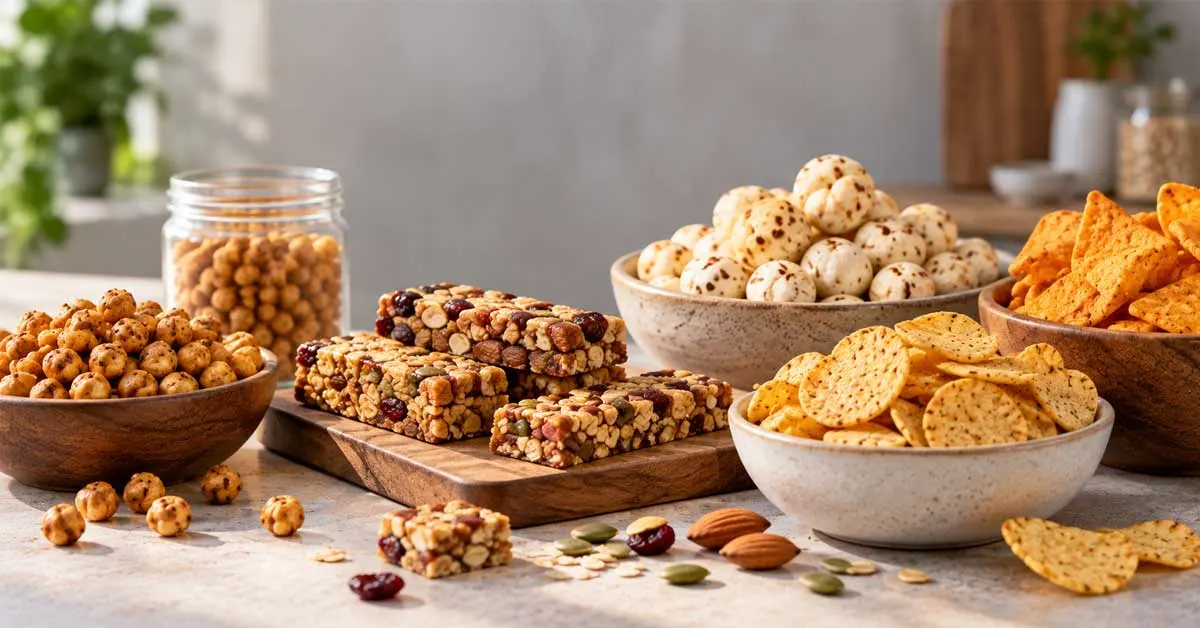
Protein consumption is increasingly becoming part of mainstream nutrition conversations. What was once strongly associated with athletes and bodybuilders is now relevant to students, working professionals, recreational fitness consumers, and people looking for convenient everyday foods.
Sri Lanka, Bangladesh, and Nepal each have different food cultures and consumer preferences, but manufacturers across these markets can explore protein snacks as a value-added packaged food category.
Sri Lanka
Sri Lanka offers opportunities for manufacturers developing convenient and health-focused snack products for modern retail, fitness consumers, tourists, and urban households.
Local ingredients such as coconut, peanuts, cashews, spices, cereals, and tropical fruit ingredients can also provide opportunities for differentiated formulations.
For manufacturers, developing locally relevant flavours alongside higher-protein formulations can help create products suited to domestic consumers rather than simply replicating imported products.
Bangladesh
Bangladesh has a large and growing packaged food industry, creating opportunities for manufacturers to diversify into functional and nutrition-focused snack categories.
A young consumer base, expanding urban markets, and growing availability of packaged foods can support the development of new snack formats.
Manufacturers can also explore protein snacks based on ingredients such as soy, pulses, rice, peanuts, and other locally familiar raw materials.
Nepal
Nepal’s urban food market, tourism sector, fitness culture, and outdoor recreation activities create potential applications for portable and convenient nutrition products.
Protein snacks can be positioned for consumers looking for convenient food during work, travel, exercise, hiking, and other activities.
Local ingredients such as millet, buckwheat, honey, nuts, seeds, and pulses can also be explored in product development.
From Recipe Development to Commercial Protein Snack Production
A successful protein snack begins with a formulation that can actually be manufactured at scale.
A recipe may perform well in a laboratory or kitchen but behave differently when transferred to industrial equipment. Increasing batch size changes mixing behaviour, moisture distribution, ingredient flow, processing conditions, and product texture.
For this reason, commercial development generally involves formulation trials and pilot production before full-scale manufacturing.
During product development, manufacturers may evaluate:
- Protein content
- Ingredient compatibility
- Moisture content
- Water activity
- Texture
- Expansion
- Crispness
- Flavour
- Colour
- Processing stability
- Shelf life
- Packaging compatibility
- Production yield
- Cost per unit
The objective is not simply to create a nutritious snack. The formulation must also be processable, repeatable, stable, and commercially viable.
Protein Snack Manufacturing Process
The exact production process depends on the type of snack being manufactured. However, a typical high-protein snack production workflow includes the following stages:
Not every product requires every stage. For example, an extruded protein puff may require extrusion, drying, seasoning, and cooling, while a formed protein bite may follow a different route.
Step 1 Ingredient Selection and Preparation
The process begins with selecting ingredients according to the nutritional, sensory, and processing requirements of the final product.
Common protein ingredients include:
- Soy protein
- Pea protein
- Whey protein
- Milk protein
- Rice protein
- Chickpea
- Lentil
- Other pulse proteins
- Nuts and seeds
Other ingredients may include:
- Rice
- Oats
- Corn
- Millet
- Wheat
- Potato
- Tapioca
- Fibre
- Starches
- Natural flavours
- Cocoa
- Spices
- Salt
- Sweeteners
- Functional ingredients
The selection depends on the type of snack being produced.
For example, an extruded protein snack requires ingredients with suitable moisture, particle size, flow properties, and processing characteristics. A formulation containing high levels of protein may require additional adjustment to achieve the desired expansion and crunch.
Before production, raw materials should be checked according to the manufacturer’s quality specifications.
Important checks can include:
- Appearance
- Moisture
- Odour
- Foreign matter
- Microbiological quality
- Batch consistency
- Supplier documentation
- Storage conditions
Proper storage is equally important. Protein powders, grains, oils, nuts, and other ingredients may require different storage conditions to maintain quality.
Step 2 Precise Ingredient Weighing
Once ingredients are approved, they are weighed according to the production formulation.
Accuracy matters because changes in ingredient ratios can affect both nutrition and processing behaviour.
For example, changing the quantity of protein powder, starch, binder, or moisture can alter the final product’s expansion, hardness, density, crispness, and flavour.
Small-scale production may use manual weighing systems, while larger facilities can use dedicated weighing and dosing systems.
The objective is straightforward: every production batch should begin with the same formulation.
Step 3 Mixing and Blending
The weighed ingredients are transferred to the mixing system.
Mixing ensures that protein ingredients, cereals, starches, fibres, seasonings, and other components are distributed uniformly before the material enters the next processing stage.
Depending on the formulation, manufacturers may use:
- Ribbon blenders
- Paddle mixers
- Planetary mixers
- High-shear mixers
- Other industrial food mixers
The correct mixer depends on ingredient characteristics and the final product.
Uniform mixing is particularly important for high-protein snacks because protein powders and functional ingredients need to be distributed consistently throughout the batch.
Poor mixing can result in variations in:
- Protein content
- Flavour
- Colour
- Texture
- Expansion
- Product weight
For some products, water or other liquid ingredients are added during or after dry mixing to achieve the required processing moisture.
Step 4 Extrusion or Forming
This is where the manufacturing process begins to take the shape of the final snack.
For many high-protein snack products, extrusion is a key processing method.
The prepared mixture is fed into an extruder where controlled mechanical energy, temperature, moisture, and pressure transform the material into a continuous product.
The die determines the basic shape of the extruded snack.
Depending on the equipment and formulation, manufacturers can produce different shapes such as:
- Puffs
- Sticks
- Rings
- Curls
- Tubes
- Balls
- Other custom profiles
Extrusion can also help create the desired texture and structure of the snack.
For formed products that do not require extrusion, other forming systems may be used depending on the recipe.
Why Extrusion Matters for Protein Snacks
High-protein formulations can behave differently from conventional cereal-based snack mixtures.
Higher protein levels may influence expansion, density, texture, and processing requirements.
The extrusion system therefore needs to be selected according to the formulation, target output, product shape, and desired texture.
This is one reason manufacturers should conduct product trials before finalizing their production line.
Step 5 Cutting and Shaping
Continuous extruded products can be cut into predetermined lengths using an automatic cutting system.
The cutting speed must be synchronized with product flow to maintain consistent dimensions.
For other snack formats, forming equipment may create individual pieces directly.
Accurate shaping helps maintain:
- Consistent portion size
- Uniform appearance
- Better packaging efficiency
- Controlled product weight
- Reduced material waste
The final dimensions can be adjusted according to the product concept and packaging format.
Step 6 Cooking, Baking or Drying
Depending on the formulation, the shaped snack may require further thermal processing.
This stage can be used to develop the required texture, moisture level, and eating characteristics.
Possible processing methods include:
- Baking
- Hot-air drying
- Controlled thermal treatment
- Frying
- Other product-specific processes
The correct method depends on the formulation.
For example, an extruded snack may require drying to achieve the desired crispness and moisture level, while a different protein snack may be baked.
Temperature and processing time need to be controlled because excessive thermal exposure can affect colour, flavour, texture, and ingredient stability.
Step 7 Seasoning and Coating
Once the basic snack has been processed, manufacturers can add flavour through seasoning or coating systems.
Possible flavour profiles include:
- Cheese
- Barbecue
- Masala
- Chilli
- Sour cream
- Salt and pepper
- Chocolate
- Cinnamon
- Herbs
- Other regional flavours
Seasoning can be applied using automated seasoning systems designed to distribute the flavouring material across the product.
For products requiring a coating, the process may include controlled application of the coating material followed by cooling or drying.
This stage gives manufacturers an opportunity to create multiple SKUs from a common base product.
Step 8 Cooling
After thermal processing or seasoning, the snack needs to reach a suitable temperature before packaging.
Cooling helps prevent condensation inside the package and allows the product to stabilize before handling.
Industrial cooling conveyors or controlled cooling systems can be integrated into the production line.
The cooling conditions depend on:
- Product temperature
- Moisture content
- Product size
- Ambient conditions
- Packaging requirements
Inadequate cooling before packaging can negatively affect product quality and shelf stability.
Step 9 Packaging
Packaging protects the finished protein snack from moisture, oxygen, contamination, and physical damage.
It also determines how the product is presented to consumers.
Common packaging formats include:
- Pillow packs
- Pouches
- Stand-up pouches
- Single-serve packs
- Multipacks
- Retail cartons
- Bulk packs
For crunchy snacks, moisture protection is particularly important because moisture absorption can reduce crispness.
Depending on the product and target shelf life, manufacturers may select packaging materials with appropriate barrier properties.
Automated packaging systems can integrate:
- Product feeding
- Weighing
- Filling
- Sealing
- Date coding
- Batch printing
- Checkweighing
- Metal detection
The final package should also carry the information required under the applicable food labelling regulations of the target market.
Step 10 Quality Control and Food Safety
Quality control should not be treated as a final-stage activity.
Checks should be built into the production process from raw material receipt through finished-product packaging.
Raw Material Checks
Manufacturers may evaluate:
- Moisture
- Microbiological quality
- Appearance
- Foreign matter
- Supplier documentation
- Ingredient specifications
In-Process Checks
Depending on the product, manufacturers can monitor:
- Mixing consistency
- Processing temperature
- Moisture
- Product dimensions
- Product weight
- Expansion
- Texture
- Seasoning distribution
- Cooling conditions
Finished Product Checks
Final products may be evaluated for:
- Protein content
- Moisture
- Water activity
- Microbiological safety
- Taste
- Texture
- Appearance
- Packaging integrity
- Shelf life
Manufacturers supplying modern retail chains or export markets may also implement food safety management systems appropriate to their operations and customer requirements.
Common Protein Snack Manufacturing Challenges
Scaling a high-protein snack from a laboratory recipe to commercial production can introduce several challenges.
| Manufacturing Problem | Possible Cause | Potential Approach |
|---|---|---|
| Snack is too hard | Formulation or moisture imbalance | Review recipe and processing conditions |
| Snack does not expand properly | Formulation or extrusion conditions | Optimize moisture, temperature and processing parameters |
| Uneven texture | Inconsistent mixing or processing | Improve mixing and process control |
| Product loses crispness | Excess moisture or unsuitable packaging | Review drying and packaging barrier properties |
| Uneven seasoning | Poor distribution | Optimize seasoning system and product flow |
| Product dimensions vary | Inconsistent extrusion or cutting | Synchronize processing and cutting systems |
| High product wastage | Poor process control | Identify losses at individual production stages |
| Short shelf life | Moisture, oxidation or packaging issues | Review formulation, storage and packaging |
The exact solution should always be established through product trials rather than changing equipment or formulation based on a single production issue.
Why Automation Matters in Protein Snack Manufacturing
Manual production may work during product development or very small-scale manufacturing, but maintaining consistency becomes more difficult as production volume increases.
A properly configured high protein snack machine can automate several stages of production and reduce dependence on manual handling.
Depending on the product and machine configuration, automation can provide:
- More consistent processing
- Controlled product dimensions
- Reduced manual handling
- Better portion control
- Improved production hygiene
- Lower material wastage
- Faster production
- Easier process monitoring
- Greater production repeatability
Automation also makes it easier for manufacturers to scale production when demand increases.
The important point is that automation should be selected around the product. A machine designed for one snack format may not be appropriate for another formulation or processing method.
What Equipment Is Required for Protein Snack Manufacturing?
The equipment required depends on the final product.
A typical high-protein snack production line may include:
- Raw material handling system
- Ingredient weighing system
- Industrial mixer or blender
- High-protein snack extruder or forming system
- Cutting system
- Baking, drying, or thermal processing equipment
- Seasoning system
- Cooling conveyor
- Automatic packaging machine
- Checkweigher
- Metal detector
- Date coding and batch printing system
Not every factory needs all of these machines.
For example, an extruded protein puff may require an extruder, cutter, dryer, seasoning system, cooling conveyor, and packaging machine. Another protein snack may require a different forming and thermal processing arrangement.
This is why the production line should be designed after finalizing the product formulation and target output.
How to Choose a High Protein Snack Machine
Choosing a machine based only on its advertised capacity can create problems later.
Manufacturers should evaluate the machine against their actual product and production requirements.
Product Compatibility
The machine should be capable of processing the intended protein formulation and producing the required snack shape and texture.
Production Capacity
Capacity should be selected according to expected production requirements, current demand, and realistic expansion plans.
Formulation Flexibility
If the business plans to produce multiple snack varieties, the equipment should provide sufficient flexibility for different formulations and product formats.
Food-Contact Materials
Food-contact components should be made from suitable food-grade materials, with stainless steel commonly used in hygienic food-processing equipment.
Automation
PLC-based controls can simplify process monitoring and help operators maintain repeatable production conditions.
Cleaning and Maintenance
The equipment should allow practical cleaning, inspection, maintenance, and access to components that require regular servicing.
Installation and Training
Machine installation and operator training are important when setting up a new production line. Operators need to understand not only how to start the machine but also how formulation and processing conditions affect the finished snack.
After-Sales Support
Spare parts, technical assistance, maintenance support, and troubleshooting can become increasingly important as production volumes increase.
Factors That Affect Protein Snack Manufacturing Cost

The cost of manufacturing high-protein snacks depends on much more than the machinery investment.
Protein Ingredients
Protein concentrates, isolates, and other specialized ingredients can significantly affect the formulation cost.
Other Raw Materials
Cereals, pulses, nuts, oils, flavours, seasonings, sweeteners, and functional ingredients all contribute to the final product cost.
Packaging
Packaging material, pack size, printing requirements, and barrier properties influence the cost per unit.
Labour
Automation can reduce the amount of manual intervention required, although operators are still needed for production monitoring, quality control, cleaning, and maintenance.
Utilities
Electricity, water, compressed air, heating, cooling, and other utilities contribute to operating costs.
Quality Control
Testing, calibration, laboratory work, product development, and food safety systems should also be included when calculating the total manufacturing cost.
Equipment Maintenance
Preventive maintenance helps reduce unexpected downtime and keeps the production line operating consistently.
Protein Snack Manufacturing for Sri Lanka, Bangladesh and Nepal
A South Asian protein snack business does not necessarily need to copy products already popular in Western markets.
Local ingredients and familiar flavours can be used to develop products that fit regional consumer preferences.
For example, manufacturers can explore combinations involving:
- Peanuts
- Chickpeas
- Soy
- Lentils
- Millet
- Rice
- Coconut
- Spices
- Seeds
- Dry fruits
This can create a bridge between familiar snack categories and the growing interest in higher-protein foods.
Manufacturers can also develop different product sizes and packaging formats for gyms, supermarkets, convenience stores, e-commerce, travel retail, and institutional buyers.
From Small Production to a Commercial Protein Snack Plant
The right production capacity depends on the business model.
A new manufacturer may begin with a smaller commercial setup while validating recipes, distribution, and consumer demand. Once sales increase, the same business can expand capacity or add additional processing and packaging equipment.
Before investing in a complete plant, manufacturers should define:
- Target product
- Recipe
- Expected daily production
- Product size
- Packaging format
- Target selling price
- Distribution model
- Required production capacity
- Available factory space
- Utilities
- Labour requirements
- Quality standards
- Future product plans
This information helps determine whether the business needs a standalone machine or a more integrated production line.
Why Product Trials Matter Before Buying Machinery
Protein formulations can behave differently depending on their protein source, moisture content, starch level, fibre content, fat content, and other ingredients.
A recipe that looks suitable on paper may require changes once it is processed through industrial equipment.
Product trials can help determine:
- Suitable processing conditions
- Product expansion
- Texture
- Moisture
- Output consistency
- Seasoning performance
- Cutting behaviour
- Drying requirements
- Packaging requirements
For this reason, machinery selection should ideally follow formulation and process trials rather than happen independently of product development.
Building a Scalable Protein Snack Manufacturing Line
A scalable production setup allows manufacturers to increase output without completely redesigning their operation.
A basic production system may start with the core processing equipment and later integrate automated feeding, seasoning, cooling, packaging, inspection, and material handling systems.
As production volumes grow, manufacturers can also improve:
- Ingredient handling
- Batch tracking
- Process automation
- Packaging speed
- Quality monitoring
- Production data collection
- Preventive maintenance
The objective is to build a production system that matches the business today while leaving room for future expansion.
Conclusion
The protein snack manufacturing process starts with much more than a high-protein recipe. The formulation must be compatible with commercial processing, the raw materials need to be handled consistently, and each production stage has to work together to deliver the required taste, texture, nutrition, and shelf stability.
Depending on the product, the process can involve ingredient weighing, mixing, extrusion or forming, cutting, baking or drying, seasoning, cooling, packaging, and quality inspection.
For manufacturers in Sri Lanka, Bangladesh, and Nepal, this creates opportunities to develop protein puffs, crisps, bites, extruded snacks, plant-based products, and other high-protein formats using both local and imported ingredients.
A well-designed high protein snack production line can help manufacturers move from small-scale trials to consistent commercial production while reducing manual intervention and improving process control.
The most important step is to design the machinery around the product. Formulation, snack format, desired texture, capacity, packaging, and future product plans should all be considered before finalizing the equipment configuration.
Build Your High Protein Snack Production Line
Planning to manufacture protein puffs, crisps, extruded snacks, or other high-protein products?
A suitable high protein snack machine can help you move from formulation trials to commercial production with a process designed around your product, capacity, and factory requirements.
From ingredient mixing and snack processing to cutting, seasoning, cooling, and production-line integration, the right machinery can provide the foundation for a scalable protein snack manufacturing setup.
Talk to Foodsure about your high protein snack manufacturing requirements and get machine specifications, capacity options, and production-line guidance.
Have a Question? Let’s Connect
Need expert guidance on food processing machines, production setup, or process optimization? Our team is ready to help you choose the right solution for your business.
Frequently Asked Questions
What is the protein snack manufacturing process?
Protein snack manufacturing involves converting protein-rich ingredients and other raw materials into a ready-to-eat snack through controlled processing. Depending on the product, the process can include weighing, mixing, extrusion or forming, cooking, drying, seasoning, cooling, packaging, and quality control.
What ingredients are used to make high-protein snacks?
High-protein snacks can contain soy, pea, whey, milk, rice, pulse, nut, or seed proteins. Other ingredients may include cereals, starches, fibre, oils, spices, flavours, cocoa, sweeteners, and functional ingredients. The formulation depends on the desired protein level, texture, taste, and product format.
What is a high protein snack machine?
A high protein snack machine is food-processing equipment designed to process protein-rich formulations into specific snack formats. Depending on the configuration, it can support processes such as mixing, extrusion, forming, cutting, cooking, or other product-processing stages.
Can one machine produce different types of protein snacks?
The flexibility depends on the machine design, formulation, and processing method. Some systems can accommodate different recipes, shapes, and product sizes with suitable adjustments, while specialized products may require additional equipment or different configurations.
Which machines are required for protein snack manufacturing?
A commercial setup may include an ingredient weighing system, mixer, extruder or forming machine, cutter, dryer or baking system, seasoning machine, cooling conveyor, packaging machine, checkweigher, and metal detector. The exact equipment depends on the type of protein snack being produced.
Can plant-based protein snacks be manufactured commercially?
Yes. Plant-based protein snacks can be formulated using ingredients such as soy, pea, rice, chickpea, lentil, and other plant-derived protein sources. Processing conditions need to be optimized according to the formulation and desired final texture.
How do I choose the capacity of a protein snack machine?
Capacity should be based on expected production requirements, product type, working hours, market demand, and future expansion plans. Manufacturers should also consider factory space, utilities, packaging capacity, and downstream processing before selecting machine capacity.
Can locally available ingredients be used for protein snacks?
Yes. Ingredients such as soy, peanuts, chickpeas, lentils, millet, rice, coconut, seeds, and dry fruits can be incorporated into suitable formulations. However, their processing characteristics and food safety specifications should be evaluated before commercial production.
What affects the cost of manufacturing protein snacks?
Major cost factors include protein ingredients, other raw materials, packaging, labour, utilities, quality testing, equipment maintenance, wastage, and production capacity. The formulation can have a particularly significant impact on the final cost because protein ingredients vary considerably in price.
Why are product trials important before installing a protein snack production line?
Product trials help determine whether the formulation performs correctly under commercial processing conditions. They can reveal issues related to expansion, texture, moisture, processing stability, seasoning, drying, and packaging before the manufacturer commits to a full-scale production setup.




