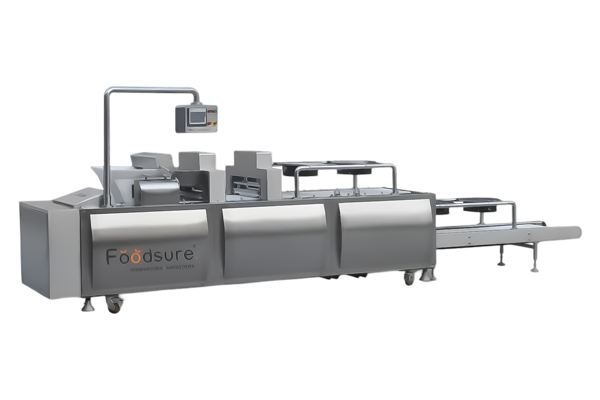

Saudi Arabia’s food market presents an interesting opportunity for Middle Eastern food entrepreneurs. The Kingdom remains heavily dependent on imported food, while Vision 2030 is encouraging stronger domestic food production, food processing, supply-chain resilience and private-sector participation. A recent New Zealand government trade report notes that Saudi Arabia imports around 80% of its food and that the country’s agriculture ministry is working toward greater localization of the food industry by 2030.
At the same time, demand for convenient, protein-rich and functional snacks is expanding. The Saudi Arabia protein bar market was valued at USD 34 million in 2025 and is projected to reach USD 52.9 million by 2034, representing a CAGR of 4.79% during the forecast period, according to IMARC Group.
For Indian manufacturers, this creates an opportunity to combine the country’s established food-processing and export capabilities with growing demand for protein snacks in Saudi Arabia and the wider Gulf region. These Protein Snack Manufacturing Opportunities are particularly relevant for businesses looking to develop higher-value packaged food products for export markets.
What Is Saudi Vision 2030 and Why Does It Matter for Food Machinery Manufacturers?
Vision 2030 is Saudi Arabia’s long-term economic transformation programme, with food security and domestic production forming an important part of its broader diversification strategy.
Saudi Arabia imports approximately 80% of its food requirements, largely because of its climate, limited agricultural resources and water constraints.
This dependence has encouraged the Kingdom to strengthen local food production, processing infrastructure, supply-chain resilience and strategic sourcing.
The Jeddah Food Cluster is one example of this approach. Launched under the National Industrial Development and Logistics Program, the cluster covers more than 11 million square metres and is designed to support food processing machine manufacturing, supply chains, food security and self-sufficiency.
The significance for a protein snack machine manufacturer is straightforward. Saudi Arabia is not simply looking for more imported finished food products. Its wider industrial strategy is also creating opportunities around food processing machine manufacturing, processing, packaging, technology and supply-chain development.
That creates room for foreign entrepreneurs who can supply products that fit changing consumer preferences while maintaining the quality and compliance standards expected in the Saudi market.
For businesses assessing Protein Snack Manufacturing Opportunities, this broader industrial environment is important because the opportunity extends beyond the finished product to machinery, processing technology, packaging and supporting supply chains.
Why Protein and Functional Snacks Fit the Saudi Market
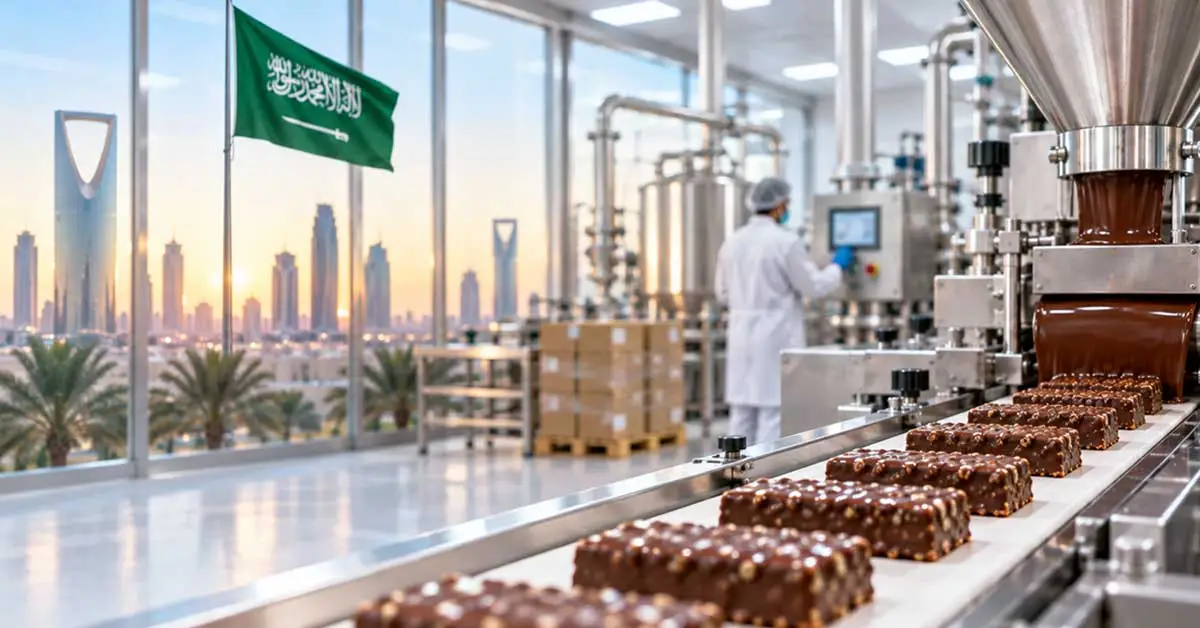
The opportunity becomes more interesting when food processing machine manufacturing is viewed alongside Saudi Arabia’s public-health priorities.
Saudi Arabia’s General Authority for Statistics reported an obesity prevalence of 23.1% among people aged 15 and above in its 2024 Health Determinants Statistics. Childhood obesity among children aged 2 to 14 was reported at 14.6%.
The authority’s 2024 Health Status Statistics also reported that 18.95% of adults had at least one chronic disease. Diabetes was reported among 9.1% of adults, followed by hypertension at 7.9%, cholesterol at 3.6% and cardiovascular disease at 1.5%.
These figures do not mean that protein snacks are a medical solution. They do, however, help explain why products positioned around balanced nutrition, controlled portions, protein, fibre and reduced sugar can find relevance within a market where health and nutrition are receiving increasing attention.
The commercial market is already responding.
According to IMARC Group, the Saudi functional snack bars market reached USD 272.2 million in 2025 and is projected to reach USD 392.2 million by 2034, growing at a CAGR of 4.14%. Protein bars accounted for 33% of the functional snack bar market in 2025.
IMARC’s Saudi protein bar research separately estimates the protein bar market at USD 34 million in 2025, with the market expected to reach USD 52.9 million by 2034 at a CAGR of 4.79%.
The difference between these estimates is important. Functional snack bars and protein bars are not identical market categories, so market research firms can produce different values depending on their definitions and methodology. Rather than treating one number as definitive, manufacturers should look at the direction of demand across the category.
The direction is clear: protein-rich, convenient and functional snack formats are becoming increasingly relevant to Saudi consumers.
Relevance for Indian Exporters
Indian businesses do not necessarily need to establish a Saudi manufacturing facility to participate in the country’s growing food and snack market. Exporting from India can be a practical starting point, particularly for manufacturers that already have food-processing capabilities, export experience and the required quality systems.
India already has an established commercial relationship with Saudi Arabia across several sectors, including food and agricultural products. According to the Embassy of India in Riyadh, bilateral trade reached US$41.88 billion in FY 2024–25, with Indian exports to Saudi Arabia valued at approximately US$11.76 billion. Food products and rice are among the major commodities exported from India to the Kingdom.
The existing trade network is particularly relevant for food processing machine manufacturers. APEDA identifies Saudi Arabia as a major destination for Indian cereals, accounting for 9.1% of India’s cereal exports in 2025–26. Saudi Arabia is also one of the leading destinations for Indian Basmati rice, accounting for 16.6% of India’s Basmati rice exports during the same period.
This demonstrates that Indian food businesses already have established routes into the Saudi market. For a protein snack machine manufacturer, the opportunity is not limited to exporting traditional agricultural commodities. Indian high protein snack machine manufacturers can move further up the value chain by developing packaged products such as protein bars, high-protein snacks, fortified cereal products, roasted snacks and plant-based protein products designed for Saudi consumer preferences.
India also has institutional support for agricultural and processed-food exports through organisations such as APEDA, which works across product categories including cereals, processed foods, fruits and vegetables, organic products and other agricultural commodities. India’s processed-food export base provides an existing foundation for manufacturers looking to develop higher-value packaged food products for international markets.
For exporters, however, having an established Indian supply chain does not remove the need to meet Saudi import requirements. For example, APEDA states that rice exports to Saudi Arabia must come from establishments meeting specified food-safety requirements, including ISO 22000 and/or HACCP, while exporters must also comply with Saudi Food and Drug Authority requirements. APEDA and the Saudi Food and Drug Authority also maintain lists of Indian establishments approved for rice exports to Saudi Arabia.
This existing trade infrastructure gives Indian entrepreneurs a useful starting point. A protein snack machine manufacturer can build on India’s strong supply of cereals, millets, pulses, nuts, seeds, spices and plant-based protein ingredients, while developing formulations, packaging and nutritional profiles suited to Saudi consumers.
The more practical approach for many Indian businesses is therefore to validate the Saudi market through exports first, establish distributor or retail relationships, understand product demand and regulatory requirements, and consider local manufacturing or a Saudi production partnership only when sales volumes justify the investment.
The Protein Snack Market in Saudi Arabia
The Saudi protein snack opportunity should not be viewed only through the size of the protein bar market.
The wider functional snack category includes protein bars, energy bars, meal replacement products, fibre-rich formats and other convenient nutrition products.
IMARC estimates that protein bars represented the largest product segment within Saudi Arabia’s functional snack bars market in 2025, accounting for 33% of the category. The same research identifies rising health consciousness, fitness participation, convenient nutrition and modern retail expansion as important market drivers.
The Saudi protein bar market is also expanding through supermarkets, hypermarkets, convenience stores and online channels. IMARC identifies all of these as important distribution channels for protein bars in Saudi Arabia.
This matters for manufacturers because the market does not depend on a single route to consumers.
A product can be developed for:
- Supermarkets and hypermarkets
- Fitness and sports nutrition stores
- Convenience retail
- Pharmacies
- E-commerce
- Direct-to-consumer sales
- Corporate and institutional channels
- Specialist health-food retailers
That gives Indian manufacturers more flexibility when developing an initial market-entry strategy.
The range of formats also expands the Protein Snack Manufacturing Opportunities available to manufacturers that can design flexible production systems around different formulations and product categories.
Import Dependence Creates a Manufacturing Opportunity
Saudi Arabia’s food system remains significantly dependent on international supply chains. Around 80% of food requirements are imported, according to multiple recent market and government-trade sources.
However, import dependence should not automatically be interpreted as a guarantee of market opportunity.
A manufacturer still needs a product that can compete on flavour, price, quality, shelf life, packaging, regulatory compliance and distribution.
The more relevant opportunity is therefore the combination of import dependence with growing demand for functional snack formats and a government strategy focused on strengthening food security and domestic processing.
For Indian high protein snack machine manufacturers, this creates two possible models.
The first is to manufacture in India and export finished products to Saudi Arabia through an appropriate Saudi importer or distributor.
The second is to eventually establish a manufacturing or partnership operation closer to the Saudi market once demand justifies local production.
The first model generally allows an entrepreneur to validate the product and distribution strategy before committing to a larger regional manufacturing footprint
Localised Formulation Can Matter More Than Imported Recipes
Protein snack machine manufacturers entering Saudi Arabia should avoid assuming that an existing formulation will automatically perform well in the market.
Flavour preferences, sweetness levels, texture, ingredient familiarity, portion format and nutritional positioning can all influence acceptance.
Saudi Arabia’s functional snack bar market already shows strong demand for products built around convenient nutrition. IMARC identifies nuts and seeds as the leading ingredient category within the functional snack bar market, reflecting consumer familiarity with nutrient-dense ingredients and their use in health-oriented snack formats.
For an Indian manufacturer, this creates an opportunity to develop a distinctive formulation rather than competing purely on price.
For example, coconut, sesame, cashew, dates, seeds and selected plant proteins can be incorporated into formulations that feel regionally relevant while still delivering a modern protein-snack proposition.
Rising Health-Conscious Consumption in the GCC
Saudi Arabia should also be viewed within the broader Gulf market.
Health and nutrition concerns are not isolated to one country. Across the GCC, governments are increasingly addressing obesity, nutrition, physical activity and chronic disease through public-health programmes.
For Saudi Arabia specifically, the 2024 health statistics provide a strong indication of the nutritional challenges facing the population. GASTAT reported adult obesity at 23.1%, childhood obesity at 14.6% and adult diabetes at 9.1%.
These conditions create a market environment in which consumers, retailers and policymakers have increasing interest in products that can fit into healthier eating patterns.
For manufacturers, however, this distinction matters:
A protein snack should not make medical or disease-prevention claims simply because it contains protein or has a reduced-sugar formulation.
Instead, product positioning should be based on its actual nutritional composition and claims permitted under the applicable Saudi and GCC regulations.
Saudi Arabia’s Regulatory Environment
Entering Saudi Arabia requires more than manufacturing a good machine.
Food businesses must understand the requirements of the Saudi Food and Drug Authority, commonly known as SFDA, along with applicable GCC technical regulations and Saudi import procedures.
The SFDA confirms that its food-import control system covers registration of foreign establishments exporting food to Saudi Arabia, registration of imported food products, registration of local importers and inspection of imported food.
SFDA’s current food-clearance requirements also state that the importer must register its establishment and the food products it intends to import through the Ghad platform before importing food into the Kingdom.
The SFDA’s Food Products Registration Guide also clarifies that food-product registration is not itself a licence or certificate.
For an Indian manufacturer, this means regulatory planning should begin before finalising the formulation, packaging and export strategy.
Indian Food Safety and Export Certification
For Indian manufacturers planning to export protein snacks to Saudi Arabia, the food-safety system should begin with compliance at the Indian manufacturing facility and then be aligned with Saudi import requirements.
Depending on the product, buyer and export strategy, this may include:
- FSSAI licence and applicable food-safety requirements
- Good Manufacturing Practices and hygienic production controls
- HACCP-based food-safety controls
- ISO 22000
- FSSC 22000
- Product testing and Certificate of Analysis, where required
- Shelf-life and stability validation
- Microbiological testing
- Nutritional analysis
- Allergen management
- Ingredient and supplier approval systems
- Traceability and recall procedures
- Food defence and food-fraud controls
- Export documentation and product-specific compliance
FSSAI licensing and registration is mandatory for food businesses operating in India, with the applicable requirements depending on the nature and scale of the food business. FSSAI also recognises and notifies NABL-accredited food laboratories for food testing and analysis.
For exports to Saudi Arabia, Indian manufacturers must also account for the requirements of the Saudi Food and Drug Authority (SFDA). Saudi regulations require imported food to comply with applicable Saudi food regulations and standards, while the exporting establishment and imported food are subject to registration and documentation requirements.
The exact certification pathway should therefore be determined according to the product category, manufacturing process, Saudi regulatory requirements, target retailer or distributor and buyer expectations. An exporter should not assume that obtaining every available certification is necessary.
For manufacturers targeting international retail chains or large food buyers, FSSC 22000 or another buyer-accepted GFSI-recognised scheme can strengthen the company’s food-safety credentials. However, the commercial value of such certification depends on the requirements of the specific customer and market.
Before shipping a protein snack to Saudi Arabia, Indian exporters should also verify the applicable product classification, labelling, documentation, testing and clearance requirements with the Saudi importer and SFDA. SFDA states that food products under its supervision are subject to applicable regulatory and import-control requirements.
Halal Compliance for Saudi Arabia
Halal compliance is another important consideration for a protein snack machine manufacturer targeting Saudi Arabia.
Protein products can contain ingredients that require careful halal assessment, including certain protein sources, flavouring systems, emulsifiers, processing aids, coatings and other functional ingredients.
Manufacturers should therefore review every ingredient and processing stage rather than treating halal certification as a final packaging exercise.
A recognised certification body should be selected according to the requirements of the destination market and importing customer.
The ingredient documentation should also be maintained carefully so that formulation changes do not create an unexpected compliance issue after certification.
Food Labelling and Product Documentation
Saudi-bound protein snacks must also be developed with the final label in mind.
The formulation team, regulatory team and packaging designer should work together from the beginning.
Important areas include:
- Product name
- Ingredient declaration
- Nutrition information
- Allergen declaration
- Country of origin
- Manufacturer details
- Importer details where required
- Batch identification
- Production and expiry information
- Storage instructions
- Permitted nutrition claims
- Permitted health-related claims
- Arabic labelling requirements
- Barcode and product identification
The SFDA specifically requires food products and importers to be registered through its electronic systems, making consistency between product documentation, establishment details and packaging particularly important
Protein Snack Manufacturing Machinery Needed for the Saudi Market

Once the product has been validated, the next question is manufacturing.
A protein snack production line normally combines several stages rather than relying on a single machine.
A typical production setup can include:
- Ingredient preparation
- Mixing
- Protein dough processing
- Forming or extrusion
- Slab forming where applicable
- Cutting
- Cooling or setting
- Coating where required
- Individual wrapping
- Secondary packaging
- Quality inspection
The correct configuration depends heavily on the recipe.
A soft date-based protein bar, a high-protein extruded bar and a coated energy bar may require different processing approaches.
This is why machinery selection should follow formulation development rather than the other way around.
For entrepreneurs moving from market validation to a dedicated Protein Snack Manufacturing Plant, the equipment configuration should be developed around the actual product, production capacity, packaging format and future expansion requirements.
Protein Bar and Energy Bar Production Lines
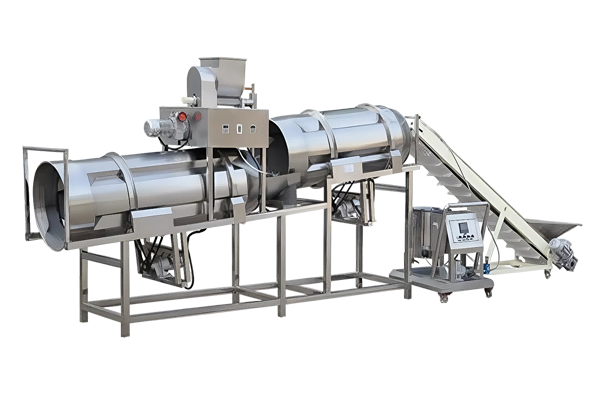
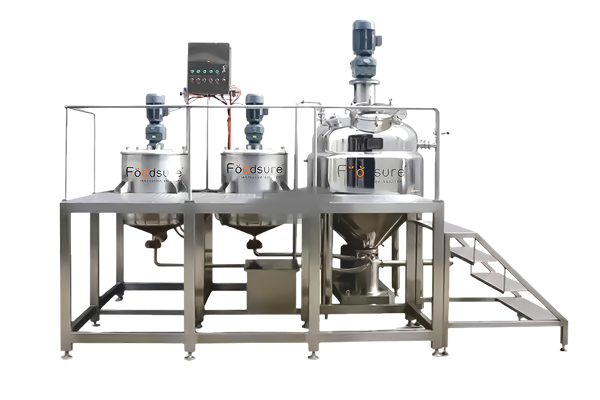
A protein bar line can be built around a mixer, forming or extrusion system, cutting equipment and packaging equipment.
For products containing high levels of protein powder, the forming system needs to handle the formulation’s viscosity, texture and ingredient distribution consistently.
The objective is not simply to produce more bars.
It is to maintain:
- Consistent bar weight
- Uniform dimensions
- Even ingredient distribution
- Repeatable texture
- Reliable cutting
- Stable packaging
- Consistent batch quality
Packaging is particularly important for products intended for export because the wrapper is part of the product’s shelf-life system.
The packaging format should therefore be validated alongside the formulation and shelf-life study.
Makhana and Other Functional Snack Opportunities
Protein bars are not the only opportunity.
Functional snack manufacturing machine can also include products such as roasted makhana, protein makhana, seed snacks, high-protein puffs and other better-for-you snack formats.
Makhana is particularly interesting because it can be positioned around plant-based, gluten-free and snackable nutrition concepts.
For a Middle Eastern entrepreneur, however, the commercial decision should be based on the target market and sourcing strategy.
Makhana is primarily associated with Indian supply chains, so an Indian manufacturer considering a makhana machine should assess sourcing, landed ingredient costs, formulation suitability and customer demand before adding the category.
Other formats can also be explored depending on consumer positioning. For example, Protein Popcorn Manufacturing can offer another route into portion-controlled and protein-positioned snack categories, provided the formulation, processing method and nutritional claims are appropriate for the intended market.
The broader lesson is more important: a food-processing facility does not necessarily need to depend on one product category.
A carefully designed factory can potentially support several related snack formats, allowing fixed manufacturing resources to serve multiple products.
Capacity Planning Without Overinvesting
Capacity planning should be linked to confirmed demand rather than an optimistic sales forecast.
A new manufacturer does not necessarily need a large industrial production line at the beginning.
A more practical approach is staged expansion:
Expand automation and production infrastructure as confirmed GCC demand develops.This approach reduces the risk of investing heavily in machinery before the product has achieved market acceptance.At the same time, the factory should be designed with future expansion in mind. Utilities, floor layout, hygiene zoning, storage, material movement and packaging areas should allow the business to add equipment later without redesigning the entire facility.
Investment and ROI Considerations
The earlier version of this article included specific machinery prices, production capacities and margin estimates.
Those figures have deliberately been removed here because machinery pricing varies significantly according to formulation, automation, line configuration, supplier, packaging format and installation requirements.
The same applies to profitability.
A protein snack factory’s financial performance depends on:
- Protein ingredient cost
- Sweetener and binder cost
- Nuts and seeds
- Packaging materials
- Labour
- Utilities
- Production efficiency
- Product yield
- Distributor margin
- Retail margin
- Freight
- Import duties and taxes
- Marketing expenditure
- Trade promotions
- Shelf-life losses
- Returns and wastage
For an export business, the better method is to build the financial model backward from the expected Saudi retail price.
Start with the target consumer price.
Then estimate the retailer’s expected margin, distributor requirements, logistics, import-related expenses and trade spending.Only after those deductions should the manufacturer determine the maximum sustainable factory-gate price.This provides a much more realistic picture of export profitability than using a generic industry margin.
Step-by-Step: How an Indian Manufacturer Can Enter the Saudi Market
Before entering Saudi Arabia, an Indian manufacturer should assess whether the product, pricing, packaging, and positioning fit local demand. Market validation helps identify the right customer segment, understand competing products, estimate realistic sales potential, and avoid investing in production or distribution before confirming that the opportunity is commercially viable.
1. Validate the Product
Start with the consumer, not the machine.
Before investing in a production line, Indian manufacturers should research:
- Target consumer
- Protein level
- Product format
- Flavour profile
- Sweetness
- Texture
- Portion size
- Packaging format
- Retail positioning
- Competitive products
- Permitted nutritional and health claims
The Saudi Arabia functional snack bars market was valued at approximately USD 272.2 million in 2025, according to IMARC, with protein bars accounting for 33% of the market by product type. IMARC also estimates the Saudi protein bar market separately at USD 34.0 million in 2025.
This suggests that Indian manufacturers are entering an existing category rather than creating a completely new one. The more important question is what the product can offer that existing brands do not, whether that is a different protein source, lower sugar, a particular flavour profile, a cleaner ingredient list, a competitive price point or a format suited to local consumption habits.
2. Develop and Test the Formulation
Work with food technologists to finalise the formulation before committing to a large-scale production setup.
Testing should cover:
- Protein incorporation
- Texture
- Water activity
- Moisture
- Flavour
- Sweetness
- Binding
- Processing stability
- Nutritional composition
- Microbiological safety
- Packaging compatibility
- Shelf life
A formulation that performs well in a laboratory sample may behave differently during continuous production. Ingredients can respond differently to mixing, forming, extrusion, cutting, cooling and packaging at commercial scale.
Pilot-scale validation is therefore important before finalising the industrial production process.
3. Design the Manufacturing Setup
Once the recipe is stable, determine the appropriate machinery configuration.
The production line should be designed around the formulation, product format and expected demand rather than selecting equipment first and adapting the recipe later.
Key considerations include:
- Mixer type
- Forming or extrusion system
- Cutting mechanism
- Cooling requirements
- Coating requirements
- Packaging format
- Quality-control points
- Cleaning requirements
- Hygiene zoning
- Production capacity
- Future expansion
For an Indian manufacturer, this can also make the export model more efficient because the same production facility can potentially serve the domestic market and overseas orders.
The manufacturing setup should therefore account for both the technical requirements of the product and the documentation, traceability and quality systems expected by export buyers.
4. Build the Compliance System
The compliance pathway should be planned before commercial production.
For an Indian manufacturer, this may involve:
- FSSAI licensing and applicable food-safety requirements
- GMP
- HACCP
- ISO 22000
- FSSC 22000, where commercially required
- Halal certification, where applicable
- Product testing
- Nutritional analysis
- Shelf-life validation
- Label review
- Saudi product and importer requirements
- Certificate of origin
- Commercial invoice and shipping documentation
The Saudi Food and Drug Authority states that food importers must have an SFDA account and register their food items, while imported food must comply with the regulations, technical requirements and standards applicable in Saudi Arabia. The authority also lists documents such as certificates of origin and, where applicable, halal certificates among import requirements.
The exact requirements should be checked for the specific product before shipment because protein bars, fortified foods, foods for special dietary use and products containing particular ingredients can have additional requirements.
5. Find the Right Saudi Distribution Partner
The distributor can determine whether a good product becomes a viable export business.
Indian manufacturers should look for Saudi partners already working with:
- Health foods
- Sports nutrition
- Functional foods
- Supermarkets and hypermarkets
- Pharmacies
- Fitness channels
- E-commerce
- Premium packaged foods
Do not treat every trading company as a suitable distributor.
Check its commercial registration, food-related business activity, existing brand portfolio, retail relationships, geographic coverage, import capabilities and experience with SFDA requirements.
India’s existing commercial relationship with Saudi Arabia can provide a useful foundation for this approach. The Embassy of India in Riyadh reports that bilateral trade reached US$41.88 billion in FY 2024–25, with Indian exports to Saudi Arabia worth approximately US$11.76 billion. Major Indian exports include rice and other food products alongside engineering goods, chemicals, textiles and other commodities.
Trade exhibitions and industry events can also help Indian manufacturers identify distributors, retailers and potential commercial partners before entering into long-term agreements.
6. Build the Export Logistics System
Decide the appropriate Incoterm with the Saudi buyer and define responsibilities clearly.
Common options include:
- FOB: The exporter handles the shipment up to the agreed loading point, with the buyer taking responsibility for the main carriage and subsequent costs.
- CIF: The exporter arranges the main freight and insurance up to the named destination port.
- DDP: The seller takes on substantially more responsibility, including import-related obligations and delivery to the agreed destination.
The right Incoterm depends on the buyer’s capabilities, shipment structure, freight costs, insurance, customs responsibilities and the exporter’s experience. It should be agreed with the buyer and confirmed with the freight forwarder and trade-finance team.
For food products, logistics planning should also account for shelf life, storage conditions, packaging integrity and the time required for customs and import clearance.
Why Indian Manufacturers Should Consider the Saudi Opportunity
The opportunity for Indian protein snack machine manufacturers is not based on one market statistic. It comes from several factors working together.
Saudi Arabia has a substantial existing food market and remains an important trading partner for India. In FY 2024–25, bilateral trade reached US$41.88 billion, while Indian exports to Saudi Arabia reached approximately US$11.76 billion. The Embassy of India identifies food products and rice among India’s major exports to the Kingdom.
At the category level, Saudi Arabia’s functional snack bars market was valued at US$272.2 million in 2025, with protein bars representing 33% of the market. IMARC also reports that the Saudi protein bar market itself reached US$34.0 million in 2025 and projects continued growth through 2034.
The wider healthy-snacking market provides another indication of demand. IMARC estimates Saudi Arabia’s on-the-go healthy snacks market at US$1.06 billion in 2025, driven by factors including health awareness, fitness trends and demand for functional, low-sugar and protein-rich products.
For Indian manufacturers, this creates an opportunity to move beyond commodity exports and develop higher-value packaged food products for the Saudi market. India’s established food-processing and agricultural supply base can support products using cereals, pulses, nuts, seeds, plant proteins and other locally available ingredients.
However, the opportunity should not be interpreted as a guarantee of market success. Saudi Arabia already has domestic and international protein-snack brands, and manufacturers need to compete on product quality, taste, price, formulation, packaging, regulatory compliance and distribution.
The strongest business case is therefore not simply to manufacture a protein bar and ship it to Saudi Arabia.
It is to develop a product specifically for the target market, validate the formulation, establish the appropriate food-safety and regulatory system, design the right manufacturing setup, secure a capable Saudi distribution partner and build the export logistics before scaling production.
FAQs
Is Saudi Arabia a good export market for Indian protein snack machine manufacturers?
Saudi Arabia is an interesting market for Indian protein snack machine manufacturers because the Kingdom remains heavily dependent on imported food while its functional snack and protein bar categories continue to develop. Indian exports to Saudi Arabia also increased in 2025.
How large is the Saudi Arabia protein bar market?
IMARC estimates the Saudi Arabia protein bar market at USD 34 million in 2025 and projects it to reach USD 52.9 million by 2034, representing a CAGR of 4.79%.
How large is the Saudi functional snack bar market?
IMARC estimates that the Saudi functional snack bars market reached USD 272.2 million in 2025 and is projected to reach USD 392.2 million by 2034, growing at a CAGR of 4.14%. Protein bars represented 33% of the category in 2025.
What health trends are supporting demand for healthier snacks in Saudi Arabia?
Saudi Arabia’s 2024 health statistics reported adult obesity at 23.1%, childhood obesity at 14.6% and adult diabetes at 9.1%. These figures help explain the increasing attention around healthier eating, although protein snacks should not be marketed as medical solutions.
Does an Indian company need to manufacture in Saudi Arabia?
No. An Indian business can explore exporting finished protein snacks to Saudi Arabia through an appropriate importer and distribution structure. Local manufacturing can be considered later if demand, distribution and commercial volumes justify establishing a Saudi production operation.
What certifications are required to export protein snacks to Saudi Arabia?
The exact requirements depend on the product and its ingredients, but manufacturers should prepare for food-safety systems, product testing, halal considerations, compliant labelling and SFDA registration requirements. SFDA’s food-import system covers foreign establishment and food-product registration as part of the Saudi import-control process.
What machinery is required for protein snack machine manufacturing?
A typical protein snack production setup may include ingredient preparation, mixing, forming or extrusion, cutting, cooling, coating where required and individual packaging. The exact machinery configuration should be selected after the formulation and target production requirements are established.
Have a Question? Let’s Connect
Need expert guidance on food processing machines, production setup, or process optimization? Our team is ready to help you choose the right solution for your business.
Conclusion
Saudi Arabia’s protein snack opportunity is worth examining from a manufacturing perspective because several market forces are moving in the same direction.The Kingdom remains heavily reliant on imported food while Vision 2030 continues to support food security, domestic processing and industrial development.
At the consumer level, the functional snack bar category is expanding, with protein bars representing the leading product segment in IMARC’s latest Saudi market assessment.At the same time, India already has an established food-export relationship with Saudi Arabia, and government-backed trade initiatives are actively supporting stronger commercial connections between the two countries.For an Indian entrepreneur,
The opportunity is therefore not simply about exporting another snack.It is about developing a product specifically for the Saudi market, building the right formulation and food-safety system, selecting machinery around actual processing requirements and creating a distribution strategy capable of supporting long-term GCC expansion.If you are evaluating a protein snack machine manufacturing plant for the Saudi or wider GCC market, Foodsure Machines can support the process from machinery selection and production-line planning to plant-layout considerations and scalable manufacturing solutions.