The increasing popularity of soy-based protein foods in Nepal presents an opportunity for businesses involved in the production of Soya Badi and TVP. Food companies will be in need of efficient machinery that will allow for smooth production and growth in the future.
A good way for Nepali food manufacturers to get their hands on quality machinery would be to buy from India due to geographic proximity, experience in food processing, and diversity of production volumes. Knowing all about Soya Badi Machine Export to Nepal can provide important knowledge on machinery purchase, delivery, and installation.
This guide explains the major factors Nepalese buyers should consider when purchasing machinery from India and selecting an experienced Indian Soya Badi Machine Exporter.
Why Nepalese Companies Import Soya Badi Machines from India
India is already a major player in the field of food processing machinery and is able to offer machinery for various levels of soya production. In addition to this, the geographical closeness between the two countries may allow easier communication, transportation, installation, and technical services.
If you are planning to produce commercial quantities of soya badi, Indian machinery can offer you:
- Various production capacities
- Food-grade construction of the machines
- Customizable configuration
- Complete processing solution
- Technical and installation services
All of these factors make India a potential source of your Soya Badi Machine Exporter to Nepal.
Factors Driving Soya Badi Production in Nepal
Soya badi is generally known as an inexpensive and flexible form of plant-based protein. Its application in home cooking, catering, and packaged foods provides scope for local production by manufacturers.
Demand for Affordable Protein
Soya badi can be used as an economical source of protein. This gives scope for manufacturers serving price-sensitive markets.
Growth of Packaged Foods
Packaged and ready-to-cook food products are generating new scopes for manufacturers in the food industry. Local manufacturing of soya badi can help manufacturers cater to these markets better.
Potential for Local Manufacturing
Manufacturing soya badi locally can help businesses create their own brands and marketing channels without relying completely on imported products.
Understanding the Soya Badi Machine
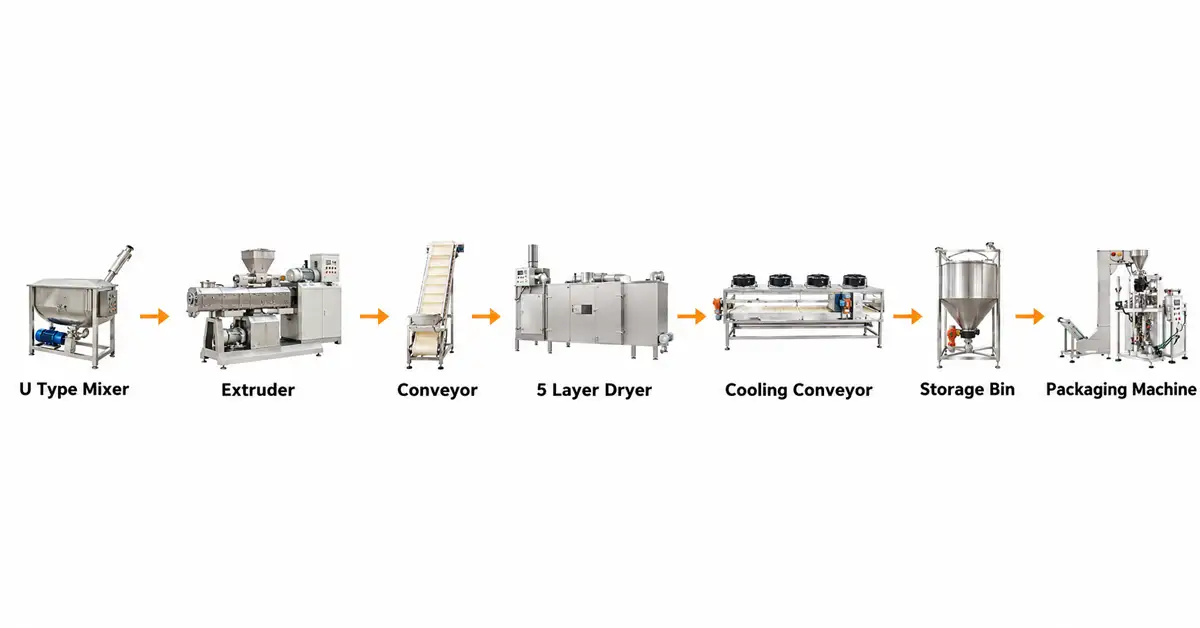
A commercial soya badi production machine can be a part of a broader process setup. Depending upon the production capacity, specifications of products, plant layout, and degree of automation involved in production, the system can be designed.
Typical processes included in a production line can be as follows:
- Preparation of raw materials
- Mixing
- Extruding
- Cutting
- Drying
- Cooling
- Packaging
Among the processes described above, the extruding process becomes very critical since it decides the characteristics of the final product.
Soya Badi Machine Capacity Options
Capacity should be selected according to current production requirements and expected future demand. Common commercial capacities can include:
| Capacity | Suitable For |
|---|---|
| 200 kg/hour | Small commercial manufacturers |
| 300 kg/hour | Growing businesses |
| 500 kg/hour | Medium to large production |
| 1000 kg/hour | Large commercial manufacturers |
A Nepalese buyer should avoid selecting machinery solely based on purchase price. Production demand, available factory space, utilities, labour requirements, and future expansion should also be considered.
What to Look for in an Indian Soya Badi Machine Exporter
The selection of a good exporter is equally crucial as the selection of the machine. An ideal Indian Soya Badi Machine Exporter must be able to comprehend the needs of the producer.
Machine Manufacturing Experience
The buyer needs to look into the manufacturer’s experience of producing machines using extrusion technology in food processing.
Customized Machine Configuration
Different manufacturers will have different capacities, sizes, cutting systems, drying systems, etc., which require different setups from the machine.
Installation and Commissioning Support
Exporting the machine requires more than just delivery. Installation, commissioning, training, etc., may help the Nepalese buyer to begin production easily.
Spare Parts and After-Sales Service
Availability of spares and after-sales support may help in reducing downtime.
Soya Badi Machine Export to Nepal: Basic Process
The export process should be planned carefully from machinery selection through installation at the buyer’s facility.
A structured process helps buyers understand each stage of the Soya Badi Machine Export to Nepal and prepare the required factory infrastructure in advance.
Role of a Soya Badi Machine Supplier in Nepal
A localized or export-oriented Soya Badi Machine Supplier in Nepal may assist customers in organizing their machinery needs, installation, technical assistance, and production scheduling.
For organizations interested in constructing a larger Soy Processing Plant in Nepal, it is always helpful to analyze overall processing needs rather than just buying a single piece of machinery. This way, better coordination can be achieved during the process of mixing, extrusion, drying, cooling, and packaging.
An insight into the TVP Manufacturing Process in Nepal will also allow buyers to decide which machines would suit them best.
Machinery Required for Soya Badi Production in Nepal
An ideal soya badi manufacturing plant will involve several processing stages as opposed to using one machine for everything. The selection of machinery depends on the intended product form, output, degree of automation, and factory facilities.
Mixing System
The mixing system is responsible for ensuring uniform mixing of ingredients prior to extrusion. The right mixing ensures proper distribution of ingredients and efficient extrusion process.
Extrusion System
The extruder is the primary piece of equipment used in the manufacturing of soya badi. The extruder subjects the material to extrusion process under controlled condition.
Cutting System
The extruded product should be cut to desired dimensions and sizes. Proper cutting system will ensure uniform dimension of products during manufacture.
Drying and Cooling System
Proper drying ensures that the moisture content is reduced to the required level while cooling the final product ensures stability before quality testing and packaging.
Packaging System
The packaging equipment protects the final soya badi from moisture contamination and improves the efficiency of packaging process. Different packaging systems could be chosen depending on pack size and material among others.
Important Factors Before Importing Soya Badi Machinery from India
Before finalising a Soya Badi Machine Export to Nepal, buyers should evaluate the complete project rather than focusing only on the machine quotation.
Production Requirements
Find out the amount of production on daily and monthly basis before making any capacity decision. This will help to avoid under-capacity as well as avoid unnecessary investments.
Product Specifications
Size, shape, texture, and density of products may affect machinery setup. It is the responsibility of the buyer to explain the requirements of their product to the exporter.
Factory Infrastructure
Facilities like electricity, water supply, ventilation, storage facility, and many others should be arranged before setting up the machinery. Right facilities will make installation and commissioning easy.
Automation Level
There are options for semi-automatic as well as fully automatic systems depending upon the requirement of production.
Technical Support
Installation, operator training, spare parts, and after-sales assistance are important considerations when purchasing equipment internationally.
Cost Considerations for Soya Badi Machine Export to Nepal
The last investment does not only consider the cost of the machine alone. The buyers need to consider all costs related to buying and installation of the machine in Nepal.
Key cost considerations include:
- Capacity of the machine
- Automation of the machine
- Configuration of the machine
- Packaging for export
- Transport and freight
- Installation and commissioning
- Electrical and utility requirements
- Maintenance requirements
In the case of an Indian Soya Badi Machine Exporter, evaluating the total project cost gives a realistic view of the investment.
Benefits of Choosing an Indian Soya Badi Machine Exporter
The machinery made in India could present various practical benefits to the food manufacturers in Nepal if the buyers are interested in buying production equipment and having technical assistance.
Competitive Investment
Manufacturers in India have different types of machine designs and capacities, which enables buyers to choose machines depending on their production needs and investment plans.
Easier Transportation
The close proximity of India and Nepal compared to foreign countries may provide convenience in shipping machinery.
Customised Solutions
Exporters can tailor make production lines depending on the product specification, capacity, facility layout, and automation needs.
Technical Assistance
Installation, commissioning, operator training, and technical assistance will enable Nepalese producers to set up their production lines effectively.
Understanding the TVP Manufacturing Process in Nepal
Soya badi is one type of TVP, therefore, extrusion plays a vital role in manufacturing Soya badi. Knowledge of TVP manufacturing process in Nepal will assist manufacturers in selecting appropriate equipment suitable for their products.
Typically, the process involves preparation of raw materials, mixing, extrusion, cutting, drying, cooling, inspection, and packaging. Each of these steps must be appropriately planned to ensure consistent product quality.
Knowledge about processing stages of the plant will help businesses plan their factory setup and equipment accordingly if they want to establish a complete Soya processing plant in Nepal.
Quality and Hygiene Considerations
The food processing machinery must be designed in such a way that it ensures clean food production and easy maintenance. The parts that come into contact with food materials are made out of stainless steel which is strong enough and easy to clean.
Some other important factors are:
- Smooth surface of food contacting parts
- Easier cleaning process
- Drainage in case of requirement
- Prevention from contamination
- Equal processing conditions
- Maintenance and inspection
These factors will be helpful for the food producers of Nepal.
Installation and Commissioning in Nepal
Once the machinery has been delivered to Nepal, there must be proper installation and commissioning of the machinery before starting commercial production.
The placement of the machine needs to be done according to the factory design and connected to the necessary utilities. An experienced Soya Badi machine exporter to Nepal can assist in all the above processes.
Proper commissioning can also help in identifying any problems that may arise in the process of operations.
Choosing the Right Soya Badi Machine for Nepal
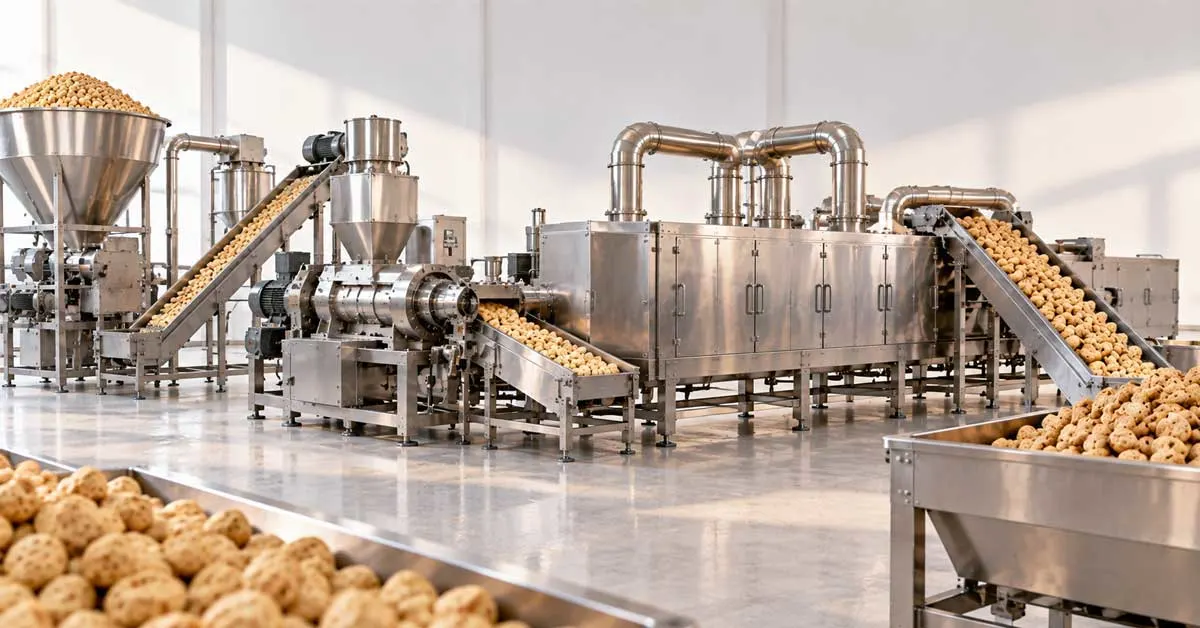
The correct equipment will depend on the producer’s objectives, target market, budgetary constraints, and expansion plans. The buyers should consider the capacity, design of the equipment, automation levels, flexibility, and technical assistance during their final decision-making process.
Small Commercial Manufacturers
The use of a 200 kg/hour equipment is ideal for new producers who serve local or regional markets. It allows for commercial level production while not being too bulky.
Growing Manufacturers
The 300 to 500 kg/hour machines will allow producers serving increased demand and established distribution channels to operate at higher capacities.
Large-Scale Manufacturers
The 1000 kg/hour equipment may be used by producers who have ambitions to reach large scale distributors, retail networks, foodservice, and other markets.
Common Mistakes to Avoid When Importing Soya Badi Machinery
When buying international machines, careful planning is a necessity. The ability to make good purchases depends on avoiding some common mistakes.
- Choosing Only by Price: An inexpensive machine may not have the necessary capabilities and longevity.
- Neglecting Future Needs: Buying a machine that only fits your current production needs can limit your future capacity.
- Overlooking Complete Costs: Shipping cost, installation cost, utilities, and commissioning are part of the total cost of the purchase.
- Not Checking Technical Support: You need spare parts and technical services when operating the machines.
- Poor Factory Planning: Your factory should be ready before you install the machines.
Expanding Into Soy Processing Opportunities in Nepal
Soaya badi manufacture can be a component of a bigger plant-based foods manufacturing approach. As companies gain market penetration, they can increasingly venture into a variety of soy-based foodstuffs.
A fully equipped Soy processing plant in Nepal will enable manufacturers to exploit further processing opportunities while ensuring better synchronization between various stages of production.
Likewise, knowledge about the TVP manufacturing process in Nepal will enable businesses to make more products than soya badi using other food industry demands.
Foodsure Machines for Nepalese Soya Badi Manufacturers
Foodsure Machines offer processing systems for those companies that intend to set up or increase their soya badi processing in Nepal. Machinery may be designed in accordance with production volume, production requirements, facility, automation, and future plans for expansion.
These services may comprise machinery design, production line design, factory layout, manufacture, installation and commissioning, training, technical support, and maintenance service.
For those companies seeking an Indian Soya Badi machine exporter, one may talk to Foodsure Machines to understand the configuration that would suit them.
Conclusion
The increasing requirement for economical protein from plants paves the way for soya badi producers in Nepal. The import of machinery from India will help in gaining access to varied capacity machines with customized setups along with technical expertise and processing solutions.
An effective Soya Badi machine export to Nepal business not only involves choosing the appropriate machine but also taking care of its transportation, factory facilities, installation, quality control, and production needs in the coming future. An expert Soya Badi Machine Exporter to Nepal is what any company needs in order to build up its production facility.
Have a Question? Let’s Connect
Need expert guidance on food processing machines, production setup, or process optimization? Our team is ready to help you choose the right solution for your business.
Frequently Asked Questions
Why are there soya badi machines imported from India in Nepal?
India provides various production capacities, customised machine setups, knowledge about food processing, and convenient transport due to proximity.
What capacities are available for soya badi machines?
Some of the capacities may include 200 kg/hour, 300 kg/hour, 500 kg/hour, and 1000 kg/hour according to the manufacturer’s needs.
What equipment do you need for the soya badi production line?
The equipment used includes systems like mixing, extruding, cutting, drying, cooling, inspection, and packing.
What should I consider when choosing the Indian exporter?
Capacity, setup, construction quality, customisation features, installation services, spare parts, and technical support after sales are some of the things buyers should consider.
Is it possible to expand the soya badi production line?
Yes. The manufacturers can use the equipment that can be expanded according to the needs of production and market demands.