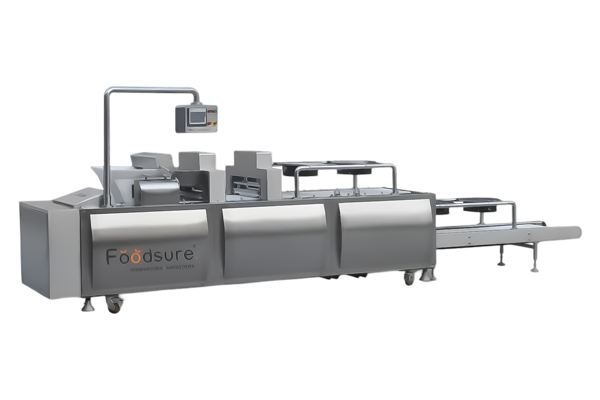
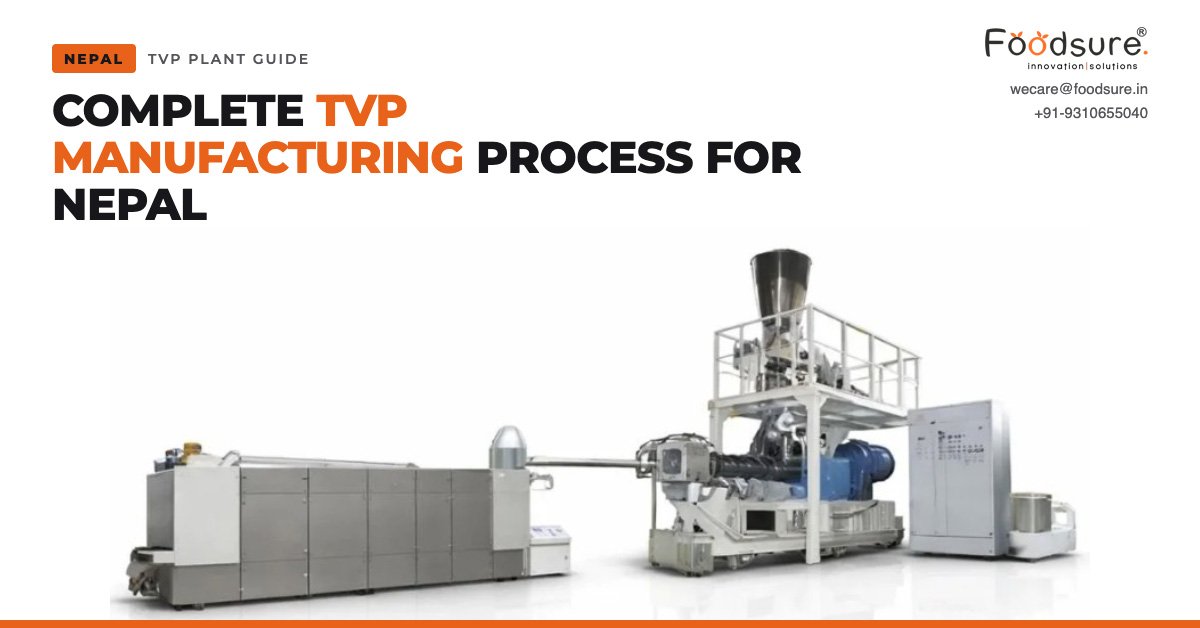
Starting a soya badi manufacturing business in Nepal requires more than purchasing an extruder. You need the right raw materials, a suitable soya badi machine, a drying system, grading equipment, conveyors and packaging machinery to produce consistent soya chunks for retail, wholesale and foodservice customers.
For new entrepreneurs, existing food manufacturers and FMCG brands, the first step is understanding how the complete production line works and how much capacity the business actually needs.
Foodsure Machines offers a commercial soya badi machine listed at ₹25,00,000, with a published throughput of 200 kg per hour, SS304 construction, PLC and HMI controls, and a standard 12-month warranty. The final machinery configuration and export quotation for Nepal should be confirmed with the manufacturer before investment.
This guide covers the complete soya badi manufacturing process in Nepal, machinery requirements, production capacity, indicative equipment costs, quality control, government licensing and practical considerations for starting a commercial plant.
What Is Soya Badi and How Is It Made?
Soya badi, also called soya chunks, soya nuggets or textured vegetable protein (TVP), is a plant-based protein food generally manufactured from defatted soy flour or other suitable soy protein ingredients.
The Food and Agriculture Organization (FAO) explains that extrusion texturization uses heat, pressure, mechanical shear and moisture to create a porous, chewy soy protein structure. When hydrated, the finished product develops a texture suitable for curries, gravies, fillings and other food applications.
The commercial manufacturing process generally follows these steps:
- Raw material inspection and preparation
- Grinding and sieving, where required
- Ingredient mixing
- Moisture conditioning
- Extrusion cooking
- Shaping and cutting
- Drying
- Cooling
- Grading and quality inspection
- Packaging and storage
The exact process depends on the formulation, machine design, product size and required final moisture.
For a commercial manufacturer, the objective is to achieve uniform shape, consistent texture, low breakage, suitable shelf stability and repeatable production quality.
Why Consider a Soya Badi Manufacturing Business in Nepal?
Soya badi production can serve several customer groups, including grocery wholesalers, supermarkets, food distributors, hotels, restaurants, institutional kitchens and private-label food brands.
The opportunity should be assessed using actual buyer demand rather than assumptions about market growth. Before investing, speak to distributors and retailers in your intended sales area, compare competing brands, check wholesale prices and estimate monthly orders.
A manufacturer can consider several product formats:
- Standard soya chunks for household cooking
- Small soya nuggets for curries and gravies
- Soya granules for fillings and prepared foods
- Bulk packs for hotels and institutional buyers
- Retail packs for supermarkets and grocery stores
- Private-label products manufactured for other brands
Different formats may require different dies, cutter settings, grading arrangements and packaging sizes. These requirements should be discussed before the production line is finalised.
Who Should Consider This Business?
A soya badi plant may suit:
- Entrepreneurs entering packaged food manufacturing
- Existing food processing companies adding a new product
- FMCG brands planning in-house production
- Wholesalers looking to develop their own brands
- Contract manufacturers supplying other businesses
- Established manufacturers planning to increase output
The right investment depends on confirmed sales potential, raw material availability, working capital and the production volume the business can realistically sell.
Raw Materials Required for Soya Badi Production
The main raw material for conventional soya badi is defatted soy flour. Soy protein concentrates and isolates can also be used for specific formulations, although they have different costs and functional properties.
Common ingredients include:
| Raw material | Purpose |
| Defatted soy flour | Main protein ingredient in conventional soya chunks |
| Soy protein concentrate | Used in selected higher-protein formulations |
| Soy protein isolate | Used when a more concentrated protein ingredient is required |
| Water | Adjusts feed moisture for extrusion |
| Approved additional ingredients | Used where the product formulation requires them |
The FAO’s technical guide on soybean protein products describes the use of defatted soy flour, concentrates and isolated soy protein in textured protein production.
What Should You Check Before Buying Raw Materials?
Check the supplier’s specifications for:
- Protein and moisture content
- Particle size
- Colour and odour
- Fat content
- Microbiological quality
- Food-grade suitability
- Batch-to-batch consistency
Ask suppliers for a specification sheet and relevant test reports. If the formulation is new, conduct production trials before committing to large raw material purchases.
Consistent ingredients help reduce variation in extrusion, product expansion, texture and finished-product appearance.
Step-by-Step Soya Badi Manufacturing Process
Step 1: Grinding and Sieving
If the incoming raw material does not have a suitable particle size, it is passed through a grinder or pulverizer. A vibro sifter can then remove oversized particles and unwanted material.
Uniform particle size helps the mixer distribute moisture more consistently and supports stable feeding into the extruder.
A separate grinder may not be necessary if the purchased soy flour already meets the required specification.
Step 2: Ingredient Mixing
The prepared soy flour and other approved ingredients are weighed and transferred to a mixer.
A U-type mixer or another suitable industrial mixer combines the ingredients before extrusion. The aim is to create a uniform mixture rather than relying on manual mixing, which can produce inconsistent batches at higher production volumes.
The required mixing time and formulation depend on the ingredients and equipment.
Step 3: Moisture Conditioning
Water is added according to the formulation and extrusion requirements. The material must have the correct moisture level before it enters the cooking zone.
The FAO’s technical reference describes a moisture level of approximately 20–25% for a particular defatted soy flour texturization process. This is a technical reference, not a universal setting for every machine or formulation.
The actual operating range should be established through trials with the intended raw material and extruder.
Operators should monitor feed moisture, feeding rate, temperature, extrusion pressure and finished-product expansion.
Step 4: Extrusion Cooking
Extrusion is the main stage of the soya badi manufacturing process.
The conditioned mixture enters the extruder, where rotating screws move, compress, heat and shear the material. Under controlled conditions, the soy proteins form a structured product that expands as it exits the die.
The resulting structure affects the product’s density, shape, texture and ability to absorb water during cooking.
Foodsure Machines offers a commercial soya badi manufacturing machine with a published 200 kg/hour throughput option. The appropriate model depends on the required production output, formulation, product dimensions and level of automation.
Step 5: Shaping and Cutting
The extruded material passes through a die that determines its basic shape. A cutting mechanism then produces pieces of the required size.
Depending on the equipment configuration, manufacturers can produce different chunk, nugget or granule formats.
Uniform cutting matters because inconsistent pieces may dry at different rates and create difficulties during grading, packing and cooking.
Before purchasing a machine, ask whether the required dies and cutter arrangements are included in the quotation.
Step 6: Drying
Freshly extruded soya badi contains more moisture than the finished dry product. It must therefore pass through a suitable drying system.
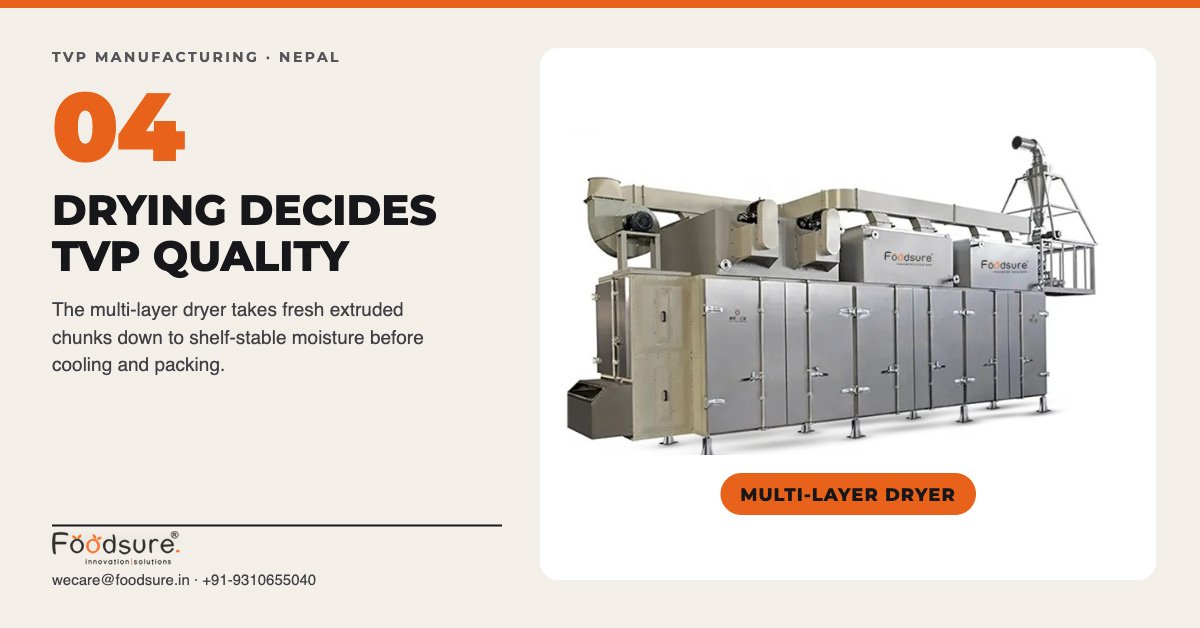
A multi-layer or continuous dryer removes moisture under controlled conditions. Drying time, temperature and airflow depend on product dimensions, feed moisture, loading and equipment design.
The target should be a verified final moisture level that meets the applicable product specification and supports the intended shelf life.
Insufficient drying can compromise storage stability, while excessive drying can increase energy consumption and product breakage.
Step 7: Cooling
After drying, the product should cool before packaging.
Packing hot product can create condensation when the temperature changes inside the sealed package. A cooling conveyor helps bring the product to a suitable packaging temperature.
For continuous production, the dryer and cooling system should be designed to handle the actual output of the extruder.
Step 8: Grading and Sieving
A grading machine or vibratory sieve separates the finished soya badi according to size and removes fines or broken pieces.
Grading helps manufacturers maintain consistent product sizes and supply different specifications to retail, wholesale and foodservice buyers.
The rejected fraction should be measured and reviewed. Excessive breakage can indicate problems with cutting, drying or product handling.
Step 9: Quality Inspection
Before packaging, the finished product should be checked against the manufacturer’s quality specifications.
Important checks include:
- Moisture content
- Protein content
- Colour and odour
- Product dimensions
- Bulk density
- Breakage and fines
- Hydration and cooking performance
- Relevant microbiological parameters
Periodic laboratory testing helps confirm that the product meets its specification. The product should also be checked after rehydration because acceptable dry appearance alone does not guarantee suitable cooking texture.
Step 10: Packaging
The final stage is weighing, filling and sealing the product in the selected packaging format.
Depending on the business model, packaging options may include small retail pouches, larger household packs, bulk bags or foodservice packs.
A packaging machine should be selected according to the required pack weight, material, sealing method, production speed and accuracy.
The sealed product should be labelled according to the applicable Nepalese requirements before it is released for sale.
Machinery Required for a Soya Badi Manufacturing Plant
A commercial plant requires a coordinated production line rather than an extruder alone.
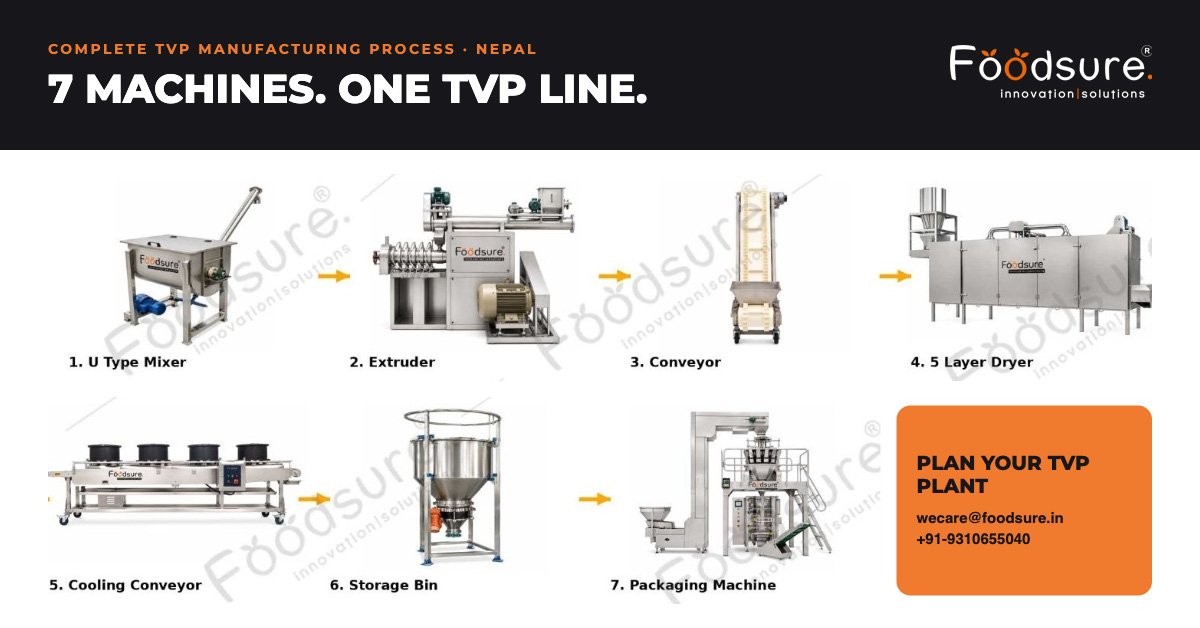
| Machine | Function |
| Raw material storage and feeding system | Holds and supplies ingredients |
| Grinder or pulverizer | Reduces particle size when needed |
| Vibro sifter | Removes oversized particles and separates material by size |
| U-type mixer | Blends soy flour and other ingredients |
| Screw conveyor or feeding conveyor | Moves material between processing stages |
| Soya badi extruder | Cooks and texturizes the soy mixture |
| Die and cutting system | Forms the required product shape and size |
| Multi-layer or continuous dryer | Reduces moisture after extrusion |
| Cooling conveyor | Cools the product before packing |
| Grading machine | Separates sizes and removes fines |
| Packaging machine | Weighs, fills and seals finished packs |
| Inspection equipment | Supports product and packaging quality checks |
1. Soya Badi Machine
The soya badi machine is the central equipment in the line. It transforms the prepared soy mixture into textured chunks or nuggets through extrusion.
When comparing machines, check actual output with your formulation, the available dies, control system, construction material, power requirement and installation support.
Foodsure Machines lists a 200 kg/hour model with SS304 construction, PLC and HMI controls and a 12-month standard warranty on its soya badi machine page.
2. Grading Machine
A grading machine separates finished soya badi into different size categories.
It is particularly useful for manufacturers supplying multiple pack sizes, wholesalers or customers who require a consistent product specification.
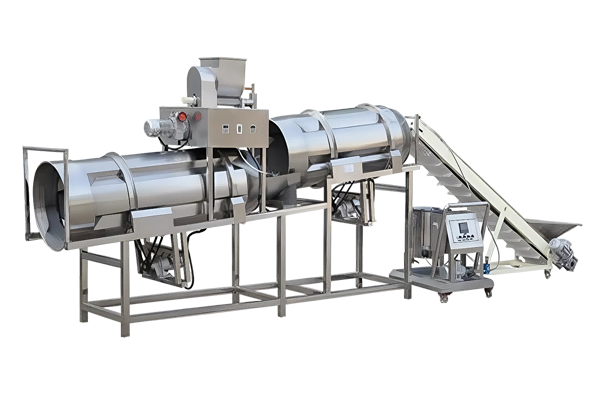
3. Roasting Machine
A roasting machine is not automatically required in every conventional soya badi line. Standard textured soy chunks are generally produced through extrusion cooking followed by drying.
If the business intends to develop a roasted product or a separate roasted soy snack, roasting equipment may be relevant. Its position in the process must be determined according to the product formulation and validated processing method.
4. Conveyor Belt
Conveyors transfer raw materials or finished products between processing stages.
Screw conveyors may be suitable for moving powder, while belt or cooling conveyors may be used for handling formed or dried product. The correct conveyor depends on the material being transported, the required flow rate and the plant layout.
5. Packaging Machine
A packaging machine prepares the product for sale and distribution.
Choose the machine according to the pack weight, bag dimensions, film type, sealing requirements and required output. Packaging capacity should be sufficient to handle the finished production line without creating a bottleneck.
Important: Ask for a complete machinery list showing which components are included, optional or separately priced. This avoids comparing an extruder-only price with a quotation for a complete production line.
Soya Badi Machine Capacity and Production Planning
Capacity should be selected according to expected sales, available working hours, drying capacity and packaging speed.
Foodsure Machines publishes the following capacity options on its soya badi machine page. These are supplier-listed options; confirm availability, configuration and guaranteed output in writing before ordering.
| Published capacity | Potential application |
| 200 kg/hour | Medium-scale commercial production |
| 300 kg/hour | Growing manufacturers |
| 500 kg/hour | Large commercial operations |
| 1,000 kg/hour | High-volume industrial production |
The published page also provides indicative plant-space figures for different configurations. Final space requirements depend on the selected line, material flow, utilities, storage, safety clearances and local building conditions.
How Much Can a 200 kg/Hour Machine Produce?
Consider a machine rated at 200 kg/hour.
At its rated output, the theoretical production would be:
| Operating period | Theoretical output |
| 1 hour | 200 kg |
| 4 hours | 800 kg |
| 6 hours | 1,200 kg |
| 8 hours | 1,600 kg |
These figures are arithmetic estimates based on the published hourly capacity, not a guarantee of saleable production.
Actual output can be lower because of start-up, shutdown, cleaning, formulation changes, maintenance, product rejection and downstream limitations.
For example, a line that extrudes at 200 kg/hour but has a slower dryer or packaging machine cannot maintain the same finished-product throughput indefinitely.
Before selecting capacity, calculate the daily volume required to fulfil confirmed customer orders. Then check that every major machine can support that target.
Soya Badi Machine Price and Plant Investment in Nepal
The total cost of setting up a soya badi plant depends on the production capacity, equipment included, automation, installation, facility preparation, raw materials and working capital.
What Is the Price of a Soya Badi Machine?
Foodsure Machines currently lists a 200 kg/hour soya badi machine at ₹25,00,000 (INR) on its product page. This is a published equipment price, not a confirmed landed price for Nepal.
The quotation should be checked directly with the supplier to establish the current price, the exact equipment included and whether the price covers the complete line or a specific configuration.
Costs to Include in Your Project Budget
| Cost component | What to account for |
| Main production machinery | Mixer, extruder, die and cutting system |
| Drying and cooling | Dryer, cooling conveyor and related equipment |
| Material handling | Conveyors, storage bins and feeding systems |
| Grading and packaging | Sieve, grader, weighing and packing equipment |
| Freight and customs | Transport, applicable customs duty and taxes |
| Installation | Assembly, commissioning and technical support |
| Factory preparation | Flooring, electrical supply, ventilation and layout |
| Raw materials | Initial stock of soy flour and other ingredients |
| Packaging supplies | Film, pouches, labels and cartons |
| Working capital | Wages, electricity, transport, maintenance and operating expenses |
Nepal’s Department of Customs publishes the applicable customs tariff schedules. The duty and taxes applicable to imported machinery depend on the correct tariff classification and current rules, so they should be confirmed with a qualified customs agent before the investment is finalised.
How to Estimate Your Production Cost Per Kilogram
Use the following calculation:
Production cost per kg = Total production expenses ÷ Saleable output in kg
Include raw materials, electricity, labour, packaging, maintenance, quality testing and other production expenses. For a full business profitability calculation, also account for freight, distribution, overheads, financing and applicable taxes.
Do not calculate profit using the machine’s rated capacity alone. Use the quantity of saleable product you expect to manufacture and sell.
A reliable investment estimate should be built from supplier quotations, raw material prices, local utility charges and actual buyer prices. Without these inputs, a fixed Nepalese rupee investment or guaranteed payback period would be misleading.
Nepal Government Rules and Food Safety Requirements
Food manufacturing in Nepal requires attention to business registration, food industry approvals, hygiene, product quality and labelling.
The Department of Food Technology and Quality Control (DFTQC) publishes Nepal’s food-related acts, regulations and standards.
The government’s Nepal Food and Feed Industry Licensing System (NeFFILS) provides an online process for food industry establishment recommendations and licensing. Its published description explains that businesses need the relevant recommendation before establishing an industry and the appropriate licence before taking products to market.
Before starting production, verify the current requirements for your specific business, product and location with DFTQC and the relevant registration authorities.
Your compliance checklist should cover:
- Business and industry registration
- Applicable food industry recommendation and licence
- Approved production premises and hygiene arrangements
- Raw material traceability and supplier records
- Product specifications and laboratory testing
- Accurate product labels and ingredient declarations
- Batch records, storage and recall procedures
- Applicable environmental, fire and workplace requirements
Do not assume that a standard applied in India automatically applies in Nepal. Confirm the current Nepalese requirements for soya badi, including the relevant product standard, before printing labels or beginning commercial sales.
Quality Control, Packaging and Storage
Dry soya badi must be protected from moisture, contamination and unsuitable storage conditions.
A practical quality system should establish written limits for product moisture, protein, appearance, dimensions and cooking performance. Testing frequency should reflect the applicable standards, production volume and identified risks.
Packaging must provide an appropriate barrier against moisture and protect the product during storage and distribution. The correct material depends on the intended shelf life, distribution conditions and pack size.
Store finished packs in a clean, dry area protected from pests. Keep them away from direct contact with floors and walls where required by the food safety system, and use batch identification to support stock rotation and traceability.
The shelf life should be established through suitable testing rather than assumed from the packaging material alone.
Common Soya Badi Production Problems and Their Solutions
| Problem | What to investigate |
| Poor expansion | Feed moisture, formulation, die conditions and extrusion settings |
| Hard or rubbery texture | Protein composition, moisture and cooking conditions |
| Uneven piece sizes | Die condition, cutter settings and feed consistency |
| Excessive breakage | Cutting, drying, product handling and cooling |
| High final moisture | Dryer temperature, airflow, loading and residence time |
| Inconsistent colour | Raw material variation, formulation and processing conditions |
| Slow production | Feeding, extrusion, drying, cooling and packing bottlenecks |
Troubleshooting should cover the entire production line. Increasing extruder speed will not solve a problem caused by insufficient drying or slow packaging.
How to Choose a Soya Badi Machine Manufacturer
The right supplier should understand your intended product, production target and factory conditions.
Before making a purchase, ask the manufacturer to confirm:
- Guaranteed output for your chosen formulation
- Product shapes and sizes supported by the dies
- Complete machinery included in the quotation
- Connected electrical load and utility requirements
- Dryer and packaging capacity
- Construction materials for food-contact parts
- Installation, commissioning and operator training
- Warranty, spare parts and after-sales support
- Delivery terms and export costs for Nepal
- Process trials and acceptance criteria
Ask for a production trial using your intended raw material wherever possible. Review the final product’s texture, dimensions, moisture, breakage and cooking performance before approving the equipment.
Why Consider Foodsure Machines?
Foodsure Machines offers a soya badi production line with equipment options for mixing, extrusion, conveying, drying, cooling and packaging. Its published product information lists a 200 kg/hour model, SS304 construction and PLC/HMI controls.
For Nepalese buyers, the next step is to request a configuration-specific quotation that clearly separates machinery cost, optional equipment, freight, installation, training and any other export-related charges.
You can explore the Foodsure Machines soya badi machine and request specifications for your required production capacity.
Planning to Manufacture Other Products?
Once the soya badi business is established, manufacturers can assess additional product categories based on buyer demand and available capital.
Foodsure Machines also offers equipment for other food processing applications, including its high protein snack machine and makhana machine.
These are separate product lines with different processing requirements. Evaluate each on its own technical and commercial merits rather than assuming that it can be added to a soya badi line without additional machinery.
Conclusion
Setting up a soya badi manufacturing plant in Nepal requires careful planning across raw materials, extrusion, drying, grading, packaging and food safety.
The soya badi machine is the core of the production line, but the dryer, conveyors and packaging equipment must also support the required output. Capacity should be selected according to realistic sales forecasts and the performance of the complete line.
Before investing, obtain a detailed machinery quotation, verify Nepal’s applicable food licensing and customs requirements, calculate operating costs and test the intended formulation.
For commercial buyers, Foodsure Machines can be a starting point for comparing production configurations and discussing machinery requirements for Nepal. Request a quote based on your target capacity, product shape, packaging format and installation needs.
Frequently Asked Questions
What is the soya badi manufacturing process in Nepal?
The soya badi manufacturing process involves preparing soy flour, mixing and conditioning the ingredients, extrusion cooking, cutting, drying, cooling, grading, quality inspection and packaging. The exact process depends on the product formulation and equipment.
Which machine is required to manufacture soya badi?
A commercial soya badi plant generally requires a mixer, extruder, die and cutting system, dryer, cooling conveyor, grading machine and packaging machine. A grinder, sifter and additional conveyors may be required depending on the raw material and plant configuration.
What is the price of a soya badi machine in Nepal?
The price depends on capacity, automation, equipment configuration and import costs. Foodsure Machines lists a 200 kg/hour model at ₹25 lakh in India. Nepal buyers should request a current export quotation that includes applicable freight, customs and installation costs.
What is the production capacity of a soya badi machine?
Production capacity varies by model. Foodsure Machines publishes options of 200, 300, 500 and 1,000 kg/hour. Buyers should confirm the guaranteed output for their specific formulation and complete production line.
How much investment is required to start a soya badi business in Nepal?
The investment depends on machinery, factory preparation, raw materials, packaging, utilities, licensing and working capital. Obtain equipment quotations and local cost estimates before calculating the total project budget.
Which raw material is used to make soya badi?
Defatted soy flour is commonly used to manufacture conventional soya badi. Soy protein concentrates and isolates can also be used in selected formulations, depending on the desired protein content, texture and production cost.
How does a soya badi extruder work?
A soya badi extruder uses controlled heat, pressure, moisture and mechanical shear to cook and texturize a soy-based mixture. The material passes through a die and is shaped into chunks, nuggets or other formats.
Is a dryer necessary for soya badi production?
Yes, a dryer is generally required for conventional shelf-stable dry soya badi. It reduces moisture after extrusion, helping the product meet its moisture specification and remain suitable for storage.
What is the purpose of a soya badi grading machine?
A grading machine separates finished soya badi by size and removes fines or broken pieces. It helps manufacturers maintain consistent product dimensions for different customers and packaging formats.
Is a roasting machine required for making soya chunks?
Not always. Conventional soya chunks are generally produced through extrusion cooking and drying. A roasting machine may be needed for a separate roasted soy product or another formulation-specific process.
How much electricity does a soya badi manufacturing plant consume?
Electricity requirements depend on the extruder, dryer, conveyors, mixer, packaging equipment and operating conditions. Foodsure Machines lists a 45–50 kW power figure for its 200 kg/hour model, but its published page also contains a different power figure for a 200 kg/hour configuration. Buyers should obtain a confirmed connected-load schedule for the exact line before planning the electrical supply.
What government licences are required to start a food manufacturing plant in Nepal?
Food manufacturers should verify business registration, industry establishment recommendations and food licensing requirements with the relevant Nepalese authorities. DFTQC’s NeFFILS portal provides an online process for food industry recommendations and licensing.
How can I calculate the production cost of soya badi per kilogram?
Divide the total production expenses by the quantity of saleable soya badi produced. Include raw materials, electricity, labour, packaging, maintenance and quality testing. Add distribution, overheads and other applicable expenses when calculating overall profitability.
How should soya badi be packaged and stored?
Soya badi should be packed in suitable moisture-barrier packaging and stored in a clean, dry area protected from pests and contamination. The appropriate packaging and shelf life should be established according to product testing and storage conditions.
How can I choose the right soya badi machine manufacturer for Nepal?
Compare guaranteed capacity, product quality, construction materials, dryer and packaging performance, installation, training, warranty, spare parts and export costs. Request a detailed quotation and, where possible, test the machine using your intended raw material before purchasing.