
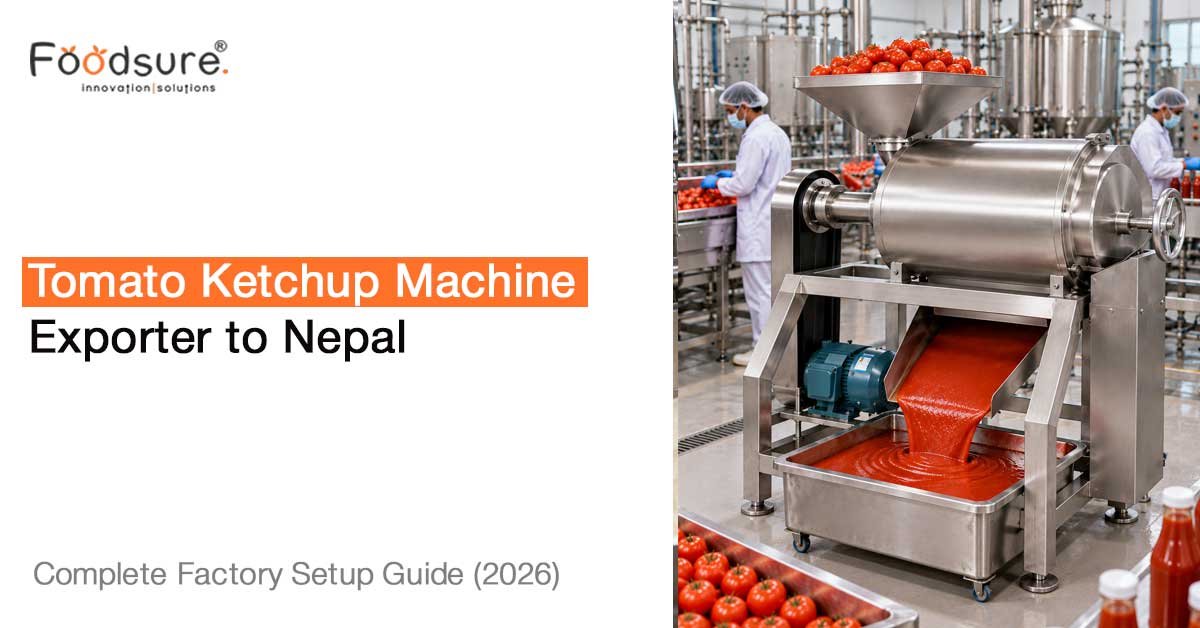
Starting a tomato ketchup manufacturing business in Nepal involves more than finding a recipe and purchasing a few machines. You need to understand how tomatoes will be processed, how much ketchup your factory needs to produce, which packaging formats your customers prefer, and how the entire production line will operate once manufacturing begins.
For someone planning a new food processing business in Kathmandu, Pokhara, Biratnagar, Butwal or another commercial centre in Nepal, choosing the right tomato ketchup machine exporter to Nepal is an important part of that decision.
The supplier you choose will influence your equipment selection, production capacity, installation process, access to spare parts and technical support. A machine that looks affordable at first may become expensive if it cannot maintain the required product consistency or if important equipment is missing from the quotation.
Indian manufacturers are worth considering because India and Nepal share established trade routes, making road transportation and coordination between suppliers and buyers practical options. However, the right purchasing decision still depends on the manufacturer’s capabilities, the equipment specification, the landed cost and the support available after delivery.
This guide explains how to select a tomato ketchup processing machine, plan a production line, estimate the costs involved, understand the import process and evaluate suppliers before placing an order.
Whether you are starting a small ketchup brand, expanding an existing food processing business or planning a commercial manufacturing plant, the objective is the same: choose machinery that fits your product, budget and expected demand.
What Is a Tomato Ketchup Machine?
A tomato ketchup machine is equipment used to process tomatoes into a finished sauce with the required consistency, taste and texture. In commercial manufacturing, the term usually refers to a group of connected machines rather than one standalone unit.
A complete tomato ketchup processing machine line can include equipment for washing, crushing, pulping, cooking, mixing, concentrating, homogenising, filling and packaging. The exact configuration depends on the recipe, production target, packaging format and level of automation.
For example, a small manufacturer selling ketchup in local shops may need a different production arrangement from an established brand supplying supermarkets, hotels and restaurants across Nepal.
How does a tomato ketchup manufacturing machine work?
The manufacturing process generally follows these steps.
- Tomato washing and sorting: Fresh tomatoes are washed to remove soil and other surface contaminants. Damaged or unsuitable tomatoes are removed before processing.
- Crushing and pulping: The tomatoes are crushed and processed to obtain pulp. Suitable pulping equipment helps separate skins and seeds from the usable tomato material.
- Preheating: Depending on the process design, the tomato pulp is heated to support the required processing conditions and product quality.
- Cooking and concentration: The pulp is cooked and concentrated to achieve the desired thickness. Temperature, cooking time and the recipe influence the final result.
- Ingredient mixing: Sugar, salt, vinegar, spices and other permitted ingredients are added according to the formulation.
- Homogenisation or finishing: Where required, the mixture is processed to obtain a more uniform texture and consistency.
- Filling and capping: The finished ketchup is transferred into suitable bottles, pouches or other packaging formats using compatible filling equipment.
- Labelling and secondary packaging: Containers are labelled, checked and packed for storage and distribution.
Not every factory needs all these operations as separate machines. Some processes can be combined, while others require dedicated equipment to achieve the required output and product quality.
A reliable tomato ketchup machine supplier in Nepal should therefore understand your production process before recommending individual machines or a complete line.
What equipment is required for a tomato ketchup production line?
| Equipment | Main purpose |
| Tomato washing and sorting machine | Cleans tomatoes and helps remove unsuitable produce |
| Crusher | Breaks tomatoes into smaller pieces |
| Pulper or pulping system | Produces tomato pulp and separates unwanted solid material |
| Cooking kettle or processing vessel | Heats and cooks the pulp |
| Concentration system | Helps achieve the required thickness and solids level |
| Mixing tank | Blends the pulp with other ingredients |
| Homogeniser, where required | Improves product uniformity |
| Transfer pumps and piping | Move product between processing stages |
| Filling machine | Fills ketchup into the selected containers |
| Capping or sealing machine | Closes bottles or seals pouches |
| Labelling machine | Applies product labels |
| Packaging equipment | Prepares finished products for storage and dispatch |
This list is a starting point, not a fixed specification for every factory. A supplier should confirm which equipment is necessary for your formulation and expected production volume.
For a new business, it is often more useful to compare complete production solutions than to compare the prices of individual machines without considering how they will work together.
Why Consider an Indian Tomato Ketchup Machine Manufacturer for Nepal?
Nepalese food manufacturers can evaluate domestic suppliers as well as manufacturers in neighbouring countries. Indian manufacturers are a practical option for many buyers because of geographical proximity and existing commercial links between the two countries.
However, purchasing from India should be based on the overall value of the equipment and service package, not simply the country of origin.
1. Road transportation and supplier coordination
For eligible shipments, road transportation can provide a practical way to move machinery from an Indian manufacturing facility to a factory in Nepal. The route, transport arrangement, delivery time and handling requirements depend on the dispatch location, destination and equipment dimensions.
Before confirming an order, ask the exporter to specify the delivery arrangement, who will coordinate transport, and whether unloading at your premises is included.
2. Easier communication during installation
A new ketchup production line requires coordination between the equipment supplier and the factory team. This may include reviewing the layout, checking utilities, positioning machinery and conducting production trials.
Working with a manufacturer that can communicate clearly, provide installation instructions and arrange technical assistance can make this process easier.
3. Access to spare parts
Some components, such as seals, gaskets, bearings, electrical parts and pump components, may need replacement during the machine’s operating life.
Ask the supplier for a recommended spare-parts list, indicative delivery arrangements and the price of commonly replaced components. Do not assume that all parts will be available locally simply because the manufacturer is located in India.
4. Equipment designed around your requirements
A manufacturer should be able to discuss your recipe, batch size, packaging format, production target and available factory space before recommending a configuration.
This is especially important when a business needs to balance initial investment with future expansion. A suitable machine specification is more valuable than a large capacity figure that does not match the actual production plan.
5. Support beyond machine delivery
The machine price is only one part of the purchase. Installation, commissioning, operator training, documentation and after-sales support also affect how quickly a factory can begin production.
When comparing a tomato ketchup machine exporter to Nepal, check which of these services are included in the quotation and which are charged separately.
India and Nepal have established bilateral trade arrangements, but the applicable customs classification, taxes and documentation should still be confirmed for the specific machinery being imported. The Trade and Export Promotion Centre of Nepal provides information about the India-Nepal trade framework.
How to Choose the Best Tomato Ketchup Machine Exporter to Nepal
The best exporter is not necessarily the company offering the lowest quotation. It is the supplier that can provide machinery suited to your production needs, explain the technical specification and establish clear responsibilities for delivery and support.
Use the following checks before making a decision.
1. Confirm whether the company manufactures its own machinery
The word exporter does not automatically mean manufacturer. Some businesses manufacture equipment themselves, while others source machines from third parties and supply them under their own commercial arrangements.
Neither arrangement should be judged by its label alone. What matters is whether the supplier can demonstrate control over the equipment specification, quality checks, documentation and service commitments.
Ask the following questions:
- Does the company operate its own manufacturing facility?
- Can it share factory photographs or arrange a video inspection?
- Who is responsible for engineering and quality control?
- Can the company explain the design and working principle of each major machine?
- Who will handle warranty claims and technical issues?
A company that manufactures its own machinery may offer more direct coordination between engineering, production and service teams. If you work with a trading company, establish which manufacturer actually builds the equipment and who will support it after installation.
Foodsure Machines can be considered alongside other suppliers when evaluating food processing machinery. Buyers should review its proposed equipment configuration, manufacturing capabilities, service scope and quotation against their actual requirements before choosing a supplier.
2. Check the material used in product-contact parts
Ketchup contains acidic ingredients, and the equipment used to process it must be suitable for the product and cleaning conditions.
Ask for the material specification of all product-contact components. Stainless steel grades such as SS304 and SS316 may be used depending on the application, product composition and operating conditions.
Do not accept a general statement such as food-grade construction without asking which parts use which materials.
The quotation should identify the material used in tanks, piping, product-contact fittings and other relevant components. Also check the design of welds, joints, drain points and surfaces that need regular cleaning.
A well-designed machine should support effective cleaning and help prevent product residue from accumulating in hard-to-reach areas.
3. Match production capacity to your actual demand
A supplier may advertise capacity in kilograms per hour, litres per hour or kilograms per batch. These figures do not necessarily describe the same thing.
For example, a kettle’s batch capacity is not the same as the quantity of finished ketchup packed per hour. The time needed for cooking, concentration, ingredient addition, transfer and filling affects overall output.
Before selecting a machine, calculate:
- Expected daily sales or production requirement.
- Number of operating hours per shift.
- Batch size and number of batches per day.
- Time required for cleaning and changeovers.
- Output needed from the filling and packaging section.
- Expected demand during the first year and after expansion.
Ask the manufacturer to explain how its capacity figure is measured. Request clarification on whether it represents raw tomato input, intermediate pulp, finished ketchup or packaged output.
4. Evaluate the complete production line
A processing machine may work well on its own but still create problems if it does not match the other equipment in the line.
For instance, the cooking section may produce ketchup faster than the filling machine can pack it. In another setup, the filling machine may be capable of higher output than the processing section can supply.
Both situations can reduce the practical output of the factory.
Ask for a process flow diagram that shows the major machines, product movement, transfer arrangements and expected output at each stage.
If you are setting up a new plant, request a proposed layout that considers raw material receiving, processing, packaging, finished goods storage and movement of workers.
5. Ask about automation and operator requirements
A semi-automatic system may suit a small business with limited production requirements and a team that can manage manual operations.
A more automated system may be useful when production volumes increase, filling consistency becomes important or the business needs to reduce repetitive manual work.
However, automation does not automatically guarantee higher output or lower operating costs. Its value depends on the process, the equipment selected and the skills of the operators.
Ask the exporter which operations are manual, which are automated, how the controls work and what training operators will receive.
6. Check the electrical and utility requirements
Before ordering a machine, confirm its voltage, phase, frequency, connected load and operating power requirements. Also check whether the plant requires steam, compressed air, cooling water or other utilities.
Do not assume that a machine will suit your factory’s electrical supply simply because it is being exported from a neighbouring country.
If your site experiences voltage fluctuations or power interruptions, discuss suitable electrical protection and operating procedures with the manufacturer and a qualified local electrician.
Your quotation should identify the main utility requirements so that electrical installation and factory preparation can be planned before the machine arrives.
7. Get a written warranty and service agreement
A warranty should clearly explain what is covered, its duration, exclusions and the process for reporting faults.
Ask whether the warranty covers manufacturing defects, electrical components, motors, installation-related issues or only selected machine parts.
Also clarify who pays for replacement parts, transport and technician visits when a problem occurs.
For a Nepal-based buyer, the service arrangement is especially important if the manufacturer’s technical team is located across the border. Ask how remote troubleshooting works, what information you must provide when reporting a fault and how an on-site visit would be arranged.
8. Verify export documentation and references
Ask whether the supplier has experience delivering comparable machinery to Nepal or other international customers.
Where available, request relevant customer references, photographs of installed machinery and examples of previous export documentation with confidential information removed.
The supplier should also confirm which documents it will prepare and which responsibilities remain with the importer or customs agent.
A professional quotation should make these responsibilities clear rather than leaving them until dispatch.
9. Compare the complete quotation, not just the machine price
Two suppliers may quote different prices because their offers include different equipment, automation levels, materials or services.
One quotation may include a complete processing and filling line, while another covers only the cooking section. Comparing the two totals would give you a misleading picture.
Create a comparison sheet that covers:
- Equipment list and technical specifications.
- Capacity and operating conditions.
- Material grades.
- Electrical and utility requirements.
- Packaging equipment.
- Installation and commissioning.
- Operator training.
- Warranty and spare parts.
- Transportation and unloading.
- Payment terms and delivery schedule.
The best value is the option that meets your production requirements and has clearly defined costs and responsibilities.
Tomato Ketchup Machine Capacity Guide for Nepal
Choosing the right capacity is one of the most important decisions when planning a tomato ketchup manufacturing plant in Nepal. The machine should support your expected sales without tying up too much money in equipment you may not use fully.
There is no single capacity that suits every business. A startup supplying a few local retailers has different requirements from a manufacturer supplying distributors, supermarkets, hotels and restaurants.
How do you calculate the capacity you need?
Start with your expected demand for finished ketchup rather than choosing a machine based on the amount of raw tomatoes available.
Suppose your business plans to produce 400 kg of finished ketchup per day and operate for eight hours. The basic average output requirement would be 50 kg per hour.
However, this does not mean a machine rated at exactly 50 kg/hr will always be sufficient. Production involves cooking, ingredient addition, cleaning, changeovers and packaging. You must also consider whether the manufacturer’s stated capacity refers to finished ketchup or raw material input.
A practical calculation should account for the entire production cycle, not just the rated capacity of one machine.
Which capacity is suitable for a small or medium-sized ketchup business?
The following table is a planning guide, not a verified capacity range for a particular Foodsure Machines model. Use it to understand the different stages of business and discuss the actual equipment specification with your supplier.
| Business stage | What to evaluate | Suitable planning approach |
| Startup or local brand | Limited distribution and demand that is still being tested | Compare smaller batch-processing systems and semi-automatic filling options |
| Growing regional brand | Regular orders from shops, distributors and food service customers | Evaluate a commercial line with coordinated cooking, processing and filling capacity |
| Established manufacturer | Higher sales volumes and regular production schedules | Consider a larger or more automated line based on confirmed demand |
| Large-scale producer | High-volume production, multiple packaging formats and distribution across regions | Evaluate integrated processing, storage, filling and packaging systems |
Before choosing a capacity, ask the exporter to provide a written production estimate based on your recipe, batch size, operating hours and packaging requirements.
Why is actual output different from rated capacity?
A machine’s rated capacity is a useful starting point, but several factors affect how much finished ketchup your factory can produce.
Recipe and concentration: The amount of water removed during cooking affects the quantity of finished product obtained from the tomato base. Different formulations can produce different yields.
Cooking time: Some recipes require longer processing times to reach the desired consistency. This can affect the number of batches completed in a shift.
Filling speed: The filling machine must keep pace with the processing section. If filling becomes a bottleneck, the factory may not achieve the expected output.
Cleaning and changeovers: Equipment needs to be cleaned and prepared between production runs. The time required depends on the design and the production schedule.
Operator experience: Operators need to understand the recipe, processing sequence, controls and routine maintenance.
When comparing a tomato ketchup machine manufacturer in India with other suppliers, request a realistic estimate of finished product output rather than relying only on the headline capacity.
What Is the Cost of a Tomato Ketchup Machine in Nepal?
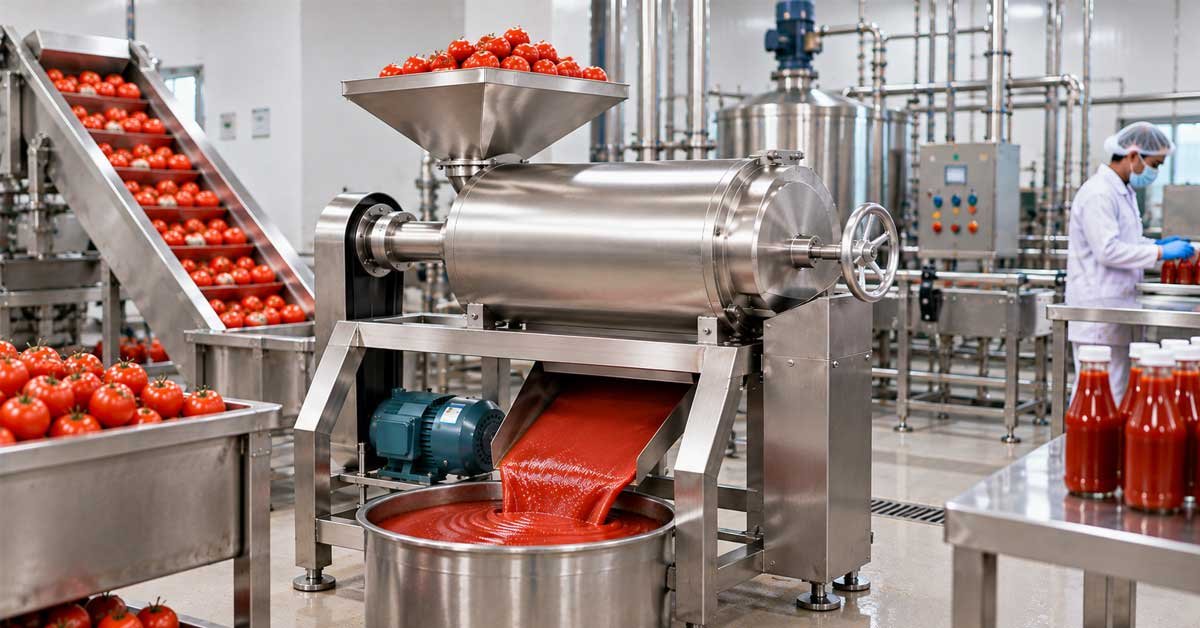
The price of a tomato ketchup machine depends on the equipment included, production capacity, automation level, material specification, packaging arrangement and installation requirements.
There is no reliable single price that applies to every factory setup. A basic cooking and mixing arrangement will have a different cost from a complete line that processes fresh tomatoes, prepares the sauce, fills containers and handles packaging.
For an accurate estimate, request an itemised quotation from your chosen tomato ketchup machine exporter to Nepal.
What factors affect the machine price?
| Cost factor | How it affects the quotation |
| Production capacity | Larger equipment and higher-output systems may require greater investment |
| Processing configuration | A line handling fresh tomatoes may need more equipment than one processing prepared pulp |
| Automation | Automated controls and integrated operations can increase the initial investment |
| Material specification | The selected stainless steel grades and component specifications affect cost |
| Filling and packaging | Bottle, pouch and sachet formats require different equipment configurations |
| Heating and utilities | The required heating system, pumps, controls and utility connections influence the overall setup |
| Installation | Technician visits, commissioning and training may be included or charged separately |
| Transportation | Distance, shipment size, handling and delivery terms affect the logistics cost |
| Spare parts | Initial spares and recommended maintenance components may be quoted separately |
What should your total project budget include?
The machine quotation is only one part of the investment required to start a ketchup manufacturing business.
Your project budget should account for the following categories.
- Processing machinery
This includes the equipment required to prepare the tomato base, cook and mix the ingredients, transfer the product and achieve the required consistency.
- Filling and packaging
The cost depends on whether you plan to sell ketchup in bottles, pouches, sachets or multiple formats. Packaging materials, caps, labels and cartons must also be included in your operating budget.
- Factory premises and preparation
You may need to prepare floors, drainage, washable surfaces, storage areas and suitable spaces for processing and packaging. The extent of this work depends on your existing premises.
- Electrical and utility installation
Include the cost of electrical connections, control panels, wiring, water supply, drainage and any required heating or cooling utilities.
- Transportation and customs
Obtain a quotation that explains the delivery terms and the costs that remain your responsibility. Confirm the applicable customs classification, duties, taxes and clearance charges before finalising the project budget.
- Installation and commissioning
The machinery must be positioned, connected and tested. If technical assistance is charged separately, include it in your estimate.
- Ingredients and packaging stock
You need enough working capital to purchase tomatoes, sugar, salt, vinegar, spices, packaging materials and other ingredients required by your formulation.
- Operating expenses
Allow for wages, electricity, water, maintenance, cleaning, quality checks, storage, transportation and distribution.
- Marketing and distribution
A new ketchup brand needs to reach retailers, wholesalers, food service buyers or consumers. Product development and packaging alone will not generate sales without a distribution plan.
How can you avoid unexpected costs?
Ask your supplier to divide the quotation into equipment, accessories, installation, training, transportation and other services. Each item should state whether it is included in the total price.
Then request a separate estimate for costs outside the supplier’s scope, including customs clearance, local installation work, utility connections and factory preparation.
Avoid relying on a general percentage to calculate your final landed cost. Actual expenses depend on the equipment classification, shipment terms, applicable taxes and the work required at your site.
For customs and tariff information, consult Nepal’s Department of Customs or a qualified customs clearing agent. The import tariff applicable to a particular machine must be verified rather than assumed.
How to Import a Tomato Ketchup Machine from India to Nepal
Once you have shortlisted a manufacturer, the next step is to confirm the technical specification, commercial terms and import arrangements.
Importing machinery involves coordination between the buyer, exporter, transporter and customs representatives. The precise requirements depend on the shipment and the regulations in force when the goods are imported.
Step 1. Finalise the machine specification
Before requesting the final quotation, confirm the product you intend to manufacture, the expected output, the recipe, the packaging format and the level of automation.
Ask the exporter to prepare a detailed equipment list. This should identify the major machines, their capacities, material specifications, electrical requirements and any accessories included.
If you are planning a complete tomato ketchup manufacturing plant in Nepal, also request a process flow diagram and a proposed equipment layout.
Step 2. Request a pro forma invoice
A pro forma invoice helps you review the commercial offer before the final order.
It should state the equipment description, quantity, price, currency, payment terms, delivery terms, estimated dispatch schedule and validity period of the quotation.
Ask the supplier to separate optional equipment and services from the main package. This makes it easier to compare offers from different manufacturers.
Step 3. Confirm the import and payment requirements
Before making payment, check the requirements applicable to your business and transaction in Nepal.
Your bank, customs agent or relevant authorities can advise whether any registration, import documentation, foreign exchange procedure or payment arrangement applies.
Do not assume that a letter of credit or a separate import licence is mandatory for every machinery purchase. Requirements depend on the specific transaction and current rules.
Step 4. Confirm the export documents
Ask the exporter to identify which documents it will prepare and which must be arranged by the importer.
Depending on the shipment and applicable requirements, the documents may include:
- Commercial invoice.
- Packing list.
- Transport document.
- Certificate of origin, where required.
- Machine specification and technical documentation.
- Other declarations or certificates applicable to the shipment.
Confirm the exact documentation with your customs agent before dispatch. Incorrect descriptions, inconsistent values or missing documents can create avoidable delays.
Step 5. Arrange transportation
Machinery may be transported by road through an appropriate route between India and Nepal.
Before dispatch, confirm the shipment dimensions, total weight, packaging method, unloading arrangements and delivery location. Large tanks or integrated production lines may require special handling.
The contract should also explain when responsibility for transportation, damage and insurance passes from the exporter to the buyer.
Step 6. Complete customs clearance in Nepal
Your customs representative should verify the correct tariff classification and the duties, taxes and other charges applicable to the shipment.
Do not rely on an exporter’s general estimate as the final amount payable. The treatment of machinery can vary according to its classification and the applicable regulations.
The buyer should also check whether any additional permits or technical documents are required for the specific equipment.
Step 7. Prepare the factory before delivery
The site should be ready before the machinery arrives.
Confirm the available floor space, equipment foundations if required, electrical connections, water supply, drainage, heating utilities and access for unloading.
If your plant is in a location where technical visits may require additional travel, coordinate the installation schedule early. This can help prevent delays after the machinery reaches the factory.
Step 8. Install and commission the machinery
Installation involves positioning the equipment, connecting the utilities, checking controls and testing the production sequence.
The supplier should clarify who will supervise the installation and whether technicians will travel to Nepal or provide support through another arrangement.
Commissioning should include checks of the relevant operating functions and safety features.
Step 9. Conduct trials and train operators
Before commercial production begins, conduct trials using the intended ingredients and packaging wherever practical.
The purpose is to confirm that the equipment can perform the required operations under the agreed conditions. Trials should also help the production team understand operating procedures, cleaning requirements and basic troubleshooting.
Ask for operating manuals, maintenance instructions, recommended spare parts and a record of the commissioning checks.
A complete handover should leave your team with a clear understanding of how to operate and maintain the machinery.
Planning a Tomato Ketchup Manufacturing Plant in Nepal
Buying the right machine is only one part of setting up a food processing factory. You also need a suitable layout, reliable raw material supply, a tested formulation, quality control procedures and a plan for selling the finished product.
The earlier these decisions are made, the easier it becomes to select the right equipment.
1. Decide which ketchup products you will manufacture
Start by identifying your target customers and product range.
For example, a business may plan to supply:
- Small ketchup sachets to restaurants and takeaway outlets.
- Bottled ketchup to grocery stores and supermarkets.
- Larger packs for hotels, caterers and institutional kitchens.
- Multiple pack sizes under the same brand.
Each format has different packaging requirements. Small sachets may require specialised filling and sealing equipment, while bottles require a suitable filling and closure arrangement.
You should also decide whether the factory will manufacture only ketchup initially or whether it may eventually produce other sauces.
A future expansion plan can influence the choice of equipment, but avoid purchasing additional machinery until the requirement is clear.
2. Evaluate the availability of tomatoes
Tomato supply affects both production planning and the cost of raw materials.
Before setting up the plant, identify potential suppliers, expected seasonal availability, transport arrangements and acceptable raw material quality.
Consider the condition of incoming tomatoes, the amount of unsuitable produce and the storage time before processing. Fresh tomatoes can deteriorate if handling and storage are not managed properly.
If your factory will operate throughout the year, prepare a sourcing plan that accounts for changes in availability and purchase prices.
Also consider whether the plant will process fresh tomatoes directly or use purchased tomato pulp or concentrate. These approaches require different equipment configurations and have different implications for storage, transport and production.
3. Plan the factory layout
The layout should support a logical movement of materials from receiving to finished goods dispatch.
A typical arrangement may include:
- Raw tomato receiving and inspection.
- Washing and preparation.
- Crushing and pulping.
- Cooking, mixing and concentration.
- Finished product transfer.
- Filling and packaging.
- Finished goods storage.
- Dispatch and loading.
The actual layout depends on the process, premises and equipment dimensions.
Keep raw materials, packaging supplies and finished products organised. Provide suitable access for cleaning, inspection and maintenance, and avoid creating unnecessary cross-movement between different production activities.
Ask the machinery supplier to share equipment dimensions and service clearances before finalising the floor plan.
4. Check utilities and infrastructure
Your plant may need electricity, water, drainage, heating utilities and compressed air, depending on the selected equipment.
The manufacturer should provide the relevant specifications so your electrical contractor and other technical professionals can prepare the site.
If heating is part of the process, compare the available heating options with your operating requirements. The choice may affect installation cost, energy consumption, temperature control and maintenance.
Plan for cleaning and wastewater handling as well. These requirements should be considered during factory design rather than after installation.
5. Develop and validate the recipe
The recipe determines the taste, colour, thickness and other characteristics of your ketchup.
Ingredients may include tomato pulp or concentrate, sugar, salt, vinegar, spices and permitted additives as appropriate to the formulation and applicable food regulations.
Before commercial production, establish a repeatable formulation and define the processing conditions needed to obtain the desired result.
Important parameters may include the ingredient proportions, cooking time, temperature, concentration, pH, soluble solids and filling conditions.
The correct values depend on the product and its formulation. They should be established through appropriate product development and validation rather than copied from another manufacturer’s recipe.
6. Establish quality control procedures
Quality checks should cover incoming ingredients, processing and finished products.
For ketchup, this may involve checking raw material quality, recipe accuracy, consistency, pH, soluble solids, packaging integrity and relevant microbiological requirements.
The exact testing plan should be developed with qualified food technologists and laboratories as appropriate.
Your team should also maintain batch records so that ingredients, processing conditions and finished product details can be traced when necessary.
A consistent process helps reduce variations between batches and gives the business a clearer basis for investigating quality problems.
7. Plan food safety and regulatory compliance
Before commercial production, confirm the food business registration, licensing, labelling and other requirements applicable in Nepal.
The requirements depend on the nature of the business and the product being manufactured. Consult the relevant Nepalese authorities or a qualified food regulatory professional before finalising your compliance plan.
The factory should also establish suitable cleaning procedures, hygiene practices, pest control, ingredient storage and handling rules.
Machinery selection should support these procedures. For example, equipment should allow the product-contact areas to be cleaned effectively and inspected as required.
8. Train the production team
Even a well-designed production line depends on operators following the correct process.
Training should cover equipment startup and shutdown, recipe handling, temperature monitoring, filling operations, cleaning, routine maintenance and safe working practices.
Your team should know how to recognise abnormal machine behaviour and when to stop production for inspection.
Ask the supplier to define the training included in the purchase agreement. Additional training may be useful if the factory has limited experience with industrial food processing.
9. Plan sales and distribution before scaling production
A manufacturing plant needs a route to market.
Identify the retailers, wholesalers, distributors, hotels, restaurants or institutional buyers you intend to serve. Discuss their preferred pack sizes, expected order quantities, delivery frequency and quality requirements.
Use this information to estimate the production volume you can reasonably sell.
A factory that produces more ketchup than its distribution network can move may face unnecessary inventory, storage and working-capital costs.
For a new business, matching production to demand is usually a better starting point than buying the largest available line.
Turnkey Tomato Ketchup Production Plant vs Individual Machines
When setting up a new factory, you can either purchase individual machines from different suppliers or work with one manufacturer to develop a coordinated production line.
Both options can work. The right choice depends on your team’s technical experience, the existing equipment at your facility and how much responsibility you want the supplier to take for integration.
| Factor | Turnkey production line | Individual machine purchase |
| Equipment selection | Planned as a coordinated system | Each machine is selected separately |
| Installation | Can be coordinated through one supplier | May require coordination between multiple suppliers |
| Process integration | One supplier can take responsibility for the agreed scope | The buyer may need to manage compatibility |
| Initial planning | Usually requires a detailed project discussion | Can suit buyers who already know their requirements |
| Technical support | Responsibilities can be consolidated in one contract | Support may be divided between suppliers |
| Expansion | Depends on the original design and upgrade options | Individual sections may be added or replaced |
| Best suited for | New factories and buyers seeking an integrated solution | Existing plants with technical teams and compatible equipment |
When should you choose a turnkey line?
A turnkey solution may be worth considering if you are entering food manufacturing for the first time and do not have an in-house engineering team.
The supplier can help plan the equipment arrangement, identify utility requirements and coordinate the agreed installation and commissioning work.
However, the phrase turnkey should be clearly defined in the contract. It does not automatically mean that building construction, customs clearance, local civil work, every utility connection or all regulatory approvals are included.
Ask the supplier to list the exact responsibilities covered by the package.
When does buying individual machines make sense?
Purchasing individual machines can be practical if you already operate a food processing factory and have suitable equipment for some production stages.
It may also suit businesses that have experienced engineers who can manage the integration of machinery from different suppliers.
Before taking this route, verify that the machines have compatible capacities, connections, controls and cleaning requirements.
A lower purchase price does not necessarily mean a lower total project cost if additional equipment or modifications are needed later.
Common Mistakes to Avoid When Buying a Tomato Ketchup Machine
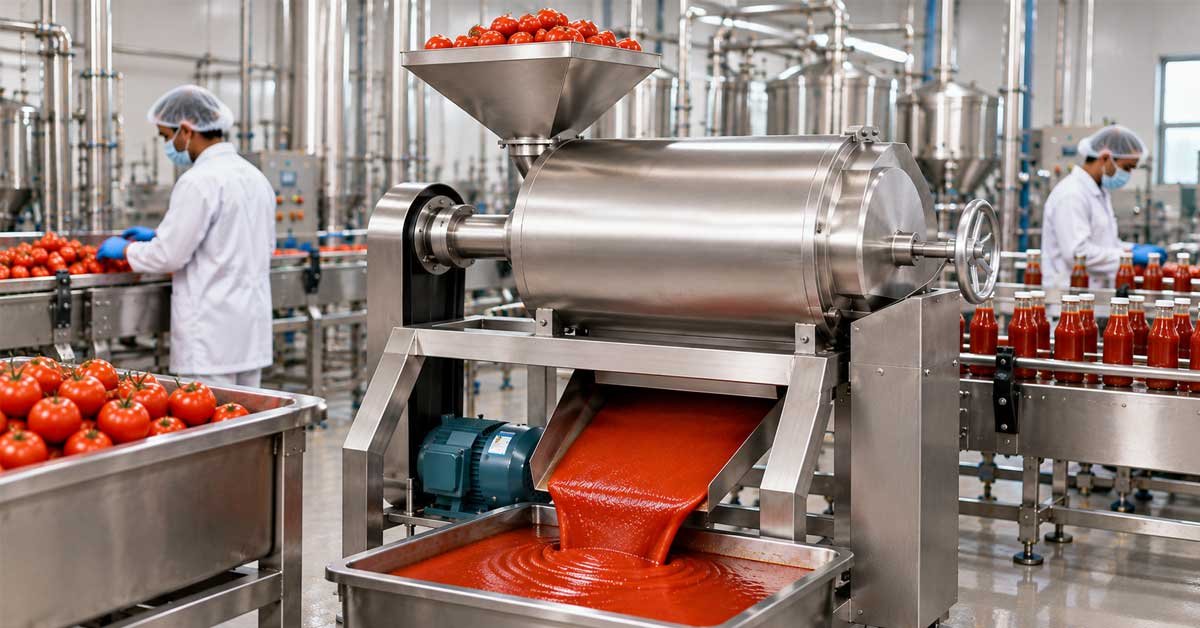
First-time buyers can avoid several expensive mistakes by resolving technical and commercial questions before placing an order.
1. Choosing a machine based only on its price
A cheaper machine may not include all the components required for production. It may also have different materials, automation features or service conditions from a more expensive alternative.
Compare the complete specifications before making a decision.
2. Confusing batch capacity with hourly output
A cooking vessel’s capacity does not tell you how much finished ketchup the entire line can produce in an hour.
Ask for the expected batch cycle and finished product output under your intended operating conditions.
3. Ignoring the filling section
Manufacturers sometimes focus heavily on the processing equipment while giving less attention to filling and packaging.
Yet the filling section can become a bottleneck if its output is lower than the amount of ketchup produced upstream.
Plan the processing and packaging sections together.
4. Not checking the recipe before finalising the machinery
Different ketchup formulations may require different cooking conditions, mixing arrangements and product-handling considerations.
Share your intended formulation and product specifications with the manufacturer before selecting the equipment.
5. Overlooking maintenance and spare parts
Ask for a list of recommended spare parts, routine maintenance requirements and the expected support process.
Clarify whether common parts are stocked locally, dispatched from India or sourced from another location. Get realistic delivery estimates rather than relying on verbal assurances.
6. Assuming transportation includes installation
A quotation that covers delivery to Nepal may not include unloading, positioning, electrical connections, commissioning or operator training.
Read the delivery terms carefully and confirm each service in writing.
7. Failing to prepare the factory
Machinery may arrive before the factory is ready. Inadequate floor space, incomplete wiring, unavailable utilities or unsuitable drainage can delay installation.
Use the manufacturer’s drawings and utility specifications to prepare the site before dispatch.
8. Ignoring working capital
Purchasing machinery does not cover the day-to-day expenses of running a food business.
You still need money for raw materials, packaging, salaries, utilities, distribution and routine maintenance.
Reserve enough working capital to support production while your customer base develops.
9. Accepting unsupported performance claims
Ask the supplier to explain the basis of its output, efficiency and product quality claims.
Where possible, arrange a machine demonstration or trial using representative ingredients and packaging. Define the acceptance criteria before commissioning.
Why Consider Foodsure Machines for Your Ketchup Manufacturing Project?
Choosing a machinery partner should involve more than comparing catalogue prices. You need to understand the manufacturer’s capabilities, the proposed equipment configuration and the support available throughout the project.
Foodsure Machines is an option for businesses evaluating food processing machinery and production line requirements.
When discussing a ketchup manufacturing project with Foodsure Machines, buyers can use the following points to structure their evaluation.
- Production requirements: Discuss the intended product, daily output, batch size and packaging formats before selecting the equipment.
- Equipment configuration: Review which machines are required for preparation, cooking, mixing, transfer, filling and packaging.
- Factory planning: Identify the space, electrical supply and other utilities needed for the proposed setup.
- Installation and training: Confirm the installation scope, commissioning process and operator training included in the quotation.
- After-sales support: Clarify warranty coverage, spare-parts availability and the process for arranging technical assistance in Nepal.
- Future expansion: Discuss whether the proposed configuration can accommodate higher output or additional packaging requirements later.
Foodsure Machines focuses on food processing equipment and manufacturing solutions. Its suitability for your project should be assessed against the specific ketchup production requirements, technical specifications, delivery arrangements and service commitments agreed in the quotation.
If you are planning a new plant, share your target production capacity and packaging requirements before requesting a proposal. This gives the supplier a clearer basis for recommending the appropriate equipment.
Planning a food processing factory in Nepal? Contact Foodsure Machines to discuss your production requirements and request the relevant machine specifications and quotation.
Tomato Ketchup Manufacturing in Nepal: Questions to Answer Before Investing
Before committing to a supplier, work through these questions with your team.
- How much finished ketchup do you expect to sell each day?
- Will you process fresh tomatoes or use purchased pulp or concentrate?
- Which bottle, pouch or sachet sizes will you manufacture?
- What product consistency and formulation are you targeting?
- Which machines are essential for your initial production stage?
- What electrical and other utilities are available at your premises?
- Does the quotation include filling and packaging equipment?
- What are the landed costs, including transportation and applicable import charges?
- Who will install and commission the line?
- How will your team obtain spare parts and technical support?
- What food safety and regulatory requirements apply to your product?
- How much working capital will you need after buying the machinery?
Answering these questions will make supplier discussions more productive and help you compare offers on the same basis.
Conclusion
Setting up a tomato ketchup manufacturing business in Nepal requires a clear understanding of your product, target market, production requirements and total investment.
The right tomato ketchup machine exporter to Nepal should help you select suitable equipment, explain the technical specifications, clarify the import and delivery arrangements, and define the support available after installation.
Before making a purchase, compare machine configurations, verify food-contact materials, calculate realistic output and obtain an itemised quotation. Also account for transportation, applicable customs charges, factory preparation, commissioning, training and working capital.
For a first-time manufacturer, a coordinated production line may simplify equipment selection and installation. An existing food processor may benefit from purchasing individual machines where suitable infrastructure is already available.
Foodsure Machines can be included in your supplier evaluation alongside other manufacturers. The final decision should be based on the proposed configuration, commercial terms and documented service commitments rather than promotional claims alone.
A well-planned investment gives your business a clearer path from raw tomatoes to a consistent, market-ready ketchup product.
Frequently Asked Questions
How do I choose the best tomato ketchup machine exporter to Nepal?
Choose an exporter that can provide a suitable machine configuration, clear technical specifications, food-contact material details, an itemised quotation and written warranty terms. Also verify installation arrangements, spare-parts availability, export documentation and the process for obtaining technical support in Nepal.
Can I buy a tomato ketchup machine from an Indian manufacturer for use in Nepal?
Yes. A Nepalese business can explore purchasing machinery from an Indian manufacturer, subject to the applicable import requirements. Before placing an order, confirm the equipment specification, transport arrangement, documentation, customs classification, taxes and delivery responsibilities.
What is the price of a tomato ketchup processing machine in Nepal?
There is no single price for every ketchup machine. The cost depends on capacity, processing configuration, automation, material specification, filling equipment and installation requirements. Request an itemised quotation and calculate the total landed cost rather than comparing the machine price alone.
Which machine is required to manufacture tomato ketchup commercially?
A commercial line may include a tomato washer, crusher, pulper, cooking vessel, mixing tank, concentration system, transfer pumps, filling machine, capping or sealing equipment and labelling machinery. The exact equipment depends on whether you process fresh tomatoes or prepared pulp, along with your recipe and packaging requirements.
What capacity should a small ketchup manufacturing business choose?
The appropriate capacity depends on expected sales, operating hours, batch cycle and packaging speed. Start by estimating your daily requirement for finished ketchup and ask the manufacturer to recommend equipment based on that figure. Avoid choosing capacity solely from the machine’s advertised rating.
How long does it take to set up a tomato ketchup manufacturing plant in Nepal?
The timeline depends on machine availability, factory readiness, transportation, customs clearance, installation and trial production. A supplier should provide a project schedule that identifies the expected dispatch date, delivery arrangements, commissioning activities and any tasks the buyer must complete before installation.
What documents are needed to import a ketchup machine from India to Nepal?
Depending on the shipment and applicable regulations, documents may include a commercial invoice, packing list, transport document, certificate of origin where required, and technical documentation. The importer should confirm the exact requirements with a Nepalese customs agent before dispatch.
Does importing machinery from India automatically mean lower customs duty in Nepal?
No. The applicable duty and taxes depend on the machinery’s tariff classification and the rules in force at the time of import. Do not assume a particular duty rate based only on the supplier’s country. Verify the classification and applicable charges with Nepal’s Department of Customs or a qualified customs agent.
Is a turnkey tomato ketchup production plant better than buying individual machines?
A turnkey line may suit a new business that needs help coordinating equipment selection, installation and commissioning. Individual purchases can work well for an existing factory with compatible equipment and an experienced technical team. Compare the full scope and cost of both options before deciding.
Which stainless steel is suitable for a tomato ketchup machine?
SS304 and SS316 are common stainless steel grades used in food processing applications. The appropriate material depends on the product, acidity, cleaning chemicals and operating conditions. Ask the manufacturer to specify the material used in each product-contact component and verify that it suits your application.
Can one supplier provide both a tomato ketchup machine and installation support in Nepal?
Some suppliers offer machinery along with installation, commissioning and operator training. Confirm whether these services are available for your location in Nepal and whether technician travel, accommodation, transportation, local labour and utility connections are included in the quotation.
What should I check before accepting delivery of a tomato ketchup machine?
Verify the equipment against the purchase order, inspect for transport damage and confirm that the supplied components match the agreed specification. Before commercial production, complete installation checks, conduct appropriate trials, document the commissioning results and ensure that operators receive the manuals and training required to run the line safely.




