
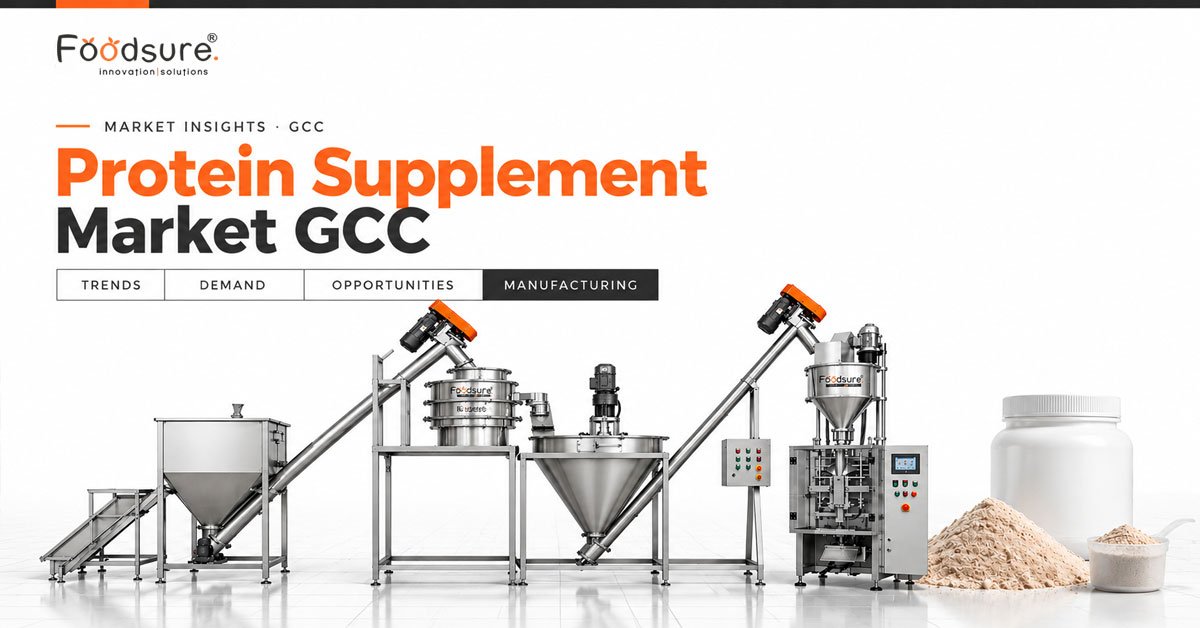
There is growth in the protein supplement market GCC as the trends of fitness and wellness and high-protein nutrition become more prevalent in the region. The growth in the need for easy-to-carry protein products is opening up new doors for GCC supplement market.
Nevertheless, there are a lot of imports of protein products in the region despite the growing consumption, which presents a significant issue of dependency. Simultaneously, the Halal supplement manufacturing requirement is yet another element that needs to be taken into account.
All in all, there is a potential for a business to develop protein supplement manufacturing GCC capabilities.
The purpose of this blog is to examine the reasons behind the growth of the protein supplement market GCC, what is causing the production shortage in the region, and how local companies could benefit from it.
The Protein Supplement Market GCC Is Expanding Beyond Sports Nutrition
At first, protein supplements were used by bodybuilders only, but the range of users has become wider now and includes people who work out at gyms as well as health enthusiasts.
As far as GCC supplement market goes, there are many options available to get access to them through gyms, retail shops, pharmacies, and even through online channels.
These include:
- Protein products made using whey and dairy proteins
- Products made using plant-based proteins
- Various flavors and ways of consumption
- Sports nutrition products
- Functional nutrition powders
As consumer preferences continue to diversify, the protein supplement market GCC offers manufacturers more opportunities to build specialised product ranges.
What Is Driving Demand Across the GCC?
Some of the factors contributing to growth in the GCC protein supplement market include the rise in popularity of fitness centers and health clubs as well as the growth in awareness of protein and sports nutrition through social media and online content.
Another important factor is convenience. Protein shakes can be easily kept, are easy to prepare, and can be incorporated into various lifestyles.
The combination of fitness awareness + convenience + wider product availability is helping the protein supplement market GCC move towards a broader mainstream consumer base.
The Growing Gap Between Consumption and Local Manufacturing
Although there is an increase in demand for protein products, regional companies are yet to take advantage of the production benefits of having a greater share in the production process. Imported finished goods will enable customers to get hold of international brand names, but they will make businesses reliant on external production and logistics.
Some of the areas affected include:
- Production planning
- Customization of the product
- Flexibility in packaging
- Supply chain management
- Product development
- Demand responsiveness from the region
For a growing protein supplement market GCC, greater local production could give businesses more control over these areas.
Why Local Protein Manufacturing Can Create New Opportunities
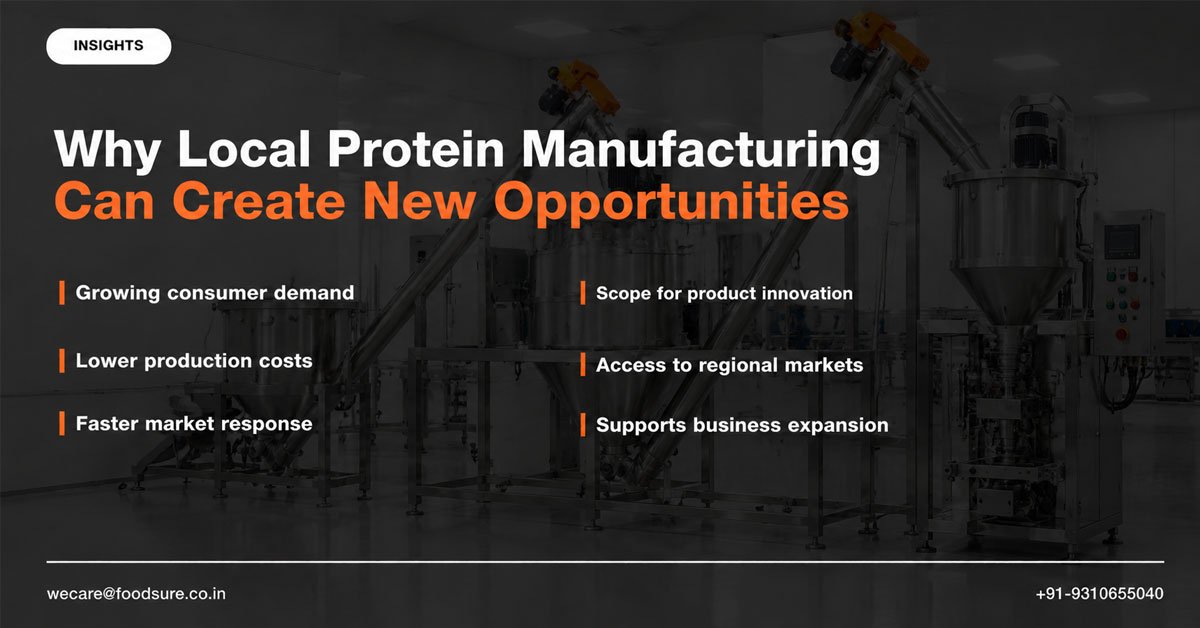
The opportunity is not necessarily to replace international brands. Regional manufacturers can instead focus on products designed around GCC consumer preferences, market requirements, and Halal expectations.
Local protein supplement manufacturing GCC can support several business models:
- Regional Brands: Manufacturers can come up with protein products that are exclusive to GCC customers. It gives them more room for product positioning, flavors, packaging, and brand creation.
- Private Label: They can produce protein products for gyms, retailers, distributors, and emerging nutrition brands. It enables manufacturers to have different clients while producing products that don’t have the manufacturer’s consumer brand.
- Diversification: With a proper production system for protein products, companies can look into other types of nutritional powders. It can assist them in expanding their products with growing demands in the market.
- Regional Production and Distribution: A GCC production facility will allow firms that wish to produce for multiple regions. The proper manufacturing facility can enable manufacturers to produce products based on regional demand.
This makes local production a potential long-term opportunity rather than simply an alternative to importing finished products.
The Halal Manufacturing Gap
With respect to businesses that wish to reach the GCC supplement market for supplements, Halal supplement manufacturing must be taken into account in the entire process. Protein supplements can consist of various ingredients besides the protein source itself, such as flavours, sweeteners, vitamins, minerals, and others.
Therefore, manufacturers must take into account the following:
- Raw material procurement and supplier documentation
- Traceability of raw materials
- Processes for manufacturing and handling
- Facility and contact surfaces for products
- Cleaning and sanitization
- Storage and handling of materials
- Appropriate Halal certification requirements
Depending on the specific product and target markets, the requirements may differ.
Why Halal Is Becoming a Manufacturing Consideration
Halal supplement manufacturing should not be treated as something that is checked only after the product has been developed.
For manufacturers, it can influence decisions right from ingredient selection and supplier evaluation to equipment planning and production procedures.
This is particularly relevant for protein supplement manufacturing GCC, where businesses may want to serve multiple regional markets. Building suitable systems from the beginning can make it easier to maintain consistent production and documentation.
The rise in demand combined with Halal regulations presents a particular opportunity for the development of protein products in the GCC under the appropriate manufacturing system.
From Growing Demand to Manufacturing Opportunity
There is no question that the protein supplement market GCC is creating demand, but the greater business opportunity will be in how the businesses within the region react to this demand.
Rather than simply engaging themselves in importing and distributing these products, firms need to investigate whether there is scope for local manufacturing, private label manufacture, or production of these supplements on a regional basis in their target market.
For those thinking about protein supplement manufacturing GCC, the key now lies in comprehending the manufacturing process.
What Does Protein Supplement Manufacturing GCC Actually Involve?
Protein supplement manufacturing GCC will involve more than simply buying a machine that produces protein powder. Commercial production involves a series of processes, including handling ingredients, weighing, mixing, storing, filling, and packaging. This depends on the product being produced, its composition, the required production volume, the packaging, and the automation needed.
A small company might only need a relatively smaller setup, while a bigger company that supplies different markets might need a bigger and more integrated line.
Key Stages in Protein Supplement Production
Each stage has a specific role in maintaining consistency and efficient material flow.
Ingredient Handling and Weighing
The powders, along with other components, must be received, tested, and stored properly before being used in the production process. Precise weighing is especially critical when more than one component is used in one product.
Sieving and Preparation
Based on the ingredients used, sieving might be required to ensure that the right material goes into blending.
Powder Blending
Blending is one of the most important stages of protein supplement manufacturing GCC. Different powders can have different particle sizes, densities, and flow characteristics, so the mixing system needs to provide an appropriate level of uniformity.
Filling and Packaging
Once mixing is done, the powdered product is then ready for filling and packing. The choice of container will depend on the specific type of product to be packed.
Why Powder Blending Matters So Much
Protein supplements often contain multiple ingredients that need uniform distribution throughout the batch. Proper blending helps maintain consistent quality and reliable batch-to-batch results.
For manufacturers targeting the protein supplement market GCC, selecting the right blending system is therefore essential.
The right blending equipment will be able to achieve:
- Even mixing of ingredients
- Consistent batch quality
- Proper processing control
- Lesser handling
- Replicable process
Selection of the mixer depends on powder properties, batch size, and the amount needed.
Machinery Required for Protein Supplement Production
| Processing Stage | Typical Equipment |
| Ingredient preparation | Storage bins, weighing system, sifter |
| Powder processing | Powder blender/mixer |
| Material movement | Conveyors or powder transfer system |
| Holding | Storage hopper or holding tank |
| Packaging | Powder filling and sealing machine |
| Final packing | Labelling and secondary packaging system |
Choosing the Right Protein Powder Machine in Middle East
In this case, firms looking for a protein powder machine in Middle East region should first establish the needs for production.
Some of these needs include:
- Type of protein or other powder
- Batch size
- Production capacity
- Flow properties of the powder
- Mixing properties
- Type of packaging
- Amount of automation needed
- Future expansion plans for production
It is important to note that a machine that is suitable for one type of powder may not necessarily be suitable for another.
The Role of Automation in Protein Supplement Manufacturing
As production increases, automation can reduce manual work and maintain a smoother production flow. It can help coordinate weighing, blending, filling, packaging, and material transfer while improving process monitoring.
Key advantages include:
- Low physical handling: Helps reduce repetitive production processes.
- Increased consistency: Assists in ensuring that processing is done in controlled conditions.
- Effective monitoring: Makes it easier for operators to monitor various stages.
- More efficient production: Linked machinery ensures consistent material flow.
The degree of automation will depend on the production capacity and plans of the company.
Halal Considerations During Manufacturing
Halal supplement manufacturing requires that considerations for compliance be made at all stages of the production process and not just at the packaging stage.
Manufacturers must examine the source and documentation of the ingredients, especially where there are many components in the product. The choice of machinery and the production process must also take into consideration hygienic and clean practices.
This is especially important when manufacturing different products using the same machinery.
Proper planning of Halal supplement manufacturing ensures greater control of the materials, process, and the final product by companies.
Building a Scalable Production Setup
The protein supplement market GCC can evolve as businesses grow, so equipment should support new flavours, products, pack sizes, and future capacity expansion.
The following would become easy with a scalable system:
- Capacity expansion
- Launching new products
- New types of packaging
- Automation improvement
- Expansion of the distribution network
For companies that want to enter the protein supplement manufacturing GCC, future requirements consideration could prevent any changes in the production system.
The Opportunity for Local and Regional Brands
Local manufacturing may offer more than just opportunities in consumer brands.
A manufacturing plant may be able to produce protein-based products for gyms, retailers, distributors, wellness companies, and private label companies.
In that case, the manufacturing of protein supplements in GCC would be pertinent to various business models.
In the growing GCC supplement market, manufacturing flexibility will become an advantage.
Is Supplement Manufacturing UAE Part of the Regional Opportunity?
There are several reasons why the UAE would make an ideal location for companies interested in supplement manufacturing UAE due to the country’s well-developed commercial infrastructure.
A manufacturer in the UAE could sell to the domestic market and distribute further throughout the GCC, depending on market requirements.
It must be mentioned that the choice of location is just one aspect of running a successful supplement company; others include manufacturing capacity, ingredients, Halal certification, packaging, distribution, etc.
In light of the evaluation of the protein supplements market GCC, the UAE becomes one of the possible manufacturing locations.
Turning the GCC Protein Boom Into a Manufacturing Opportunity
The protein supplement market GCC is creating opportunities for regional manufacturing focused on quality, convenience, consistency, and Halal suitability. Businesses can start with a focused range and expand as demand grows.
The potential starting point for a manufacturer may include:
- One to two basic protein products
- Few flavours available
- Packaging designs to a standard size
- Production capabilities that are limited
Other products, flavours, packages, and nutritional powders may be added as the company grows.
Building Products Specifically for GCC Consumers
International protein brands already have a strong presence across the GCC supplement market. Regional manufacturers therefore need to identify where local production can provide additional value.
This could include developing products around regional preferences, offering flexible pack sizes, responding faster to local demand, or building a brand around regional manufacturing and Halal positioning.
Local production can also give businesses greater control over product development and packaging decisions. Instead of depending entirely on an overseas manufacturer, a regional business can have greater involvement in how its products are produced and supplied.
This can make protein supplement manufacturing GCC a potential long-term strategy for businesses that want to build regional nutrition brands.
Private-Label and Contract Manufacturing Opportunities
However, the opportunity that arises due to the protein supplement market GCC does not apply only to companies producing their own products.
Factories can also help out other companies using private label manufacturing or contract manufacturing.
Potential buyers may include:
- Health and fitness brands
- Gym and sports centers
- Retailers
- Nutrition brands
- E-commerce brands
- Distributors of regional brands
Thus, it is possible for factories to operate in several market segments and increase production at the same time.
Private label manufacturing may also be considered as an alternative way to start producing for those companies that already have experience in the GCC supplements market.
Challenges Regional Manufacturers Need to Consider
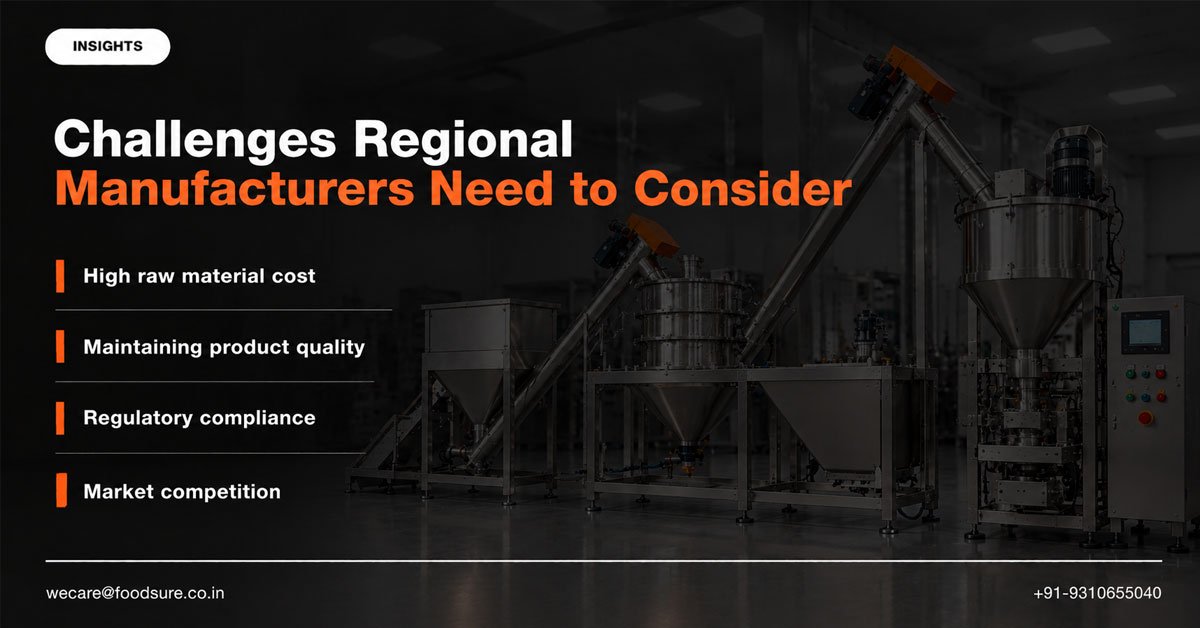
The opportunity for Halal supplement manufacturing is strong, but manufacturers also need to plan around several practical challenges.
Ingredient Sourcing
Reliable sources of protein ingredients and functional ingredients and appropriate documentation are needed. A stable supply is required to maintain product quality.
Product Consistency
A variety of powdered ingredients have different behavior when handling and mixing. Appropriate weighing and blending systems are needed for consistency in production.
Regulatory Requirements
Supplement regulations, registration, labeling, allowed statements, and many other requirements are not the same across GCC markets. Companies should understand the relevant requirements for their target market before production.
Competition
International brands already occupy significant space within the GCC supplement market. Regional businesses need clear product positioning rather than competing only on availability.
Production Planning
Production capacity should be planned according to the real market demand. A scalable production system can allow local companies to expand without oversizing the facility at the first stage.
Why Flexible Manufacturing Will Matter
Consumer preferences in the protein supplement market GCC can change, so flexible equipment helps manufacturers add new products, flavours, and packaging formats easily.
An adaptable system will be able to cope with:
- Various powder products
- Various batch sizes
- More flavors
- Various packaging options
- Increased production volume
- Production of related nutritional products
The aim is to develop a system that would allow for growth in parallel with the business.
The Importance of Quality and Hygiene
Quality control is essential in Halal supplement manufacturing because the final product depends on controlled handling at every stage.
The manufacturer needs to concentrate on:
- Quality of ingredients: The ingredients should be tested and recorded.
- Suitable machinery: The machinery used must be appropriate for the purpose.
- Proper handling of powder: The handling of the powder should reduce any contamination.
- Cleaning: The equipment should allow proper cleaning.
- Processing of product: Proper weighing and mixing are important.
- Packaging: The finished product should be packed and sealed properly.
This can ensure that consistency in products can be maintained.
Foodsure Machines for Protein Supplement Processing
Foodsure Machines provides integrated solutions for powder-based food and supplement manufacturing, helping businesses plan processing systems according to their specific production needs.
For protein supplement manufacturing GCC, equipment can be customised based on product type, production capacity, powder characteristics, automation level, and packaging requirements. A complete setup may include powder handling, weighing, sieving, blending, storage, filling, and packaging systems.
Businesses exploring a protein powder machine in Middle East can also receive support with equipment selection, production-line planning, installation, commissioning, and operator training. This allows manufacturers to build a more organised and scalable production setup as their business grows.
Conclusion
The growing need for protein, sports nutrition, and wellness items opens new avenues for protein supplement manufacturing GCC through which local manufacturers can benefit.
Given the right Halal supplement manufacturing processes and proper processing equipment, the companies can shift from purchasing finished products from elsewhere to creating their own regional manufacturing facilities.
Local manufacturing also gives an edge when it comes to product development, packaging, production planning, and maintaining quality of the product. As the demand increases, local manufacturers have the potential to enter various categories like new flavors, protein products, private label, and other types of nutritional powders.
All this makes protein supplement manufacturing GCC a viable business opportunity.
FAQs
Why is the protein supplement market GCC expanding?
The protein supplement market GCC is expanding owing to the rising consciousness about fitness and wellness along with the increased need for easily available nutrients.
What is halal supplement manufacturing?
Halal supplement manufacturing refers to the process of making supplements through the use of appropriate raw materials and processes according to Halal standards.
Why is protein supplement manufacturing GCC an opportunity?
Protein supplement manufacturing GCC is an opportunity that can allow organizations to reduce reliance on imports of ready-made products.
What machinery do we need for protein supplements production?
Machinery needed for the production of protein supplements includes those for weighing, sieving, blending, storing, filling, and packaging.
Can we produce protein supplements in the UAE?
Yes, supplement manufacturing UAE can be considered by organizations intending to manufacture products in the region.




