
The development of a winning protein bar is not only about selecting good-quality ingredients. The Protein Bar Recipe Development should include not only the right nutrition but also the best process and manufacturing.
With an increasing market need for functional and protein-rich snacks, there is a need for a proper approach to the development and manufacturing of the desired products. The following guide shows how manufacturing and formulation go hand-in-hand in the creation of successful protein bars.
Why Protein Bar Recipe Development Is Important
Protein bars are mainly defined by their formulation. The correct formula is very critical for ensuring that the bar comes out with the required nutritional value, palatability, stability, and shelf life.
Inadequate development and testing might lead to problems including:
- Lack of uniform texture
- Separation of ingredients
- Problems in processing
- Short shelf life
- Product instability
- High cost of manufacturing
Therefore, having an effective Protein Bar Recipe Development process helps overcome the aforementioned problems.
Read more :-
Key Elements of Protein Bar Recipe Development
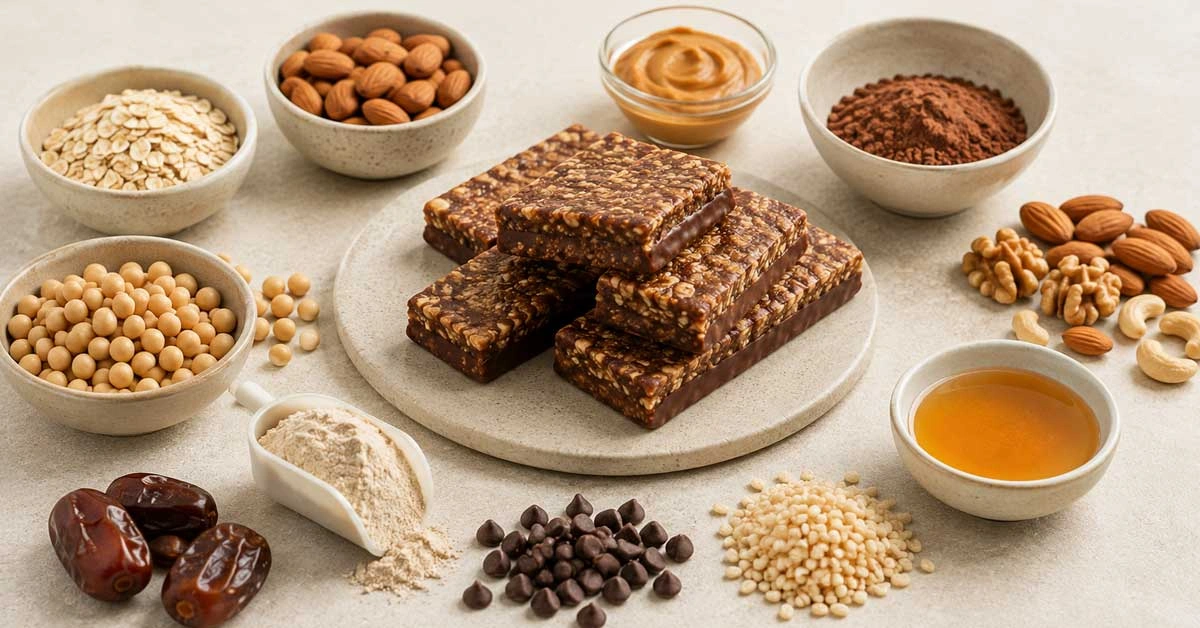
The formulation of a protein bar entails analyzing several formulation factors that impact product quality and manufacturability.
Selection of Protein Source
Proteins constitute the core of nutritional bars, and the choice of protein source impacts nutritional content, texture, flavor, and the manufacture of the product.
Possible protein sources are:
- Whey protein
- Milk protein
- Soy protein
- Pea protein
- Rice protein
- Blend proteins
Proteins differ in their behavior during manufacturing, and hence the selection of protein sources is an integral part of Protein Bar Formulation.
Binder Selection
The binder will aid in binding ingredients together and help in forming structure. Good binder selection will improve the structure of the product and avoid crumbling during production and storage.
Some common binders used are:
- Syrups
- Nut butters
- Honey
- Date Paste
- Fiber Syrups
The choice of binder directly impacts both product quality and manufacturing efficiency.
Texture Development
Texture is among the most crucial elements affecting consumer satisfaction. The protein bar must be easily bitten, enjoyable to chew, and maintain structural integrity throughout its shelf-life period.
When formulating the bars, manufacturers analyze the following aspects:
- Softness
- Chewiness
- Density
- Moisture content
- Structural stability
Texture optimization plays a vital role in commercial product development.
Flavor Optimization
Customers desire nutrition products that not only have utility but also appeal to their palates. Flavoring assists producers in developing products that are desirable for repeated purchase and still achieve nutritional goals.
Common flavor profiles are:
- Chocolate
- Peanut Butter
- Vanilla
- Caramel
- Coffee
- Fruit Flavors
Combining sweetness, protein profile, and functional ingredients can lead to better acceptability.
Commercial Protein Bar Formulation Considerations
Commercial production adds other formulation considerations that may not be readily evident while developing on a smaller scale.
Compatibility of Ingredients
Ingredients need to function harmoniously during the commercial manufacturing process. Some ingredients that do not match may cause problems in manufacturing and also lead to product instability.
Shelf Life Stability
Products are supposed to have the same quality during shelf life. Shelf-life determination will allow companies to see possible complications in terms of texture, moisture migration, flavor alteration, and ingredient interactions.
Efficiency in Manufacturing Process
Formulations are supposed to be not only good in nutritional terms but also in making manufacturing easier. Formulations that are not easy to manufacture will be more costly in production and less productive.
Thinking about production needs in the development phase will facilitate manufacturing in the future.
The Protein Bar Formulation Process
It is important for the development of a product to have an organized Protein Bar Formulation process, which entails balancing the nutrition aspect with production feasibility. Each step must be validated before large-scale production begins.
Step 1: Product Objective Definition
The first step involves understanding what needs to be achieved nutritionally through the product, the target consumers, the expected flavor and texture, and the product position. Having a set objective makes the process easier and clearer.
Step 2: Selection of Ingredients
In selecting ingredients for a particular product, manufacturers have to consider the ingredients needed to achieve the objective set. Manufacturers must select ingredients that will allow the manufacture of the product successfully.
Step 3: Formulation of a Prototype
Formulation of small laboratory batches takes place, whereby manufacturers test the taste, appearance, and texture of the product. At least more than one formula has to be tested to determine the best formulation.
Step 4: Pilot Batch Testing
Manufacturers formulate a pilot batch after having determined the most suitable formula. Pilot batch testing allows manufacturers to understand the challenges involved in the process of production before large-scale production.
Step 5: Validation of the Product
Manufacturers validate the formulation of the product through the actual manufacturing process.
Protein Bar Recipe Development Workflow
A structured workflow helps manufacturers move efficiently from product concept to commercial production.
Recipe Development Flow
This workflow simplifies product development while reducing delays during commercialization.
Role of the Protein Bar Machine in Commercial Production
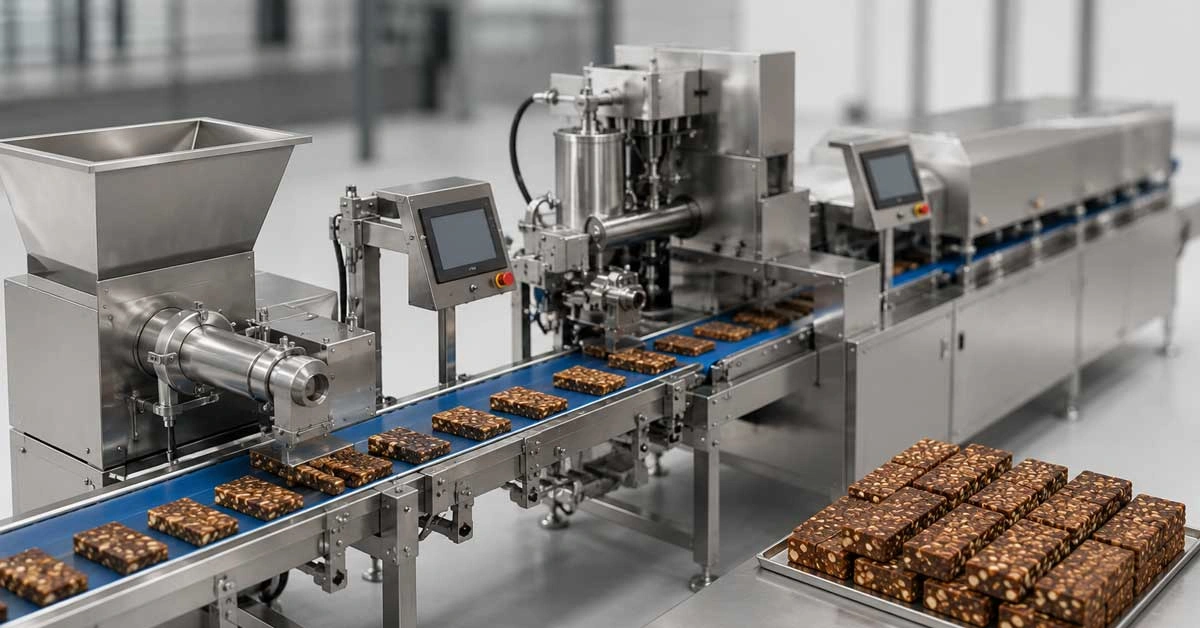
An effective Protein Bar Machine is essential in ensuring that a good formula is turned into an economically viable product. A good formula can fail in its processing due to inadequacies in the processing machinery used.
Modern machinery can assist manufacturers in achieving the following:
- Consistent size of products
- Increased production speed
- Decreased wastage of ingredients
- Quality consistency of the products
- Increasing the capacity of manufacturing
- Expansion capability in future manufacturing
Equipment that is compatible with the formulation process increases production efficiency.
Why Protein Bar Manufacturing Support Is Important
Creating a commercial product is not just about creating a good recipe. Professional Protein Bar Manufacturing Support assists manufacturers in solving various technical problems when scaling up or producing commercially.
Process Optimization
Manufacturing process factors like mixing, forming, cooling, and packaging are optimized for greater manufacturing efficiency and product consistency.
Machinery Sizing and Selection Advice
Proper equipment selection according to formulation properties and capacity prevents processing problems, increases overall performance, and allows for smooth manufacturing operations.
Scale-Up Services
Formulations that work well in a lab setting may need further fine-tuning for commercial manufacturing processes.
Production Process Troubleshooting
Experts assist with troubleshooting manufacturing process difficulties associated with ingredients’ performance and behavior, varying textures, equipment operation, and efficiency.
Benefits of Professional Protein Bar Manufacturing Support
Collaborating with experts when producing commercial goods enables manufacturers to save on time, enhance the efficiency of production, and decrease operational risks. Reliable Protein Bar Manufacturing support will guarantee consistent performance of the formulations under conditions of large-scale production.
Consistent Product Quality
Formulation and production standardization enable manufacturers to produce batches with similar flavor, texture, appearance, and nutritional content consistently.
Accelerated Commercialization Process
Expert advice helps cut down the product development time by eliminating errors during formulation, pilot production, and scaling up production. Products can be marketed quickly without encountering unnecessary production problems.
Reduced Risk of Production
Identification of possible problems during formulation and production eliminates the risk of failure, waste of ingredients, and poor-quality production.
Production Efficiency
Good formulations along with the appropriate manufacturing equipment enhance the efficiency of production.
Protein Bar Recipe Development Overview
| Development Stage | Objective |
|---|---|
| Product Concept | Define nutritional and commercial goals. |
| Ingredient Selection | Choose compatible raw materials. |
| Protein Bar Formulation | Develop a stable and scalable recipe. |
| Prototype Testing | Evaluate taste, texture, and quality. |
| Pilot Production | Validate manufacturing performance. |
| Commercial Production | Manufacture consistent, market-ready products. |
A structured Protein Bar Recipe Development approach helps manufacturers improve product quality while simplifying commercial production.
How Foodsure Supports Protein Bar Manufacturers
Foodsure assists food processors at all phases of the production process by formulating formulations, planning production, designing equipment, and providing consultation. We aim to assist firms in formulating commercially viable protein bars by being efficient in the manufacturing process.
For further information on our capability in food processing solutions, click on the About Us page.
Food processors intending to produce their products commercially may consider an advanced Protein Bar Machine for the efficient manufacture of their protein bars.
For customized formulation guidance and manufacturing consultation, Contact Us to discuss your production requirements.
Ready to Develop Your Protein Bar Recipe?
Protein Bar Recipe Development needs proper coordination between ingredient selection, formulation skills, manufacturing knowledge, and the commercial manufacturing process. The combination of a well-formulated Protein Bar Formulation and proper support for the manufacture of the protein bars results in the launch of a quality product with increased efficiency in production.
Contact Us today to explore complete protein bar formulation and manufacturing solutions.
Conclusion
To develop an efficient protein bar, Protein Bar Recipe Development is necessary. By concentrating on Protein Bar Formulation, choosing the correct Protein Bar Machine, and having access to Protein Bar Manufacturing Support, manufacturers can increase efficiency in their production process, ease manufacturing, and create a nutrition bar business that can be scaled.
FAQs
What is Protein Bar Recipe Development?
Protein Bar Recipe Development involves the development of a protein bar recipe through the selection of appropriate ingredients, nutritional balance, texture improvement, and validation for commercial manufacturing.
Why is Protein Bar Formulation important?
The right Protein Bar Formulation ensures consistency of product quality, stability in shelf life, efficiency in processing, and commercial manufacturing.
How does a Protein Bar Machine make commercial manufacturing better?
A Protein Bar Machine makes commercial manufacturing better through faster production rates, consistent dimensions of the products, reduction of wastage of ingredients, and scalability.
What is included in Protein Bar Manufacturing Support?
Protein bar manufacturing support often entails formulation assistance, process optimization, equipment selection, pilot testing, production scale-up, and technical assistance.
Why should recipe validation take place before manufacturing?
Recipe validation guarantees consistent formulation performance in commercial production, which enables efficient production and mitigates risk.




