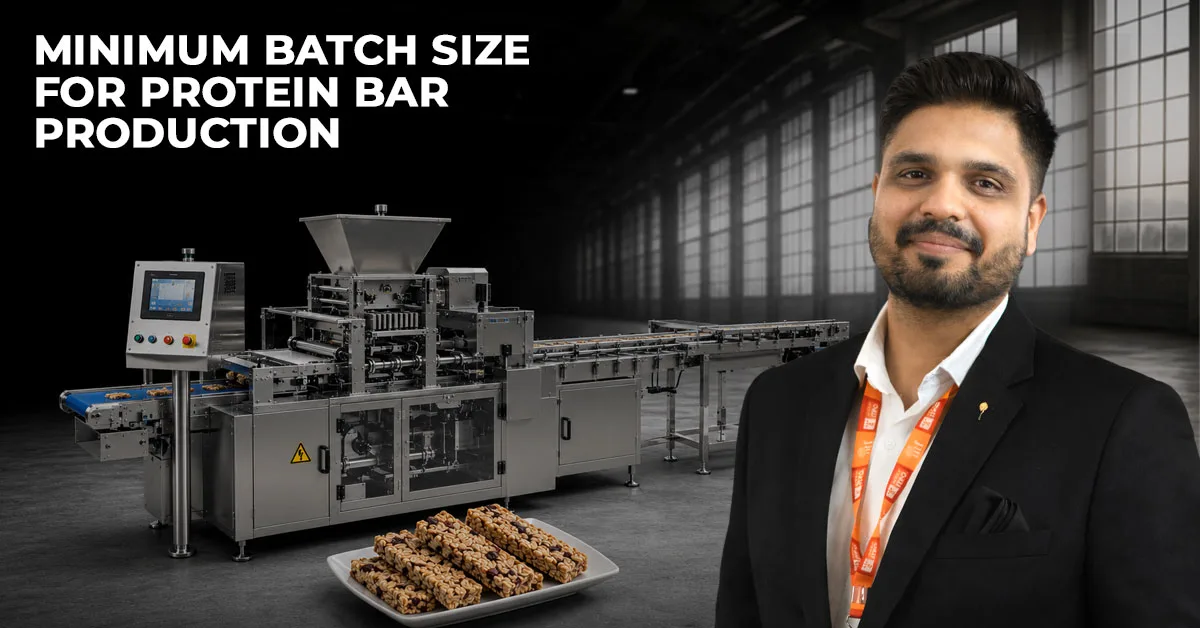
When a company sets out to develop their own branded protein bars, the minimum batch size of protein bar machine required for production is usually one of the earliest and most frequently asked questions. From the fitness industry, the nutrition brand world, startups, to those in the co-packing industry, figuring out production quantities is crucial for managing costs and increasing efficiency.
The protein bar batch size depends on:
- Ingredients
- Production equipment
- Packaging style
- Capabilities of the facility
While some facilities offer small batch runs, others need to be able to accommodate larger production quantities for efficiency and to offset costs. This article will walk you through how protein bar batch sizes work, what it means in terms of production capacity and equipment needs, and the steps you’ll need to take to succeed as a startup.
Protein Bar Batch Size
The minimum protein bar batch size is the smallest quantity of protein bars a production facility can produce in a given production run. Most production companies can formulate production runs with a variety of batch sizes based on:
How much raw materials must be ordered
- Machine setup time
- Labor cost
- Packaging details
- Storage capabilities
For a startup launching a new protein bar, the correct minimum order quantity for protein bar manufacturing is essential to minimize waste, as well as to lower their initial startup expenses. New brands trying to evaluate the popularity of their product before expanding beyond these early stage volumes are also often fans of a small batch protein bar manufacturing run.
Why Batch Size Matters In Protein Bar Production
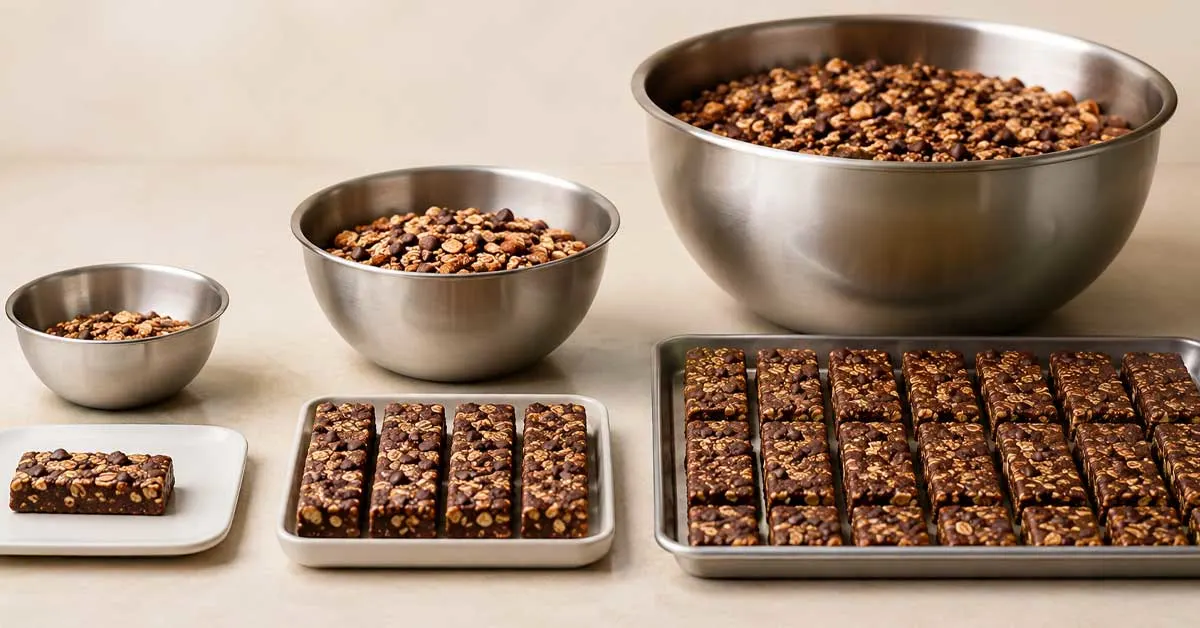
The Best Benefits of Knowing the Optimal Batch Size –
Reduced Cost Per Item –
Manufacturing large batches means the installation, operational and labour costs are spread out over an ample number of products produced. Higher efficiency lowers the amount of money spent on each product to raise high profits from your investment in production capacities and enterprise production line, the ideal machinery setting can positively benefit from you, optimizing and calculating the most optimal of sizes.
Ideal Inventory Management –
You are less likely to handle an over production of any product, therefore minimizing protein bar product wastage and holding the expenses while at the same moment meeting the consumer demand through optimized item run sizes assuring you never are in an event whereby inventory runs parched on popular items, but you also do not risk the items spoiling.
Improved item quality and reliance –
Standardized batch volumes also help regulate consistent quality and standards for your product; including for instance but without confining to edibles, flavour and nutrition grades will all be managed amidst the batches. A well optimized volume is a well optimized quality output you know can achieve regularly.
Product Supply Meets demand –
The correct sized batches help a company produce roughly what amount is predicted will sell in relation to the projected market demand. A company should seek to achieve production quantities to cover peak sales period without producing excess stock to cater for periods of low demand. This increases the efficiency of a business dramatically.
Typical Protein Bar Production Volumes
Production Size Based on Business Scale
| Business Type | Daily Production | Quarterly Production | Yearly Production |
|---|---|---|---|
| Startup Brand | 5,000 Bars | 450,000 Bars | 1.8 Million Bars |
| Growing Brand | 20,000 Bars | 1.8 Million Bars | 7.2 Million Bars |
| Large Manufacturer | 100,000 Bars | 9 Million Bars | 36 Million Bars |
This table represents general manufacturing batches for different enterprises sizes. New firms often start with small production runs to decrease the financial risk. Thriving brands improve the output as demand escalates. Big producers work on multiple shifts and advanced automatic hardwares. Quarterly manufacturing aids firms plan stock and supply flows. Yearly production stats help in budgeting and business expansion planning.Comprehending these figures helps decide the minimum batch size for protein bar production.
Protein Bar Production Batch Size Requirements
The protein bar production batch size requirements vary depending on the machinery and production objectives.
General Batch Size Categories
| Batch Type | Production Quantity |
|---|---|
| Trial Batch | 1,000 – 5,000 Bars |
| Small Batch | 5,000 – 20,000 Bars |
| Medium Batch | 20,000 – 100,000 Bars |
| Large Batch | 100,000+ Bars |
Explanation –
This table generalises manufacturing by quantity. Demo batches assist firms test recipes and wrappings. Small production scales are general in the small batch protein bar manufacturing process. Medium scale production helps regional distribution. Large scale productions are utilised by national and global enterprises. Each category has different costs and operational requirements.Firms must select the batch size that aligns with the demand and brand’s budget.
Protein Bar Production Process
The protein bar production process follows several key steps.
Flow Chart: Protein Bar Production Procedure
Explanation –
The procedure begins mixing the ingredients to assure consistency. The dough is then put together and poured into forming machinery. A protein bar machine forms the mixture into bars. The bars are then trimmed into required sizes and cooled for stability. Packaging prevents the item from outside contamination and improves the shelf life. In the end, bars are then wrapped and distributed to retailers and customers. This whole protein bar manufacturing procedure assures the product quality and consistency.
Protein Bar Machine and Production Capacity
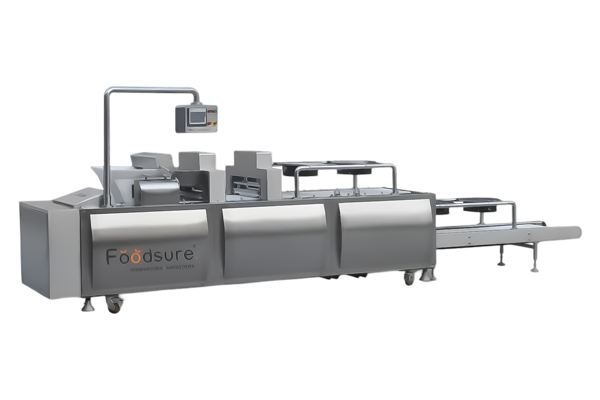
A modern protein bar machine plays a significant function in determining production output.
Machine Capacity Comparison
| Machine Type | Bars Per Hour |
|---|---|
| Entry-Level Machine | 2,000–5,000 |
| Semi-Automatic Machinery | 5,000–10,000 |
| Fully Automatic Machinery | 10,000–30,000 |
Explanation –
Equipment selection proportionately influences the production run. Entry-level machines are prevalent for new firms. Semi-automated machinery provides enhanced production with mid scale ventures. Fully automated machines aid large-scale production. The correct protein bar machine supports optimizing labor and operational expenses. Capacity planning should match with future trade scope. Choosing the right equipment assures efficient protein bar manufacturing.
Minimum Order Quantity for Protein Bar Manufacturing
The minimum order quantity for protein bar manufacturing depends on the producer and item complexity.
| Manufacturing Type | MOQ |
|---|---|
| Pilot Production | 1,000 Bars |
| Startup Production | 5,000 Bars |
| Commercial Manufacturing | 20,000+ Bars |
Explanation of MOQ Table
Minimum order quantities support producers maintain revenue. Smaller MOQs are prevalent for evaluating new items. Startup-level MOQs stabilise affordability and efficiency. Industrial production emphasizes large-scale distribution. MOQ requirements may rise when custom ingredients are employed. Ruminating the minimum order quantity for protein bar manufacturing supports brands’ plan stock and cash flow.
Small Batch Protein Bar Manufacturing Process –
The small batch protein bar manufacturing process is best suited for start-ups and niche brands. –
Advantages –
Small Initial Investment –
Smaller runs necessitate smaller capital investment. Thus, companies can launch a product into the market without the need to finance large inventories.
Opportunity to test your products –
You may gauge customer reaction toward your bars before scaling the production to mass produce a higher volume of bars. The results will assist your team in refining recipes and packaging strategies.
Reduced inventory risks –
When you make small batches, the probability of being stuck with inventory is greatly reduced. Therefore, companies are able to respond more quickly to market shifts.
Increased flexibility –
Companies have the ability to quickly offer new and innovative flavours, encouraging product research and innovation.
Protein Bar Production Capacity for Startups
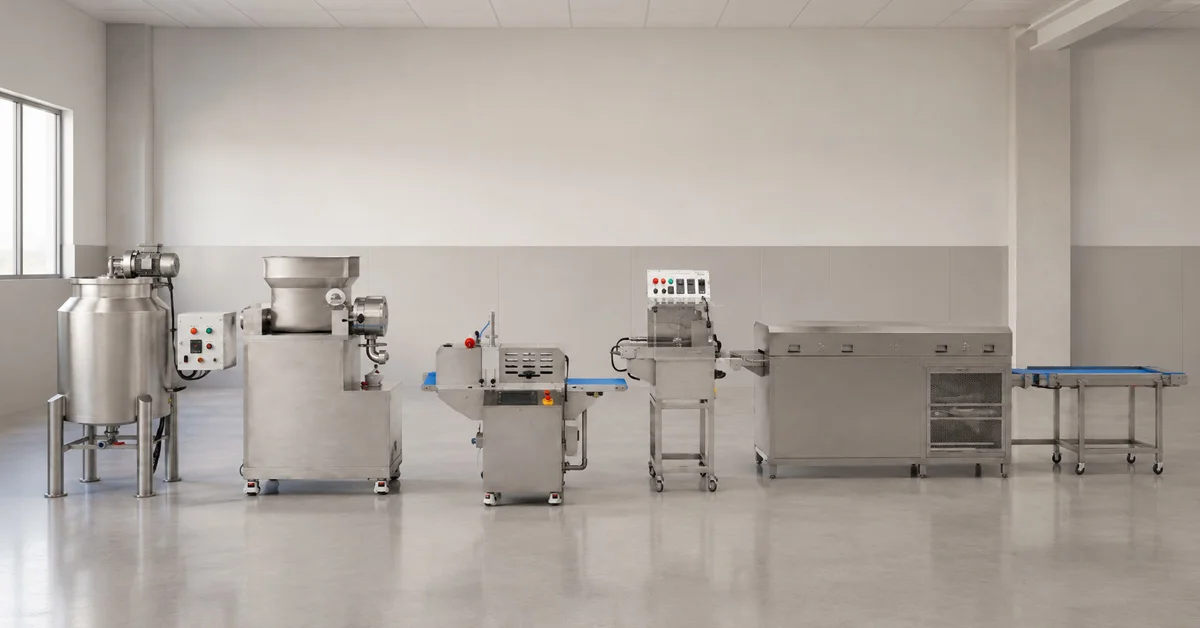
Comprehending protein bar production capacity for startups assists firms set realistic growth objectives.
Flow Chart: Startup Growth Model
Explanation –
This growth model presents how new firms can scale efficiently. Trial batches validate item quality and customer curiosity. Small batch manufacturing decreases financial risk. Market evaluation gives valuable reviews and sales information. Escalated demand leads to high manufacturing volumes. Firms can then move toward full commercial production. This approach aids sustainable protein bar manufacturing growth.
Foodsure Machines and Their Services
Foodsure Machines is a trustworthy supplier of machinery and solutions for protein bar manufacturing. The firm provides advanced machines designed for efficient production. Their machines aid both new firms and big-scale operations. Foodsure Machines provides trustworthy protein bar machinery solutions for forming and cutting bars. They provide installation assistance and machine setup support. Technical training supports machine workers to run equipment smoothly. Maintenance services decrease downtime and increase productivity. The company also provides modification alternatives for several bar sizes. Production consultation services support firms to improve workflow. Their complete solutions help every stage of protein bar manufacturing .
How to Select The Correct Production Batch Size
While choosing the minimum batch size for protein bar production, keep these factors in mind :
- Market demand forecasts
- Available budget
- Storage space
- Ingredient shelf life
- Machinery capacity
- Distribution plans
Mindful deliberation supports firms that meet their protein bar production batch size requirements while maintaining revenue.
FAQs-
1. What is the minimum production batch volume for a protein bar?
The minimum batch size for protein bar production usually ranges between 1,000 to 5,000 bars depending on the producer. Small pilot scale productions are ideal for evaluating recipes, product wrappings, and customer requirements before moving to big commercial production runs.
2. What are the protein bar production batch size necessities?
Manufacturers regularly set a required minimum to have the most economic and cost efficient way of manufacturing their items.
3.What is the minimum order quantity for protein bar manufacturing?
Minimum quantity order (MQO) begins usually from 1,000 bars for a pilot or test run, and 5,000 bars minimum for the initial commercial manufacturing. Big manufacturers may need 10,000 bars and upwards for custom protein bar orders.
4. Why is the small batch protein bar manufacturing process significant?
With a small batch process for protein bars, any firm would be able to evaluate the feasibility of their manufactured item without a big initial investment of funds. It minimizes the risk associated with keeping large stock grades, lets the quick customizations as there will be much feedback before scaling up.
5. What is the typical protein bar production capacity for start-ups?
For startups it usually varies from 5,000 to 20,000 bars a day and this capacity depends on equipment, operators and also the market stats. The firms can extend progressively the range as the sale increases.