
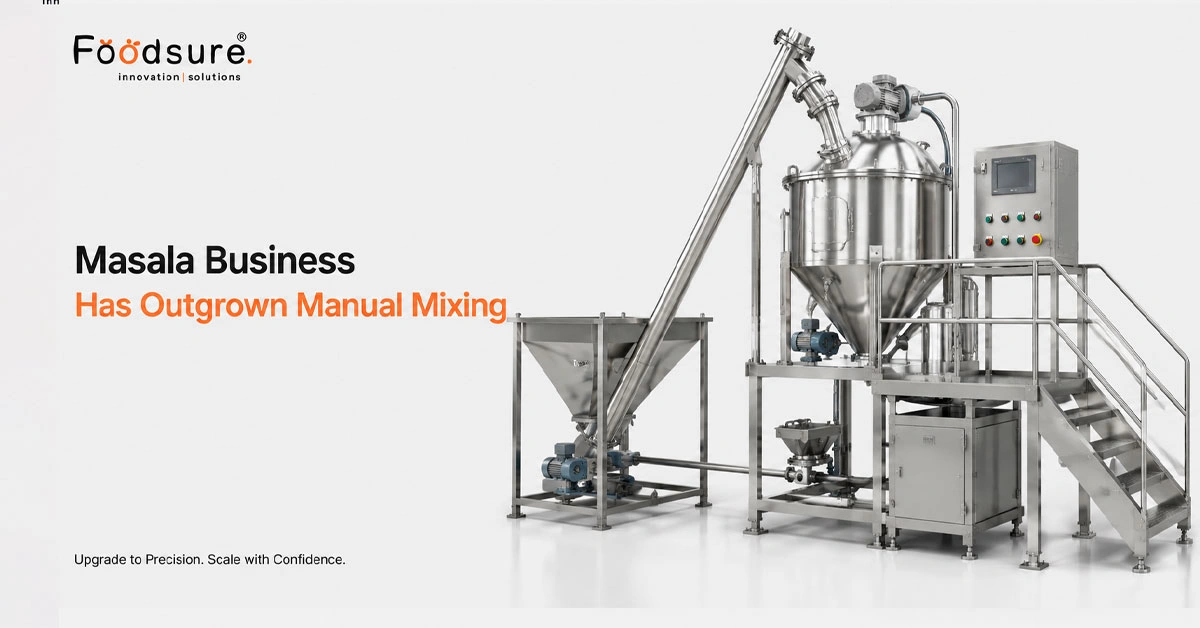
To develop an effective Masala Business, it is necessary to do much more than just have a good mixture of spices. As demand for these products rises, the more likely the manufacturer will find that the manual mixing method, which was quite effective at the beginning stage, becomes a real production problem.
A lot of expanding manufacturers tend to delay the investment in a Masala Mixing Machine because they do not know when the right time would be. Although some companies invest in upgrading too soon, others only do it once issues regarding low-quality products, delayed delivery, or high expenses start hindering their growth.
This blog describes the most common signs that you need to switch from hand-mixing your products, problems associated with the conventional manufacturing process, and how a masala mixing machine can benefit your business.
Why Manual Mixing Becomes a Growth Bottleneck
Manual mixing is usually the first option that companies opt for when they start since it involves little money and they can easily start producing right away. Manual mixing also gives flexibility when making changes to the recipe.
As the volume of products needed grows, however, manual processing becomes harder and harder to manage. Manual mixing involves more people, more time spent producing each batch, and more supervision. What is more, it becomes increasingly hard to ensure that each batch will be equally mixed.
This is where, for most companies, production becomes a limiting factor in their development.
Understanding Why Manual Mixing Works Initially but Becomes a Challenge
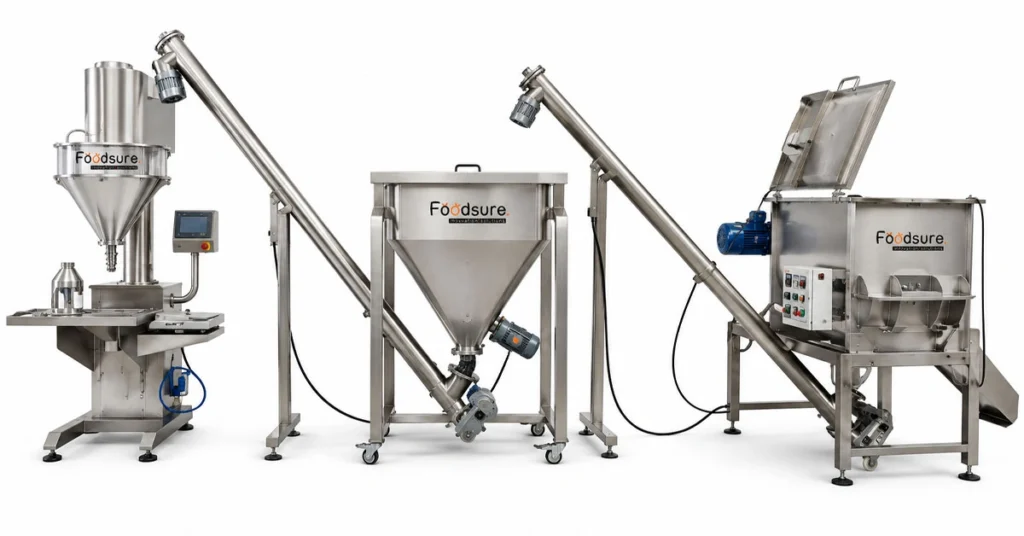
Manual mixing is an appropriate approach for many companies embarking on the Masala Business. As the demand for products grows along with client needs, however, this approach eventually becomes increasingly hard to manage and, therefore, becomes a less viable choice.
Easy to Manage in the Beginning
In the beginning phase of a Masala business, manual mixing proves to be effective since production will be low, capital invested will be minimal, and the labor force will also be small enough to carry out the production processes every day.
Growth Brings New Production Challenges
With increasing demand, larger orders from retailers and distributors, and stricter delivery deadlines will prove the process of manual mixing to be slow and harder to control.
Consistency Becomes Harder to Maintain
Due to increased production, it becomes difficult to achieve the same consistency and quality every time due to inconsistent mixing and increased human errors.
Commercial Mixing Improves Efficiency
Using a Masala Mixing Machine makes the process easy with efficient mixing and production.
Why Product Consistency Matters in a Growing Masala Business
One of the most valuable competitive edges available in the current spice market is consistency. Consumers expect that all packs of masala have identical fragrance, flavor, texture, and color irrespective of when they were made.
The slightest differences in each batch could lead to doubts among customers and cause quality problems on the part of wholesalers or retailers.
A well-designed masala mixing machine will help to distribute ingredients evenly across all batches.
5 Signs Your Masala Business Has Outgrown Manual Mixing
However, as your Masala Business expands, the production methods that were efficient in the past will start affecting efficiency negatively. The following are some indicators that it is time to acquire a Masala Mixing Machine.
You’re Spending More Time on Mixing Than Business Growth
However, with the rise in production, most of the time spent by the manufacturers is spent on manual preparation of masala mixes.
Manual Mixing Has Become Your Daily Priority
Rather than growing in size, much of your working hours have been taken up in weighing ingredients, blending batches, unloading the product, and cleaning up the machinery after each production cycle.
Production Is Limiting Business Expansion
Clearly, when you are stuck on the production line because of manual mixing, which means not getting more orders or exploring new markets, it is a definite sign that your process limits the growth of your Masala Business.
Commercial Mixing Can Improve Productivity
With a Masala Mixing Machine, you will get rid of manual blending and become more productive.
Common Challenges of Manual Mixing in a Masala Business
Despite the effectiveness of manual mixing in low-volume production, some operational difficulties start surfacing with rising levels of manufacturing. Recognizing these problems at an early stage assists companies in knowing when to invest in new machinery.
Uneven Ingredient Distribution
Spices are not only of varying particle sizes and density but also have varied flow characteristics. It is not possible to mix these ingredients homogeneously using manual mixing.
Batch-to-Batch Quality Variation
Inconsistency in maintaining the same level of quality becomes hard, especially when several operators use different blending techniques and times for mixing. Any slight variation in processing may have an impact on customer satisfaction.
Higher Production Time
There is a need for more time in the manual production of the products due to the time taken for weighing, blending, discharging, and cleaning after each batch.
Increased Product Wastage
Waste is usually caused by improper blending, which results in product rejection and formulation inconsistency. The wastage increases production costs and reduces profitability.
Limited Business Scalability
The most limiting factor about manual production is the scalability of the business since adding more personnel does not solve this problem. Purchasing a masala mixing machine enables production firms to scale up their production capacities without adding much labor force.
How a Masala Mixing Machine Solves These Challenges
Modern mixing technology is purpose-built for overcoming many of the drawbacks associated with manual processing methods. Rather than relying purely on operator competence, businesses are able to take advantage of standardized and predictable mixing processes.
The use of a Masala Mixing Machine within a commercial business enables one to:
- Ensure even distribution of spices in each batch.
- Consistency of batches.
- Shorten the process time.
- Minimize material waste.
- Reduce dependence on labor.
- Boost output capacity.
- Plan for future growth.
This makes it possible for businesses to manufacture more output while maintaining product quality standards.
Benefits of Investing in a Commercial Masala Mixing Machine
Upgrading to automation from manual production is beneficial in many ways.
Uniform Product Quality
The product undergoes the same mixing cycle every time; therefore, the taste, smell, color, and texture remain the same in all production batches.
Increased Production Capability
Producers can increase their production capability, since they can produce much larger batches in fewer production periods.
Increased Operational Efficiency
Automated mixing increases efficiency, decreases downtime, and helps producers concentrate on tasks of more importance.
Decreased Production Cost
The labor cost decreases, wastage becomes less, and the producer becomes more productive.
Easy Scaling of Business
The Masala Mixing Machine ensures the production capacity necessary for distributing the product retail, doing private labeling, exporting, and making bulk orders.
How to Choose the Right Masala Mixing Machine
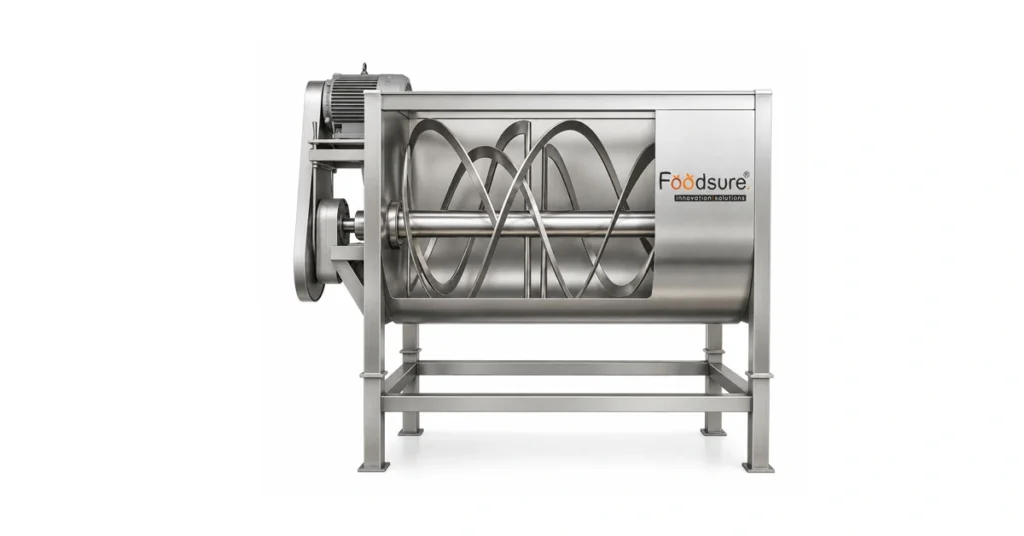
Choosing a masala mixing machine entails much more than price comparison alone. It is important for manufacturers to look at their production needs, product, factory floor space, and plans for future expansion when purchasing new equipment.
These considerations need to be taken into account during equipment selection:
Production Capacity
Select machinery that not only meets your current production needs but also takes into consideration how your company will grow within the next few years.
Mixing Technology
It is necessary to select the appropriate mixing technology, depending on the type of spice formulation used, in order to ensure even distribution without damaging the spices.
Material of Construction
In the case of food production, it is always advisable to opt for stainless steel (SS304 or SS316 if needed).
Automation Levels
Companies should use manual, semi-automatic or automatic machines depending on their production needs, labour force and plans.
Support Services after Sale
Technical assistance, installation, supply of spares, and maintenance service are important in ensuring that production is not interrupted during the entire lifetime of the machine.
Use of the right masala mixing machine will enable manufactures improve production efficiency and future expansion of their business.
How Foodsure Machines Supports Growing Masala Businesses
Foodsure assists in selecting the appropriate Masala Mixing Machine for spice manufacturers who are in the process of developing their company. Our team of experts will help in all aspects, ranging from choosing the appropriate machine to planning its installation, production setup, and technical support after the machine is installed. Whatever the requirement, whether you have been operating manually and wish to upgrade to automated equipment or are planning a new unit for your spice processing plant, our experts will assist you in choosing the right machine according to your business needs.
For more details, please visit Masala Mixing Machine Solutions. Alternatively, you may visit the About Us or Contact Us pages.
Conclusion
Manual mixing is helpful for companies when they are growing in their initial stages, but ultimately the demands for increased production lead to manual mixing’s limitations becoming apparent. Increased labour costs, variations in the quality of products, more time consumed in manufacturing, and difficulties in dealing with large orders are clear signs that a company has surpassed manual production techniques.Selecting the right Masala Mixing Machine enables manufacturers to benefit from consistency, enhanced production capacity, reduced costs, and better preparation for the future. For any growing Masala Business, choosing automated mixing is not just an investment in equipment but an investment in efficiency.
FAQs
When should a growing Masala Business purchase a Masala Mixing Machine?
The business should consider purchasing a Masala Mixing Machine once manual mixing starts impacting production capabilities, product quality, labor costs, or the business’s ability to satisfy customer orders of a greater magnitude.
Why is the Masala Mixing Machine good for making products?
A Masala Mixing Machine offers consistent ingredient mixing and blend times, which result in reduced color and taste differences between batches.
Can a Masala Mixing Machine save on labor cost?
Certainly. The use of automated mixing saves labor costs by requiring fewer people to produce more output efficiently.
What capacity Masala Mixing Machine should the manufacturers go for?
The capacity of the machine should be chosen based on the manufacturer’s current production needs while giving space for expansion.
Does Foodsure offer installation and technical support?
Yes. Foodsure offers assistance with machine choice, installation, commissioning, technical support, and after-sales services.




