
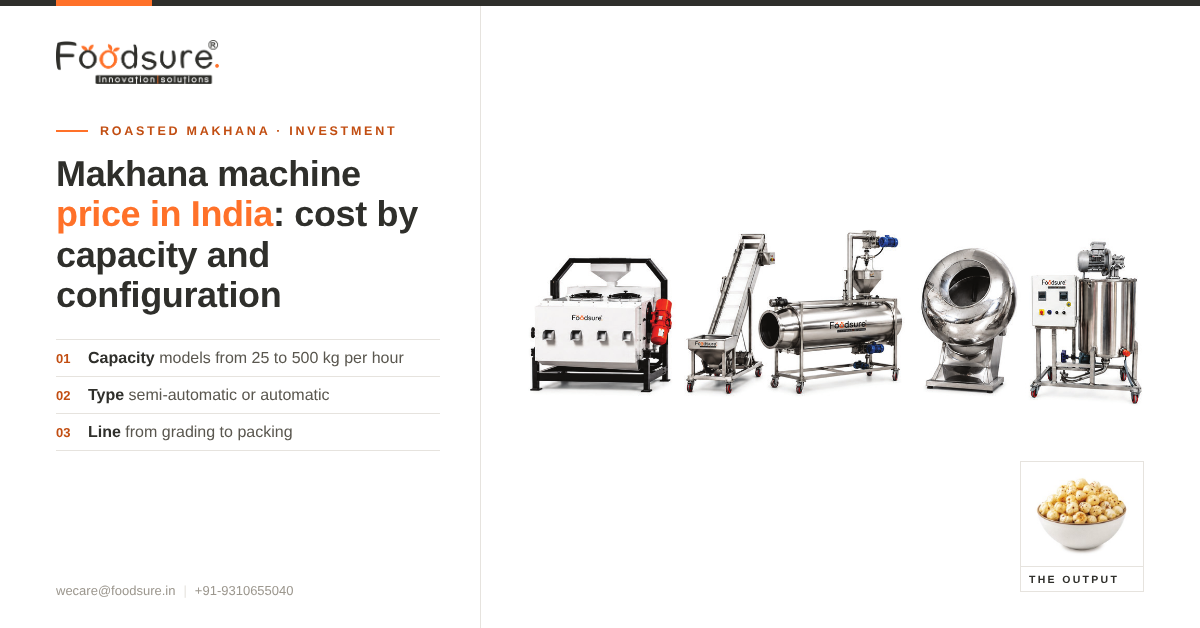
The increase in the demand for roasted, flavored, and packed makhana has motivated food companies to install machines that can process their products. Nevertheless, the extent of investment required is influenced by various factors such as the type of machine and the stages of processing involved.
Knowing the price of a makhana machine in India will help manufacturers understand which types of machines to choose for their factory. No matter if you are looking for a makhana popping machine, a makhana roasting machine, or a complete makhana processing line, comparison of the specifications of machinery and quotations will play an important role.
Here we have described everything about the factors that impact machine cost, how capacity influences equipment selection, and how manufacturers should get a quotation in 2026.
What Determines Makhana Machine Price in India?
The makhana machine price in india depends on the equipment’s purpose, design, capacity, construction, and level of automation. A machine designed for one processing stage may have different requirements from a complete production line that combines several operations.
Before comparing equipment, manufacturers should identify the specific stage they want to automate.
Important factors include:
- Type of machinery: Popping, roasting, grading, seasoning, or packaging machine.
- Production capacity: Amount of raw material or finished product processed in one hour or batch.
- Level of automation: Whether manual, semi-automated, or fully automated.
- Materials used: Food-grade materials, design, and construction of the machine.
- Heating system: Type of heating and temperature control required.
- Supporting machinery: Conveyor belts, feeders, coolers, and other related parts.
- Installation: Layout of the factory, installation, commissioning, and operator training.
- After-sales service: Warranty period, servicing, and spares.
These factors explain why two machines advertised for similar production volumes may have different specifications and investment requirements.
Types of Makhana Machines and Their Configurations
Before asking for a makhana machine quotation, it is important to understand which equipment is required for your manufacturing process. The configuration should match the intended product and the stage of production.
1. Makhana Popping Machine
A makhana popping machine is used to process suitable raw makhana seeds through controlled heating and popping operations. Its configuration depends on the input material, processing method, required output, and operating conditions.
When evaluating a popping machine, manufacturers should check:
- Seed popping raw capacity
- Process heating and temperature control
- Popping consistency and food quality
- Material handling and discharge system
- Operators’ role and cleaning
- Compatibility with further grading and processing steps
The machine should be evaluated according to the intended raw material and finished-product requirements rather than capacity alone.
2. Makhana Roasting Machine
A makhana roasting machine is used to roast popped makhana to achieve the required texture and product characteristics. Depending on the configuration, roasting equipment may use batch-based or continuous processing arrangements.
Significant factors to consider will be the even distribution of heat, temperature control, batch size, operational needs, and handling of the product.
In the case of manufacturers who make roasted or flavored makhana products, the roasting process will have to integrate with seasonings, cooling, and packing machinery as well.
3. Makhana Grading and Sorting Machine
Grading and sorting machines sort makhana based on their sizes or any other desired criteria. They may assist in developing well-defined product categories for manufacturing companies and organize material for further processing and packing.
The specific setup will depend on the amount of production, grade differentiation, and the degree of automation needed.
Manufacturers need to take into account how the grading machine will fit into the existing processing line.
4. Makhana Seasoning and Flavouring Machine
Equipment for seasoning is used for applying flavors or coatings on the roasted makhana. Based on the type of products being manufactured, manufacturers may need equipment for seasoning, mixing, coating, or discharging of products.
The cost of investment will depend on the design of the machine, capacity, seasoning, and accessories.
5. Complete Makhana Processing Line
A full processing line would include various stages, such as popping, grading, roasting, seasoning, cooling, and packaging.
The use of an integrated system would help avoid unnecessary handling of the product and make the production process more orderly. The amount of machinery needed would depend on the number of stages and their capacities, as well as the level of automation.
It is recommended that manufacturers ask for the list of machinery involved in the suggested process.
Makhana Machine Price in India by Capacity and Production Scale
Capacity is an aspect that plays a critical role when looking at any equipment. But it is not the only factor when taking into consideration total investment because different equipment can do different roles and have different accessories.
A practical makhana machine price in india guide should therefore compare capacity alongside the machine’s purpose and configuration.
| Production Scale | Typical Business Requirement | Configuration to Evaluate |
| Small scale | Startups and small snack businesses | Compact or semi-automatic equipment |
| Medium scale | Growing brands and regional processors | Higher-throughput machinery with improved process control |
| Large scale | Established manufacturers and bulk suppliers | High-capacity equipment with greater automation |
| Integrated production | Businesses managing several processing stages | Coordinated processing, handling, and packaging line |
How Much Does a Makhana Machine Cost in India?
Businesses researching how much does a makhana machine cost in india should first identify the type of equipment they need. There is no single price applicable to every makhana machine because the term can refer to equipment performing different functions.
For instance, a popping machine and a roasting machine may not carry out the same process. In addition, a single roaster cannot be compared to a line that has seasoning, cooling, and packaging processes incorporated in it.
Before requesting a quotation, define:
- Process to be automated
- Input/output capacity of the process
- Batch or continuous process operation
- Degree of automation
- Material/construction details
- Other machines to be used
- Installation, commissioning, and service considerations
This information helps suppliers recommend an appropriate configuration and prepare a more relevant quotation.
Makhana Machine Cost Per Kg: What Should Manufacturers Consider?
The makhana machine cost per kg is a useful consideration when evaluating production efficiency. However, it should not be confused with the machine’s purchase cost alone.
The operating cost per kilogram depends on how efficiently the equipment is used and the expenses associated with processing each unit of output.
Manufacturers should consider the following factors:
Energy Consumption
Heating systems and motors will use energy while running. The actual energy consumption will vary according to the machine being used, the processing conditions, the time the machine runs for, and the heating system.
Labor Costs
Loading, unloading, transfer of products, and supervision could affect labor costs. Automation could cut down on repetitive tasks, depending on the machine layout.
Utilization of the Machine
A machine that runs efficiently and regularly, at the right capacity, will spread out its fixed operating and ownership costs on more products than machines that are idle.
Processing Yield
Losses, breakage, uneven processing, and wastage of materials can affect the quantity of saleable product produced from the input material.
Maintenance and Downtime
Regular maintenance, spares, cleaning, and downtime could affect the overall cost of production.
Support Equipment
Conveyors, feeders, cooling equipment, and packaging machines could affect the total cost of operating the entire production line.
For a comparison to be useful, manufacturers should measure cost per kilogram using actual production figures and full operating requirements of the machine.
Makhana Machine Price in India 2026: What Has Changed in Buying Requirements?
When evaluating makhana machine price in india 2026, manufacturers should focus on the specifications and operating capabilities offered by different equipment configurations rather than relying on general market estimates.
The requirements of a small processor can differ considerably from those of a business supplying large retail networks or wholesale distributors.
Current buying decisions should account for:
- Production capacity and demand requirements.
- Automation at a higher or lower level as needed by the business
- Consistency of product and process control
- Sanitary design and easy cleaning
- Integration with seasoning and packaging systems
- Energy and utility requirements
- Technical support and availability of spares
- Capacity expansion possibilities in the future
The most suitable machine is the one that meets the manufacturer’s actual requirements while remaining practical to operate and maintain.
How to Compare a Makhana Machine Quotation
A detailed makhana machine quotation should clearly describe the equipment being supplied, its specifications, and the services included.
Manufacturers should avoid comparing quotations solely by their final totals. Different suppliers may offer different machine configurations, capacities, materials, or levels of automation.
Use the following checklist when evaluating quotations:
| Quotation Detail | What to Verify |
| Machine specifications | Model, dimensions, and intended function |
| Capacity | Batch capacity or hourly throughput |
| Construction | Product-contact materials and hygienic design |
| Heating and controls | Heating method, controls, and operating requirements |
| Automation | Manual operations versus automated functions |
| Supporting equipment | Feeders, conveyors, cooling, and other components |
| Installation | Commissioning, training, and installation scope |
| Utilities | Electrical load and other infrastructure requirements |
| Warranty | Coverage, exclusions, and service conditions |
| Delivery | Transportation, delivery terms, and installation schedule |
| Maintenance | Spare parts, servicing, and technical support |
A written comparison makes it easier to identify missing components and understand the differences between suppliers’ proposals.
How to Choose the Right Makhana Machine Manufacturer
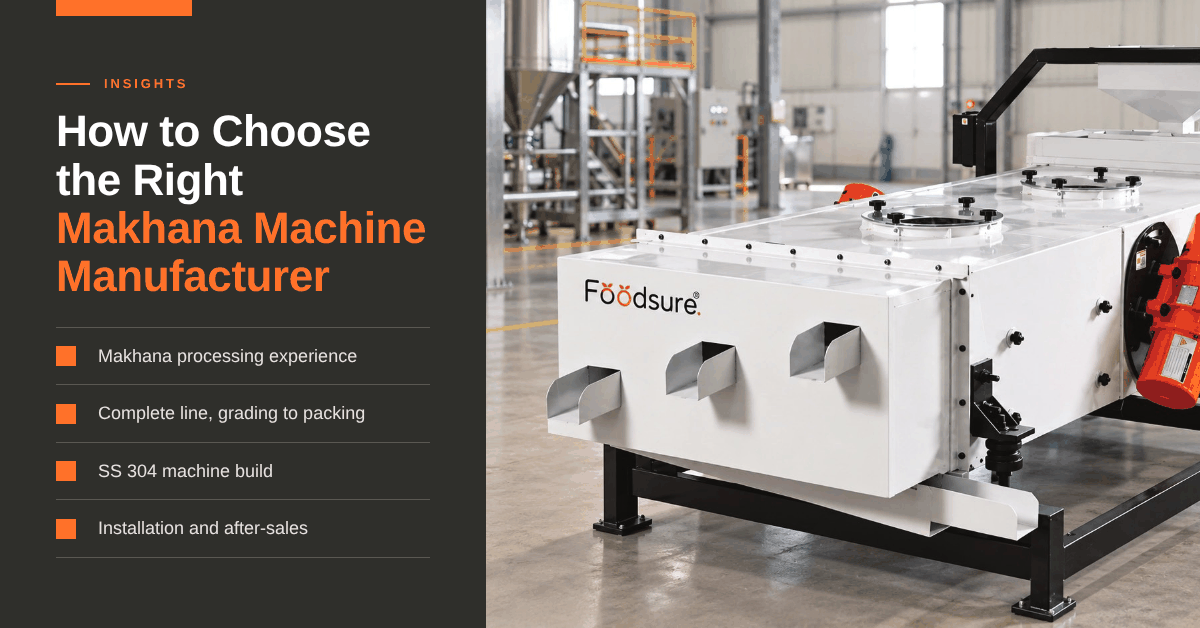
Selecting a suitable makhana machine manufacturer is an important part of the purchasing process. The supplier should understand the intended product, processing requirements, capacity, and factory layout before recommending equipment.
Technical Understanding Evaluation
The supplier should be able to provide an explanation of how the machine works, its purpose, capacity, and limitations.
Machine Specifications Evaluation
Examine the construction, heating system, controls, material handling, and cleaning requirements. Request written specifications instead of just a general description.
Installation and Support Confirmation
Ask if there is any installation assistance, operator training, troubleshooting, and spare parts support.
Product Testing Discussion
If feasible, request testing of the machine using samples of the raw materials or products. This will help determine whether the machine is suitable for the intended process.
Future Expansion Consideration
If the company plans to produce more, ask about the compatibility of the machine with other processing and packaging machinery.
Supplier evaluation plays an important role in helping manufacturers select equipment.
Why Choose Foodsure for Makhana Processing Machinery?
Foodsure manufactures machines that process foods for companies looking to set up or grow in their production capacities. Requirements for machines may vary based on the type of product, production capacity, number of processing stages, space available, and extent of automation.
For businesses comparing the makhana machine price, it is important to identify whether the requirement involves an individual machine or a coordinated production setup.
Foodsure can assist companies in assessing their processing requirements and appropriate machinery configurations. The manufacturers need to determine the specifications of the machines and equipment to be provided before finalizing any order.
Conclusion
To get information about the makhana machine price in india, one must consider the purpose of the machine, its production capacity, structure, and operation. The popping machine, roasting machine, and processing line are all designed for different purposes; therefore, each quotation should be analyzed in view of the specific specifications.
In terms of producers, a makhana machine price in india reference would include such aspects as choice of machinery, production utilization, energy usage, maintenance, and manufacturer’s assistance. A comparison between the makhana machine quotation and its entire scope of supply will assist companies in making the right decision about investing in the process.
Frequently Asked Questions
1. How much does a makhana machine cost in India?
Cost varies according to the nature of the machine, capacity, degree of automation, construction, and auxiliary equipment. The specifications for the popping machine, roasting machine, and processing line vary. Therefore, manufacturers should quote their specifications.
2. What factors affect makhana machine price in India?
The price of a makhana machine in India varies based on several factors, including capacity, type of machine, degree of automation, heating system, materials used in construction, etc.
3. What is the difference between a makhana popping machine and a makhana roasting machine?
A makhana popping machine is designed for processing raw seeds through popping operations, while a makhana roasting machine is used to roast makhana according to the intended product requirements. The machines serve different processing purposes and should be selected accordingly.
4. How can I calculate makhana machine cost per kg?
The cost per kg of the makhana machine must be calculated based on the actual production, energy used, manpower, maintenance, processing loss, and utilization of the machinery. It is not based only on the cost of acquisition of the machinery.
5. What should a makhana machine quotation include?
A makhana machine quotation should specify machine capacity, configuration, construction materials, automation, utilities, included components, installation, delivery, warranty, and after-sales support. Any exclusions should also be clarified in writing.




