
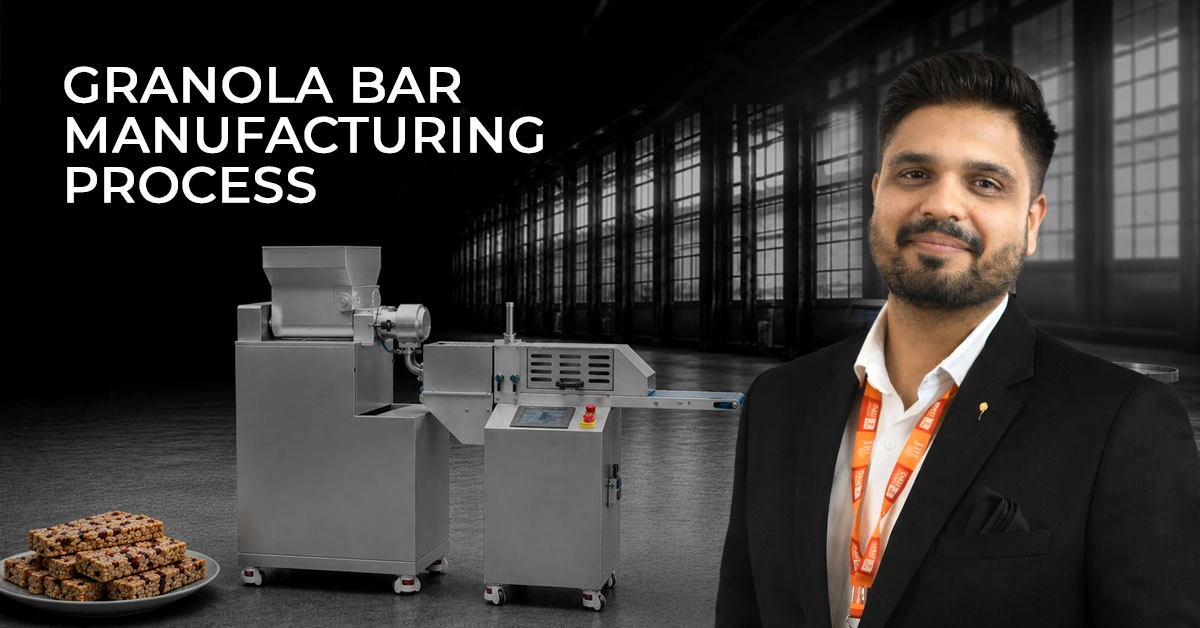
Granola bars are one of the favorite healthy snack foods available consumed by people from young age to old age. Granola bar manufacture contains nuts, seeds, dry fruits, whole-grain oats, sweeteners, and some additional ingredients as flavorings which deliver healthy snacks with the blend of deliciousness and nutrients. Generally, these bars are used as breakfast bars, energetic bars, as well as for ready to eat snacks. The manufactured process of granola bar manufacturing is based on the combination of carefully designed processes in order to ensure the taste, the color of the product, and uniform texture as well. The production starts from selection of the mixed up of natural materials, binding the materials in the bar form, cooling, cutting, and packaging and so forth. Every phase carries a vital role and the manufacturing procedure of such bars will make better process management.
Read More :- energy ball production
What Is A Granola Bar?
What’s in a granola bar? The snack bar typically contains rolled oats, with nuts, seeds, dried fruits and some kind of sweetening agent such as syrup, or honey. The bar is engineered to be tasty, portable and wholesome. There are many types of granola bars made in different sizes, with a chewy or crunchy texture and any combination of flavors you could imagine. They’re popular among busy consumers who are looking for easy grab-n-go options as a portable snack, and they can be enjoyed as a meal or snack when on the go.
Granola bars can deliver an easy source of fiber, carbs, healthy fats and valuable vitamins and minerals to your diet, and many enjoy them as a wholesome snack that’s a more health-conscious choice over such items as sugary cereals or bags of chips. They’re easy to grab for a breakfast bar on the go or as a pick-me-up during the day or to consume after a workout. The availability of low-sugar and protein-fortified options means that you should easily be able to find one that’s right for you, in the continuing health and wellness food trend.
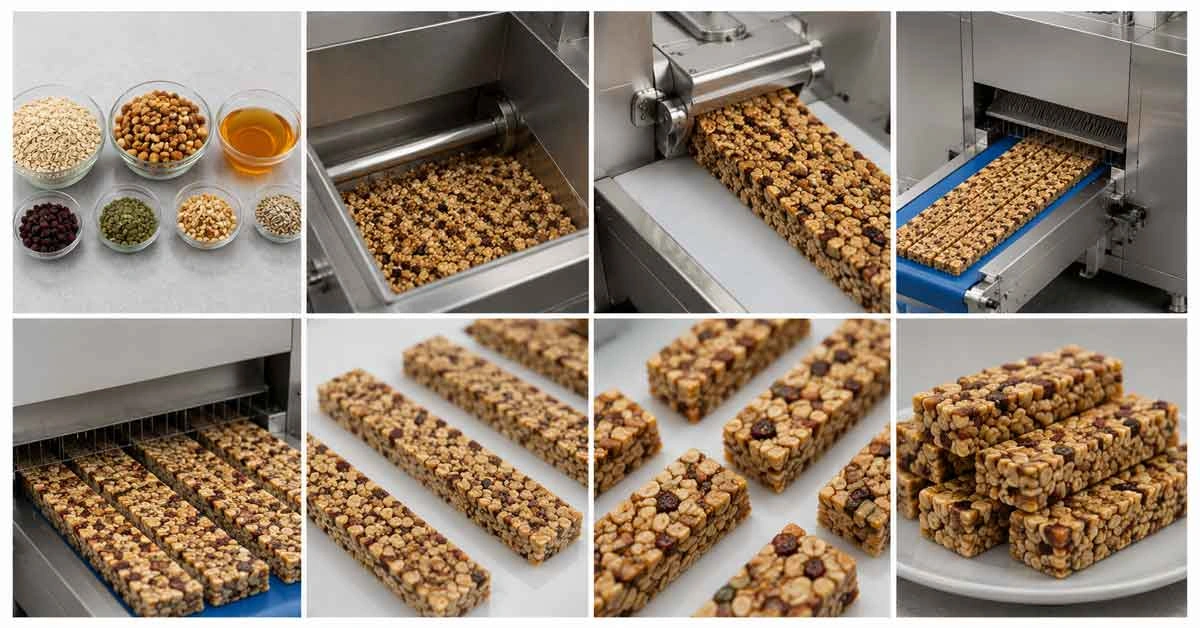
Raw Materials Required For Granola Bar Production
| Raw Material | Purpose |
|---|---|
| Rolled Oats | Main base ingredient |
| Honey or Syrup | Binding agent |
| Nuts (Almonds, Cashews, Peanuts) | Texture and nutrition |
| Seeds (Chia, Flax, Pumpkin) | Nutritional enhancement |
| Dried Fruits | Natural sweetness |
| Rice Crisps | Crunchiness |
| Chocolate Chips (Optional) | Flavor enhancement |
| Protein Ingredients (Optional) | Functional nutrition |
| Preservatives (If Required) | Shelf-life improvement |
Read more :- energy ball manufacturing process
Granola Bar Manufacturing Process Flow Chart
Step 1: Raw Material Selection
- Take the quality raw material i.e. Oats, nuts, seeds, and sweetener.
- All the raw materials are inspected for the level of moisture, contaminants and quality requirements.
- Quality raw material is needed for consistent products throughout the granola bar manufacturing process.
Step 2: Ingredient Weighing And Preparation
- All the ingredients are weighed according to the formula that is approved for granola bars production.
- All the nuts and dry fruits are chopped if necessary.
- Binding syrup is prepared separately.
Equipment used
- Ingredient weighing systems
- Storage bins
- Feed hoppers
Step 3: Mixing and Blending
- Dry ingredients are fed to the mixer.
- Syrup is added slowly in order to provide uniform coating to the dry mixture.
- Many granola bar making machines come with inbuilt mixing systems in order to minimize energy consumption
- It ensures consistent products in the entire production lot.
Step 4: Cooking and syrup preparation
- Sweeteners like honey, glucose syrup, jaggery syrup are heated up in the cookers.
- The desired consistency is attained before mixing.
- This process should be carried out at a controlled temperature.
Read More :- energy bar vs protein bar
Granola Bar Manufacturing Equipment Used
| Equipment | Function |
|---|---|
| Syrup Cooker | Syrup preparation |
| Mixing Machine | Ingredient blending |
| Storage Tank | Temporary holding |
Step 5: Forming the Sheet
- The thoroughly mixed ingredients are spread out into an even slab.
- An automated granola bar making machine helps to ensure uniform thickness.
- Even sheets can ensure accurate cutting and a pleasing appearance.
Step 6: Rolling and Compression
- The slab is then run through rollers.
- This action compresses the ingredients into a tighter mixture with a controlled amount of pressure.
- High-production granola bar manufacturing equipment incorporates automated rolling processes.
Step 7: Cooling
- The shaped slab must then be cooled prior to cutting.
- This process stabilizes the bar.
- Most manufacturers utilize a cooling conveyor as part of their granola bar manufacturing equipment.
Step 8: Cutting and portioning
- The sheet is then cut into the shape and size of bars.
- Automated cutters provide the best results and a high rate of production.
- Granola bar making machinery usually contains an integrated cutting station.
Common Bar Sizes
| Type | Weight Range |
|---|---|
| Mini Bar | 20–30 g |
| Standard Bar | 35–50 g |
| Premium Bar | 50–80 g |
Step 9: Packaging
- Automated machines package individual bars individually.
- It protects against contamination and moisture.
- Packaging systems are used throughout many granola bar manufacturing equipment.
Step 10: Quality control and inspection
- The weights of the bars are tested.
- The moisture content of bars is tested.
- The seal of packages is tested.
- Food safety of products is ensured.
This last step signals the end of the granola bar manufacturing process prior to the bars going to market.
Machines Required For Granola Bar Production
| Machine | Purpose |
|---|---|
| Mixer | Ingredient blending |
| Syrup Cooker | Binder preparation |
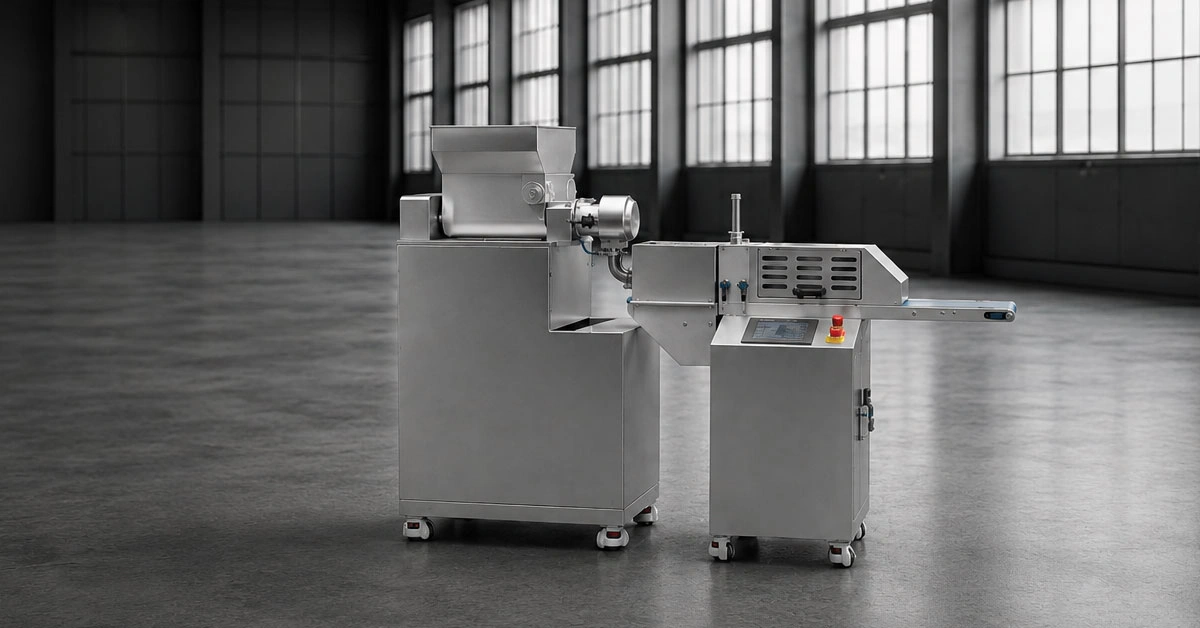
| Granola Bar Making Machine | Forming and shaping |
| Roller & Compressor | Sheet compaction |
| Cutter | Portioning |
| Cooling Tunnel | Product stabilization |
| Packaging Machine | Final packing |
Many companies venturing into functional nutrition categories will use a protein bar machine in conjunction with a granola bar making machine to produce numerous product varieties.
In the same way, the use of an energy bar machine can be introduced to increase the product’s variety without major modifications in the machinery or infrastructure.
Numerous food manufacturers place a protein bar machine, an energy bar machine, and a granola bar making machine in the same plant.
Most of the advanced granola bar production machinery are usually device compatible with either protein bar machine or energy bar machine equipment which allow product diversification more easily.
A number of manufacturers who are looking to move into sports nutrition products will often buy a protein bar machine and an energy bar machine as they upgrade their existing granola bar equipment.
A today ‘s protein bar machine(15) guarantees the quality of production, while an energy bar machine(16) can deposit great quantities with a low level of labor cost.
How Foodsure Machines Can Help
Foodsure Machines supports food businesses throughout the manufacturing journey with services such as:
- FSSAI Licensing and Registration
- Food Product Compliance
- Nutritional Label Development
- Product Approval Assistance
- Factory Setup Guidance
- Food Testing Support
- Regulatory Documentation
- End-to-End Food Business Consulting
If you are starting a granola bar facility, or adding on a product that can be produced through a protein bar machine or energy bar machine, Foodsure will make compliance and regulatory administration easy.
Conclusion
The process of making a granola bar is selecting the ingredients and then mixing, forming, cooling, cutting, and wrapping the products. Choosing the right raw materials is key to product quality. Using dependable equipment for granola bar production leads to better consistency and higher efficiency.Additional product area can be added by using protein bar machine and energy bar machine.The correct adherence and quality management will guarantee long-term success of a business.
FAQs
1.What is the granola bar manufacturing process?
It includes the ingredients preparation, blending, forming, cooling, cutting, packaging, and quality control.
2.What raw materials are used in granola bars?
The ingredients are such as oats, nuts, seeds, dried fruits, sweeteners, and binding syrups.
3.What is a granola bar making machine used for?
Apply as needed to help form, compress, and shape the bars during production of the granola bars.
4.What granola bar manufacturing equipment is required?
Equipment such as mixers, syrup cookers, rollers, cutters, cooling tunnels, packaging machines, etc. Are needed.
5.Can the same facility produce protein and energy bars?
Yes it is possible to hard assembly a protein bar machine and energy bar machine with granola bar machinery.




