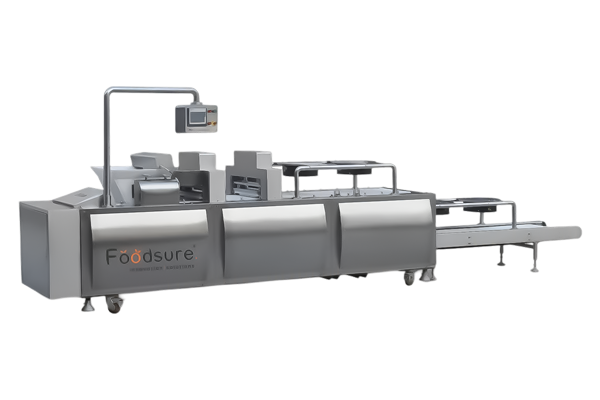
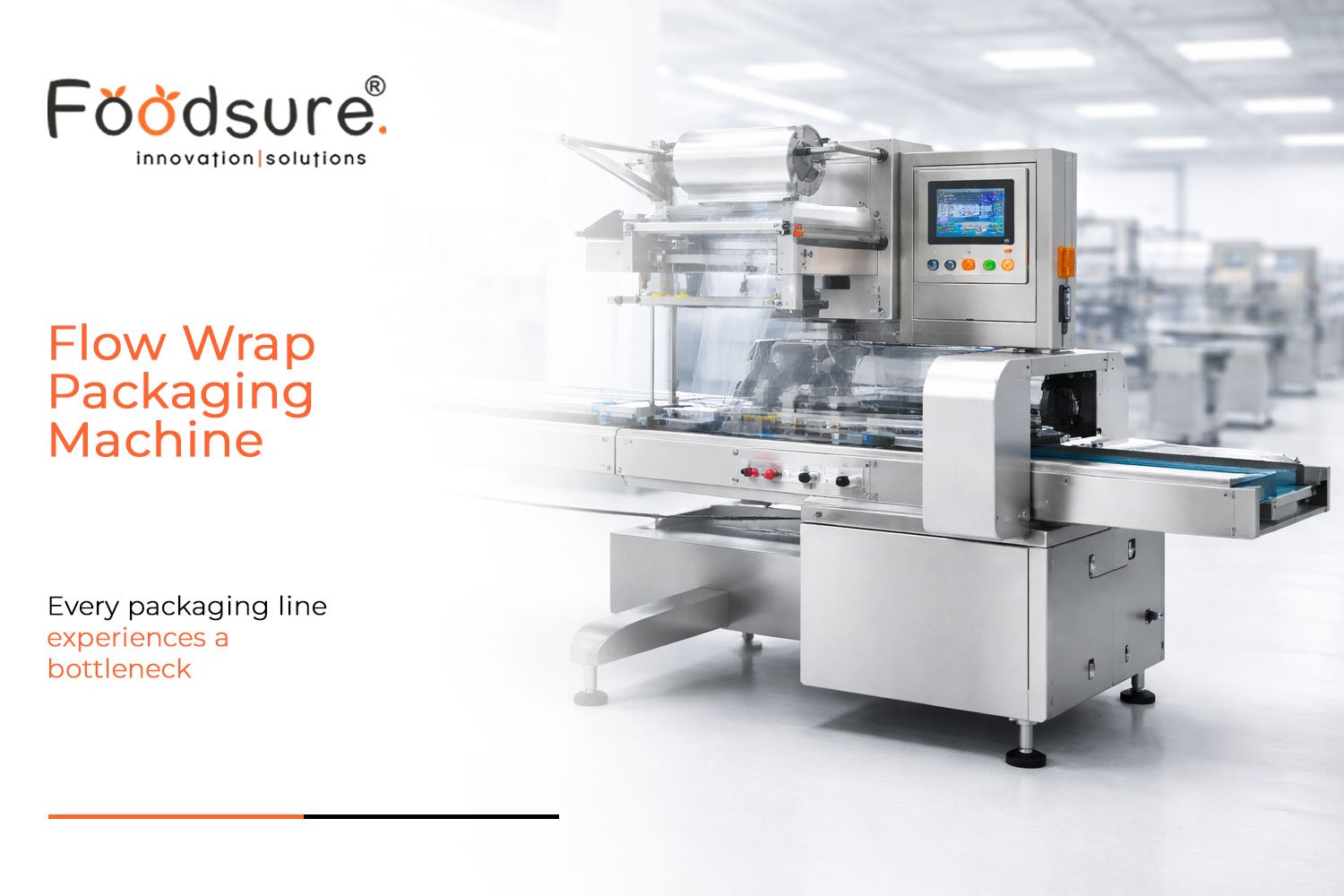
Every packaging line experiences a bottleneck, but a flow wrap packaging machine completely solves it. The machines operate at a capacity of thousands of packs per hour to support snack brands, bakeries, and FMCG manufacturers who require constant operational speed. The business case is clear are automatic flow wrap packaging machines for the food industry cut labour costs, reduce material waste, and produce retail-ready products at scale.
This blog will explain how these machines function by describing the main parts and complete process, their industrial uses, main advantages, and purchasing factors, which will help you decide if a flow wrap machine is suitable for your production line.
Flow Wrap Packaging Machine for Food Industry: Key Advanced Features
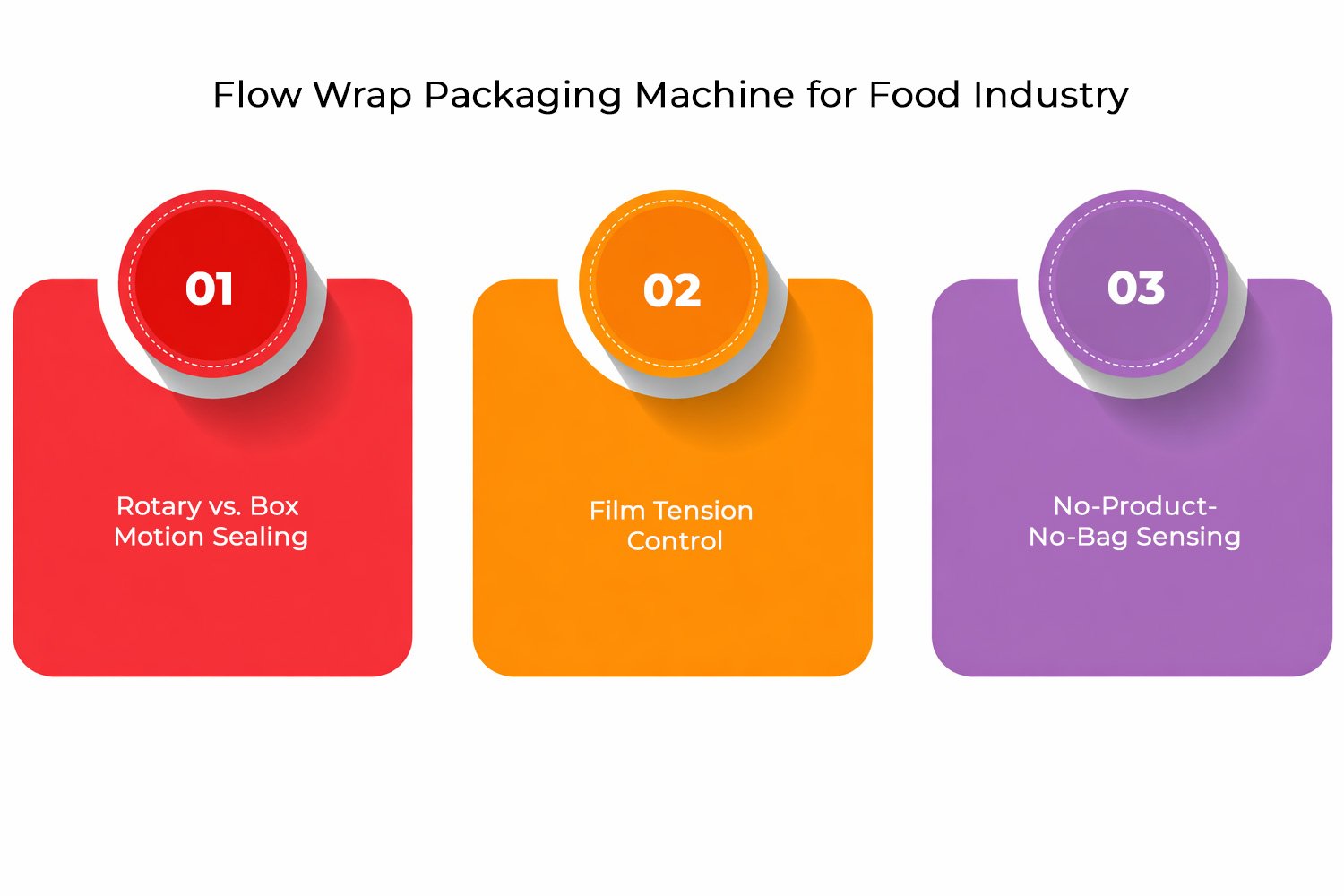
The operation of high-speed flow wrap packaging machines requires high-precision control of tension and thermal dynamics to achieve their advanced capabilities. The current system achieves optimal film speed synchronisation with product lugs via its multi-axis servo motors and electronic camming system, eliminating jams while maintaining steady production.
Key Advanced Components:
- Rotary vs. Box Motion Sealing: Rotary jaws allow extreme speeds for high-throughput lines, while Box Motion (long-dwell) jaws provide hermetic seals for thicker films or MAP (Modified Atmosphere Packaging) applications, a feature often required in automatic flow wrap packaging machines for the food industry.
- Film Tension Control: The active unwinding system uses load cells to maintain a constant tension level, preventing film necking and stretching. Snack packaging machines and protein bar packaging machines need this technology because it maintains printed registration accuracy.
- No-Product-No-Bag Sensing: The optical sensors detect feed line gaps, which trigger the PLC to skip film cycles. This functionality reduces material waste and downtime, which is essential for high-speed flow wrap packaging machine setups.
High-Speed Operation of a Flow Wrap Packaging Machine for Retail-Ready Packs
The flow wrap packaging machine functions through its nonstop operation, which uses high-speed production to create thousands of products while maintaining identical product quality throughout the process. The standard cycle functions through these steps:
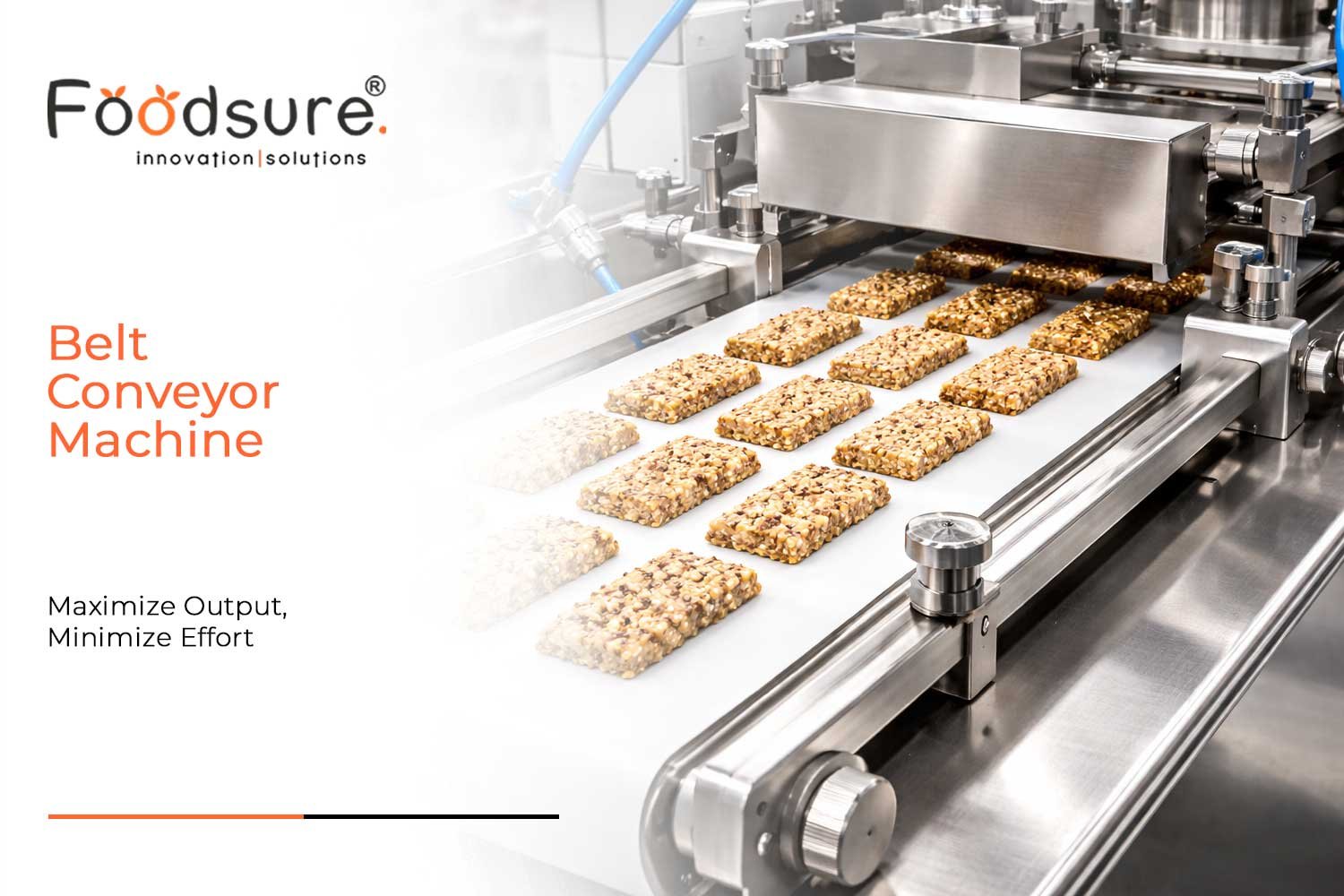
- Product Feeding: The automated packaging line receives items through a conveyor belt machine, which transports products from upstream production areas to the packaging system that prepares items for wrapping.
- Film Wrapping: The machine uses a horizontal form fill seal machine to wrap flexible film around products, which achieves both accurate product placement and reduced material waste.
- Longitudinal Sealing: The packaging machines use bottom and side seals to create airtight seals that protect products during storage, which makes these seals suitable for protein bar packaging machines and snack packaging machines.
- End Sealing & Cutting: The sealing jaws close pack ends while the cutter operates to split packs into separate units, which allows for fast production rates.
- Discharge: The finished packages leave the production area through either a collection tray or a secondary packaging system, which prepares them for distribution to retail locations.
How Key Components of a Flow Wrap Packaging Machine Ensure Efficient Packaging
The main components of a flow wrap packaging machine need to be understood before picking a suitable model for your production line.
- Former: The flexible film material follows the contours of each item to create precise packaging that produces identical packed products.
- Sealing Jaws: The heat-sealing process creates airtight seals that protect contents from leaks and maintain product freshness, especially essential for protein bar packaging machines and snack packaging machines.
- Cutter: The equipment produces clean pack separations, which enable continuous operation at high speeds.
- Conveyor & Sensors: The system aligns products while it identifies missing items to activate both sealing and cutting processes, which keep the automated packaging line operational.
Advanced machines use servo-driven systems, which reduce film waste while enhancing total operational effectiveness. Small businesses benefit from horizontal flow wrap machines for small business setups because they are easy to operate, maintain, and produce high-quality retail-ready output.
Benefits of a Flow Wrap Packaging Machine for Food Industry Manufacturers
A flow wrap packaging machine delivers measurable advantages for businesses of all sizes:
- High-Speed Efficiency: The flow wrap packaging machine handles thousands of packs per hour, which makes it suitable for packaging protein bars and snacks.
- Reduced Material Waste: The system achieves cost savings through precise film control, which decreases packaging rejects.
- Consistent Seal Quality: The system delivers airtight and leak-proof seals for snack packaging machines and protein bar packaging machines.
- Flexibility: The system enables quick changes between different SKUs and sizes, which allows the packaging of various products.
- Labour Savings: The system requires fewer operators, which results in decreased operational expenses.
- Hygiene & Compliance: The product meets food-grade standards, which are essential for producing retail-ready items.
- Shelf Appeal: The packaging system creates uniform packs that enhance branding and boost product visibility.
The integration of a horizontal flow wrap machine for small businesses and an industrial automatic flow wrap packaging machine for food industry enables both small and large operations to scale their operations.
How to Choose the Right Flow Wrap Packaging Machine for Your Production Line
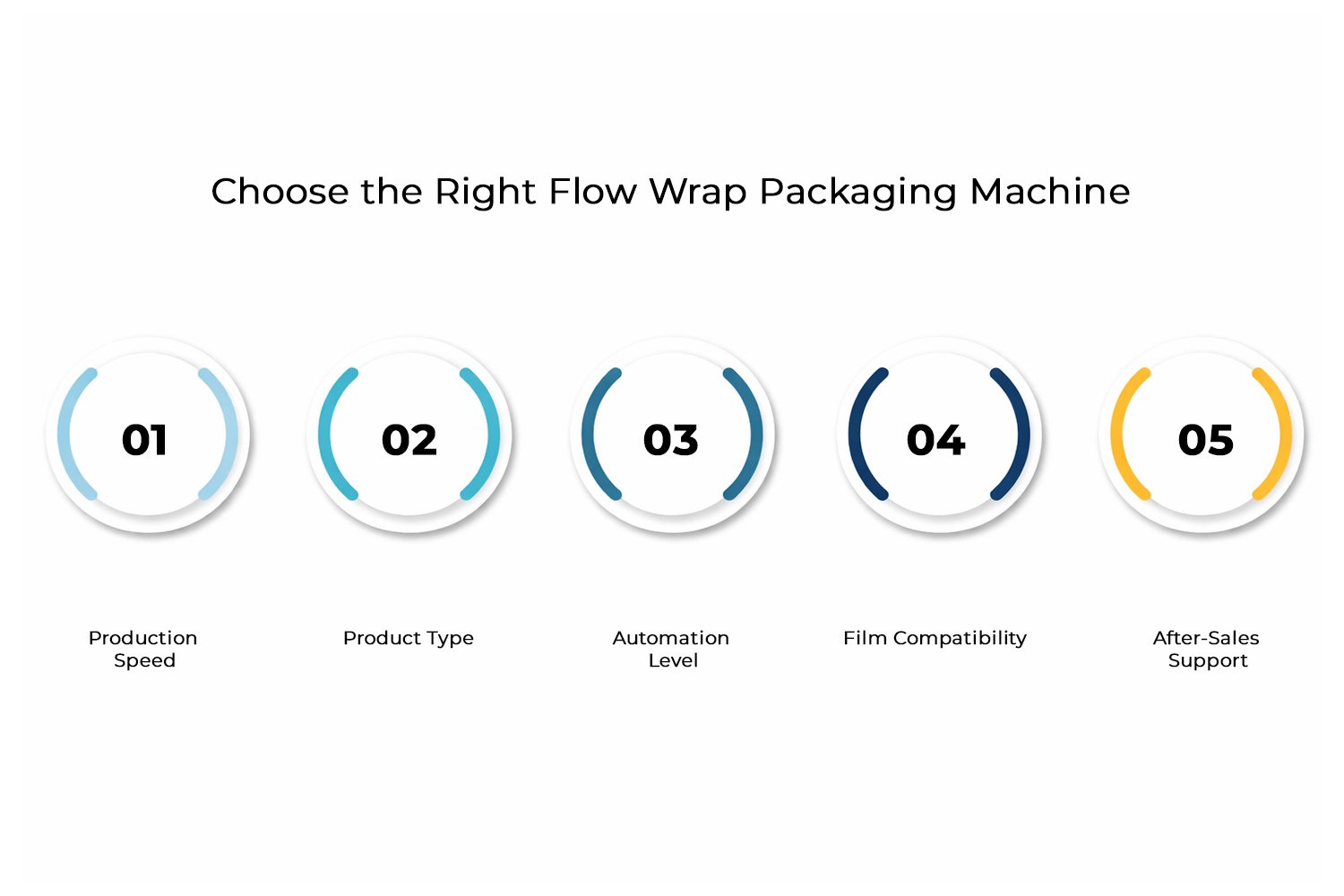
- Production Speed: Match your output targets by using packs that match your required packs per minute rate
- Product Type: Different setups are required for soft items, sticky items, and dry items
- Automation Level: Select your preferred operation mode between semi-automatic and servo-based systems
- Film Compatibility: The system needs to provide support for both laminates and BOPP materials
- After-Sales Support: The organization needs to display the availability of its service options, spare parts and training programs
Tip: Small units prefer horizontal flow wrap machines for small businesses, while large plants rely on industrial flow wrap packaging machine suppliers for scalable food packaging automation.
Conclusion
The flow wrap packaging machine serves as an essential tool for achieving both continuous operations and rapid production output. Foodsure Machines provides solutions that deliver performance-based results. Our machines enable your business to achieve faster growth. You can reach out to us today to discuss your packaging needs.
Want to See How a Flow Wrap Machine Can Boost Your Production?
Talk to our experts and discover how flow wrap packaging machines can help you pack thousands of products smoothly, reduce wastage, and scale faster.
FAQ
Q1. What is an automatic flow wrap packaging machine for small business?
The machine operates as a compact and affordable device that serves its purpose for handling low to medium production needs through its straightforward operation.
Q2. What is the flow wrap packaging machine price in India with specifications?
The price range for products starts at ₹3 Lakhs and reaches up to ₹15 Lakhs based on three factors, which include speed, automation, and build quality.
Q3. How does a high-speed flow wrap packaging machine for food products improve output?
The system achieves a packaging rate of more than 200 packs per minute while it sustains its ability to seal products with consistent quality.
Q4. What is the horizontal flow wrap packaging machine working principle?
The machine applies a film wrapper to products, which it seals along both lengthwise and widthwise directions before executing the process of creating separate packages.
Q5. Is a pillow pack flow wrap packaging machine for bakery items suitable for fragile products?
The system provides protective handling through soft touch methods while it maintains complete product protection through airtight sealing for baked goods such as cakes, biscuits and bread.