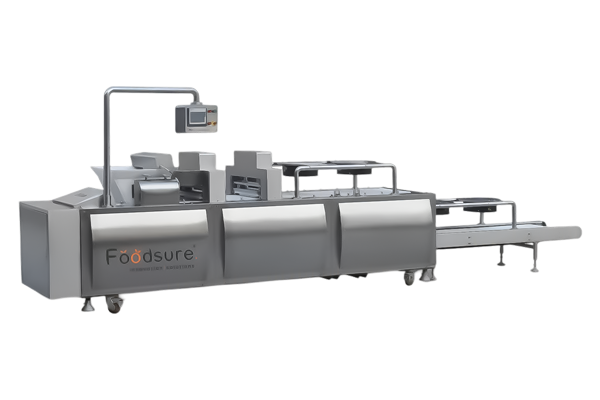

Over the decades, Indian farmers preferred sun-drying as the gold standard. But the high standards of FSSAI regulations and international export standards (such as BRC and ISO) of 2026 now require zero-contaminant environments. Conventional practices expose food to dust, insects, and unstable UV levels, which causes high levels of rejection.
Enter mechanical dehydration. The initial step to scaling a food business is selecting the appropriate commercial food dehydrator machine since it ensures that there is consistency in color, texture, and nutritional value. However, this technology has a price that forces the owners of the business to engage in the Capex vs. OpeX battle.
Buying a Commercial Food Dehydrator Machine: The Ownership Path
You are placing a long-term bet when you buy your business on its stability.
- Entry fees: In the Indian market, it is a capacity-based pricing. Small kitchens can begin with entry-level 10-tray units priced at ₹35,000, and mid-range priced between ₹1.1 Lakh and ₹1.6 Lakh, 24-tray stainless steel (SS304) units. In big-sized industrial plants (100kg+ capacity), the cost may be above ₹25 Lakh.
- Creating Business Equity: An industrial food dehydrator machine is an actual asset. Ownership enables you to sell the machine as security against future business loans, and it also removes the chances of a lessor reclaiming equipment when the business is at peak production.
- Tax Benefits (Section 32): You are allowed to take 15% depreciation of plant and machinery under the Indian Income Tax Act. It substantially lowers your net taxable income in the first years of operation in the case of new units.
- The Unspoken Costs: Ownership implies that you have to maintain it. Unless the machine is designed to last a long time, anticipate spending between 2 and 5% of the value of the machine in spare parts such as high-temperature gaskets, heating coils, or tray replacements every year.
Leasing a Commercial Food Dehydrator Machine: The Flexible Path
Use of leasing (or OPEX) will be good when an individual would rather test the waters without draining his/her bank accounts.
- Minimal entry Barrier: Leasing will mean that a startup will be able to retain cash to purchase raw materials (buying in large quantities of mangoes or onions) and internet marketing. You do not necessarily have to spend a large amount of money as a down payment since you have to pay a security deposit of 2 months and the first month of rent.
- The Technology Hedge: Dehydration technology is on the road to the Heat Pump systems, which consume as little as 70% less energy. Using leasing, you can also upgrade your industrial food dehydrator machine for small scale food business to the latest energy-saving model after 24 months with no worry that you will have a dehydrator of unspecified value when it is used.
- Operational Ease: A majority of Indian leasing agreements have a Service Level Agreement (SLA), i.e., the lessor takes care of all repairs and AMC (Annual Maintenance Contract) expenses.
- The Disadvantages: You are not the owner of the asset. At an average of 60 – 80% after a period of 5 years, the accumulated rental costs tend to be higher than the cost of purchasing it in the first place.
Direct Cost Comparison: Buy vs. Lease (India Breakdown)
Need a real buy vs lease cost comparison?
Get a practical India-focused breakdown of upfront cost, EMI or lease payments, ROI, tax impact, and the smartest option for your production goals. Leasing often lowers upfront cash outflow, while buying may create long-term ownership value. :contentReference[oaicite:0]{index=0}
The table below gives a comparison between the cost of a typical 50kg capacity stainless steel food dehydrator in a 3-year cycle.
The following is a simplification of the cost breakdown in the form of bullet points:
- Initial Investment:
- Buying: High upfront cost of ₹1,60,000 + 18% GST.
- Leasing: The entry cost is low, with a deposit of 40,000 being refundable.
- Monthly Cash Outflow:
- Purchase: It will cost zero payment monthly (when self-funded).
- Leasing: Recurring monthly rent of ₹12,000 – ₹15,000.
- Maintenance & Repairs:
- Buying: Fully the owner’s responsibility and cost.
- Leasing: It is normally considered in the contract by the lessor.
- Tax Treatment:
- Purchase: Get 15% depreciation in terms of Section 32.
- Leasing: 100% as an operating expense is tax-deductible.
- Total 3-Year Cost Projection:
- Purchase price: Some ₹1,85,000 (including approximate maintenance).
- Leasing: We have approximately ₹4,32,000( cumulative rent only ).
Key Factors Influencing Your Decision in the Indian Market

Production Volume & Seasonality
Are you seasonal challenged? As an example, in the case of the Alphonso mangoes, by only dehydrating the mangoes during 4 months of the year, it would be far more cost-effective to rent a commercial food dehydrator machine during that season than it would be to purchase an expensive dehydrator machine that will only sit around and rust the other 8 months out of the year.
Customization Requirements
When your product requires some tray heights (large items like full mushrooms), or if you want to regulate its use through PLC (Programmable Logic Controller) and obtain the desired drying curve, then buying is the better way to go. Lessors tend to offer typical models that may not be applicable in niche processing.
Electricity Tariffs
Newer machines in 2026 that are purchased will be made out of high-density insulation. Older leased units might be “energy hogs.” Electricity consumes up to 40 percent of your operating costs, and when a more efficient unit is purchased, the difference is usually paid out in terms of saved power.
Maintenance & Operational Costs
There are three pillars in the running of an industrial food dehydrator machine:
- Electricity Use: The 24-tray commercial type has an electric energy usage of between 3kW to 5kW/h average. The machine can be operated at a cost of about ₹240 to ₹400 at an average industrial rate of 8 per unit and a workload of 10 hours.
- Work Costs: Machines of the day are programmable and do not need attendants. All you have to do is work to hose, chop, and stuff the trays. The tracking time is close to zero with developed PLC systems.
- Sanitation: Stainless steel trays should be sanitized using food-grade sanitizers. Project 1500-3000 on sanitation supplies monthly.
Which One Should You Choose?
- Buy when: You have a tested product, and there is an availability of raw material all year round, and the cash from claiming deductions of the tax. It is the least expensive scale-producing process.
- Lease when: A business is new and has a new Product-Market Fit (e.g., vegan jerky or fruit leathers) or the business is in season.
Conclusion
The nerve of a modern food preservation business is a commercial food dehydrator machine. Whichever route you follow between the two routes, ownership or leasing, it must never be at the expense of the end dry product.
We know what the Indian food processing market is like at Foodsure Machines. We do not sell machines, but assist you in a profitable business model.
Ready to see the math for your specific product?
Get your personalized ROI analysis and discover the most suitable dehydration system to help achieve your 2026 production goals.
FAQs
What is the food dehydrator machine price in India?
Prices at the entry level start at ₹35,000 and can reach ₹500,000,000 Lakh depending on tray capacity and automation, for industrial plants.
Better to lease or buy as a startup?
Leasing is more effective with start-ups that have low capital or where the products are seasonal, as it attracts less start-up cost and is also less expensive.
What are the tax benefits of purchasing?
Indian Income Tax Act, Section 32 provides a deduction of 15%. yearly depreciation to minimize the total taxable income.
What is the electricity consumption of a commercial machine?
Typical commercial models use between 2kW and 5kW per hour with a price of about 16 – 40/hour at industrial rates.
Who does the repairs that are in a lease agreement?
Most Indian leasing contracts put the lessor in charge of maintenance and repairs, so that the user incurs zero “hidden costs.